Insights from recent episode analysis
Audience Interest
Podcast Focus
Publishing Consistency
Platform Reach
Insights are generated by CastFox AI using publicly available data, episode content, and proprietary models.
Most discussed topics
Brands & references
Est. Listeners
Insufficient chart data. Estimates will improve as the show charts.
- Per-Episode Audience
Est. listeners per new episode within ~30 days
N/A🎙 Weekly cadence·86 episodes·Last published 1w ago - Monthly Reach
Unique listeners across all episodes (30 days)
N/A - Active Followers
Loyal subscribers who consistently listen
N/A
Market Insights
Platform Distribution
Reach across major podcast platforms, updated hourly
Total Followers
—
Total Plays
—
Total Reviews
—
* Data sourced directly from platform APIs and aggregated hourly across all major podcast directories.
On the show
From 13 epsHost
Recent guests
Recent episodes
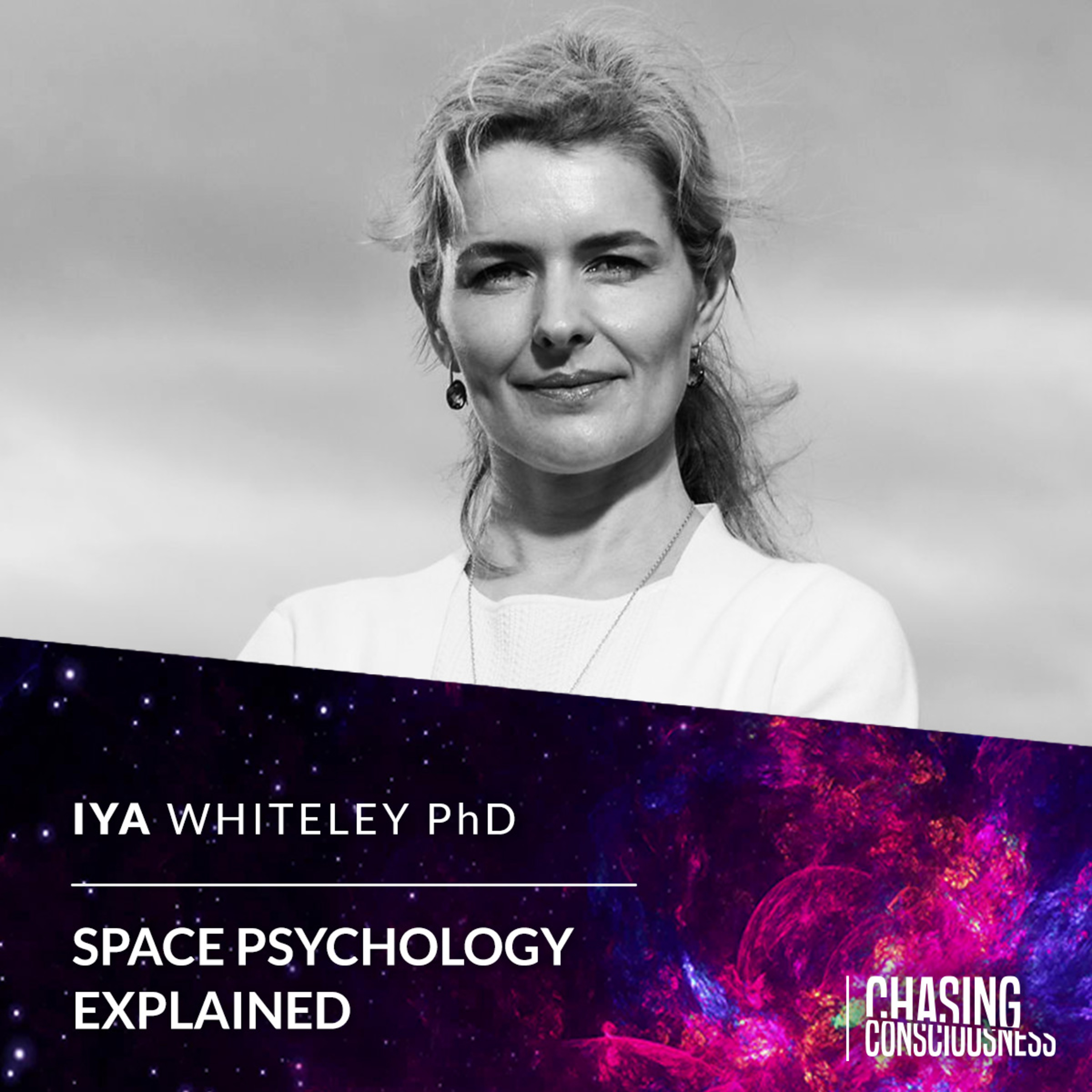
SPACE PSYCHOLOGY EXPLAINED - Iya Whiteley PhD #88
Jun 15, 2026
Unknown duration
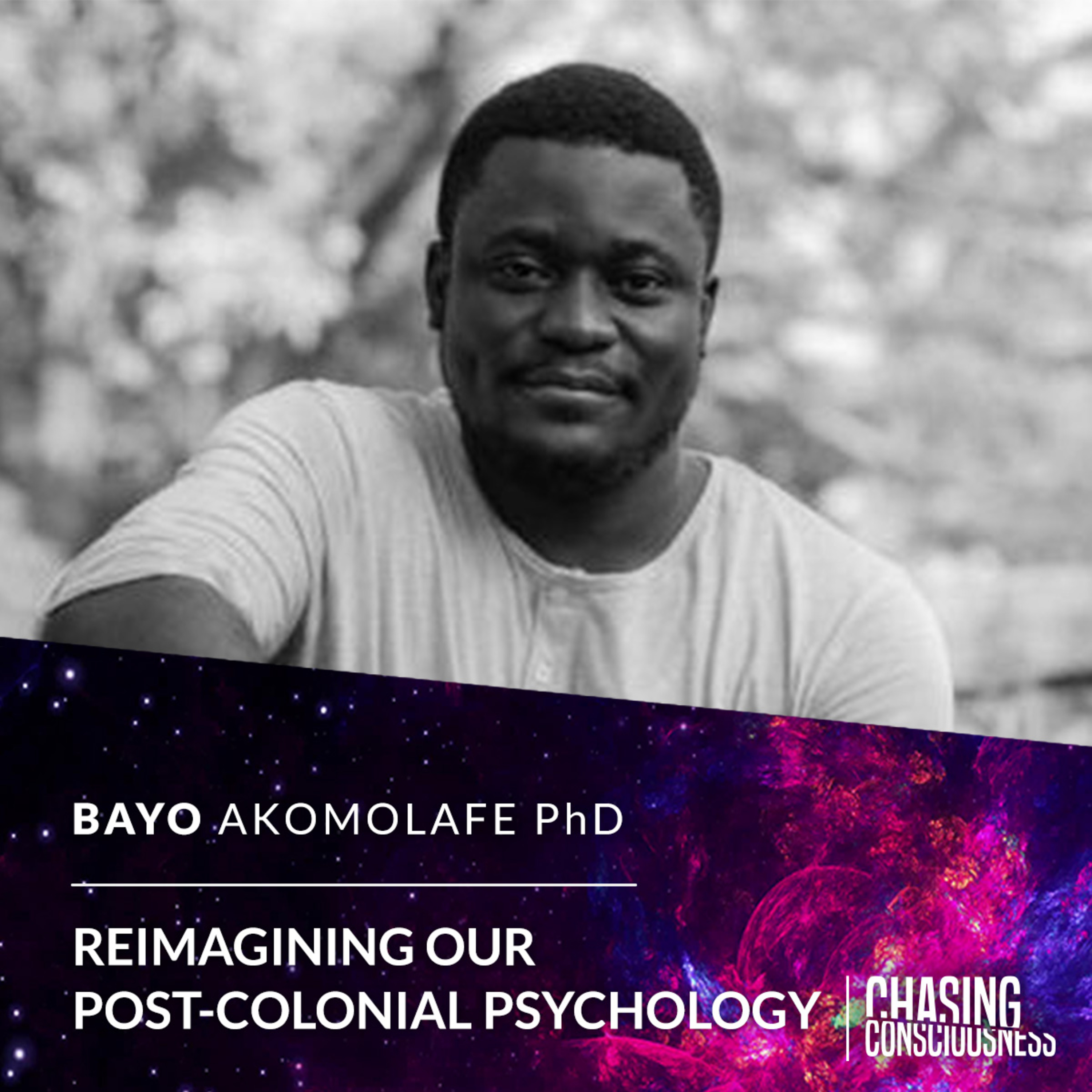
REIMAGINING OUR POST-COLONIAL PSYCHOLOGY - Bayo Akomolafe PhD #87
May 31, 2026
1h 12m 38s
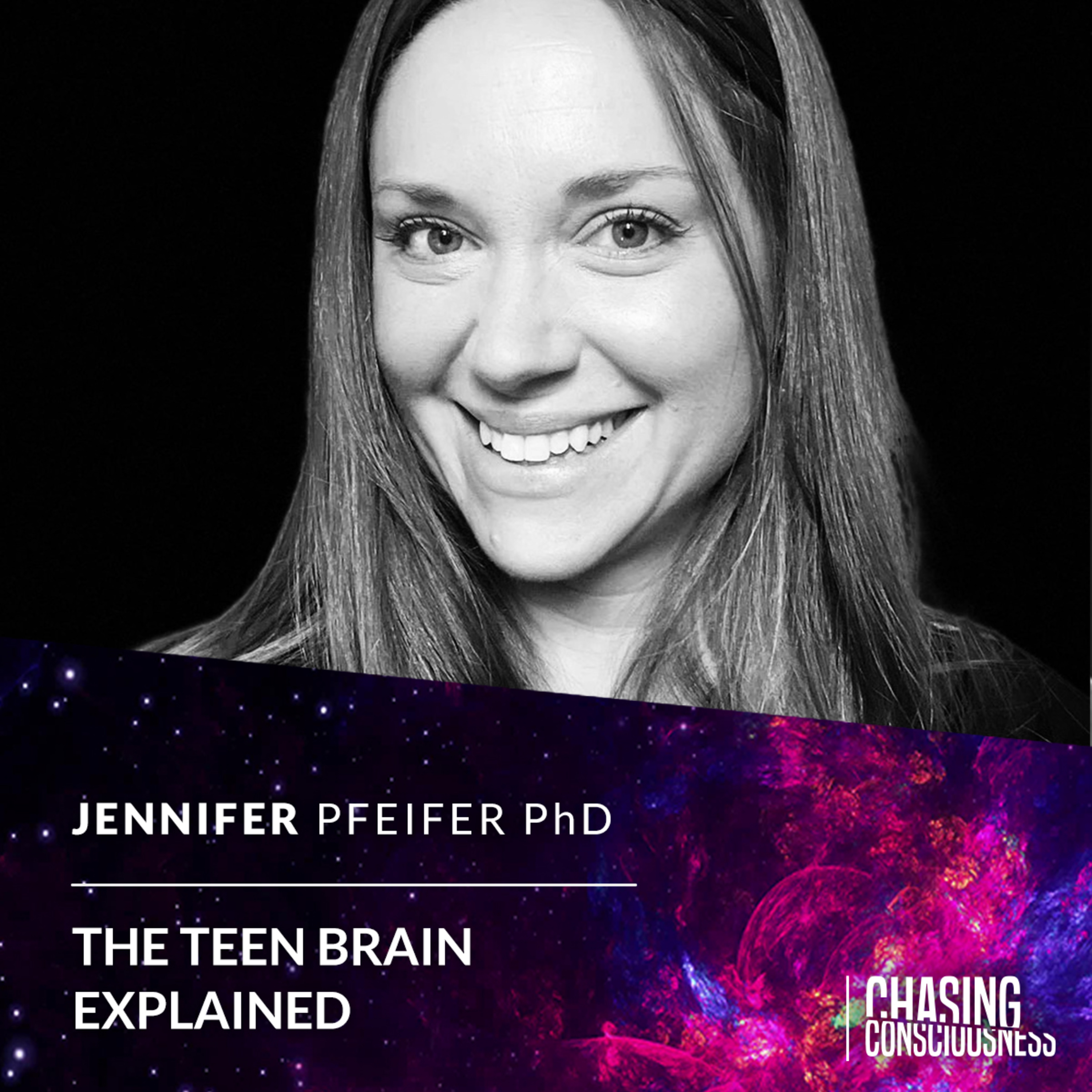
THE TEEN BRAIN EXPLAINED - Jennifer Pfeifer #86
May 14, 2026
1h 11m 34s
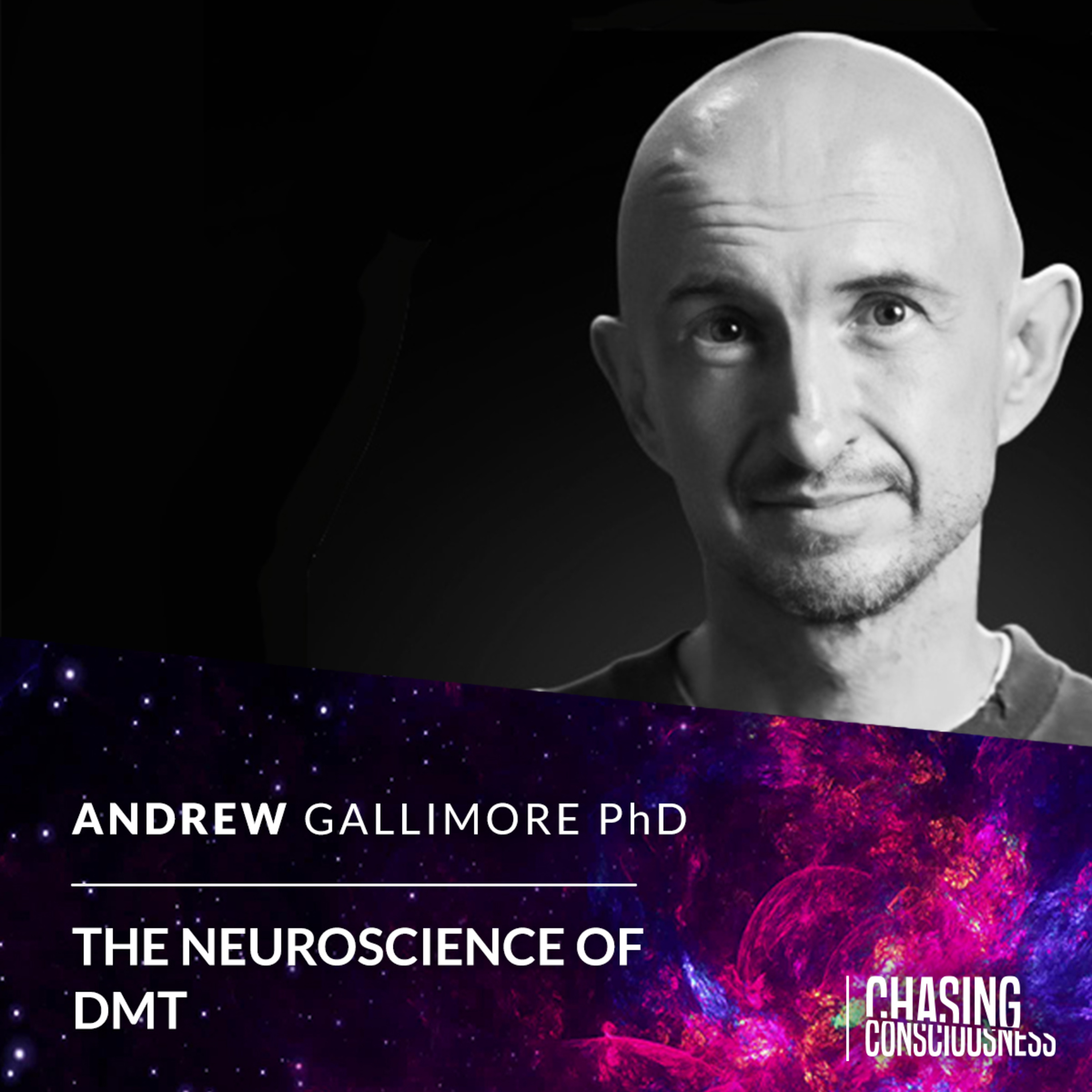
THE NEUROSCIENCE OF DMT - Andrew Gallimore PhD
Apr 30, 2026
1h 57m 05s
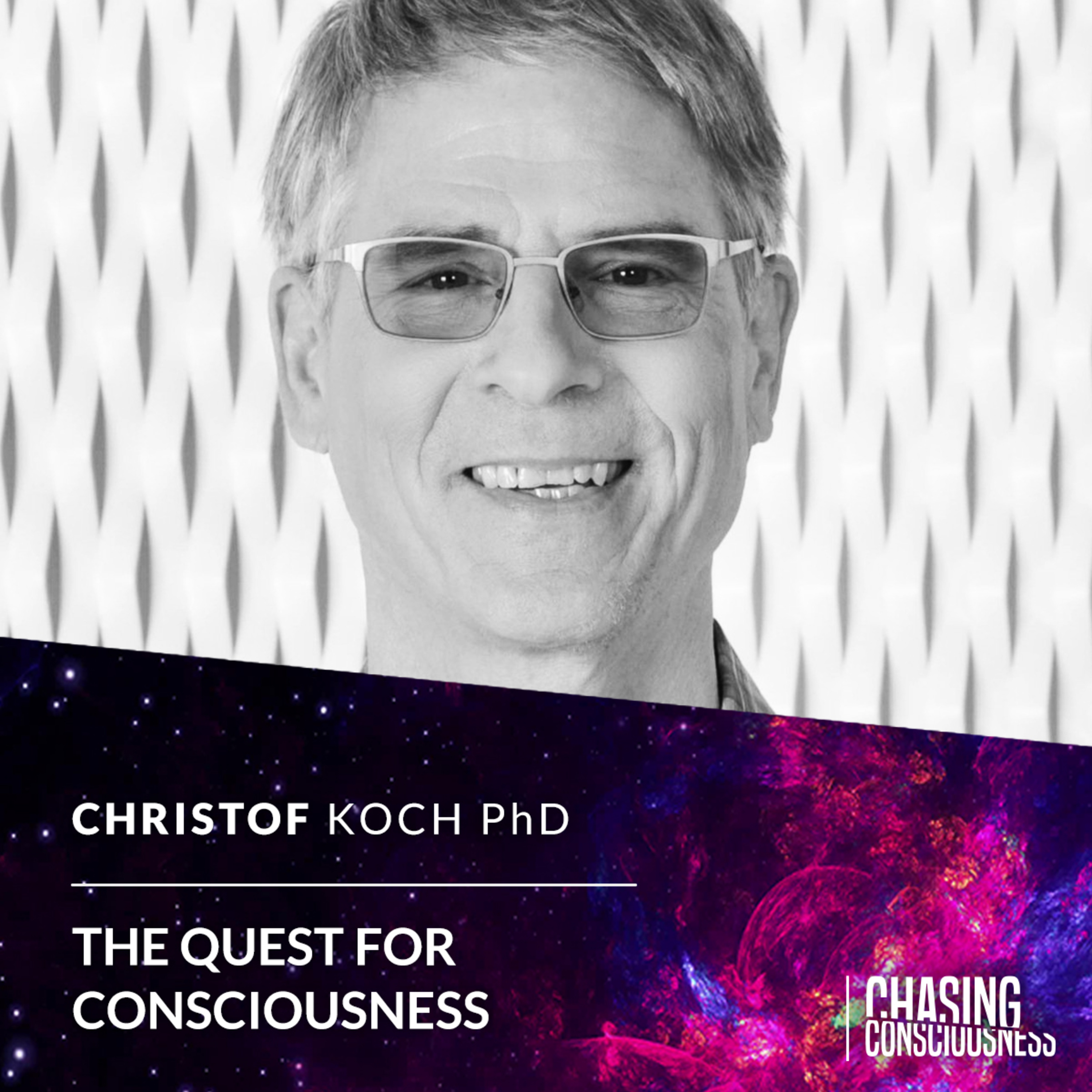
THE QUEST FOR CONSCIOUSNESS - Christof Koch PhD #84
Dec 1, 2025
1h 34m 00s
Social Links & Contact
Official channels & resources
Official Website
Login
RSS Feed
Login
| Date | Episode | Topics | Guests | Brands | Places | Keywords | Sponsor | Length | |
|---|---|---|---|---|---|---|---|---|---|
| 6/15/26 | ![]() SPACE PSYCHOLOGY EXPLAINED - Iya Whiteley PhD #88 | What can psychologists do the make pilots and astronauts’ decision making better under duress? Can we anticipate the psychological issues of planned long distance space missions to Mars? How can we shift the shame culture for pilots and astronauts around reporting unidientified anomolous phenomena?In this episode we have the unique field of Space psychology to look into; So we discuss the psychology of military pilots and astronauts working under such extreme conditions; and the intuitive skill sets developed under such high pressure, split second decision situations; we discuss the cognitive engineering required to match the design of instruments to the cognitive needs of the pilots and astronauts; we get into alternatives methods of expertise exchange apart from the usual text book approach which have had extraordinary decision making results for pilot and astronaut performance. We also discuss the issues for pilots around reporting of UFO encounters, and the implications for space psychology of the new bout of main stream interest following the New York Times 2017 expose of military incidents.So who better to help us understand the minds of pilots and astronauts than space psychologist, cognitive engineer, astronaut instructor and Director of the Centre of Space Medicine at UCL in London, Dr. Iya Whitely. She’s helped design training programs and conducted studies for the European Space Agency, The Gagarin Cosmonaut Training Centre in Russia, and presented he research for the USAirforce and Nasa. Dr. Whitely is also a pilot, rescue scuba diver and competitive sky diver! She’s written 11 scientific papers, and three books, “Toolkit of a Space Psychologist, to support astronauts on exploration missions to the moon and mars”, “Earth Designs” for toddlers, and her new book “Born Knowing”, which we get onto at the end.What we discuss:00:00 Intro.05:30 Iya’s path into Cognitive Engineering.18:35 Decision making research.28:00 Iya’s method led to 200/cent increase in decision making speed.21:40 Professional intuition.43:00 Surgeon expertise transmission study55:45 Astronaut psychology - Alexei Leonov, first space walk near-disaster, 1965.01:06:00 ESA human, long-distance space flight study.01:13:00 Nature solves problems using resources available locally - Biomimetics, Dr Olga Bogatyreva.01:27:10 Mars 500: 520 day simulated Mars mission trial.01:31:30 Space colonisation psychology.01:40:40 Difficulty reintegrating with terrestrial society after missions to space.01:43:00 “The Overview Effect” when earth is seen from space.01:50:30 Taboo around reporting of anomolous phenomena for pilots and astronauts.01:53:15 Ryan Graves is speaking out in congress about repeated UFO safety concerns.02:01:00 Astronauts can’t risk to speak about this as it will affect their careers.02:13:00 Navy have implemented a new reporting protocol and office, AARO.02:21:30 Iya at the Sol Foundation: Garry Nolan & Diana Pasulka.02:29:30 Pilot Jake Baba - reporting issue with the phenomena.02:39:10 Telepathic autistic children, called ‘spellers’. Diane Hennessy Powell research.02:47:00 These telepathic kids are also interracting with non-human intelligences.02:51:15 Non-verbal communication with toddlers.References:Iya Whiteley, “Born Knowing”.Iya Whiteley & Olga Bogatyreva, “Toolkit for a space psycholgist”.Iya Whiteley, “Earth designs” toddlers book.Gary A. Klein - professional intuition book “The Power of Intuition".Dr Olga Bogatyreva - ‘Biomimetics - its practice and theory’.Frank White, “The Overview Effect”.Whitley Strieber, “Communion”.Rick Srassman, “DMT The Spirit Molecule”.All domain Anomoloy Resoltions Office, AARO.2024 Paper on the UAP reporting system Occupational Safety and Reporting Guidance: Reviewing UAP ...Sol Foundation of Garry Nolan at Stanford, Scientific UAP research.Ky Dickens, Telepathy Tapes podcast and documentary film. | — | ||||||
| 5/31/26 | ![]() REIMAGINING OUR POST-COLONIAL PSYCHOLOGY - Bayo Akomolafe PhD #87✨ | post-colonial psychologycolonialism+5 | Bayo Akomolafe PhD | western psychologymilitary-industrial+2 | — | colonialismpsychology+6 | — | 1h 12m 38s | |
| 5/14/26 | ![]() THE TEEN BRAIN EXPLAINED - Jennifer Pfeifer #86✨ | teen behavioradolescent brain+5 | Jennifer Pfeiffer | Center for Translational NeuroscienceUniversity of Oregon+1 | — | teen brainmental health issues+5 | — | 1h 11m 34s | |
| 4/30/26 | ![]() THE NEUROSCIENCE OF DMT - Andrew Gallimore PhD✨ | DMTneuroscience+4 | Andrew Gallimore | Reality Switch Technologies: Psychedelics as Tools for the Discovery and Exploration of New WorldsAlien Information Theory: Psychedelic Drug Technologies and the Cosmic Game+1 | — | DMTneuroscience+5 | — | 1h 57m 05s | |
| 12/1/25 | ![]() THE QUEST FOR CONSCIOUSNESS - Christof Koch PhD #84✨ | theories of consciousnesssubjective experience+5 | Christof Koch | BlueDot FoundationThe Quest for Consciousness+2 | — | consciousness5meo DMT+5 | — | 1h 34m 00s | |
| 11/15/25 | ![]() HIGH-DOSE INTRAVENOUS VITAMIN C TRIALS - Dr. Richard Z. Cheng PhD #83✨ | high-dose vitamin Cclinical trials+4 | Dr. Richard Z. Cheng | Vitamin CNational Cancer Institute+1 | — | vitamin Cimmune system+5 | — | 1h 21m 59s | |
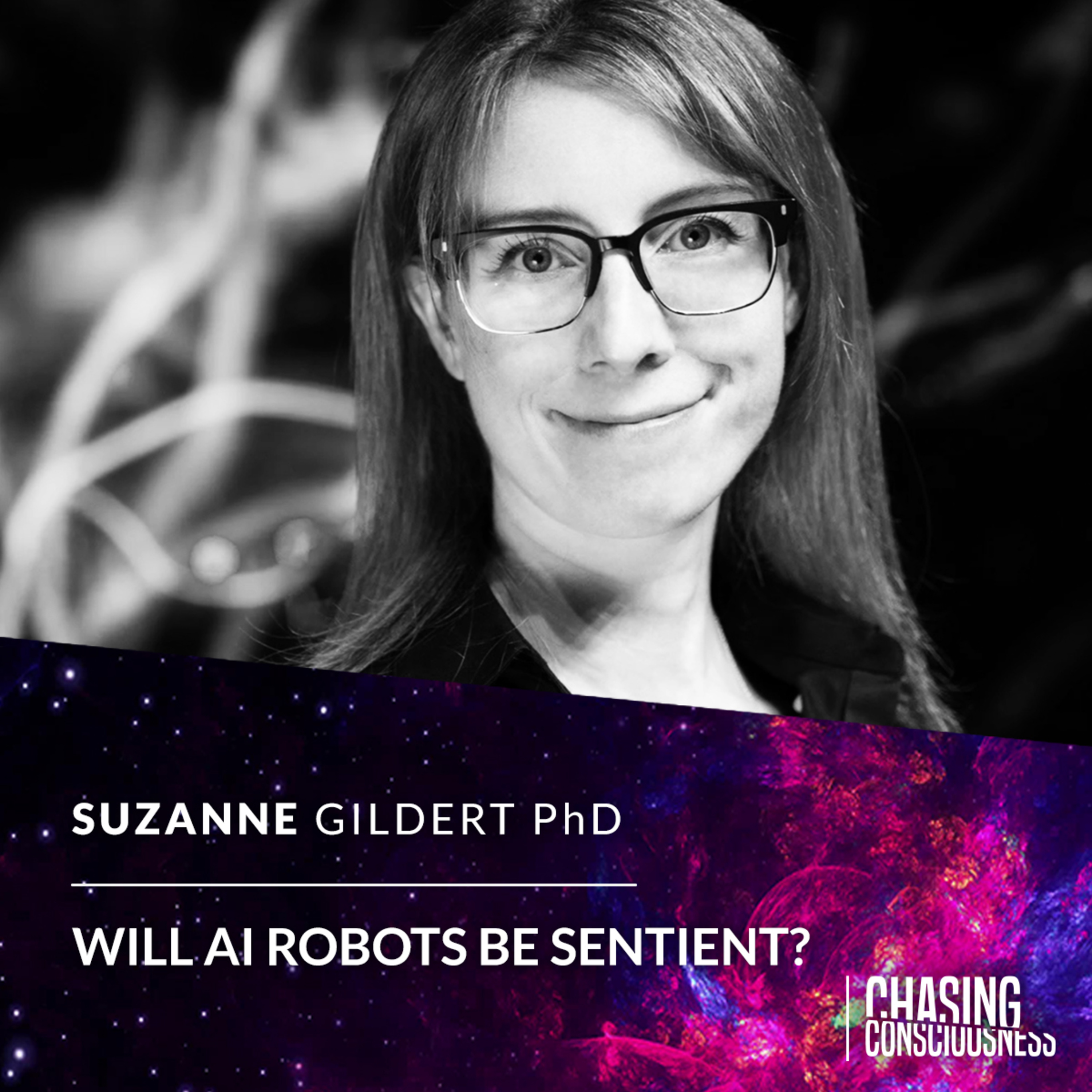
| 11/1/25 | ![]() WILL AI ROBOTS BE SENTIENT & THE QUANTUM FOUNDATIONS OF CONSCIOUSNESS - Suzanne Gildert PhD #82✨ | artificial intelligenceconsciousness+3 | Suzanne Gildert | AIquantum computing+1 | — | AI robotssubjective experience+3 | — | 1h 32m 07s | |
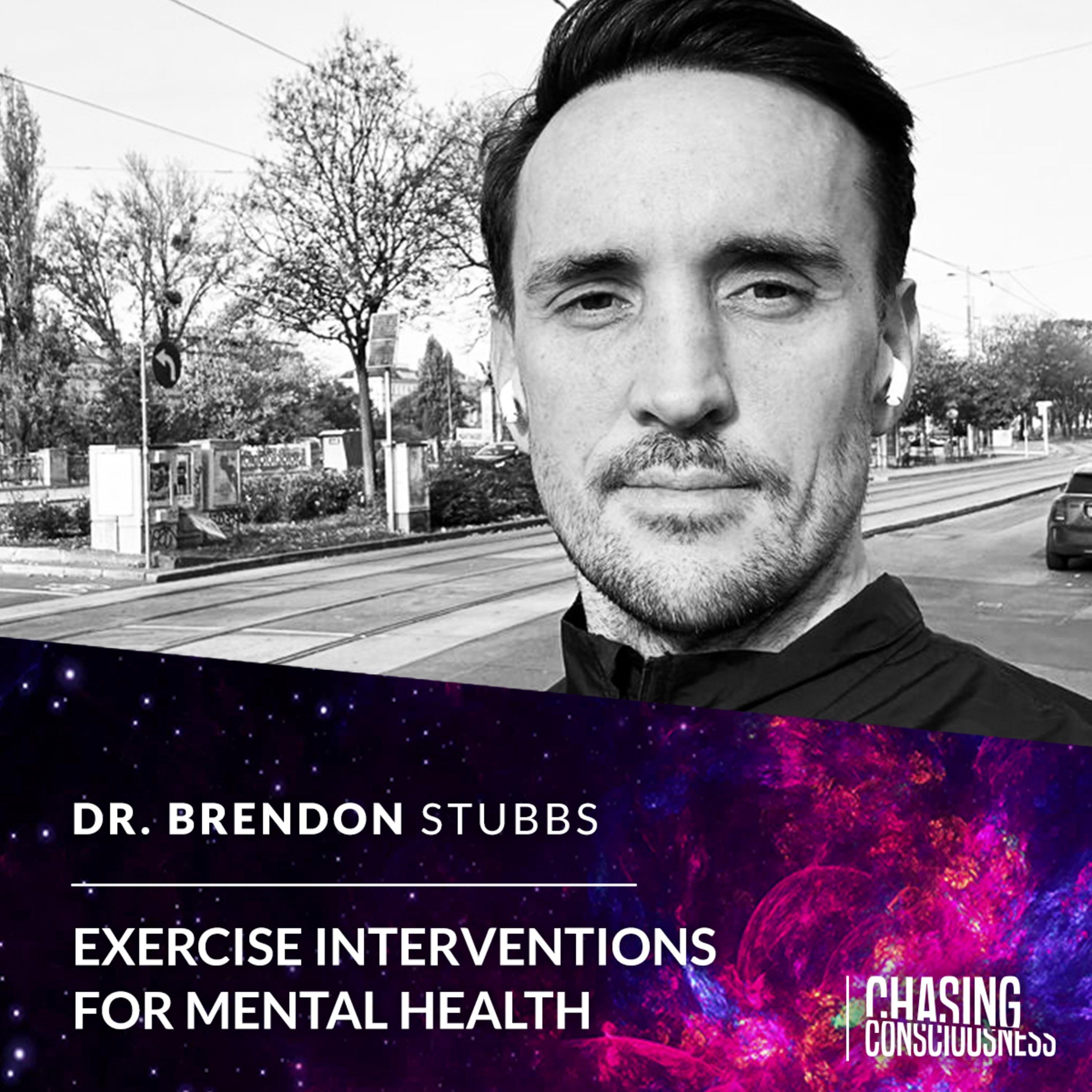
| 10/14/25 | ![]() EXERCISE INTERVENTIONS FOR MENTAL HEALTH - Dr. Brendon Stubbs #81✨ | exercise and mental healthlifestyle medicine+4 | Dr. Brendon Stubbs | Kings College | — | mental healthexercise interventions+5 | — | 1h 07m 20s | |
| 9/30/25 | ![]() ON FACING DEATH, according to C.G.Jung - Monika Wikman PhD✨ | deathconscious dying+4 | Monika Wikman | C.G.Jung | — | deathconscious dying+5 | — | 1h 24m 17s | |
| 9/14/25 | ![]() THE 4th PHASE OF WATER EXPLAINED - Gerald Pollack #79✨ | 4th phase of waterenergy storage+3 | Gerald Pollack | Pollack LabsUniversity of Washington | — | 4th phase of waterstructured water+3 | — | 1h 48m 22s | |
Want analysis for the episodes below?Free for Pro Submit a request, we'll have your selected episodes analyzed within an hour. Free, at no cost to you, for Pro users. | |||||||||
| 9/1/25 | ![]() THE MIND BODY PROBLEM & THE PANPSYCHISM SOLUTION - Galen Strawson PhD #78✨ | mind-body problempanpsychism+4 | Galen Strawson | University of OxfordUniversity of Texas+3 | — | consciousnesspanpsychism+5 | — | 1h 21m 49s | |
| 7/31/25 | ![]() MEMETICS IN THE AGE OF ARTIFICIAL INTELLIGENCE- Susan Blackmore PhD✨ | memeticscultural evolution+4 | Susan Blackmore | The Meme MachineZen and the Art of Consciousness+2 | — | memescultural evolution+5 | — | 1h 01m 01s | |
| 7/14/25 | ![]() AI SAFETY - A SCEPTICAL VIEW - Stephen Wolfram PhD #76✨ | AI safetyemergent properties+4 | Stephen Wolfram | AI safety campaigners | — | AIsafety+5 | — | 1h 40m 42s | |
| 6/30/25 | ![]() OUT OF BODY EXPERIENCES: THE ANTHROPOLOGY - Samantha Lee Treasure #75✨ | Out of Body Experiencesastral projection+5 | Samantha Lee Treasure | SOAS universityUniversity of Liege+1 | — | Out of Body Experiencesastral projection+6 | — | 1h 29m 18s | |
| 6/14/25 | ![]() INTELLIGENT LIFE ON OTHER PLANETS, WHAT ARE THE CHANCES? - Adam Frank PhD #74 | How do astronomers detect the conditions for life and techno-signatures on exoplanets many lightyears away? What conditions on earth give us clues to how life might have formed elsewhere? How do intelligent civilisations evolve to technomaturity before they destroy themselves?So in this episode we have the mysterious arising of life and eventually intelligent life on our planet to try and explain, to then apply that to our search for other intelligent life in the cosmos. So to explain that we’re going to be getting into the co-evolution of the geosphere and the biosphere on earth and their corresponding feedback loops; the possibility of planetary level intelligence; the difficulty of laying a technosphere on top of the geo and biosphere, and the risk of civilisations wiping themselves out before learning how to harmonise the technosphere with the biosphere; We’ll be looking at the changes in the field of SETI (the Search for Extraterrestrial Terrestrial Intelligence), since we can now identify potentially life sustaining exo-planets in nearer parts of the galaxy; we’re going to get into the newly funded search for techno signatures from advanced civilisations, and potential space junk from the many civilisations that presumably didn’t make it; lastly we’re going to discuss recent claims of ancient and alleged present visitations to earth by extra terrestrial intelligence.Fortunately to face these tough and complex issues, our guest is a world specialist in astrobiology, with a talent for making these topics fun and imaginative, an astrophysics professor at the University of Rochester, Professor Adam Frank. He’s the author of over 200 scientific papers and 6 books for the general public including, “The Blind Spot: why science cannot ignore human experience” and “The Little book of Aliens” which we’ll be focussing on today. He’s also an award winning science communicator, on a mission to raise public awareness about existential risk and science in general.What we discussed:00:00 Intro.05:20 The importance of experience.07:00 The limits between the expressible and the inexpressible.09:10 Semantic Information: life as self organising, autonomous agents.15:00 There’s stuff you can’t talk about - there’s only the silence16:20 The Basian probability of other life in the universe.20:00 The ingredients for life on this earth.22:30 The codependence between Geo and Biosphere.22:60 Gaian feedback loops. 27:00 The earth is not conscious but it is an agent.29:45 Mind is a process, it’s not just in the head.33:25 The fluidity of individuality.34:30 Distributed Cognition - bacteria, fungal networks etc.38:30 A fundamental reimagining of what we mean by ‘Nature’.39:30 There is no disembodied perspective.41:00 Geosphere to Biosphere to technosphere maturity.47:30 The biosphere offers a model for what planetary intelligence looks like.48:00 The history of search for extra terrestrial Intelligence, SETI49:00 The Drake equation - 7 requirements for intelligence life.53:45 We’ve never looked - a tiny amount of the sky has been studied.54:00 Exoplanets: searching for biosgnatures and techno signatures.56:00 Technospheres: Kardeshev scale and Dyson Spheres.59:00 Techno junk from dead civilisations.01:02:30 UFO’s need more data to be taken seriously.01:08:20 UFO’s could be surveilling their spy tech.01:10:00 Pros and Cons of solar system settlement.References:Adam Frank, Evan Thompson, Marcelo Gleiser, “The Blind Spot: Why science cannot ignore human experience”.Adam Frank, “The Little Book of Aliens”Adam Frank, David Grinspoon, Sarah Walker - Intelligence as a planetary scale process.Lynn Margulis - Evolutionary Biologist.David Krakauer et al, An information theory view of individuality Frank Drake - Project OzmaJason Wright - SETI meta-analysisExoplantets.orgAdam Frank - New York Times ‘I’m a Physicist Who Searches for Aliens. U.F.O.s Don’t Impress Me’ article"The Expanse", Apple TV series | — | ||||||
| 5/31/25 | ![]() DMT ENTITY ENCOUNTERS, A QUANTITATIVE STUDY - Dr David W Lawrence #73 | What’s the architecture of a DMT experience, who are the entities that regularly interact and what’s their message? How can DMT therapy facilitate positive mental health outcomes?In this episode we’re going to learn about the bizarre types of experience that users of DMT have; DMT being the most powerful hallucinogenic molecule on the planet. So we’ll be getting into the background of psychedelics for mental health; and the particularities of DMT, the active ingredient in Ahyuasca and the psychedelic that most often presents entities that interact meaningfully with the experiencer; we’re going to discuss the different types of entities: from mythological creatures, to Gods and Demons, to machine elves and aliens, and the significance of these same characters appearing significantly often without an obvious primer; we’ll also discuss the importance of mystical experience and teacher /guide experiences to positive mental health outcomes.Fortunately our guest was the head researcher on a 2022 paper that looked at exactly this topic, the medical doctor and sports scientist professor at the University of Toronto, Dr. David Wyndham Lawrence. He’s published over 35 scientific papers across sports science and psychedelics for medical use.What we discussed:00:00 Intro05:20 Concussion, sports mental health & psychedelic therapy.08:10 Bringing in Robin Carhartt-Harris on the gaps in sports mental health treatment.12:06 Why psychedelics for those already in psychological difficulty?14:04 Serotonin receptor - neuro-protective mitochondria function.15:00 DMT is endogenous to the brain. 18:20 Medical institution meets shamanism.23:50 David’s DMT phenomenology paper.30:10 The architecture of the DMT world.32:60 Mostly positive, interactive entity encounters.37:05 Occasionally negative encounters.38:40 Negative psychedelic experiences study - Jules Evans.40:05 How much “Primers” from pop culture influence experiences.44:00 Alien encounters in %16 of participants.45:30 Medical procedures by entities in 9% of participants.47:05 Mystical experiences in %70 of participants.49:00 Familiarity/ sense of home in the experiences.52:20 Default Mode Network is less active during altered states.48:35 Ego dissolution Vs mystical experience.01:00:00 5meoDMT Vs DMT.01:03:20 Wise teacher experience in 32% of participants.01:05:20 Death bed palliative doses to alleviate fear of death.01:09:50 ‘You’re not ready for this experience’ message.01:11:05 Theories of DMT experiences evaluated.01:12:20 ”All models are false but some are useful”, anonymous statistician.References: David Lawrence, “Phenomenology and content of inhaled DMT” David Wyndham Lawrence and Robin Carhart-Harris, “Sports Medicine, Mental Health & Well-Being, and Psychedelics” Benny Shanon, “Antipodies of the Mind”Matthew W. Johnson - Johns HopkinsAndrew Gallimore - “Death by Astonishment”Jules Evans et al, “Extended difficulties following the use of psychedelic drugs”Similarities between DMT and Alien encounters paperDavid W. Lawrence, “DMT Occasioned Familiarity and the Sense of Familiarity Questionnaire”Roland Griffiths, “Psilocybin produces substantial and sustained decreases in depression and anxiety in patients with life-threatening cancer” | — | ||||||
| 5/14/25 | ![]() THE SLEEP DEPRIVATION EPIDEMIC & SOLUTIONS - Roxanne Prichard PhD | What are we sleeping less and less? What are the benefits of getting a good nights sleep and the risks if we consistently don’t? How is sleep linked to memory, cognitive performance, blood sugar regulation & stress hormones? How is young people’s development affected by sleep?In this episode we have the surprising data on the science of sleep to get up to date on; so, why there’s a sleep deprivation epidemic; how sleep works and what it’s required for; dreams; and importance of sleep for learning and for immunity. We’re also going to discuss the wide range of serious health issues that arise with even a small sleep deficit, and the vast benefits of getting sleep right; and the lifestyle tips we need to consistently get the sleep we need. And of course, sleep and mental health, and the importance of sleep for development in young people.Gratefully our guest today is a psychologist and neuroscientist that specialises in sleep, mental health and dream research, particularly in young people. She’s the Scientific Director of Psychology at the University of St. Thomas, Minnesota, Roxanne Prichard! She’s the author of over 40 highly citied scientific papers, and her TEDx talk “Addressing our Childrens Sleep Debt” was featured in the lecture series: Transforming Education. She’s quoted regularly in the press, inlcuding the New York Times, Wall Street Journal, Teen Vogue, and USA Today.What we discussed:00:00 Intro.05:00 The Sleep deprivation epidemic.07:15 Shaking off prejudice about resting being laziness. 08:31 Glymphatic system for toxin removal.10:00 Synaptic plasticity: Learning & unlearning.11:10 Learning & memory require sleep.14:00 The hippocampus processes memory during sleep.15:00 Late night cramming for exams blocks learning.15:50 Lack of sleep appears to the body as a threat out in the world.17:40 Blood sugar regulation is affected by sleep.18:00 “Sleep! Like diet and exercise only easier!”19:10 Immunity and sleep deprivation.21:00 Cancer & regularity of circadian rhythms.22:00 Evolution, daylight, circadian rhythms & learning.23:45 Sleep delay of morning stress hormones in teens. 26:15 Light Vs Deep ‘Slow Wave’ Vs REM sleep.30:00 REM Sleep explained. 33:00 Dreams: The top theories.36:30 The electrical nature of sleep & brain waves.40:00 Alpha Waves and biofeedback for insomnia.42:00 Insomnia & the health risks of sleep deprivation.46:00 Sleep is within our control.47:15 The inflammation link with sleep.49:30 The mental health risks of sleep deprivation. 50:00 Catastrophising and attention deficit.50:45 College students mental health & sleep as a crucial marker.57:30 Persausive technology, screens & sleep.01:02:30 How much sleep do we need? 01:04:25 Avoid external stimulants & go to low light.01:06:00 Avoid internal stimulants like caffeine and alcohol. 01:07:40 Sleep and wake at regular times every day.01:08:40 Core temperature dropping signals sleep.01:10:00 Roxanne’s campaign points.01:12:00 The shame around rest. References: Ya Chai at al, ‘Two nights of recovery sleep restores hippocampal connectivity but not episodic memory after total sleep deprivation’ paper.https://www.nature.com/articles/s41598-020-65086-xN.I.H. article, 'Sleep on it - How snoozing strengthens memories' (40% drop in learning after sleep deprivation)https://newsinhealth.nih.gov/2013/04/sleep-itU. Chicago Medicine article, 'New study helps explain the link between sleep loss and diabetes'.Trisha Hershey, ‘the Nap’ Bishop. - “Rest is Resistance” book. | — | ||||||
| 4/30/25 | ![]() GLOBAL FIELD CONSCIOUSNESS THEORY - Roger Nelson PhD #71 | Can intention alone cause changes in physical systems? Can the collective attention of a large group of people to an event cause changes in the coherence changes in physical systems, despite that lack of intention to do so?In today’s episode we’re going to be exploring a field consciousness hypothesis: so a variation on the idea that consciousness may extend beyond the body and interact casually with physical systems and the consciousness of other beings, in some kind of resonant field phenomena. We’re going to be learning about the experiments with random number generators used to test this hypothesis; how human intention and attention has been proved to be able to affect these random outputs in a vast backlog of positive results and meta analyses; We're going to hear about how these experiments have been taken global, looking at collective effects on RNGs of particularly important world events that many people are attending to; we’re going to be looking at criticisms of the statistical analysis and a potential experimenter effect; and we’re going to be talking about the contrast between some seemingly non-local effects with other localised effects; and as always we’re going to be getting into the implications, in this case of whether the ‘field consciousness’ effect the data seems to point to, is more likely to be a unified field of consciousness, so in some sense a single mind, or simply the aggregated sum of all individual consciousnesses. Now fortunately to guide us as we carefully test the thickness of the ice on this genuinely alternative world view of consciousness, we have the cognitive psychologist that has pioneered these field consciousness experiments since he founded the Global Consciousness Project at the Princeton University PEAR labs, Roger Nelson. Roger worked at Princeton’s PEAR labs in the department of Mechanical and Aerospace Engineering, initially under Bob Jahn, for over twenty years until his retirement in 2002. He is also the author of the book “Connected: The emergence of global consciousness”.What we discuss:00:00 Intro.07:30 Random Number generator ‘mind-matter interaction’ experiments at Princeton PEAR labs.21:10 Bob Jahn - Dean of Engineering at Princeton.28:45 Emotional and passionate group events saw coherence in the RNG experiments. 33:00 Contrast between apparent local and non-local effects.37:55 David Bohm’s Implicate / Explicate order concept.38:55 “Pilot wave” and “active information” link between the implicite and the explicate.43:55 Statistical results generation and analysis of significance.49:05 The sceptics criticisms.51:45 The Global Consciousness Project methodology. 53:05 Pierre Teilhard de Chardin’s mind sphere, called ‘Noosphere’.57:45 Measuring the group coherence of Princess Diana’s funeral.01:00:25 The 9/11 Results.01:05:55 The emotional component in coherence.01:18:40 The quantity of people and strength of the emotion, whether positive or negative, raises the effect size.01:11:10 A single collective consciousness VS an aggregate of all individual consciousnesses. 01:14:50 Different levels of collective consciousness above individual bodies.01:16:55 The analogy of individuals being like neurones in a cosmic brain.01:20:55 The Experimenter effect criticism.01:26:10 The Helmut Schmidt “Unobserved tape” experiment.01:29.10 The indeterminate state before observer ‘collapses of the wave function’ analogy to explain results.01:37:25 The Schmidt ‘retrocausation’ hypothesis.References:Roger Nelson, “Connected: the Emergence of Global Consciousness”Robert Jahn And Brenda Dunn, “Margins of Reality”International Consciousness Research Laboratories (ICRL) Publishing.Pierre Teilhard de Chardin, “The Phenomena of man” | — | ||||||
| 4/14/25 | ![]() MOOD FOOD: TREATING MENTAL HEALTH WITH DIET - Felice Jacka PhD #70 | How much can a change in diet influence symptoms of mental health disorders? Why are a diversity of plants and whole foods so important to include, and ultra processed foods so important to remove? Why are inflammation and microbe diversity in the gut so key to this question? What does this research mean for the life-style medicine movement and to world food policy?In this episode we have the exploding new field of nutritional psychiatry to get to grips with, that is the way our diet can influence and even treat mental health conditions. We’re going to be discussing the historical separation of mind and body by science, which has led to scepticism that diet could influence mental health outcomes; the new understanding of the importance of diversity in our microbiome and inflammation to our mood and mental state; our main topic which is going to be the radical results of recent trials showing large changes in cognitive and mental health outcomes when diet is altered; we’ll get into the foods that can bring about that change and why they work; and we’re going to be getting into the reasons for the broken industrialised food environment that has contributed to the current mental health epidemic in the west.Fortunately, to understand this complex new field, our guest today is the very scientist that risked her reputation to conduct the first trials, facing considerable pushback, only to shift the consensus remarkably quickly with some top science, Felice Jacka. She is the Deakin University Distinguished Professor of Nutritional Psychiatry in Melbourne, the founder and director of the Food & Mood Centre, and of the International Society of Nutritional Psychiatry; She has been cited in over 100 institutional directives for food policy including the World Health Organization and UNICEF; and she is also the author of two books on this for the general public, the children’s book “There’s a Zoo in my Poo” and for adults “Brain Changer: How diet can save your mental health” which we’ll be covering today. Her impact has been so high on public health that in 2021 she was awarded the Order of Australia for her services to nutritional psychiatry.What we discuss:00:00 Intro08:50 The historic separation between mental and physical health. 10:35 People with mental health die about 20 years earlier. 13:30 The connection between the immune system and mental health. 16:20 New microbiome & chronic inflammation research’s influence on psychiatry. 20:00 Epigenetics, mitochondria (energy generation) & neurotransmitter influences. 21:15 Gut brain axis & oxidative stress response.33:30 The SMILES trial results and their integration into the consensus. 38:30 Using the Press to shorten the usual 20 year gap between results and policy change. 43:00 Industrialised food is the leading cause of chronic disease & biodiversity loss. 45:00 ‘We’re not going to tell people what to eat’: the food lobby’s ‘nanny state’ argument. 50:00 Soil depletion and the soil microbiome. 50:50 The life-style psychiatry movement: Diet, sleep and exercise. 01:05:30 Take out ultra-processed foods - even the nutritionally balanced ones. 01:12:30 Cognitive ability and memory reduced by processed foods. 01:14:45 Nutritional and energetic equivalent foods have totally different outcomes for the microbiome. 01:19:15 Put in a variety of plants - 30 a week. 01:20:20 The mediterranean diet. 01:24:50 Polyphenol science so far. 01:27:00 Emulsifiers and artificial sugars - the mucosal lining of the gut. 01:30:15 Fermented foods - the waste products of the bacteria are beneficial. References:Felice Jacka, “Brain Changer: The Good Mental Health Diet”Felice Jacka, “There’s a Zoo in my Poo”Melissa Lane et al, ‘Ultra‐Processed Food Consumption and Mental Health: A Systematic Review and Meta‐Analysis of Observational Studies’ paperFelice Jacka’ et al, ‘A randomised controlled trial of dietary improvement for adults with major depression (the 'SMILES' trial)’ Paper | — | ||||||
| 3/31/25 | ![]() EMBODIED COGNITION MEETS BUDDHISM - Evan Thompson PhD #69 | What is the relationship between our cognition and our bodies in the natural environment? How do we reconcile the presence of mind in life without splitting them into a dualism? What are the similarities between cognitive science and the buddhist view of the mind? How can we resist the bifurcation of nature into subjective and objective?In this episode we have the important topic of embodied cognition to raise our awareness about, that is the importance of our biologically lived experience to our perspective of world. So we get into the biologist and neuroscientist Francisco Varela’s concept of Autopoiesis, literally ‘self creation’ from the Greek, which describes the extraordinary tenacity of self-organising living systems to create and sustain themselves; we discuss the meeting point of buddhism, meditation, asian philosophy and modern cognitive science which may have become overstated in recent decades; and we get into the deep continuity between body and mind, and the importance of the artificial separation of the objective and subjective in the history of science, that has led us to the dominant position of reductionist materialism.To face these diverse topics, we have as our guest the hugely influential philosopher, cognitive scientist and Asian philosophy scholar Evan Thompson. Evan is Professor of Philosophy at the University of British Columbia in Vancouver and an Associate Member of the Department of Asian Studies and the Department of Psychology (Cognitive Science Group). He is also a Fellow of the Royal Society of Canada. He is the author of many books, collected works, and papers, including “The Embodied Mind: Cognitive Science and Human Experience”, “Mind in Life”, “Why I’m not a buddhist” and “The Blind Spot, why science cannot ignore human experience”.What we discuss:00:00 Intro.06:30 Francisco Varela and the “Embodied Mind” book.11:00 Embodied experience, embedded in the environment.13:15 Chalmers and Clarke: Extended mind.15:30 Autopoiesis - Self-creation. Maturana.21.25 Autonomy and enactive self-organising systems.24:30 Neither Inside out, nor outside in, rather relational.26:00 The Enactive relationship between organism and environment.29:00 Mind is a distributed systemic process in connection with the environment.34:00 Neurophenomenology - you need an investigation from within.38:40 Mind in life & Deep Continuity.40.00 Sense making and cognition are proto-mind.41:30 Whitehead and the bifurcation of nature into subjective and objective.44:45 Bottom up/ parts VS top down/ wholes.47:00 Reductionism: the surreptitious substitution.53:45 Buddhism & The Mind and Life Institute.01:03:30 Buddhist exceptionalism.01:05:00 Neuroscience & Buddhism on self.01:09:45 The commercialisation of meditation - spiritual narcissism.01:12:15 The benefits of mindfulness to treat mental heath.01:13:30 De-individualisation of spiritual practices - social practice for social problems.01:15:45 Ritualisation of practice for positive transformation.01:18:30 Dependent Origination and the Self.01:26:15 Dying: Our ultimate transformation. References:Evan Thompson, “The Blind Spot”Evan Thompson,“Mind In Life”Evan Thompson,“Why I’m not a buddhist”Evan Thompson, “Waking, Dreaming, Being”Alfred Lord Whitehead - The Bifurcation of nature articleDavid Bohm - “Wholeness and the Implicate Order”Evan Thompson quote from the episode:“Mind is a systemic property or process. It’s not in the head” | — | ||||||
| 3/14/25 | ![]() MEMORY - A NEW PERSPECTIVE - Charan Ranganath PhD #68 | Why and how do we store certain memories and not others? What lifestyle elements influence memory for better or worse? Can traumatic memories be reframed and lead to reduction in symptoms?In this episode we get into the most recent research into memory. So, how we store memory; the different types; the way we actively construct it rather than simply receiving it; it’s importance to our sense of self and framing of the world; to our attention and motivation; to our openness and updating our beliefs; and to Deja Vu. We talk about the influence of screen time and multi-tasking on memory; some unexpected life style factors that influence the quality of memory function and how they can feed into memory disorders; and we discuss traumatic memories and how we can reframe them, and the psychedelic research on that too.Fortunately, our guest is one of the world’s most fun and knowledgeable authorities on memory, psychologist, neuroscientist, and head of the dynamic memory lab at The University of California Davis, Dr. Charan Ranganath. He’s the author of over 120 scientific papers on memory and has recently released a fascinating book for the general public on all this, “Why We Remember”. Charan is also a rock guitarist with several bands so a man of many talents. What we discuss:00:00 intro. 07:20 The remembering self vs experiencing self. 09:30 We forget a lot, we’re supposed to.11:00 Autobiographic memory.13:30 Episodic memory.14:20 Emotional intensity brings attention, which is linked to motivation.18:20 Association, cue and prompts, and the hippocampus.20:30 Memory athletes and training memory.21:51 Storifcation, mental schemas and ‘scaffolding’ new memories with old blueprints.24:40 Preconceptions, bias and prejudice is baked into new memories.27:00 Imagining the past (re-membering) and imagining the future are very similar in the brain.29:15 The brain is not linear, rather a global network of dynamic interaction between brain regions simultaneously.31:29 Prediction error, goals, and memory enhancement.37:00 Dopamine drives our attention, interest and curiosity, multiplying remembering.43:20 Mental flexibility, youthful neuroplasticity, and openness to new experience.46::00 The ‘Stage of Life’ theory of memory.49:00 The young brain needs to struggle to get the information they’re curious about.50:15 Deja Vu research and familiarity.54:20 The environmental and social components of memory. 58:15 The act of remembering can change that memory.01:00:00 Collective memory - shared memories support sense of self.01:01:20 Life style factors: good for the body = good for the brain, so good for memory.01:02:00 The importance of vascular health and inflammation.01:06:30 Depression inversely correlates with memory.01:08:45 Screen time, focus and memory.01:10:20 Multi taking is actually switching, and leads to fragmented memories.01:12:30 Traumatic memories and reframing them.01:19:20 Psychedelic reframing of memories. 01:20:20 Extinction learning - learning to suppress memory prompts and re-write them.References:Charan Ranganth, “Why We Remember” Daniel Kahneman, “Thinking Fast and Slow”Hermann Ebbinghaus, “Memory: A Contribution to Experimental Psychology” 1885Endel Tulving, ‘Mental time travel’Frederic Bartlett, 1930 ‘Imagining the past and constructing the future’Mathias Gruber and Charan Ranganath, “How Curiosity Enhances Hippocampus-Dependent Memory: The Prediction, Appraisal, Curiosity, and Exploration (PACE) Framework” PaperAnne Cleary, Deja Vu experiments article | — | ||||||
| 12/1/24 | ![]() PLANT INTELLIGENCE, MEMORY & COMMUNICATION - Monica Gagliano PHD #67 | How do plants communicate using sound? How do they remember previous stimuli that have proven not to be threat, when at first they seemed like one? Where is the memory encoded considering they have no brain? What are the implications for biology of plant memory?In this episode we cover the ground breaking topics in plant cognition studies of: plant intelligence, behaviour, memory and communication. The type of experiments presented here have never really been done before, because there has always been an assumption in plant science that the cellular cognition that all living cells have, relies solely on light, touch or chemical interactions; so it doesn’t really permit for plant behaviour, memory and consciousness. So with my guest today, the first scientist to bypass the assumptions and try these tests, we’re going to discuss her experiments with plants; that clearly show not only basic memory and the corresponding updated behaviour based on that memory, but even pavlovian memory, i.e. associative memory that requires arbitrary stimuli to take on meaning to the plant. Obviously all of this has massive implications for distributed memory and memory beyond brains. We’re also going to get into plant medicine and other indigenous approaches to connecting with plant consciousness; and what plant communication and biophilia in general might do for our relationship to the natural world as we face imminent biosphere collapse.My guest is of course, the research associate professor of Evolutionary Ecology at several universities in Australia, Monica Gagliano. She’s published over 60 scientific papers, across the fields of Ecology, Plant Cognition, Plant Communications and Marine Ecology.She is also the author of the books “The Language of Plants: Science, Philosophy and Literature”, and the highly celebrated,“Thus Spoke the Plant, A remarkable Journey of Groundbreaking Scientific Discoveries and Personal Encounters”.What we discuss:00:00 Intro05:00 The consensus on Plant intelligence & communication.09:20 The difference between reacting and responding in cognition.10:00 Bio-acoustic communication between plants.21:07 Possible methods for plants to percieve sound.22:00 Response to gravity may be similar.23:30 Her plant memory experiment with Mimosa.27:15 ‘Habituation’ learning: screening out non-useful stimuli.32:15 The connection between hardship and accelerated adaptive learning.37:50 Her ‘Pavlovian’ associative memory experiment with peas.46:10 The Implications of plant memory for modern biology. 49:25 Where is memory stored without a nervous system?52:30 Monica’s ethical crisis in animal studies.01:00:00 ‘Pavlovian’ associative memory experiment with peas.01:01:30 ‘Dieta’, amazonian plant communication practice.01:05:00 Shamanic interface with plant wisdom, particularly for healing.01:08:00 Reductionist materialist pushback is representative of the colonial history of abuse of nature.01:11:00 Indigenous science and a new book in the making.References:Monica Gagliano, “Thus Spoke the Plant, A remarkable Journey of Groundbreaking Scientific Discoveries and Personal Encounters”.Gagliano, Manusco & Robert, “Towards Understanding Plant Bioacoustics” paper | — | ||||||
| 11/15/24 | ![]() MORPHIC RESONANCE, NATURE'S MEMORY & EXTENDED MIND - Rupert Sheldrake PHD #66 | Where is nature’s memory of its evolution encoded? Is there evidence for extended mind occurring beyond individual brains? How possible is it that the sun is conscious? In this episode we’re going to get up to date on Rupert Sheldrake’s extraordinary theory of Morphic resonance: so Morphic fields, the unfolding of nature’s ‘habits’ and the ‘memory of nature’. We’ll examine the possibility of levels of consciousness larger than our own brains - scaling up in a hierarchy from cellular consciousness right up to planetary and perhaps even stellar consciousness! We’re also going to get into examples of consciousness beyond the brain like ‘the sensation of being stared at’ (clearly a useful skill to evolve) and other phenomena Rupert has reported in his experiments. Rupert Sheldrake is a Cambridge PHD developmental Biologist whose published over 100 papers on topics as wide as Cellular Biology, telepathy, Pets who know when their owners are coming home, and after-death communications. He is also the author of many books like “A new science of life”, “Science set free”, and “Ways of going Beyond”, among many others. What were discuss: 00:00 Intro. 06:10 Morphic resonance explained. 08:15 Polar Auxin - death in the midst of life. 09:15 Genes make proteins, morphogenetic fields determine form. 11:30 Nature’s “memory” spread across time. 13:25 Something that has happened before is more likely to happen again. 14:15 Collective memory, like Jung’s collective unconscious. 17:15 His scientific education engrained materialism and atheism in him.. 18:15 Asian philosophy, psychedelics, Neo-platonism and Christianity. 20:30 Questioning of scientific dogma came before his faith. 22:00 Thomas Kuhn’s paradigm change, an analogy for him breaking with science. 23:50 Rupert’s work denounced as ‘Heresy’ by the editor of Nature in 1981. 26:30 Measuring Morphic fields in experiments. 28:30 IQ tests have got easier for people over time, The Flynn Effect 30:00 Video games have to make new versions harder each time. 32:10 Is subtle energy field research beyond science? 37:00 Bioelectric morphogenetic fields & Michael Levin. 41:20 Bioelectric fields are the interface not the explanation. 42:30 Where are morphic fields recorded in nature? 44:50 Platonism doesn’t explain evolution and change over time. 47:00 Different levels of collective consciousness, up to planetary, stellar and even cosmic consciousness. 56:40 The feeling of being stared at: examples of extended mind. 01:02:55 Mystical experience - being part of a greater consciousness. 01:09:40 Are spiritual & scientific insight compatible? References: Rupert Sheldrake, “A New Science of life”. Michael Levin - Bio-electric morphogenetic fields CC interview The Sheldrake.org Staring App. Polar Auxin QUOTE: “Morphic resonance leaps across time and space, It’s not stored anywhere it’s a direct connection with the past.” | — | ||||||
| 11/1/24 | ![]() POST-REDUCTIONIST SCIENCE - Marcelo Gleiser PHD #54 | Why is our subjective experiences and cultural context inseparable from our scientific theories and attempts to be objective? Why is it that the more we know, the more we know we don’t know? What does reductionist materialism miss out from the scientific picture and what does a post-reductionist science look like? How can understanding some of materialism’s incompleteness help us face humanity's greatest problems?In this episode we have the blind spots of enlightenment science to assess; we’re going to be investigating the common belief that science can provide a universal, objective, God-like perspective of the truth of things, independent from our human experience. We’re also going to look at the implications of the consensus in science that all phenomena can be reduced to solely material causes, and what that may be missing out. To assess this we’re going to be looking at data from cosmology, biology, cognitive science and quantum physics and thinking about the assumptions that are so baked in to our western scientific approaches, that we may have forgotten they’re assumptions at all. In order to do this we’re going to be speaking to Brazilian professor of theoretical physics at Dartmouth College, Marcelo Gleiser. Marcelo works on a range of topics from Cosmology and information theory, to the history and philosophy of science, and how science and culture interact. He’s also the author of many popular science books including most recently, “the Dawn of Mindful Universe: A manifesto for humanities future” and his new 2024 book which we’ll be focusing on today, “The Blind Spot: Why Science Cannot Ignore Human Experience”, Co-authored with astronomer Adam Frank and philosopher Evan Thompson, who will be not he show in the next series.Gleiser’s also the first South American recipient of the prestigious Templeton Science prize for his standpoint that science, philosophy and spirituality are complementary expressions of humanities deep need to explore the unknown.I have wanted to speak to Marcelo about the limits of science and a post-reductionist approach to science since he was recommended by my previous guest psychiatrist and brain-hemisphere researcher Dr. Iain McGilchrist in the series one episode “Navigating beyond Materialism”, and I’m extremely glad I followed him up on it.What we discuss:00:00 Intro06:14 Asymmetry is also beautiful. 11:40 The more you know, the more you know you don’t know.18:00 ‘Interbeing’ - buddhism and the philosophy of science.22:00 Bacteria are our ancestors.23:00 Sacred ancestral knowledge - belonging & gratitude for nature.30:00 Extremely unlikely chemical steps and extinction events required for life to develop.35:00 The chances of intelligent technological life on other planets.37:00 Fine-tuned for life VS the anthropic principle.50:30 Post-enlightenment sacredness.52:00 The rise of reductionism. 01:03:30 Newton was troubled by his theory.01:08:37 Strongly and weakly emergent phenomena.01:12:00 Downward or upward causation? Dualism or monism?01:17:50 Scientific concepts are stories, and stories are simplifications too.01:21:20 “The Blind Spot: Why science cannot ignore human experience”.01:26:31 “Sureptitious substitution” of concepts for experiences.01:28:45 Is consciousness fundamental?01:42:45 Blindspots in the hard sciences - jumps that are too big.01:53:30 Marcelo’’s new “The Island of Knowledge’ centre in Tuscany.Quote:“Gravity must be caused by an agent, acting constantly according to certain laws; but whether this agent be material or immaterial, I have left to the consideration of my readers.” — Sir Isaac Newton (Third letter to Bentley, 25 Feb 1693)References:Marcelo Gleiser, “The Blind Spot: How science must take include human experience”.Marcelo Glesier, “The Dawn of a Mindful Universe”Aristarchus of Samos - The greek Copernicus‘The Island of Knowledge’ Centre in Tuscany, Italy | — | ||||||
| 9/30/24 | ![]() THE YOUTH MENTAL HEALTH CRISIS & SOLUTIONS - Louis Weinstock #64 | Why are we seeing such a rise in youth mental health diagnosis? How do we relativise this against the rise in mental health awareness? What’s the best approach for parents seeking solutions? How can social-connection and loneliness completely change trauma integration? What role does the recent explosion of persuasive technologies in young peoples lives play in the changing situation?In this episode we have the important topic of Youth Mental Health to get ourselves up to date on. Today we’re going to try and unravel these often divisary issues in a balanced way; we’re going to be discussing the importance of threat and safety to a child’s state of mind as they develop; the power of the parent or carer’s own unresolved issues to transmit to young people, creating symptoms in the child; the importance of going to the root of the problem rather than just treating symptoms; the role of escapism as an emotional avoidance strategy, and how digital platforms and device providers have taken advantage of that tendency, and the parenting strategies to guide this; and we’re going to discuss the role of shame in us avoiding facing these issues.Fortunately, considering the nuanced and potentially triggering topic of the mental well being of the children we parent and teach, today’s guest has just released the paper back version of his new book on exactly this topic, “How the world is making our children mad and what to do about it”. As a hugely experienced child psychotherapist and founder of the charity “Apart of Me” that supports children to transform their loss into compassion, he is perfectly placed to give us un update on this, and is filled with excellent stories and advice to help us face it. He is of course Louis Weinstock, a transpersonal psychotherapist and mindfulness specialist, who has worked with a wide range of sufferers from the criminal justice system, to drug addicts, to homeless people, to troubled teens and their parents.What we discuss:00:00 Intro.09:00 Our mental life is inseparable from our environment.11:45 ‘Fetal programming’ is applied in utero by the mother’s environment.14:10 Improvements in kid’s mental health, simply from parents doing the work.18:45 Children having behaviour issues at the same age as their parent’s had trauma.21:20 The evolutionary history of shame.25:40 The difference between shame and guilt.28:00 Rupture & repair: conflict in relationships is bearable and repairable.29:25 Is psychotherapy worth it for kids, considering the stigma?34:15 Mental health awareness can exaggerate our negative view of ourselves.38:30 Massive jump in recent stats on youth mental health.41:00 ‘Roots’ of mental health issues and ‘fruits’ we can learn from them.45:20 Suffering and transformation: post-traumatic growth.49:50 Escaping into virtual realities: Dissociation.53:00 The ‘freeze’ response - shutting the body down.01:00:40 Resilience explained - fragile vs anti fragile.01:04:00 The connection between loneliness and trauma. 01:05:25 Youth mental health and device/internet addiction. 01:07:25 ‘Variable reward’ strategy taken from gambling slot machines.01:12:30 Clear differences in kid’s moods and sleep after too long on devices.01:14:20 Parenting solutions to regulating screen time peacefully.01:16:40 No devices in the bedroom, particularly in the evenings before bed.01:20:30 Awareness: they’re capable of reflecting on their behaviour.01:24:20 Unsupervised play outside and in nature.01:25:40 The world is safer rather than less safe than in the past.References: Louis Weinstock, “How the world is driving our kids mad”https://louisweinstock.com/Apart of Me mental health charity (please donate) Jonathan Haidt - “The Anxious Generation”Let Grow movement for childhood independence | — | ||||||
Showing 25 of 42
Pitch Fit is a Pro feature
See how bookable this show is for guests, which brands already advertise, the per-episode ad value, and the best-fit guest and sponsor profile. The numbers are blurred on the free plan.
How readily this show books outside guests like you.
How proven this show is for host-read sponsorships.
For Guests
ProFor Advertisers
ProUpgrade to Pro to unlock guest cadence, sponsor categories, fit scores, and per-episode ad value for this show.