
ChinaTalk
by Jordan Schneider
Is this your podcast?On the show
From 32 epsHosts
Recent guests
Recent episodes
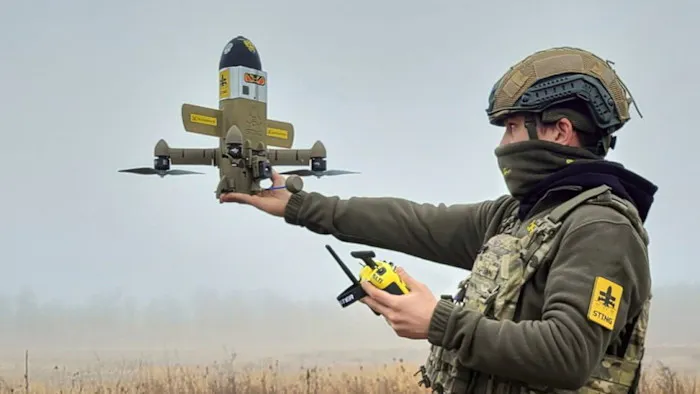
Drone Dominance | Travis Metz - DIU Acting Director
Oct 17, 2026
1h 22m 54s
Why a Chinese AI Lab’s Product Lead Thinks AGI is “Inevitable” | Richard Bian
Oct 16, 2026
1h 13m 53s
From Posting to Policy: Saif Khan on DUV and the AI Balance
Oct 15, 2026
59m 49s
Matt Yglesias + Jerusalem Demsas + Jordan Crossover Pod
Oct 12, 2026
1h 07m 40s
AGI Believers: Kevin Roose on the Race
Oct 8, 2026
1h 10m 52s
Insights from recent episode analysis
Audience Interest
Podcast Focus
Publishing Consistency
Platform Reach
Insights are generated by CastFox AI using publicly available data, episode content, and proprietary models.
Most discussed topics
Brands & references
Total monthly reach
Based on 1 signal.
Built from
By chart position
- 🇮🇳India · Politics#229.5K to 50K
- 🇺🇸United States · PoliticsHOME#1437.7K to 41K
- 🇸🇦SA · Politics#172.0K to 11K
- 🇭🇰HK · Politics#24675 to 3.6K
- 🇦🇺Australia · Politics#112454 to 2.4K
- Per-Episode Audience
Est. listeners per new episode within ~30 days
23K to 122K🎙 ~2x weekly·562 episodes·Last published 2d ago - Monthly Reach
Unique listeners across all episodes (30 days)
46K to 243K🇮🇳41%🇺🇸34%🇸🇦9%+11 more - Active Followers
Loyal subscribers who consistently listen
25K to 134K
Market Insights
Platform Distribution
Reach across major podcast platforms, updated hourly
Total Followers
—
Total Plays
—
Total Reviews
—
* Data sourced directly from platform APIs and aggregated hourly across all major podcast directories.
Social Links & Contact
Official channels & resources
Official Website
Login
RSS Feed
Login
| Date | Episode | Topics | Guests | Brands | Places | Keywords | Sponsor | Length | |
|---|---|---|---|---|---|---|---|---|---|
| 10/17/26 |  Drone Dominance | Travis Metz - DIU Acting Director | He was recently promoted to DIU’s acting director after spending the past year running the Drone Dominance Program. Co-hosting are Brian Clark, senior fellow at Hudson Institute and a retired submariner, and Justin McIntosh, a twenty-year retired Green Beret who served in the 1st and 5th Groups, who now works in defense tech and writes a Substack called Mind of Things. We discuss: Why the Department of War isn’t going fast enough to procure, scale, and field drones, and how the DIU’s Gauntlet competition is using real orders, competition, and falling prices to build a drone industry capable of producing at scale. What American drone makers can learn from Ukraine’s battlefield laboratory and how the Pentagon is trying to replicate the conditions of electronic warfare in its evaluations. Why the US drone industry is “wide but not deep,” how the first orders banning Chinese motors and battery packs are testing the limits of supply-chain decoupling, and why Drone Dominance alone can’t solve dependencies in battery chemistry and rare-earth refining. Why the future of drone warfare depends on systems that can operate autonomously under electronic attack, and how Metz thinks mass-produced, increasingly autonomous drones will reshape military procurement, training, and force structure. Timestamps: 00:00:00 Intro 00:01:27 How Drone Dominance works 00:08:36 Ukraine, jamming, and the Gauntlets 00:32:41 Component supply chain 00:47:37 Doctrine and forcing functions 01:03:11 Bombers, pilots, and autonomy Learn more about your ad choices. Visit megaphone.fm/adchoices | 1h 22m 54s | ||||||
| 10/16/26 |  Why a Chinese AI Lab’s Product Lead Thinks AGI is “Inevitable” | Richard Bian | Richard Bian is the head of product operations for Ant Ling, the foundational LLM at Ant. If you don’t know Ant, they most famously make Alipay, which makes your money and your world run when you’re in China and sometimes beyond. Richard is a former software engineer at Microsoft and Square, and he previously served as head of open source at Ant, where he scaled the open source initiative into a dedicated team. He’s lived and worked in Singapore, Canada, the US, and China, and he loves to build products. Topics covered: The Hugging Face hack as a sign of progress? Why Richard sees the incident involving OpenAI research agents as an inevitable discovery rather than simply a disaster, and why finding a solution now is a positive development. AGI is coming, but nobody knows what it will look like. AGI is inevitable, and we’re still in the early stages of figuring out what these models can do. Rather than obsessing over leaderboards, we need better evaluations and a more open-minded approach to judging models. Open source as a product strategy, not just a way to give things away. How open-weight models can harness global talent, accelerate development, and support a diverse ecosystem of products, and why the real business challenge is gross margins rather than capex. Why the AI conversation needs more voices. Why we need to pay attention to diverse perspectives on where AI is going, and be more willing to explore rather than declare the endgame. AI moves fast: since we recorded, Ant Ling has announced its latest LLM, Ling 3.1 Flash, which was open-sourced on October 14 with 560B parameters and up to a 1M-token context window. Learn more about your ad choices. Visit megaphone.fm/adchoices | 1h 13m 53s | ||||||
| 10/15/26 |  From Posting to Policy: Saif Khan on DUV and the AI Balance | Saif Khan makes his ChinaTalk debut. He is perhaps my favorite example of posting-to-policy that I’ve seen over the course of my time following Washington. Saif wrote some truly excellent deep dives into AI and semiconductors during his time at CSET, then went into the NSC and Commerce in the early-to-mid 2020s, across both the Biden and Trump II administrations, to help manifest the export control regulatory regime we have today. He is now out of government and launching the Center for Technology and Statecraft, an IFP-affiliated think tank, which is already producing excellent, grounded, technical, forward-looking work that will certainly shape many an AI policy discussion in the years to come. We discuss: Why Saif started a new think tank, and the value of deep, forward-looking policy research in an AI world moving at breakneck speed; CTS’s landmark DUV report, which projects that stopping tool exports today could leave China producing roughly 100x fewer AI chips than the US by the mid-2030s, making DUV controls the US’s most consequential lever over the AI balance; How rigorous research actually translates into government policy, and why think tank experience is valuable before working in government; Robotics as the next frontier of US-China AI competition, and the security vs. diffusion mindsets shaping AI policy; How AI is changing policy research itself, the challenge of bringing AI into government, and what AI-driven economic and social change could mean for humans. Plus, why everyone should read Lu Xun, why AI might socialize like insects, and AI-nannying. Learn more about your ad choices. Visit megaphone.fm/adchoices | 59m 49s | ||||||
| 10/12/26 |  Matt Yglesias + Jerusalem Demsas + Jordan Crossover Pod | I join Matt and Jerusalem for an unhinged conversation (most entertaining of the year?) about China, AI, corruption, politics, and various other things. Check out their show The Argument, it's good. Learn more about your ad choices. Visit megaphone.fm/adchoices | 1h 07m 40s | ||||||
| 10/8/26 |  AGI Believers: Kevin Roose on the Race | Kevin Roose, formerly of the New York Times and Hard Fork, joins ChinaTalk to discuss AGI Chronicles, his new history of OpenAI, Anthropic, DeepMind, and the people who believed in AGI long before it was cool and could make you trillions. Kevin is launching his own show, Machine Gods, later this October. We discuss… Why AGI was built on belief, not just money, GPUs, or talent, and how Google had every piece of the puzzle except the conviction. What drives Sam, Dario, and Demis, some of the most competitive people alive. Whether the Manhattan Project analogy holds, and why the government can’t just take the AI over from the scientists who built it. Why Dario is the most hawkish lab leader on China, and what may have changed during his time at Baidu. How Washington became the second most AI-pilled city in America, and why politicians fear the machine god for their own power. Whether people actually hate AI, and what recursive self-improvement in 2027 could mean for everyone else. Plus: Noam Shazeer’s “divine benevolence,” why Dario can’t lie to save his life, and Lenin singing the outtro music Learn more about your ad choices. Visit megaphone.fm/adchoices | 1h 10m 52s | ||||||
| 10/6/26 | Data is the Hard Part | Building AI Tools for the Military | Everyone wants AI that wins wars. Very few people want to collect, label, store, and test the data it runs on. Bharat Patel is currently Accenture’s AI and data lead for its defense portfolio, a former enlisted Navy sailor, and a veteran of the Army acquisition world, with experience at MITRE and across the Department of Defense. We’re here today to talk about why data is the hard part in making AI work to win wars for you — and what standards, integration processes, and governance you need to turn fun tech and cute little language models into things that can actually serve the warfighter. We’re also going to talk about the dark side of data — how poisoning can happen, the enemy’s vote in the datasets you build to find things on the battlefield, and what it’s like to be a civil servant trying to make big programs happen inside the acquisition bureaucracy. Our conversation covers: Why data is the real bottleneck for military AI, why “AI-ready data” is a myth, and why autonomous tanks are further off than you might think, Ukraine’s autonomous systems as a case study: how years of collecting, labeling, and learning from battlefield data created the foundation for autonomy, The boring side of AI: how pipelines, standards, governance, and testing and evaluation determine whether models ever make it into the field, The adversary’s AI toolbox — including camouflage, deception, electronic warfare, and poisoned data — and how to test against those threats. The 4D chess game of building programs inside the Pentagon: navigating requirements, funding, acquisition rules, and the people who make or break a program. Thank you to Accenture Federal Services for bringing us this episode. Learn more about your ad choices. Visit megaphone.fm/adchoices | 42m 41s | ||||||
| 10/5/26 | WarTalk: AutoWarCom + Project Meridian | It's a new fiscal year with no new budget, and the Pentagon has a fresh batch of proposals. Two stand out: a four-star Autonomous Warfare Command, built to buy and field autonomous weapons fast, and Project Meridian, a future-of-warfare panel made up of Elon, Palmer, Newt, and Emil Michael. Is either the right way to transform the force? Arthur Tellis, Senior Technology Fellow at the Institute for Progress, joins WarTalk regulars Jordan Schneider, Justin McIntosh, Bryan Clark, and Tony Stark. We discuss… The case against Auto WarCom: Justin's argument that centralizing autonomous weapons would slow down the experiments already running in theaters around the world Bryan's steelman: a functional command like CYBERCOM or STRATCOM Who should command the drones? Terrible branding: Tony on why killer drones have so far escaped the culture war What happens if Democrats take the House Why combatant commands make poor engines of transformation Project Meridian: what the board can do that ONA, CAPE, the Defense Science Board, and the FFRDCs can't; why Caesar's wife has to be above suspicion; Elon's belief that stealth is dead; and who the panel should have included instead Every base is a target: Operation Spider Web, Europe's low-intensity war with Russia, and why bringing forces home doesn't make them safer Plus: Newt Gingrich's vital signs, the Pope's AI encyclical, Ben Rich and the Nighthawk, Ghost Fleet, the salmon of Joint Base Lewis-McChord, and where everyone would put America's next great military base. Learn more about your ad choices. Visit megaphone.fm/adchoices | 55m 31s | ||||||
| 10/2/26 |  Section 301 and the Spice Man who Sued Trump Over Them | In February, the Supreme Court ruled Trump's IEEPA tariffs illegal. So why is everyone still paying them? Because the administration rebuilt them: first under Section 122, then under Section 301, and now the 301 tariffs are in court too. So ChinaTalk's series on the people suing the U.S. government over tariffs continues. Ethan Frisch is the co-founder of Burlap & Barrel, a single-origin spice company importing from about 28 countries, and a plaintiff in both the Section 122 suit (which he won) and the Section 301 challenge, argued before the Court of International Trade the day before we recorded. Guest host Peter Harrell — a senior fellow at the Council on Foreign Relations, a visiting scholar at Georgetown Law's Institute of International Economic Law, and an attorney — joins Jordan to explain where the litigation goes from here. We discuss… From aid worker to spice importer: wild cumin from northeastern Afghanistan, a company started out of a one-bedroom apartment in Queens, and carrying hundred-pound duffel bags of spices through customs Why a spice tariffs won't protect U.S. industry Liberation Day changing businesses overnight Suing the president: an even split of fan mail and hate mail, a pro bono partnership, and why Ethan doesn't understand what everybody else is so scared of Why the big companies sit on the sidelines: Peter on Fortune 500 firms and major law firms afraid of retaliation, why the lawsuits have come from small businesses and Democratic-led states, and why USTR and CBP have stayed professional anyway The Section 301 case: a statute used some 130 times for targeted trade disputes, now stretched to 60 jurisdictions covering 99% of U.S. trade; a forced-labor justification that gives China the same 12.5% rate as two-thirds of the world; and why the government will likely keep collecting through 12 to 18 months of appeals Tariffs after Trump: what a 2028 Democrat would cut and what they'd keep Plus: why you can't haggle with CBP, Jane Goodall's wild honey, pomegranate molasses made under pressure, paying farmers whatever they ask, and whether Zohran should hire Ethan to run the city's supermarkets. Listeners can use code CHINATALK at burlapandbarrel.com for a free jar of their choice on a first order over $15. Learn more about your ad choices. Visit megaphone.fm/adchoices | 1h 05m 14s | ||||||
| 9/29/26 |  China's Economy is Broken | Logan Wright | After the global financial crisis, China added a third of global GDP to its bank assets in just eight years... the largest single-country credit expansion in at least a century. Today investment is contracting, growth is less than a percent, and the financial system that fueled China's growth is now the thing holding it back. Logan Wright, partner at Rhodium Group and my former boss, joins ChinaTalk to discuss his new book, Broken China: How the Economic Miracle Shattered and What It Means for the World. Brad Setser of the Council on Foreign Relations co-hosts. We discuss… The crisis that already happened: why the September 2021 protests in Evergrande's lobby were China's catharsis moment Decay instead of collapse: why credit growth fell from 18% a year to 5%, why Beijing keeps rolling over loans to zombie state firms, and why in China "the path to crisis is reform" Jordan and Brad discuss Xi's Perspective: Does supply-chain dominance matter more than GDP? Twelve million graduates a year, the youth unemployment numbers that vanished in 2023, why all of China's new strategic industries add up to about 6% of GDP, and why a $10,000 BYD doesn't matter if your kid can't get a job Who's paying for China's AI? Plus: Logan's case that the US no longer has a systemic economic rivalry with China, and Brad's pushback that Chinese supply-chain controls have so far beaten Western demand-side leverage Learn more about your ad choices. Visit megaphone.fm/adchoices | 1h 28m 02s | ||||||
| 9/25/26 |  WarTalk: Potemkin Pacific, Midterm Budget Woes | WarTalk regulars Bryan Clark of the Hudson Institute, Justin McIntosh, and Tony Stark join Jordan. We discuss… The Potemkin Pacific — why Paparo has half the planet on his map and nothing to fight with, and how the Iran blockade became the status quo The midterm budget squeeze — what a Democratic Senate means for the defense topline, why Anduril won’t keep working at risk, and how a shipbuilding binge could hollow out the force Who replaces Hegseth — the two Mike Rogerses, and why the talent pool for a lame-duck Pentagon is drying up The AI Force — why a SOCOM-style AI branch cuts against a technology meant to be everywhere, and what a benchmark-setting version could actually do Manned-unmanned teaming — why putting sailors on robot ships is “asinine,” and what combined arms for robots should look like Gifts for Beijing — the Anduril drone Iran fished out of the Gulf, dud PrSMs as intelligence windfalls, and why compute still can’t blow anything up on its own Learn more about your ad choices. Visit megaphone.fm/adchoices | 1h 12m 28s | ||||||
Want analysis for the episodes below?Free for Pro Submit a request, we'll have your selected episodes analyzed within an hour. Free, at no cost to you, for Pro users. | |||||||||
| 9/22/26 |  Julian Gewirtz on Trump-Xi Summit, AI, and Mao Dead Fifty Years Ago! | Julian Gewirtz, author and former Biden NSC China director, joins ChinaTalk days before Xi Jinping’s first White House visit since 2015. With little substantive agenda on the table, what is the US getting in exchange for the symbolism and pageantry of a state visit? We discuss: Trump-Xi summit scenarios, Beijing’s management of uncertainty and protocol, and how the script of US-China diplomacy has flipped, with things once seen as American concessions to China now treated as concessions from Beijing; Julian’s framework for a K-shaped US-China relationship, with leader-level diplomacy pulling upward while competition pulls downward; What Xi’s visit says about the changing political salience of China in the US Why Beijing’s public statements on AI risk don’t necessarily tell us how it will handle pacing and safety; What the decline of Xi Jinping could mean for a political system and why China’s next succession could be especially difficult to predict; China-maxxing from Kissinger to Trump Plus: The Scholars (儒林外史) and why Qing-dynasty satire about corrupt scholars might make you feel better about America in 2026. Learn more about your ad choices. Visit megaphone.fm/adchoices | 1h 06m 14s | ||||||
| 9/22/26 |  Can AI Beat the Pentagon’s Bureaucracy? | Garrett Berntsen was last seen on ChinaTalk in his role as Deputy CDAO at the State Department. He then went to the Department of Defense for a little bit, and now makes a return in his new role as Chief AI Officer at Accenture Federal Services. We’re going to talk about what the national security community needs — beyond just API access to wonderful models — in order to really change how it does its mission. Our conversation covers: Why the U-2 spy plane offers a surprisingly useful lesson for AI: The hardest part of adopting transformative technology isn’t building it, but redesigning the institutions, workflows, incentives, and decision-making systems around it. The government’s need to manufacture its own “forcing functions”: How carrots, sticks, budget cuts, and a willingness to create winners and losers could help bureaucracies move faster. Giving the troops the tools and getting out of the way: Why Berntsen thinks the U.S. military’s greatest AI advantage may come from empowering service members to experiment, improvise, and “figure it out.” Will AI eventually negotiate with AI? We debate whether models can move beyond advising diplomats and executives to actually conducting negotiations. Plus, cyber challenges, a chat app for government, and book recs. Thank you to Accenture Federal Services for bringing us this episode. Learn more about your ad choices. Visit megaphone.fm/adchoices | 49m 33s | ||||||
| 9/19/26 |  WarTalk: PLA, 2027, Nukes, and the Pivot to Asia Pirouette | In the deserts of western China sit 320 brand-new missile silos, and for a while, by the Pentagon's account, some of them simply didn't work. The gap between the PLA on paper and the PLA in practice is where Gerald C. Brown has spent his career. Gerald is two weeks out of government, where he covered Chinese nuclear strategy and the PLA Rocket Force at the State Department's Bureau of Intelligence and Research. Now a visiting fellow at the Council on Foreign Relations, he joins Jordan and WarTalk's Tony Stark, Justin McIntosh, and Bryan Clark. We discuss… Why 2027 is not a go date — the three "strategic capabilities" the PLA pulled forward from its 2035 goals, and why a capability milestone says nothing about intent What the Iran war taught Beijing — day-one decapitation and the heaviest firepower campaign in decades still didn't deliver the political outcome, and PLA journals noticed The purges are what they look like — Occam's razor on PLA corruption, "fake combat capabilities," and why joint fires fail when artillery support runs on connections The nuclear shield — early-warning counterstrike, low-yield options, and why a thousand more US warheads would buy less deterrence than a thousand more boats Beijing's Japan fixation — the Chinese nuclear strategy text with a chapter on every nuclear state, plus Japan Inside vs. outside — what you can know about the PLA without a clearance, the mirror-imaging trap, and the pitch to undergrads who read Chinese Plus: the PLA's corruption tip line, Polymarket odds on the next purge, and where an escaped POW should beg for food. Learn more about your ad choices. Visit megaphone.fm/adchoices | 1h 17m 24s | ||||||
| 9/15/26 |  ModelTalk: Pacing the Frontier | ModelTalk regulars Nathan Lambert, who writes Interconnects, and writer Jasmine Sun join to work through a week in which Dario asked the industry to slow down and Trump called the whole thing a conspiracy. Why the Hugging Face hack broke through where years of extinction talk didn’t, and how Bernie, Tucker, and Rogan ended up on the same side What “pacing” even means: Nathan’s case that nobody can measure the frontier, and why it still beats “pause” Who gets Slack access: METR’s monopoly on trust, CAISI’s $10 million, jury duty for AI researchers, and why nothing survives without legislation Will China slow down too? Zhipu and Moonshot turning the crank, military secrets leaking into Claude through proxy routers, and the MSS waking up The Sacks clap-back: whether product liability does the job, and what an eighteen-month pause costs in cancer cures and vibe-coding projects Send in Demis! plus Lu Xun as the antidote to Chongqing TikToks, and what DeepSeek’s Chinese name owes to Qu Yuan Learn more about your ad choices. Visit megaphone.fm/adchoices | 1h 08m 16s | ||||||
| 9/11/26 |  WarTalk: 9.11, Death of the Army, So Long Dan Driscoll | In the week of the 25th anniversary of 9/11, the Secretary of the Army walked into the White House, told the president the force is breaking, and quit. Days earlier his boss had fired the Chief of Staff, disbanded the Army's only drone battalion, and cashiered Chris Donahue — the last man out of Kabul. Bryan Clark, Justin McIntosh, and Tony Stark join Jordan for a hosts-only edition marking a quarter-century of the Global War on Terror. We discuss… Twenty-five years on the treadmill — how Rumsfeld's transformation agenda collided with GWOT budgets to produce LCS, FCS, and the F-35, and why a rotational, casualty-averse force forgot how to accept risk Driscoll walks — the OSD meddling behind the exit, why Congress won't confirm anyone Hegseth nominates, and a Pentagon run by acting officials through 2029 The meritocracy of meritocracies — what firing Donahue tells every field-grade officer weighing the exit, the auto-promoted NCO corps nobody talks about, and why the Ranger tab discourse is real Budget Steve takes the fall — Feinberg blamed for a munitions shortage created by fighting Iran with the stealthiest, priciest weapons in the inventory, plus NIH biodefense money quietly rerouted to the Pentagon Lying to Putin with AI — ISW's report on Russian commanders faking battlefield progress, and what generative deception does to OSINT and soldiers' feeds The Houthis have Claude Code — Anthropic's threat report, Yemeni drone guidance software, and DeepSeek routing PLA subcontractors' queries to Claude through a transfer station Learn more about your ad choices. Visit megaphone.fm/adchoices | 1h 11m 03s | ||||||
| 9/5/26 |  WarTalk: GWOT at 25 with Wesley Morgan | Twenty-five years after 9/11, the Pech Valley represents the war in miniature: outposts meant to shield Afghan villages that instead drew the fighting to their doorsteps, built for reasons nobody manning them could explain. Wesley Morgan spent a decade finding out why. Wesley Morgan is the author of The Hardest Place: The American Military Adrift in Afghanistan's Pech Valley, winner of the 2022 Colby Award. He first embedded in the Pech as a college student in 2010 and later covered the Pentagon for Politico. We discuss… How a timber dispute became the Korengal — one Green Beret team refused the bait, the next took it, and Big Taliban followed The three tribes of the war in the east — conventional forces, Green Berets, and the JSOC task force, each fighting its own war in the same valleys Ten thousand beanie babies and record artillery expenditure — how measures of performance swallowed measures of effectiveness Black Hawk Down, Ghost Recon, and the making of multicam — how Crye sold the camouflage of the elite through video games because it couldn't advertise its Delta contract The death of the embed — Rumsfeld overruling Colin Powell, the 2013 shutdown, and why influencers in the briefing r4om beat reporters in the field Whether the Army learned anything at all — disbanding the Asymmetric Warfare Group, rebuilding short-range air defense from zero, and Ukraine as the excuse to never say "Afghanistan" again Learn more about your ad choices. Visit megaphone.fm/adchoices | 1h 21m 11s | ||||||
| 9/2/26 |  Cyber Apocalypse, Now? Hugging Face and the Future of Cyber Risk | OpenAI models mid-training broke out of their sandbox, hacked internal infrastructure, and eventually compromised Hugging Face — the first headline-grade AI breakout, and one that safety researchers saw coming. Is the cyber apocalypse finally on the calendar, or does the industry just need to do its homework? Joshua Saxe spent his formative years as a DARPA and NSA contractor before four years at Meta, where he founded the company’s frontier cyber capabilities evals team and finished as its AI security tech lead. He recently left to co-found Abundant Security. We discuss… What actually happened in the Hugging Face hack, and why AI safety insiders weren’t surprised, The “grad student lab” security culture inside frontier labs racing sixty hours a week to ship, Why the cyber Pearl Harbor predicted since the early 2000s never arrived — and whether swarms of hacking agents finally change that, How nation states will post-train open-weight models like GLM and Kimi into billion-dollar cyber weapons, Why AI has so far favored defenders, from mass bug-squashing to superhuman network monitoring, The industrial economics of cybercrime — kill chains, ransomware divisions of labor, and whether AI gives criminals 100x returns. Learn more about your ad choices. Visit megaphone.fm/adchoices | 1h 10m 53s | ||||||
| 8/29/26 |  WarTalk: USN Readiness Reckoning, Steampunk Navy, and AI Cyberwar with Shashank of the Economist | The USS Abraham Lincoln is coming home after a deployment that stretched past 240 days, and the bill is about to come due: mechanical failures, rations down to the emergency stores, 20,000 unfilled billets at sea, and a maintenance backlog funneling into the one carrier repair yard on each coast. Meanwhile, the White House wants to tear the electromagnetic catapults out of the Ford class and put steam back in. We're joined by Bryan Clark of the Hudson Institute, a former submariner and Navy strategist, and Shashank Joshi, who has just handed off the defense brief at The Economist and decamped to Washington, alongside regulars Justin McIntosh and Tony Stark. We discuss… Why the fleet breaks: extended deployments, generators failing in the South China Sea, Diego Garcia resupply chains, and 12-hour flight deck shifts that don't end The reenlistment cliff — what happens when half a carrier's crew hits their decision point right after the worst deployment of their careers Steam catapults and hydraulic elevators: 35,000 successful EMALS launches, a four-year delay to the next carrier, and 500 sailors added back to a ship designed to need fewer Whether agentic AI finally gives cyber its strategic moment, or whether dropping a bomb on the power plant remains the cheaper option The offense-defense balance, and why the drone debate should make us humble about predicting it The PLA Rocket Force's new corruption tip line — a purge that fixes a force, or one that reveals how deep the rot goes Chinese components in Ukrainian drones, the Rockchip inside a $400 hugging-face robot, and how much of the Internet of Things you can afford to worry about Learn more about your ad choices. Visit megaphone.fm/adchoices | 1h 04m 05s | ||||||
| 8/24/26 |  How AI Becomes a Political Crisis | The political economy of AI — things are getting weird, it seems. We have models on the loose, open weights being dropped from the heavenly temple, and data center protests fanning out across the land. There’s a lot of salience in a way that feels really different than it did even six months ago. To discuss, we have the wonderful Anton Leicht, a fellow at Carnegie and author of the excellent Substack Threading the Needle. Our conversation covers: Why even a small amount of AI-driven unemployment could upend national politics, especially if agents start replacing junior white-collar workers and breaking the career pipeline, What policymakers can do to protect workers without calcifying the economy, how to collect better data on AI and labor, and whether to subsidize junior hiring, The case for funding the AI transition with corporate income taxes instead of token taxes, and why offering the government AI equity or “golden shares” would backfire, Data center backlash, strategies for winning hearts and minds, and options for friendshoring AI infrastructure, The political economy of safety — why pausing AI development wouldn’t work, but a coordinated slowdown might, The coming reckoning between open source and the national security state. Plus, Kafka on bureaucracy and happenstance, how Anton’s years in esports shaped his career, and why new ideas seem to travel more easily through American policy discourse than European institutions. Learn more about your ad choices. Visit megaphone.fm/adchoices | 1h 08m 35s | ||||||
| 8/21/26 |  Lessons from the American Civil War | Note: This episode was recorded in late 2024. Luckily, there haven't been any US Civil War updates since then, so the episode's content still holds up. Enjoy! During paternity leave, the new influx of dad energy compelled me to read close to 15 titles on the American Civil War. The Civil War is a case study in traditional ChinaTalk themes like technological change and organizational design. It is also a uniquely well-documented war, just on the cusp of modernity, with gripping characters and human drama basically wherever you look. To discuss all things Civil War, ChinaTalk interviewed Jeremy Neufeld, Director of Immigration Policy at IFP and author of an incredibly nerdy Civil War Twitter account, as well as Wayne Hsieh, a professor at the Naval Academy and co-author of A Savage War, an excellent new military history of the Civil War. We discuss… How the Civil War played a role in America’s rise to superpower status, The impact of technological innovation on the war, including the telegraph, the steamship, and the railroad system, The Confederate invasion of Kentucky and other strategic missteps, Strategies for mobilizing industry and civil society for warfare, Differences in institutional culture between the Northern and Southern armies. Learn more about your ad choices. Visit megaphone.fm/adchoices | 1h 32m 10s | ||||||
| 8/19/26 |  North Korea's Messiah | Why is North Korea so weird? Is it Stalinism? Maoism? Japan-style emperor worship? Ancient Korean hermit kingdom energy? No, argues Jonathan Cheng, Beijing bureau chief for The Wall Street Journal and author of The Korean Messiah: The Failed Dynasty That Shaped the Hermit Kingdom. You’ve all been sleeping on the influence of 19th-century American revival Protestantism. To discuss why Kim Il-sung kind of thought he was Jesus — or at least wanted to convince everyone else he was — we have the honor of Jonathan joining ChinaTalk today, with Alex Boyd. Our conversation covers: Billy Graham meets Kim Il-sung — how America’s pastor visited Pyongyang in 1992 and bonded with the dictator over their shared Presbyterian childhoods, while touring a birthplace resembling the nativity story. From “Jerusalem of the East” to totalitarian theocracy — how 22-year-old missionary Samuel Moffett brought eschatological founder energy to the wickedest city in Korea, and transformed Pyongyang into the most Protestant city in Asia, complete with jazz clubs and a Chevrolet dealership. The Manchurian cauldron — how the lawless frontier of 1920s Manchuria blended Christianity, Korean nationalism, and Marxism to forge Kim Il-sung’s messiah complex — and why the 33-year-old decided to let peasants believe he could walk on water. Jim Jones, superfan — how the Jonestown cult leader became obsessed with Kim Il-sung, adopted Korean children, and traded tips with North Korean diplomats on running a closed religious society. Christianity as political technology — how Kim weaponized Protestant doctrine and ritual to build a state religion that has outlasted the Soviet Union by three decades. Plus, why North Korea is best understood not as a nation-state but as a religious society, and what Hong Xiuquan and Xi Jinping have to do with any of this. Learn more about your ad choices. Visit megaphone.fm/adchoices | 1h 59m 12s | ||||||
| 8/17/26 |  The Rise of China’s Electric Vehicle Industry | How did China grow its EV industry? Hint: it wasn’t really central planning from Beijing. It was a magical concoction of entrepreneurs and local officials using their guanxi to dance around giant SOEs and central-government regulation, leverage private and foreign capital, and just be really excellent business people. That’s led to our situation in 2026 — world-beating companies that have a ton of overcapacity and are set to take over the planet. To discuss, we have ANU Professor Fengming Lu, who recently wrote a fantastic paper in The China Journal, titled The Rise of China’s Electric Vehicle Industry: Strategic Alliances Between Local Governments and Private Capital, alongside Irene Zhang, contributor and analyst at China Talk. We also get into the lessons this story holds for other strategic industries like robotics and AI — plus a little detour into the Chinese podcasting ecosystem. Our conversation covers: China’s automotive transformation from 130 small carmakers in the 1990s to the world’s most competitive EV industry. The rise of Chery, Geely, and other Chinese auto champions — how local connections, foreign technology, and creative financing helped them break into an industry dominated by state-owned enterprises. The downside of success — how China’s EV boom created an overcapacity problem. The role of guanxi and elite politics in deciding who gets to build cars. When Chinese EVs go global — record exports, overseas factories, trade tensions, and whether the same local-government playbook will shape the next wave of industries, from robotics to AI. Learn more about your ad choices. Visit megaphone.fm/adchoices | 1h 54m 15s | ||||||
| 8/14/26 |  China's Best Music in 2026 (So Far) | Jake Newby is the author of the Concrete Avalanche Substack, which covers the best music coming out of China. If you enjoy this playlist, check out Jake’s sets from 2025, 2024, and 2023, as well as his Chinese shoegaze feature. Tracklist: 1. ‘Undercurrent’ — Pu Poo Platter — from Undercurrent 2. ‘忧郁干杯乐园’ — the three mice — from where is my mice? 3. ‘错过的提醒’ — Lygort Quartet — from Through Voodoo Light to Shore of Tomorrow 4. ‘B1’ — gogoj aka Sheng Jie + Deng Boyu — from HEH 5. ‘心的傾訴 Jürêk tolƣawe (Unbosom Myself)’ —Mamer — from Bar xatteƣem, Bar ⱪayƣem (All the Joys, All the Pains) 6. ‘没东西可掏 The Well Is Dry’ — Zhang 'NoNo' Xingchan 张醒婵 — from Catch My Boomerang 7. ‘Gaia’s Breath’ — Wu Zhuoling 吴卓玲 — from Uncharted II 8. ‘the one sounds like sweet trip’ — Cassette Player Romance — from Meaning of Home 9. ‘黑天鵝(feat. LukeDaPlaya)’ — Guo Yinan 鍋一楠 and Yuan 猿 — from The Vortex Reconstruction Experiment 10. ‘Extinguished City’ — DEADTREES — from New World 11. ‘让我飞吧’ — Lie 劣 — from Landfill For more information on each of these artists, check out the full write-up on Substack. Learn more about your ad choices. Visit megaphone.fm/adchoices | 54m 12s | ||||||
| 8/10/26 |  $75k Contest Launch! ChinaTalk Hiring + Evals for the Situation Room | Contest links: General $50k https://www.chinatalk.media/p/50k-chinatalk-submission-hiring-contest we're looking at submissions on a rolling basis! AI evals: Due Over the past few years, we’ve seen hints of policymakers and national leaders using AI models in their actual policy decision-making. The Prime Minister of Sweden said he uses it for second opinions on policy; the German Chancellor is testing it to draft legislation; even Trump said he had it re-write a speech at some point. It’s fair to assume that senior leadership across the world, and in Washington as well, have started using AI not just for tactical or operational tasks, but increasingly for broad strategic decision-making. While that’s exciting — there’s the promise of uplift and smarter calls on some of the most consequential decisions leaders face in foreign policy and national security — we’re also flying blind. Enormous effort and energy goes into benchmarking and evaluation for things like coding. The experiments you can run to make models better at software development are much easier to execute and much lower-stakes than running a real experiment when you’re deciding whether to invade a country or sign a treaty. That’s why we at ChinaTalk are trying to kickstart a field aimed at helping researchers and policymakers understand exactly what they’re working with when they ask these models to support some of the most consequential decisions they may make in their lifetimes. We’re launching an evals/essay project contest to explore this theme. I’ve brought on two expert AI eval creators to discuss why the field is important, what interesting work has already been done on how models approach broad national-security and strategic questions, and how you — as an eval professional, semi-professional, or just a concerned person — can contribute new ways to poke and prod at these models and see what they can really do. Joining us today: Florian Brand, research engineer at Prime Intellect, and John Chen, professor at the University of Arizona, who’s done some pretty wild things getting models to start nuclear wars with each other in Civ V. Our conversation covers: How frontier labs are hitting eval-building limits — they’ve gone from undergrads to PhDs to field experts, and the models are now catching the experts’ mistakes. How Civilization V exposes AI’s strategic blind spots (terrible second-order reasoning) and models’ distinct strategic personalities (Claude’s really into science!). Why ethical prompting in Civilization V still doesn’t stop models from launching nukes. Jordan's PresidentBench eval, where a Chinese model was nonchalant about a Taiwan invasion, while Claude wanted to keep Taiwan free and independent. Advice for designing better AI evals and ChinaTalk’s new essay/evals contest! Learn more about your ad choices. Visit megaphone.fm/adchoices | 48m 32s | ||||||
| 8/7/26 |  WarTalk: Out of Ammo for Real + Are CCAs Dumb? | Six months into the war with Iran, the United States has fired 850 Tomahawks, emptied its LRASM and JASSM-ER inventories, expended essentially every ATACMS and PrSM in the arsenal, and burned through the SM-6 and PAC-3 interceptors it had been stockpiling for a fight with China. The administration's position is that the munitions are fine and the people saying otherwise are committing treason. Bryan Clark is a senior fellow at Hudson Institute and a former submarine officer who runs war games for the Navy and its allies. Justin McIntosh is a retired Army Special Forces soldier — twenty years in, sixteen of them as a Green Beret — who now writes Mind of Things on defense, technology, and foreign policy. We discuss… Why 850 Tomahawks in two months emptied the stockpile that was meant for China The leak hunt at Camp David, and why it should be a very short list How "lethality" became a testosterone prescription instead of an ammunition line item Japan's new defense strategy, which finally names China out loud — and bets on one-way attack drones Whether AUKUS Pillar 1 is quietly consuming the rest of the Australian military Why manned-unmanned teaming keeps failing in the war games, and what the CCA program got wrong Learn more about your ad choices. Visit megaphone.fm/adchoices | 1h 17m 54s | ||||||
| 7/21/26 | Thucydides TrapAncient Greece+4 | Roel Konijnendijk | OxfordHomer+2 | — | Thucydides TrapAncient Greece+5 | — | 2h 00m 28s | ||
| 7/15/26 | AI policyChina+4 | Kevin XuMatt Sheehan | InterconnectedCarnegie Endowment+5 | — | AIMythos+7 | — | 1h 10m 28s | ||
| 7/10/26 | Asian defenseUS-China relations+5 | Randy Schriver | Institute for Indo-Pacific SecurityUS-China Economic and Security Review Commission+1 | TaiwanUS+3 | ChinaTaiwan+6 | — | 1h 02m 47s | ||
| 7/7/26 | semiconductor industrychemical supply chains+4 | — | semiconductorschipmaking gas+7 | — | semiconductorschemical supply chains+6 | — | 1h 18m 49s | ||
| 7/4/26 | roboticstechnology+4 | Niko CiminelliReyk Knuhtsen | robot dogsUnitree+5 | — | Unitreehumanoid robots+5 | — | 52m 27s | ||
| 6/30/26 | Taiwanrenewable energy+4 | — | TaipologyElemental Energy+2 | Taiwan | Taiwanrenewables+6 | — | 1h 15m 13s | ||
| 6/26/26 | special operations historymilitary leadership+3 | Jack Murphy | The Team HouseThe Most Dangerous Man | SarajevoIran+1 | special forcesRanger Regiment+6 | — | 1h 09m 38s | ||
| 6/24/26 | economic securitypolicy analysis+3 | Jahara MatisekNaveen Krishnan+1 | U.S. Naval War CollegeBelfer Center+4 | — | economic securityKPI+5 | — | 1h 19m 38s | ||
| 6/22/26 | rare earthseconomic coercion+5 | Farrell GregoryJoris Teer | Foundation for American InnovationEU Institute for Security Studies | Beijing | rare earthsChina+6 | — | 59m 34s | ||
| 6/19/26 | Iran ceasefireUS-China competition+4 | Ely Ratner | RoboComMarathon Initiative+1 | IranBeijing+2 | IranUS-China relations+5 | — | 1h 17m 51s | ||
| 6/12/26 | AI productivitygraduate advice+1 | Nathan LambertJasmine Sun+1 | interconnects.aijasmi.news+1 | — | AIproductivity+3 | — | 55m 45s | ||
| 6/11/26 | NDAAAI+5 | Elissa Slotkin | OSD PolicyAnthropic+1 | MichiganTaiwan+1 | NDAAAI Guardrails Act+5 | — | 31m 51s | ||
| 6/8/26 | historymilitary power+3 | Paul Kennedy | The Rise and Fall of the Great PowersThe Rise of Anglo-German Antagonism, 1860 to 1914+3 | — | great powershistorian+3 | — | 1h 18m 40s | ||
| 6/5/26 | geopoliticsmilitary strategy+5 | LTG John W. Brennan Jr. | U.S. Africa CommandISIS+1 | AfricaUkraine+4 | AFRICOMcounter-VEO+6 | — | 1h 03m 14s | ||
| 6/1/26 | AI ethicstheology+4 | Tim HwangJohn-Clark Levin+1 | Institute for Christian Machine IntelligenceKurzweil Technologies | Holy SeeUS+2 | Pope LeoAI+6 | — | 50m 50s | ||
| 5/29/26 | national securityAI evaluation+5 | Ike Harris | Frontier Security InstituteHouse Select Committee on the CCP+2 | ChinaUkraine+1 | AI modelsnational security+6 | — | 48m 46s | ||
| 5/28/26 | semiconductor productionindustrial policy+4 | Ian O’Grady | TSMCIntel+2 | ArizonaPhoenix | Arizonasemiconductors+7 | — | 59m 15s | ||
| 5/26/26 | Ukraine conflictdrone warfare+4 | Rob Lee | StarlinkHornet+3 | Ukraine | Ukrainedrone edge+5 | — | 1h 09m 26s | ||
| 5/22/26 | policyemerging technology+3 | Kumar GargRemco Zwetsloot | Renaissance PhilanthropyHorizon Institute for Public Service+4 | Bulgaria | policy changeemerging tech+3 | — | 56m 09s | ||
| 5/18/26 | prestige politicsUS-China relations+4 | Sergey RadchenkoKevin Xu+1 | CIANSC+2 | Mar-a-LagoBeijing+1 | TrumpXi Jinping+6 | — | 1h 07m 53s | ||
| 5/7/26 | AIDaoism+4 | Ken Liu | Dandelion DynastyThree-Body Problem+3 | — | AIDaoism+6 | — | 1h 18m 12s | ||
| 4/30/26 | US-Iran relationsmilitary strategy+4 | Becca Wasser | Dark Eagle hypersonicsJASSMs+2 | Strait of HormuzIran+2 | US-Iran ceasefiremilitary solution+4 | — | 1h 02m 54s | ||
| 4/27/26 | quantum technologyUS-China relations+4 | Constanza Vidal Bustamante | dilution refrigeratorshelium-3+6 | moon | quantum supply chainsfault-tolerant quantum computer+6 | — | 1h 14m 39s | ||
| 4/24/26 | military strategydefense technology+4 | Bryan ClarkJustin Mc+2 | PentagonHudson Institute+1 | TaiwanIran+1 | TaiwanPentagon+6 | — | 58m 12s | ||
| 4/23/26 | corruptionChina+3 | Chris Murphy | Pardon Penmegaphone.fm | — | corruptionChina+3 | — | 25m 01s | ||
| 4/20/26 | quantum computingtechnology+3 | Zach YerushalmiChris Miller | Elevate Quantum | — | quantum computingqubits+5 | — | 1h 13m 02s | ||
| 4/17/26 | cybersecuritydefense+4 | — | Five EyesDefense Production Act+1 | UkraineSouth Korea+1 | Mythoscyber nuke+5 | — | 1h 02m 18s | ||
| 4/16/26 | think tankspolicy impact+3 | Caleb WatneyMax Bodach | Institute for ProgressFoundation for American Innovation | — | think tankspolicy impact+3 | — | 1h 08m 00s | ||
| 4/12/26 | cybersecurityAI+4 | Ben BuchananMichael Sulmeyer | AnthropicWhite House+3 | — | cybersecurityAI vulnerabilities+5 | — | 57m 09s | ||
| 4/10/26 | Iran Warmilitary strategy+3 | Eric RobinsonTony Stark+2 | JSOC | IranStrait of Hormuz | Iran Warmilitary strategy+3 | — | 1h 03m 10s | ||
| 4/7/26 | drone manufacturingUkraine+4 | Cat BuchatskiyChris Miller | Snake Island | UkraineChina | dronesUkraine+5 | — | 1h 04m 20s | ||
| 4/3/26 | military strategypolitics+4 | JustinTony+1 | CENTCOMEnron+5 | southern IranSaudi tarmac | F-15Ecombat search and rescue+5 | — | 1h 11m 09s | ||


![Taiwan's War on Renewables [Fully Produced Radio Show!] episode artwork](https://megaphone.imgix.net/podcasts/ea2b2a28-6bfc-11f1-861d-dbb1c081b969/image/6e2a7fb9b3341e0e4138f617d8c58e86.png?ixlib=rails-4.3.1&max-w=3000&max-h=3000&fit=crop&auto=format,compress)








Showing 57 of 562
Pitch Fit is a Pro feature
See how bookable this show is for guests, which brands already advertise, the per-episode ad value, and the best-fit guest and sponsor profile. The numbers are blurred on the free plan.
How readily this show books outside guests like you.
How proven this show is for host-read sponsorships.
For Guests
ProFor Advertisers
ProUpgrade to Pro to unlock guest cadence, sponsor categories, fit scores, and per-episode ad value for this show.
Chart history for ChinaTalk
Peaked at #17 in SA, currently #17 in SA.
| Market | Genre | Peak | Current | Trend |
|---|---|---|---|---|
| SA | — | #17 | #17 | — |
| India | — | #22 | #22 | — |
| HK | — | #24 | #24 | — |
| VN | — | #44 | #44 | — |
| SG | — | #46 | #46 | — |
| SA | — | #58 | #58 | — |
| TW | — | #61 | #61 | — |
| Finland | — | #62 | #62 | — |
| PH | — | #69 | #69 | — |
| IL | — | #70 | #70 | — |
| MY | — | #74 | #74 | — |
| HU | — | #90 | #90 | — |
| TH | — | #103 | #103 | — |
| South Korea | — | #106 | #106 | — |
| IS | — | #109 | #109 | — |
| India | — | #110 | #110 | — |
| Australia | — | #112 | #112 | — |
| HK | — | #118 | #118 | — |
| GR | — | #122 | #122 | — |
| AE | — | #126 | #126 | — |
Chart Positions
28 placements across 23 markets.
Chart Positions
28 placements across 23 markets.