
Insights from recent episode analysis
Audience Interest
Podcast Focus
Publishing Consistency
Platform Reach
Insights are generated by CastFox AI using publicly available data, episode content, and proprietary models.
Most discussed topics
Brands & references
Total monthly reach
Estimated from 2 chart positions in 2 markets.
By chart position
- 🇹🇷TR · Spirituality#173500 to 3K
- 🇻🇳VN · Spirituality#177500 to 3K
- Per-Episode Audience
Est. listeners per new episode within ~30 days
500 to 3K🎙 Weekly cadence·174 episodes·Last published 5mo ago - Monthly Reach
Unique listeners across all episodes (30 days)
1K to 6K🇹🇷50%🇻🇳50% - Active Followers
Loyal subscribers who consistently listen
300 to 1.8K
Market Insights
Platform Distribution
Reach across major podcast platforms, updated hourly
Total Followers
—
Total Plays
—
Total Reviews
—
* Data sourced directly from platform APIs and aggregated hourly across all major podcast directories.
On the show
Recent episodes
Kali (Chthonia Classic Remastered 10)
Dec 30, 2025
49m 11s
Zigu: the Purple Maiden
Dec 22, 2025
39m 24s
Kalma: Personification of the Grave and the Corpse
Dec 8, 2025
37m 05s
Scathach: Teacher of Great Warriors
Nov 24, 2025
48m 17s
La Cigaupa: Dominican Mountain Mermaid
Nov 12, 2025
47m 04s
Social Links & Contact
Official channels & resources
Official Website
Login
RSS Feed
Login
| Date | Episode | Topics | Guests | Brands | Places | Keywords | Sponsor | Length | |
|---|---|---|---|---|---|---|---|---|---|
| 12/30/25 | 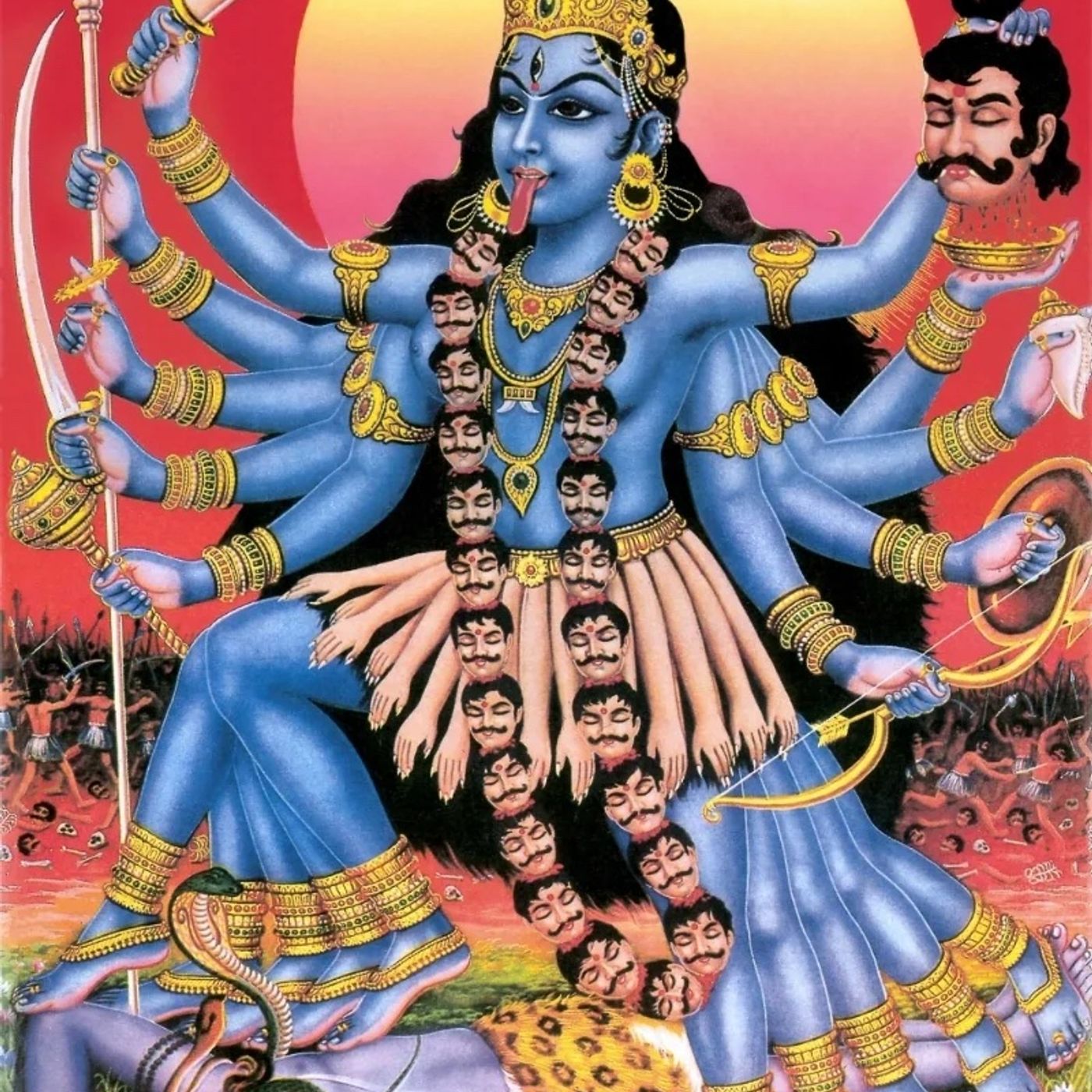 Kali (Chthonia Classic Remastered 10)✨ | KaliHinduism+1 | — | KaliChthonia Classic Remastered 10 | — | remasteredChthonia Classic+1 | — | 49m 11s | |
| 12/22/25 | 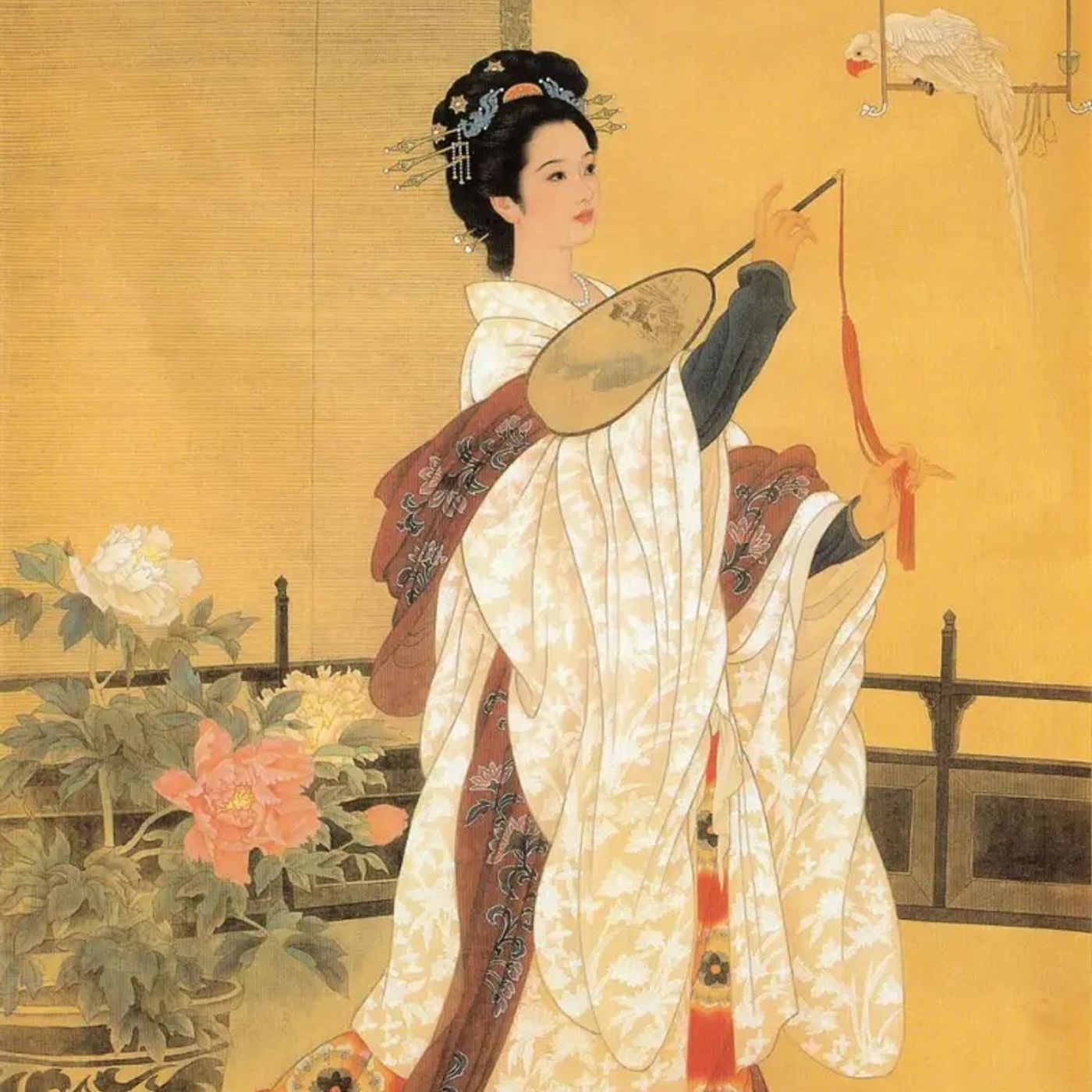 Zigu: the Purple Maiden✨ | Chinese mythologygoddesses+3 | — | Chthonia | ChinaJapan | ZiguPurple Maiden+4 | — | 39m 24s | |
| 12/8/25 | 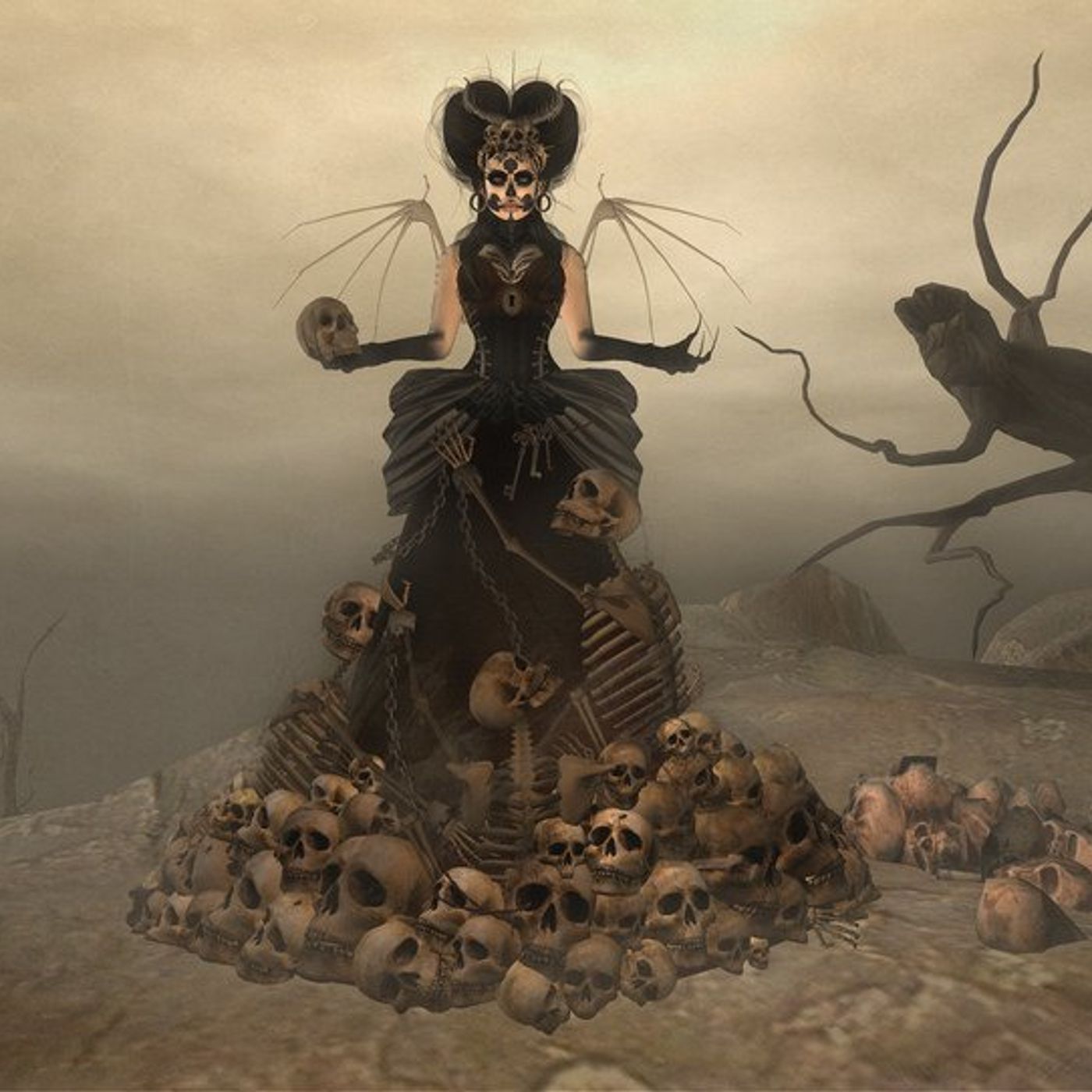 Kalma: Personification of the Grave and the Corpse✨ | KalmaFinnish folklore+4 | — | Kalevala | — | folkloregraveyards+2 | — | 37m 05s | |
| 11/24/25 | 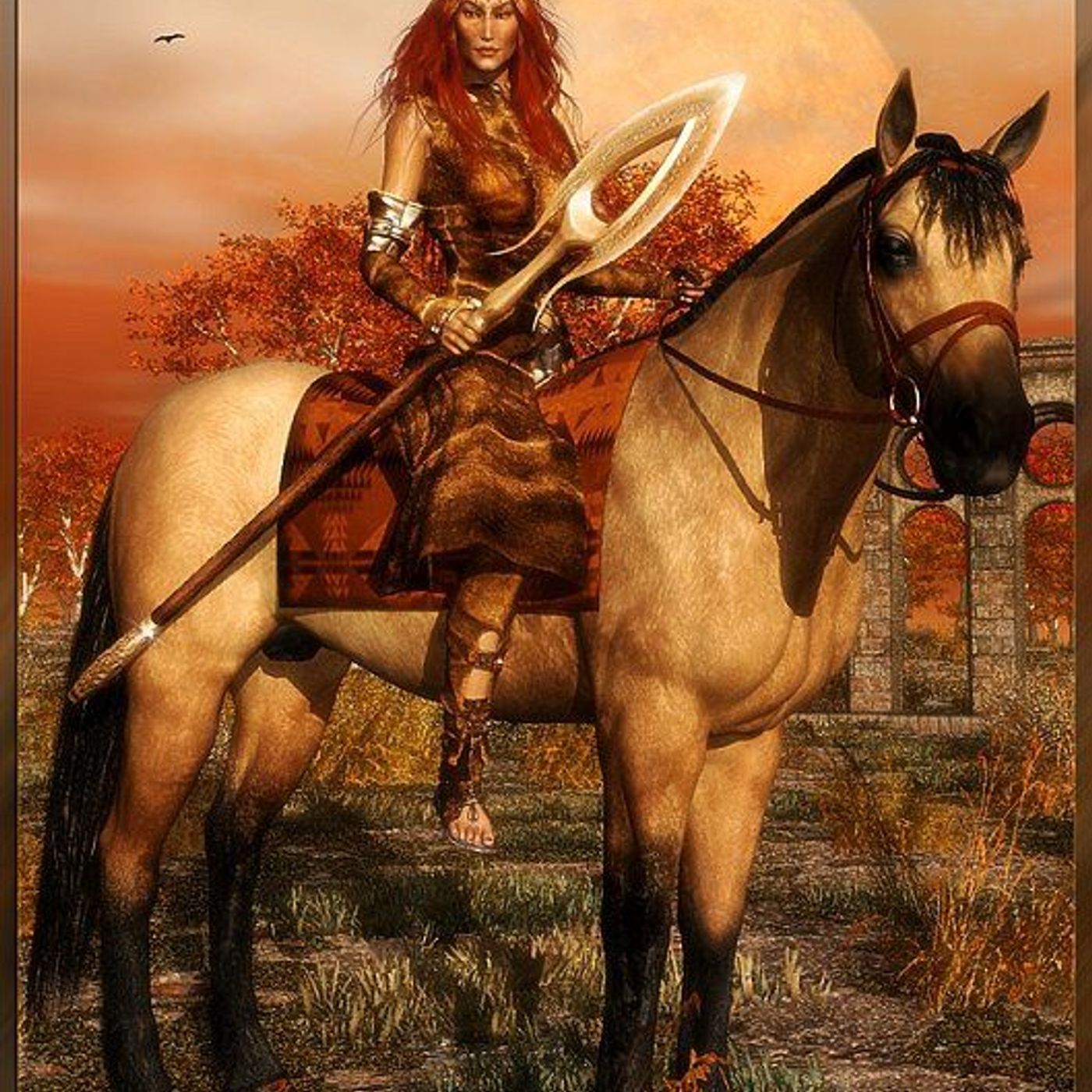 Scathach: Teacher of Great Warriors✨ | ScathachCú Chulainn+3 | — | the Gáe Bulg | — | mythical warriorGáe Bulg+2 | — | 48m 17s | |
| 11/12/25 |  La Cigaupa: Dominican Mountain Mermaid✨ | Dominican folkloreLa Cigaupa+3 | — | — | — | howling womanbackward facing feet+2 | — | 47m 04s | |
| 10/27/25 |  Styx: Hate Goddess as a Source of Strength?✨ | Styxgoddess+3 | — | — | — | daimonicpersonification+3 | — | 47m 37s | |
| 10/13/25 |  Dea Tacita: Double Edged Sword of Silence✨ | Roman deityDea Tacita+8 | — | Dea Tacita: Double Edged Sword of Silence | — | double edged swordsymbolism+1 | — | 44m 09s | |
| 9/29/25 | 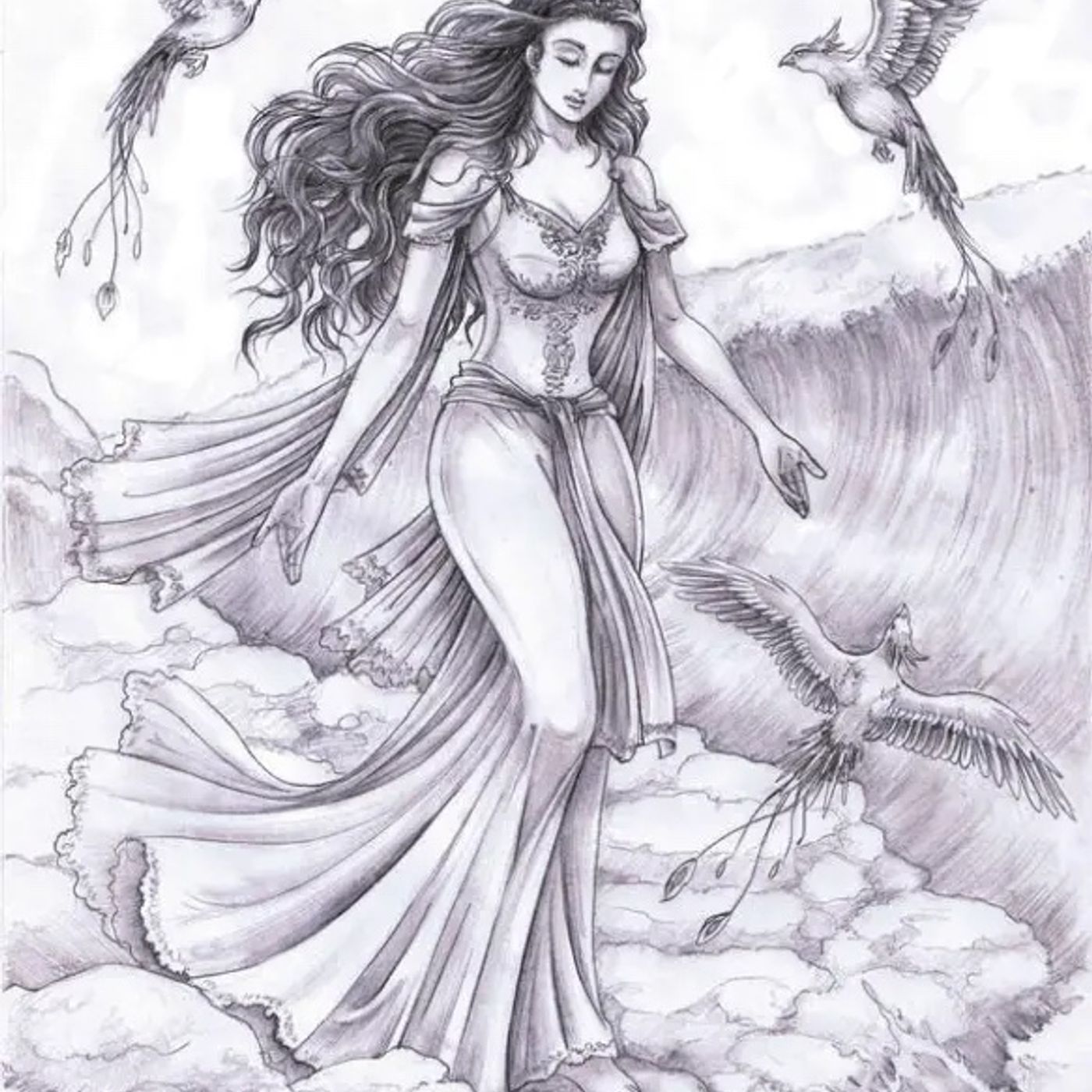 Cliodhna: the Banshee Queen as Soul Image✨ | CliodhnaBanshee+2 | — | — | Munster | fairy queenpatroness of Munster+2 | — | 49m 34s | |
| 9/15/25 | 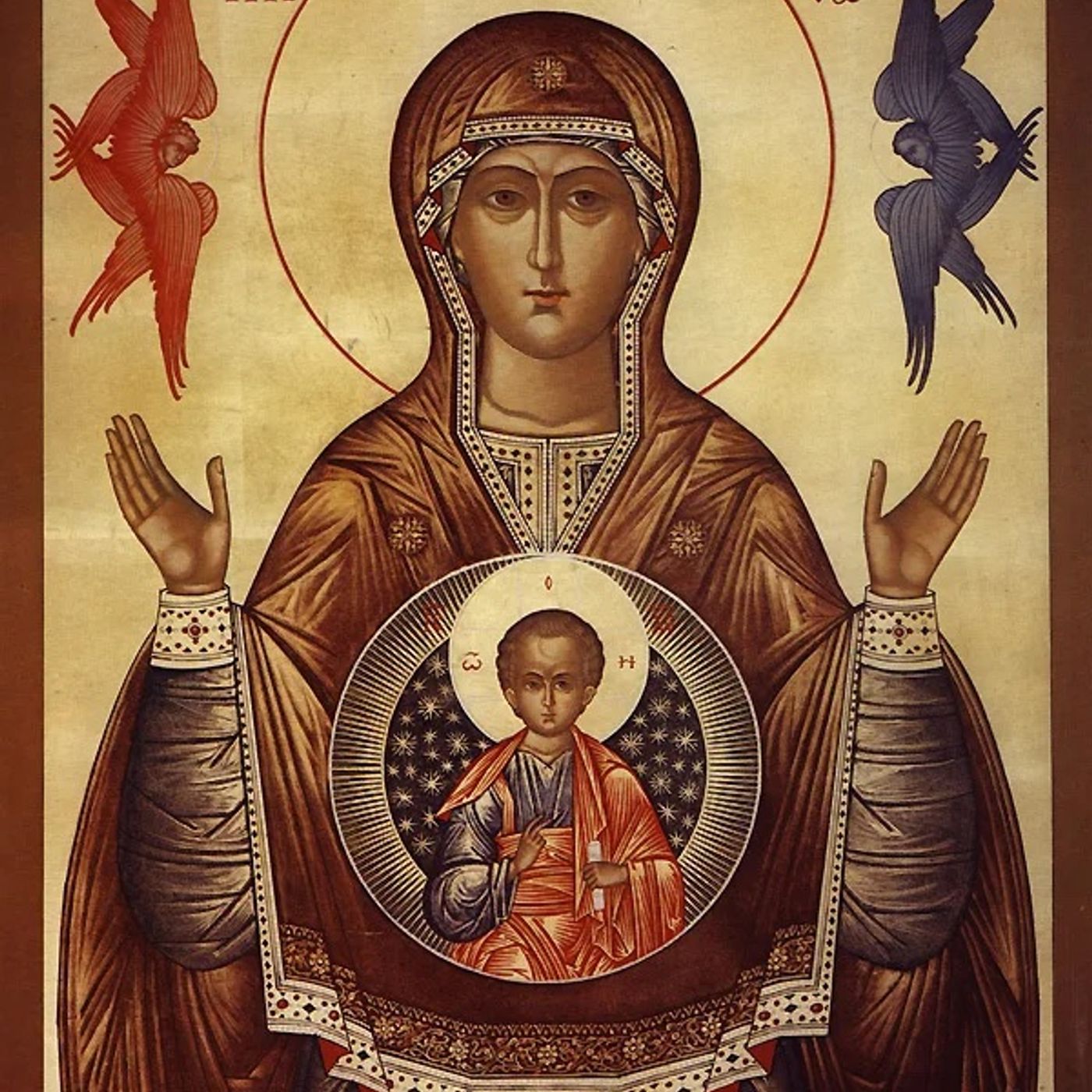 Virgin Mary: the Paradoxical Divine Connection✨ | Virgin Marydark Feminine+6 | — | ChurchVirgin Mary: the Paradoxical Divine Connection+1 | — | mythSemele+2 | — | 1h 08m 18s | |
| 9/1/25 | 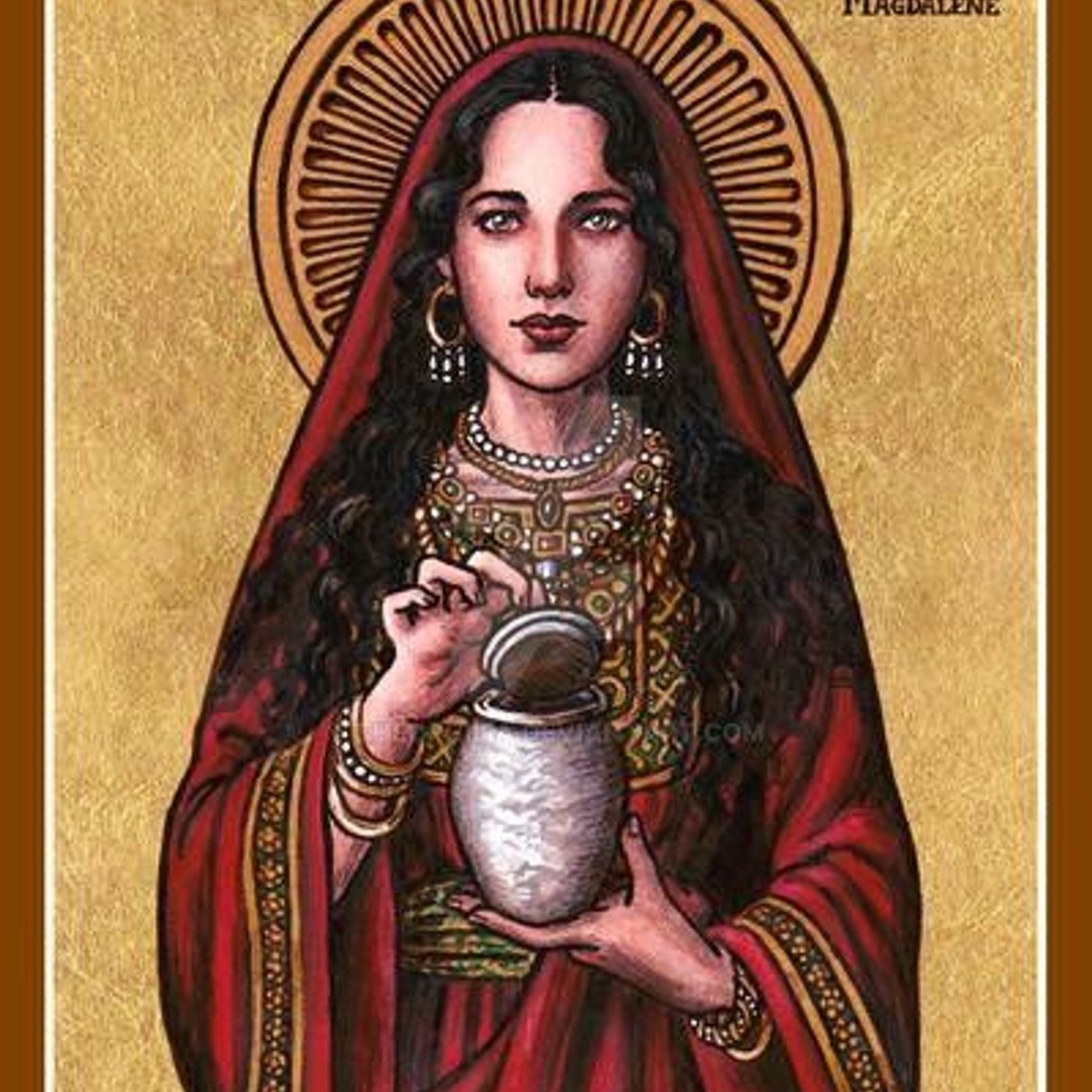 Mary Magdalene: The Apostles' Apostle✨ | Mary MagdaleneJesus+4 | — | — | — | female disciplerepentant prostitute+2 | — | 59m 19s | |
Want analysis for the episodes below?Free for Pro Submit a request, we'll have your selected episodes analyzed within an hour. Free, at no cost to you, for Pro users. | |||||||||
| 8/18/25 |  Ran: Death as a Fisher of Men | This week's podcast looks at the Nordic deity Ran, a wrathful sea goddess that causes shipwrecks and drags fishermen down to the watery depths with her net. With her husband Aegir and her nine children of the waves, she represents the terrors of the sea--both physically and psychologically. We look at the attributes of Ran, water mythology, and flood mythology. | 46m 13s | ||||||
| 8/4/25 | 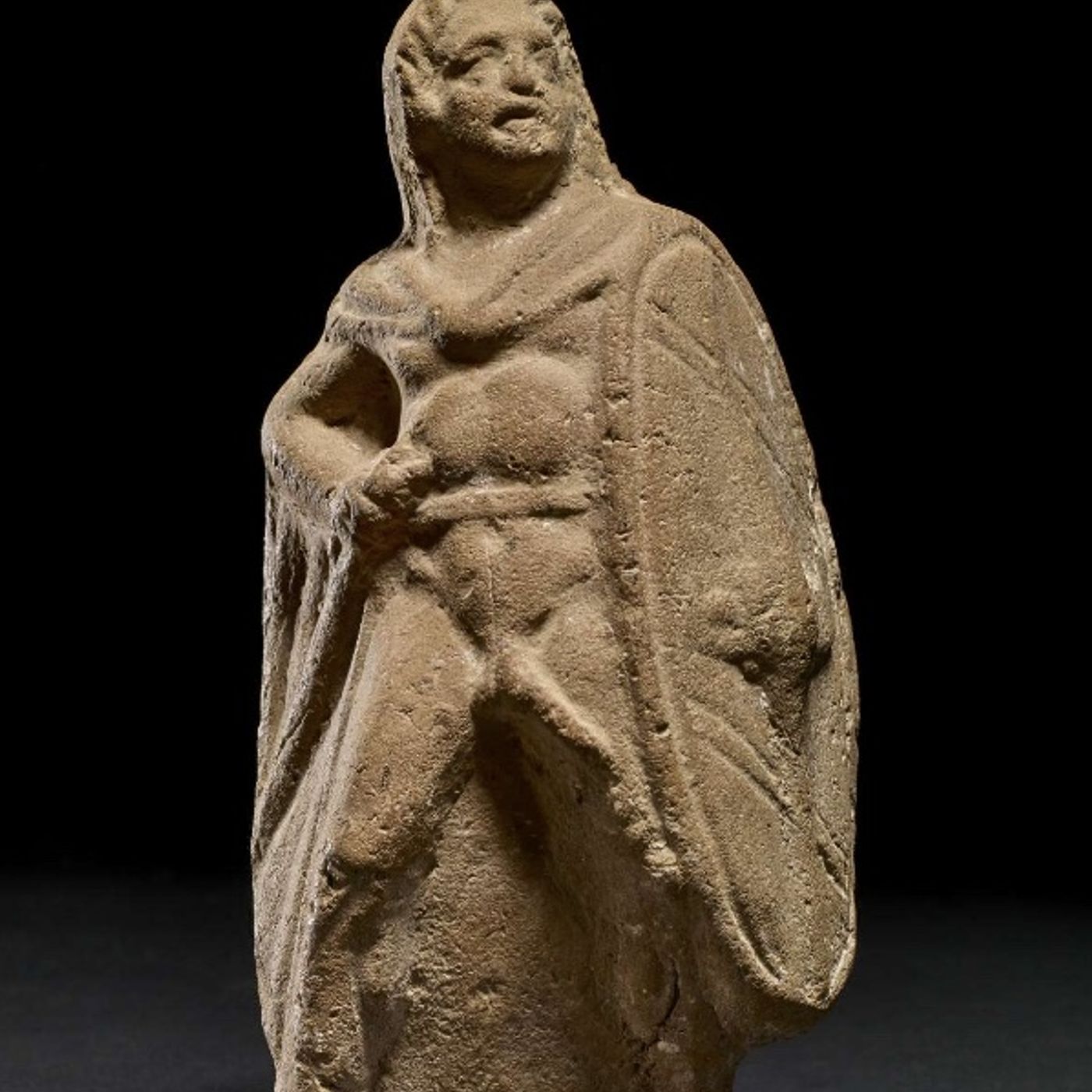 Lugh: the Mercurial Hero | In honor of Lughnasadh (August 1), this week's podcast is about the Irish god Lugh. Lugh very likely originates from the Celtic deity Lugus, who Julius Caesar equated with the Roman Mercury. He is noted for his many talents, and his ability to play many roles won him entrance to the court of the Tuatha De Danann. He led the group in battle against the oppressive Fomorians at the second battle of Maige Tuired (Moytura), after slaying his grandfather Balor. We talk about Lugh's story as a heroic succession myth, his connection to the Morrigan and sovereignty, and how Lugh differs from the traditional idea of the god-king. | 49m 57s | ||||||
| 7/22/25 | 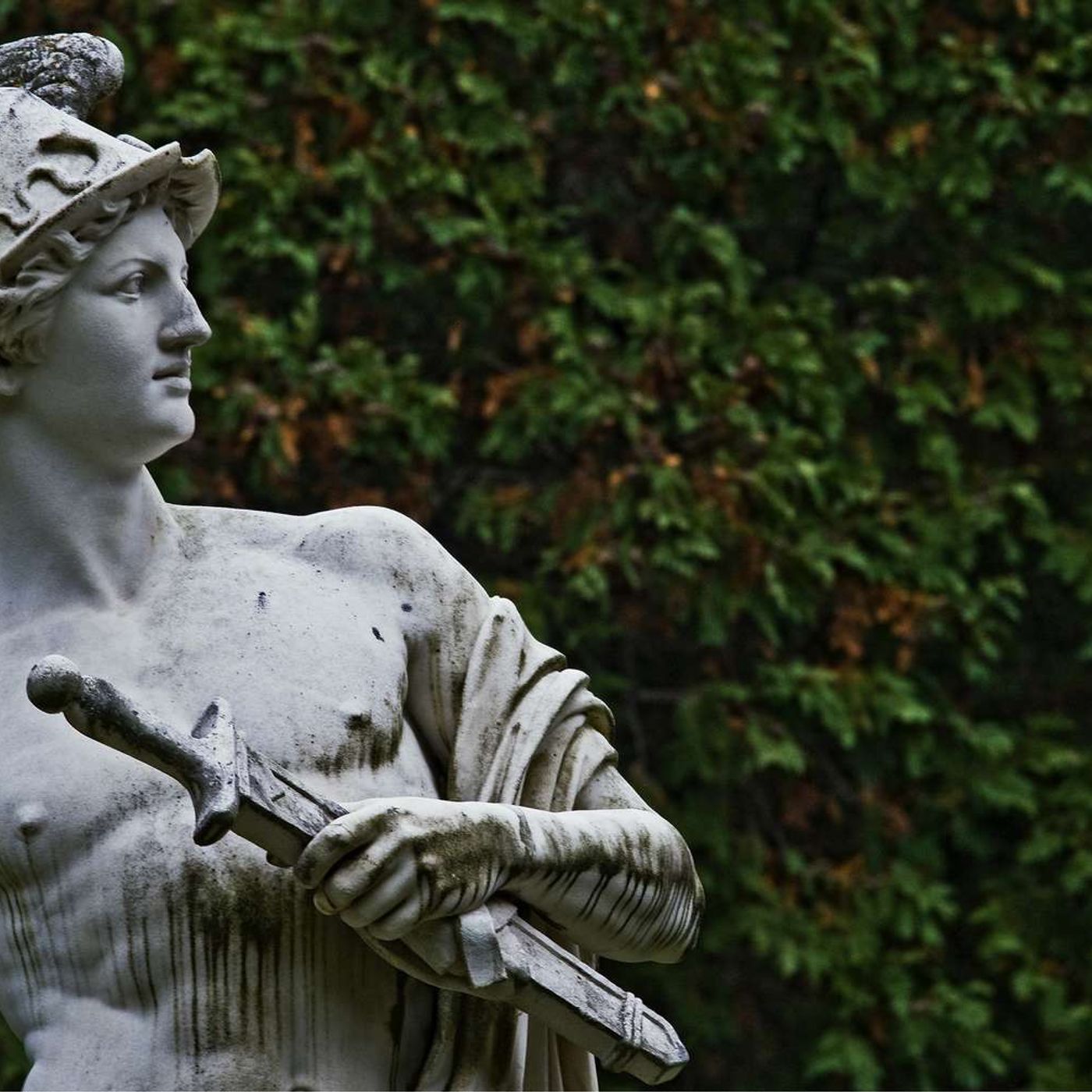 Hermes: the Archetype of Youth | This week's podcast looks at Hermes, the messenger of the Greek gods, known as Mercury in Roman myth. We mainly focus on the story of Hermes' birth in the Homeric Hymn to Hermes, in which he manages to astonish and anger the god Apollo. Hermes is a liminal figure often connected with the Puer (Boy) archetype, representing youthful energy and enthusiasm. We discuss this archetype in a bit of detail, and its contrast with the Senex (Wise Old Man) archetype, as well as a bit about the alchemical Mercurius. | 58m 56s | ||||||
| 7/7/25 | 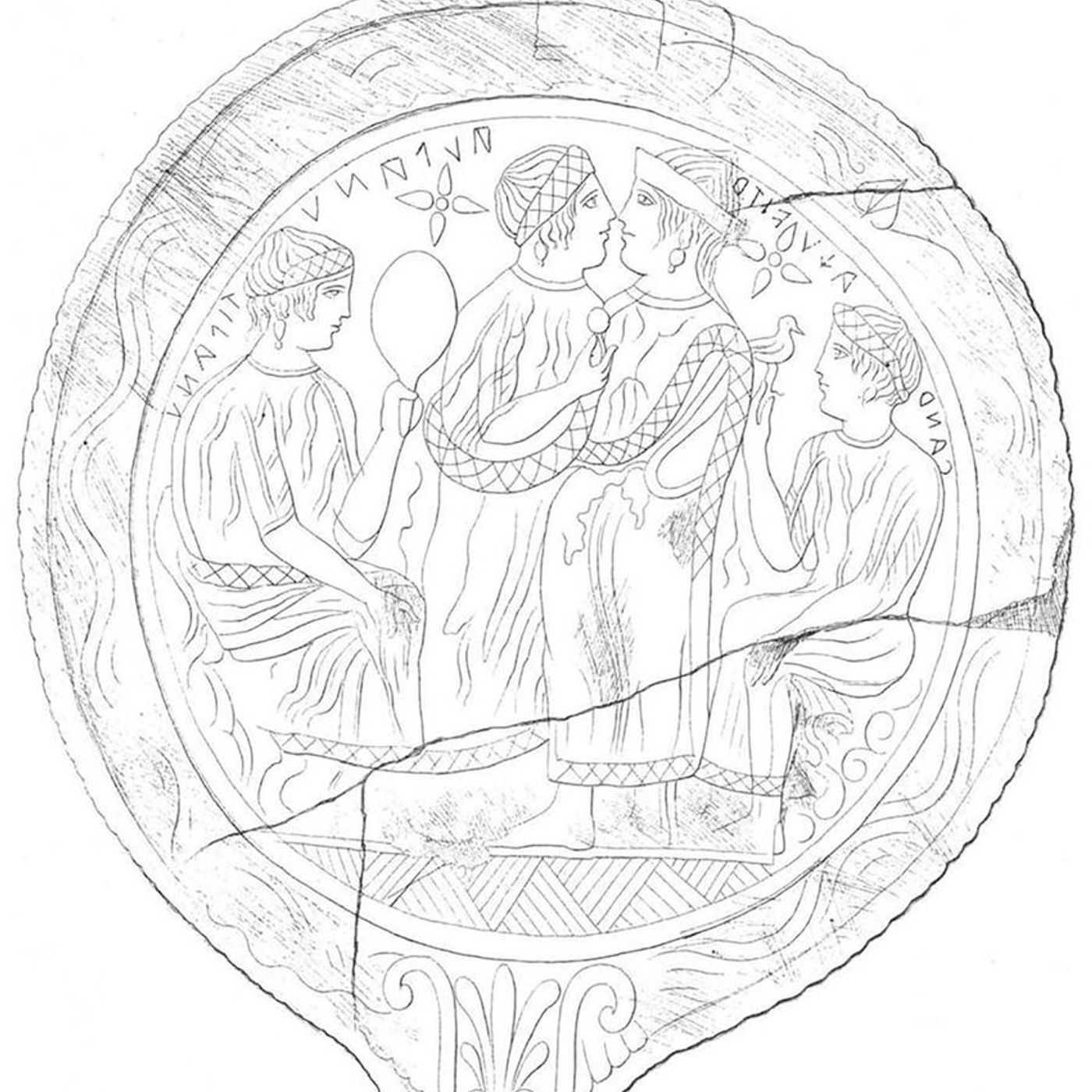 Libitina: the Venus of Funerals | Join us at the Institute for the Study of Feminine Myth--$10 "Thinker's Tavern" sessions on Thursdays in July!https://instituteforfemininemyth.org/thinkers-tavern This week's podcast is about Libitina, Roman goddess of funerals, corpses, and burials. We discuss the debated etymology of her name--is she connected to Venus and to voluptuous pleasure, or is that an error? Varro connects Libitina to "libido", and we also need to consider the ancient Etruscan goddess Alpanu, who is said to be Libitina's forerunner. What we may find is a different attitude toward the connection between life and death. | 51m 48s | ||||||
| 6/23/25 | 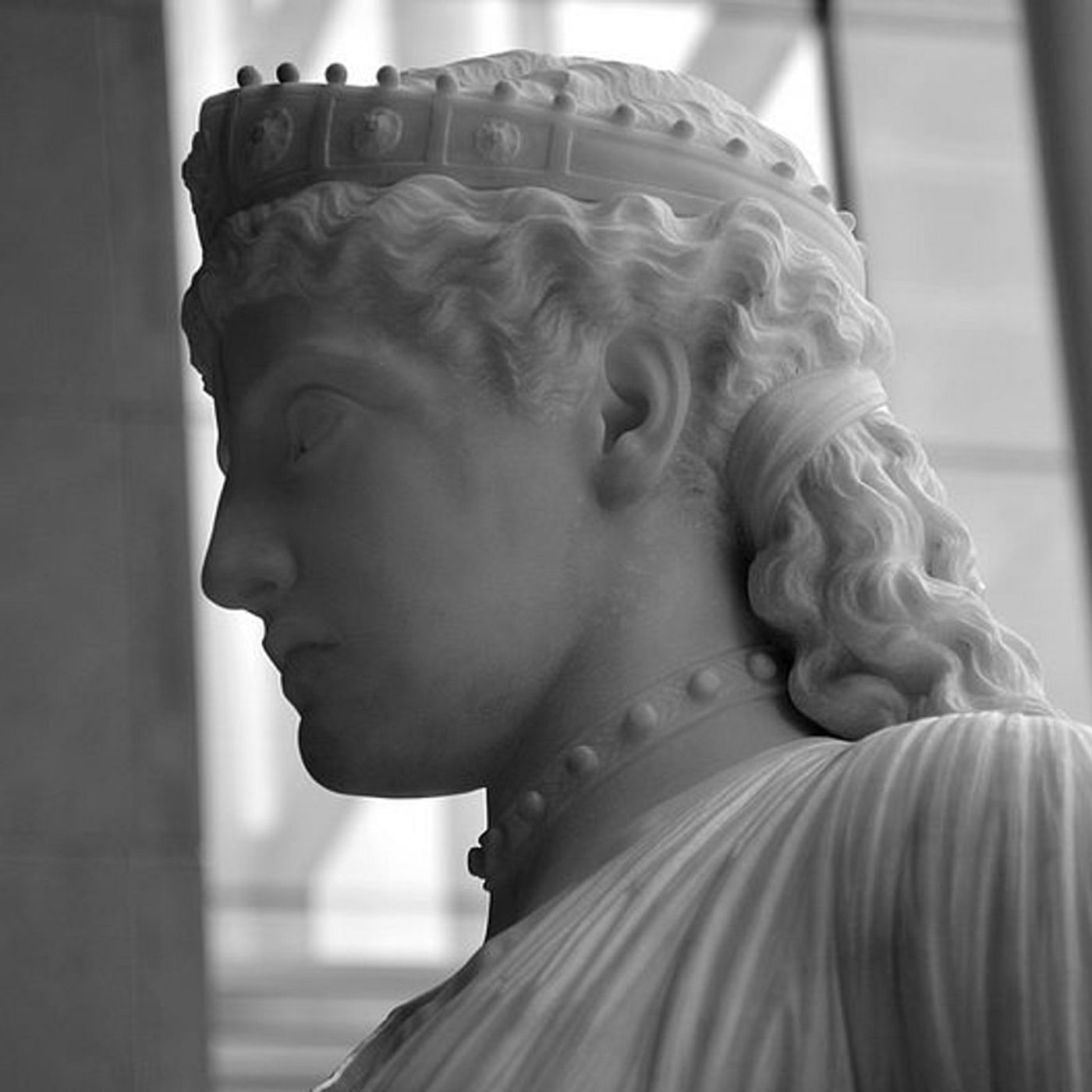 Semiramis: Legendary Babylonian Queen | Join us for Thinker's Tavern on Thursdays 6:30 EST; details at https://instituteforfemininemyth.org/thinkers-tavernThis week's episode looks at Semiramis, the legendary Queen of the Assyrian Empire who is said to have taken over as regent when her husband died, and until her son came of age. Semiramis is the Greek name of the queen Shammuramat, and her history is controversial. Roman historians and geographers credit her with many architectural achievements, conquest of the Armenians, and stabilizing a crumbling empire after a civil war. Not surprisingly, other stories portray her as a lustful, power-hungry seductress. We look at what is written about Semiramis, and discuss the "threat" of the powerful, competent woman in patriarchal narratives. | 56m 26s | ||||||
| 6/19/25 | 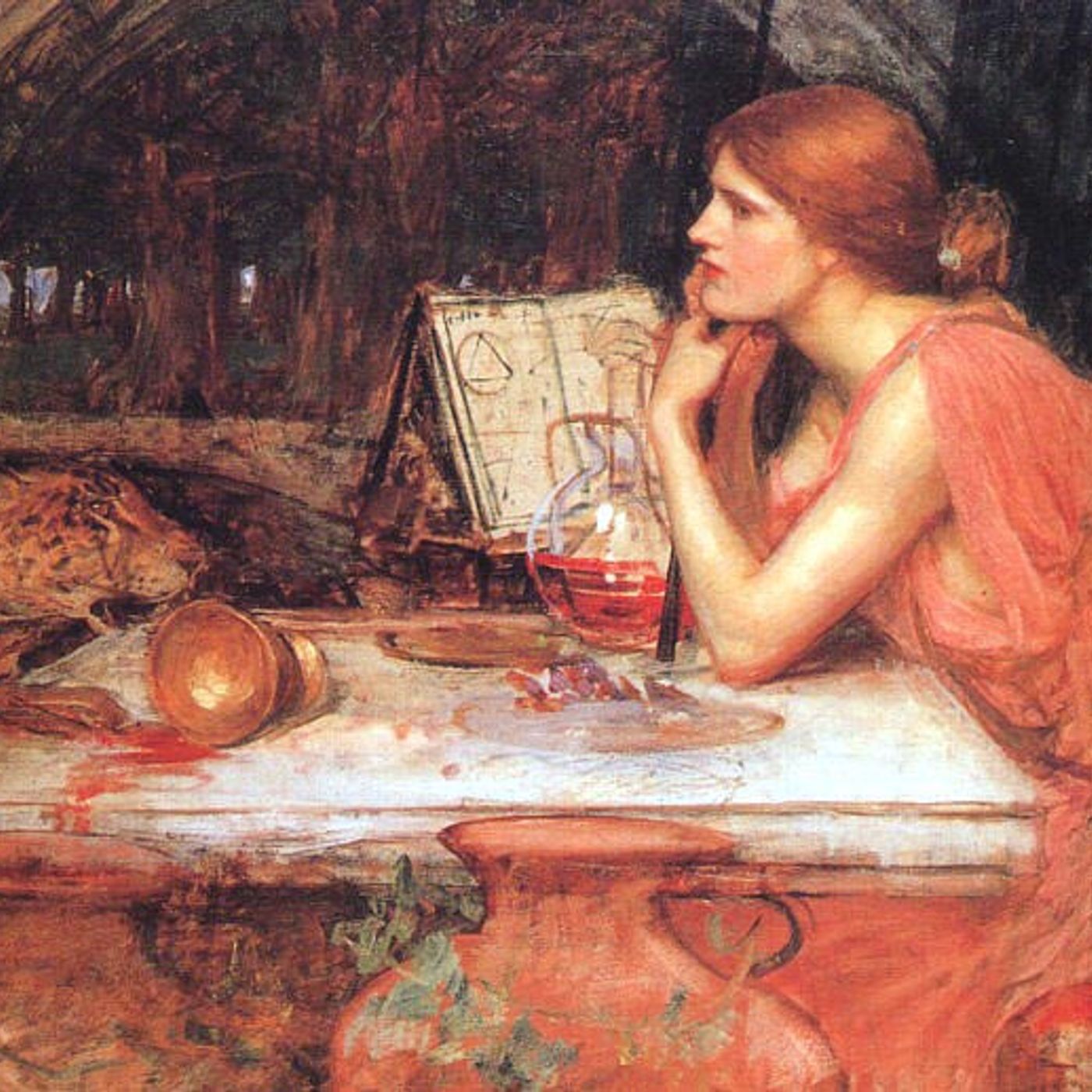 Circe (Kirke) (Chthonia Classic Remastered 9) | This is a re-edit and re-upload of the Chthonia episode on Circe, or Kirke, from 2019. Circe is best known for her encounter with Odysseus and his men in the Odyssey, where she turns the men into pigs, and Odysseus defeats her magic with the moly plant. While Circe is a central Anima figure in this story, she also appears in others as Medea's aunt and the daughter of the sun god Helios. | 43m 35s | ||||||
| 6/10/25 | 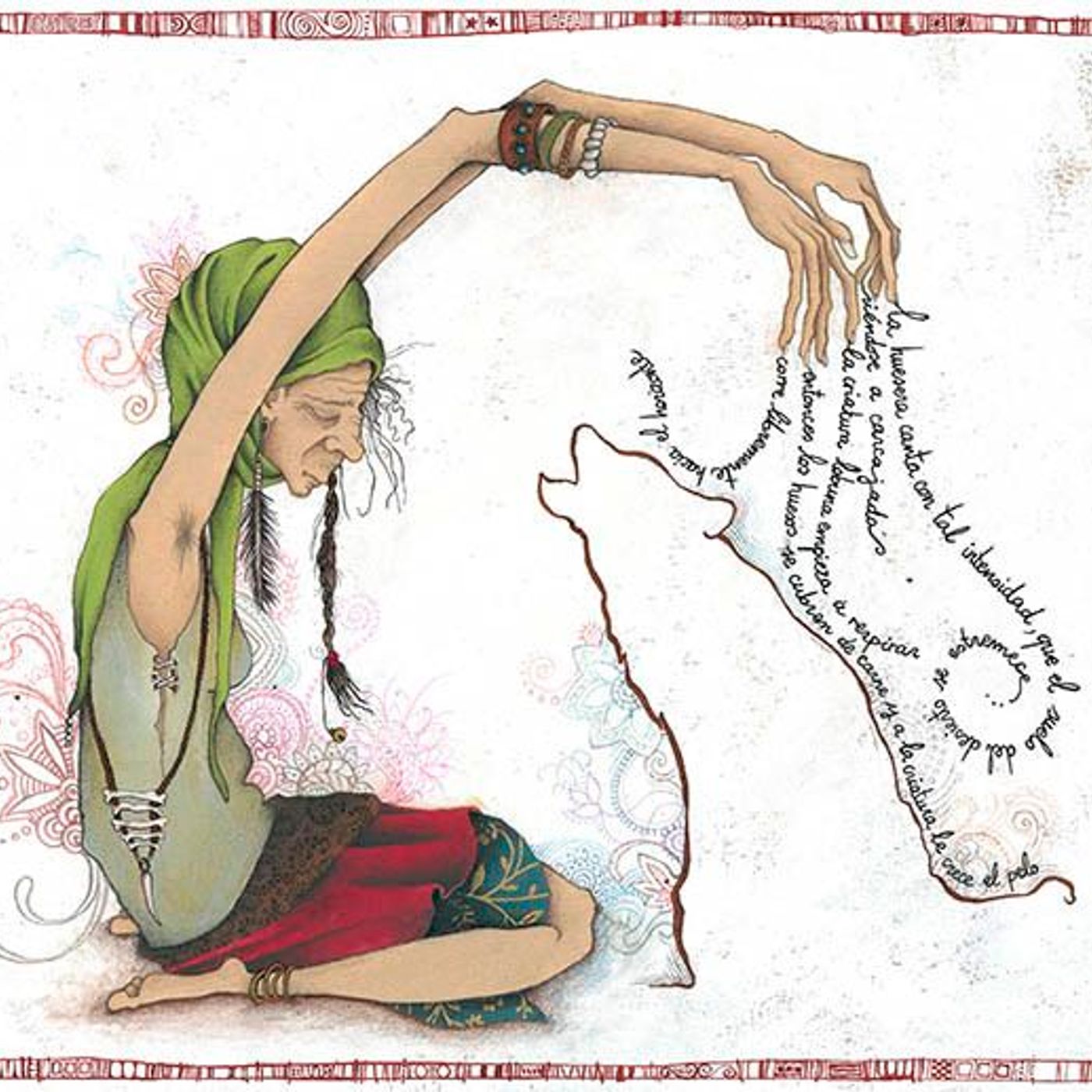 La Loba: Wolf Woman and the Psychology of Bones | Join us for the new Thinker's Tavern series at the ISFM: https://www.instituteforfemininemyth.org/thinkers-tavernThis week's episode looks at La Loba, the Wolf Woman, sometimes also called the Bone Woman. She gathers the bones of animals, usually wolves, and when she has a complete skeleton she chooses the song to sing to bring the animal back to life. This story becomes a framework for discussing the psychological and mythological meaning of "bones", as well as the forces represented by the wolf. | 1h 00m 54s | ||||||
| 5/26/25 | 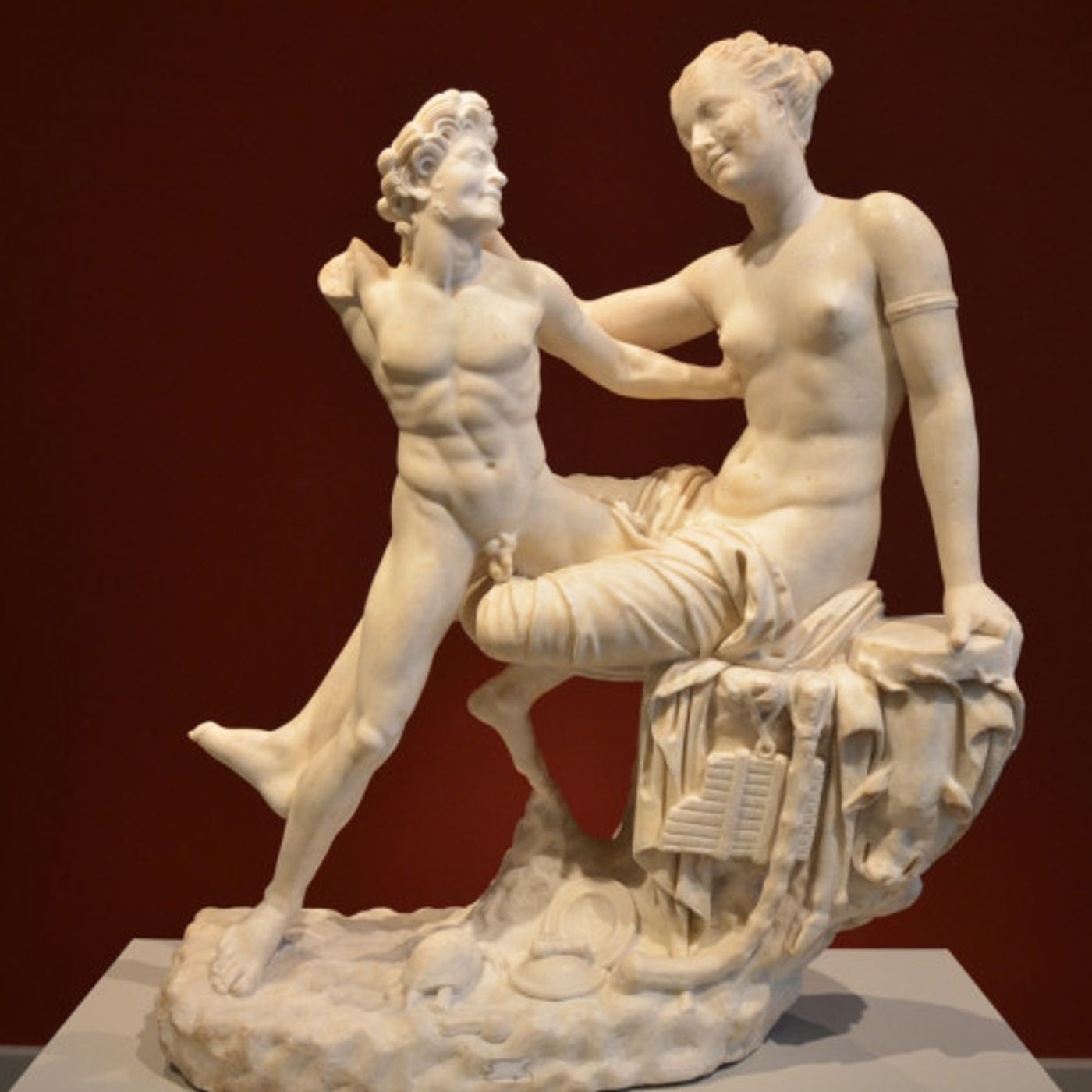 Hermaphroditus: Two Views of Merging Masculine and Feminine | * Check out the new Thinker's Tavern discussion series athttps://www.instituteforfemininemyth.org/thinkers-tavern *This week's podcast looks at the figure of Hermaphroditus, son of Hermes (Mercury) and Aphrodite (Venus), and his encounter with the aggressive nymph Salmacis, her prayer turning them into a single being that is both male and female and neither at the same time. While Salmacis is often viewed as an aggressive woman attacking an innocent boy, an inscription at Salmacis' pool in Halicarnassus suggests a very different view of the myth. We explore the idea of the Hermaphrodite as representing the bonds of marriage and ideas about marriage, as well as its connection to Plato's myth of the proto-human in the Symposium. The articles referenced in the podcast were:Kelly, Peter. "Intersex and Intertext: Ovid's Hermaphroditus and the Early Universe," Exploring Gender Diversity in the Ancient World, Allison Surtees and Jennifer Dyer, eds. Edinburgh University Press, 2020. Romano, Allen T. "The Invention of Marriage: Hermaphroditus and Salmacis at Halicarnassus and in Ovid," The Classical Quarterly, Vol. 59, No. 2 (Dec. 2009), pp. 543-561. | 53m 31s | ||||||
| 5/14/25 | 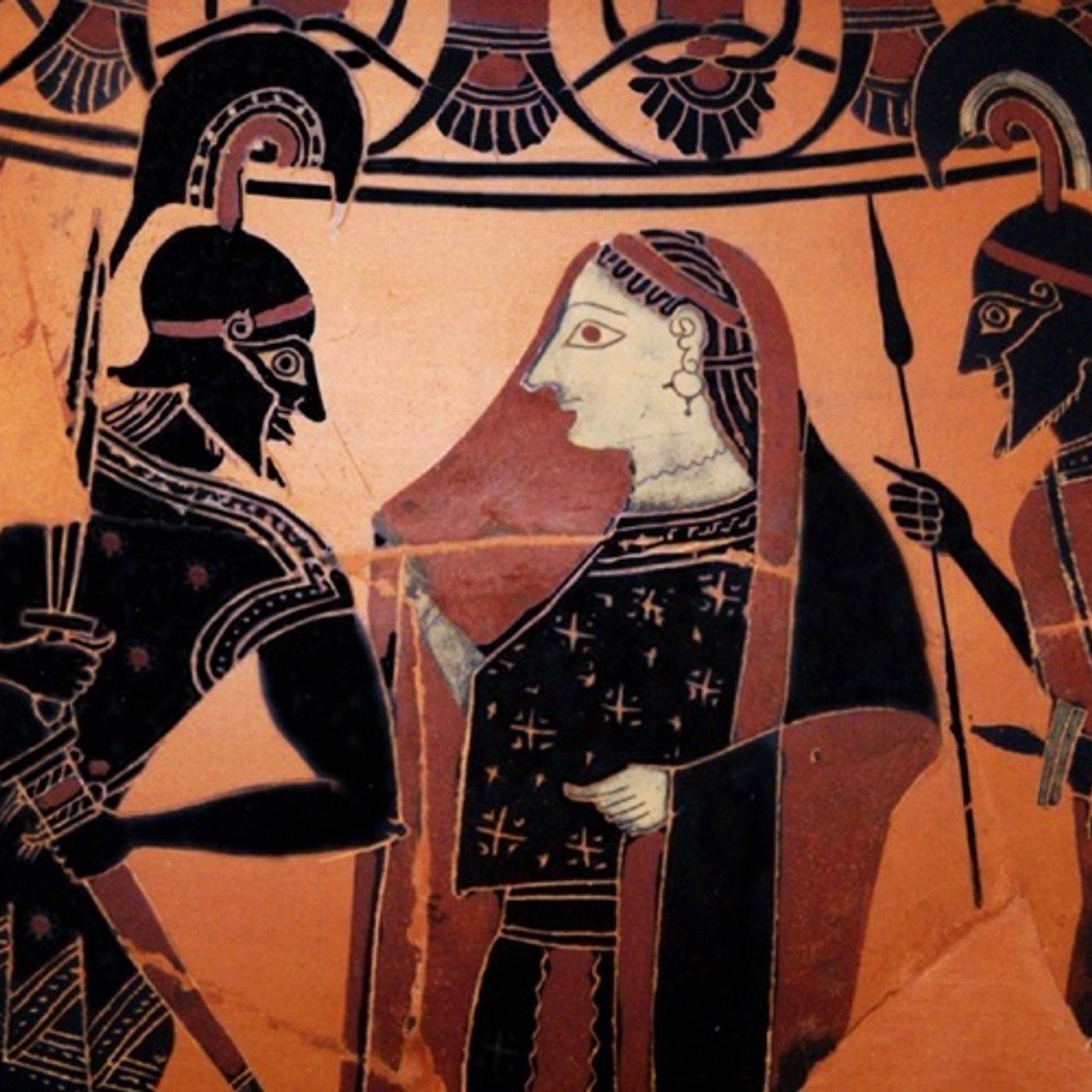 Helen of Troy: the Dangers of Beauty | This week's episode looks at the legendary woman known as Helen of Troy, "the face that launched a thousand ships." The daughter of either Zeus and Leda or Zeus and Nemesis, the desire to possess Helen, dubbed the most beautiful woman in the world, launched the Trojan War. We discuss her abductions by Theseus and Paris, the oath of Tyndareus, and the question of whether or not Helen went with Paris willingly or against her will--and whether Paris seduced the "real" Helen at all. | 46m 53s | ||||||
| 4/28/25 | 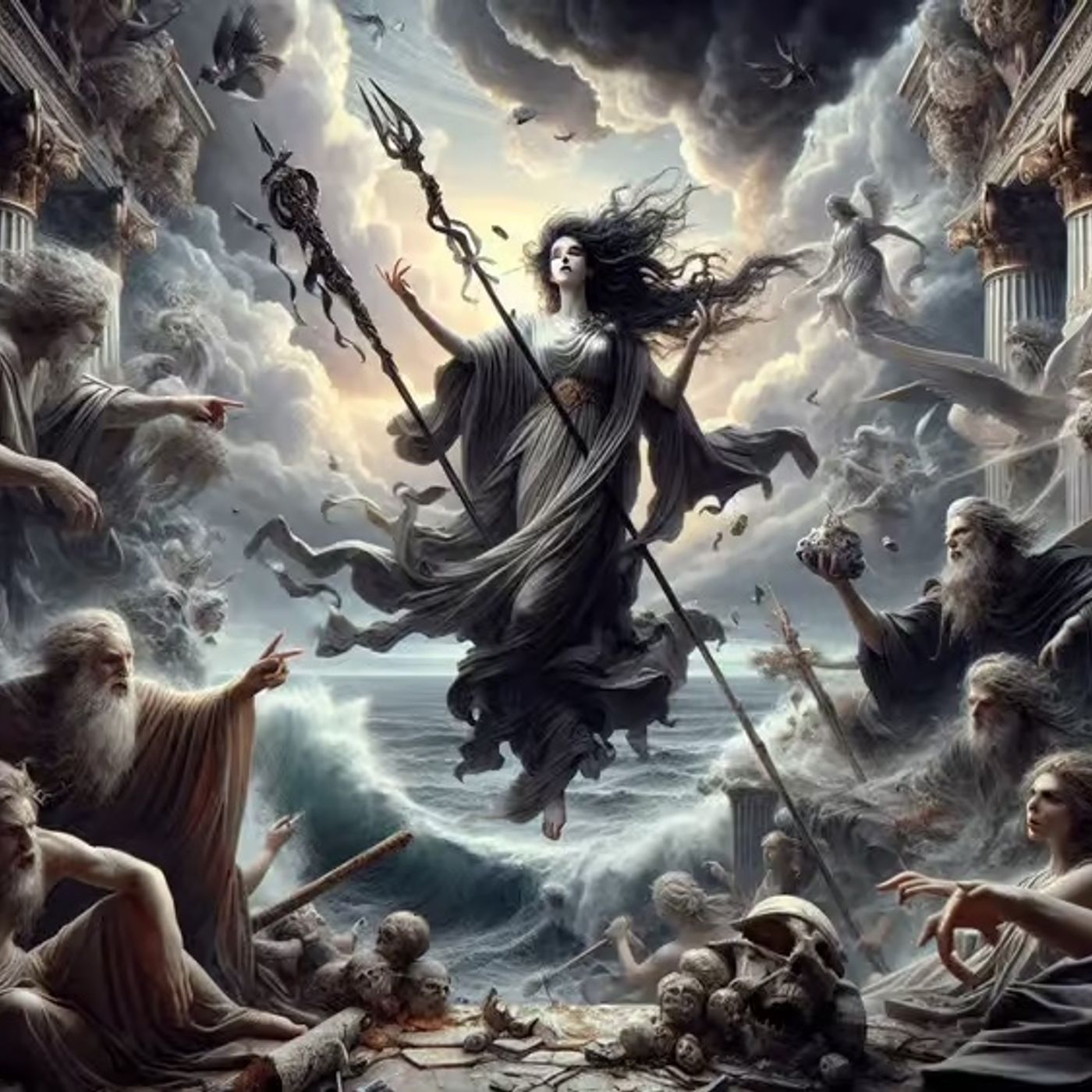 Atë, the Daimon of Deception | This week we look at the Greek daimon Atë, the personification of deception and ruin. Atë is a prominent figure in Homer’s Iliad, and often appears in Greek tragedy as a figure associated with justice, along with Nemesis and the Erinyes. We look at Atë as an irrational force, and how the understanding of her as a daughter of Zeus in the Iliad tells us something about the pitfalls of the rational mind. | 47m 13s | ||||||
| 4/14/25 | 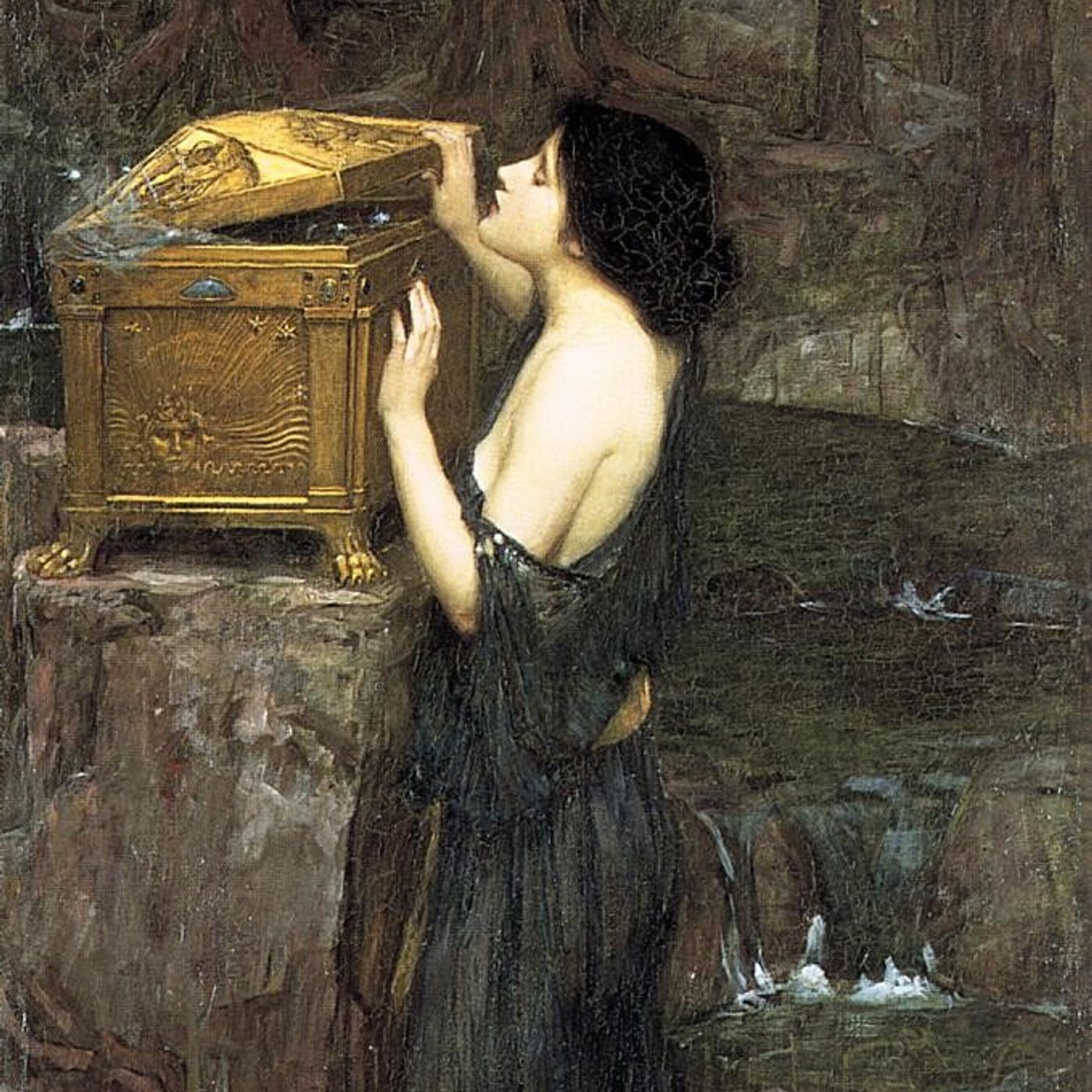 Pandora: the Proto-Anima | This week's podcast looks at Pandora, the first woman described by Hesiod, though her story likely predates his writings. Pandora is a gift to Epimetheus, brother of Prometheus, as an act of revenge after Prometheus steals fire from Heaven and gives it to mortals. She carries a pithos (jar) that she is told to never open, but when curiosity strikes, she releases all sorts of ills into the world of humans. We examine the different aspects of this story, including the idea that the coming of woman is an evil, the question of what was actually in Pandora's jar (changed to a box in later translations), her connection to the Earth Mother, and her connection to Psyche, the personified soul. | 1h 00m 49s | ||||||
| 4/2/25 | 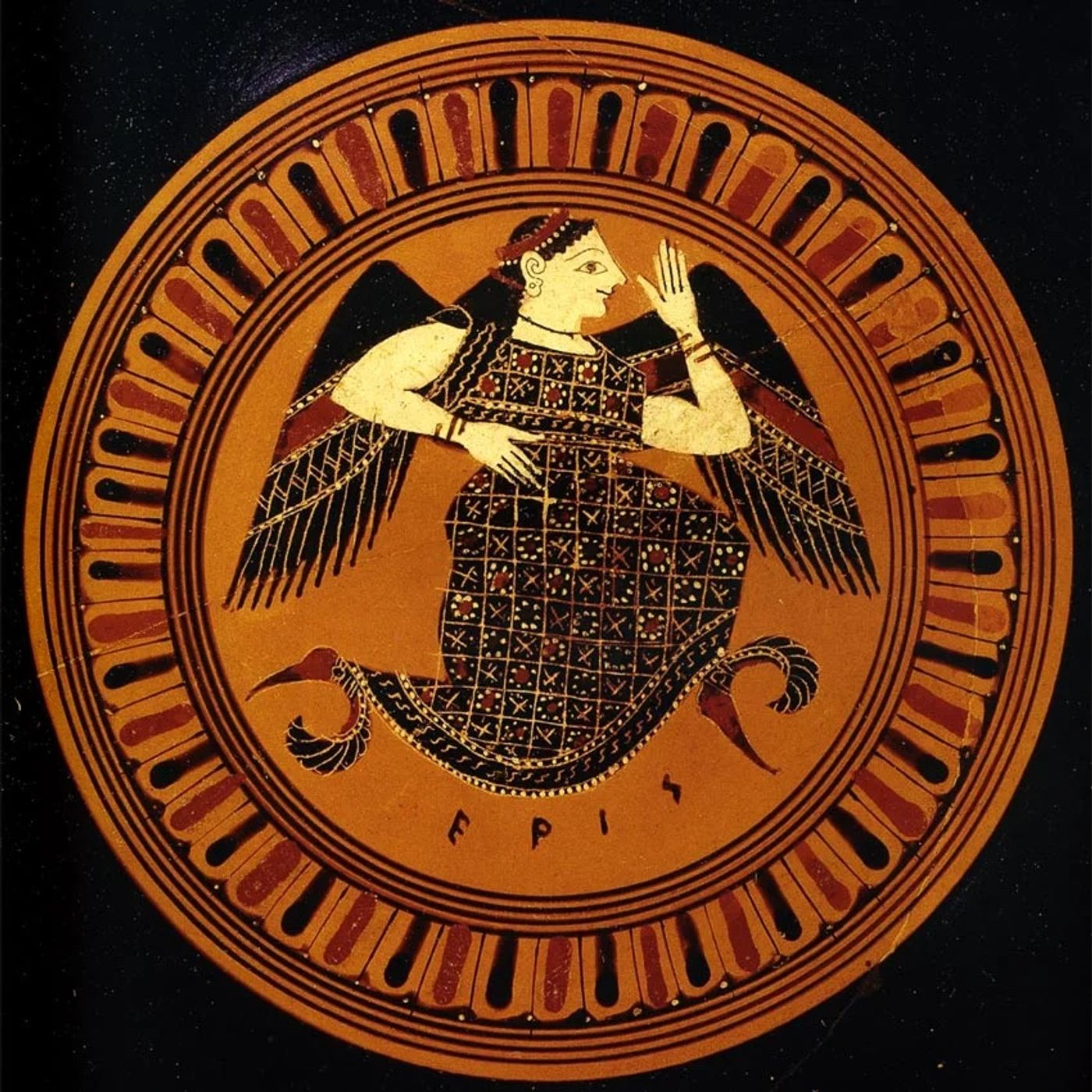 Eris: Goddess of Discord | Website: https://chthonia.netPatreon: https://patreon/com/chthoniaThis week we look at Eris, goddess of strife and discord. Hesiod declares that there are 2 Erises, one that is beneficial to humans and one that isn't. There is also the 3rd Eris of the modern "religion" of Discordianism, which highlights to problem of excluding discord from our lives. | 50m 57s | ||||||
| 3/20/25 |  Frau Perchta and Gryla (Chthonia Classic Remastered 8) | Here is the re-released Frau Perchta and Gryla episode from December 2019. Both figures are part of the folklore of winter hags or "Christmas witches", who often represent the dangers of being unprepared for the winter season. | 38m 04s | ||||||
| 3/17/25 | 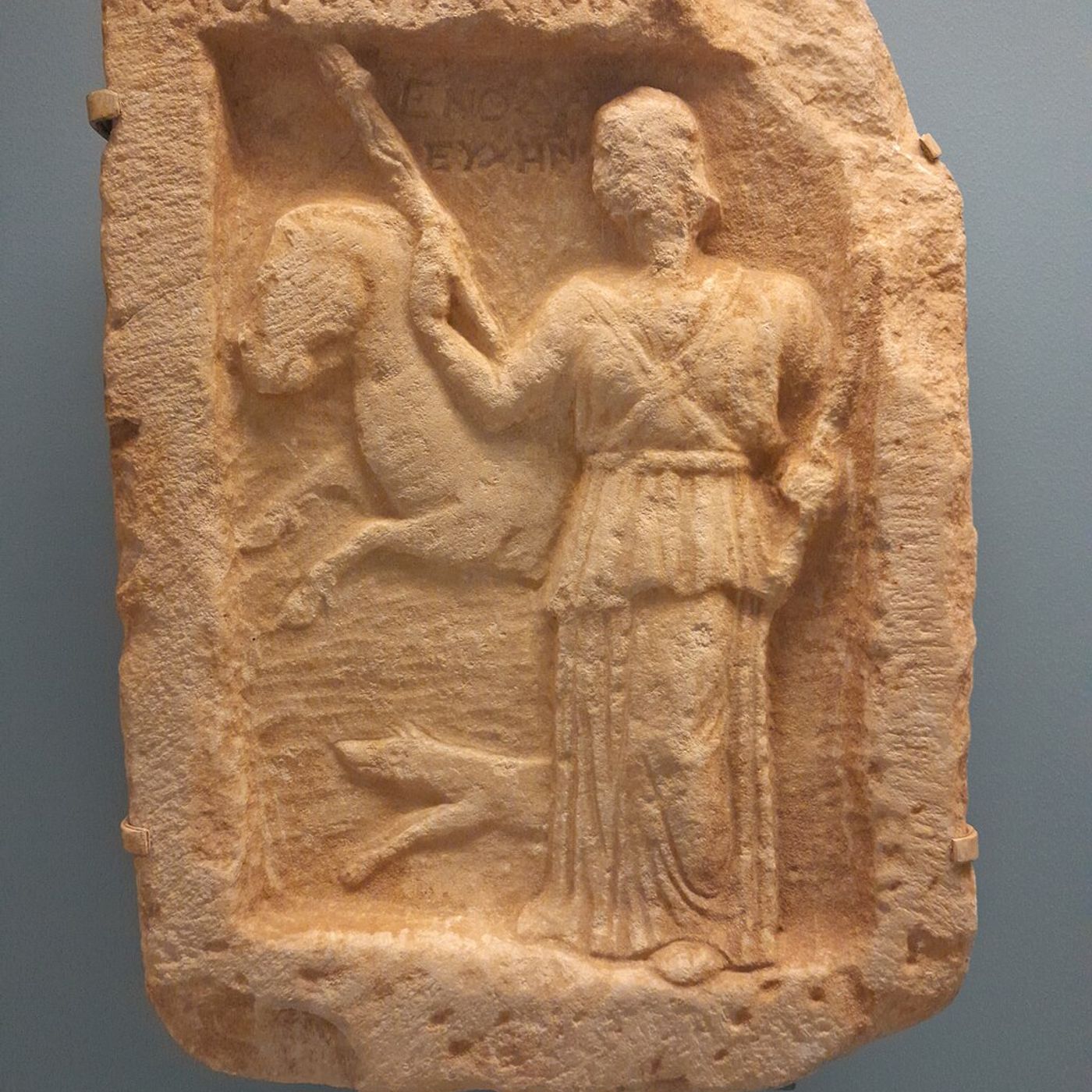 Enodia: the Hecate of the City | Website: https://chthonia.netPatreon: https://patreon.com/c/chthoniaMerch: https://chthoniapodcast.creator-spring.com/School: https://instituteforfemininemyth.org This week's podcast looks at Enodia, a Thessalian goddess who has attributes of Hecate, Persephone, and Artemis, whose name means "of the street" or "in the road". Part of the dodekatheon (Cult of the 12 Olympians) local to Thessaly, she seems to clearly have a function related to protecting the household, and her own epithets suggest that she is a deity connected to cities rather than rural dwellings. We look at her relationship to the other goddesses she is connected with and visit the question of why protective deities like Enodia seemed to suddenly gain popularity in the late 6th to 5th century BCE. | 54m 50s | ||||||
| 3/3/25 | 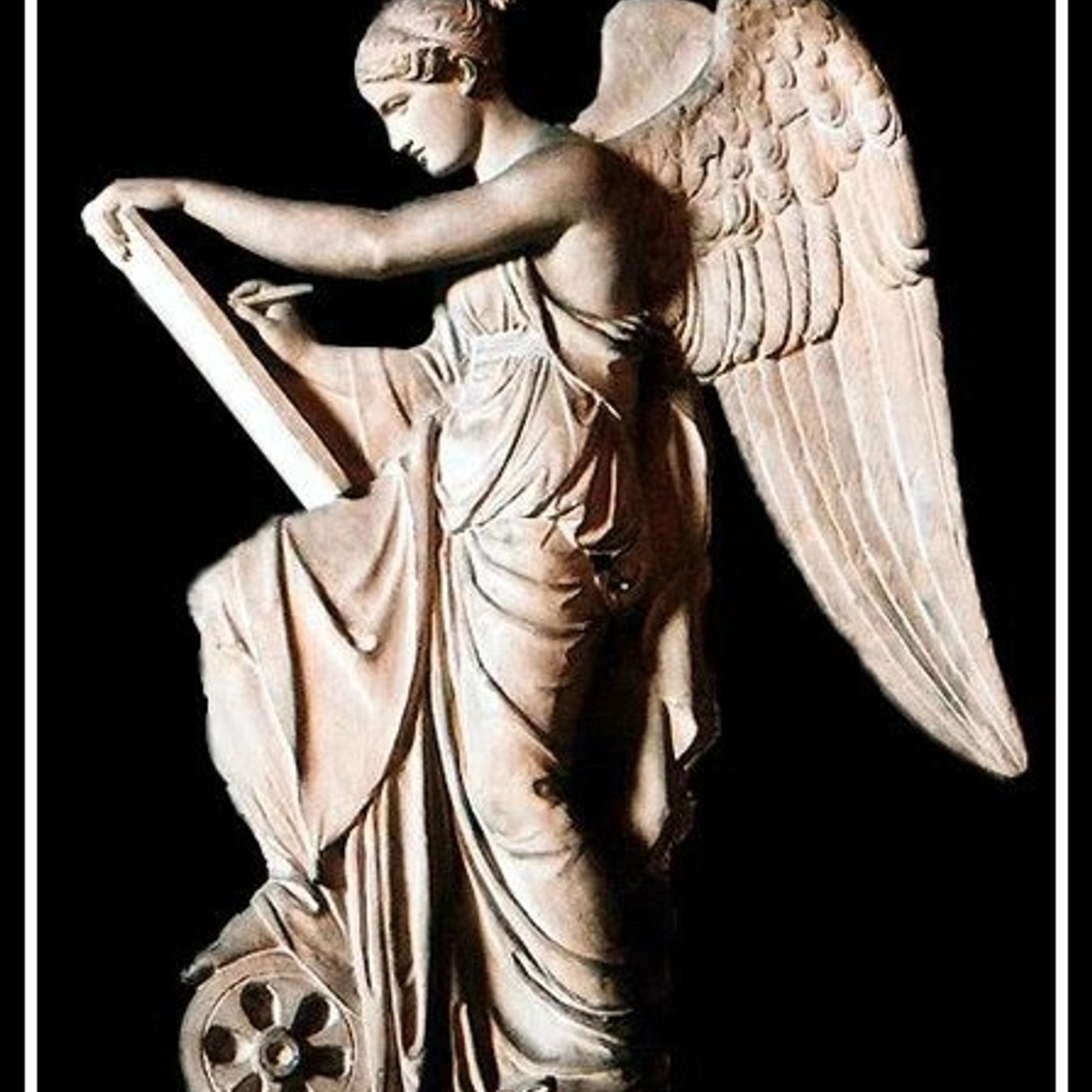 Nemesis: Daimon of Justice and Moderator of Luck | Website: https://chthonia.netPatreon: https://patreon.com/c/chthoniaMerch: https://chthoniapodcast.creator-spring.com/School: https://instituteforfemininemyth.orgThis week's podcast looks at Nemesis, a daimon goddess said to come from Nyx (Night) alone by Hesiod, and associated with the distribution of fairness as well as envy and revenge. We look at the origin stories of Nemesis, the story of her as the mother of Helen of Troy, and her connection via Helen to the Trojan War. We look at other stories of her retribution, and the necessity of her influence in human affairs. Lastly, we touch on the recent revival of discussions of "Planet X", which according to one hypothesis began as a companion star to the Sun, and referred to as "Nemesis" in the original theory. | 1h 05m 33s | ||||||
Showing 25 of 174
Pitch Fit is a Pro feature
See how bookable this show is for guests, which brands already advertise, the per-episode ad value, and the best-fit guest and sponsor profile. The numbers are blurred on the free plan.
How readily this show books outside guests like you.
How proven this show is for host-read sponsorships.
For Guests
ProFor Advertisers
ProUpgrade to Pro to unlock guest cadence, sponsor categories, fit scores, and per-episode ad value for this show.
Chart Positions
2 placements across 2 markets.
Chart Positions
2 placements across 2 markets.