
Insights from recent episode analysis
Audience Interest
Podcast Focus
Publishing Consistency
Platform Reach
Insights are generated by CastFox AI using publicly available data, episode content, and proprietary models.
Most discussed topics
Brands & references
Est. Listeners
Insufficient chart data. Estimates will improve as the show charts.
- Per-Episode Audience
Est. listeners per new episode within ~30 days
N/A🎙 Weekly cadence·12 episodes·Last published 1mo ago - Monthly Reach
Unique listeners across all episodes (30 days)
N/A - Active Followers
Loyal subscribers who consistently listen
N/A
Market Insights
Platform Distribution
Reach across major podcast platforms, updated hourly
Total Followers
—
Total Plays
—
Total Reviews
—
* Data sourced directly from platform APIs and aggregated hourly across all major podcast directories.
On the show
From 11 epsHosts
Recent guests
Recent episodes
Techno-colonization with Simeon Vidolov and Stefan Klein
May 13, 2026
1h 28m 28s
The Sanctuary Hypothesis by Jean-Fabrice Lebraty
May 7, 2026
49m 45s
Johno (Robert Johnston) on Psilocybin, Heidegger and being-toward-death
Feb 10, 2026
1h 24m 47s
Data Practices with Hippolyte Lefebvre
Oct 28, 2025
28m 43s
Making New Money by Quinn DuPont
Oct 17, 2025
1h 10m 28s
Social Links & Contact
Official channels & resources
Official Website
Login
RSS Feed
Login
| Date | Episode | Topics | Guests | Brands | Places | Keywords | Sponsor | Length | |
|---|---|---|---|---|---|---|---|---|---|
| 5/13/26 |  Techno-colonization with Simeon Vidolov and Stefan Klein✨ | scholarly communicationtechno-colonization+4 | Stefan KleinSimeon Vidolov | big publishing companiesscientific intellectual property+2 | — | techno-colonizationscholarly communication+5 | — | 1h 28m 28s | |
| 5/7/26 |  The Sanctuary Hypothesis by Jean-Fabrice Lebraty✨ | digital ecosystemssurvivability+4 | Jean-Fabrice Lebraty | UCD Belfield Campus | Q2.33 Lochlann Quinn School of Business | digital sanctuarysurvivability+5 | — | 49m 45s | |
| 2/10/26 | 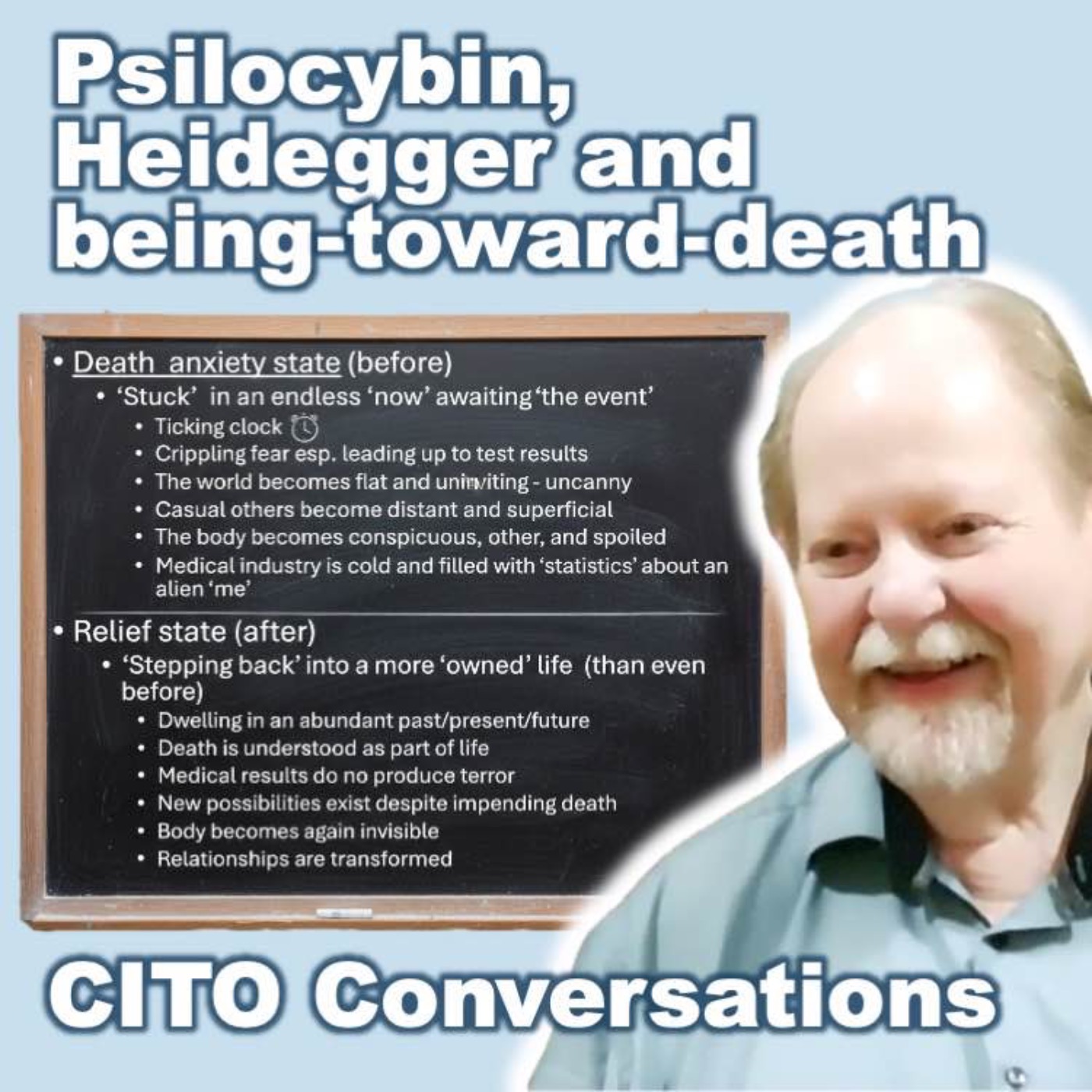 Johno (Robert Johnston) on Psilocybin, Heidegger and being-toward-death✨ | psilocybinHeidegger+4 | Johno Robert B. Johnston | Australian randomised control of psychedelic assisted psychotherapyBeing and Time | — | psilocybinHeidegger+5 | — | 1h 24m 47s | |
| 10/28/25 | 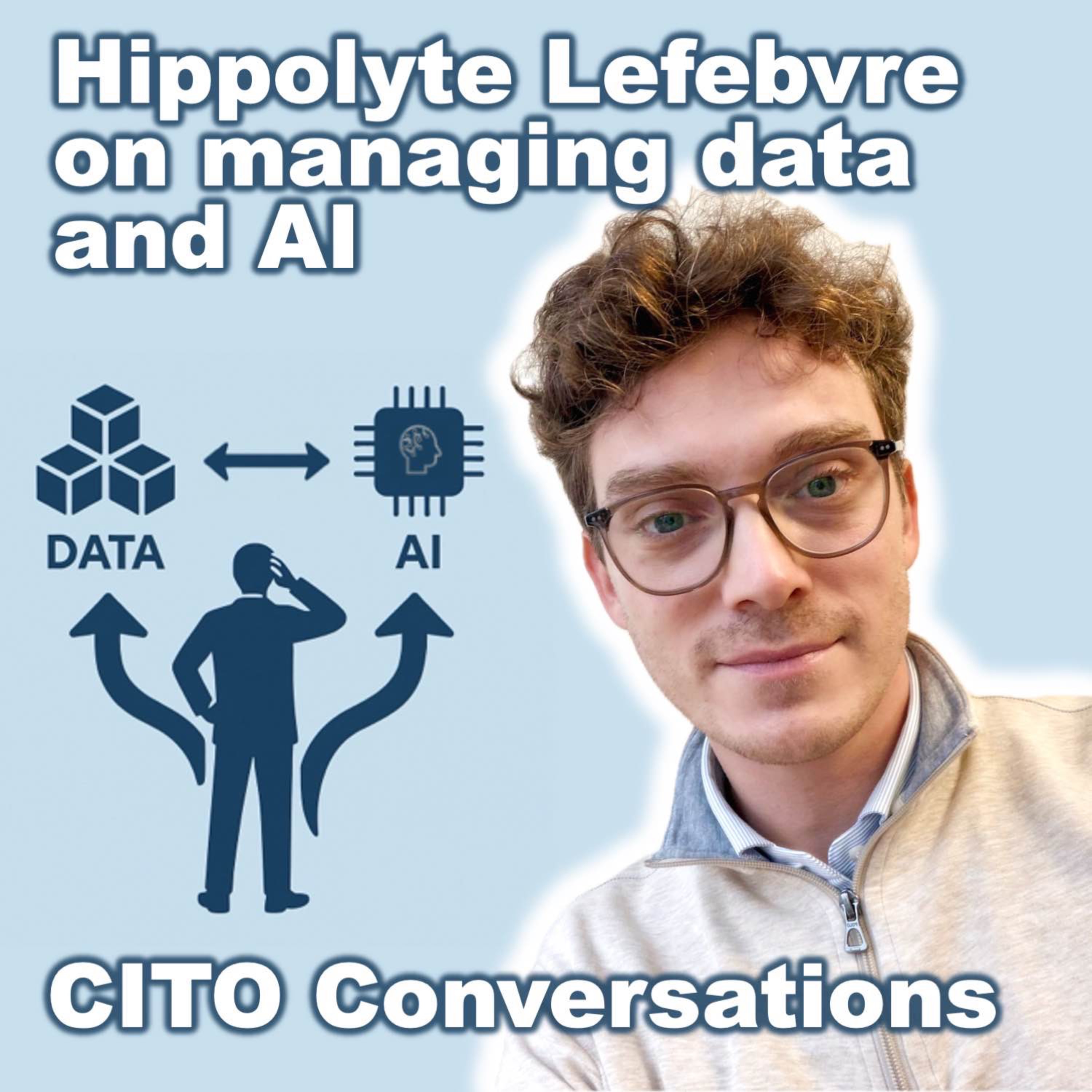 Data Practices with Hippolyte Lefebvre✨ | data practicesresearch interests+3 | Hippolyte Lefebvre | UCD College of BusinessUniversité de Lausanne+3 | — | data practicesHippolyte Lefebvre+5 | — | 28m 43s | |
| 10/17/25 | 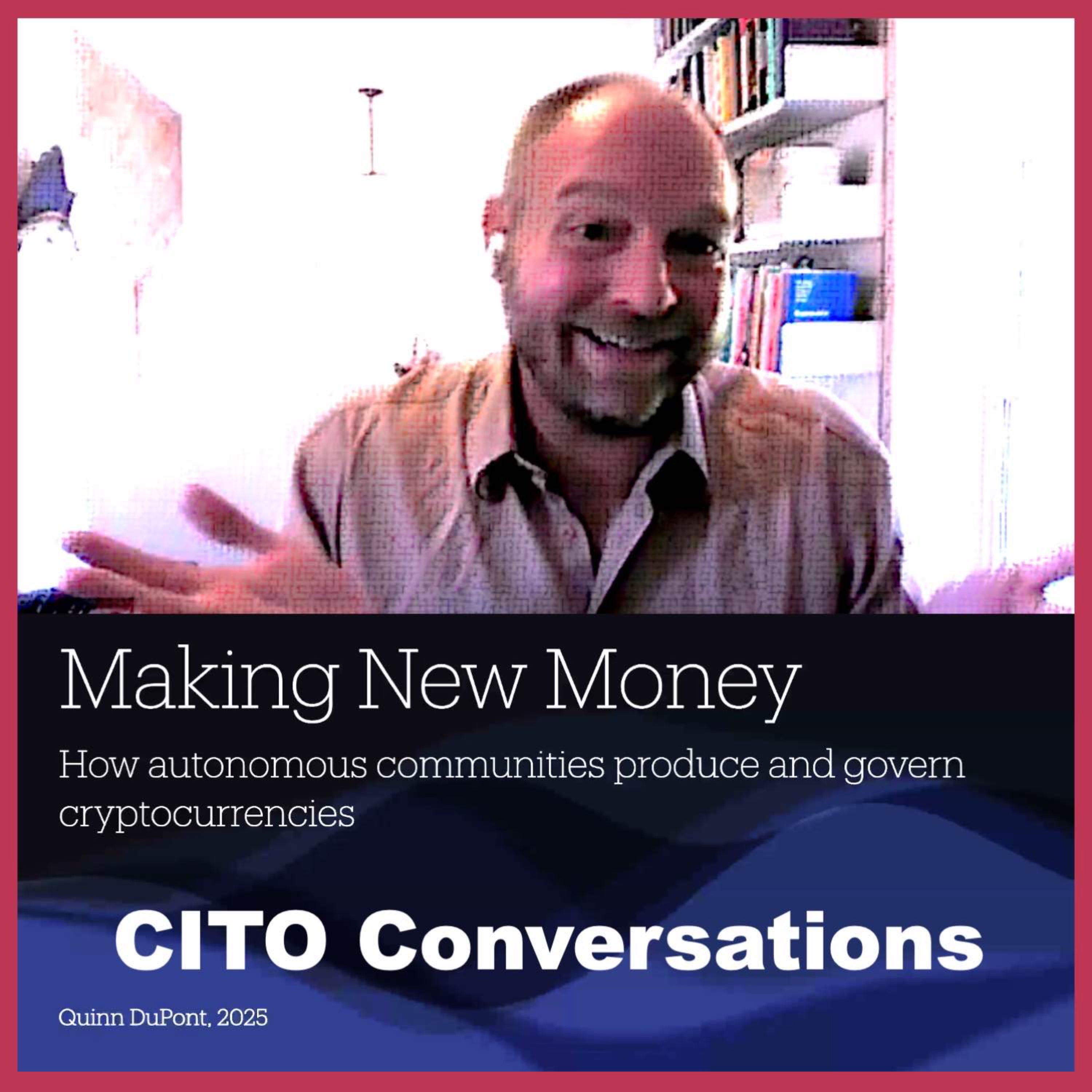 Making New Money by Quinn DuPont✨ | cryptocurrencieseconomic sovereignty+3 | Quinn DuPont | — | — | autonomous communitiesdigital wildcat banking+3 | — | 1h 10m 28s | |
| 11/17/24 | 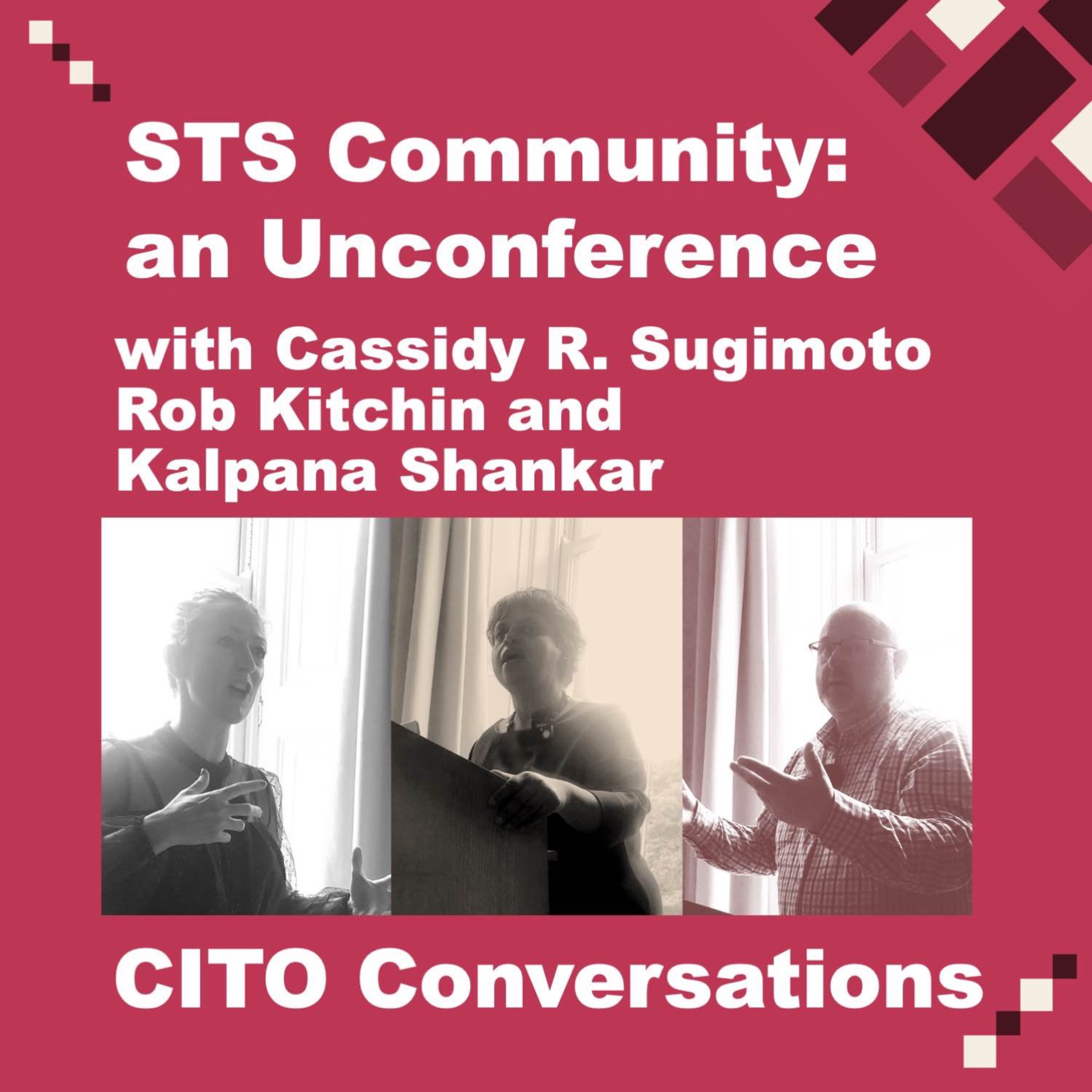 STS Community Making with Cassidy R. Sugimoto and Rob Kitchin✨ | unconferencenetworking+4 | Cassidy R. SugimotoRob Kitchin | Georgia Institute of TechnologyMaynooth University | Museum of Literature IrelandIreland | unconferenceSTS Ireland+7 | — | 1h 08m 21s | |
| 10/23/24 | 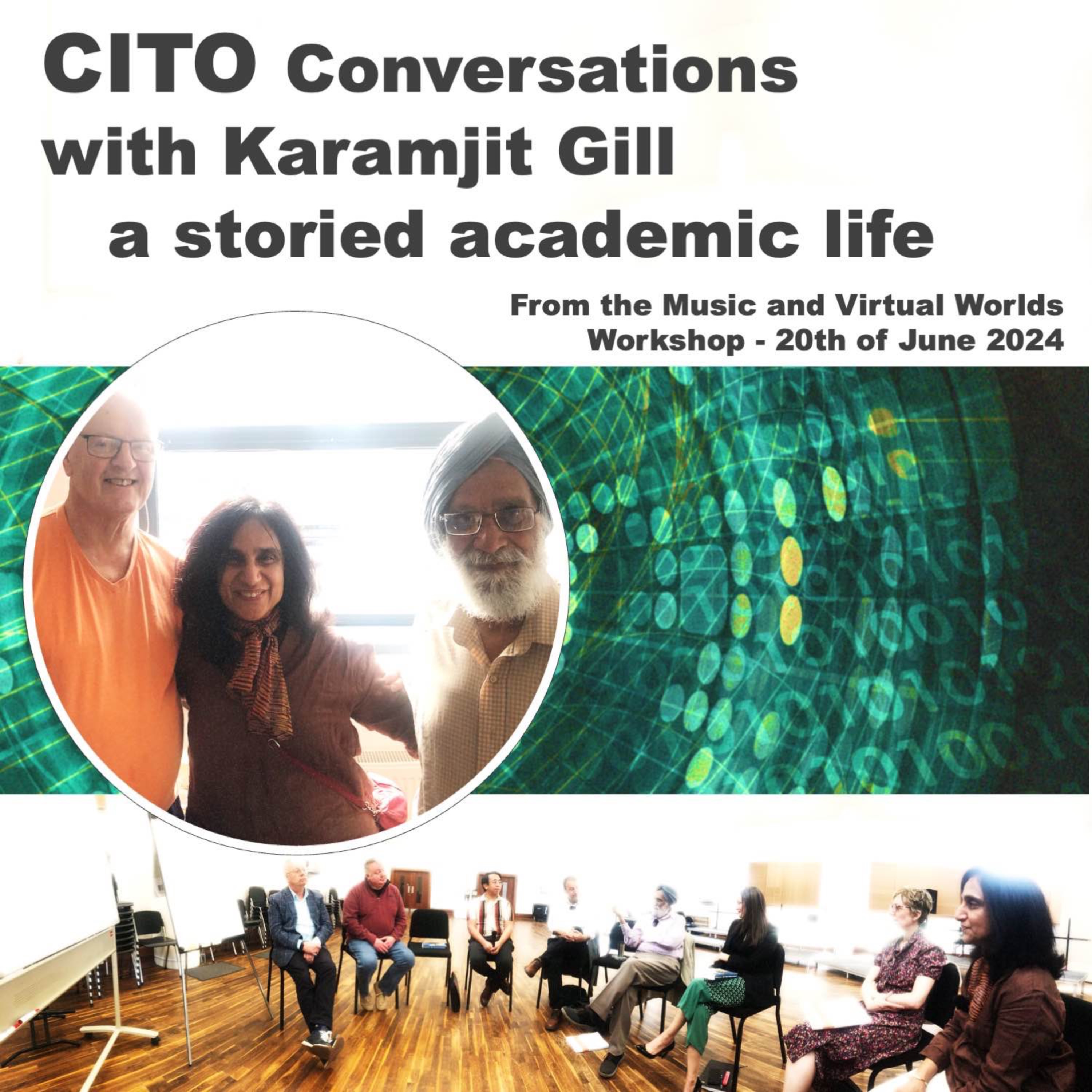 A Storied Academic Life - Karamjit Gill✨ | academic lifetechnology and society+3 | Karamjit Gill | AI & Society | University Hospital Limerick | academic habitussocial change+3 | — | 57m 46s | |
| 9/24/24 |  The Music and Virtual Worlds Workshop✨ | musicvirtual reality+3 | — | Kemmy Business School, University of LimerickSchool of Allied Health, University of Limerick+7 | — | XTREME projectmusic and virtual worlds+3 | — | 1h 07m 31s | |
| 5/7/24 | 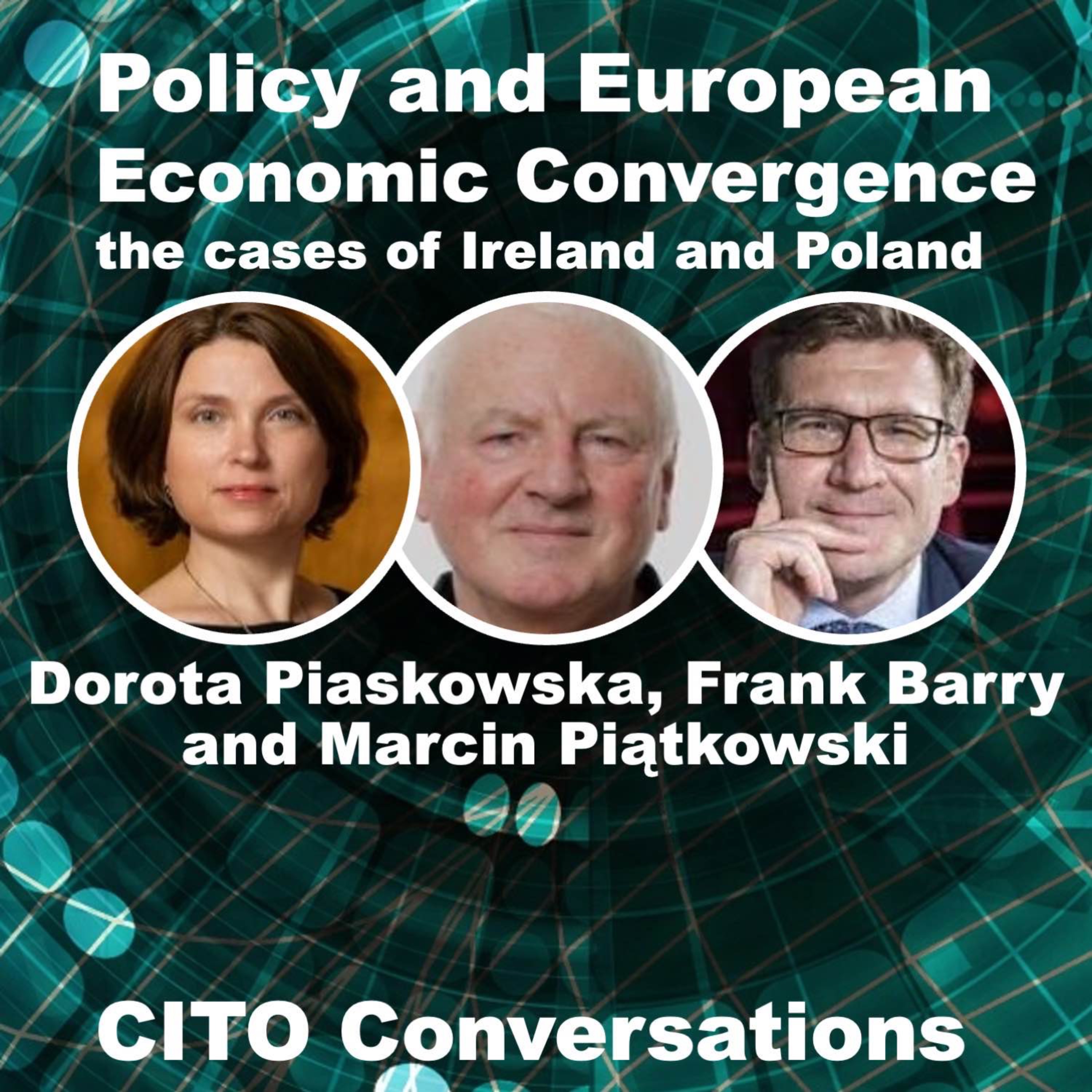 Policy and European Economic Convergence✨ | economic policyEuropean economic convergence+4 | Frank BarryMarcin Piątkowski | Trinity Business SchoolRoyal Irish Academy+3 | UCD Michael Smurfit Graduate Business SchoolDublin | economic growthcolonial empires+4 | — | 50m 20s | |
| 12/18/23 | 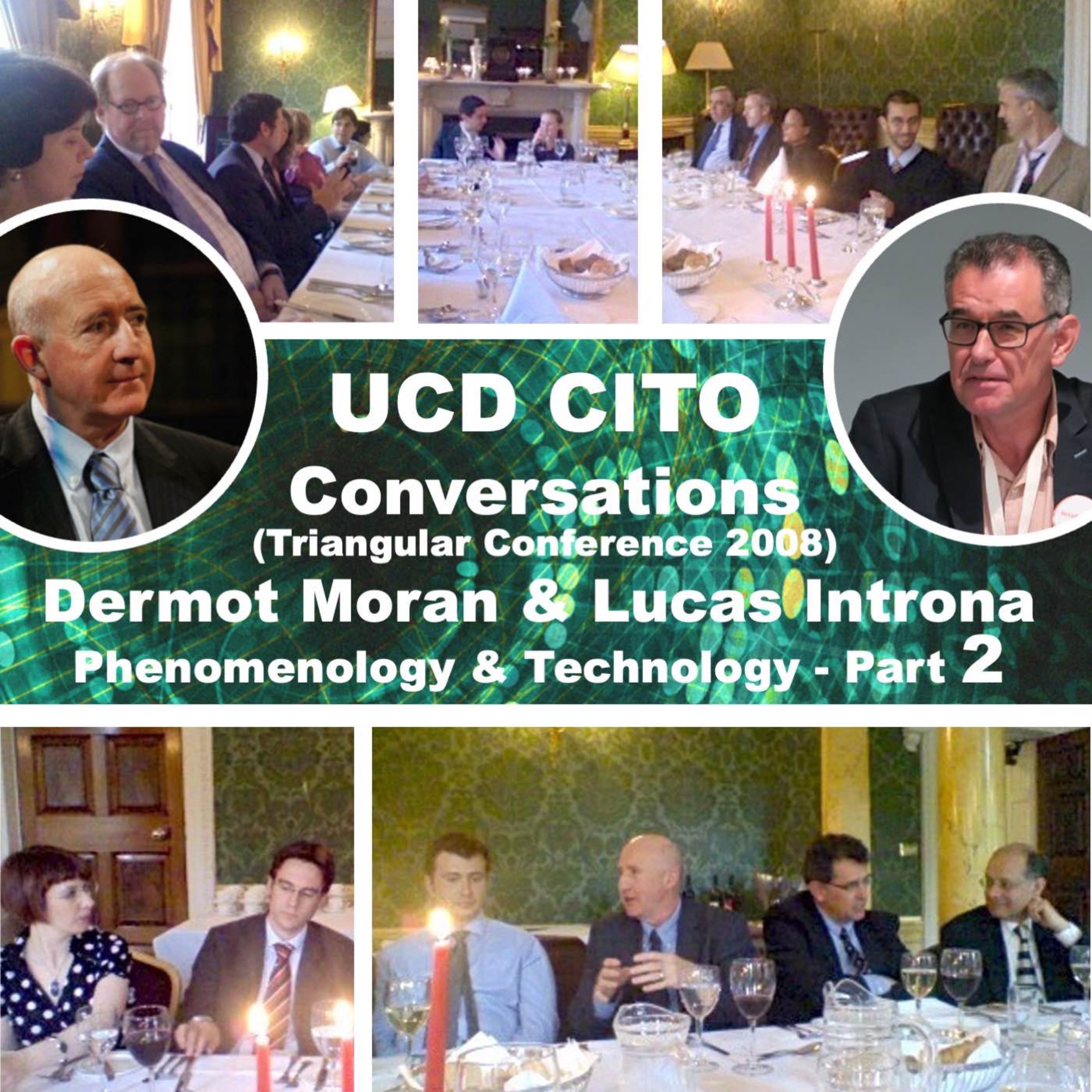 Phenomenology & Technology Part 2 - Lucas Introna✨ | phenomenologytechnology+4 | Lucas Introna | UCD School of BusinessUCD Centre for Innovation, Technology & Organisation | Dublin, Ireland | phenomenologytechnology+4 | — | 1h 12m 42s | |
Want analysis for the episodes below?Free for Pro Submit a request, we'll have your selected episodes analyzed within an hour. Free, at no cost to you, for Pro users. | |||||||||
| 12/18/23 | 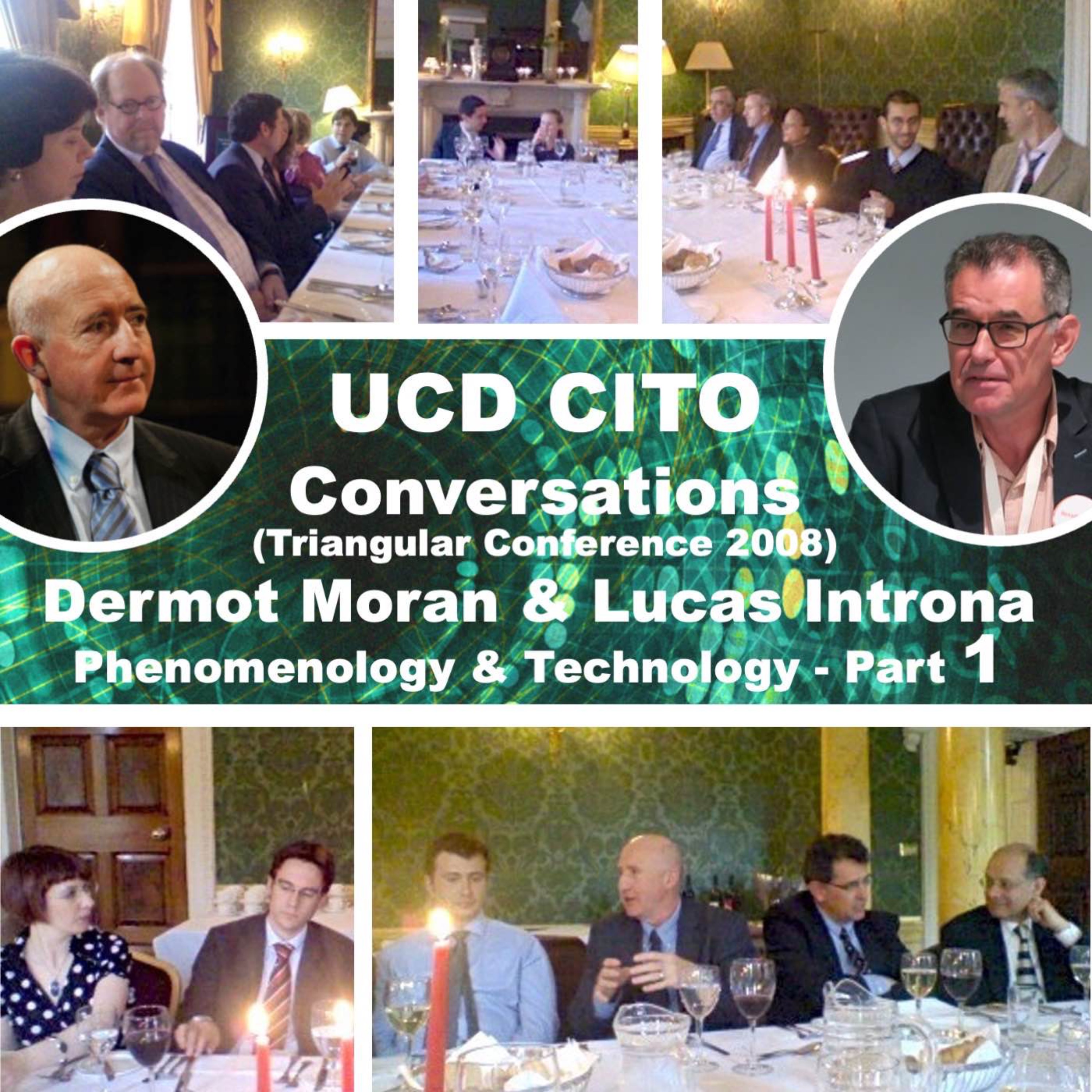 Phenomenology & Technology Part 1 - Dermot Moran✨ | PhenomenologyTechnology+5 | Dermot Moran | UCD School of BusinessUCD Centre for Innovation, Technology & Organisation | Dublin, Ireland | PhenomenologyTechnology+5 | — | 1h 11m 14s | |
| 3/6/23 |  Investigate the frontline with Laura Lucia Parolin and Carmen Pellegrinelli | This seminar is titled "Investigate the frontline: performing an affective ethnography in a theatre workshop" by Laura Lucia Parolin, University of Southern Denmark & Carmen Pellegrinelli, University of LaplandLaura is an ethnographer who uses the Latourian ANT approach, familiar with SCOT and HCI, Carmen is a theatre director, producer, and playwright. Their research is in the areas of materiality, affectivity and embodiment examining diverse empirical settings. They will present work-in-progress that on an affective ethnography of a theatrical laboratory organised for/by the hospital staff in Bergamo as a form of collective therapy. If you remember the hospitals in Bergamo were acutely affected during the Covid pandemic.Organised by the UCD Centre for Innovation Technology and Organisation (CITO) - The seminar took place in-person on Tuesday, February 21st, 16.00-17.00 - in the Q026 Angela Moore Boardroom, Quinn School, University College Dublin. Introduction by Donncha Kavanagh, Professor of Information & Organisation, UCD College of Business. AbstractIn March 2020, Bergamo was hit by the first wave of the pandemic. More than 6.000 people have died in the area, where the emergency facilities lived in a stressful situation for months. In January 2022, a group of ER doctors and nurses from the main hospital in Bergamo - the frontline in the crisis - wanted to reflect collectively on their experience with the pandemic. The group set up a one-year-long theatre workshop involving around thirty colleagues from the ER. The workshop also aimed to prepare a theatre show, "Giorni muti, notti bianche" (Silent days, sleepless nights), presented in Bergamo's main theatre. By participating in the theatre workshop, we conducted a collaborative affective ethnography to investigate the dimension of affect in ER professionals' work practices during the first wave of the pandemic. This contribution focuses on affective ethnography discussing the characteristics and potentials of this (post)qualitative research method for organisational scholars.Laura Lucia Parolin (parolin@sdu.dk) is Associate Professor of Organizational Communication at the University of Southern Denmark. She is interested in the relationship between knowledge, body, sensitivity, affect, care, materiality, and innovation in work practices. She is currently visiting UCD, having been awarded a Carlsberg foundation grant. Carmen Pellegrinelli (cpellegr@ulapland.fi) is finishing her PhD at Lapland University in the Faculty of Social Sciences. Her research interests are focused on creative practices, theatre and post-human philosophy. She is a professional playwright and director of theatre.AcknowledgementsMusic Title: Adagio in G minorArtist: Remo Giazotto attributed to Tomaso AlbinoniSource: https://soundcloud.com/dick-de-ridder/adagio-in-g-minor-albinoniLicensed by Dick de Ridder: CC-BY 3.0Cover Art Title: Digital IrisArtist: (no attribution)Source: digital_iris.pptxLicense: CC BY-NC-SA 4.0Podcast LicenseDesign Talk (dot IE) CC BY-NC-SA 4.0 The license can be viewed at https://creativecommons.org/licenses/by-nc-sa/4.0By taking part you give permission for your voice to be recorded, for the recording to be edited, and for it to be posted and published as a podcast. Hosted on Acast. See acast.com/privacy for more information. | — | ||||||
| 3/5/21 |  Towards a Firm for Our Time with JC Spender | The seminar took place virtually on Friday March 5th, 2021AbstractThe widely accepted understanding of the firm is deeply flawed and is a serious impediment to policy-making. Indeed there seems to have been little advance in theory since 1937, when the youthful Ronald Coase tweaked economists, charging they could not explain why firms existed, let alone how they worked. Notions of managers making decisions 'scientifically' is not only narrow, it ends up erasing their practice's essential nature and socioeconomic significance. Spender revisits the nature of the firm and argues that managing might be more helpfully understood as entrepreneurship, a value-creating activity often supported by science's facts and reasoning but never 'dominated' by them. The human condition is one of uncertainty, of not-knowing and therefore questing for knowledge; Homo Inquirentes rather than Homo Sapiens. Taking this as the starting point, Spender goes on to explore the implications for the private sector firm and for managing.About the speaker: JC Spender is Research Professor at Kozminski University, Warsaw and Visiting Scholar at Rutgers University, New Jersey and Fordham University, New York. He served in RN submarines and worked with Rolls-Royce on nuclear propulsion, IBM on financial computing, and as an investment banker before earning a PhD at the Manchester Business School (UK). Retired in 2003 as Dean of the School of Business & Technology at FIT/SUNY (New York). He has published 8 books, and over 100 journal articles and book chapters. His most recent book is titled Business Strategy: Managing Uncertainty, Opportunity, and Enterprise (Oxford UP 2014) and is about managing a business's creative responses to uncertainty (‘business model innovation’). He also writes about the theory and ethics of the firm, business strategy, and the history of management education. He is Commissioning Editor for the Cambridge University Press Elements in Business Strategy. In 2014 he was awarded an honorary doctorate in economics by the Lund University School of Economics & Management. https://jcspender.com Hosted on Acast. See acast.com/privacy for more information. | — | ||||||
| 12/9/20 |  Meaningful Work and Hermeneutics with Todd Mei | The seminar took place virtually on Wednesday December 9th, 2020AbstractMeaningful work is the idea that work holds an important role in the flourishing of societies and individuals. While there are many debates about what meaningful work is and whether we should take it seriously, this talk will focus on what I call the work-flourishing gap (WFG). Because work is a physical activity, there tends to be controversy as to how it can participate in those kinds of intellectual and imaginative activities we tend to associate with self-actualisation and flourishing. I will discuss how Paul Ricoeur’s hermeneutical theory of action (based on speech acts) can help dissolve the WFG by demonstrating how the activity of work bears features of linguistic meaning. This linguistic claim enables us to see work as more than just a bare physical phenomenon; it is communicative in the broad sense of being assertoric (locutionary), conventional (illocutionary), and transformative (perlocutionary). I will conclude with a reflection on some practical examples.About the speaker: Todd Mei is founder of the public philosophy and consultation organization Philosophy2u. He calls himself a `public philosopher’. It involves adapting abstract concepts and ideas from philosophy and employing them to frame new ways of understanding work as meaningful and virtuous beyond obligatory, functional or mere utilitarian views. Hosted on Acast. See acast.com/privacy for more information. | — | ||||||
Showing 14 of 14
Pitch Fit is a Pro feature
See how bookable this show is for guests, which brands already advertise, the per-episode ad value, and the best-fit guest and sponsor profile. The numbers are blurred on the free plan.
How readily this show books outside guests like you.
How proven this show is for host-read sponsorships.
For Guests
ProFor Advertisers
ProUpgrade to Pro to unlock guest cadence, sponsor categories, fit scores, and per-episode ad value for this show.