
Insights from recent episode analysis
Audience Interest
Podcast Focus
Publishing Consistency
Platform Reach
Insights are generated by CastFox AI using publicly available data, episode content, and proprietary models.
Most discussed topics
Brands & references
Est. Listeners
Insufficient chart data. Estimates will improve as the show charts.
- Per-Episode Audience
Est. listeners per new episode within ~30 days
N/A🎙 Weekly cadence·89 episodes·Last published 1mo ago - Monthly Reach
Unique listeners across all episodes (30 days)
N/A - Active Followers
Loyal subscribers who consistently listen
N/A
Market Insights
Platform Distribution
Reach across major podcast platforms, updated hourly
Total Followers
—
Total Plays
—
Total Reviews
—
* Data sourced directly from platform APIs and aggregated hourly across all major podcast directories.
On the show
From 12 epsHosts
Recent guests
Recent episodes
Musings with Dr. Joshua Herring: A Candid Conversation about Classical Education
May 21, 2026
1h 10m 08s
Encouragement for Homeschool Moms with Autumn Kern
May 7, 2026
56m 09s
Creating Classroom Culture with Mandi Gerth
Apr 23, 2026
42m 50s
Education as a Lifetime Pursuit of Virtue with Dr. Keith Buhler
Feb 12, 2026
1h 01m 38s
Advice for Opening a New Classical School with Chad and Melody Fowler
Jan 29, 2026
1h 10m 21s
Social Links & Contact
Official channels & resources
Official Website
Login
RSS Feed
Login
| Date | Episode | Topics | Guests | Brands | Places | Keywords | Sponsor | Length | |
|---|---|---|---|---|---|---|---|---|---|
| 5/21/26 |  Musings with Dr. Joshua Herring: A Candid Conversation about Classical Education✨ | classical educationteacher development+3 | Joshua Herring | Rafiki FoundationLogres Institute for Classical Liberal Studies+2 | Raleigh, NC | classical educationJoshua Herring+3 | — | 1h 10m 08s | |
| 5/7/26 |  Encouragement for Homeschool Moms with Autumn Kern✨ | homeschoolingclassical education+4 | Autumn Kern | The CommonplaceCommon House+4 | — | homeschool momsclassical education+4 | — | 56m 09s | |
| 4/23/26 |  Creating Classroom Culture with Mandi Gerth✨ | classroom cultureclassical education+3 | Mandi Gerth | University of DallasCiRCE Press+2 | Dallas, Texas | classroom cultureclassical education+3 | — | 42m 50s | |
| 2/12/26 |  Education as a Lifetime Pursuit of Virtue with Dr. Keith Buhler✨ | lifetime pursuit of educationrole of the teacher+4 | Dr. Keith Buhler | Saint Andrew AcademyAzusa Pacific University Honors College+8 | — | educationvirtue+6 | — | 1h 01m 38s | |
| 1/29/26 | 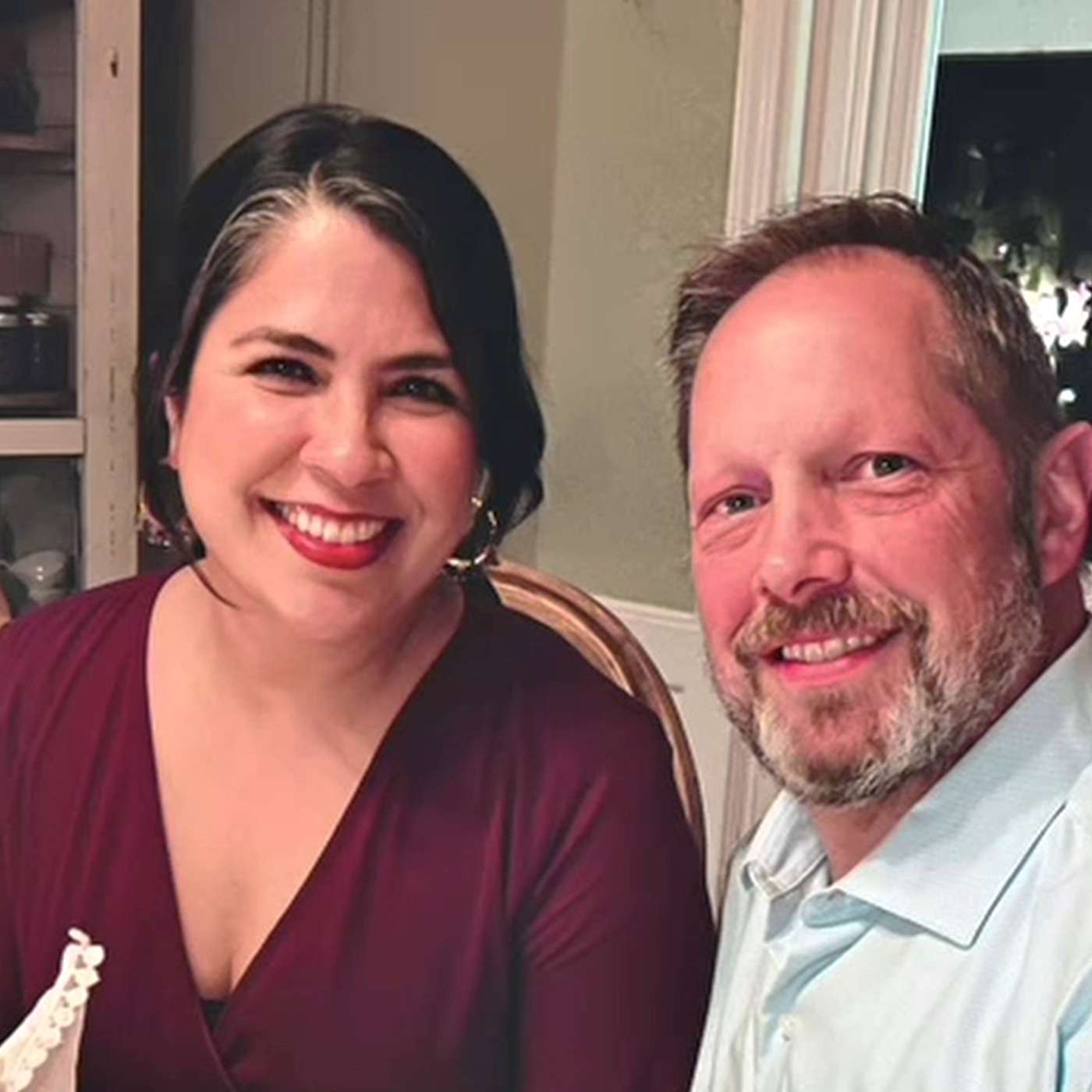 Advice for Opening a New Classical School with Chad and Melody Fowler✨ | classical educationschool opening+3 | Chad FowlerMelody Fowler | Roots Farm EducationSimpson University | El Paso, TexasRedding | classical schooleducation+3 | — | 1h 10m 21s | |
| 10/23/25 | 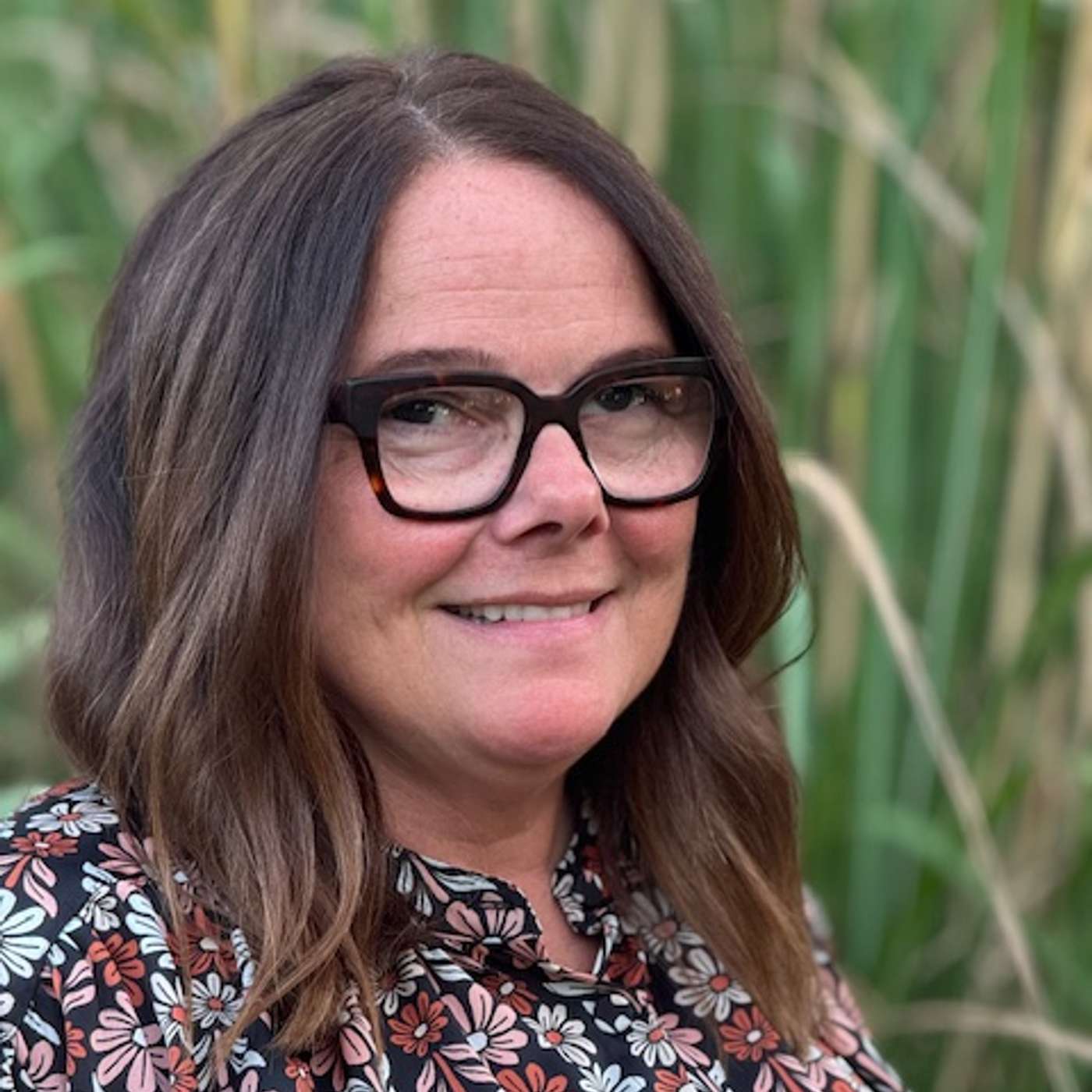 Narration in The Classroom with Classical Educator, Charlene Thompson✨ | narrationclassical education+3 | Charlene Thompson | Founders Classical AcademyHarding University | Rogers, Arkansas | narrationclassical education+3 | — | 48m 22s | |
| 8/15/25 | 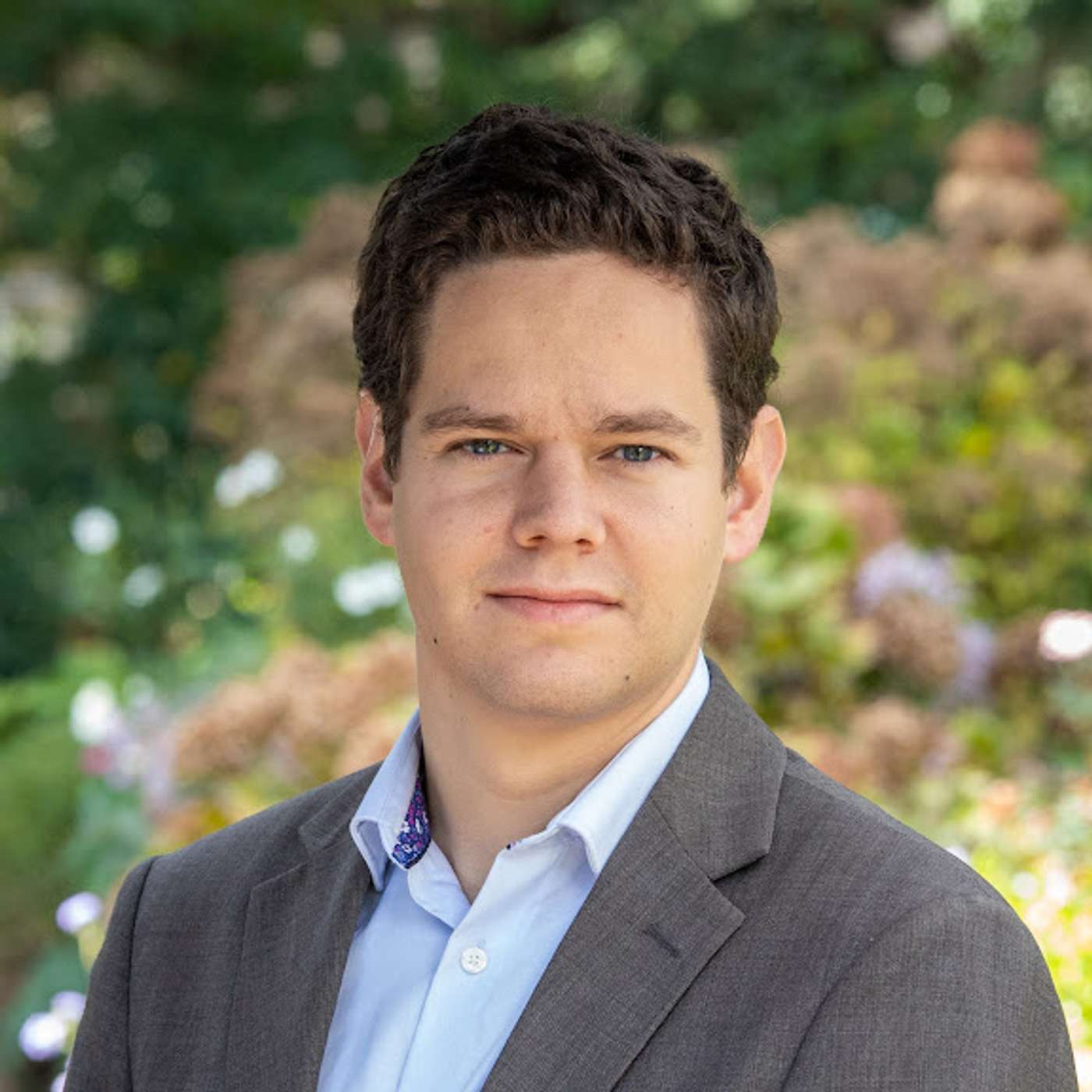 The Role of Memory Through Commonplace Notebooking with Dr. John Ahern from The Wilberforce School✨ | memorycommonplace notebooking+4 | Dr. John Ahern | The Wilberforce SchoolTheopolis Institute+7 | — | commonplace bookmemory+5 | — | 41m 42s | |
| 5/29/25 |  How Language Works with Philologist Dr Erik Ellis from the University of Dallas✨ | language pedagogyclassical education+3 | Dr. Erik Ellis | University of DallasBaylor University+4 | Tulsa, OklahomaRome+1 | languageclassical education+4 | — | 48m 44s | |
| 5/8/25 |  Teaching Classically & Reading Josef Pieper with Dr. Fred Putnam✨ | classical educationpedagogy+3 | Dr. Fred Putnam | Templeton Honors CollegeEastern University+2 | — | classical educationDr. Fred Putnam+3 | — | 1h 10m 56s | |
| 3/20/25 |  Jonathan Pageau: A Deep Dive Into Teaching Fairy Tales✨ | fairy talesstorytelling+3 | Jonathan Pageau | God’s DogThe Symbolic World+2 | — | fairy talesstorytelling+3 | — | 1h 03m 12s | |
Want analysis for the episodes below?Free for Pro Submit a request, we'll have your selected episodes analyzed within an hour. Free, at no cost to you, for Pro users. | |||||||||
| 2/27/25 |  Is Charlotte Mason Classical? A Response to Memoria Press with Kolby Atchison✨ | Charlotte Masonclassical education+3 | Kolby Atchison | Clapham SchoolEducational Renaissance+6 | — | Charlotte Masonclassical education+5 | — | 1h 04m 36s | |
| 2/6/25 | 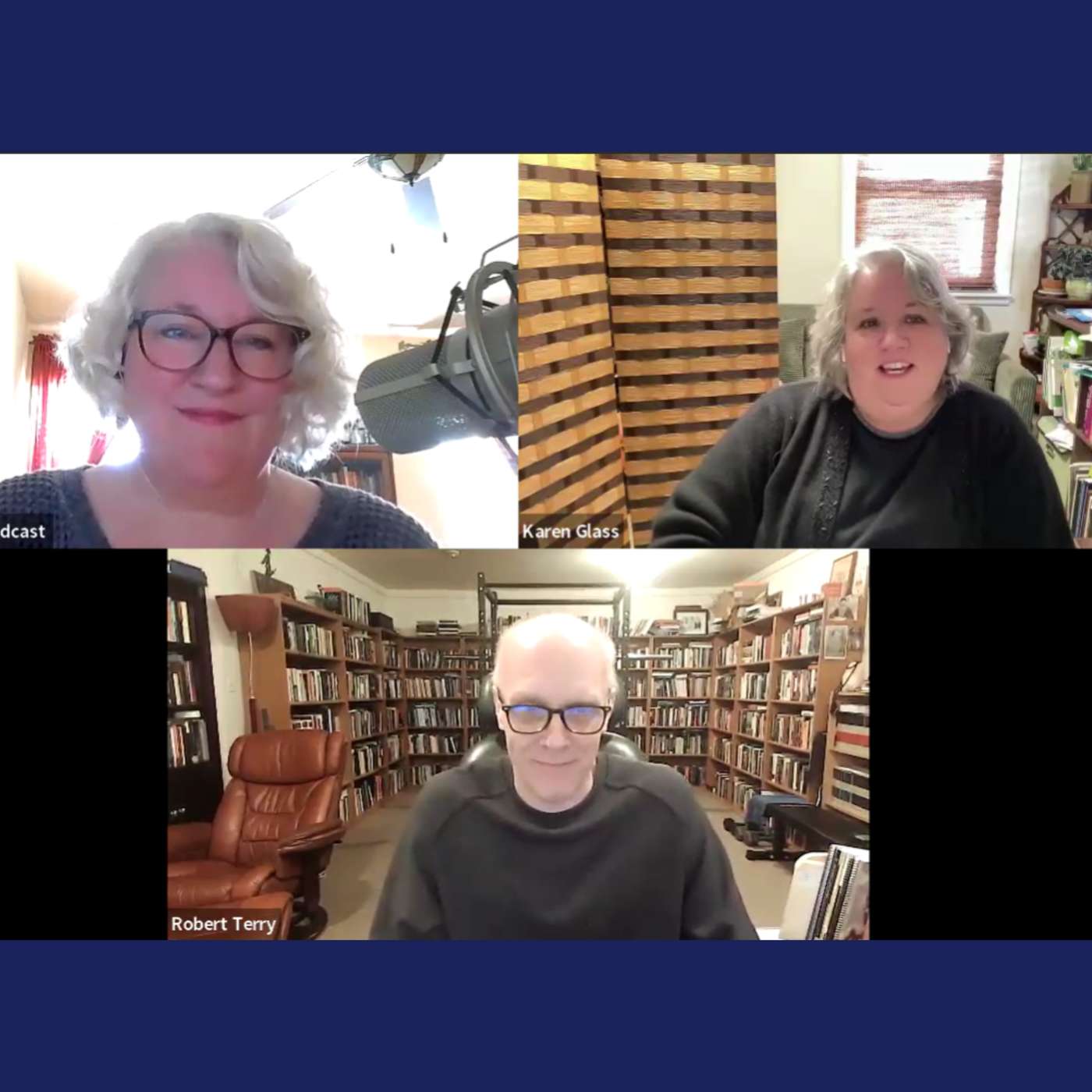 Coleridge and Charlotte Mason with Karen Glass and Dr. Robert Terry✨ | Charlotte MasonClassical Education+3 | Karen GlassDr. Robert Terry | AmblesideOnlineOn Method+4 | — | Charlotte MasonColeridge+3 | — | 49m 44s | |
| 1/16/25 | 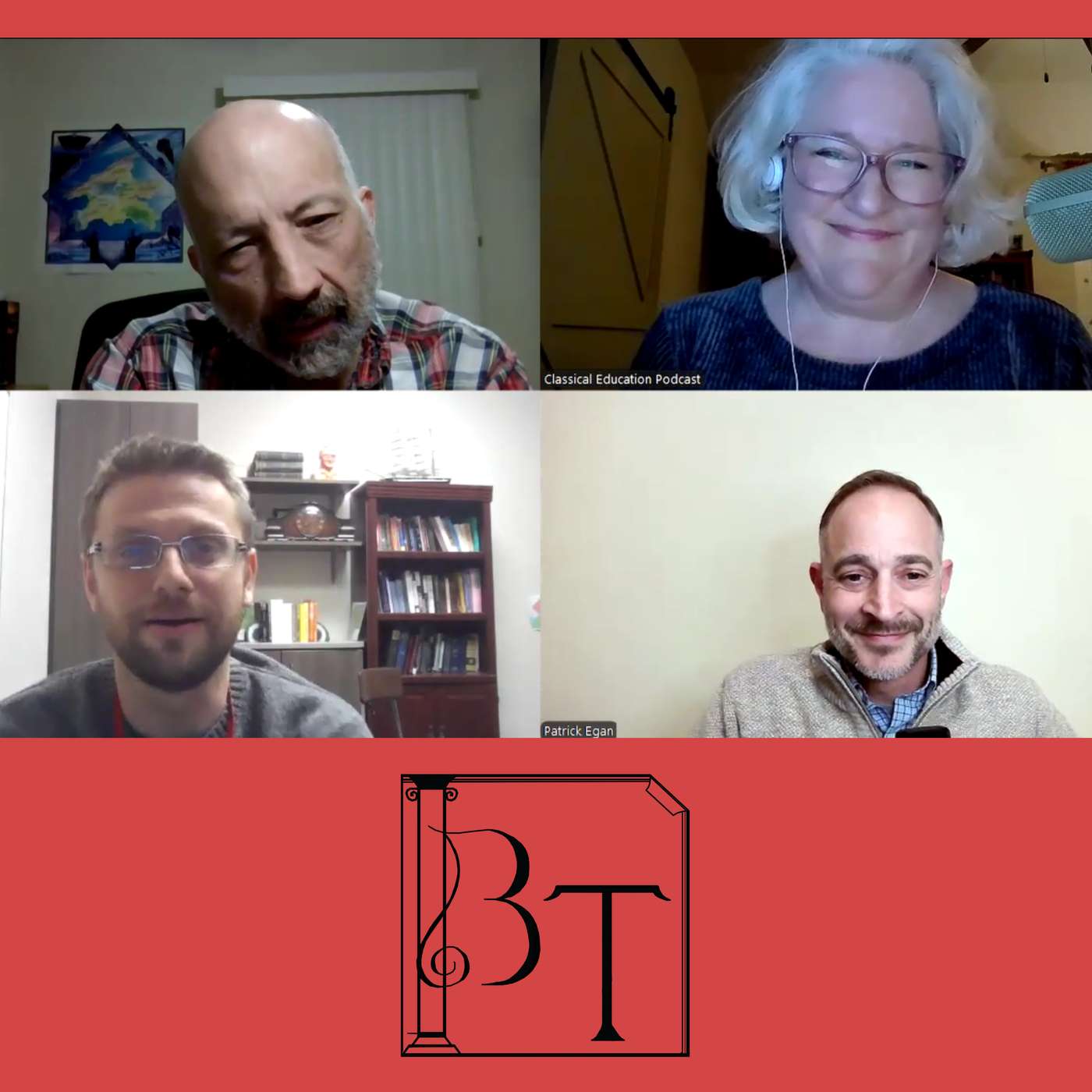 Is Charlotte Mason Classical? Panel: Dr. Louis Markos, Dr. Patrick Egan, and Jason Barney | Guests Dr. Louis Markos: Houston Christian University: Professor of EnglishRobert H. Ray Chair in HumanitiesScholar-in-ResidenceDr. Patrick Egan: Clapham Christian Classical SchoolAcademic DeanContributor of Educational Renaissance Jason Barney: Coram Deo Academy in Carmel, INSchool PrincipalAuthor of Charlotte Mason: A Liberal Education for All (published by CAP)Contributor of Educational Renaissance Show NotesCommon misunderstandings of Charlotte Mason (especially if you only read her principles)What does Mason say about memory work and how does it compare to Dorothy Sayer's view?Who in the Romantic era is good that Charlotte Mason embraced? What did she reject from the Romantic philosophers?Various quotes from Mason that reflect her alignment to the liberal arts traditionWhat is her view of a child and how does it influence her pedagogy?How and why narration is classical and superior as a classical pedagogyWhat is Paideia? -- Does Mason have a paideia in her philosophy?How the habit training model of Charlotte Mason mirrors/agrees with the classical traditionResources MentionedThe Great BooksJohn Locke, Coleridge, WordsworthCharlotte Mason: A Liberal Education for All by Jason BarneyFor The Children's Sake by Susan Schaeffer MacaulayConsider This: Charlotte Mason and the Classical Tradition by Karen GlassAbolition of Man by CS LewisThe Seven Laws of Teaching by John Milton GregoryAn Essay Towards a Philosophy of Education by Charlotte M. Mason (Centenary Expanded Edition has restored her original essay, "Two Education Ideals" where she compares Rousseau's Emile unfavorably to her favoring John Milton's Of Education)Metalogicon by John of SalisburyInstitutes of Oratory by QuintilianCharlotte Mason's Great Recognition of the Middle Ages through the fresco (vol. 2- Parents and Children by Mason)Charlotte Mason Quotes Louis Markos: "Our schools turn out a good many clever young persons, wanting in nothing but initiative, the power of reflection and the sort of moral imagination that enables you to 'put yourself in his place.'"- (Mason, Vol 6, pg. 25)Jason Barney: "Almost anything may be made of a child by those who first get him into their hands. We find that we can work definitely towards the formation of character; that the habits of the good life, of the alert intelligence, which we take pains to form in the child, are, somehow, registered in the very substance of his brain; and that the habits of the child are, as it were, so many little hammers beating out by slow degrees the character of the man. Therefore we set ourselves to form a habit in the same matter-of-fact steady way that we set about teaching the multiplication table; expecting the thing to be done and done with for life. " (The History and Aims of the P.N.E.U. pamphlet)Patrick Egan: "But the Florentine mind of the Middle Ages went further than this: it believed, not only that the seven Liberal Arts were fully under the direct outpouring of the Holy Ghost, but that every fruitful idea, every original conception, whether in Euclid, or grammar, or music, was a direct inspiration from the Holy Spirit, without any thought at all as to whether the person so inspired named himself by the name of God, or recognised whence his inspiration came." (Mason, Vol 2, pg. 271)________________________________________________________This podcast is produced by Beautiful Teaching, LLC.Support this podcast: ★ Support this podcast ★ _________________________________________________________Credits:Sound Engineer: Andrew HelselLogo Art: Anastasiya CFMusic: Vivaldi's Concerto for 2 Violins in B flat major, RV529 : Lana Trotovsek, violin Sreten Krstic, violin with Chamber Orchestra of Slovenian Philharmonic © 2025 Beautiful Teaching LLC. All Rights Reserved | 1h 16m 53s | ||||||
| 1/11/25 | 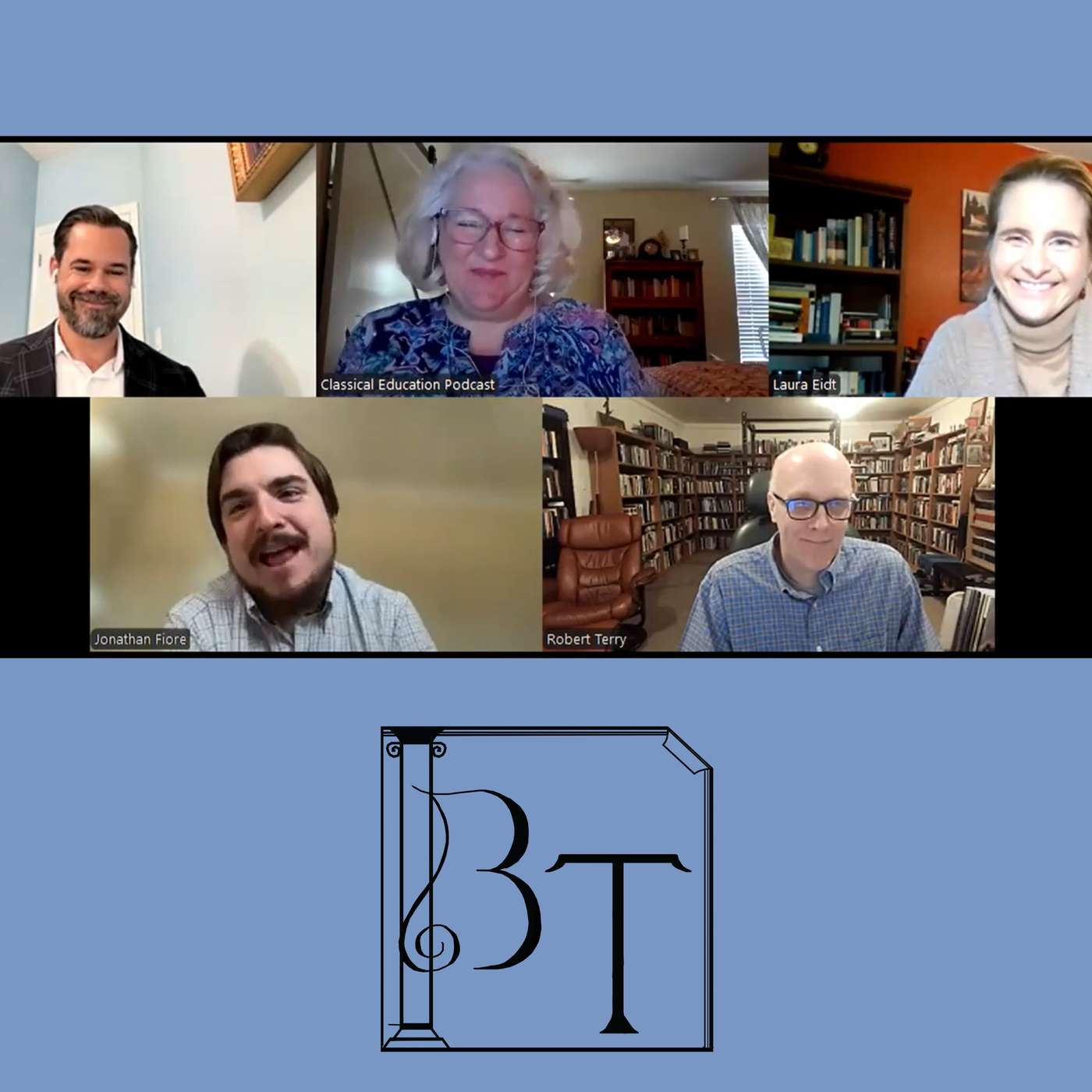 Panel Discussion: What Makes a School Classical? | GuestsDr. Matthew Post: Founder and Former Director of the Classical Education Graduate program at The University of Dallas; Served with The National Classical Education Symposium, The Institute for Classical Education, and The National Council for Classical Educators; Currently serves as Assistant Dean of Academic Affairs, Honors College at The University of TulsaDr. Laura Eidt: University of Dallas- Affiliate Assistant Professor of Modern Languages, Humanities Program Director, Director of UD's K-5 Latin Curriculum Latin Through StoriesDr. Robert Terry: Over 25 years at a Classical University Model School teaching and serving as curriculum director and faculty development, Masters in Great Books, Doctorate of Theology (ThD in Inkling Studies)Jonathan Fiore: Formerly homeschooled, Graduate of Hillsdale, Masters in Classical Education from The University of Dallas, Humanities Teacher at Holy Innocent's Catholic SchoolTopics CoveredWhat are the essential criteria for a school to be considered classical?There are 4 touchstones that make up a classical education: Christ-centered, cultivation of wisdom and virtue, appreticeship in the 7 liberal arts, and a focus on the timeless and traditionalCommunity and leadership must have an understanding of the tradition for successAtmosphere is central to the success -- order and harmony (beauty) is really importantAre the following things necessary?- Great Books, Socratic Dialogue, integration of subjects, Charlotte Mason, Trivium & Quadrivium, Latin? Love and freedom are at the heart of classical educationDoes reading the classics or teaching ancient Greek history automatically define your school as "classical"?Are we preparing students to see themselves as part of a community and a country?How ought we assess students if education is rooted in love and liberty?-- What does the research tell us about good and bad ways to assess students?What are some common roadblock in classical education?Memory work should be meaningful rather than rote fact chantsSeminarsFormation of teachers and parents is necessary Resources we Discussed:Paradox of Education in a Republic by Eva BrannJefferson's Natural AristocracyHomer's Iliad and OdysseyWhat is a book or poem that every classical teacher and board member should read?The Liberal Arts Tradition by Clark and JainPlato's GorgiasThe Awakening of Miss Prim by Natalia Sanmartin FenolleraHomer's Iliad (Fagles or Lattimore translation)Abolition of Man by C.S. LewisParadox of Education in a Republic by Eva Brann________________________________________________________This podcast is produced by Beautiful Teaching, LLC.Support this podcast: ★ Support this podcast ★ _________________________________________________________Credits:Sound Engineer: Andrew HelselLogo Art: Anastasiya CFMusic: Vivaldi's Concerto for 2 Violins in B flat major, RV529 : Lana Trotovsek, violin Sreten Krstic, violin with Chamber Orchestra of Slovenian Philharmonic © 2024 Beautiful Teaching LLC. All Rights Reserved | 1h 27m 29s | ||||||
| 12/12/24 |  Curriculum, Standards, Benchmarks, and Grading with Kiernan Fiore | About our GuestKiernan Fiore has worked as a teacher, administrator, trainer, and curriculum developer since 2011. Kiernan was classically home educated using a Charlotte Mason methodology, and her own educational experience is the inspiration for her work. She holds a BA in English from Hillsdale College and an MA in Shakespeare Studies from King’s College London and is certified in 4-8th Grade ELAR and Social Studies in Texas. After six years of working with the Founders Classical network of charter schools in Texas, she now serves as Dean of Curriculum at Holy Innocents School in Long Beach, CA. She also serves as a consultant on special projects and curriculum alignment with Beautiful Teaching, LLC. She has been married to Jonathan, also a classical educator, for six years and is the mother of three children. Show NotesThis discussion drills down into to how to help children grow by offering them a living curriculum. The work of teaching is the cultivation of the whole child. As classical educators, we need to think deeply about our curriculum and pedagogy. New teachers often wrestle with what this looks like in the classroom. An understanding of curriculum and its incarnational role will greatly influence the development of the whole child. Habit training is unpacked as an intellectual virtue at the heart of the entire foundation of a classical education.Discussion Points:How can we best help children grow?What is curriculum?-- Is it the books you are reading or is it the standards, benchmarks, and roadmaps that drive the instruction in the classroom?How does our definition influence our classroom instruction?As Christian Classical educators, is there another way to view curriculum that is centered on an incarnational model?What are some challenges with having check lists? Are there helpful checklists?Why is habit training so important and in what areas do we need to focus on?How can our habit training influence our standards and grading rubrics?Resources we Discussed:Andrew Zwerneman podcast interview has all the resources that will help you with grading: https://classicaleducationpodcast.transistor.fm/episodes/leading-assessing-seminars-with-andrew-zwerneman-from-cana-academyClassical Education Rubric Checklist: https://drive.google.com/file/d/1VYej2Qw2GrEItZI_wZjAy0hf7OS3oYpz/view?usp=drive_linkCatholic (virtue-based) Standards:https://cardinalnewmansociety.org/educator-resources/resources/academics/catholic-curriculum-standards/#standards-and-resources________________________________________________________This podcast is produced by Beautiful Teaching, LLC.Support this podcast: ★ Support this podcast ★ _________________________________________________________Credits:Sound Engineer: Andrew HelselLogo Art: Anastasiya CFMusic: Vivaldi's Concerto for 2 Violins in B flat major, RV529 : Lana Trotovsek, violin Sreten Krstic, violin with Chamber Orchestra of Slovenian Philharmonic © 2024 Beautiful Teaching LLC. All Rights Reserved | 54m 07s | ||||||
| 10/17/24 |  Integrating Poetry in Science Lessons with Chris Hall | About our GuestChris earned a BA in Philosophy from Gettysburg College and an MAT in Elementary Education from Towson University. He has been a classroom educator and administrator for 29 years, having served in public, independent, and classical schools. His is an author, speaker, and consultant in classical education, as well as an online and in-person teacher, coach, and tutor.Along with his professional pedigree, he is a lifelong practitioner of several of the common arts profiled in his book, Common Arts Education. For more than thirty years, Chris has sought out training for and advanced his skills in armament, agriculture, material-working arts, ancestral skills, preparedness, and more. He is a practicing musician, amateur radio operator, and avid outdoorsman, all of which serve to inform and shape his ongoing development of, and in, the arts. Chris founded Always Learning Education in order to serve teachers, schools, homeschool families, and others who are interested in learning and propagating the common arts. He lives on a small homesteaded farm in central Virginia with his wife and three homeschooled sons.\https://alwayslearningeducation.net/Show NotesIn this episode, Chris Hall shares a few of his favorite poems and discusses poetry for science lessons! This episode will inspire you in the delightfulness of integrating poetry and stories into science lessons.Poems on this EpisodeWhen I Heard the Learn’d Astronomer By Walt WhitmanThe Peace of Wild Things By Wendell BerryShakespeare's Sonnet 37_______________________________________Remembering Season 1, Episode 3 Chris Hall joined our podcast to discuss the common arts https://share.transistor.fm/s/a08b71cbThat podcast episode can be heard here. We discussed the following: What are the common arts? How do they relate to a classical education? How do we bring up the whole human being, thriving in wonders of life and right ordered relationships? How to balance and bolster both common arts and liberal arts in education. _______________________________________________________SCL FALL RETREAT, 2024Chris and I were both invited to lead the teacher track sessions at Society for Classical Learning's 2024 fall conference in Dallas the last weekend in October. We are collaborating and are creating not only some wonderful sessions on the theory of classical education but also practical sessions where you will leave feeling equipped. You will discover the transcendentals (truth, goodness, and beauty)— through theory and hands-on practicum sessions. This conference is not only for classroom teachers but also for home educators. Tickets are on sale at the Society for Classical Learning website be sure to look for their link to the fall retreat so you can read more about this conference, our sessions, and register online.https://www.societyforclassicallearning.org/fall-retreat-24/ ________________________________________________________This podcast is produced by Beautiful Teaching, LLC.Support this podcast: ★ Support this podcast ★ _________________________________________________________Credits:Sound Engineer: Andrew HelselLogo Art: Anastasiya CFMusic: Vivaldi's Concerto for 2 Violins in B flat major, RV529 : Lana Trotovsek, violin Sreten Krstic, violin with Chamber Orchestra of Slovenian Philharmonic © 2024 Beautiful Teaching LLC. All Rights Reserved | 34m 04s | ||||||
| 9/6/24 | 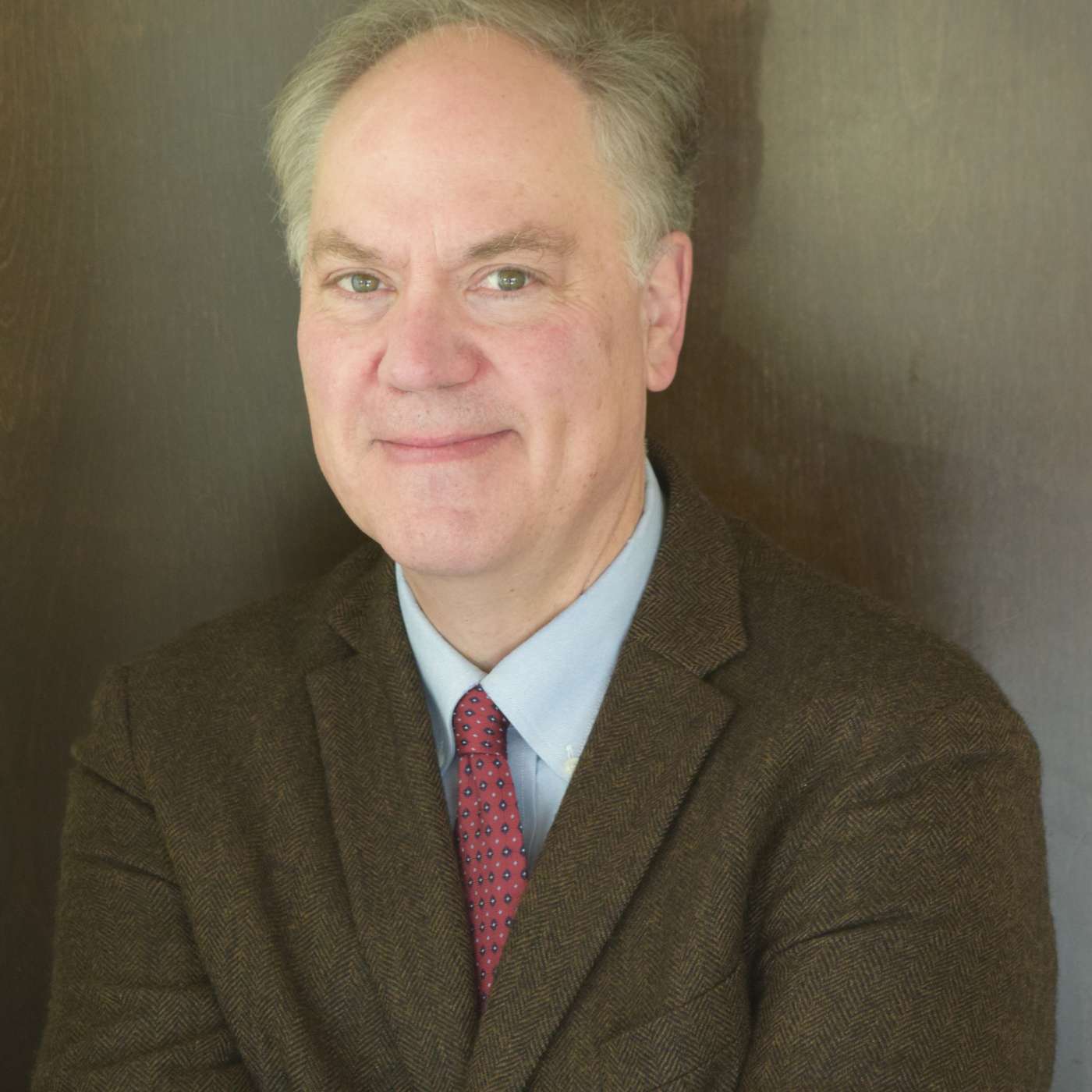 Leading & Assessing Seminars with Andrew Zwerneman from Cana Academy | About our GuestAndrew J. Zwerneman serves as Cana Academy’s President and as one of their MasterTeachers. For 40 years, he has taught and consulted in secondary schools that emphasize classic humanities. For 19 years he headed schools—2 at the public charter school, Tempe Preparatory Academy in Tempe, Arizona, 17 at Trinity School at Meadow View in Falls Church, Virginia. He is the founder and owner of The Academy Project, LLC, which wrote the original curricula and trained faculties for Thomas MacLaren School in Colorado Springs, Colorado, and Trinity Academy in Portland, Oregon. Education: B.A., A.B.D., University of Notre Dame; M.A., St. John’s University. He is the author of History Forgotten and Remembered (2020) and The Life We Have Together: A Case for Humane Studies, A Vision for Renewal (2022).https://www.canaacademy.org/Show NotesLeading seminars is one of Andrew's areas of expertise. Adrienne invited him back on the show to discuss the principles of leading great seminars and how to give grades that matter.Discussion Points:Referring to Zwerneman's "10 for 10: How to Grade Seminar Participation" the following are discussed:Why seminars are an important pedagogy for classical schoolThe principles for guiding good seminars Distinguishing between the higher habits of mind and the skilled habits of work What are some good reasons for grading seminars and how to grade themResources from Cana Academy10 for 10: How to Grade Seminar Participationhttps://www.history250.org/8 Tips for Leading a Great Seminar Discussion8 Tips On Coaching a Reluctant Discussanthttps://www.canaacademy.org/free-resources : scroll down to Seminar Leadership Videoshttps://www.canaacademy.org/shopExample of Free Sample: https://static1.squarespace.com/static/57e9653aebbd1a90d5cf34c6/t/5dfbd171db0c927d0316e45e/1576784250891/IliadGuideFreePreview+Secured.pdf________________________________________________________This podcast is produced by Beautiful Teaching, LLC.Support this podcast: ★ Support this podcast ★ _________________________________________________________Credits:Sound Engineer: Andrew HelselLogo Art: Anastasiya CFMusic: Vivaldi's Concerto for 2 Violins in B flat major, RV529 : Lana Trotovsek, violin Sreten Krstic, violin with Chamber Orchestra of Slovenian Philharmonic © 2024 Beautiful Teaching LLC. All Rights Reserved | 1h 05m 10s | ||||||
| 8/8/24 |  Creating a Book of Century in Art Class to Support History and Music with Anna-Marie Carter | About The GuestAnna-Marie Carter is an enthusiastic classical education convert. After years of disillusionment under the philosophy of progressive education, she had about given up teaching altogether. Her hope in education was saved by a call to teach music at Founders Classical Academy of Mesquite where she made lifelong friends and fell in love with the craft. She continues this love by sharing her joy for the fine arts with her students in and out of the classroom. Anna-Marie teaches alongside her gracious husband Daniel at Founders Classical in Tyler where they are raising their sweet children Amelia, Remington, and Clara Mae.Show Notes & HighlightsAdrienne introduces you to Anne-Marie Carter in a completely joyful interview about creatively connecting History of the world and History of America through the arts. Anne-Marie Carter falls in love with teaching after moving from a scripted school to Founder’s Classical School in Tyler, Texas. They discuss some of the following: Why and How to make an artful Book of the Centuries.Presenting a feast of ideas, to love many things and care about many things.The art and music teacher collaborates with the classroom teachers. Creativity and how to grade the student's work.What materials are neededYOUTUBE LINK: https://youtu.be/6lbOdS6Hq8YThe second half of this interview is all visual. To view the examples and hear how to make a book of centuries, visit our YouTube Channel. youtube@classicaleducationpodcast_________________________Books MentionedCharlotte Mason quote about history: (Vol. 6, 178), Mason's section on the teaching history begins on page 169 in vol. 6) Consider This: Charlotte Mason and The Classical Tradition by Karen GlassBooks by Charlotte MasonAbolition of Man by C S LewisThe Living Page by Laurie BestvaterThe Little Prince by Antoine de Saint-ExuperyLes Miserables by Victor Hugo ________________________________________________________This podcast is produced by Beautiful Teaching, LLC.Support this podcast: ★ Support this podcast ★ _________________________________________________________Credits:Sound Engineer: Andrew HelselLogo Art: Anastasiya CFMusic: Vivaldi's Concerto for 2 Violins in B flat major, RV529 : Lana Trotovsek, violin Sreten Krstic, violin with Chamber Orchestra of Slovenian Philharmonic © 2024 Beautiful Teaching LLC. All Rights Reserved | 48m 36s | ||||||
| 6/26/24 |  Mariah Martinez on Classical Pedagogy & Its Effects on Students | About The GuestMariah Martinez has worked in education since 2015 as a teacher, curriculum developer, and mentor teacher. Mariah attended the Honors College at Houston Baptist University where she received a B.A., double majoring in Philosophy and English. In 2021, she received a Master of Humanities in classical education from the University of Dallas. She is certified as a 7-12 ELAR instructor in the state of Texas. She began her teaching career at a Great Hearts school in San Antonio and now works at a Founders Classical charter school in Texas. She has eight years of middle and high school teaching experience and is a founding faculty member of the high school at her current location where she now serves as the assistant headmaster for the upper school. She has experience not only with developing classical curricula for the high school environment but has also developed guides for creating house systems and student leadership positions. Mariah's goal is to help make the methods of classical education and the philosophies behind them accessible for all.Show NotesMariah Martinez shares what she has learned about Classical pedagogy and how to apply this art of teaching classically, simply and well. She shares her experience working at a classical charter school and the impact that it has had on her students. She also shares about the two types of classical pedagogy which she will expand on at the Vital Ideas Conference, 2024.Some Highlights:What you must have in order to obtain good pedagogy; from Norms and Nobility by David HicksDoes the state of education matter?What leads to an incomplete education?What happens with isolation and online programs?How do we form well ordered minds and souls?Two types of pedagogy and the subcategories Observed differences that Classical Education has made in the students at her schoolResources Mentioned Norms and Nobility by David Hicks ---An affordable REISSUE of Norms and Nobility releases August 6, 2024 (look for the blue book with the introduction by Andrew Kern)Crime and Punishment by DostoyevskyAudiobook: Jane Eyre by Charlotte Brontë Narrated by: Virginia Leishman ________________________________________________________ONE day left to register for the conference on June 28-29, 2024Vital Ideas Online Classical Education Conference Information -https://www.beautifulteaching.com/conference________________________________________________________This podcast is produced by Beautiful Teaching, LLC.Support this podcast: ★ Support this podcast ★ _________________________________________________________Credits:Sound Engineer: Andrew HelselLogo Art: Anastasiya CFMusic: Vivaldi's Concerto for 2 Violins in B flat major, RV529 : Lana Trotovsek, violin Sreten Krstic, violin with Chamber Orchestra of Slovenian Philharmonic © 2024 Beautiful Teaching LLC. All Rights Reserved | 54m 46s | ||||||
| 6/13/24 |  An Interview with David V. Hicks, Author of Norms and Nobility | About The GuestDavid V. Hicks retired in 2015 as Chief Academic Officer for Meritas LLC, a company based in Chicago that owned and operated K-12 college preparatory schools worldwide. The day after his retirement, Meritas was sold to Nord Anglia Education. Before joining Meritas, Hicks spent thirty years in independent education, heading St. Andrew’s Episcopal School in Jackson, Mississippi; St. Mark’s School of Texas in Dallas; St. Paul’s School in Concord, New Hampshire; and the Darlington School in Rome, Georgia. After graduating from The Stony Brook School (New York) in 1966, Hicks studied at Princeton where he majored in English and graduated magna cum laude and Phi Beta Kappa in 1970. He then read for a master’s degree in Philosophy, Politics, and Economics (PPE) at Jesus College, Oxford as a Rhodes scholar. He later studied at the University of Moscow. Hicks served as an officer in the U.S. Navy and is the youngest man ever to teach on the faculty of the Naval War College. In 1976, he ran for Congress in New York’s Westchester County in a race he narrowly lost to long-time incumbent Richard Ottinger. In 1981 his book, NORMS & NOBILITY: A TREATISE ON EDUCATION, won the Outstanding Book Award for Education from the American Library Association. In 1996, Hicks created a stir in boarding school communities around the United States when he published his essay, “The Strange Fate of the American Boarding School,” in The American Scholar. His and his brother Scot’s translation of Marcus Aurelius’ Meditations was published by Scribner as THE EMPEROR'S HANDBOOK in 2002. Since then Scot and Davd have produced a series of annotated translations of Plutarch’s Lives for CiRCE: The Lawgivers; The Statesmen; and The Tyrant. Forthcoming books by Hicks: The Stones Cry Out: Reflections on the Myths We Live By (CAP) and with Father Anthony Gilbert, Orthodox Christianity and Classical Education (SVP). Hicks has served on numerous boards throughout the world, most recently including the TASIS Foundation (Switzerland), the Campion School (Greece), St. Vladimir’s Orthodox Theological Seminary (New York), TASIS Dorado School (Puerto Rico), San Roberto International School (Mexico), and St. Peter’s Monastery Foundation (Montana). Hicks and his wife Mary Elizabeth have four grown children and live on a ranch (West of the Moon) off the grid near Harrison, Montana. They are members of St. Anthony the Great Orthodox Church In Bozeman.Show NotesDavid shares about his education as a child into his early career and how it lead him towards writing Norms and Nobility. Adrienne and David dive into what it means to create a spirit of inquiry rooted in dialects. David delves into the thesis of Norms and Nobility and expands on the quote on page 18 of his book. David discusses what early Christian education looked like. David details about all his newer writing projectsDavid V. Hicks ResourcesREISSUE of Norms and Nobility releases August 6, 2024 (look for the blue book with the introduction by Andrew Kern)Orthodox Christianity and Classical Education: An Anthology edited by David V. Hicks (published by St. Vladimir's Press. Release date is not yet available)The Stones Cry Out by David V. Hicks (CAP publishing- Preorder form is available here)The Emporer's Handbook : A New Translation of the Meditations Trans. by David and Scot Hicks (the new paperback version is Marcus Arelius's Meditations also translated by Hicks)The Plutarch books (all 3: The Lawgiver, The Statesman, The Tyrant) can be found on Circe Institute's website here.Resources MentionedThucydides (He did not mention what book, but this is the version that Dr. Matthew Post used for his classes at UD)Crime and Punishment by Fyodor DostoevskyThe Book of Lost Tales by J.R.R. TolkienThe Death and Life of Great American Cities by Jane JabobsThe Unsettling of America: Culture & Agriculture by Wendell Berry (audiobook is free on audible)Plutarch's LivesSingapore MathThe PsalterFilm: Seven Brides for Seven BrothersNotes from Underground by Fyodor DostoevskyChristianity and Classical Culture by Charles Norris Cochrane (free pdf here) Past Guests on the Podcast who are Mentioned in this Episode:RightStart MathTeaching Math Like Socrates with Number LabTending The Heart of Virtue: Vigen GuroianDr. Christopher Perrin on What is Classical Education?Bryan Smith: A Sage in the Liberal Arts Tradition______________________________Beautiful Teaching is hosting an online classical education conference (Karen Glass is one of the keynote speakers). https://www.beautifulteaching.com/conference$20 off Discount Code:IDEAS20note: copy/paste exactly without any spaces before or after.It is good through June 20.DETAILED PROGRAM GUIDEConference Recordings: All sessions will be recorded. Live attendance is greatly encouraged, but come and go as needed. The recording will be av... | 1h 06m 36s | ||||||
| 5/27/24 | 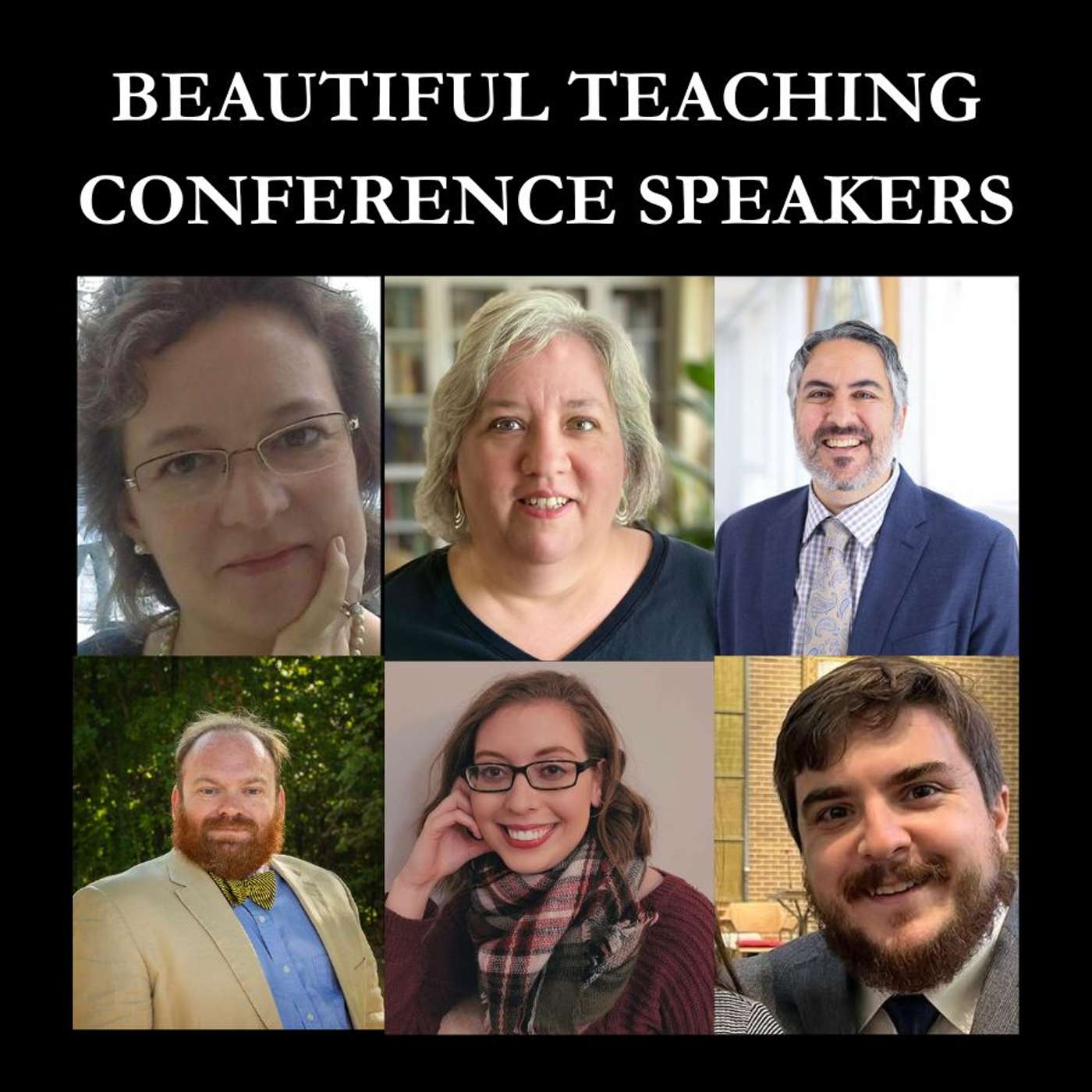 Living Ideas with the Beautiful Teaching Team | This podcast is produced by Beautiful Teaching, LLC. Our team provides immersion courses, seminar led book studies, and comprehensive support for parents & K-12 classical educators.This episode was sponsored by Classic Learning Test (CLT), Beautiful Feet Books, and Eighth Day Books! Conference attendees have a chance to win gift certificates from these sponsors as well as our other conference sponsors! Join us for our First Conference! Explore some of our Conference Sessions on this episode: Discuss your conference topic and what can attendees expect to take away from your session?Karen Glass: The Children Ask for Bread Peach Smith: Teaching Science Classically for K-12 Mark Signorelli: Before the Books & Story and CivicsAaron Mitchell: Teaching Euclid as a Way Beyond Gnostic Cartesian MathematicsMariah Martinez: Introducing Two types of Classical Pedagogy: Mimetic and Socratic & Recitation: A Rhetorical Art for PreK-12Jonathan Fiore: The Things We Carry– Two Graduates of Classical Education Reflect on its ImpactAdrienne Freas: Loving Many ThingsSome Question We Discuss:What does the term "Vital Ideas" mean and why is it the them for our first classical education conference?Who has had the greatest influence on your philosophy of education and why?"what makes being an educator in the classical tradition different than just being an educator per se?"What do you think are the greatest difficulties for classical educators?_________________________________________________________________________Vital Ideas Conference Information -https://www.beautifulteaching.com/conference$20 off Discount Code: IDEAS20note: copy/paste exactly without any spaces before or after.It is good through June 20. DETAILED PROGRAM GUIDEConference Recordings: All sessions will be recorded. Live attendance is greatly encouraged, but come and go as needed. The recording will be available 2 weeks after the conference. The recordings will be available for 9 months.Sessions: We have 16 sessions and 12 Speakers! Our sessions are for parents, home educators, classroom teachers, and school leadership. Each breakout in the program is marked with the recommended audience to help you choose the right sessions for your needs. See the detailed program guide! ________________________________________________________This podcast is produced by Beautiful Teaching, LLC.Support this podcast: ★ Support this podcast ★ _________________________________________________________Credits:Sound Engineer: Andrew HelselLogo Art: Anastasiya CFMusic: Vivaldi's Concerto for 2 Violins in B flat major, RV529 : Lana Trotovsek, violin Sreten Krstic, violin with Chamber Orchestra of Slovenian Philharmonic © 2024 Beautiful Teaching LLC. All Rights Reserved | 1h 26m 20s | ||||||
| 5/2/24 |  Bryan Smith: A Sage in the Liberal Arts Tradition | About The GuestBryan Smith has been in education for over thirty years, primarily in schools with a liberal arts or classical education philosophy. His own education at the University of Dallas was a solid classical liberal arts formation in great texts, classical Greek, and rhetorical practice.Bryan has worked in private schools for most of his career, but for a decade he worked with Great Hearts Academies, a charter school network operating in Arizona and Texas. He began his employment at Great Hearts as the founding head of school for one of eleven Arizona campuses. During Great Hearts’ expansion into Texas, Bryan served as the founding headmaster for the first network school in the Dallas / Fort Worth Metro area. Bryan’s most recent work as a consultant has allowed him to continue helping school staff with planning, solid pedagogical and administrative practices, classroom management and student culture.You can find Bryan Smith on LinkedInShow NotesBryan Smith and Adrienne Freas of Beautiful Teaching, reflect on what is attractive about a Liberal Arts Education. They talk about the principles that define a classical school, and why the ethos of classical education imparts a hopeful view of humanity. A noble end unfolds from permanent and universal reflections. The principles that anchor classical schools are discussed in this significant podcast. All educators will appreciate the wisdom of how to place school on course either to develop or to improve. Some Key Moments Include:What books are really necessary for a classical school to include on their lists?Why The Consolation of Philosophy by Boethius ought to be in every classical highschool curriculumWhat the early Christians thought about educationClassical education is rooted in common assumptions--these are elaboratedResources MentionedThe Consolation of Philosphy - BoethiusThe Discarded Image - C.S. LewisEssay “Schooling in Byzantium” by Bryan Smith (this will be a chapter in a new book coming out by St. Vladimir's press with essays compiled by David Hicks. More info coming soon)St. Basil on Prepositions: The Human ConditionThe Iliad &The Odyssey - HomerThe PsalterAtigoneBooks 1 and 2 of SamuelOn the Incarnation by Saint Athanasius the Great of Alexandria with an introduction by C.S. Lewis PlatoThe Chronicles of Narnia - C.S. LewisFrog and Toad series - Arnold Lobel"The Allegory of the Cave" from Plato's RepublicParadise Lost- John MiltonThe Brothers Karamazov - Fyodor Dostoevsky Poetry by Virgil________________________________________________________This podcast is produced by Beautiful Teaching, LLC.Support this podcast: ★ Support this podcast ★ _________________________________________________________Credits:Sound Engineer: Andrew HelselLogo Art: Anastasiya CFMusic: Vivaldi's Concerto for 2 Violins in B flat major, RV529 : Lana Trotovsek, violin Sreten Krstic, violin with Chamber Orchestra of Slovenian Philharmonic © 2024 Beautiful Teaching LLC. All Rights Reserved | 1h 05m 01s | ||||||
| 4/18/24 | 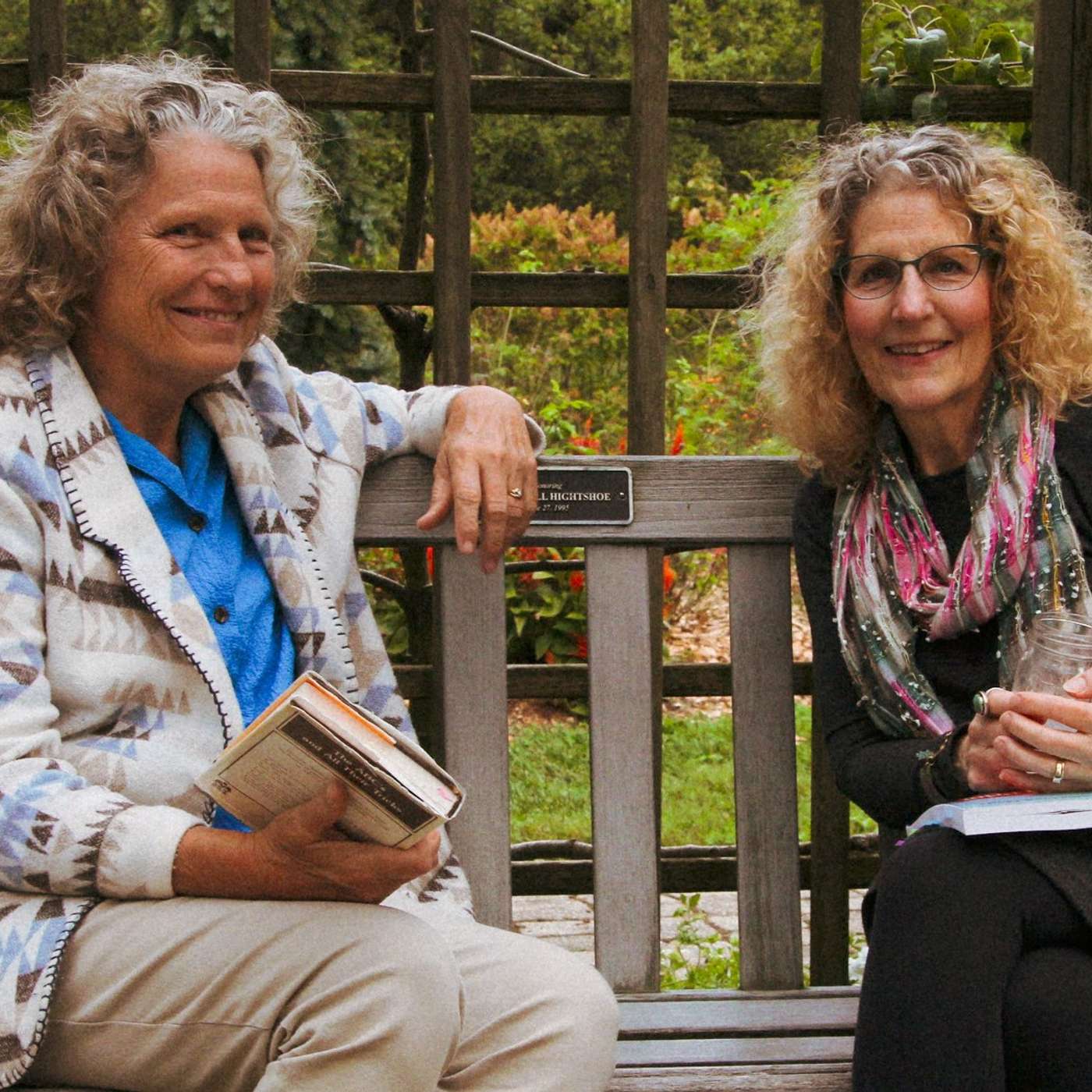 Phonics Part 2: Access Literacy Team Interview with Melody Furno & Dorothy Kardatzke | About The GuestsACCESS LITERACY TEAMDorothy KardatzkeI live with my husband in Columbus, Ohio. I taught for more than 25 years in both general education classrooms and in classrooms for the Deaf and Hard of Hearing. Since 1997, when I was first trained in the English code, all my literacy instruction has been delivered using programs that are Orton-based. I left the classroom in 2018 to create space to write curriculum, and train/coach teachers. However, I will always be a teacher. It is who I am! I tutor little folks and big folks in literacy whenever I have the chance.I had a rather circuitous educational journey which offered me the opportunity to embark on what I do presently. I completed a double major in Elementary Education and Deaf Education from Augustana College. I later completed post-graduate work in Linguistics and Language Development at the University of South Dakota and Neuroanatomy at The Ohio State University.During leisure time, I enjoy spending time with my family, reading, hiking, fishing, canoeing, camping and cross-country skiing.Melody FurnoMy husband and I live in Columbus, Ohio where I taught an Orton-based Method for literacy in Kindergarten and first grade classrooms for 19 years. Encountering struggling readers in the classroom motivated me to enroll in coursework and to research current information on reading disabilities and dyslexia to set up interventions in the classroom.Since leaving the classroom, I have used an Orton-based Method to train and consult teachers in literacy across the country and tutor struggling readers in 4th and 5th grades for Columbus Public Schools. I enjoy nature, fishing, hiking and biking. My special interest is to encourage faith-based ministries to play a part in addressing youth and adult illiteracy. Show NotesPhonics programs are an important foundation for teaching students how to read. There are many programs and they differ widely. Learn about the unique features of this program. Discover what is important when looking for a phonics curriculum for your students. Dorothy Kardatzke and Melanie Furno are the founders of Access Literacy. Their phonics curriculum, Literacy Essentials: Journey from Spelling to Reading is commonly used in classical schools. In this interview, they articulate the details that explain what a good phonic-based program looks like and why it matters. The Access Literacy program supports the road to integrating the components of writing, thinking well, and reading well. _____________________________________________Note: Adrienne does not recieve compensation for recommending any curriculum on her podcast. The purpose of presenting curriculum on the podcast is to help parents and school leadership make well-informed decisions on curriculum that is most aligned to the classical tradition. _____________________________________________ ResourcesLink to their Home page: https://www.accessliteracy.com/Parent page including phonogram videos: https://www.accessliteracy.com/parentsLink for ordering teaching materials through Hillsdale: https://www.accessliteracy.com/projects-2Link for ordering the Student Orthography Notebook: https://www.accessliteracy.com/projects-2Books mentionedWhy Our Children Can’t Read, and What You Can Do About It by Diane McGuinnessAuthor in the Science of Reading field — Dr. Louisa MoatsThe Girl of the Limberlost by Gene Stratton- PorterHow to Read a Book by Mortimer AdlerHow To Read a Difficult Book (free link to one page essay) by Mortimer Adler________________________________________________________This podcast is produced by Beautiful Teaching, LLC.Support this podcast: ★ Support this podcast ★ _________________________________________________________Credits:Sound Engineer: Andrew HelselLogo Art: Anastasiya CFMusic: Vivaldi's Concerto for 2 Violins in B flat major, RV529 : Lana Trotovsek, violin Sreten Krstic, violin with Chamber Orchestra of Slovenian Philharmonic © 2024 Beautiful Teaching LLC. All Rights Reserved | 58m 44s | ||||||
| 4/5/24 |  Phonics Part 1: An Interview with Spell to Write and Read Trainers | GuestsRhonda Bedee is an instructor endorsed by SWR author Wanda Sanseri for Spell to Write and Read seminars. My specialty is finding solutions for individual spelling needs via spelling coaching, Mom & Dad encouragement, accountability, and assessments. Experience comes from four decades of home education, public schools, private classical academies, homeschool co-ops, tutoring, English language ESL learners, and teaching special ability students. Credentials: B.S. Secondary Education, Lamar University-Beaumont, Texas; extensive all-level SWR classes & mentoring under Wanda Sanseri.Rhonda's Training SiteNiki WiseAlthough Niki Wise currently resides in Georgia, her BASIC Seminars are offered both in Zoom & in person beyond her borders. She began using Spell to Write and Read back in the 1990s when it was Teaching Reading at Home and School. Not only using this program during her homeschool years, Niki also shared this program with many friends, & even introduced her oldest grandson to spelling & reading with Mrs. Sanseri's proven program. When she is not offering a BASIC seminar, she can be found playing with her 6 grandkids, teaching at Colquitt Christian Academy, & planning road trips with her husband.Contact Niki: crosswiseswr@gmail.comShow NotesThis interview with Rhonda Bedee and Niki Wise is part 1 of a 2 part series on phonics. Part 2 (the next episode) will feature the creators of Literacy Essentials: The Journey from Spelling to Reading. You will learn a lot of great information about both programs to help you make your decision on which program best suits your needs. Historical efforts to teach reading, writing, and spelling have been developed, applied and studied for centuries. Integrating lessons from “sound to symbol” equips students with the ability to work through the process of learning to read. The unique features and history of Spell to Write and Read is explained in this episode. We discuss not only why it works, but also how it can (in many cases) help prevent the need for future reading remedies._____________________________________________Note: Adrienne does not recieve compensation for recommending any curriculum on her podcast. The purpose of presenting curriculum on the podcast is to help parents and school leadership make well-informed decisions on curriculum that is most aligned to the classical tradition. _____________________________________________ ResourcesSpell to Write and Read Forum (free or for more resources there is a small membership fee)Free Blank Book TemplateWhere to buy: https://swrforum.com/where-to-buy/ Articles & Podcasts MentionedNY Times Article: In the Fight Over How to Teach Reading, This Guru Makes a Major RetreatPODCAST Episode that Rhonda Mentions: Sold a Story: How Teaching Kids to Read Went So Wrong ________________________________________________________This podcast is produced by Beautiful Teaching, LLC.Support this podcast: ★ Support this podcast ★ _________________________________________________________Credits:Sound Engineer: Andrew HelselLogo Art: Anastasiya CFMusic: Vivaldi's Concerto for 2 Violins in B flat major, RV529 : Lana Trotovsek, violin Sreten Krstic, violin with Chamber Orchestra of Slovenian Philharmonic © 2024 Beautiful Teaching LLC. All Rights Reserved | 1h 11m 17s | ||||||
| 3/21/24 |  Knowledge, Genius, and Heart: Character Mapping at Northern Schoolhouse | GuestsMichael Fitzgerald (Principal)Michael is an experienced educator with an M.S. in Brain-Based Education. After a decade teaching in a variety of school models, he is using his knowledge of classical education to lead Northern Schoolhouse, all while pursuing his doctorate in education.A dabbler in logic, philosophy, hiking, archery, chess, music, and handiwork, he brings his deep interest in the great minds of history to our Schoolhouse culture.Katherine Fitzgerald (Instructional Coordinator & Music Teacher)Katie has nearly two decades’ experience with children in education and humanitarian work. Her studies in educational history, methodology, curriculum, and child psychology form the basis of the programs developed for Northern Schoolhouse.Music, math, baking, knitting, drawing, and gardening are among her many interests, and she shares her passion for doing and making with our Schoolhouse community.Show NotesThe Fitzgeralds have built their whole model around what they call the Three Paths of Attention: Knowledge, Genius, & Heart. Through these pillars, they have developed their assessments and cultivated a culture of students who care. By attending to Knowledge, they steadily progress in their academic studies. By attending to Genius, they strengthen their ability to think and create. By attending to Heart, they become kind people who contribute to their families and communities.Katherine and Michael Fitzgerald offer frontline practical details about daily routines and expectations they’re experiencing in Northern Schoolhouse. In this episode, the Fitzgeralds provide information about the classical culture of Northern Schoolhouse. They merge beautiful principles that operate under the three pillars of Classics, Nature, and Arts. They share stories about how student invest in their own work and greatly enjoy opportunities to grow; there is an essence of excitement about doing well. Most of all, the students care about their scholarly projects and they love working on them. Rather than testing, they use assessments, character maps, and are mindful about the regard for virtues and habits. These, and complementary ideas are outlined in practical ways. Resources mentionedPlatoSocratesShakespeare, Sonnet 18Charlotte MasonConfucius Dr. W. Edwards DemingAeneid OdysseyThe Bible"The Seven-Lesson Schoolteacher" by John Taylor Gatto (from Dumbing us Down)Zhuan Falun by Hongzhi LiPodcast Episode on Motivation and Praise: How to Encourge Intrinsinc Motivation_______________________________________ANNOUNCING A NEW PROGYMNASMATA CURRICULUMBenjamin Lyda in partnership with Adrienne is launching a pilot for Scriptorium: Writing with the Progymnasmata for grades 3-8. For more information about participating in this pilot, visit the website: https://www.beautifulteaching.com/pilotANNOUNCING OUR FIRST CLASSICAL EDUCATION ONLINE CONFERENCE!11 speakers, 2 days, online and recorded if you cannot attend all of the sessions! Early bird pricing only $69 though April 1. Visit our website for more information.Beautiful Teaching Conference Details.________________________________________________________This podcast is produced by Beautiful Teaching, LLC.Support this podcast: ★ Support this podcast ★ _________________________________________________________Credits:Sound Engineer: Andrew HelselLogo Art: Anastasiya CFMusic: Vivaldi's Concerto for 2 Violins in B flat major, RV529 : Lana Trotovsek, violin Sreten Krstic, violin with Chamber Orchestra of Slovenian Philharmonic © 2024 Beautiful Teaching LLC. All Rights Reserved | 1h 17m 33s | ||||||
Showing 25 of 92
Pitch Fit is a Pro feature
See how bookable this show is for guests, which brands already advertise, the per-episode ad value, and the best-fit guest and sponsor profile. The numbers are blurred on the free plan.
How readily this show books outside guests like you.
How proven this show is for host-read sponsorships.
For Guests
ProFor Advertisers
ProUpgrade to Pro to unlock guest cadence, sponsor categories, fit scores, and per-episode ad value for this show.