Insights from recent episode analysis
Audience Interest
Podcast Focus
Publishing Consistency
Platform Reach
Insights are generated by CastFox AI using publicly available data, episode content, and proprietary models.
Most discussed topics
Brands & references
Total monthly reach
Estimated from 12 chart positions in 12 markets.
By chart position
- 🇩🇪DE · Film History#8530K to 100K
- 🇨🇦CA · Film History#9830K to 100K
- 🇬🇧GB · Film History#1505K to 30K
- 🇰🇷KR · Film History#20100K to 300K
- 🇧🇷BR · Film History#7110K to 30K
- Per-Episode Audience
Est. listeners per new episode within ~30 days
123K to 393K🎙 Weekly cadence·34 episodes·Last published today - Monthly Reach
Unique listeners across all episodes (30 days)
246K to 786K🇰🇷38%🇩🇪13%🇨🇦13%+9 more - Active Followers
Loyal subscribers who consistently listen
74K to 236K
Market Insights
Platform Distribution
Reach across major podcast platforms, updated hourly
Total Followers
—
Total Plays
—
Total Reviews
—
* Data sourced directly from platform APIs and aggregated hourly across all major podcast directories.
On the show
From 11 epsHosts
Recent guests
Recent episodes
S2 Ep. 14: Fail Safe (1964, Sidney Lumet)
Jun 24, 2026
Unknown duration
S2 Ep. 13: Ivan's Childhood (1962, Andrei Tarkovsky) w/ guest Taylor R. Genovese
May 30, 2026
1h 48m 38s
Bonus: New German Cinema and the Red Army Faction w/ guest Ryan Ruby
Apr 27, 2026
1h 54m 17s
Bonus: Interview w/ Dr. Alice Lovejoy
Mar 24, 2026
1h 15m 55s
S2 Ep. 12: Seconds (1966, John Frankenheimer) w/ guest Adam McKay
Feb 19, 2026
1h 28m 20s
Social Links & Contact
Official channels & resources
Official Website
Login
RSS Feed
Login
| Date | Episode | Topics | Guests | Brands | Places | Keywords | Sponsor | Length | |
|---|---|---|---|---|---|---|---|---|---|
| 6/24/26 | ![]() S2 Ep. 14: Fail Safe (1964, Sidney Lumet) | The Cold War Cinema team returns to discuss Sidney Lumet's 1964 film Fail Safe, a powerful (and bold) independent Hollywood production that paints a horrific picture of a potential nuclear war. The film was released the same year as Stanley Kubrick's Dr. Strangelove and has remained in its shadow, unfairly, ever since. In this episode we discuss: Sidney Lumut's fascinating and underrated cinematic career The political and historical context of Fail Safe (1964), a film that captures the paranoia of nuclear proliferation The film's critique of war technology and how that maps onto our current era of AI-assisted warfare. The limits of Hollywood storrytelling for a truly radical critique of US imperialism _____________________ We love to give book or film recommendations on the podcast, so here are ours for this episode: Jason recommends the 1992 book Signatures of the Visible by Fredric Jameson. Paul recommends the novel Advise and Consent by Allen Drury and Otto Preminger's 1962 film adaptiion Avise & Consent. Tony recommends the book Raymond Chandler: The Detections of Totality by Fredric Jameson and W.E.B. Du Bois's book Darkwater: Voices from Within the Veil. _____________________________ Like and subscribe to Cold War Cinema, and don't forget to leave us a review! Want to continue the conversation? Drop us a line at any time at coldwarcinemapod@gmail.com. To stay up to date on Cold War Cinema, follow along at coldwarcinema.com, or find us online on Bluesky @coldwarcinema.com or on X at @Cold_War_Cinema. For more from your hosts: Follow Jason on Bluesky at @JasonChristian.bsky.social, on X at @JasonAChristian, on Letterboxed at @exilemagic. Jason also writes an infrequent newletter on left-wing cinema at Notes on Radical Cinema. Follow Anthony on Bluesky at @tonyjballas.bsky.social, on X at @tonyjballas, or on Letterboxed at @tonyjballas. Follow Paul on Bluesky at @ptklein.com, or on Letterboxed at @ptklein. Paul also writes about movies at www.howotreadmovies.com _____________________ Logo by Jason Christian Theme music by DYAD (Charles Ballas and Jeremy Averitt). Happy listening! | — | ||||||
| 5/30/26 | ![]() S2 Ep. 13: Ivan's Childhood (1962, Andrei Tarkovsky) w/ guest Taylor R. Genovese✨ | Andrei TarkovskySoviet cinema+5 | Taylor R. Genovese | Dutchess Community CollegeIskra Books+1 | — | TarkovskyIvan's Childhood+7 | — | 1h 48m 38s | |
| 4/27/26 | ![]() Bonus: New German Cinema and the Red Army Faction w/ guest Ryan Ruby✨ | New German CinemaRed Army Faction+4 | Ryan Ruby | Seven Stories PressTwelve Books+7 | Berlin | New German CinemaRed Army Faction+5 | — | 1h 54m 17s | |
| 3/24/26 | ![]() Bonus: Interview w/ Dr. Alice Lovejoy✨ | film historyinterview+3 | Dr. Alice Lovejoy | University of California PressIndiana University Press+2 | United StatesGermany+2 | film historianmilitary+3 | — | 1h 15m 55s | |
| 2/19/26 | ![]() S2 Ep. 12: Seconds (1966, John Frankenheimer) w/ guest Adam McKay✨ | psychological thrillerfilm analysis+4 | Adam McKay | Upright Citizens BrigadeSaturday Night Live+12 | Malibu | SecondsJohn Frankenheimer+6 | — | 1h 28m 20s | |
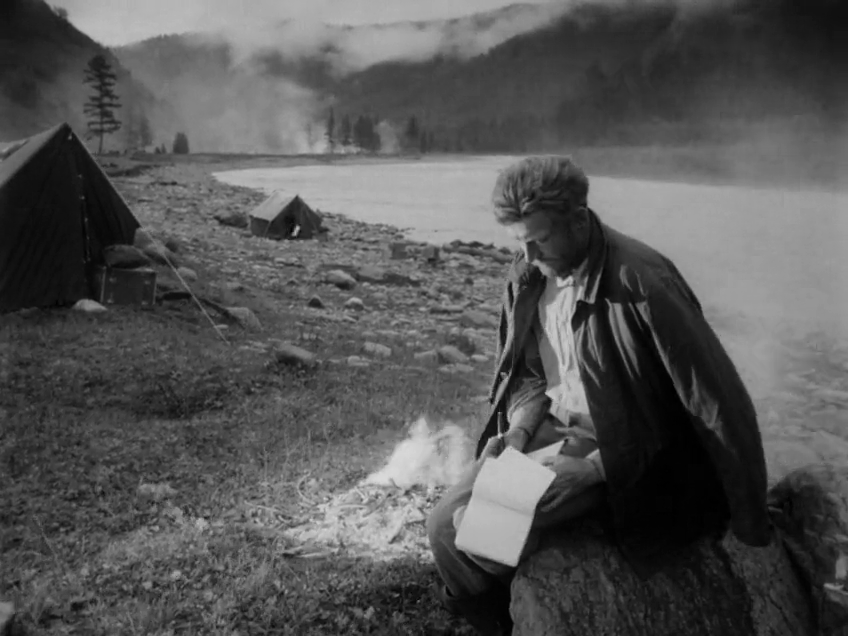
| 2/12/26 | ![]() S2 Ep. 11: Letter Never Sent (1959, Mikhail Kalatozov)✨ | Cold War cinemasocialist realism+4 | — | Letter Never SentThe Searchers | SiberiaTaiga | Letter Never SentMikhail Kalatozov+8 | — | 1h 36m 38s | |
| 1/15/26 | ![]() S2 Ep. 10: The Searchers (1956, John Ford) w/ guest Aspen Ballas✨ | American mythmakinganti-Indigenous racism+4 | Aspen Ballas | University of North Carolina at Chapel HillPentagon+1 | — | The SearchersJohn Ford+7 | — | 1h 44m 15s | |
| 12/26/25 | ![]() S2 Ep. 9: Ballad of a Soldier (1959, Grigory Chukhray)✨ | war dramaindividualism vs collective responsibility+4 | — | Ballad of a SoldierThe Best Years of Our Lives+2 | — | Cold WarGreat Patriotic War+6 | — | 1h 34m 46s | |
| 11/19/25 | ![]() BONUS: Tribute to Peter Watkins (1935–2025)✨ | Peter Watkinsfilm legacy+4 | Eric MarshChristopher Jason Bell | Bisbee '17Revolution Selfie+3 | — | Peter Watkinsfilm legacy+4 | — | 1h 51m 55s | |
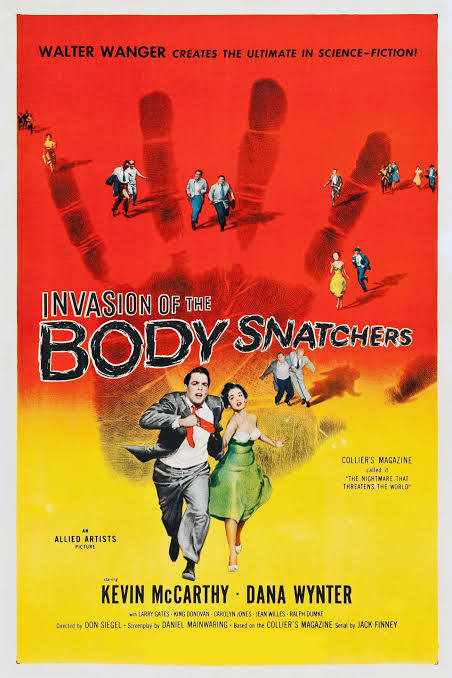
| 11/17/25 | ![]() S2 Ep. 8: Invasion of the Body Snatchers (1956, Don Siegel)✨ | political allegoriesanti-communism+3 | — | Invasion of the Body Snatchers | Santa Mira, California | Invasion of the Body SnatchersDon Siegel+5 | — | 1h 35m 05s | |
Want analysis for the episodes below?Free for Pro Submit a request, we'll have your selected episodes analyzed within an hour. Free, at no cost to you, for Pro users. | |||||||||
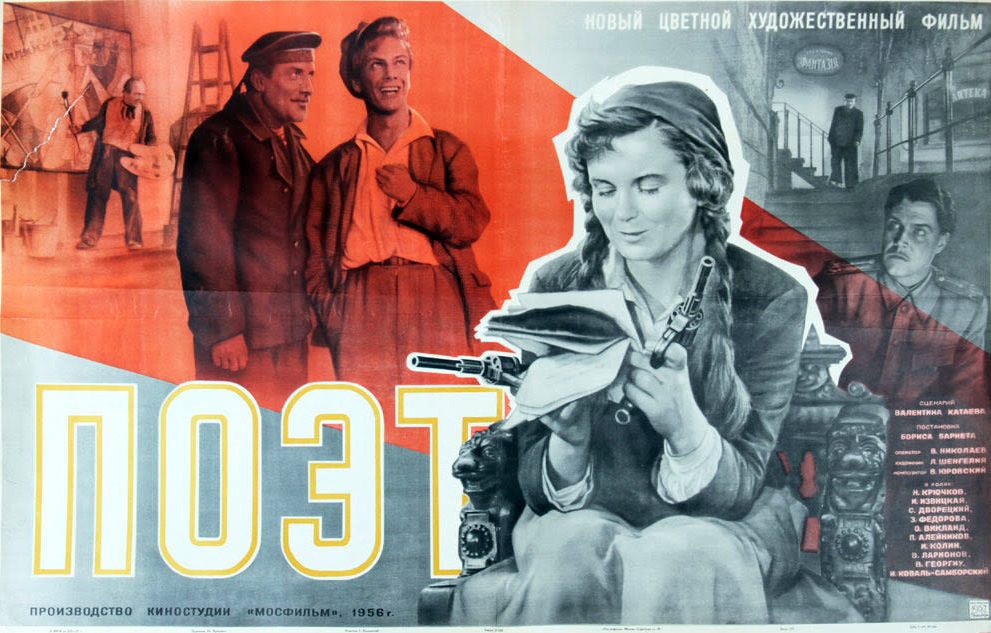
| 10/27/25 | ![]() S2 Ep. 7: Poet (1956, Boris Barnet)✨ | art and literature in warpolitics of film+4 | — | PoetThe Poet+4 | — | Boris BarnetPoet+5 | — | 1h 22m 27s | |
| 9/4/25 | ![]() S2 Ep. 6: Pickup on South Street (1953, Samuel Fuller) w/ guest Stephen Gillespie✨ | Cold War cinemafilm critique+4 | Stephen Gillespie | Pickup on South StreetDead Pigeon on Beethoven Street+5 | — | Cold Warnoir+4 | — | 1h 14m 54s | |
| 8/28/25 | ![]() BONUS: Interview w/ Christopher Jason Bell | In this bonus episode, cohost Jason Christian interviews the independent filmmaker Christopher Jason Bell. Besides being a filmmaker, Bell is a board of director of the streaming co-op MeansTV. Bell's archival doc series about George W. Bush's presidency, Miss Me Yet, can be watched on MeansTV and received praise from numerous outlets such as The Baffler, AV Club, and Filmmaker magazine. His third feature Failed State premiered at Torino Film Festival and is continuing to screen across the world. His newest documentary short, Attention Shoppers, features Abby Martin and can be viewed on MeansTV. His latest narrative short, The Confection, is now playing the festival circuit. In the episode, Christopher elaborates on his filmmaking process, especially making Miss Me Yet and Attention Shoppers, and how he used footage from the YouTube channel Vampire Robot to make the latter. Further, Christpher and Jason reflect on the political climate during the Bush years and today, and the similarities and differences between each era. If you subscribe to MeansTV, and use the promo code CHRISBELL, you'll get 10% off! On this episode: Christopher recommends Scott Noble's documentary The Power Principle: Corporate Empire and the Rise of the National Security State (2012), Ian Bell's 2025 documentary WTO/99, Tyler Rubenfeld's short horror film Another Sinking Sun (2023), and the book The Sun Won't Come Out Tomorrow: The Dark History of American Orphanhood, by Kristen Martin. Jason recommends the podcast Blowback, particular Season One about the Iraq War. Follow Christopher Jason Christopher Bell on X (formerly Twitter): @UpdateTheGrids. Follow Jason Christian on X (formerly Twitter): @JasonAChristian. Like and subscribe to Cold War Cinema, and don't forget to leave us a review! Want to continue the conversation? Drop us a line at any time at coldwarcinemapod@gmail.com. To stay up to date on Cold War Cinema, follow along at coldwarcinema.com, or find us online on Bluesky @coldwarcinema.com or on X at @Cold_War_Cinema. | — | ||||||
| 8/14/25 | ![]() S2 Ep. 5: Silvery Dust (1953, Abram Room & Pavel Armand) | This week on Cold War Cinema, we discuss the 1953 Soviet science-fiction drama, Silvery Dust, directed by Abram Room and Pavel Armand, a film once again set in the United States. The film concerns an American scientist who has developed a powerful new weapon of mass destruction designed to wipe out populations within a large area while leaving no harmful radioactive residues or traces. In the film, the scientist colludes with a Nazi colleague and various private interests, who all conspire with the government to use innocent Black men as test subjects, without their knowledge or consent. Join hosts Jason Christian, Anthony Ballas, and Paul T. Klein as we consider: The historical legacy of Operation Paperclip, a secret government program in which the US brought some 1,600 scientists, engineers, and technicians from former Nazi Germany to the US for government employment after the end of World War II. The numerous government experiments conducted on minorities without their knowledge or consent, such as the Untreated Syphilis Study at Tuskegee (1932-1972) The contradiction, in the film, of critiquing racism in America while using white Russian actors in "black face." Comparisons between American and Soviet propanda styles in the 1950s. _____________________ We love to give book or film recommendations on the podcast, so here are ours for this episode: Paul recommends the book, Building a Better Race: Gender, Sexuality, and Eugenics from the Turn of the Century to the Baby Boom by Wendy Kline Tony recommends the book, The Selected Works of Ho Chi Hinh by Ho Chi Minh Jason recommends the book, Deterring Democracy by Noam Chomsky. _____________________ Like and subscribe to Cold War Cinema, and don't forget to leave us a review! Want to continue the conversation? Drop us a line at any time at coldwarcinemapod@gmail.com. To stay up to date on Cold War Cinema, follow along at coldwarcinema.com, or find us online on Bluesky @coldwarcinema.com or on X at @Cold_War_Cinema. | — | ||||||
| 7/29/25 | ![]() BONUS: The Phoenician Scheme (w/ guest Matthew Ellis) | "Normal people want the basic human rights that accompany citizenship in any sovereign nation. I don't… I don't live anywhere; I'm not a citizen at all. I don't need my human rights." The Cold War Cinema team is back with special guest Matthew Ellis, a researcher, artist, and cohost of the Pacific Northwest Insurance Corporation Movie Film Podcast, for a special bonus episode covering Wes Anderson's The Phoenician Scheme. Recently released on home video and streaming, the film follows the cunning, reprobate industrialist Zsa-zsa Korda (Bencio Del Toro) as he swindles his way into a massive infrastructure deal in the country of Upper Independent Phoenicia. Join Matthew Ellis and hosts Jason Christian, Tony Ballas, and Paul T. Klein as they discuss: The Phoenician Scheme's connections to the Congress for Cultural Freedom, a CIA-backed cultural operation from 1950 that weaponized writers, artists, and other thinkers for intelligence operations. How Anderson's film reveals the Cold War origins of the contemporary world in its critiques of capitalism and the neoliberal project. The ways that The Phoenician Scheme breaks Anderson's hermetically sealed aesthetics and alludes to its formal limitations. _____________________ Each episode features book and film recommendations for further exploration. On this episode: Matthew recommends Danny Boyle's 28 Years Later. Paul recommends Matt Zoller Seitz's The Wes Anderson Collection and Louis Althusser's "Ideology and Ideological State Apparatuses: Notes Towards an Investigation." Tony recommends Carpenter's Gothic by William Gaddis. Jason recommends The Darker Nations: A People's History of the Third World by Vijay Prashad. _____________________ Like and subscribe to Cold War Cinema, and don't forget to leave us a review! Want to continue the conversation? Drop us a line at any time at coldwarcinemapod@gmail.com. To stay up to date on Cold War Cinema, follow along at coldwarcinema.com, or find us online on Bluesky @coldwarcinema.com or on X at @Cold_War_Cinema. For more from your hosts: Follow Jason on Bluesky at @JasonChristian.bsky.social, on X at @JasonAChristian, or on Letterboxed at @exilemagic. Follow Anthony on Bluesky at @tonyjballas.bsky.social, on X at @tonyjballas. Follow Paul on Bluesky at @ptklein.com, or on Letterboxed at @ptklein. Paul also writes about movies at www.howotreadmovies.com _____________________ Logo by Jason Christian Theme music by DYAD (Charles Ballas and Jeremy Averitt). Happy listening! | — | ||||||
| 7/24/25 | ![]() S2 Ep. 4: I Married a Communist A.K.A. The Woman on Pier 13 (1949, Robert Stevenson) | This week on Cold War Cinema, we discuss Robert Stevenson's 1949 drama, I Married a Communist, also known as Woman on Pier 13. This Hollywood production is one of the most storied—and notorious—anti-communist films of the early Cold War era. The movie revolves around a San Francisco shipping executive who worked his way up from the docks, as a stevedore, only to find himself embroiled in a Communist plot to sabotage a labor contract. Join hosts Jason Christian, Tony Ballas, and Paul T. Klein as we consider: How Hollywood colluded with the government to portray Communists as nihilistic, intellectual, unfeeling and yet effeminate organized criminals. The condescension at the heart of anti-Communist propaganda in the US that implies that ordinary Americans are too "dumb" to recognize when they are being duped. The paradoxical role of unions in New Deal liberal ideology as a potential bulwark against Communists. The perennial recycled anti-Communist tropes in American political rhetoric to this day. _____________________ We love to give book or film recommendations on the podcast, so here are ours for this episode: Paul recommends Foster Hirsh's 2023 book Hollywood and the Movies of the Fifties: The Collapse of the Studio System, the Thrill of Cinerama, and the Invasion of the Ultimate Body Snatcher—Television. Tony recommends Gerald Horne's 2011 book, Fighting in Paradise: Labor Unions, Racism, and Communists in the Making of Modern Hawai'i. Jason recommends Rebecca Prime's 2013 book, Hollywood Exiles in Europe: The Blacklist and Cold War Film Culture. _____________________ Like and subscribe to Cold War Cinema, and don't forget to leave us a review! Want to continue the conversation? Drop us a line at any time at coldwarcinemapod@gmail.com. To stay up to date on Cold War Cinema, follow along at coldwarcinema.com, or find us online on Bluesky @coldwarcinema.com or on X at @Cold_War_Cinema. | — | ||||||
| 7/3/25 | ![]() S2 Ep. 3: The Russian Question (1948, Mikhail Romm) | "I used to think there was one America, but there are two. There's no place for me in McPherson's and Hearst's America, but there is in Lincoln's and Roosevelts!" This week on Cold War Cinema, we discuss Mikhaill Romm's 1948 drama, The Russian Question. In this Soviet production, winner of the 1948 Stalin Prize and based on a play of the same name by Konstantin Siminov, a mendacious newspaper editor sends columnist Harry Smith to the Soviet Union to write a book critical of socialism. But when the principled columnist returns to the United States, he quickly realizes that the American press intends to turn the Russian question—whether the Russians want war—into a statement with dangerous geopolitical ramifications. Join hosts Jason Christian, Tony Ballas, and Paul T. Klein as we consider: The role of editing or montage in the construction of political critiques in aesthetic form Why the President of the Motion Picture Association called this a "sneering, lying attack on the United States" and an "open bid to stir contempt and hatred for America on the part of the Russian audiences," and why he got it all wrong How a Soviet film about a sensationalist American news media helps us understand our current political moment _____________________ We love to give book or film recommendations on the podcast, so here are ours for this episode: Paul recommends Clarence Brown's 1949 drama Intruder in the Dust. Tony recommends Langston Hughes 1961 collection, Ask Your Mama: 12 Moods for Jazz. Jason recommends Mikhail Romm's 1961 drama Nine Days in One Year. _____________________ Like and subscribe to Cold War Cinema, and don't forget to leave us a review! Want to continue the conversation? Drop us a line at any time at coldwarcinemapod@gmail.com. To stay up to date on Cold War Cinema, follow along at coldwarcinema.com, or find us online on Bluesky @coldwarcinema.com or on X at @Cold_War_Cinema. | — | ||||||
| 6/20/25 | ![]() BONUS: Soundtrack to a Coup d'État (crossover episode w/ Wise the Dome TV) | In this crossover episode with Rakeem Shabazz of Wise the Dome TV, Cold War Cinema co-host Anthony Ballas discusses the recent documentary Soundtrack to a Coup d'État (dir. Johan Grimonprez 2024). The documentary explores the weaponization of jazz music during the Cold War, the contradictions of using Black art to mask American imperialism, and the legacy of artists like Louis Armstrong, Max Roach, and Nina Simone. Ballas breaks down how the film links Cold War coups and cultural propaganda to present-day resource extraction in the Congo, and why the documentary's archival style is itself a radical political act. Ballas also discusses his recent piece on the film (co-authored with Gerald Horne), "Antidote to Soft Power: Johan Grimonprez's Soundtrack to a Coup d'État" for Scalawag Magazine. Please subscribe to the podcast, and don't forget to leave a review! Also, make sure you check out and subscribe to Wise the Dome TV. _____________________ Logo by Jason Christian Theme music by DYAD (Charles Ballas and Jeremy Averitt). Please drop us a line anytime at coldwarcinemapod@gmail.com. Happy listening! | — | ||||||
| 6/11/25 | ![]() BONUS: Resistance Cinema (crossover episode w/ The Socialist Shelf) | This is a crossover episode with The Socialist Shelf podcast. Our co-host Jason and his wife, Ankita, were invited on the Socialist Shelf to dicuss a radical cinema educational project they run in Atlanta called Resistance Cinema, as well as the role that radical cinema plays in social movemets. Ankita is a Bollywood expert and the co-host of the The Desi Gaze, a podcast about overlooked Hindi cinema. We hope you enjoy this show! Don't forget to subscribe to The Socialist Shelf and The Desi Gaze, and leave us a review! Jason's article referenced in the podcast is a review of the book Revolution in 35mm, co-edited by Andrew Nette and Samm Deighan. Jacob, from The Socialist Shelf, has written a novel, and you can pre-order it here. Music for The Socialist Shelf by Solo Monk (@SoloMonk256 on Twitter). | — | ||||||
| 5/2/25 | ![]() S2 Ep. 2: The Iron Curtain (1948, William A. Wellman) | Join hosts Jason and Paul for a discussion of William A. Wellman's 1948 spy thriller The Iron Curtain, starring Dana Andrews and Jean Tierney. Regarded as an anti-communist propaganda film, The Iron Curtain was the first major Hollywood studio production to engage directly with the Cold War. The story is based on the memoirs of the Russian spy Igor Gouzenko, who stole documents from the Soviet embasy in Ottawa, where he worked, and defected to Canada. This act of espionage led to the dismantling of a Soviet "atomic spy ring," and the arrests or numerous people both in Canada and the United States. At a time of relative peace post-WWII, the New York Times critic Bosley Crowther considered The Iron Curtain "a highly inflamatory film" and a dangerous provocation. "Hollywood fired its first shot in the 'cold war' against Russia yesterday," Crowther writtes in his review, "just when a faint hope was glimmering that maybe moderation in fact might be achieved." _____________________ We love to give book or film recommendations on the podcast, so here are ours for this episode: Paul recommends the pro-Soviet Hollywood propaganda film Mission to Moscow (1943; dir. Michael Curtiz) Jason recommends the 2000 book The Cultural Cold War: The CIA and the World of Arts and Letters by Frances Stonor Saunders _____________________ Please subscribe to the podcast, and don't forget to leave a review! Follow Jason on Twitter at @JasonAChristian and Anthony at @tonyjballas (same handles on BlueSky). Follow Paul on BlueSky at @ptklein.com. Paul writes about movies at www.howtoreadmovies.com. Paul's handle on Letterboxd is https://letterboxd.com/ptklein/; Jason's is https://letterboxd.com/exilemagic/. _____________________ Logo by Jason Christian Theme music by DYAD (Charles Ballas and Jeremy Averitt). Please drop us a line anytime at coldwarcinemapod@gmail.com. Happy listening! | — | ||||||
| 3/19/25 | ![]() S2 Ep. 1: Ivan the Terrible, Part 1 & 2 (1945/1958, Sergei Eisenstein) | Join hosts Jason, Tony, and our new co-host, Paul, on Episode One of Season Two! On this episode we discuss Sergei Eisenstein's epic two-part Soviet masterpiece Ivan the Terrible, released in 1945 and 1958 respectively. The films were commissioned by Joseph Stalin in 1941 as a means to rehabilitate Ivan the Terrible's image for a contemporary Soviet audience. Stalin celebrated Part 1, but the state banned Part 2. A third part had been in the works, but was abandoned by Eisenstein after the suppression of the second part. Our discussion touches on this history and many other topics, including Soviet montage, dialectical art construction, Eisenstein's queerness, his fraught relationship with Stalin, and more. This is the first episode of a new format in which we take book or movie recommendations from each of us, which are found below: Tony's book recommendations: Sergei Eisenstein: A Life in Conflict by Ronald Bergan (2016) Narrative, Apparatus, Ideology, edited by Philip Rosen (1986) Film Form: Essays in Film Theory by Sergei Eisenstein (1949) Paul's book and film recommendations: This Thing of Darkness: Eisenstein's Ivan the Terrible in Stalinist Russia by Joan Neuberger (2019) Ivan the Terrible by Joan Neuberger Battleship Potemkin (1925; dir. Sergei Eisenstein) Jason's movie recommendations: Come and See (1985; dir. Elem Klimov) The Ascent (1977; dir. Larisa Shepitko) Wings (1966; dir. Larisa Shepitko) Please subscribe to the podcast, and don't forget to leave a review! Follow Jason on Twitter at @JasonAChristian and Anthony at @tonyjballas; follow Paul on BlueSky at @ptklein.com. Paul writes about movies at www.howtoreadmovies.com. Paul's handle on Letterboxd is https://letterboxd.com/ptklein/; Jason's is https://letterboxd.com/exilemagic/. Our logo is by Jason Christian The theme music for this episode and all forthcoming episodes is by DYAD (Charles Ballas and Jeremy Averitt). Please drop us a line anytime at coldwarcinemapod@gmail.com. Happy listening! | — | ||||||
| 2/21/25 | ![]() S1 Ep. 14: Cry, the Beloved Country (1951, Zoltán Korda) w/ guest Felicia Maroni | Join hosts Jason and Tony, as well as a new guest, Felicia Maroni, for the finale of Season One. On this episode we discuss Zoltán Korda's 1951 drama Cry, the Beloved Country, a film shot on location in South Africa, starring Canada Lee and Sidney Poitier, which aimed to critique the brutal apartheid system just three years after it was codified into law. The film was based on a novel of the same name by Alan Paton, a white South African, and adapted to the screen by Paton and the blacklisted writer John Howard Lawson, who went uncredited. Book mentioned: Frantz Fanon's The Wretched of the Earth (1961) Felicia is the host of the wondeful film podcast Seeing Faces in the Movies, which focuses on either a director or cinemtagrapher and how their aesthetic approach changes (or doesn't) across their ouevre. You can follow Felicia on social media at these sites: IG: @seeingfacesinmovies Twitter (X): @seeingmoviespod Letterboxd: @cinemaroni As always, please suscribe to the podcast, and don't forget to leave a review! And follow Jason on Twitter (X) at @JasonAChristian and Anthony at @tonyjballas (same handles at Bluesky). Jason's handle on Letterboxd is https://letterboxd.com/exilemagic/. Our logo is by Jason Christian Theme music is by DYAD (Charles Ballas and Jeremy Averitt) Please drop us a line at coldwarcinemapod@gmail.com. Happy listening! | — | ||||||
| 1/31/25 | ![]() S1 Ep. 13: Spartacus (1960, Stanley Kubrick) | Grab your sandals and sword and get philosophical with Jason, Tony, and our guest Paul Klein, as we unpack the wonders of Stanley Kubrick's Spartacus (1960). The film was adapted from Howard Fast's novel of the same title by Dalton Trumbo, and it is considered a major step in the end of the notorious Hollywood blacklist. The film is also read as an allegory for civil rights stuggles, the HUAC hearings, and "Third World" struggles. All of this and more is discussed in the episode. Books and articles mentioned: Who Paid the Piper: The CIA and the Cultural Cold War by Frances Stonor Saunders The Final Victim of the Blacklist: John Howard Lawson, Dean of the Hollywood Ten by Gerald Horne Aesthetic Theory by Theodor Adorno "Fascinating Fascism" by Susan Sontag As always, please suscribe to the podcast, and don't forget to leave a review! And follow Jason on Twitter (X) at @JasonAChristian, Anthony at @tonyjballas, and Paul at @ptklein, and the same handles at BlueSky. Paul's handle on Letterboxd is https://letterboxd.com/ptklein/; Jason's is https://letterboxd.com/exilemagic/. Our logo is by Jason Christian The theme music for this episode and all forthcoming episodes is by DYAD (Charles Ballas and Jeremy Averitt). Please drop us a line at coldwarcinemapod@gmail.com. Happy listening! | — | ||||||
| 12/5/24 | ![]() S1 Ep. 12: Monsieur Verdoux ( 1947, Charlie Chaplin) | Join hosts Jason Christian and Anthony Ballas, as well as a new guest, Paul Klein, as they discuss the iconic actor and director Charlie Chaplin and his late talkie masterpiece Monsieur Verdoux (1947). Paul is a film scholar who writes at the intersection of film and history. His research focuses on the cultural, political, and technological aspects of Hollywood and American filmgoing practices. He also write about how and why movies matter at Reading Movies (howtoreadmovies.com) As for Chaplin, he hardly needs an introduction, but many people don't realize that he was a victim of Red Scare harrassment from the media and feds and was eventually exiled from the United States. Monsieur Verdoux is a bold film in that it asks a viewer, just two years after the end of WWII, to consider state-sponsored mass murder (e.g. war) and what Engels calls "social murder" (murder by deprivation), as opposed to individual crimes, which are easier to identify and denounce. It's also a Chaplin film full of his signiture gags. The combination of these two registers, deadly serious and comical, makes for a fascinating but jarring cinematic experience. As always, please suscribe to the podcast, and don't forget to leave us a review! Follow Jason on Twitter (X) at @JasonAChristian, Anthony at @tonyjballas, and Paul at @ptklein, the latter two are also on BlueSky. Please drop us a line anytime at coldwarcinemapod@gmail.com. Happy listening! | — | ||||||
| 10/16/24 | ![]() BONUS: Interview w/ Andrew Nette | Join us for our first ever interview with the Australian writer and scholar, Andrew Nette, who, along with the film historian Samm Deighan, co-edited the new book Revolution in 35mm: Political Violence and Resistance in Cinema from the Arthouse to the Grindhouse, 1960–1990, published by PM Press. Nette is an author of fiction and nonfiction. He is coeditor of three previous books for PM Press, Girl Gangs, Biker Boys, and Real Cool Cats: Pulp Fiction and Youth Culture, 1950 to 1980; Sticking It to the Man: Revolution and Counterculture in Pulp and Popular Fiction, 1950 to 1980; and Dangerous Visions and New Worlds: Radical Science Fiction, 1950 to 1985. His writing on film, books, and culture has appeared in a variety of print and online publications. He has also contributed video and print essays and commentaries to a number of DVD/Blu-ray releases. He writes a regular newsletter under his name on Substack. Follow him on Twitter (X), Instagram, and Bluesky: @pulpcurry. Nette is also on Letterboxd, and he made a list of all 353 films mentioned in Revolution in 35mm. As always please subscribe to the podcast, and don't forget to leave us a review! Send us tips or ideas or anything else at coldwarcinemapod@gmail.com. We hope you enjoy! | — | ||||||
Showing 25 of 34
Pitch Fit is a Pro feature
See how bookable this show is for guests, which brands already advertise, the per-episode ad value, and the best-fit guest and sponsor profile. The numbers are blurred on the free plan.
How readily this show books outside guests like you.
How proven this show is for host-read sponsorships.
For Guests
ProFor Advertisers
ProUpgrade to Pro to unlock guest cadence, sponsor categories, fit scores, and per-episode ad value for this show.
Similar Audience Demographics
Podcasts that attract a similar listener profile

Chart Positions
12 placements across 12 markets.
Chart Positions
12 placements across 12 markets.