

Insights from recent episode analysis
Audience Interest
Podcast Focus
Publishing Consistency
Platform Reach
Insights are generated by CastFox AI using publicly available data, episode content, and proprietary models.
Total monthly reach
Estimated from 1 chart position in 1 market.
By chart position
- 🇦🇺AU · Personal Journals#1355K to 30K
- Per-Episode Audience
Est. listeners per new episode within ~30 days
2.5K to 15K🎙 ~2x weekly·51 episodes·Last published 5d ago - Monthly Reach
Unique listeners across all episodes (30 days)
5K to 30K🇦🇺100% - Active Followers
Loyal subscribers who consistently listen
2K to 12K
Market Insights
Platform Distribution
Reach across major podcast platforms, updated hourly
Total Followers
—
Total Plays
—
Total Reviews
—
* Data sourced directly from platform APIs and aggregated hourly across all major podcast directories.
On the show
Recent episodes
Kamy Moussavi — The Hidden Link Between ADHD, Dopamine, and Food
May 15, 2026
Unknown duration
Tiara Brumberg — Why “Clean Your Room” Doesn’t Work (And What Executive Functioning Really Means)
May 6, 2026
Unknown duration
Edwin Egelsee — What Schools Don’t Tell You About Your Child’s Legal Rights
Apr 21, 2026
Unknown duration
Cyndi Abundabar Ting — When Emotional Disability Is the Missing Piece
Apr 1, 2026
Unknown duration
Pennie Wilson — Finding Calm in the Messy Middle of Parenting
Mar 17, 2026
Unknown duration
Social Links & Contact
Official channels & resources
Official Website
Login
RSS Feed
Login
| Date | Episode | Description | Length | ||||||
|---|---|---|---|---|---|---|---|---|---|
| 5/15/26 |  Kamy Moussavi — The Hidden Link Between ADHD, Dopamine, and Food | Kamy Moussavi — The Hidden Link Between ADHD, Dopamine, and FoodIn this fascinating and eye-opening conversation, Michelle sits down with Kamy Moussavi, founder of Step Together, to explore a topic that affects millions of families but is rarely discussed: the powerful connection between ADHD, dopamine, food cravings, and childhood weight gain.Kamy shares his own journey as a child with undiagnosed ADHD and explains why excess weight is often not the real problem—but a symptom of something much deeper.Kamy shares:Why children with ADHD are significantly more likely to struggle with weight.ADHD creates a dopamine deficit, and for many kids, food becomes the easiest and fastest way to fill that gap.Why your child may not actually be hungry.Sometimes the brain is searching for stimulation, comfort, or emotional relief—not nutrition.The surprising truth about “healthy” snacks.Even protein bars, cereals, and natural sweeteners can trigger the same dopamine response that drives overeating.What happens when kids use food as emotional regulation.Food can become a coping mechanism for boredom, anxiety, loneliness, trauma, and stress.Why changing the child alone rarely works.The most lasting transformation happens when the entire family environment shifts.How parents unintentionally model addictive behaviors.Whether it is food, screens, shopping, work, or alcohol, children learn how to cope by watching us.The connection between food addiction and screen addiction.Both activate the brain’s reward system, and both can mask deeper emotional needs.Why removing everything too quickly can backfire.Sudden changes can trigger intense withdrawal behaviors, making gradual and supported transitions essential.How Step Together works.Rather than focusing primarily on the child, Kamy and his team coach parents over four months to transform nutrition, sleep, technology use, movement, and emotional regulation.The most important question to ask.Instead of asking, “How do I get my child to lose weight?” ask, “What deeper need is this behavior trying to meet?”“Excess weight is often the symptom. The real work is understanding what’s underneath.”If your child struggles with ADHD, intense food cravings, emotional eating, or weight challenges, this episode offers a compassionate and practical new way to understand what may really be going on.👤 About Kamy MoussaviKamy Moussavi is the founder of Step Together, a family-centered program that helps children overcome weight challenges by addressing root causes such as ADHD, emotional regulation, sleep, technology use, and family dynamics.🔗 Connect with KamyWebsite: Step TogetherLinkedIn: Kamy Moussavi | — | ||||||
| 5/6/26 | Tiara Brumberg — Why “Clean Your Room” Doesn’t Work (And What Executive Functioning Really Means) | In this honest, practical, and deeply relatable conversation, Michelle sits down with occupational therapy assistant and ADHD coach Tiara Brumberg to unpack what’s really going on behind behaviors parents see every day… and why so many of our kids aren’t actually being difficult—they’re overwhelmed.This episode hits home in a real way—because it’s not theory. It’s the daily reality of parenting complex, neurodivergent, and special needs kids.Tiara shares:Why “simple” instructions aren’t actually simple.“Clean your room” isn’t one task—it’s 20. And for kids with executive functioning challenges, not knowing where to start can lead to shutting down completely.What executive functioning really means (in real life).From time blindness to task initiation, organization, and emotional regulation—these are the invisible skills our kids are struggling with every single day.The connection between ADHD, learning challenges, and behavior.That overlap between dyslexia, attention, and processing? It’s real—and often misunderstood in both homes and schools.Why your child can focus on video games—but not homework.It’s not defiance. It’s how their brain processes interest, time, and effort.The power of breaking things down step-by-step.“Pick up your shoes” works. “Clean your room” doesn’t. Specificity changes everything.Motivation matters more than we think.If there’s no meaningful reason to do the hard thing, kids will avoid it. And honestly? That makes sense.Why vague IEP goals fail our kids.If a goal isn’t measurable, specific, and clearly defined—it’s not helping your child. It’s just checking a box.How kids ‘work the system’ (and why it’s actually a strength).These kids aren’t being manipulative—they’re smart. And with the right guidance, that skill becomes a lifelong advantage.The parenting shift that changes everything: curiosity over control.Instead of asking “Why won’t they just do it?” start asking “What’s getting in the way?”Regulation starts with us.Your child will match your energy. Calm creates calm. Escalation creates… more escalation.Quote to sit with:“They wake up every day wanting to be your favorite. When they can’t meet expectations, something is getting in the way—not a lack of effort.”Whether you’re navigating ADHD, executive functioning struggles, or just feeling stuck in the daily battles—this episode will help you see your child differently… and respond differently.👤 About Tiara BrumbergTiara is an occupational therapy assistant turned ADHD coach who specializes in helping families understand and navigate executive functioning challenges. With a background in working with children with dyslexia, ADHD, and learning differences, she now supports parents directly through coaching—bridging the gap between therapy and real-life parenting.🔗 Connect with TiaraWebsite: https://www.themiddlecoaching.net/Facebook: https://www.facebook.com/profile.php?id=61573709050059 | — | ||||||
| 4/21/26 |  Edwin Egelsee — What Schools Don’t Tell You About Your Child’s Legal Rights | In this powerful and eye-opening conversation, Michelle sits down with special education attorney Edwin Egelsee—the very person who represented her son during due process—to break down what actually happens when advocacy turns legal… and what parents need to know before they ever get there.Edwin shares:Why IEP meetings feel intimidating—and how to take your power back.That room full of professionals? It doesn’t change the law. You are meant to be an active participant, not just someone signing paperwork.The rights parents overlook (and schools won’t explain).Those documents they hand you at the beginning of every IEP? Most parents never read them—and that’s exactly why they matter.Red flags that something is off.When your child is “a delight to have in class”… but not progressing? When everything becomes “functional”? These are the moments to pause and dig deeper.The truth about progress—and why data matters more than words.“Making progress” means nothing without proof. Ask how they measured it. Ask for the data. Always.IEPs not being followed? Here’s what to actually do.From requesting meetings to Prior Written Notice (PWN) and compliance complaints, Edwin breaks down your real options step-by-step.IEEs (Independent Evaluations)—when and how to push back.If the school’s evaluation misses something, you have the right to challenge it—but it has to be done strategically.Due process… what it really looks like.Not the TV version. The real process, the emotional toll, and why it’s something to prepare for—but not rush into.What attorneys actually do for families.It’s not just legal strategy. It’s guidance, clarity, and helping parents make decisions that truly serve their child.The most important shift for parents: be proactive, not reactive.Keep records. Document everything. Know your child’s baseline. Don’t wait until things fall apart.Quote to sit with:“You’re not just there to agree. You’re there to participate. This is your child’s future.”Whether you’re just starting your IEP journey or already feeling like something isn’t right, this episode gives you the clarity, language, and confidence to advocate differently.👤 About Edwin EgelseeA seasoned special education attorney with OC Kids Law, Edwin has dedicated his career to helping families navigate the legal side of special education. He works closely with parents to ensure children receive the support, services, and education they are legally entitled to.🔗 Connect with EdwinWebsite: https://www.ockidslaw.com/attorney/edwin-egelsee/ | — | ||||||
| 4/1/26 |  Cyndi Abundabar Ting — When Emotional Disability Is the Missing Piece | In this conversation, Michelle sits down with Cyndi Abundabar Ting—special education teacher, longtime instructional aide, and special needs mom—to unpack one of the most misunderstood eligibility categories in special education: ED, or Emotional Disability.Cyndi shares:Why ED is often misunderstood. Many parents hear “emotional disability” and immediately think of extreme psychiatric diagnoses, but ED can also describe students whose daily emotional dysregulation, trauma responses, anxiety, or behavioral outbursts are significantly affecting their ability to access school.What the signs can look like in real life. Frequent verbal or physical outbursts, shutting down, leaving class, refusing work, social overwhelm, unsafe reactions, or being unable to regulate in a classroom setting can all be clues that something deeper is going on.Why schools don’t jump to this eligibility overnight. ED is not a label teams hand out casually. It requires observation, documentation, assessment, staff collaboration, parent input, and careful consideration of whether the child’s needs are being met in the current setting.What placement can actually look like. From general education with supports, to pull-outs, to SDC classrooms, to highly supported therapeutic environments, Cyndi explains how placement depends on the individual child—and why the goal is always the least restrictive environment that still works.The importance of thinking outside the box. For some complex kids, the usual eligibility boxes do not fully fit. Cyndi emphasizes the need for teams to stay open-minded, look holistically at the child, and consider what will actually help them succeed academically, emotionally, and socially.Quote to tape on the fridge:“You are enough. You are doing the best you can with the resources you have.”Whether your child is struggling with behaviors, emotional regulation, trauma, or an eligibility that just doesn’t seem to fit, Cyndi’s message is clear: you are not alone, and sometimes the right support starts with asking different questions.👤 About Cyndi Abundabar TingCyndi Abundabar Ting brings over 20 years of experience in special education as both an instructional aide and teacher. She has worked in emotionally focused programs, non-public school settings, and with students across a wide range of needs. She is also a parent of a child with special needs, which gives her both professional and personal insight into the IEP journey.🔗 Connect with CyndiInstagram: https://www.instagram.com/neurodiversenanay/#ComplexKidsSimpleSolutions #SpecialEducation #EmotionalDisability #IEPHelp #ParentAdvocacy #ComplexKids #NeurodiverseKids #SpecialNeedsParenting #MichelleChoairy #CyndiAbundabarTing | — | ||||||
| 3/17/26 |  Pennie Wilson — Finding Calm in the Messy Middle of Parenting | In this conversation, Michelle sits down with Pennie Wilson, mental fitness coach and founder of Kokoro Creators, to unpack one of the hardest truths parents of complex kids face: sometimes the chaos doesn’t go away—but we can learn how to find calm inside it.Pennie shares:From survival mode to mental fitness. After 17 years in a controlling marriage, Pennie found herself completely disconnected from her own sense of power. Her journey through healing, meditation, and personal growth eventually led her to create a framework that helps parents reclaim control of their thoughts and emotional responses.Why calm parents create calmer kids. When parents operate from anxiety, overwhelm, and constant urgency, kids absorb that energy. But when a parent slows down and becomes grounded—even for a few minutes—it changes the emotional climate of the entire home.The storm and the sun mindset. Pennie teaches parents to notice where their attention lives: the storm (everything going wrong) or the sun (the direction they want their life to move). Shifting attention—even slightly—changes the way the brain processes stress.The 4R framework for resetting your mind.Recognize what feels heavy.Remove the belief that’s keeping you stuck.Replace it with a new perspective.Reimagine the outcome you want to create.The ripple effect of self-awareness. Instead of trying to fix kids or control every behavior, Pennie focuses on helping parents strengthen their own emotional awareness first—because that inner change naturally influences the whole family.Quote to tape on the fridge:“When the world feels like a hurricane, your breath can become the calm in the center.”Whether you're juggling therapies, school meetings, meltdowns, or the never-ending mental load of parenting a complex kid, Pennie’s message is simple: when you learn to regulate your own mind, you give your child a calmer place to land.👤 About Pennie WilsonPennie Wilson is a mental fitness coach and the founder of Kokoro Creators, a program designed to help parents reconnect with their purpose, regulate their emotions, and build resilience through meditation, mindset tools, and community support.🔗 Connect with Pennie Wilson & Kokoro CreatorsWebsite: https://kokorocreators.com/#ComplexKidsSimpleSolutions #MentalFitness #ParentingComplexKids #MomCalm #EmotionalRegulation #KokoroCreators #ParentSelfCare | — | ||||||
| 3/11/26 | 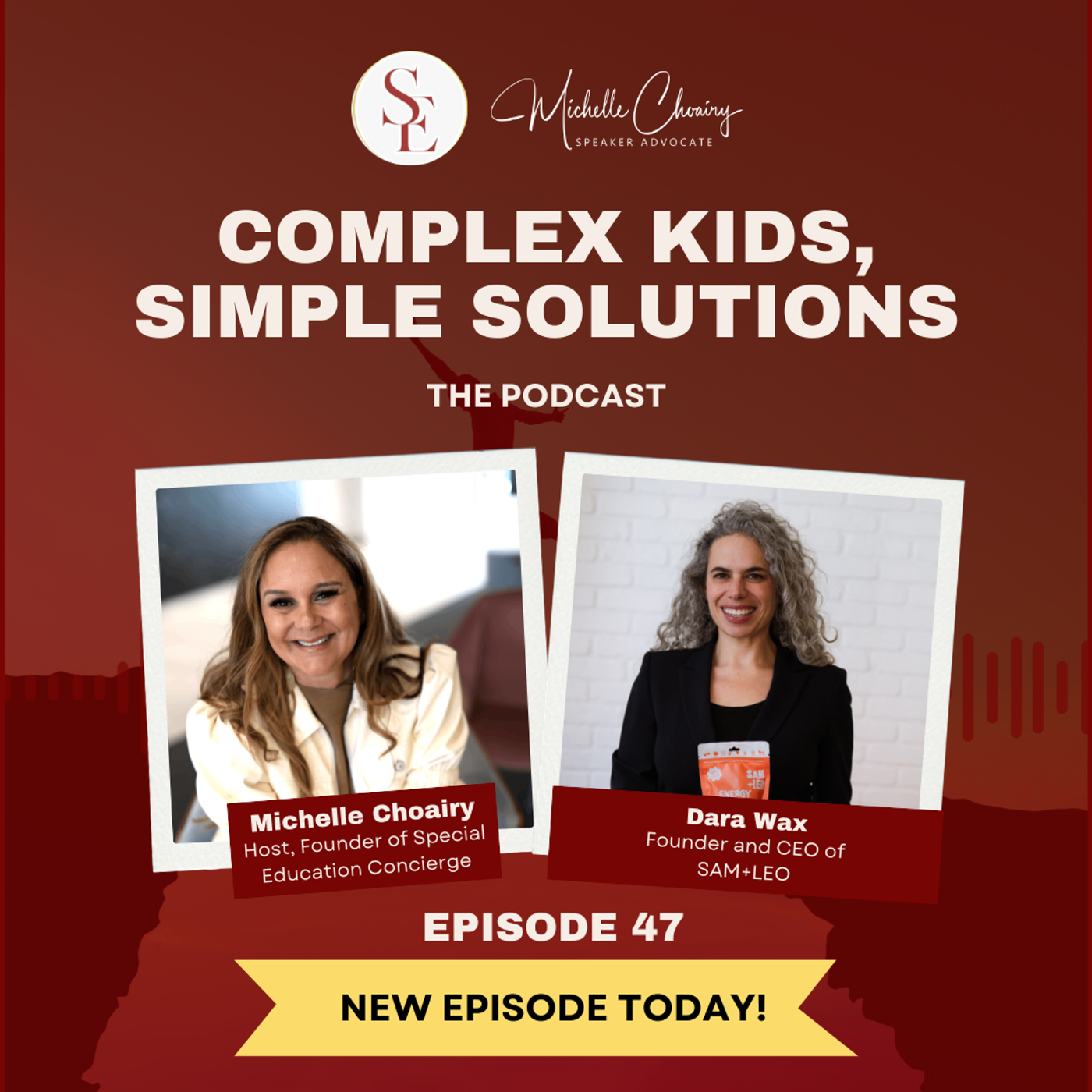 Dara Wax — Reimagining Teen Vitamins as Tools for Mental Wellness | In this conversation, Michelle sits down with Dara Wax, founder of SAM+LEO, to unpack the missing market no one was really talking about: clean, teen-friendly supplements that support energy, sleep, stress, immunity, and eye health, without the junk, the shame, or the “what’s wrong with me?” messaging.Dara shares:A global-health career that turned into a kitchen-table mission. After years working in vaccine advocacy and global health—including at the Bill & Melinda Gates Foundation—Dara stepped back from international travel as her own sons’ needs became more complex, and started building the product she wished existed for her own family.Why “supporting” beats “fixing.” As a mom of two teen boys navigating anxiety, OCD, ADHD, and learning challenges, Dara realized the language matters. Kids do not need to feel broken—they need tools, support, and reminders that they are already amazing.The missing shelf between kids’ gummies and adult supplements. Dara saw that tweens and teens were either ignored altogether or pushed toward energy drinks, adult products, and unhealthy coping tools. SAM+LEO was created to fill that gap with clean gummies teens will actually take.A smarter swap for the real-world stuff teens reach for. Energy gummies instead of energy drinks. Relax support instead of turning toward vaping or other risky coping habits. Eye-health gummies for the screen-heavy generation. Sleep, immunity, and stress support that meets kids where they already are.From zero stores to Whole Foods. In a huge leap, SAM+LEO went from no retail presence to launching in 50 Whole Foods stores, after Dara was selected as one of only 10 brands out of 1,600 applicants in the store’s accelerator program.Quote to tape on the fridge:“We’re not fixing our kids—we’re supporting them.”Whether your child is anxious, exhausted, screen-tired, gluten-sensitive, overbooked, or just trying to survive adolescence, Dara’s message is simple: small, thoughtful supports can make a big difference—and our kids deserve tools that honor who they are.👤 About Dara WaxDara Wax is a seasoned global health strategist and the founder of SAM+LEO, a clean gummy vitamin brand designed to support teen mental wellness and everyday health. A mom of two teen boys with their own mental health and learning needs, Dara combines personal experience with public-health expertise to help families find practical, supportive tools for real life.🔗 Connect with Dara & SAM+LEOLinkedIn: https://www.linkedin.com/in/darawax/Instagram: @shopsamandleo | — | ||||||
| 2/24/26 |  Dr. Theresa Lyons — Turning Autism Science into a Clear Roadmap for Progress | In this conversation, Michelle sits down with Dr. Theresa Lyons—international autism educator, Ivy League scientist, and autism parent—to make autism research finally feel usable in real life. Through her platform Navigating AWEtism, Dr. Lyons breaks down overwhelming science into clear, actionable steps that help parents move from confusion to confidence.Dr. Lyons shares:Why parents feel stuck (and it’s not your fault). Autism information is everywhere, but it’s often contradictory, jargon-heavy, and impossible to apply when you’re already juggling therapies, school, and daily life.Science you can actually use. With her Yale-trained lens, Dr. Lyons teaches parents how to translate research into practical choices—what matters, what doesn’t, and what to try next.A roadmap, not random advice. Instead of bouncing between tips, trends, and “miracle fixes,” she explains how families can follow a structured plan that supports real progress over time.Evidence-based strategies across the globe. Dr. Lyons has worked with parents in 21+ countries, showing that clarity and consistent strategy can change outcomes—regardless of where you live.Clarity + confidence = momentum. When parents understand the “why” behind interventions, they stop second-guessing, communicate better with providers, and feel more empowered in every decision.Quote to tape on the fridge:“Parents don’t need more information—they need a clear, actionable roadmap they can actually follow.”Whether you’re new to a diagnosis or years into the journey, this episode helps you replace overwhelm with direction—and take the next step with confidence.👤 About Dr. Theresa LyonsDr. Theresa Lyons is an international autism educator, Ivy League scientist (PhD from Yale), and autism parent. She is the founder and CEO of Navigating AWEtism, a platform dedicated to transforming complex autism science into clear, step-by-step guidance for families—so parents can make evidence-based decisions with clarity and confidence.🔗 Connect with Dr. Theresa Lyons & Navigating AWEtismYouTube: https://www.youtube.com/@NavigatingAWEtismInstagram: https://www.instagram.com/navigating_awetism/Facebook: https://www.facebook.com/NavigatingAWEtismLinkedIn: https://www.linkedin.com/in/theresamlyonsphd/TikTok: https://www.tiktok.com/@navigatingawetismWebsite: https://navigatingawetism.com/More: https://awetism.net/#ComplexKidsSimpleSolutions #NavigatingAWEtism #AutismSupport #AutismParenting #NeurodivergentKids #EvidenceBasedParenting #SpecialNeedsParenting #AutismEducation #ParentAdvocacy | — | ||||||
| 1/19/26 |  Melissa Schulz — Small Steps, Real Change: Rethinking Behavior for Complex Kids | Send us a textIn this powerful episode of Complex Kids, Simple Solutions, Michelle sits down with parenting coach and BCBA Melissa Schulz to unpack what actually helps when parenting strong-willed, highly sensitive, and neurodivergent kids.With 20 years of professional experience—and lived experience as a mom of neurodiverse kids—Melissa shares why so many behavior plans fail families, how guilt keeps parents stuck, and what it looks like to meet kids (and parents) where they truly are.This conversation is honest, grounding, and deeply validating for parents who are exhausted from “doing everything right” and still struggling.Melissa shares:Why Behavior Isn’t the Problem: How focusing only on stopping behaviors misses the real needs kids are trying to communicate.The Limits of Traditional ABA: Why handouts, “just ignore it,” and perfect plans fall apart in real family life.The Power of Baby Steps: How unrealistic expectations set kids—and parents—up to fail, and why slow progress is real progress.Regulating the Parent First: Why nervous system work for parents is the missing piece in behavior change.Dropping the “Shoulds”: How letting go of comparison and timelines can restore joy and connection.Skills Over Control: Why kids do well when they can, not when they’re forced to comply.Quote to Tape on the Fridge:“It’s not your child’s job to learn the way you teach. It’s your job to teach the way they learn.”👤 About Melissa SchulzMelissa Schulz is a parenting coach, board-certified behavior analyst, and counselor who supports families raising complex kids. After building and running a large ABA company, Melissa shifted her work to focus on parents—bridging the gap between clinical knowledge and real-life parenting. Her work centers on compassion, regulation, and practical strategies that actually fit into daily life.🔗 Connect with Melissa SchulzFacebook: www.facebook.com/confidentlymomminInstagram: www.instagram.com/confidentlymommin | — | ||||||
| 11/24/25 |  Dr. Jack Hinman — The Anxious Generation: Guiding Young Adults Toward Independence and Resilience | Send us a textIn this conversation, Michelle sits down with Dr. Jack Hinman, licensed clinical psychologist and founder of Engage Young Adult Transitions, to unpack why so many 18- to 30-year-olds are stuck between adolescence and adulthood—and how parents can help their “kids” move forward with confidence, connection, and purpose.Dr. Hinman shares:The crisis of connection. Today’s young adults are more connected than ever online—but lonelier and more anxious than any generation before. Dr. Hinman calls this the Crisis of Connection and explains how real, face-to-face relationships are the key to healing.The anxious generation explained. Born after 1995? Your brain literally developed differently. Between overprotection, constant screens, and “concept creep” around trauma and anxiety, today’s youth are growing up in a world that equates discomfort with danger—stunting resilience and identity formation.Overprotected offline, underprotected online. Parents guard their kids from playground scrapes but hand them unfiltered access to social media during puberty—the most vulnerable neurological window for comparison, shame, and emotional reactivity.When therapy meets autonomy. At Engage, young adults (17–25) live in supervised homes that gradually transition to independent apartments. Staff offices are embedded in the same homes, creating mentorship through proximity and connection, not confinement.Why 30-day programs fail. Short-term fixes don’t build independence. Engage focuses on long-term (9–12 month) support combining clinical care, mentoring, neurofeedback, and community integration—because growth takes time.Quote to tape on the fridge: “Anxiety isn’t the enemy—it’s the gym where resilience grows.”Whether you’re parenting a teen or watching your 20-something stall out, Dr. Hinman’s message is simple: Stop rescuing from discomfort. Start teaching that hard things are part of growing strong.👤 About Dr. Jack Hinman, Psy.D. Dr. Hinman is a licensed clinical psychologist and the founder of Engage Young Adult Transitions in Cedar City, Utah. With over 20 years in mental health, he specializes in helping neurodiverse and anxious young adults overcome depression, avoidance, and executive-functioning challenges to rediscover autonomy, purpose, and self-trust. He also serves on the board of the Young Adult Transition Association (YATA) and is a leading voice in emerging-adulthood psychology.🔗 Connect with Dr. Hinman & Engage Young Adult Transitions 🌐 Website: engagelifenow.com 📧 Email: podcast@elev8.io 📸 Instagram: @engage.transitions 🎵 TikTok: @engageyoungadult 💼 LinkedIn: linkedin.com/in/jack-hinman-engagelifenow 📘 Facebook: Engage Young Adult Transitions#ComplexKidsSimpleSolutions #AnxiousGeneration #YoungAdultTransition #NeurodiverseTeens #ParentingAnxiousKids #ResilienceBuilding #ScreenTimeAwareness #ParentAdvocacyMama, step into this week knowing that every hug, every smile, and every small win matters. You’re building something beautiful | — | ||||||
| 11/17/25 |  Michael Ringel — Planning for Two Lifetimes: Protect, Grow, and Enjoy (Without Losing Your Benefits) | Send us a textIn this conversation, Michelle sits down with special-needs family wealth strategist Michael Ringel to demystify the money side of raising complex kids—how to get organized fast, protect eligibility for services, and build a plan that cares for your child long after you’re gone.Mike shares:Why families delay (and how to start in 15 minutes). Your financial life isn’t a mess—it’s a junk drawer. Mike’s free “Living Balance Sheet” tool turns scattered accounts into a single snapshot and scorecard so you know what is and what’s possible.Benefits without the gotchas. The big rule of thumb: assets over $2,000 in your child’s name can jeopardize SSI/Medicaid. How third-party Special Needs Trusts preserve benefits, and when an ABLE account (tax-advantaged, spendable for qualified needs) makes sense—plus the key difference on what happens to leftover funds.Funding the future (without wrecking today). Why many families combine term and permanent life insurance to ultimately fund a Special Needs Trust—while using riders and disability coverage to protect income now.Hope for the best, plan for the rest. Build a team—financial pro, special-needs attorney, and benefits optimizer—so you protect today, plan for tomorrow, and avoid painful “do-overs.”Cash-flow judo. Most households leak money in invisible ways. Mike shows how to capture “found dollars” to fund protection and long-term goals without lowering your lifestyle.Quote to tape on the fridge: “Something is worth what it can do for you—not the price you pay.”Whether your child is 3 or 33, Mike’s message lands: get organized, protect eligibility, and set up funding so your child—and your whole family—can live a life without compromise.👤 About Mike Ringel For over 20 years, Mike has helped families with complex-needs children protect, grow, and enjoy their wealth—planning for two lifetimes while preserving access to vital services. He coordinates with attorneys and benefits specialists to quarterback a clear, compassionate plan.🔗 Connect with Mike Website: mikeringel.com Email: mringel43@gmail.com LinkedIn: linkedin.com/in/mikeringel/🧰 Get the Free Tool Mike mentioned: Ask Mike for access to the Living Balance Sheet to create your 15-minute snapshot and scorecard, then decide your next best step.#ComplexKidsSimpleSolutions #SpecialNeedsPlanning #SpecialNeedsTrust #ABLEAccount #SSI #Medicaid #IEPParents #TwoLifetimesPlanning #ParentAdvocacy #CaregiverFinance | — | ||||||
Want analysis for the episodes below?Free for Pro Submit a request, we'll have your selected episodes analyzed within an hour. Free, at no cost to you, for Pro users. | |||||||||
| 11/10/25 |  MegAnne Ford — From “Be Better” to Feel Better: Parenting Complex Kids with CLEAR Connection | Send us a textIn this conversation, Michelle sits down with parent coach MegAnne Ford to flip the old script—away from forcing kids to fit our vision and toward building skills, safety, and connection so families actually feel better day to day.MegAnne shares:Why control backfires. Traditional “make them comply” tactics widen the gap; centering the child’s needs helps the message land.The CLEAR method (her 5-step roadmap). Connection → Limits → Empowerment → Accountability → Recovery—so consequences teach with dignity, not shame.Behavior = a nervous system message. Nonverbals shout louder than words; listen, mirror, validate before you problem-solve.Grief and the pivot. When diagnoses or differences rewrite your plan, community shortens the lonely middle.Connection is the superpower. Online cohorts that become real-life support—through IEP seasons, moves, meltdowns, and milestones.Quote to tape on the fridge: “You’re enough. Let people come in and love on you.”Whether you’re navigating autism, ADHD, anxiety, or big feelings that don’t fit a checklist, MegAnne’s message is simple: connection before correction—and repeat it with CLEAR steps until home feels safer for everyone.👤 About MegAnne Ford A Richmond-based parent coach and founder of Be Kind Coaching, MegAnne helps caregivers build regulation, boundaries, and resilient relationships through education and group coaching.🔗 Connect with MegAnne Website: bekindcoaching.com Instagram: @meganne.ford Email: meganne@bekindcoaching.com#ComplexKidsSimpleSolutions #ParentCoaching #ConnectionBeforeCorrection #TraumaInformed #Neurodiversity #EmotionalRegulation #CommunityCare #GentleParenting | — | ||||||
| 9/10/25 | 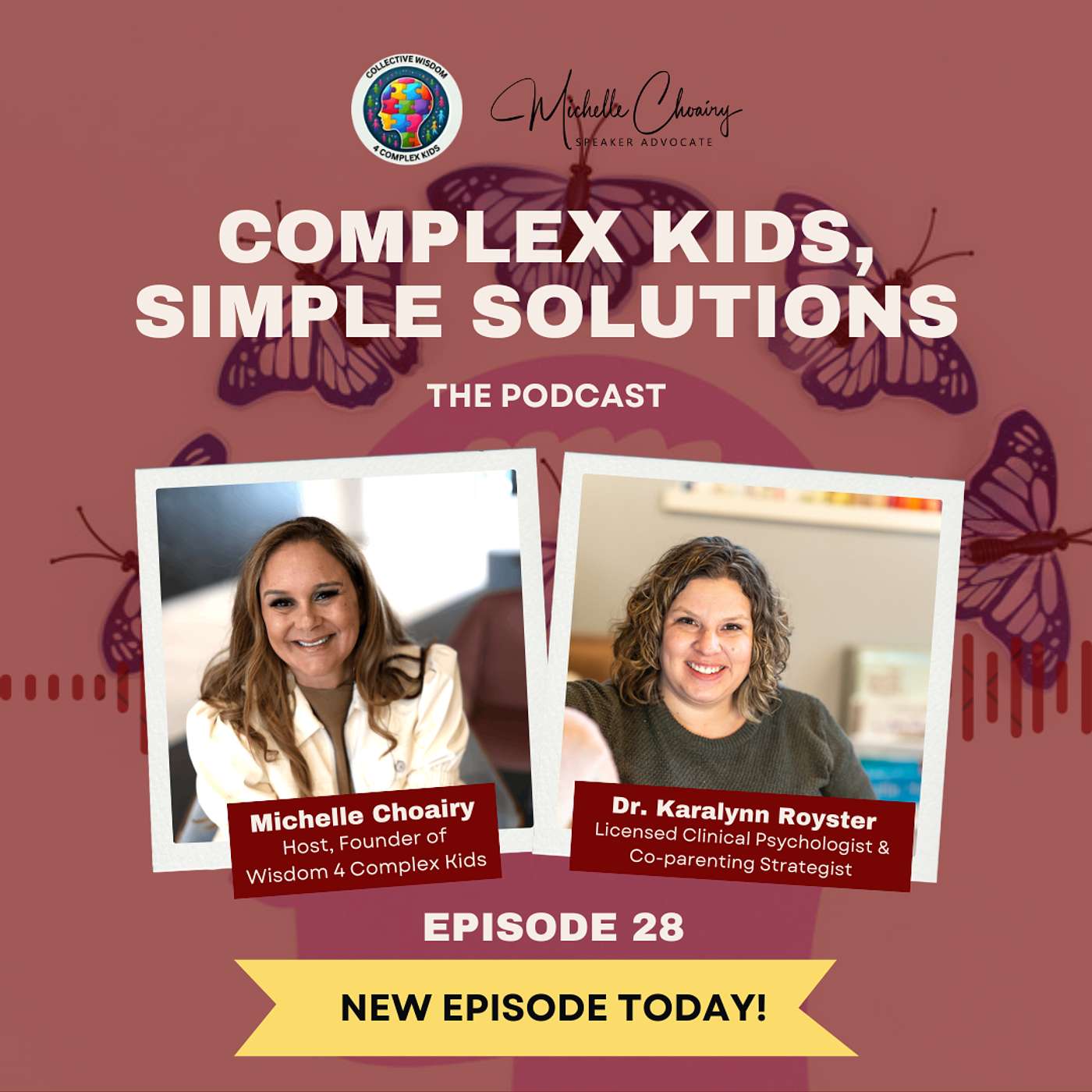 Dr. Karalynn Royster — Co-Parenting Through Chaos Without Breaking Your Kid | Send us a textIn this conversation, Michelle sits down with clinical psychologist and co-parenting coach Dr. Karalynn Royster to unpack one of the most loaded questions parents of complex kids face: What happens when the marriage isn’t working—but your child still needs both of you?Dr. Karalynn shares:💔 Why 80% of parents with complex kids report marriage strain. From therapy schedules to meltdowns to IEP battles, the emotional weight doesn’t just stay with the child—it ripples through the relationship. And sometimes, that weight becomes too much.🎯 The three co-parenting models—and how to know which one is right for your family. Whether it’s collaborative co-parenting, parallel parenting, or nesting (where the kids stay and you rotate out), Dr. Karalynn explains how to choose based on your child’s emotional, medical, and behavioral needs.🧠 What kids actually hear during a divorce. You might think they’re in the other room. They’re not. You might think they don’t notice the tension. They do. Dr. Karalynn explains how to repair after an argument and how to reassure your child in language they’ll understand.📦 Why some moms stay longer—and why that’s okay. Whether it’s for insurance, routine, or to delay transition until a child is more independent, staying doesn’t mean failing. It means adapting. But she also explains how to move forward when you’re the only adult doing the work.🛑 The trap of overcompensation. Guilt is a natural part of parenting through divorce—but loosening all the rules won’t make the pain go away. Dr. Karalynn gives practical scripts to stay grounded while still nurturing your child’s needs.Quote to tape on the fridge: “You may not control your co-parent—but you do control how you show up for your child. That relationship is the anchor they’ll carry through every transition.”Whether you’re already divorced, just thinking about it, or doing everything in your power to hold the house together—this episode will leave you feeling seen, supported, and empowered.👤 About Dr. Karalynn Royster Dr. Karalynn Royster is a licensed clinical psychologist and co-parenting strategist who helps families navigate separation, divorce, and complex childhood needs with emotional maturity and evidence-based parenting. She brings deep experience working with neurodivergent and medically complex kids, and offers specialized support for moms who are carrying it all.🔗 Connect with Dr. Karalynn Royster • Instagram: @learnwithlittlehouse • Facebook: Learn With Little House • YouTube: Learn With Little House • Pinterest: @drroysterpsyd • Substack: drroyster.substack.com#ComplexKidsSimpleSolutions #CoParenting #DivorceSupport #NeurodivergentFamilies #HighConflictParenting #EmotionalMaturity #MichelleChoairy #DrKaralynnRoyster #NestingDivorce #ParallelParenting #SpecialNeedsParenting #ComplexKids #FamilyTherapy | — | ||||||
| 8/19/25 | 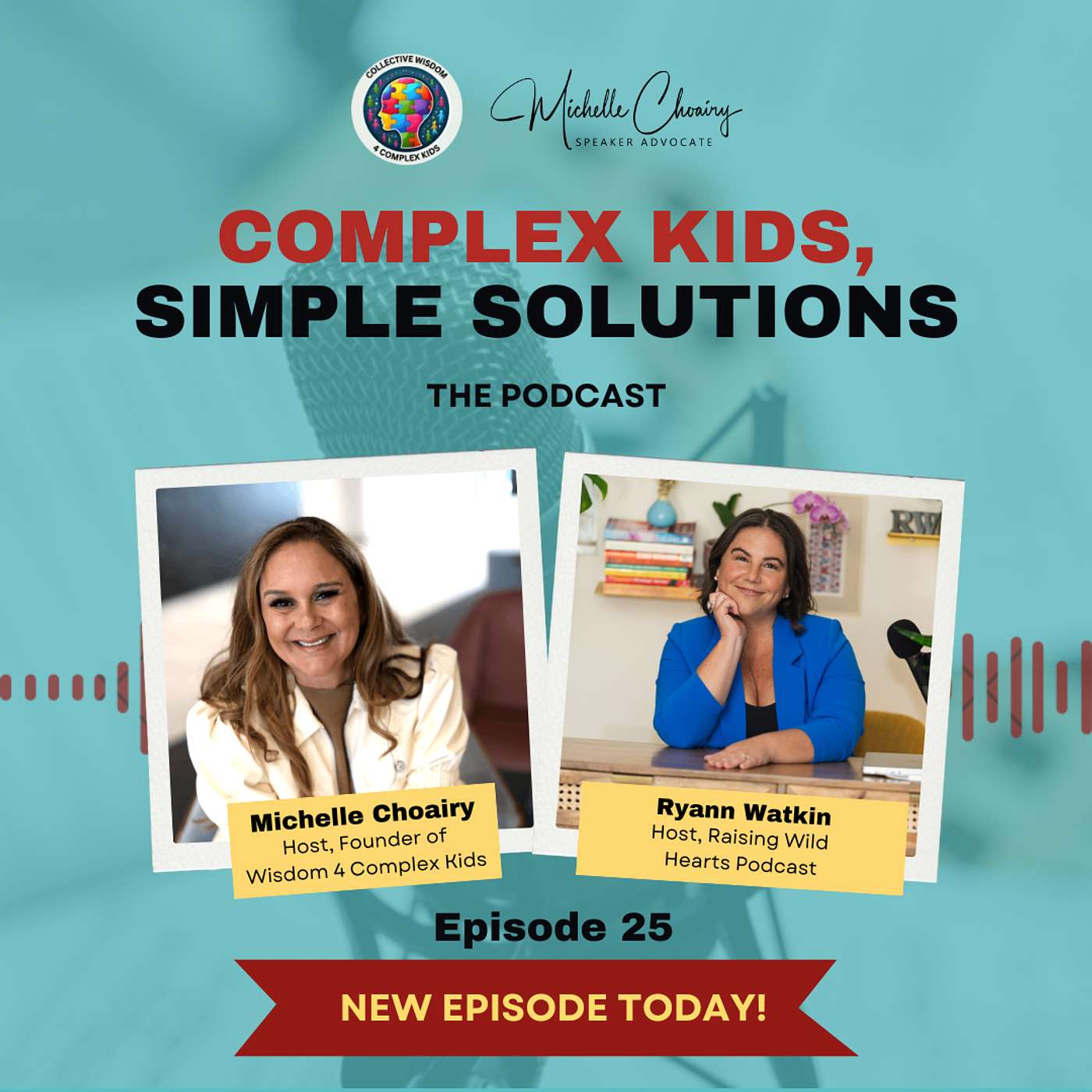 Ryann Watkin — Rediscovering Your Feminine Energy While Raising Complex Kids | Send us a textIn this conversation, Michelle sits down with speaker, podcaster, and creator of the Raising Wild Hearts podcast, Ryann Watkin, to unpack the tug-of-war between strength and softness that every mom of complex kids knows too well. Together, they explore how to step out of “CEO of the household” mode and reconnect with the feminine energy that fuels joy, love, and true presence at home.Ryann shares:When strength becomes survival. From high-achieving career woman to maxed-out mom, Ryann opens up about hitting burnout when her “go, go, go” energy clashed with motherhood’s demands.The moment she hit rock bottom. How the split between masculine drive and feminine nurture left her depleted—and what it took to begin her healing journey.Embodiment in real life. Why asking yourself “Can I feel my legs?” was the first surprising step to grounding, slowing down, and reconnecting with her body.Turning off ‘boss mode.’ Practical shifts—like saying “What do you think, love? I trust you”—that invite your partner to step up and give you space to soften.The control/safety loop. Why moms of complex kids grip so tightly to schedules and responsibilities, and how learning to release just two “rocks from the backpack” can transform family balance.Happiness isn’t “when.” Ryann’s wisdom for every overwhelmed mom: stop waiting for someday. Joy is possible here, even in the mess and the therapy appointments.Quote to tape on the fridge: “Happier moms raise happier kids. Don’t wait for things to ease up—be here now, be happy now.”Whether you’re juggling IEP meetings, medical appointments, or just trying to make dinner without barking orders, Ryann’s message is clear: reclaiming your feminine energy isn’t about weakness—it’s about resilience, presence, and love.👤 About Ryann Watkin Ryann Watkin is a creative professional speaker and podcaster devoted to creating a better world for future generations. Known for her insightful questions and engaging wit, she empowers individuals to share messages of resilience and joy. She is the host of Raising Wild Hearts, a globally recognized top 5% podcast exploring the intersection of psychology, spirituality, and relationships.🔗 Connect with Ryann & Raising Wild Hearts Instagram: @raisingwildhearts Facebook: Raising Wild Hearts LinkedIn: Ryann Watkin#ComplexKidsSimpleSolutions #FeminineEnergy #MomLife #ResilientMoms #ParentingComplexKids | — | ||||||
| 7/21/25 | 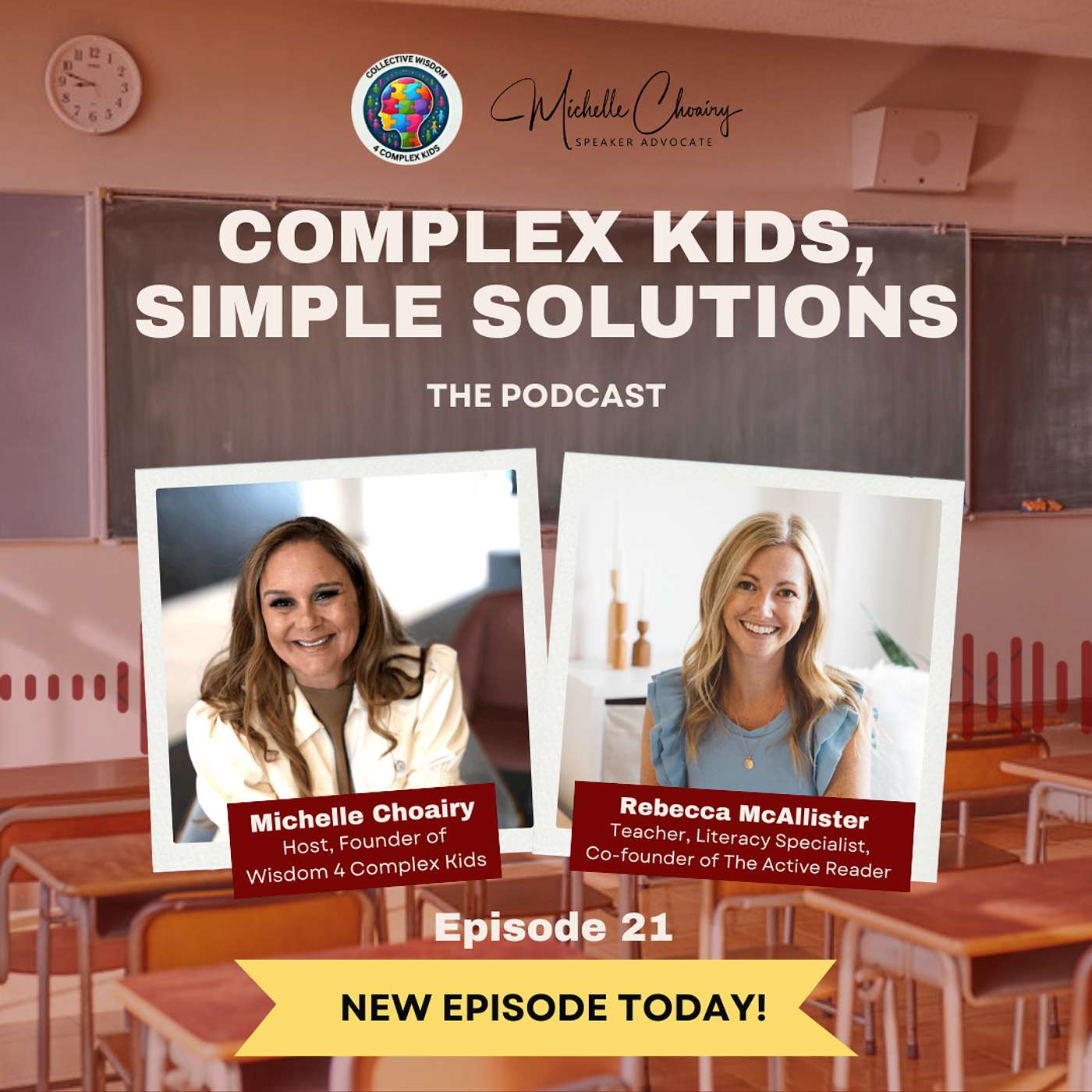 Rebecca McAllister — Turning Playtime into Phonics Power | Send us a textIn this conversation, Michelle sits down with Active Reader co-founder and former classroom teacher Rebecca McAllister to unpack why so many complex kids (and even their teachers!) still struggle with reading—and how a multi-sensory, five-minute-a-day routine can rewrite that story long before first grade.Rebecca shares:From “good student” to secret struggler. Undiagnosed dyslexia left Rebecca memorizing textbooks and dodging eye-contact with contracts—until Orton-Gillingham training finally “turned the world to color” at age 36.Why most classrooms miss the mark. Whole-word cueing relies on memorization; structured literacy rewires the brain by fusing sight, sound, touch, and movement.The active-learning blueprint. How her flash-card “equations” (C—cat—/k/) + tracing + play turn toddlers’ Hot Wheels laps into letter-sound mastery.Red-flag behaviors to spot early. Avoidance, echo-answers, symbol confusion—signs your pre-K child might be heading for the same hurdles.A 30-week plug-and-play curriculum. For parents, daycares, and special-ed teams: five to ten minutes a day, zero guesswork, scripts included.Success without burnout. Why mixing story time, movement games, and even movie characters with a target sound cements learning for ADHD and dyslexic brains.Quote to tape on the fridge: “If they can feel it, hear it, and giggle while they say it, the brain keeps it forever.”Whether your child is handwriting their first “B” at 11 or devouring chapter books at five, Rebecca’s message is simple: build a sensory-rich foundation now, and reading roadblocks vanish before they start.👤 About Rebecca McAllisterA certified teacher, literacy specialist, and co-founder of The Active Reader, Rebecca turned her own late-identified dyslexia into a mission: give every family the tools schools often skip. She leads one-to-one Orton-Gillingham tutoring across North America and designs play-based curricula that fit into real-life parent schedules.🔗 Connect with Rebecca & The Active ReaderWebsite: theactivereader.com Instagram: @the_active_reader LinkedIn: linkedin.com/in/rebeccalmcallister Email: rebecca@theactivereader.com#ComplexKidsSimpleSolutions #EarlyLiteracy #OrtonGillingham #DyslexiaSupport #PlayBasedLearning | — | ||||||
| 6/23/25 | 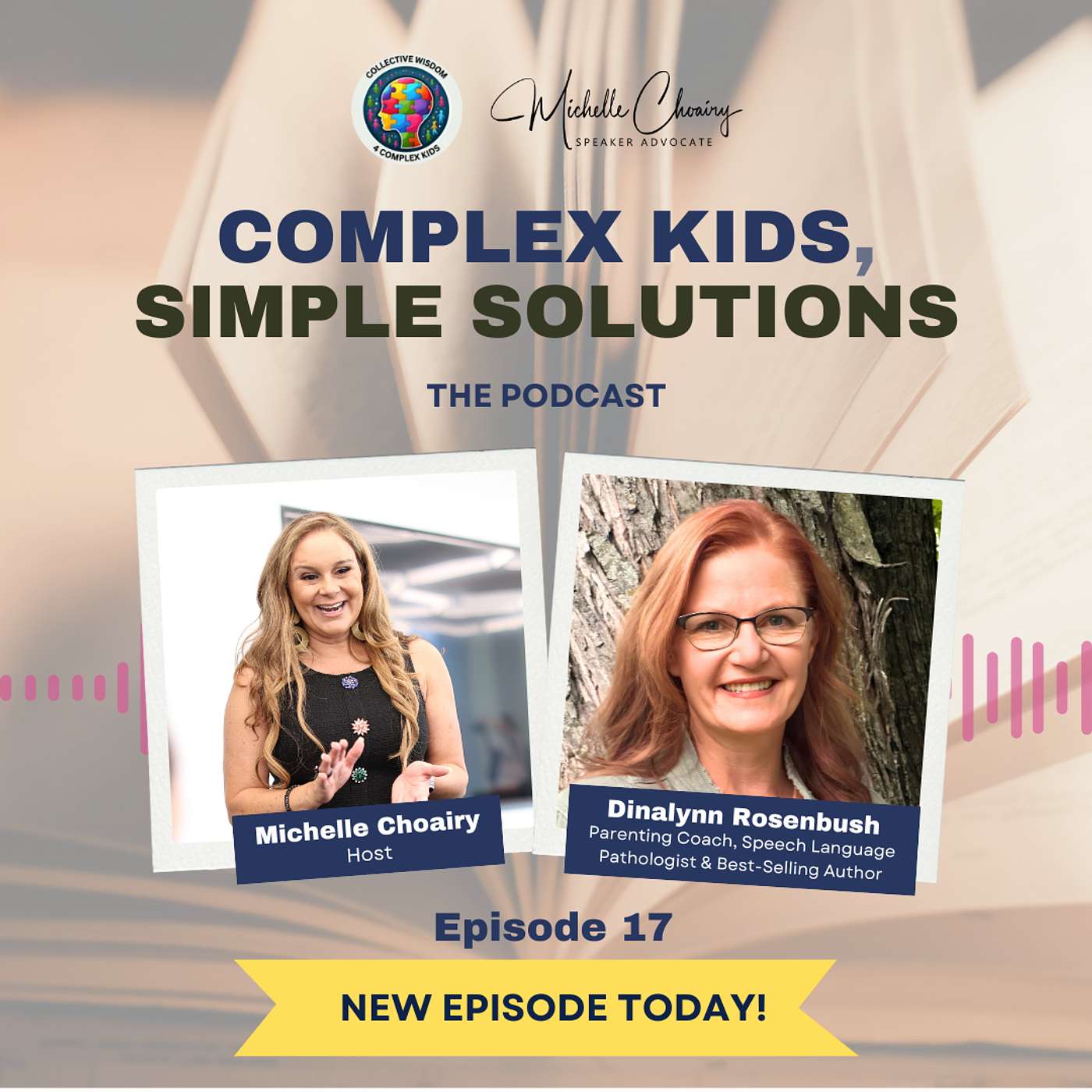 Dinalynn Rosenbush – The Language of Play: Brave Parenting, Early Words & School-Home Teamwork | Send us a textIn this conversation, Michelle sits down with veteran speech-language pathologist Dinalynn Rosenbush—creator of the Language of Play podcast—to unpack what happens when an over-worked school SLP, a fired-up mom, and a “mama-gut” hunch all meet at the IEP table.Dinalynn shares:School vs. private therapy—decoded. Why public-school SLPs have to wait for an academic “hit,” how 62-kid caseloads force group sessions, and the simple question her principal always asked: *“Is it good for kids?”*🏫Her high-frequency hack for apraxia. Ten-minute hallway “card-blitz” drills that gave one-on-one intensity—without blowing up the bell schedule. 🃏The power of “team emails” and fearless follow-up. How Michelle’s bi-weekly “Team Drake” updates model the kind of parent–therapist loop every complex kid needs. 📬Why early intervention beats perfect answers. Hear the story of a mom with a one-year-old and a brain malformation—and how saying yes to services before a rock-solid label can change the trajectory. 🌱Ditching the yes/no trap. Practical language swaps that demand real words (or signs) and open the door to bigger conversations. 💬Bravery isn’t optional. “When fear is present and you move forward anyway—that’s bravery.” What that looks like when you’re doubting your gut, juggling therapists, and rewriting bedtime to fit sensory needs. 🦸♀️Whether you’re waiting on an evaluation, wondering how to actually partner with the school SLP, or just need permission to trust your intuition, Dinalynn’s 30-years of wisdom will show you how to turn everyday play into powerful speech therapy—and why no parent should have to do it alone.👤 About Dinalynn RosenbushConsultant & parenting coach • 30-year public-school SLP • International best-selling author • Host of the top 1.5 % podcast The Language of Play. Dinalynn empowers parents to weave speech and language practice into ordinary routines—even when a delay is present. She lives in Minnesota near her children and grandchildren.🔗 Connect with DinalynnInstagram: @dinalynnrosenbush LinkedIn: linkedin.com/in/dinalynn-rosenbush-b5750854 YouTube: The Language of Play | — | ||||||
| 6/9/25 | 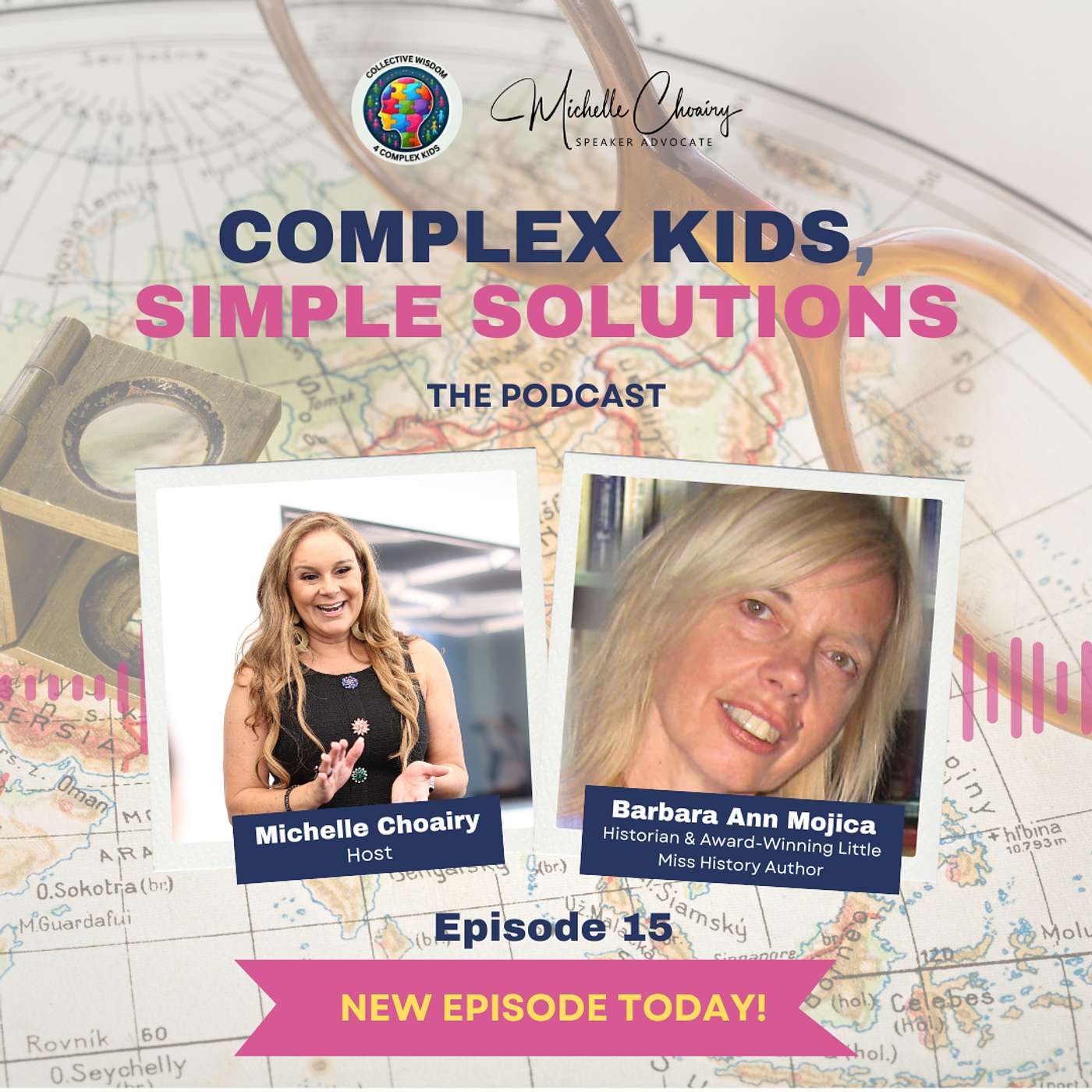 Barbara Ann Mojica – Little Miss History: Multisensory Learning, Critical Thinking & Curiosity for Complex Kids | Send us a textIn this episode of Complex Kids, Simple Solutions, host Michelle Choairy sits down with Barbara Ann Mojica—historian, retired special-education administrator, and award-winning creator of the Little Miss History® children’s book series—for a lively discussion on why history (and curiosity!) matter for every learner, especially kids with complex needs.Drawing on 40+ years as a teacher, special-education principal, and district administrator, Barbara shares:How multisensory, theme-based lessons help diverse brains retain information and build real-world skillsSimple ways parents can weave “Who? What? When? Where? Why?” questions into car rides, doctor visits, and everyday playWhy critical-thinking habits start in preschool—and what happens when schools drop cursive, social studies, or science in favor of test prepTips for adapting any curriculum at home (or in an IEP meeting) so a child’s strengths lead the wayThe origin story of Little Miss History—and how an adventurous cartoon guide turns museums, monuments, and national parks into interactive learning adventuresWhether you’re homeschooling, navigating an IEP, or just looking for fresh ways to spark your child’s curiosity, Barbara’s practical wisdom will help you mentor kids to be kind, compassionate, and endlessly inquisitive.👤 About the GuestBarbara Ann Mojica is a retired educator whose career spans more than four decades as a classroom teacher, special-education specialist, principal, and school-district administrator. A lifelong historian, she now writes the award-winning Little Miss History® picture-book series, using a whimsical cartoon alter-ego to make learning about people, places, and events a fun-filled adventure. Barbara’s mission: equip families and teachers with tools that “inspire, entertain, and educate”—because, as she says, “If you don’t know your history, you don’t know what you’re talking about.”🔗 Connect with Barbara Ann MojicaWebsite & blog: https://www.LittleMissHistory.comYouTube mini-lessons: Little Miss History ChannelPinterest resource boards: Little Miss HistoryEmail: Barbara@LittleMissHistory.com | — | ||||||
| 6/2/25 | 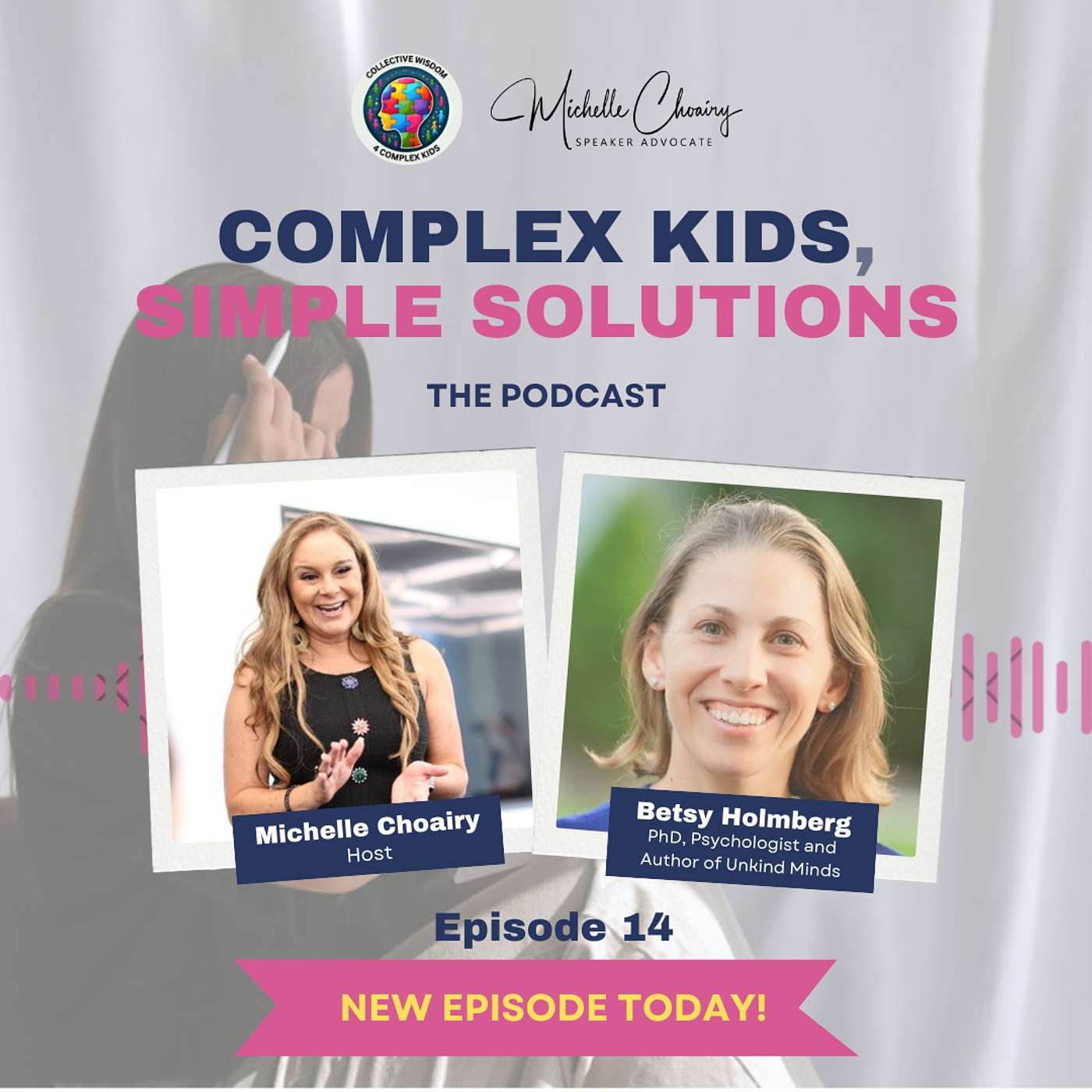 Betsy Holmberg – Unkind Mind: Rewiring Self-Doubt and Silencing the Inner Critic for Parents of Complex Kids | Send us a textIn Episode 14 of Complex Kids, Simple Solutions, host Michelle Choairy is joined by Dr. Betsy Holmberg—clinical psychologist and author of Unkind Mind—for an eye-opening conversation on what’s really going on inside our heads when we feel overwhelmed, self-critical, or stuck in the spiral of “I’m a bad mom.”Betsy introduces us to the Default Mode Network (DMN)—the part of the brain responsible for all that internal chatter—and shares groundbreaking tools to help parents stop believing the lies their brains tell them. From late-night guilt to comparison traps, Betsy breaks down the neuroscience behind our thoughts and offers compassionate, research-backed ways to reclaim peace.Together, Michelle and Betsy discuss why parenting complex or neurodivergent kids activates our deepest self-doubt, how community can rewire our brain’s harshest narratives, and how moms can start to shift from shame to self-trust—without needing to fix everything first.👤 About the Guest Dr. Betsy Holmberg is a psychologist and researcher specializing in neuroplasticity and the Default Mode Network. A graduate of Princeton and holder of a Ph.D. from Duke, Betsy spent years in clinical settings before focusing on how the brain’s internal dialogue affects mental health. She’s the author of Unkind Mind: How to Stop Believing the Lies Our Brain Tells Us, and she empowers people—especially parents—to quiet their inner critic and live from a place of truth and love.🔗 Connect with Dr. Betsy Holmberg Website: betsyholmberg.com Instagram: @betsyholmberg | — | ||||||
| 5/27/25 | 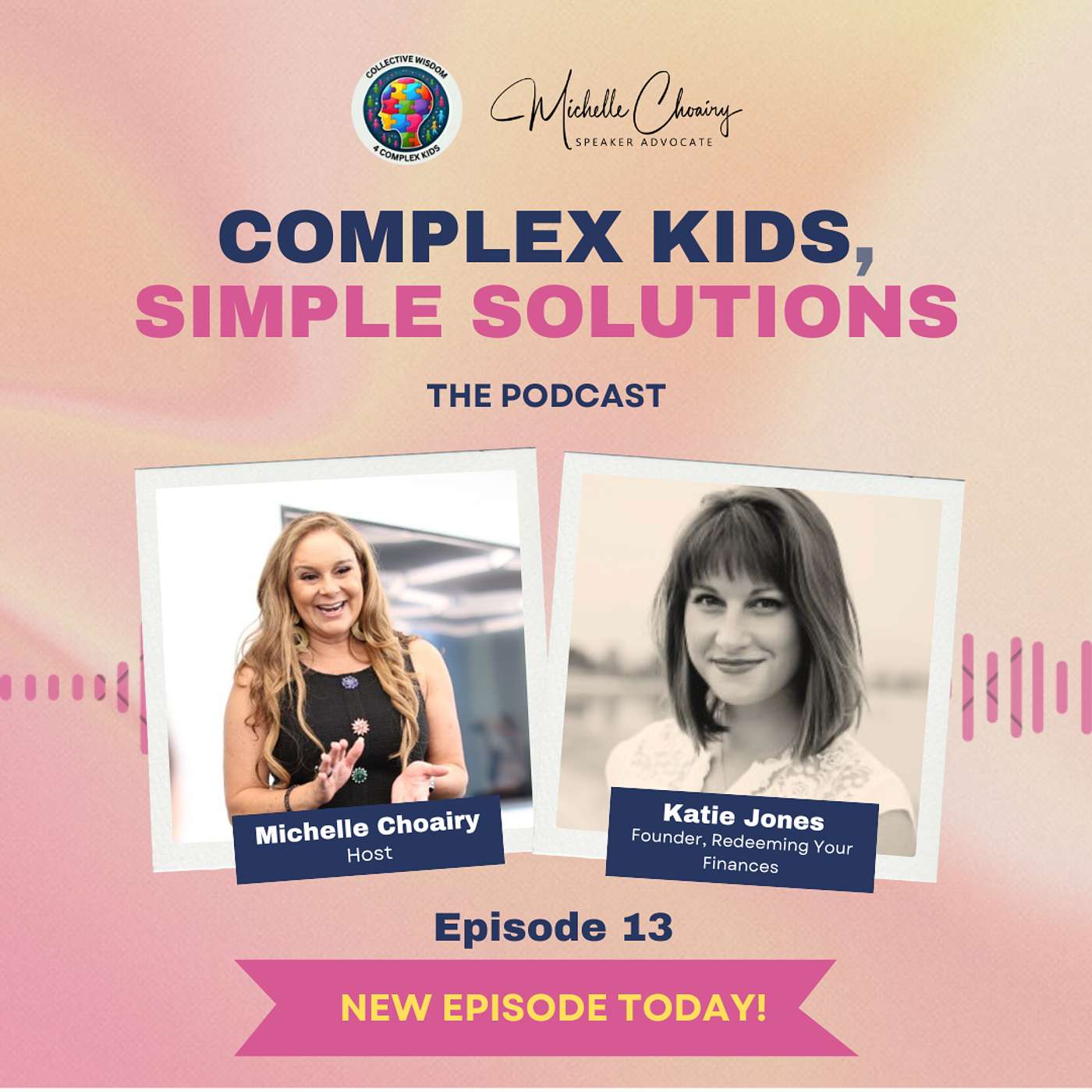 Katie Jones – Redeeming Your Finances: Faith, Stewardship, and Simplicity for Special Needs Families | Send us a textIn Episode 13 of Complex Kids, Simple Solutions, Michelle Choairy welcomes Katie Jones—Christian financial counselor, foster mom, and founder of Redeeming Your Finances—for a refreshing conversation about money, motherhood, and living with purpose.Katie shares how faith and stewardship can bring clarity to even the most chaotic family budgets, especially for families raising complex or neurodivergent kids. From navigating tight financial seasons to learning how to prioritize what truly matters, Katie offers grace-filled guidance for moms who feel overwhelmed or stretched too thin.Together, Michelle and Katie discuss how money impacts access to care, how financial stress intersects with advocacy, and how to build financial habits that are realistic, sustainable, and spiritually grounded.👤 About the GuestKatie Jones is a certified Christian financial counselor, real estate investor, foster mom, and founder of Redeeming Your Finances—an online school helping believers align their money with their values. With a background in ministry and a passion for helping others steward their resources wisely, Katie empowers families to manage money with confidence and peace.🔗 Connect with Katie JonesWebsite: https://www.redeemingyourfinances.com Instagram: @faithfulwithfinances Email: katie@redeemingyourfinances.com | — | ||||||
| 5/20/25 | 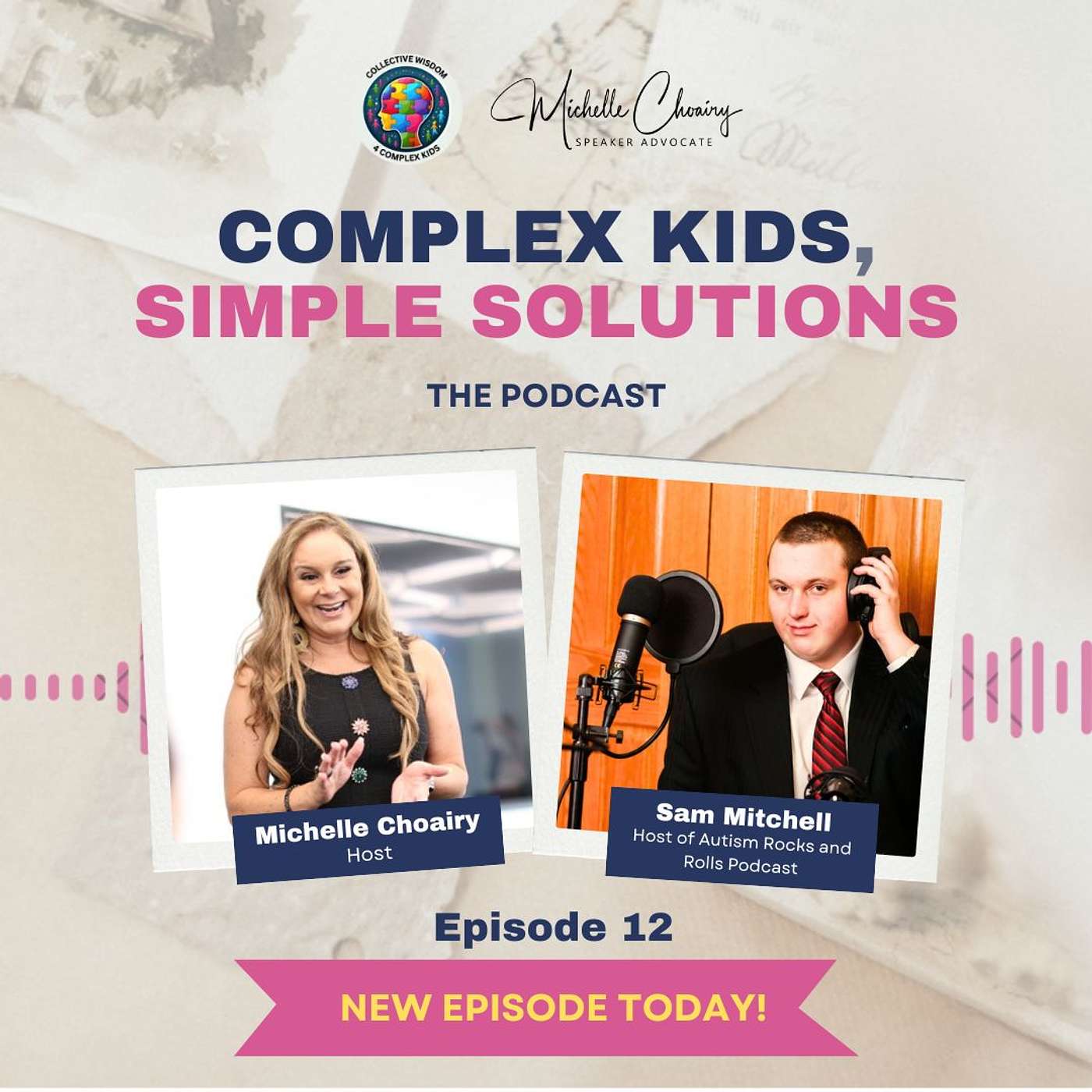 Sam Mitchell – From Advocate to Advocate: A Self-Advocate’s Journey Through Autism, School, and Self-Discovery | Send us a textIn Episode 12 of Complex Kids, Simple Solutions, Michelle Choairy welcomes Sam Mitchell, the dynamic host of Autism Rocks and Rolls and a proud self-advocate on the autism spectrum. Diagnosed at age four, Sam has gone from receiving speech therapy and IEP support in school to building a podcast empire, giving TED Talks, and inspiring others to embrace who they are.Together, Michelle and Sam explore what it’s like growing up with autism from the inside out—touching on school challenges, social struggles, parent advocacy, and the moment Sam realized he had to become his own voice. It’s a raw, funny, and insightful conversation between a mom who advocates daily for her complex child and a young man who’s lived it and found his purpose in the process.Whether you're a parent wondering if your efforts are making a difference or someone on the spectrum trying to find your place in the world, this episode is full of honest reflections and uplifting truths.👤 About the Guest Sam Mitchell is a podcast host, motivational speaker, entrepreneur, and the President of Autism Rocks and Rolls Corporation. Diagnosed with autism at a young age, Sam has dedicated his career to proving that people with autism are not broken—they’re powerful. Through his podcast and speaking engagements, he inspires neurodivergent individuals to own their uniqueness and educates the world on acceptance and inclusion.🔗 Connect with Sam Mitchell Website: https://www.autismrocksandrolls.com Email: info@autismrocksandrolls.com Instagram: @autismrocksandrollspodcast TED Talk: Souled Structure 📞 812-699-7811 | — | ||||||
| 4/21/25 | 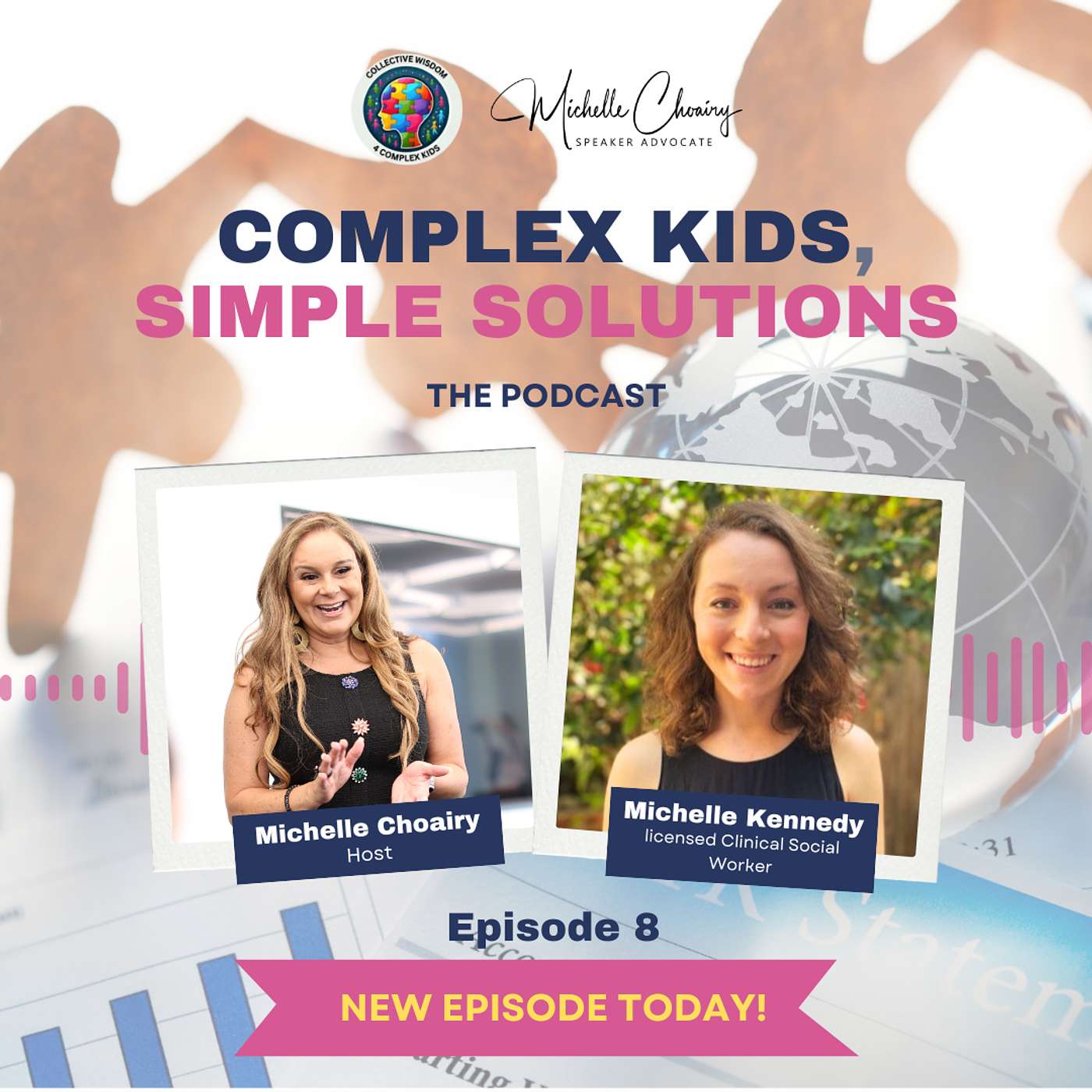 Michelle Kennedy, LCSW – The Advocate Inside the System: What Social Workers Want Every Parent to Know | Send us a textIn Episode 8 of Complex Kids, Simple Solutions, Michelle Choairy sits down with Michelle Kennedy, a licensed clinical social worker who’s spent over a decade navigating pediatric healthcare systems alongside families of medically complex kids. From hospitals to home care, Michelle K. has seen it all—and she’s here to share what really goes on behind the scenes.They talk about the essential role social workers play in advocating for children, coordinating care, and guiding parents through the emotional and logistical overwhelm of complex diagnoses. If you’ve ever wondered what support is available inside the healthcare system—and how to access it—this episode is your roadmap.Expect real talk, insider tips, and powerful moments of advocacy you won’t want to miss.👤 About the Guest Michelle Kennedy, LCSW, is a licensed clinical social worker with over ten years of experience in healthcare. She specializes in pediatric care for medically complex patients and is deeply committed to improving access, communication, and support for families. Michelle works at the intersection of clinical care and advocacy, helping parents feel confident as they navigate healthcare systems. 🔗 Connect with Michelle Kennedy Instagram: https://www.instagram.com/msimeskennedy/ | — | ||||||
| 4/15/25 |  Amanda Preston – Parenting 8 Neurodivergent Kids: Advocacy, PDA, and Real-Life Wisdom | Send us a textIn this powerful episode of Complex Kids, Simple Solutions, Michelle sits down with Amanda Preston, a mom to eight neurodivergent children, a late-diagnosed ADHD adult, and a fierce advocate for families navigating complex needs.Amanda brings a rare blend of personal insight and professional expertise. As a registered social worker, author, and CEO of Deer Creek Family Support & Therapy, she specializes in Autism and PDA (Pathological Demand Avoidance) and leads a national nonprofit serving foster and adoptive families. Her coaching business, Amanda Preston Co., helps parents feel seen, supported, and equipped to lead their families with compassion and clarity.Michelle and Amanda dive into what it really looks like to parent multiple neurodivergent kids, how to recognize PDA when typical parenting approaches fall short, and why traditional behavior models often do more harm than good. Amanda shares hard-won wisdom, a refreshing sense of humor, and the belief that thriving is possible—even in the chaos.This is an episode you’ll want to share with every parent who feels like they’re doing it alone.👤 About the Guest Amanda Preston is a mom to eight neurodivergent kids and a late-diagnosed ADHD adult. She’s an author, social worker, founder of a national nonprofit supporting foster/adoptive families, and CEO of Deer Creek Family Support & Therapy, a practice that supports neurodivergent families and specializes in Autism and PDA. Amanda also runs a coaching business offering courses and support for parents through Amanda Preston Co.🔗 Connect with Amanda Website: www.amandaprestonco.com Therapy Practice: www.deercreektherapy.ca Instagram: @the_neurodivergent_bunch Instagram: @thefostermomsocialworker | — | ||||||
| 4/7/25 | 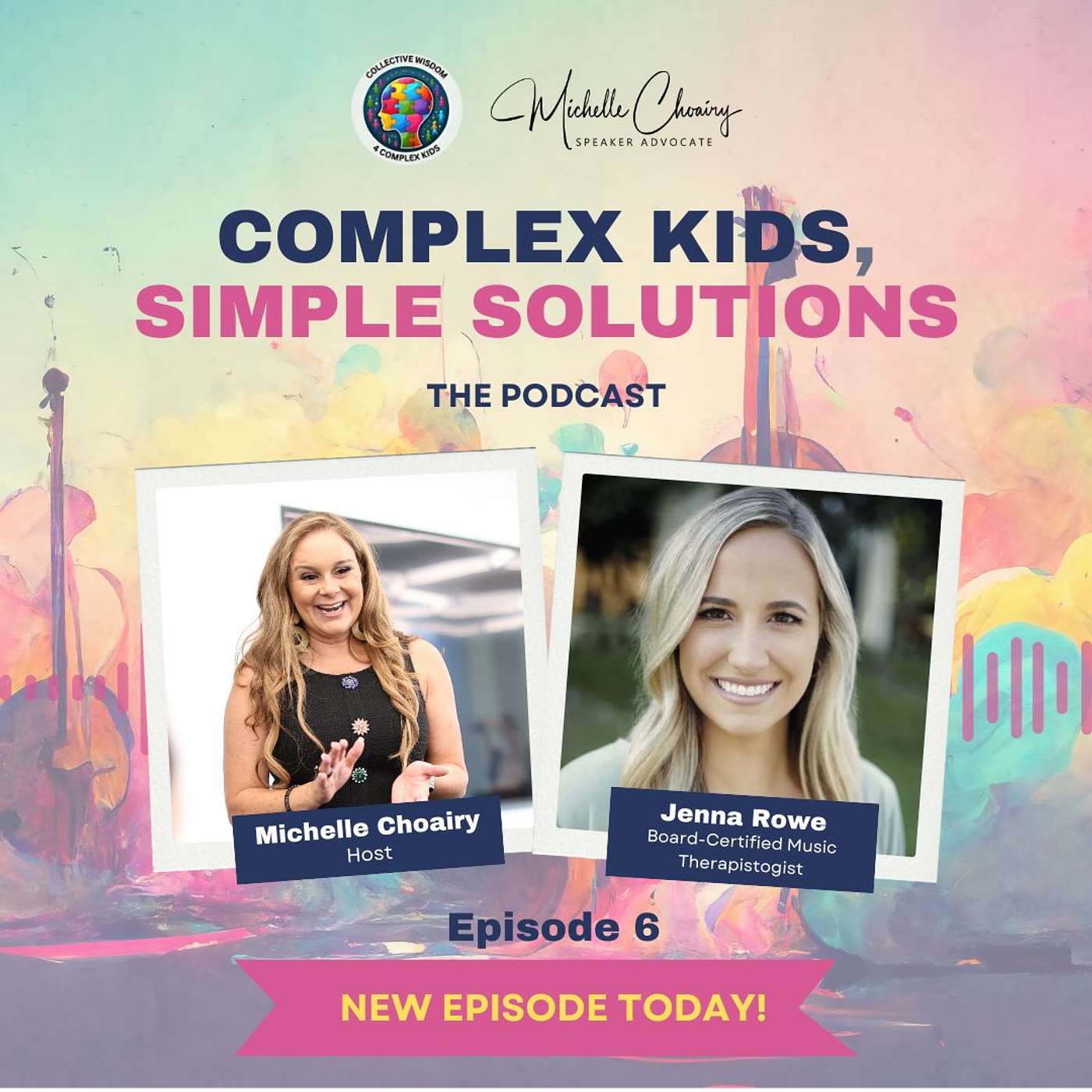 Jenna Rowe – Music Therapy for Complex Kids: Confidence, Connection & Communication Through Song | Send us a textIn this episode of Complex Kids, Simple Solutions, Michelle sits down with Jenna Rowe, board-certified music therapist (MT-BC) at Small Talk OC—and one of Drake’s favorite providers. With warmth, insight, and a little melody, Jenna shares how music therapy opens up new ways for complex kids to express themselves, regulate emotions, and build confidence.Jenna explains how music therapy differs from music lessons, why songs are so effective for language development, and how families can integrate music into everyday life to support their child’s progress. From co-treating with SLPs to creating personalized “social songbooks,” this episode is packed with real-life stories and actionable takeaways.Whether your child is preverbal, navigating behavioral challenges, or just lights up with music—this conversation is a beautiful reminder of how powerful and healing music can be.👤 About the GuestJenna Rowe is a board-certified music therapist (MT-BC) with a degree in Music Therapy from the University of Kansas. At Small Talk OC, she collaborates with speech-language pathologists to support children with developmental, behavioral, and neurological differences. Jenna has clinical experience in intellectual and developmental disabilities, apraxia, cerebral palsy, TBI, hospice care, and more. She provides adapted music lessons for voice, piano, guitar, ukulele, and percussion, and is trained in the Nordoff-Robbins approach. Her mission is to use music as a bridge to connection, growth, and joyful expression.🔗 Connect with Jenna Website: www.smalltalkoc.com Email: jenna@smalltalkoc.com | — | ||||||
| 3/31/25 | 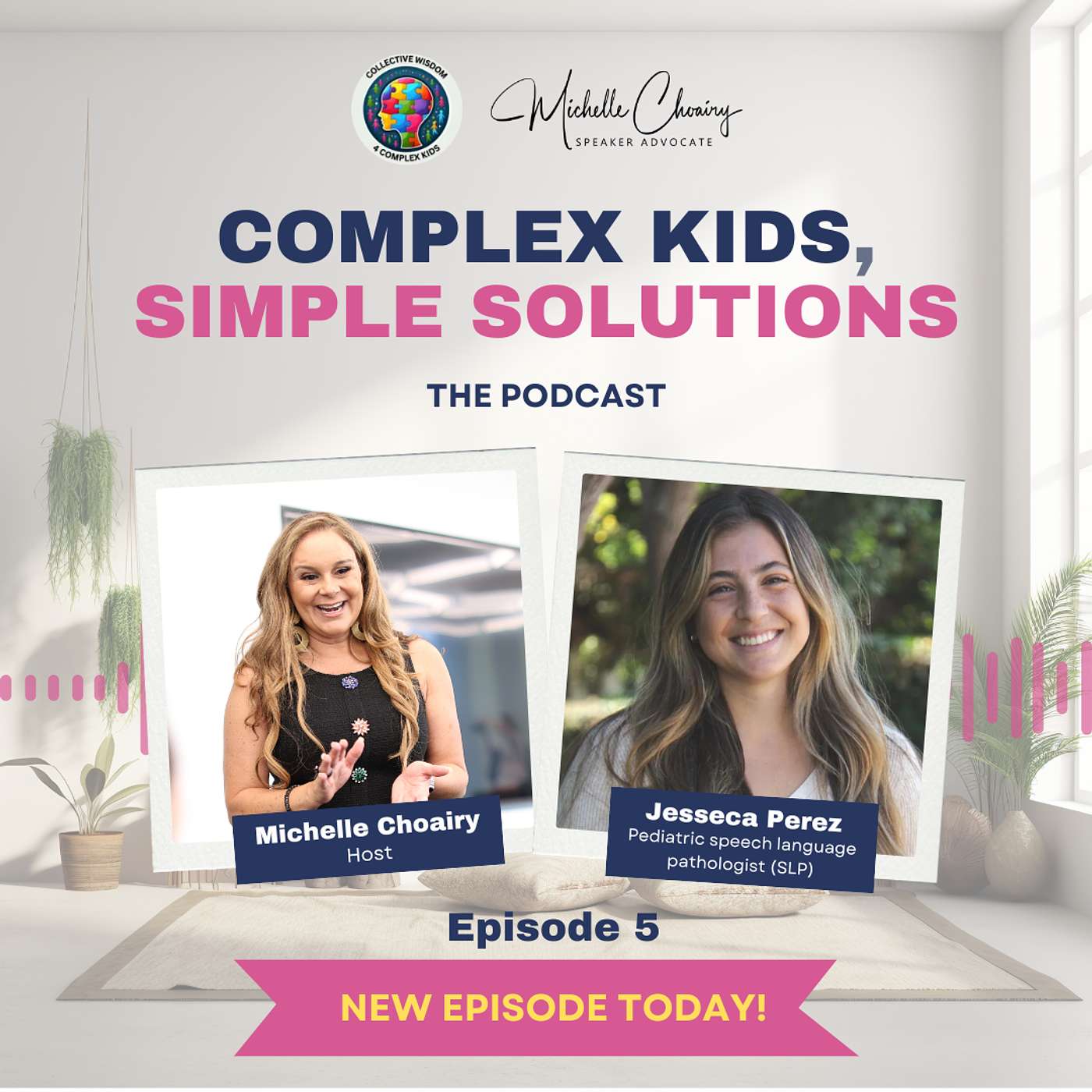 Jesseca Perez – Real Talk About Speech: Sensory, Connection & Communication That Counts | Send us a textIn this episode of Complex Kids, Simple Solutions, Michelle sits down with Jesseca Perez, a pediatric speech-language pathologist who brings a refreshing, neurodiversity-affirming approach to communication. Jesseca is not only a dedicated SLP at Small Talk OC—she's also one of Drake’s therapists, making this conversation especially personal.Together, they explore what authentic speech therapy looks like when sensory needs are honored, communication is viewed as more than just words, and connection leads the way. Jesseca breaks down what parents should look for in a provider, how to build a collaborative team, and why supporting regulation is the first step toward meaningful language development.From movement-based sessions to practical strategies parents can start today, this is a must-listen for anyone navigating speech therapy with a complex kid.👤 About the Guest Jesseca Perez is the Lead Speech-Language Pathologist and Assistant Clinical Director at Small Talk OC, a neurodiversity-affirming private practice in Newport Beach, CA. She specializes in working with autistic children ages 2 through school age and is trained in gestalt language processing, sensory integration, and AAC. Jesseca is passionate about building connection through communication and empowering families to embrace their child’s strengths.🔗 Connect with Jesseca Instagram: https://www.instagram.com/jessecaperezslp Email: jcperezslp@gmail.com | — | ||||||
| 3/31/25 | 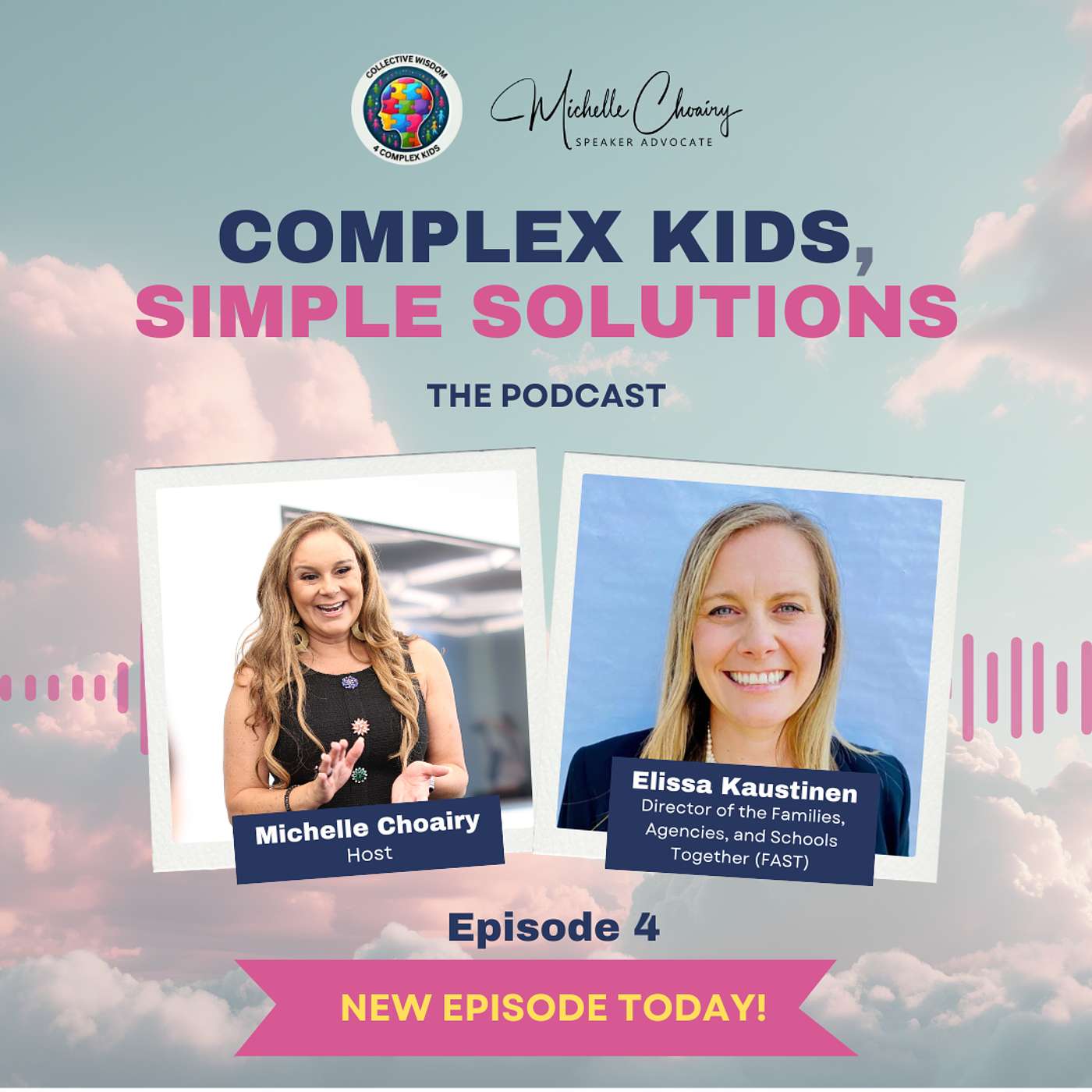 Elissa Kaustinen – When First Responders Understand: Autism, Law Enforcement & Sensory Support | Send us a textIn this powerful episode of Complex Kids, Simple Solutions, Michelle talks with Elissa Green Kaustinen, the director of the FAST program at CHOC’s Thompson Autism and Neurodevelopmental Center—and a former school psychologist and special education administrator—about a groundbreaking collaboration between families and law enforcement.Elissa shares how a local partnership with Irvine PD led to post-certified autism trainings for police officers and the development of sensory support bags now carried in patrol cars and ambulances. These tools, designed to reduce stress and increase understanding during emergency interactions, are changing the game for families of neurodivergent kids.From real-life bodycam footage to nationwide efforts in Arkansas, Elissa explains how her team is influencing first responder training across the country—and what families can do right now to prepare for the unexpected. Plus, Michelle opens up about her own personal experience navigating a police call involving her son, Drake.This is a must-listen for any parent of a complex kid who’s ever asked, “What if this happens to us?”👤 About the Guest Elissa Green Kaustinen is the director of the Families, Agencies, and Schools Together (FAST) program at the Thompson Autism and Neurodevelopmental Center at CHOC. She has over 17 years of experience in public education, serving as both a school psychologist and a special education administrator. Elissa is passionate about inclusive practices, IEP development, and bridging the gap between systems to better support neurodivergent children and their families. | — | ||||||
| 3/31/25 | 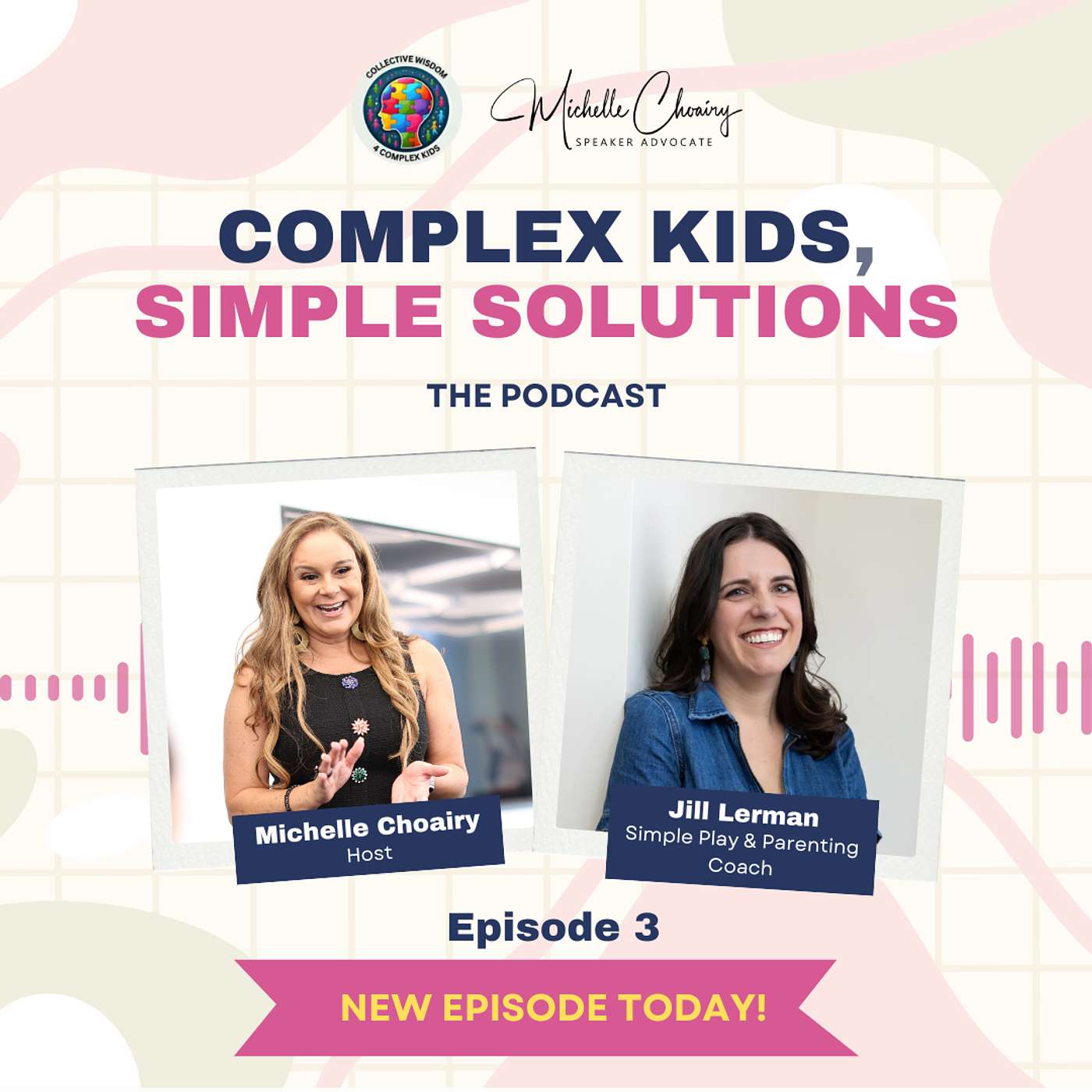 Jill Lerman – Redefining Play for Complex Kids | Send us a textIn this episode of Complex Kids, Simple Solutions, Michelle is joined by Jill Lerman—play and parenting coach, early childhood educator, and mom—who believes that every child is capable, curious, and worthy of connection through play.Jill and Michelle dive into what it means to let go of perfection and instead create space for sensory-seeking, out-of-the-box, messy, real-life play. Whether it’s a child who breaks every toy or refuses to join an activity, Jill shows how behavior is communication—and how parents can tap into that to support growth and regulation.They talk about teacher-parent communication, early intervention, how to approach differences in play, and why play isn’t about outcomes, but about relationships. For parents of complex kids, this is an invitation to reimagine what success looks like, one joyful moment at a time.👤 About the Guest Jill Lerman is a play and parenting coach, early childhood educator, play expert, and mom to a preschooler. She empowers overwhelmed parents and caretakers to connect and engage with their little ones through simple invitations to play and create—making parenting feel more joyful and manageable. Jill also consults with brands, teaches classes, and runs workshops on play and early childhood development.🔗 Follow & Support Jill Instagram: https://www.instagram.com/jillybeansnyc Website: https://www.jillybeansnyc.com Playful Parenting Membership: https://jillybeansnyc.thrivecart.com/playful-parenting-membership/ Free Guide to Independent Play: https://jillybeans-nyc.ck.page/0d7fab4ab9 | — | ||||||
Showing 25 of 54
Sponsor Intelligence
Sign in to see which brands sponsor this podcast, their ad offers, and promo codes.
Chart Positions
1 placement across 1 market.
Chart Positions
1 placement across 1 market.