
Complex Systems with Patrick McKenzie (patio11)
by Patrick McKenzie
Is this your podcast?On the show
From 26 epsHost
Recent guests
Recent episodes
The $900 million wire that wasn't final
Oct 8, 2026
33m 10s
Why banks pay you to use their credit cards
Oct 1, 2026
25m 46s
Stranded? Who pays when air travel breaks
Sep 25, 2026
41m 38s
Forced vacations are a fraud control
Sep 17, 2026
28m 23s
Everyone wants to be your wallet
Sep 3, 2026
33m 16s
Insights from recent episode analysis
Audience Interest
Podcast Focus
Publishing Consistency
Platform Reach
Insights are generated by CastFox AI using publicly available data, episode content, and proprietary models.
Most discussed topics
Brands & references
Total monthly reach
Based on the show's feed history.
Built from
By chart position
- 🇵🇭PH · Investing#313.7K to 45K
- 🇨🇦Canada · Investing#993.2K to 39K
- 🇦🇹AT · Investing#601.1K to 13K
- 🇬🇧United Kingdom · Investing#193982 to 12K
- 🇮🇱IL · Investing#58957 to 12K
- Per-Episode Audience
Est. listeners per new episode within ~30 days
11K to 140K🎙 ~2x weekly·104 episodes·Last published 1w ago - Monthly Reach
Unique listeners across all episodes (30 days)
23K to 280K🇺🇸71%🇵🇭9%🇨🇦8%+5 more - Active Followers
Loyal subscribers who consistently listen
13K to 154K
Market Insights
Platform Distribution
Reach across major podcast platforms, updated hourly
Total Followers
—
Total Plays
—
Total Reviews
—
* Data sourced directly from platform APIs and aggregated hourly across all major podcast directories.
Social Links & Contact
Official channels & resources
Official Website
Login
RSS Feed
Login
| Date | Episode | Topics | Guests | Brands | Places | Keywords | Sponsor | Length | |
|---|---|---|---|---|---|---|---|---|---|
| 10/8/26 |  The $900 million wire that wasn't final | Patrick McKenzie (patio11) reads his 2022 Bits about Money essay "Finality does not exist in payments." It argues that how final a payment is depends on the rails, the parties, and the governing law, not on the payment method alone. He explains why the reversibility of credit cards is what made internet commerce possible. He also covers the "hold harmless," the brief phone call between operations staff that quietly unwinds wire mistakes every day. He then applies the essay to Citibank's 2020 accidental wire of nearly $900 million to Revlon's lenders: a district court let recipients keep about $500 million before an appeals court reversed it. He closes with how the UK, India, and Japan have each tried, with mixed results, to make fraudulent instant payments less final.–Full transcript available here: https://www.complexsystemspodcast.com/the-900m-wire-that-wasnt-final/ –Presenting Sponsors: Mercury & GranolaComplex Systems is presented by Mercury—radically better banking for founders. Mercury Spend hands your team and agents their own cards with limits you set once, so nobody waits on you to approve a SaaS invoice and nobody chases a receipt. Apply online in minutes at https://mercury.com/. If meetings consistently leave you with hazy action items and lost context, Granola handles the transcription so you can actually participate and gives you searchable notes afterward. Try it free at granola.ai/complexsystems with code COMPLEXSYSTEMS–Links:(Source essay) Finality does not exist in payments: https://www.bitsaboutmoney.com/archive/no-payments-are-final/ –Timestamps:(00:00) Intro(01:23) Finality is a technosociolegal construct(03:26) Non-state agreements for dispute resolution(07:34) Wait, are you telling me wires are reversible?(12:43) Why does this matter?(13:26) The $900M mistake(14:52) Sponsors: Mercury | Granola(18:11) The $900M mistake (cont'd)(20:37) Final, then not final(23:09) How other nations handle finality(32:39) Wrap | 33m 10s | ||||||
| 10/1/26 |  Why banks pay you to use their credit cards | Patrick McKenzie (patio11) reads his Bits about Money essay on how credit cards make money. The prompt was a listener who wondered how a card can include free travel insurance for someone who never carries a balance. He covers the four ways a card earns revenue (net interest, interchange, fees and marketing contributions), and explains why rewards competition makes some customers in the middle of the credit score ladder persistently unprofitable. He also explains why Europe's interchange cap left cards at about half of electronic payments, while Japan's uncapped interchange quietly pays for the rest of its consumer banking. In a new postscript, he walks through what a proposed 10% APR cap would mean for cardholders at the low end of the market, and how First Republic made sub-10% unsecured loans work by treating them as a way to win deposits.–Full transcript available here: https://www.complexsystemspodcast.com/why-banks-pay-you-to-use-their-credit-cards/ –Presenting Sponsors: Mercury & GranolaComplex Systems is presented by Mercury—radically better banking for founders. Mercury Spend hands your team and agents their own cards with limits you set once, so nobody waits on you to approve a SaaS invoice and nobody chases a receipt. Apply online in minutes at https://mercury.com/. If meetings consistently leave you with hazy action items and lost context, Granola handles the transcription so you can actually participate and gives you searchable notes afterward. Try it free at granola.ai/complexsystems with code COMPLEXSYSTEMS–Links:How credit cards make money: https://www.bitsaboutmoney.com/archive/how-credit-cards-make-money/ –Timestamps:(00:00) Intro(01:11) How credit cards make money(01:55) Bundling and unbundling(03:12) Revenue levers for credit cards(03:23) Net interest(06:19) Interchange(07:34) Interchange makes cards so valuable you're paid to use them(10:02) Fees(10:50) Marketing contributions(13:05) Debit cards: a horse of a different color(13:32) Sponsors: Mercury | Granola(16:54) Postscript(25:27) Wrap | 25m 46s | ||||||
| 9/25/26 |  Stranded? Who pays when air travel breaks | Patrick McKenzie (patio11) got stranded overnight after a backhoe severed a single fiber optic cable, knocking out air traffic control across much of the eastern US. His airline declined to pay for the hotel. In this episode, he walks through who actually owes you what when air travel breaks: federal refund rules, the airlines' "controllable delay" commitments, credit card trip delay coverage, and the goodwill credit a well-placed phone call can unlock. Along the way, he explains why checkout-page travel insurance pays back only about 40 cents on the dollar and why 5,000 apology miles are worth about $60.–Full transcript available here: https://www.complexsystemspodcast.com/stranded-who-pays-when-air-travel-breaks/ –Presenting Sponsors: Mercury & GranolaComplex Systems is presented by Mercury—radically better banking for founders. Mercury Spend hands your team and agents their own cards with limits you set once, so nobody waits on you to approve a SaaS invoice and nobody chases a receipt. Apply online in minutes at https://mercury.com/If meetings consistently leave you with hazy action items and lost context, Granola handles the transcription so you can actually participate and gives you searchable notes afterward. Try it free at granola.ai/complexsystems with code COMPLEXSYSTEMS–Links:Seeing like a Bank: https://www.bitsaboutmoney.com/archive/seeing-like-a-bank/ –Timestamps:(00:00) Intro(00:38) A severed fiber cable and a double misconnect(02:25) The dangerous professional approach to travel disruption(05:09) Delay codes and why the cause matters(06:57) Tiered customer service at airlines(08:29) Who to talk to at the airport(12:03) Remote customer support and the trouble with chat(17:02) Waterfall item one: the DOT automatic refund rule(19:38) Sponsors: Mercury | Granola(22:57) Waterfall item two: airline commitments and controllable causes(26:18) Waterfall item three: why paid travel insurance is a bad product(30:05) Credit card travel benefits(32:37) Waterfall item four: asking the airline for a goodwill credit(36:17) Politeness, magic words, and negotiating the credit(39:24) Last resorts: DOT complaints and small claims court(41:02) Wrap | 41m 38s | ||||||
| 9/17/26 |  Forced vacations are a fraud control | Patrick McKenzie (patio11) reads his Bits About Money essay "Financial systems take a holiday" (originally published February 2024), prompted by a conversation with a prior guest about how even exchanging calendars between financial institutions is hard. He explains why banks run at something closer to "five twos" of uptime than Google's five nines, using Japanese banks' idiosyncratic, company-specific "Company Foundation Day" to show how a holiday can be entirely real and consequential while appearing on no official list anywhere.–Full transcript available here: https://www.complexsystemspodcast.com/forced-vacations-are-a-fraud-control/ –Presenting Sponsors: Mercury & GranolaComplex Systems is presented by Mercury—radically better banking for founders. Mercury Spend hands your team and agents their own cards with limits you set once, so nobody waits on you to approve a SaaS invoice and nobody chases a receipt. Apply online in minutes at https://mercury.com/. If meetings consistently leave you with hazy action items and lost context, Granola handles the transcription so you can actually participate and gives you searchable notes afterward. Try it free at granola.ai/complexsystems with code COMPLEXSYSTEMS–Links:Source essay: https://www.bitsaboutmoney.com/archive/financial-systems-take-a-holiday/Alex Elliott on Complex Systems: https://www.complexsystemspodcast.com/episodes/two-banks-cant-agree-on-fourth-grade-math/ –Timestamps:(00:00) Intro(01:31) Financial systems take a holiday(03:29) What is a holiday, anyway?(10:33) Fun operational consequences of holidays(15:07) Sponsor: Mercury | Granola(18:27) Fun operational consequences of holidays (cont’d)(21:29) "This is crazy. Let's get rid of holidays"(26:31) Will this change?(27:55) Wrap | 28m 23s | ||||||
| 9/3/26 | wallet economicspayment systems+3 | — | PayPalApple+1 | — | walletsVenmo+6 | Mercury | 33m 16s | ||
| 8/27/26 | AI detectiontext generation+3 | Max Spero | Pangram Labs | — | AI detectionPangram Labs+3 | Mercury | 1h 04m 54s | ||
| 8/20/26 | financial operationstrade lifecycle+3 | Alex Elliott | — | — | financial firmstrade execution+3 | Mercury | 1h 03m 31s | ||
| 8/13/26 | LLMseconomics of scams+4 | Manish Goregaokar | RustBloomberg | — | deepfakeLLMs+8 | Mercury | 1h 02m 34s | ||
| 8/6/26 | germicidal lightUVC technology+3 | Misha GurevichVivian Belenky | AerolampColumbia | — | germicidal lightUVC+5 | Mercury | 1h 16m 20s | ||
| 7/30/26 | AI riskssurveillance+4 | Garrison Lovely | FinCENICE+1 | — | AIsurveillance+6 | Mercury | 1h 20m 55s | ||
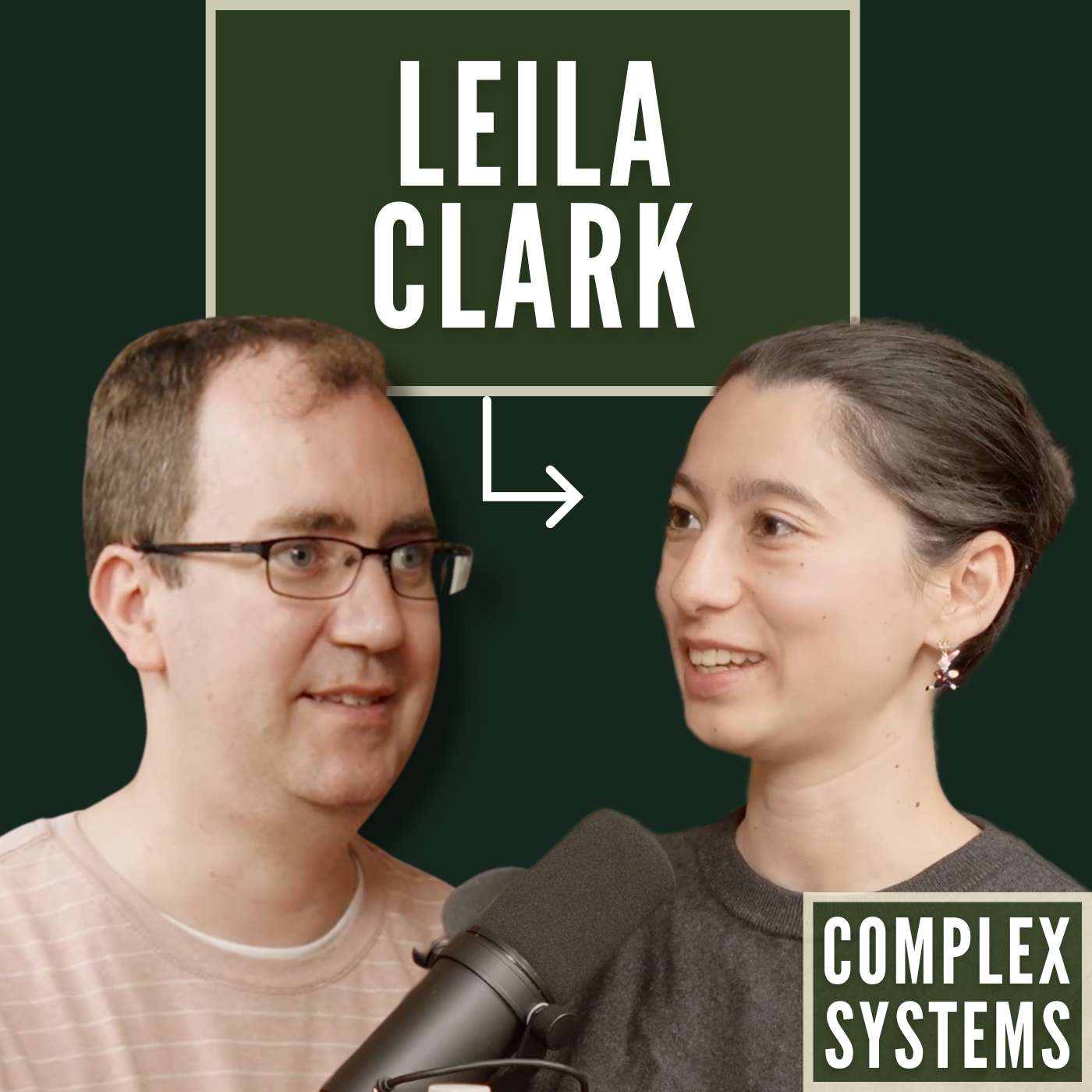
| 7/23/26 | compensationculture+4 | Leila Clark | Jane StreetGoogle+1 | — | compensationJane Street+5 | Mercury | 1h 04m 00s | ||
| 7/16/26 | LLMswriting+4 | Clara Collier | Asterisk MagazineSPLC | — | LLMswriters+5 | Mercury | 1h 35m 35s | ||
| 7/9/26 | YouTube economicscreator monetization+4 | Justin Kuiper | MatPat's Game TheoryProof Positive+1 | — | YouTubeCPM+5 | Mercury | 1h 19m 27s | ||
| 7/2/26 | bank rundeposit franchises+3 | — | Deposit Franchises as Natural Hedges | — | bank rundeposit franchises+3 | Mercury | 40m 09s | ||
| 6/25/26 | payment methodsJapan+4 | — | Rakuten7-Eleven+3 | Japan | paymentsJapan+5 | Mercury | 35m 20s | ||
| 6/18/26 | mortgagesfinancial products+3 | — | Bits About MoneyThe 30-Year Mortgage is an Intrinsically Toxic Product | — | mortgageloan officer+3 | Mercury | 26m 50s | ||
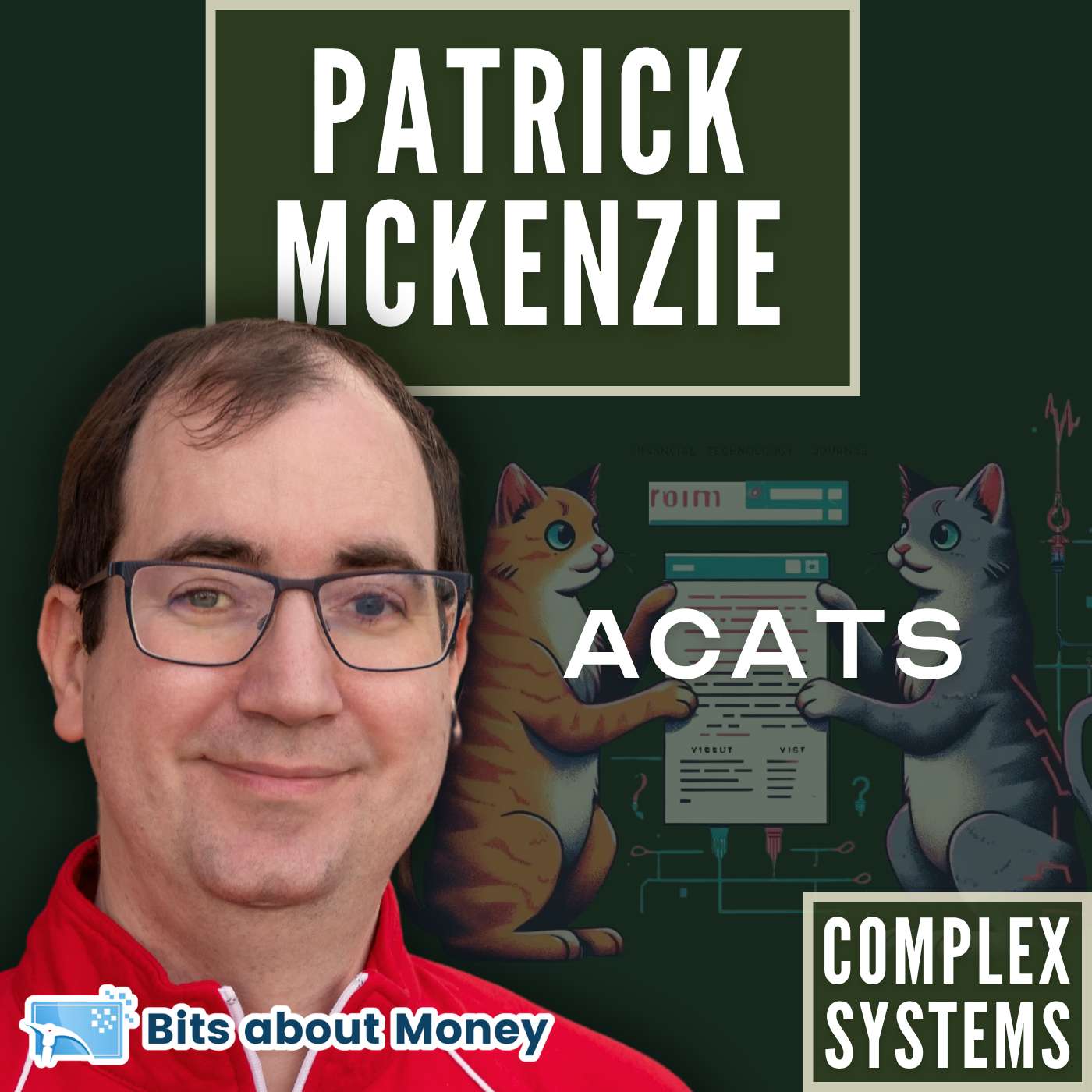
| 6/4/26 | brokerage transfersinvestment accounts+3 | — | ACATS | — | brokerageACATS+3 | MercuryCODE | 43m 43s | ||
| 5/14/26 | bad statisticserror correction+3 | Aaron Brown | NTSBWrong Number | American | statisticsfinancial markets+5 | Mercury | 55m 36s | ||
| 5/8/26 | private intelligencecampaign interference+4 | — | Southern Poverty Law Center | — | intelligence agencyterrorism+5 | Mercury | 1h 05m 18s | ||
| 5/1/26 | bank fraudfinancial infrastructure+4 | — | Southern Poverty Law Center | — | bank fraudSPLC+4 | Mercury | 51m 06s | ||
| 4/23/26 | paymentschecks+3 | — | Bits about Money | United States | paymentschecks+7 | Mercury | 29m 46s | ||
| 4/16/26 | revenue recognitionSaaS subscriptions+4 | — | Bits about MoneyAccounting for SaaS and swords | — | revenue recognitionSaaS+5 | Mercury | 33m 10s | ||
| 4/9/26 | bankingmoney management+4 | — | SVBVoyager+1 | — | bank depositscapital stack+7 | Mercury | 48m 09s | ||
| 4/2/26 | public sector payrollsoftware procurement+5 | — | ADP | — | payroll modernizationpublic software procurement+5 | Mercury | 47m 33s | ||
| 3/26/26 | complianceSOC 2+4 | — | Delve | — | complianceSOC 2+5 | Mercury | 56m 43s | ||
| 3/19/26 | consumer debtdebt collection+3 | — | FramerBits about Money | — | debt collectionfinance+3 | MercuryCOMPLEXSYSTE | 44m 30s | ||
| 3/12/26 | inference engineeringLLMs+3 | Philip Kiely | Baseten | — | inference stackLLMs+3 | Mercury | 1h 23m 45s | ||
| 3/5/26 | paymentsfraud+4 | — | Bits about Money | — | paymentsfraud+4 | MercuryCOMPLEXSYSTEMS | 25m 30s | ||
| 2/26/26 | government procurementdigital services+4 | Luke Farrell | IRSChoice Financial Group+1 | — | government procurementdigital services+5 | MercuryCODE | 1h 21m 47s | ||
| 2/12/26 | fraudbusiness process+3 | — | Choice Financial GroupColumn N.A.+1 | — | fraudinfrastructure+3 | Mercury | 51m 21s | ||













Showing 30 of 104
Pitch Fit is a Pro feature
See how bookable this show is for guests, which brands already advertise, the per-episode ad value, and the best-fit guest and sponsor profile. The numbers are blurred on the free plan.
How readily this show books outside guests like you.
How proven this show is for host-read sponsorships.
For Guests
ProFor Advertisers
ProUpgrade to Pro to unlock guest cadence, sponsor categories, fit scores, and per-episode ad value for this show.
Similar Audience Demographics
Podcasts that attract a similar listener profile






Chart history for Complex Systems with Patrick McKenzie (patio11)
Peaked at #31 in PH, currently #31 in PH.
| Market | Genre | Peak | Current | Trend |
|---|---|---|---|---|
| PH | — | #31 | #31 | — |
| IL | — | #58 | #58 | — |
| AT | — | #60 | #60 | — |
| Canada | — | #99 | #99 | — |
| KE | — | #99 | #99 | — |
| CL | — | #139 | #139 | — |
| PH | — | #143 | #143 | — |
| SA | — | #164 | #164 | — |
| CZ | — | #173 | #173 | — |
| India | — | #175 | #175 | — |
| IS | — | #178 | #178 | — |
| AT | — | #179 | #179 | — |
| United Kingdom | — | #193 | #193 | — |
| IL | — | #199 | #199 | — |
Chart Positions
14 placements across 11 markets.
Chart Positions
14 placements across 11 markets.