Insights from recent episode analysis
Audience Interest
Podcast Focus
Publishing Consistency
Platform Reach
Insights are generated by CastFox AI using publicly available data, episode content, and proprietary models.
Most discussed topics
Brands & references
Est. Listeners
Insufficient chart data. Estimates will improve as the show charts.
- Per-Episode Audience
Est. listeners per new episode within ~30 days
N/A🎙 Weekly cadence·89 episodes·Last published 1mo ago - Monthly Reach
Unique listeners across all episodes (30 days)
N/A - Active Followers
Loyal subscribers who consistently listen
N/A
Market Insights
Platform Distribution
Reach across major podcast platforms, updated hourly
Total Followers
—
Total Plays
—
Total Reviews
—
* Data sourced directly from platform APIs and aggregated hourly across all major podcast directories.
On the show
From 10 epsHost
Recent guests
Recent episodes
The Global Debate on Obesity Management Medicines
May 19, 2026
23m 25s
Understanding Gender as a System Part 2
Jan 30, 2026
20m 25s
Understanding Gender as a System Part 1
Nov 28, 2025
17m 13s
TB Realities in the UK and Globally
Nov 7, 2025
18m 18s
Art and Activism for Gender Justice
Oct 3, 2025
23m 02s
Social Links & Contact
Official channels & resources
Official Website
Login
RSS Feed
Login
Resolving iTunes ID\u2026 if this persists, the podcast may not be indexed on Apple Podcasts.
| Date | Episode | Topics | Guests | Brands | Places | Keywords | Sponsor | Length | |
|---|---|---|---|---|---|---|---|---|---|
| 5/19/26 | ![]() The Global Debate on Obesity Management Medicines✨ | obesity managementGLP-1 medicines+5 | Dr Fatima Cody StanfordDr Swarup K. Chakrabarti | Harvard Medical SchoolMassachusetts General Hospital+3 | — | obesityweight loss drugs+7 | — | 23m 25s | |
| 1/30/26 | ![]() Understanding Gender as a System Part 2✨ | gender justicegender frameworks+4 | Ishrat JahanDr Rosemary Morgan | Centre for Gender and Sexual and Reproductive Health at BRAC James P. Grant School of Public HealthJohns Hopkins Bloomberg School of Public Health | — | gender justicegender frameworks+6 | — | 20m 25s | |
| 11/28/25 | ![]() Understanding Gender as a System Part 1✨ | gender justicesocial systems+4 | Ishrat JahanDr Rosemary Morgan | Centre for Gender and Sexual and Reproductive Health at BRAC James P. Grant School of Public HealthJohns Hopkins Bloomberg School of Public Health | — | gendersocial system+6 | — | 17m 13s | |
| 11/7/25 | ![]() TB Realities in the UK and Globally✨ | tuberculosispublic health+4 | Kate BradfieldAmina Farah | University Hospitals of Liverpool GroupNHS+2 | — | tuberculosisTB+6 | — | 18m 18s | |
| 10/3/25 | ![]() Art and Activism for Gender Justice✨ | artivismgender justice+4 | Ishrat JahanTrishia Nashtaran+1 | Centre for Gender and Sexual and Reproductive Health at BRAC James P. Grant School of Public HealthOGNIE Foundation+1 | Bangladesh | artactivism+7 | — | 23m 02s | |
| 8/29/25 | ![]() Disability and Gender Justice✨ | disability rightsgender justice+4 | Ishrat JahanSalma Mahbub | Centre for Gender and Sexual and Reproductive Health at BRAC James P. Grant School of Public HealthBangladesh Society for the Change and Advocacy Nexus (B-SCAN)+1 | Bangladesh | gender justicedisability rights+5 | — | 19m 25s | |
| 8/1/25 | ![]() Allyship in Gender Justice✨ | gender justiceallyship+5 | Dr. Abhijit Das | Countering Backlash, Reclaiming Gender Justice programmeSAHAYOG+3 | BrazilIndia+1 | allyshipgender justice+8 | — | 21m 51s | |
| 7/4/25 | ![]() Gender Backlash and the Erosion of Everyday Rights✨ | gender justicesex workers+4 | AfsanaNazia Zebin+1 | Kallanmoyee Nari ShonghoBRAC James P Grant School of Public Health+2 | — | gender backlashsex workers+5 | — | 23m 11s | |
| 5/30/25 | ![]() Tackling Gender Backlash During Crises✨ | gender backlashcrisis+4 | Nay El RahiAlfred Makabira | Centre for Gender and Sexual and Reproductive HealthBRAC James P. Grant School of Public Health+2 | — | genderbacklash+5 | — | 23m 26s | |
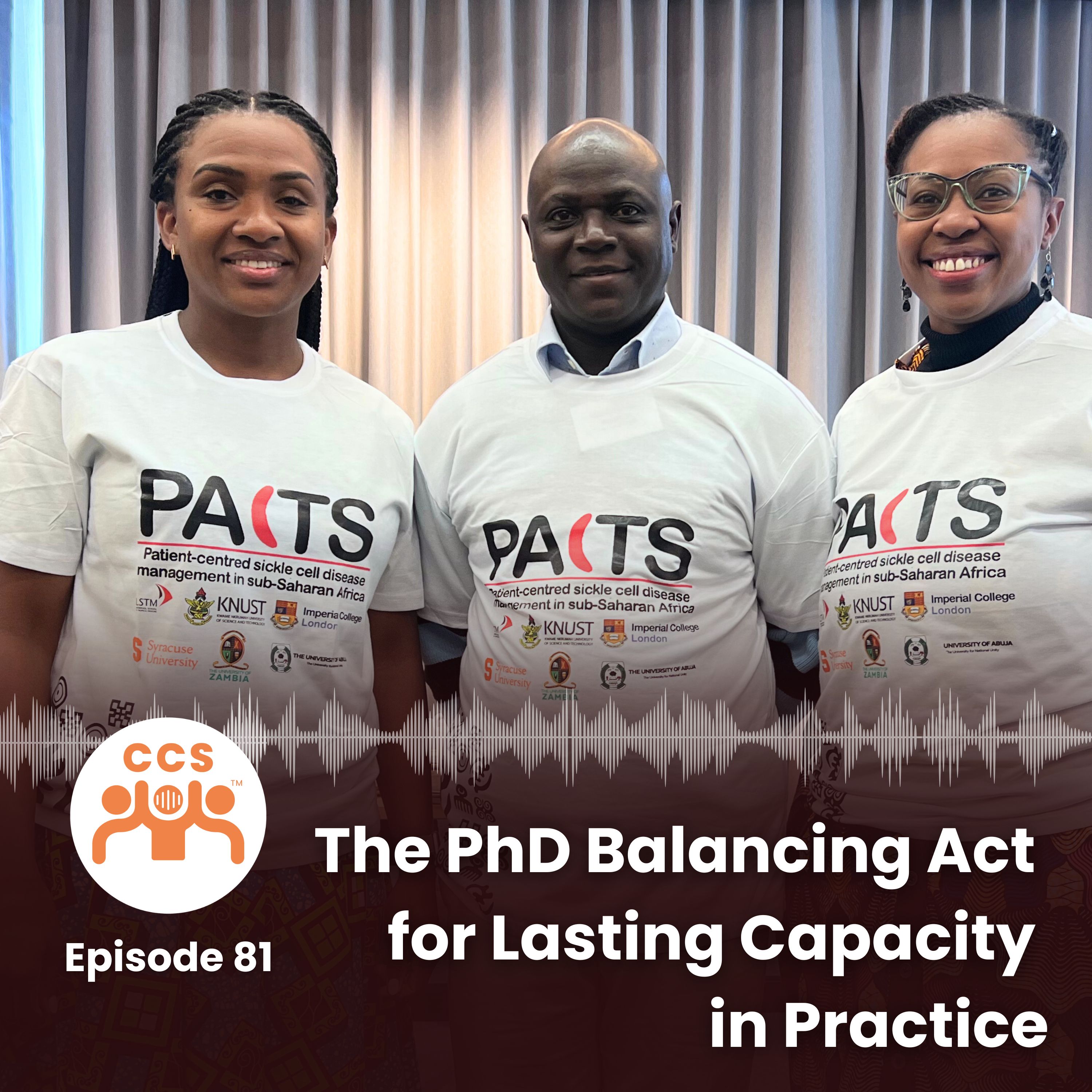
| 5/2/25 | ![]() The PhD Balancing Act for Lasting Capacity in Practice✨ | PhDclinical practice+4 | Dr. Mmamulatelo Siame MumbaDr. Hezekiah Isa Albarka+1 | Liverpool School of Tropical MedicineUniversity of Abuja+1 | Zambiasub-Saharan Africa | PhDclinical care+6 | — | 19m 47s | |
Want analysis for the episodes below?Free for Pro Submit a request, we'll have your selected episodes analyzed within an hour. Free, at no cost to you, for Pro users. | |||||||||
| 4/17/25 | ![]() Research Capacity Strengthening Is Everyone’s Business | In this second episode of our mini-series on Research Capacity Strengthening (RCS), we explore what it means to widen the focus of capacity strengthening, beyond researchers and clinicians, to include media, programme managers, community leaders, teachers, caregivers, and more.Hosted on location at the PACTS Year 3 Partners Meeting, this episode shows how the PACTS programme (Patient-centred Sickle Cell Disease Management in sub-Saharan Africa) has embedded a more inclusive and cyclical approach to RCS. You’ll hear how strengthening media capacity, using content analysis, and co-developing strategies with non-clinical stakeholders can make health systems more responsive and sustainable. We also look at how information itself, when shared in the right way with patients and communities, can be a powerful form of capacity strengthening.In this episode:Dr. Motto Nganda – Global Health Researcher: Collaborative Implementation Research for Health Systems Strengthening, Liverpool School of Tropical MedicineMotto is a medical and public health professional from the University of Douala and the Liverpool School of Tropical Medicine. He brings over six years’ experience in participatory implementation research, focusing on person-centred care and health system strengthening in the Global South. In PACTS, Motto supports implementation research across all three countries, coordinating participatory action cycles, standards-based audits, and realist evaluation.Bernard Appiah - Assistant Professor, Department of Public Health, Falk College, Syracuse UniversityBernard is a pharmacist, journalist, and Assistant Professor at the Department of Public Health, Syracuse University, USA. He is also Director of the Centre for Science and Health Communication in Ghana. With expertise in media, health communication, and public engagement, Bernard leads the media content analysis and communication work for PACTS. His work connects journalists and researchers, builds capacity through joint training, and strengthens how sickle cell disease is communicated across public platforms and policy.Reuben Chianumba - Programme Manager for the PACTS Project, Centre of Excellence for Sickle Cell Research and Training (CESRTA), University of AbujaReuben is the Programme Manager for PACTS in Nigeria, with a background in Medical Biochemistry and extensive experience in research coordination, stakeholder engagement, and community mobilisation. He supports the delivery of PACTS objectives at CESRTA and plays a key role in integrating newborn screening, capacity-building workshops, and local advocacy efforts.Useful Links:Patient-Centered Sickle Cell Disease Management in Sub-Saharan AfricaPatient-centred sickle cell disease management in sub-Saharan Africa (PACTS) | LSTMWant to hear more podcasts like this?Follow Connecting Citizens to Science on your usual podcast platform or YouTube to hear more about current research and debates within global health.The podcast cuts across disciplines, including health systems strengthening, gender and intersectionality, tropical diseases (NTDs, TB, Malaria), maternal and child healthcare (antenatal and postnatal care), mental health and wellbeing, vector-borne diseases, climate change and co-production approaches. If you would like your project or programme to feature in an episode or miniseries, get in touch with the producers of Connecting Citizens to Science, the SCL Agency. | — | ||||||
| 4/11/25 | ![]() Strengthening Research Capacity for Global Health Equity | Welcome to our new mini-series on research capacity strengthening, produced in partnership with the Centre for Capacity Research at the Liverpool School of Tropical Medicine. In this first episode, we explore the design of a Research Capacity Strengthening (RCS) component within an implementation research project, and why it is crucial for sustainable, patient-centred healthcare. Our conversation draws insights from those actively embedding RCS into their work, demonstrating how improving research skills and systems drives real impact in global health.In this episode:Dr. Justin Pulford - Reader at the Centre for Capacity Research, Liverpool School of Tropical Medicine.Dr. Justin Pulford is Deputy Head of the Centre for Capacity Research (CCR) at the Liverpool School of Tropical Medicine (LSTM). A behavioural scientist by training, he has extensive experience developing, implementing, and evaluating research and health systems strengthening initiatives across sub-Saharan Africa and the South Pacific. Dr Pulford also convenes the ‘TROP 703: Public Health Programmes, Policies and Strategies’ module for LSTM’s MPH programme. Professor Obiageli Nnodu - Co-lead of the PACTS programme, University of Abuja.Professor Obiageli Nnodu is Professor of Haematology and Blood Transfusion at the University of Abuja, Nigeria, and Director of its Centre of Excellence for Sickle Cell Disease Research and Training. She leads multiple NIH-funded sickle cell projects and chairs Africa’s largest SCD network. Professor Nnodu also advises the Nigerian government on non-communicable diseases and serves on WHO AFRO committees dedicated to improving sickle cell care.Professor Alex Osei-Akoto - Kwame Nkrumah University of Science and Technology, GhanaProfessor Alex Osei-Akoto is Principal Investigator for PACTS in Ghana. A Professor of Child Health at Kwame Nkrumah University of Science and Technology (KNUST) and Consultant Paediatrician at Komfo Anokye Teaching Hospital, he has focused on sickle cell disease for over two decades. Professor Osei-Akoto led key newborn screening initiatives, advised Ghana’s Ministry of Health on SCD, and co-authored numerous publications. He now spearheads PACTS implementation in Ghana, building on his extensive clinical and research leadership in paediatric haematology.Dr. Catherine Chunda-Liyoka - University of ZambiaDr. Catherine Chunda-Liyoka is Head of the Paediatric Haematology Department at Zambia’s University Teaching Hospitals–Children’s Hospital. She provides specialised care in sickle cell disease, haemophilia, aplastic anaemia, HIV, and TB, while leading multiple research initiatives. As an Honorary Lecturer at the University of Zambia and an Honorary Fellow at LSTM, she mentors health workers nationwide. Dr. Chunda-Liyoka also advises the Zambian Ministry of Health on paediatric haematology and infectious diseases, and plays a key role in major SCD networks—including SPARCO and PACTS—to strengthen national guidelines and clinical practices.Useful linksCentre for Capacity Research | LSTMPatient-centred sickle cell disease management in sub-Saharan Africa (PACTS) | LSTMWant to hear more podcasts like this?Follow Connecting Citizens to Science on your usual podcast platform or YouTube to hear more about current research and debates within global health.The podcast cuts across disciplines, including health systems strengthening, gender and intersectionality, tropical diseases (NTDs, TB, Malaria), maternal and child healthcare (antenatal and postnatal care), mental health and wellbeing, vector-borne diseases, climate change and co-production approaches. If you would like your project or programme to feature in an episode or miniseries, get in touch with the producers of Connecting Citizens to Science, the SCL Agency. | — | ||||||
| 3/21/25 | ![]() Why Indigenous Knowledge is Essential for Health Justice | Global health systems have long been shaped by Western frameworks that separate health from land, environment, and community. But for Indigenous communities worldwide, health is holistic—deeply rooted in ancestral knowledge, cultural traditions, and reciprocal relationships with nature.Yet, Indigenous ways of knowing have been overlooked and undervalued within research, policymaking, and health interventions. How can we shift this paradigm and centre Indigenous-led approaches in global health?In this episode, we speak with Dr. Walter Flores, Dr. Rebecca Rae, and Dr. Lorenda Belone about Indigenous communities in health research, examining systemic barriers, the importance of Indigenous knowledge in health equity, navigating differences between Indigenous and Western research approaches, and how policy shifts impact Indigenous communities. We also discuss the connection between research, activism, and advocacy.Our guests:Dr. Walter Flores - Research Professor, Accountability Research Center, American University, Washington DC, USADr. Walter Flores is a social scientist and human rights advocate with over 25 years of professional experience. He holds a PhD and a Masters of Community Health from the Liverpool School of Tropical Medicine, UK. Dr Flores’ professional work has been carried out in more than 30 countries from Latin America, Africa, Asia and Europe. His areas of expertise are health systems and policy, right to health and indigenous populations, democratic governance, social accountability, legal empowerment and community participation. Currently, Dr Flores is research professor at the Accountability Research Center, American University, Washington DC and a research associate at the Center for the Study of Equity and Governance in Health Systems.Dr. Lorenda Belone – Professor, University of New Mexico College of Population Health / Center for Participatory ResearchDr. Belone (Diné/Navajo) is from Naakaii Bito’ located on the Navajo Nation and has been engaged in community-based participatory research (CBPR) with an Indigenous paradigm focused on health disparities with southwest tribal nations. Her research includes partnerships with Tribal Research Teams (Apache, Navajo & Pueblo) on an Indigenous family prevention program called the Family Listening Program (FLP). As an Indigenous CBPR researcher, Dr. Belone integrates her own cultural and tribal knowledge to overcome historical negative research experiences and tribal community members’ perceptions of research exploitation.Rebecca Rae, MCRP, MWR - Research Lecturer III, University of New Mexico College of Population HealthRebecca Rae (Jicarilla Apache), MCRP, MWR, is a Research Lecturer III at the University of New Mexico’s College of Population Health. She is an Indigenous scholar, with eighteen years of implementing community-based participatory research (CBPR) projects and Indigenous participatory evaluation in partnership with Tribal communities. She works closely with multiple tribal community partners to mentor, strengthen, and enhance community members’ skills in program development, implementation, data collection, data analysis, grant writing, research, and evaluation. Useful links:Inicio CEGSS Guatemala - CEGSSHome - Accountability Research CenterWant to hear more podcasts like this?Follow Connecting Citizens to Science on your usual podcast platform or YouTube to hear more about current research and debates within global health.The podcast cuts across disciplines, including health systems strengthening, gender and intersectionality, tropical diseases (NTDs, TB, Malaria), maternal and child healthcare (antenatal and postnatal care), mental health and wellbeing, vector-borne diseases, climate change and co-production approaches. If you would like your project or programme to feature in an episode or miniseries, get in touch with the producers of Connecting Citizens to Science, the SCL Agency. | — | ||||||
| 2/4/25 | ![]() Shifting Power in Global Health: Equity, Leadership and Change | Global health systems are built on power structures that often exclude the very voices that should be leading the conversation. Funding, publishing, and policymaking have long been dominated by high-income countries, creating systemic barriers to equity.In this episode, Dr. Shashika Bandara (McGill School of Population and Global Health), Dr. Moses Tetui (Umeå University & University of Waterloo), and Dr. Joseph Mumba Zulu (University of Zambia) discuss two major initiatives that challenge these structures:The Lancet article: Shifting Power in Global Health Will Require Leadership by the Global South and Allyship by the Global North and The launch of the Journal of Community Systems for Health, a new platform breaking barriers in global publishing and knowledge sharing.In this episode:Dr. Shashika Bandara - Post-Doctoral Fellow, Department of Global and Public Health, School of Population and Global Health, McGill University.Shashika Bandara is a Sri Lankan post-doctoral fellow at the Department of Global Public Health in the School of Population and Global Health at McGill University. He co-leads McGill University’s research examining policy exemplars successfully addressing structural discrimination with O’Neill-Lancet Commission on Racism, Structural Discrimination and Global Health. Dr. Joseph Mumba Zulu - Associate Professor of Community, School of Public Health, University of Zambia Joseph M Zulu is a co-founder and Editorial Board Member of the Journal of Community Systems for Health, a platform dedicated to promoting inclusive, socially accountable, and community-driven health systems research. He is an Associate Professor of Community Health at the School of Public Health and has been involved in community-based implementation research projects in different countries across Africa.Dr. Moses Tetui - Assistant professor, University of Waterloo, Canada and Umeå University, SwedenDr. Moses Tetui is a Health Systems Researcher who specialises in using participatory methods to collaborate with diverse communities and stakeholders to address health system challenges. He serves as a founding board member of the Journal of Community Systems for Health. Moses collaborates with researchers, communities, and decision-makers to explore climate change adaptation strategies for communities living in informal settlements across Africa. Useful links:How to prevent equity efforts from losing steam in global health academiaImagining a future in global health without visa and passport inequitiesShifting power in global health will require leadership by the Global South and allyship by the Global NorthThe Journal of Community Systems for Health (JCSH)Want to hear more podcasts like this?Follow Connecting Citizens to Science on your usual podcast platform or YouTube to hear more about current research and debates within global health.The podcast cuts across disciplines, including health systems strengthening, gender and intersectionality, tropical diseases (NTDs, TB, Malaria), maternal and child healthcare (antenatal and postnatal care), mental health and wellbeing, vector-borne diseases, climate change and co-production approaches. If you would like your project or programme to feature in an episode or miniseries, get in touch with the producers of Connecting Citizens to Science, the SCL Agency. | — | ||||||
| 11/24/24 | ![]() 3rd ‘From the Halls’ of the Health Systems Research Symposium | Our final episode from the Health Systems Research Symposium in Nagasaki showcases transformative ideas in global health systems research and policy. This episode features discussions on interdisciplinary capacity building, decolonising health policy research, One Health approaches, and advancing gender equity in health systems.Dr. Hanna-Tina Fischer explores innovative capacity-building models and interdisciplinary research frameworks. Dr. Ayat Abu-Agla discusses the importance of decolonisation in health policy and systems research. Dr. Rosie Steege highlights the interconnectedness of humans, animals, and ecosystems through One Health and its implications for antimicrobial resistance. Finally, Dr. Zahra Zeinali reflects on her work advancing gender mainstreaming and intersectionality in health systems research.This episode offers fresh perspectives for researchers, practitioners, and policymakers dedicated to creating equitable and resilient health systems.In this episode:From ReBUILD for Resilience: Abriti Arjyal -Research Manager, HERD InternationalThazin La - Research manager for the health systems research programme, Burnet Institute MyanmarOur Guests:Hanna-Tina Fischer – Postdoctoral Research Scientist, Charité Universitätsmedizin BerlinDr. Ayat Abu-Agla - Health Services Management Centre Lead, University of Birmingham, Dubai Dr. Rosie Steege – Lecturer, Liverpool School of Tropical MedicineZahra Zeinali – Doctoral Candidate, Department of Global Health, University of Washington. Useful links:One healthHSR Global Symposium on Health Systems Research | HSR 2024Introducing ReBUILD for Resilience - health systems researchRebuild ConsortiumWant to hear more podcasts like this?Follow Connecting Citizens to Science on your usual podcast platform or YouTube to hear more about current research and debates within global health.The podcast covers topics like health systems strengthening, gender and intersectionality, tropical diseases (NTDs, TB, Malaria), maternal and child healthcare, mental health, vector-borne diseases, climate change, and co-production approaches.If you would like your project or programme to feature in an episode or mini-series, get in touch with the producers of Connecting Citizens to Science, the SCL Agency. | — | ||||||
| 11/21/24 | ![]() 2nd 'From the Halls' of the Health Systems Research Symposium | Recorded live at the Eighth Global Symposium on Health Systems Research, the episode focuses on the challenges and opportunities of delivering health care in fragile and conflict-affected settings. Collaborating with researchers from the ReBUILD for Resilience consortium, we hear from three inspiring voices tackling displacement, migration, and exclusion in health care.Dr. Cynthia Maung shares insights on creating governance structures for health care delivery to displaced populations along the Thai-Myanmar border. Dr. Roshan Pokhrel from Nepal reflects on using research to address workforce challenges amid migration and climate change. Finally, Lydia DiStefano highlights the critical role of community health workers in providing equitable care to vulnerable populations and shares exciting plans for the upcoming Community Health Workers Symposium in Bangkok.This episode offers vital lessons for policymakers, practitioners, and researchers committed to building resilient health systems in fragile settings.In this episode:From ReBUILD for Resilience: Karen Miller – Communications Officer, Liverpool School Tropical Medicine Shophika Regmi - Senior Manager: Health System Research, Evaluation and Learning, HERD International, NepalThazin La - Research manager for the health systems research programme, Burnet Institute MyanmarOur Guests:Dr. Cynthia Maung – Mae Tae ClinicDr. Roshan Pokhrel – Secretary Ministry of Health Population, Nepal Lydia DiStefano – Senior Research and Advocacy Manager, Community Partners International Useful links:The 4th International CHW SymposiumHSR Global Symposium on Health Systems Research | HSR 2024Introducing ReBUILD for ResilienceWant to hear more podcasts like this?Follow Connecting Citizens to Science on your usual podcast platform or YouTube to hear more about current research and debates within global health.The podcast covers topics like health systems strengthening, gender and intersectionality, tropical diseases (NTDs, TB, Malaria), maternal and child healthcare, mental health, vector-borne diseases, climate change, and co-production approaches.If you would like your project or programme to feature in an episode or mini-series, get in touch with the producers of Connecting Citizens to Science, the SCL Agency. | — | ||||||
| 11/20/24 | ![]() 1st 'From the Halls' of the Health Systems Research Symposium | In this special episode, recorded live at the 8th Global Symposium on Health Systems Research (HSR2024) in Nagasaki, we explore key themes shaping the global health landscape. This episode brings together voices from the halls of HSR2024, where our host and researchers from the ReBUILD for Resilience programme have been capturing insightful conversations with experts on resilience, climate, and just health systems.Hosted by Dr. Kim Ozano, this episode includes interviews with inspiring speakers tackling complex global health challenges, from conflict-affected settings to ethical health financing.Join us as we share dynamic discussions and explore what they mean for the future of health systems.In this episodeFrom ReBUILD for Resilience: Rouham Yamout – Programme Coordinator, American University of BeruitKaren Miller – Communications Officer, Liverpool School Tropical Medicine Our Guests:Ana Amaya – Board Member, Health Systems GlobalDr. Ali Ardalan - Regional Advisor and Head of Health Systems Resilience Unit, WHO Eastern Mediterranean Region.Dr. Usman Gwarzo – LAFIYA programme, Nigeria Useful links:Introducing ReBUILD for Resilience - health systems research8th Global Symposium on Health Systems Research (HSR2024)Want to hear more podcasts like this?Follow Connecting Citizens to Science on your usual podcast platform or YouTube to hear more about current research and debates within global health.The podcast covers topics like health systems strengthening, gender and intersectionality, tropical diseases (NTDs, TB, Malaria), maternal and child healthcare, mental health, vector-borne diseases, climate change, and co-production approaches.If you would like your project or programme to feature in an episode or mini-series, get in touch with the producers of Connecting Citizens to Science, the SCL Agency. | — | ||||||
| 11/8/24 | ![]() Health systems in times of peace and conflict | In this special “warm-up” episode for the Global Symposium on Health Systems Research (HSR2024) in Nagasaki, Japan, we explore the conference themes, their relevance to global health, and the critical role of resilient health systems in fragile settings. This episode offers insights for attendees and those interested in health systems worldwide, examining the intersection of conflict and crisis, climate resilience, justice, and governance in building sustainable, people-centered health systems. ReBUILD for Resilience team members share how their work aligns with the conference themes, highlighting the importance of supporting vulnerable communities in challenging contexts. See 'useful links' for previous health systems strengthening episodes. In this episode:Kate Hawkins - Managing Director, Pamoja CommunicationsKate has extensive experience working with research partners to develop strategies, engage stakeholders, and create impactful communication products. Skilled at translating academic research for diverse audiences, she has years of experience across NGOs, academia, and the private sector. Kate has managed numerous websites and platforms to promote research and foster partnerships, enhancing demand for research communications by engaging policymakers, brokering academia-government partnerships, and building capacity for evidence use.Joanna Khalil – Research Fellow, American University of Beirut and ReBUILD for ResilienceJoanna is a research fellow and a public health practitioner working with various communities around Lebanon, including refugees, in formal and informal settlements. Her key strength is qualitative research methodology. She has been involved in a multinational research study, exploring tobacco and waterpipe smoking, as well as health warnings, translating findings to policies. She carried out baseline assessments and evaluations of health and social centres in underprivileged areas and refugee camps, aiming at strengthening the health response in emergencies on topics related to reproductive health, mental health, education, WASH, cash assistance, emergency relief, resilience and child labour.Shophika Regmi - Senior Manager: Health System Research, Evaluation and Learning, HERD International, NepalShophika Regmi is a health systems researcher at HERD International, Nepal, leading learning site research for the ReBUILD for Resilience consortium. With over a decade of experience, her work focuses on enhancing local health system resilience through improved governance and evidence-based planning. Shophika has led numerous projects to strengthen health outcomes for marginalised groups across areas like maternal health, nutrition, climate change, and health information systems. Useful links:Health Systems Financing in Fragile Settings Migration, Displacement and Health Systems Non-state and informal actors in fragile settings The Health Workforce in Times of Crisis Gender, health systems resilience and equityRevisiting Resilience in Health Systems Research HSR Global Symposium on Health Systems Research | HSR 2024Introducing ReBUILD for Resilience - health systems researchRebuild ConsortiumWant to hear more podcasts like this?Follow Connecting Citizens to Science on your usual podcast platform or YouTube to hear more about current research and debates within global health.The podcast covers topics like health systems strengthening, gender and intersectionality, tropical diseases (NTDs, TB, Malaria), maternal and child healthcare, mental health, vector-borne diseases, climate change, and co-production approaches.If you would like your project or programme to feature in an episode or mini-series, get in touch with the producers of Connecting Citizens to Science, the SCL Agency. | — | ||||||
| 10/4/24 | ![]() Sustaining Maternal Health Gains | In this episode of Connecting Citizens to Science, we conclude our three-part miniseries on improving maternal and newborn healthcare. Host Dr. Kim Ozano and her guests explore how to sustain quality improvements in health systems and progress toward maternal and newborn Sustainable Development Goals (SDGs) by 2030. Dr. Rael Mutai, Regional Technical Advisor for Maternal and Newborn Health at the Liverpool School of Tropical Medicine Kenya, and Dr. Nicholas Furtado, Senior Medical Advisor at Global Fund, share their insights on the successes and challenges of embedding sustainable practices in maternal and newborn healthcare systems across Kenya, Tanzania, and Nigeria. (see 'useful links' for the other episodes from the series).Chapter List:00:00:00 – Introduction to Sustainability and SDG Goals00:01:52 – Progress Towards Maternal and Newborn Health indicators00:04:50 – Global Landscape: The Impact of the Pandemic00:06:37 – Addressing Inequities within Countries00:09:26 – Healthcare Workers and Sustainable Outcomes00:12:22 – Intersectionality and Broader Determinants of Maternal Health00:17:38 – Advice and Call to Action for Sustainable SolutionsIn this episode:Dr. Rael Mutai - Regional Technical Advisor (MNH), Liverpool School of Tropical Medicine Tropical KenyaRael is a public health specialist with over 21 years’ of experience in health and development. She is passionate about health systems strengthening, Sexual Reproductive Health and Rights and Quality Maternal and Newborn Health. Rael has been involved with the quality improvement programme in the last 3 years, as the Regional Technical Adviser for Kenya and Tanzania. The Programme uses global evidence customised to country context for improved maternal and newborn outcomes. The programme has addressed gaps in ANC-PNC service delivery through capacity building of healthcare workers and integrated approaches to care.Dr. Nicolas Furtado - Senior Medical Advisor, Global FundNicolas is a Senior Medical Advisor with the Health System Strengthening Technical Advice and Partnerships team at the Global Fund. He is deeply engaged in efforts to strengthen primary healthcare systems globally, particularly focusing on improving maternal and newborn health outcomes and now focusing on improving access to medical oxygen and respiratory care. Throughout his work, Nicolas has been instrumental in addressing key challenges such as the impact of the COVID-19 pandemic, healthcare inequities, and the need for sustainable, locally adapted solutions. He advocates for simple, effective, and culturally appropriate interventions to ensure quality care at the point of service delivery.Useful links:Strengthening the Health Workforce for Maternal and Newborn Care - Connecting Citizens to Science - In the second episode of our three-part miniseries, " Transforming Maternal and Newborn Health", we focus on how capacity strengthening in healthcare can transform maternal and newborn care outcomes. The discussion highlights the critical role of health workers, from nurses to doctors, and the importance of building skills, teamwork, and communication to improve early diagnosis and reduce complications. Experts share insights on training approaches, challenges faced, and the transformative impact of mentorship and continuous professional development in Kenya, Tanzania, and beyond. This episode offers valuable lessons for health systems strengthening and sets the stage for our next conversation on sustainability. Quality Innovations in Maternal and Newborn Health - Connecting Citizens to Science - In this first episode of our three-part miniseries, "Transforming Maternal and Newborn Health," we dive into a groundbreaking quality improvement programme that has made significant strides in integrating HIV, tuberculosis, and malaria services into antenatal and postnatal care across Kenya, Nigeria, and Tanzania. We explore emerging evidence on how health systems can adapt and respond to changing landscapes, including the impact of COVID-19, to deliver better outcomes for mothers and newborns. Featuring insights from leading experts, we discuss the challenges, successes, and innovative approaches that have strengthened the capacity of health workers and improved access to essential care. This episode sets the stage for the next discussions on capacity building and sustainability, making it a must-listen for anyone interested in global health and health systems strengthening. Quality Improvement of Integrated HIV, TB and Malaria Services in ANC & PNC | LSTMWant to hear more podcasts like this?Follow Connecting Citizens to Science on your usual podcast platform or YouTube to hear more about current research and debates within global health.The podcast covers topics like health systems strengthening, gender and intersectionality, tropical diseases (NTDs, TB, Malaria), maternal and child healthcare, mental health, vector-borne diseases, climate change, and co-production approaches.If you would like your project or programme to feature in an episode or mini-series, get in touch with the producers of Connecting Citizens to Science, the SCL Agency. | — | ||||||
| 10/2/24 | ![]() Strengthening the Health Workforce for Maternal and Newborn Care | Join us as we focus on how capacity strengthening in healthcare can transform maternal and newborn care outcomes, in the second episode of our three-part miniseries, "Transforming Maternal and Newborn Health". The discussion highlights the critical role of health workers, from nurses to doctors, and the importance of building skills, teamwork, and communication to improve early diagnosis and reduce complications. Experts share insights on training approaches, challenges faced, and the transformative impact of mentorship and continuous professional development in Kenya, Tanzania, and beyond. This episode offers valuable lessons for health systems strengthening and sets the stage for our next conversation on sustainability.Chapter List:00:00:00 – Introduction to Capacity Strengthening00:01:11 – Role of Health Workers in Maternal and Newborn Care00:02:19 – Challenges in Achieving High-Quality Care00:04:52 – Impact of Continuous Professional Development00:05:51 – Real-Life Improvements in Diagnosis and Care00:09:28 – Competency-Based Training Approaches00:12:20 – Shifting Attitudes and Respectful Maternity Care00:14:01 – Research Integration and Policy Influence00:16:13 – Key Advice for Capacity Strengthening00:20:06 – Conclusion and What’s NextIn this episode: Dr. Rael Mutai, Regional Technical Advisor (MNH), Liverpool School of Tropical Medicine Tropical Rael is a public health specialist with over 21 years’ of experience in health and development. She is passionate about health systems strengthening, Sexual Reproductive Health and Rights and Quality Maternal and Newborn Health. Rael has been involved with the programme in the last 3 years, as the Regional Technical Adviser for Kenya and Tanzania. The Programme uses global evidence customised to country context for improved maternal and newborn outcomes. The programme has addressed gaps in ANC-PNC service delivery through capacity building of healthcare workers and integrated approaches to care. Dr. Leonard Katalambula – Lecturer, University of DodomaDr. Katalambula is the Head of the Department of Public Health at the University of Dodoma (UDOM), where he has worked for over 15 years. He also serves as Board Chairperson for Action Against Hunger (Tanzania) and is a technical committee member of TWG 6, focusing on reproductive, maternal, child, and adolescent health. An experienced researcher with publications in implementation science and public health, Dr. Katalambula leads projects on Quality Improvement of Integrated HIV, TB, and Malaria Services during antenatal and postnatal care, as well as the MEGA project. For the past 15 years, he has worked closely with communities, addressing challenges through research and community services.Sylvia Kimtai – Midwife, Uasin Gishu CountySylvia is currently attached to the county reproductive health office coordinating the elimination of maternal-to-child transmission of HIV, syphilis, and hepatitis B and also quality improvement. She has been involved in ANC/PNC and quality improvement training supporting Kenya and Tanzania in both face-to-face and blended learningSylvia mentors nurses, midwives, and clinical officers on quality improvement in ANC/PNC in Uasin Gishu County, also supporting sub-county reproductive health coordinators in the mentorship of service providers on ANC/PNC. Passionate about quality improvement, she has a WhatsApp platform where facility quality improvement chairpersons share best practices and challenges.Useful links:A Collaborative Approach to Improving Maternal and Newborn Health in Tanzania or Saving LivesImproving antenatal and postnatal care for better maternal and newborn health outcomesQuality Innovations in Maternal and Newborn Health - Connecting Citizens to Science - The first episode of our three-part miniseries, "Transforming Maternal and Newborn Health," dives into a groundbreaking quality improvement programme that has made significant strides in integrating HIV, tuberculosis, and malaria services into antenatal and postnatal care across Kenya, Nigeria, and Tanzania. We explore emerging evidence on how health systems can adapt and respond to changing landscapes, including the impact of COVID-19, to deliver better outcomes for mothers and newborns. Featuring insights from leading experts, we discuss the challenges, successes, and innovative approaches that have strengthened the capacity of health workers and improved access to essential care. This episode sets the stage for the next discussions on capacity building and sustainability, making it a must-listen for anyone interested in global health and health systems strengthening.Quality Improvement of Integrated HIV, TB and Malaria Services in ANC & PNC | LSTMWant to hear more podcasts like this?Follow Connecting Citizens to Science on your usual podcast platform or YouTube to hear more about current research and debates within global health.The podcast covers topics like health systems strengthening, gender and intersectionality, tropical diseases (NTDs, TB, Malaria), maternal and child healthcare, mental health, vector-borne diseases, climate change, and co-production approaches.If you would like your project or programme to feature in an episode or mini-series, get in touch with the producers of Connecting Citizens to Science, the SCL Agency. | — | ||||||
| 9/30/24 | ![]() Quality Innovations in Maternal and Newborn Health | In this first episode of our three-part miniseries, "Transforming Maternal and Newborn Health," we dive into a groundbreaking quality improvement programme that has made significant strides in integrating HIV, tuberculosis, and malaria services into antenatal and postnatal care across Kenya, Nigeria, and Tanzania. We explore emerging evidence on how health systems can adapt and respond to changing landscapes, including the impact of COVID-19, to deliver better outcomes for mothers and newborns. Featuring insights from leading experts, we discuss the challenges, successes, and innovative approaches that have strengthened the capacity of health workers and improved access to essential care. This episode sets the stage for the next discussions on capacity building and sustainability, making it a must-listen for anyone interested in global health and health systems strengthening.Chapters:00:00:00 – Introduction and Series Overview00:01:30 – Responding to COVID-19 and Building Resilience00:03:20 – Maternal Health Challenges in Sub-Saharan Africa00:04:45 – Strengthening Health Workforce Capacity00:06:20 – Key Findings and Lessons Learned00:08:04 – Addressing Gender-Based Violence and Mental Health00:09:17 – Practical Impact and Stories from Nigeria00:11:54 – Next Steps and Future Recommendations00:14:19 – Adapting to COVID-19 Challenges00:17:15 – Final Advice and ConclusionsIn this episode:Dr. Rael Mutai, Regional Technical Advisor (MNH), Liverpool School of Tropical Medicine TropicalRael is a public health specialist with over 21 years’ experience in health and development. She is passionate about health systems strengthening, Sexual Reproductive Health and Rights and Quality Maternal and Newborn Health. Rael has been involved with the programme in the last 3 years, as the Regional Technical Adviser for Kenya and Tanzania. The Programme uses global evidence customized to country context for improved maternal and newborn outcomes. The programme has addressed gaps in ANC-PNC service delivery through capacity building of healthcare workers and integrated approaches to care.Prof. Charles Ameh - Programme Lead, Liverpool School of Tropical MedicineCharles led the implementation of the GF ANC/PNC quality improvement programme in the last 3 years. This involves identifying problems and co-creating solutions with stakeholders in Kenya, Tanzania and Nigeria. Key interventions designed and tested during this programme are relevant to several communities: maternity care providers, researchers, MNH programme managers, health professional associations and regulatory bodies, training institutions, women of reproductive age and their families in LMICs.Dr. Oladipo Aremu, Consultant Obstetrician & Gynaecologist, Adeoyo Maternity Teaching Hospital , Oyo State, NigeriaDr Oladipo Aremu has been involved in research work relating to post-partum haemorrhage, maternal and child health for the last three years. His contribution to the post-partum haemorrhage research has helped to reduce maternal morbidity and mortality. During the period of the research, the cost of the drug administered on patients resulted in remarkable cost savings when compared to cost of blood transfusion. Previous research activities involved in also contributed to improvement in respectful maternity care and upgrading the health worker-patient relationship. Useful links:Empowering Health Workers: Nigeria's Positive Shift in Maternal & Newborn Care fuels Policy ChangeThis is a film from the WOMAN Trials at the London School of Hygiene & Tropical Medicine, as part of the Healthier Together series presented by the WHO Foundation and produced by BBC StoryWorks.Quality Improvement of Integrated HIV, TB and Malaria Services in ANC & PNC | LSTMWant to hear more podcasts like this?Follow Connecting Citizens to Science on your usual podcast platform or YouTube to hear more about current research and debates within global health.The podcast covers topics like health systems strengthening, gender and intersectionality, tropical diseases (NTDs, TB, Malaria), maternal and child healthcare, mental health, vector-borne diseases, climate change, and co-production approaches.If you would like your project or programme to feature in an episode or mini-series, get in touch with the producers of Connecting Citizens to Science, the SCL Agency. | — | ||||||
| 9/27/24 | ![]() Health Systems Financing in Fragile Settings | In this episode, we examine the critical role of health systems financing, especially in fragile and conflict-affected settings. Our expert guests discuss how different governance challenges, external actors, and political landscapes shape health financing. We explore strategies to make efficient use of resources and ensure essential services for vulnerable populations. (See ‘useful links’ for links to the other 5 episodes from the series).Chapters:00:00 – Introduction to the Podcast and Today’s Topic01:00 – What is Health Systems Financing?02:56 – Challenges of Health Financing in Crisis Situations05:17 – The Role of External Actors in Health Financing07:34 – The Complexity of Parallel Health Systems09:30 – Financing for Long-Term Recovery13:22 – Health Financing Innovations and Examples from the Field17:26 – Advice for Improving Health Financing in Crisis Settings20:34 – Final Thoughts and Next Episode TeaserIn this episode:Dr. Maria Bertone – Reader, Institute for Global Health and Development, Queen Margaret University, EdinburghA health systems specialist with extensive experience in health financing, governance, and service delivery in fragile and conflict-affected settings.Dr. Awad Mataria - Director, UHC/Health Systems, WHO Regional Office for the Eastern MediterraneanSince his early life – born in a refugee camp and spending childhood under occupation – and throughout his professional career, Dr. Mataria developed a special interest in working in fragile and conflict-affected settings. He is an expert in health economics, focusing on conflict-affected settings and global health system reforms.Dr. Ibrahim Bou Orm – Lecturer, Institute for Global Health and Development, Queen Margaret University EdinburghA leading expert in health systems and financing, with deep knowledge in governance and health system recovery in conflict-affected regions, particularly in the Middle East.Useful LinksNon-state and informal actors in fragile settings - Connecting Citizens to Science - In this episode, we explore the critical role of non-state actors and informal providers in health systems within fragile settings. Our guests share insights on their legitimacy, roles during emergencies, and the challenges they face. This is the fourth episode in the six-part miniseries "Stories of Resilience: Local Lives and Health Systems," brought to you by ReBUILD for Resilience.Migration, displacement and health systems - Connecting Citizens to Science - In this fifth episode of our six-part miniseries, we examine the intersection of migration, displacement, and health systems in fragile settings. With over 1 billion people on the move globally, including 84 million forcibly displaced, this episode addresses the challenges and opportunities that migration presents to health systems. Our co-host, Dr. Joanna Raven, joins us alongside Professor Fouad Fouad and Dr. Santino Severoni, to share their experiences and insights on how health systems can respond to the needs of migrants and refugees through integration, cultural changes, and evidence-based practices.The Health Workforce in Times of Crisis - Connecting Citizens to Science - This episode is the third part of the six-part mini-series "Stories of Resilience: Local Lives and Health Systems," brought to you by ReBUILD for Resilience. In this episode, we discuss the challenges faced by the health workforce in fragile settings such as conflict zones and areas hit by political and economic crises. Our guests share their first-hand experiences and insights on how health systems and workers strive to provide care under extreme conditions. Gender, health systems resilience and equity - Connecting Citizens to Science - In the second episode of a six-part mini-series by ReBUILD for Resilience, we explore the intersection of gender and health systems in fragile settings. Hosted by Kim and co-hosted by Abriti Arjyal from HERD International, the episode features insights from Dr. Rouham Yamout from the American University of Beirut and Dr. Val Percival from the Norman Paterson School of International Affairs (NPSIA) at Carleton University. The discussion covers the impact of gender dynamics on health systems during crises like the COVID-19 pandemic and armed conflicts, emphasising community-led, participatory approaches to promote gender equality and resilience in health systems.Revisiting Resilience in Health Systems Research - Connecting Citizens to Science - This conversation is the first part of a mini-series titled 'Stories of Resilience - Local Lives and Health Systems', powered by the ReBUILD for Resilience research consortium. This podcast episode, hosted by Dr. Kim Ozano and co-hosted by Professor Sophie Witter, engages in an insightful discussion on health systems resilience, particularly in fragile settings affected by violence, conflict, pandemics, and other shocks. Introducing ReBUILD for Resilience - health systems researchRebuild ConsortiumHealth System Financing and Resource Allocation in Humanitarian Settings: Toward a Collaborative Policy Research Agenda in the Eastern Mediterranean Region - ScienceDirectTextbook on Health Systems in Low and Middle Income Countries: Transitioning from What to How? - Fifteen Eighty Four | Cambridge University PressWant to hear more podcasts like this?Follow Connecting Citizens to Science on your usual podcast platform or YouTube to hear more about current research and debates within global health.The podcast covers topics like health systems strengthening, gender and intersectionality, tropical diseases (NTDs, TB, Malaria), maternal and child healthcare, mental health, vector-borne diseases, climate change, and co-production approaches.If you would like your project or programme to feature in an episode or miniseries, get in touch with the producers of Connecting Citizens to Science, the SCL Agency. | — | ||||||
| 8/23/24 | ![]() Migration, Displacement and Health Systems | In this fifth episode of our six-part miniseries (see notes for 'useful links' to other episodes), we examine the intersection of migration, displacement, and health systems in fragile settings. With over 1 billion people on the move globally, including 84 million forcibly displaced, this episode addresses the challenges and opportunities that migration presents to health systems. Our co-host, Dr. Joanna Raven, joins us alongside Professor Fouad Fouad and Dr. Santino Severoni, to share their experiences and insights on how health systems can respond to the needs of migrants and refugees through integration, cultural changes, and evidence-based practices.Chapters00:00 Introduction to the discussion on migration, displacement, and health systems resilience in fragile settings01:00 Meet the Experts: Professor Fouad Mohammad Fouad and Dr. Santino Severoni02:56 Global Migration and Displacement: Setting the Scene07:56 Challenges Faced by Health Systems09:13 Integration and Parallel Health Systems13:11 WHO's Role and Strategic Approaches17:11 Examples of Good Practices from Different Countries21:48 Final Thoughts and Advice for Future Work24:12 Conclusion and Next Episode TeaserIn this episode:Dr Joanna Raven - Reader in health systems, Liverpool School of Tropical Medicine Jo has worked in global health for more than 25 years, focusing on strengthening health systems. Jo is a researcher with a passion for co-designing and implementing health system research with local stakeholders including community members, health workers, health managers and decision makers. As a health worker herself, Jo’s work focuses on supporting the health workforce to deliver people-centred care that is of good quality and leaves no one behind. Dr. Fouad Fouad - Professor of Global Health and Social Sciences, Liverpool School of Tropical MedicineFouad has extensive research on migration and health, focusing on multidisciplinary approaches to forced displacement, health systems in humanitarian settings, and the political economy of health in protracted crises. Fouad is also the IDRC Chair of the Forced Displacement Program in the Middle East and the Co-Director of the Refugee Health Program at the Global Health Institute. His role as a member of several technical working groups, including the WHO Global Consultation on the Health of Migrants and Refugees and the Global Research Agenda on Health and Migration, underscores his expertise and influence in the field. Fouad served as a commissioner in the UCL-Lancet Commission on Migration and Health (2018) and is currently a commissioner in the Lancet Commission on Health, Conflict, and Forced Migration. Dr. Santino Severoni - Director of the WHO Department of Health and Migration, World Health OrganizationDr. Severoni is the Director of the Department of Health and Migration at WHO headquarters in Geneva. With over 24 years of experience, he has held senior roles at the WHO Regional Office for Europe and worked globally in health sector reforms, system strengthening, and complex emergency management. His career includes serving as WHO Representative in Albania and Tajikistan. Since 2011, he has focused on public health aspects of migration, leading efforts to implement global migration and refugee compacts and coordinating WHO’s first World Report on the Health of Refugees and Migrants.Useful linksWHO global action plan on promoting the health of refugees and migrants, 2019–2030Promoting the health of refugees and migrants: experiences from around the world - Compendium referenced by Dr. SantinoHealth and Migration ProgrammeFouad M Fouad: enriching the dialogue on displacement and healthNon-state and informal actors in fragile settings - Connecting Citizens to Science - In this episode, we explore the critical role of non-state actors and informal providers in health systems within fragile settings. Our guests share insights on their legitimacy, roles during emergencies, and the challenges they face. This is the fourth episode in the six-part miniseries "Stories of Resilience: Local Lives and Health Systems," brought to you by ReBUILD for Resilience (see ‘useful links’ for links to the other episodes from the series).The Health Workforce in Times of Crisis - Connecting Citizens to Science - This episode is the third part of the six-part mini-series "Stories of Resilience: Local Lives and Health Systems," brought to you by ReBUILD for Resilience. In this episode, we discuss the challenges faced by the health workforce in fragile settings such as conflict zones and areas hit by political and economic crises. Our guests share their first-hand experiences and insights on how health systems and workers strive to provide care under extreme conditions. Gender, health systems resilience and equity - Connecting Citizens to Science - In the second episode of a six-part mini-series by ReBUILD for Resilience, we explore the intersection of gender and health systems in fragile settings. Hosted by Kim and co-hosted by Abriti Arjyal from HERD International, the episode features insights from Dr. Rouham Yamout from the American University of Beirut and Dr. Val Percival from the Norman Paterson School of International Affairs (NPSIA) at Carleton University. The discussion covers the impact of gender dynamics on health systems during crises like the COVID-19 pandemic and armed conflicts, emphasising community-led, participatory approaches to promote gender equality and resilience in health systems.Revisiting Resilience in Health Systems Research - Connecting Citizens to Science - This conversation is the first part of a mini-series titled 'Stories of Resilience - Local Lives and Health Systems', powered by the ReBUILD for Resilience research consortium. This podcast episode, hosted by Dr. Kim Ozano and co-hosted by Professor Sophie Witter, engages in an insightful discussion on health systems resilience, particularly in fragile settings affected by violence, conflict, pandemics, and other shocks. Introducing ReBUILD for Resilience - health systems researchRebuild Consortium - ReBUILD for Resilience builds on the work started during the highly successful ReBUILD programme but focuses on a wider range of stressors in a wider range of contexts – fragile and shock-prone settings. Want to hear more podcasts like this?Follow Connecting Citizens to Science on your usual podcast platform or YouTube to hear more about current research and debates within global health.The podcast cuts across disciplines, including health systems strengthening, gender and intersectionality, tropical diseases (NTDs, TB, Malaria), maternal and child healthcare (antenatal and postnatal care), mental health and wellbeing, vector-borne diseases, climate change and co-production approaches.If you would like your project or programme to feature in an episode or miniseries, get in touch with the producers of Connecting Citizens to Science, the SCL Agency. | — | ||||||
| 8/2/24 | ![]() Non-state and informal actors in fragile settings | In this episode, we explore the critical role of non-state actors and informal providers in health systems within fragile settings. Our guests share insights on the legitimacy, roles and challenges of informal and non-state actors. This is the fourth episode in the six-part miniseries "Stories of Resilience: Local Lives and Health Systems," brought to you by ReBUILD for Resilience (see ‘useful links’ for links to the other episodes from the series).Chapters00:00 Introduction to Connecting Citizens to Science00:14 Overview of ReBUILD for Resilience00:31 Non-State Actors and Informal Providers in Health Systems01:12 Introducing the Guests02:31 Understanding Non-State and Informal Actors03:19 Current Situations in Myanmar and Sierra Leone04:59 Roles and Impact of Informal Providers07:59 Challenges and Coordination in Crisis Situations14:02 Advice for Improving Health Systems in Fragile Settings18:04 Conclusion and Final ThoughtsIn this episode:Dr. Karin Diaconu - Reader, Research Lead, Institute for Global Health and DevelopmentKarin is a health policy and systems researcher interested in how to achieve better health outcomes for disadvantaged groups and persons living in fragile, conflict affected and vulnerable settings. She has been involved with the ReBUILD for Resilience programme since it began and is interested in understanding how communities and health systems can better work together to support health, particularly in situations where communities have often been disempowered due to longstanding crises.Dr. Kyu Kyu Than - Research Director, Burnet Institute MyanmarKyu Kyu is a health system researcher from Myanmar who is passionate about advocating for gender-equitable and inclusive healthcare access for the most vulnerable population. She is currently a Research Director at Burnet Institute Myanmar and is also one of the Principal Investigator for the ReBUILD consortium. Her expertise and leadership in public health have earned her recognition both nationally and internationally, making her a pivotal figure in shaping health policies and initiatives in Myanmar. She is a researcher who is well known for her dedication and courage towards health policy shift for the health care workers in the least developed communities. Ayesha Idriss - Principal Investigator, ReBUILD for Resilience - Sierra Leone, Institute for Development (IfD)Ayesha is a seasoned pharmacist, dedicated educator, and accomplished multidisciplinary researcher. As the research lead at the Institute for Development (IfD) for the ReBUILD for Resilience programme, Ayesha focuses on strengthening health systems in fragile and conflict-affected states. Her research addresses critical health challenges in Sierra Leone, including non-communicable disease interventions, Community Health Workers (CHW) motivation and health policy implementation. Pursuing a PhD in Global Health at Queen Margaret University, Edinburgh, her doctoral research enhances healthcare delivery in diverse communities, including the informal health sector, emphasising culturally sensitive approaches. Ayesha’s work bridges research and practice, fostering positive change in healthcare systems and promoting equity in access to healthcare services.Useful Links;The Health Workforce in Times of Crisis - Connecting Citizens to Science - This episode is the third part of the six-part mini-series "Stories of Resilience: Local Lives and Health Systems," brought to you by ReBUILD for Resilience. In this episode, we discuss the challenges faced by the health workforce in fragile settings such as conflict zones and areas hit by political and economic crises. Our guests share their first-hand experiences and insights on how health systems and workers strive to provide care under extreme conditions. Gender, health systems resilience and equity - Connecting Citizens to Science - In the second episode of a six-part mini-series by ReBUILD for Resilience, we explore the intersection of gender and health systems in fragile settings. Hosted by Kim and co-hosted by Abriti Arjyal from HERD International, the episode features insights from Dr. Rouham Yamout from the American University of Beirut and Dr. Val Percival from the Norman Paterson School of International Affairs (NPSIA) at Carleton University. The discussion covers the impact of gender dynamics on health systems during crises like the COVID-19 pandemic and armed conflicts, emphasising community-led, participatory approaches to promote gender equality and resilience in health systems.Revisiting Resilience in Health Systems Research - Connecting Citizens to Science - This conversation is the first part of a mini-series titled 'Stories of Resilience - Local Lives and Health Systems', powered by the ReBUILD for Resilience research consortium. This podcast episode, hosted by Dr. Kim Ozano and co-hosted by Professor Sophie Witter, engages in an insightful discussion on health systems resilience, particularly in fragile settings affected by violence, conflict, pandemics, and other shocks. Introducing ReBUILD for Resilience - health systems researchRebuild Consortium - ReBUILD for Resilience examines health system resilience in fragile settings experiencing violence, conflict, pandemics and other shocks. We are an international research consortium that aims to produce high-quality, practical, multidisciplinary and scalable research which can be used to improve the health and lives of many millions of people. ReBUILD for Resilience is funded by the UK government.Want to hear more podcasts like this?Follow Connecting Citizens to Science on your usual podcast platform or YouTube to hear more about the ways that researchers connect with people to co-produce solutions to global challenges.The podcast cuts across disciplines, including health systems strengthening, gender and intersectionality, tropical diseases (NTD’s, TB, Malaria), maternal and child healthcare (antenatal and postnatal care), mental health and wellbeing, vector-borne diseases, climate change, Participatory Action Research (PAR), co-production and participatory methods - all linked to community inclusion, engagement and shifting power dynamics. If you would like your project or programme to feature in an episode or mini-series, get in touch with the producers of Connecting Citizens to Science, the SCL Agency. | — | ||||||
| 7/12/24 | ![]() The Health Workforce in Times of Crisis | In this episode, we discuss the challenges faced by the health workforce in fragile settings such as conflict zones and areas hit by political and economic crises. Our guests share their first-hand experiences and insights on how health systems and workers strive to provide care under extreme conditions. This episode is part of the six-part mini-series "Stories of Resilience: Local Lives and Health Systems," brought to you by ReBUILD for Resilience (see 'useful links' for links to the other episodes from this series).During this episode, there are repeated references to war and conflict with first-hand experiences of illness and trauma which you may find distressing.Chapters00:00 Welcome to Connecting Citizens to Science00:42 Introduction to the Health Workforce in Fragile Settings01:20 Insights from Dr. Nasher Al-Aghbari in Yemen01:46 Global Challenges with Dr. Jim Campbell02:32 Welcoming Remarks by Dr. Kim Ozano02:53 Dr. Wesam Mansour on Health Workers in Gaza04:08 Dr. Nasher’s Experiences in Yemen07:39 The Role of WHO with Dr. Jim Campbell10:53 System vs. Individual Resilience12:46 International Support and Building Resilience15:18 Emergency Response vs. Long-Term Efforts17:21 Health Worker Migration Issues21:55 Key Advice for Strengthening Resilience24:48 Concluding Remarks and Call to ActionIn this episode:Dr Wesam Mansour, Post-Doctoral Research Associate, Liverpool School of Tropical Medicine, UK.Wesam is a physician, a Paediatric and Neonatology Specialist and a Fellow at the International Society for Quality in Healthcare (ISQua), with a Ph.D. in Health Policy and Management. At Liverpool School of Tropical Medicine, Wesam is a research associate at the Department of International Public Health. For the ReBUILD programme, she coordinates the work with ReBUILD’s country partners, particularly those in Lebanon.Dr Nasher Al-Aghbari - Head of Paediatric Department, Al-Thawra General Modern Teaching Hospital, Sana'a, Yemen.Nasher Al-Aghbari is a paediatric consultant in the Paediatric Department at Al-Thawra General Teaching Modern Hospital in Sana’a, Yemen. He is the Head of the Paediatric Emergency Department. He is also a member of the Teaching Panel in the Arab Board Membership. He has undertaken research for the past 15 years. As part of his Masters degree and PhD at LSTM, Dr. Al-Aghbari worked on blood diseases in children in Africa and Yemen and pulmonary childhood tuberculosis in Yemen. Mr Jim Campbell - Director of the Health Workforce Department, World Health Organization, Geneva.Jim Campbell is the Director of the Health Workforce Department at the World Health Organisation. He oversees the development and implementation of global public goods, evidence and tools to inform investments in the education, employment and retention of the health and care workforce in pursuit of global health security, universal health coverage and the Sustainable Development Goals. Useful links:Gender, health systems resilience and equity - Connecting Citizens to Science - In the second episode of a six-part mini-series by ReBUILD for Resilience, we explore the intersection of gender and health systems in fragile settings. Hosted by Kim and co-hosted by Abriti Arjyal from HERD International, the episode features insights from Dr. Rouham Yamout from the American University of Beirut and Dr. Val Percival from the Norman Paterson School of International Affairs (NPSIA) at Carleton University. The discussion covers the impact of gender dynamics on health systems during crises like the COVID-19 pandemic and armed conflicts, emphasising community-led, participatory approaches to promote gender equality and resilience in health systems.Revisiting Resilience in Health Systems Research - Connecting Citizens to Science - This conversation is the first part of a mini-series titled 'Stories of Resilience - Local Lives and Health Systems', powered by the ReBUILD for Resilience research consortium. This podcast episode, hosted by Dr. Kim Ozano and co-hosted by Professor Sophie Witter, engages in an insightful discussion on health systems resilience, particularly in fragile settings affected by violence, conflict, pandemics, and other shocks. Research on gender and close-to-community providers of health care – providing policy guidance in a pandemic - Rebuild ConsortiumRebuild ConsortiumHow to attract and retain health workers in rural areas of fragile states? Findings from a labour market survey in Guinea - Rebuild ConsortiumRebuild Consortium“Posting policies don’t change because there is peace or war” - Rebuild ConsortiumRebuild ConsortiumEstablishing a responsive & equitable health workforce post-conflict & post-crisis: lessons from ReBUILD research - Rebuild ConsortiumRebuild ConsortiumUnderstanding HRH recruitment in post-conflict settings: an analysis of central-level policies and processes in Timor-Leste (1999–2018) - Rebuild ConsortiumRebuild ConsortiumWhy do people become health workers? Analysis from life histories in four post‐conflict and post‐crisis countries - Rebuild ConsortiumRebuild ConsortiumHow do health workers experience and cope with shocks? Learning from four fragile and conflict-affected health systems in Uganda, Sierra Leone, Zimbabwe and Cambodia - Rebuild ConsortiumRebuild ConsortiumEvolution of policies on human resources for health: opportunities and constraints in four post-conflict and post-crisis settings - Rebuild ConsortiumRebuild ConsortiumIncentives for health workers to stay in post and in rural areas: findings from four conflict- and crisis-affected countries - Rebuild ConsortiumRebuild ConsortiumEssential public health functions: a guide to map and measure national workforce capacityIntroducing ReBUILD for Resilience - health systems researchRebuild ConsortiumNational workforce capacity for essential public health functions: operational handbook for country-led contextualization and implementationNational workforce capacity to implement the essential public health functions including a focus on emergency preparedness and responseFair share for health and care: gender and the undervaluation of health and care workWHO health workforce support and safeguards list (2023)Bilateral agreements on health worker migration and mobility: Maximizing health system benefits and safeguarding health workforce rights and welfare through fair and ethical international recruitment National health workforce accounts: a handbook, second editionWorking for health and growth: investing in the health workforceGlobal strategy on human resources for health: Workforce 2030 Want to hear more podcasts like this?Follow Connecting Citizens to Science on your usual podcast platform or YouTube to hear more about ways that researchers connect with communities and co-produce solutions to global health challenges. The podcast covers wide-ranging topics such as NTD’s, NCD’s, antenatal and postnatal care, mental wellbeing and climate change, all linked to community engagement and power dynamics. If you would like your own project or programme to feature in an episode, get in touch with producers of Connecting Citizens to Science, the SCL Agency. | — | ||||||
Showing 25 of 90
Pitch Fit is a Pro feature
See how bookable this show is for guests, which brands already advertise, the per-episode ad value, and the best-fit guest and sponsor profile. The numbers are blurred on the free plan.
How readily this show books outside guests like you.
How proven this show is for host-read sponsorships.
For Guests
ProFor Advertisers
ProUpgrade to Pro to unlock guest cadence, sponsor categories, fit scores, and per-episode ad value for this show.