

Insights from recent episode analysis
Audience Interest
Podcast Focus
Publishing Consistency
Platform Reach
Insights are generated by CastFox AI using publicly available data, episode content, and proprietary models.
Total monthly reach
Estimated from 2 chart positions in 2 markets.
By chart position
- 🇺🇸US · Design#10030K to 100K
- 🇨🇭CH · Design#199500 to 3K
- Per-Episode Audience
Est. listeners per new episode within ~30 days
15K to 52K🎙 Weekly cadence·54 episodes·Last published 2mo ago - Monthly Reach
Unique listeners across all episodes (30 days)
31K to 103K🇺🇸97%🇨🇭3% - Active Followers
Loyal subscribers who consistently listen
9.2K to 31K
Market Insights
Platform Distribution
Reach across major podcast platforms, updated hourly
Total Followers
—
Total Plays
—
Total Reviews
—
* Data sourced directly from platform APIs and aggregated hourly across all major podcast directories.
On the show
Recent episodes
Conversation 5: Takeaways with Aimi Hamraie, Jos Boys, Scar Barclay and Paul DeFazio
Apr 6, 2026
Unknown duration
Conversation 4: Antifascism with Beatrice Adler-Bolton, Paul DeFazio and Scar Barclay
Mar 30, 2026
Unknown duration
Conservation 3: Who Counts with Micha Frazer-Carroll and Samir Pandya
Mar 23, 2026
Unknown duration
Conversation 2: Care with Teeth with Anthony Clarke and Jeff Kasper
Mar 16, 2026
Unknown duration
Conversation 1: Access Washing with Karen Braitmayer and Natasha Trotman
Mar 9, 2026
Unknown duration
Social Links & Contact
Official channels & resources
Official Website
Login
RSS Feed
Login
| Date | Episode | Description | Length | ||||||
|---|---|---|---|---|---|---|---|---|---|
| 4/6/26 | Conversation 5: Takeaways with Aimi Hamraie, Jos Boys, Scar Barclay and Paul DeFazio | Each conversation featured in Disability Meets Architecture draws on a different productive friction and places two activists, architects, designers, writers or artists in dialogue. This one, on ‘takeaways,’ brings together themes and tensions arising over the series. It reflects on what worked with the format, the themes which arose and what questions we did not get around to.This episode features all of the people from The DisOrdinary Architecture Project and Critical Design Lab who coordinated this series. This includes Aimi Hamraie (they/them) who is a disabled designer, researcher and director of Critical Design Lab. Aimi works with Paul DeFazio (he/him[fluid]), a legally blind architect and artist who works for Critical Design Lab and the Institute of Human Centred Design. Next we have Jos Boys (she/her), who lives with a chronic condition, and is an architecture-trained artist, activist writer and founder of DisOrdinary. Jos works at DisOrdinary with Scar Barclay (they/them), a neuroqueer architectural designer and maker.To read the full episode transcript and learn more, visit criticaldesignlab.com.Find out more about Aimi’s work here: Websites: aimihamraie.com criticaldesignlab.com labsforliberation.orgInstagram: @criticaldesignlabFind out more about Jos’s work here: Website: josboys.co.uk disordinaryarchitecture.co.uk matrixfeministarchitecturearchive.co.ukInstagram: @josonthelineFind out more about Scar’s work here: Website: disordinaryarchitecture.co.ukInstagram: @scarbarclayFind out more about Paul’s work here: Website: criticaldesignlab.com humancentereddesign.orgInstagram: @defazio_paulAs always DMA is brought to you by The DisOrdinary Architecture Project and Critical Design Lab. Your hosts are Aimi Hamraie and Jos Boys, with Scar Barclay Paul DeFazio supporting the series production. Ilana Nevins is our editor.This miniseries is funded by The Graham Foundation.You can find out more about this project and related projects at disordinaryarchitecture.co.uk and criticaldesignlab.com. | — | ||||||
| 3/30/26 | Conversation 4: Antifascism with Beatrice Adler-Bolton, Paul DeFazio and Scar Barclay | Each conversation featured in Disability Meets Architecture draws on a different productive friction and places two activists, architects, designers, writers or artists in dialogue. This one, on ‘anti-fascism,’ attends to the rise in right-wing, populist movements and their rhetoric. It asks what it means to continue to operate against the political pendulum, how to find gaps for resistance and how to fortify our movements in the face of erasure. It swings between the need to be legible to hold on to the basics of functional access versus a desire for illegibility and more expansive notions of access.This episode features Beatrice Adler-Bolton (she/her), a disabled and chronically ill writer and artist based in the U.S. who co-hosts the Death Panel Podcast with Artie Vierkant, Phil Rocco, Jules Gill-Peterson and Tracy Rosenthal. She also co-authored Health Communism (2022) with Artie Vierkant. This text sets out the history of the monetisation of health in the U.S. and identifies the necessity in a radical politics and approach which severs health from capital.Beatrice will be in conversation with both Scar Barclay and Paul DeFazio. Scar (they/them) is a UK-based neuroqueer architectural designer, whose work explores Disabled, neurodivergent, trans+ and queer ways of being. They have worked with The DisOrdinary Architecture Project since 2023. Paul (he/him[fluid]) is a legally blind architect and artist who works for Critical Design Lab and the Institute of Human Centred Design.To read the full episode transcript and learn more, visit criticaldesignlab.com.Find out more about Beatrice’s work here: Websites: www.beatriceadlerbolton.com / www.deathpanel.net Instagram: @beatriceadlerbolton / @deathpanel_Bluesky: @reallandsend.bsky.social / @deathpanel.bsky.socialX: @realLandsEnd / @DeathPanel_Find out more about Scar’s work here: Website: disordinaryarchitecture.co.ukInstagram: @scarbarclay @disordinaryarchitectureFind out more about Paul’s work here: Website: criticaldesignlab.com humancentereddesign.orgInstagram: @defazio_paulAs always DMA is brought to you by The DisOrdinary Architecture Project and Critical Design Lab. Your hosts are Aimi Hamraie and Jos Boys, with Scar Barclay Paul DeFazio supporting the series production. Ilana Nevins is our editor.This miniseries is funded by The Graham Foundation.You can find out more about this project and related projects at disordinaryarchitecture.co.uk and criticaldesignlab.com. | — | ||||||
| 3/23/26 | Conservation 3: Who Counts with Micha Frazer-Carroll and Samir Pandya | Each conversation featured in Disability Meets Architecture draws on a different productive friction and places two activists, architects, designers, writers or artists in dialogue. This one, on ‘who counts,’ explores which bodyminds are thought of as productive. We are thinking about histories of systemic ableism and racism and how to go about challenging architecture’s understanding of diverse identity and lived experience, so that Disabled lives and experience is rightfully valued.This episode features Micha Frazer-Carroll (she/her), a writer and journalist who is a former editor of gal-dem magazine and founder of Blueprint magazine. Micha authored MAD WORLD: The Politics of Mental Health (2023), a call for radical politics and a revealing account of the ever changing construct of health under capitalism.Micha will be in conversation with Samir Pandya (he/him), an architect, writer and educator who is Associate Head of College at the College of Design, Creative and Digital Industries at the University of Westminster in London. Samir’s edited book After Belonging: Architecture, Nation, Difference (2023) examines the relationships between architecture, spatial politics and identity.To read the full episode transcript and learn more, visit criticaldesignlab.com.Find out more about Micha’s work here: Website: michafrazercarroll.comInstagram: @micha_frazercarroll As always DMA is brought to you by The DisOrdinary Architecture Project and Critical Design Lab. Your hosts are Aimi Hamraie and Jos Boys, with Scar Barclay Paul DeFazio supporting the series production. Ilana Nevins is our editor.This miniseries is funded by The Graham Foundation.You can find out more about this project and related projects at disordinaryarchitecture.co.uk and criticaldesignlab.com. | — | ||||||
| 3/16/26 | Conversation 2: Care with Teeth with Anthony Clarke and Jeff Kasper | Each conversation featured in Disability Meets Architecture draws on a different productive friction and places two activists, architects, designers, writers or artists in dialogue. This one, on ‘care with teeth,’ takes its name from the expression “joy with teeth” in Black Liturgies: Prayers, Poems and Meditations for Staying Human (2024) by Cole Arthur Riley. It considers the plurality of care, what it means to fiercely care and be cared for, care as a radical embedded practice and one which brings with it at times conflict and challenge. This episode features Jeff Kasper (he/him), an artist, writer, and educator working across public art, design, and social practice. Jeff’s project ‘Wrestling Embrace’ (2017-present) uses physical contact, guided contemplation and embodied practices to navigate consent, conflict and care in interpersonal relationships.Jeff will be in conversation with Anthony Clarke (he/him), Architect and Director of Austrailian architecture practice BLOXAS. BLOXAS has a radically empathetic and anti-hegemonic approach with their clients. Anthony is a co-editor with Judy Illes, Jos Boys and John Gardner of Neurodivergence and Architecture (2022).To read the full episode transcript and learn more, visit criticaldesignlab.com.This miniseries is funded by The Graham Foundation.You can find out more about this project and related projects at disordinaryarchitecture.co.uk and criticaldesignlab.com.Find out more about Jeff’s work here: Website: jeffkasper.coInstagram: @JeffKasperStudio.Find out more about Anthony’s work here: Website: bloxas.comLinkedin: Dr Anthony ClarkeImage credit: Sayher Heffernan | — | ||||||
| 3/9/26 | Conversation 1: Access Washing with Karen Braitmayer and Natasha Trotman | Each conversation featured in Disability Meets Architecture draws on a different productive friction and places two activists, architects, designers, writers or artists in dialogue. This one, on ‘access washing,’ an expression coined by Stacey Milbern, considers the power dynamics in the design process and projects, where and how Disabled practitioners are involved, and to what extent ‘access’ is understood on a deep, systemic rather than superficial level.This episode features Karen L. Braitmayer, FAIA (she/her), a licensed architect and accessibility specialist who is a full-time wheelchair user with hearing loss. Karen founded Studio Pacifica, an access consultancy in Washington State which foregrounds Disabled practitioners.Karen will be in conversation with Natasha Trotman (she/they), a UK-based Neurodivergent and disabled international Equalities Designer and Researcher advancing inclusive, accessible, evidence-led design with neurodivergent, disabled, and underserved communities. Natasha is a frequent collaborator with DisOrdinary.Full transcripts and show notes are available on the criticaldesignlab.com website. Find out more about Karen’s work here: Website: StudioPacificaSeattle.com Instagram: @StudioPacificaSeattleFind out more about Natasha’s work here: Website: natashamtrotman.com Instagram: @trottykinsAs always DMA is brought to you by The DisOrdinary Architecture Project and Critical Design Lab. Your hosts are Aimi Hamraie and Jos Boys, with Scar Barclay Paul DeFazio supporting the series production. Ilana Nevins is our editor.This miniseries is funded by The Graham Foundation.You can find out more about this project and related projects at disordinaryarchitecture.co.uk and criticaldesignlab.com. | — | ||||||
| 3/2/26 | Intro: Round Tower with Jos Boys and Aimi Hamraie | Each conversation featured in Disability Meets Architecture draws on a different productive friction and places two activists, architects, designers, writers or artists in dialogue. This one, the introduction to our series, takes place at the Round Tower, Rundetårn, in Copenhagen. It was recorded just as we were planning the series when Jos and Aimi found themselves in the city at the same time. This tower, completed in 1642 for Christian IV of Denmark, features an equestrian ramp which would enable a horse and carriage to rise 34.8m to the observatory at the top. This ramp is not accessible under design guidance. However, it highlights how a design feature, often associated with access, is reimagined as desirable, going as far as displacing the staircase as the primary way to move vertically up this 17th C. tower. It shows how thinking differently about how we move through space, beyond the human, beyond the upright human, can create different forms of pleasurable architecture.This episode features Aimi Hamraie (they/them), founder and director of Critical Design Lab, a multi-disciplinary and multi-institution arts and design collaborative rooted in disability culture. Aimi is author of Building Access: Universal Design and the Politics of Disability (University of Minnesota Press, 2017) and host of the Contra* podcast on disability and design. They are a 2022 United States Artists Fellow, Canada Research Chair in Technology, Society, and Disability and Associate Professor of Social Science at York University.Aimi will be in conversation with Jos Boys (she/her), founder and co-director of The DisOrdinary Architecture Project with Zoe Partington. Jos was also part of Matrix Feminist Design Co-operative in the late 1970s and 80s in the UK. Through her work, Jos has co-authored and acted as editor/co-editor on a number of books including Disability, Space, Architecture: A Reader (2017), Doing Disability Differently: An alternative handbook on architecture, dis/ability and designing for everyday life (2014) and Making Space: Women and the Man Made Environment by Matrix (1984/2022). Jos is an Honorary Associate Professor at UCL (UK), and served as a Guest Professor at the Royal Danish Academy in Copenhagen (2022–2025).To read a transcript and watch the accompanying video, visit criticaldesignlab.com. Find out more about Aimi’s work here: Websites: aimihamraie.com criticaldesignlab.com labsforliberation.orgFind out more about Jos’s work here: Website: josboys.co.uk disordinaryarchitecture.co.uk matrixfeministarchitecturearchive.co.ukA film accompanies this episode and is available on both DisOrdinary and Critical Design Lab’s websites.As always DMA is brought to you by The DisOrdinary Architecture Project and Critical Design Lab. Your hosts are Aimi Hamraie and Jos Boys, with Scar Barclay Paul DeFazio supporting the series production. Ilana Nevins is our editor.This miniseries is funded by The Graham Foundation.You can find out more about this project and related projects at disordinaryarchitecture.co.uk and criticaldesignlab.com. | — | ||||||
| 12/1/25 | 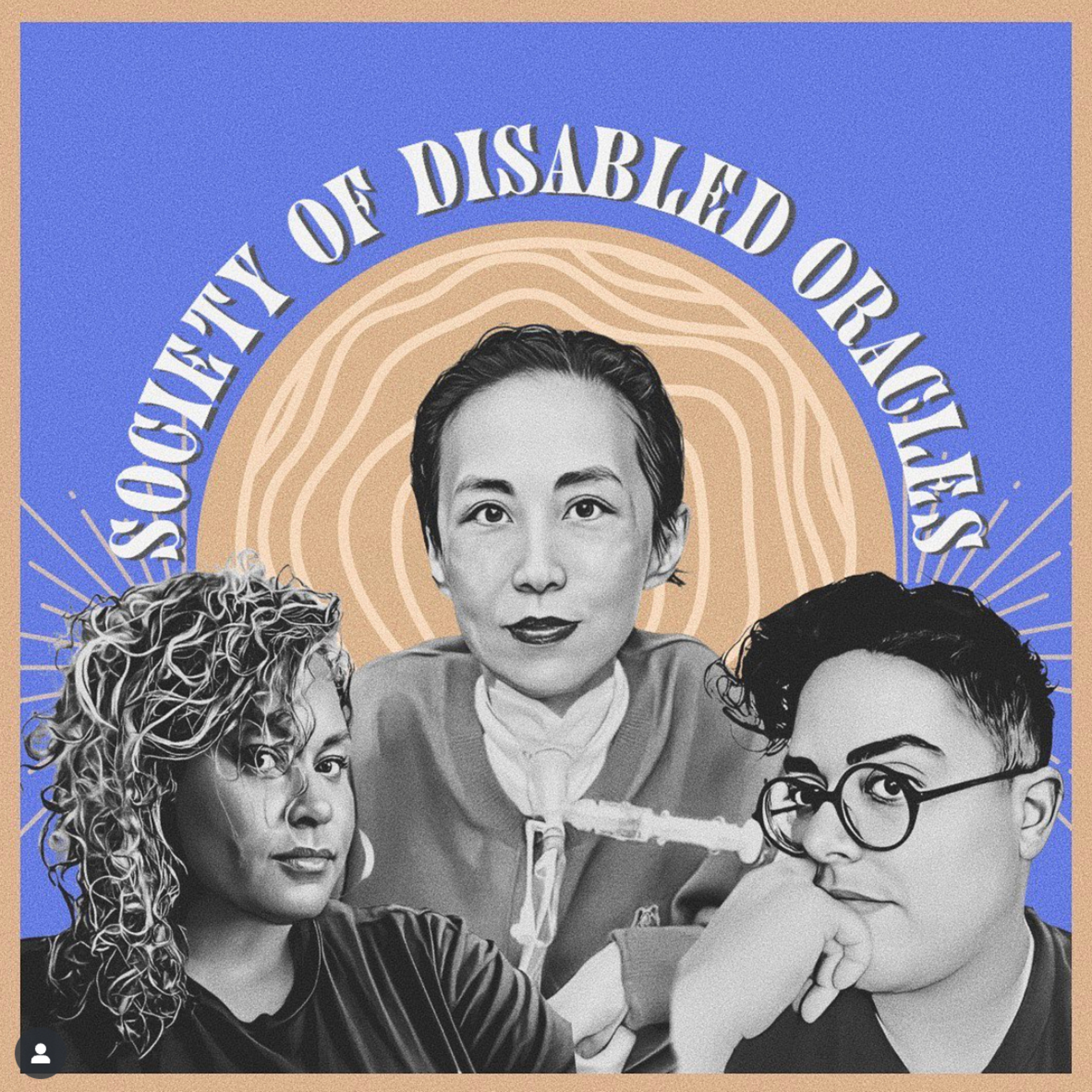 For Alice Wong | This episode celebrates Alice Wong, crip ancestor and disabled oracle, through her collaborations with the Critical Design Lab and Contra* podcast. | — | ||||||
| 5/14/25 | Episode 54: Contra* Season 4 Reflections with Aimi Hamraie and Kelsie Acton | On this episode, Aimi Hamraie and Kelsie Acton reflect on this season of Contra*, their work with the Remote Access Archives, and their hopes for how the archives will be used. They also share about their own experiences of finding remote access in their disability communities,and how they archived remote access with the Critical Design Lab team. On this episode, Aimi Hamraie and Kelsie Acton reflect on this season of Contra*, their work with the Remote Access Archives, and their hopes for how the archives will be used. They also share about their own experiences of finding remote access in their disability communities,and how they archived remote access with the Critical Design Lab team. Themes: Remote access and archiving remote accessDisability communities and collaborative access For a full episode transcript, visit criticaldesignlab.comLinks: Remote Access ArchiveThemes: Remote access and archiving remote accessDisability communities and collaborative access Links: Remote Access Archive | — | ||||||
| 4/23/25 | Episode 51: Cripping Pandemic Learning | What has been the role of remote access before and during the COVID-19 pandemic for the disability community? In this mini-episode, Kelsie looks at Cripping Pandemic Learning, documents developed by Danielle E. Lorenz and Hannah Sullivan Facknitz to support access for disabled students to online learning. These documents highlight the collaboration and simplicity of access-knowledge sharing common to disability culture. For a full episode description, visit criticaldesignlab.comLinks:Remote Access Archive | — | ||||||
| 4/9/25 | Episode 49: Crips for eSims | What has been the role of remote access before and during the COVID-19 pandemic for the disability community? In this mini-episode, Kelsie looks at Crips for E-sims for Gaza, an effort by Alice Wong, Leah Lakshmi Piepzna Samarasinha and Jane Shi to encourage disabled people and their allies to donate to get eSims to people in Gaza. Kelsie reflects on the relationship between mutual aid, remote access and the importance of doing something, however small. For a full episode transcript, visit criticaldesignlab.comLinks:Donate to Crips for Esims for GazaRemote Access Archive | — | ||||||
Want analysis for the episodes below?Free for Pro Submit a request, we'll have your selected episodes analyzed within an hour. Free, at no cost to you, for Pro users. | |||||||||
| 3/26/25 | Episode 47: Olmstead Quality of Life Survey | What has been the role of remote access before and during the COVID-19 pandemic for the disability community? In this mini-episode, Kelsie looks at the Olmstead Quality of Life Survey and reflects on the limits of remote access. For a full episode transcript, visit criticaldesignlab.comLinks:Remote Access Archive | — | ||||||
| 3/12/25 | Episode 45: Glitch Realm | What has been the role of remote access before and during the COVID-19 pandemic for the disability community? In this mini-episode, Kelsie shares a bit about Glitch Realm, a piece of digital art by Yo-Yo Lin and Kevin Gotkin, developed for one of the Remote Access parties and reflects on joy and access magic. For a full episode transcript, visit criticaldesignlab.comLinks:Remote Access Archive | — | ||||||
| 2/26/25 | Episode 43: Communication First | What has been the role of remote access before and during the COVID-19 pandemic for the disability community? In this mini-episode, Kelsie looks at five documents sent to us by Communication First. Communication First works to advance the rights of people who cannot rely on speech. These documents highlight the need for some disabled people to have in person support, including in person support to participate in remote access.Find the full epsiode transcript at criticaldesignlab.com.Links:Communication FirstRemote Access Archive | — | ||||||
| 2/12/25 | Episode 41: Alice Wong Takes a Trip to the White House | What has been the role of remote access before and during the COVID-19 pandemic for the disability community? In this mini-episode, Kelsie looks at two articles documenting Alice Wong’s 2015 trip to the White House via a robot. In this mini-episode, Kelsie looks at documents that highligt an innovative remote access technology and the importance of remote access before the COVID-19 pandemic. For an episode transcript, visit criticaldesignlab.com Links: Disability Visibility Project Remote Access Archive | — | ||||||
| 2/5/25 | Episode 40: Contra* Podcasting in Community with Qudsiya Naqui | This episode, we hear from Qudsiya Naqui, a blind South Asian lawyer and podcast creator. Qudsiya shares how remote access has transformed her daily work and inspired her to start her own podcast, Down to the Struts, welcoming her into the broader disability community. Themes: Disability advocacy and justice Advocating for remote workplace access Blindness and screen readers Podcast remote recordings and production Navigating access in cross disability communities Links: Qudsiya’s podcast, Down to the Struts Qudsiya on Linkedin Remote Access Archive | — | ||||||
| 1/29/25 | Episode 39: UCLA Hybrid Access Strike | At the start of the COVID-19 pandemic, we spoke with a number of scholars and activists about mutual aid and pandemic times. This season we’re sharing some of those conversations. We’re also taking a closer look at some of the documents in the remote access archive. What has been the role of remote access before and during the COVID-19 pandemic for the disability community? In this mini-episode, Kelsie looks at documents associated with the UCLA Hybrid Access Strike and reflects on solidarity. For an episode transcript, visit criticaldesignlab.com Links: Remote Access Archive | — | ||||||
| 1/15/25 | Episode 37: The Toomey Gazette | At the start of the COVID-19 pandemic, we spoke with a number of scholars and activists about mutual aid and pandemic times. This season we’re sharing some of those conversations. We’re also taking a closer look at some of the documents in the remote access archive in mini-episodes, like the one you're listening to today! What was the role of remote access before the COVID-19 pandemic for the disability community? In this mini-episode, Kelsie looks at documents associated with the Toomey Gazette, later known as the Rehabilitation Gazette, a print newspaper sent out by a rehabilitation center to its broader community starting in 1955. For an episode transcript, visit criticaldesignlab.com. Links: Remote Access Archive Crip News | — | ||||||
| 1/8/25 | Episode 36: Contra* Remote Access with Hector Ramirez | Welcome to Season 4 of Contra*! We’re back with new episodes from the Remote Access Archives. At the start of the COVID-19 pandemic, we spoke with a number of scholars and activists about mutual aid and pandemic times. This season we’re sharing some of those conversations. For an episode transcript, please visit criticaldesignlab.com. What has been the role of remote access before and during the COVID-19 pandemic for the disability community? Aimi’s conversation with Hector Ramirez, a disabled, queer and Two-Spirit, and biracial disability rights advocate focuses on how remote access has transformed during the pandemic, and the implications of the pandemic on his disability community and culture. Themes: Disability politics and advocacy Remote access and workplace participation COVID-19 pandemic era institutionalization and isolation Public policy and access Links: Hector Ramirez Hector Ramirez on Linkedin | — | ||||||
| 11/14/24 | Episode 34: Contra*History (2) with Elizabeth Guffey and Bess Williamson | For more information on our guest, show notes, and transcript please go to criticaldesignlab.com. | — | ||||||
| 10/30/24 | Episode 33: Solidarity Chat 10: Embry Wood Owen | For more information on our guest, show notes, and transcript please go to criticaldesignlab.com. | — | ||||||
| 10/30/24 | Episode 32: Solidarity Chat 9: Max Liboiron | For more information on our guest, show notes, and transcript please go to criticaldesignlab.com | — | ||||||
| 10/30/24 | Episode 31: Contra* Accessibility's History with Elizabeth Guffey and Bess Williamson | For more information on our guest, show notes, and transcript please go to criticaldesignlab.com. | — | ||||||
| 10/30/24 | Episode 30: Solidarity Chat 8: Dasom Nah | For more information on our guest, show notes, and transcript please go to criticaldesignlab.com | — | ||||||
| 10/30/24 | Episode 29: Solidarity Chat 7: Jay Salazar | For more information on our guest, show notes, and transcript please go to criticaldesignlab.com | — | ||||||
| 10/30/24 | Episode 28: Mourning, Mobilization, and Mutual Aid | For more information on our guest, show notes, and transcript please go to criticaldesignlab.com. | — | ||||||
Showing 25 of 52
Pitch Fit is a Pro feature
See how bookable this show is for guests, which brands already advertise, the per-episode ad value, and the best-fit guest and sponsor profile. The numbers are blurred on the free plan.
How readily this show books outside guests like you.
How proven this show is for host-read sponsorships.
For Guests
ProFor Advertisers
ProUpgrade to Pro to unlock guest cadence, sponsor categories, fit scores, and per-episode ad value for this show.
Chart Positions
2 placements across 2 markets.
Chart Positions
2 placements across 2 markets.