

CoROM cast. Wilderness, Austere, Remote and Resource-limited Medicine.
by College of Remote and Offshore Medicine
Is this your podcast?Insights from recent episode analysis
Audience Interest
Podcast Focus
Publishing Consistency
Platform Reach
Insights are generated by CastFox AI using publicly available data, episode content, and proprietary models.
Total monthly reach
Estimated from 13 chart positions in 13 markets.
By chart position
- 🇦🇺AU · Non-Profit#7130K to 100K
- 🇩🇪DE · Non-Profit#1505K to 30K
- 🇬🇧GB · Non-Profit#1535K to 30K
- 🇸🇪SE · Non-Profit#11100K to 300K
- 🇯🇵JP · Non-Profit#2430K to 100K
- Per-Episode Audience
Est. listeners per new episode within ~30 days
75K to 248K🎙 Daily cadence·199 episodes·Last published 6d ago - Monthly Reach
Unique listeners across all episodes (30 days)
250K to 826K🇸🇪36%🇦🇺12%🇯🇵12%+10 more - Active Followers
Loyal subscribers who consistently listen
100K to 330K
Market Insights
Platform Distribution
Reach across major podcast platforms, updated hourly
Total Followers
—
Total Plays
—
Total Reviews
—
* Data sourced directly from platform APIs and aggregated hourly across all major podcast directories.
On the show
Recent episodes
200-CoROM Founders discuss 10 years of CoROM
Jun 19, 2026
Unknown duration
199-Snake Bites with Dr Evan Baines
Jun 12, 2026
Unknown duration
198-eFAST for Combat Life Savers with TacMedNorth
Jun 5, 2026
Unknown duration
197-Poland PFC with Eagle-Med Systems
May 29, 2026
Unknown duration
196-MSIW and Guerrilla Medicine with Antonio from EuroMedics
May 22, 2026
Unknown duration
Social Links & Contact
Official channels & resources
Official Website
Login
RSS Feed
Login
| Date | Episode | Description | Length | ||||||
|---|---|---|---|---|---|---|---|---|---|
| 6/19/26 |  200-CoROM Founders discuss 10 years of CoROM | This special 200th episode of the CoROM podcast celebrates four years of continuous weekly episodes and reflects on the journey of the College of Remote and Offshore Medicine. Founder Aebhric O’Kelly is joined by fellow founders John Clark and Dr Csaba Dioszeghy to discuss how CoROM began, why Malta was chosen as its home, the growth of the organisation over the past decade, and the vision for the next five years. The conversation explores CoROM’s evolution from a small training organisation into an internationally recognised higher education institution serving students from more than 30 countries across five continents. Chapters00:00 Introduction and celebrating 200 podcast episodes00:50 How the three founders came together01:20 Why CoROM moved to Malta03:40 Malta’s medical history and its connection to CoROM08:10 Why Pretty Bay became CoROM’s home10:20 Historical medicine in Malta and the Hospitallers12:00 Growth of CoROM over the past three years13:00 Launch of the Doctorate in Health Studies (DHS)14:00 The impact of the CoROM podcast15:00 Building a non-profit educational institution15:50 The origins of Remote Medicine Ireland20:00 Student growth and global reach22:40 Medicine in the Mediterranean (MIM) Conference26:30 The CoROM family culture28:20 Looking ahead: the next 12 years28:40 John Clark’s five-year vision34:00 Dr Csaba Dioszeghy’s five-year vision38:00 Keeping education affordable39:00 Impact stories from Tanzania40:20 CoROM’s mission and global influence41:40 Reflections on 200 podcast episodes42:30 Closing remarks Key Discussion PointsWhy Malta?The founders discuss the circumstances that led CoROM to Malta in 2014. What began as an opportunity to support paramedic education evolved into the establishment of a permanent educational institution. Malta’s strategic location, English-speaking environment, rich medical history, and accessibility for international students all contributed to the decision. John Clark highlights Malta’s historical identity as the “Hospital of the Mediterranean” and its longstanding connection to military and austere medicine traditions. Building CoROMAebhric reflects on the origins of Remote Medicine Ireland and how frustration with expensive, poor-quality educational programmes motivated the creation of something different. The founders describe the progression from wilderness medicine courses to paramedic education, postgraduate programmes, and doctoral-level education. Global ReachCoROM currently serves more than 160 students from over 30 countries across five continents. The founders discuss the importance of maintaining a truly international perspective while preserving a close-knit educational culture. Medicine in the Mediterranean (MIM27)The founders discuss the rapid growth of the Medicine in the Mediterranean conference, which has become a recognised gathering point for practitioners interested in remote, austere, wilderness, expedition, military, and offshore medicine. | — | ||||||
| 6/12/26 |  199-Snake Bites with Dr Evan Baines | This month, CoROM Conversations is joined by Dr Evan Baines, Emergency Medicine Physician, EMS Fellow, former 18D, and contributor to the JTS Snake Envenomation Clinical Practice Guideline (CPG).Snake envenomation remains a major global health problem, with millions of bites occurring annually and a disproportionate burden falling on remote and resource-limited regions. In this episode, Dr Evan Baines discusses the development of the JTS Snake Envenomation CPG, practical field management, antivenom selection, operational planning, and common misconceptions surrounding snakebite treatment.Chapters00:00 – Introduction to Snake Envenomation01:45 – Why Snake Bites Matter in Austere Medicine04:00 – Snakebite Myths and Immediate First Aid05:00 – The Four Envenomation Syndromes08:00 – Operational Planning and Antivenom Selection11:20 – Understanding the JTS Treatment Algorithms16:00 – Case Study: Pit Viper Envenomation22:00 – Determining When Antivenom Has Worked24:00 – Antivenom Dosing Principles26:00 – Field Diagnostics and Coagulopathy Assessment28:00 – Neurotoxic Snake Bites and Respiratory Failure33:00 – Why Identifying the Snake Often Doesn't Matter34:00 – Dry Bites and Return-to-Duty Decisions36:00 – Antivenom Reactions and Anaphylaxis Management39:00 – Tourniquets, Pressure Bandages, and Controversies46:00 – Life Over Limb? Risk-Benefit Decision Making51:00 – Airway Management in Neurotoxic Envenomation55:00 – Regulatory Challenges and Deployment Considerations57:45 – Key Take-Home Messages | — | ||||||
| 6/5/26 |  198-eFAST for Combat Life Savers with TacMedNorth | This week, Aebhric O'Kelly speaks with three combat medics from Tactical Medicine North following a Tactical APUS instructor development programme in Malta. The discussion explores whether ultrasound can be taught to non-medical personnel operating in combat environments, including Combat Lifesavers (CLS) and Combat Medic Corpsmen (CMC), and how ultrasound may support prolonged casualty care, triage, and telemedicine in Ukraine. The conversation challenges traditional assumptions regarding ultrasound education, introduces the Tactical APUS concept, discusses modifications to the standard eFAST examination sequence, and reviews preliminary observations from a study comparing parasternal long-axis (PLAX) and subxiphoid cardiac views. Chapters00:00 – Introduction01:06 – Can Non-Medics Learn Ultrasound?03:00 – Lessons from the APUS Course05:30 – The Power of Home Points07:50 – What is Tactical APUS?10:00 – Adapting eFAST for Combat Operations12:30 – Hypothermia Prevention During Ultrasound15:20 – The Controversial Change: Heart Last20:00 – PLAX vs Subxiphoid Cardiac Views24:40 – Teaching Maltese Nurses29:10 – Should We Teach Ultrasound to Combat Lifesavers?32:20 – Ultrasound as a Triage Tool35:10 – Advice for Future Tactical Ultrasound Providers38:00 – Closing RemarksKey TakeawaysThe parasternal long-axis cardiac viewappears easier for novice learners than the traditional subxiphoid view.Overview of the APUS and Tactical APUS training programme conducted in Malta. Discussion on teaching eFAST ultrasound to Combat Lifesavers and Combat Medic Corpsmen.Comparison with early challenges teaching combat medicine to personnel without formal medical backgrounds. Importance of simple teaching techniques and instructor adaptability.Introduction of the "Home Point" concept for each eFAST window. How home points help students recover when they become disoriented during scanning.Development of a one-day ultrasoundcurriculum for tactical providers.Focus on eFAST as a trauma tool for prolonged field care and telemedicine support.Discussion of modifying the traditional eFAST sequence.Prioritising lung assessment over cardiac views.The dangers of exposing casualties during scanning.Importance of maintaining casualty insulation and minimising gel exposure.Why the Tactical APUS team moved cardiac assessment after lung assessment.Students consistently finding the parasternal long-axis view easier to obtain.Experience using Maltese nurses as pilot students.Differences between teaching healthcare professionals and non-medical personnel.Language barriers and instructional adaptations. Moving beyond "Can we?" to "Should we?"Ultrasound as a prolonged casualty care and telemedicine tool.Supporting decision-making during extended evacuations. Using eFAST to prioritise casualties during mass casualty situations.Early identification of internal bleedingand pneumothorax.Potential role of optic nerve sheath diameter (ONSD) assessment in blast-related head injuries. Importance of accessibility of handheld ultrasound devices.The role of deliberate practice and repetition in ultrasound mastery. Reflections on the success of the Tactical APUS pilot programme.Future collaboration between CoROM and Tactical Medicine North.Final thoughts from the Ukrainian instructors. Ultrasound can be successfully taught to Combat Lifesavers and Combat Medic Corpsmen when training is focused on pattern recognition and image acquisition rather than advanced interpretation."Home Points" provide a powerful cognitive aid for novice sonographers.Lung ultrasound may provide greater battlefield utility than cardiac ultrasound because interventions can be performed immediately.Hypothermia prevention must remainintegrated into all ultrasound training and operational use. | — | ||||||
| 5/29/26 |  197-Poland PFC with Eagle-Med Systems | This week, Aebhric O’Kelly is joined by Robert Jędrych, a Polish tactical medicine instructor and founder of the Eagle Med System, who appears on the CoROM Podcast to discuss the evolution of tactical medicine and prolonged field care (PFC) training in Poland and Central Europe. Drawing from more than two decades of experience as a paramedic and tactical medicine educator, Robert shares insights into the realities of preparing civilian and military medical personnel for austere and conflict-adjacent environments. The discussion explores the growing demand for prolonged casualty care education due to the ongoing war in Ukraine, the limitations of current civilian tactical medicine pathways, and the importance of realistic scenario-based training. Robert also reflects on his first attendance at the Special Operations Medical Association Scientific Assembly conference and outlines his vision for the future of tactical medicine education in Poland. Chapters• 00:00 – Introduction to Robert Jędrych and his background in tactical and austere medicine • 02:20 – Launching the first Austere Emergency Care (AEC) programme in Poland • 03:40 – Why prolonged field care training is increasingly important in Eastern Europe • 04:40 – Medical support and casualty flow from Ukraine into Poland • 05:10 – Building Eagle Med System and tactical medicine education in Poland • 05:45 – Civilian TCCC versus TECC: the confusion in tactical medicine education • 07:30 – Why TECC lacks a Combat Medic/Corpsman equivalent pathway • 11:15 – Discussion on developing an advanced TECC training framework • 14:50 – The impact of prolonged field care and AEC training on operational readiness • 16:20 – What is missing from current tactical medicine training programmes • 17:20 – The importance of realistic scenarios, stress inoculation, and live tissue/cadaver training • 20:50 – Lessons learned from prolonged field care scenarios and provider fatigue • 21:00 – Attending the Special Operations Medical Association Scientific Assembly conference for the first time • 23:05 – Robert’s five-year plan for tactical medicine and PFC development in Poland • 25:00 – Advice for new medics entering austere and tactical medicine • 27:10 – Final thoughts and future collaboration Key Discussion PointsThe Growth of Austere Emergency Care in PolandRobert discusses implementing the first AEC programme in Poland and the growing recognition that prolonged casualty care requires far more than procedural medicine. Topics include leadership, communication, patient monitoring, documentation, and decision-making in hostile and resource-limited environments. Civilian Tactical Medicine and the TECC GapThe episode examines the disconnect between civilian tactical medicine needs and current educational pathways. While TCCC remains widely recognised, Robert and Aebhric discuss the absence of a TECC equivalent to the Combat Medic/Corpsman pathway and the need for advanced civilian tactical medical training. Realistic Scenario TrainingRobert emphasises that high-fidelity scenarios, environmental stress, fatigue, noise, and realistic casualty simulation are essential for preparing providers to function under pressure. He highlights the importance of moving beyond classroom mannequin training into operationally relevant simulation. Lessons from UkrainePoland’s proximity to the war in Ukraine has shaped the urgency of tactical medicine education. Robert explains how exposure to real-world casualty care challenges has reinforced the need for prolonged field care training among both military and civilian healthcare providers. Building the Future of Tactical MedicineRobert outlines his vision for creating a dedicated training centre, expanding international partnerships, and building a stronger community of instructors capable of teaching evidence-based medicine grounded in operational realities. | — | ||||||
| 5/22/26 |  196-MSIW and Guerrilla Medicine with Antonio from EuroMedics | This week, Aebhric O’Kelly is joined by Antonio from European Medics to discuss his first experience attending the Special Operations Medical Association Symposium, the growing importance of Medical Support to Irregular Warfare (MSIW), and how civilian and military healthcare systems must integrate to prepare for future conflicts and disasters. Antonio reflects on lessons from occupied Poland, resistance medicine, Ukrainian battlefield realities, and the importance of resilience, logistics, telemedicine, and improvised medicine in modern austere healthcare systems. Chapters00:00 Introduction and Antonio’s background01:10 First experience attending SOMA03:10 “People over products” in tactical medicine04:30 Civilian involvement in special operations medicine06:50 Key lessons from the MSIW track09:45 What is Medical Support to Irregular Warfare (MSIW)?11:10 Historical resistance medicine in Poland and the Baltics15:00 Underground clinics and covert evacuation chains17:30 Telemedicine in resistance healthcare18:30 How civilian medics can prepare for MSIW21:00 TCCC, JTS CPGs, and tactical medicine education22:00 European Medics Tactical Clinical Operations (TCO) course23:30 Taiwan, resilience, and whole-of-society defence26:20 Logistics and manufacturing challenges in conflict28:40 Relationship building and NATO interoperability29:10 3D printing and improvised medicine31:20 Antonio’s passion for guerrilla medicine34:00 Future plans: anaesthesia, ICU, and flight medicine35:10 Advice for new medics entering austere medicine37:00 Closing remarksEpisode HighlightsFirst impressions from the SOMA SymposiumWhy “people over products” matters in tactical medicineCivilian-military integration in modern conflictWhat MSIW (Medical Support to Irregular Warfare) actually meansHistorical resistance medicine in Poland and the BalticsLessons from Ukraine and occupied territoriesUnderground clinics and covert casualty evacuationTelemedicine and distributed healthcare networksWhy civilian clinicians should learn TCCCLogistics, supply chains, and local manufacturing during war3D printing and improvised medical equipmentThe future of European resilience medicineAdvice for new medics entering austere medicine | — | ||||||
| 5/15/26 |  195-Damage Control Procedures with Dr John Quinn | This week, Dr John Quinn joins Aebhric O’Kelly to discuss the emerging field of Damage Control Procedures (DCP) for austere, prolonged, and contested environments.Dr Quinn explores the growing operational gap between Tactical Combat Casualty Care (TCCC) and definitive surgical care, particularly in Ukraine and other high-threat environments where evacuation delays can extend for days. The discussion covers the development of DCP curricula, governance challenges, telemedicine oversight, surgical skills for non-surgeons, and the operational realities driving innovation in prolonged casualty care.The episode also examines lessons learned from Ukraine, the future of austere procedural medicine, and how modern conflict is reshaping medical doctrine across NATO and partner nations. Chapters00:05 – Introduction to Dr John Quinn and current operational work00:39 – Volunteering in Ukraine and advancing damage control resuscitation01:20 – What are Damage Control Procedures (DCP)?02:01 – The gap between TCCC and definitive surgery03:25 – Why delayed evacuation changes medical doctrine04:29 – Surgical skills for paramedics, nurses, and combat medics05:20 – Governance and legal challenges surrounding DCP06:26 – How surgeons may react to DCP concepts07:16 – Telemedicine oversight and surgeon mentorship in austere care09:11 – Surgical expertise shaping the DCP curriculum10:08 – Overview of the DCP programme structure11:16 – Tier 1 skills: surgical airways, thoracostomy, tourniquet conversion, traumatic amputations12:43 – Tier 2 skills: laparotomy, external fixation, fasciotomy, advanced burns14:29 – Tier 3 concepts: burr holes and REBOA15:47 – Future concepts: haemofiltration and advanced austere ICU care18:22 – Why DCP sounds controversial — and why it may still be necessary19:16 – Telemedicine vs autonomous procedural decision-making22:05 – Clinical governance and parallels with paramedic evolution23:38 – Why basic life support remains foundational25:35 – Historical parallels with early paramedic medicine26:36 – Expansion of chest tube and intraosseous use in Ukraine30:11 – What happens next for the DCP pathway?31:24 – The importance of listening to Ukrainian clinicians32:21 – DCP beyond special operations medicine33:32 – Introduction to the Disaster Health Institute (DHI)35:37 – Bridging strategic and operational medicine36:17 – SOF Combat Medical Conference (CMC) discussion38:19 – Upcoming RCSEd webinar on DCP39:30 – Lessons learned from Ukrainian workshops and role-zero care41:40 – Drone warfare, attacks on medical personnel, and evacuation challenges43:18 – Why Ukrainian medics are requesting Tier 1 and Tier 2 DCP capability45:18 – Upcoming DCP workshop at Medicine in the Mediterranean46:31 – Advice for clinicians entering austere medicine50:27 – AI, education, digital twins, and the future of medical contentGuest bioDr John Quinn is an operational clinician, researcher, and educator working across prehospital care, austere medicine, disaster health, and military medicine. Originally trained as a paramedic, he later completed both medical and doctoral training and now works clinically within the United Kingdom while supporting medical projects and training initiatives in Ukraine.Dr. Quinn is involved in the development of Damage Control Procedures curricula and collaborates with international subject matter experts, surgeons, and operational clinicians to improve prolonged casualty care capability in contested environments.Disaster Health Institute is a collaborative network focused on disaster health, operational medicine, epidemiology, humanitarian response, and strategic healthcare preparedness. The organisation works with subject matter experts across Europe, North America, Central Asia, Africa, and South America to develop evidence-informed approaches to modern operational health challenges. | — | ||||||
| 5/8/26 |  194-MScACC graduate William Krupa | This week, Aebhric O'Kelly is joined by William Krupa, who recently graduated from the MSc Austere Critical Care programme. They discuss wilderness medicine, tactical medicine education, prolonged field care, and his experience completing the MSc in Austere Critical Care at the College of Remote and Offshore Medicine Foundation.William shares his journey from infantry soldier to paramedic educator, discusses teaching Wilderness First Responder (WFR) programmes, reflects on attending the Medicine in the Mediterranean Conference in Malta, and provides an overview of his MSc thesis on austere mechanical ventilation using portable oxygen concentrators and closed-circuit systems.This episode explores how austere medicine education can reinvigorate clinicians, improve critical thinking, and bridge the gap between theory and operational practice. Chapters00:00 – Introduction to the episode and guest welcome00:41 – William’s current work in paramedicine, wilderness medicine, and tactical medicine education01:20 – Military background and transition into medicine02:30 – Repeating EMT training after military service03:53 – Why repeated teaching improves clinicians and educators05:07 – The value of teaching Wilderness First Responder (WFR) courses07:22 – Deep dives into improvised medicine during longer wilderness courses07:55 – The history of CoROM and how WFR led to degree programmes09:33 – William’s first trip to Malta for APUS and ICARE10:20 – Scenario-based learning and hands-on education at CoROM11:34 – The realism of the ICARE moulage and burn simulations14:05 – Medicine in the Mediterranean Conference experience14:51 – Ukraine battlefield medicine workshop and WPC certification15:40 – Graduation and earning the MSc in Austere Critical Care16:14 – Publishing research and future doctoral plans17:18 – Why William chose the MSc in Austere Critical Care19:23 – What makes CoROM different from other critical care programmes22:16 – Mentorship from MD-PhD faculty and practical education26:08 – William’s MSc thesis on austere mechanical ventilation27:39 – Using oxygen concentrators and closed-circuit systems in austere care29:28 – Research discussion: dual oxygen concentrators and FiO₂ optimisation31:15 – Challenges during the MSc programme33:32 – How the MSc changed William’s clinical practice34:44 – Suggestions for future development of the MSc programme36:47 – Teaching WFR in Utah with Black Swan and Human Path39:01 – Achieving Fellowship of the Academy of Wilderness Medicine (FAWM)41:08 – Why wilderness fellowships carry professional value43:46 – Advice for new medics entering austere medicine45:11 – Closing remarks and congratulations Key Topics • Wilderness medicine education • WMS FAWM • Tactical medicine and TC3 instruction • Prolonged Field Care (PFC) • Austere Critical Care education • Scenario-based simulation training • Improvised medicine • Mechanical ventilation in austere environments • Oxygen conservation strategies • Wilderness medicine fellowships • Medical education mentorship • International austere medicine collaboration Key Takeaways• Scenario-based education improves retention and operational performance. • Wilderness medicine often reignites clinicians’ passion for medicine. • Austere medicine requires adaptability rather than dependence on resources. • International collaboration broadens clinical understanding and perspective. • Practical mentorship from operational clinicians is critical in advanced education. • Mechanical ventilation in austere environments may be feasible with low-resource systems. • Long-form wilderness courses allow deeper exploration of improvised medicine concepts. • Continuous learning is essential for clinicians operating in remote and austere environments. | — | ||||||
| 5/1/26 |  193-Severe Malaria Patient Featuring Zach Andrews | This week, Aebhric is again joined by Zach Andrews, who leads the latest episode of CoROM Conversations, which explores the recognition and management of severe malaria in resource-limited and austere environments. Drawing on field-relevant clinical reasoning, the discussion focuses on the progression from uncomplicated to life-threatening disease, with emphasis on Plasmodium falciparum as the primary driver of severe pathology.The conversation highlights the diagnostic challenges faced by remote medics, where laboratory confirmation may be delayed or unavailable, and underscores the importance of clinical pattern recognition, early intervention, and ongoing reassessment. Particular attention is given to complications such as cerebral malaria, severe anaemia, metabolic acidosis, and hypoglycaemia—all of which significantly increase mortality if not rapidly addressed.From a prolonged field care perspective, the episode integrates pragmatic strategies for stabilisation, monitoring, and evacuation decision-making. It reinforces the need for structured patient assessment using frameworks such as CABCDEFGH, along with trending vital signs over time. The discussion ultimately bridges tropical medicine with austere critical care, offering actionable insights for medics operating far from definitive care.Key Learning PointsSevere malaria is a time-critical diagnosis, most commonly associated with Plasmodium falciparum, requiring immediate treatment even before confirmatory testing.Red flag features include altered mental status, respiratory distress, severe anaemia, hypoglycaemia, and shock.Hypoglycaemia is both a complication of malaria and a side effect of treatment (e.g., quinine), necessitating frequent glucose monitoring.In austere environments, clinical diagnosis often precedes laboratory confirmation, requiring high suspicion in febrile patients with travel or endemic exposure.Fluid management must be cautious, balancing the risks of hypovolaemia and pulmonary oedema.Prolonged care requires integration of nursing principles (HITMAN, SHEEP VOMIT) to prevent secondary deterioration.Early administration of parenteral antimalarials (e.g., artesunate where available) is critical to survival.Evacuation planning should be initiated early, but delays must not postpone life-saving interventions.Timestamps00:00 – IntroductionOverview of the case and relevance to austere medicine02:30 – Pathophysiology of Severe MalariaMechanisms of microvascular obstruction and organ dysfunction06:00 – Clinical PresentationRecognising early vs severe disease in the field10:30 – Assessment FrameworksApplying structured approaches (CABCDEFGH, CPRO, BEAST)15:00 – Management PrioritiesAntimalarials, glucose, fluids, and airway considerations20:30 – Complications and MonitoringCerebral malaria, acidosis, anaemia, and respiratory failure25:00 – Prolonged Field Care ConsiderationsNursing care, documentation, and trending30:00 – Evacuation and Decision-MakingWhen and how to move the patient33:00 – Key Takeaways and Closing ThoughtsClinical Pearls / Take-Home MessagesTreat first, confirm later: In suspected severe malaria, delays in treatment increase mortality.Check glucose early and often: Hypoglycaemia can be rapidly fatal and easily missed.Think beyond fever: Altered mental status or respiratory changes may be the first sign of severe disease.Your greatest tool is reassessment: Trends in vital signs are more valuable than single data points.Good nursing care saves lives: Positioning, hydration, hygiene, and monitoring are critical in prolonged care environments.Suggested ReferencesWorld Health Organization. Guidelines for the Treatment of Malaria (latest edition).Joint Trauma System Clinical Practice Guidelines: Prolonged Casualty Care.World Health Organization. Severe Malaria (Tropical Medicine reference standards).White NJ et al. Malaria. The Lancet. | — | ||||||
| 4/24/26 |  192-Setting up a Jungle ICU with Zach Andrews | This week, Aebhric O’Kelly is again joined by Zach Andrews, a MSc Austere Critical Care graduate and expert in jungle medicine, who shares his extensive experience in remote critical care, setting up ICUs in challenging environments, and improving medical education. Discover practical tips for medical professionals working in remote areas and learn about innovative approaches to medical training and patient care.Chapters00:00 Introduction and Guest Introduction00:26 Zach Andrews' Background and Current Projects01:06 Role in Student Success Department02:34 Student Program Feedback and Challenges05:50 Faculty and Program Cost-Effectiveness11:27 Setting Up ICUs in Remote and Austere Areas20:42 Importance of Hands-On Assessment in Remote Settings23:00 The Jack of All Trades in Jungle ICU Setup25:18 Lessons from Masters of Austere Care27:33 SOMA Scholarship and Zach's Presentation29:34 Advice for New Medics in Austere Medicine30:52 Closing Remarks and Final Thoughts | — | ||||||
| 4/17/26 |  191-AMLS and PHTLS in Pretty Bay, Malta | This week, Aebhric talks with Alfredo Leal, who shares his extensive experience in emergency medical services, including his work with the WHO, offshore rescue missions, and medical training courses like AMLS and PHTLS. Discover valuable insights on pre-hospital care, medical assessment, and the future of emergency medicine training.Chapters00:00 Introduction to Alfredo Leal's Journey01:48 Experiences with the World Health Organisation04:10 Deployment in Ukraine and Its Challenges04:59 Advanced Medical Life Support Course Insights07:43 The Importance of Medical Training12:01 Differential Diagnosis in Pre-Hospital Care16:11 Dynamic Patient Assessment Techniques19:26 Teaching and Training in Emergency Medical Services23:52 Future of Emergency Medical Training27:48 Advice for New Medics in Austere Environments | — | ||||||
Want analysis for the episodes below?Free for Pro Submit a request, we'll have your selected episodes analyzed within an hour. Free, at no cost to you, for Pro users. | |||||||||
| 4/10/26 |  190-DHS Graduate Dr Michael Klopper | This week, Aebhric O’Kelly is joined by Dr Michael Klopper, who recently earned his doctorate from CoROM and shares his journey from South Africa to becoming a doctoral candidate in AI, his extensive experience in remote medicine and mountain rescue, and his views on the future of AI in medical research and education. Discover insights on mountain medicine training, AI's role in healthcare, and practical advice for medical professionals in challenging environments.Chapters00:00 Introduction and Dr Klopper's background01:42 Early connection with the College and initial projects04:06 Setting up clinical placements and courses in South Africa05:44 East London clinical work and EMS programs07:28 Dr Klopper's Wilderness Medicine Fellow (FAWM) and future plans11:48 Dr Klopper's PhD thesis on AI in medicine18:19 The importance of search mechanisms and AI in research21:57 Risks and best practices for AI in academic research24:57 Advice for new medical professionals and outdoor enthusiasts28:48 Preparing for deployment in challenging environments29:30 The role of aviation safety and small details in rescue missions32:16 Closing remarks and future plans for Dr Klopper | — | ||||||
| 4/3/26 |  189-Faculty of Offshore and Maritime Medicine | This week, Aebhric O'Kelly is joined by Dr Aris Exadaktylos and Dr Susie DiMartini to discuss the critical need for specialised maritime medicine training. They explore the creation of the International Maritime Ships Doctors course, the unique challenges of offshore medical care, and the future of remote healthcare technology. They are the founding faculty for the new Faculty of Offshore and Maritime Medicine from CoROM. Chapters00:00 Introduction to Maritime Medicine Faculty02:14 Personal Journeys in Maritime Medicine05:02 The Need for Maritime Medical Training10:11 The Role and Responsibilities of Ship Doctors16:51 Innovations in Maritime Medical Care25:49 The International Maritime Ship Doctors Course29:03 Future of Maritime Medicine Education | — | ||||||
| 3/27/26 |  188-How to set up an ICU in the jungle | This week, Aebhric O’Kelly is joined by Rhod Jordan and Bill Vasios as they discuss how to create an ICU in the jungle. They discuss setting up and managing a remote ICU in jungle environments, focusing on site selection, equipment, logistics, and medical considerations for field medics and responders.Chapters00:00 Introduction and Content Overview00:41 Premise and Scenario Setup for Jungle ICU01:33 Site Selection Criteria in Jungle Environments02:19 Environmental Challenges: Rain, Creepy Crawlies, and Hypothermia03:08 Privacy, Lighting, and Visibility in Remote Settings03:53 Creating a Functional Jungle Clinic Layout04:34 Lighting and Visibility Strategies at Night05:31 Accessibility and Zone Planning in Field Clinics06:09 Assessing Capacity: Multiple Patients and Beds07:01 Monitoring Equipment: Minimum and Advanced Options08:04 Power, Water, and Communication Logistics08:42 Prolonged Casualty Care and Exfil Planning09:59 Medical Supplies: Drugs, Medications, and Sterility10:42 Camp Craft and Bushcraft Skills for Remote Medics11:35 Wildcrafted Plants and Improvised Medicine12:12 Communication Strategies in Dense Canopy Environments13:08 Team Coordination and Role Assignments14:08 Dealing with Critical Patients and Exfil Decisions14:57 Infection Control and Hygiene in the Field15:54 Personal and Team Safety Measures16:39 Additional Non-Medical Gear for Remote Operations17:16 Lighting Solutions and Bug Management at Night18:08 Medications and Drugs for Jungle Medicine18:45 Over-the-Counter and Emergency Medications19:34 Special Considerations for Malaria and Vector-borne Diseases20:04 Infection Control and Hygiene Protocols20:56 Water Purification and Boiling Techniques21:35 Field Sterilisation and Maintaining Sterility22:25 Managing Glove Supplies and Hand Hygiene23:00 Dermatology and Common Skin Conditions23:38 Malaria Prophylaxis and Treatment Strategies24:32 Infection Control and Personal Hygiene25:14 Power and Charging Solutions in Remote Areas26:04 Water Supply and Filtration Methods26:45 Field Sterilisation and Water Boiling Techniques27:21 Camp Craft and Bushcraft Skills for Field Survival27:56 Wildcrafting and Medicinal Plants in the Jungle28:47 Communication Equipment and Strategies in Dense Canopy29:41 Team Coordination and Medical Decision-Making30:17 Water Safety and Potable Water Management31:05 Team Safety and Preventing Illness in the Field32:04 Bushcraft Skills for Remote Medical Operations32:58 Survival Skills and Improvised Medicine33:48 Communication Tools and Emergency Signalling34:28 Exfil Planning and Evacuation Protocols35:14 Prolonged Casualty Care and Equipment Needs36:01 Medical Kits and Supplies for Extended Operations36:51 Decision-Making in Critical Situations37:23 Non-Medical Essentials: Woobies, Tools, and Comfort Items38:10 Maintaining Morale and Team Cohesion38:42 Summary and Final Tips for Jungle ICU Setup | — | ||||||
| 3/20/26 |  187-Austere Primary Care | This week, Aebhric O'Kelly talks with Eirik Holmstrom about the newly updated MIC MEC and Pharm CPD courses, which have been combined into a new online CPD programme called 'Austere Primary Care.' This APC is a package that includes Disease and Non-Battle Injuries (DNBI) encountered on expeditions, in military operations, at remote clinical sites, and in resource-limited environments. You can find up-to-date information on our course webpage https://corom.moodlecloud.com/ | — | ||||||
| 3/13/26 |  186-Enhanced MSc Austere Critical Care | This week, Aebhric O’Kelly talks with Dr Csaba Dioszeghy about the redesign and upgrade of the MSc Austere Critical Care programme. Every 5 years, the degree programmes undergo reaccreditation. The College has decided to double the programme's size following feedback from graduates. Chapters00:00 Introduction to the New Masters of Austere Critical Care Program01:03 The Complete Rehaul of the Curriculum01:57 Flexibility and Pathways in the New Program02:51 Comparison with UK Advanced Practice Programs03:46 Four Pillars of the New Curriculum04:41 Special Focus: Medical Support to Resistance Healthcare07:02 Innovations in Improvised Medicine08:21 Practical Modules: Ultrasound and Tropical Medicine09:44 Student Research and Thesis Projects11:30 Program Launch and Future Outlook | — | ||||||
| 3/6/26 | 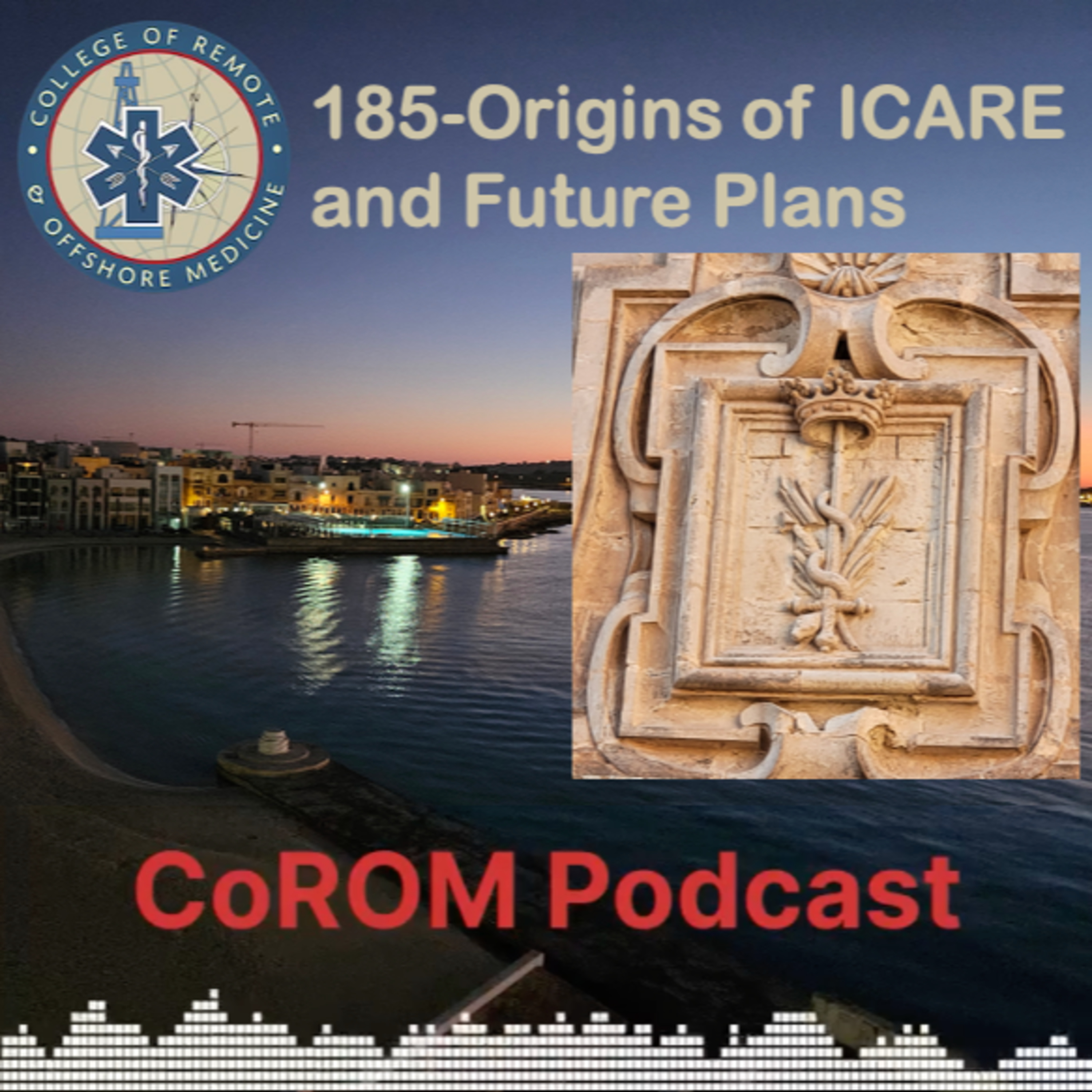 185-Origins of ICARE and Future Plans | This week, Aebhric O’Kelly is joined by Splinter Knoppert, who is a 2nd-year BSc student attending the Intensive Care for Austere and Remote Environments (ICARE) course in Malta. They discuss his experiences during the week, including the practical skills, teamwork, resource-limited environments, and innovative teaching methods.Aebhric is then joined by Dr Csaba Dioszeghy, and they discuss the origin of the ICARE course 14 years ago. Chapters00:00 Introduction to the ICARE Course in Malta00:58 BSc Student Splinter talks about his experience in ICARE02:04 Diverse Participants and Their Backgrounds02:53 Skills Gained: Ultrasound, Central Lines, and Improvisation03:47 Blue Time: Practice and Muscle Memory05:06 Overview of Scenarios: Crush Injuries, Tropical Diseases, and Trauma05:52 Building a Remote ICU: Key Components and Challenges06:30 Setting Up an ICU in the Jungle: Precautions and Planning07:14 Impact on Paramedic Practice and Future Plans08:16 Introduction to Dr Csaba Dioszeghy and Critical Care Education09:06 Origins of Critical Care Teaching and Collaboration10:51 Simplifying Critical Care for Resource-Limited Settings13:07 Development of the MSc in Critical Care14:29 Teaching Principles: Using Critical Care Without Fancy Equipment15:26 From Aeromedical Transport to Specialised Critical Care Training16:22 Addressing the Gap in Critical Care Education16:47 Curriculum Focus: Basic to Advanced Critical Care Concepts17:43 Teamwork and Non-Technical Skills in Critical Care18:40 The Importance of Crew Resource Management20:20 Simulation-Based Training for Teamwork and Skills21:15 Elective Courses and International Participation22:10 The Future of the MSc Program and Crew Resource Management24:04 Technical Skills Practice: Ultrasound, Suturing, and Intubation24:57 The Value of the iCare Course and Its Evolution25:50 Upcoming Deep Dive into the Masters of Austere Critical CareWe will have questions about the episode icon, which is a picture of an ancient carving of the Rod of Asclepius. This is on a church outer wall in Mdina, Malta, with origins in the Knights Hospitaler. | — | ||||||
| 2/27/26 |  184-CoROM Conversations - Nursing CPG | This week, Aebhric O'Kelly and Bill Vasios host another CoROM Conversations. This month, they discuss the comprehensive nursing interventions, training strategies, and best practices for prolonged field care, emphasising simplicity, effective handovers, and patient safety.https://youtu.be/U63NaFLaxZ0Chapters00:00 Introduction to Nursing Interventions00:53 Exploring CPGs and Nursing Interventions02:25 Comparing Non-Medical and Medical Personnel Guidelines05:50 Simplifying Nursing Interventions for Non-Medical Personnel09:05 Wound Care Disparities in Guidelines11:05 Identifying Gaps in Nursing Care Guidelines12:07 The Need for Simplified Guidelines16:15 Importance of Structured Handover24:03 Trending and Serial Assessment in Patient Care26:17 Understanding Patient Comfort and Injury Prevention27:36 The Importance of Hands-On Nursing28:32 Pressure Injury Prevention Strategies29:52 Efficient Patient Care Techniques31:17 Pain Management in Nursing33:12 Pulmonary Hygiene and Patient Mobility35:14 Nutrition and Hydration in Patient Care35:37 The Role of Checklists in Medical Practice41:33 Infection Prevention and Wound Care43:34 Final Thoughts on Patient Care Practices44:01 Any Questions? | — | ||||||
| 2/20/26 |  183-Harrison Steins MiM26 SIPE | This week, Aebhric is joined by Dr Harrison Steins, who is finishing his MSc in Austere Critical Care with CoROM. He also finished medical school and is starting his emergency medicine training. His master’s thesis was on the complexities of swimming-induced pulmonary oedema (SIPE), a rare condition affecting athletes, particularly in high-altitude environments. The speaker, Harrison Steins, discusses the pathophysiology, clinical presentation, diagnosis, and management strategies for SIPE, emphasising the importance of context in medical practice. He shares case studies, research findings, and future directions for understanding and treating this condition, highlighting the role of ultrasound in diagnosis and the need for tailored prevention strategies.TakeawaysSwimming-induced pulmonary oedema is a rare condition with a prevalence of less than 1%.Understanding the context of patient presentation is crucial for diagnosis.Acute-onset cough and dyspnoea are key symptoms of SIPE.Diagnosis requires a broad differential, ruling out other conditions first.Management focuses on immediate life threats before addressing SIPE.Hydration strategies can prevent SIPE, especially in athletes.Sildenafil may be effective in preventing SIPE, but it is not widely recommended.Handheld ultrasound is a reliable tool for diagnosing pulmonary oedema in the field.Females may have a higher incidence of SIPE at lower elevations than males do.Knowledge of population-specific pathology is essential for effective treatment.Chapters00:00 Introduction to Swimming-Induced Pulmonary Oedema04:47 Understanding the Pathophysiology of Swimming-Induced Pulmonary Oedema09:18 Case Studies and Clinical Presentation13:48 Diagnosis and Imaging Techniques19:26 Management Strategies and Treatment24:17 Research Findings and Future Directions | — | ||||||
| 2/13/26 |  182-TTEMS Review by BSc RPP Students | This week, Aebhric O'Kelly interviews four students from our BSc in Remote Paramedic Practice programme. They discuss the Tropical Travel and Expedition Medical Skills course (TTEMS). | — | ||||||
| 2/6/26 |  181-TBS26 Conference Review | This week, Aebhric O'Kelly is joined by Dr Ella Corrick, Dr Sean Bilodeau and Dr Tom Mallinson as the CoROM faculty attend The Big Sick conference hosted by Air Zermatt. CoROM gave three lectures and two workshops including the Improvised Medicine workshop and the Austere Emergency Care workshop. TakeawaysThe challenge of compressing prolonged field care education into short workshops.Engagement of diverse professional backgrounds enhances learning experiences.Realistic simulations provide valuable insights into emergency care.The importance of bridging the gap between pre-hospital and hospital care.Innovations in emergency medicine practices are crucial for improving patient outcomes.Data plays a significant role in shaping emergency response strategies.Continuous education is essential for adapting to new medical practices.The value of informal discussions among professionals at conferences.Understanding the unique challenges faced by pre-hospital care providers.The need for a shift in perception regarding the role of EMS professionals.Chapters00:00 Introduction to the Big Sick Conference02:34 Challenges in Prolonged Field Care Education05:43 Diverse Professional Backgrounds in Medical Education08:09 Learning Through Realistic Simulations11:04 Bridging the Gap Between Pre-Hospital and Hospital Care13:39 Innovations in Emergency Medicine Practices16:46 The Role of Data in Emergency Response19:10 Future Directions in Pre-Hospital Care21:39 Conclusion and Reflections on the Conference | — | ||||||
| 1/30/26 |  180-Wilderness and Expedition Dentistry with Burjor Langdana | This week, we hear from Burjor Langdana, who runs the Wilderness and Expedition Dentistry workshop for CoROM. Burjor discusses the management of dental pain, focusing on assessing sensitivity, identifying causes, and evaluating treatment options. It emphasises the importance of patient care, oral hygiene, and antibiotic use in the management of dental conditions. The discussion also covers cultural considerations and improvisation in emergency situations, providing valuable insights for dental practitioners.https://wildernessdentistry.com/TakeawaysUnderstanding the characteristics of dental sensitivity is crucial.Location and duration of pain are key indicators.Aggressive brushing can lead to gum recession and sensitivity.Clove oil can be effective but should be used cautiously.Flossing is essential to prevent food buildup and gum irritation.Antibiotics may be necessary for managing infections.Improvisation is important in emergency dental care.Cultural beliefs can impact patient care and treatment acceptance.Communication with patients about procedures is vital.Managing expectations regarding treatment outcomes is essential.Chapters00:00 Introduction to Managing Dental Pain00:57 Understanding Sensitivity: Duration and Location06:32 Identifying Causes of Sensitivity12:12 Managing Sensitivity with Home Remedies12:40 Addressing Food-Related Pain18:37 Techniques for Filling Cavities29:11 Improvising Without Instruments29:39 The Role of Salt Water in Oral Health34:53 Managing Tooth Pain and Food Impaction39:06 Understanding Fillings and Their Complications45:42 Gumboils: Causes and Management49:48 Skills for Remote Dental Care56:04 Cultural Sensitivity in Dental Treatment | — | ||||||
| 1/22/26 | 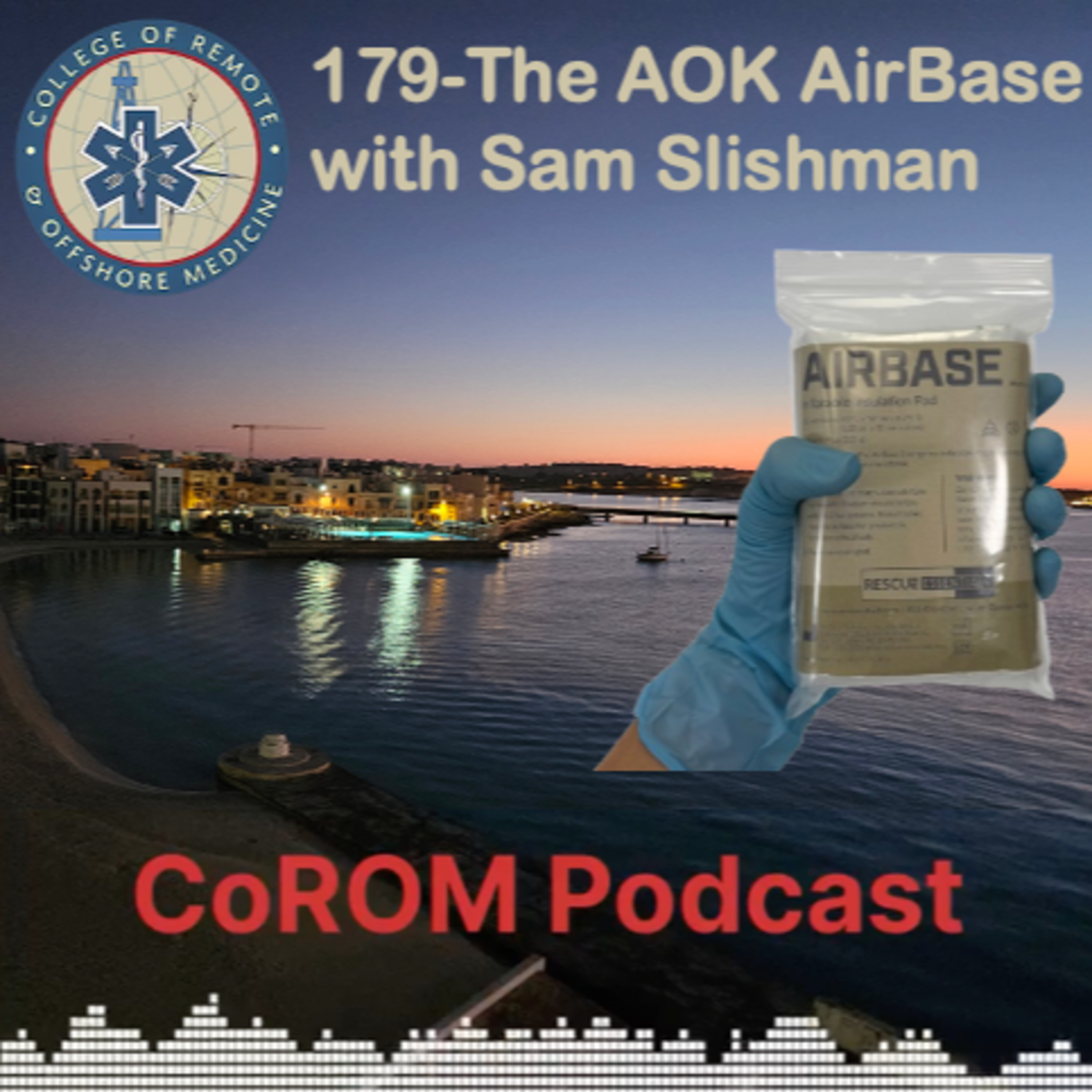 179-The AOK AirBase with Sam Slishman | This week, Aebhric O’Kelly is again joined by Dr Sam Slishman. They discuss medical innovation and Aebhric’s invention called the AirBase. They discuss medical innovation, focusing on inventions, such as the Slishman Traction Splint and the Airbase. They emphasise the importance of evidence-based medicine, particularly in the use of tourniquets and bleeding control techniques. The discussion also addresses the challenges of marketing medical devices, the role of 3D printing in healthcare, and advice for aspiring medical professionals in austere environments.TakeawaysInnovations in medical devices can significantly impact patient care.Tourniquets are effective but should be used with caution.Direct pressure is often more effective than tourniquets for certain injuries.The Airbase serves multiple purposes during emergencies.3D printing can revolutionise medical device development.Standard of care is not static and can vary by location.Patient comfort is crucial in emergency medicine.Research in austere medicine faces unique challenges.Continuous learning and adaptation are essential for medics.Chapters00:00 Introduction to Dr Sam Slishman01:31 Innovations in Medical Devices04:25 Tourniquet Efficacy and Research09:38 Direct Pressure vs. Tourniquets17:50 The Airbase: A New Medical Tool24:14 Challenges in Medical Device Development31:20 The Role of 3D Printing in Medicine39:19 Advice for Aspiring Medics | — | ||||||
| 1/16/26 |  178-Academia with PTSD with EU SOF Medic Rabbit | This week, Aebhric O’Kelly is joined by Rabbit, who is an EU SOF medic who shares his extensive background in military medicine and his current focus on researching the effects of higher education on individuals with PTSD. He discusses his personal experiences with PTSD and how education has played a role in his recovery. The conversation also touches on the importance of engaging the younger generation in military medicine, adapting to the changing battlefield, and the need for collaboration between special operations and conventional forces. Rabbit emphasises the significance of education and teamwork in improving outcomes for those affected by trauma.TakeawaysRabbit has a rich background in military medicine and education.His PhD research focuses on PTSD and higher education.Education can provide hope and support for individuals with PTSD.There is a need for specialised programs for military personnel with PTSD.Engaging the younger generation is crucial for the future of military medicine.Collaboration between special operations and conventional forces is essential.Rabit emphasises the importance of teaching and enabling others in medicine.The battlefield is evolving with new technologies and challenges.Personal experiences with PTSD can inform research and treatment.Teamwork is vital in prolonged field care situations.Chapters00:00 Introduction to Rabbit and His Background02:52 Exploring PTSD and Higher Education10:22 Personal Experiences with PTSD and Education17:12 The Role of SOMA and Engaging the Younger Generation26:57 Advice for New Medics and Collaboration in Medicine | — | ||||||
| 1/9/26 |  177-Microcirculation in PFC with Zach Andrews | This week, Aebhric O’Kelly talks with Zach Andrews, a SOF medic, to discuss his journey through the MSc in Austere Critical Care, with a focus on his thesis on microcirculation in resource-limited settings. He shares insights into the challenges and learning experiences of his studies, the development of the AMSS score for assessing microcirculation, and his future aspirations in medicine, particularly in rural EMS and education.TakeawaysZach is on active duty in the U.S. Army as a SOF medic.He works as a critical care paramedic in a rural county.His thesis focused on microcirculation in resource-limited settings.He explored noninvasive methods for assessing microcirculation.Zach developed the mottling score to evaluate microcirculation.He emphasises the importance of basic medical skills.Zach plans to pursue a doctorate in the near future.He aims to validate his Microcirculatory Integrated Severity Scale (AMSS) in real-world settings.Zach believes in the significance of education in rural healthcare.He appreciates collaborative problem-solving in medical training.Chapters00:00 Introduction to Zach Andrews and His Journey06:08 Exploring the Master's Program in Osteo-Critical Care13:20 Thesis Topic: Microcirculation in Resource-Limited Environments20:24 Developing the Microcirculatory Integrated Severity Scale (AMSS)24:25 Future Plans and Advice for New Practitioners | — | ||||||
| 1/2/26 | 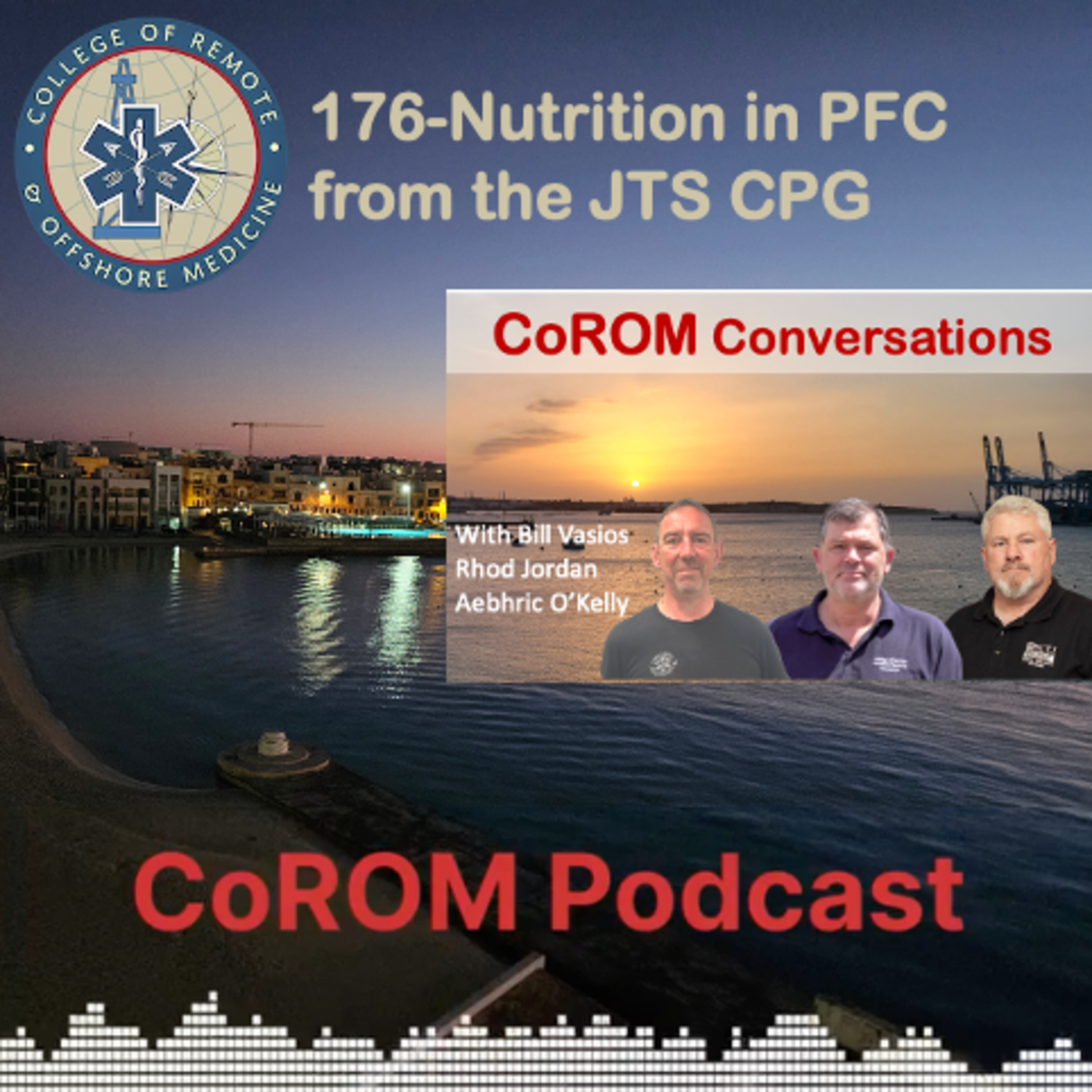 176-Nutrition in Prolonged Field Care from the JTS CPG | This week, Aebhric O’Kelly, Bill Vasios, and Rhod Jordan lead an open discussion examining the critical role of nutrition in prolonged field care. The conversation explores enteral and parenteral feeding modalities, outlining their respective indications, benefits, and practical limitations in austere and resource-constrained environments. Particular emphasis is placed on the value of early nutritional intervention in supporting physiological recovery, including practical techniques for nasogastric tube placement and for identifying and managing feeding-related complications. The discussion further considers the challenges of maintaining nutritional support during patient transport. It highlights the importance of interdisciplinary collaboration, including consultation with nutrition specialists, to develop safe and effective nutritional care plans.TakeawaysNutrition is crucial in prolonged field care.Enteral nutrition is less invasive and safer.Early feeding improves healing and recovery.Consult a nutritionist for feeding plans.NG tubes can reduce complications in feeding.Monitor for complications during feeding.Parenteral nutrition may be necessary in some cases.Feeding techniques can vary based on patient condition.Understanding nutritional needs is essential for care.Future discussions will focus on advanced topics.Chapters00:00 Introduction to Prolonged Field Care and Nutrition02:40 Understanding Enteral and Parenteral Nutrition04:53 Benefits of Early Nutritional Support07:47 Indications and Contraindications for Feeding09:32 Practical Considerations for Feeding in Austere Environments11:51 Calculating Nutritional Requirements14:30 Challenges in Nutritional Support During Transport17:16 Techniques for NG Tube Placement20:00 Monitoring and Managing Feeding Complications22:19 Discussion on Parenteral Nutrition24:41 Conclusion and Future Topics | — | ||||||
Showing 25 of 179
Pitch Fit is a Pro feature
See how bookable this show is for guests, which brands already advertise, the per-episode ad value, and the best-fit guest and sponsor profile. The numbers are blurred on the free plan.
How readily this show books outside guests like you.
How proven this show is for host-read sponsorships.
For Guests
ProFor Advertisers
ProUpgrade to Pro to unlock guest cadence, sponsor categories, fit scores, and per-episode ad value for this show.
Chart Positions
13 placements across 13 markets.
Chart Positions
13 placements across 13 markets.