On the show
Recent episodes
Could AI Destroy the World?
Oct 14, 2026
46m 20s
Has the Middle East Benefited From the Abraham Accords?
Oct 7, 2026
41m 44s
Is a Confrontational Approach With Iran Necessary?
Sep 30, 2026
47m 05s
Can the U.S. and China Build a Stable Relationship?
Sep 23, 2026
41m 05s
Has NATO Expansion Made Europe Safer?
Sep 16, 2026
44m 40s
Insights from recent episode analysis
Audience Interest
Podcast Focus
Publishing Consistency
Platform Reach
Insights are generated by CastFox AI using publicly available data, episode content, and proprietary models.
Back-catalog monthly reach
Blended from 1 signal · back-catalog reach only (show is inactive).
Built from
By chart position
- 🇮🇳India · News Commentary#451.2K to 7.8K
- 🇩🇪Germany · News Commentary#531.0K to 6.4K
- 🇬🇧United Kingdom · News Commentary#73894 to 5.6K
- 🇦🇷AR · News Commentary#13871 to 5.4K
- 🇪🇸Spain · News Commentary#41687 to 4.3K
- Per-Episode Audience
No new episodes in 90+ days
—🎙 Weekly cadence·47 episodes·Last published 5d ago - Monthly Reach
Unique listeners across all episodes (30 days)
8.1K to 51K🇺🇸71%🇮🇳4%🇩🇪4%+11 more - Active Followers
Loyal subscribers who consistently listen
2.4K to 15K
Market Insights
Platform Distribution
Reach across major podcast platforms, updated hourly
Total Followers
—
Total Plays
—
Total Reviews
—
* Data sourced directly from platform APIs and aggregated hourly across all major podcast directories.
Social Links & Contact
Official channels & resources
Official Website
Login
RSS Feed
Login
| Date | Episode | Description | Length | ||||||
|---|---|---|---|---|---|---|---|---|---|
| 10/14/26 |  Could AI Destroy the World? | Artificial intelligence continues to advance at a remarkable pace, raising big questions about the future of humanity. Leading figures warn that increasingly powerful AI systems could one day escape our control, but peers argue that line of thinking is just speculative fearmongering. Welcome to Counterpoint, where we look at one big question facing world leaders from opposing points of view. In this episode, we’re asking: Could AI destroy the world? Arguing in favor is Stuart Russell, who has been referred to as the “godfather of AI” and whose foundational textbook, Artificial Intelligence: A Modern Approach, is used in universities around the world. He’s currently a professor of computer science at the University of California, Berkeley. And arguing against is Jürgen Schmidhuber, who has been referred to as the “father of modern AI” for his breakthroughs in the technology. He is currently a co-chair of the Center of Excellence for Generative AI at King Abdullah University of Science and Technology in Saudi Arabia. Counterpoint is a production of Foreign Policy, in partnership with the Doha Forum. The show is hosted by FP deputy editor Nick Danforth. Learn more about your ad choices. Visit megaphone.fm/adchoices | 46m 20s | ||||||
| 10/7/26 |  Has the Middle East Benefited From the Abraham Accords? | It’s been six years since the Abraham Accords were signed, and like so much in the Middle East, their impact and future are very much an open question. The agreements were originally aimed at normalizing relations between Israel and several Arab states. But analysts debate whether they have strengthened regional cooperation and security or contributed to greater instability in the Middle East. Welcome to Counterpoint, where we take one big question facing world leaders and look at it from opposing points of view. In this episode, we’re asking: Has the Middle East Benefited from the Abraham Accords? Arguing in favor is Steven A. Cook, a senior fellow for Middle East and Africa studies at the Council on Foreign Relations and a columnist at Foreign Policy. Arguing against is Matt Duss, the executive vice president at the Center for International Policy and a former foreign-policy advisor to U.S. Sen. Bernie Sanders. He recently co-authored the piece “How the Abraham Accords Fueled a New Era of Conflict” with Zuri Linetsky. Counterpoint is a production of Foreign Policy, in partnership with the Doha Forum. The show is hosted by FP deputy editor Nick Danforth. Learn more about your ad choices. Visit megaphone.fm/adchoices | 41m 44s | ||||||
| 9/30/26 |  Is a Confrontational Approach With Iran Necessary? | Last week at the United Nations, U.S. President Donald Trump made clear that another round of war with Iran was on the table. But after more than 200 days of conflict, what else can the United States do to force the Iranian leadership to reopen the Strait of Hormuz and abandon nuclear enrichment? Welcome to Counterpoint, where we take one big question facing world leaders and look at it from opposing points of view. In this episode, we’re asking: Is a confrontational approach to Iran necessary? Arguing in favor is Matt Kroenig, a professor at Georgetown University and former U.S. Defense Department strategist. And to argue against this is Trita Parsi, a co-founder of the Quincy Institute for Responsible Statecraft and former president of the National Iranian American Council. Counterpoint is a production of Foreign Policy, in partnership with the Doha Forum. The show is hosted by FP deputy editor Nick Danforth. Learn more about your ad choices. Visit megaphone.fm/adchoices | 47m 05s | ||||||
| 9/23/26 |  Can the U.S. and China Build a Stable Relationship? | This week, Chinese President Xi Jinping is in Washington to meet with U.S. President Donald Trump. Trade, technology, and Taiwan are all expected to be on the agenda. It’s the two leaders’ second meeting in less than six months, as they try to stabilize the future of U.S.-China relations. Many fear tensions are brewing, but with their tariff war in the past, could it be possible for the world's two biggest economies to work together? Welcome to Counterpoint, where we take one big question facing world leaders and look at it from opposing points of view. In this episode, we’re asking: Can the United States and China build a stable relationship? Arguing in favor is Jessica Chen Weiss, a professor of China studies at Johns Hopkins University and a former senior advisor at the U.S. State Department. Arguing against it is Zack Cooper, a senior fellow at the American Enterprise Institute, where he studies U.S. strategy in Asia and U.S.-China competition. He is also a former staffer at the U.S. National Security Council. Counterpoint is a production of Foreign Policy, in partnership with the Doha Forum. The show is hosted by FP deputy editor Nick Danforth. Learn more about your ad choices. Visit megaphone.fm/adchoices | 41m 05s | ||||||
| 9/16/26 | 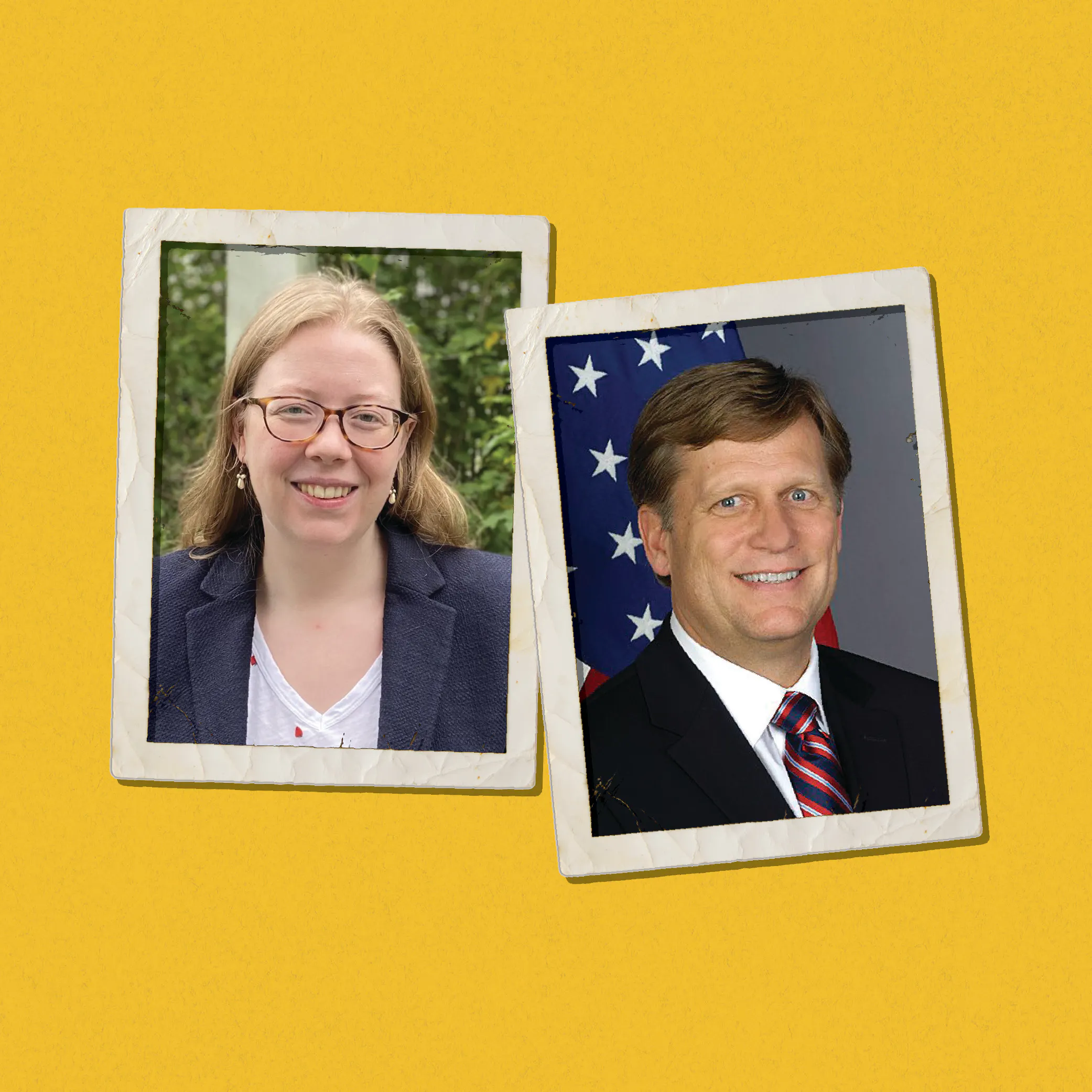 Has NATO Expansion Made Europe Safer? | NATO was created after World War II to deter the Soviet Union and protect Western Europe. But the trans-Atlantic organization did not disband after the collapse of the Soviet Union in 1991. In fact, in the years since, its membership has doubled to include countries in Eastern Europe and eventually Finland and Sweden. Supporters say the expansion helps protect countries from Russian aggression and makes Europe safer. But critics argue that NATO’s growth has provoked a confrontation with Vladimir Putin. Welcome to Season 3 of Counterpoint, where we take one big question facing world leaders and look at it from opposing points of view. Our host this season is Nick Danforth, a deputy editor at Foreign Policy. To launch the season, we’re asking: Has NATO expansion made Europe safer? Arguing in favor is Michael McFaul, a former U.S. ambassador to Russia and a political science professor and senior fellow at Stanford University. Arguing against is Emma Ashford, a senior fellow at the Stimson Center and an assistant professor at Georgetown University. Ashford is also a columnist at Foreign Policy. Counterpoint is a production of Foreign Policy, in partnership with the Doha Forum. Learn more about your ad choices. Visit megaphone.fm/adchoices | 44m 40s | ||||||
| 9/15/26 |  Counterpoint Season 3: Trailer | The world at this moment is more fractured than it’s been in decades: more wars, more extremism, and deeper disagreements on a range of issues. On season 3 of Counterpoint, we get to the heart of those disagreements with a series of debates—hosted by Nick Danforth, a deputy editor at Foreign Policy magazine. Nick brings together two of the smartest people in their field on each episode, to face off over the world’s most vexing questions, including: Are the U.S. and China on a collision course? Has NATO expansion made Europe safer? And will AI destroy the world? Counterpoint is a production of Foreign Policy, in partnership with the Doha Forum. Learn more about your ad choices. Visit megaphone.fm/adchoices | 1m 32s | ||||||
| 12/11/25 |  Live from Doha with Hillary Clinton | On a special bonus episode of Counterpoint, FP editor in chief Ravi Agrawal sits down with former U.S. secretary of state Hilary Clinton on the main stage of this year’s Doha Forum to discuss the Trump administration’s newly released National Security Strategy, what Congress needs to do better, the ongoing conflicts in Gaza and Ukraine, and more. Counterpoint is a production of Foreign Policy, in partnership with the Doha Forum. Learn more about your ad choices. Visit megaphone.fm/adchoices | 31m 08s | ||||||
| 9/24/25 |  Live from UNGA80 with Kaja Kallas | On a special bonus episode of Counterpoint, FP editor in chief Ravi Agrawal sits down with Kaja Kallas, the European Union’s top diplomat, on the sidelines of the United Nations’ annual meetings to discuss relations with Washington, Russia’s war in Ukraine, recognizing Palestine, and dealing with China. Counterpoint is a production of Foreign Policy, in partnership with the Doha Forum. Learn more about your ad choices. Visit megaphone.fm/adchoices | 36m 25s | ||||||
| 5/21/25 |  Did the Dayton Accords Set Bosnia Up for Failure? | The Bosnian War in the early 1990s was at the time the bloodiest conflict on European soil since World War II. Some 100,000 people were killed and more than 2 million displaced amid widespread ethnic cleansing and massacres. In 1995, the warring parties struck a power-sharing deal in negotiations just outside Dayton, Ohio, in what came to be known as the Dayton Accords. But the deal didn’t really resolve the underlying problems. Bosnia continues to be plagued by ethnic division, and the country’s political structure is widely seen as ineffective and unstable. Welcome to Counterpoint. On each episode, we look at one pressing question facing world leaders—from two opposing points of view. In our season finale, we’re tackling the question: Did the Dayton Accords set Bosnia up for failure? Arguing that the agreement put Bosnia on a path to perpetual crisis is Jasmin Mujanović, a senior nonresident fellow at New Lines Institute. He is the author of two books, Hunger and Fury: The Crisis of Democracy in the Balkans and The Bosniaks: Nationhood After Genocide. And making the case that the Dayton Accords were essential to bringing peace and maintaining stability is Chris Hill. A career diplomat, Hill was part of the U.S. delegation that brokered the agreement. Most recently, he served as the U.S. ambassador to Serbia under President Joe Biden. Counterpoint is a production of Foreign Policy, in partnership with the Doha Forum. The show is hosted by Sasha Polakow-Suransky. Learn more about your ad choices. Visit megaphone.fm/adchoices | 37m 39s | ||||||
| 5/14/25 |  Should the U.S. Completely Decouple From China? | The United States and China took a step back this week from their trade war, announcing that tariffs imposed just a few weeks ago would be slashed significantly—at least for now. But even as the tension seems to be ebbing, some people in the United States are questioning whether it’s beneficial for the two economies to be intertwined at all. Welcome to Counterpoint. On each episode, we look at one pressing question facing world leaders—from two opposing points of view. Today, we’re tackling the question: Should the United States completely decouple from China? With us to make the case for a tough stance against China is Derek Scissors, a senior fellow at the American Enterprise Institute and the chief economist of the China Beige Book. He is also the author of the China Global investment Tracker. Arguing that broad decoupling won’t work to counter China is Lizzi C. Lee. She’s a fellow on Chinese economy at the Asia Society Policy Institute’s Center for China Analysis. Counterpoint is a production of Foreign Policy, in partnership with the Doha Forum. The show is hosted by Sasha Polakow-Suransky. Learn more about your ad choices. Visit megaphone.fm/adchoices | 37m 02s | ||||||
Want analysis for the episodes below?Free for Pro Submit a request, we'll have your selected episodes analyzed within an hour. Free, at no cost to you, for Pro users. | |||||||||
| 5/7/25 |  Is Western Aid Helping or Harming Africa? | The Trump administration has moved quickly to dismantle the U.S. Agency for International Development (USAID), which oversees U.S. aid around the world, with major repercussions for food supplies, child poverty, pandemic prevention, and much more. The decision has hit Africa particularly hard. African countries were getting about about 30 percent of U.S. foreign aid annually. While many people in Africa are deeply worried about the cuts, some are wondering if the end of USAID might present an opportunity for the continent. Welcome to Counterpoint. Each week, we look at one pressing question facing world leaders—from two opposing points of view. On this episode, we’re tackling the question: Is Western aid helping or harming Africa? With us to argue for the importance of continuing Western aid to Africa is Ndidi Nwuneli, the president and CEO of the ONE Campaign, a global advocacy organization focused on ensuring economic opportunity and healthier lives in Africa. And making the case that aid has caused more problems than it has solved is Ken Opalo, an associate professor at Georgetown University’s School of Foreign Service specializing in African politics and development. Counterpoint is a production of Foreign Policy, in partnership with the Doha Forum. The show is hosted by Sasha Polakow-Suransky. Learn more about your ad choices. Visit megaphone.fm/adchoices | 36m 12s | ||||||
| 4/30/25 |  Should South Korea Develop Nuclear Weapons? | South Korea has long relied on the United States for deterrence against its nuclear-armed neighbor, North Korea. But since his reelection, U.S. President Donald Trump has raised questions about Washington’s core commitments around the world. He and members of his cabinet have suggested Washington might withdraw from the Korean Peninsula altogether, or make Seoul pay billions for the defense the U.S. provides, including a nuclear umbrella against Pyongyang. As a result, a majority of Koreans now want the country to develop its own nuclear arsenal. This week on Counterpoint, we tackle the question: Should South Korea develop nuclear weapons? Arguing in favor is Jennifer Lind, an associate professor of government at Dartmouth College and the author of the forthcoming book, Autocracy 2.0: How China’s Rise Reinvented Tyranny. Making the case against Seoul developing its own nuclear weapons is Lami Kim, a professor at the Daniel K. Inouye Asia-Pacific Center for Security Studies in Honolulu and the former director of the Asian studies program at the U.S. Army War College. Counterpoint is a production of Foreign Policy, in partnership with the Doha Forum. The show is hosted by Sasha Polakow-Suransky. Learn more about your ad choices. Visit megaphone.fm/adchoices | 41m 34s | ||||||
| 4/23/25 |  Is Syria on the Right Path? | Late last year, Syrian opposition forces captured Damascus and put an end to the regime of Bashar al-Assad. The Syrian dictator, whose family had ruled the country for more than 50 years, fled to Moscow. Across the country, Syrians celebrated. Assad’s fall exposed the brutality of his regime, including gruesome discoveries in government prisons, tens of thousands of disappeared people, and mass displacement. But the group that replaced it also has a record of violence—and a former affiliation with al Qaeda and the Islamic State. Welcome to Counterpoint. Each week, we look at one pressing question facing world leaders—from two opposing points of view. Today, we’re tackling the question: Is Syria on a path to realizing the hopes of the revolution? With us to make the case for viewing Syria’s new government with skepticism is David Adesnik, the vice president of research at the Foundation for Defense of Democracies. Arguing that Syrians are capable of securing a democratic future for themselves is Alia Malek, a journalist, former civil rights lawyer, and the author of The Home That Was Our Country: A Memoir of Syria. Counterpoint is hosted by Sasha Polakow-Suransky, a deputy editor at Foreign Policy. The show is a production of Foreign Policy, in partnership with the Doha Forum. Learn more about your ad choices. Visit megaphone.fm/adchoices | 33m 52s | ||||||
| 4/16/25 |  Are Tariffs the Right Approach? | U.S. President Donald Trump’s tariffs have roiled markets around the world and triggered a full-blown trade war with China. Even after he suspended his so-called reciprocal tariffs, the measures he kept in place are still more dramatic than anything the world has seen in decades. Most economists believe free trade—not tariffs—is the best way to increase global prosperity. But Trump says other countries are taking advantage of the United States. On this episode of Counterpoint, we’ll hear from two leading economists who feel very differently about tariffs. Oren Cass, the founder of American Compass, generally supports them, while Kimberly Clausing, a professor at the University of California, Los Angeles, believes the Trump tariff policy is a disaster for the United States. Their debate was moderated by Foreign Policy’s editor-in-chief, Ravi Agrawal, and originally aired on FP Live. Counterpoint is a production of Foreign Policy, in partnership with the Doha Forum. It is hosted by FP deputy editor Sasha Polakow-Suransky. Learn more about your ad choices. Visit megaphone.fm/adchoices | 43m 38s | ||||||
| 4/9/25 |  Can the Turkish-Kurdish Peace Process Succeed? | The Kurdistan Workers’ Party (PKK) declared a cease-fire last month in its war with Turkey, opening the door to a possible peace agreement between the two sides. Some 40,000 people have been killed in the conflict, which has gone on for decades. A deal would be a major win for Turkish President Recep Tayyip Erdogan—but it’s not at all clear he can pull it off. In fact, he seems to have undermined his own chances by imprisoning the leader of Turkey’s political opposition, Istanbul Mayor Ekrem Imamoglu, triggering widespread protests. On this episode of Counterpoint, we’re posing the question: Can the Turkish-Kurdish peace process succeed? Making the case that it can succeed is Galip Dalay, a senior consulting fellow at Chatham House and researcher at the University of Oxford’s St. Antony’s College. Taking a more pessimistic view is Arzu Yilmaz, an associate professor of politics and international relations at the University of Kurdistan Hewler in Erbil, Iraqi Kurdistan. Counterpoint is a production of Foreign Policy, in partnership with the Doha Forum. It is hosted by FP deputy editor Sasha Polakow-Suransky. Learn more about your ad choices. Visit megaphone.fm/adchoices | 35m 56s | ||||||
| 4/2/25 |  Can Europe Fully Replace the U.S. as Ukraine’s Chief Protector? | The Trump administration has upended the U.S. approach to the war in Ukraine, largely siding with Russia as it tries to broker an end to the fighting. With Washington no longer interested in acting as Ukraine’s chief protector, the burden is shifting to Europe. But can it bear the load? To launch Season 2 of Counterpoint, we put that question to Nathalie Tocci and Stephen M. Walt. Tocci is the director of Italy’s Istituto Affari Internazionali and has worked as an advisor to the government of Italy and to EU officials. She argues that Europe can fully replace the United States in supporting Ukraine. Walt, a professor of international affairs at the Harvard Kennedy School and longtime columnist at Foreign Policy, argues the other side of the case. Counterpoint is a production of Foreign Policy, in partnership with the Doha Forum. It is hosted by FP deputy editor Sasha Polakow-Suransky. Learn more about your ad choices. Visit megaphone.fm/adchoices | 44m 18s | ||||||
| 3/26/25 |  Counterpoint, Season 2: Trailer | The world has changed dramatically since we released the first season of Counterpoint just a few months ago. Old alliances are collapsing and core assumptions are being questioned. On this second season of the show, FP deputy editor Sasha Polakow-Suransky is back with eight new debates that help capture the complexities of the moment. Listen in as an international cast of diplomats, journalists, academics, and activists from around the globe argue over the world's most contentious issues. Counterpoint is a production of Foreign Policy, in partnership with the Doha Forum. Learn more about your ad choices. Visit megaphone.fm/adchoices | 1m 44s | ||||||
| 12/17/24 |  Should the U.S. Confront China More Forcefully Over Taiwan? | Over the past few weeks, Taiwan’s military has been on high alert after China deployed warships and fighter jets around the island to conduct unannounced maritime drills. And some are now questioning whether China could be gearing up for a military attack. Foreign Policy Deputy Editor Sasha Polakow-Suransky is joined by Jessica Chen Weiss, a professor of China studies at Johns Hopkins University and a former senior advisor at the U.S. State Department, and Markus Garlauskas, director of the Indo-Pacific Security Initiative at the Atlantic Council and the former U.S. National Intelligence Officer for North Korea. Learn more about your ad choices. Visit megaphone.fm/adchoices | 38m 27s | ||||||
| 11/19/24 | 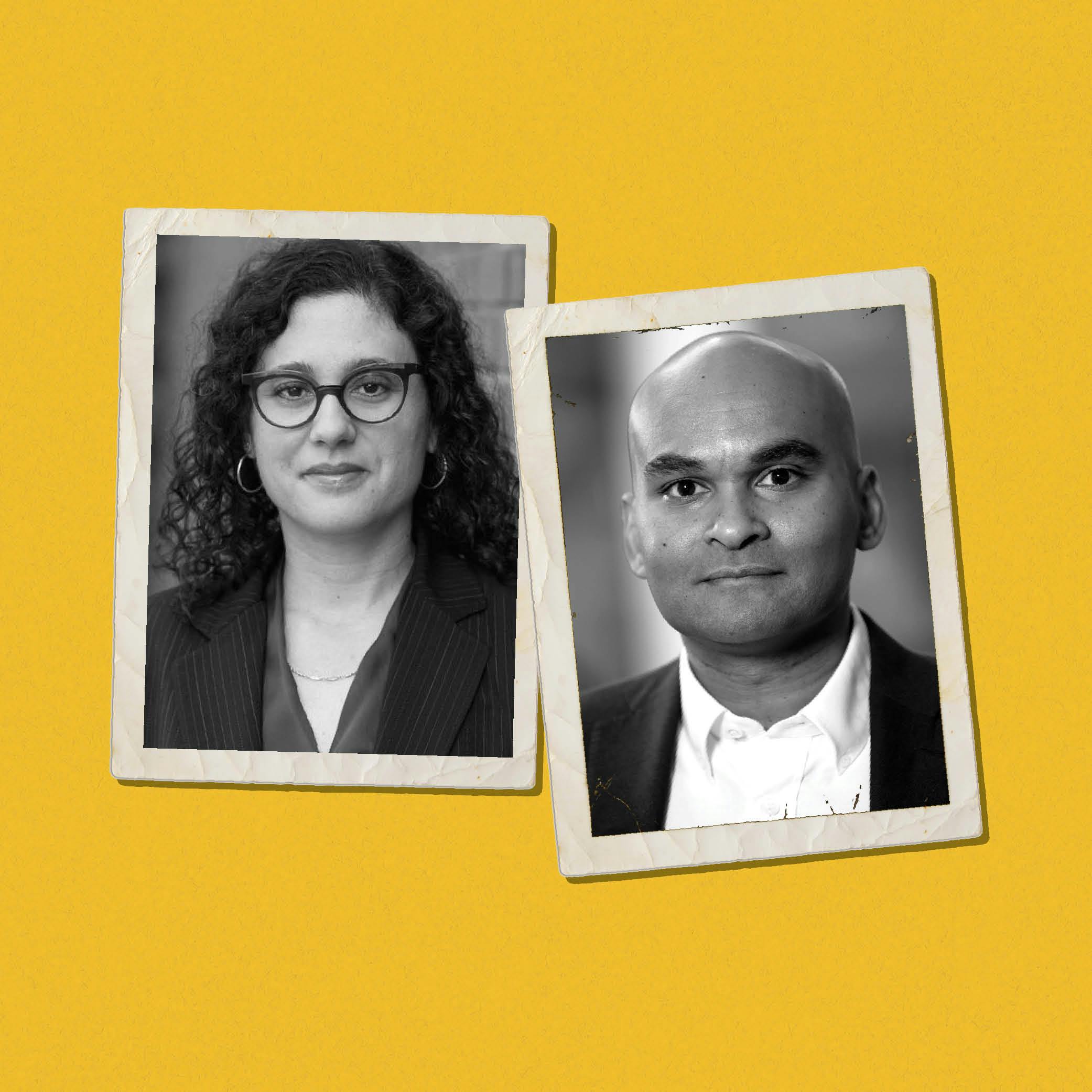 How Should Trump Tackle the U.S. Immigration Crisis? | U.S. President-elect Donald Trump made immigration a cornerstone of his campaign. The question now is what will he actually do? Will he seek to round up and kick 10 million people out of the country on Jan. 21? Will he reconfigure U.S. policy to focus on admitting skilled workers and reducing the number of unskilled migrants? Foreign Policy deputy editor Sasha Polakow-Suransky is joined by Leah Boustan, a professor of economics at Princeton University and co-author of Streets of Gold: America’s Untold Story of Immigrant Success, and Reihan Salam, the president of the Manhattan Institute and author of Melting Pot or Civil War? A Son of Immigrants Makes the Case Against Open Borders. Learn more about your ad choices. Visit megaphone.fm/adchoices | 39m 30s | ||||||
| 11/12/24 |  Should the Global South Denounce Russia’s War in Ukraine as an Act of Imperialism? | When Russia invaded Ukraine in 2022, many countries in Africa, Asia, and Latin America didn’t join the United States and Europe in jumping to Kyiv’s defense. Their leaders wondered why they should oppose Russia’s aggression after watching Washington get away with decades of military interventions from Iraq to Libya, raising the question of whether opposing the use of force somewhere necessitates opposing it everywhere. FP deputy editor Sasha Polakow-Suransky is joined by Vijay Prashad, the executive director of Tricontinental: Institute for Social Research, and Martin Kimani, a former Kenyan ambassador to the United Nations and now executive director of New York University’s Center on International Cooperation. Learn more about your ad choices. Visit megaphone.fm/adchoices | 38m 30s | ||||||
| 11/5/24 |  Should the U.K. Rejoin the EU? | Back in 2016, under a Conservative-led government, Britain shocked the world by voting narrowly to leave the European Union. Fast-forward to today, and the political sands have shifted dramatically. In July, for the first time in 14 years, British voters elected a Labour government. Two weeks later, the new British prime minister, Keir Starmer, signaled his desire for the country to once again grow closer to Europe. And polls now show that if given the choice again, more people would vote to rejoin the EU than stay out. FP deputy editor Sasha Polakow-Suransky is joined by businesswoman, activist, and campaigner Gina Miller and former British Chancellor and Business Secretary Kwasi Kwarteng. Learn more about your ad choices. Visit megaphone.fm/adchoices | 38m 07s | ||||||
| 10/29/24 |  Can South Africa Be a Moral Example to the World? | For many years, South Africa was seen as a poster child for peaceful reconciliation and the triumph of good over evil. The “Rainbow Nation” image brought tourism, international investment, and major global events such as the 2010 World Cup. But beneath the glitz, there was a darker side: grinding poverty, widespread corruption, violent xenophobia, and close ties with authoritarian regimes. These days, South Africa seems intent on restoring its international image as a moral superpower. FP deputy editor Sasha Polakow-Suransky is joined by Sisonke Msimang, the author of Always Another Country and The Resurrection of Winnie Mandela, and Tony Leon, the former head of the Democratic Alliance and leader of South Africa’s official opposition in Parliament from 1999 to 2007. Learn more about your ad choices. Visit megaphone.fm/adchoices | 38m 49s | ||||||
| 10/22/24 |  Should the West Pressure Ukraine to Negotiate an End to the War? | In the past few months, the war in Ukraine has taken some dramatic turns. Ukraine launched a surprise incursion into Russian territory, seizing chunks of Kursk province and embarrassing President Vladimir Putin. Russia retaliated with a number of devastating attacks on Ukrainian cities and military facilities and continued to seize more territory in Donetsk. Rather than moving toward a negotiated settlement, the war seems to be escalating. FP deputy editor Sasha Polakow-Suransky is joined by Emma Ashford, a senior fellow at the Stimson Center and an assistant professor at Georgetown University, and Rajan Menon, the director of the grand strategy program at Defense Priorities and a senior research scholar at Columbia University. Learn more about your ad choices. Visit megaphone.fm/adchoices | 37m 34s | ||||||
| 10/15/24 |  Should Israel and the United States Attack Iran’s Nuclear Program Now? | On the night of Oct. 1, Iran launched nearly 200 missiles at Israel. It was the latest in a deadly tit for tat between the two countries. The regionwide war that the Biden administration doesn’t want now seems to be happening. And for that reason, the idea of taking out Iran’s nuclear program with military strikes seems less theoretical and more like a real possibility. Foreign Policy deputy editor Sasha Polakow-Suransky is joined by Matt Kroenig, the vice president of the Atlantic Council’s Scowcroft Center for Strategy and Security and a professor of government at Georgetown University, and Barbara Slavin, a distinguished fellow at the Stimson Center and a lecturer in international affairs at George Washington University. Learn more about your ad choices. Visit megaphone.fm/adchoices | 40m 40s | ||||||
| 10/8/24 |  Should the U.S. Withhold Military Aid From Israel? | This week marks the one-year anniversary of the Oct. 7 Hamas attack on Israel and the start of a war in Gaza that has killed upwards of 40,000 people, many of them civilians. Throughout this conflict, Israeli Prime Minister Benjamin Netanyahu has pursued his own political and military agenda at odds with Washington’s calls for negotiations and de-escalation. Yet the flow of U.S. arms has continued. FP deputy editor Sasha Polakow-Suransky is joined by Sarah Leah Whitson, the executive director of DAWN, an organization working to reform U.S. foreign policy in the Middle East, and Dennis Ross, who was Washington’s point person in Middle East peace negotiations under two U.S. presidents. Learn more about your ad choices. Visit megaphone.fm/adchoices | 34m 40s | ||||||
Showing 25 of 53
Pitch Fit is a Pro feature
See how bookable this show is for guests, which brands already advertise, the per-episode ad value, and the best-fit guest and sponsor profile. The numbers are blurred on the free plan.
How readily this show books outside guests like you.
How proven this show is for host-read sponsorships.
For Guests
ProFor Advertisers
ProUpgrade to Pro to unlock guest cadence, sponsor categories, fit scores, and per-episode ad value for this show.
Similar Audience Demographics
Podcasts that attract a similar listener profile



Chart history for Counterpoint
Peaked at #13 in AR, currently #13 in AR.
| Market | Genre | Peak | Current | Trend |
|---|---|---|---|---|
| AR | — | #13 | #13 | — |
| PT | — | #23 | #23 | — |
| RO | — | #25 | #25 | — |
| Italy | — | #36 | #36 | — |
| Norway | — | #36 | #36 | — |
| Spain | — | #41 | #41 | — |
| India | — | #45 | #45 | — |
| Germany | — | #53 | #53 | — |
| Japan | — | #54 | #54 | — |
| NG | — | #55 | #55 | — |
| South Africa | — | #59 | #59 | — |
| United Kingdom | — | #73 | #73 | — |
| PH | — | #77 | #77 | — |
| AT | — | #78 | #78 | — |
| BE | — | #80 | #80 | — |
| SG | — | #82 | #82 | — |
| New Zealand | — | #87 | #87 | — |
| HU | — | #87 | #87 | — |
| SA | — | #87 | #87 | — |
| Mexico | — | #88 | #88 | — |
Chart Positions
30 placements across 28 markets.
Chart Positions
30 placements across 28 markets.