

Cracking the Code of Spy Movies!
by Cracking the Code of Spy Movies / SpyMovieNavigator.com
Is this your podcast?Insights from recent episode analysis
Audience Interest
Podcast Focus
Publishing Consistency
Platform Reach
Insights are generated by CastFox AI using publicly available data, episode content, and proprietary models.
Total monthly reach
Estimated from 17 chart positions in 17 markets.
By chart position
- 🇦🇺AU · Film Interviews#6730K to 100K
- 🇬🇧GB · Film Interviews#9130K to 100K
- 🇨🇦CA · Film Interviews#9530K to 100K
- 🇺🇸US · Film Interviews#1325K to 30K
- 🇧🇷BR · Film Interviews#5310K to 30K
- Per-Episode Audience
Est. listeners per new episode within ~30 days
54K to 178K🎙 Daily cadence·355 episodes·Last published yesterday - Monthly Reach
Unique listeners across all episodes (30 days)
179K to 593K🇦🇺17%🇬🇧17%🇨🇦17%+14 more - Active Followers
Loyal subscribers who consistently listen
71K to 237K
Market Insights
Platform Distribution
Reach across major podcast platforms, updated hourly
Total Followers
—
Total Plays
—
Total Reviews
—
* Data sourced directly from platform APIs and aggregated hourly across all major podcast directories.
On the show
Recent episodes
Why Modern Audiences Need a "Broken" James Bond
Jun 23, 2026
Unknown duration
Summer Camp(y) for Spy Movies the 6 Best to Watch 2026
Jun 16, 2026
Unknown duration
OUR MAN FLINT Decoded!
Jun 9, 2026
Unknown duration
The Invisible Scene that Explains the Whole Spy Movie
Jun 2, 2026
Unknown duration
James Bond Posters of the 1980s - Decoded!
May 26, 2026
Unknown duration
Social Links & Contact
Official channels & resources
Official Website
Login
RSS Feed
Login
| Date | Episode | Description | Length | ||||||
|---|---|---|---|---|---|---|---|---|---|
| 6/23/26 |  Why Modern Audiences Need a "Broken" James Bond | Why Modern Audiences Need a "Broken" James Bond The Broken James Bond might just be the version we've needed all along — and Ian Fleming saw it coming decades ago. In this episode of Cracking the Code of Spy Movies, Dan and Tom ask a question that might surprise even die-hard Bond fans: Is the James Bond from the movies actually the least interesting version of the character? Most people grew up with Movie Bond — the tuxedo, the gadgets, the unshakeable cool. But Fleming wrote someone very different. And when you put those two versions side by side, something unexpected happens. It turns out the gap between Movie Bond and Book Bond is much wider than most fans realize. And that gap says a lot about us — about the world we're living in right now, and what we actually need from our heroes. Dan and Tom dig into what Fleming's novels reveal that the movies never showed you. We look at why certain Bond actors got closer to the original than others. And we ask the big question: in a world that feels increasingly complicated and exhausting, which Bond actually speaks to where we are, today? The answer might change how you watch every Bond movie from here on out. · Five fast facts about this episode: · Fleming himself said Bond was not written to be a hero — or even likeable · The movie franchise deliberately moved away from Fleming's version — and for good reason · One Bond actor came closer to Fleming's original than any other — but still didn't quite get there · A single scene in one of the novels predicted exactly what modern audiences would eventually want · Amazon is rebooting Bond — and this episode explains exactly what's at stake creatively If you've ever felt like something was missing from the Bond movies, this episode is going to hit differently. Tell us what you think of our discussion of Ian Fleming's broken James Bond Have you read the novels? If so, are we on track here? If not, why not? Let us know your thoughts, ideas for future episodes, and what you think of this episode. Just drop us a note at info@spymovienavigator.com. The more we hear from you, the better the show will surely be! We'll give you a shout-out in a future episode! You can check out all our CRACKING THE CODE OF SPY MOVIES podcast episodes on your favorite podcast app or our website. In addition, you can check out our YouTube channel as well. Episode Webpage: https://spymovienavigator.com/episode/why-modern-audiences-need-a-broken-james-bond | — | ||||||
| 6/16/26 |  Summer Camp(y) for Spy Movies the 6 Best to Watch 2026 | Summer Camp(y) is officially in session — and this time, the gear list is all spy movies. Hosts Dan and Tom from Cracking the Code of Spy Movies break down six of the best campy spy movies worth watching in 2026. Not every spy movie plays it straight. Some lean into the silliness with reckless abandon. And when done right, the results are pure gold. The episode covers classics and modern hits alike. From the 1966 Dean Martin romp The Silencers to the razor-sharp Kingsman: The Secret Service, there's something here for every fan. We break down why they are campy and how their campiness differs. Whether you're a lifelong spy movie lover or just discovering the genre, this list has you covered. Here are the first three we cover. You'll have to listen to get the whole list. · Austin Powers: International Man of Mystery set the gold standard for spy parody and still holds up today. It should not be a shock to see this one on the list. · The Silencers lets Dean Martin be Dean Martin — smooth, funny, and effortlessly cool. · Kingsman: The Secret Service adds real class-warfare depth to its wild, campy action. The episode also includes two honorable mentions. The first one has an interesting reason it didn't make the list. So, tune in, grab your popcorn, and enjoy Summer Camp 2026. Tell us what you think of our list of the Summer Camp(y) spy movies? Have you seen all of these campy spy movies? We know we didn't get them all, so let us know which campy spy movies you like. Maybe they'll make the list for Summer Camp(y) 2027. Let us know your thoughts, ideas for future episodes, and what you think of this episode. Just drop us a note at info@spymovienavigator.com. The more we hear from you, the better the show will surely be! We'll give you a shout-out in a future episode! You can check out all our CRACKING THE CODE OF SPY MOVIES podcast episodes on your favorite podcast app or our website. In addition, you can check out our YouTube channel as well. Episode Webpage: https://spymovienavigator.com/episode/summer-campy-for-spy-movies-the-6-best-to-watch-2026 Decoding Episodes mentioned in this episode: · https://spymovienavigator.com/episode/our-man-flint-decoded/ · https://spymovienavigator.com/episode/spy-the-movie/ · https://spymovienavigator.com/episode/rick-english-kingsman-stunts/ · https://spymovienavigator.com/episode/79-influences-on-kingsman-the-secret-service/ | — | ||||||
| 6/9/26 |  OUR MAN FLINT Decoded! | OUR MAN FLINT, the 1966 spy spoof that shook Hollywood, is back under the microscope. Dan and Tom from Cracking the Code of Spy Movies decode this James Coburn classic in their signature style. Released just weeks after THUNDERBALL, this movie punched well above its weight. It spoofed James Bond, "The Man from U.N.C.L.E.", and even drew from vaudeville comedy traditions. The movie's story follows Flint, a brilliant ex-agent pulled back to stop mad scientists bent on world domination through weather control. Highlighted themes in this episode: · James Coburn's portrayal of Derek Flint · Jerry Goldsmith's iconic score, which blends jazz, electronics, and exotica. He's ahead of his time. Some critics called this score better than anything from the Bond series. · ZOWIE, GALAXY, and SPECTRE: the movie directly mocks Bond's spy-agency formula with wit and precision. · Austin Powers' DNA traces directly back here — from the harem of women to the multifunction lighter. · Vaudeville roots: We uncover surprising comedy traditions hidden in the movie's structure Dan and Tom explore the movie's influences — from Fritz Lang's 1929 Spies to Sherlock Holmes — and trace its legacy through DIE HARD, KINGSMAN, AUSTIN POWERS, and beyond. Whether you're a die-hard spy movie fan or new to the genre, this episode will make you see Flint in a whole new way. This movie was the predecessor to IN LIKE FLINT. Tell us what you think of our decoding of OUR MAN FLINT Have you seen OUR MAN FLINT? If so, what are your thoughts? What spoofs did we miss? If you haven't seen it, does our decoding session make you want to watch it? Would you like us to decode the other "Flint" movie, IN LIKE FLINT? Let us know your thoughts, ideas for future episodes, and what you think of this episode. Just drop us a note at info@spymovienavigator.com. The more we hear from you, the better the show will surely be! We'll give you a shout-out in a future episode! You can check out all our CRACKING THE CODE OF SPY MOVIES podcast episodes on your favorite podcast app or our website. In addition, you can check out our YouTube channel as well. Episode Webpage: https://spymovienavigator.com/episode/our-man-flint-decoded | — | ||||||
| 6/2/26 |  The Invisible Scene that Explains the Whole Spy Movie | The Invisible Scene is the quiet moment most viewers watch and don't notice. And it changes everything. It is not the car chase, the villain reveal, or the final showdown. It is a throwaway line, a loaded pause, a scene hiding in plain sight. Miss it, and you miss the movie. Hosts Dan and Tom of Cracking the Code of Spy Movies break down exactly what makes the invisible scene so easy to overlook — and yet, so essential, especially to spy movies. They walk through landmark spy movies in close detail. For instance, in CASINO ROYALE, a train conversation between James Bond and Vesper Lynd sets up the movie's entire emotional arc in just a few minutes. Similarly, in Alfred Hitchcock's NORTH BY NORTHWEST, a dinner on a train between Roger Thornhill and Eve Kendall quietly reveals who is actually in control. Then, in SKYFALL, a cluster of evaluation scenes tells you James Bond is broken long before the plot confirms it. Each example shows how great spy movies hide their true meaning in plain dialogue, subtle behavior, and understated moments — and how to spot them yourself. Once you start seeing these scenes, you can't unsee them. Every rewatch becomes a fresh discovery. We cover more spy movies than these three in this episode. Listen to find out what those movies are. The mission of this episode is to: Define "invisible scenes" — undramatic moments that secretly carry the movie's entire meaning Dive deeply into the invisible scenes in CASINO ROYALE, NORTH BY NORTHWEST, and SKYFALL with specific scene breakdowns. Explain why spy movies deliberately bury their biggest clues in quiet dialogue Teach a practical method for spotting invisible scenes on your next rewatch Explore how both Hitchcock and modern Bond films use the same invisible-scene technique Let you in on a post-filming edit that Hitchcock had to make in NORTH BY NORTHWEST Tell us what you think of our decoding of the invisible scene Is this something you've noticed before? Can you find the hidden scene in your favorite spy movie? Let us know your thoughts, ideas for future episodes, and what you think of this episode. Just drop us a note at info@spymovienavigator.com. The more we hear from you, the better the show will surely be! We'll give you a shout-out in a future episode! You can check out all our CRACKING THE CODE OF SPY MOVIES podcast episodes on your favorite podcast app or our website. In addition, you can check out our YouTube channel as well. Episode Webpage: https://spymovienavigator.com/episode/the-invisible-scene-that-explains-the-whole-spy-movie | — | ||||||
| 5/26/26 |  James Bond Posters of the 1980s - Decoded! | James Bond Posters of the 1980s are far more than vintage movie marketing — they're visual blueprints packed with hidden storytelling, coded symbols, and surprising power dynamics. In this episode of Cracking the Code of Spy Movies, hosts Dan and Tom are joined by Mike Reyes, Senior Entertainment Correspondent at That Hollywood Show, to decode every major Bond movie poster from the decade. From FOR YOUR EYES ONLY to LICENCE TO KILL, the 1980s Bond movie era brought major tonal shifts — and the posters reflected every one of them. This episode digs deep into the artwork, the artists, and the visual language behind each poster. You'll never look at a Bond movie poster the same way again. Power dynamics flipped: The FOR YOUR EYES ONLY posters put Melina Havelock in visual control — not Bond. OCTOPUSSY's chaos coded in: Busy, colorful compositions mirror the movie's circus-like spectacle. Dalton's dark turn signaled early: THE LIVING DAYLIGHTS and LICENCE TO KILL posters use darker palettes and zero smiles to announce a harder Bond. Weapons carry hidden meaning: A crossbow hints at realism; a raised gun signals emotional intensity. The villain takes over: One LICENCE TO KILL poster places Sanchez as the dominant figure — a rare and deliberate choice. Whether you're a lifelong Bond fan or a movie poster enthusiast, this episode delivers a fresh perspective on five iconic Bond movies and the remarkable art that sold them. Tell us what you think of our decoding the James Bond Posters of the 1980s Do you collect James Bond posters? What is your favorite from the movies of the 1980s? Let us know your thoughts, ideas for future episodes, and what you think of this episode. Just drop us a note at info@spymovienavigator.com. The more we hear from you, the better the show will surely be! We'll give you a shout-out in a future episode! You can check out all our CRACKING THE CODE OF SPY MOVIES podcast episodes on your favorite podcast app or our website. In addition, you can check out our YouTube channel as well. Episode Webpage: https://spymovienavigator.com/episode/james-bond-posters-of-the-1980s | — | ||||||
| 5/19/26 |  James Bond's Real Superpower - Situational Intelligence | James Bond's Real Superpower isn't what most people think. Everyone remembers the gadgets — the Aston Martin, the exploding pen, the watch. But Bond's true edge is something far more powerful. In this episode, Dan and Tom of Cracking the Code of Spy Movies break down James Bond's situational intelligence — and why it matters more than any gadget Q ever built. Bond reads rooms, people, and danger faster than anyone else. That's his superpower. We explore key moments across the Bond movie franchise. From Dr. No to Casino Royale, Bond wins by reading human behavior. Not by hacking. Not by technology. By understanding the situation. And we find James Bond's real superpower. 🎯 Bond's greatest strength is reading people under pressure — not firepower 🎬 Examples drawn from Dr. No, Goldfinger, Casino Royale, Skyfall, and more 🧠 Situational intelligence means adapting in real time — no manual required 🃏 The poker scene in Casino Royale is one of the best examples in the entire franchise 🎙️ Hosted by Dan and Tom, the team behind SpyMovieNavigator.com Gadgets age. Situational intelligence never does. That's why Bond has captivated movie audiences for over 60 years. Tune in and discover what really makes 007 the world's greatest spy. Tell us what you think. Do you agree that situational intelligence is James Bond's Superpower? If situational intelligence isn't James Bond's superpower, what do you think it is? What are some of the contributing powers that James Bond has? Let us know your thoughts, ideas for future episodes, and what you think of this episode. Just drop us a note at info@spymovienavigator.com. The more we hear from you, the better the show will surely be! We'll give you a shout-out in a future episode! You can check out all our CRACKING THE CODE OF SPY MOVIES podcast episodes on your favorite podcast app or our website. In addition, you can check out our YouTube channel as well. Episode Webpage: https://spymovienavigator.com/episode/james-bonds-real-superpower-situational-intelligence Links from today's episode: Episodes from the Shout Outs: · 20 Things You Missed in YOU ONLY LIVE TWICE · 20 Things you missed in Dr. NO · Has James Bond Lost His Identity · Casino Royale (1954) - Decoded · Why James Bond Could Fail! Episodes from our Gadget Decoded series: · Gadgets in Spy Movies – DR. NO and SKYFALL – Can You Believe It? · Gadgets - ON HER MAJESTY'S SECRET SERVICE and LIVE AND LET DIE - Can you Believe It? · Gadgets FRWL & Goldfinger - Can You Believe it? · BONDage in Space - Tying Up the Gadgets in Moonraker! · Gadgets in James Bond's Diamonds are Forever - Can You Believe it? · Gadgets in James Bond's THUNDERBALL Decoded! · Gadgets in James Bond's YOU ONLY LIVE TWICE Decoded! · Gadgets in THE MAN WITH THE GOLDEN GUN (TMWTGG) and THE SPY WHO LOVED ME (TSWLM) · Gadgets in FOR YOUR EYES ONLY (FYEO), OCTOPUSSY, and A VIEW TO A KILL (AVTAK) · Gadgets in THE LIVING DAYLIGHTS and LICENCE TO KILL · Gadgets in GOLDENEYE and TOMORROW NEVER DIES · Gadgets in THE WORLD IS NOT ENOUGH and DIE ANOTHER DAY The Montrose Mouse cartoon. This link will take you to an article on the "Last Great Act of Defiance," aka the Montrose Mouse cartoon. Note, the mouse is performing an inappropriate gesture as we mentioned in this episode. Please be patient with this page. It takes a while to load. The Montrose Mouse | | montrosepress.com | — | ||||||
| 5/15/26 |  IN THE GREY- No Spoiler First Look | IN THE GREY, Guy Ritchie's brand-new spy-action movie, just dropped—and Dan and Tom from SpyMovieNavigator are breaking it all down with zero spoilers. A covert team of elite extraction specialists is sent on a high-stakes mission to recover a stolen billion-dollar fortune from a ruthless tyrant. The question the hosts tackle first: is this actually a spy movie? And then they get to: Is it any good? The cast is stacked. Jake Gyllenhaal and Henry Cavill headline as operatives Bronco and Sid, joined by Eiza González, Rosamund Pike, Carlos Bardem, Fisher Stevens, and Jason Wong. Ed Wild handled cinematography, reuniting much of the team behind The Ministry of Ungentlemanly Warfare. Dan and Tom walk through storytelling, pacing, action choreography, casting performances, and set design. They weigh the strengths against the weak spots—and there are a few of both. Ritchie claims the movie is based on a true story, which adds an intriguing layer to the mission's premise. If you love spy cinema—from Bond to Mission: Impossible—this no-spoilers first look gives you everything you need before you hit the theater. FIVE THINGS TO KNOW · Directed by Guy Ritchie — the creative force behind Operation Fortune, The Man from U.N.C.L.E., and The Ministry of Ungentlemanly Warfare. · Claimed to be based on a true story — Ritchie says the extraction mission depicted in the movie is rooted in real events. · A tight 97-minute runtime — the movie moves fast, using narration and on-screen graphics to pack the story into under two hours. · Carlos Bardem steals scenes as villain Manny Salazar — brother of Javier Bardem (Skyfall's Silva), he delivers a standout performance. · Not connected to The Gray Man series — despite the similar title, IN THE GREY (with an "E") is a completely separate movie and franchise. Tell us what you think: Is IN THE GREY a movie you'll go see? What do you think of our No Spoiler First Look. If you've seen the movie, did we get it right? Let us know your thoughts, ideas for future episodes, and what you think of this episode. Just drop us a note at info@spymovienavigator.com. The more we hear from you, the better the show will surely be! We'll give you a shout-out in a future episode! You can check out all our CRACKING THE CODE OF SPY MOVIES podcast episodes on your favorite podcast app or our website. In addition, you can check out our YouTube channel as well. Episode Webpage: https://spymovienavigator.com/episode/in-the-grey-no-spoilers-first-look | — | ||||||
| 5/12/26 |  Why James Bond Could Fail! | In this episode of Cracking the Code of Spy Movies, Dan and Tom confront why James Bond could fail — not at the box office, but in something far more dangerous: relevance. For over 60 years, Bond has outlasted every threat thrown at him. Now, his biggest enemy may be a streaming algorithm. BOND 26 and Beyond Amazon MGM has taken full creative control of the franchise. No actor has been cast for BOND 26. The script isn't ready. Production hasn't started. The next Bond film may not arrive until 2028 — or later. But delay isn't the real danger. Identity is. Dan and Tom break down six specific failure points threatening 007's future. They examine how "content thinking" could strip Bond of what makes him iconic. They explore what Amazon must protect — and what it must never sacrifice. Bond has survived reinvention before. He can again. But only if the people in charge remember what Bond actually is. Yes, it is the secret agent. But it is more than that. This episode is essential listening for every spy movie fan who refuses to let 007 become ordinary. Key Takeaways: · Amazon's takeover marks the biggest structural shift in Bond history · Six concrete reasons why the franchise could lose its identity · Why a Bond film releasing every few years is a feature, not a bug · How great villains define Bond's strength — and weak ones collapse it · Five solutions that could save 007 from creative irrelevance Tell us what you think: What are your thoughts on why James Bond could fail? We know there are differing opinions as to what should happen with James Bond going forward. Do you agree with us? If not, what do you think? Let us know your thoughts, ideas for future episodes, and what you think of this episode. Just drop us a note at info@spymovienavigator.com. The more we hear from you, the better the show will surely be! We'll give you a shout-out in a future episode! You can check out all our CRACKING THE CODE OF SPY MOVIES podcast episodes on your favorite podcast app or our website. In addition, you can check out our YouTube channel as well. Episode Webpage: https://spymovienavigator.com/episode/how-james-bond-could-fail | — | ||||||
| 5/5/26 |  Casino Royale 1954 - Decoded | Before Sean Connery. Before the gun barrel. Before Bond was Bond — there was a live TV broadcast called CASINO ROYALE (1954), and it changed everything. Ian Fleming's James Bond appeared on a screen. Dan and Tom of CrackingTheCodeOfSpyMovies crack open this forgotten first-ever screen appearance of James Bond. It aired on CBS as part of the Climax! anthology series. And, it was broadcast live, with no second takes, no retakes, no safety net. Barry Nelson played "Jimmy Bond" — yes, an American Bond. Peter Lorre played Le Chiffre with quiet, chilling menace. The baccarat table was treated like a battlefield. The tension was real — partly because the espionage was gripping, partly because the cameras could fail at any second. This wasn't the glamorous Bond we know. This Bond was harder, colder, and surprisingly faithful to Ian Fleming's original novel. Was it a prototype or a glorious mess? Honestly, it was both. Don't miss this deep dive into the spy episode that started it all. 5 Fast Facts: 📺 Barry Nelson became the first actor ever to play James Bond on screen 🃏 The high-stakes baccarat game is the episode's centerpiece action sequence 😈 Peter Lorre's Le Chiffre is widely considered the episode's standout performance 🎥 Surviving copies exist only as kinescope recordings 🌍 Bond was American, Leiter was British — the nationalities were deliberately swapped Tell us what you think of our decoding of CASINO ROYALE (1954) Have you seen this TV show? If not, does this episode encourage you to watch it? What did you think of this version of James Bond? Let us know your thoughts, ideas for future episodes, and what you think of this episode. Just drop us a note at info@spymovienavigator.com. The more we hear from you, the better the show will surely be! We'll give you a shout-out in a future episode! You can check out all our CRACKING THE CODE OF SPY MOVIES podcast episodes on your favorite podcast app or our website. In addition, you can check out our YouTube channel as well. Episode Webpage: https://spymovienavigator.com/episode/casino-royale-1954-decoded | — | ||||||
| 4/28/26 |  10 More Classic Non-James Bond Spy Movies You Must See | Classic non-James Bond spy movies shaped the genre long before 007 ever existed. In this episode of Cracking the Code of Spy Movies, Dan and Tom are back with 10 more essential pre-Bond films. These are the movies that built the blueprint for everything that followed. Each pick is packed with moral complexity, grounded tradecraft, and real espionage tension. No gadgets, no tuxedos — just paranoia, deception, and atmosphere. We span two decades of spy cinema history, from 1939 all the way to 1959. Every film on this list has influenced the spy movies you already love. Some of these titles are buried gems that most fans have never seen. Others are legendary films finally examined through a spy movie lens. Here's a taste of what we cover: · The Spy in Black (1939) — the film where serious British spy cinema truly begins · Night Train to Munich (1940) — features the very first aerial tramway chase in spy movie history · Decision Before Dawn (1951) — the first spy movie ever nominated for the Academy Award for Best Picture · Cloak and Dagger (1946) — Gary Cooper goes undercover to stop the Nazi atomic bomb program · North by Northwest (1959) — Hitchcock's masterpiece, widely called the first James Bond movie before Bond existed If you loved our first list, this episode delivers ten more must-watch classics. Remember: Trust no one — except us. New details. Every rewatch. That's the Cracking the Code of Spy Movies promise. Tell us what you think about these classic non-James Bond spy movies? What movies did we miss? Are any of these new to you? Don't forget that we have espisoded that dive deeper into each of these movies. Find them on http://spymovienavigator.com/episode Let us know your thoughts, ideas for future episodes, and what you think of this episode. Just drop us a note at info@spymovienavigator.com. The more we hear from you, the better the show will surely be! We'll give you a shout-out in a future episode! You can check out all our CRACKING THE CODE OF SPY MOVIES podcast episodes on your favorite podcast app or our website. In addition, you can check out our YouTube channel as well. Episode Webpage: https://spymovienavigator.com/episode/10-more-classic-spy-movies-from-before-james-bond-that-you-need-to-watch | — | ||||||
Want analysis for the episodes below?Free for Pro Submit a request, we'll have your selected episodes analyzed within an hour. Free, at no cost to you, for Pro users. | |||||||||
| 4/21/26 |  20 Things You Missed in ON HER MAJESTY'S SECRET SERVICE | In this episode, we reveal 20 Things You Missed in ON HER MAJESTY'S SECRET SERVICE. It's the most emotional Bond film ever made — and the most overlooked. Hosts Dan and Tom of Cracking the Code of Spy Movies dig deep into this 1969 classic. Hidden details. Production secrets. Continuity blunders. All exposed. George Lazenby's only Bond film deserves a second — and third — look. This episode uncovers what most fans never notice. From Ian Fleming Easter eggs to real-world historical headlines, the layers run deep. Short, sharp analysis. Big revelations. Five of the 20 things you missed in ON HER MAJESTY'S SECRET SERVICE that you'll discover in this episode: · 🎬 George Lazenby's change to the iconic gun-barrel sequence · 🍾 Bond orders a Dom Pérignon 1957 — why that is interesting · 📰 A newspaper prop references a real 1968 UK football coaching change · 🎿 How the Swiss Army helped with part of the movie that almost hurt some of the crew · 💍 Something we see here that we won't see again for 30 years in a Pierce Brosnan James Bond movie. New details. Every rewatch. That's the Cracking the Code of Spy Movies promise. Tell us what you think about these 20 things you missed in ON HER MAJESTY'S SECRET SERVICE? So, we have over 20 things we call out that you missed. Are there more that we didn't cover? Had you heard of any of these before? Let us know your thoughts, ideas for future episodes, and what you think of this episode. Just drop us a note at info@spymovienavigator.com. The more we hear from you, the better the show will surely be! We'll give you a shout-out in a future episode! You can check out all our CRACKING THE CODE OF SPY MOVIES podcast episodes on your favorite podcast app or our website. In addition, you can check out our YouTube channel as well. Episode Webpage: https://spymovienavigator.com/episode/20-things-you-missed-in-on-her-majestys-secret-service | — | ||||||
| 4/14/26 |  CLOAK AND DAGGER - Decoded: The Most Realistic Spy Movie of the 1940s? | Cloak and Dagger (1946) is one of the most overlooked spy films ever made — and this episode proves it deserves a second look. Dan and Tom decode this gritty WWII thriller starring Gary Cooper and directed by Fritz Lang. It's raw, tense, and surprisingly realistic. Before James Bond made espionage glamorous, this film showed what it really looked like. No gadgets. No tuxedos. Just survival. A physics professor is yanked from the Manhattan Project and sent to Europe — with no training and no safety net. His mission: find out how close Nazi Germany is to building an atomic bomb. That fear was real. The stakes were enormous. We dig deep into what makes this film stand out: the brutal, visceral staircase fight scene, the film noir cinematography by Sol Polito, and Max Steiner's understated score. We also explore the Hitchcock parallels, the Bond connections, and the censored anti-nuclear ending Fritz Lang never got to film. Episode highlights: · 🎬 Gary Cooper plays an untrained scientist turned reluctant spy · 💥 The staircase fight scene rivals the best combat in any Bond film · 🔦 Film noir lighting creates constant psychological tension · 🎵 Max Steiner's score mirrors the hero's fear, not just the action · 🕵️ Real WWII espionage — including the OSS and the Manhattan Project — shapes the story · 🤼♀️ Why Dan and Tom disagree with one of the casting decisions Whether you're a classic film buff or a spy movie fanatic, this episode will change how you see the genre. Tell us what you think about our decoding of the 1946 movie CLOAK AND DAGGER Have you seen this movie yet? If not, did listening to this episode make you want to watch it? If you have seen it, where do Dan and Tom get it right, and where do they get it wrong? Let us know your thoughts, ideas for future episodes, and what you think of this episode. Just drop us a note at info@spymovienavigator.com. The more we hear from you, the better the show will surely be! We'll give you a shout-out in a future episode! You can check out all our CRACKING THE CODE OF SPY MOVIES podcast episodes on your favorite podcast app or our website. In addition, you can check out our YouTube channel as well. Episode Webpage: https://spymovienavigator.com/episode/cloak-and-dagger-decoded | — | ||||||
| 4/7/26 |  Goldfinger's Biggest Mistake - Why he didn't kill James Bond | Goldfinger's Biggest Mistake: Why He Didn't Kill James Bond Why didn't Goldfinger kill James Bond when he clearly had the chance? In this video from Cracking the Code of Spy Movies, we break down the decision that defines Goldfinger. The iconic laser scene reveals more than tension. It exposes the villain's ego, Cold War logic, and cinematic psychology. Goldfinger believed his plan was unstoppable. And, he wanted Bond to watch it succeed. That confidence became his undoing. We explore how this moment shaped future Bond villains. It became a formula repeated across spy cinema. Arrogance replaced efficiency. If you love James Bond, spy films, or smart movie analysis, this episode is for you. 🎧 Listen, subscribe, and share your thoughts with us at info@spymovienavigator.com. | — | ||||||
| 3/31/26 |  SABOTEUR - Decoded - Hitchcocks 1942 Spy Thriller | Join Dan and Tom for this episode, SABOTEUR - Decoded - Hitchcock's 1942 Spy Thriller. This deep dive into SABOTEUR, Alfred Hitchcock's wartime suspense classic, explores how this 1942 thriller still feels urgent and relevant. We examine its story, theme, and cinematic technique. And we look at its importance in the Hitchcock catalog. SABOTEUR - Synopsis Released during World War II, the movie reflects national anxiety and hidden threats. Hitchcock transforms ordinary American spaces into zones of fear and mistrust. Factories, highways, and landmarks become settings for danger and deception. The story follows an innocent man accused of sabotage. Once again, Hitchcock throws a regular person into a spy story. He is forced into a race against time. Every encounter raises questions about loyalty and identity. This is a recurring theme for Hitchcock. Each of these movies builds on the last: where trust becomes dangerous, and appearances cannot be believed. Episode Goals To enhance your viewing experience: We break down Hitchcock's use of visual suspense. How shadow, scale, and movement drive the tension. The camera often places the viewer in uncomfortable proximity to danger. One of Hitchcock's most famous scenes, the Statue of Liberty sequence, receives special attention. The statue stands as a powerful symbol of freedom under threat. Hear how Hitchcock used it. This episode also explores the birth of spy-thriller conventions. SABOTEUR predates James Bond yet anticipates many genre elements. · False identities shape the narrative. · Conspiracies hide behind respectable faces. · The lone hero is isolated and hunted. Historical context adds another layer of meaning. For the first time in a Hitchcock movie, American audiences begin to fear sabotage on home soil. Hitchcock embraced those fears rather than softening them. The result is patriotic but unsettling cinema. We also discuss why SABOTEUR still resonates today. · Themes of misinformation feel strikingly modern. · The audience is warned how easily truth can be manipulated. · Its message remains relevant in a surveillance-heavy world. This episode is ideal for classic film fans and spy-thriller lovers. It offers insight, history, and sharp analysis. It proves Hitchcock's suspense endures. Episode Highlights Hitchcock's wartime suspense techniques Early foundations of the spy-thriller genre Symbolic use of American landmarks Themes of identity and false accusation Why SABOTEUR still matters today Tell us what you think about our episode SABOTEUR - Decoded - Hitchcock's 1942 Spy Thriller Have you seen this movie yet? If not, did listening to this episode make you want to watch it? If you have seen it, where do Dan and Tom get it right, and where do they get it wrong? Let us know your thoughts, ideas for future episodes, and what you think of this episode. Just drop us a note at info@spymovienavigator.com. The more we hear from you, the better the show will surely be! We'll give you a shout-out in a future episode! You can check out all our CRACKING THE CODE OF SPY MOVIES podcast episodes on your favorite podcast app or our website. In addition, you can check out our YouTube channel as well. Episode Webpage: https://spymovienavigator.com/episode/saboteur-decoded-hitchcocks-1942-spy-thriller/ | — | ||||||
| 3/24/26 |  Did James Bond Predict the Future? The Hidden Signs Inside 60 Years of Bond Movies | Did James Bond Predict the Future? This episode explores a bold idea: Did James Bond predict the future, or expose hidden truths? Over 60 years, the Bond films track global change with eerie accuracy. James Bond is more than entertainment. He is a reflection of shifting power. Sometimes, he even feels like a warning system. In this episode of Cracking the Code of Spy Movies, we break down how Bond villains evolved along with the real world. How the Focus of Power Shifted Over 60 Years We start in the 1960s. Cold War tensions dominate the screen. Yet even early films hint at deeper forces. Non-state actors manipulate global conflict. Power begins to drift away from governments. We then look at how the series shifts the focus of power through each decade. James Bond movies adapt to the changing times. It appears the James Bond movies give us a blueprint for what we eventually see happen. So, we will see that for the James Bond movies, the focus changes: The 1970s turned to the economy The 1980s continue this focus Things changed in the 1990s with cyberwarfare. The 2000s take this further with networks replacing nations Finally, the 2000s explore data itself as the threat. The Hidden Signs of Change This episode asks a powerful question. Was Bond ahead of reality? Or reflecting classified fears? How Bond villains mirror real-world power shifts Why cyber warfare appeared before headlines The rise of corporate and networked threats How media manipulation became a weapon Why biotech and data define the future Step inside six decades of espionage storytelling. Discover how fiction and reality blur. The answers may surprise you. Tell us what you think, did James Bond predict the future? So, let us know: was Bond predicting the future? Or was he exposing what governments were already worried about? Let us know your thoughts, ideas for future episodes, and what you think of this episode. Just drop us a note at info@spymovienavigator.com. The more we hear from you, the better the show will surely be! We'll give you a shout-out in a future episode! You can check out all our CRACKING THE CODE OF SPY MOVIES podcast episodes on your favorite podcast app or our website. In addition, you can check out our YouTube channel as well. Episode Webpage: https://spymovienavigator.com/episode/did-james-bond-predict-the-future-the-hidden-signs-inside-60-years-of-bond-movies | — | ||||||
| 3/17/26 |  "I Mean It" - The Line That Changed James Bond Forever | "I mean it." Three simple words. Yet they may be the most important line ever spoken in a James Bond film. In this episode of Cracking the Code of Spy Movies, we explore the moment when James Bond stops being a legend and becomes something far more human. The words "I mean it" appear during the proposal scene in ON HER MAJESTY'S SECRET SERVICE. Bond, played by George Lazenby, asks Tracy di Vincenzo to marry him. She asks if he truly means it. Bond answers quietly: "I mean it." Those three words changed the Bond franchise forever. Before this moment, Bond had already appeared in five films starring Sean Connery, beginning with Dr. No. These movies defined Bond as cool, detached, and emotionally unavailable. Romance existed, but commitment never did. Then Tracy enters the story. Played by Diana Rigg, Tracy is unlike any Bond woman before her. She challenges Bond. She understands him. She sees through the charm and armor. And Bond does something unprecedented. He proposes. In this episode, we break down the barn proposal scene and its deeper meaning. The storm outside mirrors the danger surrounding them. Inside the barn, Bond reveals something rare: sincerity. The line "I mean it" signals vulnerability. Bond isn't delivering a clever quip. He's making a promise. That promise changes the emotional stakes of the story. It also sets up one of the most tragic endings in the Bond series. Moments after their wedding, Tracy is murdered by Ernst Stavro Blofeld and Irma Bunt. Bond's quiet line from earlier suddenly becomes heartbreaking. We also explore how this moment echoes through later Bond films. References appear in THE SPY WHO LOVED ME, FOR YOUR EYES ONLY, and LICENCE TO KILL. All of it begins with three words: "I mean it." This episode reveals why that line reshaped the character of James Bond and the emotional core of the franchise. Episode Highlights Why "I mean it" reveals the most vulnerable moment in Bond history How Tracy di Vincenzo changed the emotional rules of Bond films The symbolism hidden inside the famous barn proposal scene Why Tracy's death reshaped Bond's future relationships The surprising references to this moment across later Bond movies Tell us what you think about the line "I mean it". Is it the line that changed James Bond Forever? We think this is an important line for the series. Do you? Let us know if you think we're right, or if you think we're nuts. Let us know your thoughts, ideas for future episodes, and what you think of this episode. Just drop us a note at info@spymovienavigator.com. The more we hear from you, the better the show will surely be! We'll give you a shout-out in a future episode! You can check out all our CRACKING THE CODE OF SPY MOVIES podcast episodes on your favorite podcast app or our website. In addition, you can check out our YouTube channel as well. Episode Webpage: https://spymovienavigator.com/episode/i-mean-it-the-line-that-changed-james-bond-forever | — | ||||||
| 3/10/26 |  Top 20 James Bond Quotes And What They Really Mean | The 20 James Bond quotes in this episode reveal far more than clever dialogue. They uncover the psychology behind cinema's most famous spy. In this special episode of Cracking the Code of Spy Movies, we break down 20 James Bond quotes and explain what they really mean for the character and the franchise. For more than sixty years, James Bond has delivered unforgettable lines. Some are witty one-liners. Others are chilling threats. A few reveal surprising emotional depth. But behind many of these famous quotes lies something deeper. In this episode, we analyze the hidden meaning behind the most memorable dialogue in the Bond films. From cool moments of psychological dominance to tragic lines about love and loss, Bond's words often define the scene. We start where it all began. Bond's confrontation with Professor Dent in Dr. No reveals his calm authority. That single line shows how Bond wins mentally before he wins physically. We also explore subtle espionage clues. The famous "red wine with fish" remark in From Russia With Love highlights how tiny cultural mistakes can expose a spy. Of course, no Bond quote list would be complete without villains. Goldfinger's chilling laser scene reminds us that arrogance is often a villain's greatest weakness. Some quotes define Bond's personality. "Shaken, not stirred" shows ritual and control. "I never joke about my work" reveals Q's seriousness about saving agents' lives. Other lines reveal Bond's emotional side. "We have all the time in the world" may be the most tragic line in the entire series. And then there is the line that built the legend: "Bond. James Bond." In this episode, we break down how each line reflects Bond's psychology, his methods, and the evolving tone of the franchise. You'll hear the stories behind these iconic moments. You'll also discover why Bond's dialogue still resonates decades later. In this episode, you'll discover: · The hidden psychological meaning behind Bond's most famous one-liners · How villains' quotes reveal their fatal flaws · Why humor helps Bond distance himself from violence · The deeper tragedy behind Bond's most emotional lines · How a single introduction built one of cinema's greatest characters Whether you are a lifelong fan or a new viewer, this episode offers a fresh perspective on the dialogue that defined the world's most famous spy. Tell us what you think about our look at the meaning behind these 20 James Bond quotes There are many quotes we could have used. Which ones would you have replaced? And what would you have taken out to fit what you added? Let us know your thoughts, ideas for future episodes, and what you think of this episode. Just drop us a note at info@spymovienavigator.com. The more we hear from you, the better the show will surely be! We'll give you a shout-out in a future episode! You can check out all our CRACKING THE CODE OF SPY MOVIES podcast episodes on your favorite podcast app or our website. In addition, you can check out our YouTube channel as well. Episode Webpage: https://spymovienavigator.com/episode/top-20-james-bond-quotes-and-what-they-really-mean #JamesBondQuotes, #20JamesBondQuotes, #BondQuotes, #JamesBond, #SpyMovieQuotes, #MovieQuotes | — | ||||||
| 3/3/26 |  THE SPY IN BLACK – Decoded! | THE SPY IN BLACK is one of the most important early British spy movies ever made. In this episode of Cracking the Code of Spy Movies, we break down how this 1939 thriller quietly shaped the DNA of modern espionage cinema. Directed by Michael Powell and starring Conrad Veidt and Valerie Hobson, this pre-World War II classic delivers psychological tension, moral ambiguity, and grounded tradecraft long before James Bond existed. Set during World War I but released on the brink of World War II, THE SPY IN BLACK carries a prophetic edge. German U-boat commander Captain Hardt infiltrates Scotland to coordinate a devastating naval strike on Scapa Flow. What unfolds is a tense chess match of deception, divided loyalties, and emotional complication. We explore how the movie humanizes enemy spies with its realistic depiction of espionage. We also analyze Powell's shadow-heavy visual style and break down the moral gray areas at the story's core. This episode dives into character psychology, historical context, filmmaking techniques, and spy craft that still resonate today. You'll hear how the movie influenced later espionage classics like THE SPY WHO CAME IN FROM THE COLD and even early James Bond storytelling, such as FROM RUSSIA WITH LOVE. We also unpack: The moral tension behind Captain Hardt's mission Valerie Hobson's blueprint for conflicted spy characters Submarine claustrophobia and psychological isolation Realistic tradecraft versus cinematic shortcuts Hidden genre elements that shaped British spy cinema Unlike gadget-driven spectacles, THE SPY IN BLACK builds suspense through mood and character. It favors intelligence over explosions. It treats espionage as lonely, methodical, and morally complex. If you love classic spy movies, Cold War thrillers, or the foundations of British espionage storytelling, this deep dive is essential listening. This is where serious spy cinema began. Tell us what you think about our decoding of the 1939 movie THE SPY IN BLACK Have you seen this movie yet? If not, did listening to this episode make you want to watch it? If you have seen it, where do Dan and Tom get it right, and where do they get it wrong? Let us know your thoughts, ideas for future episodes, and what you think of this episode. Just drop us a note at info@spymovienavigator.com. The more we hear from you, the better the show will surely be! We'll give you a shout-out in a future episode! You can check out all our CRACKING THE CODE OF SPY MOVIES podcast episodes on your favorite podcast app or our website. In addition, you can check out our YouTube channel as well. Episode Webpage: https://spymovienavigator.com/episode/the-spy-in-black-decoded/ | — | ||||||
| 2/24/26 |  THE SPY IN WHITE - Decoded | THE SPY IN WHITE takes listeners back to 1936 and into the shadowy streets of Istanbul. In this episode of Cracking the Code of Spy Movies, we decode one of the genre's earliest foundations: THE SPY IN WHITE. Long before gadgets and explosions defined espionage cinema, suspense came from conversation and suspicion. This classic thriller stars Valerie Hobson and James Mason in a tense story of loyalty, romance, and deception. Their characters navigate political unrest, hidden allegiances, and emotional manipulation. Every meeting carries a risk. Every relationship hides a motive. We explore how the film portrays espionage as a procedure rather than a spectacle. How messages matter more than gunfire. And how timing matters more than action. The result is a quiet tension that shapes future spy storytelling. The episode also examines its surprising influence on later classics. You'll hear clear connections to FROM RUSSIA WITH Love and DR. NO. We even trace structural similarities to THE 39 STEPS and the grounded Cold War tone later seen in THE SPY WHO CAME IN FROM THE COLD. This discussion breaks down why the movie still matters today. It introduced emotional vulnerability as a spy weakness. It framed romance as operational danger. Normalized civilians are trapped inside intelligence conflicts. And it proved that atmosphere can replace action. If you enjoy classic cinema, James Bond history, or spy storytelling evolution, then this episode is for you. It reveals a missing chapter of the genre's DNA. In this episode you'll learn: How THE SPY IN WHITE helped define realistic espionage storytelling Why romance became a liability in spy narratives The early blueprint for morally ambiguous agents Connections to Bond films and Hitchcock thrillers The film's role in shaping wartime British spy cinema Tell us what you think about our decoding of the 1936 movie THE SPY IN WHITE Have you seen this movie yet? If not, did listening to this episode make you want to watch it? If you have seen it, where do Dan and Tom get it right, and where do they get it wrong? Let us know your thoughts, ideas for future episodes, and what you think of this episode. Just drop us a note at info@spymovienavigator.com. The more we hear from you, the better the show will surely be! We'll give you a shout-out in a future episode! You can check out all our CRACKING THE CODE OF SPY MOVIES podcast episodes on your favorite podcast app or our website. In addition, you can check out our YouTube channel as well. Episode Webpage: https://spymovienavigator.com/episode/the-spy-in-white-decoded/ | — | ||||||
| 2/17/26 |  Has James Bond Lost His Identity? | In this episode, we ask: Has James Bond Lost His Identity? For over 60 years, James Bond defined cinematic cool. He was fantasy. He was spectacle. He was escapism. But today, Bond bleeds. He Bond grieves. He changes. So what happened? In this episode of Cracking the Code of Spy Movies, we decode Bond's identity crisis. We compare classic 007 with the modern era, examining tone, realism, and serialized storytelling. We ask whether evolution became erosion. From the gadget-loaded spectacle of Goldfinger to the raw reinvention of Casino Royale, Bond has transformed. The Daniel Craig era reshaped the franchise. Emotional arcs replaced standalone missions. Continuity replaced formula. And vulnerability replaced invincibility. Was this necessary growth or a loss of identity? We explore: Has realism made James Bond less fun? Is modern Bond still truly 007? Should Bond return to standalone missions? Did serialized storytelling weaken replay value? What must Amazon get right next? With Amazon MGM Studios steering the future, the stakes are enormous. Bond stands at a crossroads between fantasy and grit. Between myth and modernity. And between timeless and timely. As promised in NO TIME TO DIE, James Bond will return. But which version will we meet? What will his identity be? This episode dives deep into the debate dividing generations of fans. Is Bond aspirational fantasy or grounded realism? The martini is still shaken. The question is whether the identity still is. Join the conversation. The future of 007 depends on it. Tell us what you think: Has James Bond lost his identity? What identity would you like the new James Bond to have? Do you think he's lost his identity? Let us know your thoughts, ideas for future episodes, and what you think of this episode. Just drop us a note at info@spymovienavigator.com. The more we hear from you, the better the show will surely be! We'll give you a shout-out in a future episode! You can check out all our CRACKING THE CODE OF SPY MOVIES podcast episodes on your favorite podcast app or our website. In addition, you can check out our YouTube channel as well. Episode Webpage: Has James Bond Lost His Identity? | — | ||||||
| 2/10/26 | 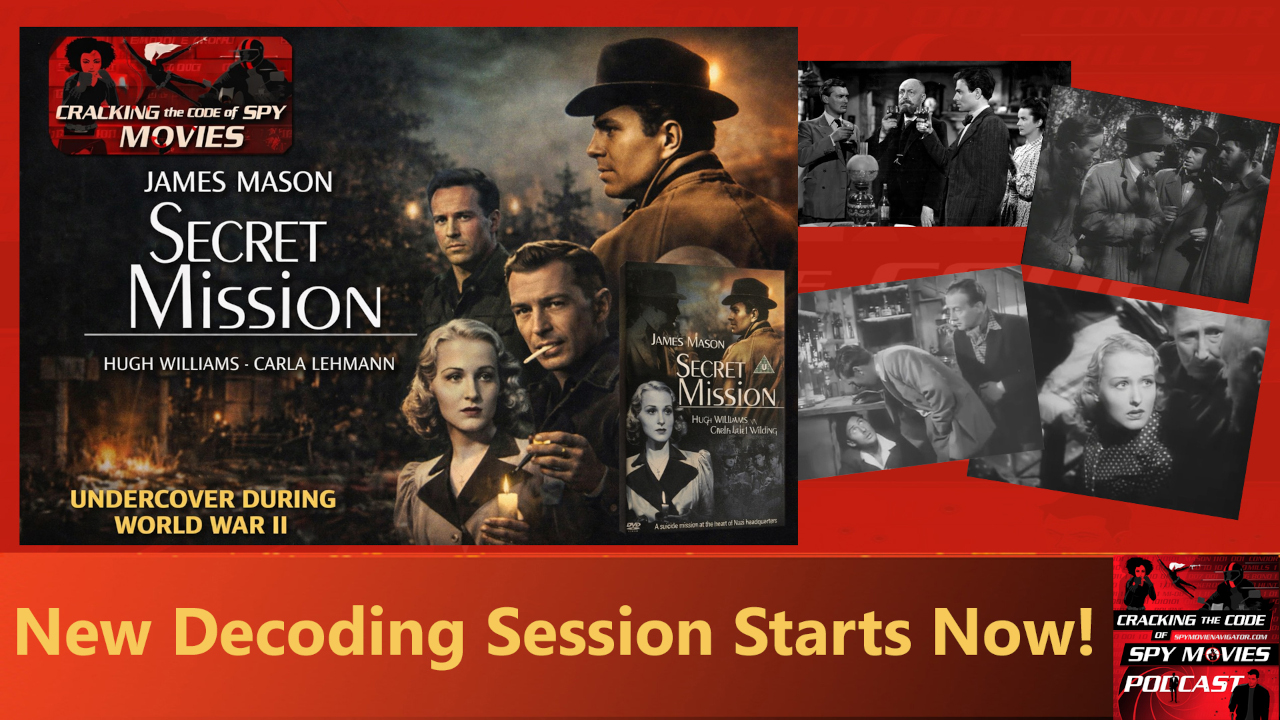 SECRET MISSION 1942 -Decoded | This episode, SECRET MISSION (1942) – Decoded explores one of the most unusual spy films ever made. We examine this wartime espionage movie created without hindsight or guaranteed victory SECRET MISSION Background In this episode of Cracking the Code of Spy Movies, we return to Britain in 1942. World War II is still raging, Europe is occupied, and the outcome is terrifyingly uncertain. Out of that uncertainty comes SECRET MISSION (1942), a spy film that treats espionage as survival, not fantasy. Unlike later spy movies, this film offers no gadgets, swagger, or invincible heroes. Instead, it presents secrecy, fear, restraint, and the danger of being noticed. Every choice matters, and every mistake risks lives. What we decode for SECRET MISSION (1942) The episode breaks down how SECRET MISSION functions as both cinema and wartime instruction. It was propaganda, but also a sober reflection of real intelligence work. The discussion places the film within its historical context, explaining why 1942 truly matters We analyze performances by James Mason, Hugh Williams, Carla Lehmann, and Michael Wilding. James Mason's quiet, observant presence stands in stark contrast to later Bond-style heroes. Here, being invisible is success. The episode also explores civilian involvement and moral cost. Helping a spy could destroy an entire family. We must also remember that trust is fragile, alliances are uncertain, and no one is fully safe. Spycraft takes precedence over action in this movie: Code phrases, compartmentalization, and limited knowledge drive the tension. This approach connects SECRET MISSION to later realistic spy films like The Third Man and Tinker Tailor Soldier Spy. Ultimately, this episode argues that SECRET MISSION reveals the foundation beneath modern espionage cinema. Before Bond became myth, spying was quiet, dangerous, and rarely celebrated. That reality is what makes this forgotten film worth decoding today. Episode Highlights How this movie coming out DURING the war was impacted by the fact that outcome of World War II hadn't yet been decided. Espionage is portrayed as restraint, not spectacle James Mason in an early, anti-Bond role Realistic spycraft over action and gadgets Wartime cinema as psychological preparation In addition, we talk about this poster that was used in the movie. Is it a real poster? What was its purpose? Tell us what you think about our decoding of SECRET MISSION (1942) Have you seen this movie yet? If not, did listening to this episode make you want to watch it? On the other hand, if you have seen it, where do Dan and Tom get it right, and where do they get it wrong? Let us know your thoughts, ideas for future episodes, and what you think of this episode. Just drop us a note at info@spymovienavigator.com. The more we hear from you, the better the show will surely be! We'll give you a shout-out in a future episode! You can check out all our CRACKING THE CODE OF SPY MOVIES podcast episodes on your favorite podcast app or our website. In addition, you can check out our YouTube channel as well. Episode Webpage: https://spymovienavigator.com/episode/secret-mission-1942-decoded/ #SecretMission1942 #ClassicSpyMovies #SpyFilmHistory #WartimeCinema #WWIISpyMovies #JamesMason #EspionageFilms #Spycraft #FilmHistory #OldHollywood #BritishCinema #PreJamesBond #SpyMoviePodcast | — | ||||||
| 2/3/26 |  SPY vs. SPY - How a MAD Magazine Comic Shaped Spy Cinema | SPY vs SPY - How a MAD Magazine Comic Shaped Spy Cinema explores how a silent comic changed espionage storytelling forever. In this episode, we reveal why Spy vs. Spy matters more to spy movies than most audiences realize. This podcast episode from Cracking the Code of Spy Movies looks past punchlines. It uncovers influence, tone, and lasting ideas: Two identical spies, endless conflict, there are no winners. At first glance, Spy vs. Spy feels like pure comedy. But beneath the humor lies a brutal truth. There are explosions, traps, and sudden reversals. All done with a comedic twist. Episode Focus This episode focuses on how Spy vs. Spy captured Cold War thinking. · Paranoia ruled every decision. · Escalation never stopped. · Trust disappeared completely. We highlight how wordless storytelling shaped modern spy cinema. If you didn't know, there is no dialogue in Spy vs. Spy. Also, there is no exposition: only action and consequence. This visual language now defines spy films. We recently released an episode examining how James Bond and his villains are mirrors of each other. The episode also explores why mirrors matter in espionage stories. Listeners will hear how Spy vs. Spy predicted modern spy themes. How moral ambiguity replaced clear heroes. How technology became unreliable, and finally how victory became temporary. We also connect how Spy vs. Spy created lasting ideas that found their way into major spy franchises: James Bond, Jasone Bourne, Mission: Impossible, and modern Cold War thrillers. Rather than parody, Spy vs. Spy became a blueprint filmmakers still follow, often without realizing it. This episode is fast, focused, and insight‑driven. And it reveals how satire clarified espionage mechanics. If you love spy films, this is essential listening. If you study film storytelling, it's revealing. And if you enjoy uncovering hidden influence, it delivers. Episode Highlights · A comic strip predicted modern spy movie structure · Mirror logic that shaped heroes and villains alike · Silence reinforced visual spy storytelling · Escalation replaced resolution · Satire became the genre's blueprint This episode proves one thing clearly: Spy vs. Spy understood espionage better than most movies ever did. Tell us what you think about our look at Spy vs. Spy Were you familiar with this comic strip series? Had you seen the animated shorts? Do you agree with our analysis? Let us know your thoughts, ideas for future episodes, and what you think of this episode. Just drop us a note at info@spymovienavigator.com. The more we hear from you, the better the show will surely be! We'll give you a shout-out in a future episode! You can check out all our CRACKING THE CODE OF SPY MOVIES podcast episodes on your favorite podcast app or our website. In addition, you can check out our YouTube channel as well. Episode Webpage: SPY vs. SPY – How a MAD Magazine Comic Shaped Spy Cinema | — | ||||||
| 1/20/26 | 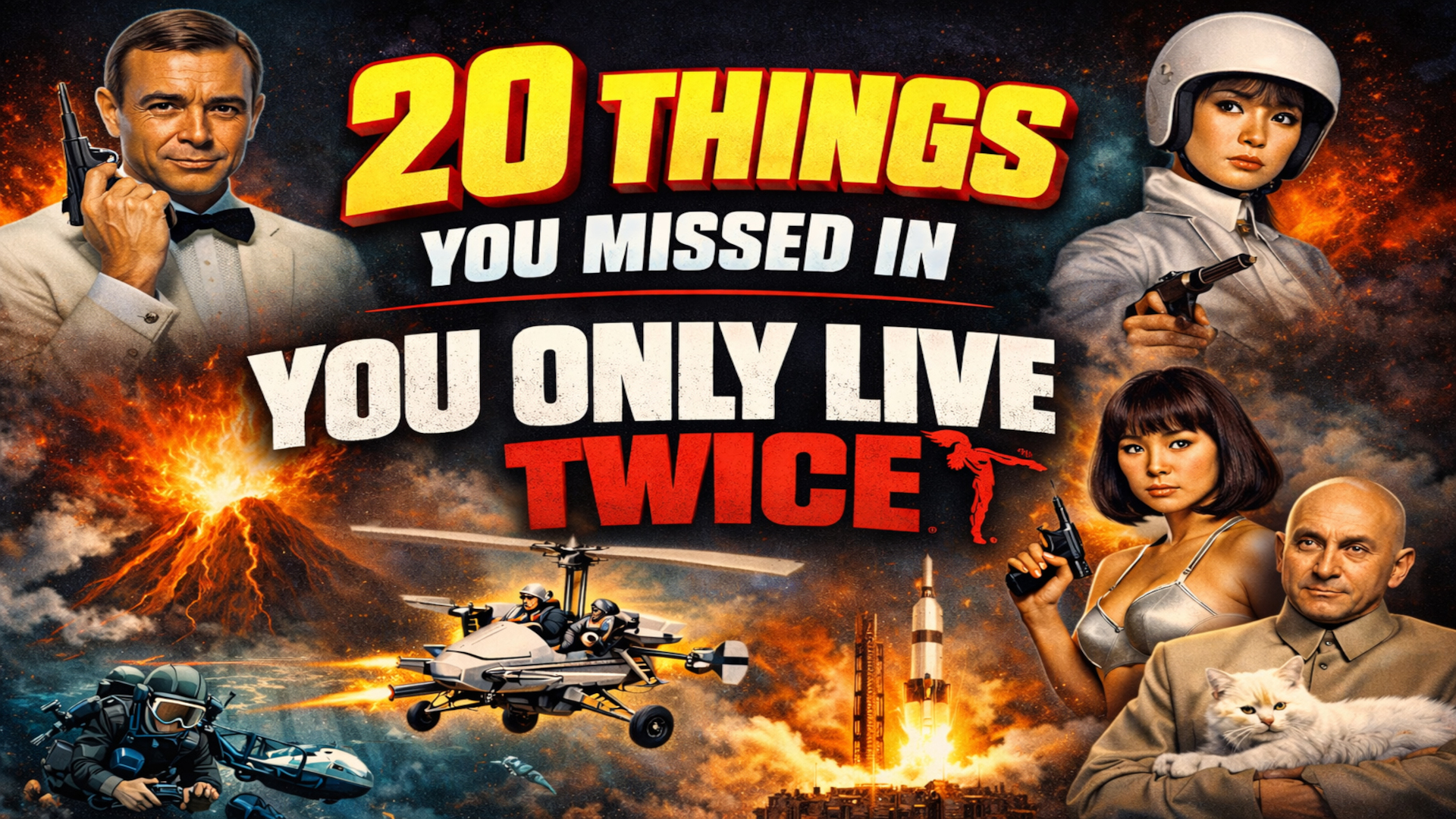 20 Things You Missed in YOU ONLY LIVE TWICE | f you're a James Bond fan, you won't want to miss our latest episode: 20 Things You Missed in YOU ONLY LIVE TWICE. In this deep‑dive discussion, we uncover 20 Things You Missed in YOU ONLY LIVE TWICE that even longtime Bond aficionados often overlook. From continuity errors to clever background details, cultural insights, filming quirks, and subtle storytelling decisions, this episode shines a spotlight on the hidden gems tucked inside the fifth Eon Productions Bond adventure. Hosted by Dan and Tom of Cracking the Code of Spy Movies, this episode explores everything from mispronunciations in NASA communications to Bond's surprising use of nicknames, mysterious wardrobe changes, and the unexpectedly impressive continuity work involving Bond's shoes and those hard‑to‑miss spats. You'll hear about set design details at Henderson's apartment, incorrectly repaired desk statues, and the symbolic use of the color orange to hint at Helga Brandt's dangerous duality. We also break down one of the most memorable sequences in the film: Little Nellie. From the autogyro's weapons to the number of helicopters chasing Bond, we uncover continuity oddities, filming inconsistencies, and blink‑and‑you‑miss‑them production shortcuts. The episode also dives into space capsule reflections, art replicas inside Blofeld's volcano lair, and the strange logic gaps surrounding Helga Brandt, Osato, and Bond's supposed "death." Dan and Tom bring context, humor, and historical insights to each moment—from the real‑life sumo wrestler and Samoan grappler who appear on screen, to the realistic but deadly phosgene gas used near the Ama fishing village. And of course, we explore the infamous volcano base itself. From improbable gadgets Bond suddenly possesses, to the dramatic (and scientifically questionable) destruction of the SPECTRE spacecraft. Plus, stay tuned for bonus observations on ninja entrances, frightened cats, references to Goldfinger, the Toyota 2000 GT convertibles made especially for the film, and clever audio design choices hidden throughout the final act. Whether you've seen the movie once or a hundred times, you'll walk away with brand‑new insights and a deeper appreciation for this iconic Bond classic. Join us for a fun, fast‑paced, detail‑packed episode that proves you really do only live twice—but you might need far more viewings to catch everything in YOU ONLY LIVE TWICE. Tell us what you think about our look at 20 Things You Missed In YOU ONLY LIVE TWICE How many of these did you miss? What did we miss from the movie? And, importantly, how many guys do you see in the car at the beginning of the chase when Bond leaves Osato's office? Let us know your thoughts, ideas for future episodes, and what you think of this episode. Just drop us a note at info@spymovienavigator.com. The more we hear from you, the better the show will surely be! We'll give you a shout-out in a future episode! You can check out all our CRACKING THE CODE OF SPY MOVIES podcast episodes on your favorite podcast app or our website. In addition, you can check out our YouTube channel as well. Episode Webpage: https://bit.ly/4qPaguI | — | ||||||
| 1/13/26 |  License to Change - The Future of Spy Movies | License to Change – The Future of Spy Movies explores the spy genre and why it now faces its greatest challenge yet. In this in-depth episode from Cracking the Code of Spy Movies, Dan and Tom examine whether traditional espionage storytelling can survive in a world defined by surveillance, data, and artificial intelligence. For more than sixty years, spy movies have taught audiences what espionage is supposed to look like: tailored tuxedos, exotic locations, ingenious gadgets, and clear-cut heroes and villains. From Dr. No through decades of James Bond dominance, spy films reassured audiences that control was possible in an unstable world. But as License to Change – The Future of Spy Movies makes clear, that fantasy no longer reflects reality. This episode traces the genre back to its Cold War roots, when fear, secrecy, and global tension shaped early spy cinema. It contrasts the glamorous escapism of Bond with darker, more realistic counterpoints like The Spy Who Came in from the Cold, The Ipcress File, and Tinker Tailor Soldier Spy. The discussion then moves to the seismic shift caused by The Bourne Identity, which introduced vulnerability, moral ambiguity, and institutional distrust into mainstream spy films. From there, the focus turns to modern espionage itself. Today's intelligence battles are fought with algorithms, metadata, drones, and predictive systems rather than pistols and car chases. The episode asks hard questions about how spy movies can dramatize invisible threats, system-based villains, and a world where privacy may no longer exist. It also explores how artificial intelligence, automated decision-making, and situational ethics are reshaping both real intelligence work and its cinematic portrayal. Finally, Dan and Tom look ahead. Who gets to be a spy in the future? What happens when access matters more than authority? And can James Bond remain relevant in an era where secrecy is nearly impossible? They argue that the genre's future will be darker, smarter, and more emotionally complex—less about winning clean victories and more about living with the consequences. This episode is essential listening for fans of James Bond, spy thrillers, modern cinema, and anyone curious about where espionage storytelling is headed next. Tell us what you think about our look at The Future of Spy Movies Finally, do you agree with our assessment here? Where do you see spy movies going? Let us know your thoughts, ideas for future episodes, and what you think of this episode. Just drop us a note at info@spymovienavigator.com. The more we hear from you, the better the show will surely be! We'll give you a shout-out in a future episode! You can check out all our CRACKING THE CODE OF SPY MOVIES podcast episodes on your favorite podcast app or our website. In addition, you can check out our YouTube channel as well. | — | ||||||
| 1/6/26 | 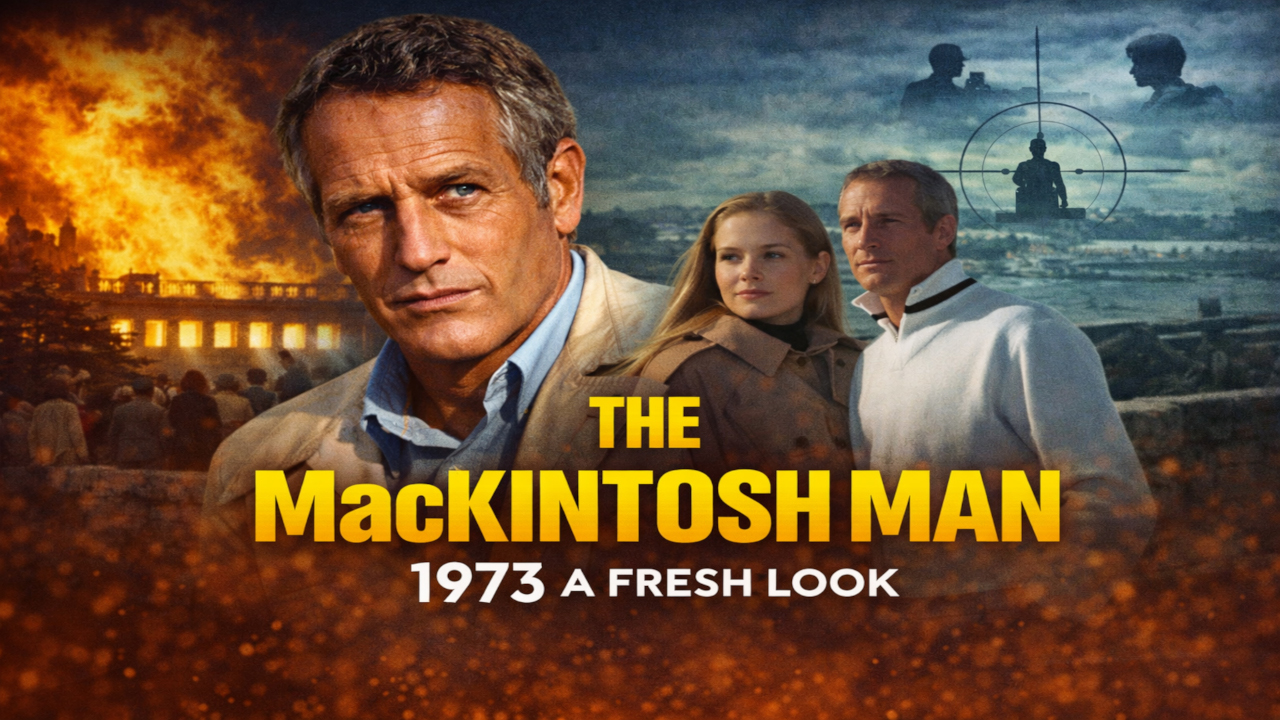 THE MACKINTOSH MAN - A Fresh Look | THE MACKINTOSH MAN (1973) rarely gets top billing in Cold War spy cinema—but should it? In this episode of Cracking the Code of Spy Movies, Dan and Tom take a fresh, clear-eyed look at John Huston's subdued espionage thriller starring Paul Newman and James Mason. Overshadowed by flashier spy movies, THE MACKINTOSH MAN instead leans into bureaucracy, moral ambiguity, and procedural realism. The question is simple: does that restraint elevate the movie—or drain it of tension? We break down the movie's place in the evolution of spy cinema, tracing its DNA back to genre heavyweights like THE SPY WHO CAME IN FROM THE COLD, THE IPCRESS FILE, and FUNERAL IN BERLIN. Rather than gadgets and glamour, this movie focuses on tradecraft, false defections, institutional mistrust, and information as the true weapon. Loyalty is provisional, romance is transactional, and victory feels administrative rather than triumphant. Dan and Tom explore the movie's acting performances in detail, from Paul Newman's restrained and often criticized lead turn to James Mason's quietly menacing antagonist, whose civilized threat anchors the movie. They also examine Dominique Sanda's enigmatic role, the strong supporting British character actors, and how John Huston's classical storytelling style "borrows and defangs" familiar spy tropes. The episode contrasts THE MACKINTOSH MAN sharply with James Bond movies, highlighting fundamental differences in ideology, structure, and tone. Where Bond offers agency, clarity, and spectacle, Huston delivers opacity, manipulation, and unease. The discussion also covers reception, pacing issues, production trivia, and real-world influences behind the prison escape and defection plot. Whether you love slow-burn espionage or find it frustratingly opaque, this episode digs deep into what THE MACKINTOSH MAN gets right—and where it loses its edge. A must-listen for fans of serious spy movies and Cold War cinema history. Tell us what you think about our fresh look at THE MACKINTOSH MAN Finally, do you agree with our assessment here? Are you a fan of this movie? Let us know your thoughts, ideas for future episodes, and what you think of this episode. Just drop us a note at info@spymovienavigator.com. The more we hear from you, the better the show will surely be! We'll give you a shout-out in a future episode! You can check out all our CRACKING THE CODE OF SPY MOVIES podcast episodes on your favorite podcast app or our website. In addition, you can check out our YouTube channel as well. Episode Webpage: https://bit.ly/4jrIWAl | — | ||||||
Showing 25 of 355
Sponsor Intelligence
Sign in to see which brands sponsor this podcast, their ad offers, and promo codes.
Chart Positions
17 placements across 17 markets.
Chart Positions
17 placements across 17 markets.