
Crafting Scotland - meet the hands and hearts behind Scottish Heritage Crafts
by Kerstin Devine
Is this your podcast?Insights from recent episode analysis
Audience Interest
Podcast Focus
Publishing Consistency
Platform Reach
Insights are generated by CastFox AI using publicly available data, episode content, and proprietary models.
Total monthly reach
Estimated from 2 chart positions in 2 markets.
By chart position
- 🇧🇷BR · Leisure#4630K to 100K
- 🇳🇿NZ · Leisure#112500 to 3K
- Per-Episode Audience
Est. listeners per new episode within ~30 days
15K to 52K🎙 ~2x weekly·22 episodes·Last published 5d ago - Monthly Reach
Unique listeners across all episodes (30 days)
31K to 103K🇧🇷97%🇳🇿3% - Active Followers
Loyal subscribers who consistently listen
12K to 41K
Market Insights
Platform Distribution
Reach across major podcast platforms, updated hourly
Total Followers
—
Total Plays
—
Total Reviews
—
* Data sourced directly from platform APIs and aggregated hourly across all major podcast directories.
On the show
Recent episodes
Sometimes you don't choose your calling. It chooses you!
Jun 1, 2026
42m 09s
A surprising thread running through Scotland's heritage story....
Apr 20, 2026
37m 39s
Scottish Leather Craft: Tradition, Sustainability and Handmade Heritage
Apr 13, 2026
37m 23s
Castle Apothecary: Where Scottish Heritage Meets Modern Skincare
Apr 3, 2026
29m 36s
A woodcarvers tale - literally MADE IN SCOTLAND
Mar 23, 2026
1h 01m 54s
Social Links & Contact
Official channels & resources
Official Website
Login
RSS Feed
Login
| Date | Episode | Description | Length | ||||||
|---|---|---|---|---|---|---|---|---|---|
| 6/1/26 |  Sometimes you don't choose your calling. It chooses you! | In this episode I speak to two talented musicians who both share their deep respect for Scotland’s oldest national instrument. No, not the bagpipes but the harp! Harp playing has its roots stretching back to Pictish stone carvings over a thousand years ago, and yet most people don’t even know it exists. Bill Taylor calls it “cultural amnesia,” and together with master harp maker Graham Muir, they are quietly working to change that from their base in the Scottish Highlands.Bill’s story is one of those moments where life just pulls you in a direction you never expected. A single concert in upstate New York in the early 80s, where a very young Sylvia Woods was playing, turned a librarian into a musician, and eventually drew him all the way across the Atlantic for good. Sometimes you don’t choose your calling, it chooses you!Graham’s path to harp making is equally fascinating, running through electric violins, offshore engineering, and furniture making before landing (almost by accident) at the workbench where he now crafts instruments from solid blocks of Scottish sycamore, some based on designs over a thousand years old.And here is something that really surprised me: there is no such thing as the Scottish harp. There are dozens of them, wire-strung, gut-strung, bray, medieval, modern. Each with its own unique sound, technique, and personality. The right one, they both agree, will find you.Oh, and if you have ever walked through Stirling Castle and heard that strange, beautiful, hypnotic music drifting through the gallery? That is Bill. Playing a reconstruction of music carved into a 16th century stone portrait head. I had no idea, and I was completely blown away when he told me!Tune in for a fascinating conversation about craft, history, and the music that has been woven into the soul of Scotland for centuries. To get in touch with either Bill or Graham, check out these websites:https://www.billtaylor.eu/index.asphttps://www.ardival.comThank you for listening to the podcast. I would love to know what you’re taking away from this episode.If you are a crafter in Scotland and would like to be a guest on this podcast, then please complete this short form - https://form.typeform.com/to/kUUWIPfRTo stay in touch and find out about upcoming guests then visit me over on Instagram and follow along - https://www.instagram.com/devinetoursofscotland/In case this inspires you not only to be more creative but also plan a holiday in Scotland and would like a little help with planning your trip or even like me to guide you in part or for the entire duration of your stay, then check out my website and use the contact form to get in touch - https://devinetoursofscotland.co.uk This is a public episode. If you would like to discuss this with other subscribers or get access to bonus episodes, visit devinetoursofscotland.substack.com | 42m 09s | ||||||
| 4/20/26 |  A surprising thread running through Scotland's heritage story.... | In this episode of Crafting Scotland, I sit down with Sandra Benn, founder of Chiya & Chai Tea Tastings, to explore a surprising thread running through Scotland’s heritage story — tea. What begins as a tale of overwhelm at a posh afternoon tea becomes a fascinating journey into forgotten Scottish history, living craft traditions, and the unexpected pleasure of simply slowing down.Sandra shares how her curiosity led her to discover five Scottish pioneers who played pivotal roles in bringing tea from China to the rest of the world — figures who are celebrated across Asia, yet largely unknown on home soil. She unpacks the remarkable story of James Taylor from Auchenblae, Aberdeenshire — now known as the Father of Ceylon Tea — and reveals the extraordinary full-circle moment linking a modern-day Scottish tea grower to those very same pioneers.The conversation weaves together themes that are deeply familiar to the Crafting Scotland community: the power of gathering together, working with your hands, sharing stories, and finding meaning in slow, deliberate moments. Whether it’s the women of Harris waulking the tweed, or a veterans’ wellbeing group crafting side by side with cups of tea in hand, Sandra makes the case that tea has always been woven into the fabric of Scottish community life.Kerstin and Sandra also discuss Scotland’s little-known status as one of the world’s most northerly tea-growing nations, and why afternoon tea deserves to be appreciated beyond the cake stand.This is an episode for the curious, the heritage-lovers, and anyone who’s ever reached for an Earl Grey just because it felt safe — and wondered if there might be something more.About Sandra BennShe creates immersive, accessible tea experiences for individuals, visitors, corporate groups, and community organisations. Her work spans private tastings, collaborative experiences (including scone-making and chocolate pairings), and community wellbeing events with organisations such as Veterans Tribe Scotland. Sandra’s motto: It’s always tea time.Find Sandra at [chiyaandchai.co.uk] and on social media LinkedIn and Instagram.Thank you for listening to the podcast. I would love to know what you’re taking away from this episode. Drop me a DM on Instagram or put a comment in wherever you’re listening to the podcast. I will reply. If you are a crafter in Scotland (or know one that would be ideal for this podcast) and would like to be a guest on this podcast, then please complete this short form - https://form.typeform.com/to/kUUWIPfRTo stay in touch and find out about upcoming guests then visit me over on Instagram and follow along - https://www.instagram.com/devinetoursofscotland/In case this inspires you not only to be more creative but also plan a holiday in Scotland and would like a little help with planning your trip or even like me to guide you in part or for the entire duration of your stay, then check out my website and use the contact form to get in touch - https://devinetoursofscotland.co.uk This is a public episode. If you would like to discuss this with other subscribers or get access to bonus episodes, visit devinetoursofscotland.substack.com | 37m 39s | ||||||
| 4/13/26 |  Scottish Leather Craft: Tradition, Sustainability and Handmade Heritage | There is a moment many makers speak of, a quiet, almost unexplainable turning point when something simply clicks.For Simon Harvey Potts, that moment happened not in Scotland, but in the sunlit streets of Granada in southern Spain. Surrounded by artisans, guided by generous hands, and working with leather for the very first time, he discovered what would become his life’s work.In this episode of Crafting Scotland, Simon takes us on a journey from those early, self-taught beginnings — learning traditional hand-stitching techniques and travelling across Europe — to becoming the owner and master maker behind Mackenzie Leather in Edinburgh.What unfolds is not just a story about leatherwork, but about the deeper meaning of craft itself.We explore the balance between creativity and tradition. The freedom of designing organically with the material, and the discipline of mastering time-honoured techniques. Simon shares how these two worlds have shaped his work, allowing him to create pieces that are both expressive and enduring.At the heart of the conversation lies a powerful idea: that craft is not only about making objects, but about sustaining knowledge, culture, and connection.From the use of oak bark–tanned leather — a process rooted in centuries-old, sustainable practices — to the endangered art of sporran making, Simon reflects on what it truly means to carry a tradition forward in the modern world.And perhaps most importantly, we talk about people: the makers, the learners, and the curious travellers who step into a workshop not just to buy, but to understand.Because when you meet the maker, something changes. The object becomes a story. And the story becomes part of you.This is episode comes right out of the workshop environment of Mackenzie Leather. It transports us into the heart of the business with its sounds and muffled conversations, highlighting the importance of maker-customer relationships. To find out more about Mackenzie Leather, their product range of luxury leather goods and where to visit them in Edinburgh, check out their website or follow them on Instagram. Time flew by talking to Simon and he stands testament together with his wife Elena, who in Simon’s own words is his anchor, the dreamer, the optimist, the driving passion, the flow and the creative force behind the brand. I sincerely hope, you enjoy listening to this deep conversation as much as I had recording it. As always, thank you for listening to the podcast. I would love to know what you’re taking away from this episode.If you are a crafter in Scotland and would like to be a guest on this podcast, then please complete this short form - https://form.typeform.com/to/kUUWIPfRTo stay in touch and find out about upcoming guests then visit me over on Instagram and follow along - https://www.instagram.com/devinetoursofscotland/In case this inspires you not only to be more creative but also plan a holiday in Scotland and would like a little help with planning your trip or even like me to guide you in part or for the entire duration of your stay, then check out my website and use the contact form to get in touch - https://devinetoursofscotland.co.uk This is a public episode. If you would like to discuss this with other subscribers or get access to bonus episodes, visit devinetoursofscotland.substack.com | 37m 23s | ||||||
| 4/3/26 |  Castle Apothecary: Where Scottish Heritage Meets Modern Skincare | What happens when a 30-year career in clinical aromatherapy, a global pandemic, and a 14th-century Scottish castle collide? For Alison MacColl, founder of Castle Apothecary, the answer is a skincare range that doesn’t just smell extraordinary, but that tells a story stretching back centuries.Alison’s origin story is both surprising and deeply personal, born out of a very common COVID-era problem that her professional background gave her a unique way to solve. The solution she found wasn’t new, it turns out Scottish women had been doing something remarkably similar for hundreds of years, right down to the very plants she uses today.Her ingredients aren’t chosen at random. Each one connects to a living thread of Scottish heritage. From the walled medicinal gardens of historic castles, to Highland crofting traditions that predate modern medicine, to a family memory from the Isle of Mull that perfectly captures how this knowledge was once passed down. The parallels are striking, and more than a little magical.What’s equally fascinating is the science behind why her products stop people in their tracks quite literally. There’s also the small matter of where she actually makes everything. A detail that, once revealed, makes the name Castle Apothecary feel less like branding and more like a statement of fact.The business itself is quietly building something impressive, with stockists now appearing across Scotland in some unexpected places and new product launches this spring that sound genuinely worth seeking out.If you’ve ever picked up a beautifully made Scottish skincare product and wondered about the hands and the thinking behind it, this episode is for you.Listen to the full episode of Crafting Scotland to hear Alison’s full story.Where to Find Castle Apothecary ProductsEdinburgh Scottish Design Exchange — George StreetGlasgow Scottish Design Exchange — Sauchiehall Street (recently moved from Buchanan Galleries to their own premises)Near Loch Lomond Connick Crafts — Drummin, near Loch LomondForfar Gallery 55Upcoming RetreatWhat: A Creative Retreat Day for Women When: Sunday 26th April, 10am – 3.30pm Where: The Tea House on the Loch, GartcoshWhat’s included:* Perfumery workshop led by Alison* Creative journaling* Connecting with your inner voice session* Deluxe afternoon teaFurther details of upcoming shows, pop-up stalls and retreats can be found on Alison’s website: https://castleapothecaryscotland.comThank you for listening to the podcast. I would love to know what you’re taking away from this episode.If you are a crafter in Scotland and would like to be a guest on this podcast, then please complete this short form - https://form.typeform.com/to/kUUWIPfRTo stay in touch and find out about upcoming guests then visit me over on Instagram and follow along - https://www.instagram.com/devinetoursofscotland/In case this inspires you not only to be more creative but also plan a holiday in Scotland and would like a little help with planning your trip or even like me to guide you in part or for the entire duration of your stay, then check out my website and use the contact form to get in touch - https://devinetoursofscotland.co.uk This is a public episode. If you would like to discuss this with other subscribers or get access to bonus episodes, visit devinetoursofscotland.substack.com | 29m 36s | ||||||
| 3/23/26 |  A woodcarvers tale - literally MADE IN SCOTLAND | There’s a moment, somewhere between the steady rhythm of a carving knife and the quiet grain of a piece of wood, where a life begins to make sense.For John, that moment didn’t arrive all at once. It was shaped slowly over decades through sawdust-filled workshops, long apprenticeships, and the kind of learning that happens not from books, but from watching, doing, and trying again.He began, as many makers once did, in a school workshop. A good teacher, a spark of interest, and then ….. an apprenticeship. No grand plan. Just a trade to learn, a path to follow. Back then, furniture making was not the romantic craft we might imagine today. It was structured, efficient, often repetitive. Chairs produced in numbers. Processes refined for speed.And yet, within that world, something deeper was forming.An understanding of wood.Of patience.Of how skill lives in the hands.John became good, really good. Good enough to lead a team. Good enough to recreate intricate, historical pieces with precision. But carving, the thing he would later become known for, came almost by accident.A piece of outsourced carving returned to the workshop poorly done. His mentor looked at him and said, “You could do better.”So he picked up the chisels.No formal training. No rulebook. Just curiosity, persistence, and the quiet confidence that comes from years of working with your hands.There’s something striking in the way John speaks about learning. Not as something fixed or finished, but as a lifelong process. Even now, he remains open to new techniques, new ideas, even suggestions from beginners.Because craft, as John sees it, is never truly mastered. Only deepened.But the world around him was changing.The materials he once worked with (tropical hardwoods like mahogany) came from a time when questions of sustainability were rarely asked. Furniture, once built to last generations, was increasingly replaced by mass-produced, disposable pieces. Apprenticeships began to disappear. Workshops fell silent.And yet, in Scotland, particularly in the quiet corners of estates and rural communities, the echoes of an older way of working still remain. Old joiners’ workshops. Blacksmiths’ forges. Spaces that once held entire ecosystems of craft.Spaces that, perhaps, could again.At sixty, John made a decision that many only dream of.He stepped away.Away from the pressure.Away from the expectations.Away from the life he had built.And he began again, this time in Scotland.When visiting a friend on the Isle of Skye, at a simple kitchen table, “Carving in Scotland” was born. Not as a business plan, but as a way of living.Today, his workshop is small. Intentionally so.A wooden shed. A second-hand lathe. A handful of tools.No large machines. No production lines. Just wood, and time, and the quiet space to think.He sources his materials locally often within a few miles. Oak, ash, sycamore, cherry. Sometimes even from the reject pile. Each piece carries its own story, its own shape waiting to emerge.Because John doesn’t begin with a fixed design.He begins with the wood.“They happen while I’m doing it,” he says of his work. Spoons, spurtles, long-handled shoehorns. No two are ever quite the same. Each one a small conversation between maker and material.Nothing is wasted. Offcuts become smaller pieces such as spice spoons, wooden hearts. Even the scraps find purpose.It’s not sustainability as a label. It’s simply… how he works.In a world of souvenirs stamped “Designed in Scotland” but made far away, John’s work stands in quiet contrast. It is undeniably of place. Of hand. Of time.And perhaps that’s why it resonates.Because what he offers is not just an object, but a connection to the material, to the process, to the place it came from.There’s an eagle carved into his work.A maker’s mark.He first saw them on Skye. Golden eagles, wide-winged and effortless against the sky. For him, they came to represent something deeply personal.Freedom.Freedom from difficult clients.From financial pressure.From making what others expected of him.“Now I make what I want to make,” he says. “And it makes me happy.”And that, perhaps, is the quiet heart of his story.Not success in the conventional sense. Not scale or growth or recognition.But contentment.Time seemed to stand still when John and I talked. Before we knew it, an hour had passed and to be honest, we could have easily continued. Do listen to the full story and find out in the end how the story comes full circle. John sells his hand carved wooden spoons, spurtles and other trinkets in The Scottish Textiles Showcase shop located at 20 St Mary’s Street in Edinburgh. Get in touch with John:You can check out the Scottish Textiles Showcase website with John’s articles here .John also has his own instagram handle for Carving in ScotlandThank you for listening to the podcast. I would love to know what you’re taking away from this episode.If you are a crafter in Scotland and would like to be a guest on this podcast, then please complete this short form - https://form.typeform.com/to/kUUWIPfRTo stay in touch and find out about upcoming guests then visit me over on Instagram and follow along - https://www.instagram.com/devinetoursofscotland/In case this inspires you not only to be more creative but also plan a holiday in Scotland and would like a little help with planning your trip or even like me to guide you in part or for the entire duration of your stay, then check out my website and use the contact form to get in touch - https://devinetoursofscotland.co.uk This is a public episode. If you would like to discuss this with other subscribers or get access to bonus episodes, visit devinetoursofscotland.substack.com | 1h 01m 54s | ||||||
| 3/9/26 |  Knitting for work or how to put flesh on the bones and making Scottish Textile a thing. | I’m thrilled to share this episode of Crafting Scotland, where I had the pleasure of chatting with Susan Anderson, the publishing editor of the Journal of Scottish Yarn. If you haven’t yet come across this beautiful biannual publication, think part magazine, part reference book, you’re in for a treat.Susan and I both had a similar visions of making Scottish Crafts, in Susan’s case Scottish Textiles, more accessible in the modern world. Susan’s journey into the world of Scottish textiles is inspiring. After 30 years in financial services, she followed her passion for knitting and history to create a dedicated platform for Scottish fibres, yarns, and heritage. What started as a personal curiosity has blossomed into a publication that celebrates everything from tartan and tweed to cashmere, capturing centuries of craftsmanship.When I got a hold of the first issue of The Journal of Scottish Yarn back in 2022, I was hooked to the depth of information, beautiful curated stories and amazing knitting or crochet patterns at the end of the journal. I knew instantly that this was going to be my go to magazine for textiles Made in Scotland. The Journal of Scottish YarnLaunched in 2022, the journal is published every May and November, though Susan hopes to move the autumn issue forward to coincide with the Glasgow School of Yarn which is normally held in October. Each issue balances rich historical insights with contemporary projects, including patterns for knitting and crochet, making it both a collectible and a practical resource for crafters.From her very first issue, Susan wanted to highlight Scotland’s native sheep breeds, collaborating with illustrator Mandy Tate to map out all ten breeds across the country. She also drew inspiration from Portuguese textile entrepreneur Rosa Pamar, whose work in documenting native sheep influenced the Journal’s approach. Not only does the journal explore sheep breeds like the Scottish Blackface, the North Ronaldsay (seaweed-eating sheep from Orkney), and the Beaumont (Scottish Merino), but it also tells the fascinating stories behind them (some dating back centuries).One of the most remarkable aspects of Susan’s work is how it brings people together. She has connected farmers, mill owners, spinners, and dyers, including Louise at Jamieson’s of Shetland to Gillian at Lunan Bay into a community passionate about celebrating and preserving Scotland’s textile heritage. This network even led to discussions with the Scottish Government, chaired by Lorna Slater, Green MSP, highlighting the importance of storytelling and recognition for Scottish textiles on a national level.Susan explained that themes part of the discussions were: strategy, training and apprenticeships, as well as marketing especially Made in Scotland. Looking Ahead: Issue 9 and BeyondSusan is currently working on Issue 9, set to release this May. It coincides with Unravel Spring Festival (13th - 15th Feb) and the Tangled Galashiels Fibre Festival (30th & 31st May). This issue celebrates the work of designer Bernard Klein, with contributions from talented crafters including Samira Hill, the journal’s tech editor. Expect inspiring designs and an in-depth exploration of Klein’s impact on Scottish textiles.Upcoming events:* Online Talk: Scottish Wool Breeds, 10th March at 10:00 am BST on Zoom* Woolly Good Edinburgh, 17th & 18th April 2026* Tangled Galashiels 30th & 31st May 2026I personally must say, that for me, what makes Susan’s work so special is how she brings depth and context to the materials in our hands. Each page of the journal is a doorway into Scotland’s textile past and present. Whether you’re a fibre enthusiast, a crafter, or just someone fascinated by the stories woven into the fabric of our culture, there’s something here for everyone.You can explore past issues, purchase the journal, or find links to Susan’s talks through the links in the show notes. And trust me, you’ll want to keep these journals on your bookshelf as much as your favourite craft books.Where to find Susan:Website: https://yarnjournal.comInstagram: https://www.instagram.com/thejournalofscottishyarns/Facebook: https://www.facebook.com/YarnJournalSubscribe, Share & Follow:Don’t miss future episodes celebrating Scotland’s traditional crafts and the incredible people keeping these skills alive. Subscribe to Crafting Scotland on Apple iTunes, Spotify or wherever you listen to your favourite podcasts.TAKE PART IN SEASON TWO:Share Your Story:Do you have a traditional Scottish craft story to share or know someone who does? I’d love to hear from you! Use this Contact Form to get in touch or through my website or social media.Support the Show:If you enjoyed this or any episodes from Season One, please leave us a rating and review. It helps other craft enthusiasts discover our podcast!As always, thank you for listening. Until next time 💜 This is a public episode. If you would like to discuss this with other subscribers or get access to bonus episodes, visit devinetoursofscotland.substack.com | 26m 41s | ||||||
| 3/5/26 |  Weaving Connections | As 2026 begins, the latest episode of Crafting Scotland brings listeners an inspiring conversation with James Donald, a master weaver, teacher, and maker based in Edinburgh. Known for his slow, considered approach to textiles, James combines local fibres, traditional skills, and a touch of global influence to create work that is deeply human and meditative.James’s journey into weaving began at the Duncan of Jordanstone College of Art, where he graduated in 1993 with first-class honours in constructed textiles. While initially drawn to tapestry weaving, he discovered a profound connection with cloth weaving during his studies. A travel award took him to Australia, where serendipity led to a three-month artist residency at the Canberra Institute of the Arts. There, he not only honed his rug-making skills but also found a new passion for teaching, an avenue he had never anticipated but quickly embraced.Returning to Scotland, James established the Weave Studio in 1997 and later taught at the Scottish College of Textiles and Dundee College for many years. Over time, he noticed a gap in accessible weaving courses across Scotland, inspiring him to expand his weekend and evening classes. Today, he teaches a diverse cohort from GPs and barristers to architects and artists, creating an environment where students learn collaboratively, discovering the joy of weaving together.James describes weaving as a meditative practice. The process from preparing the loom to threading needles, slows time and provides a space for reflection, creativity, and stress relief. His teaching approach celebrates experimentation and shared discovery, with students encouraged to explore materials like Merino lambswool, Shetland yarn, and cotylin. This focus on “slow craft” parallels the principles of slow travel, emphasizing immersion, mindfulness, and a deeper connection with materials and process.Influenced by Japanese textile traditions, particularly saori weaving and Sashiko stitching, James continues to innovate in his own work, incorporating stitched designs directly into fabric while maintaining a strong connection to Scottish fibre heritage. His recent projects also explore the use of “retired stock” yarn, transforming overlooked materials into beautiful, living textiles.Beyond technique, James treasures the relationships formed through his classes. Many students return regularly, building a supportive community that extends beyond the studio. Visiting exhibitions together, sharing skills, and forming lasting friendships that’s what makes it so special. For James, this is the true reward of teaching: holding a space where people from all walks of life can connect, create, and find respite from their busy lives.Through his work, James Donald embodies the enduring relevance of heritage crafts. He demonstrates that weaving is not just a skill, but a form of connection—to materials, to tradition, and to each other. As he continues to develop new techniques and nurture his community, it’s clear that Scottish textile arts remain vibrant, evolving, and deeply human.To find out more about the courses James runs, visit his website here:PICK ONEYou can also follow his Instagram handle where he mainly showcases the design and artwork of his students: Instagram HandleSubscribe & Follow:Don’t miss future episodes celebrating Scotland’s traditional crafts and the incredible people keeping these skills alive. Subscribe to Crafting Scotland on Apple iTunes, Spotify or wherever you listen to your favourite podcasts. TAKE PART IN SEASON TWO:Share Your Story:Do you have a traditional Scottish craft story to share or know someone who does? I’d love to hear from you! Use this Contact Form to get in touch or through my website or social media.Support the Show:If you enjoyed this or any episodes from Season One, please leave us a rating and review. It helps other craft enthusiasts discover our podcast!As always, thank you for listening. Until next time 💜 This is a public episode. If you would like to discuss this with other subscribers or get access to bonus episodes, visit devinetoursofscotland.substack.com | 43m 06s | ||||||
| 12/8/25 |  Beyond the Canvas: Meet Michelle Cohen | Oh, you’re going to love this conversation!I had the absolute pleasure of sitting down with Michelle Cohen, and honestly, her story is one of those that just makes you smile. You know when you meet someone and you can just feel their passion for what they do? That’s Michelle.So here’s the thing, Michelle paints on glass. Not canvas, not paper: GLASS. And when I tell you her work is stunning, I mean you literally have to look twice to figure out if you’re looking at a painting or a photograph. It’s that good.Michelle’s originally from the prairies in Saskatchewan, Canada, which are about as flat as you can get. So when she moved to Glasgow permanently back in 2011, she completely fell head over heels for our mountains and coastlines. I mean, can you blame her? And you can see that love affair with Scottish landscapes in most of the pieces she creates.But what I really loved hearing about was how she discovered this whole glass-painting technique. Picture this: she’s living in Malaysia 20 years ago, a friend gives her some IKEA clip frames, and she just decides to pour acrylic paint all over them to see what happens. And boom 💥 she discovered this incredible way of creating depth and vibrancy that you just can’t get any other way. Now she’s pushing it further, going hyperrealistic with buildings and animals, seeing just how detailed she can get.To make it extra special though, Michelle frames many of her Scottish landscapes with reclaimed whisky barrel staves. Each piece of wood has its own history, its own story, and when you pair that with a Scottish landscape... it’s just magic.Now, if you’re in Glasgow, you might already know Michelle’s name because she’s been a massive part of our art community.Most recently though, after all that time putting everyone else first, Michelle’s finally taking time for herself. She’s got a pop-up shop at Excite in Braehead until January ‘26, and she’s just... painting. Creating. Getting into that flow state. And wait until you hear about her adventures: last year she sailed from Shetland to Lithuania on a 103-year-old ship during the summer solstice. I mean, come on! And next June, she’s heading to the northern Himalayas in Pakistan to do documentary photography for an eyesight charity. As someone whose entire livelihood depends on being able to see, helping people get glasses in rural villages is incredibly meaningful to her.What I really appreciated in our chat was Michelle’s perspective on protecting local heritage and community spaces. We talked about how important it is to preserve these venues that hold the soul of the city, even if they’re only 40-odd years old.So grab a cuppa, settle in, and come meet Michelle. Whether you’re interested in art techniques, community building, or just hearing from someone who’s found that beautiful balance between giving back and following their own creative path, this conversation has something for you.Find Michelle: Pop-up shop at Excite, Braehead (open until January) Instagram: @cohenart11 Facebook: Cohen - ArtSubscribe & Follow:Don’t miss future episodes celebrating Scotland’s traditional crafts and the incredible people keeping these skills alive. This episode concludes the first season and there are 14 wonderful artists talking about their crafts and their love for Scotland. If you not already have listened to those episodes, make sure you do. There’s something of interest for every crafter. Do subscribe to Crafting Scotland on Apple Podcasts, Spotify, or wherever you listen to podcasts.LOOKING FOR THE NEXT BATCH OF INCREDIBLE ARTISTS FOR SEASON 2 !! Share Your Story:Do you have a traditional Scottish craft story to share or know someone who does? I’d love to hear from you! Use this Contact Form to get in touch or through my website or social media.Support the Show:If you enjoyed this or any previous episode please leave us a rating and review - it helps other craft enthusiasts discover our podcast!As always, thank you for listening. It means a lot. 💙 This is a public episode. If you would like to discuss this with other subscribers or get access to bonus episodes, visit devinetoursofscotland.substack.com | 29m 52s | ||||||
| 12/1/25 | 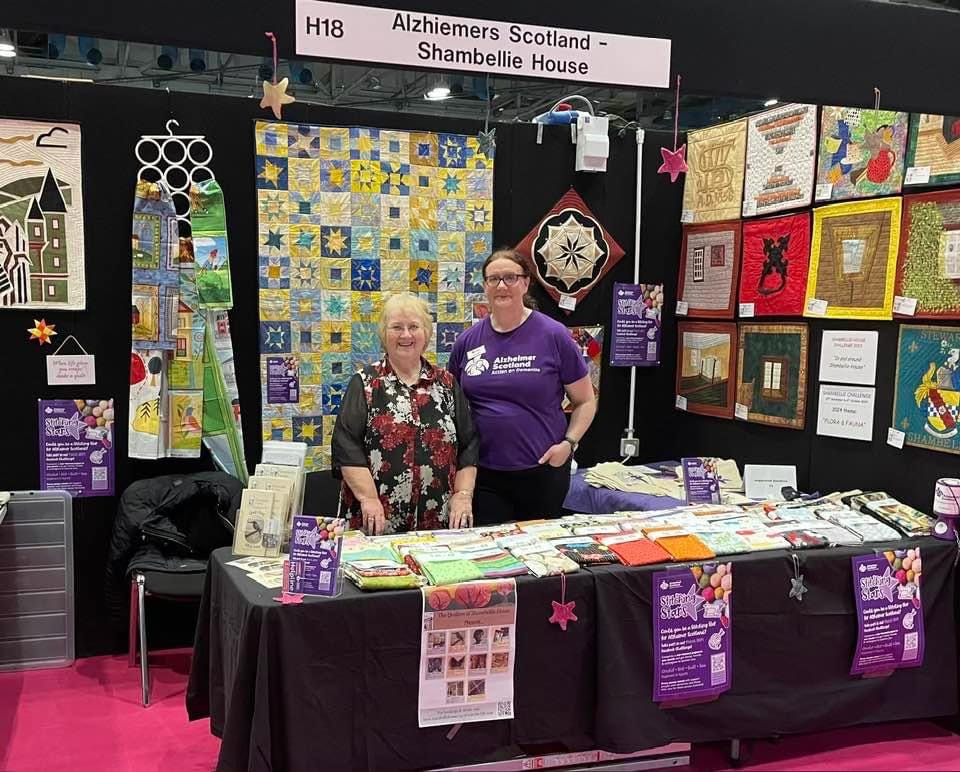 The Art of Quilting with Ann Hill, BEM | Join me for an inspiring conversation with Anne Hill, Alzheimer’s Scotland’s Quilter in Residence, as she shares her remarkable journey from learning to sew in Shetland to creating quilts that heal, comfort, and connect communities worldwide.What You’ll Discover:* The history and evolution of quilting in Scotland from necessity to art form* How memory quilts help dementia patients unlock forgotten memories* The remarkable story of a man who hadn’t spoken in 5 years until Football Memories sessions* Anne’s international “Changing Minds” project spanning 40 countries* Practical quilting tips from a master quilter with decades of experience* The therapeutic benefits of quilting for mental health and wellbeing* How quilts are being used in hospitals, for cancer patients, and premature babies* The difference between men’s and women’s approaches to memory quilts* Why symbols work better than photographs for triggering memoriesI met Ann for the first time when I took up a beginners quilting workshop in the winter of 2023/2024 which was absolutely wonderful. Her teaching style was warm, friendly and with a lot of patience!!It was held at Shambellie House near Dumfries, which is an excellent venue for smaller crafting classes. And since Ann lives not too far from the venue, she’s there quite often. In this episode, Ann takes us through the rich tradition of Scottish quilting and reveals how this ancient craft has evolved into a powerful tool for therapy, memory care, and social connection. From covering Hampden Park’s entire pitch with 5,012 quilts to sending 650 “quilted hugs” during COVID-19, Anne’s work demonstrates the profound impact that needle, thread, and fabric can have on people’s lives.As Alzheimer’s Scotland’s Quilter in Residence, Ann creates memory quilts and teaches quilting to everyone from primary school children to Rotary clubs. She is a past president and a member of the International Rotary Quilters. Her involvement and initiation of so many wonderful projects is a strong testament to her love for people and quilting. Contact & Donations:Ann welcomes fabric donations and speaking invitations. If you have fabric, curtains, sheets, ties, or other materials you’d like to donate, and cannot find your regional Scottish quilting guild contact, then please get in touch with Ann directly. She can then connect you with local quilting groups throughout Scotland to ensure your donations go to good use.You can find Ann on Facebook or via the Shambellie House website. If you wish to have a copy of Ann’s “Change your mind around the world” project booklet then you can download it HERE.Subscribe & Follow:Don’t miss future episodes celebrating Scotland’s traditional crafts and the incredible people keeping these skills alive. Subscribe to Crafting Scotland on Apple Podcasts, Spotify, or wherever you listen to podcasts.Share Your Story:Do you have a traditional Scottish craft story to share or wish to shout out about your unique craft in Scotland? I’d love to hear from you! Simply fill in this FORM or contact me through my website or social media.Support the Show:If you enjoyed this episode, please leave us a rating and review - it helps other craft enthusiasts discover our podcast!Thank you for listening! 💙 This is a public episode. If you would like to discuss this with other subscribers or get access to bonus episodes, visit devinetoursofscotland.substack.com | 37m 55s | ||||||
| 11/24/25 |  Natural Dyeing with Elisabeth Viguié Culshaw | I had the most wonderful conversation with Elisabeth Viguié Culshaw for this episode! She’s a natural dyer and botanical printer based in Glasgow’s West End, and her story is absolutely fascinating.Elisabeth didn’t always work with plants and dyes. For years, she was up and down ladders in a hard hat doing conservation work. But around 2015, she discovered botanical printing and everything changed. The transition took five years and in her own words she says:Scotland is lovely, but perhaps a bit too small for what I was trying to build.Covid changed everything and was the pivotal point for her. There’s her dye garden patch at Glasgow’s Botanic Gardens, where she hosts “Fling Blue” every September for those who are interested. It’s become quite special. A self-confessed “INDIGO GIRL”, Elisabeth gets technical for a bit about pigment creation and chemical processes and then takes us on a global journey. This episode is full of golden story nuggets and I’m sure the more you listen to it the more you discover. Find out about The Cotinus Community, Slowing Down and Reconnecting, Scotland’s Purple History and how anyone can Learn with Elisabeth.Some Quotes That Really Stuck With Me* “I get bored very quickly. I need to keep on learning.”* “It’s not so much the colour that you are getting from it, it’s actually the fact that it really roots you back into normal life.”* “When you work with plants, it suddenly resets your mind about the seasons, and that’s something we have so forgotten.”I could honestly have talked to Elisabeth all day! Her passion for natural dyeing, her global perspective, and the global stories she tells are absolutely captivating. Listen to the full episode to hear about the thin thread of connection that runs around the world through this ancient craft.Here is how you can connect with Elisabeth:Elisabeth's LinkTreeAs always, thank you for listening to the podcast.I would love to know what you’re taking away from this episode.If you are a crafter in Scotland and would like to be a guest on this podcast, then please complete this short form - https://form.typeform.com/to/kUUWIPfRTo stay in touch and find out about upcoming guests then visit me over on Instagram and follow along - https://www.instagram.com/devinetoursofscotland/In case this inspires you not only to be more creative but also plan a creative holiday in Scotland and would like to find out more about craft days out or tours, then use the contact form via my website to get in touch: https://www.devinetoursofscotland.co.uk This is a public episode. If you would like to discuss this with other subscribers or get access to bonus episodes, visit devinetoursofscotland.substack.com | 1h 11m 02s | ||||||
Want analysis for the episodes below?Free for Pro Submit a request, we'll have your selected episodes analyzed within an hour. Free, at no cost to you, for Pro users. | |||||||||
| 11/17/25 |  Traditional Scottish knitting patterns | In this episode I am talking to Fiona Nadyer, a skilled knitter who is the main knitting demonstrator for Sanquhar Gloves for the Sanquhar Knitting Tours, offered through the A’the Airts Centre. The town of Sanquhar is nestled in the River Nith Valley of Dumfries and Galloway, now home to Fiona, who is originally from the Kingdom of Fife. Fiona takes us right into the centuries-old tradition of Sanquhar knitting, dating back to the 16th & 17th centuries. She explains how this unique two-colour knitting pattern evolved around the 18th century as a distinctive selling point for local craftspeople during the Industrial Revolution in Scotland. The craft features 16 recognised patterns, with the most famous being “The Duke”, named after the Duke of Buccleuch who championed these gloves for their exceptional quality and durability.Several years back, I visited Sanquhar with my son and we also spent time at the Old Toll Both now a museum. Here are a view pictures I took at the time:Toll Booth, SanquharSampler on display at the museum as well as a stitched chronicle of the town, showing all recognised patterns. (All pictures are author’s own). Sanquhar Post Office (World Oldest!!)As you can see, Sanquhar isn’t just about knitting! This tiny town really packs a punch and here is why:* World’s oldest post office (dating from 1712!)* Castle dating back to the Scottish Wars of Independence (1100s!)* Iron Age remains in the area* Robbie Burns used to visit regularly* Stunning southwest Scotland countryside* Just 25 miles from Dumfries and KilmarnockAnd there is so much more…. This episode beautifully captures not just the technical aspects of a traditional craft, but the warmth and community spirit that keeps it alive in modern Scotland. So, sit back and have a listen for yourself. If you would like to find out more about A’the Airts Centre, visit their website here: https://www.atheairts.org.ukThere is also a dedicated website to the Sanquhar Pattern Designs, which you can find here: https://www.sanquharknits.comAs always, thank you for listening to the podcast.I would love to know what you’re taking away from this episode.If you are a crafter in Scotland and would like to be a guest on this podcast, then please complete this short form - https://form.typeform.com/to/kUUWIPfRTo stay in touch and find out about upcoming guests then visit me over on Instagram and follow along - https://www.instagram.com/devinetoursofscotland/In case this inspires you not only to be more creative but also plan a creative holiday in Scotland and would like to find out more about craft days out or tours, then use the contact form via my website to get in touch: https://devinetoursofscotland.co.uk This is a public episode. If you would like to discuss this with other subscribers or get access to bonus episodes, visit devinetoursofscotland.substack.com | 35m 25s | ||||||
| 11/10/25 |  Avesha DeWolfe - Sea-Inspired Slab Pottery and the Joy of Clay | In this heartfelt episode, we journey into the world of slab-built pottery with Avesha DeWolfe of Spiral Tide Pottery. Originally from Maine, Avesha has been working with clay for 38 years, since her mother surprised her with a kick wheel class at age 10. After moving to Scotland in 2009, she experienced firsthand how essential creating with clay is to her wellbeing when she went without a studio for two years and, in her own words, became “a real grumpy person.”Avesha shares her transition from wheel throwing to slab building, a technique she discovered through necessity and has never looked back from. All of her work is inspired by the sea: from the textures created using special shells she’s collected, to her custom-developed glazes that evoke tide lines, waves, and the deep ocean. Her signature pieces include jingle-lid pots with shells that create a delicate sound, bringing “just a little bit more joy” to everyday life.“Clay is always in charge... Don’t get too comfortable!”As both a social worker and part-time potter, Avesha opens her online shop seasonally four times a year. She beautifully articulates how working with clay connects us to thousands of years of human history: “When you’ve got your hands and you’ve got your clay under your fingernails and everything, you’re connected to something that goes way, way back.”We explore the forgotten pottery heritage of Scotland, particularly Glasgow’s once-thriving ceramic industry, and discuss the differences between clay types, from rough earthenware to finicky porcelain. Avesha offers invaluable advice for beginners: don’t get too attached to your first pieces, follow the basic rules, and remember that “clay is always in charge.”This episode is a meditation on craft as self-care, the importance of staying flexible and playful in creative practice, and the timeless connection between human hands and earth.People & Places MentionedSandy Periantozzi - American slab building potter whose DVD class inspired Avesha to explore slab building techniquesEve Campbell - Textile artist based in Fife, Scotland, who runs textile and printing workshops that have caught Avesha’s interest for future creative explorationKettle’s Pottery Supply, Portobello - Scottish pottery supplier where Avesha sources her toasted stoneware clayThe Ceramics School - Online platform that invited Avesha to create an online workshop on making jingle-lid potsMonlithko Pottery (mentioned as Let’s Go Pottery) - Venue in Scotland where Avesha is planning an in-person workshop for January.Connect with Avesha DeWolfeBusiness Name: Spiral Tide PotteryWebsite: https://spiraltidepottery.comInstagram: @spiraltidepotteryShop Updates: Opens seasonally four times per year (last opening: First week of November, 1st-7th) - get in touch with Avesha to see if any stocks leftOnline Workshop: Link available on website for learning to make jingle-lid potsAs always: THANK YOU for listening to the podcast.I would love to know what you’re taking away from this episode.If you are a crafter in Scotland and would like to be a guest on this podcast, then please complete this short form - https://form.typeform.com/to/kUUWIPfRTo stay in touch and find out about upcoming guests then visit me over on Instagram and follow along - https://www.instagram.com/devinetoursofscotland/In case this inspires you not only to be more creative but also plan a creative holiday in Scotland and would like to find out more about craft days out or tours, then use the contact form via my website to get in touch: https://devinetoursofscotland.co.uk This is a public episode. If you would like to discuss this with other subscribers or get access to bonus episodes, visit devinetoursofscotland.substack.com | 38m 25s | ||||||
| 11/3/25 |  A Basket Maker's Journey | I first met Max when I signed up for one of his basket weaving courses back in March and was immediately drawn to his teaching style. It was so clear, encouraging and simply fun. By the end of that session I could hardly believe I’d made a beautiful bird feeder out of some twigs!In this episode, Max shares how he discovered basketry, describing that first moment working with willow as feeling like something “in his DNA”. We wandered through the ancient roots of this craft and its inherent sustainability. Max explains how people traditionally worked with whatever grew around them and offers practical tips on testing plants for their flexibility.He also opens up about his creative process and the rhythm of his days working from a yurt workshop. We also touch on the deeper themes of foraging, biodiversity and our relationship with the natural world. Talking with Max reminded me that craft connects us to both our heritage and the landscape around us. Creativity can really grow from the simplest most instinctive beginnings. “I was taking aback when I started weaving by how enjoyable it is!”I found myself reflecting on this conversation with Max long after we finished recording. I wonder what will stay with you? Please let me know. If you wish to get in touch with Max, sign up to his newsletter and maybe book a workshop with him, here are his details:Instagram: https://www.instagram.com/maxjohnson_basketry?utm_source=ig_web_button_share_sheet&igsh=ZDNlZDc0MzIxNw==Website: https://maxjohnsonbasketry.co.ukAs always, thank you for listening to the podcast.I would love to know what you’re taking away from this episode.If you are a crafter in Scotland and would like to be a guest on this podcast, then please complete this short form - https://form.typeform.com/to/kUUWIPfRTo stay in touch and find out about upcoming guests then visit me over on Instagram and follow along - https://www.instagram.com/devinetoursofscotland/In case this inspires you not only to be more creative but also plan a creative holiday in Scotland and would like to find out more about craft days out or tours, then use the contact form via my website to get in touch:https://devinetoursofscotland.co.uk This is a public episode. If you would like to discuss this with other subscribers or get access to bonus episodes, visit devinetoursofscotland.substack.com | 32m 25s | ||||||
| 10/27/25 |  Tumbled treasures & the joy of restoring calm to everyday life - meet Caroline of Joy Revival Design | In this episode of Crafting Scotland, I chat with Caroline Mitchell, the creative mind behind Joy Revival Design, a bright and welcoming coastal studio in Portobello, Edinburgh. From sea glass jewellery and lampshade making to festive wreath workshops, Caroline has built a business that celebrates creativity, colour and calm, all just a few steps from the sea.Named after her grandmother, Joy, the business carries the same warmth and generosity that its name suggests. Caroline shares how Joy Revival Design began during lockdown, when daily beach walks with her two young sons turned into moments of mindfulness and discovery. Collecting pieces of sea glass, items once discarded, now smoothed and softened by the waves, became both a creative outlet and a new way of seeing beauty in the everyday.What started as a small experiment soon grew into something bigger: a thriving studio where locals and visitors alike can learn to make their own sea glass treasures. Caroline’s workshops have become a space where people come to unwind, connect, and rediscover the simple pleasure of making something by hand.In our conversation, Caroline speaks about her creative journey, from her early career in design and her love of vibrant colour to the joy of working with found materials and running a sustainable business. She also touches on Portobello’s rich glassmaking history, her mission to make craft accessible to everyone, and the sense of calm that comes from creating beside the sea.Full of laughter, warmth, and gentle wisdom, this episode captures the essence of coastal creativity. Caroline’s story is a reminder that inspiration can come from the simplest of places: a walk along the beach, a handful of tumbled glass, and the quiet decision to make something beautiful from what the waves have left behind.So pour a cup of tea, settle in, and let this seaside conversation inspire you to slow down, make with your hands, and maybe start your own little creative revival.I also hope, you’ll enjoy the little historic backstory to Scotland’s glassmaking industry just before the conversation with Caroline begins. Get in touch with Caroline here:https://joyrevivaldesign.co.uk/https://www.instagram.com/joy.revival.design/As always, thank you for listening to the podcast. I would love to know what you’re taking away from this episode.If you are a crafter in Scotland and would like to be a guest on this podcast, then please complete this short form - https://form.typeform.com/to/kUUWIPfRTo stay in touch and find out about upcoming guests then visit me over on Instagram and follow along - https://www.instagram.com/devinetoursofscotland/In case this inspires you not only to be more creative but also plan a creative holiday in Scotland and would like to find out more about craft days out or tours, then use the contact form via my website to get in touch:https://devinetoursofscotland.co.uk This is a public episode. If you would like to discuss this with other subscribers or get access to bonus episodes, visit devinetoursofscotland.substack.com | 30m 00s | ||||||
| 10/20/25 |  A weaver's tale from the Outer Hebrides! The Weaving Shed 🐑 | In this episode of Crafting Scotland, I travel (at least in spirit) to the windswept beauty of the Outer Hebrides to meet Miriam Hamilton, a weaver, designer, and maker based on the Isle of Lewis. Miriam runs The Weaving Shed, a small family business where creativity, craftsmanship, and crofting life are seamlessly woven together.Miriam’s story begins, as so many Hebridean craft stories do, with the landscape itself. The sound of the wind across the moor, the soft greys and blues of sea and sky, and the rhythmic motion of the loom that has been part of island life for generations. Together with her sisters, she has built a creative enterprise that designs and weaves unique tweeds inspired by the colours and textures of their surroundings, transforming them into garments, accessories, jewellery and art pieces that carry a real sense of place.We talk about how her journey as a weaver started as a child, sitting beside her mother and grandmother, learning by watching and doing — and how those early memories now guide her own teaching and mentoring of younger makers. Miriam’s work embodies the entire process of croft to cloth: from tending their own flock of sheep to dyeing, spinning and weaving the wool, ensuring that every thread tells a story rooted in the land.The conversation also drifts towards sustainability — not as a marketing buzzword, but as a lived philosophy. Miriam speaks about how nothing goes to waste on the croft, how offcuts are turned into small artworks or jewellery, and how their tree-planting project aims to restore and protect the fragile island ecosystem.And beyond the weaving, there’s another kind of creativity at play: the family’s lovingly restored traditional Hebridean cottage, now a tranquil holiday retreat that welcomes visitors to experience island life up close.This is a gentle, reflective and inspiring episode — one that captures the slow rhythm of Hebridean living, the deep connection between craft and community, and the quiet pride that comes from creating something truly by hand.So settle in with a warm drink and perhaps your latest project, and join us as we follow the threads of Miriam’s world — from sheep to tweed, from land to loom, from past to present. This is a public episode. If you would like to discuss this with other subscribers or get access to bonus episodes, visit devinetoursofscotland.substack.com | 27m 47s | ||||||
| 10/13/25 |  For the Love of Yarn — Colour, Craft and Sanctuary with Lisa Harland | In this episode of Crafting Scotland I chat with Lisa Harland, the radiant mind behind For the Love of Yarn. What started in Lisa’s kitchen nearly twenty years ago has grown into a bright, bustling studio that feels part yarn emporium, part cosy living room and part communal craft classroom.Lisa talks candidly about the early days: how a graphic-designer’s eye led her into dyeing yarn, how a suggested hobby became a lifeline through a difficult period of postnatal blues, and how that tiny spark turned into a business driven by colour, care and connection. Her studio is a place where customers can walk in, “squish” skeins, sit on a plush sofa with a cup of tea, and suddenly find themselves planning a whole new project, or simply stealing five minutes of calm.We explore the joyful, practical and ethical threads that run through Lisa’s work. She and her team champion heritage skills such as spinning (and teach it at every level: from spinning on a stick to working at an Ashford wheel), and they take real steps to rescue local fleeces that might otherwise be wasted. Lisa explains why visible mending and “meet & mend” events are about more than saving clothes: they’re about finding creative solutions, reducing waste, and reclaiming the value in the things we already own.You’ll also “meet” Jen, Lisa’s dye apprentice (and now indispensable studio partner), and hear about the everyday triumphs and hilarious disasters that come with running a hands-on, playful craft business. We hear about pink kitchen floors to nine-foot sheep signs. Throughout the conversation Lisa returns to the same simple, generous message: craft is for everyone. You don’t need perfect tools or perfect timing, you just need a bit of curiosity and the willingness to start.This episode is a warm invitation to slow down, make something with your hands, and find or build a little sanctuary of your own. If you’ve ever felt nervous about starting a new craft, Lisa’s story will gently persuade you to stop worrying and just get making.You can find more details about workshop events, new dyed wool, opening hours and so much more on Lisa’s website https://www.fortheloveofyarn.co.uk You can also find and follow Lisa & Jen here:Instagram: https://www.instagram.com/fortheloveofyarnTikTok: https://www.tiktok.com/fortheloveofyarnFacebook: https://www.facebook.com/fortheloveofyarnThank you for listening to the podcast. I would love to know what you’re taking away from this episode. If you are a crafter in Scotland and would like to be a guest on this podcast, then please complete this short form - https://form.typeform.com/to/kUUWIPfRTo stay in touch and find out about upcoming guests then visit me over on Instagram and follow along - https://www.instagram.com/devinetoursofscotland/In case this inspires you not only to be more creative but also plan a holiday in Scotland and would like a little help with planning your trip or even like me to guide you in part or for the entire duration of your stay, then check out my website and use the contact form to get in touch - https://devinetoursofscotland.co.uk This is a public episode. If you would like to discuss this with other subscribers or get access to bonus episodes, visit devinetoursofscotland.substack.com | 22m 26s | ||||||
| 10/6/25 |  From Yarn Hoarder to Wool Hub: Jam's Story | In this episode of Crafting Scotland, I chat with Jam, the vibrant force behind the Caledonian Wool Company in Fort William. What started as a love of yarn (and a little hoarding!) has grown into a welcoming wool shop celebrating Scottish and British fibres from small-scale farmers who know their sheep by name.Jam’s enthusiasm shines as she shares her mission: to spread happiness one ball of yarn at a time. From fortnightly live felting sessions on YouTube to shelves stocked with Shetland favourites and rare hand-spun treasures from islands like Eigg and Tyree, her shop is more than retail. It’s a space for connection, creativity, and joy.“Our wool comes from farmers who know every one of their sheep by name. That’s what makes it special.”You hear us laughing a lot during this conversation, while we also explore more serious topics like the importance of sustainability, the wellbeing benefits of craft, and why supporting small producers matters more than ever. It’s an uplifting conversation full of heart, laughter, and inspiration.Check out Jam’s company website on https://www.caledonianwool.comFor her fortnightly live felting sessions make sure to subscribe to her YouTube channel https://www.youtube.com/channel/UCAYQ1nolxDGNRPk1hvnt09wAnd you will also find Jam on Instagram under https://www.instagram.com/caledonianwool/As always, a big thank you for listening to the podcast. I would love to know what you’re taking away from this episode.If you are a crafter in Scotland and would like to be a guest on this podcast, then please complete this short form - https://form.typeform.com/to/kUUWIPfRTo stay in touch and find out about upcoming guests then visit me over on Instagram and follow along - https://www.instagram.com/devinetoursofscotland/In case this inspires you not only to be more creative but also plan a holiday in Scotland and would like a little help with planning your trip or even like me to guide you in part or for the entire duration of your stay, then check out my website and use the contact form to get in touch - https://devinetoursofscotland.co.uk This is a public episode. If you would like to discuss this with other subscribers or get access to bonus episodes, visit devinetoursofscotland.substack.com | 18m 38s | ||||||
| 9/29/25 |  From curiosity to professional bookbinding | In this episode of Crafting Scotland, Kerstin talks with Toben Lewis, a bookbinder whose workshop on the Isle of Iona is steeped in history and creativity. Toben shares how a lifelong love of books led to the “Goldilocks moment” of binding his very first book. What began as a curiosity quickly became a calling.“I thought I would bind one book… but as soon as I bound that one, I didn’t want to do anything else.”Book binding in Scotland is an old craft that spans back many centuries. It’s a listed Heritage Craft that is currently viable. Techniques have changed/evolved over time and are versatile. Talking to Toben, we explore how living on Iona connects his craft to centuries of monastic tradition, where the famous Book of Kells was “born” and that he draws his inspiration from the island’s landscape and natural colours. “When I’m repairing a book, it’s about honouring that particular book.”Furthermore, Toben reflects on the joy of passing on skills through workshops and taster sessions, showing that bookbinding isn’t just about preservation, but more about creating something personal, tactile, and lasting.It’s a conversation about the pull of heritage, the rhythm of craft, and the timeless magic of turning loose pages into a bound story.Toben has accumulated many recognitions and awards over the years. A list of which you can find on his website https://www.bailemor.co.uk/about/You also can see pictures of his work and current projects on his Instagram page https://www.instagram.com/bailemorbooks/Thank you for listening to the podcast. I would love to know what you’re taking away from this episode.If you are a crafter in Scotland and would like to be a guest on this podcast, then please complete this short form - https://form.typeform.com/to/kUUWIPfRTo stay in touch and find out about upcoming guests then visit me over on Instagram and follow along - https://www.instagram.com/devinetoursofscotland/In case this inspires you not only to be more creative but also plan a holiday in Scotland and would like a little help with planning your trip or even like me to guide you in part or for the entire duration of your stay, then check out my website and use the contact form to get in touch - https://devinetoursofscotland.co.uk This is a public episode. If you would like to discuss this with other subscribers or get access to bonus episodes, visit devinetoursofscotland.substack.com | 24m 06s | ||||||
| 9/22/25 |  From architecture to yarn shop café by accident | In this episode of Crafting Scotland, Kerstin chats with Antje Karl, owner of The Yarn Cake in Glasgow and founder of the Glasgow School of Yarn.Antje was one of the very first to open a dedicated knitting café in the city, long before several others followed, and her place has become a hub for knitters, spinners, and makers of all ages.We talk about her journey from architecture to yarn, how she built a welcoming space filled with British fibres, classes, and community groups, and the story behind the Glasgow School of Yarn festival at the historic Trades Hall in Glasgow.It’s a conversation about creativity, connection, support of local wool producers and why craft has the power to bring people together.Joyful, informative and inspiring, it’s a delightful episode that might just encourage you to take some time out, grab a ball of wool to either weave, knit or crochet something wonderful. 🧶Get in touch with Antje here:https://www.theyarncake.co.uk/https://www.instagram.com/theyarncake/Scotland’s Premier Yarn Festival - October 17th to 19th 2025 at the Trades Hall, Glasgowhttps://www.glasgowschoolofyarn.co.uk/Thank you for listening to the podcast. I would love to know what you’re taking away from this episode.If you are a crafter in Scotland and would like to be a guest on this podcast, then please complete this short form - https://form.typeform.com/to/kUUWIPfRTo stay in touch and find out about upcoming guests then visit me over on Instagram and follow along - https://www.instagram.com/devinetoursofscotland/In case this inspires you not only to be more creative but also plan a holiday in Scotland and would like a little help with planning your trip or even like me to guide you in part or for the entire duration of your stay, then check out my website and use the contact form to get in touch - https://devinetoursofscotland.co.uk This is a public episode. If you would like to discuss this with other subscribers or get access to bonus episodes, visit devinetoursofscotland.substack.com | 24m 13s | ||||||
| 9/22/25 |  A colourful world of Scottish Yarn | In this episode of Crafting Scotland, Kerstin sits down with David, a self-taught yarn dyer based just outside Pitlochry. David shares the story of how he first discovered the joy of dyeing yarn, from experimenting with his very first skein to opening his own studio, where visitors can drop by to “squish the yarn” and enjoy the colours. He talks about the inspirations behind his work, the creative process of dyeing, and what it means to welcome people into his space to experience Scottish craft first-hand.It’s a story of playfulness, experimentation, and connection – a reminder of how craft can spark both beauty and community.Aside: At the time of recording this episode back in August, David was about to attend the Aberfeldy Agricultural Show during the Highland Games there. This date has now passed. Get in touch with David here:https://www.moulinyarns.com/https://www.instagram.com/moulinyarns/Thank you for listening to the podcast. I would love to know what you’re taking away from this episode.If you are a crafter in Scotland and would like to be a guest on this podcast, then please complete this short form - https://form.typeform.com/to/kUUWIPfRTo stay in touch and find out about upcoming guests then visit me over on Instagram and follow along - https://www.instagram.com/devinetoursofscotland/In case this inspires you not only to be more creative but also plan a holiday in Scotland and would like a little help with planning your trip or even like me to guide you in part or for the entire duration of your stay, then check out my website and use the contact form to get in touch - https://devinetoursofscotland.co.uk This is a public episode. If you would like to discuss this with other subscribers or get access to bonus episodes, visit devinetoursofscotland.substack.com | 21m 15s | ||||||
| 9/19/25 |  My very own crafting journey | We all start crafting in one way or another during nursery school (kindergarten). In those days we just get on with it, have fun and think whatever we create is wonderful and everyone we show it to will instantly know what it is. I certainly thought that and only realised how wrong I must have been when my own son presented me with his beautiful drawings or raw pasta shells pictures when I collected him from nursery school. I would turn that sheet of paper many times in all directions, trying to figure out what it could be. Does this sound familiar? My mum and gran were my teachers. Passing down their skills to me and although not everything went very well, we sure had fun. It’s crazy how quickly you can loose your confidence in crafting or come to believe that you’re not good at it, just because life got in the way and you didn’t get to do it often. I hope that my own story resonates in a way and maybe nudges you, dear listener, to throw caution to the wind and give it ago again - no matter what the end result will look like. It’s more important that you have fun in the process and that you get a chance to express yourself and have a little ME-time (something, I forgot all too often in the past). Please check out the next “real” episodes with the wonderful Antje and the inspiring David dropping on Monday, 22nd of September and listen to their stories of their very own crafting journey!Thank you for listening to the podcast. I would love to know what you’re taking away from this episode.If you are a crafter in Scotland and would like to be a guest on this podcast, then please complete this short form - https://form.typeform.com/to/kUUWIPfRTo stay in touch and find out about upcoming guests then visit me over on Instagram and follow along - https://www.instagram.com/devinetoursofscotland/In case this inspires you not only to be more creative but also to plan a holiday in Scotland and you would like a little help with planning your trip or even like me to guide you in part or for the entire duration of your stay, then check out my website and use the contact form to get in touch - https://devinetoursofscotland.co.uk This is a public episode. If you would like to discuss this with other subscribers or get access to bonus episodes, visit devinetoursofscotland.substack.com | 7m 10s | ||||||
| 9/19/25 |  The wait is over! | Welcome to Crafting Scotland!I’m Kerstin, a tourist guide turned podcast host and I’ve spent years meeting incredible artists and crafters across Scotland. From heritage skills passed down for generations to bold contemporary makers, these are their stories. I have some amazing conversations ready waiting for you to listen to and this is just the beginning.If you love crafts, creativity and a spark of Scottish magic, then this podcast is for you.See you soon! 💜 This is a public episode. If you would like to discuss this with other subscribers or get access to bonus episodes, visit devinetoursofscotland.substack.com | 0m 34s | ||||||
| 9/18/25 |  Crafting Scotland Podcast | Not long and this new podcast will launch into the world. It’s a podcast all about creative people who had a dream and made it happen. From contemporary crafters to those preserving heritage skills, these are honest, straight talk conversations, filled with inspiration and a spark of Scottish magic.Amazing conversations are recorded and waiting for you, and this is just the beginning. If you love crafts and Scotland, then this podcast is for you. It will go live on the 22nd September with three episodes dropping at once! Subscribe now and make sure to pass this incredible news on to family and friends who you believe would love to listen too. Thank you for listening!If you are a crafter based in Scotland and would like to be a guest on this podcast, please fill in this short form - https://form.typeform.com/to/kUUWIPfR I can’t wait to meet you. Until next time, stay happy and be creative! 💜 This is a public episode. If you would like to discuss this with other subscribers or get access to bonus episodes, visit devinetoursofscotland.substack.com | 0m 34s | ||||||
| 8/28/25 |  Crafting Scotland Coming Soon! | Are you a crafter, a traveler or simply searching for a new hobby that gives you back a little ME-TIME? Then this podcast is for you. This project has been playing on my mind for a long time.When I started my own business working as a tourist guide in Scotland, all the excellent training I received could not have prepared me for the whirlwind of fun, excitement and continuous learning that opens up when on tour.Over the years, I have been fortunate enough to meet several amazing artists and crafters in Scotland. The majority keeping Scottish Heritage Crafts alive.No matter where in the world we call home, we’ll be able to draw references to our own community’s heritage crafts from those highlighted in the Crafting Scotland podcast.These crafts are an art form that link us to the past. They give us a form of identity, they represent traditions, values and beliefs of our country.Interviewing makers and crafters, listening to their stories, learning about their craft and passion - on my very own podcast - is absolutely a dream come true!This podcast - Crafting Scotland - is all about creative people who had a dream and made it happen. There are contemporary crafters as well as those keeping Scottish Heritage Crafts alive.I invite guests to have an honest talk, provide real stories and pure inspiration to those who still sit on their dreams of starting a new crafting skill or develop an existing one.Make sure you click subscribe , sit back and meet incredible people who have turned their hobbies into a business. The first episode will go live on September 17th! This is a public episode. If you would like to discuss this with other subscribers or get access to bonus episodes, visit devinetoursofscotland.substack.com | 2m 34s | ||||||
Showing 24 of 24
Sponsor Intelligence
Sign in to see which brands sponsor this podcast, their ad offers, and promo codes.
Chart Positions
2 placements across 2 markets.
Chart Positions
2 placements across 2 markets.