

Insights from recent episode analysis
Audience Interest
Podcast Focus
Publishing Consistency
Platform Reach
Insights are generated by CastFox AI using publicly available data, episode content, and proprietary models.
Most discussed topics
Brands & references
Total monthly reach
Estimated from 4 chart positions in 4 markets.
By chart position
- 🇿🇦ZA · Social Sciences#117500 to 3K
- 🇮🇱IL · Social Sciences#174500 to 3K
- 🇭🇰HK · Social Sciences#182500 to 3K
- 🇦🇪AE · Social Sciences#194500 to 3K
- Per-Episode Audience
Est. listeners per new episode within ~30 days
1K to 6K🎙 ~2x weekly·75 episodes·Last published 2mo ago - Monthly Reach
Unique listeners across all episodes (30 days)
2K to 12K🇿🇦25%🇮🇱25%🇭🇰25%+1 more - Active Followers
Loyal subscribers who consistently listen
800 to 4.8K
Market Insights
Platform Distribution
Reach across major podcast platforms, updated hourly
Total Followers
—
Total Plays
—
Total Reviews
—
* Data sourced directly from platform APIs and aggregated hourly across all major podcast directories.
On the show
From 10 epsHost
Recent guests
Recent episodes
"A Process Girl Living in an Outcomes World"
Apr 14, 2026
1h 20m 57s
What Does Kim Jong Un Want? | Richard Hanania & Peter Ward
Mar 30, 2026
1h 19m 30s
Abundance, Liberals, and the Future of Conservatism
Nov 24, 2025
1h 09m 03s
Populism as a Backlash to Immigration
Aug 27, 2025
1h 03m 33s
Do We Need a More Assertive Congress?
Mar 13, 2025
1h 01m 00s
Social Links & Contact
Official channels & resources
Official Website
Login
RSS Feed
Login
| Date | Episode | Topics | Guests | Brands | Places | Keywords | Sponsor | Length | |
|---|---|---|---|---|---|---|---|---|---|
| 4/14/26 |  "A Process Girl Living in an Outcomes World"✨ | Supreme CourtAmerican institutions+4 | Sarah Isgur | Department of JusticeAdvisory Opinions+1 | America | Supreme CourtSarah Isgur+5 | — | 1h 20m 57s | |
| 3/30/26 |  What Does Kim Jong Un Want? | Richard Hanania & Peter Ward✨ | North Korean foreign policypolitical economy+5 | Peter Ward | Sejong InstituteNK Pro+2 | North KoreaSouth Korea | North KoreaKim Jong Un+6 | — | 1h 19m 30s | |
| 11/24/25 |  Abundance, Liberals, and the Future of Conservatism✨ | politicsconservatism+3 | Jesse ArmRichard Hanania | Manhattan InstituteDemocrats+2 | NYC | conservatismpolitical spectrum+3 | — | 1h 09m 03s | |
| 8/27/25 | 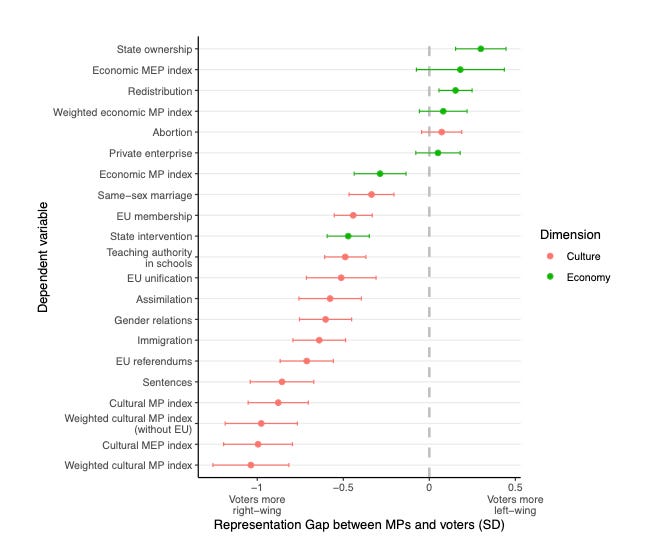 Populism as a Backlash to Immigration✨ | populismimmigration+4 | Laurenz Guenther | Toulouse School of EconomicsPolitical Representation Gaps and Populism | EUEurope | populismimmigration+4 | — | 1h 03m 33s | |
| 3/13/25 |  Do We Need a More Assertive Congress?✨ | CongressAmerican politics+5 | Philip Wallach | American Enterprise InstituteWhy Congress | — | CongressAmerican politics+6 | — | 1h 01m 00s | |
| 12/17/24 |  Answering the Anti-Vaxxers | Stephen Goldstein & Richard Hanania✨ | vaccinespublic health+4 | Stephen Goldstein | University of Utah School of MedicineCenter for the Study of Partisanship and Ideology | — | vaccinesautism+6 | — | 58m 30s | |
| 7/15/24 |  How the Race Taboo Swallowed Our Political Culture | Eric Kaufmann & Richard Hanania✨ | racepolitical culture+4 | Eric Kaufmann | CSPIUniversity of Buckingham+2 | — | race taboopolitics+4 | — | 1h 17m 08s | |
| 6/17/24 |  Sorting Through 498,000 Clinical Trials✨ | clinical trialshealthcare policy+3 | Bess Stillman | Mayo ClinicEverything Is An Emergency+2 | — | clinical trialshealthcare+4 | — | 1h 08m 04s | |
| 5/6/24 |  Nature, Nurture, and Overcoming Hardship | Rob Henderson and Richard Hanania on "Troubled"✨ | foster caresocial class+3 | Rob Henderson | Troubled: A Memoir of Foster Care, Family, and Social Class | KoreaQatar+1 | foster carememoir+4 | — | 1h 02m 59s | |
| 4/1/24 |  Debt Commission to the Rescue? | Romina Boccia & Richard Hanania✨ | entitlement reformgovernment spending+3 | Romina Boccia | Debt DispatchCato Institute+1 | — | debt commissionentitlement crisis+3 | — | 56m 39s | |
Want analysis for the episodes below?Free for Pro Submit a request, we'll have your selected episodes analyzed within an hour. Free, at no cost to you, for Pro users. | |||||||||
| 3/18/24 |  The Threat of AI Regulation with Brian Chau | Brian Chau writes and hosts a podcast at the From the New World Substack, and recently established a new think tank, the Alliance for the Future.He joins the podcast to discuss why he’s not worried about the alignment problem, where he disagrees with “doomers,” the accomplishments of ChatGPT versus DALL-E, the dangers of regulating AI until progress comes to a halt in the way it did with nuclear power, and more. With his background in computer science, Brian takes issue with many of those who write on this topic, arguing that they think in terms of flawed analogies and know little about the underlying technology. The conversation touches on a previous CSPI discussion with Leopold Aschenbrenner, and the value of continuing to work on alignment. Brian’s view is that AI doomers are making people needlessly pessimistic. He believes that this technology has the potential to do great things for humanity, particularly when it comes to areas like software development and biotech. But the post-World War II era has seen many examples of government hindering progress, and AFF is dedicated to stopping that from happening with artificial intelligence. Listen to the conversation here, or watch the video here. LinksDonate to AFFAFF manifestoBrian on diminishing returns to machine learning, and discussing AI with Marc AndreessenVaswani et al. on transformersLimits of current machine learning techniques Get full access to Center for the Study of Partisanship and Ideology at www.cspicenter.com/subscribe | 1h 12m 49s | ||||||
| 1/22/24 |  Ideology, Trade, and War | Andrew Roberts & Richard Hanania on Napoleon | Andrew Roberts (website, follow on X) is a historian, Visiting Research Fellow at the Hoover Institution at Stanford University, and a member of the House of Lords. He joins the podcast to talk about his Napoleon: A Life. The conversation begins with a discussion of different counterfactuals regarding ways in which Napoleon might have been able to stay in power, which leads to Roberts explaining his view that the wars of the era could be understood at least in part as resulting from a rejection of free trade. Other topics include:* Meritocracy as a guiding principle of the French Revolution and a justification for Napoleon’s regime* Napoleon’s personal magnetism and why men were willing to follow him* The relationship with Josephine, and whether or not it influenced any of his political decision* Whether Napoleon was in fact the greatest general of his timeSee also Hanania’s audio review of the Ridley Scott film, and Roberts’ reviews in Commentary and The Times. For an edited transcript of this conversation, see here. Get full access to Center for the Study of Partisanship and Ideology at www.cspicenter.com/subscribe | 47m 10s | ||||||
| 11/20/23 |  Heading Towards the Fiscal Cliff | Brian Riedl & Richard Hanania | Brian Riedl is a senior fellow at the Manhattan Institute, focusing on budget, tax, and economic policy. His previous jobs include chief economist to Senator Rob Portman (R-OH), and positions on the Marco Rubio and Mitt Romney presidential campaigns. He joins the podcast to talk about the financial future of the United States, with a special focus on entitlements. Medicare is projected to run out by 2031, and Social Security only two years later. Because of politicians kicking the can down the road for so long, this will mean that the federal government will at that point have to either implement massive benefit cuts for seniors or significantly raise taxes across the board.Brian talks about his experience in Washington, the history of negotiations over the debt, and what politicians say when you bring up these facts. We appear to be in an undesirable equilibrium, where everyone’s incentive is to ignore the issues involved, while the status quo is leading us towards disaster. Despite liberals wanting to tax the rich and conservatives calling for a cut to foreign aid and non-entitlement forms of domestic spending, the numbers for such proposals don’t add up. We will either get entitlement spending under control, or become taxed at the level of Europeans.In one important way, we will actually be worse off than Europe, because their welfare states pay for services and benefits that go to families across a wide section of the population. We are potentially building a US welfare state that will have high taxes primarily to funnel money to the elderly. The fact that older Americans are richer than those who will be supporting them makes the future we are moving towards even more absurd. LinksBrian Riedl: chart book on spending, report on the limits of taxing the rich, CNN op-ed on interest rates, NYT op-ed on Biden’s promises on entitlementsBrian’s X page, Manhattan Institute website Get full access to Center for the Study of Partisanship and Ideology at www.cspicenter.com/subscribe | 54m 04s | ||||||
| 10/30/23 |  No Need to Argue. Just Build | Niklas Anzinger & Richard Hanania | Niklas Anzinger is the founder and General Partner of Infinita, the first Próspera-based VC fund, which invests in founders overcoming regulatory capture in crypto, biotech and hardware through network states and startup cities. He’s also one of the 100 or so residents of Próspera.This was quite an optimistic conversation. The title of the podcast comes from the last thing Niklas said, which was that you don’t actually need attention or to talk about grand projects, but just to show the world what you can do. Niklas is part of the charter city movement, which seeks to build hubs of innovation and progress while bringing the rule of law and economic development to poorer regions of the world. In this eventful conversation, Richard and Niklas touch on* The mechanics of governance in Próspera* Getting around red tape and becoming a hub of medical innovation* Amenities and quality of life in the city* Upcoming conferences and eventsDespite a new government in Honduras that is hostile to charter cities, Niklas is optimistic that they will be able to continue operating. He and Richard also talk about potential medical breakthroughs that Próspera might help bring about, like bacteria that remove cavities from your mouth, and a currently available gene therapy that may make your muscles and bones stronger.LinksNiklas on X, his Substack, RSS for his podcastThe Ultimate Guide to PrósperaAlex Ugorji on XPróspera websiteCiudad MorazánInfinita ManifestoScott Alexander on Próspera, Part I and Part IIMark Lutter on the CSPI podcastMarc Andreessen, The Techno-Optimist ManifestoDocumentary on medical tourism in Próspera; DW report, with appearance from NiklasUpcoming EventsNov 3-5: Crypto Futurism & Legal Engineering 2023 - A Próspera Builders’ SummitNov 17-19: DeSci & Longevity Biotech 2023 - A Próspera Builders' Summit Jan 6-Mar 1: Vitalia - Starting the Frontier City of Life Get full access to Center for the Study of Partisanship and Ideology at www.cspicenter.com/subscribe | 57m 46s | ||||||
| 7/24/23 | 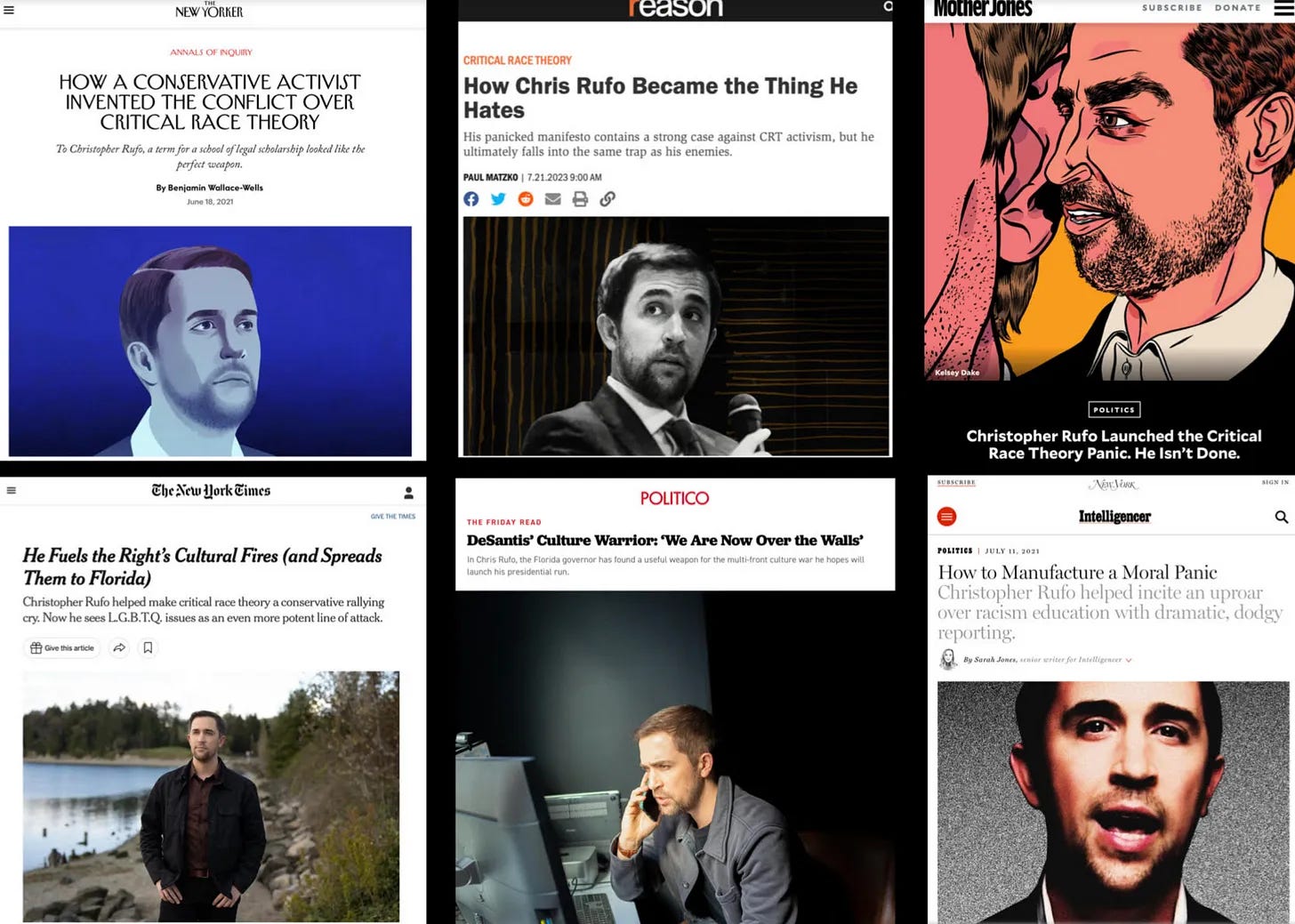 Propaganda and Power | Chris Rufo & Richard Hanania | Chris Rufo joins the podcast to talk about his new book, America's Cultural Revolution: How the Radical Left Conquered Everything.Rufo begins by talking about his background and his theory of political change. The conversation then shifts to his new book, the strengths of Ron DeSantis as an administrator, and finally what he’s doing on the board of the New College of Florida. Topics include:* Where did all of the crazy ideas that seem to have taken over institutions in the last few years come from? * What took conservatives so long to wake up to the problem?* Did Rufo end up liking the intellectuals he was studying?* What are the connections between left-wing ideas and civil rights law?* How do conservatives reach “good liberals” within institutions?See the transcript of the conversation at the Richard Hanania Newsletter.Listen in podcast form or watch the conversation on YouTube.Links:* Richard Hanania, The DeSantis Revolution* Politico profile on the relationship between Rufo and DeSantis* Rufo, America's Cultural Revolution: How the Radical Left Conquered Everything.* Rufo video on the trans movement and “nullification” surgery, discusses his theory of political change* Hanania, The Origins of Woke (forthcoming book)* Robert Rector on black-white gaps* The Atlantic giving Rufo his due Get full access to Center for the Study of Partisanship and Ideology at www.cspicenter.com/subscribe | 1h 20m 39s | ||||||
| 5/15/23 |  AI Alignment as a Solvable Problem | Leopold Aschenbrenner & Richard Hanania | In the popular imagination, the AI alignment debate is between those who say everything is hopeless, and others who tell us there is nothing to worry about.Leopold Aschenbrenner graduated valedictorian from Columbia in 2021 when he was 19 years old. He is currently a research affiliate at the Global Priorities Institute at Oxford, and previously helped run Future Fund, which works on philanthropy in AI and biosecurity. He contends that, contrary to popular perceptions, there aren’t that many people working on the alignment issue. Not only that, but he argues that the problem is actually solvable. In this podcast, he discusses what he believes some of the most promising paths forward are. Even if there is only a small probability that AI is dangerous, a small chance of existential risk is something to take seriously.AI is not all potential downsides. Near the end, the discussion turns to the possibility that it may supercharge a new era of economic growth. Aschebrenner and Hanania discuss fundamental questions of how well GDP numbers still capture what we want to measure, the possibility that regulation strangles AI to death, and whether the changes we see in the coming decades will be on the same scale as the internet or more important. Listen in podcast form here, or watch on YouTube.Links:* Leopold Aschenbrenner, “Nobody’s on the Ball on AGI Alignment.” * Collin Burns, Haotian Ye, Dan Klein, and Jacob Steinhardt, “Discovering Latent Knowledge in Language Models Without Supervision.” * Kevin Meng, David Bau, Alex Andonian, and Yonatan Belinkov, “Locating and Editing Factual Associations in GPT.”* Leopold’s Tweets: * Using GPT4 to interpret GPT2 .* What a model says is not necessarily what’s it’s“thinking” internally. Get full access to Center for the Study of Partisanship and Ideology at www.cspicenter.com/subscribe | 1h 02m 08s | ||||||
| 5/1/23 |  Understanding Right and Left | Bryan Caplan & Richard Hanania | Bryan Caplan joins the podcast to talk about his new book, Voters as Mad Scientists: Essays on Political Irrationality.Bryan begins by explaining why he hates politics. Much of the conversation then centers around Caplan’s simplistic theory of the right and left. This is compared and contrasted with Scott Alexander’s thrive/survive theory of the political spectrum, Robin Hanson’s theory of farmers and foragers, and Hanania’s “Liberals Read, Conservatives Watch TV.”Near the end, the discussion turns to the political climate at GMU, and whether the intellectual community that has been built can survive the trend towards DEI. Caplan emphasizes that he has noticed a difference since Glenn Youngkin came to power in Virginia, showing that politics actually matters for determining the future of free speech and intellectual freedom.For previous Bryan appearances on the podcast, see: May 2021, September 2022, and May 2022.Listen in podcast form or watch on YouTube. Get full access to Center for the Study of Partisanship and Ideology at www.cspicenter.com/subscribe | 1h 32m 49s | ||||||
| 3/27/23 |  Marc Andreessen On Venture Capital, Science, Tech, Progress, and More (Rerelease) | This week we’re rereleasing a previous episode with Marc Andreessen, originally released on August 16, 2021. He is co-founder and general partner of Andreessen Horowitz. Earlier in life, he was the co-founder of Opsware, Ning, and Netscape. Marc joins the podcast to talk about what’s gone wrong with science, the prerequisites for progress, and how tech has changed our lives and has the potential to disrupt stagnant institutions. Topics also include how the internet has influenced dating, what venture capitalists actually do, and whether there is too much – or too little – money in politics.For a transcript of the conversation, see here. Get full access to Center for the Study of Partisanship and Ideology at www.cspicenter.com/subscribe | 1h 56m 30s | ||||||
| 3/13/23 |  Waiting for the Betterness Explosion | Robin Hanson & Richard Hanania | Robin Hanson joins the podcast to talk about the AI debate. He explains his reasons for being skeptical about “foom,” or the idea that there will emerge a sudden superintelligence that will be able to improve itself quickly and potentially destroy humanity in the service of its goals. Among his arguments are:* We should start with a very low prior about something like this happening, given the history of the world. We already have “superintelligences” in the form of firms, for example, and they only improve slowly and incrementally * There are different levels of abstraction with regards to intelligence and knowledge. A machine that can reason very fast may not have the specific knowledge necessary to know how to do important things.* We may be erring in thinking of intelligence as a general quality, rather than as more domain-specific.Hanania presents various arguments made by AI doomers, and Hanson responds to each in kind, eventually giving a less than 1% chance that something like the scenario imagined by Eliezer Yudkowsky and others will come to pass. He also discusses why he thinks it is a waste of time to worry about the control problem before we know what any supposed superintelligence will even look like. The conversation includes a discussion about why so many smart people seem drawn to AI doomerism, and why you shouldn’t worry all that much about the principal-agent problem in this area.Listen in podcast form or watch on YouTube. You can also read a transcript of the conversation here.Links:* The Hanson-Yudkowsky AI-Foom Debate* Previous Hanson appearance on CSPI podcast, audio and transcript* Eric Drexler, Engines of Creation* Eric Drexler, Nanosystems* Robin Hanson, “Explain the Sacred”* Robin Hanson, “We See the Sacred from Afar, to See It the Same.”* Articles by Robin on AI alignment:* “Prefer Law to Values” (October 10, 2009)* “The Betterness Explosion” (June 21, 2011)* “Foom Debate, Again” (February 8, 2013)* “How Lumpy AI Services?” (February 14, 2019)* “Agency Failure AI Apocalypse?” (April 10, 2019)* “Foom Update” (May 6, 2022)* “Why Not Wait?” (June 30, 2022) Get full access to Center for the Study of Partisanship and Ideology at www.cspicenter.com/subscribe | 1h 42m 06s | ||||||
| 2/27/23 |  Administrative Procedure and the Common Good | Nicholas Bagley & Richard Hanania | Nicholas Bagley is a professor of law at the University of Michigan, former Chief Legal Counsel to Governor Gretchen Whitmer, and a former attorney in the US Department of Justice. He joins the podcast to talk about his article, “The Procedure Fetish,” in which he calls for liberals to embrace reforms to make federal government agencies less sclerotic and more capable of addressing social problems. Richard presents Bagley with questions surrounding issues such as why we should trust government agencies with more power, the role of cost-benefit analysis, the performance of the FDA during Covid-19, and civil service reform, including President Trump’s executive order that would have made it easier to fire more officials. The two discuss whether there can be a synthesis between the right and left on major issues surrounding government regulation.Listen to the podcast here, or watch on YouTube.Links: * Nicholas Bagley, “The Procedure Fetish”* Bagley on The Ezra Klein Show* Bagley on Twitter* Michael Lewis, The Fifth Risk* Matt Yglesias on Operation Warp Speed and the blowback to it* Cass Sunstein on the role of OIRA* Derek Thompson, “The Abundance Agenda” Get full access to Center for the Study of Partisanship and Ideology at www.cspicenter.com/subscribe | 1h 04m 26s | ||||||
| 2/13/23 |  Right-Wing Populism and Moral Corrosion | Tim Miller & Richard Hanania | Tim Miller is a former political operative who has worked for Jeb Bush and John Huntsman, and is currently a writer for The Bulwark and an MSNBC analyst. He joins the podcast to talk about his political memoir, Why We Did It: A Travelogue from the Republican Road to Hell. With a former insider’s perspective, Miller discusses* Where the Republican Party went wrong* The importance of character in politics* Mistakes made by Clinton and George W. Bush that led us to this point* To what extent right-wing populists have legitimate grievances* The effect of the changing media environment on our fractious politics* Why only Chris Christie could have derailed Trump in 2016* Whether, to stop Trump, other candidates should get out of the way and support DeSantisThe discussion closes on whether there are reasons to be hopeful about the future of the Republican Party. Listen here or watch the video on YouTube. Get full access to Center for the Study of Partisanship and Ideology at www.cspicenter.com/subscribe | 1h 18m 34s | ||||||
| 1/30/23 |  Why the Singularity Might Never Come | Jobst Landgrebe, Barry Smith, and Richard Hanania | Jobst Landgrebe is a German scientist and entrepreneur. He began his career as a Fellow at the Max Planck Institute of Psychiatry, then moved on to become a Senior Research Fellow at the University of Göttingen, working in cell biology and biomathematics. In April 2013, he founded Cognotekt, an AI based language technology company.Barry Smith is Professor of Philosophy at the University at Buffalo, with joint appointments in the Departments of Biomedical Informatics, Neurology, and Computer Science and Engineering. He is also Director of the National Center for Ontological Research and Visiting Professor in the Università della Svizzera italiana (USI) in Lugano, Switzerland. Landgrebe and Smith join the podcast to talk about their book Why Machines Will Never Rule the World: Artificial Intelligence without Fear. As the title indicates, the authors are skeptical towards claims made by Nick Bostrom, Elon Musk, and others about a coming superintelligence that will be able to dominate humanity. Landgrebe and Smith do not only think that such an outcome is beyond our current levels of technology, but that it is for all practical purposes impossible. Among the topics discussed are* The limits of mathematical modeling* The relevance of chaos theory* Our tendency to overestimate human intelligence and underestimate the power of evolution* Why the authors don’t believe that the achievements of Deep Mind, DALL-E, and ChatGPT indicate that general intelligence is imminent * Where Langrebe and Smith think that believers in the Singularity go wrong. Listen in podcast form or watch on YouTube.Links:* The Feynman Lectures on Physics* Landgrebe on Galactica and ChatGPT.* Rodney Brooks, “Intelligence without Representation.”* Nick Bostrom, Superintelligence. Get full access to Center for the Study of Partisanship and Ideology at www.cspicenter.com/subscribe | 1h 09m 59s | ||||||
| 1/16/23 |  Why is the West Special? | Joe Henrich & Richard Hanania | Joe Henrich is the Ruth Moore Professor of Biological Anthropology and Professor of Human Evolutionary Biology at Harvard University. He is the author of Why Humans Cooperate, The Secret of Our Success, and The WEIRDest People in the World. He joins the podcast to talk about his work. Topics include:* The implications of Henrich’s theories for the debate over AI alignment* The nature of intelligence* Whether genetic differences between populations explain societal outcomes* If the Ancient Greeks and Romans were already WEIRD* How to understand the group selection debate* Why Islamic familial practices may have stunted economic development and growth* The political and ideological reaction to his last bookListen in podcast form or watch on YouTube. A transcript of the podcast can be found at the Richard Hanania newsletter.Links:* Joe Henrich, “The WEIRDest People in the World.”* Joe Henrich, “The Secrets of Our Success.”* Richard Hanania, “How Monogamy and Incest Taboos Made the West.”* David Epstein, “The Sports Gene.” * Seth Stephens-Davidowitz, “Don’t Trust Your Gut.” * Elizabeth Shim, “North Korea finishes fourth at International Mathematical Olympiad.” * Minnesota Transracial Adoption Study.* Bryan Caplan, “The Wonder of International Adoption: Adult IQ in Sweden.” Get full access to Center for the Study of Partisanship and Ideology at www.cspicenter.com/subscribe | 54m 00s | ||||||
| 1/2/23 |  Understanding the Flows of History | Garett Jones & Richard Hanania | Garett Jones is a Professor of Economics at George Mason University. He joins the podcast to talk about his new book, The Culture Transplant. Richard asks whether IQ is superior to other measures used to predict prosperity, and the relationship between Garett’s new book and Hive Mind. He also presses the author on whether there is a selection effect in data showing that people preserve the traits of their original culture over time. The conversation then gets into issues of causal inference, namely whether we should focus more on American history or cross-national trends to inform our understanding of US policy. Richard suggests that while immigration might in some contexts lead to larger government, in the US it is arguably the case that diversity has been a hindrance to the expansion of the welfare state. And how important is trust, actually? It correlates with a lot of good things, but how much is that relationship simply driven by observations from Scandinavia? Garett makes the case for trust having an important causal role. This leads to a discussion of whether trust is simply a proxy for trustworthiness, and whether the latter trait is more important. Garett also explains why Chinese migration could be a key force in lifting the third world out of poverty. Near the end, he discusses what he thinks America would look like after his preferred immigration policy, and what he’s working on next.Listen to the podcast here or watch on YouTube. Links:* Garett Jones on the Institutionalized podcast* Previous Jones appearance on the CSPI podcast* Alex Nowrasteh, critiques of The Culture Transplant, Part 1 and Part 2* Bryan Caplan review Get full access to Center for the Study of Partisanship and Ideology at www.cspicenter.com/subscribe | 1h 15m 23s | ||||||
| 12/19/22 |  Getting at True Heritability | Alexander Young & Richard Hanania | Alexander Young is a researcher at the UCLA Anderson School of Management Genomics Department and School of Medicine’s Human Genetics Department, working with the Social Science Genetic Association Consortium (SSGAC). He studies the genetics of cognitive ability and educational attainment, with a particular focus on developing methods to uncover true measures of heritability for important traits.Richard and Alexander talk about why siblings are so useful for this purpose, in the midst of a larger overview of the history of behavioral genetics and modern methods. Twin and adoption studies show much higher levels of heritability than genome wide association studies (GWAS). Why might this be the case? Different theories are discussed, along with ways to solve seeming discrepancies.The conversation goes on to cover the societal relevance of Alexander’s work, and attempts to isolate research on genes and cognitive ability within the academy.Listen in podcast form or watch on YouTube:Links:* Alexander’s Twitter account.* Alexander Young, “Solving the Missing Heritability Problem.”* Alexander Young and co-authors, “Deconstructing the Sources of Genotype-Phenotype Associations in Humans.”* James Lee, “Don’t Even Go There.” Get full access to Center for the Study of Partisanship and Ideology at www.cspicenter.com/subscribe | 1h 02m 31s | ||||||
Showing 25 of 75
Sponsor Intelligence
Sign in to see which brands sponsor this podcast, their ad offers, and promo codes.
Chart Positions
4 placements across 4 markets.
Chart Positions
4 placements across 4 markets.