Insights from recent episode analysis
Audience Interest
Podcast Focus
Publishing Consistency
Platform Reach
Insights are generated by CastFox AI using publicly available data, episode content, and proprietary models.
Most discussed topics
Brands & references
Est. Listeners
Insufficient chart data. Estimates will improve as the show charts.
- Per-Episode Audience
Est. listeners per new episode within ~30 days
N/A🎙 ~2x weekly·51 episodes·Last published 3w ago - Monthly Reach
Unique listeners across all episodes (30 days)
N/A - Active Followers
Loyal subscribers who consistently listen
N/A
Market Insights
Platform Distribution
Reach across major podcast platforms, updated hourly
Total Followers
—
Total Plays
—
Total Reviews
—
* Data sourced directly from platform APIs and aggregated hourly across all major podcast directories.
On the show
From 10 epsHosts
Recent guests
Recent episodes
Ep. 54 Laughter Is Our Medicine with Teresa Choyguha
Jun 1, 2026
Unknown duration
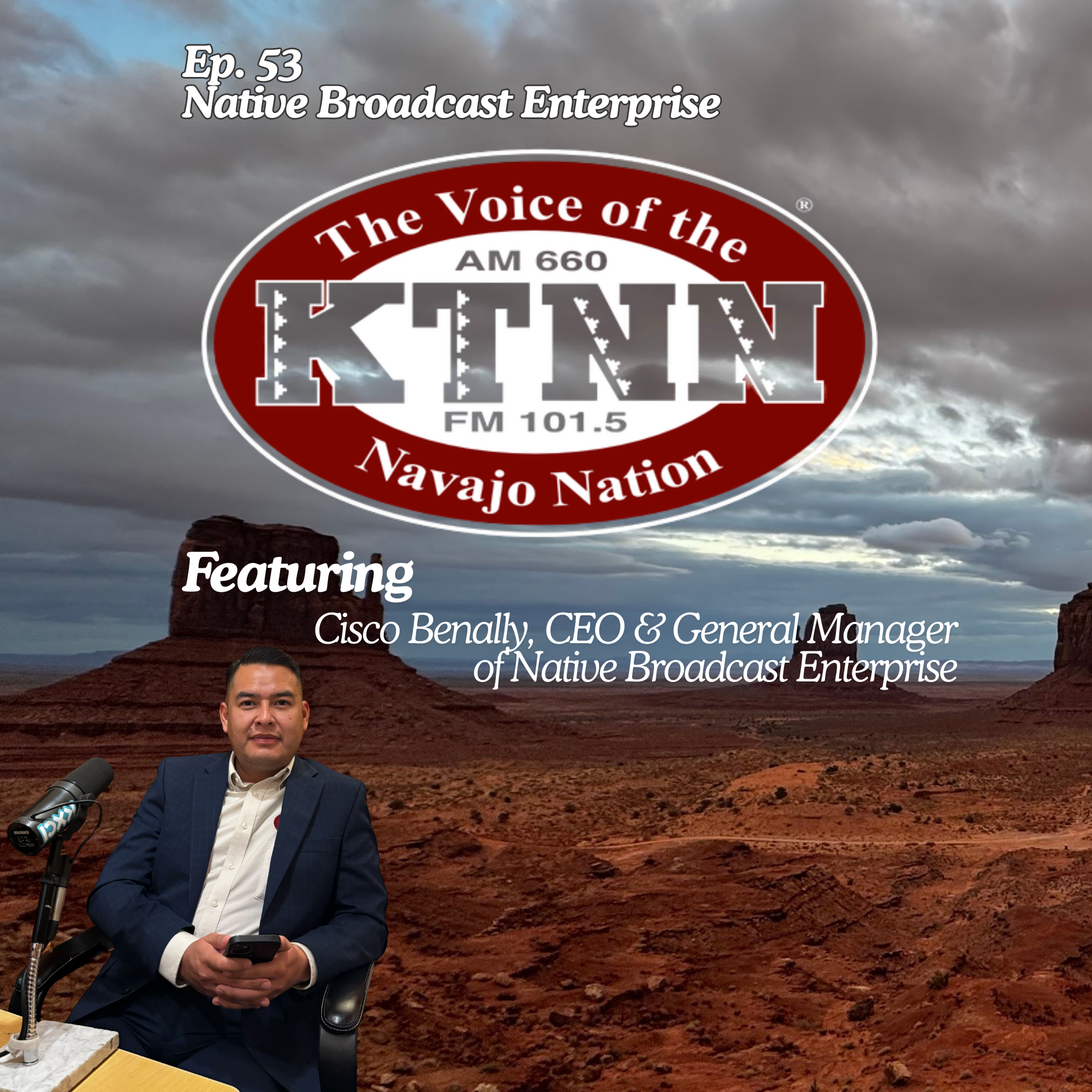
Ep. 53 Native Broadcast Enterprise with Cisco Benally
Apr 16, 2026
19m 32s
Ep. 52 The Níhí Lab Pt. 2 with Dr. Cherie De Vore, Melissa Jacquez, and Gwen Flores
Mar 28, 2026
30m 24s
Ep. 51 The Níhí Lab Pt. 1 with Dr. Cherie De Vore, Nieves Vázquez, and Jariah Callado
Feb 24, 2026
37m 51s
Ep. 50 Warrior Society with Andre Bouchard, Harrison Jim Sr. and Montana Miller
Jan 27, 2026
34m 48s
Social Links & Contact
Official channels & resources
Official Website
Login
RSS Feed
Login
Resolving iTunes ID\u2026 if this persists, the podcast may not be indexed on Apple Podcasts.
| Date | Episode | Topics | Guests | Brands | Places | Keywords | Sponsor | Length | |
|---|---|---|---|---|---|---|---|---|---|
| 6/1/26 | ![]() Ep. 54 Laughter Is Our Medicine with Teresa Choyguha | In Indian Country, teasing is a love language and humor is survival. In this episode I catch up over the phone with Tesera Choyguha (Tohono O’odham), a multi-talented Native comedian, cultural educator, utilitarian potter, and retired Toka player. Tee and I go way back to around 2013, when I first joined their Toka team called Gewkdag, in Sells, Arizona. For those unfamiliar, Toka is a traditional O’odham women’s game similar to field hockey. We have stayed connected ever since, and it is always a joy to run into each other and catch up. Photo of Teresa (left) and Tina (Right) during the Mul-Chu-Tha Toka Tournament in March 2014 Teresa (right) and her daughter Summer (left) Hard Work, Humbling Times, and Healing Laughter Teresa brings a deeply grounding and human story, sharing her family’s profound migration journey from the traditional O’odham homelands in Mexico across the border into southern Arizona. Growing up alongside her family working in the grueling farm fields, Teresa’s upbringing was shaped by relentless hard work and intensely humbling circumstances. Amidst the sweat, exhaustion, and financial struggles of laboring under the desert sun, humor became their ultimate survival mechanism. Rather than letting poverty dim their spirits, her family used laughter, teasing, and sharp wit as daily medicine to ease the physical toll of farm work. This beautiful blend of tireless labor, cultural resilience, and deep-seated familial joy laid the entire foundation for Teresa’s comedy career, showing audiences that the truest comedy is often forged in life’s most humbling and raw moments. Photo of Teresa C. 3 Sisters Comedy Teresa is a founding member of 3 Sisters Comedy, a powerhouse, all-female Indigenous stand-up group. A proud citizen of the Tohono O’odham Nation in southern Arizona, Choyguha (often known by her stage name “Sh-Girl”) performs alongside fellow Native comedians Adrianne Chalepah (Kiowa/Apache) and Deanna MAD (Tonawanda Seneca). Originally founded in 2014 as “The Ladies of Native Comedy,” the group officially rebranded to 3 Sisters Comedy in 2020 to reflect their tight-knit bond and the traditional agricultural concept of the “three sisters” (corn, beans, and squash) growing together to sustain life. As part of this episode we also explore why laughter is considered vital medicine in Indigenous communities. For general inquiries they can be reached at 3sisterscomedy@gmail.com Photo of the 3 Sisters comedians from left to right, Adrianne Chalepah, Deanna MAD, and Teresa Choyguha. Picture courtesy of T. Choyguha. Left to right, Adrianne Chalepah, Deanna MAD, and Teresa Choyguha. Picture courtesy of T. Choyguha. Indigenous Comedy Live Hosted outdoors at the historic Hotel Congress Plaza, Indigenous Comedy Live made history as a first-of-its-kind benefit show showcasing the vibrant power of Native storytelling and humor. Popular Tucson native and Reservation Dogs actor Jon Proudstar served as the Master of Ceremonies, guiding an electric evening under the stars. Teresa delivered a standout performance alongside fellow Native comics Bobby Dues, Gilarious Wolf Brown, and Jameson D. Lopez. This show was produced in partnership with the Southwestern Foundation for Education and Historical Preservation, all event ticket proceeds directly benefited the Arizona State Museum’s Public Programs Fund. Teresa C. was a part of this amazing indigenous comedy event in April 2026 alongside many other talented Native acts. Here is the flyer that was put out for the event earlier this year. Living Life to the Fullest Even as Teresa navigates a difficult battle with cancer and other health challenges, her unbreakable spirit shines through as she continues to live her absolute best life. Tee em... | — | ||||||
| 4/16/26 | ![]() Ep. 53 Native Broadcast Enterprise with Cisco Benally✨ | community broadcastingtribal media+3 | Cisco Benally | Native Broadcast EnterpriseNavajo Nation+1 | New MexicoNavajo Nation | Native Broadcast EnterpriseCisco Benally+3 | — | 19m 32s | |
| 3/28/26 | ![]() Ep. 52 The Níhí Lab Pt. 2 with Dr. Cherie De Vore, Melissa Jacquez, and Gwen Flores✨ | educationidentity+3 | Dr. Cherie De VoreMelissa Jacquez+1 | KXCI Community Radio | Tucson, ArizonaDiné | environmental engineeringIndigenous perspectives+3 | — | 30m 24s | |
| 2/24/26 | ![]() Ep. 51 The Níhí Lab Pt. 1 with Dr. Cherie De Vore, Nieves Vázquez, and Jariah Callado✨ | Indigenous knowledge systemsprocess engineering+3 | Nieves VázquezJariah Callado | University of ArizonaAmerican Indian Science & Engineering Society | Arizona | Níhí LabIndigenous knowledge+5 | — | 37m 51s | |
| 1/27/26 | ![]() Ep. 50 Warrior Society with Andre Bouchard, Harrison Jim Sr. and Montana Miller✨ | Indigenous veteranswarrior societies+4 | Andre BouchardHarrison Jim Sr.+1 | Fox Tucson TheatreKXCI | Tohono O’odhamYaqui+3 | warrior societyIndigenous+5 | — | 34m 48s | |
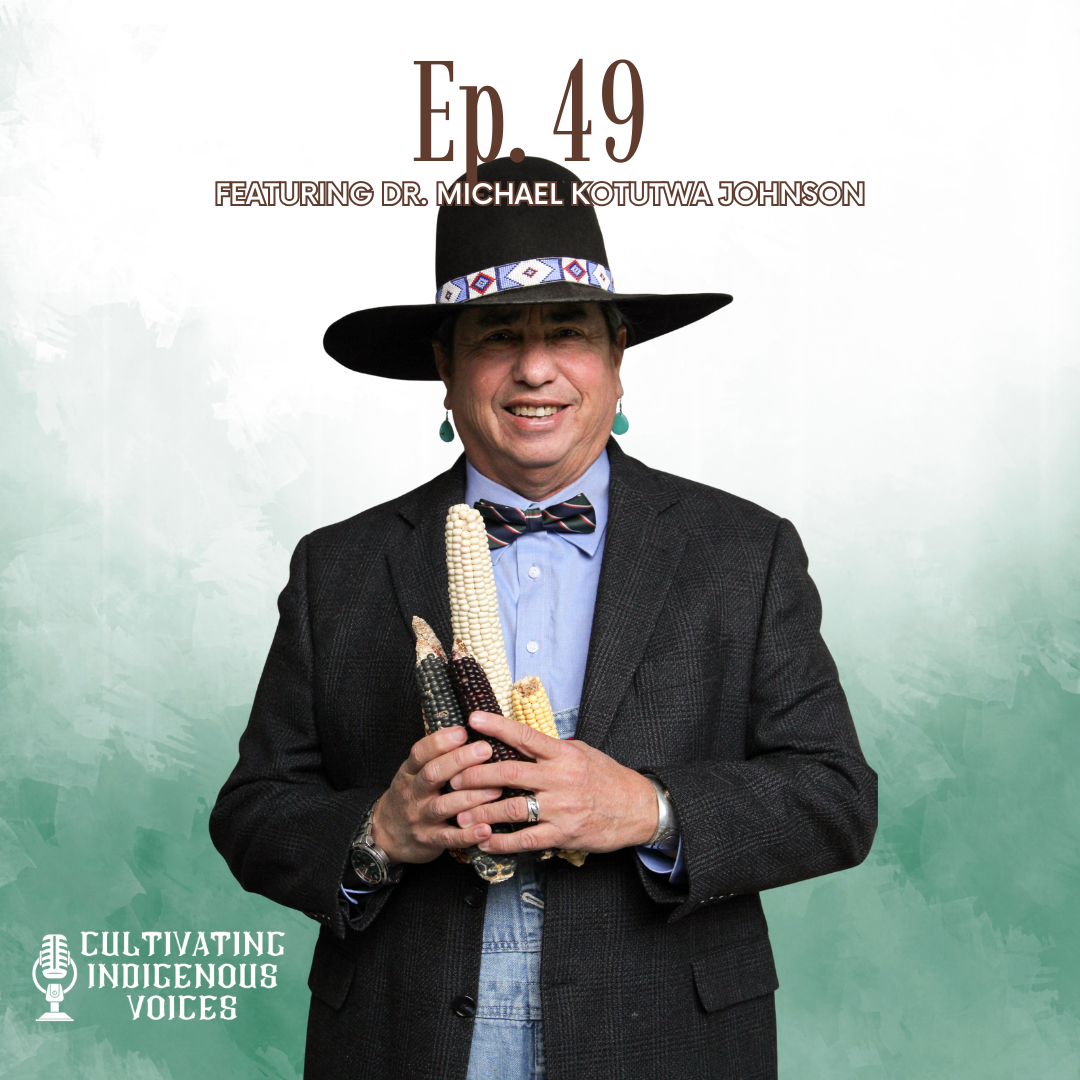
| 12/30/25 | ![]() Ep. 49 Dr. Michael Kotutwa Johnson✨ | Indigenous resilienceHopi culture+3 | Dr. Michael Kotutwa Johnson | University of ArizonaIndigenous Resilience Center | HopiRez | Indigenous agricultureHopi traditions+3 | — | 22m 37s | |
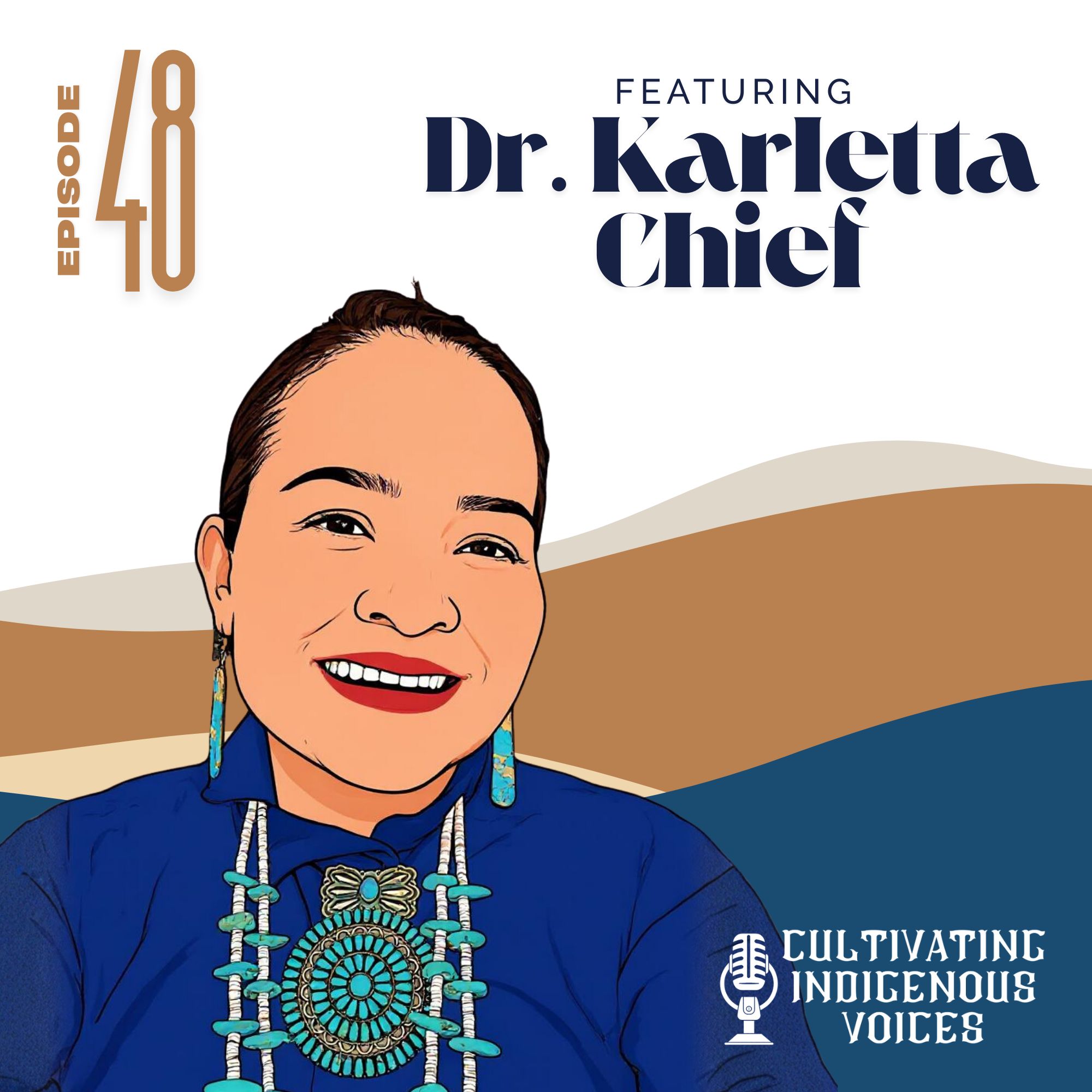
| 12/11/25 | ![]() Ep. 48 Dr. Karletta Chief✨ | environmental scienceIndigenous communities+4 | Dr. Karletta Chief | Indigenous Resilience CenterUniversity of Arizona+3 | Navajo Nation | hydrologistenvironmental challenges+4 | — | 27m 36s | |
| 11/10/25 | ![]() Ep. 47 Indigenous Takeover with Andrew Pedro✨ | Indigenous musicheavy metal+3 | Andrew Pedro | Cultivating Indigenous VoicesKXCI | Turtle IslandSouthern Arizona+1 | Indigenous Takeoverheavy metal+5 | — | 29m 59s | |
| 11/4/25 | ![]() Ep. 46 A Student's Journey with Daniel Sestiaga and Ben Richmond✨ | Tribal CollegeUniversity Transition+3 | Daniel Sestiaga Jr.Ben Richmond | University of ArizonaTohono O’odham Community College+1 | Fort Yuma Quechan Indian Tribe | Tribal CollegeUniversity of Arizona+3 | — | 31m 18s | |
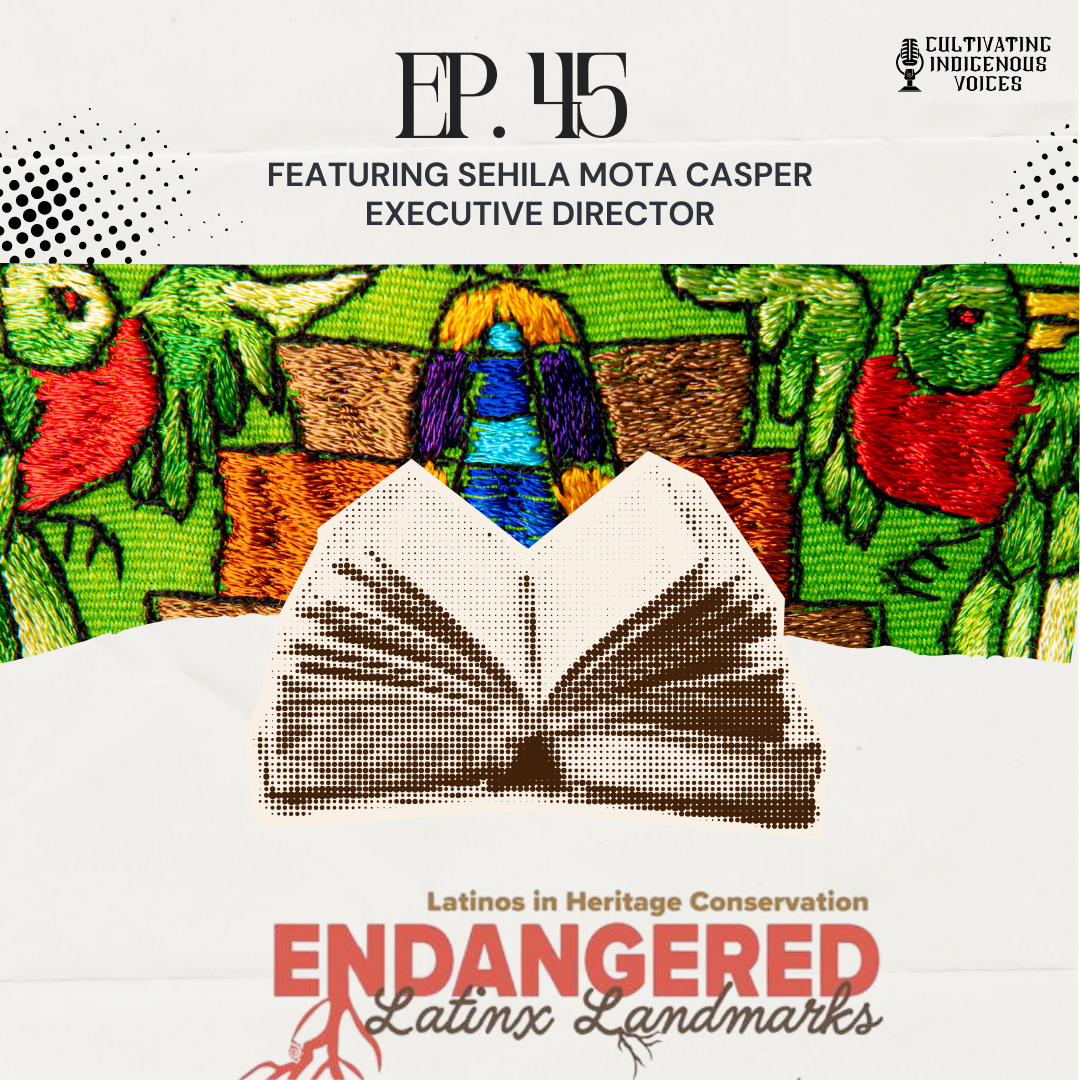
| 9/6/25 | ![]() Ep. 45 Latinos in Heritage Conservation with Sehila Mota Casper✨ | heritage conservationLatinx history+3 | Sehila Mota Casper | Latinos in Heritage Conservation | United StatesTucson, AZ | Latinos in Heritage Conservationheritage preservation+3 | — | 23m 00s | |
Want analysis for the episodes below?Free for Pro Submit a request, we'll have your selected episodes analyzed within an hour. Free, at no cost to you, for Pro users. | |||||||||
| 8/30/25 | ![]() Ep. 44 Making Space for Indigenous Creativity with Josie Rios✨ | Indigenous creativityart+3 | Josie Rios | Indigenous MarketTucson Indian Center | TucsonGila River Indian Community+1 | Indigenous artbeading+3 | — | 25m 54s | |
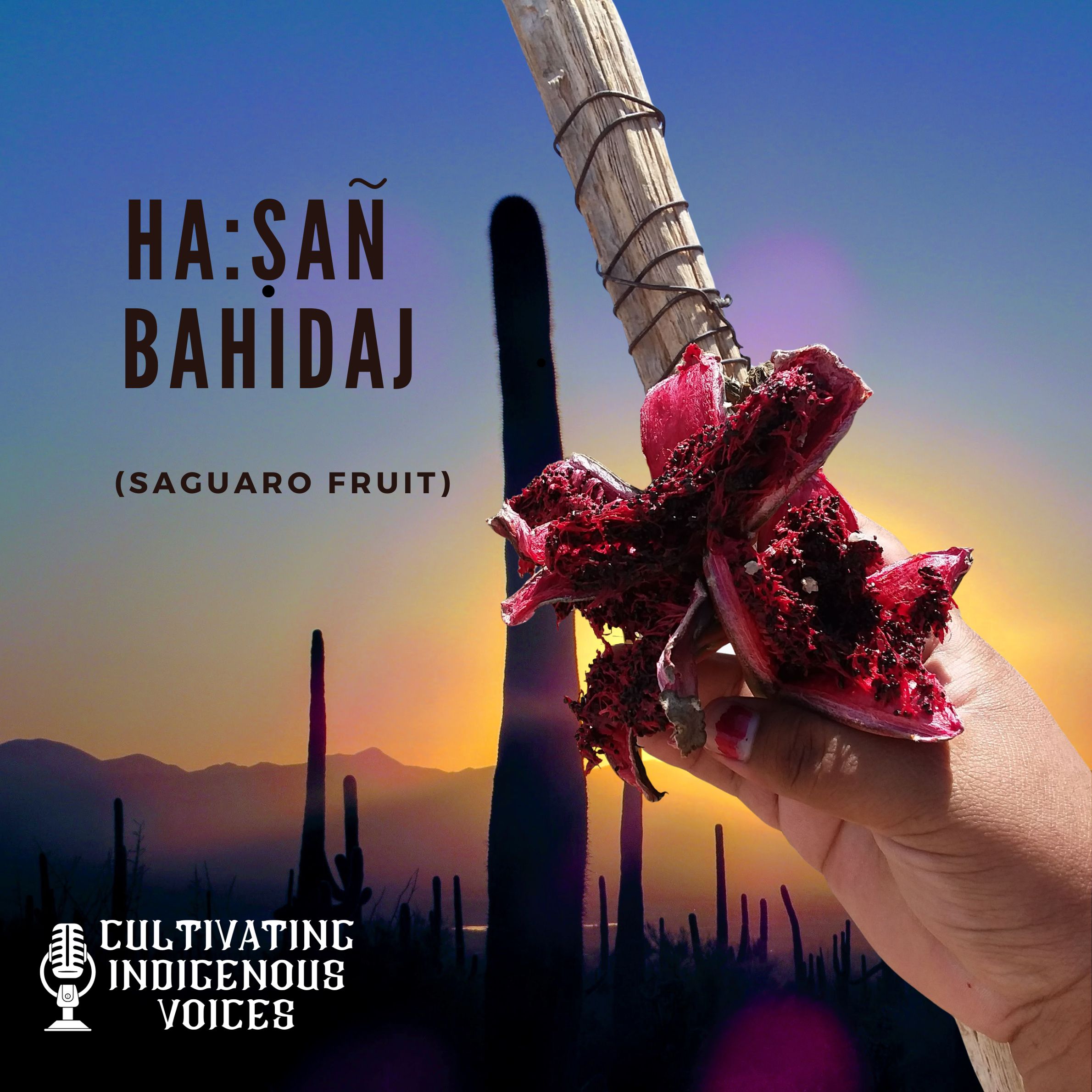
| 8/1/25 | ![]() Ep. 43 Budget Cuts in Indian Country with Loris Taylor | Episode 43 features Native Public Media President/CEO Loris Taylor, who has been on the frontlines voicing, and fighting to address the need and importance of radio and public media in Native/Indigenous communities as things unravel at the hands of the current U.S. administration. Currently, Congress has voted to claw back $1.9 billion dollars in federal funding from the Corporation for Public Broadcasting (CPB), which for some tribal radio stations is a tremendous loss in funding. Recently, the rescission package passed the House, and now after that decision all funding from the CPB that was previously approved for radio stations will be cut off starting as soon as October 2025 and the Corporation for Public Broadcasting will shut down. Loris also addresses the negative impacts tribal and non-commercial radio stations could face with the change in funding cuts and the importance public media has in tribal/rural communities who rely on readily available information that relates specifically to their tribal communities as well as Nationwide news on tribal radio stations. Here is a brief version of the interview that offers key highlights and insights from the full conversation. https://kxci.org/wp-content/uploads/2025/07/07-29-25-to-08-12-25-Native-Public-Media-Loris-Taylor-1.mp3 Photo of Loris Taylor speaking at the Native Broadcast Summit, held annually in Phoenix, AZ. Pop up sign of Native Public Media logo at the annual Native Broadcast Summit. Having worked at a tribal radio station as an on-air DJ and board operator at KWAK-LP and KOHN O’odham Hewel Niok Network for a few years, I understand firsthand how important radio is in rural communities. It’s a resource that shares immediate community information about local news, celebrations, memorials, tribal meetings, youth content, cultural and language programs. During my time working for my tribe’s radio station, the local long running newspaper called “The Runner,” had retired, shifting more people to tune in to radio for local tribal content/news. During the COVID-19 pandemic, radio broadcasting and related media services were widely recognized and designated as essential services by various governmental entities in the US and other countries, including tribal communities. It was then I realized that radio is a vital lifeline for communication and information during catastrophic events that impacts local communities within’ tribal lands. As radio broadcasters it’s not always just about the music, it is our duty to be of service to our community, and to be ready to deliver immediate information to the masses in times of celebration and uncertainty. About 92% of public tribal radio stations’ funding comes from the federal government, which puts them in a particularly fragile position. With the Department of Government Efficiency (DOGE), most tribes are already facing dramatic cut back with the loss of federal funding that affects resources such as health programs, educational programs, groups and organizations perceived as promoting diversity, equity, and inclusion etc. Graphic created by T. Andrew, KXCI Production Coordinator | — | ||||||
| 6/21/25 | ![]() Ep. 42 Indigenous Cinema with Jasmine Lopez | In this episode I feature Jasmine Lopez (Tohono O’odham), who is a young aspiring filmmaker and community advocate. Jasmine was raised on the Southside of Tucson by her Grandmother Roselene, oringinally from the village of Gu-Oidag (Big Fields) on the Tohono O’odham Nation. She is currently a senior at the University of Arizona majoring in Management in Information Systems with a minor in American Indian studies, while working for the program A Students Journey. Photo of Jasmine (right) and Her grandmother , Roselene (Lewis) Smith, (left) at her graduation from Tohono O’odham Community College. I first discovered Jasmine when she held the title as Miss Native American University of Arizona 2024-2025. We recently met in person and it was then I learned more about the work she does as a student and aspiring filmmaker. Her early introductory to recording videos started as a young girl creating short films on her cell phone using the app iMovie. To her the idea of creating videos on the most accessible resource, an app for most digital devices like a cell phone, iPad, computer etc., was fun making playful cinematic shots and stories. Portrait photo of Jasmine in her traditional clothing and regalia. Photo of Jasmine giving a speech during her reign as Miss Native American University of Arizona 2024-2025 In 2023 during her time as an undergraduate student at the Tohono O’odham Community College she was awarded the opportunity to intern with the Student’s Journey program at the UofA, to work on a film project of a topic of her choice. Jasmine’s subject matter was environmental justice where she highlighted the issue of the history of TCE water contamination in South Tucson that was largely caused by and centered around industrial activities and defense-related facilities. Below is the short-film titled, “O’odham Su:dag – The People’s Water – A Tohono O’odham Jewed (Land) Story.” Today, Jasmine is currently working on a grant funded short-film about indigenous love! She was awarded a grant from the American Indian College Fund – Student Professional Development Grant Program. In the interview she goes more in-depth about her plans as her role as the director and pre-production that includes script development, casting, location(s), etc. Aside from being a filmmaker, she is also interested in developing her own business as a managing consulting firm. I hope you enjoy listening to Jasmine’s story and if you wish to support her work she can be reached on Instagram @ripyoungjas and on Linkedin as Jasmine Lopez. Thank you for tuning in! Jasmine filming in a wash standing behind the camera. Ep. 42 Indigenous Cinema. Graphic created by T. Andrew. Here is a brief version of the interview that offers key highlights and insights from the full conversation. https://kxci.org/wp-content/uploads/2025/06/06-19-25-to-07-03-25-CultivatingIV-Jasmine-Lopez-Indigenous-Cinema.mp3 | — | ||||||
| 5/14/25 | ![]() Ep. 41 Finding My Ground with Wynnette Bell | In this episode, I sat down with a Wynnette Bell (Eastern Shoshone/Northern Arapaho), who is a Crew Lead for the Arizona Conservation Corps and originally from Wyoming which is home to the Eastern Shoshone Tribe. She started doing conservation work at the age of 16 and now in her early twenties, she’s found refuge in the work she does. Tune in as she shares her journey of finding purpose, resilience, and identity through hands-on service in the wild landscapes. From early mornings with a shovel in hand to long hikes under the desert sun, Wynnette opens up about adapting to the various landscapes and the challenges of working on public lands — and the unexpected rewards that come with it. We explore what it means to “serve the land” as a young adult, how living and working in remote areas shaped her perspective on the environment, teamwork, and why conservation work is about much more than trail maintenance. Some of the work involves fencing, invasive vegetation removal, environmental education, restoration preservation, tree planting etc. It’s about finding direction, confidence, and connection — even in the dust and sweat of the backcountry. A photo of Wynnette surround by the sonoran desert landscape. Here is a brief version of the interview that offers key highlights and insights from the full conversation. https://kxci.org/wp-content/uploads/2025/05/08-18-25-to-09-01-25-Wynnette-AZCC-RERUN-Edited.mp3 | — | ||||||
| 5/2/25 | ![]() Ep. 40 Cultural Rebellion with Alisha Vasquez | In this episode I feature Alisha Vasquez, who is a 5th generation Tucsonan and is the Co-Director of the Mexican American Heritage and History Museum and the Accessibility and Communications Manager with Southwest Folklife Alliance. She recalls her time spent at Skrappy’s as a teenager stepping into what would become the most transformative space of her teenage years. Skrappy’s was a popular teen hang out, a DIY music venue run by youth for youth, and a place for after school activities that gave young people a chance to create, connect, and lead. Listening to punk rock lyrics opened the door to critical thinking and broadened political awareness for Alisha. From that she built a sense of solidarity as a young person on into her adult life. Photo by Stephanie L. from Skrappy’s tumblr webpage. At an early age Alisha enjoyed listening to family stories told by her grandparents about their memories in Tucson. These stories included important details that Alisha would later discover as a teacher, teaching Chicano Studies at Pima Community College, that history isn’t just in the textbooks—it’s in the barrios, in the stories passed down, and in the fight to be seen and heard. Louis Vasquez and Theodora Petras (Alisha’s yaya and papu) walking hand and hand, down Congress St., early 1950 Alisha in a bucket of water on North Fontana Street, circa 1986 Alisha also goes in depth about a project she and other community organizers are doing called “Survival and Resistance: Southside’s Environmental Justice Movement“, that is telling the story of the trichloroethylene (TCE) contamination in Tucson water from the late 1940s to the 1970s. The contamination occurred on the southside of Tucson where residents were affected by contaminated drinking water. The nearby company Hughes Aircraft Co. used TCE extensively as a degreasing agent in aircraft manufacturing and routinely dumped chemical waste without proper containment. As early as 1957 neighboring tribe officials from the Tohono O’odham Nation wrote a letter to Hughes Aircraft Co.; the letter described alarming signs of livestock dying and natural ecosystems visibly deteriorating. This improper disposal of trichloroethylene (TCE) led to the contamination of the local groundwater supply. Thus, South Tucson residents unknowingly consumed the tainted water for years, and many began experiencing health issues such as liver and kidney damage, immune system dysfunction, and increased rates of certain cancers. Prolonged exposure to TCE, particularly through ingestion and inhalation of vapors in indoor air, raised concerns among public health officials, prompting an environmental investigation and the eventual classification of the area as a hazardous waste site under the EPA’s Superfund program. Louis Vasquez water his backyard, circa 1970s Alisha’s family discovered that their grandfather Louis Vasquez was a part of one of many TCE lawsuits filed by South Tucson residents whose serious health conditions were likely caused due to prolonged exposure to harmful levels of TCE, leading to serious health consequences. For five generations her family has called Tucson home, and over the decades, they’ve watched Tucson transform from a quiet desert town into a vibrant, sprawling city. Each generation witnessing change – some gradual, others abrupt – from the revitalization of downtown to the pressures of gentrification that followed. Tune in to hear more details about Alisha’s personal and community experiences as she continues to explore the layers of history of place, identity, and heritage. Herbert Street House–Vasquez family residence in Barrio Santa Rita. Photo from 2024 Louie Vasquez pointing at the bulldozed site of the house that his father was born in once stood. The city was... | — | ||||||
| 4/1/25 | ![]() Ep. 39 Across Genres with Famous Ones Band | In this interview Famous Ones talk about their unique blend of sound and style that consists of a trio of brothers Chad, Carl, and AJ Flores and their neighbor friend Jaize Puffer all from the San Lucy community on the Tohono O’odham Nation, which rests on the boundary of the small town of Gila Bend, Arizona. The multi-genre band making it happen not just with playing in a band but also making bold business moves that range from a hot sauce brand to a clothing line and to having their own DJ production company. This interview is a portion of the Locals Only live studio session that happened on March 10th, where Famous Ones played live over the airwaves that included an interview with yours truly Lady T. Here is a brief version of the interview that offers key highlights and insights from the full conversation. https://kxci.org/wp-content/uploads/2025/04/07-11-25-to-07-25-25-CultivatingIV-Famous-Ones-RERUN-Edited.mp3 Pictured from left to right Jaize, Carl, AJ, and Chad Their creative hustle is an inspiring story with 30+ albums already released and many more on the way! Their willingness to push boundaries and experiment is a sign of a band that’s constantly seeking growth, both as artists and as individuals. Beyond their musical talents, Famous Ones is also committed to giving back to the community to which they regularly participate in local community events, and collaborate with youth programs to inspire young artists. Tune in to the conversation to hear more about their creative process, album ideas, and connecting and doing collabs with other artists that adds to their musical growth. This type of networking has opened doors for new opportunities, gigs, and projects. Here is a latest collaboration they did with artist YUNG N8 featuring Famous Ones. Graphic created by T. Andrew | — | ||||||
| 2/11/25 | ![]() Ep. 38: Student Musician with Emilio Vavages | In this episode I feature student and musician Emilio Vavages (Tohono/Akimel O’odham). I wanted the share the story and experiences of a young person’s perspective about being a student musician, so I decided why not bring in my nephew Emilio. Emilio is thirteen year’s old and a student at Apollo Middle School in the Sunnyside School District. He started taking orchestra in the 4th grade playing the violin and has since then progressed as a musician and is now playing alongside his own father Eligio V. in his family’s band. Emilio also enjoys subjects such as English, Language, and Social Studies, is a participant in a program that teaches students carpentry work, and a part of the Leadership program at his school. With the support of his family Emilio continues to thrive in class getting student of the month in the past several months. Emilio says his musical influence is inspired from his family, but I say it’s naturally in him as it runs in his blood. His great-grandfather Lester V. Vavages played the violin for decades, as well as the guitar, vihuela, bass, etc. He was a member of the Gu-Achi Fiddlers, who’s music is still alive today by many folks in the fiddle world. Lester passed the music down to his boys, who are Emilio’s grandfather’s, and known are as Thee Express waila band from the Tohono O’odham Nation. Sherman Institute, CA yearbook 1952. Emilio’s great-grandfather Lester Vavages is pictured holding the guitar. Picture of Lester V. Vavages, Emilio’s great-grandfather holding his violin while playing. Photo courtesy of T. Vavages-Andrew. During Emilio’s musical journey playing his primary instrument the violin, he is a part of the Sunnyside School District Honors Orchestra Program. He is also a part of his family’s band called the Vavages Family Band playing the violin, percussion, and cowbell and has performed live on-air at KXCI Community Radio during the 2024 Sonic Solstice event. With all his success there is still plenty more things he wants to do in life, one thing being a powerlifter. Tune in to this short interview to hear more details! Photo by Kathleen Dreier Photography Ep. 38 Student Musician graphic created T. Andrew | — | ||||||
| 1/28/25 | ![]() Ep. 37: Beyond the Screen with Jon Proudstar | In this episode I feature Native Tucsonan, Veteran Actor, and Comic Creator Jon Proudstar (Yoeme, Mexican, Jewish). Growing up in Tucson, Jon spent his childhood drawn to television and comic books as a source of entertainment. While in high school he got a small taste of what it feels like to be in the entertainment industry. Jon and a buddy of his both loved a lot of the same things, and one thing they wanted was to be a part of the local radio scene in Tucson. Together they found a way to get their foot in the door of radio, by catching up with a local DJ Cheryl Cruz, host of “The Cruise Control” show, and insisted on helping her with her records during her live shows. From then they would show up on Fridays and Saturdays to help her out and she soon began to teach them and gave them hands on experience working the mics, playing music, and working the board. They eventually were given the opportunity to host a show as Mikey Mike (Mike) aka catdog and Conan (Jon) at just 16 and 17 years old playing mostly slow jams, funk, soul, and some pop. It was how Jon got connected to KXCI those many years ago. KXCI Staff group photo with Jon Proudstar. Taken December 2024. As Jon began expanding his natural abilities to go after what he wanted, he first began taking acting classes in high school and immediately got the attention of the Drama teacher who recognized his talent for acting after he participated in an improvs scene and encouraged him to run with it. Overtime Jon eventually worked toward pursuing a career as an actor. During his early years in acting Jon started as an extra before landing bigger roles in film and TV. One memory Jon tells so well during the interview is the time when the film Young Guns II was in Tucson and he was a stand in photo double for Lou Diamond Phillips. Over his career as an actor Jon has been featured in films and television shows such as Walker, Texas Ranger, Border Warz, Dude Vision, Last Stop in Yuma County, and the Hulu series Reservation Dogs. The series Reservation Dogs was a massive breakthrough for Native film into mainstream media and television. It is a series that connected so many people worldwide and showcased the talents of many Native/Indigenous actors, directors, writers etc. who have been in the film industry for many years as well as exposing the younger generation of Native actors. Beyond the screen Jon wrote and created a one of a kind comic called Tribal Force, published in 1996, which is the first all Native super hero comic in the history of the U.S. The idea of the comic stemmed from his work in tribal communities where he witnessed the struggle that the youth were impacted by. He wanted to create something that the Native community, especially the youth could relate to. Thus, he wrote a comic strip that represent native/indigenous cultures that included characters who were gifted with different abilities that would be helpful in protecting the land, and their people. He worked alongside Ryan Huna Smith (Chemehuevi/Navajo) who was the artist and together they created a unique comic book and that would later get greater recognition and included into the Smithsonian National Museum of the American Indian’s Comic Art Indigène exhibit. Tribal Force comic created/written by Jon Proudstar, artist Ryan Huna Smith The most recent Tribal Force comics was created by Jon with the help from Chris Williams (pencils), Jake Isenburg (inks), Gene (colors and lettering), and Jesse Hernandez (artwork). Since it’s creation many people nationwide have expressed their love and appreciation for these great characters and stories that relate to their own personal experiences in life. Tune in to hear more details about the comics and Jon’s life behind the scenes to his life beyond... | — | ||||||
| 12/3/24 | ![]() Ep. 36: Hataałii | Diné singer/songwriter Hataałii (pronounced: hah – toth – lee) visited Tucson in October 2024 as the opener for the Katie Pruit show at Club Congress. Born Hataałiinez Wheeler, he grew up on the Navajo Nation in Window Rock, Arizona and began experimenting with music during his teenage years. Now Hataalii is an artist signed to Dangerbird records and just released his second album titled, “Waiting for a Sign.” Since 2019 Hataałii has self-released projects, so technically this would be his sixth album released. During the live in-studio session on The Home Stretch show, we invited Hataałii and band mate Jacob ,who plays the steel guitar, to perform a short set and interview live over the airwaves. The following day he and Jacob arrived to our Armory Park studio for an interview on Cultivating Indigenous Voices. Hataałii shared what his musical journey has been like, and that some of his current work includes lyrics, songs, stories, that he wrote when he was a teenager. As I reflect on our conversation one thing that stood out to me was his enigmatic personality and subtle hints of laughter which you can hear in the interview. Hataalii and band mate Jacob performing a live in-studio session at KXCI’s Congress Studio in down town Tucson, AZ. Photo by T. Andrew. Hataalii standing in the CD vault at KXCI Armory Park Studios in Tucson, AZ. Photo by T. Andrew. Episode graphic created by T. Andrew | — | ||||||
| 10/28/24 | ![]() Ep. 35: Musical Influences with Nenny G | In this episode I sat down with KXCI’s very own Nenny G of the Latin Connection show which broadcasts Wednesday nights 8pm-10pm. Off air Nenny G is known as Gwen Hernandez; as you tune in you will hear stories of her child hood and all the musical influences that surrounded her in various stages of her life. But, what laid the foundation of musical interests and expression was the memories she spent with both her maternal and paternal grandparents. Gwen recalls spending time after school with her paternal Grandmother Guadalupe, who would pull out old records and other forms of music and play them as they enjoyed listening together. Here is a brief version of the interview that offers key highlights and insights from the full conversation. https://kxci.org/wp-content/uploads/2024/10/10-08-25-to-10-22-25-NennyG-Rerun.mp3 Here is a photo of Gwen’s paternal grandparents Juan Hernandez Sr. (left) and Guadalupe (right). Circa 1940s-1950s. Photo courtesy of Gwen H. Photo of both Gwen’s grandmothers Josepha Perez (left) and Guadalupe (right). Photo courtesy of Gwen H. Gwen also delves in deeper in sharing a little more family history of her maternal grandmother Josepha Perez, who migrated to the United States in search of more for her future. Her grandmother Josepha was a hard worker, who settled in the Southern part of Arizona and helped build a loving foundation for her growing family. Another person who influenced the family musically was her late father Juan Hernandez Jr., who was also a musician. Gwen talked about so many fun memories of her and her siblings singing together alongside their father. Photo of Juan Hernandez Jr. (Gwen’s father) and baby Gwen aka Nenny G. Photo courtesy of Gwen H. Photo of Gwen (right) and sister (left) together singing at home. Photo courtesy of Gwen H. Photo of Gwen’s father, Juan Hernandez Jr. holding a guitar. Photo courtesy of Gwen H. Photo of Gwen’s father, Juan Hernandez Jr. playing keyboard. Photo courtesy of Gwen H. I listened with such big imagination that took me places and made me feel inspired as Gwen shared details about her life story and about where she is now in her life. As the host of the Latin Connection show the music and educational experience you get from the show, you see why this radio program is a favorite for many! Tune in now to learn all about Nenny G’s life experiences and how she got into radio broadcasting. You can also learn about the true meaning behind her DJ name. A teenage Nenny G listening to her cassettes in the early 90s. Photo courtesy of Gwen H. Nenny G and her late father Juan Hernandez Jr. Photo courtesy of Gwen H. Graphic created by T. Andrew | — | ||||||
| 10/15/24 | ![]() Ep. 34: Conjunto Icon with Jaime De Anda | Over the past months I had the opportunity to interview and see two live performances by Jaime De Anda here in Tucson, AZ. As a kid growing up in the nineties I remember hearing Jaime’s music and his popularity amongst the O’odham community on the Tohono O’odham Nation. Over the year’s many waila bands have been inspired by his musical talent as an accordionist and have covered some of his most popular songs. In this episode I feature conjunto icon Jaime De Anda, known for his expansive accordion skills, and hype performances. During this in-depth conversation Jaime shares how at the age of 4 he was already showing his curiosity and interest to play music. He first began playing around in his dads mechanic shop drumming to the beat of music playing on the radio. He talked about how when traveling with his father who played the bajo sexto and performed gigs on the weekends, he began growing an attraction to the sounds and rhythms of conjunto music. By age 7 with the support and encouragement of his parents, Jaime was the drummer for his father’s band and by age 9 Jaime had developed into a full blown musician. Passionate about learning the accordion, he turned to his dad’s compadre Chema Sanchez. Jaime’s first polka he learned on accordion was Tony De La Rosa’s “Atotonilco.” As a fast learner and truly natural musician he quickly advanced in playing the accordion fluctuating between the dynamics of polkas, rancheras, cumbias, and boleros. By the time Jaime was a teenager he was in a family band called Las Estrellas de Houston with mostly male relatives, that included his Father Raul De Anda. By age 15 during their first recording Raul decided to change the band name to Los Chamacos de Raul De Anda. Tune in to hear the full conversation and hear Jaime’s musical journey as he traversed through the his own growth as a musician, while learning to overcome some of life’s unexpected challenges. Jaime De Anda performing live at the AVA Amphitheater in South Tucson AZ. Photo by T. Andrew Jaime De Anda on accordion performing live at the AVA Amphitheater in Tucson AZ. Photo by T. Andrew Stevie Ray Vavages playing Bajo Sexto. Photo by T. Andrew Pictured right Tina Andrew and left Jaime De Anda back stage holding accordions belonged to Jaime. Pictured left Jaime De Anda and right Tina Andrew holding mic during an interview with Jaime backstage. Graphic created by T. Andrew. Episode 34 Conjunto Icon. | — | ||||||
| 9/4/24 | ![]() Ep. 33: A Foundation for Well Being with Natividad Cano and Tracy Aleksic | Culturally based recovery programs render a space to reconnect with traditional ways and cultural roots by rebuilding cultural identity and spiritual support systems. In this episode I feature staff from the The Haven’s Native Ways Program. It was developed by, and is staffed with, professionals with backgrounds in the local Indigenous cultures and includes the teachings of White Bison Wellbriety Movement. The long term aim is to help women heal from substance use disorders through their culture and traditions. The Haven Native Ways Program capitalizes on Indigenous communities’ strengths and resilience and provides historical trauma-informed care. By developing cultural knowledge and spiritual identity, the program promotes healthy behaviors. Native Ways offers Residential Treatment, Intensive Outpatient Treatment with Recovery Housing, as well as alumnae programming. The program has grown in recent years, and in 2022, The Haven hired a Native and Indigenous Service Manager to elevate the program and make sure it has the resources needed for best practices. In April 2023, The Haven’s largest Recovery House was dedicated to the Native Ways Program, doubling its bed capacity from 6 to 12. I had the privilege of sitting with staff from The Haven as they shared their roles in the program as well as sharing a little of their background. Natividad Cano, LISAC, ADS, is a Mexican Native and has been working in the substance use disorder field since 1989. She has been at The Haven since 2007 and is currently the Cultural Educator for the Native Ways Program. She previously worked for 8 years on the border of Arizona and Northern Mexico for Southeastern Arizona Behavioral Health Services (SEABHS) in Douglas and Bisbee, AZ, 5 years with GFS (Gateway Foundation Services) working in a state prison setting with female inmates, and 10 years in a private practice with her late husband working with under-served Spanish-speaking populations. Nati is active in the community, collaborating with other agencies in promoting culturally appropriate, gender-specific and age-specific programs. She is on the Board of Wings for Women whose mission is to empower women to break the cycle of hopelessness and lead healthy and productive lives and is a member for the Red Road to Wellbriety Celebration Committee promoting and celebrating wellness and sobriety in Indian Country. Nati enjoys volunteering, cooking, reading, and spending time with her children, grand-daughters, and her 7 siblings and their families. For the past 8 years Nati has participated in the Migrant Trail, a 70 mile walk from the Mexico/USA border in Sasabe, Sonora to Tucson, AZ to remember the men, women, and children who have died while crossing the desert. Tracy Aleksic is an internationally accredited yoga therapist, master yoga teacher with over 25 years of experience, and an educational provider. She was the CEO of Radiant Centre and hosts annual international wellness retreats. Tracy has manualized two yoga teacher training programs, formed an accredited school, and traveled worldwide studying various spiritual and cultural traditions. Recently, she became AZ Acupuncture Board Certified in AcuWellness 5NP. Tracy began her career working in mental health and has always felt a strong calling to help individuals cultivate compassion and heal trauma through alternative healing modalities. In 2022, she moved to Tucson with her family and began working for the Pascua Yaqui Tribe under Sewa Uusim as a yoga therapist and relaxation specialist. She facilitated workplace wellness presentations to the providers and staff and created community events for the diabetes prevention program. Her love and respect for this resilient Indigenous community is boundless. Tracy is motivated to continue helping people heal through cultural connections, collaborating with Native and Indigenous communities, bu... | — | ||||||
| 7/2/24 | ![]() Ep. 32: Tribal Mediascapes with Shawn Spruce and Clarice Chiago-Jones | In April 2024 I had the opportunity alongside my colleague Elva, to attend the annual Native Broadcast Summit in Phoenix, Arizona. The Summit is Native Public Media’s largest gathering of Tribal and Indigenous broadcasters and media professionals serving Indian Country. The theme “Globalizing Indigenous Storytelling” acknowledges that Native broadcast stations play an essential role in promoting the safety, sovereignty, and stability of Native communities, providing a platform for media creation, community news, civic engagement, and emergency services for predominately rural and remote tribal lands. This has been my third time attending the summit in the past few years and every time I’ve attended its a great experience meeting new people and catching up with past attendees. During the summit I was excited to meet Shawn Spruce (Laguna Pueblo) who is the host of Native America Calling, which is a nationally syndicated show that focuses on national conversations about topics and issues specific to Native communities. Shawn was a speaker on a panel titled, “Koahnic Broadcast Corporation | Cultural Crossroads: Expanding Audiences Through Inclusive Storytelling,” which also featured Antonia Gonzales, Managing Editor & Host and Producer of National Native News, and Alexis Sallee, Indigefi Filmmaker & Radio Host of Indigefi. He also shared another perspective as a presenter on the topic of financial literacy, which is also a part of his professional career. I also got to spend some one on one time with Clarice Chiago-Jones (Akimel O’odham) who is a board member of Native Public Media and who is the Executive Director of the Gila River Broadcast Corporation (GRBC). The mission of GRBC is to be the source to which community members and tribal departments can turn to for information and entertainment through programs that will educate the public, enhance awareness and share the history, culture, and realities of Gila River and other Native Americans. Here is a short form version of the interview: https://kxci.org/wp-content/uploads/2024/07/06-05-24-to-06-19-24-CultivatingIV-NBS.mp3 A fun photo of Elva (left) and Tina (right) during the Native Broadcast Summit Cultivating Indigenous Voices, Ep. 32 Tribal Soundscapes featuring Shawn Spruce and Clarice Chiago-Jones | — | ||||||
| 4/22/24 | ![]() Ep. 31: Indigenous Data Sovereignty with Kirikowhai Mikaere and Shania Kee | On April 11th and 12th, 2024, I had the opportunity to attend the first national conference called, The U.S. Indigenous Data Sovereignty and Governance Summit hosted at the Casino Del Sol – Conference Area. I learned that Indigenous Data Sovereignty is, “To recognize Indigenous Peoples’ inherent rights to access, use, and steward data critical for effective governance, and to govern those data according to their own values, principles, and practices.” The purpose of the summit was to convene Indigenous leaders, Indigenous community programs, academics, policy experts, and other data actors and rights holders from across the nation, both in person and virtually, to develop guidance around appropriate data governance structures that support Indigenous Peoples’ own Indigenous Data Sovereignty initiatives. While at this summit I learned about so many topics and ways Indigenous people across the world are thinking critically about data in their own communities and how they are utilizing it in beneficial ways. In this episode you will hear two short interviews that feature two Indigenous women who presented their work and shared their experiences working in data. The first interview features Kirikowhai Mikaere (Te Arawa – Tūhourangi, Ngāti Whakaue) from New Zealand, who is a leading Māori data and information specialist focused on harnessing information to empower indigenous community development. She is a consultant with over 20 years’ experience advising Ministers, government agencies, tribal, community and private sector organizations with practical statistical analysis and innovative place-based data solutions. The second short interview features Shania Kee (Diné – Navajo) from Pinon, Arizona. She is a Junior Law Library Fellow at the Daniel F. Cracchiolo Law Library, pursuing an M.A. in Library and Information Science at the University of Arizona’s iSchool. During the summit Shania presented on her work titled, “SAAD EÍ DATA: Formalizing the Indigenous Data Sovereignty Movement within the Navajo Nation Legal System, A Comparison to the Māori’s Data Governance Model.” | — | ||||||
| 3/30/24 | ![]() Ep. 30: Centering Indigenous Relationships with Lourdes Escalante | Photo of Lourdes Escalante standing by KXCI Community Radio sign in front of the radio station Lourdes Escalante (Yoeme) was born and raised in Tucson and is the Executive Director of the Alianza Indigena Sin Fronteras, Indigenous Alliance Without Borders (AISF). At a young age Lourdes pushed herself, with the support of her dad, to take opportunities for growth, which also meant a greater chance for success while also finding it in unfamiliar places. South Tucson was always home, and still is; it’s a place that is rooted in the work she does today working for a community that focuses on protecting indigenous rights, educating, and promoting action when those rights are threated and/or violated. Lourdes’ community work helps bring people of all walks of life together to learn from one another, provide space for individuals and groups that supports their work, and being a resource for Native/Indigenous folks. Her work is also shaped and defined by a great team of people, volunteers, community, and partnerships. A term I learned from Lourdes during our interview was, “Rematriation,” which is a word used to describe how indigenous women are restoring balance to the world by intertwining traditional and cultural knowledge back in accord with the land. This leads towards steps of healing ourselves and the natural world. Created by Tina Andrew | — | ||||||
Showing 25 of 49
Pitch Fit is a Pro feature
See how bookable this show is for guests, which brands already advertise, the per-episode ad value, and the best-fit guest and sponsor profile. The numbers are blurred on the free plan.
How readily this show books outside guests like you.
How proven this show is for host-read sponsorships.
For Guests
ProFor Advertisers
ProUpgrade to Pro to unlock guest cadence, sponsor categories, fit scores, and per-episode ad value for this show.