

Insights from recent episode analysis
Audience Interest
Podcast Focus
Publishing Consistency
Platform Reach
Insights are generated by CastFox AI using publicly available data, episode content, and proprietary models.
Total monthly reach
Estimated from 15 chart positions in 15 markets.
By chart position
- 🇺🇸US · Natural Sciences#7730K to 100K
- 🇮🇳IN · Natural Sciences#6210K to 30K
- 🇯🇵JP · Natural Sciences#1491K to 10K
- 🇧🇷BR · Natural Sciences#1581K to 10K
- 🇮🇹IT · Natural Sciences#1711K to 10K
- Per-Episode Audience
Est. listeners per new episode within ~30 days
38K to 136K🎙 Weekly cadence·18 episodes·Last published 3mo ago - Monthly Reach
Unique listeners across all episodes (30 days)
75K to 272K🇺🇸37%🇮🇳11%🇦🇪11%+12 more - Active Followers
Loyal subscribers who consistently listen
23K to 82K
Market Insights
Platform Distribution
Reach across major podcast platforms, updated hourly
Total Followers
—
Total Plays
—
Total Reviews
—
* Data sourced directly from platform APIs and aggregated hourly across all major podcast directories.
On the show
Recent episodes
Inside Efficient AI: From GPUs to GPTs — Song Han
Mar 11, 2026
Unknown duration
From boom to bust, the workings of financial crises — Emil Verner
Feb 11, 2026
Unknown duration
Toxoplasma and the Human Host — Sebastian Lourido
Jan 14, 2026
Unknown duration
Making sense of your dollars — Christopher Palmer
Apr 1, 2025
Unknown duration
Putting a glacier in its place — Brent Minchew
Feb 25, 2025
Unknown duration
Social Links & Contact
Official channels & resources
Official Website
Login
RSS Feed
Login
| Date | Episode | Description | Length | ||||||
|---|---|---|---|---|---|---|---|---|---|
| 3/11/26 |  Inside Efficient AI: From GPUs to GPTs — Song Han | Song Han is an associate professor in Electrical Engineering and Computer Science whose research focuses on efficient AI computing. His work spans high-resolution computer vision for autonomous vehicles, more efficient image generation, improved GPT performance, and novel methods for training machine learning models. He also leads the Efficient AI team at NVIDIA Research, focused on optimizing GPU-accelerated AI systems. | — | ||||||
| 2/11/26 |  From boom to bust, the workings of financial crises — Emil Verner | Emil Verner is the Jerome and Dorthy Lemelson Professor of Management and Financial Economics at the MIT Sloan School of Management. His research examines how finance and the broader economy interact, with a focus on the causes and consequences of financial crises — from bank runs and insolvency to debt booms, economic volatility, and political polarization.Show notes and transcript:https://news.mit.edu/podcast/podcast-curiosity-unbounded-episode-17-boom-bust-workings-financial-crisesJoin the mailing list or send us feedback:https://eepurl.com/ixPQPA | — | ||||||
| 1/14/26 |  Toxoplasma and the Human Host — Sebastian Lourido | Sebastian Lourido is an associate professor of biology and a member of the Whitehead Institute. Sebastian studies human pathogens and seeks to unravel the genetic pathways that help parasites like Toxoplasma gondii exist in human cells. He hopes that his work will lead to new treatments for toxoplasmosis as well as drugs that could treat diseases caused by similar parasites.Show notes and transcript:https://news.mit.edu/podcast/podcast-curiosity-unbounded-episode-16-toxoplasma-and-human-hostJoin the mailing list or send us feedback:https://eepurl.com/ixPQPA | — | ||||||
| 4/1/25 |  Making sense of your dollars — Christopher Palmer | Christopher Palmer is an Associate Professor of Finance at the MIT Sloan School of Management. He is also a Faculty Research Fellow at the National Bureau of Economic Research, and an Affiliate with the Jameel Poverty Action Lab, based here at MIT. He studies consumer credit, and household financial decision making.Show notes and transcript:https://news.mit.edu/podcast/podcast-curiosity-unbounded-episode-15-making-sense-your-dollarsJoin the mailing list or send us feedback:https://eepurl.com/ixPQPA | — | ||||||
| 2/25/25 |  Putting a glacier in its place — Brent Minchew | Brent Minchew is an Associate Professor of Geophysics in the department of Earth, Atmospheric and Planetary Sciences at MIT. He studies the behavior of glaciers in respect to environmental factors and is dedicated to understanding sea level rise and exploring viable interventions to stabilize ice sheets.Show notes and transcript:https://news.mit.edu/podcast/podcast-curiosity-unbounded-episode-14-putting-glacier-its-placeJoin our mailing list and send us feedback:https://eepurl.com/ixPQPA | — | ||||||
| 1/28/25 |  The future of customizable 3D printing — Stefanie Mueller | Stefanie Mueller is an associate professor with a joint appointment in MIT's Electrical and Computer Science, and Mechanical Engineering departments. Her work is mostly focused on developing novel hardware and software systems that advance personal fabrication technologies. She envisions a world in which anyone can use 3D printing to create any object at any time.Show notes and transcript:https://news.mit.edu/podcast/podcast-curiosity-unbounded-episode-13-future-customizable-3d-printingJoin the mailing list or send us feedback:https://eepurl.com/ixPQPA | — | ||||||
| 12/17/24 |  Making sense of cities — Andres Sevtsuk | Andres Sevtsuk is an associate professor of Urban Science and Planning at MIT. His work focuses on the influence of urban design on travel behavior and quality of life, and contributes to making cities more walkable, sustainable and equitable.Show notes and transcript:https://news.mit.edu/podcast/podcast-curiosity-unbounded-episode-12-making-sense-citiesJoin the mailing list or send us feedback:https://eepurl.com/ixPQPA | — | ||||||
| 11/19/24 |  Get out the vote — Ariel White | Ariel White is an associate professor of Political Science at MIT. She studies voting and voting rights, race, the criminal legal system, and bureaucratic behavior as a way to shed light on people's everyday interactions with government. Her recent work investigates how potential voters react to being affected by punitive government policies, such as incarceration and immigration enforcement, and how people can make their way back onto the voting registries after these experiences.Links:Ariel WhitePolitical ScienceMIT Gov/LabTimestamps:(07:58) - What is actually known immediately following an election(10:47) - How does mail-in voting affect elections(13:09) - Why some people don't voteShow notes and transcript: https://news.mit.edu/podcast/podcast-curiosity-unbounded-episode-11-get-out-voteJoin the mailing list or send us feedback:https://eepurl.com/ixPQPA | — | ||||||
| 11/5/24 |  Making medicine easier to swallow — Giovanni Traverso | Giovanni "Gio" Traverso is an associate professor in MIT's Department of Mechanical Engineering and a gastroenterologist at Boston's Brigham and Women's Hospital. His work focuses on innovative methods for drug delivery, diagnostics, and biological sensing. Here, Gio speaks with MIT President Sally Kornbluth about tackling the core challenges of taking medication, the unique perspective that comes with being both a professor and a practicing gastroenterologist, and the importance of entrepreneurship.Links:The Laboratory for Translational EngineeringMIT School of EngineeringMIT Department of Mechanical EngineeringTimestamps:(04:48) - Electroceuticals(06:08) - The gut-brain connection's affect on appetite(08:29) - The challenges of adherence to medication schedules(15:45) - EntrepreneurshipShow notes and transcript: https://news.mit.edu/podcast/podcast-curiosity-unbounded-episode-10-making-medicine-easier-swallowJoin the mailing list or send us feedback:https://eepurl.com/ixPQPA | — | ||||||
| 9/24/24 |  Silk, the fabric of more sustainable agriculture — Benedetto Marelli | Benedetto Marelli is a biomedical engineer by training and a materials scientist. He is an associate professor in MIT’s Department of Civil and Environmental Engineering. His work is focused on the fabrication of new biopolymers that can interact with biomolecules, living matter, and the environment. Here, Benedetto speaks with MIT President Sally Kornbluth about the advantages of using silk-based coatings in agriculture as well as for water filtration, and why being bold and creative can lead to powerful discoveries.Links:Laboratory for Advanced BiopolymersCivil and Environmental EngineeringMIT Climate ProjectTimestamps:(01:23) - The benefits of silk use for agriculture(06:00) - MIT’s Climate Grand Challenges(07:12) - Using silk to filter out forever chemicals(09:31) - MIT’s Climate ProjectShow notes and transcript:https://news.mit.edu/podcast/podcast-curiosity-unbounded-episode-8-hard-facts-soft-skillsJoin the mailing list or send us feedback:https://eepurl.com/ixPQPA | — | ||||||
Want analysis for the episodes below?Free for Pro Submit a request, we'll have your selected episodes analyzed within an hour. Free, at no cost to you, for Pro users. | |||||||||
| 4/9/24 |  Hard facts on soft skills — Namrata Kala | Namrata Kala is an associate professor in applied economics at the MIT Sloan School of Management. She studies the value of employee training and incentives, how communities adapt to environmental change and regulation, and the returns on environmental technology investment. Here, Namrata speaks with MIT President Sally Kornbluth about the importance of soft skills training, and the benefits of being a straight shooter.Links: MIT Sloan School of Management”J-PAL,” the Jameel Poverty Action LabMIT Climate ProjectTimestamps:(10:07) - Communication skills and productivity(13:14) - Building relationships to benefit climate work(15:29) - MIT’s climate effortsShow notes and transcript:https://news.mit.edu/podcast/podcast-curiosity-unbounded-episode-8-hard-facts-soft-skillsJoin the mailing list or send us feedback:https://eepurl.com/ixPQPA | — | ||||||
| 3/5/24 |  Staying radical and relevant — Skylar Tibbits | Skylar Tibbits is a designer and computer scientist whose research focuses on self-assembling and programmable materials, and 3D and 4D printing. He is the founder of the MIT Self-Assembly Lab. Here, Skylar speaks with MIT President Sally Kornbluth about the inspiration for his lab’s projects, why design at MIT is unique, and the magic in combining the creative with the technical. Links: Skylar TibbitsSelf-Assembly LabVideo: Cube self-folding strandMIT Morningside Academy for DesignGrowing IslandsTimestamps:(01:01) 4D printing(06:05) Self-assembly(07:21) Growing Islands(13:00) Design at MITShow notes and transcript:https://news.mit.edu/podcast/podcast-curiosity-unbounded-episode-7-staying-radical-and-relevantJoin the mailing list or send us feedback:https://eepurl.com/ixPQPA | — | ||||||
| 11/14/23 |  Healing the ailing heart — Ellen Roche | Ellen Roche is an associate professor of mechanical engineering and the associate head of the Department of Mechanical Engineering at MIT. Her research team develops new devices and therapeutic strategies for repairing the heart and other tissues. Here, she speaks with MIT President Sally Kornbluth about her work, the advantages of taking a nonlinear route to one’s chosen career, and the importance of saying "yes" to unexpected opportunities.Links:Ellen RocheTherapeutic Technology Design and Development LabVideo: Patient-specific, 3D-printed, soft-robotic heartsDassault SystèmesInstitute for Medical Engineering and ScienceTimestamps:(03:35) - Potential for 3D-printing hearts(08:14) - Hydrogels(17:33) - On AIShow notes and transcript:https://news.mit.edu/podcast/podcast-curiosity-unbounded-episode-6-healing-ailing-heartJoin the mailing list or send us feedback:https://eepurl.com/ixPQPA | — | ||||||
| 10/10/23 |  Beyond words — Joshua Bennett | Joshua Bennett is a professor of literature and distinguished chair of the humanities at MIT. Additionally, he is an accomplished spoken word artist, and author of several books. Here, he speaks with MIT President Sally Kornbluth about the power of words, the beauty of quiet things, and about the value in learning for its own sake. Plus, we hear him perform his poetry.Links:drjoshuabennett.comTamara's OpusReading Poetry: Social PoeticsAfrican Diaspora Studies programTimestamps:(08:38) - On AI(13:40) - The benefits and joy of learning for its own sake(20:01) - The distinction between poetry on the page and on the stageShow notes and transcript:https://news.mit.edu/podcast/podcast-curiosity-unbounded-episode-5-beyond-wordsJoin the mailing list or send us feedback:https://eepurl.com/ixPQPA | — | ||||||
| 9/12/23 |  Build your own superpower, then share it with the world — Fadel Adib | Fadel Adib is an associate professor at the MIT Media Lab and Department of Electrical Engineering and Computer Science. His work pushes the limits of wireless sensing: to monitor climate change in the oceans; to impact food production, health, and space exploration; and to see through walls.In this episode, MIT President Sally Kornbluth talks with Adib about his work and how he’s inspired to solve pressing global issues. Along the way, they discuss his belief in the importance of inspiring others and democratizing advanced tools and technologies, as well as his early life in Lebanon and his family-held belief that education has the power to change lives.Links:Fadel AdibThe Big Bang Theory episodeEmerald InnovationsSignal Kinetics groupCartesian SystemsMIT 100k Entrepreneurship CompetitionSenseaTimestamps:(01:38) - The superpower question(07:48) - Detecting emotions through walls and The Big Bang Theory episode(09:00) - Ocean work and implications for aquaculture, climate change, and space exploration(17:50) - Early life in Lebanon(21:10) - Democratization of technology(25:52) - Family and the importance of education(28:26) - Local impact(29:24) - Public education through videosShow notes and transcript:https://news.mit.edu/podcast/podcast-curiosity-unbounded-episode-4-build-your-own-superpower-then-share-it-worldJoin the mailing list or send us feedback:https://eepurl.com/ixPQPA | — | ||||||
| 7/14/23 |  Decoding the tree of life — Greg Fournier | Greg Fournier is an associate professor of geobiology at MIT. Greg’s work focuses on the microbial world, and by studying the evolution of microbes, he and his team further our understanding of the history of life on Earth.In this episode, MIT President Sally Kornbluth and Fournier discuss fine-tuning our understanding of evolution; lab life and how research surprises often lead to new discoveries; and advice for those just beginning a career in science.Links:Greg FournierFournier LabCraters of the MoonWind CavePermian–Triassic mass extinctionPurgatory ChasmNASA postdoctoral fellowshipCourse 1EAPS (Earth, Atmospheric, and Planetary Sciences)Show notes and transcript:https://news.mit.edu/podcast/podcast-curiosity-unbounded-episode-3-decoding-tree-lifeJoin the mailing list or send us feedback:https://eepurl.com/ixPQPA | — | ||||||
| 5/8/23 |  Bureaucracies, dictatorships, and the power of Africa's people — Mai Hassan | In this episode, MIT President Sally Kornbluth sits down with associate professor of political science and faculty co-director of MIT-Africa, Mai Hassan. Her work looks at bureaucracy, public administration, and the state in Africa, and more recently, how people mobilize against repressive dictatorships.Links:Mai HassanMIT-AfricaRegime Threats and State SolutionsShow notes and transcript:https://news.mit.edu/podcast/podcast-curiosity-unbounded-episode-2-bureaucracies-dictatorships-and-power-africas-peopleJoin the mailing list or send us feedback:https://eepurl.com/ixPQPA | — | ||||||
| 4/19/23 | 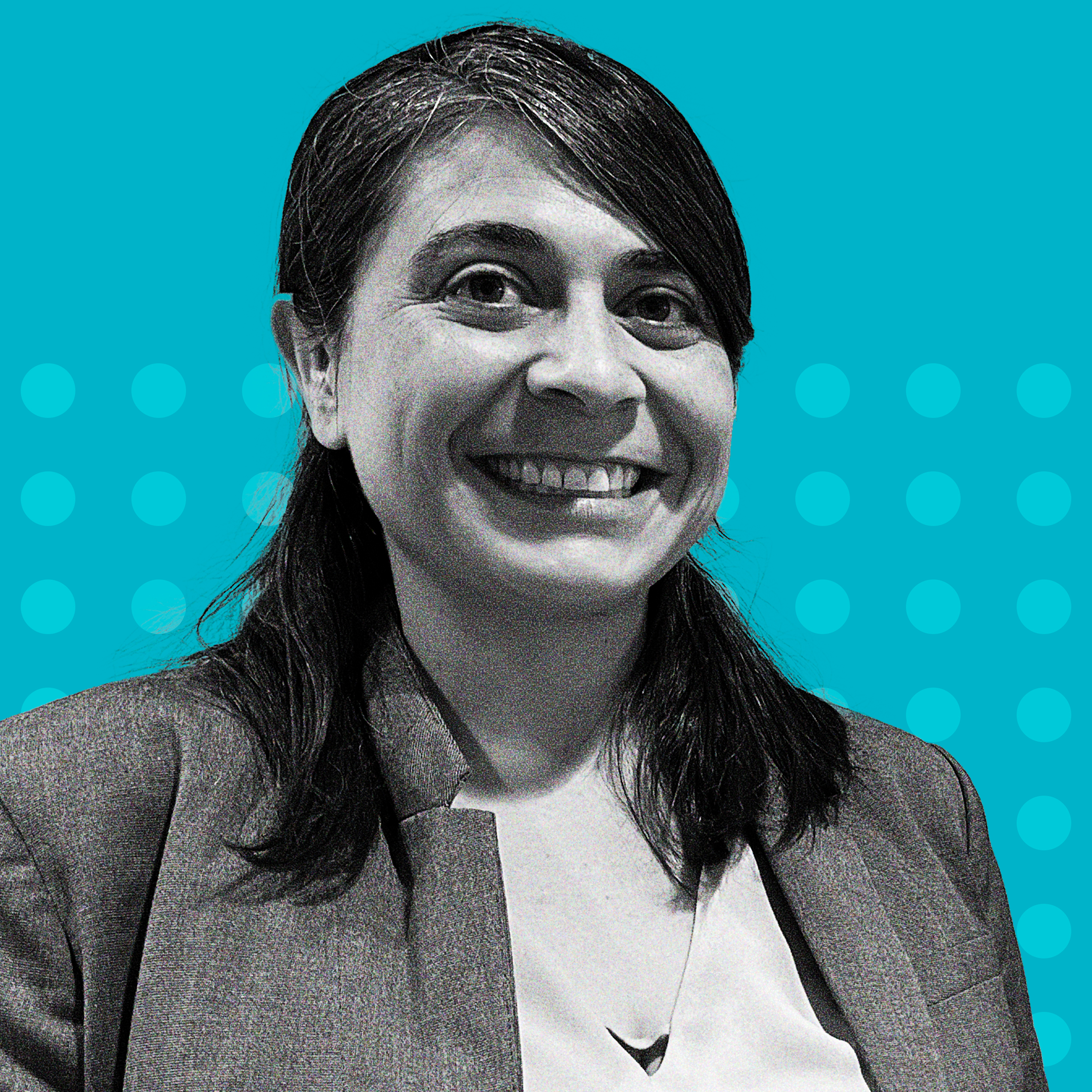 How a free-range kid from Maine is helping green-up industrial practices — Desirée Plata | In this episode, MIT President Sally Kornbluth sits down with newly tenured associate professor of civil and environmental engineering, Desirée Plata. Her work focuses on making industrial processes more environmentally friendly, and removing methane (a key factor in global warming) from the air.Links:Desirée PlataWoods Hole OceanographicPlata LabGlobal Methane Pledge2.00b Toy Product DesignShow notes and transcript:https://news.mit.edu/podcast/podcast-curiosity-unbounded-episode-1-how-free-range-kid-maine-helping-green-industrialJoin the mailing list or send us feedback:https://eepurl.com/ixPQPA | — | ||||||
Showing 18 of 18
Sponsor Intelligence
Sign in to see which brands sponsor this podcast, their ad offers, and promo codes.
Chart Positions
15 placements across 15 markets.
Chart Positions
15 placements across 15 markets.