

Insights from recent episode analysis
Audience Interest
Podcast Focus
Publishing Consistency
Platform Reach
Insights are generated by CastFox AI using publicly available data, episode content, and proprietary models.
Total monthly reach
Estimated from 21 chart positions in 21 markets.
By chart position
- 🇦🇺AU · Food#27100K to 300K
- 🇨🇦CA · Food#31100K to 300K
- 🇺🇸US · Food#43100K to 300K
- 🇧🇷BR · Food#9610K to 30K
- 🇪🇸ES · Food#1051K to 10K
- Per-Episode Audience
Est. listeners per new episode within ~30 days
104K to 325K🎙 Daily cadence·37 episodes·Last published 4d ago - Monthly Reach
Unique listeners across all episodes (30 days)
347K to 1.1M🇦🇺28%🇨🇦28%🇺🇸28%+18 more - Active Followers
Loyal subscribers who consistently listen
139K to 434K
Market Insights
Platform Distribution
Reach across major podcast platforms, updated hourly
Total Followers
—
Total Plays
—
Total Reviews
—
* Data sourced directly from platform APIs and aggregated hourly across all major podcast directories.
On the show
Recent episodes
Chocolate Mole Brownies
Jun 20, 2026
9m 49s
Talking Cookbooks with Jenna Helwig
Jun 3, 2026
49m 29s
Talking French Chocolate at G. Detou (video)
May 28, 2026
11m 31s
Chocolate-Olive Oil Spread
May 11, 2026
6m 29s
Chocolate Marshmallows
Apr 11, 2026
16m 48s
Social Links & Contact
Official channels & resources
Official Website
Login
RSS Feed
Login
| Date | Episode | Description | Length | ||||||
|---|---|---|---|---|---|---|---|---|---|
| 6/20/26 | 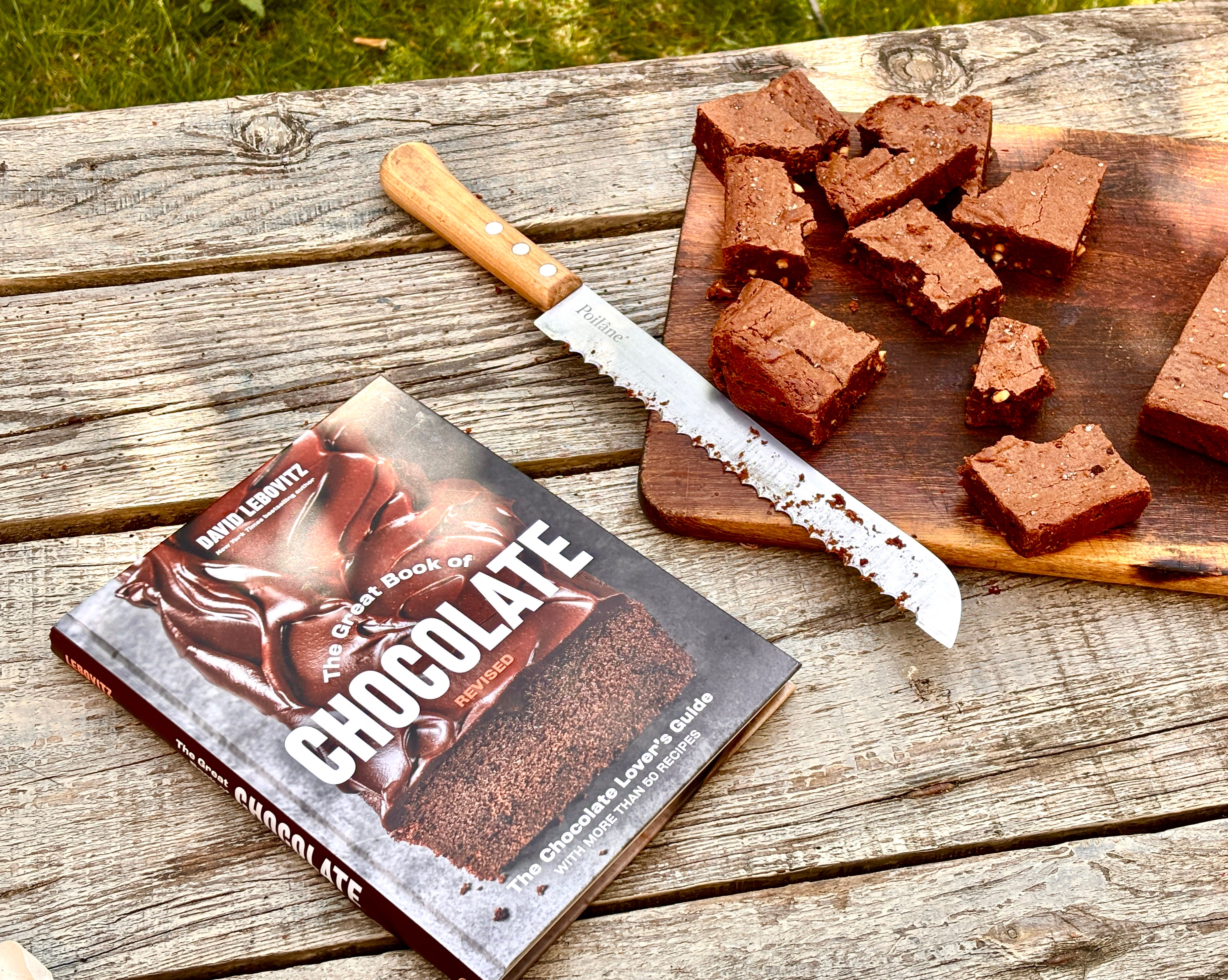 Chocolate Mole Brownies | I met Carlos Moreno when he was delivering taco kits during the pandemic, when we all wanted to eat “out,” but were stuck eating in. Prior to that period Mexican food wasn’t well represented in Paris. (A lesser-known fact is that France tried to colonize Mexico twice in the mid-1800s.) I loved Carlos’ food and we had a few nice conversations on the sidewalk when he made his deliveries.Since then he’s gone on to open his own restaurant in Paris, Comer. As I mention in the video, you might not think you want to go to a Mexican restaurant in Paris, but I can assure you that yes, you do. It’s really, really good. His cooking is based in traditional Mexican fare with lively moles and amazing salsas, as well as a menu that changes based on the season and what’s available, which includes tostadas with raw tuna crudo, peas and citrus, tacos with pork al pastor, a mille-feuille of fresh tomatoes with housemade salsa macha, and a truly melt-in-your-mouth horneado of beef. One item on the dessert menu that’s a particular favorite are his mole brownies, which are slightly spicy, and served with a vanilla atole sauce and mezcal.I was happy that when I asked Carlos to stop by and make his famous brownies with me, he said yes. We didn’t make the vanilla atole sauce (you can find my recipe here), which he spikes with mezcal at Comer, but the brownies were delicious all on their own. I hope you enjoy them as much as we did making them! And if you’re in Paris, Comer is some of the best Mexican food you’ll ever have, anywhere. Comer96 rue d’Hauteville (10th)ParisSubscribe to my newsletter to get new posts, recipes, videos, Paris travel tips, and more, sent right to your inbox! This is a public episode. If you'd like to discuss this with other subscribers or get access to bonus episodes, visit davidlebovitz.substack.com/subscribe | 9m 49s | ||||||
| 6/3/26 | 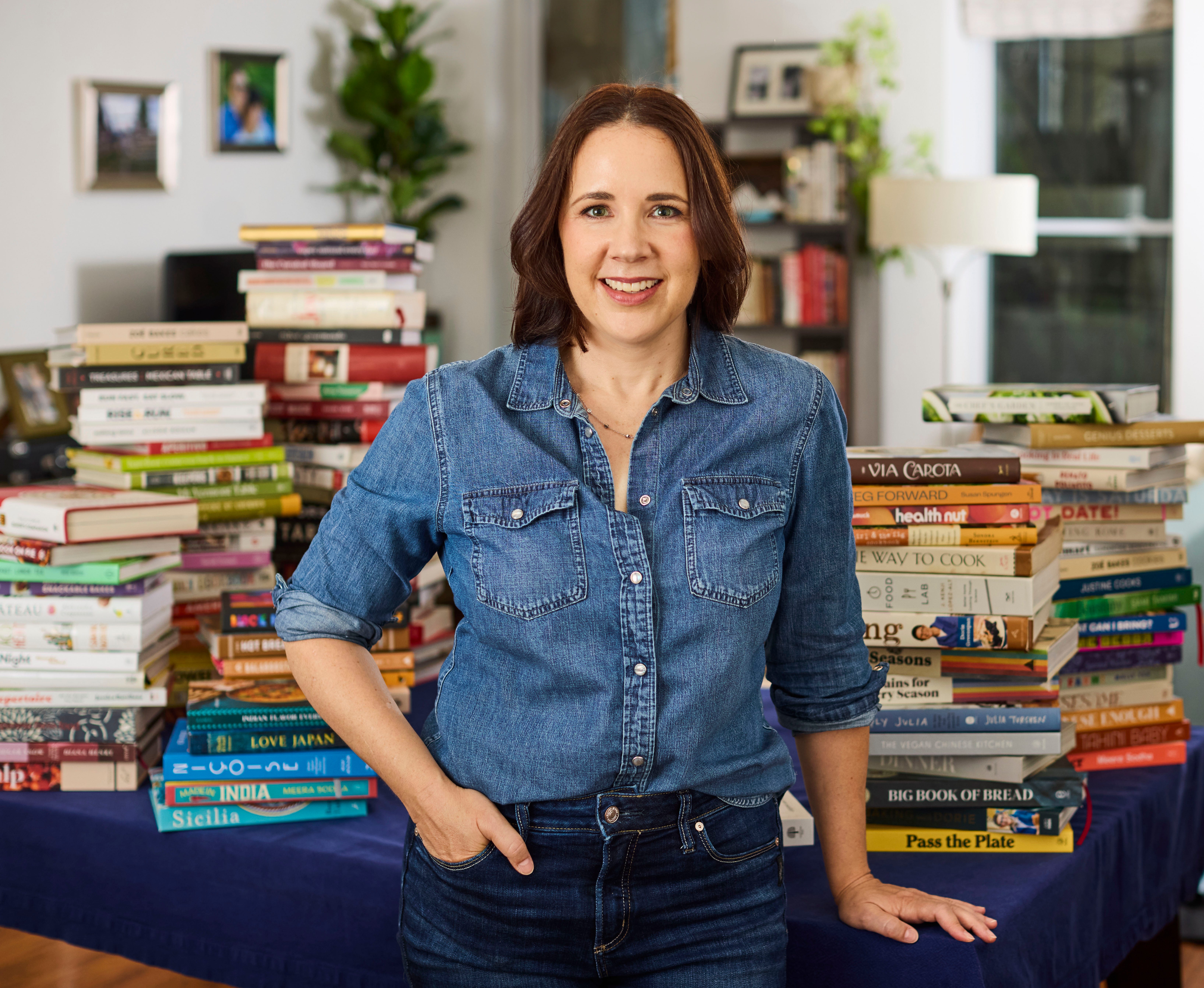 Talking Cookbooks with Jenna Helwig | As someone who is passionate about cookbooks, I’m always up for talking about them with other cookbook collectors. I know there are lots of cookbook collectors out there, but one who really stands out is Jenna Helwig, who writes the Cookbookery Collective newsletter, which she describes as:…a hub for the cookbook community—authors, eaters, cooks, editors, publicists, publishers, agents, and aspiring authors alike. It’s a place to celebrate all cookbooks, new and old, blockbuster and under-the-radar. It’s a place to hear from your favorite authors and talk amongst ourselves in the comments section. It’s a place where everyone is welcome, whether you have just a handful of beloved books or a collection in the hundreds.I couldn’t have said it better, except to add what a wonderful resource Jenna, and her newsletter, have become to the cookbook community, which features interviews with cookbook authors, including me……plus seasonal round-ups of the latest cookbooks to hit the shelves, previews of cookbooks that are about to be released, as well as recipes from her favorite cookbooks. Not only does Jenna write a newsletter, she’s also the food director at Real Simple magazine, the author of five cookbooks, and runs a personal chef business. Whew!In addition to her other activities, Jenna is now a novelist, having penned her first novel, coming out this Fall, The Foreign Correspondent’s Wife, a mystery set in Paris. I was thrilled to get a chance to sit down for this podcast episode with Jenna to talk about our favorite subject: Cookbooks! We talked about everything, from what makes a good cookbook (and what drives her crazy in a cookbook) to how she decides which cookbooks that cross her desk she holds on to, and which ones she lets go. We also discussed what she thinks of influencer cookbooks, and talked about one of the big questions of our time - how will AI affect cookbooks, and will it (or can it) replace them. Subscribe to my newsletter to get future podcasts, videos, recipes, and Paris travel tips, sent right to your inbox!I hope you enjoy my chat with Jenna as much as I did…and let us know in the comments what are some of your favorite cookbooks, and why. - David* Follow Cookbookery Collective and Jenna Helwig on Instagram* Visit Jenna Helwig’s website* Subscribe to the Cookbookery Collective newsletter This is a public episode. If you'd like to discuss this with other subscribers or get access to bonus episodes, visit davidlebovitz.substack.com/subscribe | 49m 29s | ||||||
| 5/28/26 | 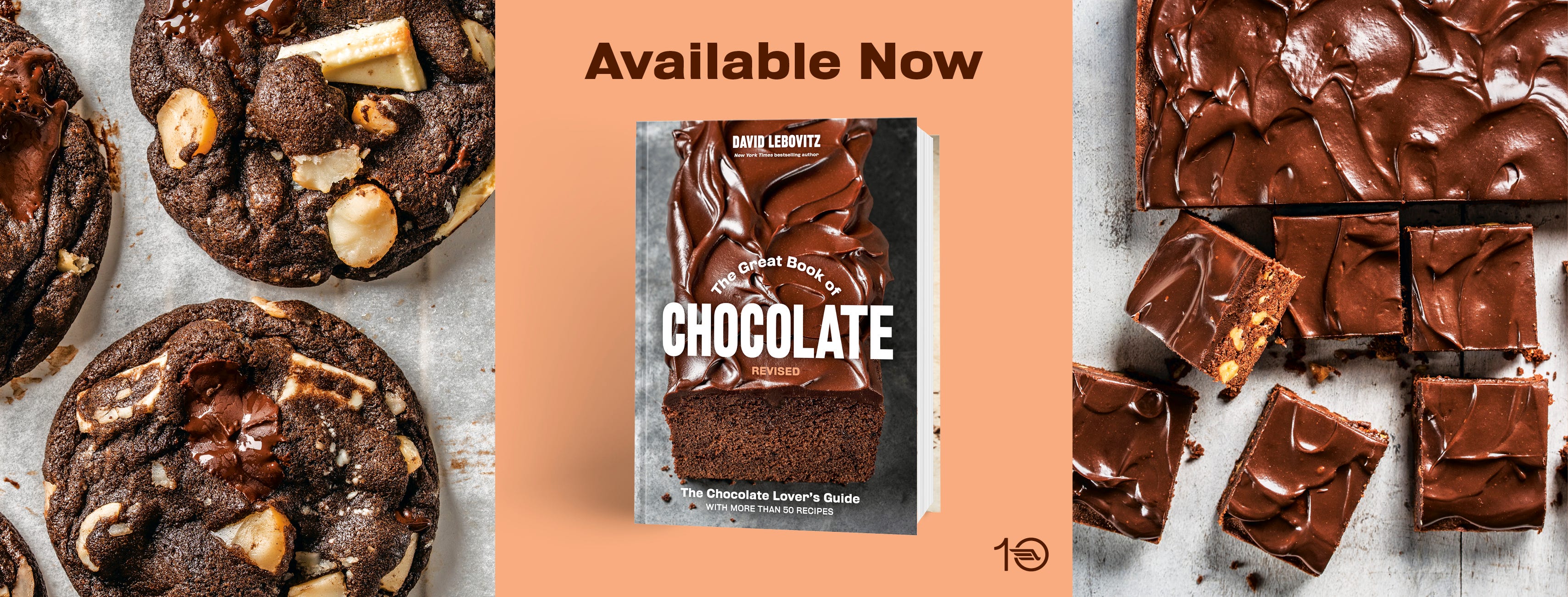 Talking French Chocolate at G. Detou (video) | It’s no secret that one of my favorite places in Paris is G. Detou. In fact, I depend on it so much, for everything from chocolate to vanilla—and lots, lots more. I’ve been quoted as saying that if G. Detou didn’t exist, I couldn’t live in Paris. It’s got everything I need.Owner Benoît Bourloton is a busy man, spending his days keeping the shop well-stocked with a wide variety of French chocolates, as well as other delicacies. Since we’ve become friends (and what a friend to have!), I asked Benoît if I could stop by and discuss French chocolates, and he gladly invited me into the shop to talk about some of them. I hope you enjoy the video!-DavidSubscribe to my newsletter to get recipes, videos, podcasts, and Paris stories sent right to your Inbox! This is a public episode. If you'd like to discuss this with other subscribers or get access to bonus episodes, visit davidlebovitz.substack.com/subscribe | 11m 31s | ||||||
| 5/11/26 |  Chocolate-Olive Oil Spread | When I told Deb Perelman of Smitten Kitchen that I was doing a complete revision of The Great Book of Chocolate, which included adding new recipes, she insisted that I include her Chocolate-Olive Oil Spread. For those who follow Deb know that when she says something is delicious and worth making, you not only listen, but in my case, you spread the word. No pun intended. As luck would have it, Deb was recently in Paris so I invited her into my kitchen to make her Chocolate-Olive Oil Spread. As you can see in the video, not only is the recipe fun to make, but its very easy as well. And unlike store-bought spreads, you know exactly what’s in it. The only thing that’s a bit tricky is to get it to just the right consistency for spreading. But if I can do it, so can you. Deb finishes the dark chocolate spread by leaving it on the counter at room temperature for a few hours, whereas in The Great Book of Chocolate, I’m a bit more impatient so I place it in the refrigerator until it reaches the right consistency, then transfer it to a jar. Because it has no dairy, it can be stored at room temperature.After you make this spread, if you find that it’s too firm, a few seconds in the microwave will soften it just enough to make it spreadable. If you don’t have a microwave, you can warm the jar in a small saucepan of warm water. The temperature of your room can be a factor, and I did find that using a high-percentage chocolate — one that’s 70% or more cacao solids — will firm up more solidly than one that’s 50-55% cacao solids, which is what we used in the video. [Thanks to Irene Wong for shooting the video, Michael Sellers for editing.] This is a public episode. If you'd like to discuss this with other subscribers or get access to bonus episodes, visit davidlebovitz.substack.com/subscribe | 6m 29s | ||||||
| 4/11/26 |  Chocolate Marshmallows | One of my favorite parts about writing my chocolate book was getting to explore, and share, the world of chocolate. Chocolate is a pretty wonderful ingredient all by itself. But I wanted to feature friends in the chocolate world, so I culled recipes from bakers, pastry chefs, chocolatiers, cookbook authors, and even bartenders for the book. For the revision of The Great Book of Chocolate, I completely rewrote the book (since so much has changed!) and wanted to include a chocolate marshmallow recipe. So I thought about Amanda Bankert of Boneshaker donuts in Paris, who taught me how to make vegan marshmallows, which were game-changers since many people have asked me about substitutions for the gelatin and egg whites that are normally used in marshmallow recipes. Subscribe to my newsletter to get recipes, videos, stories from Paris, and more, sent right to your Inbox!Amanda is one of the most fun people I know, and is also a graduate of the prestigious Cordon Bleu cooking school in Paris. So when revising The Great Book of Chocolate, I thought, “Why not veganize chocolate marshmallows?” With the book coming out in less than a month, I then thought, “Wouldn’t it be fun to have Amanda come over and make them with me in my kitchen?”So we made a video of us preparing them together. We had such a good time whipping them up, and it’s great that anyone - vegan or not - can enjoy these delicious marshmallows. And next time you’re in Paris, stop by Boneshaker for a donut and a cup of coffee. Like Amanda, her shop is one of the most fun things in Paris. And if you see her behind the counter, say hi for me, and enjoy the video!A few helpful tips to read before making the recipe:* Be sure to stir and scrape the bottom of the pot while the syrup is cooking to scrape up any agar-agar that’s sticking to the pan.* The better (and darker) the cocoa powder, the tastier the marshmallows will be. I like Valrhona cocoa powder and Guittard cocoa rouge. King Arthur sells a double dark cocoa blend that I haven’t tried, but any Dutch-process cocoa powder will do. Hershey’s Special Dark is a sleeper in this category, and affordable.* You may have to do a bit of shopping to get the xanthan gum and agar-agar, a natural gelatin substitute, which, interestingly, is sold in French grocery stores. Natural food stores or online shops are good places to look where you live. In Paris, G. Detou sells them, as well as cream of tartar. The good thing is, you’ll have them on hand for next time : ) * Aquafaba is the chickpea cooking liquid found in canned chickpeas, not jarred, nor is it the liquid from dried chickpeas that you cook at home. (Interestingly, aquafaba was “discovered” by a French opera singer.) In the U.S., generally one 15-ounce/425g can yields 3/4 cup (180ml) liquid, but you may want to get an extra can just to be sure. (You can use the chickpeas to make my really good hummus.) * It’s nice to have a helper in the kitchen to steady the bowl while you fold in the cocoa powder, as I did with Amanda. If you’re by yourself, resting the mixing bowl on a silicone baking mat will help keep the bowl in place. * And don’t forget to pre-order The Great Book of Chocolate - it’s out May 5th and you’ll be the first to get a copy! This is a public episode. If you'd like to discuss this with other subscribers or get access to bonus episodes, visit davidlebovitz.substack.com/subscribe | 16m 48s | ||||||
| 4/7/26 |  A Chat with Elaine Sciolino | Few people know, or write about, Paris as well as Elaine Sciolino. With an extensive background in journalism, Elaine was the Paris bureau chief for the New York Times and remains a contributing writer. She has also written four books on Paris and French culture. Her book, The Only Street in Paris, put her neighborhood on the map, portraying the various merchants, food sellers, and restaurants that line the rue des Martyrs, a microcosm of life in the city.Her recent book is Adventures in the Louvre: How to Fall in Love with the World’s Greatest Museum. If the subtitle intrigues you, it’s because the Louvre has had its ups and downs over the years, beginning its life as a fortress, then becoming a residence, then a public “shopping” center, and now, a museum. Elaine takes readers on a journey through the imposing wall and behind the scenes of this famous museum, which both captivates, and vexes, visitors. Being right next to the Seine, the museum is prone to flooding, crowds crane their necks to see the Mona Lisa, and robbers broke in recently, in broad daylight, snatching €88 million ($102 dollars) in jewels, which haven’t been seen since. Security has been a recurring problem at the museum, and the video security system password at the time of the robbery was “Louvre.”Elaine’s book is also full of fun facts about the museum, including one that notes if you wanted to see the whole museum, the walk would be nine miles (14.5km). Other helpful advice: “Never go on an empty stomach and with a full bladder,” because the food offerings in the museum don’t match the cultural treasures in the galleries and corridors. In the podcast, Elaine gave a great tip for visiting the Louvre and avoiding the crowds and the lines, which you might find helpful on your next visit. Enjoy the chat!-David* Follow Elaine Sciolino on Instagram. * Connect with Elaine on Facebook. * Visit Elaine’s website.* Read Elaine’s articles in the New York Times. As always, I ask my podcast guests their favorite addresses in Paris. Here are the ones Elaine mentioned, with a few of her notes: -Les Poissonniers de Montmartre (5 rue des Martyrs, 9th)Elaine says every Thursday Akim, the owner, makes his version of bouillabaisse available to-go, priced at €13.90 for two servings.-La Pâtisserie des Martyrs – Sébastien GaudardThis has her favorite lemon tart, and she also likes the “original”-style macarons.-Les CanaillesOwner Yann always gives a warm welcome.-Le Comptoir Canaille Italian cuisine.-Chez MamyElaine is fond of their bœuf bourguinon, billed as joue de bœuf, or beef cheeks.-Le Quincy (28 Av. Ledru Rollin, 12th)Auberge dining that’s “frozen in 1950s Paris” featuring escargots, frogs legs, pork terrine, and stuffed cabbage. This is a public episode. If you'd like to discuss this with other subscribers or get access to bonus episodes, visit davidlebovitz.substack.com/subscribe | 56m 48s | ||||||
| 2/9/26 | 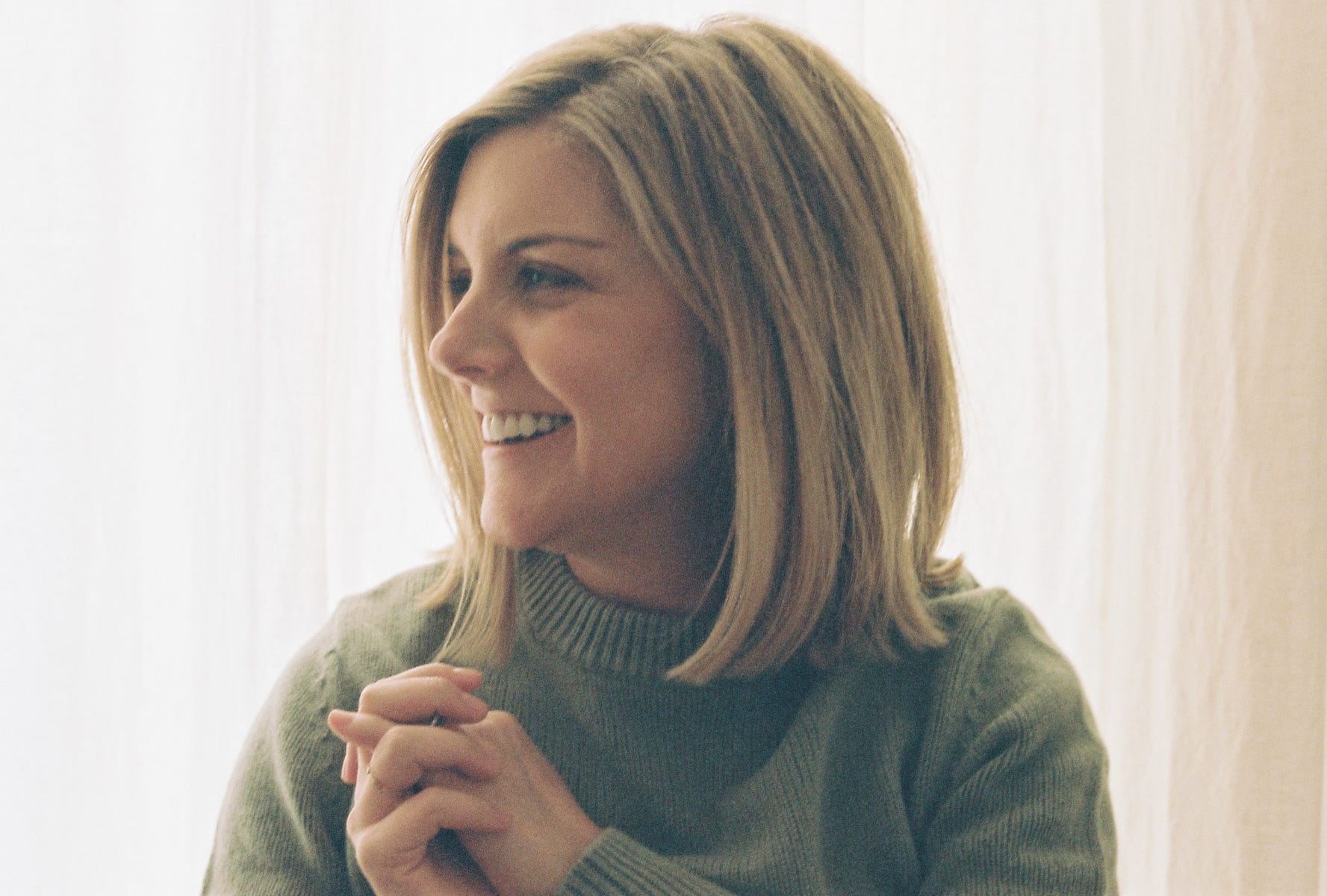 Podcast: Lauren Collins, Paris-based New Yorker Journalist | Since 2015, Lauren Collins, staff writer for the New Yorker, has called Paris home. The author of When in French: Love in a Second Language, Lauren moved from Switzerland to France with her French husband and continues to write for the New Yorker, following in their tradition (which includes writers such as A. J. Liebling, Anthony Bourdain, Calvin Trillin, John McPhee, and Adam Gopnick) of outstanding food writing and reporting on food-related topics.Her articles have ranged from subjects such as the controversial French tacos, spelled with an “s,” even though it’s just one; Les Grands Buffets, the all-you-can-eat buffet restaurant that’s the hardest reservation in France (in my experience trying, it’s the hardest in the world); and the elusive El Mordjene Algerian hazelnut spread, a cult favorite that’s nicknamed “beige gold,” which was banned in France.Lauren has also written on the wonders of Japan’s fake foods, as well as “Where should I go?” a service that provides Americans and other visitors with “insider” French experiences, such as fulfilling the request of a client who wanted to be invited to a party in a French person’s home.Recently Lauren reviewed the just-published memoir of former Président Nicolas Sarkozy’s brief time in prison, titled How Nicolas Sarkozy Survived Twenty Days Behind Bars, a book that received a mixed reception in France. In her newsletter Lettre Recommandée, she titled her story The Rush Job Memoir That’s Topping the French Charts. Oh, and she got to meet Omar Sy!In the podcast, we discuss how these stories came to be, as well as how things have changed in France since Lauren’s moved here, and what it’s like being a journalist in France. As I do with Paris-based guests on my podcast, I asked Lauren to share some of her favorite addresses in the city for dining, which she was happy to do.Lauren’s recommendations are Le Récamier, Le Soufflé, Chez Carrie, Enni Udon, Magnolia, La Joie, and Rosario, as well as Finkstuebel in Strasbourg. In the podcast, she explains why they are her favorites.Enjoy listening in!-David* Follow Lauren Collins on Instagram* Subscribe to Lauren’s newsletter, Lettre Recommandée* Read Lauren’s articles in The New Yorker This is a public episode. If you'd like to discuss this with other subscribers or get access to bonus episodes, visit davidlebovitz.substack.com/subscribe | 55m 32s | ||||||
| 10/4/25 | 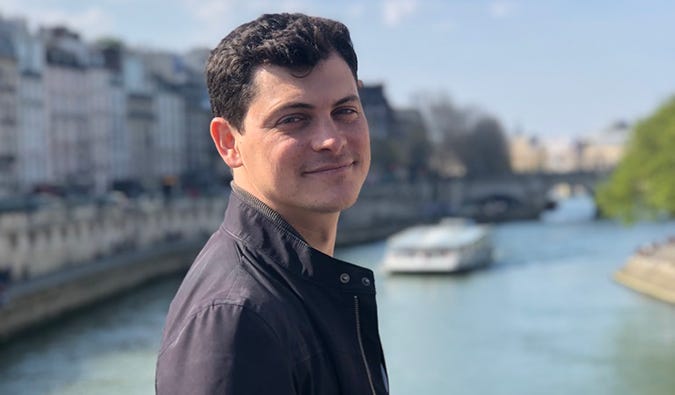 A Chat with Matt Kepnes, aka, Nomadic Matt | Matt Kepnes, aka, Nomadic Matt, is one of the original bloggers, who I remember fondly from the early days of blogging. He started his travel blog, Nomadic Matt, in 2008 and has since turned it into a website with comprehensive information about all things travel. I’ve followed him around the globe—online, not in person. (Unfortunately!) I was happy to cross paths with him in Paris on his recent visit here and invited him into my kitchen to talk about travel in this day and age on my podcast. Matt has a great expression. To keep travel costs down, he says: Travel like you live, which I think is a wonderful way of looking at things. (Although I don’t mind staying in a hotel where someone makes the bed, and I’m not big on renting apartments. Who wants to do dishes while on vacation?) But we all have our own ways we like to travel, and it’s nice that Matt keeps things “real,” whether you’re a budget traveler (he still stays at youth hostels) or you’re flying business class. He’s very astute about gaining and using miles to get those coveted spots on the plane.Matt is one of those people who’s mastered the art of traveling for weeks with just a carry-on, and we talked about many topics in this podcast, including why you should always get travel insurance, whether or not a headlamp is a good idea to pack in your suitcase (who’d have thought of that?), as well as how travel influencers are changing travel, for better or worse. He also shared nearly a dozen of his favorite dining spots in Paris.Matt has also published several budget travel guides to various destinations such as Thailand, Europe, New York City, and Nomadic Matt’s Guide to Paris… …as well as his latest book, a brand-new edition of How to Travel the World on $75 a Day. It was great to catch up with Matt here in Paris, and I hope you enjoy our chat. -David Where to Find Matt Kepnes-Get Matt’s Travel Guides and Books-Follow Matt on Instagram, Facebook, and TikTok-Visit his website, NomadicMatt.com-Sign up for Matt’s travel newsletterSubscribe to my newsletter to receive new posts, podcasts, stories, and Paris travel tips sent right to your Inbox! This is a public episode. If you'd like to discuss this with other subscribers or get access to bonus episodes, visit davidlebovitz.substack.com/subscribe | 52m 09s | ||||||
| 8/12/25 | 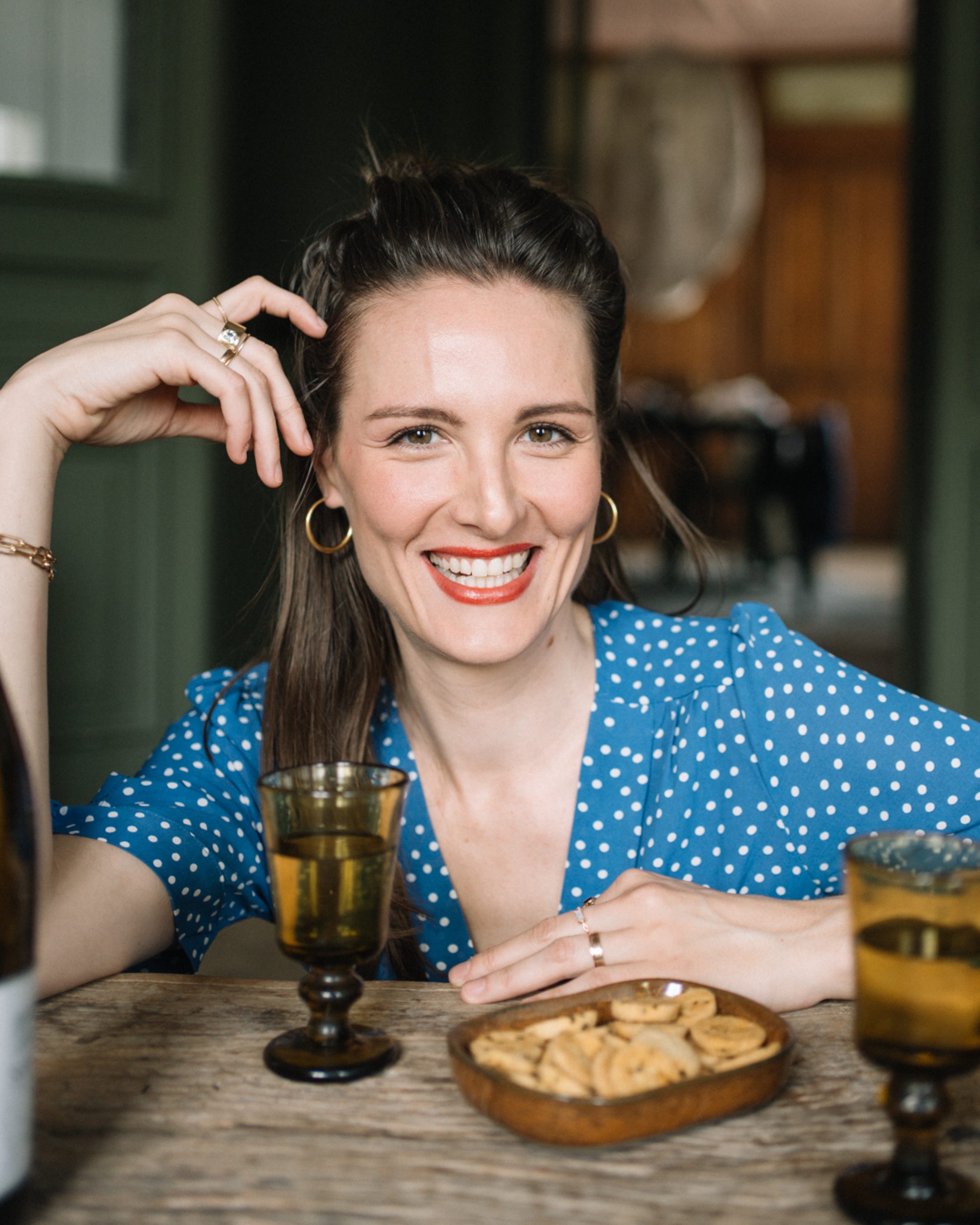 A Chat with Cécilia Jourdan of Hello French | You may know Cécilia Jourdan from her wildly popular social media account Hello French which has close to 1.6 million followers on Instagram, and I wasn’t kidding when I said at the beginning of our podcast chat that I was very excited to finally meet her. (I’m a fan.) Cécilia has done an amazing job bringing the French language, and many aspects of French culture, to the English-speaking world. She has covered everything from baguette etiquette to making a fresh apricot tart and describing the classic French petit déjeuner (breakfast) in English and in French.Like me, Cécilia is bicultural; she was born in France and now lives in Brooklyn. During our chat in my Paris kitchen, we discussed key differences between the cultures, what it was like for her to immigrate to America, how to tip in France (which is quite different from tipping in America…), and she being a French teacher, we discussed some of the mistakes that are easy to make when speaking French.Of course, I had to quiz Cécilia on some obscure English vocabulary and did a lightning round with her: Who does it better? It included asking which country, France or America, did these things better: aluminum foil, butter, waiting in line, cheese, and optimism (vs. pessimism), among other things. During the podcast, I also taught Cécilia a few new words in English…a few that are a bit risqué. 🤭 Cécilia also published a comprehensive e-guide, Hello Paris: Experience the City Like a Parisian, which features over two hundred and fifty of her favorite addresses in Paris for restaurants, cafés, cocktail bars, museums, bakeries, boutiques, and hotels, with maps that’ll help you easily navigate the city like a pro.Give the podcast a listen, and I hope you enjoy listening to Cécilia as much as I enjoyed talking to her! -DavidSubscribe to my newsletter to get new posts, recipes, podcasts, and more…sent right to your inbox! Links to Cécilia Jourdan and Hello French* Follow Cécilia and Hello French on Instagram, Facebook, and Tik Tok.* Visit Hello French website.* Subscribe to the Hello French newsletter.* Get the Hello Paris: Experience the City Like a Parisian guide.* Check out Cécilia’s Learning Guides to Speaking French.* Dine at her father’s restaurant in le Marais, Le Colimaçon.* Cécilia offers classes via a series of Learning eGuides that cover French essentials for beginners and mastering French pronunciation and the sounds of spoken French. This is a public episode. If you'd like to discuss this with other subscribers or get access to bonus episodes, visit davidlebovitz.substack.com/subscribe | 56m 46s | ||||||
| 7/15/25 | 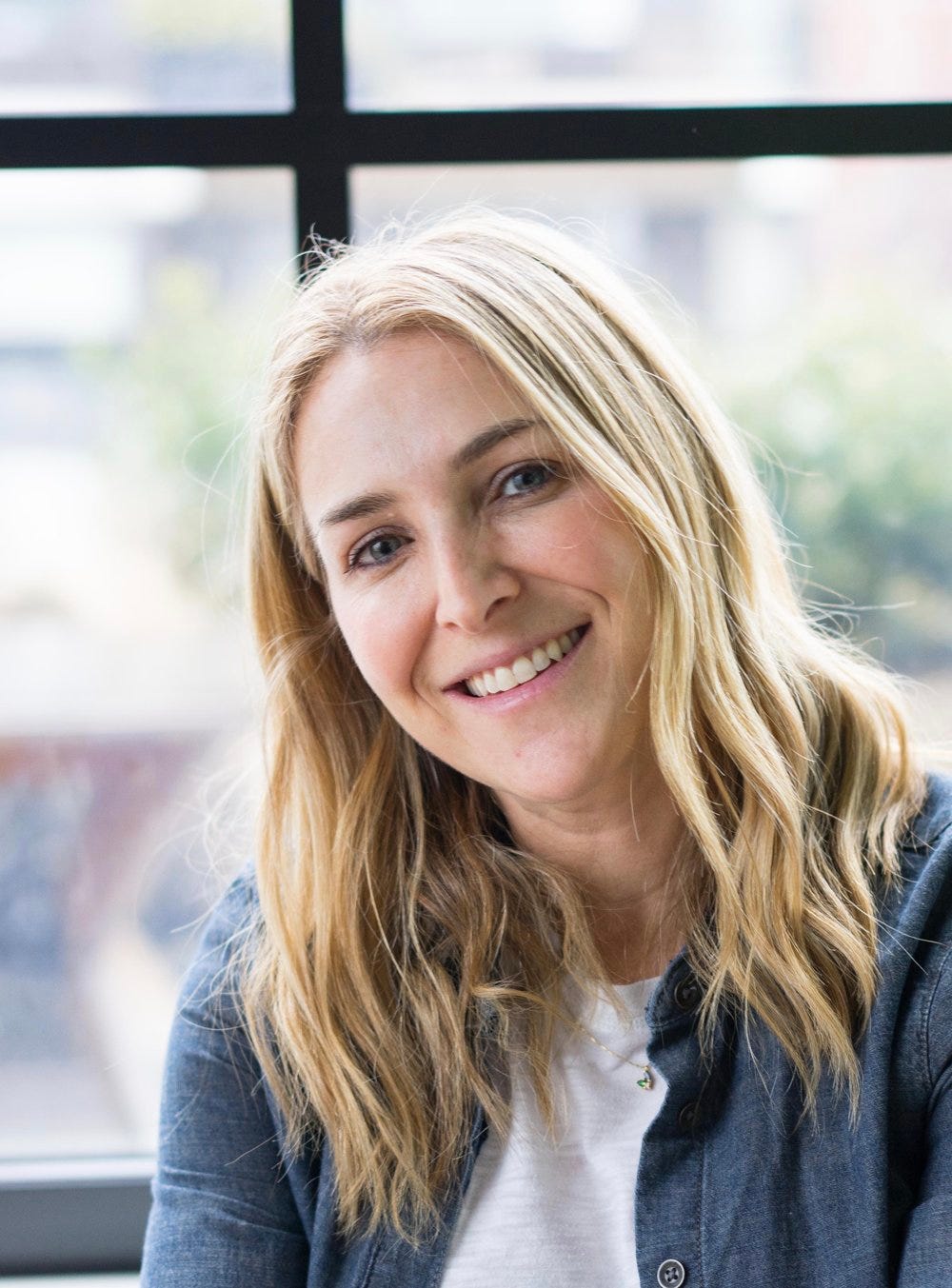 A Chat with Rachel Simons, owner of Seed+Mill | Tahini has gotten a lot of press in the last few years, and the delicious sesame paste has become a staple in many of our pantries. Many cultures have embraced the borderless sesame seed in some form or another, including Japanese gomashio and furikake, hummus from the Middle East, Italian Reginelle cookies, and even in burgers. In her new book, Rachel Simons explores all the possibilities and guises of this versatile ingredient: Sesame: Global Recipes & Stories of an Ancient Seed Rachel is the co-founder of Seed+Mill, which offers top-quality tahini and halvah, a rich sesame paste that’s one of the best things you’ll put in your mouth. There are many brands of tahini and halvah (that vary in quality) but the ones offered by Seed+Mill are uniformly excellent, and I always make room in my suitcase to bring some back to Paris with me. And if you find yourself in New York City, the tahini soft-serve ice cream they serve in their shop at the Chelsea Market, served with crumbles of halvah, is truly a scoop—or swirl—of heaven. Rachel is one of the nicest people I know, although she did yell at me once…I was packing jelly rings at the Joyva halvah factory in Brooklyn with Jake Cohen, and that’s Rachel, yelling at me. 😂 We’ve since made up and I’ve been enjoying her new book, Sesame, so much that I invited her on my podcast when I was in New York, to talk about tahini, halvah, and the wonderful world of sesame seeds.Enjoy!-David Links* Follow Rachel Simons on Instagram, and Seed+Mill on Instagram* Get Sesame: Global Recipes and Stories from an Ancient Seed* Visit the Seed + Mill website, where you can order tahini and halvahSubscribe to my newsletter to get new posts, recipes, and more, sent right to your Inbox! This is a public episode. If you'd like to discuss this with other subscribers or get access to bonus episodes, visit davidlebovitz.substack.com/subscribe | 40m 48s | ||||||
Want analysis for the episodes below?Free for Pro Submit a request, we'll have your selected episodes analyzed within an hour. Free, at no cost to you, for Pro users. | |||||||||
| 6/18/25 | 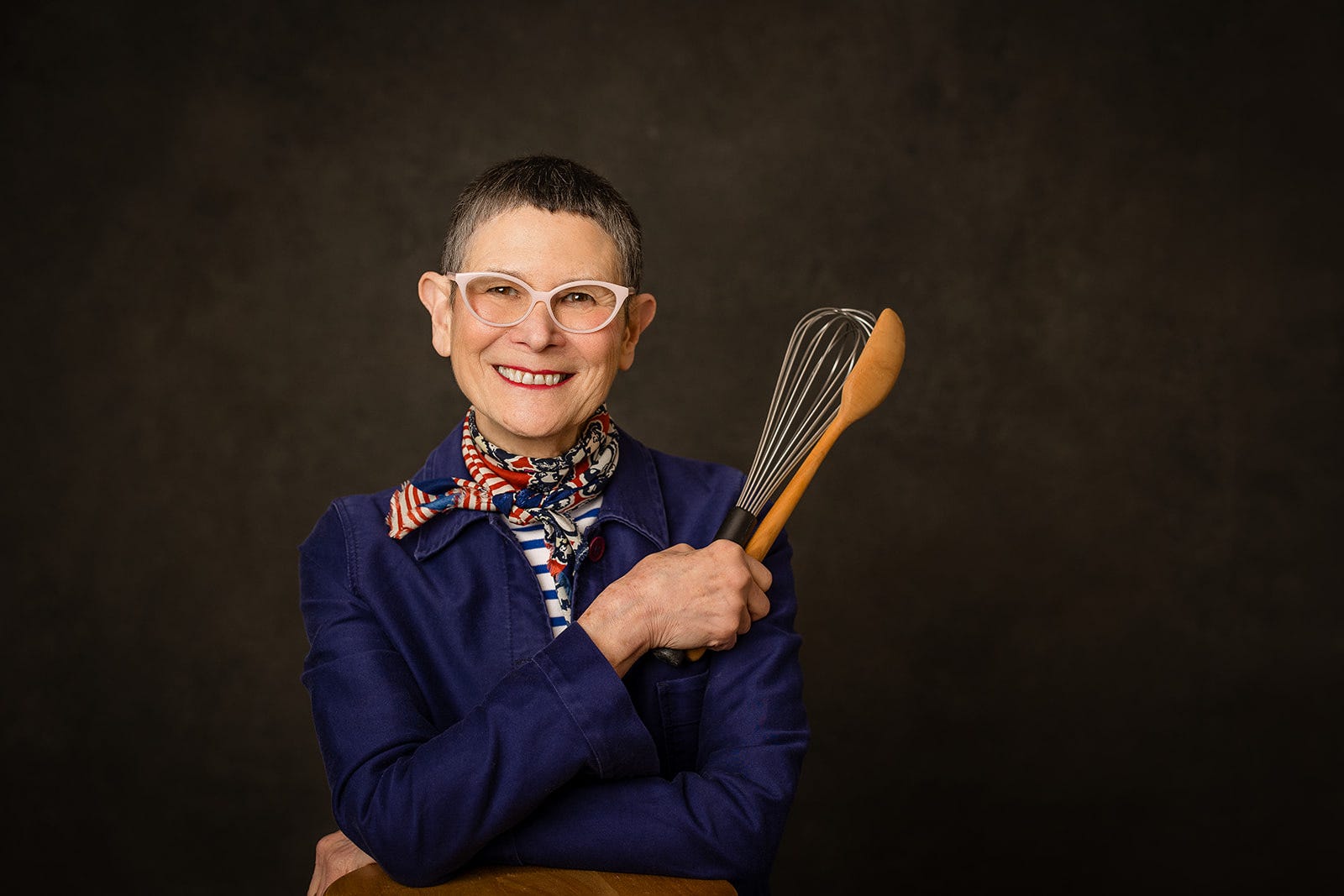 A Chat with Dorie Greenspan | It may sound cliché, but I suspect for most of you, Dorie Greenspan needs no introduction. Dorie is an accomplished baker, whose books range from an oversize volume of never-fail cookie recipes, Dorie’s Cookies, to translating the recipes of master Parisian pastry chef Pierre Hermé, making them accessible to home bakers in Desserts by Pierre Hermé. And when Julia Child launched her TV show, Baking with Julia on PBS, she tapped Dorie to write the companion book, Baking with Julia. Dorie describes herself as a part-time Parisian, so I took advantage of her time while she was in Paris recently invited her to stop by my kitchen for a chat. We talked about many subjects, including our favorite baking pans, whether the U.S. is ready for metrics (or at least recipes in weights), how to get the hump in madeleines, and how she wrote, and cajoled recipes from pastry chefs and pâtisseries, for her Paris-based cookbooks; Baking Chez Moi, Around My French Table, and Paris Sweets.Her new book is Dorie’s Anytime Cakes and features casual cakes, in all different shapes, sizes, and flavors…When Dorie came by, she (of course) arrived with cakes from Pierre Hermé and a box of macarons, including one flavored with tomato leaves and another with tonka beans. A few show notes:* When asked about her three favorite bakeries in Paris at the moment, she mentioned Michalak, Rayonnance, and Tapisserie in the podcast.* My favorite California Blenheim dried apricots are from Apricot King. * The European-style cake pan we mentioned is the Tea Loaf Pan from King Arthur Baking. (I mention it in my chocolate book, coming out in the spring of 2026.)I hope you enjoy our chat!- David* Follow Dorie on Instagram and Facebook* Visit her website: doriegreenspan.com* Subscribe to Dorie’s newsletter: xoxodoriegreenspanSubscribe to my newsletter to get podcasts, recipes, Paris posts, and more sent right to your Inbox! This is a public episode. If you'd like to discuss this with other subscribers or get access to bonus episodes, visit davidlebovitz.substack.com/subscribe | 57m 26s | ||||||
| 4/12/25 |  Podcast: A Chat with Preston Mohr, Director of the Wine Scholar Guild, on Enjoying French Wines | Living in France, it’s hard to overestimate the prevalence and importance of wine. Not only is it a marker and reflection of the place where it’s made, but it’s an integral part of French culture and cuisine. It’s a natural pairing with meals and accompanies almost every gathering with friends and family.I like wine, but like most people in France, I’m an amateur. I know what I like and what I don’t like. But I’m taking more of an interest in wine to deepen my knowledge. So I’m fortunate to have friends like Preston Mohr, who’s an expert on wine but also knows how to communicate and explain wine in simple terms, without any pretense, so we can all get more enjoyment out of it. I invited Preston into my Paris kitchen to talk about French wines — what to look for when buying French wine, how to order wine without feeling sheepish in a restaurant or café, and what to do if the wine you’ve been served isn’t to your liking. (Which was discussed in the comments here.)We also chatted about how the French wine world has changed over the last few years, whether Beaujolais should be avoided, as well as his favorite wine bars in Paris.Originally from Minnesota, Preston has called Paris home for the last twenty years. He’s the Managing Director of the Wine Scholar Guild, which connects wine lovers from around the world and offers certification programs for wine professionals and enthusiasts who want to learn more about wine, either in person, at one of 130 locations around the world, or online, at your own pace. In fact, I’m thinking of signing up! We had lunch today at Le Cornichon and tried to power through this giant platter of frites (that were very good), but only managed to make a good-sized dent in them. Next time…In the meantime, enjoy listening to my chat with Preston. -David Links* Wine Scholar Guild (website)* Preston Mohr on LinkedIn* Preston Mohr on InstagramSubscribe to my newsletter to get new podcasts, recipes, Paris restaurant tips, and more, sent right to your Inbox! This is a public episode. If you'd like to discuss this with other subscribers or get access to bonus episodes, visit davidlebovitz.substack.com/subscribe | 44m 20s | ||||||
| 3/15/25 |  My conversation with Yotam Ottolenghi | Thanks to everyone for tuning into my live video with Yotam Ottolenghi! It was great fun to connect with Yotam and discuss everything from cooking and baking inspiration, to favorite kitchen tools and tips, as well as two “weekend friendly” recipes; Yotam Ottolenghi’s Baked Feta-Dill Frittata and my Croissants aux amandes, almond-filled croissants. I’ll be posting the recipe for them this week - stay tuned!If you’re not a subscriber to my newsletter, you can subscribe below to get posts, recipes, stories, podcasts and more, sent right to your Inbox: This is a public episode. If you'd like to discuss this with other subscribers or get access to bonus episodes, visit davidlebovitz.substack.com/subscribe | 51m 33s | ||||||
| 3/9/25 |  Podcast: On Writing Cookbooks, with author Kate Leahy | When Kate Leahy was in Paris recently, I was happy to have a chat with her in my kitchen for my podcast. A former restaurant cook, Kate seamlessly pivoted to food writing, collaborating on books with a variety of chefs, bakers, and sommeliers, and has also penned several books on her own.Kate co-authored La Buvette with Camille Fourmont, the owner of the charming La Buvette wine bar in Paris, and most recently, My Egypt with chef-restaurateur Michael Mina. She also co-wrote Lavash, which explores the world of Armenian flatbreads; Cookie Love with Mindy Segal; Burma Superstar, featuring recipes from San Francisco’s legendary Burmese restaurant; and A16 Food+Wine, from one of the best Italian restaurants in America.While Kate was in Paris working on a project with me, in between baking together and hitting the town, attending chocolate tastings, and checking out the $15 ham & cheese sandwich at the Ritz Hotel’s Le Comptoir bakery (see below), we talked about writing cookbooks in this podcast. A lot goes into writing a cookbook, especially when she’s collaborating with a chef and travels to places such as Egypt and Armenia to research and cull recipes. We discussed how she chooses what projects to work on, which chefs and sommeliers to work with, what are the most rewarding parts of writing cookbooks…and what are the most difficult. (And no, working with me wasn’t one of the latter…hopefully!😉)Our chat also touched on the subject of the world of cookbooks today, what makes a good cookbook, and what direction cookbooks are going in. Other topics include how the world of food writing has changed with the internet and recipes on social media, where recipe sharing has pivoted to what Alicia Kennedy has called the test kitchen-ifcation of food media, as people vie for attention in a changing landscape.Enjoy the podcast!-David* Follow Kate Leahy on Instagram.* Visit Kate Leahy’s website.* Check out Kate Leahy’s books.* Listen to Kate’s podcast with Kristin Donnelly, Molly Stevens, and Andrea Nguyen — Everything Cookbooks. (My episode with them is here.)Subscribe to my newsletter to get posts, recipes, interviews, podcasts, and more, sent right to your Inbox![Thanks to audio engineer Justin Golden for working his magic, and his editing talents, on my podcasts.] This is a public episode. If you'd like to discuss this with other subscribers or get access to bonus episodes, visit davidlebovitz.substack.com/subscribe | 48m 21s | ||||||
| 12/11/24 |  Moving to, and Living in Paris with author Lindsey Tramuta | I’ve known Lindsey Tramuta almost as long as I’ve been in Paris. We live in the same arrondissement (go 11th!) and I occasionally see her out and about, when she’s not busy writing books, or magazines and newspaper articles, which are featured in such publications as The New York Times, Bon Appétit, and Condé Nast Traveler.I arrived in Paris quite unprepared, not speaking French not knowing what to expect. Lindsey moved to France the opposite way (and in my opinion, the right way), with a background in French literature, studying in France, and having a boyfriend, who is now her husband. Even so, the move still presented some challenges.I thought it would be fun to talk to Lindsey about her journey—what motivated her to make the move (and how she answers the eternal question from visitors: Is it permanent?), what she loves about the city and living in France, as well as some of the downsides of living one’s life abroad. In Lindsey’s first book, The New Paris, she chronicled the last decade in Paris, during while time the city’s food scene had lost some of its some of its luster, and showcased a new generation of young, engaged Parisians who changed the landscape, rebooting Paris’ reputation as a thriving, world-class gastronomic destination, that continues to evolve.In The New Parisienne, Lindsey tackles the perception of the Parisian woman, profiling pastry chefs, creators, artists, activists, and even the mayor of city, who have changed the image of the French woman (rather than adhering to the stereotype), and who continue to shape the city today.Lindsey also just finished The Eater Guide to Paris, focusing on the bistros, wine bars, pastry shops, cafés, and cocktail bars in the city, which will be released in the spring of 2025. In addition to writing books and articles, Lindsey is the host of her own podcast, The New Paris podcast, and writes the newsletter, The New Paris Dispatch.We had a great time talking about our lives in Paris, including what’s changed in the city since we arrived, if Paris really is a good place to live, what are some of the difficulties of living here (#paperwork), what are some of the cultural differences one must navigate, our thoughts on the French healthcare system, and why we’ve both ultimately chose to call Paris our home.I hope you enjoy our chat! -DavidLindsey Tramuta* Lindsey’s website: Lindseytramuta.com* Instagram* The New Paris Podcast * Lindsey’s Books * Paris Tours (customized Paris tours)* Subscribe and read The New Paris Dispatch newsletterSubscribe to get my newsletter sent right to your Inbox. Free subscribers get some posts, recipes, and stories, and paid subscribers get additional bonus content, full access to the recipe archives, and the ability to participate in the community of commenters. This is a public episode. If you'd like to discuss this with other subscribers or get access to bonus episodes, visit davidlebovitz.substack.com/subscribe | 57m 36s | ||||||
| 10/16/24 | 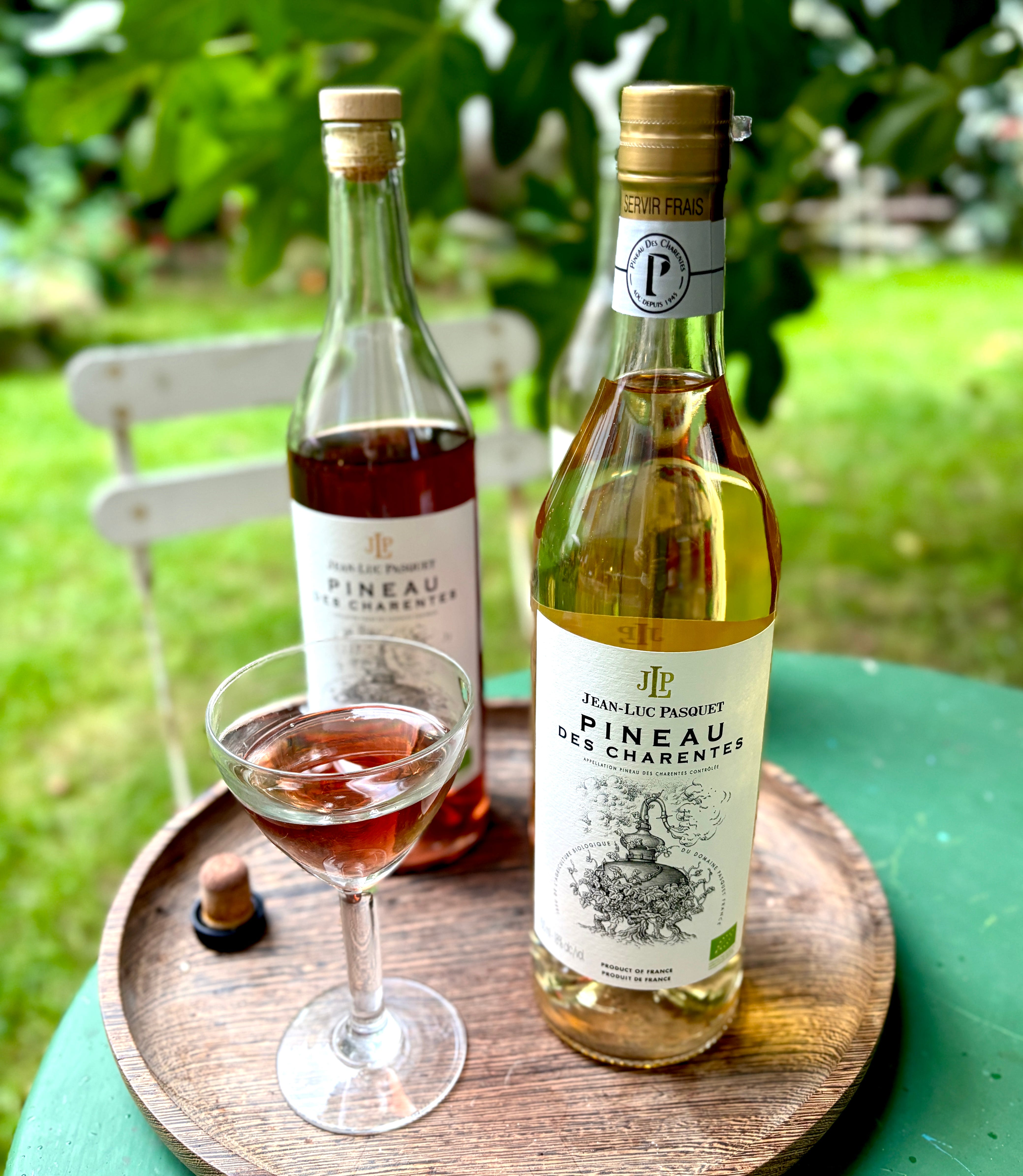 A Chat with Amy Pasquet about French apéritif Pineau des Charentes | A few years ago, I visited several Pineau des Charentes producers in a region of France known as the Charente, where Cognac is made. Legend has it that it was originally made by accident when a Cognac producer centuries ago added fresh grape to a barrel of eau-de-vie (a clear distillation of grapes), intended to be aged for Cognac. He let it rest, and age, anyways, and thus, Pineau des Charentes was made.Nowadays Pineau des Charentes comes in white, red, and rosé varieties, with the rosé version aging the shortest, to some of the reds and whites being aged a decade or more, although most Pineau des Charentes is aged for about 12-18 months before it’s bottled.It’s one of my favorite French apéritifs, which I wrote about in my book Drinking French. During my travels for the book, doing research, and diving deeper into the world of French spirits, I was fortunate to meet various producers, and it was gratifying to see what care they tookAmy married into a Cognac-making family and I met her on a visit to the region when I was visitingI sort of made a gaffe when I was in the region prior to visiting Amy and her husband Jean, by slipping a cube of ice into my glass of Pineau des Charentes, which shocked a few of the people around me. Amy later showed me an ad from years ago that said “Osez!” (“Dare!”) and pictured a glass of Pineau des Charentes with ice is in.Nowadays, they’re upping the “cool” factor of Pineau des Charentes by showing bartenders putting ice into Pineau des Charentes, which is a great way to enjoy it, but well-chilled, without glaçons is good fine, too.I love Pineau des Charentes and am particularly fond of the apéritif made by Jean-Luc Pasquet, which has a unique freshness that makes it brighter than other Pineaus, and their apéritif infused with raspberries from their garden, is wonderful sipped in the summer, with or without ice. Although I always put a cube or two in mine : )They are also making a rosé Pineau des Charentes which is giving other rosé-based French apéritifs a run for their money.Amy was recently elected to be the president of the Comité National du Pineau des CharentesWe talked about what is Pineau des Charentes, how it relates to the Cognac-making region of France, how to drink it, and what makes it so special. While not as well-known as other French apéritifs (98% of the Cognac production is exported from France, whereas only 20% of the Pineau des Charentes is exported) and we agree that it deserves to be better-known.I hope you enjoy my chat wtih Amy about this uniquely French apéritif!-DavidYou can find Jean-Luc Pasquet Pineau des Charentes on Wine Searcher.Follow Jean-Luc Pasquet on Instagram.Visit the Jean-Luc Pasquet website.Try this Fall-friendly Harvest Spritz Cocktail, made with Pineau des Charentes. This is a public episode. If you'd like to discuss this with other subscribers or get access to bonus episodes, visit davidlebovitz.substack.com/subscribe | 48m 40s | ||||||
| 6/15/24 | 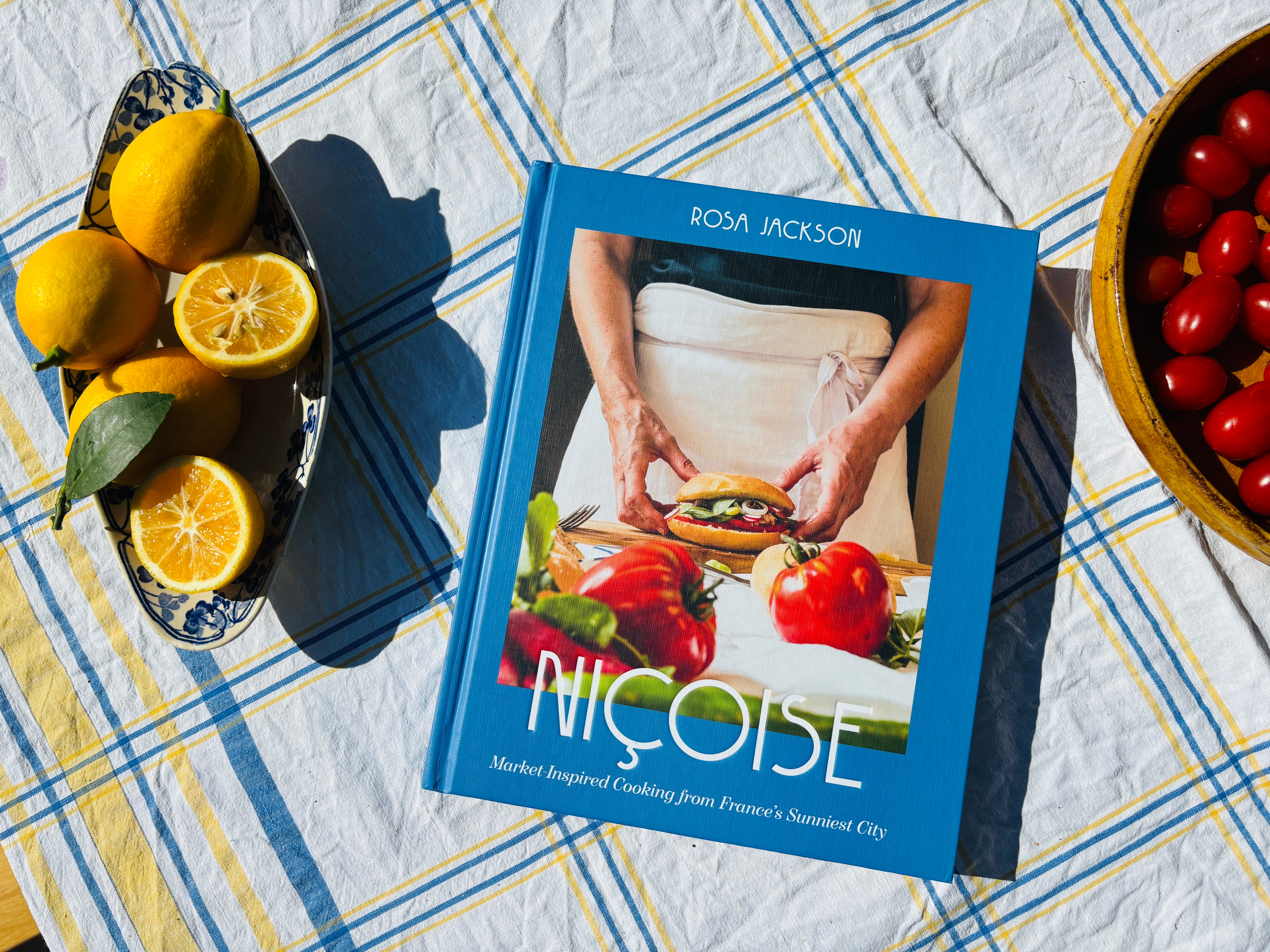 Podcast: A chat with Rosa Jackson, cookbook author and cooking school teacher | If anyone knows the cuisine of Nice, it’s Rosa Jackson, owner of Les Petits Farcis for over twenty years. Located in the sunny south of France, Niçoise cooking is known for its freshness and Mediterranean flavors, using ingredients that range from local olive oil and anchovies to vibrant vegetables, such as tomatoes, Swiss chard, and zucchini (and zucchini flowers), as well as fresh goat cheeses and fragrant basil. Rosa is the author of Niçoise: Market-Inspired Cooking from France's Sunniest City, with recipes that’ll entice you: Pan bagnat sandwiches packed with fresh, crisp vegetables; soupe au pistou, a lively vegetable soup for summer swirled with basil pistou; caramelized orange cake; a foolproof lemon soufflé; and a lemon tart accented with olive oil. During our chat in my kitchen in Paris, Rosa and I discussed the cuisine of the sunny city she lives in, including the controversies surrounding the salade Niçoise (and the, um…less-than-enthusiastic local reaction to the Larousse version) and how to make a proper Pan bagnat, a sandwich that’s so esteemed in the region that there are official guidelines about what can, and can’t, go into the sandwich. Enjoy the chat! - David* Visit Rosa at her website Rosajackson.com* Follow Rosa on Instagram* Subscribe to Rosa Jackson’s newsletter* Visit Rosa’s cooking school in Nice, Les Petits FarcisI hope you enjoy my newsletter and podcasts. If you’d like to have them delivered right to your inbox, subscribe below! This is a public episode. If you'd like to discuss this with other subscribers or get access to bonus episodes, visit davidlebovitz.substack.com/subscribe | 40m 33s | ||||||
| 4/6/24 | 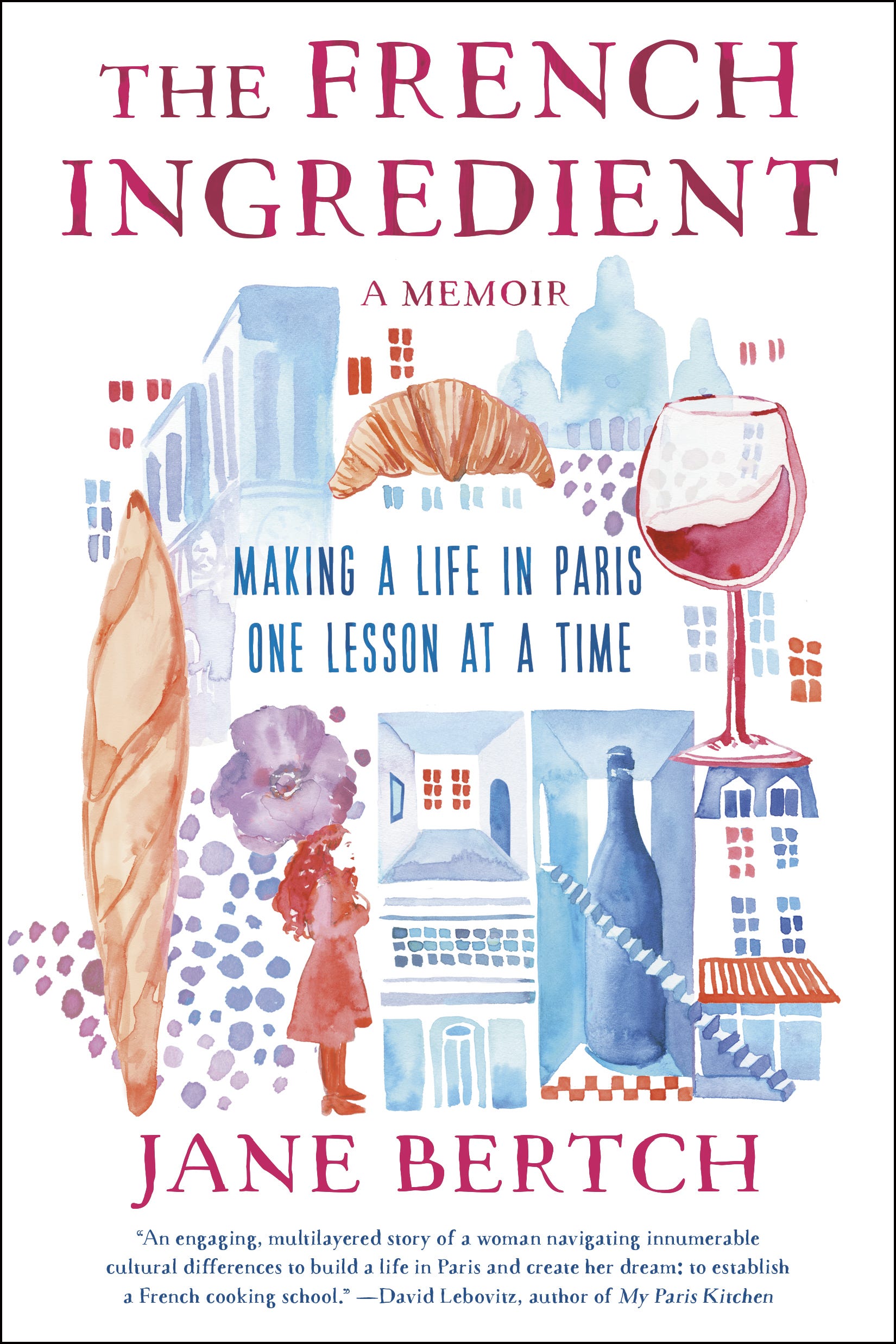 Podcast: A Chat with Jane Bertch, author of The French Ingredient: Making a Life in Paris One Lesson at a Time | Can I tell you how much fun it’s been getting to know Jane Bertch over the years? I’m not exactly sure how we met, but it may have been when I was leading tours and brought our guests for a day-long market tour and cooking class at La Cuisine, her cooking school in Paris. Everyone enjoyed the day very much, including me, and over the years, we’ve shared stories about relationships, and some of the quirks involved in cross-cultural connections, working and living in France, and, of course, we’ve shared several glasses of wine and a number of delicious meals together.Jane has succeeded in building a life, and a career, in Paris, in spite of the hurdles of running a business, including navigating les voisins (neighbors), strikes, a pandemic that closed the country’s borders, an ash cloud that stranded travelers (and brought business to a halt) for weeks, and turbulent gilets jaunes demonstrations, while welcoming guests from around the world to her French cooking school. I’m thrilled about her new book, The French Ingredient: Making a Life in Paris One Lesson at a Time, which recounts her life in Paris, from working in banking, to realizing her dream of opening a cooking school overlooking the Seine, which comes out this Tuesday, and is available for pre-order here:In this podcast, we talk about a range of things that Jane learned along the way, and in her book, she discusses cultivating friendships and business relationships in France (versus the way things are done in America), French table manners (don’t pour your own wine!) and why people won’t eat any treats that you bring to the office, I hope you enjoy the podcast..and her book, The French Ingredient!-David* Follow La Cuisine on Instagram and Facebook* Sign up for the La Cuisine newsletter with Paris tips, favorite addresses, and news on what’s happening in Paris.* Check out La Cuisine in Paris Cooking School (website)* Get The French IngredientSign up to my newsletter and get more posts, interviews, podcasts, recipes, Paris tips and stories delivered right to your inbox! This is a public episode. If you'd like to discuss this with other subscribers or get access to bonus episodes, visit davidlebovitz.substack.com/subscribe | 48m 25s | ||||||
| 3/8/24 |  Podcast: A Chat with Deb Perelman of Smitten Kitchen | I remember when Deb Perelman, aka: Smitten Kitchen, came on the scene in 2006. A few of us had been blogging for a couple of years, doing our thing—when suddenly, a fresh new voice came out of the blue (and out of New York), that segued perfectly to the new way we eat, and cook—less rules, more fun, and how we write about food. If you’re anything like me, you’ve been following her blog for years and cooking from her books. Decades later, her blog remains one of the most popular food destinations on the internet and each of her books has topped the NYT best-seller list upon its release. Her recipes are accessible and well-tested, and the entertaining stories that accompany them have made Deb a trusted voice to those of us who follow her. I’ve been fortunate to count her as a friend and she’s just as delightful in person as she is in print and online. Blogging, and the food media (online and in print) have changed so much over the years, and in this podcast, Deb and I discuss those changes, and how we’ve adapted, as well as her favorite foods (and her least favorite foods), where she gets inspiration, how she tests recipes, eating out vs. eating in, and more. I hope you enjoy listening to our chat!-David* Visit Smitten Kitchen.com* Check out Deb’s best-selling cookbooks here.* Listen to her new podcast, The Recipe, with Kenji López-Alt * Sign up for Deb’s weekly newsletter.* Follow Smitten Kitchen on Instagram.Subscribe to my newsletter to get new recipes, stories, podcasts, and more! This is a public episode. If you'd like to discuss this with other subscribers or get access to bonus episodes, visit davidlebovitz.substack.com/subscribe | 53m 17s | ||||||
| 1/6/24 | 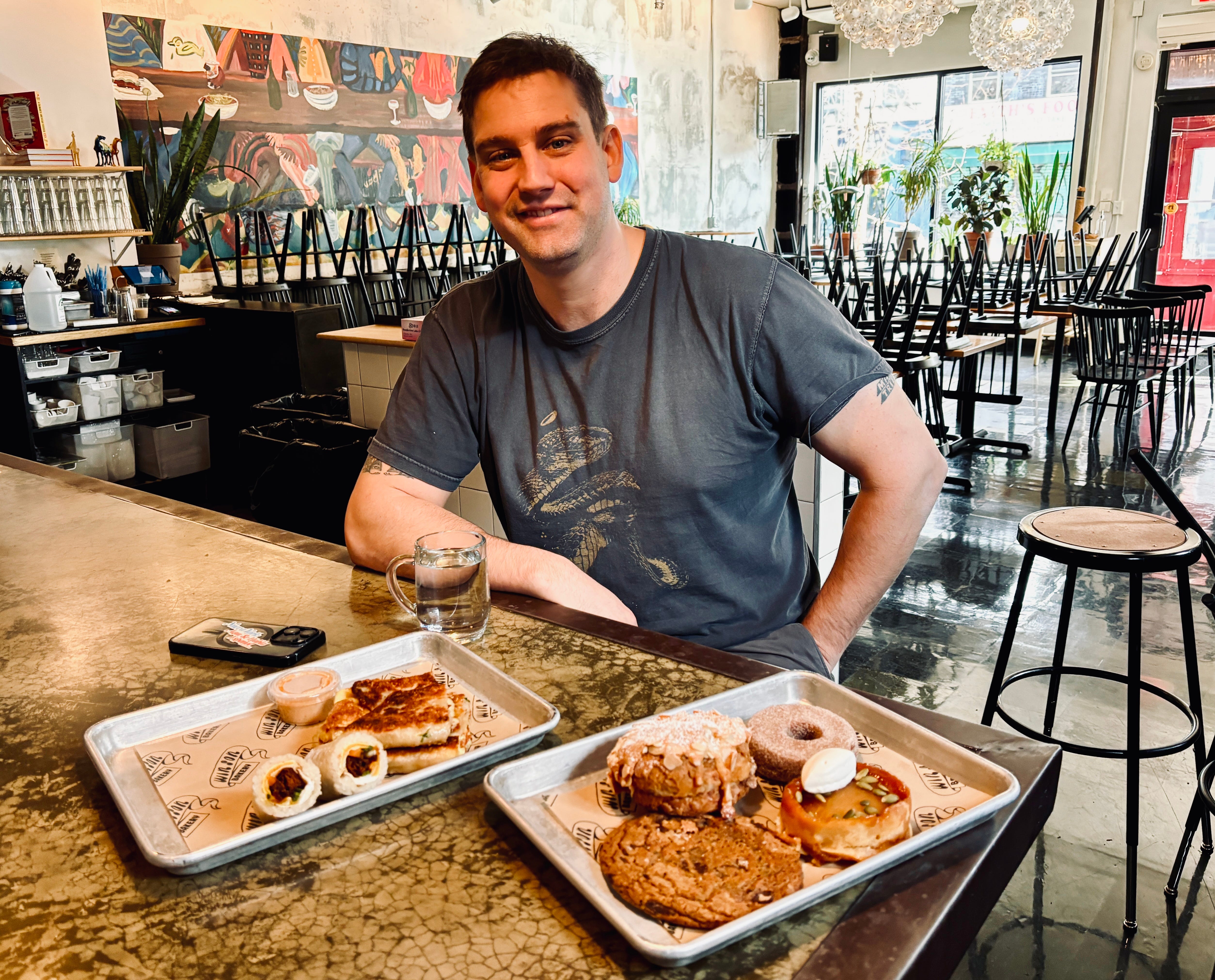 Podcast: A Chat (and Cooking Videos) with Trigg Brown of Win Son Bakery | The first time I went to Win Son bakery and café in Brooklyn, I wasn’t sure what to expect. It’s billed as a Taiwanese-American bakery, and I’m not too familiar with Taiwanese baked goods. I ordered a few things off the menu that sounded good, and after I brought them to the table, I started tasting my way around the tray, and everything I ate blew me away. Everything was delicious. The bakery and menu items take cues from familiar favorites, such as chocolate chip cookies and donuts, but I was delighted at how brilliantly they incorporated mochi, candied red beans, red rice, and scallions, along with raclette cheese, heritage bacon, and mortadella. It was the best of both (or many) worlds.I was especially drawn to the Fan tuan, rice rolls filled with eggs, bacon, and a crispy cruller in the middle. It was a great combination, and I could easily give up baguettes and croissants for breakfast if I lived closer. [And yes, they have a cookbook!]Another favorite is the egg and cheese scallion pancake breakfast sandwich, which is yet another great argument for combining the best of two culinary cultures, American and Taiwanese. Adam Robertsdeclared it was the best breakfast sandwich of his life and the best thing he ate in 2023. Since meeting him, I’ve gotten to know Trigg, the co-owner and chef of Win Son, and count him as a friend. It was a pleasure to sit with him in the bakery (pardon any background noise in the podcast). He’s fortunate to have pastry chef Danielle Spencer in the kitchen, who is a treasure, and is responsible for the delicious pastries, along with her staff.In the kitchen attached to the café, the savory breakfast items are made mostly to order, including the scallion breakfast sandwiches and the Fan tuan rolls. Below, you can watch Trigg making the pancakes and another team member rolling up the rice rolls. Enjoy the podcast! -DavidWin Son Bakery and Café164 Graham Ave.Brooklyn, NYA few videos from the bakery and café with Trigg…And here’s a YouTube video of Trigg assembling the ingredients for the Fan tuan: Subscribe to my newsletter to get podcasts, stories, recipes, and more delivered right to your Inbox: This is a public episode. If you'd like to discuss this with other subscribers or get access to bonus episodes, visit davidlebovitz.substack.com/subscribe | 42m 45s | ||||||
| 10/6/23 | 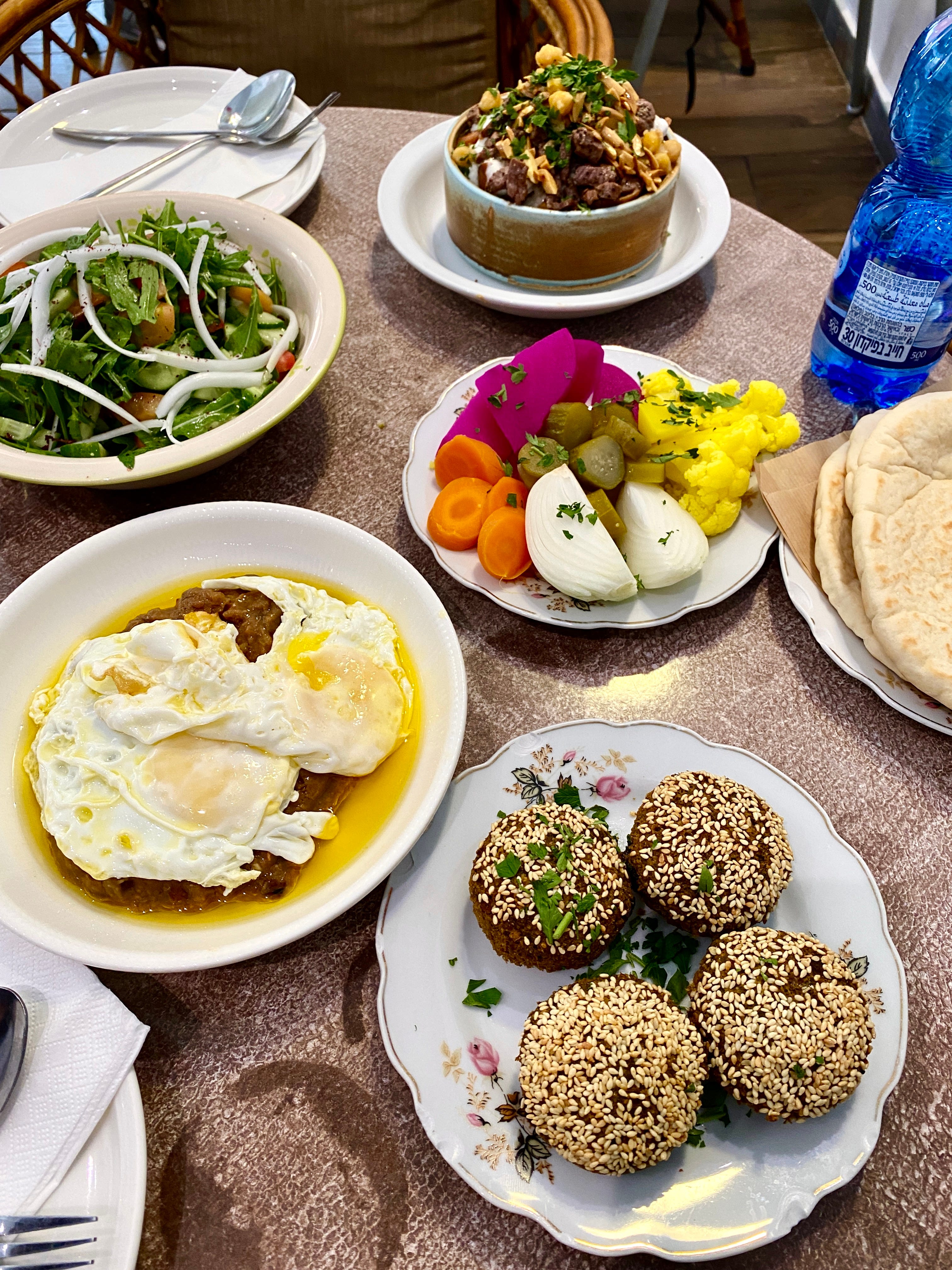 Eating in Tel Aviv with Amit Aaronsohn | Before I left for Tel Aviv this summer, I rounded up advice from friends who are chefs, cookbook authors, and seasoned eaters about where to eat. I’ve lived in food-centric cities most of my life, but Tel Aviv is in a class by itself. There are so many good places to eat, it’s hard to whittle it down to just a few. And if you’re there, and ask anyone where they think you should go, be prepared for a lengthy discussion that will result in a strongly opinionated list of suggestions. And if others are around, expect them to interrupt with their own thoughts. People there love to talk about eating, but even better, they really love to eat. When I ran my list of go-to places by my friend Amit Aaronsohn who lives in Tel Aviv and is a food writer, television and radio host, as well as tour guide, he cocked his head…nixed a few and replaced them with his own suggestions. Having too many places to eat on your agenda isn’t necessarily a good thing when you’ve got limited time, and when I mentioned my dilemma to another food writer in Tel Aviv, she replied, “If Amit says to go somewhere—go there.”(I’ll be posting a list of places I ate in Jerusalem and Tel Aviv in a newsletter post shortly.)When I suggested to Amit that we meet up at Shlomo & Sons on a tip from a friend who told me it was her favorite place for falafel (which was on the other end of the city), Amit said to me, “You don’t need to go that far for good falafel here,” and suggested Al Kalha in Jaffa, the historic old quarter of Tel Aviv, where he lives.Al Kalha doesn’t look like much from the outside, or when you walk in, so I wasn’t expecting much and let Amit take the reins for ordering. But when the food started coming out, in true Middle Eastern style, our table was loaded with food, including just-fried, warm falafels stuffed with onions and sumac and an astounding bowl of warm hummus topped with pita croutons, almonds, and meltingly tender chunks of juicy beef*.During our meal, while recording the podcast, owner Ahmed Kahtab (shown above, with me and Amit) came by to see how we were doing and pulled up a chair. He explained that during the pandemic, when his hummus shop went on hiatus, he decided to transform the entire menu and feature dishes from his family’s long history in Jordan and other regions. He talked for a few minutes during the podcast, and while my Hebrew and Arabic skills are pretty non-existent, it was wonderful to meet him and learn about his food, thanks to Amit’s translation skills. (And thanks to Justin Golden for his expertise in editing this episode, as well as my others.) Eating with Amit at Al Kalha was really a highlight of my trip, and I hope you enjoy listening in!-DavidAmit Aaronsohn does travel planning and leads private culinary tours. You can DM him via his Instagram page. I hope you enjoy my newsletters and podcasts! To get them delivered right into your Inbox, become a free or paid subscriber. A FEW NOTES:-Substack is now offering a new transcript service, which is still in BETA, so you can read the podcast/interview instead of listening to it. I’m using it for the first time here and according to them, once a podcast post is published, an “…episode details tab and transcript tab will appear on the post.” So there should be an option there to read the transcript for those interested near the top of the page, where it says “Transcript.”I did take a look at the transcription, and it’s definitely still in the BETA stage😉, so it doesn’t read smoothly. But they’re still working on it, and hopefully, it’ll improve as things move along. *While the recipe they serve at Al Kalha is a family secret, I’ve found recipes for Hummus with beef here, here, here, and here. There’s a recipe for Hummus with Spiced Lamb on my website. This is a public episode. If you'd like to discuss this with other subscribers or get access to bonus episodes, visit davidlebovitz.substack.com/subscribe | 43m 24s | ||||||
| 7/25/23 | 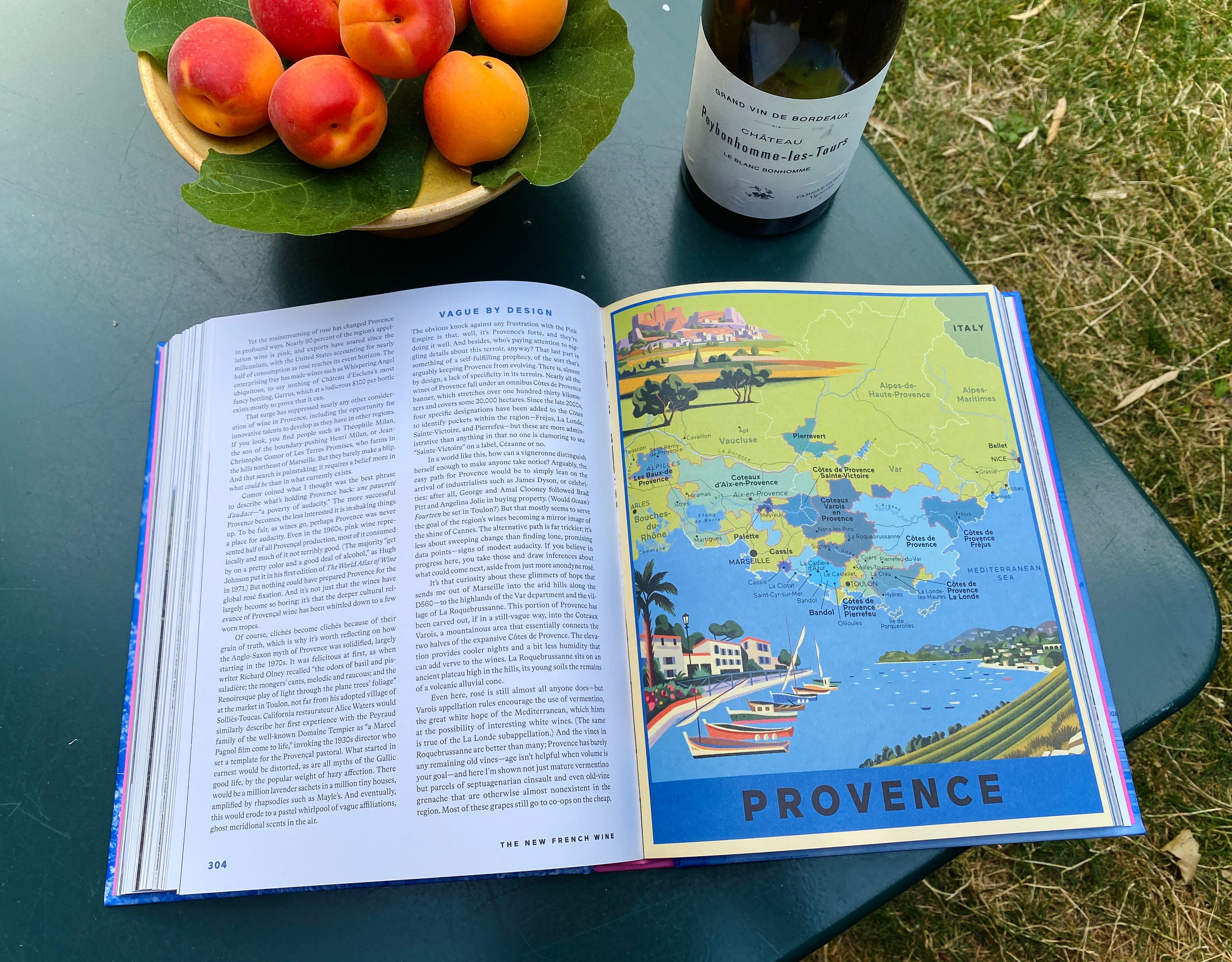 Podcast with Jon Bonné, author of The New French Wine | I didn’t expect to be as captivated as I was by The New French Wine: Redefining the World’s Greatest Wine Culture. It’s an immense two-volume book spanning nearly 850 pages, exploring the lush vineyards and wine regions of France with profiles of 800 producers and notes on around 7,000 wines. I’m no wine expert, but as soon as I started reading the first page, I was hooked. Living in, and writing about, France, it’s often a challenge to explain the intricacies of life here. In the subtitle of his book, wine writer Jon Bonné acknowledges the greatness of the past and present French wine world, while noting the more unfortunate changes that took place in France and in the French wine industry. It’s a complicated knot of bureaucracy, outdated rules, and a push for higher production (with the help of questionable additives and pesticides), which are coming home to roost as environmental and economic challenges have made making wine more compliqué.What drew me into the book was how Jon, who lives part-time in France, deeply understands the country. In his write-up of The New French Wine in the New York Times, wine writer Eric Asimov sums it up:Mr. Bonné argues, essentially, that in order to understand French wine, you need to understand French culture. “C’est compliqué,” he writes. There are contradictions and inconsistencies which the French are forever trying to reconcile as they both yearn for order and resist it. This is a terrific book not only about wine but about France.It’s not a reference book, but something better: an opinionated, thought-provoking work that uses wine as a vehicle for cultural history.One needs to understand the past in order to move toward the future, which Jon does so well in his book, with lots of background information based on his deep knowledge of France and French wine, and he highlights a new, younger generation of winemakers who are jumping into the family business, forging new paths, and making wines that are redefining the world of French wine. I was delighted to invite Jon over when he was in Paris recently to talk about his book, France, and French wine, and he brought a unique white wine from Bordeaux that he picked up on the way over that reflected the changes in the French wine world. (It’s sold in a Burgundy bottle!) I was happy to sit—and sip—with Jon, and hope you enjoy our chat.-David* Visit Jon at his website: JonBonné.com* Follow Jon Bonné on Instagram and Twitter* Get The New French Wine: Redefining the World’s Greatest Wine Culture This is a public episode. If you'd like to discuss this with other subscribers or get access to bonus episodes, visit davidlebovitz.substack.com/subscribe | 57m 21s | ||||||
| 7/4/23 | 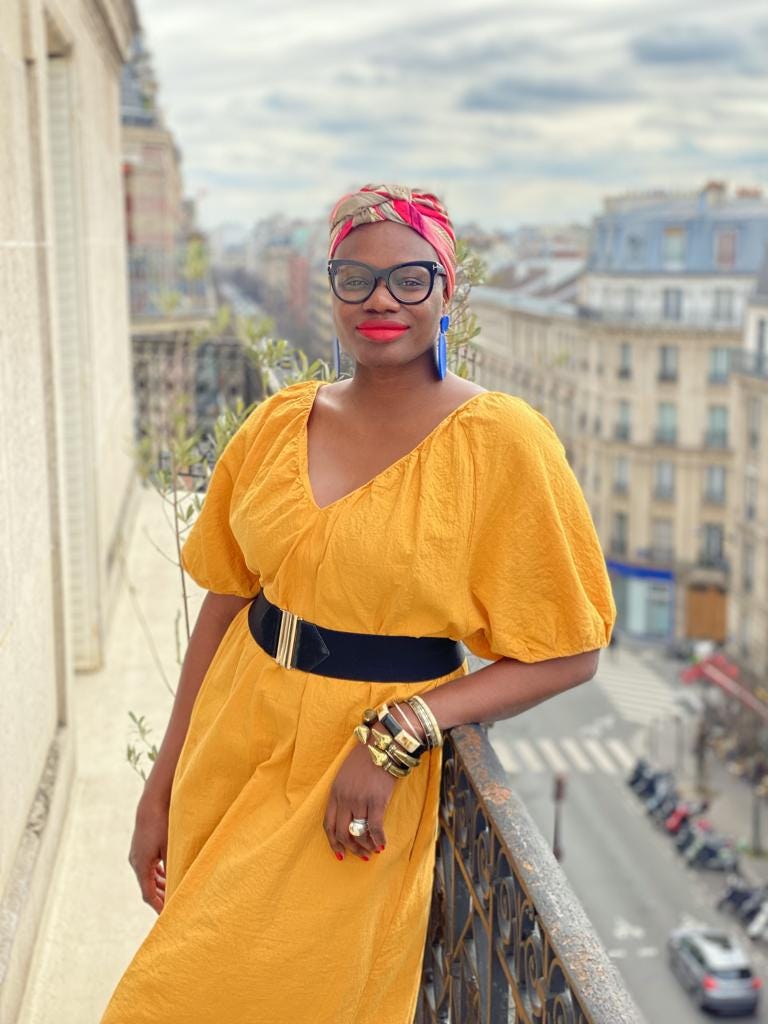 Podcast: The Art of French "Joie" with Ajiri Aki | When it comes to style, I don’t think anyone is eager to copy what I wear every day, although I do know that some people covet some of the dishes and cookware that I pick up at flea markets in France. Fortunately, we have Ajiri Aki in Paris, who founded Madame de la Maison, a fabulous online resource for carefully curated French antiques and linens. (Warning: You’ll want to order everything she has in stock.)I’ve been a fan of Ajiri for quite some time, but it wasn’t until the release of my book Drinking French that we connected…over cocktail coupes, of course! So I’m thrilled that Ajiri has come out with her own book, Joie: A Parisian’s Guide to Celebrating the Good Life, where she sets the record straight on how she, and other Parisians, find their joie de vie, describing her personal journey, along with tips from locals, addresses for her favorite cafés for lingering, and spas for personal pampering. For those who have a little more time, she also shares addresses for havens outside of Paris…to get away from it all for le week-end.Accompanied by beautiful photos, Ajiri lets us in on how she learned to balance raising children and launching a business. Parisians are known for being discerning, and she explains why quality matters to the French, how to master the French art of saying Non (and why), tips for creating the perfect apéro hour (with a “cheat sheet” for getting it together, no matter where you live), some dos and don’ts if you’re a guest or a host at a French party or dinner, and she makes a compelling case for drinking from coupes. (Which I couldn’t agree with more.)In my favorite chapter, she shares a personal family story of why you should use that special china every day, and not wait for a fancy occasion. I loved chatting with Ajiri, who got me using the café au lait bowls and linen kitchen towels in my collection (below) that I was saving for a “special day.” Thanks to her, now every day is special! Enjoy the podcast…-David* Visit the Madame de la Maison website and her online Shop* Follow Ajiri at Madame de la Maison on Instagram and Pinterest* Get your copy of Joie: A Parisian’s Guide to Celebrating the Good LifeTo receive new posts, podcasts, stories, and recipes, subscribe to my newsletter! This is a public episode. If you'd like to discuss this with other subscribers or get access to bonus episodes, visit davidlebovitz.substack.com/subscribe | 58m 00s | ||||||
| 6/5/23 | 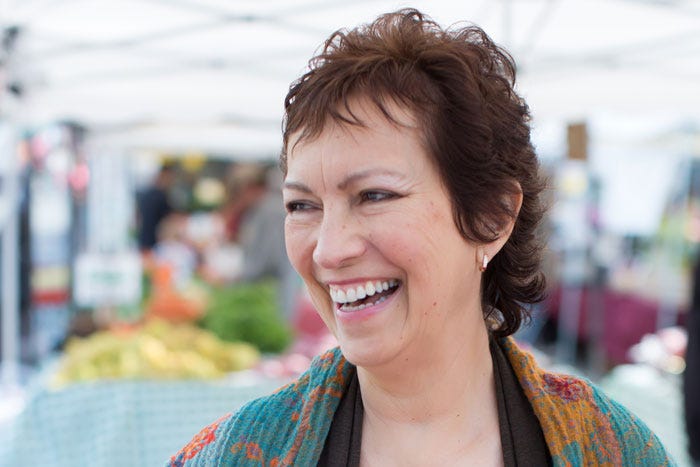 Podcast: A Chat with Dianne Jacob, author of Will Write for Food | It’s always a pleasure to chat with Dianne Jacob of Dianne Jacob newsletter, food writing coach, teacher, editor, and author of Will Write for Food, which is the handbook for food writing, covering everything from how to break into the world of food writing, starting a blog or a newsletter, as well as valuable tips on writing recipes, what to know if you want to write your first cookbook or food memoir, and how to “bring home the bacon” from doing it. During our chat we discussed:* Who “owns” a recipe?* Why we both switched from a blog to a newsletter.* How to attribute a recipe (and do you need to?) and navigate the world of appropriation and authenticity.* What are some of the more controversial issues facing food writers and cookbook authors today?* What’s happening (or what happened) to food magazines?* What changes is the world of food writing going through, and can food writing survive without advertising?* What really goes into writing a cookbook.* What subjects cookbook publishers are looking for today.Hope you enjoy our chat! - David Check out Dianne’s book, Will Write for Food.Follow Dianne on Instagram and Facebook.Subscribe to Dianne’s newsletter Dianne Jacob Check out Dianne’s website, which includes her services as a food writing coach and editor.To receive new posts, podcasts, recipes and Paris stories and become a free or paid subscriber to my newsletter! This is a public episode. If you'd like to discuss this with other subscribers or get access to bonus episodes, visit davidlebovitz.substack.com/subscribe | 52m 52s | ||||||
| 4/20/23 | 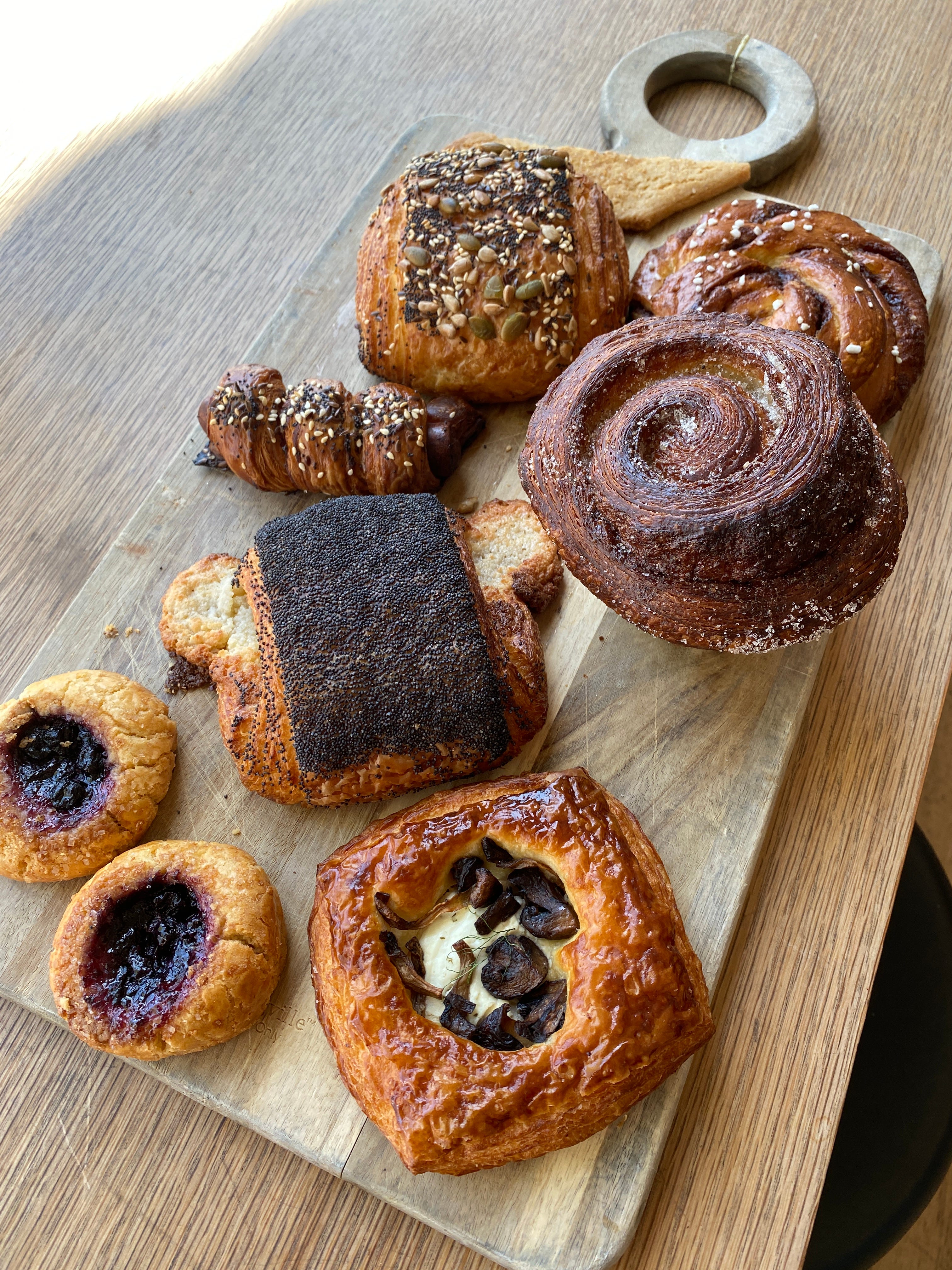 Podcast: Scandinavian Baking with Nichole Accettola of Kantine bakery | I had spectacular luck with I was in San Francisco and a friend suggested we meet up one morning at Kantine, a Scandinavian bakery and café. Arriving a little early, I was knocked out by the beautiful selection of pastries and breakfast offerings, which included open-faced smoked fish sandwiches on housemade sprouted rye bread, savory grain porridge, and a Scandinavian take on the breakfast sandwich, the Grovbirkes, a seed-crusted spiral of buttery puff pastry filled with warm scrambled eggs and crisp bacon. I wanted it all!After meeting owner/baker Nichole Accettola after breakfast, I invited her to join me on my podcast to discuss her life in Denmark with her family, Scandinavian versus French baking culture, and her return to the States to open Kantine. We also tasted a selection of her remarkable pastries (above), which are featured in her book, Scandinavian from Scratch, where Nichole reveals the recipes for the delicious treats from her bakery.I loved meeting and chatting with Nichole, and enjoyed her wonderful pastries…and hope you enjoy our conversation, too.-David-Visit the Kantine bakery & café website https://kantinesf.com/-Follow Kantine on Instagram https://www.instagram.com/kantinesf/-Order Scandinavian from Scratch: A Love Letter to the Recipes of Denmark, Norway, and Sweden (Amazon) (Bookshop.org) This is a public episode. If you'd like to discuss this with other subscribers or get access to bonus episodes, visit davidlebovitz.substack.com/subscribe | 46m 39s | ||||||
Showing 25 of 39
Sponsor Intelligence
Sign in to see which brands sponsor this podcast, their ad offers, and promo codes.
Chart Positions
22 placements across 21 markets.
Chart Positions
22 placements across 21 markets.