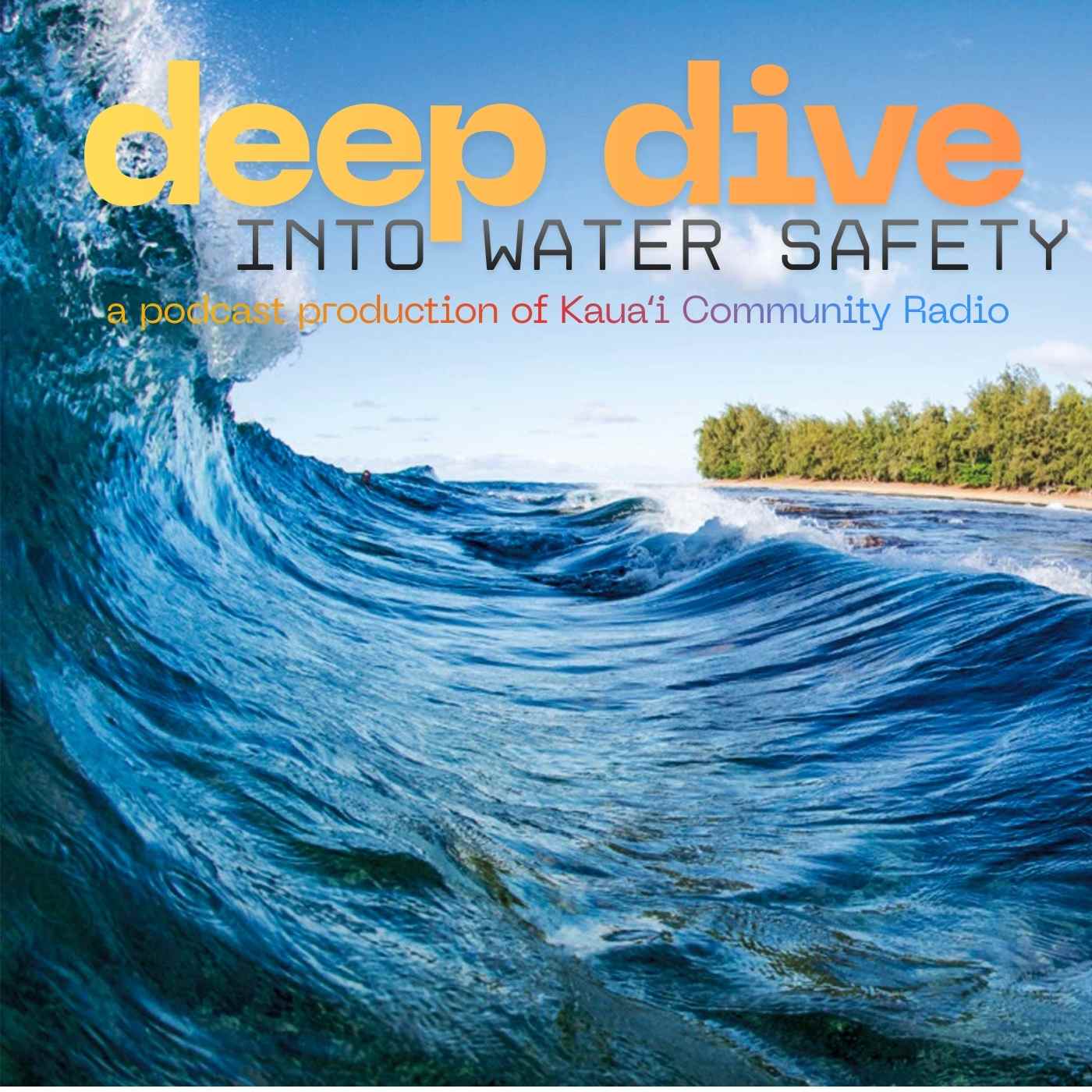
Deep Dive Into Water Safety
by Kauaʻi Community Radio - KKCR
Is this your podcast?Insights from recent episode analysis
Audience Interest
Podcast Focus
Publishing Consistency
Platform Reach
Insights are generated by CastFox AI using publicly available data, episode content, and proprietary models.
Most discussed topics
Brands & references
Total monthly reach
Estimated from 4 chart positions in 4 markets.
By chart position
- 🇺🇸US · Swimming#31100K to 300K
- 🇬🇧GB · Swimming#5330K to 100K
- 🇮🇪IE · Swimming#1430K to 100K
- 🇨🇭CH · Swimming#3610K to 30K
- Per-Episode Audience
Est. listeners per new episode within ~30 days
85K to 265K🎙 ~2x weekly·21 episodes·Last published 1w ago - Monthly Reach
Unique listeners across all episodes (30 days)
170K to 530K🇺🇸57%🇬🇧19%🇮🇪19%+1 more - Active Followers
Loyal subscribers who consistently listen
51K to 159K
Market Insights
Platform Distribution
Reach across major podcast platforms, updated hourly
Total Followers
—
Total Plays
—
Total Reviews
—
* Data sourced directly from platform APIs and aggregated hourly across all major podcast directories.
On the show
From 25 epsHosts
Recent guests
Recent episodes
Deep Dive: An Interview with Kurt Lager
Aug 21, 2026
Unknown duration
Deep Dive: An Interview with Kanesa Duncan Seraphin
Aug 14, 2026
Unknown duration
Deep Dive: An Interview with Alissa Magrum and Norm Reitter
Aug 11, 2026
Unknown duration
Deep Dive: An Interview with Sam Johnson
Jul 20, 2026
57m 15s
Deep Dive: An Interview with Sara Kehaulani Goo
Jul 3, 2026
39m 09s
Social Links & Contact
Official channels & resources
Official Website
Login
RSS Feed
Login
| Date | Episode | Topics | Guests | Brands | Places | Keywords | Sponsor | Length | |
|---|---|---|---|---|---|---|---|---|---|
| 8/21/26 | Deep Dive: An Interview with Kurt Lager | Episode Notes August 16, 2026 Before the Rescue: Can Hawaiʻi Become the World’s Model for Water Safety? Chief Kurt Lager on the Future of Ocean Safety in Hawaiʻi What if the future of ocean safety begins before anyone needs rescuing? Honolulu Ocean Safety is entering a new era. Now operating as an independent department, it has a greater ability to shape its staffing, equipment, facilities, budget and future direction. In this episode of Deep Dive Into Water Safety, Chief Kurt Lager explains how that change could help Hawaiʻi move beyond responding to emergencies and reach people before an emergency happens. Better data is central to that vision. Through Watchtower, lifeguards can document not only rescues, but also the preventive actions they take every day. Those numbers can reveal patterns, guide resources and show a different measure of success: how many emergencies never happen because a lifeguard stepped in early. The conversation also confronts one of Hawaiʻi’s most urgent challenges: protecting visitors, particularly from snorkeling related fatalities. Lager discusses working with the Hawaiʻi Tourism Authority, airlines and other partners to deliver meaningful water safety information during booking, before arrival and throughout a visitor’s stay, rather than waiting until someone reaches the beach. But lifeguards cannot do this alone. Lager calls for stronger collaboration among counties, educators, government and community partners such as Nā Kama Kai and the Hawaiʻi Water Safety Coalition. The episode also explores why meaningful water safety education must return to Hawaiʻi’s schools so children grow up recognizing hazards, making safer decisions and developing water competency. The timing is especially meaningful. Lifeguard Appreciation Week runs August 17 through 23, 2026, while Duke Kahanamoku OceanFest takes place August 14 through 24, 2026. Together, they offer a powerful moment to recognize lifeguards, celebrate Hawaiʻi’s ocean culture and ask how that culture can become part of a stronger statewide system of prevention. The episode builds toward a larger question: Can Hawaiʻi become the model for water safety that the rest of the world follows? For Lager, that is exactly the opportunity ahead. “We should be a leader in water safety in the world. We should be the model that everyone else follows.” Chief Kurt Lager ** Support Deep Dive Into Water Safety by contributing to their tip jar: https://tips.pinecast.com/jar/deep-dive-into-water-safety | — | ||||||
| 8/14/26 | Deep Dive: An Interview with Kanesa Duncan Seraphin | Episode Notes What Nine Championships Teach You About the Ocean: Kanesa Duncan Seraphin Nine-time Molokaʻi to Oʻahu prone paddleboard world champion Kanesa Duncan Seraphin has spent a lifetime learning from the ocean. A Hawaiʻi Waterman Hall of Fame inductee, marine scientist, educator, and host of the award winning Voice of the Sea, Kanesa brings a rare combination of elite ocean experience and scientific knowledge. Fresh off her historic ninth M2O victory, Kanesa joins Deep Dive Into Water Safety to talk about what decades on the water have taught her about preparation, judgment, risk, and respect for the ocean. She also discusses work on ciguatera and why she joined a leg of Kauaʻi Ocean Safety Chief Kalani Vierra’s Paddle for Life, a 100-mile journey around Kauai focused on water safety, drowning prevention, and community awareness. Throughout the conversation, one message keeps emerging: prevention requires more than telling people to “be careful.” Hawaiʻi needs better drowning and nonfatal incident data, stronger education, effective visitor communication, well supported and well-trained lifeguards, and practical safety systems that people can use. Lifeguards remain one of Hawaiʻi’s most important sources of ocean knowledge, yet the discussion highlights the need for greater recognition, staffing, training time, and investment in these frontline professionals. Ultimately, this episode asks a larger question: Can Hawaiʻi make ocean competency part of its culture of prevention? From classrooms and canoe clubs to airports, airlines, beaches, and lifeguard towers, the opportunity is to give residents and visitors the knowledge, skills, judgment, and respect needed to make better decisions around the ocean. It’s a conversation about much more than winning races. It’s about how experience, science, education, and connection to the ocean can help all of us make safer decisions in and around the water. Support Deep Dive Into Water Safety by contributing to their tip jar: https://tips.pinecast.com/jar/deep-dive-into-water-safety | — | ||||||
| 8/11/26 | Deep Dive: An Interview with Alissa Magrum and Norm Reitter | Episode Notes July 30, 2026: Alissa Magrum paddles with Kalani Vierra for Paddle for Life The conversation focuses on drowning prevention through awareness, collaboration, and data-driven solutions. Alissa Magrum (NDPA) discusses her participation in the Paddle for Life event, a 100-mile paddle around Kauaʻi led by Kalani Vierra, OSB Chief for Kauai, to raise awareness and funds for water safety. Alissa shares both the physical experience and the emotional motivation behind her work, emphasizing that drowning is often overlooked until it directly impacts families A key theme is that drowning is a global, preventable issue that requires more public attention and everyday conversation The interview then shifts to innovation, featuring Norm Reitter's Water Ranger program, which uses volunteers and mobile technology to collect real-time data on water conditions, behaviors, and safety equipment. This data helps identify risks, improve placement of resources like rescue tubes and life jackets, and guide prevention strategies Overall, the discussion highlights: The power of community-driven awareness campaigns The need for better data to inform prevention efforts The importance of collaboration across organizations and regions to reduce drowning rates Support Deep Dive Into Water Safety by contributing to their tip jar: https://tips.pinecast.com/jar/deep-dive-into-water-safety | — | ||||||
| 7/20/26 | water safety educationwater competence+3 | Sam Johnson | HawaiʻiEngland+2 | — | water safetyeducation+5 | — | 57m 15s | ||
| 7/3/26 | kuleanaHawaiian culture+5 | Sara Kehaulani Goo | The Washington PostKuleana: A Story of Family, Land, and Legacy in Old Hawaiʻi | HawaiʻiMaui+1 | kuleanaHawaiʻi+7 | — | 39m 09s | ||
| 6/29/26 | water safetydrowning prevention+4 | Sam Proffitt | International Drowning Researchers' Alliance | Wrightsville BeachGood Morning America | rip currentdrowning prevention+5 | — | 1h 05m 09s | ||
| 6/25/26 | water safetyIndigenous youth+4 | Brook SilvesterZane Silvester | First Nations LifeguardsBombora Surf School+1 | AustraliaGold Coast+2 | water safetyIndigenous youth+5 | — | 57m 38s | ||
| 6/22/26 | drowning preventionwater safety+4 | Dr David Szpilman | SOBRASA | Hawaiʻi | drowningpreventable+5 | — | 1h 22m 21s | ||
| 6/19/26 | drowning preventionwater safety+3 | Dr Will Koon | Royal Life Saving Australia | Hawaiʻi | drowning preventionwater safety+5 | — | 1h 09m 27s | ||
| 5/29/26 | water safetydrowning prevention+5 | David SamuelTia Samuel | Brighton Surf Life Saving ClubRNLI | Brighton, EnglandHawaii+1 | drowning preventionwater safety education+5 | — | 42m 37s | ||
| 5/25/26 | marine biologymarine mammals+4 | Robin Baird | Cascadia Research CollectiveThe Lives of Hawai'is Dolphins and Whales natural History and Conservation | Hawaiian waters | marine mammalsdolphins+5 | — | 1h 01m 37s | ||
| 5/22/26 | water safetysnorkeling+3 | Hanna Van Waart | University of AucklandCPSC+2 | — | full-face snorkel maskshypoxemia+3 | — | 53m 58s | ||
| 5/18/26 | drowning preventionwater safety+4 | Alissa Magrum | National Drowning Prevention Alliance | — | drowningwater competency+5 | — | 1h 19m 56s | ||
| 5/15/26 | drowning rescuefirst responders+4 | Drasko BogdanovicDr. Justin Sempsrott | San Luis ObispoHawaiʻi | Costa RicaMexico+1 | drowningrescue training+6 | — | 1h 18m 53s | ||
| 5/11/26 | snorkeling safetyocean safety+3 | Ralph Goto | City and County of Honolulu Ocean Safety Division | Hawaiʻi | snorkelingocean safety+5 | — | 47m 36s | ||
| 5/8/26 | water safetyIndigenous education+3 | Mark Haimona | — | Aotearoa New ZealandHawaiʻi | water safetyMāori+5 | — | 1h 25m 25s | ||
| 5/1/26 | water safetydrowning prevention+3 | Dr. Patrick MorganAdrian Mayhew | His Majesty’s CoastguardSurf Life Saving Great Britain | United Kingdom | drowning definitionslifeguards+5 | — | 1h 32m 32s | ||
| 4/28/26 | water safetyinterview+3 | Derek S.K. Kawakami | Kauaʻi Lifeguard AssociationKauaʻi Community Radio - KKCR | KauaʻiOkinawa | water safetyKauaʻi+5 | — | 53m 37s | ||
| 4/15/26 | water safetydrowning prevention+4 | Allison Schaefers | Hawaiʻi Water Safety CoalitionHonolulu Star-Advertiser | Hawaiʻi | drowningHawaiʻi+6 | — | 1h 04m 59s | ||
| 4/1/26 | water safetysnorkeling+3 | Dr Laura Trapani | IRCCS Burlo Garofolo children’s HospitalUniversity of Trieste+1 | Italy | full-face snorkeling maskshypercapnia+3 | — | 41m 38s | ||
| 3/27/26 | drowning preventionwater safety+4 | Dr. Colleen Saunders | Life Saving South AfricaAfrican Journal of Emerging Medicine | Big BayCape Town+2 | drowningwater safety+5 | — | 1h 19m 47s | ||
| 3/13/26 | rip currentsbeach safety+3 | Rob Brander | University of New South WalesUNSW Beach Safety Research Group+2 | — | rip currentsbeach safety+3 | — | 1h 03m 56s | ||
| 3/9/26 | ocean safetydrowning prevention+3 | Taishi Otono | Hawaii Lifeguard AssociationNorth Shore ocean safety professionals | Okinawa, JapanHawaiʻi | ocean safetydrowning prevention+5 | — | 33m 54s | ||
| 3/7/26 | aquatic safetymental health+4 | Dr. Jaz LawesDr. Sam Fien+1 | Surf Life Saving AustraliaCQUniversity Australia+1 | — | lifeguardsmental health+5 | — | 1h 15m 14s | ||
| 2/20/26 | rip currentsoceanography+3 | Jamie McMahan | Naval Postgraduate School | HawaiʻiMonterey, California | rip currentsocean safety+3 | — | 1h 05m 53s | ||
Showing 25 of 39
Pitch Fit is a Pro feature
See how bookable this show is for guests, which brands already advertise, the per-episode ad value, and the best-fit guest and sponsor profile. The numbers are blurred on the free plan.
How readily this show books outside guests like you.
How proven this show is for host-read sponsorships.
For Guests
ProFor Advertisers
ProUpgrade to Pro to unlock guest cadence, sponsor categories, fit scores, and per-episode ad value for this show.
Chart history for Deep Dive Into Water Safety
Peaked at #14 in Ireland, currently #14 in Ireland.
| Market | Genre | Peak | Current | Trend |
|---|---|---|---|---|
| Ireland | — | #14 | #14 | — |
| United States | — | #31 | #31 | — |
| CH | — | #36 | #36 | — |
| United Kingdom | — | #53 | #53 | — |
Chart Positions
4 placements across 4 markets.
Chart Positions
4 placements across 4 markets.