
Insights from recent episode analysis
Audience Interest
Podcast Focus
Publishing Consistency
Platform Reach
Insights are generated by CastFox AI using publicly available data, episode content, and proprietary models.
Most discussed topics
Brands & references
Total monthly reach
Estimated from 30 chart positions in 30 markets.
By chart position
- 🇨🇦CA · Earth Sciences#37100K to 300K
- 🇬🇧GB · Earth Sciences#41100K to 300K
- 🇩🇪DE · Earth Sciences#5830K to 100K
- 🇦🇺AU · Earth Sciences#5930K to 100K
- 🇺🇸US · Earth Sciences#1895K to 30K
- Per-Episode Audience
Est. listeners per new episode within ~30 days
414K to 1.3M🎙 ~2x weekly·90 episodes·Last published 1mo ago - Monthly Reach
Unique listeners across all episodes (30 days)
827K to 2.6M🇨🇦12%🇬🇧12%🇧🇷12%+27 more - Active Followers
Loyal subscribers who consistently listen
331K to 1.0M
Market Insights
Platform Distribution
Reach across major podcast platforms, updated hourly
Total Followers
—
Total Plays
—
Total Reviews
—
* Data sourced directly from platform APIs and aggregated hourly across all major podcast directories.
On the show
From 10 epsHost
Recent guests
Recent episodes
The Joy and Wonder of Being a Regenerative Farmer [Naomi Oakley & Gunnar Thelin]
May 20, 2026
1h 04m 34s
Why the Food System is Breaking and How to Fix it [IVO DEGN]
Apr 29, 2026
44m 30s
What If Kindness Is the Missing Piece in Regenerative Agriculture?
Mar 31, 2026
41m 20s
The Crops That Could Save Our Food System (but we ignore them...)
Mar 24, 2026
1h 04m 37s
The Farming System Is Broken... And Farmers Know It! [DAVID WHEATLEY]
Mar 17, 2026
1h 14m 44s
Social Links & Contact
Official channels & resources
Official Website
Login
RSS Feed
Login
| Date | Episode | Topics | Guests | Brands | Places | Keywords | Sponsor | Length | |
|---|---|---|---|---|---|---|---|---|---|
| 5/20/26 | ![The Joy and Wonder of Being a Regenerative Farmer [Naomi Oakley & Gunnar Thelin] episode artwork](https://image.ausha.co/RTVMsUtz5pRE96mm18UXNKSfjQxd40dUaIlgKKRc_1400x1400.jpeg?t=1779218661) The Joy and Wonder of Being a Regenerative Farmer [Naomi Oakley & Gunnar Thelin]✨ | regenerative agriculturebiodiversity+4 | Naomi OakleyGunnar Thelin | — | — | regenerative farminggrazing systems+5 | — | 1h 04m 34s | |
| 4/29/26 | ![Why the Food System is Breaking and How to Fix it [IVO DEGN] episode artwork](https://image.ausha.co/fTFEznYzZMBV799WOkfBCMki1hJ0DZkYk6BVMkAC_1400x1400.jpeg?t=1777192557) Why the Food System is Breaking and How to Fix it [IVO DEGN]✨ | food system fragilityregenerative agriculture+4 | Ivo Degn | Re:source | Europe | food securityclimate volatility+5 | — | 44m 30s | |
| 3/31/26 | 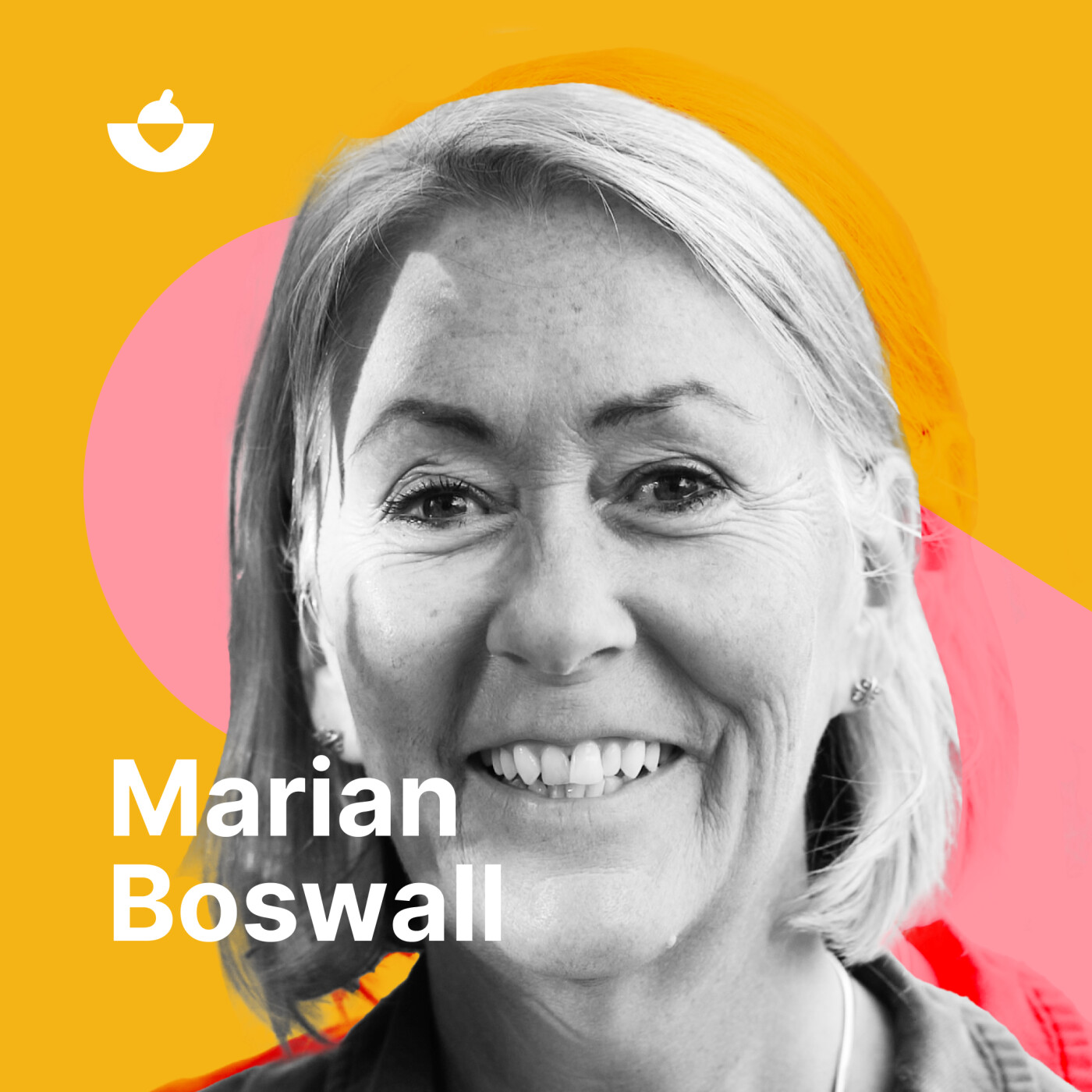 What If Kindness Is the Missing Piece in Regenerative Agriculture?✨ | regenerative agriculturesoil health+4 | Marian Boswall | Deep Seed Podcast | Earth | soil healthregenerative agriculture+5 | — | 41m 20s | |
| 3/24/26 |  The Crops That Could Save Our Food System (but we ignore them...)✨ | regenerative agriculturecrop diversity+4 | Sayed Azam-Ali | University of NottinghamCrops For the Future | — | regenerative agricultureforgotten crops+5 | — | 1h 04m 37s | |
| 3/17/26 | ![The Farming System Is Broken... And Farmers Know It! [DAVID WHEATLEY] episode artwork](https://image.ausha.co/pPSdi7HHsBeoSeeil7RTNv7u8w6Shoezx40smCYL_1400x1400.jpeg?t=1773761898) The Farming System Is Broken... And Farmers Know It! [DAVID WHEATLEY]✨ | modern agriculturefinancial losses+3 | David Wheatley | — | CambridgeshireUK | farmingagriculture+5 | — | 1h 14m 44s | |
| 3/3/26 | ![How This Regenerative Farmer Cut Costs and Increased Profits [JAMES BUCHER] episode artwork](https://image.ausha.co/PJWVLa3P7A7kUzgITQDmVEsmst7HUZ1nY5c7tO6Q_1400x1400.jpeg?t=1772481998) How This Regenerative Farmer Cut Costs and Increased Profits [JAMES BUCHER]✨ | regenerative agriculturesustainable farming+3 | James Butcher | — | Suffolk | regenerative agriculturecost reduction+5 | — | 1h 42m 33s | |
| 2/24/26 | ![India’s Farming Revolution Is Led by Women 🇮🇳 [NITYA RAO] episode artwork](https://image.ausha.co/y5DmRh4RY7arUteKyCuZSjE1nvsz9N3NIve87k4n_1400x1400.jpeg?t=1771877387) India’s Farming Revolution Is Led by Women 🇮🇳 [NITYA RAO]✨ | regenerative agriculturegender and climate+5 | Nitya Rao | Lancet Commission on Food Systems | IndiaAfrica+2 | regenerative agriculturewomen in farming+7 | — | 59m 10s | |
| 2/17/26 | ![Does Regenerative Agriculture Actually Work? Top Scientist Answers [LYNN DICKS] episode artwork](https://image.ausha.co/sHKOSC5fgJpUqtw5Vh4l4yj3JorHubPD2ES2peQo_1400x1400.jpeg?t=1771877365) Does Regenerative Agriculture Actually Work? Top Scientist Answers [LYNN DICKS]✨ | regenerative agriculturebiodiversity+4 | Professor Lynn Dicks | H3 Project | UKIndia+1 | regenerative agriculturebiodiversity+8 | — | 54m 09s | |
| 2/3/26 | ![How Do We Really Scale Regenerative Agriculture? [ANDREW VOYSEY] episode artwork](https://image.ausha.co/oOiCYoM8fyL7VwAQXB2uWXYJ9hAtTt7sbVKUG1dX_1400x1400.jpeg?t=1770065295) How Do We Really Scale Regenerative Agriculture? [ANDREW VOYSEY]✨ | regenerative agriculturesustainable farming+4 | Andrew Voysey | Soil Capital | — | regenerative agricultureSoil Capital+7 | — | 1h 34m 28s | |
| 1/27/26 | ![Why the Food System is About to Collapse [TIM BENTON] episode artwork](https://image.ausha.co/0TUMQN1uNQG2ihMPa6wIwAc64gHFJXp4u0vDVH9g_1400x1400.jpeg?t=1769460297) Why the Food System is About to Collapse [TIM BENTON]✨ | food system collapsefood security+4 | Tim Benton | Chatham House | — | food systemcollapse+5 | Soil Capital | 1h 33m 25s | |
Want analysis for the episodes below?Free for Pro Submit a request, we'll have your selected episodes analyzed within an hour. Free, at no cost to you, for Pro users. | |||||||||
| 1/20/26 | ![True Cost of Cheap Food: How to Fix Our Broken Food System [ADELE JONES] episode artwork](https://image.ausha.co/uUEQcZjBlbDfxcH6bDAEmsbURplq0w2Ase8rh38Q_1400x1400.jpeg?t=1768853943) True Cost of Cheap Food: How to Fix Our Broken Food System [ADELE JONES] | What if every bite of cheap food you eat is secretly costing society triple the price you paid at checkout?In this eye-opening episode, food systems expert Adele Jones (former Executive Director of the Sustainable Food Trust) pulls back the curtain on the true cost of our food. From soil health and ecosystem collapse to diet-related disease and skyrocketing healthcare costs, Adele explains how we’re already paying the true price of industrial farming. And it’s way more than what we spend at the supermarket! But it’s not all bad news. Adele lays out a hopeful, inspiring roadmap to a regenerative food system where farmers are rewarded for improving soil, boosting biodiversity, and producing truly nutrient-dense food. We cover groundbreaking concepts like True Cost Accounting, the Global Farm Metric, and why livestock farming might just be part of the solution.If you’ve ever wondered how to fix food, protect nature, and improve public health all at once: this episode is a must-listen! It’s one of the most mind-expanding conversations we’ve ever had.⎯⎯⎯🔍 Topics CoveredTrue Cost Accounting: the economic revolution hiding in plain sightHow food is much more expensive than it seems (but not at the checkout)Regenerative agriculture vs. conventional farmingWhy big food companies are (finally) waking up to soil and sustainabilityLivestock farming: villain or ecosystem ally?What if we paid farmers for nutrition per hectare instead of yield?Feeding Britain regeneratively: is it possible? (Yes!)Nutrient density, soil health, and the future of public healthLessons from Bhutan: what a happiness-first food system looks likeThe Global Farm Metric: a universal language for farm sustainabilityHow to make food and farming a political (and public) priority⎯⎯⎯Official partner: Soil Capital-> a company accelerating the regenerative transition by financially rewarding farmers who improve soil health & biodiversity.https://www.soilcapital.com/Usefull Links:ADELE JONES: https://www.linkedin.com/in/adelejones/SUSTAINABLE FOOD TRUST: https://sustainablefoodtrust.org/The Hidden Cost of UK FOOD - link Follow Us• Instagram: @deep_seed_podcast• LinkedIn: https://www.linkedin.com/company/deep-seed• Email: raphael@deepseed.euHosted on Ausha. See ausha.co/privacy-policy for more information. | — | ||||||
| 12/18/25 | ![Rewind #11 - Syntropic Agroforesty: Farming like a Forest [ANTONIO COELHO] episode artwork](https://image.ausha.co/5MQTNmv9mV4GfdnP9lAtFLXQN3oDnLasg6OHkT6J_1400x1400.jpeg?t=1765887791) Rewind #11 - Syntropic Agroforesty: Farming like a Forest [ANTONIO COELHO] | In one of the driest, most degraded landscapes in Europe, farmer and agroforester Antonio Coelho has built 60 cm of fertile topsoil, raised organic matter to 7.4%, and slashed irrigation by 85% - all in just six years! In this #REWIND episode, Antonio shares his deeply inspiring journey into entropic agroforestry, a form of regenerative agriculture that mimics forest ecosystems to grow food, restore land, and rebuild water cycles. He explains how complex, layered polycultures can outcompete monocultures - not just ecologically, but economically too - if we shift how we define productivity.You’ll learn:Why dense, multi-species systems don’t compete — they cooperateHow to retain water and thrive even with 8-month droughtsWhat it means to feed the soil first, not just the cropWhy economic models must account for real planetary costsHow biomass, pruning, and photosynthesis create energy loops that regenerate land over timeThis episode challenges conventional logic about competition, inputs, and profitability — and offers a bold, hopeful vision for the future of farming.🎧 Tune in now and see why this is Deep Seed’s most-watched episode on YouTube yet. To see Antonio’s farm and the system in action, head to our YouTube channel for the full visual experience.If you enjoy this episode, leave a rating or share it with someone who still thinks farming in the desert is impossible ❤️- This episode was made in partnership with Soil Capital - www.soilcapital.comHosted on Ausha. See ausha.co/privacy-policy for more information. | — | ||||||
| 12/16/25 | ![Rewind #10 - how to bring a river BACK TO LIFE with Regenerative Agriculture [SILVIA QUARTA] episode artwork](https://image.ausha.co/xhqNY7U4hvbdE3cRXNYFFg0ExkcCsrZZdnLJJ2zx_1400x1400.jpeg?t=1765887143) Rewind #10 - how to bring a river BACK TO LIFE with Regenerative Agriculture [SILVIA QUARTA] | What if you could bring a dead river back to life by working with farmers, not against them? In this powerful #REWIND episode, Silvia Quarta shares the story of a forgotten valley in one of Europe’s driest regions, where springs stopped flowing, wells ran dry, and the river disappeared. But through radical listening, community trust, and regenerative agriculture, a new vision is starting to emerge. Rooted in hope, soil, and local food systems. This episode is about reimagining what rural life can be, and showing that farmers, shepherds, and citizens can become stewards of large-scale ecological restoration. 🌱 Topics covered: • Community-led ecosystem restoration • Water retention and soil regeneration • Rural resilience and land abandonment • Regenerative agriculture as a water solution • Local food systems and consumer connection • Working with farmers to restore landscapes • Building collective hope in degraded regions ⸻ This episode was made in partnership with Soil Capital ❤️ www.soilcapital.comHosted on Ausha. See ausha.co/privacy-policy for more information. | — | ||||||
| 12/12/25 | ![Rewind #9 - How to prove regenerative agriculture really works! [PETER FROHLICH] episode artwork](https://image.ausha.co/PF1owOhbO4k8ch9vWlHkqNCjAVoBfsQxNZ1F7V7x_1400x1400.jpeg?t=1765459924) Rewind #9 - How to prove regenerative agriculture really works! [PETER FROHLICH] | What if we stopped just talking about regeneration… and started measuring it? In this #REWIND episode, Peter Fröhlich, engineer, farmer, and co-founder of AgriPurpose, lays out a powerful, outcome-driven approach to regenerative agriculture. No fluff! Just clear, data-informed tools to guide land restoration at scale. Peter explains how satellite data, targeted soil testing, and simple metrics like biomass productivity, plant cover, and input efficiency can help farmers, funders, and policymakers align around real impact — not vague promises. This is regeneration with roots. Practical, radical, and full of hope. ⸻ 🧠 Topics covered: • Outcome-based regenerative agriculture • Soil health and biomass productivity • Remote sensing and satellite measurement • Regenerative indicators beyond labels • Ecosystem restoration through data • Lowering input costs through smarter design ⸻ This episode was made in partnership with Soil Capital, a company accelerating the transition to regenerative agriculture by financially rewarding farmers who improve soil health and biodiversity 💚 www.soilcapital.comHosted on Ausha. See ausha.co/privacy-policy for more information. | — | ||||||
| 12/11/25 | ![Rewind #8 - Why farmers are paid so little in the current system [NICOLAS VERSCHUERE] episode artwork](https://image.ausha.co/TEjNJaPnFUNlfDD4BI0WDss7eSQkENI4baleLatL_1400x1400.jpeg?t=1765292722) Rewind #8 - Why farmers are paid so little in the current system [NICOLAS VERSCHUERE] | This episode will change the way you think about farming, food, and fairness. When we talk about regenerative agriculture, we often focus on soil. But what about value? What about money, structure, and power in the food system?In this #REWIND episode, agronomist and regenerative ag pioneer Nicolas Verschuere unpacks how we can rebuild fair, functional value chains that truly reward farmers without making food more expensive. From launching a barley-to-beer cooperative in Belgium to scaling regenerative grains across Europe, this is a powerful look at what it takes to make regeneration viable and scalable.If you’ve ever wondered how we connect healthy soil to a healthy economy -> this one’s for you!🧠 Topics covered in this episode:How regenerative farmers can earn more — without consumer prices risingWhy farmers are paid so little in the current systemThe creation of a cooperative model for regenerative grainsBuilding fairer value chains for sustainable agricultureWhy most “premiums” never reach the farmerThe role of cooperation, shared infrastructure, and transparencyWhat it takes to scale regenerative agriculture in EuropeThe future of supply chains in a regenerative food system⎯This episode was made in partnership with Soil Capital - a company accelerating the transition to regenerative agriculture by financially rewarding farmers who regenerate their soil health and biodiversity ❤️www.soilcapital.comHosted on Ausha. See ausha.co/privacy-policy for more information. | — | ||||||
| 12/10/25 | ![Rewind #7 - The 4 Pillars of Regenerative Agriculture [NICOLAS VERSCHUERE] episode artwork](https://image.ausha.co/NN2S9RCc9gedcOwMqCcIs68dJGDbAs2rxYJD9d2R_1400x1400.jpeg?t=1765292715) Rewind #7 - The 4 Pillars of Regenerative Agriculture [NICOLAS VERSCHUERE] | Farmers aren’t the problem... they’re the solution! In this eye-opening episode, agronomist Nicolas Verschuere dismantles common myths about soil health, tillage, and agrochemicals. He reveals what actually works to make farming more regenerative, resilient, and profitable.Drawing on decades of hands-on experience with European farmers, he explains why cover crops, minimal disturbance, and smarter input use are not about perfection but about progress. It’s practical, grounded, and surprisingly hopeful. If you’re curious about how we can heal soils without blaming farmers, this is a must-listen.🧠 Topics covered in this episode:The true role of tillage in regenerative agricultureWhy cover crops are essential for living soilsHow to reduce fertilizers and pesticides without going extremeWhy the real challenge is complexity, not ideologyWhat it takes to support farmers through meaningful changeThe power of diversity and agroecological systems to build resilience⎯This episode was made in partnership with Soil Capital - a company accelerating the transition to regenerative agriculture by financially rewarding farmers who regenerate their soil health and biodiversity.www.soilcapital.comHosted on Ausha. See ausha.co/privacy-policy for more information. | — | ||||||
| 12/8/25 | ![Rewind #6 - 🇫🇷 Et si labourer tuait notre avenir ? [MARC-ANDRE SELOSSE] episode artwork](https://image.ausha.co/VUtYFfvISYjNVZoAk2V16QlnMPSyst36vpH4mEIx_1400x1400.jpeg?t=1764769945) Rewind #6 - 🇫🇷 Et si labourer tuait notre avenir ? [MARC-ANDRE SELOSSE] | Notre agriculture va droit dans le mur.C’est ce que rappelle, sans détour, le biologiste et mycologue Marc-André Selosse dans ce #REWIND coup de poing.Il nous livre un éclairage saisissant sur le coût réel de l’agriculture conventionnelle : dégradation de la santé des sols, explosion des coûts de dépollution de l’eau, perte de matière organique, émissions de CO₂, et dépendance aux engrais chimiques.Mais il montre aussi qu’un autre chemin est possible — moins coûteux, plus fertile, et plus vivant.En défendant les pratiques de non-labour, de couvre-sol, ou encore la culture des blés pérennes, il bouscule nos croyances et rappelle que les alternatives existent — et fonctionnent.🧠 Une masterclass de microbiologie du sol, d’agriculture régénérative, et d’intelligence écologique.🎯 Thèmes abordés :Agriculture régénérative & agriculture de conservationSanté des sols & matière organiqueNon-labour et pratiques agricoles durablesPollution de l’eau & coût environnemental cachéRéseaux mycorhiziens & microbiologie du solHistoire et résilience des sols agricoles🔁 Épisode original complet : https://youtu.be/UVYodvZ8sSU Episode réalisé en partenariat avec Soil Capital www.soilcapital.comHosted on Ausha. See ausha.co/privacy-policy for more information. | — | ||||||
| 12/6/25 |  Rewind #5 - 🇫🇷 MARC-ANDRE SELOSSE nous parle de microbiologie des sols et d'agriculture. | Et si l’agriculture de demain passait par un retour aux racines? Dans cet épisode, le professeur Marc-André Selosse, biologiste, mycologue et vulgarisateur hors pair, nous emmène dans l’univers fascinant du sol vivant et des réseaux mycorhiziens, ces alliances secrètes entre champignons et racines qui façonnent la fertilité de nos terres. Avec passion et précision, il nous explique pourquoi la santé des sols est la clé de notre santé à tous, comment l’agriculture conventionnelle a sauvé l’humanité… mais aussi pourquoi elle atteint aujourd’hui ses limites. Ce n’est pas une leçon de morale. C’est un appel à la lucidité. À la science. Et à la responsabilité collective. Un épisode indispensable pour comprendre les fondations biologiques de l’agriculture régénérative, de l’agriculture de conservation, et du lien intime entre santé des sols et avenir de l’humanité. 🧠 Thèmes abordés : • Microbiologie du sol et réseaux mycorhiziens • Agriculture régénérative vs agriculture conventionnelle • Pollution, pesticides, engrais et santé humaine • Couverture végétale, non-labour et pratiques vertueuses • Rôle des citoyens et des consommateurs dans la transition 🔁 Épisode original complet : https://youtu.be/UVYodvZ8sSU - Episode réalisé en partenariat avec Soil Capital www.soilcapital.comHosted on Ausha. See ausha.co/privacy-policy for more information. | — | ||||||
| 12/4/25 | ![Rewind #4 - How LENTELAND is Rethinking Land Ownership in Farming [ELINE VENINGA] episode artwork](https://image.ausha.co/uuqleQPpItxYeybydKkZQ7iOQVvBVldVrQxObZaX_1400x1400.jpeg?t=1764768781) Rewind #4 - How LENTELAND is Rethinking Land Ownership in Farming [ELINE VENINGA] | What if farms were owned by communities... and managed for generations to come? 🌱In this #REWIND episode, we revisit a powerful moment with Eline Veninga, co-founder of Lenteland, a groundbreaking initiative in the Netherlands that’s rethinking land ownership, farmer succession, and regenerative agriculture from the ground up.Eline breaks down the structural barriers young farmers face — from sky-high land prices to outdated financial systems — and how Lenteland’s community-owned, farmer-led model offers a radically hopeful alternative.She also shares how Lenteland supports farmers with training, team-building, and long-term security — creating a new path for regenerative farmers to thrive, not just survive.🎧 Topics covered:Land access and generational transitionRegenerative farming and soil healthCommunity-owned agriculture modelsAlternative farm financingFarmer support and education🔁 Originally aired: Feb 11, 2025 🎧 Listen to the full episode here - https://open.spotify.com/episode/5vZjGJQF91FWAzHXcxxTuz?si=450a2d13492f4046⎯ This episode was made in partnership with Soil Capital, a company accelerating the transition to regenerative agriculture by financially rewarding farmers who improve soil health and biodiversity 💚 www.soilcapital.comHosted on Ausha. See ausha.co/privacy-policy for more information. | — | ||||||
| 12/2/25 | ![Rewind #3 - From Weeds to Regeneration: The Wilder Land Story [MATTHIJS WESTERWOUDT] episode artwork](https://image.ausha.co/HEDXDvbDkL2DPU4PAqtGwinheLwzAR5pmWVgq1rQ_1400x1400.jpeg?t=1764622319) Rewind #3 - From Weeds to Regeneration: The Wilder Land Story [MATTHIJS WESTERWOUDT] | What if “weeds” could become the future of farming? 🌿 In this #REWIND episode, Matthijs Westerwoudt, co-founder of Wilder Land, shares how a bold idea to grow native plants for tea turned into a regenerative business model for biodiversity. Inspired by Commonland’s landscape restoration framework, Matthijs set out to build a company that wouldn’t just “do less harm”, but would actually restore ecosystems as it scaled. In this short, punchy episode, he explains how native herbs like chamomile, yarrow, and nettle — often dismissed as weeds — can create income for farmers, bring back pollinators, and regenerate entire landscapes. 💡 This is regeneration done differently: cheeky, smart, and rooted in common sense. 🎧 Topics covered: • Native plants & biodiversity • Building regenerative supply chains • Agroecology & ecosystem restoration • Business models for nature-based solutions • Rethinking sustainability vs. regeneration 🔁 Originally aired: Jan 28, 2025 🎧 Listen to the full episode now on Spotify & Apple podcast ⎯ This episode was made in partnership with Soil Capital, a company accelerating the transition to regenerative agriculture by financially rewarding farmers who improve soil health and biodiversity 💚 www.soilcapital.comHosted on Ausha. See ausha.co/privacy-policy for more information. | — | ||||||
| 11/29/25 | ![Rewind #2 - Can We Learn to Live With Wolves? [WILLEMIJN DE IONGH] episode artwork](https://image.ausha.co/aADO4ZRhmrtSlsBWkrcLKnKZmlqncEtlA6mBbv16_1400x1400.jpeg?t=1764328250) Rewind #2 - Can We Learn to Live With Wolves? [WILLEMIJN DE IONGH] | Wolves are returning to Europe... and it’s stirring up powerful emotions! Can we learn to coexist with predators in a human-dominated landscape? 🐺🌾 In this #REWIND episode of the Deep Seed Podcast, we revisit a powerful moment with Willemijn de Iong from Commonland. Willemijn shares her insights on the return of wolves in the Netherlands, the conflict with sheep farmers, and what we can learn from human-wildlife conflict in Kenya. This conversation dives into: ✅ How wolves are changing ecosystems in real time (trophic cascades) ✅ The emotional and cultural tensions with rewilding ✅ Compensation and policy solutions for coexistence ✅ What Maasai communities in Kenya taught her about respect, conflict, and change ⎯ 🎙️ Originally aired: January 21, 2025 Watch the full original episode here - https://youtu.be/slUPVmg-e20 ⎯ This episode was made in partnership with Soil Capital, a company accelerating the transition to regenerative agriculture by financially rewarding farmers who improve soil health and biodiversity 💚 www.soilcapital.comHosted on Ausha. See ausha.co/privacy-policy for more information. | — | ||||||
| 11/26/25 | ![Rewind #1 - Can Farming Be a Force for Good? [WILLEMIJN DE IONGH] episode artwork](https://image.ausha.co/ao6tDGsj0dMtTvONaAzQq9CektUx39mF1AXVaQbe_1400x1400.jpeg?t=1764099462) Rewind #1 - Can Farming Be a Force for Good? [WILLEMIJN DE IONGH] | 🎧 In this Deep Seed #REWIND episode, we revisit a powerful reflection from Willemijn de Iong of Commonland, who shares how farmers in the Netherlands are redefining their role in ecosystem restoration.She dives into the heart of the Wijland project, where over 300 farmers are shifting away from intensive dairy monocultures toward regenerative and nature-inclusive farming practices — all while building community and economic resilience.Willemijn also unpacks the deep structural challenges and offers an inspiring vision for how we can create a new “Combined Zone” that integrates agriculture and biodiversity.This mini-episode is a powerful reminder: regenerative agriculture isn’t about doing less — it’s about doing better, together.🌍 Topics covered:Regenerative agriculture in the NetherlandsThe Four Returns framework (Inspiration, Social Capital, Natural Capital, Financial Return)Land use and zoning reformFarmer-led change and community buildingFood forest legislation & landscape restoration⎯ This episode was made in partnership with Soil Capital, a company accelerating the transition to regenerative agriculture by financially rewarding farmers who improve soil health and biodiversity 💚 www.soilcapital.comHosted on Ausha. See ausha.co/privacy-policy for more information. | — | ||||||
| 11/19/25 | ![How Regenerative Farming Could Save Europe [SIMON KRAEMER] episode artwork](https://image.ausha.co/fX9oPkspl9SPy7v54uE0j9nX7SwCW0oPYBXI6Dqp_1400x1400.jpeg?t=1763502521) How Regenerative Farming Could Save Europe [SIMON KRAEMER] | In this episode, I sit down with Simon Kraemer from the European Alliance for Regenerative Agriculture (EARA) a fast-growing, farmer-led network that’s quietly shaking the foundations of the Common Agricultural Policy (CAP).Simon takes us inside the movement’s origins, its mission to regenerate both ecosystems and democracy, and the groundbreaking farmer-led report that could redefine how we measure agricultural success in Europe. 💡 In this conversation, we explore:Why EARA was born and what makes it different from traditional farming unionsHow regenerative farmers across Europe are using peer-to-peer science and direct democracyThe political battle to reform the CAP with performance-based subsidies, not top-down prescriptionsSurprising data from EARA’s recent report: higher profits, lower inputs, same yieldsWhy satellite tracking, photosynthesis data, and landscape-level thinking are the future of ag policyCare about food, farming, climate, or just think it’s time to stop paying for destruction with public money? Listen now, cause this one’s for you! “We’re not here to be the leaders. We’re here to be the humble mycelium that holds the whole ecosystem together.” — Simon Kraemer—Produced in partnership with Soil Capital, a company accelerating the regenerative transition by financially rewarding farmers who improve soil health & biodiversity.https://www.soilcapital.com/—Usefull Links:SOIL CAPITAL FARMING: https://www.soilcapitalfarming.ag/DEEP SEED: https://www.deepseed.eu/—Follow Us• Instagram: @deep_seed_podcast• LinkedIn: https://www.linkedin.com/company/deep-seed• Email: raphael@deepseed.euHosted on Ausha. See ausha.co/privacy-policy for more information. | — | ||||||
| 11/12/25 | ![Can regenerative agriculture really be profitable? [Thomas Lecomte] episode artwork](https://image.ausha.co/lWxnY0qdo2Fd5Ou1YnjcqZrfz3GpD3kBGxIKiuxf_1400x1400.jpeg?t=1762931683) Can regenerative agriculture really be profitable? [Thomas Lecomte] | According to Thomas Lecompte of Soil Capital Farming, the answer is a resounding yes! If you embrace complexity, plan for the long term, and treat the farm as a living system, not a factory.In this episode, we dive deep into what it takes to transition large-scale conventional farms into regenerative systems without sacrificing profitability. Thomas shares powerful case studies from Argentina and Belgium, where farmers reduced inputs like synthetic fertilizer and herbicides, improved soil health, integrated livestock using holistic grazing, and still maintained (or improved!) gross margins.He breaks down how long-term crop rotation planning, the smart use of cover crops, and tools like land equivalent ratios are reshaping the economic model of farming. Plus, he offers hard-won wisdom on the emotional and strategic complexity of real-life regenerative transitions.🧠 “People hear complexity and think ‘complicated’. But managing complexity is what makes these systems work. Complexity can be beautiful.”— Thomas LecompteSoil Capital Farming is currently managing thousands of hectares in Europe and South America, and rewarding farmers financially for improving soil health and carbon performance. In this episode, Thomas explains how they do it and why the future of farming depends on shifting both mindset and management.🌾 Whether you’re a farmer, food systems investor, agronomist, policymaker, or just a curious human trying to figure out how we can grow food without destroying the planet, this one’s for you.🎧 Listen in to discover:How regenerative systems can be more profitable than conventional agricultureWhat a 10-year crop rotation plan looks like—and why it mattersHow holistic grazing helps regenerate soils and reduce costsWhy cover crops are a superpower for both ecosystem and financial healthStrategies to manage complexity without overwhelm📍Perfect for audiences in #farming #agtech #sustainability #regenerativebusiness and beyond.—Produced in partnership with Soil Capital, a company accelerating the regenerative transition by financially rewarding farmers who improve soil health & biodiversity.https://www.soilcapital.com/—Usefull Links:SOIL CAPITAL FARMING: https://www.soilcapitalfarming.ag/DEEP SEED: https://www.deepseed.eu/—Follow Us• Instagram: @deep_seed_podcast• LinkedIn: https://www.linkedin.com/company/deep-seed• Email: raphael@deepseed.euHosted on Ausha. See ausha.co/privacy-policy for more information. | — | ||||||
| 11/4/25 | ![Compost Tea & Leaf Sap Analysis, explained by a Regenerative Farmer [Adrian Rubi] episode artwork](https://image.ausha.co/cvknKzqjdSjhMHEm4M5DpO7c9zKsXB7Nr7Fm4f5e_1400x1400.jpeg?t=1762187127) Compost Tea & Leaf Sap Analysis, explained by a Regenerative Farmer [Adrian Rubi] | What happens when a farmer becomes a microbiologist? Adrian Rubi shares how compost tea, leaf sap analysis, and on-farm ferments can help you cut inputs, strengthen crops, and speed up your regenerative agriculture transition. From recipe design and dissolved oxygen to trace-element tweaks and manure management, this is soil microbiology you can actually use. Why listen: Reduce fertilizer costs, improve plant health, and scale nature-based solutions with tools you can brew and measure on-farm. Inside This Episode:🌾 Transitioning the Swiss hillside farm: organic suckler cows, hazelnuts, and local feeds only. 🧪 Compost tea ≠ fertilizer: secondary metabolites, foliar benefits, and practical application rates. ⚙️ Brewer design that keeps biology aerobic and consistent (stainless steel, vortex flow, DO control). 🌿 Leaf sap analysis to target trace elements, avoid over-fertilizing, and keep photosynthesis high. 🧴 Ferments for manure pits and cover-crop mulch: fewer smells, healthier N cycling.—Produced in partnership with Soil Capital, a company accelerating the regenerative transition by financially rewarding farmers who improve soil health & biodiversity.https://www.soilcapital.com/—Usefull Links:EDAPRO: https://edapro.ch/en/ALTERHUS FARM: https://www.instagram.com/halterhus/Hosted on Ausha. See ausha.co/privacy-policy for more information. | — | ||||||
Showing 25 of 92
Pitch Fit is a Pro feature
See how bookable this show is for guests, which brands already advertise, the per-episode ad value, and the best-fit guest and sponsor profile. The numbers are blurred on the free plan.
How readily this show books outside guests like you.
How proven this show is for host-read sponsorships.
For Guests
ProFor Advertisers
ProUpgrade to Pro to unlock guest cadence, sponsor categories, fit scores, and per-episode ad value for this show.
Chart Positions
31 placements across 30 markets.
Chart Positions
31 placements across 30 markets.