Dementia Researcher Blogs
Dementia Researcher blogs are written and then narrated by the authors. Through this podcast channel, we share the narrations, so you can listen back where ever you get your podcasts, as well as on our website - careers,...
Insights from recent episode analysis
On the show
- Professor Louise Serpell4 eps
- Beccy Owen4 eps
- Dr Connor Richardson3 eps
Also: Dr Sam Moxon, Rahul Sidhu, Dr Becky Carlyle, Emily Spencer, Bernie McInally, Dr Ajantha Abey, Harriet Greene, Dr Yvonne Couch, Dr Emma Law, Adam Smith, Kirsty Hynes, Dr Maria Drummond, Dr Tatiana A. Giovannucci, Dr Clíona Farrell, Professor Frank Gunn-Moore, Brandon Newman, Jacqui Kerr
Audience Interest
Podcast Focus
Publishing Consistency
Insights are generated by CastFox AI using publicly available data, episode content, and proprietary models.
Most discussed topics
Brands & references
Total monthly reach
Based on the show's feed history.
Built from
- Per-Episode Audience
Est. listeners per new episode within ~30 days
2.1K to 19K🎙 Daily cadence·730 episodes·Last published 2d ago - Monthly Reach
Unique listeners across all episodes (30 days)
7K to 63K🇬🇧100% - Active Followers
Loyal subscribers who consistently listen
3.9K to 35K
Market Insights
Platform Distribution
Reach across major podcast platforms, updated hourly
Total Followers
—
Total Plays
—
Total Reviews
—
* Data sourced directly from platform APIs and aggregated hourly across all major podcast directories.
| Date | Episode | Topics | Guests | Brands | Places | Keywords | Sponsor | Length | |
|---|---|---|---|---|---|---|---|---|---|
| 10/22/26 |  Fiona Hartley - Celebrating Scottish Research | Fiona Hartley narrates her blog written for Dementia Researcher.Fiona Hartley cared for her mum, who had Alzheimer’s disease, and is now a member of Partners in Research, the patient and public involvement group of the NHS Research Scotland Neuroprogressive and Dementia Network.In this narrated guest blog she reflects on the Celebrating Scottish Research conference in Stirling. Researchers, clinicians and people with lived experience met there on an equal footing. She explains what co-production means in practice, and how her group reviews studies and now runs its own co-research. She also covers the talks that stayed with her, on women and dementia and on why other long-term conditions matter. As a retired physiotherapist and former carer, she brings a practical question to the multimorbidity talk: how do you balance treating one condition against the distress it causes someone living with dementia?https://www.dementiaresearcher.nihr.ac.uk/blog-celebrating-scottish-research-patient-public-involvement/Fiona Hartley is a carer and public ambassador with the NRS Neuroprogressive and Dementia Network and a member of its Partners in Research group. A retired physiotherapist who specialised in care of the elderly and neurological conditions, she cared for her mum through Alzheimer's disease and now helps researchers shape studies that reflect what people with dementia and their families really face.Leave us a Tiphttps://dementia-researcher.captivate.fm/supportFollow us on social media:https://www.instagram.com/dementia_researcher/ https://www.facebook.com/Dementia.Researcher/https://www.twitter.com/demrescommunityhttps://www.linkedin.com/company/dementia-researcher https://bsky.app/profile/dementiaresearcher.bsky.socialDownload and Register with our Community App:https://www.onelink.to/dementiaresearcher | 7m 08s | ||||||
| 10/19/26 |  Dr Yvonne Couch - Why Research Culture Needs More Than Good Intentions | Dr Yvonne Couch narrates her blog written for Dementia Researcher.Research culture is a phrase that turns up in every strategy document, but what does it actually mean?In this narrated bonus blog, Yvonne takes her cue from an organisational psychology podcast. She asks why ideas of culture borrowed from the corporate world sit awkwardly in research, where there is no product and no single “top”. She sets out a framework of purpose, principles and practices, and looks at the trade-offs any culture has to accept. She then asks what happens when principles clash, such as when time spent mentoring isn’t counted as success. Her argument is that culture follows incentives, so the honest test of any research culture is what gets rewarded, promoted and funded.https://www.dementiaresearcher.nihr.ac.uk/blog-why-research-culture-needs-more-than-good-intentions/--Dr Yvonne Couch is an Associate Professor of Neuroimmunology at the University of Oxford. Yvonne studies the role of extracellular vesicles and their role in changing the function of the vasculature after stroke, aiming to discover why the prevalence of dementia after stroke is three times higher than the average. It is her passion for problem solving and love of science that drives her, in advancing our knowledge of disease. Yvonne shares her opinions, talks about science and explores different careers topics in her monthly blogs - she does a great job of narrating too.--Enjoy listening? We're always looking for new bloggers, drop us a line. http://www.dementiaresearcher.nihr.ac.ukThis podcast is brought to you by University College London in association with the National Institute for Health and Care Research, Alzheimer's Association, Alzheimer's Research UK, Alzheimer's Society and Race Against Dementia, who we thank for their ongoing support.--Leave us a Tiphttps://dementia-researcher.captivate.fm/supportFollow us on social media:https://www.instagram.com/dementia_researcher/ https://www.facebook.com/Dementia.Researcher/https://www.twitter.com/demrescommunityhttps://www.linkedin.com/company/dementia-researcher https://bsky.app/profile/dementiaresearcher.bsky.socialDownload and Register with our Community App:https://www.onelink.to/dementiaresearcher | 11m 47s | ||||||
| 10/12/26 |  Lesley Cousland - Care Home Research: Getting the Balance Right | Lesley Cousland narrates her blog written for Dementia Researcher.When eight research requests landed on care homes at around the same time, the team at ENRICH Scotland stopped to take stock. Each study made sense on its own, so what did they add up to for a busy home?In this blog Lesley looks at that question from three sides: the researcher chasing a recruitment target, the organisation passing requests along, and the care home deciding whether it has room to say yes. She considers what makes taking part worthwhile for a home, why “not now” deserves respect as an answer, and what researchers owe the people who gave their time once the study is over.https://www.dementiaresearcher.nihr.ac.uk/blog-care-home-research-getting-the-balance-right/--Lesley Cousland is a Clinical Studies Officer with the Neuroprogressive and Dementia Network and ENRICH Scotland. A retired mental health nurse with over 40 years’ experience, she now supports research in care homes, ensuring residents and staff help shape studies that matter to them.Neuroprogressive and Dementia Network on LinkedInLeave us a Tiphttps://dementia-researcher.captivate.fm/supportFollow us on social media:https://www.instagram.com/dementia_researcher/ https://www.facebook.com/Dementia.Researcher/https://www.twitter.com/demrescommunityhttps://www.linkedin.com/company/dementia-researcher https://bsky.app/profile/dementiaresearcher.bsky.socialDownload and Register with our Community App:https://www.onelink.to/dementiaresearcher | 8m 07s | ||||||
| 10/12/26 |  Rahul Sidhu & Prisha Sharma - From Research to Clinical | Rahul Sidhu & Prisha Sharma narrate this blog written for Dementia Researcher.What changes when you stop studying neurological disease through experiments and start seeing what it does to people’s lives? Two researchers who started in the same place and ended up on different paths put that question to each other. One is still at the bench, working on preclinical models. The other moved through research into patient‑facing work with people living with brain injury and dementia. They talk about what surprised them, where the lab and clinic meet more than you’d expect, and what anyone torn between the two should think about before choosing.https://www.dementiaresearcher.nihr.ac.uk/blog-from-research-to-clinical-two-perspectives/Authors:Prisha Sharma is an Assistant Psychologist at Brainkind, working in a neurobehavioural service that supports people with acquired and traumatic brain injuries. She studied Neuroscience at the University of Manchester and Applied Neuropsychology at the University of Bristol, and hopes to train on the Doctorate in Clinical Psychology and qualify as a Clinical Neuropsychologist.Rahul Sidhu is a PhD student at The University of Sheffield, focusing on the effects of heart disease on dementia in preclinical models of Alzheimer's disease. His research aims to uncover how cardiovascular health influences neurodegenerative conditions, potentially leading to novel therapeutic strategies.Leave us a Tiphttps://dementia-researcher.captivate.fm/supportFollow us on social media:https://www.instagram.com/dementia_researcher/ https://www.facebook.com/Dementia.Researcher/https://www.twitter.com/demrescommunityhttps://www.linkedin.com/company/dementia-researcher https://bsky.app/profile/dementiaresearcher.bsky.socialDownload and Register with our Community App:https://www.onelink.to/dementiaresearcher | 15m 10s | ||||||
| 10/8/26 |  Beccy Owen - Beyond the Lab Bubble: Why PhD Teamwork Matters | Beccy Owen narrates her blog written for Dementia Researcher.PhD life can shrink to the size of a lab bench. In this blog Beccy describes two experiences that took her well beyond it. The first was a week of kayaking, climbing and gorge walking in the Lake District with her doctoral training partnership. The second was a day explaining her research to Formula 1 fans while volunteering for Race Against Dementia at Silverstone. Between them, they changed how she thinks about teamwork, collaboration and communicating science. She makes the case that difference is what makes a team work, and that a PhD might be an individual qualification, but science is a team sport.https://www.dementiaresearcher.nihr.ac.uk/blog-beyond-the-lab-bubble-phd-teamwork/--Beccy Owen is a PhD Researcher at the University of Warwick, exploring how tau pathology disrupts neuronal ion channels and brain network activity in Alzheimer’s disease. As part of the Midlands Integrative Biosciences Training Programme, her work uses electrophysiology to better understand the molecular drivers of neurodegeneration. Originally from the Welsh countryside, Beccy’s passion for dementia research was shaped during her postgraduate studies and through personal experience with a family member living with the condition. She will be sharing her journey, insights, and lessons learned throughout her PhD here on the blog.Find Becky on LinkedIn--Enjoy listening? We're always looking for new bloggers, drop us a line. http://www.dementiaresearcher.nihr.ac.ukThis podcast is brought to you by University College London in association with the National Institute for Health and Care Research, Alzheimer's Association, Alzheimer's Research UK, Alzheimer's Society and Race Against Dementia, who we thank for their ongoing support.--Leave us a Tiphttps://dementia-researcher.captivate.fm/supportFollow us on social media:https://www.instagram.com/dementia_researcher/ https://www.facebook.com/Dementia.Researcher/https://www.twitter.com/demrescommunityhttps://www.linkedin.com/company/dementia-researcher https://bsky.app/profile/dementiaresearcher.bsky.socialDownload and Register with our Community App:https://www.onelink.to/dementiaresearcher | 5m 44s | ||||||
| 10/6/26 |  Dr Connor Richardson - Does Rugby Cause Dementia? A Player-Epidemiologist's View | Dr Connor Richardson narrates his blog written for Dementia Researcher.An epidemiologist who still plays amateur rugby takes a hard look at the evidence linking the sport to dementia. Connor, sets the Scottish study of former internationals against a much larger New Zealand cohort and asks why their results differ so widely. The answer runs through how dementia gets recorded, why fit athletes live long enough to be diagnosed, and the difference between relative and absolute risk. He closes with what the research does and does not say about club players, and which changes to the game are worth making regardless.https://www.dementiaresearcher.nihr.ac.uk/blog-does-rugby-cause-dementia/--Dr Connor Richardson is a Neuro-epidemiology Research Associate at The University of Edinburgh. His research interests lie in using advanced statistical modelling and machine learning to measure dementia risk. Connor blogs about his research, Equality, Diversity, and Inclusion, and sometimes his Pomapoo’s.--Enjoy listening? We're always looking for new bloggers, drop us a line. http://www.dementiaresearcher.nihr.ac.ukThis podcast is brought to you by University College London in association with the National Institute for Health and Care Research, Alzheimer's Association, Alzheimer's Research UK, Alzheimer's Society and Race Against Dementia, who we thank for their ongoing support.--Leave us a Tiphttps://dementia-researcher.captivate.fm/supportFollow us on social media:https://www.instagram.com/dementia_researcher/ https://www.facebook.com/Dementia.Researcher/https://www.twitter.com/demrescommunityhttps://www.linkedin.com/company/dementia-researcher https://bsky.app/profile/dementiaresearcher.bsky.socialDownload and Register with our Community App:https://www.onelink.to/dementiaresearcher | 7m 52s | ||||||
| 10/6/26 |  Bernie McInally - Pandas, dementia and why we need to reach Early Career Researchers | Bernie McInally narrates his blog written for Dementia Researcher.A panda study that leaves out every panda in a zoo would be laughed out of peer review. Yet for years dementia research has done something very similar with care homes, where a large share of people living with dementia actually live.This blog looks at the warnings new researchers hear before they ever walk through a care home door: recruitment, ethics, capacity, busy staff, worried families. It asks whether those are reasons to stay away or simply parts of the job to plan for. Expect tea, reminiscence, a fair amount of custard, and a case for getting early career researchers into care homes rather than talking them out of it.https://www.dementiaresearcher.nihr.ac.uk/blog-pandas-dementia-and-why-we-need-to-reach-early-career-researchers/Bernie McInally is a Clinical Studies Officer at NHS Lothian and the Neuroprogressive and Dementia Network. Bernie's background is in Nursing, working in Mental Health and with Older People. He retired from full time NHS clinical work, and is now back working in Clinical Research supporting delivery of the Enabling Research in Care Homes (ENRICH) Scotland. He is passionate about research delivery, and opening access to people in all communities.Leave us a Tiphttps://dementia-researcher.captivate.fm/supportFollow us on social media:https://www.instagram.com/dementia_researcher/ https://www.facebook.com/Dementia.Researcher/https://www.twitter.com/demrescommunityhttps://www.linkedin.com/company/dementia-researcher https://bsky.app/profile/dementiaresearcher.bsky.socialDownload and Register with our Community App:https://www.onelink.to/dementiaresearcher | 9m 40s | ||||||
| 9/30/26 |  Dr Chloe Fawns-Ritchie - When research becomes your reality: dementia and cancer | Dr Chloe Fawns-Ritchie narrates her blog written for Dementia Researcher.What happens when the health conditions you study for a living arrive in your own family?Chloe, researches why people age differently, and here she tells the story of her mum's dementia, diagnosed at 61. A heart attack followed, and then a late-found, advanced bowel cancer. The diagnosis took 18 months. Along the way came a screening test scored above the cut-off because it was administered wrongly.Later, dementia care and cancer care rarely seemed to speak to each other. The account shows how multimorbidity plays out in real care, and why people with dementia so often have cancer found late. It also covers what it means that drug trials routinely leave out people like her mum. Then it turns to the carer's side and the academic's side. Expertise turned out to offer little protection, and work was no use as a distraction. Productivity slipped, and grief now shows up in the data.It ends with a gentle death and a slow return to a job she once loved.https://www.dementiaresearcher.nihr.ac.uk/blog-when-your-research-becomes-your-reality/AuthorDr Chloe Fawns-Ritchie is a Lecturer in Psychology at the University of Edinburgh. Her research explores how cognitive function and health influence each other across the lifespan, why people experience different rates of cognitive decline, and what this means for everyday life. She specialises in cognitive assessment, with particular interests in cognitive ageing, chronic pain and the effects of medication on cognition.Leave us a Tiphttps://dementia-researcher.captivate.fm/supportFollow us on social media:https://www.instagram.com/dementia_researcher/ https://www.facebook.com/Dementia.Researcher/https://www.twitter.com/demrescommunityhttps://www.linkedin.com/company/dementia-researcher https://bsky.app/profile/dementiaresearcher.bsky.socialDownload and Register with our Community App:https://www.onelink.to/dementiaresearcher | 20m 59s | ||||||
| 9/29/26 |  Dr Yvonne Couch - Understanding Changes to UKRI Funding Strategy | Dr Yvonne Couch narrates her blog written for Dementia Researcher.UKRI is changing how it assesses grants. The plans include fewer and longer awards, distributed peer review, triage by institutions before bids reach the funder, interviews for some awards, and a trial of AI-assisted assessment.In this blog Yvonne, weighs up what that means for researchers. Longer grants could bring real stability and more ambitious science. But the researchers caught between early-career schemes and programme grants may find the door narrower than ever. Drawing on Claartje Vinkenburg's work on "selling science", Yvonne argues that every assessment method selects for something: writing skill, institutional status or confidence. The real question is how closely any of them tracks the ability to do excellent research.https://www.dementiaresearcher.nihr.ac.uk/blog-ukri-grant-assessment-changes/--Dr Yvonne Couch is an Associate Professor of Neuroimmunology at the University of Oxford. Yvonne studies the role of extracellular vesicles and their role in changing the function of the vasculature after stroke, aiming to discover why the prevalence of dementia after stroke is three times higher than the average. It is her passion for problem solving and love of science that drives her, in advancing our knowledge of disease. Yvonne shares her opinions, talks about science and explores different careers topics in her monthly blogs - she does a great job of narrating too.--Enjoy listening? We're always looking for new bloggers, drop us a line. http://www.dementiaresearcher.nihr.ac.ukThis podcast is brought to you by University College London in association with the National Institute for Health and Care Research, Alzheimer's Association, Alzheimer's Research UK, Alzheimer's Society and Race Against Dementia, who we thank for their ongoing support.--Leave us a Tiphttps://dementia-researcher.captivate.fm/supportFollow us on social media:https://www.instagram.com/dementia_researcher/ https://www.facebook.com/Dementia.Researcher/https://www.twitter.com/demrescommunityhttps://www.linkedin.com/company/dementia-researcher https://bsky.app/profile/dementiaresearcher.bsky.socialDownload and Register with our Community App:https://www.onelink.to/dementiaresearcher | 10m 38s | ||||||
| 9/24/26 |  Emily Spencer - From Dreading My Thesis to Loving Writing | Emily Spencer narrates her blog written for Dementia Researcher.Plenty of PhD students would say writing is the part they dread most, and Emily said exactly that at her PhD interview. With submission now in sight, she describes how the thing she feared became the part of the job she enjoys most. Perfectionism, an inner critic with firm opinions and the pull of everything else competing for headspace all play a part. So does the unexpected help that came from returning after maternity leave with far less time to spare. She wrote it in the final hour of a residential writing retreat in North Yorkshire, and it makes a case for why getting away from the desk can pay for itself.https://www.dementiaresearcher.nihr.ac.uk/learning-to-love-academic-writing/--Emily Spencer is a PhD Student at University College London looking at improving how GPs communicate with people with dementia and their family carers about their future care. Emily previous had a 5 year career break to pursue a career as a musician, and has previously undertaken research on improving the care people with dementia receive from their GP practice, as well as end-of-life and palliative care provision in the community. Emily is also a new mum and will be writing about her experiences navigating motherhood and a research career.--Enjoy listening? We're always looking for new bloggers, drop us a line. http://www.dementiaresearcher.nihr.ac.ukThis podcast is brought to you by University College London in association with the National Institute for Health and Care Research, Alzheimer's Association, Alzheimer's Research UK, Alzheimer's Society and Race Against Dementia, who we thank for their ongoing support.--Leave us a Tiphttps://dementia-researcher.captivate.fm/supportFollow us on social media:https://www.instagram.com/dementia_researcher/ https://www.facebook.com/Dementia.Researcher/https://www.twitter.com/demrescommunityhttps://www.linkedin.com/company/dementia-researcher https://bsky.app/profile/dementiaresearcher.bsky.socialDownload and Register with our Community App:https://www.onelink.to/dementiaresearcher | 6m 53s | ||||||
Want analysis for the episodes below?Free for Pro Submit a request, we'll have your selected episodes analyzed within an hour. Free, at no cost to you, for Pro users. | |||||||||
| 9/22/26 |  Dr Clíona Farrell - Forty years of dementia progress; how many more to go? | Dr Clíona Farrell narrates her blog written for Dementia Researcher.In 1986 Carol Jennings, a teacher from Coventry, answered an appeal in the Alzheimer's Society newsletter with a letter and a hand-drawn family tree. Her family went on to reveal the London mutation in the APP gene, and forty years of Alzheimer's research grew from it, reaching the first disease-modifying treatments shortly before Carol's own death from the disease in 2024.In this blog Clíona, reports from a UCL200 screening of the BBC documentary The Jennings vs Alzheimer's and the panel that followed. The panel was Stuart Jennings, Prof Catherine Mummery, Prof Nick Fox and Dr Richard Oakley of Alzheimer's Society. The audience wanted to know how anyone can stay hopeful when today's drugs do so little, and the answer came back that this is the start, not the end. From there the discussion turned to what is holding the field back. Diagnosis and post-diagnostic support are underfunded, and stigma still keeps people away from their GP. Researchers are too often poor at explaining their own progress, and dementia sits a long way behind cancer on public health effort. It closes with Carol's habit of asking not why, but what, and her husband's call for everyone to keep putting that question to the people with power to act.https://www.dementiaresearcher.nihr.ac.uk/blog-forty-years-of-dementia-progress-carol-jennings/--Dr Clíona Farrell is a Postdoctoral Researcher in the UK Dementia Research Institute at University College London. Her work focuses on understanding neuroinflammation in Down syndrome, both prior to, and in response to, Alzheimer’s disease pathology. Originally from Dublin, Ireland, Clíona completed her undergraduate degree in Neuroscience in Trinity College, and then worked as a research assistant in the Royal College of Surgeons studying ALS and Parkinson’s disease. She also knows the secret behind scooping the perfect 99 ice-cream cone.--Enjoy listening? We're always looking for new bloggers, drop us a line. http://www.dementiaresearcher.nihr.ac.ukThis podcast is brought to you by University College London in association with the National Institute for Health and Care Research, Alzheimer's Association, Alzheimer's Research UK, Alzheimer's Society and Race Against Dementia, who we thank for their ongoing support.--Leave us a Tiphttps://dementia-researcher.captivate.fm/supportFollow us on social media:https://www.instagram.com/dementia_researcher/ https://www.facebook.com/Dementia.Researcher/https://www.twitter.com/demrescommunityhttps://www.linkedin.com/company/dementia-researcher https://bsky.app/profile/dementiaresearcher.bsky.socialDownload and Register with our Community App:https://www.onelink.to/dementiaresearcher | 7m 41s | ||||||
| 9/17/26 |  Dr Becky Carlyle - How not to lose the plot when you lose a postdoc | Dr Becky Carlyle narrates her blog written for Dementia Researcher.Every good lab trains people who then leave it, and in this blog Becky writes about what that costs the person left behind.The first half is practical: why no one is truly irreplaceable, how record keeping and an electronic lab notebook keep critical knowledge out of a single person's head, and why an offboarding protocol has to start months before the last afternoon.The second half is about the part of the job nobody puts in the induction pack. By the time you are a PI you are the one who stays while everyone else rotates past, and in a funding climate where good people leave because the money ran out rather than because they wanted to, the loss arrives mixed up with guilt. Becky writes openly about her own recent departure, the meeting where she could not hold it together, and what pulled her out of it: a network of peers who are not going anywhere, treating mobility as something that genuinely serves the researcher, and measuring your own success by what your people go on to do once they are gone.https://www.dementiaresearcher.nihr.ac.uk/blog-when-a-postdoc-leaves-your-lab/--Dr Becky Carlyle is an Alzheimer's Research UK Senior Research Fellow at University of Oxford, and has previously worked in the USA. Becky writes about her experiences of starting up a research lab and progressing into a more senior research role. Becky's research uses mass-spectrometry to quantify thousands of proteins in the brains and biofluids of people with dementia. Her lab is working on various projects, including work to compare brain tissue from people with dementia from Alzheimer’s Disease, to tissue from people who have similar levels of Alzheimer’s Disease pathology but no memory problems. Becky is also a mum, she runs, drinks herbal teas and reads lots of books.--Enjoy listening? We're always looking for new bloggers, drop us a line. http://www.dementiaresearcher.nihr.ac.ukThis podcast is brought to you by University College London in association with the National Institute for Health and Care Research, Alzheimer's Association, Alzheimer's Research UK, Alzheimer's Society and Race Against Dementia, who we thank for their ongoing support.--Leave us a Tiphttps://dementia-researcher.captivate.fm/supportFollow us on social media:https://www.instagram.com/dementia_researcher/ https://www.facebook.com/Dementia.Researcher/https://www.twitter.com/demrescommunityhttps://www.linkedin.com/company/dementia-researcher https://bsky.app/profile/dementiaresearcher.bsky.socialDownload and Register with our Community App:https://www.onelink.to/dementiaresearcher | 11m 29s | ||||||
| 9/16/26 |  Beccy Owen - 10 Things My PhD Has Taught Me So Far | Beccy Owne narrates her blog written for Dementia Researcher.Beccy, a PhD student at the University of Warwick studying how tau disrupts ion channels in Alzheimer's disease, is nearly halfway through her PhD and looks back at what it has taught her away from the bench. She explains why research runs on a much longer clock than undergraduate or master's projects, why not knowing the answer is the whole point, and how a flash talk given two weeks into her studies changed how she handles new challenges in and out of the lab. She also covers keeping work and home separate, learning by doing, teaching in the lab, and treating failed experiments as a normal part of science. A good listen for anyone in the early years of a PhD, or anyone wondering if they're on track.https://www.dementiaresearcher.nihr.ac.uk/blog-10-things-my-phd-has-taught-me-so-far/--Beccy Owen is a PhD Researcher at the University of Warwick, exploring how tau pathology disrupts neuronal ion channels and brain network activity in Alzheimer’s disease. As part of the Midlands Integrative Biosciences Training Programme, her work uses electrophysiology to better understand the molecular drivers of neurodegeneration. Originally from the Welsh countryside, Beccy’s passion for dementia research was shaped during her postgraduate studies and through personal experience with a family member living with the condition. She will be sharing her journey, insights, and lessons learned throughout her PhD here on the blog.Find Becky on LinkedIn--Enjoy listening? We're always looking for new bloggers, drop us a line. http://www.dementiaresearcher.nihr.ac.ukThis podcast is brought to you by University College London in association with the National Institute for Health and Care Research, Alzheimer's Association, Alzheimer's Research UK, Alzheimer's Society and Race Against Dementia, who we thank for their ongoing support.--Leave us a Tiphttps://dementia-researcher.captivate.fm/supportFollow us on social media:https://www.instagram.com/dementia_researcher/ https://www.facebook.com/Dementia.Researcher/https://www.twitter.com/demrescommunityhttps://www.linkedin.com/company/dementia-researcher https://bsky.app/profile/dementiaresearcher.bsky.socialDownload and Register with our Community App:https://www.onelink.to/dementiaresearcher | 8m 11s | ||||||
| 9/9/26 | dementia researchpublic engagement+3 | Jacqui Kerr | Dementia ResearcherNeuroprogressive and Dementia Network | Scotlandmemory café+1 | dementiaresearch opportunities+3 | — | 5m 30s | ||
| 9/7/26 | neurosciencedementia+4 | Rahul Sidhu | Dementia Researcher | England | dementianeuroscience+5 | University College London | 12m 12s | ||
| 9/3/26 | glymphatic systembrain health+3 | Dr Yvonne Couch | University of Oxford | — | glymphatic hypothesiscerebral amyloid angiopathy+3 | — | 14m 21s | ||
| 9/2/26 | Alzheimer'sblood test+4 | Dr Emma Law | RocheThe Neuroprogressive and Dementia Network+1 | Scotland | Alzheimer'spTau217+5 | — | 14m 14s | ||
| 8/26/26 | PhD research habitsscientific practices+3 | Dr Ajantha Abey | Dementia ResearcherKavli Institute+1 | — | PhDresearch habits+3 | — | 13m 26s | ||
| 8/26/26 | LGBT in dementia researchdementia epidemiology+3 | Dr Connor Richardson | University of EdinburghDementia Researcher | — | LGBTdementia research+5 | University College London | 6m 17s | ||
| 8/24/26 | grant fundingresearch application+4 | Professor Louise Serpell | University of SussexDementia Researcher+4 | — | grant fundingapplication review+3 | — | 9m 40s | ||
| 8/20/26 | seminar preparationPhD experience+3 | Beccy Owen | University of WarwickDementia Researcher+1 | Welsh countryside | seminarPhD+5 | — | 6m 21s | ||
| 8/18/26 | PhD experienceresearch collaboration+4 | Harriet Greene | University of OxfordUniversity of Salamanca+2 | Barcelona | PhDdementia+6 | — | 5m 19s | ||
| 8/13/26 | GCP TrainingClinical Research+3 | Dr Emma Law | Dementia ResearcherNational Institute for Health and Care Research+2 | — | GCP updateNuremberg Code+3 | University College London | 10m 22s | ||
| 8/12/26 |  Professor Frank Gunn-Moore - An Academic career, then and now | Professor Frank Gunn-Moore narrates his blog written for Dementia Researcher.Forty years of a research career, told through the three gambles that shaped it. Frank starts with an admission that surprises people: he is known for dementia research and holds no qualification in it. What he does have is a first year at Edinburgh covering biology, chemistry, physics and maths, a Cambridge PhD building roughly 200 plasmids from scratch with no kits, and a willingness to move fields when the opportunity looked better than the plan. Gamble one took him to Bristol to work on a neurotrophic factor receptor he knew nothing about, hired purely for his DNA skills. Gamble two was a move to Edinburgh so his wife could take her dream job, which produced the textbook findings that got him his own group at St Andrews. Gamble three arrived as an email from a physicist asking whether anyone fancied doing weird things with lasers, and turned into a twenty year run through photonics, optical gene delivery and commercial microscopes. The second half is what he would pass on: make room for the left field experiment even when the homogenising pull of AI makes it harder to justify, walk away from collaborators who open with what is in it for them, get involved in pooled national initiatives, and stop treating early career researchers as stepping stones on someone else's route up.https://www.dementiaresearcher.nihr.ac.uk/blog-an-academic-career-then-and-now/Professor Frank Gunn-Moore is an academic and researcher in neurodegeneration and dementia research at the University of St Andrews, Scotland. His group has advanced understanding of the early cellular and biochemical mechanisms of Alzheimer’s disease, including links between mitochondrial and synaptic dysfunction, and has pioneered new models including the identification of Alzheimer’s-like pathology in cetaceans. His research has also identified potential therapeutic targets, novel signalling pathways such as FRMD6/Willin in the Hippo pathway, and contributed to patented optical technologies developed with industry. He has published over 150 research papers across biology, chemistry and physics, reflecting the interdisciplinary breadth of his work.Find Frank on LinkedInLeave us a Tiphttps://dementia-researcher.captivate.fm/supportFollow us on social media:https://www.instagram.com/dementia_researcher/ https://www.facebook.com/Dementia.Researcher/https://www.twitter.com/demrescommunityhttps://www.linkedin.com/company/dementia-researcher https://bsky.app/profile/dementiaresearcher.bsky.socialDownload and Register with our Community App:https://www.onelink.to/dementiaresearcher | 7m 03s | ||||||
| 8/10/26 |  Dr Becky Carlyle - Building Labs Where It's Safe to Fail | Dr Becky Carlyle narrates her blog written for Dementia Researcher.Failure in academia gets treated here as a structural problem before it gets treated as a personal one. The starting point is that this is one of very few careers where a run of setbacks can genuinely end the job, so the emotional weight attached to ordinary professional rejection is not a resilience deficit, it is a symptom of the environment. From there the focus shifts to what group leaders can actually do. Being open enough about small mistakes that they get discussed rather than hidden.Training junior team members properly so they can ask the questions they think are stupid. And the harder one: how you react on the day someone drops a stack of unlabelled sample plates, or damages an ultracentrifuge rotor beyond repair. Two contrasting stories cover exactly that, and the difference in lab atmosphere afterwards lasted months. Also here: the "Not Yet" board in Oxford where twenty rejections earns the team a dinner, CVs of failures, the case for the narrative CV, why putting on a brave face may be feeding burnout rates in academia, and when to hand someone to proper support rather than carrying it yourself.https://www.dementiaresearcher.nihr.ac.uk/blog-building-labs-where-its-safe-to-fail/--Dr Becky Carlyle is an Alzheimer's Research UK Senior Research Fellow at University of Oxford, and has previously worked in the USA. Becky writes about her experiences of starting up a research lab and progressing into a more senior research role. Becky's research uses mass-spectrometry to quantify thousands of proteins in the brains and biofluids of people with dementia. Her lab is working on various projects, including work to compare brain tissue from people with dementia from Alzheimer’s Disease, to tissue from people who have similar levels of Alzheimer’s Disease pathology but no memory problems. Becky is also a mum, she runs, drinks herbal teas and reads lots of books.--Enjoy listening? We're always looking for new bloggers, drop us a line. http://www.dementiaresearcher.nihr.ac.ukThis podcast is brought to you by University College London in association with the National Institute for Health and Care Research, Alzheimer's Association, Alzheimer's Research UK, Alzheimer's Society and Race Against Dementia, who we thank for their ongoing support.--Leave us a Tiphttps://dementia-researcher.captivate.fm/supportFollow us on social media:https://www.instagram.com/dementia_researcher/ https://www.facebook.com/Dementia.Researcher/https://www.twitter.com/demrescommunityhttps://www.linkedin.com/company/dementia-researcher https://bsky.app/profile/dementiaresearcher.bsky.socialDownload and Register with our Community App:https://www.onelink.to/dementiaresearcher | 9m 28s | ||||||
| 7/19/26 | footballCTE+4 | Professor Louise Serpell | University of SussexDementia Researcher+6 | — | footballCTE+5 | — | 7m 32s | ||
| 7/9/26 | research challengespositive mindset+3 | Beccy Owen | University of WarwickDementia Researcher | Welsh countryside | failed experimentsresearch advice+3 | — | 8m 18s | ||
| 7/9/26 | dementia researchcareer path+3 | Harriet Greene | University of OxfordBritish Heart Foundation+1 | BaliCorfu+1 | dementiaresearch+6 | — | 8m 20s | ||
| 7/7/26 | animal dementianeurodegeneration+5 | Professor Frank Gunn-Moore | University of St AndrewsDementia Researcher | ScotlandAlzheimer’s disease+2 | dementiacats+8 | — | 5m 36s | ||
| 7/6/26 | funding challengesresearch innovation+4 | Dr Sam Moxon | University of BirminghamDementia Researcher | — | fundingresearch+5 | University College London | 6m 09s | ||
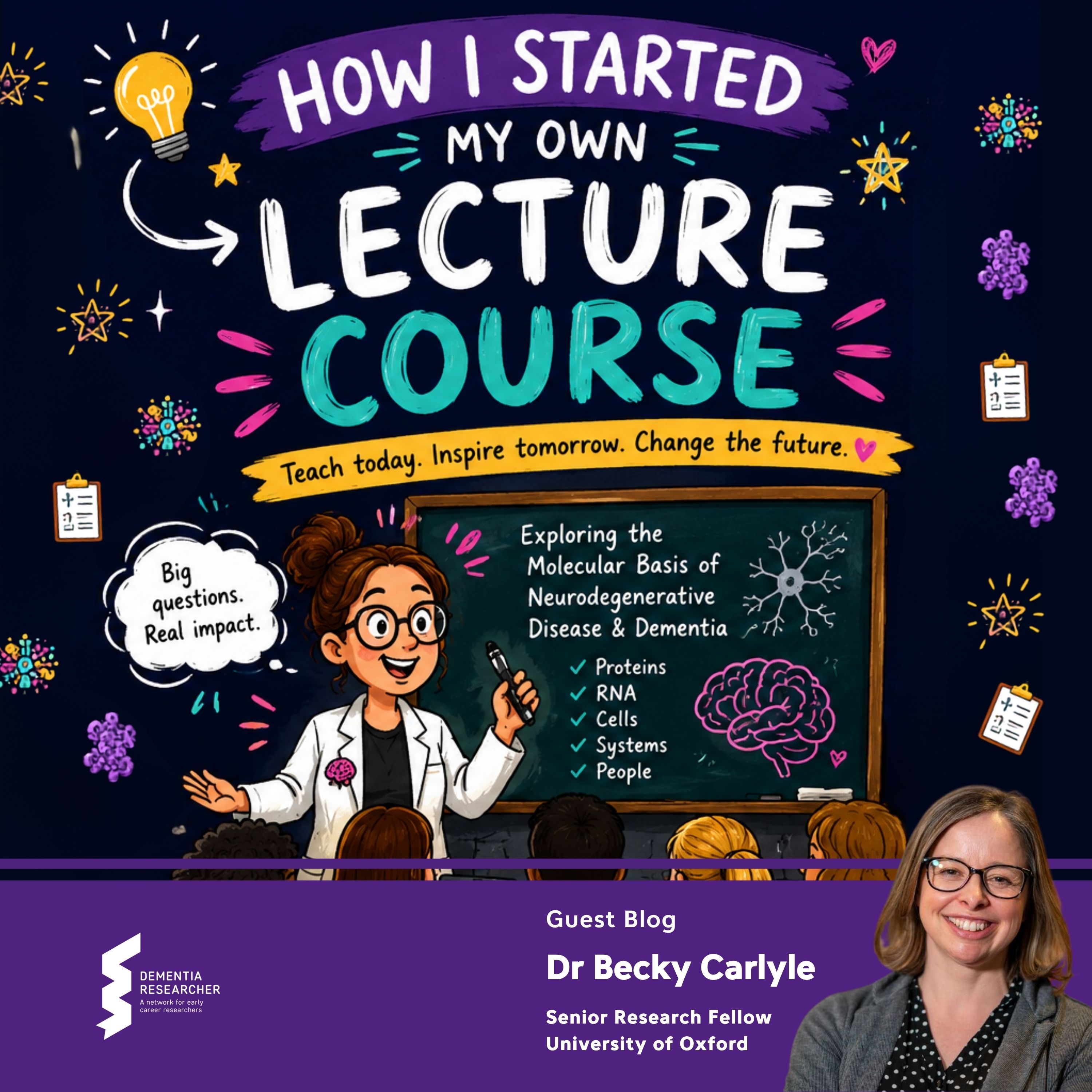
| 6/25/26 | lecture courseneurodegenerative disease+3 | Dr Becky Carlyle | University of OxfordAlzheimer's Research UK+1 | — | lecture courseneurodegenerative disease+3 | — | 10m 25s | ||
| 6/24/26 | data in dementia carehuman-centred care+3 | Brandon Newman | Dementia ResearcherGraphnet Health | — | dementia caredata+3 | — | 8m 08s | ||
| 6/18/26 | sleepdementia+5 | Rahul Sidhu | University of Sheffield | — | sleepdementia+8 | University College London | 6m 52s | ||
| 6/16/26 | academiaidentity+3 | Dr Yvonne Couch | University of OxfordDementia Researcher | — | academiaidentity+3 | — | 9m 23s | ||
| 6/15/26 | Alzheimer's researchprotein misfolding+3 | Professor Louise Serpell | Dementia ResearcherAlzheimer's+4 | — | amyloidamyloid-beta+5 | — | 4m 12s | ||
| 6/11/26 | dementiaidentity+3 | Bernie McInally | NHS LothianNeuroprogressive and Dementia Network+3 | — | dementiacognitive assessment+3 | University College London | 8m 02s | ||
| 6/11/26 | PhD completionacademic pressure+4 | Emily Spencer | University College LondonThe Hidden Work of Finishing a PhD | — | PhDthesis+6 | — | 6m 48s | ||
| 6/9/26 | starting overimposter syndrome+4 | Dr Connor Richardson | University of EdinburghDementia Researcher | — | Dementia Researcherneuro-epidemiology+6 | University College London | 5m 14s | ||
| 6/4/26 | research fundingNIHR award+3 | Dr Maria Drummond | Dementia ResearcherENRICH Scotland+2 | Glasgow Cityfarm park | NIHRfunding+5 | — | 5m 44s | ||
| 6/3/26 | early career researchersdementia research+4 | — | UCLISTAART+1 | — | dementiaresearch+6 | — | 23m 03s | ||
| 6/2/26 | speculative fictionAI-driven energy demands+4 | Dr Tatiana A. Giovannucci | UCL's Institute of NeurologyDementia Research Centre+4 | Medellín, Colombia | Dementia ResearcherAI+5 | — | 8m 26s | ||
| 5/27/26 | electrophysiologyAlzheimer's disease+4 | Beccy Owen | University of WarwickDementia Researcher+1 | Welsh countryside | electrophysiologyAlzheimer's disease+5 | — | 9m 47s | ||
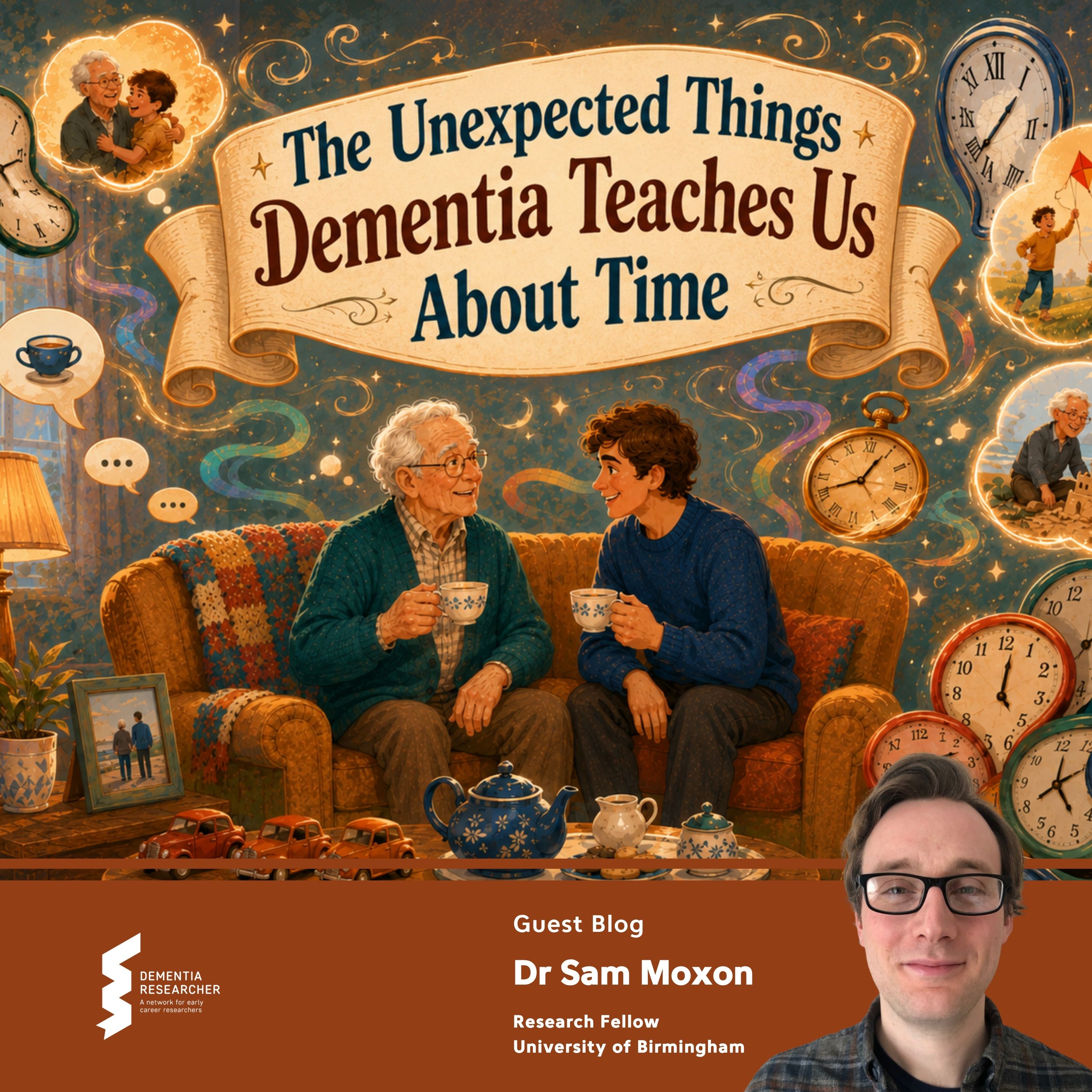
| 5/26/26 | dementiatime perception+4 | Dr Sam Moxon | University of BirminghamAegis FibreTech | — | dementiatime+5 | — | 4m 58s | ||
| 5/21/26 | public speakingdementia research+3 | Rahul Sidhu | University of Sheffield | — | public speakingdementia+5 | University College London | 7m 02s | ||
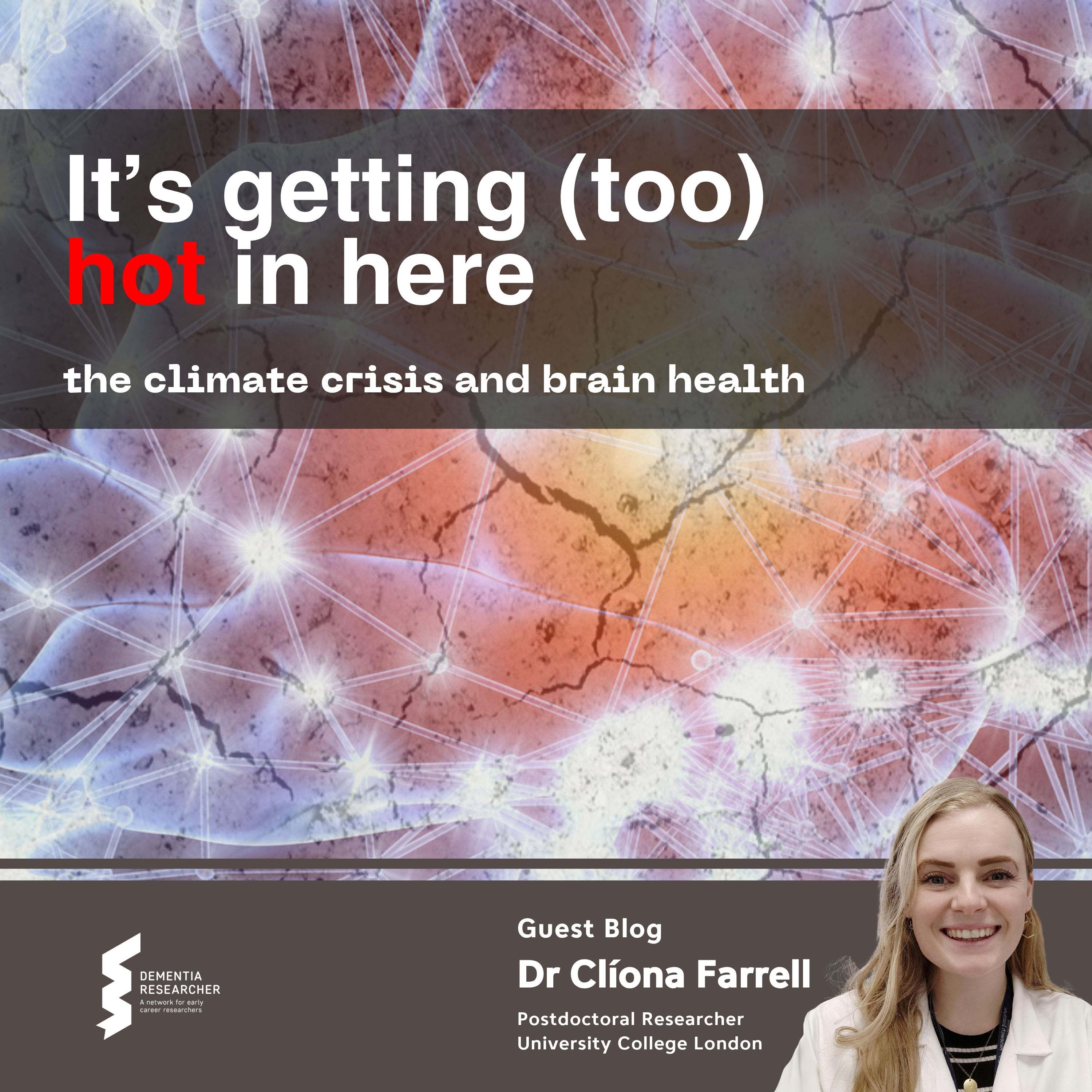
| 5/19/26 | climate crisisbrain health+4 | Dr Clíona Farrell | UCL Queen Square Institute of NeurologyThe Lancet Neurology | UKDublin+2 | climate crisisbrain health+7 | — | 7m 09s | ||
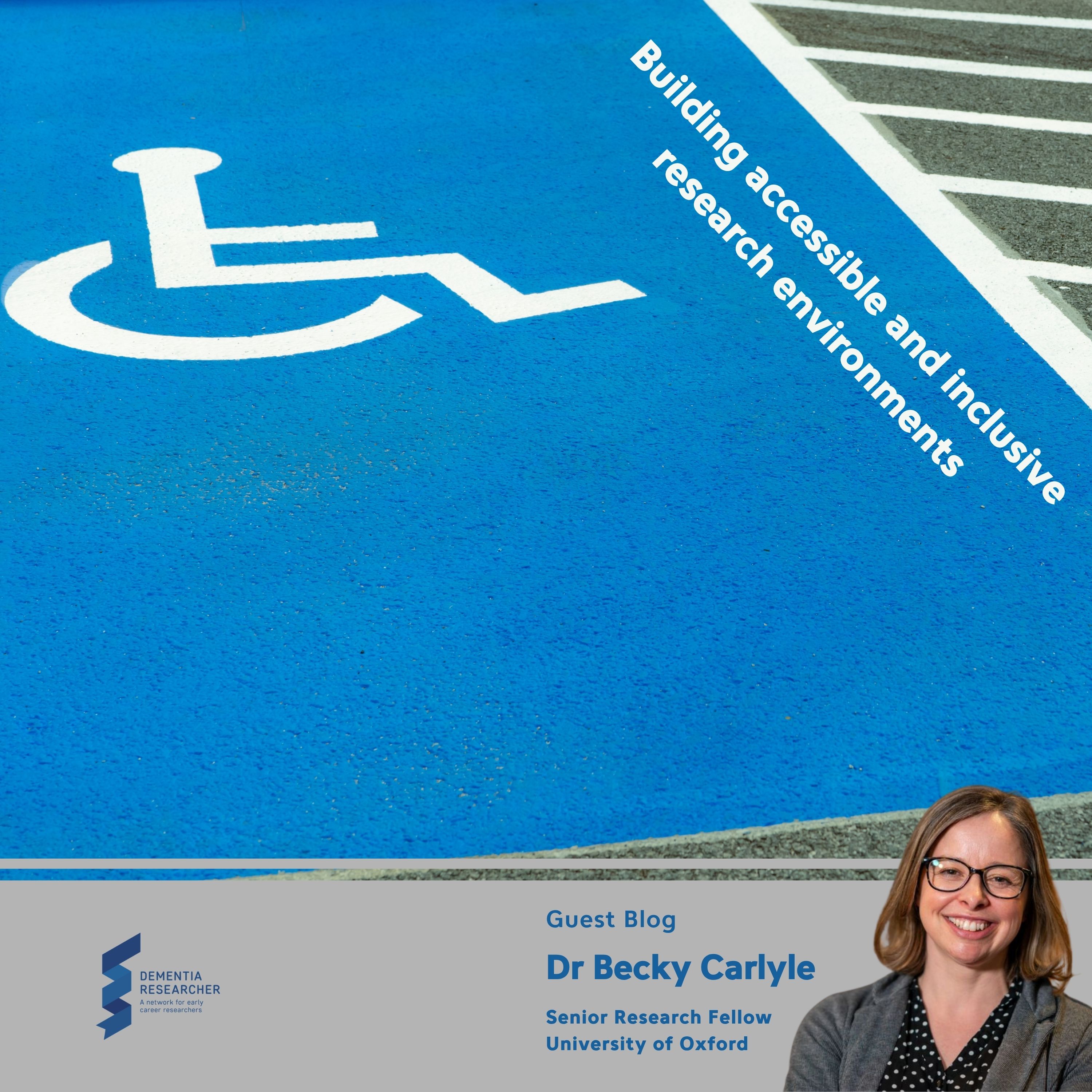
| 5/7/26 | accessibilityinclusive research+4 | Dr Becky Carlyle | Dementia ResearcherDisability Working Group+1 | — | accessible researchinclusive environments+5 | — | 8m 42s | ||
| 5/6/26 | postdoctoral fellowshipPhD transition+3 | Emily Spencer | University College LondonDementia Researcher | — | PhD fundingfellowship application+3 | — | 6m 31s | ||
| 5/1/26 | Alzheimer's diseaseresearch challenges+3 | Professor Louise Serpell | Dementia ResearcherUniversity of Sussex+2 | — | Alzheimer's diseaseamyloid beta+6 | — | 5m 45s | ||
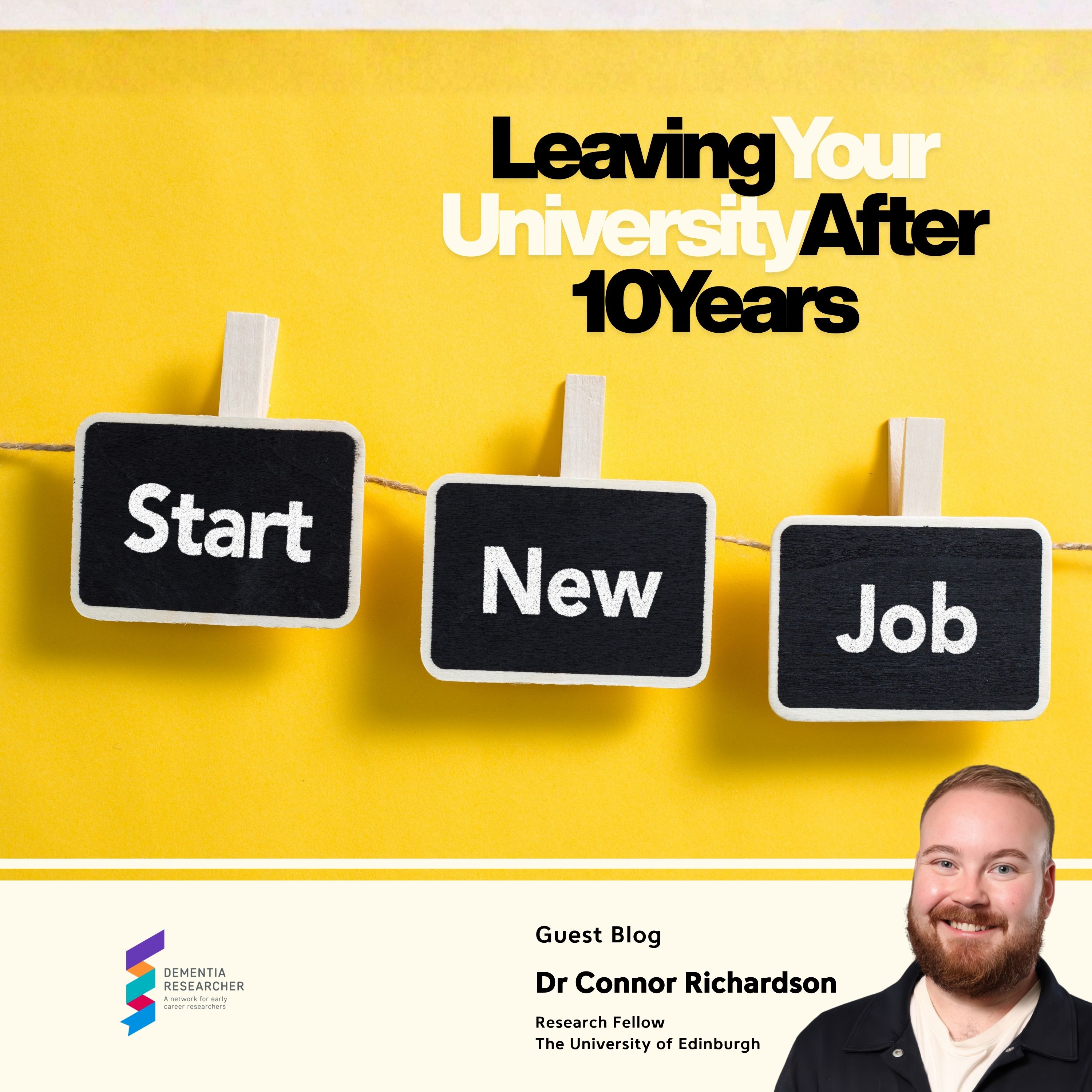
| 4/29/26 | career transitionresearch challenges+3 | Dr Connor Richardson | Newcastle UniversityThe University of Edinburgh+1 | — | dementiaresearch+5 | Alzheimer's Association | 5m 53s | ||
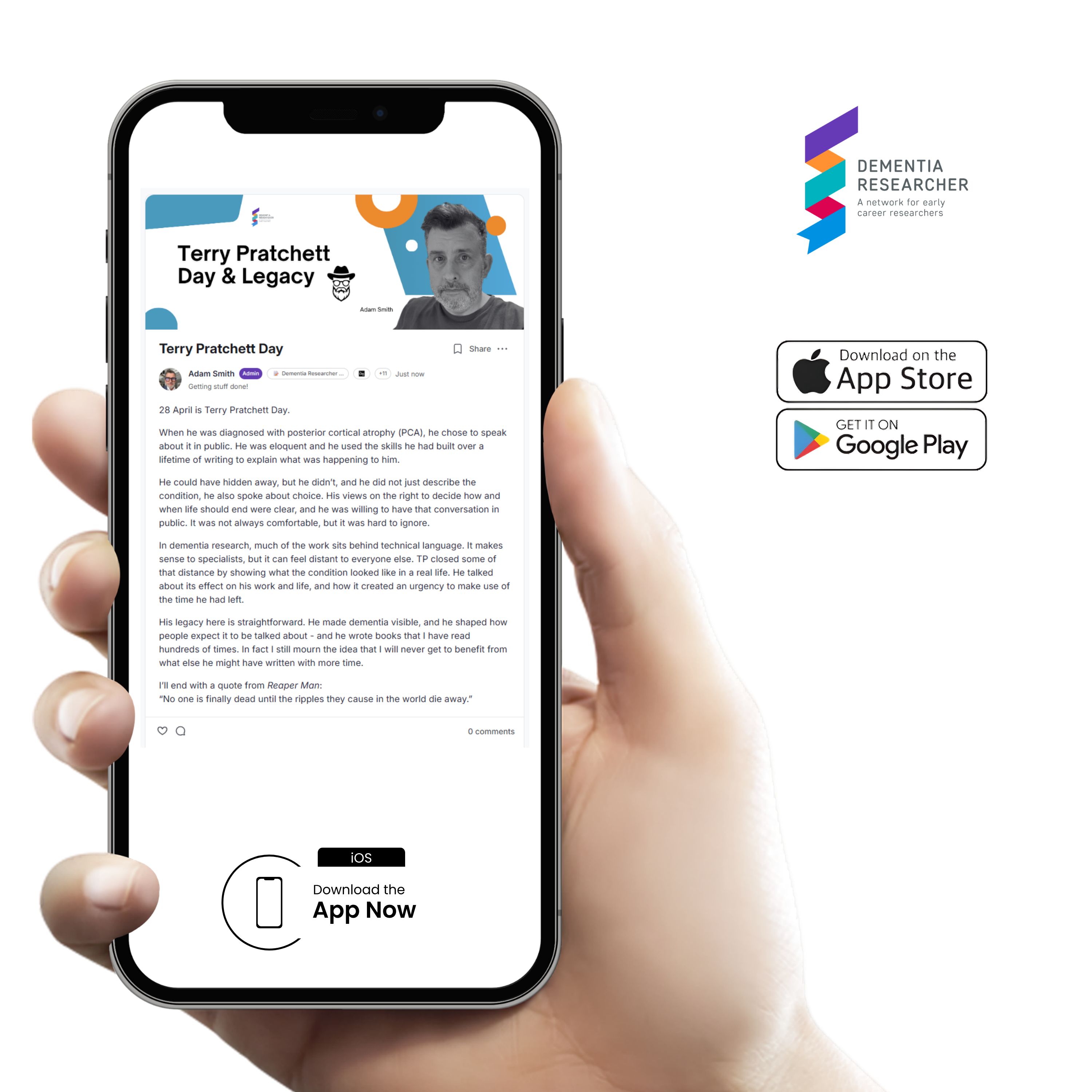
| 4/28/26 | dementia advocacyTerry Pratchett+4 | Adam Smith | Dementia ResearcherUniversity College London | — | Terry Pratchettdementia+5 | Alzheimer's Association | 1m 52s | ||
| 4/27/26 | care home researchdigital visibility+3 | Bernie McInally | NHS LothianNeuroprogressive and Dementia Network+4 | — | care homesresearch+5 | — | 8m 31s | ||
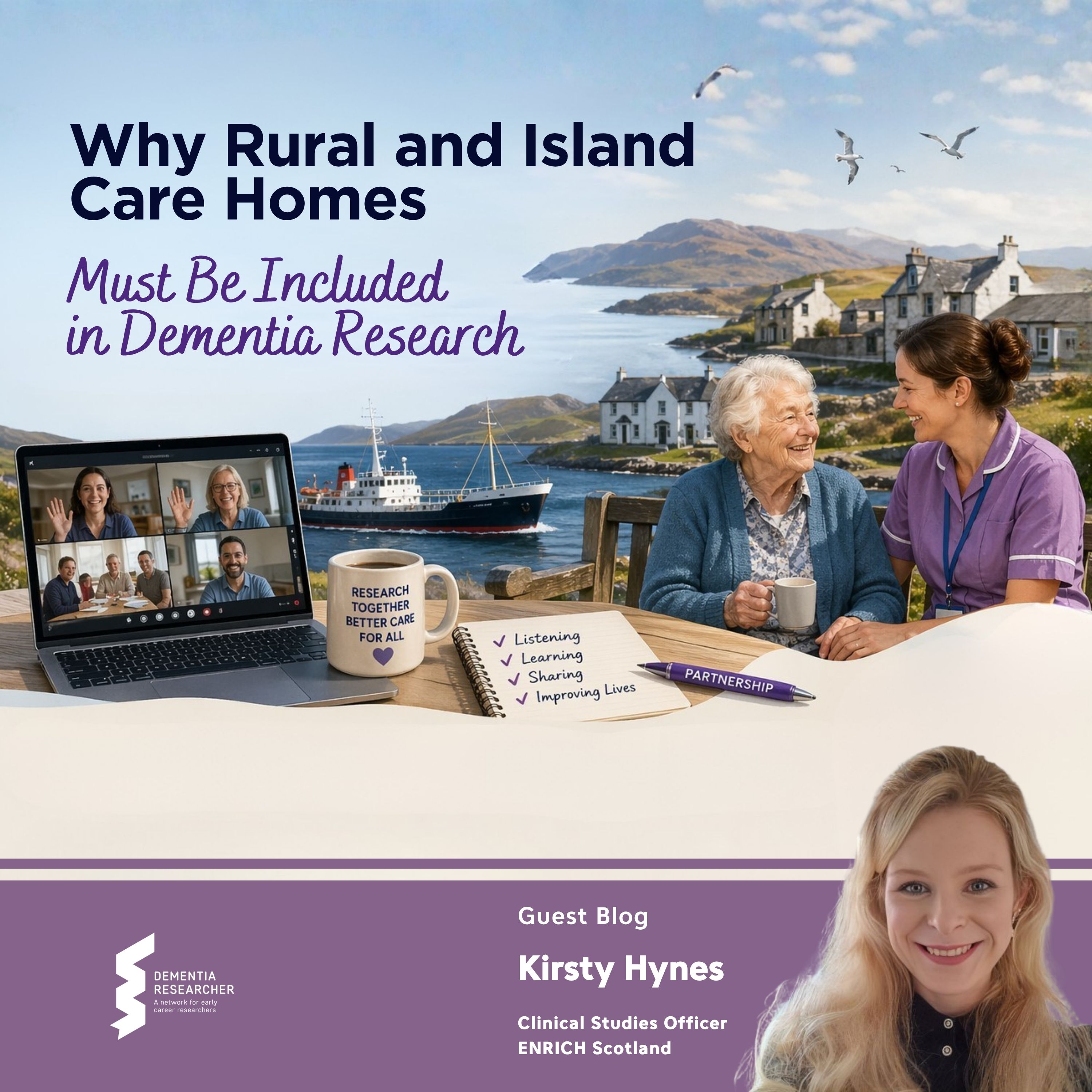
| 4/22/26 | dementia researchPhD applications+3 | Kirsty Hynes | Dementia ResearcherENRICH+2 | — | dementiaresearch+5 | — | 7m 20s | ||
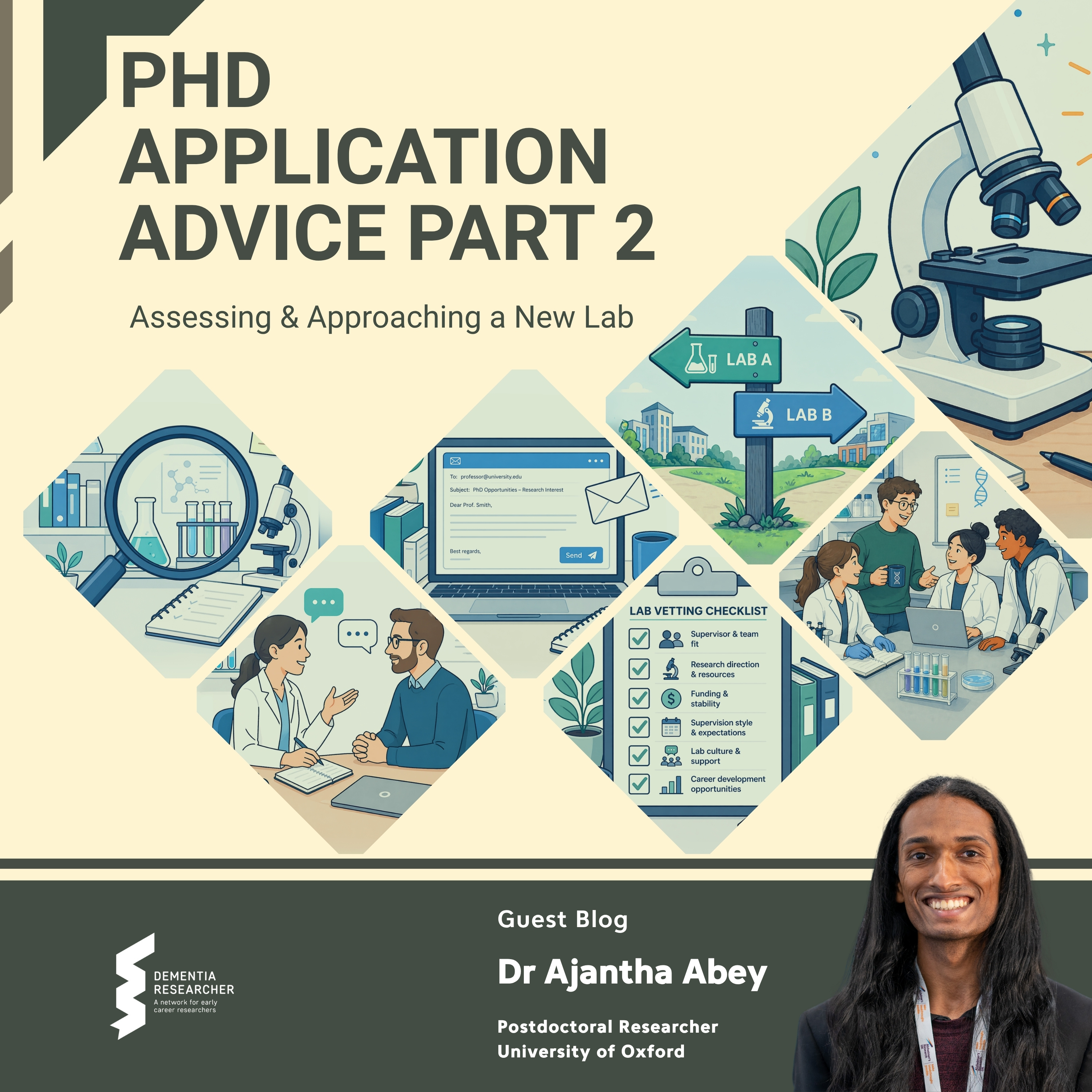
| 4/21/26 | PhD applicationslab selection+3 | Dr Ajantha Abey | Dementia ResearcherKavli Institute+1 | Alzheimer'sParkinson's+1 | PhD applicationlab culture+3 | — | 16m 25s | ||
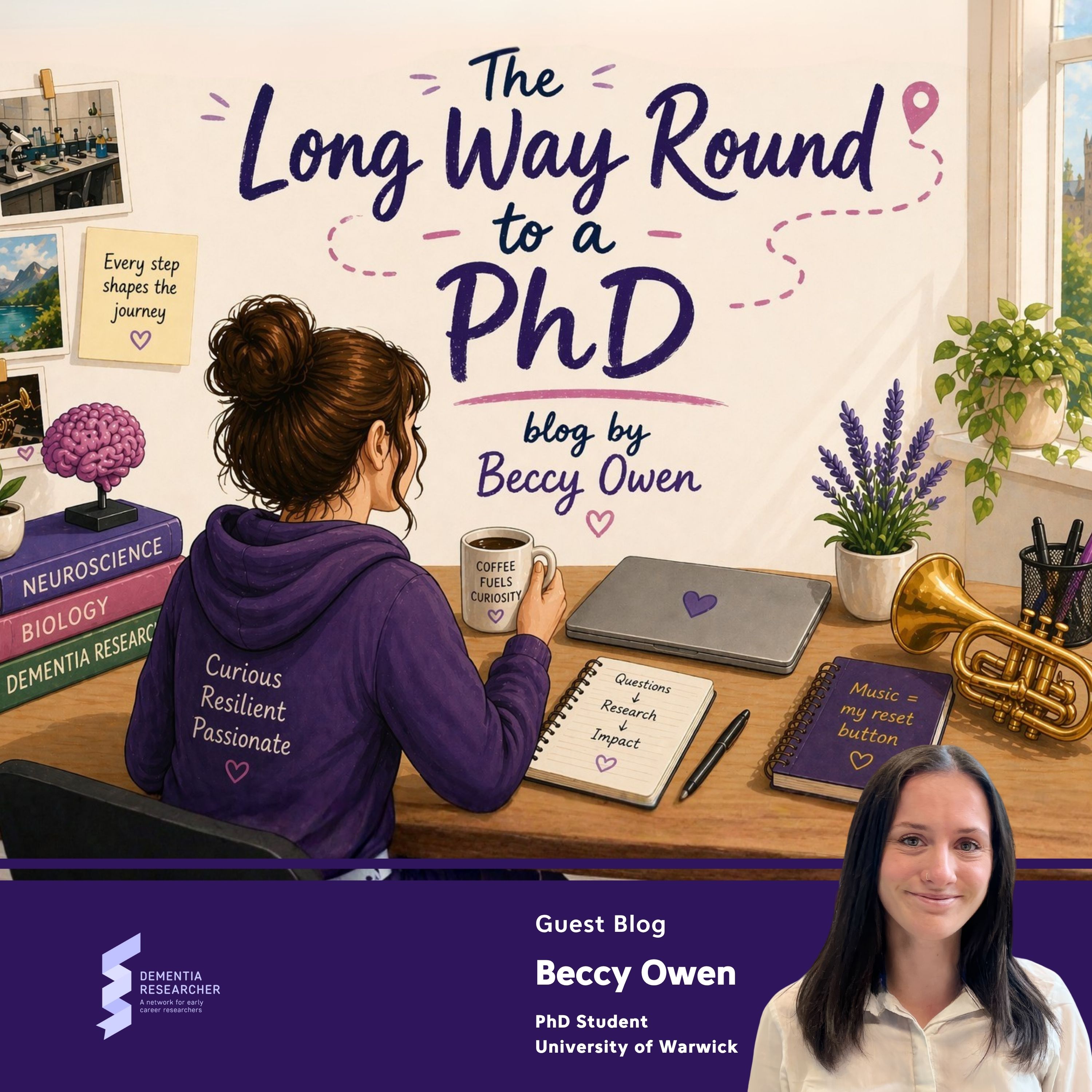
| 4/20/26 | dementia researchPhD journey+4 | Beccy Owen | University of WarwickDementia Researcher+1 | Welsh countryside | dementiaPhD+6 | — | 8m 02s | ||
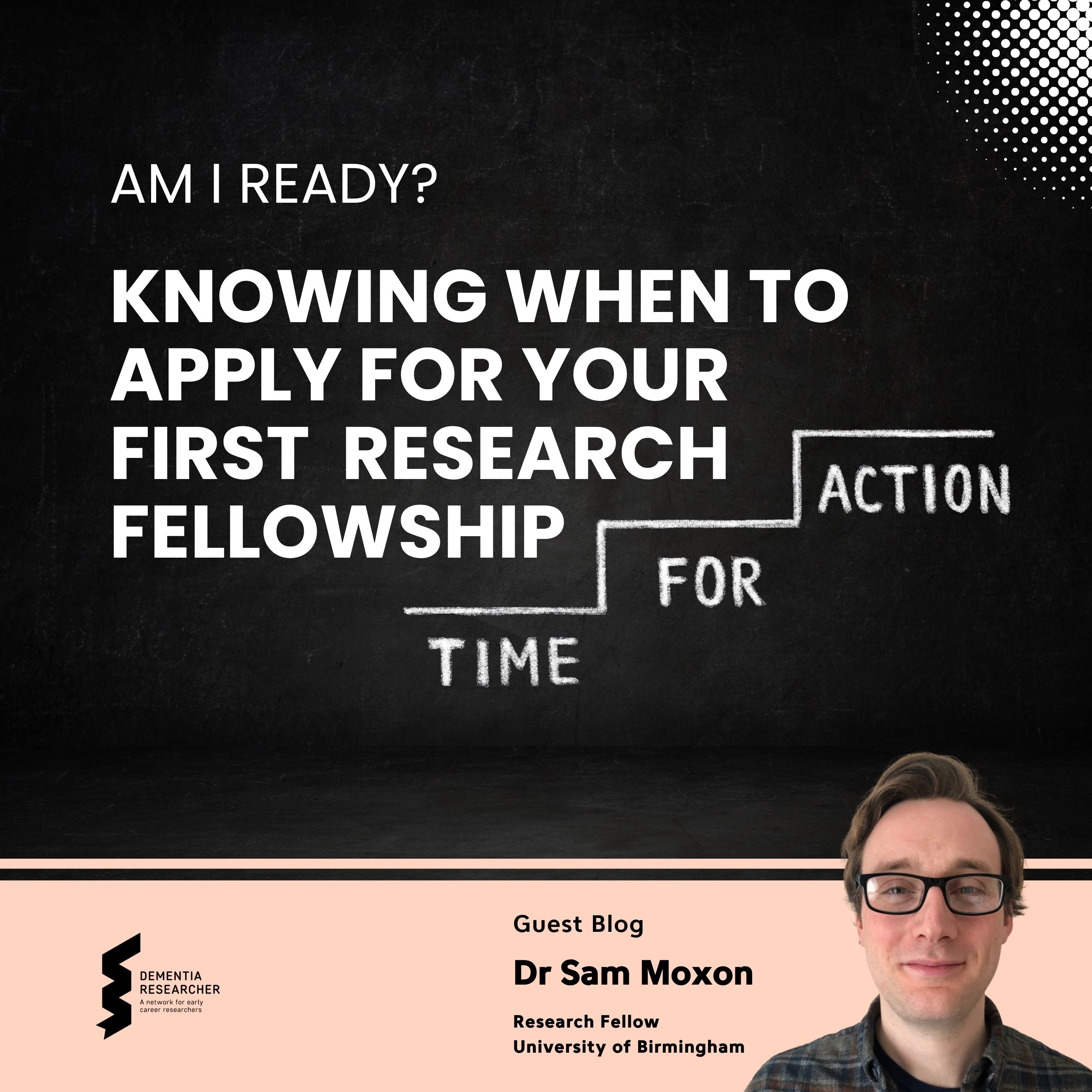
| 4/20/26 | research fellowshipcareer advice+3 | Dr Sam Moxon | University of BirminghamDementia Researcher | — | research fellowshipDementia Researcher+3 | NIHR | 5m 06s | ||












Showing 55 of 730
Pitch Fit is a Pro feature
See how bookable this show is for guests, which brands already advertise, the per-episode ad value, and the best-fit guest and sponsor profile. The numbers are blurred on the free plan.
How readily this show books outside guests like you.
How proven this show is for host-read sponsorships.
For Guests
ProFor Advertisers
ProUpgrade to Pro to unlock guest cadence, sponsor categories, fit scores, and per-episode ad value for this show.
Chart history for Dementia Researcher Blogs
Peaked at #187 in NG, currently #187 in NG.
| Market | Genre | Peak | Current | Trend |
|---|---|---|---|---|
| NG | — | #187 | #187 | — |
Chart Positions
1 placement across 1 market.
Chart Positions
1 placement across 1 market.