
Insights from recent episode analysis
Audience Interest
Podcast Focus
Publishing Consistency
Platform Reach
Insights are generated by CastFox AI using publicly available data, episode content, and proprietary models.
Most discussed topics
Brands & references
Total monthly reach
Estimated from 1 chart position in 1 market.
By chart position
- 🇲🇾MY · Science#147500 to 3K
- Per-Episode Audience
Est. listeners per new episode within ~30 days
250 to 1.5K🎙 ~2x weekly·333 episodes·Last published 1w ago - Monthly Reach
Unique listeners across all episodes (30 days)
500 to 3K🇲🇾100% - Active Followers
Loyal subscribers who consistently listen
150 to 900
Market Insights
Platform Distribution
Reach across major podcast platforms, updated hourly
Total Followers
—
Total Plays
—
Total Reviews
—
* Data sourced directly from platform APIs and aggregated hourly across all major podcast directories.
On the show
From 14 epsHosts
Recent guests
Recent episodes
Relay Podcast - Clinical Trials Advancement and Methods PIA 2026
Jul 4, 2026
Unknown duration
Relay Podcast - PIA to Elevate Early Career Researchers
Jul 3, 2026
Unknown duration
Relay Podcast - Lewy Body Dementias PIA
Jul 2, 2026
Unknown duration
Relay Podcast - Down Syndrome and Alzheimer's Disease PIA
Jul 1, 2026
Unknown duration
Relay Podcast - Health Policy PIA
Jun 30, 2026
Unknown duration
Social Links & Contact
Official channels & resources
Official Website
Login
RSS Feed
Login
| Date | Episode | Topics | Guests | Brands | Places | Keywords | Sponsor | Length | |
|---|---|---|---|---|---|---|---|---|---|
| 7/4/26 |  Relay Podcast - Clinical Trials Advancement and Methods PIA 2026 | Welcome to the seventh season of the Dementia Researcher X ISTAART PIA Relay Podcast. Across six episodes, leading early career and senior researchers hand the mic from one ISTAART PIA to the next, giving you an honest, peer-to-peer tour of where dementia research is actually heading, from wearables and biomarkers to policy and trial design, in the run-up to AAIC.Series closer, and the relay comes full circle: Carla Abdelnour, who hosted episode one, returns as the guest. Carla is a clinician scientist in Barcelona and incoming Chair of the ISTAART Clinical Trials Advancement and Methods PIA, working on mixed neurodegenerative disease, particularly Lewy body and Alzheimer's pathology together. With host Sindhuja Tirumalai Govindarajan she explains why co-pathology is so common and what it means for treatment: does someone with both alpha-synuclein and Alzheimer's pathology respond to an anti-amyloid drug the same way as someone without? They discuss why she leans on fluid biomarkers, the wish for a synuclein PET tracer, and how trials might stratify or include people by co-pathology. Carla makes a useful point for anyone designing research, that clinical trial methods translate straight to observational studies, and previews the CTAM PIA's AAIC programme, including a panel and featured session on global representation in trials.TakeawaysMixed pathology is common, and co-occurring alpha-synuclein and Alzheimer's pathology may change how people respond to treatment.Trials could stratify or include people by co-pathology, but alpha-synuclein is currently detectable only in CSF, which limits that.Fluid biomarkers offer the specificity to track different proteinopathies and, potentially, response to treatment.Clinical trial design transfers straight to observational research: the same inclusion criteria, outcomes and sample-size thinking.Global representation in trials is a live priority, with a CTAM panel launching at AAIC.--The Alzheimer’s Association International Society to Advance Alzheimer’s Research and Treatment (ISTAART) convenes the global Alzheimer’s and dementia science community. Members share knowledge, fuel collaboration and advance research to find more effective ways to detect, treat and prevent Alzheimer’s and other dementias. Professional Interest Areas (PIA) are an assembly of ISTAART members with common subspecialties or interests.There are currently 30 PIAs covering a wide range of interests and fields, from Neuroimaging to Diversity and Disparities and everything in between.Find out more at https://istaart.alz.org/--A transcript of this show, links and show notes and profile on all our guests are available on our website at https://www.dementiaresearcher.nihr.ac.uk.If you prefer to watch rather than listen, you will find a video version of this podcast on Apple Podcasts, YouTube, and on our website.Leave us a tip:https://dementia-researcher.captivate.fm/supportFollow us on social media:https://www.instagram.com/dementia_researcher/ https://www.facebook.com/Dementia.Researcher/https://www.twitter.com/demrescommunityhttps://www.linkedin.com/company/dementia-researcher https://bsky.app/profile/dementiaresearcher.bsky.socialDownload and Register with our Community App:https://www.onelink.to/dementiaresearcherWe gratefully acknowledge the support of our funders: Alzheimer’s Association, Race Against Dementia, Alzheimer’s Research UK, Alzheimer’s Society, and the National Institute for Health and Care Research.The views and opinions expressed by guests in this podcast are their own and do not necessarily reflect those of the producers, funders, or sponsors.Subscribe to our sister show 'Dementia Researcher The Blogs':https://podfollow.com/dementia-researcher-blogs | — | ||||||
| 7/3/26 |  Relay Podcast - PIA to Elevate Early Career Researchers | Welcome to the seventh season of the Dementia Researcher X ISTAART PIA Relay Podcast. Across six episodes, leading early career and senior researchers hand the mic from one ISTAART PIA to the next, giving you an honest, peer-to-peer tour of where dementia research is actually heading, from wearables and biomarkers to policy and trial design, in the run-up to AAIC.Most people with hypertension after 50 never develop dementia, so what separates those who do? That is the question driving Dr Sindhuja Tirumalai Govindarajan, a neuroimaging researcher and outgoing Chair of the ISTAART PEERs PIA, recorded as she moves from a postdoc at the University of Pennsylvania to an assistant professorship at the Karolinska Institute. With host Dr Joe Kane she explains how machine learning on tens of thousands of MRI scans can pick up subtle brain changes years before symptoms, and why scans from different scanners have to be harmonised first. The conversation then turns to PEERs itself, a PIA built not around one research area but around early career researchers everywhere, and the work of levelling opportunity across borders through local routes like Neuroscience Next, WYLD and INTERDEM Academy. Sindhuja runs through the PIA's AAIC workshops, from narrative CVs to social bingo for ECRs, and closes with practical advice on getting people involved: make the ask specific.TakeawaysMachine learning on large MRI datasets can detect brain changes years before any cognitive symptoms show.Scans from different scanners must be harmonised first, stripping out machine noise so only the biology remains.PEERs exists to level opportunity for early career researchers wherever they are, across every research area.Local routes such as Neuroscience Next, WYLD and INTERDEM Academy widen access for those who cannot get to the big conference.Interest among ECRs is common but clarity often is not, so make the ask specific and people will step up.--The Alzheimer’s Association International Society to Advance Alzheimer’s Research and Treatment (ISTAART) convenes the global Alzheimer’s and dementia science community. Members share knowledge, fuel collaboration and advance research to find more effective ways to detect, treat and prevent Alzheimer’s and other dementias. Professional Interest Areas (PIA) are an assembly of ISTAART members with common subspecialties or interests.There are currently 30 PIAs covering a wide range of interests and fields, from Neuroimaging to Diversity and Disparities and everything in between.Find out more at https://istaart.alz.org/--A transcript of this show, links and show notes and profile on all our guests are available on our website at https://www.dementiaresearcher.nihr.ac.uk.If you prefer to watch rather than listen, you will find a video version of this podcast on Apple Podcasts, YouTube, and on our website.Leave us a tip:https://dementia-researcher.captivate.fm/supportFollow us on social media:https://www.instagram.com/dementia_researcher/ https://www.facebook.com/Dementia.Researcher/https://www.twitter.com/demrescommunityhttps://www.linkedin.com/company/dementia-researcher https://bsky.app/profile/dementiaresearcher.bsky.socialDownload and Register with our Community App:https://www.onelink.to/dementiaresearcherWe gratefully acknowledge the support of our funders: Alzheimer’s Association, Race Against Dementia, Alzheimer’s Research UK, Alzheimer’s Society, and the National Institute for Health and Care Research.The views and opinions expressed by guests in this podcast are their own and do not necessarily reflect those of the producers, funders, or sponsors.Subscribe to our sister show 'Dementia Researcher The Blogs':https://podfollow.com/dementia-researcher-blogs | — | ||||||
| 7/2/26 |  Relay Podcast - Lewy Body Dementias PIA | Welcome to the seventh season of the Dementia Researcher X ISTAART PIA Relay Podcast. Across six episodes, leading early career and senior researchers hand the mic from one ISTAART PIA to the next, giving you an honest, peer-to-peer tour of where dementia research is actually heading, from wearables and biomarkers to policy and trial design, in the run-up to AAIC.Lewy body pathology shows up in roughly 30% of the brains of people who had dementia, yet it gets diagnosed in only about 5% of cases. Closing that gap has shaped much of Dr Joe Kane's career. Joe is a geriatric psychiatrist at Queen's University Belfast and outgoing Chair of the ISTAART Lewy Body Dementias PIA, and with host Dr Patrick Lao he traces his work from the Diamond Lewy programme to consensus diagnostic guidelines built by Delphi process. They discuss the symptoms clinicians often miss because they don't think to ask, from constipation to loss of smell, the cardiac scans and seed amplification assays now detecting pathology in CSF and even skin, and the TOP HAT trial repurposing an anti-sickness drug for hallucinations. Joe makes the case for a Lewy body specific rating scale, explains why the prodrome may be psychiatric or delirium rather than cognitive, and runs through the PIA's biggest AAIC programme in years, including a PIA Day panel on seed amplification assays.TakeawaysLewy body dementia is heavily underdiagnosed: pathology appears in about 30% of brains but is diagnosed in around 5%.Much of the disease shows outside the brain, in constipation, blood pressure and smell, so it gets missed if nobody asks.Seed amplification assays, now usable on CSF and even a small skin biopsy, are changing how the pathology is detected.Trials can fail on the wrong yardstick, which is why the PIA is building a Lewy body specific rating scale.The prodrome is not only cognitive; the first sign can be depression, psychosis or delirium, and those gaps need data.--The Alzheimer’s Association International Society to Advance Alzheimer’s Research and Treatment (ISTAART) convenes the global Alzheimer’s and dementia science community. Members share knowledge, fuel collaboration and advance research to find more effective ways to detect, treat and prevent Alzheimer’s and other dementias. Professional Interest Areas (PIA) are an assembly of ISTAART members with common subspecialties or interests.There are currently 30 PIAs covering a wide range of interests and fields, from Neuroimaging to Diversity and Disparities and everything in between.Find out more at https://istaart.alz.org/--A transcript of this show, links and show notes and profile on all our guests are available on our website at https://www.dementiaresearcher.nihr.ac.uk.If you prefer to watch rather than listen, you will find a video version of this podcast on Apple Podcasts, YouTube, and on our website.Leave us a tip:https://dementia-researcher.captivate.fm/supportFollow us on social media:https://www.instagram.com/dementia_researcher/ https://www.facebook.com/Dementia.Researcher/https://www.twitter.com/demrescommunityhttps://www.linkedin.com/company/dementia-researcher https://bsky.app/profile/dementiaresearcher.bsky.socialDownload and Register with our Community App:https://www.onelink.to/dementiaresearcherWe gratefully acknowledge the support of our funders: Alzheimer’s Association, Race Against Dementia, Alzheimer’s Research UK, Alzheimer’s Society, and the National Institute for Health and Care Research.The views and opinions expressed by guests in this podcast are their own and do not necessarily reflect those of the producers, funders, or sponsors.Subscribe to our sister show 'Dementia Researcher The Blogs':https://podfollow.com/dementia-researcher-blogs | — | ||||||
| 7/1/26 |  Relay Podcast - Down Syndrome and Alzheimer's Disease PIA | Welcome to the seventh season of the Dementia Researcher X ISTAART PIA Relay Podcast. Across six episodes, leading early career and senior researchers hand the mic from one ISTAART PIA to the next, giving you an honest, peer-to-peer tour of where dementia research is actually heading, from wearables and biomarkers to policy and trial design, in the run-up to AAIC.Almost everyone born with Down syndrome overproduces the amyloid precursor protein from birth, which makes it one of the clearest natural windows we have into how Alzheimer's begins. Dr Patrick Lao, Assistant Professor at Columbia and Programmes Chair of the ISTAART Down Syndrome and Alzheimer's Disease PIA, comes from a medical physics background and uses multimodal neuroimaging to map the disease across its genetic and sporadic forms. With host Lillian Morgado, he explains amyloid and tau PET, Thal phases and Braak staging, and how chronological age can stand in for disease stage in this population, with a typical symptom onset around 54. They talk about why people with Down syndrome were long left out of anti-amyloid trials and how that is now changing, and the risk and resilience research asking why some people fall off the expected timeline. Patrick also previews the PIA's AAIC PIA Day session on returning results, plus the separate DSAD/ADAD conference coming to London next year.TakeawaysGenetic forms of Alzheimer's, including Down syndrome, let researchers study the earliest disease pathways before symptoms appear.In Down syndrome, chronological age can approximate disease stage, with symptoms typically expected around age 54.Imaging shows where amyloid and tau sit in the brain, the spatial detail a blood test cannot give.People with Down syndrome were historically excluded from anti-amyloid trials; that is shifting, with a lecanemab safety extension now underway.Not everyone follows the population timeline, and risk and resilience work asks what pushes onset earlier or later.--The Alzheimer’s Association International Society to Advance Alzheimer’s Research and Treatment (ISTAART) convenes the global Alzheimer’s and dementia science community. Members share knowledge, fuel collaboration and advance research to find more effective ways to detect, treat and prevent Alzheimer’s and other dementias. Professional Interest Areas (PIA) are an assembly of ISTAART members with common subspecialties or interests.There are currently 30 PIAs covering a wide range of interests and fields, from Neuroimaging to Diversity and Disparities and everything in between.Find out more at https://istaart.alz.org/--A transcript of this show, links and show notes and profile on all our guests are available on our website at https://www.dementiaresearcher.nihr.ac.uk.If you prefer to watch rather than listen, you will find a video version of this podcast on Apple Podcasts, YouTube, and on our website.Leave us a tip:https://dementia-researcher.captivate.fm/supportFollow us on social media:https://www.instagram.com/dementia_researcher/ https://www.facebook.com/Dementia.Researcher/https://www.twitter.com/demrescommunityhttps://www.linkedin.com/company/dementia-researcher https://bsky.app/profile/dementiaresearcher.bsky.socialDownload and Register with our Community App:https://www.onelink.to/dementiaresearcherWe gratefully acknowledge the support of our funders: Alzheimer’s Association, Race Against Dementia, Alzheimer’s Research UK, Alzheimer’s Society, and the National Institute for Health and Care Research.The views and opinions expressed by guests in this podcast are their own and do not necessarily reflect those of the producers, funders, or sponsors.Subscribe to our sister show 'Dementia Researcher The Blogs':https://podfollow.com/dementia-researcher-blogs | — | ||||||
| 6/30/26 |  Relay Podcast - Health Policy PIA | Welcome to the seventh season of the Dementia Researcher X ISTAART PIA Relay Podcast. Across six episodes, leading early career and senior researchers hand the mic from one ISTAART PIA to the next, giving you an honest, peer-to-peer tour of where dementia research is actually heading, from wearables and biomarkers to policy and trial design, in the run-up to AAIC.If we cured Alzheimer's tomorrow but did no work on cost, distribution or access, we would have cured it only for the richest people in the world. That line from Lillian Morgado sits at the centre of this episode. Lillian is a research coordinator at Georgia State University and Communications Chair of the ISTAART Health Policy PIA, working mainly in qualitative research and legal epidemiology. With host Dr Vanessa Young, she talks through what qualitative work actually involves, her research on caregivers and people with dementia in the justice system, and the question that opened up next: what happens to someone with no caregiver to advocate for them. They get into why AI and blood-based biomarkers are as much policy problems as scientific ones, how regulation differs across borders, and why policy is the bridge that decides whether science reaches the people it was meant for. Lillian also runs through the Health Policy PIA's busy week at AAIC, from PIA Day to a featured research session on dementia care across countries.TakeawaysPolicy is the bridge from the lab to the patient; without it, a breakthrough only reaches the few who can already afford care.Qualitative interviews and coding surface the right questions before the big quantitative money goes in.Caregivers matter enormously when someone with dementia meets the justice system, which raises the question of those who have none.AI and blood-based biomarkers carry legal and access questions, and the rules differ between, say, the US and Europe under GDPR.You do not join a PIA because you already belong; you belong because you get involved, and you need not be an expert to contribute.--The Alzheimer’s Association International Society to Advance Alzheimer’s Research and Treatment (ISTAART) convenes the global Alzheimer’s and dementia science community. Members share knowledge, fuel collaboration and advance research to find more effective ways to detect, treat and prevent Alzheimer’s and other dementias. Professional Interest Areas (PIA) are an assembly of ISTAART members with common subspecialties or interests.There are currently 30 PIAs covering a wide range of interests and fields, from Neuroimaging to Diversity and Disparities and everything in between.Find out more at https://istaart.alz.org/--A transcript of this show, links and show notes and profile on all our guests are available on our website at https://www.dementiaresearcher.nihr.ac.uk.If you prefer to watch rather than listen, you will find a video version of this podcast on Apple Podcasts, YouTube, and on our website.Leave us a tip:https://dementia-researcher.captivate.fm/supportFollow us on social media:https://www.instagram.com/dementia_researcher/ https://www.facebook.com/Dementia.Researcher/https://www.twitter.com/demrescommunityhttps://www.linkedin.com/company/dementia-researcher https://bsky.app/profile/dementiaresearcher.bsky.socialDownload and Register with our Community App:https://www.onelink.to/dementiaresearcherWe gratefully acknowledge the support of our funders: Alzheimer’s Association, Race Against Dementia, Alzheimer’s Research UK, Alzheimer’s Society, and the National Institute for Health and Care Research.The views and opinions expressed by guests in this podcast are their own and do not necessarily reflect those of the producers, funders, or sponsors.Subscribe to our sister show 'Dementia Researcher The Blogs':https://podfollow.com/dementia-researcher-blogs | — | ||||||
| 6/29/26 |  Relay Podcast - Technology and Dementia PIA | Welcome to the seventh season of the Dementia Researcher X ISTAART PIA Relay Podcast. Across six episodes, leading early career and senior researchers hand the mic from one ISTAART PIA to the next, giving you an honest, peer-to-peer tour of where dementia research is actually heading, from wearables and biomarkers to policy and trial design, in the run-up to AAIC.Sleep might be one of the earliest windows we have into brain health, and Dr Vanessa Young thinks the way we measure it is about to change. Fresh from finishing her PhD in May, Vanessa is a postdoc at the Glenn Biggs Institute and Communications Chair of the Technology and Dementia PIA. She studies sleep and the ageing brain, where the relationship seems to run both ways: as dementia develops, sleep gets worse, and poor sleep may feed back into the disease. With host Dr Carla Abdelnour, she gets into digital biomarkers, why wearables let you capture sleep continuously at home rather than in a one-off sleep study, and the move from wearables to "nearables", bed sensors and room radar that ask nothing of the participant at all. They also cover the analysis headache that comes with years of continuous data, the equity problem when a study needs home Wi-Fi, and what the PIA has planned for its full-day AAIC preconference on AI.TakeawaysSleep and dementia feed each other, so sleep is worth studying as somewhere we might actually step in and help.Wearables capture sleep night after night at home, which reaches people who live nowhere near a big sleep centre.The field is shifting from wearables to "nearables", sensors in the mattress or radar in the room, to cut participant burden and bias.Years of continuous data brings its own problem: telling meaningful signal apart from background noise.If a study needs Wi-Fi to send its data, it quietly excludes people, so digital equity has to be designed in.--The Alzheimer’s Association International Society to Advance Alzheimer’s Research and Treatment (ISTAART) convenes the global Alzheimer’s and dementia science community. Members share knowledge, fuel collaboration and advance research to find more effective ways to detect, treat and prevent Alzheimer’s and other dementias. Professional Interest Areas (PIA) are an assembly of ISTAART members with common subspecialties or interests.There are currently 30 PIAs covering a wide range of interests and fields, from Neuroimaging to Diversity and Disparities and everything in between.Find out more at https://istaart.alz.org/--A transcript of this show, links and show notes and profile on all our guests are available on our website at https://www.dementiaresearcher.nihr.ac.uk.If you prefer to watch rather than listen, you will find a video version of this podcast on Apple Podcasts, YouTube, and on our website.Leave us a tip:https://dementia-researcher.captivate.fm/supportFollow us on social media:https://www.instagram.com/dementia_researcher/ https://www.facebook.com/Dementia.Researcher/https://www.twitter.com/demrescommunityhttps://www.linkedin.com/company/dementia-researcher https://bsky.app/profile/dementiaresearcher.bsky.socialDownload and Register with our Community App:https://www.onelink.to/dementiaresearcherWe gratefully acknowledge the support of our funders: Alzheimer’s Association, Race Against Dementia, Alzheimer’s Research UK, Alzheimer’s Society, and the National Institute for Health and Care Research.The views and opinions expressed by guests in this podcast are their own and do not necessarily reflect those of the producers, funders, or sponsors.Subscribe to our sister show 'Dementia Researcher The Blogs':https://podfollow.com/dementia-researcher-blogs | — | ||||||
| 6/19/26 | 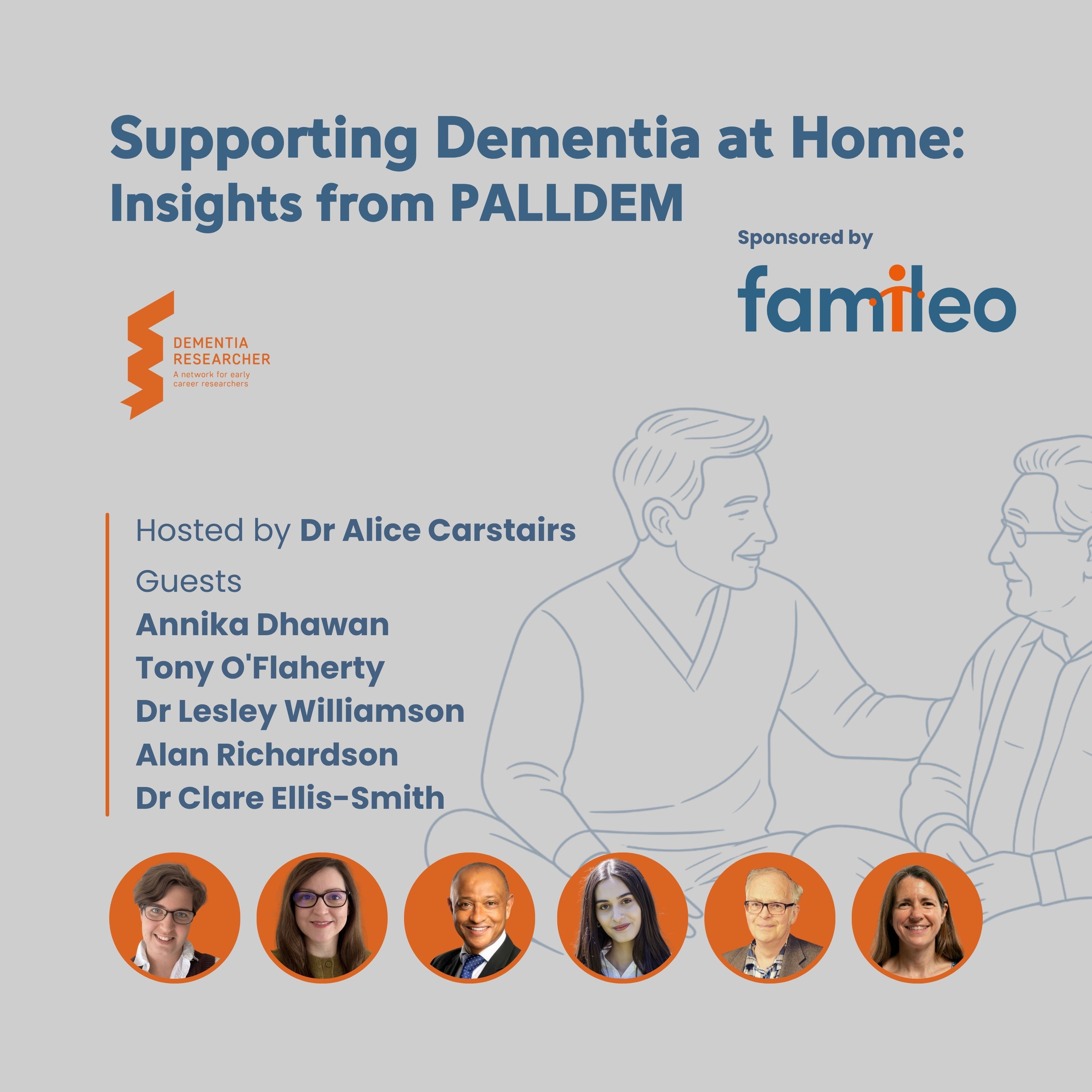 Supporting Dementia at Home: Insights from PALLDEM | Most people with dementia live, and many die, at home. The person who knows them best in those final months is often not a clinician but a home care worker coming through the door several times a day, doing some of the hardest work in the dementia pathway with little training and almost no research behind them. This episode asks what good home care actually looks like, why it is so hard to deliver, and what one study is doing about it.Host Dr Alice Carstairs is joined by the PALLDEM Homecare team from the Cicely Saunders Institute at King's College London: Dr Lesley Williamson, who co-leads the study; research assistant Annika Dhawan, who runs the engagement work; and Dr Clare Ellis-Smith, who developed the IPOS Dem outcome measure. They are joined by lived experience expert Alan Richardson, who cared for his mother for 15 years, and Tony O'Flaherty, director at Home Instead Wandsworth, Lambeth and Dulwich.Together they cover what IPOS Dem is, why home care gets so little attention, what it really takes to get a tool used on the ground, and why recognition for this workforce is overdue.Essential Links:Famileo - https://bit.ly/FamileoDR26PALLDEM-Homecare - https://bit.ly/4e6bdvdIPOS-Dem - https://bit.ly/4vJgkaAKey topics:Role of home care workers in dementia supportImplementation of iPOSDEM in home care settingsChallenges and solutions in home care for dementiaResearch and innovation in community dementia careThis episode is sponsored by Famileo. Helping families living with dementia stay close with a personalised printed magazine, delivered monthly. Over a quarter of a million families already use Famileo to stay connected. First month free with code DR26. https://bit.ly/FamileoDR26--A transcript of this show, links and show notes and profile on all our guests are available on our website at https://www.dementiaresearcher.nihr.ac.uk.If you prefer to watch rather than listen, you will find a video version of this podcast on Apple Podcasts, YouTube, and on our website.Leave us a tip:https://dementia-researcher.captivate.fm/supportFollow us on social media:https://www.instagram.com/dementia_researcher/ https://www.facebook.com/Dementia.Researcher/https://www.twitter.com/demrescommunityhttps://www.linkedin.com/company/dementia-researcher https://bsky.app/profile/dementiaresearcher.bsky.socialDownload and Register with our Community App:https://www.onelink.to/dementiaresearcherWe gratefully acknowledge the support of our funders: Alzheimer’s Association, Race Against Dementia, Alzheimer’s Research UK, Alzheimer’s Society, and the National Institute for Health and Care Research.The views and opinions expressed by guests in this podcast are their own and do not necessarily reflect those of the producers, funders, or sponsors.Subscribe to our sister show 'Dementia Researcher The Blogs':https://podfollow.com/dementia-researcher-blogs--This podcast is sponsored by Famileo. The sponsor had no involvement in the planning, production, editorial decisions, or content of this episode. | — | ||||||
| 6/6/26 |  Agentic AI and the Future of Dementia Research✨ | AI in dementia researchAlzheimer's Disease Data Initiative+3 | Dr Niranjan BoseJonathan Hoover+1 | Biomni ADParthenon+6 | — | dementia researchAI+5 | — | 56m 41s | |
| 5/22/26 | 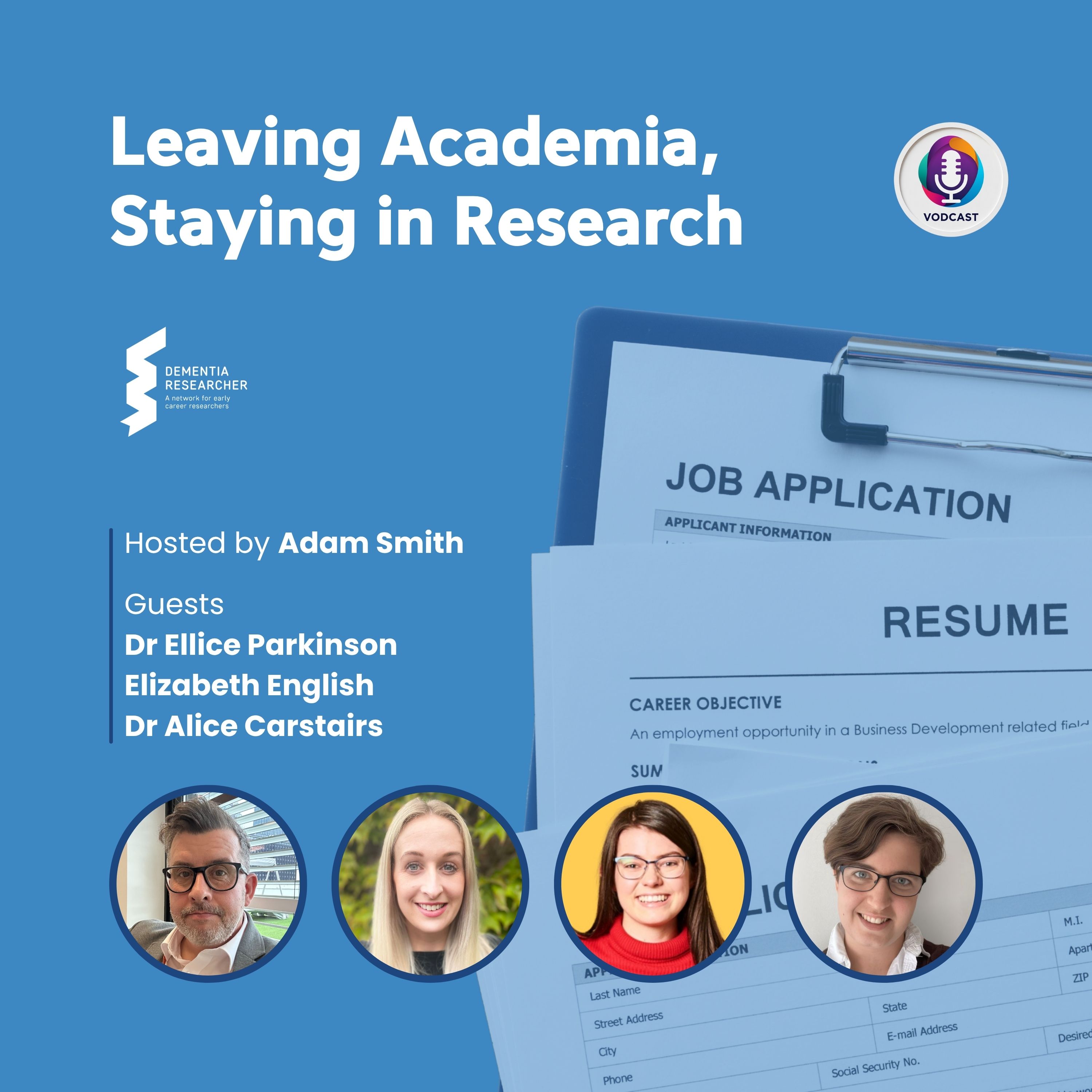 Leaving Academia, Staying in Research✨ | leaving academiaresearch careers+4 | Dr Ellice ParkinsonElizabeth 'Lizzie' English+1 | Health Innovation EastBritish Heart Foundation+1 | — | PhDresearch+5 | — | 1h 04m 56s | |
| 5/8/26 |  XXplored - Women, Hormones & Mental Health: Rethinking Psychiatric Disorders✨ | women's mental healthhormonal changes+5 | Professor Vibe Gedsø FrøkjærFranziska Weinmar | University of GothenburgUniversity of Copenhagen+2 | — | hormonesmental health+8 | — | 44m 58s | |
Want analysis for the episodes below?Free for Pro Submit a request, we'll have your selected episodes analyzed within an hour. Free, at no cost to you, for Pro users. | |||||||||
| 4/25/26 | 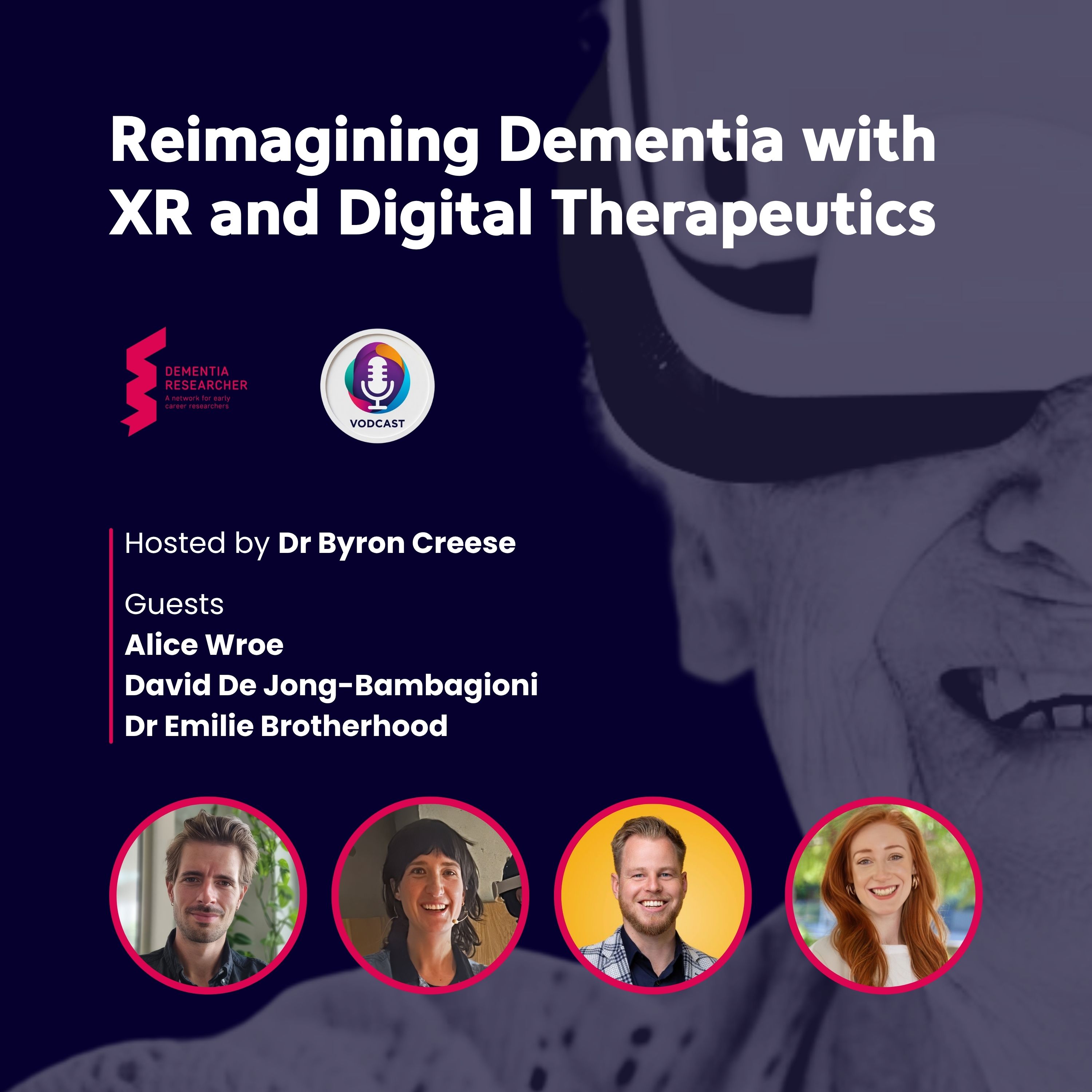 Reimagining Dementia with XR and Digital Therapeutics✨ | extended realitydementia research+5 | David de Jong-BambagioniDr Emilie Brotherhood+1 | — | — | extended realitydementia+6 | — | 39m 19s | |
| 4/10/26 | 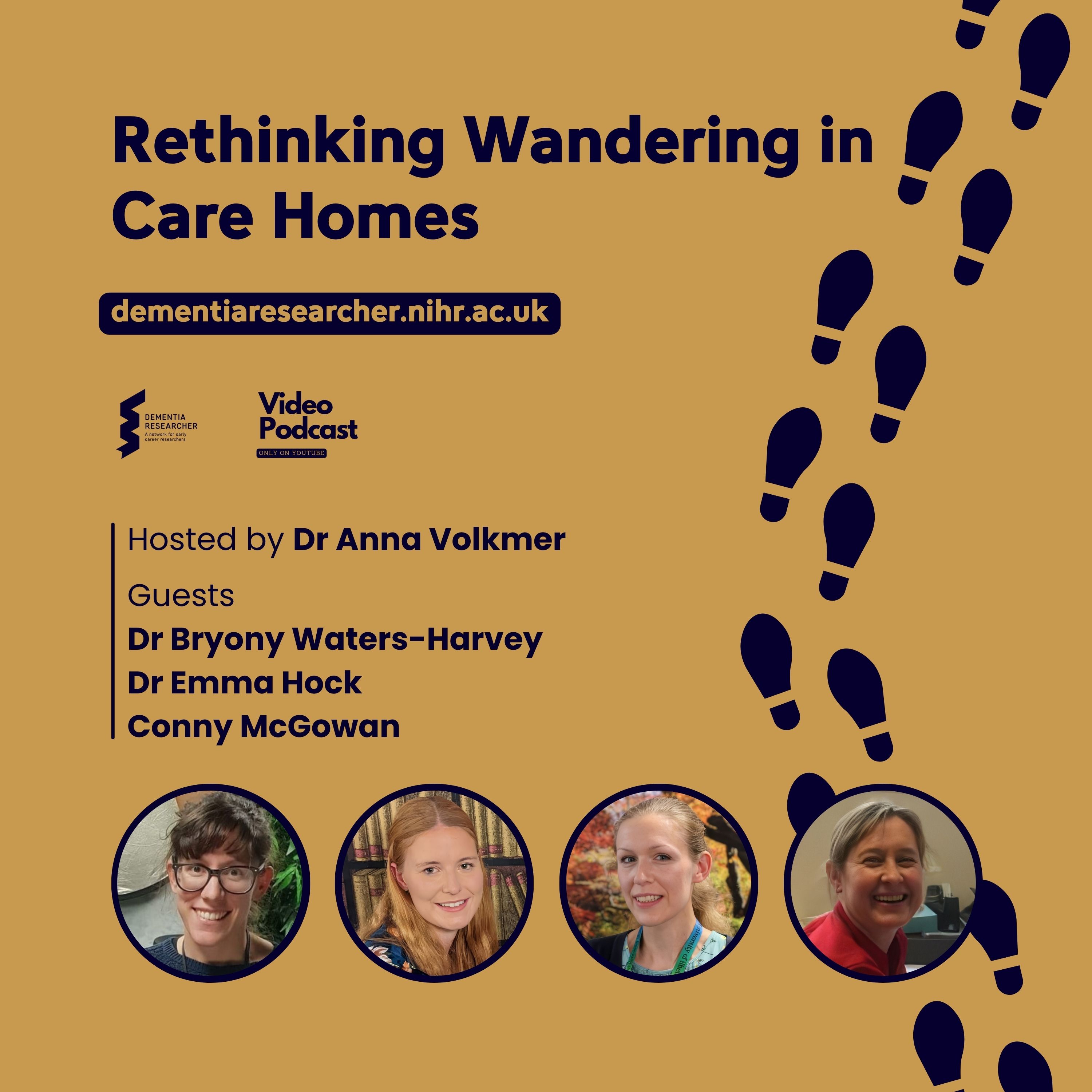 Rethinking Wandering in Care Homes✨ | wanderingdementia care+3 | Conny McGowanDr Emma Hock+1 | The University of SheffieldThe Orders of St John Care Trust+10 | — | FREEDEM studyrealist synthesis+4 | — | 53m 49s | |
| 3/29/26 | 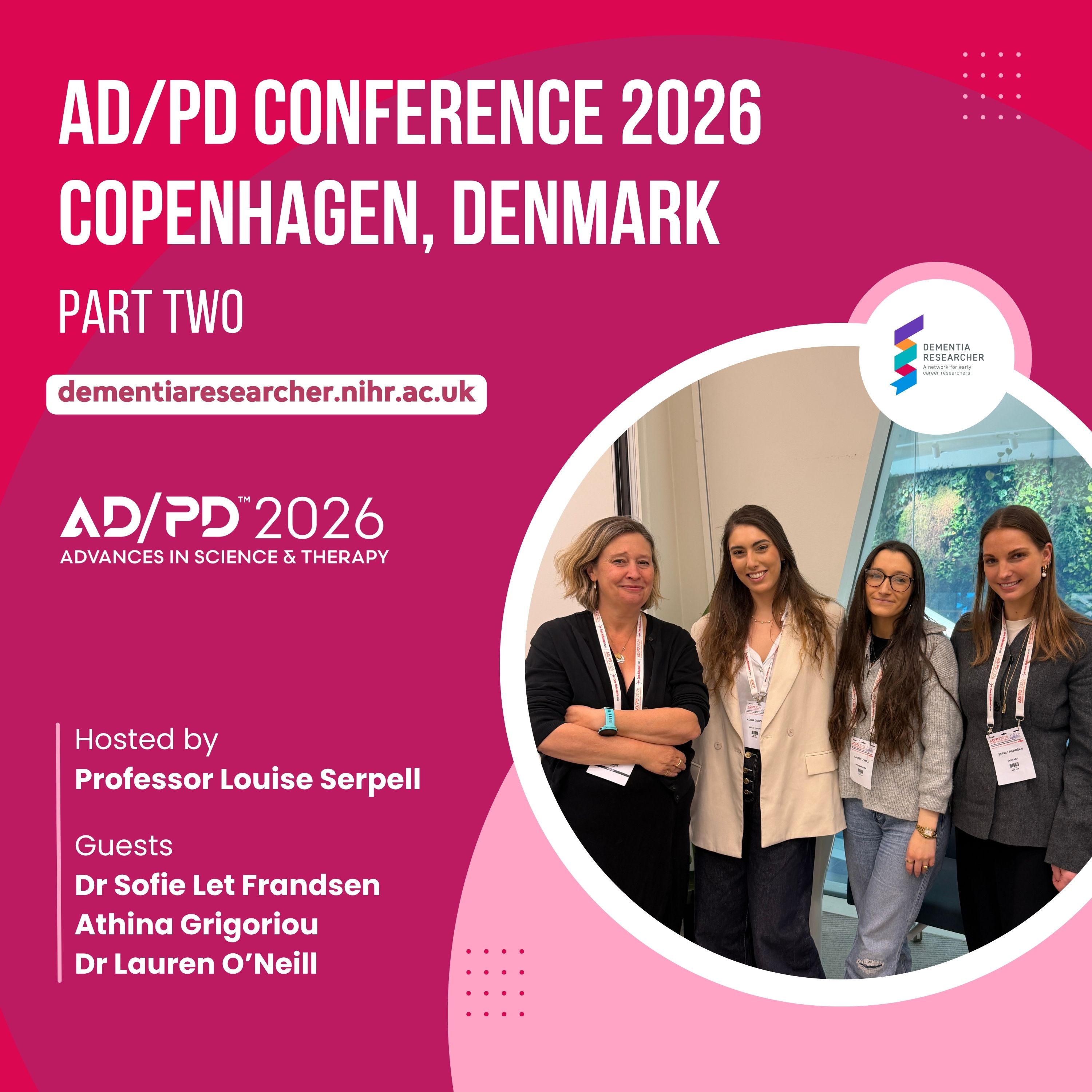 ADPD 2026 Conference Highlights - Part Two✨ | Alzheimer's diseaseParkinson's disease+6 | Athina GrigoriouDr Lauren O Neill+1 | the Dementia Researcher Podcast | Copenhagen | AD PD Conference 2026Copenhagen+4 | — | 47m 31s | |
| 3/28/26 | 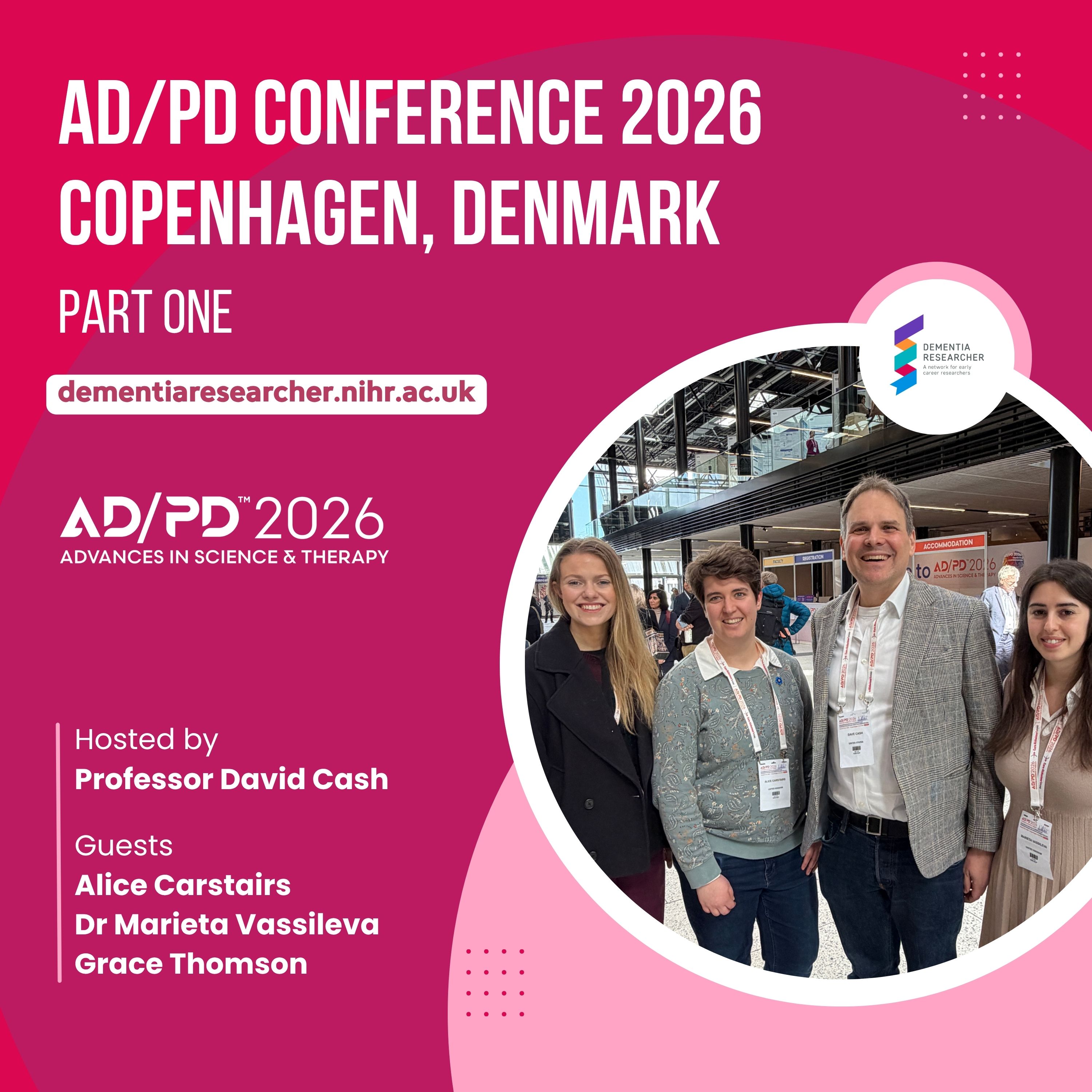 ADPD 2026 Conference Highlights - Part One✨ | Alzheimer's diseaseParkinson's disease+6 | Grace ThompsonDr Marieta Vassileva+1 | AI toolsmultiomics+2 | Copenhagen | AD PD ConferenceCopenhagen+2 | — | 42m 07s | |
| 3/19/26 | 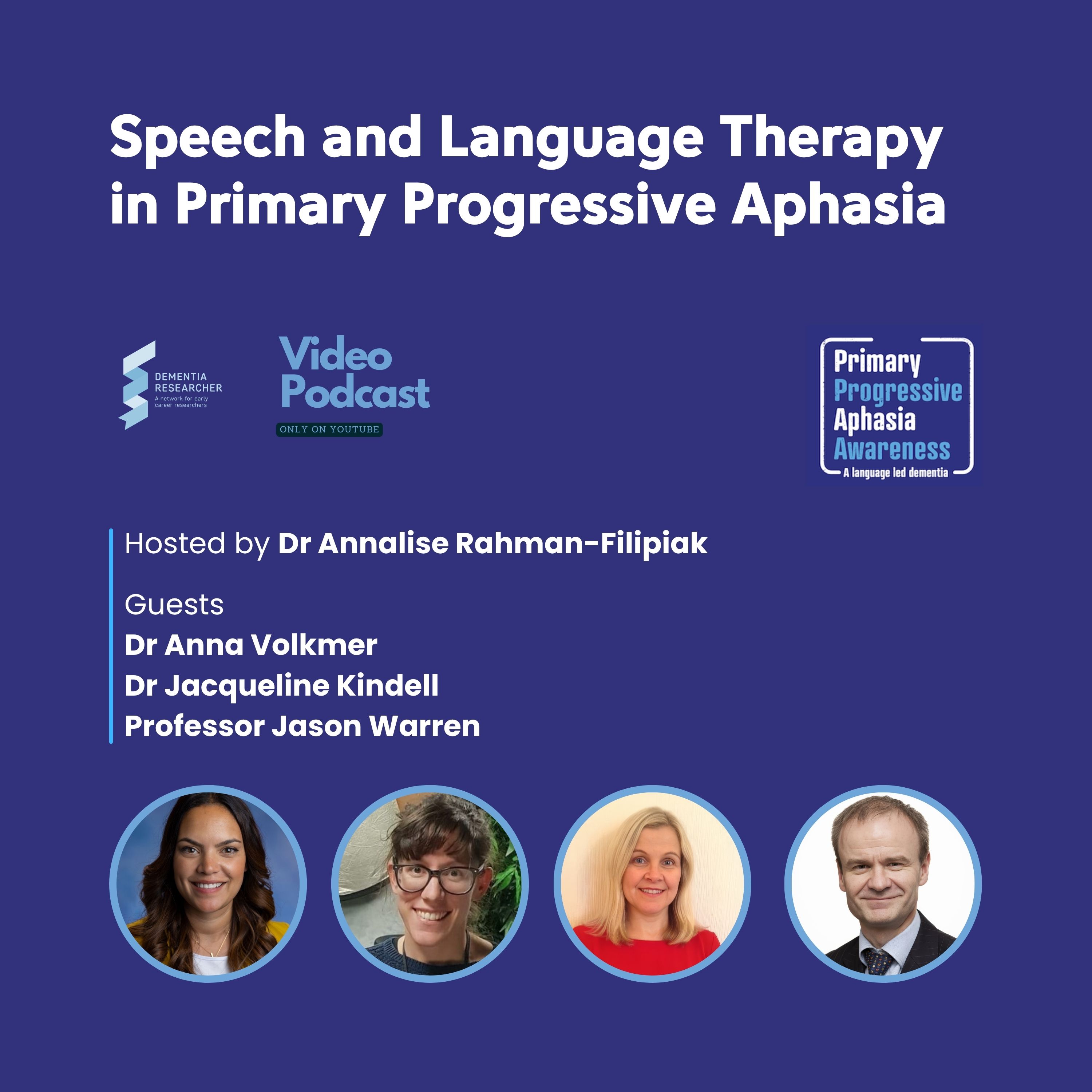 Speech and Language Therapy in Primary Progressive Aphasia✨ | Primary Progressive Aphasiaspeech and language therapy+3 | Dr Annalise Rahman FilipiakDr Anna Volkmer+2 | University College Londonthe National Hospital for Neurology and Neurosurgery+2 | — | dementiacommunication difficulties+2 | — | 52m 59s | |
| 3/6/26 |  Rainwater Prize Winners: Advancing Tau Research✨ | tau researchneurodegenerative disease+3 | Professor Melissa MurrayDr Marc Busche+1 | the Rainwater FoundationYouTube+7 | — | tauneurodegeneration+2 | — | 48m 54s | |
| 2/21/26 | 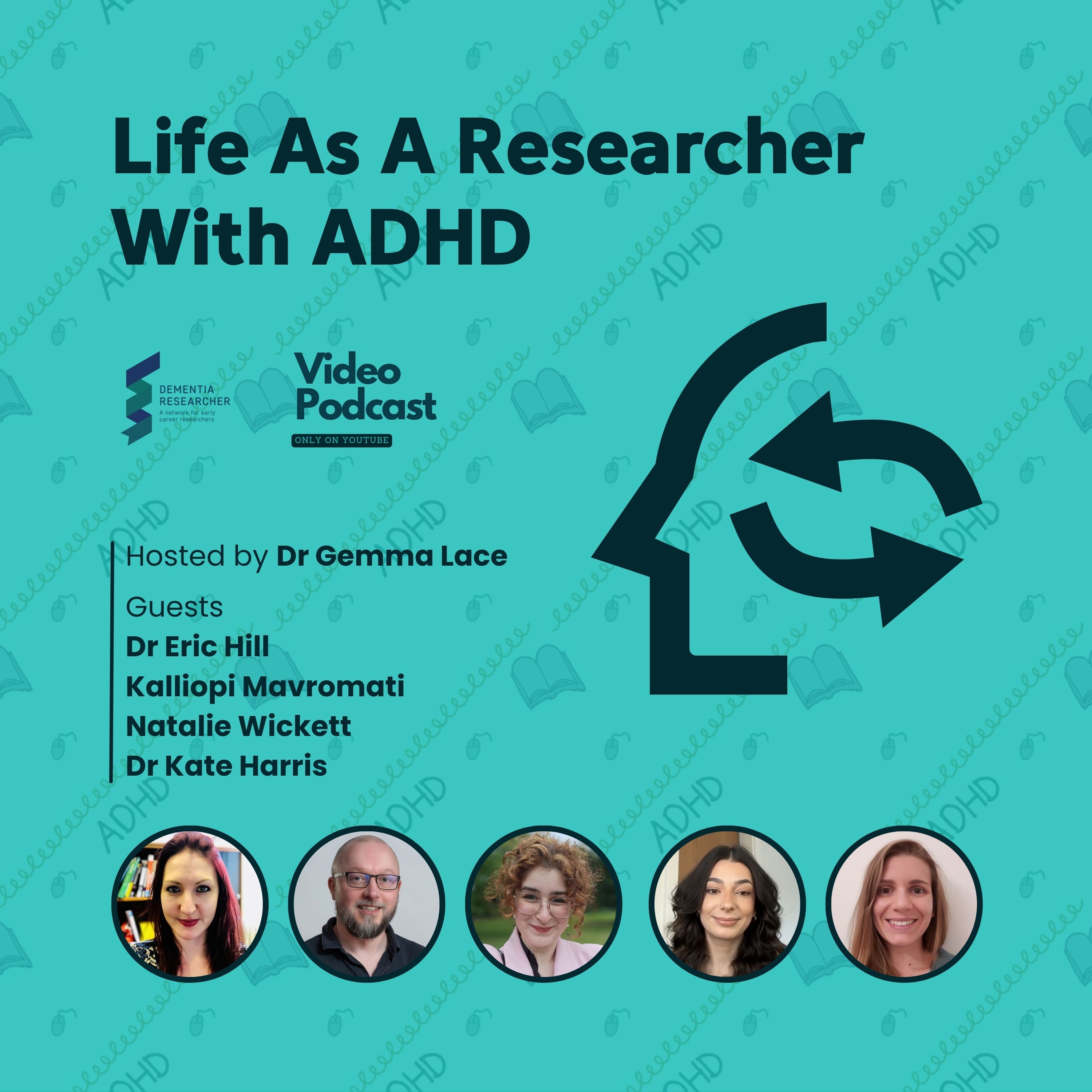 Life As A Researcher With ADHD✨ | ADHDresearch+2 | Kalliopi MavromatiNatalie Wickett+2 | the Dementia Research PodcastLoughborough University+10 | — | challengesmisconceptions+2 | — | 55m 55s | |
| 2/6/26 |  Detecting UTIs Early in Dementia✨ | urinary tract infectionsdementia+3 | Tom AdamProfessor Paul Freemont | novel point-of-care diagnostic devicethe UK Dementia Research Institute+9 | — | UTIscognitive decline+2 | — | 59m 14s | |
| 1/23/26 | 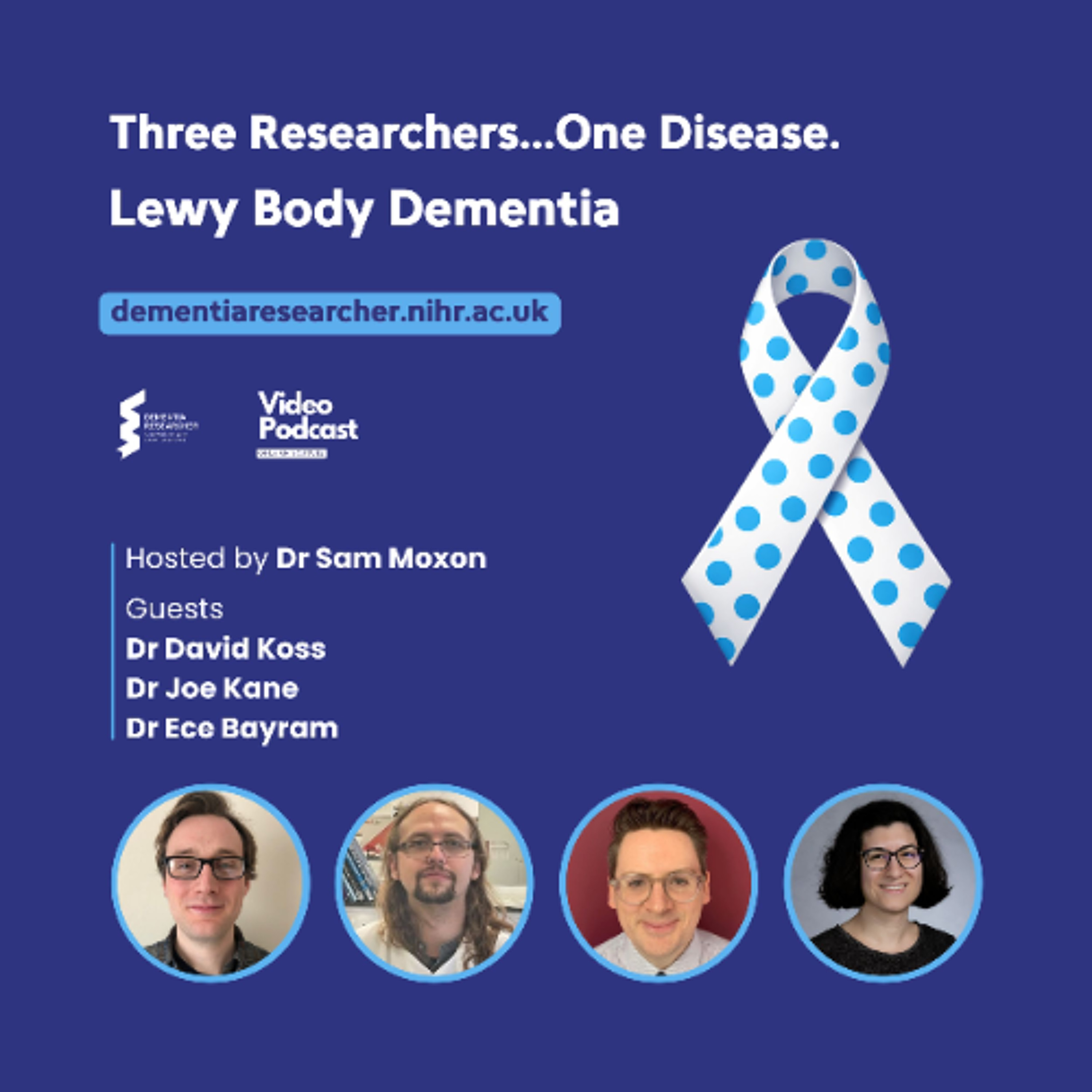 Three Researchers. One Disease. Lewy Body Dementia✨ | Lewy body dementiadiagnosis+2 | Dr Joe KaneDr David Koss+1 | the Dementia Researcher Podcastthe University of Colorado Anschutz+8 | — | dementiaresearch+2 | — | 47m 30s | |
| 1/10/26 |  UKDRI Connectome Conference Highlights✨ | UK Dementia Research InstituteConnectome Conference+2 | Tom AdamDr Dayne Beccano Kelly+1 | UKDRIYouTube+6 | — | conference highlightslived experience+2 | — | 42m 43s | |
| 12/24/25 |  🎅 Should Santa be Running a Research Lab? Festive Charity Debate | This festive charity debate asks a question nobody saw coming but everyone had an opinion on. Would Santa Claus make a good principal investigator?Recorded live in the Dementia Researcher Community, this Christmas special brings humour, sharp thinking, and real reflections on leadership, research culture, ethics, and academia.The debate is hosted by Adam Smith and Dr Anna Volkmer.Speaking for the motion is Rebecca Williams, PhD researcher exploring FTD and apathy.Speaking against the motion is Dr Connor Richardson, Research Fellow working in data science, epidemiology, and machine learning in dementia research.Through opening statements, rebuttals, and audience questions, the discussion ranges from logistics and mentorship to ethics, transparency, wellbeing, and what good leadership really looks like in research. While lighthearted on the surface, the debate reveals some very familiar academic tensions beneath the tinsel.This episode was recorded as a charity event in support of Dementia UK and their Admiral Nurses, who provide vital support to people living with dementia and their families, especially during the Christmas period.Thank you for listening, watching, and supporting dementia research and care.--A transcript of this show, links and show notes and profile on all our guests are available on our website at https://www.dementiaresearcher.nihr.ac.uk.If you prefer to watch rather than listen, you will find a video version of this podcast on Apple Podcasts, YouTube, and on our website.Leave us a tip:https://dementia-researcher.captivate.fm/supportFollow us on social media:https://www.instagram.com/dementia_researcher/ https://www.facebook.com/Dementia.Researcher/https://www.twitter.com/demrescommunityhttps://www.linkedin.com/company/dementia-researcher https://bsky.app/profile/dementiaresearcher.bsky.socialDownload and Register with our Community App:https://www.onelink.to/dementiaresearcherWe gratefully acknowledge the support of our funders: Alzheimer’s Association, Race Against Dementia, Alzheimer’s Research UK, Alzheimer’s Society, and the National Institute for Health and Care Research.The views and opinions expressed by guests in this podcast are their own and do not necessarily reflect those of the producers, funders, or sponsors.Subscribe to our sister show 'Dementia Researcher The Blogs':https://podfollow.com/dementia-researcher-blogs | — | ||||||
| 12/18/25 |  Twelve Research Fails of Christmas 💥🧪✨ | research failsacademic life+2 | Dr Ian HarrisonDr Kate Harris+2 | ELISA kitsantibodies+7 | — | Christmaslab disasters+2 | — | 1h 01m 17s | |
| 12/5/25 |  Beyond the Pill: Methodology in Dementia Clinical Trials | In this episode of the Dementia Researcher podcast we look at how dementia clinical trials reach far beyond medicines. Host Dr Annalise Rahman Filipiak speaks with Dr Elizabeth Rhodus, Dr Inga Antonsdottir, and Dr Elisa França Resende about entering the field, working with behavioural and community based interventions, and learning the skills needed to deliver rigorous, reproducible studies that still respect the individual needs of participants.The guests discuss their routes into trials, what surprised them, what they wish they had known earlier, and how mentorship and collaboration shaped their progress. They touch on trial design, regulatory processes, cultural considerations, and the value of early career networks that support researchers across different countries.Topics coveredWhat early career researchers find challenging about trial methodsWorking in homes and communitiesDesigning sensory and environmental interventionsLiteracy based trials in Brazil and issues of inclusionMentorship, networks and training programmesTrial rigour, manuals, assessments and reproducibilityRegulatory hurdles and timeframesPractical advice for researchers wanting to deliver a trial as part of their research--A transcript of this show, links and show notes and profile on all our guests are available on our website at https://www.dementiaresearcher.nihr.ac.uk.If you prefer to watch rather than listen, you will find a video version of this podcast on Apple Podcasts, YouTube, and on our website.Leave us a tip:https://dementia-researcher.captivate.fm/supportFollow us on social media:https://www.instagram.com/dementia_researcher/ https://www.facebook.com/Dementia.Researcher/https://www.twitter.com/demrescommunityhttps://www.linkedin.com/company/dementia-researcher https://bsky.app/profile/dementiaresearcher.bsky.socialDownload and Register with our Community App:https://www.onelink.to/dementiaresearcherWe gratefully acknowledge the support of our funders: Alzheimer’s Association, Race Against Dementia, Alzheimer’s Research UK, Alzheimer’s Society, and the National Institute for Health and Care Research.The views and opinions expressed by guests in this podcast are their own and do not necessarily reflect those of the producers, funders, or sponsors.Subscribe to our sister show 'Dementia Researcher The Blogs':https://podfollow.com/dementia-researcher-blogs | — | ||||||
| 11/20/25 |  XXplored - The Midlife Transition: Menopause and the Brain | In this episode of the Dementia Researcher - Xxplored Women’s Brain Health podcast, host Dr Laura Stankeviciute speaks with Professor Claudia Barth from Charite University and Dr Gillian Coughlan from Harvard Medical School to examine the midlife transition, menopause and its significance for women’s brain health.Together they outline what the menopause truly involves across the early, late, and post stages, and explain how hormonal change affects brain structure, energy use, mood, and cognition. They also explore why this period may coincide with greater vulnerability to later Alzheimer’s disease and discuss the role of early or surgical menopause, symptom severity, and gaps in existing research cohorts.The episode highlights the need for richer reproductive data, real time biomarker studies, and closer collaboration with digital health tools to better capture women’s lived experiences. It reflects a growing wave of research and public interest aimed at improving understanding, support, and evidence based care during this important life stage.TakeawaysMenopause is a long transition shaped by fluctuating hormones.Cognitive and mood symptoms reflect changes in brain networks.Earlier menopause is linked with increased later Alzheimer’s risk.Major research cohorts lack detailed reproductive data.New real time studies are beginning to track symptoms and biomarkers.Digital tools will be key for future research.Better global representation is needed across studies.Momentum is building to close long standing gaps in women’s health.--A transcript of this show, links and show notes and profile on all our guests are available on our website at https://www.dementiaresearcher.nihr.ac.uk.If you prefer to watch rather than listen, you will find a video version of this podcast on Apple Podcasts, YouTube, and on our website.Leave us a tip:https://dementia-researcher.captivate.fm/supportFollow us on social media:https://www.instagram.com/dementia_researcher/ https://www.facebook.com/Dementia.Researcher/https://www.twitter.com/demrescommunityhttps://www.linkedin.com/company/dementia-researcher https://bsky.app/profile/dementiaresearcher.bsky.socialDownload and Register with our Community App:https://www.onelink.to/dementiaresearcherWe gratefully acknowledge the support of our funders: Alzheimer’s Association, Race Against Dementia, Alzheimer’s Research UK, Alzheimer’s Society, and the National Institute for Health and Care Research.The views and opinions expressed by guests in this podcast are their own and do not necessarily reflect those of the producers, funders, or sponsors.Subscribe to our sister show 'Dementia Researcher The Blogs':https://podfollow.com/dementia-researcher-blogs | — | ||||||
| 11/7/25 |  Exploring Psychotherapy for People with Dementia | In this episode, host Dr Anna Volkmer is joined by Dr Alys Griffiths, Sophie Jeffery, and Esther Whittlesea Reed to explore a two-year Alzheimer’s Society project testing #psychotherapy for people with dementia.Together, they discuss the importance of therapy in #dementia care, the barriers to access, the development of new therapist competencies, and the lived experience of psychotherapy from both clinical and personal perspectives.TakeawaysPsychotherapy can provide meaningful outcomes for people with dementia.Barriers to accessing therapy include stigma and lack of understanding.Core competencies for therapists are essential for effective care.Family therapy is crucial for supporting families affected by dementia.Training for therapists should include specific skills for working with dementia patients.Research findings highlight the need for better communication about therapy options.The importance of lived experience in shaping research and therapy.Future research should focus on improving access to therapy for families.There is a need for a cultural shift in how dementia is perceived in therapy.Essential links / resources mentioned in the show:Core competences frameworkUK Council for PsychotherapyBritish Association for Counselling and PsychotherapyRecent papers on the topicSponsored by Famileo. Helping families living with dementia stay close with a personalised printed magazine, delivered monthly. Over a quarter of a million families already use Famileo to stay connected. First month free with code DR26. Visit the Famileo Website--A transcript of this show, links and show notes and profile on all our guests are available on our website at https://www.dementiaresearcher.nihr.ac.uk.If you prefer to watch rather than listen, you will find a video version of this podcast on Apple Podcasts, YouTube, and on our website.Leave us a tip:https://dementia-researcher.captivate.fm/supportFollow us on social media:https://www.instagram.com/dementia_researcher/ https://www.facebook.com/Dementia.Researcher/https://www.twitter.com/demrescommunityhttps://www.linkedin.com/company/dementia-researcher https://bsky.app/profile/dementiaresearcher.bsky.socialDownload and Register with our Community App:https://www.onelink.to/dementiaresearcherWe gratefully acknowledge the support of our funders: Alzheimer’s Association, Race Against Dementia, Alzheimer’s Research UK, Alzheimer’s Society, and the National Institute for Health and Care Research.The views and opinions expressed by guests in this podcast are their own and do not necessarily reflect those of the producers, funders, or sponsors.Subscribe to our sister show 'Dementia Researcher The Blogs':https://podfollow.com/dementia-researcher-blogsMentioned in this episode:Famileo Thank you | — | ||||||
Showing 25 of 345
Pitch Fit is a Pro feature
See how bookable this show is for guests, which brands already advertise, the per-episode ad value, and the best-fit guest and sponsor profile. The numbers are blurred on the free plan.
How readily this show books outside guests like you.
How proven this show is for host-read sponsorships.
For Guests
ProFor Advertisers
ProUpgrade to Pro to unlock guest cadence, sponsor categories, fit scores, and per-episode ad value for this show.
Similar Audience Demographics
Podcasts that attract a similar listener profile



Chart Positions
1 placement across 1 market.
Chart Positions
1 placement across 1 market.