Design Better
by The Curiosity Department
Is this your podcast?On the show
From 22 epsHost
Recent guests
Recent episodes
Kevin Flores: Find Your Inner Rebel
Oct 14, 2026
39m 22s
Randy Hunt: Notion and Etsy design leader on why the best design teams stay small
Oct 7, 2026
40m 15s
Matt Owens: Athletics co-founder on keeping your creative fire lit
Oct 5, 2026
55m 45s
Blaine Billingsley: OpenAI designer on the collaboration problem AI hasn't solved yet
Sep 23, 2026
28m 22s
Mack Paul: Co-author of Miracle Road on designing places where innovation happens
Sep 17, 2026
44m 27s
Insights from recent episode analysis
Audience Interest
Podcast Focus
Publishing Consistency
Platform Reach
Insights are generated by CastFox AI using publicly available data, episode content, and proprietary models.
Most discussed topics
Brands & references
Total monthly reach
Based on 1 signal.
Built from
By chart position
- 🇺🇸United States · DesignHOME#11496K to 2.6M
- 🇰🇷South Korea · Design#257K to 299K
- 🇹🇷TR · Design#228K to 150K
- 🇬🇧United Kingdom · Design#1621K to 109K
- 🇦🇺Australia · Design#1117K to 92K
- Per-Episode Audience
Est. listeners per new episode within ~30 days
767K to 4.1M🎙 Daily cadence·259 episodes·Last published 5d ago - Monthly Reach
Unique listeners across all episodes (30 days)
2.6M to 14M🇺🇸65%🇰🇷7%🇹🇷4%+16 more - Active Followers
Loyal subscribers who consistently listen
1.4M to 7.4M
Market Insights
Platform Distribution
Reach across major podcast platforms, updated hourly
Total Followers
—
Total Plays
—
Total Reviews
—
* Data sourced directly from platform APIs and aggregated hourly across all major podcast directories.
Social Links & Contact
Official channels & resources
Official Website
Login
RSS Feed
Login
| Date | Episode | Topics | Guests | Brands | Places | Keywords | Sponsor | Length | |
|---|---|---|---|---|---|---|---|---|---|
| 10/14/26 |  Kevin Flores: Find Your Inner Rebel | Kevin Flores has been part of the Design Better community for years — we first met him in 2017, while he was leading design at 23andMe, back when we were researching how design teams are structured for the Design Genome Project. So it’s a real pleasure to finally have him on the show to talk about his new book, Find Your Inner Rebel. Find bonus content and more on our Substack: The book is built around what Kevin calls his punk rock formula for career reinvention: resistance plus resilience equals reinvention. But don’t mistake the attitude for advice to quit your job. Kevin is candid that sometimes the smartest move is to hunker down, keep working toward change from where you are, and be ready when it comes, whether you choose it or it’s chosen for you. Get the book We talk about why strong generalists struggle to get hired (and how to fix it), why your personal brand matters more than ever when you’re competing against hundreds of applicants, and a simple test for your portfolio’s opening statement: swap in someone else’s name and photo and see if it still works. As Kevin puts it, “you are the unique thing in the equation.” We also get into misalignment burnout, why designers should look beyond big tech to places like local government, and servant leadership. Bio Kevin Flores is a design leader, mentor, and author of Find Your Inner Rebel. He has built and led product and design teams in every work environment: agency, freelance, startup, and mid-to-large companies, including Verizon, 23andMe, and LinkedIn. He and his wife Jeanine met as design undergraduates at the University of Illinois and went on to co-found an interactive agency in Silicon Valley in the 1990s, and together they co-wrote the Design Career Handbook. Kevin spent six years as a mentor in First Round Capital’s Fast Track program, and serves as an industry advisor for design and user research for the Mission College Design and Diablo Valley College Digital Media joint advisory board. Learn more at innerrebelbook.com. Learn more about your ad choices. Visit megaphone.fm/adchoices | 39m 22s | ||||||
| 10/7/26 |  Randy Hunt: Notion and Etsy design leader on why the best design teams stay small | In graduate school, Randy Hunt poured his heart and soul into a poster for Milton Glaser’s class, a picture built entirely from hand lettering that read as an image from across the room and as words up close. Glaser glanced at it, said, “Well, that’s not very good,” and moved on to the next student. Get bonus content and more on our Substack: https://designbetterpodcast.com/p/randy-hunt Randy tells that story fondly. What stayed with him wasn’t the sting but the standard: keep the floor high, and the ceiling keeps rising. He carried that idea from Glaser’s studio, where he apprenticed, through a career leading design at Etsy, at Grab in Singapore, and until recently at Notion. At Notion, that standard meant a design team smaller than anyone would expect, on purpose. Randy argues that limited bandwidth forces a company to prioritize, and that great people have little patience for what he calls “the work around the work.” The team doesn’t talk about titles or levels. Designers ship code in the production app, something Randy built teams around at Etsy in 2010, long before “design engineer” came back into fashion. We also get into what he calls “whole design,” which means treating a push notification with the same care as the main dashboard. He explains why hotels and restaurants inspire him as much as any software, and traces that back to growing up near Disney’s carefully spaced trash cans in Orlando and to the bowl of fresh fruit that always sat in Glaser’s studio. Bio Randy J. Hunt is a designer, artist, and author based in New York City, with more than 20 years of experience building products, brands, and businesses. Most recently, he was Head of Design at Notion. He also chairs the MFA Design program at the School of Visual Arts, a graduate program focused on entrepreneurial designers. Earlier, he led design at Etsy, Artsy, and Grab, co-founded the designer-made marketplace Supermarket, and served as Chief Product Officer at the coffee-tech company Morning. He apprenticed at Milton Glaser's studio, founded the design studio Citizen Scholar, and wrote Product Design for the Web (New Riders, 2013). Books & Links Randy Hunt on LinkedIn randyjhunt.com The Hunt Design Week: “A lot of this is about rituals” MiltonGlaser.com The Creative Act, by Rick Rubin Johnny Cash Project Julia Hoffman Tequila Wars: José Cuervo and the Bloody Struggle for the Spirit of Mexico Widow’s Bay *** Premium Episodes on Design Better This ad-supported episode is available to everyone. If you’d like to hear it ad-free, upgrade to our premium subscription, where you’ll get 4 ad-free episodes per month. Premium subscribers also get access to the documentary Design Disruptors and our growing library of books. New premium subscriber benefit: Get design and career support in Design Club Weekly Portfolio Club calls this summer helped our paid subscribers build portfolios that land great jobs. Experts joined us weekly to provide feedback, and we compiled lessons from each session into a portfolio design guide. We’ve launched a private Slack workspace…join now to connect with designers, product leaders & creative practitioners in our community. And get a behind-the-scenes pass to every episode with The Roundup, where each week we bring you insights and actionable tactics from recent episodes. You’ll also get access to our monthly AMAs with former guests, ad-free episodes, discounts and early access to workshops, and our monthly newsletter The Brief that compiles salient insights, quotes, readings, and creative processes uncovered in the show. Upgrade to paid Learn more about your ad choices. Visit megaphone.fm/adchoices | 40m 15s | ||||||
| 10/5/26 |  Matt Owens: Athletics co-founder on keeping your creative fire lit | When Aarron was fresh out of grad school, working at an agency outside Philadelphia, he and his coworkers used to crowd around a monitor to study volumeone.com. Most websites back then had a picture, maybe an image map. Matt Owens’s site had 3D, animation, and experimental graphic design, and none of us could figure out how he made it. Find bonus content and more on our Substack: https://designbetterpodcast.com/p/matt-owens-athletics-co-founder-on Matt launched Volumeone.com in 1997, and it now sits in SFMOMA’s permanent collection. Before that, he was a skater and punk kid from Texas who ran a record label with his twin brother, then went to Cranbrook and landed in New York just as the web took off. In 2004, he and a few friends rented an old boxing gym in Williamsburg and kept the word on the door: Athletics. Today it’s a 30-person brand studio working with Google, IBM, Stripe, and Major League Soccer. We talked with Matt about how punk rock taught him to start things without overthinking them, what designers lost when Flash died, and how Athletics grew from a punk house into a proper agency. He explains why he calls himself the studio’s most capable intern and still takes on projects of his own to keep his skills sharp. We also get into how his team uses AI as one ingredient rather than the whole recipe, and why good creatives can smell polished slop. We wrap up with his book, A Visible Distance, and the rebel optimism he passes on to his students at SVA. Bio Matt Owens is co-founder and Chief Design and Innovation Officer at Athletics, a Brooklyn brand studio whose clients include Google, IBM, Stripe, Square, and Major League Soccer. He holds a BFA from UT Austin and an MFA from Cranbrook Academy of Art. From 1997 to 2009 he self-published the experimental design quarterly Volumeone.com, now in SFMOMA’s permanent collection. He is the author of A Visible Distance: Craft, Creativity, and the Business of Design (Set Margins, 2024), teaches at the School of Visual Arts, and writes on Substack. He lives in Brooklyn with his family. *** Premium Episodes on Design Better This ad-supported episode is available to everyone. If you’d like to hear it ad-free, upgrade to our premium subscription, where you’ll get an additional 2 ad-free episodes per month (4 total). Premium subscribers also get access to the documentary Design Disruptors and our growing library of books. New premium subscriber benefit: Get design and career support in Design Club Weekly Portfolio Club calls this summer helped our paid subscribers build portfolios that land great jobs. Experts joined us weekly to provide feedback, and we compiled lessons from each session into a portfolio design guide. We’ve launched a private Slack workspace…join now to connect with designers, product leaders & creative practitioners in our community. And get a behind-the-scenes pass to every episode with The Roundup, where each week we bring you insights and actionable tactics from recent episodes. You’ll also get access to our monthly AMAs with former guests, ad-free episodes, discounts and early access to workshops, and our monthly newsletter The Brief that compiles salient insights, quotes, readings, and creative processes uncovered in the show. Upgrade to paid Learn more about your ad choices. Visit megaphone.fm/adchoices | 55m 45s | ||||||
| 9/23/26 |  Blaine Billingsley: OpenAI designer on the collaboration problem AI hasn't solved yet | Blaine Billingsley is a staff designer at OpenAI, and his path there was anything but a straight line. He studied music composition and comparative religion, played guitar in Texas for a living (he remembers checking his bank account, seeing seven dollars, and feeling pumped), then drove to San Francisco and took a data entry job at a startup. This is a preview of a premium episode. To listen to the whole thing, join our premium membership on Susbtack: https://designbetterpodcast.com/p/blaine-billingsley The engineers taught him to script his way through the work in a couple of hours, and he spent the rest of the day learning from them. From there he went on to companies big and small, including a long run on Gmail. Blaine has an allergy to corporate jargon that we found interesting. He’s known amongst his colleagues for rewriting product specs to get absolute clarity on a project, and for raising his hand in meetings to ask, “what do we really mean by ‘create a command center for work’”. We talk about why a design principle only helps if you could reasonably disagree with it, and his counterintuitive advice for working with a pushy PM: the best way to have influence is to be influenced. Then we get into how design actually works inside OpenAI. Blaine walks us through what goes into an eval, and the product design plugin he built with one engineer, whose biggest fans turned out to be the PMs and engineers who were starved for a design partner. Bio Blaine Billingsley is a member of the design staff at OpenAI, where he works on making ChatGPT a daily tool for designers and built a product design plugin focused on translation workflows like image-to-code. Before OpenAI, he was a Product Design Architect at Slack and a Staff Experience Designer at YouTube, and earlier held design roles at Airbnb, where he created a system of Host Guides, and Google, where he worked on Inbox by Gmail. He was also the sole designer at Pattern Technologies, an AI-powered sales startup acquired by Workday. Blaine studied music composition and comparative religion, played guitar professionally in Texas, and got his start in tech doing data entry at a San Francisco startup. He's known for his allergy to jargon, his love of a clear process, and his belief that a designer's job is to represent the user. Books & links mentioned Show notes Blaine Billingsley blaineb Blaine Billingsley — Design Mentor @blaineranium The Systems Bible The OpenAI Product Design Plugin Mid-air Thief Vargamae: Volume I of the Truth and Justice Pentalogy *** Premium Episodes on Design Better This is a premium episode on Design Better. We release two premium episodes per month, along with two free episodes for everyone. New premium subscriber benefit: Weekly Portfolio Club calls this summer helped our paid subscribers build portfolios that land great jobs. Experts joined us weekly to provide feedback, and we compiled lessons from each session into a portfolio design guide. We’ve launched a private Slack workspace…join now to connect with designers, product leaders & creative practitioners in our community. And get a behind-the-scenes pass to every episode with The Roundup, where each week we bring you insights and actionable tactics from recent episodes. Premium subscribers get access to the documentary Design Disruptors and our growing library of books. You’ll also get access to our monthly AMAs with former guests, ad-free episodes, discounts and early access to workshops, and our monthly newsletter The Brief that compiles salient insights, quotes, readings, and creative processes uncovered in the show. And subscribers at the annual level now get access to the Design Better Toolkit, which gets you major discounts and free access to tools and courses that will help you unlock new skills, make your workflow more efficient, and take your creativity further. Upgrade to paid *** Learn more about your ad choices. Visit megaphone.fm/adchoices | 28m 22s | ||||||
| 9/17/26 |  Mack Paul: Co-author of Miracle Road on designing places where innovation happens | In the mid-1950s, North Carolina was one of the poorest states in the country. Its economy ran on tobacco, furniture, and textiles — all three in decline — and its universities were turning out talent that promptly left for somewhere with better jobs. Find bonus content and more on our Substack: https://designbetterpodcast.com/p/mack-paul-co-author-of-miracle-road Today the stretch of pine woods between Raleigh, Durham, and Chapel Hill is the largest research park in the United States. The barcode came out of it. So did AZT, ultrasound, and AstroTurf. Our guest Mack Paul spent years working out how that happened. He’s the co-author of Miracle Road, a history of Research Triangle Park (known as RTP) written with his father — a journalist — and built on about 160 interviews with the scientists, planners, and politicians who were there. It’s out October 6th. Hundreds of research parks have been attempted, and most failed. RTP started later than Silicon Valley or Route 128, with no defense money, no entrepreneurial culture, and universities that were openly uneasy about mixing academia with industry. But it worked anyway. Mack’s answer to why is not what you might expect. The park itself was almost an afterthought. What made it work was a set of long, unglamorous commitments: a governor who went industry hunting, a community college system that promised to train any company’s workers for free, and a decision about desegregation that made North Carolina a better bet than Virginia — which is a big part of why IBM came in 1965. We talk about what made it take off, the challenges now as RTP tries to become something denser and less car-dependent, and what it takes to build a place people actually want to be. We also talk about what it’s like to write a book with your father. Bio Mack Paul is a founder of Morningstar Law Group in Raleigh, where he has spent 30 years on the legal and political machinery behind how places get built — zoning, land use, environmental permitting, public-private partnerships, and public financing for infrastructure, mostly on large mixed-use and urban infill projects in North Carolina’s Triangle region. He’s a LEED Accredited Professional and served six years as the public member of the NC Building Code Council. He sits on the NC State Design Guild board, has advised the modernist preservation nonprofit US Modernist, helped organize the “Build Raleigh Better” symposium, and co-founded a development company aimed at raising design quality in the region. He teaches Real Estate Development Law at NC State. Mack is the co-author, with his father, of Miracle Road: The Story of Research Triangle Park, published by Duke University Press. *** Premium Episodes on Design Better This ad-supported episode is available to everyone. If you’d like to hear it ad-free, upgrade to our premium subscription, where you’ll get an additional 2 ad-free episodes per month (4 total). Premium subscribers also get access to the documentary Design Disruptors and our growing library of books. New premium subscriber benefit: Get design and career support in Design Club Weekly Portfolio Club calls this summer helped our paid subscribers build portfolios that land great jobs. Experts joined us weekly to provide feedback, and we compiled lessons from each session into a portfolio design guide. We’ve launched a private Slack workspace…join now to connect with designers, product leaders & creative practitioners in our community. And get a behind-the-scenes pass to every episode with The Roundup, where each week we bring you insights and actionable tactics from recent episodes. You’ll also get access to our monthly AMAs with former guests, ad-free episodes, discounts and early access to workshops, and our monthly newsletter The Brief that compiles salient insights, quotes, readings, and creative processes uncovered in the show. And subscribers at the annual level now get access to the Design Better Toolkit, which gets you major discounts and free access to tools and courses that will help you unlock new skills, make your workflow more efficient, and take your creativity further. Upgrade to paid *** Learn more about your ad choices. Visit megaphone.fm/adchoices | 44m 27s | ||||||
| 9/10/26 |  Federico Casalegno: Samsung EVP and MIT Design Lab founder on what 20,000 years of human creativity means for design today | When Samsung’s CEO asked Federico Casalegno to redesign the cameras on the company’s phones, Federico told him he was the wrong person for the job. He wasn’t an optical engineer. He didn’t understand cameras. What he understood was storytelling — and he pointed to the Lascaux caves in France, where people were marking walls twenty thousand years ago for the same reason we hold up our phones today: to capture a moment, and tell it to someone we love. Find the full episode on our Substack:https://designbetterpodcast.com/p/federico-casalegno That’s the kind of answer you get from a designer who arrived by way of studying human society. Federico is Head of Samsung’s Global Design Studios, with teams spread across San Francisco, Europe, and Seoul. Before that he spent two decades at MIT, where he co-founded the MIT Design Lab with Bill Mitchell, and before that he was a social scientist embedded with engineers and psychologists at Philips Design in the nineties — back when “cross-disciplinary” wasn’t yet a word anyone put on a job posting. We talk about what that looks like in practice at the scale Samsung operates at. His team builds digital twins of human ears — thousands of 3D and 4D scans across real demographics — then simulates millions of variations to figure out how an earbud should fit. Then they strap the buds onto robots and make them run. Then they test with actual humans, because at some point a person still has to decide what “comfortable” means. There’s a phrase Federico kept returning to: technology without humanity is merely perfection without purpose. The designer’s role is problem making first, problem solving later. We also get into how critique works inside a company that speaks a dozen native languages, what he actually looks for when hiring, and the French philosopher who, at 102, looked at his calendar and said he was booked until next year. Bio Federico Casalegno is Executive Vice President at Samsung, where he leads product experience innovation across business units and heads the company’s Global Design Studios. Reporting directly to the CEO, he builds teams of designers, engineers, creative technologists, and strategists working on advanced design and next-generation experience planning. As head of design and AI, he established Samsung’s Computational Design function and leads digital transformation across the organization. Before Samsung, Federico spent two decades at MIT, where he founded the MIT Design Lab and the MIT Mobile Experience Lab and taught at MIT and the MIT Media Lab, researching the intersection of design, AI, and emerging technology. He previously worked at Motorola and Philips Design, and holds a PhD in sociology from the Sorbonne. *** Premium Episodes on Design Better This is a premium episode on Design Better. We release two premium episodes per month, along with two free episodes for everyone. New premium subscriber benefit: Get design and career support in Design Club Weekly Portfolio Club calls this summer helped our paid subscribers build portfolios that land great jobs. Experts joined us weekly to provide feedback, and we compiled lessons from each session into a portfolio design guide. We’ve launched a private Slack workspace…join now to connect with designers, product leaders & creative practitioners in our community. And get a behind-the-scenes pass to every episode with The Roundup, where each week we bring you insights and actionable tactics from recent episodes. Premium subscribers get access to the documentary Design Disruptors and our growing library of books. You’ll also get access to our monthly AMAs with former guests, ad-free episodes, discounts and early access to workshops, and our monthly newsletter The Brief that compiles salient insights, quotes, readings, and creative processes uncovered in the show. And subscribers at the annual level now get access to the Design Better Toolkit, which gets you major discounts and free access to tools and courses that will help you unlock new skills, make your workflow more efficient, and take your creativity further. Upgrade to paid *** Visiting the links below is one of the best ways to support our show: Masterclass: MasterClass is the only streaming platform where you can learn and grow with over 200+ of the world’s best. People like Steph Curry, Paul Krugman, Malcolm Gladwell, Dianne Von Furstenberg, Margaret Atwood, Lavar Burton and so many more inspiring thinkers share their wisdom in a format that is easy to follow and can be streamed anywhere on a smartphone, computer, smart TV, or even in audio mode. MasterClass always has great offers during the holidays, sometimes up to as much as 50% off. Head over to http://masterclass.com/designbetter for the current offer. If you’re interested in sponsoring the show, please contact us at: [email protected] If you’d like to submit a guest idea, please contact us at: [email protected] Learn more about your ad choices. Visit megaphone.fm/adchoices | 24m 16s | ||||||
| 9/2/26 |  Jonathan Adler returns: The minimalist inside the maximalist | Jonathan Adler was one of our favorite guests, so we’ve been angling to get him back ever since. He started as a potter and now designs furnishings and interiors that are decadent, but layered with meaning and humor. A lot has happened since we last spoke: he had a retrospective at the Museum of Arts and Design — the same institution whose gift shop took a chance on his pots 32 years ago — and launched a sprawling collaboration with Michaels, which he calls a temple of craft. Find bonus content and more on our Substack: https://designbetterpodcast.com/p/jonathan-adler-returns We talk with Jonathan about what it felt like to stop making long enough to curate three decades of his own work, why he’s grateful he chose commerce over the gallery world, and whether people really are trading doomscrolling for making things with their hands. Along the way, we talk about his father, the lawyer who painted — and why the maximalist you think you know insists he’s a minimalist. Also, much like our last conversation with Jonathan, there are some instances of adult language and humor, so if you have kids around it might be a good idea to throw on some headphones. Bio Potter, designer, and author Jonathan Adler launched his namesake brand after leaving his day job to pursue his first love: pottery. In 1993, Barneys bought his collection of pots, and five years later, he opened his first store in Soho. Today, Jonathan Adler is a design company with retail locations worldwide, a thriving e-commerce site, a full slate of residential and commercial projects, and a global wholesale business. They strive to create luxe and livable interiors that are seriously designed, but don’t take themselves too seriously. Earlier this year, the Museum of Arts and Design mounted a retrospective of his work, presented in dialogue with pieces he curated from the museum’s own collection. He lives in New York with his husband, the writer Simon Doonan. *** Premium Episodes on Design Better This ad-supported episode is available to everyone. If you’d like to hear it ad-free, upgrade to our premium subscription, where you’ll get an additional 2 ad-free episodes per month (4 total). Premium subscribers also get access to the documentary Design Disruptors and our growing library of books. New premium subscriber benefit: we’ve launched a private Slack workspace…join now to connect with designers, product leaders & creative practitioners in our community. And get a behind-the-scenes pass to every episode with The Roundup, where each week we bring you insights and actionable tactics from recent episodes. You’ll also get access to our monthly AMAs with former guests, ad-free episodes, discounts and early access to workshops, and our monthly newsletter The Brief that compiles salient insights, quotes, readings, and creative processes uncovered in the show. And subscribers at the annual level now get access to the Design Better Toolkit, which gets you major discounts and free access to tools and courses that will help you unlock new skills, make your workflow more efficient, and take your creativity further. Upgrade to paid *** Visiting the links below is one of the best ways to support our show: Masterclass: MasterClass is the only streaming platform where you can learn and grow with over 200+ of the world’s best. People like Steph Curry, Paul Krugman, Malcolm Gladwell, Dianne Von Furstenberg, Margaret Atwood, Lavar Burton and so many more inspiring thinkers share their wisdom in a format that is easy to follow and can be streamed anywhere on a smartphone, computer, smart TV, or even in audio mode. MasterClass always has great offers during the holidays, sometimes up to as much as 50% off. Head over to http://masterclass.com/designbetter for the current offer. If you’re interested in sponsoring the show, please contact us at: [email protected] If you’d like to submit a guest idea, please contact us at: [email protected] Learn more about your ad choices. Visit megaphone.fm/adchoices | 44m 00s | ||||||
| 8/28/26 |  Clay Parker Jones: author of "Hidden Patterns" on why your team isn't really a team | We all know that there is something fractured about the workplace, that makes it inefficient, and at times inhumane. If only someone was thinking deeply about those problems, and how to address them… Visit our Substack for the full episode: https://designbetterpodcast.com/p/clay-parker-jones That’s what Clay Parker Jones is working on right now. Clay has spent close to two decades on this problem — first at the consultancy undercurrent, and today as Head of Org Design and Development at Airbnb. He advocates for investment in creativity and humanity at work, something you might think would be obvious for any company, but sadly is eclipsed by short term thinking. His new book, Hidden Patterns: A Playbook for More Human Workplaces, is one of the most cohesive philosophies of organizational structure we’ve come across. And his diagnosis of what’s broken is simple: there aren’t enough real teams. Most of us work in what he calls “co-acting groups” — people who convene for a meeting and then scatter back to their actual work. In this conversation, we get into why psychological safety stays a platitude until you make it structural, what rule of law looks like inside a company, and how to break a manager’s job into atomic pieces and hand away the parts you’re bad at. We also chat about why the org chart is a design problem that designers should be at the table for. Bio Clay Parker Jones leads Organizational Design & Development at Airbnb, refining how a creativity-first company learns and ships new ideas. A former Chief Strategy Officer at Black Glass, co-founder of August, and transformation lead at R/GA, his work has been recognized by B Lab and profiled in a Harvard Business School case study. A former bike mechanic with a BA in Diplomacy and World Affairs from Occidental College, Clay now resides in Brooklyn with his wife Emily and cat Ian. You can find him on the Fort Greene tennis courts in his spare time. *** Premium Episodes on Design Better This is a premium episode on Design Better. We release two premium episodes per month, along with two free episodes for everyone. New premium subscriber benefit: we’ve launched a private Slack workspace…join now to connect with designers, product leaders & creative practitioners in our community. And get a behind-the-scenes pass to every episode with The Roundup, where each week we bring you insights and actionable tactics from recent episodes. Premium subscribers get access to the documentary Design Disruptors and our growing library of books. You’ll also get access to our monthly AMAs with former guests, ad-free episodes, discounts and early access to workshops, and our monthly newsletter The Brief that compiles salient insights, quotes, readings, and creative processes uncovered in the show. And subscribers at the annual level now get access to the Design Better Toolkit, which gets you major discounts and free access to tools and courses that will help you unlock new skills, make your workflow more efficient, and take your creativity further. Upgrade to paid Learn more about your ad choices. Visit megaphone.fm/adchoices | 23m 39s | ||||||
| 8/21/26 | 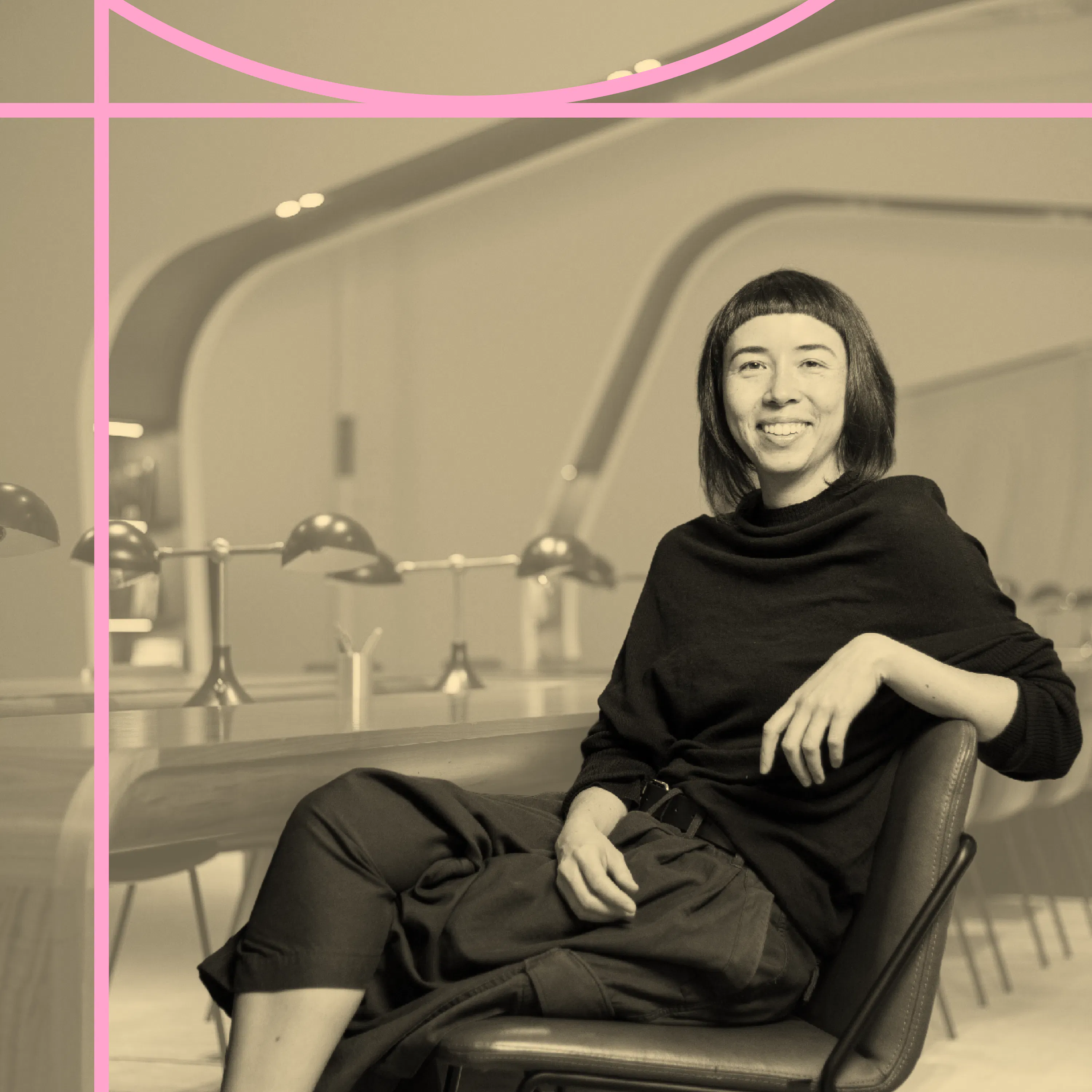 Angel Steger: Wealthfront's VP of Design on what architecture teaches you about software | A few years ago, Dropbox redesigned its website and revenue dropped by thirty percent. It was an all-hands-on-deck moment: people working weekends, everyone hunting for a systemic failure. Visit our Substack for bonus content and more: https://designbetterpodcast.com/p/angel-steger The culprit turned out to be a pricing page — specifically, the white space between the feature list items was slightly too generous. Angel Steger noticed that her eye kept landing on the white instead of the words. They tightened the gaps, and the revenue came back. That’s the kind of thing Angel notices, and it’s not an accident. Currently the VP of Design at Wealthfront, She trained as an architect at RISD, where the first question in her first architecture class wasn’t about buildings. It was “What is a drawing?” — the sort of question that makes you realize every tool you reach for carries a point of view you probably haven’t examined. Angel’s path into tech was less deliberate. By her own account, she mouthed off to her boss, got fired, and spent the severance on O’Reilly books, taught herself to code, and became the first designer at MySpace — where the head of engineering proudly informed her that they had never had design and never would need it. She went on to become the first product designer at 23andMe, learned usability from Larry Tesler, and led design teams at Pinterest, Dropbox, and Meta before landing at Wealthfront. In this conversation, we get into what architecture teaches you about solving one problem at a time, why she tells her team to go lower fidelity, how a default chart setting can push someone into a financial decision they’ll regret, and what she looks for in a portfolio — high craft, high intentionality, and no boiled broccoli. Bio Angel joined Wealthfront in November 2023 and leads product design, content design, and creative teams, bringing 20+ years of experience building and leading customer-centric, business-focused design and product teams. What makes her perspective rare is the through-line she draws between business model and design quality — she's a practitioner who built her career arguing that growth design, done with rigor and craft, isn't a compromise but the highest form of product work. Beyond Wealthfront, she holds advisory positions at AudiencePlus and Ameelio, and previously held leadership design roles at Meta, Dropbox, and Pinterest, where major growth and user engagement initiatives were implemented. She guided Wealthfront's design organization through its December 2025 IPO, in which Wealthfront's shares began trading on the Nasdaq Global Select Market under the ticker "WLTH" — the first robo-advisor to go public. *** Premium Episodes on Design Better This ad-supported episode is available to everyone. If you’d like to hear it ad-free, upgrade to our premium subscription, where you’ll get an additional 2 ad-free episodes per month (4 total). Premium subscribers also get access to the documentary Design Disruptors and our growing library of books. New premium subscriber benefit: we’ve launched a private Slack workspace…join now to connect with designers, product leaders & creative practitioners in our community. And get a behind-the-scenes pass to every episode with The Roundup, where each week we bring you insights and actionable tactics from recent episodes. You’ll also get access to our monthly AMAs with former guests, ad-free episodes, discounts and early access to workshops, and our monthly newsletter The Brief that compiles salient insights, quotes, readings, and creative processes uncovered in the show. And subscribers at the annual level now get access to the Design Better Toolkit, which gets you major discounts and free access to tools and courses that will help you unlock new skills, make your workflow more efficient, and take your creativity further. Upgrade to paid Learn more about your ad choices. Visit megaphone.fm/adchoices | 52m 38s | ||||||
| 8/13/26 |  Ben Drury: Yoto co-founder on audio, imagination, and screen-free design | Like a lot of parents, Eli struggled over the years to get his kids more into reading and away from screens. He wasn’t necessarily on the search for a technological solution, but then an interesting device came our way: the Yoto Player, a screen-free audio player for kids. Eli’s 10-year old son has been loving to read along to the Harry Potter books (and he often finds him after he falls asleep, and the player is still going). Visit our Substack for bonus content and more: https://designbetterpodcast.com/p/ben-drury The story behind Yoto is from a similar moment of parental struggle. About a decade ago, Ben Drury was shopping for a stroller in a London department store and found one with an iPad mount built in. For a newborn. He remembers the reaction being physical — this is just wrong. But if you’re expecting an anti-screen crusade, that’s not quite what happened . The line Ben uses is: we don’t say screens are bad, we say audio is good. Listening is good for creativity and imagination — and there’s research going back to the 1980s to back that up. Ben is the co-founder and CEO of Yoto, makers of a kids’ audio player that works by dropping a physical card into a small speaker. Before Yoto Ben spent about a decade building a B2B digital music platform called 7digital which he took public. What he learned from that experience proved helpful as he and his co-founder started Yoto. Ben and his co-founder became parents at roughly the same time, and wanted a way for their kids to connect with music and books like they did in childhood. So they started hacking on Raspberry Pis with no hardware experience whatsoever. How hard could it be, right? The 3rd Gen Yoto Player Turns out, it’s pretty hard. They took a restrained approach. Yoto is a cube, because it was the simplest shape they could think of. It uses NFC cards that have a Pokemon card feel. The 16 by 16 pixel display presents pixel art that gives Yoto a fun personality. In this conversation, we get into the design principles that came out of Montessori, their experience working with Pentagram on product design and branding, why Paul McCartney became an early angel investor, and what changes when you go from a Kickstarter that raised fifty thousand dollars to nine-figure revenue. Bio Ben Drury is the co-founder and CEO of Yoto, the screen-free audio player that lets children control their own listening by dropping a physical card into a speaker. Before Yoto, he spent roughly a decade building 7digital, a B2B digital music platform he took public. He and his co-founder started Yoto in 2017 with a Kickstarter campaign and no hardware experience between them; today the company employs about 220 people across six countries, sells in 1,900 Target stores in the US, and counts Paul McCartney among its early angel investors. He lives in London with his wife and two sons. *** Premium Episodes on Design Better This ad-supported episode is available to everyone. If you’d like to hear it ad-free, upgrade to our premium subscription, where you’ll get an additional 2 ad-free episodes per month (4 total). Premium subscribers also get access to the documentary Design Disruptors and our growing library of books. New premium subscriber benefit: we’ve launched a private Slack workspace…join now to connect with designers, product leaders & creative practitioners in our community. And get a behind-the-scenes pass to every episode with The Roundup, where each week we bring you insights and actionable tactics from recent episodes. You’ll also get access to our monthly AMAs with former guests, ad-free episodes, discounts and early access to workshops, and our monthly newsletter The Brief that compiles salient insights, quotes, readings, and creative processes uncovered in the show. And subscribers at the annual level now get access to the Design Better Toolkit, which gets you major discounts and free access to tools and courses that will help you unlock new skills, make your workflow more efficient, and take your creativity further. Upgrade to paid Learn more about your ad choices. Visit megaphone.fm/adchoices | 50m 33s | ||||||
Want analysis for the episodes below?Free for Pro Submit a request, we'll have your selected episodes analyzed within an hour. Free, at no cost to you, for Pro users. | |||||||||
| 8/5/26 |  Jeff Hammoud: Chief Design Officer of Rivian on constraints, color, and what separates designers from stylists | This is a special bonus episode, an interview with Rivian’s Chief Design Officer, Jeff Hammoud. We’ve got all the audio here, but it’s worth heading over to our Youtube channel at dbtr.co/youtube to watch the video. We recorded this one live in Miami, in the Rivian Pavilion during Art Basel, with a R1T truck in a new eggplant-purple called Boreal parked just over Jeff’s shoulder. Jeff runs a team of about 140 people across Irvine and Palo Alto — interior and exterior designers, color and materials, digital surfacing, perceived quality, even an in-house painter and a clay milling shop. And he has a strong opinion about what all that machinery is for: constraints are what separate designers from stylists. Anyone can make a beautiful concept car, but making the production version look like the concept is the challenge. We talked about why Rivian keeps making colors most people won’t buy, and how limited-run “Studio Originals” work like sneaker drops. Jeff makes the case that AI is going to level the playing field in design — shifting the advantage from whoever illustrates best to whoever has the better idea. We got into which controls stay physical and why, the haptic halo wheels coming in R2, and how scent ties a car to memory. *** Premium Episodes on Design Better This ad-supported episode is available to everyone. If you’d like to hear it ad-free, upgrade to our premium subscription, where you’ll get an additional 2 ad-free episodes per month (4 total). Premium subscribers also get access to the documentary Design Disruptors and our growing library of books. New premium subscriber benefit: we’ve launched a private Slack workspace…join now to connect with designers, product leaders & creative practitioners in our community. And get a behind-the-scenes pass to every episode with The Roundup, where each week we bring you insights and actionable tactics from recent episodes. You’ll also get access to our monthly AMAs with former guests, ad-free episodes, discounts and early access to workshops, and our monthly newsletter The Brief that compiles salient insights, quotes, readings, and creative processes uncovered in the show. And subscribers at the annual level now get access to the Design Better Toolkit, which gets you major discounts and free access to tools and courses that will help you unlock new skills, make your workflow more efficient, and take your creativity further. Upgrade to paid Learn more about your ad choices. Visit megaphone.fm/adchoices | 46m 15s | ||||||
| 7/22/26 |  Eric Ries: Lean Startup author on why good companies go bad, and why good design is critical to success | Fifteen years ago, Eric Ries handed a generation of founders a playbook. When Eli was in a Palo Alto-based startup accelerator in 2011, The Lean Startup felt like the only book anyone in that ecosystem was talking about. It was in the middle of a wildly optimistic moment for tech. Marc Andreessen declared that “software is eating the world,” social media was blooming, and there was a widespread belief that technology was about to democratize everything and bring us closer together. Concepts like the MVP (“minimum viable product,”), the pivot, and build-measure-learn became the operating language of Silicon Valley. This is a preview of a premium episode. Listen to the full interview on our Substack: https://designbetterpodcast.com/p/eric-ries But a lot of the companies built on those ideas went on to get corrupted by forces Eric hadn’t yet named. His new book, Incorruptible: Why Good Companies Go Bad and How Great Companies Stay Great, is his reckoning with what happens after you build something great — and how to keep it from falling apart. Buy the book In this conversation, we get into why speed itself wasn’t the problem, but treating a rising stock price as proof of health is like assuming more exhaust means a faster car. Eric explains why doing the right thing 100% of the time is actually easier than doing it 98% of the time, and how companies behave like superorganisms with their own emergent character — a point he illustrates with a genuinely mind-bending study about ants solving a puzzle that no single ant ever could. We talk about the “harder is easier” principle through stories from Patagonia and the long-term stock exchange he built as a design challenge, and why the value a company makes comes from the design of its products. And because we couldn’t resist, we get into AI slop, LLM psychosis, and Eric’s clear, simple antidote: never ask these tools to make you an artifact — ask them to teach you how to make one yourself. Bio Over the last two decades, Eric Ries’s ideas about continuous innovation, long-term thinking, governance, and market reform have reshaped company building and management practices. He is the creator of the Lean Startup method, and the author of the New York Times bestseller The Lean Startup; The Leader’s Guide; and The Startup Way. As a founder, he has put his own ideas into practice with The Long-Term Stock Exchange (LTSE); Answer.AI, an AI R&D lab; the Lean Startup Co, which teaches and supports the implementation of Lean Startup; Virgil, a legal services startup; and IMVU, where the ideas that became the Lean Startup method were forged. On his podcast, The Eric Ries Show, he talks to guests including world-class technologists, thought leaders, and executives working to build profitable companies for the long-term benefit of society. Eric has served as an entrepreneur-in-residence at Harvard Business School and IDEO. He lives in the San Francisco Bay Area with his wife and three children. *** Premium Episodes on Design Better This is a premium episode on Design Better. We release two premium episodes per month, along with two free episodes for everyone. New premium subscriber benefit: we’ve launched a private Slack workspace…join now to connect with designers, product leaders & creative practitioners in our community. And get a behind-the-scenes pass to every episode with The Roundup, where each week we bring you insights and actionable tactics from recent episodes. Premium subscribers get access to the documentary Design Disruptors and our growing library of books. You’ll also get access to our monthly AMAs with former guests, ad-free episodes, discounts and early access to workshops, and our monthly newsletter The Brief that compiles salient insights, quotes, readings, and creative processes uncovered in the show. And subscribers at the annual level now get access to the Design Better Toolkit, which gets you major discounts and free access to tools and courses that will help you unlock new skills, make your workflow more efficient, and take your creativity further. Upgrade to paid Visiting the links below is one of the best ways to support our show: Masterclass: MasterClass is the only streaming platform where you can learn and grow with over 200+ of the world’s best. People like Steph Curry, Paul Krugman, Malcolm Gladwell, Dianne Von Furstenberg, Margaret Atwood, Lavar Burton and so many more inspiring thinkers share their wisdom in a format that is easy to follow and can be streamed anywhere on a smartphone, computer, smart TV, or even in audio mode. MasterClass always has great offers during the holidays, sometimes up to as much as 50% off. Head over to http://masterclass.com/designbetter for the current offer. Learn more about your ad choices. Visit megaphone.fm/adchoices | 34m 23s | ||||||
| 7/15/26 | game designordinary objects+3 | Ian Bogost | AtlanticWashington University in St. Louis+3 | — | electric vehiclesmanual transmission+3 | Wix Studio | 47m 16s | ||
| 7/1/26 | design historyjazz+4 | Chris EntwisleMark Havens | Prestige RecordsWAIL+2 | HackensackPhiladelphia | designjazz+5 | Wix Studio | 24m 48s | ||
| 6/25/26 | product designcareer development+3 | Niyati Gupta | NetflixCarnegie Mellon+2 | PhilippinesIndia+2 | product designuser research+5 | Wix Studio | 44m 00s | ||
| 6/17/26 | typographycreative endurance+3 | Mike Schnaidt | Fast CompanyMen’s Health+4 | — | typographycreative endurance+3 | Wix Studio | 23m 47s | ||
| 6/11/26 | hardware innovationconsumer market+4 | Dorrian Porter | VestaboardVestaboard Note | Parisian train stationSavannah+3 | VestaboardDorrian Porter+5 | Wix Studio | 39m 03s | ||
| 6/10/26 | community buildingcreativity+4 | Tina Roth Eisenberg | Creative MorningsSwiss Miss+2 | New YorkBrooklyn | Creative Morningscommunity+7 | Wix Studio | 37m 49s | ||
| 6/3/26 | AItechnology+4 | Paul Ford | Claude CodeAboard+3 | — | AIPaul Ford+5 | Wix Studio | 26m 17s | ||
| 5/27/26 | designcivic engagement+3 | Jessie McGuire | Thought MatterCooper Hewitt, Smithsonian Design Museum+1 | New York City | designConstitution+5 | Wix Studio | 41m 14s | ||
| 5/20/26 | group dynamicsteamwork+3 | Colin Fisher | University College LondonHarvard+1 | — | group dynamicsteamwork+3 | Wix Studio | 33m 07s | ||
| 5/14/26 | beliefmotivation+4 | Nir Eyal | The Curiosity DepartmentHooked+2 | — | beliefsmotivation+5 | Wix Studio | 1h 07m 03s | ||
| 5/6/26 | artcreativity+3 | Mason Currey | The Curiosity DepartmentDaily Rituals+1 | — | Mason CurreyDaily Rituals+3 | Wix Studio | 27m 04s | ||
| 4/29/26 | pricingbehavioral economics+3 | Etinosa Agbonlahor | Decision AlphaFidelity+1 | — | pricingbehavioral economics+3 | Wix Studio | 48m 26s | ||
| 4/22/26 | Stranger Thingswriters' room+3 | Paul Dichter | Design BetterThe Roundup+3 | — | creativitystory structure+2 | — | 32m 22s | ||
| 4/16/26 | innovationcreativity+2 | Tessa ForshawRich Braden | the Design Better ToolkitInnovation-ish+21 | Silicon ValleySan Francisco+1 | moonshotneuroscience+2 | — | 46m 18s | ||
| 4/8/26 | illustrationdesign+3 | Luis Mendo | the Design Better Toolkitmembership site+6 | NaganoJapan+2 | human touchshokunin ethic+3 | — | 32m 17s | ||
| 4/1/26 | AIcreative work+2 | David ShimRachana Rele | the Digital TwinRead AI+17 | — | AI-native productscollaboration+3 | — | 35m 30s | ||
| 3/25/26 | AIdesign+2 | Leonardo Giusti | Project SoliProject Jacquard+18 | — | Archetype AIProject Soli+2 | — | 28m 44s | ||
| 3/18/26 | AI in designdesign education+2 | Brooke Hopper | CursorFirefly+7 | — | AdobeFirefly+3 | Wix Studio | 47m 07s | ||
| 3/12/26 | creativityhealth+3 | Daisy Fancourt | the Design Better ToolkitArt Cure+9 | — | Art Curebiological aging+3 | — | 46m 45s | ||
| 3/4/26 | production designstorytelling+3 | Fiona Crombie | the Design Better ToolkitHamnet+12 | AdelaideSydney | Academy AwardThe Favourite+3 | — | 22m 10s | ||
| 2/27/26 | creativitycollaboration+3 | Sam Beam | 4-track recorderIron & Wine+3 | AustraliaMidwest+2 | Grammy-nominatedIron & Wine+2 | — | 22m 54s | ||
| 2/20/26 | creativitycognitive science+3 | George Newman | the Design Better ToolkitHow Great Ideas Happen+5 | Silicon Valley’s | creative archaeologyhot streaks+2 | — | 25m 07s | ||








Showing 34 of 259
Pitch Fit is a Pro feature
See how bookable this show is for guests, which brands already advertise, the per-episode ad value, and the best-fit guest and sponsor profile. The numbers are blurred on the free plan.
How readily this show books outside guests like you.
How proven this show is for host-read sponsorships.
For Guests
ProFor Advertisers
ProUpgrade to Pro to unlock guest cadence, sponsor categories, fit scores, and per-episode ad value for this show.
Similar Audience Demographics
Podcasts that attract a similar listener profile



Chart history for Design Better
Peaked at #2 in RO, top 10 in 16 of 50 tracked markets, currently #2 in RO.
| Market | Genre | Peak | Current | Trend |
|---|---|---|---|---|
| RO | — | #2 | #2 | — |
| RO | — | #2 | #2 | — |
| TR | — | #2 | #2 | — |
| South Korea | — | #2 | #2 | — |
| PH | — | #4 | #4 | — |
| AR | — | #4 | #4 | — |
| NG | — | #5 | #5 | — |
| BE | — | #7 | #7 | — |
| PT | — | #7 | #7 | — |
| Finland | — | #7 | #7 | — |
| SG | — | #7 | #7 | — |
| HU | — | #9 | #9 | — |
| GR | — | #9 | #9 | — |
| SA | — | #10 | #10 | — |
| HK | — | #10 | #10 | — |
| TH | — | #10 | #10 | — |
| United States | — | #11 | #11 | — |
| Australia | — | #11 | #11 | — |
| IS | — | #12 | #12 | — |
| CZ | — | #12 | #12 | — |
Chart Positions
50 placements across 46 markets.
Chart Positions
50 placements across 46 markets.