

Insights from recent episode analysis
Audience Interest
Podcast Focus
Publishing Consistency
Platform Reach
Insights are generated by CastFox AI using publicly available data, episode content, and proprietary models.
Most discussed topics
Brands & references
Total monthly reach
Estimated from 1 chart position in 1 market.
By chart position
- 🇰🇪KE · News#4910K to 30K
- Per-Episode Audience
Est. listeners per new episode within ~30 days
3K to 9K🎙 Daily cadence·314 episodes·Last published yesterday - Monthly Reach
Unique listeners across all episodes (30 days)
10K to 30K🇰🇪100% - Active Followers
Loyal subscribers who consistently listen
4K to 12K
Market Insights
Platform Distribution
Reach across major podcast platforms, updated hourly
Total Followers
—
Total Plays
—
Total Reviews
—
* Data sourced directly from platform APIs and aggregated hourly across all major podcast directories.
On the show
From 10 epsHosts
Recent guests
Recent episodes
This Week in Global Dev: #151: Live from London Climate Action Week
Jun 25, 2026
Unknown duration
Theory of Change: #4: William Easterly still believes development is freedom
Jun 23, 2026
Unknown duration
This Week in Global Dev: #150: Fact-checking US aid claims as the State Department continues to hire
Jun 18, 2026
Unknown duration
Theory of Change: #3: Gayle Smith on the next fight for foreign aid
Jun 16, 2026
Unknown duration
This Week in Global Dev: #149: Development banks pivot strategies as global volatility deepens
Jun 11, 2026
Unknown duration
Social Links & Contact
Official channels & resources
Official Website
Login
RSS Feed
Login
| Date | Episode | Topics | Guests | Brands | Places | Keywords | Sponsor | Length | |
|---|---|---|---|---|---|---|---|---|---|
| 6/25/26 |  This Week in Global Dev: #151: Live from London Climate Action Week | As London Climate Action Week gets into full swing, we break down the key talking points from the conference so far. With the city in the midst of a scorching heat wave, the discussion of climate change feels even more urgent than usual. We explore the transactional landscape that developing nations face, where much-needed capital is increasingly tied to the private sector. Beyond the balance sheets, one of the current tensions is the collision between green ambitions and economic survival. From the push for rapid electrification to the rollout of Europe’s Carbon Border Adjustment Mechanism, African nations are being forced to thread a near-impossible needle: industrializing their economies while navigating low-carbon mandates. Complicating matters is a growing communications crisis within the sector itself. To secure funding and dodge political blowback, many NGOs are camouflaging their climate work under the banners of health, food, or energy security. However, driving the climate conversation underground risks leaving the communities most vulnerable to extreme weather out of the spotlight when they need it most. To bring you the latest from London Climate Action Week, Devex Business Editor David Ainsworth sits down with global development reporters Ayenat Mersie and Jesse Chase-Lubitz for the latest episode of our weekly podcast series. Against a backdrop of record-breaking heat in Europe and growing political pressure to slow climate ambition, Marcene Mitchell, senior vice president of climate change at WWF USA, joins Devex Executive Editor and Executive Vice President Kate Warren to make the case for staying the course. Marcene challenges the “small drop” argument — the idea that individual countries acting on climate don’t matter — and reframes clean energy and nature-based solutions not as a cost, but as an economic and strategic imperative. She breaks down how electrification and the AI-era’s energy demand can be decoupled from fossil fuels, why energy security is itself a climate argument, and what WWF USA — an organization most people associate with conservation — is quietly doing on climate finance and supply chains around the world. Learn how WWF USA is working globally to turn climate ambition into investable pipelines, and why the solutions to get there already exist. Sign up to the Devex Newswire and our other newsletters: https://www.devex.com/account/newsletters | — | ||||||
| 6/23/26 |  Theory of Change: #4: William Easterly still believes development is freedom | Development economist William Easterly famously does not mince words about the disappointments of anti-poverty megaprojects and far-fetched foreign aid plans. For much of his career, Easterly has taken aim at experts who export their visions onto other people’s countries and communities — drawing from his own experience as one of those very experts. In his latest book, “Violent Saviors: The West’s Conquest of the Rest,” Easterly unearths the long history of what he calls “the development right of conquest,” a worldview that has sacrificed individual rights and agency at the altar of material gain. He traces the long-standing tension between those who pushed for development at all costs and the dissenting voices who resisted them. In the fourth episode of Theory of Change, Easterly unpacks the implications of that history for contemporary development efforts. He reflects on what alternative approaches to improving human well-being might look like — and what role aid institutions should play in pursuing them. “There’s this technocratic illusion that you can reduce development to just technology and effectiveness of achieving measurable gains and these technical indicators of well-being,” he tells Devex Senior Reporter Michael Igoe. “I think we all realize deep down the fantasy of keeping things purely technocratic is really a fantasy, that there really is a whole other dimension,” Easterly says. | — | ||||||
| 6/18/26 | This Week in Global Dev: #150: Fact-checking US aid claims as the State Department continues to hire | In our landmark 150th episode, we discuss a common theme in global development over the past 18 months: the state of U.S. foreign aid. We’re seeing the State Department steadily replenish its workforce, with dozens of open roles across the agency’s global health, international aid, and disaster response bureaus. On the topic of U.S. foreign assistance, last week Secretary of State Marco Rubio claimed the U.S. remains the world's top aid provider "by far" despite the closure of the U.S. Agency for International Development. While provisional figures from the Organisation for Economic Co-operation and Development indicate that Germany has officially overtaken the U.S. for the top spot, we find that the reality is more complex as the validity of the claim hinges entirely on how "aid" is defined. We break down the data and the nuance behind the figures. To discuss these stories, and others, Senior Editor Rumbi Chakamba sits down with Business Editor David Ainsworth and Global Development Reporter Elissa Miolene for episode number 150 of our weekly podcast series. Register for Devex Impact House @ London Climate Action Week here.: https://pages.devex.com/devex-at-london-climate-action-week.html | — | ||||||
| 6/16/26 | Theory of Change: #3: Gayle Smith on the next fight for foreign aid | U.S. foreign aid is undergoing one of the most tumultuous transformations in its history. The Department of Government Efficiency’s dismantling of USAID and transfer of its remaining programs to the State Department upended the U.S. global development industry. But it’s much more than a question of organizational charts and institutional responsibilities. At stake are fundamental questions about America’s national interests, how the well-being of people in other countries should influence economic and trade policy, and the nature of public support for a long-term vision of development investment. Gayle Smith has faced those questions from a variety of vantage points — senior director for development and democracy on the White House National Security Council, USAID administrator, CEO of the ONE Campaign. In this episode of Theory of Change, she shares a candid assessment of where the fight for U.S. leadership in global development should go from here — and who should lead the charge. | — | ||||||
| 6/11/26 | This Week in Global Dev: #149: Development banks pivot strategies as global volatility deepens | At this year’s annual meeting of the European Bank for Reconstruction and Development in Riga, Latvia, discussions centered on a critical structural shift: what development finance should look like in an age of persistent volatility. Ukraine is increasingly shaping the answer, as the bank’s sustained financing during the war emerges as a potential blueprint for future conflicts. We were also on the ground for the World Bank Fragility Forum, an event uniting global stakeholders to address the challenges of operating in areas experiencing fragility, conflict, and violence. The deteriorating situation in the Democratic Republic of Congo emerged as a central discussion point. Highlighting the complexity of aid delivery in active conflict zones, the governor of the DRC’s South Kivu province issued a stark call to withhold funding for development projects until baseline peace and stability are secured. Examining the Trump administration’s “America First” foreign policy, we also contemplate how to ensure that domestic resource mobilization becomes an effective way to increase development finance. To dig into these stories and others, Senior Editor Rumbi Chakamba sits down with Managing Editor Anna Gawel and Global Development Reporter Jesse Chase-Lubitz for the latest episode of our weekly podcast series. Sign up to Devex Invested, our free, semiweekly newsletter bringing you the insider brief on business, finance, and the SDGs: https://www.devex.com/newsletters/invested | — | ||||||
| 6/9/26 | Theory of Change: #2: Seth Berkley has seen our pandemic future | Much of Seth Berkley's career has been an attempt to answer the question: How do you get vaccines to people who aren’t well-served by an inequitable global health system? When the COVID-19 outbreak exploded in early 2020, that question took on new urgency — along with a mind-spinning slew of political, economic, technological, and cultural complications. Berkley, then the CEO of Gavi, the Vaccine Alliance, had a pretty good idea what was coming. As early as February 2020 he was warning publicly that if researchers were successful in developing a COVID-19 vaccine, lower-income countries would struggle to access them. That is exactly what happened. It is also what led Berkley to help launch COVAX, the global initiative to deliver COVID-19 vaccines around the world. In the wake of the pandemic, the relationships between politics, society, and vaccines have only grown more fraught. One example: Secretary of Health and Human Services Secretary Robert F. Kennedy Jr. has personally intervened to block U.S. funding to Gavi. Berkley, a physician and infectious disease epidemiologist, joined Devex’s Theory of Change podcast to discuss the lessons of the COVID-19 response, the long and complicated history of humanity’s relationships with vaccines, the incredible potential of new technologies — and the deeply troubling risks that some of them pose. His new book is called “Fair Doses: An Insider's Story of the Pandemic and the Global Fight for Vaccine Equity.” | — | ||||||
| 6/4/26 | This Week in Global Dev: #148: The latest on the Ebola outbreak response | This week, we unpack the latest on the Ebola outbreak in the Democratic Republic of Congo and Uganda. With no approved vaccines or treatments for the Bundibugyo species driving the spread, we dive into the race to develop a vaccine and the critical funding shortfalls standing in the way. While pledges have been made, much of that support has yet to reach those affected on the ground. We also discuss the congressional hearings on Trump’s fiscal year 2027 foreign affairs budget request, which featured a debate on the Ebola crisis. With this being the first outbreak since the dismantling of USAID, we break down the United States’ approach to the health emergency. To dig into these stories and others, Business Editor David Ainsworth sits down with Senior Reporters Sara Jerving and Michael Igoe for the latest episode of our weekly podcast series. Check out Devex’s new podcast series Theory of Change: https://www.devex.com/focus/theory_of_change | — | ||||||
| 6/2/26 | Theory of Change: #1: How Alexander Berger weighs the world’s biggest problems | Coefficient Giving, one of the world’s largest effective-giving funders, is about to go even bigger. On the heels of its biggest funding year ever in 2025 — in which it channeled over $1 billion to highest-impact causes — the organization formerly known as Open Philanthropy and funded by Facebook cofounder Dustin Moskovitz and his wife Cari Tuna is eyeing annual growth upward of 50% and bringing on more staff to get it done. The person behind that vision is Alexander Berger, Coefficient Giving’s cofounder and CEO. Berger is in charge of turning Facebook wealth — and, increasingly, funds from other donors — into as many lives saved and improved as possible. The organization is a major funder in global health and development, catastrophic risk, research and innovation, and even farm animal welfare. Last week, Coefficient Giving launched a new pooled fund to tackle Group A Streptococcus — an easily treated disease that is still responsible for nearly 700,000 deaths a year — a cause that reflects the organization’s framework for tackling problems that are important, neglected, and tractable. In a rare, in-depth interview with Devex Senior Reporter Michael Igoe, Berger sheds light on Coefficient Giving’s rapid growth plans, its strategy for choosing high-impact causes, the rise of artificial intelligence philanthropy, and his own approach to affecting change in an uncertain world. This is the first episode of Theory of Change, a new podcast series from Devex featuring candid interviews with leaders shaping the future of global development. | — | ||||||
| 5/28/26 | This Week in Global Dev: #147: Can domestic resources and private capital fund development? | In this episode, we look back at the conferences we reported from over the past few weeks, reflecting on how global development narratives are evolving across both the global north and the global south. With traditional donors stepping back, the African Development Bank is using its annual meetings to urge governments to fix tax inefficiencies and better mobilize domestic resources to drive sustainable economic development. We found similar themes at the OECD’s Future of Development Co-Operation conference in Paris and the Global Partnerships Conference in London, where unlocking private capital and prioritizing country-led development emerged as key talking points. To analyze these trends, Senior Reporter Adva Saldinger sits down with Business Editor David Ainsworth and Global Development Reporter Ayenat Mersie for the latest episode of our weekly podcast series. Sign up to Devex Invested: https://www.devex.com/newsletters/invested | — | ||||||
| 5/20/26 |  This Week in Global Dev: #146: Live from the World Health Assembly | Filmed live from Geneva, Switzerland, on the sidelines of the World Health Assembly, this episode of This Week in Global Development delves into the critical debates unfolding on the ground in Geneva. That includes the tense atmosphere following the World Health Organization’s rare decision to proclaim a global health emergency over the latest Ebola outbreak, mounting fears regarding the virus tracking into dense urban centers, and how containment efforts are hindered by strict funding restrictions that leave the vast majority of voluntary budgets tied up. The discussion also looks at the highly anticipated — yet heavily criticized — joint strategy to reform global health infrastructure, capturing the frustration of analysts who feel the plan avoids essential conversations about institutional mergers. The behind-the-scenes maneuvering for the next WHO director-general selection enters the conversation as well, along with the complex legislative hurdles facing the African Medicines Agency as it strives to secure pharmaceutical independence across the continent. | — | ||||||
Want analysis for the episodes below?Free for Pro Submit a request, we'll have your selected episodes analyzed within an hour. Free, at no cost to you, for Pro users. | |||||||||
| 5/19/26 |  Special edition: Early detection in Brazil is a game changer for lung cancer care | In a special edition of the This Week in Global Development podcast, Devex cofounder and Executive Vice President Alan Robbins sits down with Brazilian thoracic surgeon Dr. Ricardo Sales do Santos to discuss a revolutionary approach to tackling lung cancer in medically underserved communities in Brazil. As the most lethal form of cancer globally, lung cancer often goes undetected until its final stages, but Dr. Santos and the Bristol Myers Squibb Foundation (are working to change that narrative through a combination of mobile technology and local capacity building. By bringing advanced CT scanning units directly into high-risk, low-income communities, they are catching tumors when they are small and potentially curable, fundamentally shifting the odds for thousands of patients. The conversation also touches on the logistical and cultural hurdles of delivering specialized oncology care to remote areas. Dr. Santos highlights the importance of “bringing the clinic to the patient,” utilizing mobile CT units and telemedicine to bridge the gap in healthcare access. Beyond the technology, the success of the program relies heavily on empowering local health workers and community members to recognize early cancer warning signs and overcome the stigma associated with a cancer diagnosis. This approach not only improves individual health outcomes but also strengthens the broader healthcare system, offering a scalable model for global health initiatives. To learn more about sustainable improvements in cancer care and get a compelling look at how local solutions can drive global change, listen to this special edition of This Week in Global Development. For more international development news, visit: http://www.devex.com Visit Strengthening Care Systems — a series raising awareness of the scale of the global lung cancer burden and the systems-level changes required to address it: https://pages.devex.com/strengtheningcaresystems.html | — | ||||||
| 5/14/26 | This Week in Global Dev: #145: What can we expect from the 79th World Health Assembly? | This week, we look ahead to the key talking points at the 79th World Health Assembly, where the Devex team will be reporting from next week. As the World Health Organization continues to operate on a deficit, and with the U.S. withdrawal from the agency, we dig into what the future holds for WHO and how this shifting financial landscape will reshape the global health architecture. With WHO facing funding constraints, we explore how this financial shortfall could impact the agency’s response to the new hantavirus outbreak and its ongoing fight against HIV. During the episode, we also highlight the sessions we are most looking forward to at Devex Impact House, happening on the sidelines of WHA. Secure your spot by registering here: https://pages.devex.com/devex-at-wha-79.html To offer a preview of the 79th WHA, Senior Editor Rumbi Chakamba sits down with reporters Jenny Lei Ravelo and Andrew Green for the latest episode of our weekly podcast series. You can now also request an in-person invite or register for on-demand content for our upcoming Devex Impact House @ London Climate Action Week here: https://pages.devex.com/devex-at-london-climate-action-week.html | — | ||||||
| 5/11/26 | 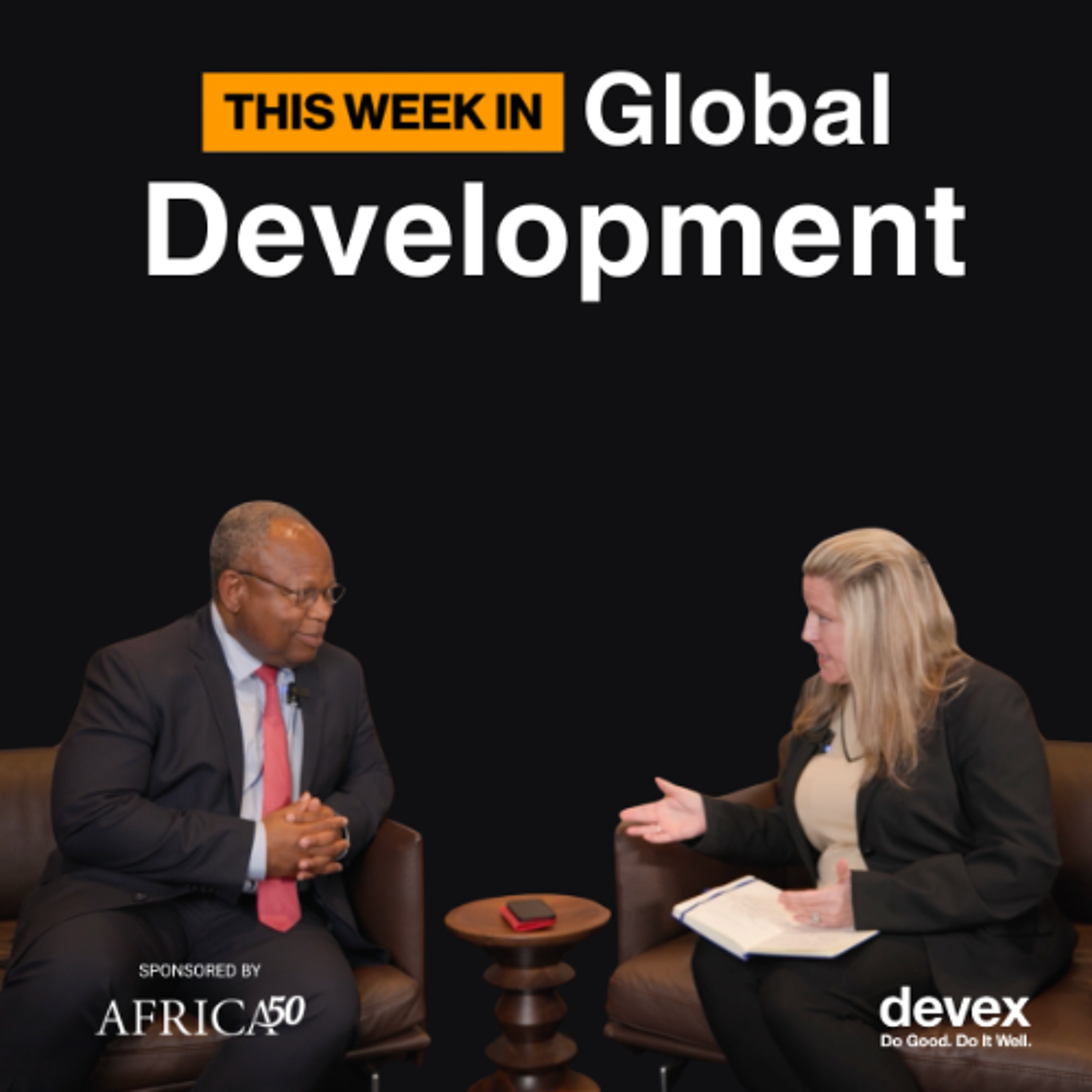 Special edition: Turning sustainable energy into a viable asset class in Africa | In this special episode of This Week in Global Development, Alain Ebobissé, CEO of Africa50, joins Devex Managing Editor Anna Gawel to discuss a paradigm shift in African infrastructure investment. Africa50, a pan-African investor, is moving beyond one-off projects to aggregate large-scale, “institution-grade” sustainable energy assets. By shifting the narrative from a development imperative to a viable commercial opportunity, Ebobissé explains how his organization is attracting both global and African capital to bridge the continent’s massive energy gap, which currently leaves around 600 million people without basic electricity. A centerpiece of the conversation is the critical role of private sector participation in electricity transmission, an area historically funded exclusively by governments. Ebobissé emphasizes that power generation is futile without the grid capacity to deliver electricity to end users and businesses, highlighting Africa50’s work on the continent's first independent private transmission projects. Looking toward the next decade, he advocates for a balanced energy mix — including renewables and natural gas — and issues a call for a heightened sense of urgency among global institutions to prioritize results over perfection in order to close the energy gap at speed. | — | ||||||
| 5/7/26 | This Week in Global Dev: #144: Inside the corruption scandal that tarnished the UN | This week, we take you inside a Devex exclusive: the $60 million fiasco at the United Nations, a complex story with an equally complex set of characters, including Vitaly Vanshelboim, whose rise and fall left a black mark on a key U.N. agency. Once revered as a financial wizard, Vanshelboim was the man credited with pulling UNOPS back from the brink of bankruptcy. However, as our investigation reveals, behind the diplomatic prestige and profits lay a shadow world of secret side deals, luxury cars, and a $60 million trail of broken promises. Now, as the former U.N. assistant secretary-general faces a reckoning from a Spanish prison cell, we discuss the lingering question: For a system that prides itself on rigorous oversight, is this incident a one-off or emblematic of something deeper? To dig into this story and others, Senior Reporter Adva Saldinger sits down with Managing Editor Anna Gawel and Senior Global Reporter Colum Lynch for the latest episode of our weekly podcast series. Request an invitation to attend Devex Impact House @ WHA in Geneva: https://pages.devex.com/devex-at-wha-79.html | — | ||||||
| 5/4/26 | 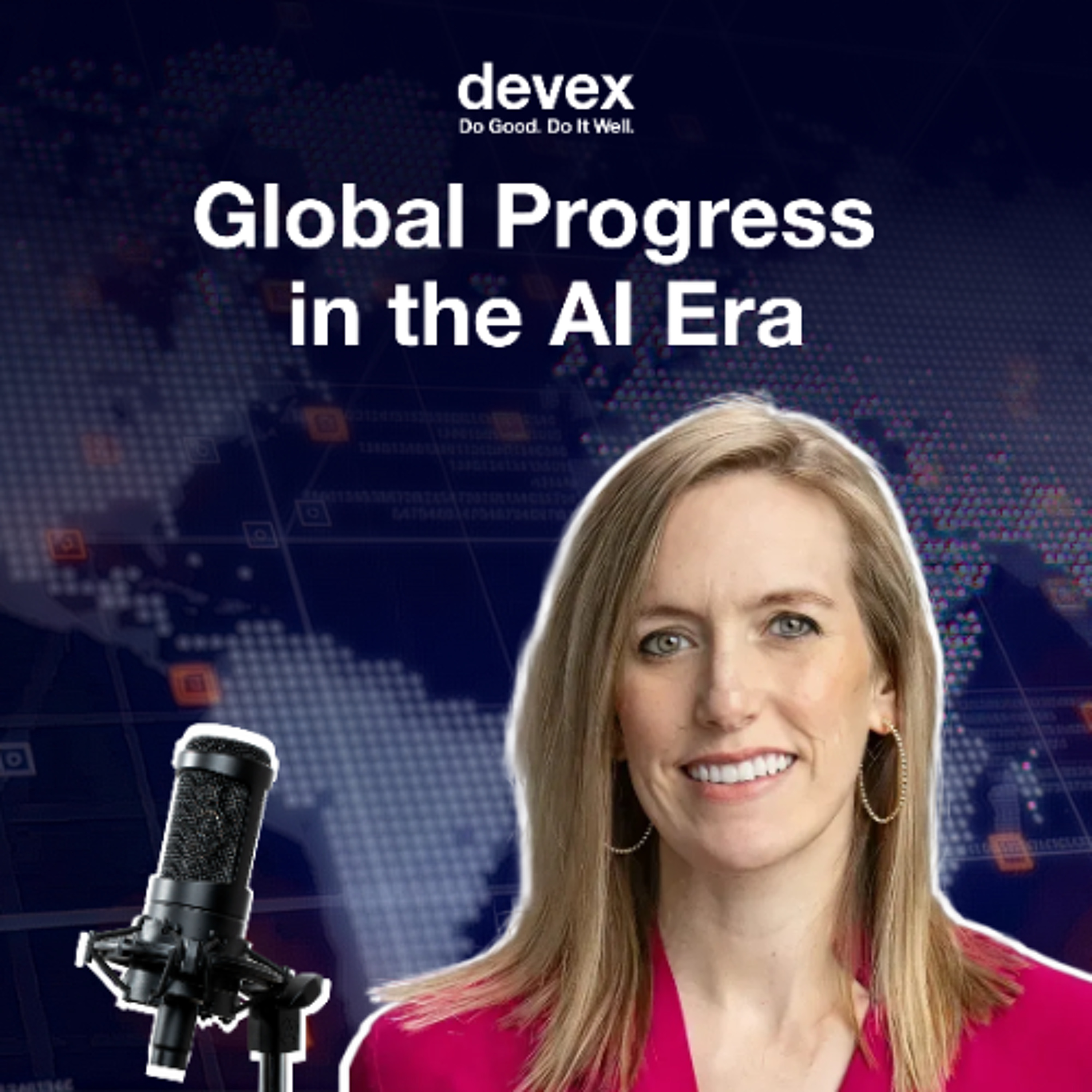 Global Progress in the AI Era: What happens when AI labs and social enterprises build together? | As AI models scale globally, social enterprises are increasingly working with frontier AI labs to test, adapt, and improve the technology in local contexts. This episode explores how those partnerships could determine whether AI reinforces existing inequalities — or helps close them. | — | ||||||
| 4/30/26 | This Week in Global Dev: #143: Reform or be defunded: The Trump administration’s demands for the UN | In an internal memo seen by Devex, the Trump administration has threatened to withhold hundreds of millions of dollars in funding to the United Nations unless it adopts a slate of nine “quick win” reforms. We break down the demands and what they reveal about the United States’ new road map for multilateral engagement. We also received a recent congressional notification which reveals that USAID has up to $19.2 billion to close out terminated foreign assistance awards. We explore what that funding would be spent on. To discuss these stories and others, Devex Business Editor David Ainsworth speaks with reporters Colum Lynch and Elissa Miolene for the latest episode of our weekly podcast series. During the sponsored segment of the This Week in Global Development podcast, brought to you by The Fred Hollows Foundation, Devex Executive Vice President Kate Warren sits down with Dr. Caroline Casey, president of the International Agency for the Prevention of Blindness, to discuss why restoring sight is not just a health intervention, but a critical lever for unlocking women’s economic participation, reducing unpaid care burdens, and accelerating progress on gender equality. Sign up to the Devex Newswire and our other newsletters: https://www.devex.com/account/newsletters | — | ||||||
| 4/23/26 | This Week in Global Dev: #142: The new world order of aid: Inside the Skoll World Forum✨ | global developmentaid+2 | Raj KumarDavid Ainsworth | the Skoll World ForumDevex+1 | Oxford | Skoll World Forumforeign aid+1 | — | 27m 36s | |
| 4/21/26 | 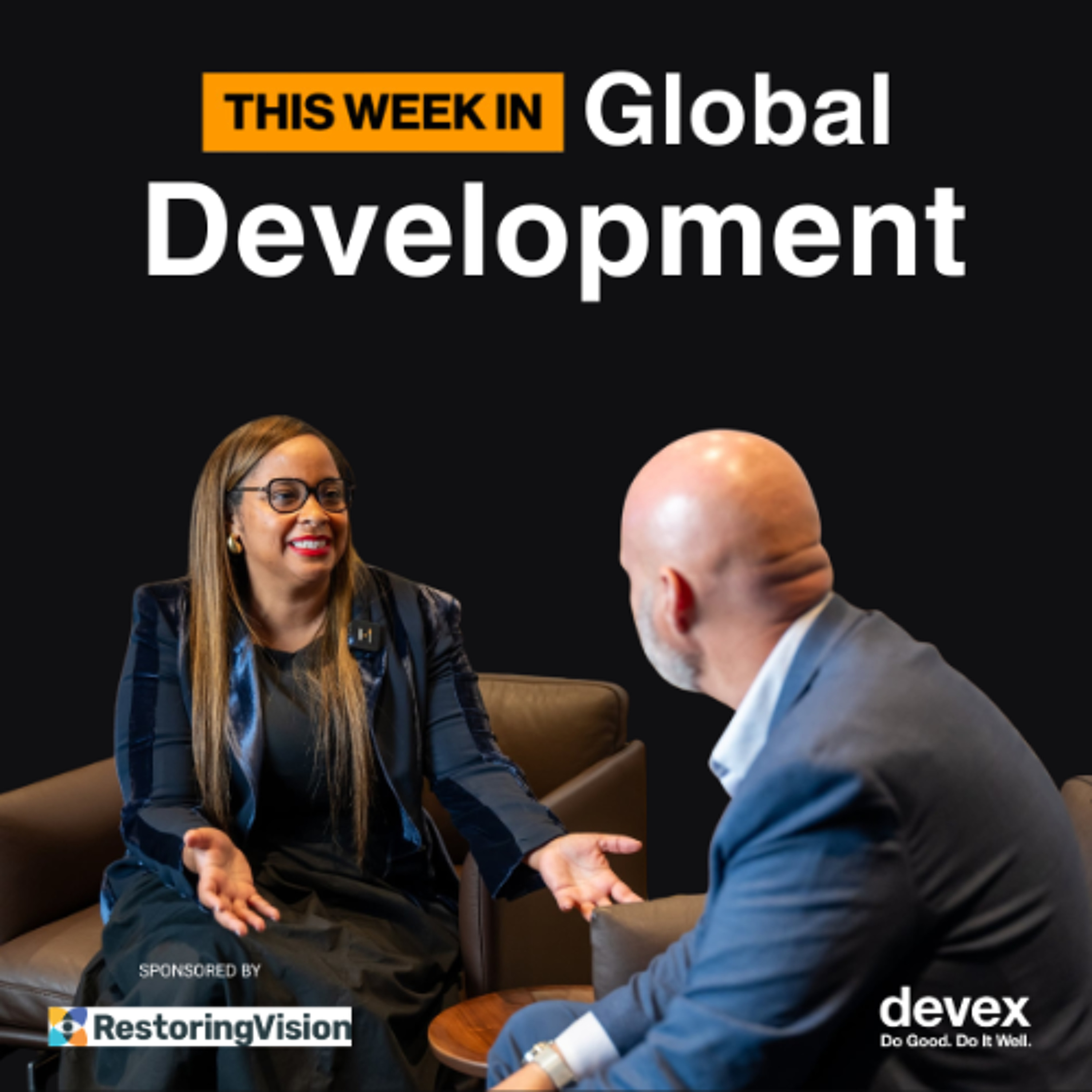 Special Episode: Visionomics - How Eyeglasses Drive Economic Growth✨ | economic growthvision health+3 | Keisha McGuire | reading glassesDevex+3 | Antigua | visionomicseye health+3 | — | 22m 19s | |
| 4/21/26 | Global Progress in the AI Era: The future of AI will be decided by small choices with big stakes✨ | AItechnology+2 | Kate KallotBosun Tijani | DevexAmini+1 | Nigeria | future of AIsmall choices+1 | — | 29m 36s | |
| 4/17/26 | This Week in Global Dev: #141: Inside the World Bank Spring Meetings✨ | World BankIMF+7 | — | Water ForwardWorld Bank+7 | the Middle East | global developmentOECD figures+1 | — | 27m 05s | |
| 4/14/26 |  Special Episode: Every Crisis is Political - Redefining Humanitarian Response✨ | humanitarian responsepolitics+1 | — | Every Crisis is Political - Redefining | — | humanitariancrisis+1 | — | 43m 51s | |
| 4/9/26 | This Week in Global Dev: #140: A look at the United States' new foreign aid strategy✨ | foreign aidhumanitarian assistance+2 | Adva SaldingerElissa Miolene | the U.N. Office for the Coordination of Humanitarian AffairsOCHA+2 | the United States'the United States’+1 | U.N. Office for the Coordination of Humanitarian AffairsOCHA+3 | — | 33m 20s | |
| 4/8/26 |  Special episode: Breast cancer as a global development challenge✨ | breast cancerglobal development+3 | Darren BackDr Patrick Loehrer+1 | DevexThe Pfizer Foundation's+1 | — | health challengediagnosis+3 | The Pfizer Foundation | 33m 07s | |
| 4/3/26 | This Week in Global Dev: #139: Unpacking UK’s new aid strategy and World Bank’s approach to water✨ | UK aid strategyphilanthropic funding+2 | Anna GawelDanielle Kaye | OECD reportWorld Bank’s+2 | UKthe United Kingdom’s | OECD reportofficial development assistance+3 | — | 26m 03s | |
| 3/31/26 |  #138: PEPFAR, Global Fund, and the future of HIV care✨ | PEPFARGlobal Fund+4 | — | PEPFARGlobal Fund+1 | — | fundingimplementation challenges+1 | — | 31m 07s | |
Showing 25 of 314
Pitch Fit is a Pro feature
See how bookable this show is for guests, which brands already advertise, the per-episode ad value, and the best-fit guest and sponsor profile. The numbers are blurred on the free plan.
How readily this show books outside guests like you.
How proven this show is for host-read sponsorships.
For Guests
ProFor Advertisers
ProUpgrade to Pro to unlock guest cadence, sponsor categories, fit scores, and per-episode ad value for this show.
Chart Positions
1 placement across 1 market.
Chart Positions
1 placement across 1 market.