

Insights from recent episode analysis
Audience Interest
Podcast Focus
Publishing Consistency
Platform Reach
Insights are generated by CastFox AI using publicly available data, episode content, and proprietary models.
Total monthly reach
Estimated from 2 chart positions in 2 markets.
By chart position
- 🇺🇸US · Buddhism#1935K to 30K
- 🇳🇿NZ · Buddhism#199500 to 3K
- Per-Episode Audience
Est. listeners per new episode within ~30 days
1.6K to 9.9K🎙 Daily cadence·50 episodes·Last published today - Monthly Reach
Unique listeners across all episodes (30 days)
5.5K to 33K🇺🇸91%🇳🇿9% - Active Followers
Loyal subscribers who consistently listen
2.2K to 13K
Market Insights
Platform Distribution
Reach across major podcast platforms, updated hourly
Total Followers
—
Total Plays
—
Total Reviews
—
* Data sourced directly from platform APIs and aggregated hourly across all major podcast directories.
On the show
Recent episodes
Being alert and mindful, develop concentration that is measureless
Jun 24, 2026
Unknown duration
Concentration
Jun 24, 2026
Unknown duration
The Discourse on the Youngsters
Jun 19, 2026
Unknown duration
The Sutta on Debt
Jun 16, 2026
Unknown duration
Impermanent
Jun 12, 2026
Unknown duration
Social Links & Contact
Official channels & resources
Official Website
Login
RSS Feed
Login
| Date | Episode | Description | Length | ||||||
|---|---|---|---|---|---|---|---|---|---|
| 6/24/26 |  Being alert and mindful, develop concentration that is measureless | “Bhikkhus, being alert and mindful, develop concentration that is measureless. When, alert and mindful, you develop concentration that is measureless, five kinds of knowledge arise that are personally yours. What five? The knowledge arises that is personally yours: ‘This concentration is presently pleasant and in the future has a pleasant result.’ The knowledge arises that is personally yours: ‘This concentration is noble and spiritual.’ The knowledge arises that is personally yours: ‘This concentration is not practiced by low persons.’ The knowledge arises that is personally yours: ‘This concentration is peaceful and sublime, gained by full tranquilization, and attained to unification; it is not reined in and checked by forcefully suppressing the defilements.’ The knowledge arises that is personally yours: ‘I enter this concentration mindfully and I emerge from it mindfully.’ Bhikkhus, being alert and continuously mindful, develop concentration that is measureless. When you are alert and mindful, developing concentration that is measureless, these five kinds of knowledge arise that are personally yours.”The Buddha's words/Samādhisutta AN 5.27. Translated by Bhikkhu Bodhi | — | ||||||
| 6/24/26 |  Concentration | At Savatthi. “Bhikkhus, develop concentration. A bhikkhu who is concentrated understands things as they really are.“And what does he understand as it really is? He understands as it really is: ‘This is suffering.’ He understands as it really is: ‘This is the origin of suffering.’ He understands as it really is: ‘This is the cessation of suffering.’ He understands as it really is: ‘This is the way leading to the cessation of suffering.’“Bhikkhus, develop concentration. A bhikkhu who is concentrated understands things as they really are.“Therefore, bhikkhus, an exertion should be made to understand: ‘This is suffering.’ An exertion should be made to understand: ‘This is the origin of suffering.’ An exertion should be made to understand: ‘This is the cessation of suffering.’ An exertion should be made to understand: ‘This is the way leading to the cessation of suffering.’”The Buddha's words/Samādhisutta SN 56.1. Translated by Bhikkhu Bodhi | — | ||||||
| 6/19/26 |  The Discourse on the Youngsters | The Discourse on the YoungstersTHUS HAVE I HEARD: At one time the Bhagavā was staying at Sāvatthī, in Jeta’s Grove, Anāthapiṇḍika’s monastery. Now at that time, many youngsters were catching fish between Sāvatthī and Jeta’s Grove. Then the Bhagavā, having dressed in the morning, and taking his bowl and robe, entered Sāvatthī for alms. The Bhagavā saw those many youngsters catching fish between Sāvatthī and Jeta’s Grove. Having seen them, he approached those youngsters; having approached, he said to them: “Are you afraid of suffering, youngsters? Is suffering disagreeable to you?” “Yes, Venerable Sir, we are afraid of suffering, Venerable Sir, suffering is disagreeable to us.” Then, having understood this matter, the Bhagavā uttered this udāna at that time: “If you are afraid of suffering, if suffering is disagreeable to you, Do not commit any evil deed, whether openly or in secret. If you will commit evil deeds, or if you are committing them now, There is no escape from suffering for you, even if you flee after it has come.”The Buddha's words/kumārakasutta from Tipitaka_Pali_Reader | — | ||||||
| 6/16/26 |  The Sutta on Debt | The Sutta on Debt“Is poverty, bhikkhus, suffering in the world for one who enjoys sensual pleasures?” “Yes, Bhante.” “That a poor, destitute, and unfortunate person takes a loan—is taking a loan, bhikkhus, suffering in the world for one who enjoys sensual pleasures?” “Yes, Bhante.”“That a poor, destitute, and unfortunate person, having taken a loan, agrees to interest—is interest, bhikkhus, suffering in the world for one who enjoys sensual pleasures?” “Yes, Bhante.” “That a poor, destitute, and unfortunate person, having agreed to interest, does not pay the interest when due, and they press him—is pressing, bhikkhus, suffering in the world for one who enjoys sensual pleasures?” “Yes, Bhante.” “That a poor, destitute, and unfortunate person, being pressed, does not pay, and they pursue him—is pursuing, bhikkhus, suffering in the world for one who enjoys sensual pleasures?” “Yes, Bhante.” “And also, bhikkhus, when a poor, propertyless, destitute person, being pursued, does not give, they imprison him; is imprisonment, bhikkhus, suffering in the world for a pleasure-seeker?” “Yes, Venerable Sir.”“Thus, bhikkhus, poverty is suffering in the world for a pleasure-seeker; taking on debt is suffering in the world for a pleasure-seeker; interest is suffering in the world for a pleasure-seeker; dunning is suffering in the world for a pleasure-seeker; pursuit is suffering in the world for a pleasure-seeker; imprisonment is suffering in the world for a pleasure-seeker. In the same way, bhikkhus, whoever has no faith in wholesome states, no shame in wholesome states, no dread in wholesome states, no energy in wholesome states, no wisdom in wholesome states—this one, bhikkhus, is called poor, propertyless, and destitute in the Noble One’s Discipline.“That poor, propertyless, destitute person, bhikkhus, when faith is absent in wholesome states, when shame is absent in wholesome states, when dread is absent in wholesome states, when energy is absent in wholesome states, when wisdom is absent in wholesome states, performs misconduct by body, performs misconduct by speech, performs misconduct by mind. This I call his taking on debt.“For the purpose of concealing that bodily misconduct, he forms an evil wish. ‘May they not know me!’ he wishes, ‘May they not know me!’ he resolves, ‘May they not know me!’ he speaks, ‘May they not know me!’ he strives with his body. For the purpose of concealing that verbal misconduct… For the purpose of concealing that mental misconduct… ‘May they not know me!’ he strives with his body. This I call his interest.“His virtuous fellow Dhamma-farers say to him thus: ‘This Venerable One is such a doer, such a practitioner.’ This I call his dunning.“Whether he has gone to the forest, or to the root of a tree, or to an empty dwelling, evil unwholesome thoughts accompanied by remorse assail him. This I call his pursuit.“That poor, propertyless, destitute person, bhikkhus, having performed bodily misconduct, having performed verbal misconduct, having performed mental misconduct, after the breakup of the body, after death, is imprisoned either in the bonds of hell or in the bonds of the animal realm. I do not see, bhikkhus, any other single bond so cruel, so bitter, so obstructive to the attainment of the unsurpassed security from bondage, as this, bhikkhus, bond of hell or bond of the animal realm.”The Buddha's words/Iṇasutta from Tipitaka_Pali_Reader | — | ||||||
| 6/12/26 |  Impermanent | ImpermanentAt Savatthi. “Bhikkhus, form is impermanent. What is impermanent is suffering. What is suffering is nonself. What is nonself should be seen as it really is with correct wisdom thus: ‘This is not mine, this I am not, this is not my self.’ When one sees this thus as it really is with correct wisdom, the mind becomes dispassionate and is liberated from the taints by nonclinging.“Feeling is impermanent…. Perception is impermanent…. Volitional formations are impermanent…. Consciousness is impermanent. What is impermanent is suffering. What is suffering is nonself. What is nonself should be seen as it really is with correct wisdom thus: ‘This is not mine, this I am not, this is not my self.’ When one sees this thus as it really is with correct wisdom, the mind becomes dispassionate and is liberated from the taints by nonclinging.“If, bhikkhus, a bhikkhu’s mind has become dispassionate towards the form element, it is liberated from the taints by nonclinging. If his mind has become dispassionate towards the feeling element … towards the perception element … towards the volitional formations element … towards the consciousness element, it is liberated from the taints by nonclinging.“By being liberated, it is steady; by being steady, it is content; by being content, he is not agitated. Being unagitated, he personally attains Nibbāna. He understands: ‘Destroyed is birth, the holy life has been lived, what had to be done has been done, there is no more for this state of being.’”The Buddha's words/ Aniccasutta SN 22.45. Translated by Bhikkhu Bodhi | — | ||||||
| 6/9/26 |  The Spiritual Life | The Spiritual Life.“Bhikkhus, this spiritual life is not lived for the sake of deceiving people and cajoling them; nor for the benefit of gain, honor, and praise; nor for the benefit of winning in debates; nor with the thought: ‘Let the people know me thus.’ But rather, this spiritual life is lived for the sake of restraint, abandoning, dispassion, and cessation.”The Blessed One taught the spiritual life,not based on tradition, culminating in nibbāna,lived for the sake ofrestraint and abandoning.This is the path of the great beings,the path followed by the great seers.Those who practice itas taught by the Buddha,acting upon the Teacher’s guidance,will make an end of suffering.The Buddha's words/Brahmacariyasutta AN 4.25. Translated by Bhikkhu Bodhi | — | ||||||
| 6/5/26 |  Trainings | Trainings. “Monks, these four types of individuals are to be found existing in the world. Which four? The one who practices for his own benefit but not for that of others. The one who practices for the benefit of others but not for his own. The one who practices neither for his own benefit nor for that of others. The one who practices for his own benefit and for that of others.“And how is one an individual who practices for his own benefit but not for that of others? There is the case where a certain individual himself abstains from the taking of life but doesn’t encourage others in undertaking abstinence from the taking of life. He himself abstains from stealing but doesn’t encourage others in undertaking abstinence from stealing. He himself abstains from sexual misconduct but doesn’t encourage others in undertaking abstinence from sexual misconduct. He himself abstains from lying but doesn’t encourage others in undertaking abstinence from lying. He himself abstains from intoxicants that cause heedlessness but doesn’t encourage others in undertaking abstinence from intoxicants that cause heedlessness. Such is the individual who practices for his own benefit but not for that of others.“And how is one an individual who practices for the benefit of others but not for his own? There is the case where a certain individual himself doesn’t abstain from the taking of life but encourages others in undertaking abstinence from the taking of life. He himself doesn’t abstain from stealing but encourages others in undertaking abstinence from stealing. He himself doesn’t abstain from sexual misconduct but encourages others in undertaking abstinence from sexual misconduct. He himself doesn’t abstain from lying but encourages others in undertaking abstinence from lying. He himself doesn’t abstain from intoxicants that cause heedlessness but encourages others in undertaking abstinence from intoxicants that cause heedlessness. Such is the individual who practices for the benefit of others but not for his own.“And how is one an individual who practices neither for his own benefit nor for that of others? There is the case where a certain individual himself doesn’t abstain from the taking of life and doesn’t encourage others in undertaking abstinence from the taking of life. He himself doesn’t abstain from stealing and doesn’t encourage others in undertaking abstinence from stealing. He himself doesn’t abstain from sexual misconduct and doesn’t encourage others in undertaking abstinence from sexual misconduct. He himself doesn’t abstain from lying and doesn’t encourage others in undertaking abstinence from lying. He himself doesn’t abstain from intoxicants that cause heedlessness and doesn’t encourage others in undertaking abstinence from intoxicants that cause heedlessness. Such is the individual who practices neither for his own benefit nor for that of others.“And how is one an individual who practices for his own benefit and for that of others? There is the case where a certain individual himself abstains from the taking of life and encourages others in undertaking abstinence from the taking of life. He himself abstains from stealing and encourages others in undertaking abstinence from stealing. He himself abstains from sexual misconduct and encourages others in undertaking abstinence from sexual misconduct. He himself abstains from lying and encourages others in undertaking abstinence from lying. He himself abstains from intoxicants that cause heedlessness and encourages others in undertaking abstinence from intoxicants that cause heedlessness. Such is the individual who practices for his own benefit and for that of others.“These are the four types of individuals to be found existing in the world.”The Buddha's words/Sikkhāpadasutta AN 4.99. Translated by Thanissaro Bhikkhu | — | ||||||
| 6/2/26 |  The Discourse on Abusive Speech | The Discourse on Abusive SpeechAt one time the Blessed One was dwelling in Rājagaha, in the Bamboo Grove, at the Squirrels’ Feeding Ground. The brahmin Akkosaka Bhāradvāja heard, “It seems that a brahmin of the Bhāradvāja clan has gone forth from home into homelessness in the presence of the ascetic Gotama.” Angry and displeased, he went to where the Blessed One was; having approached, he abused and reviled the Blessed One with harsh, rude words. When this was said, the Blessed One said to the brahmin Akkosaka Bhāradvāja: “What do you think, brahmin, do your friends, companions, relatives, kin, and guests sometimes come to you?” “Sometimes, good Gotama, my friends, companions, relatives, kin, and guests do come to me.” “What do you think, brahmin, do you sometimes provide them with chewable food, edible food, or lickable food?” “Sometimes, good Gotama, I do provide them with chewable food, edible food, or lickable food.” “If, brahmin, they do not accept it, whose does that food become?” “If, good Gotama, they do not accept it, it remains ours.” “Even so, brahmin, what you abuse us with, who do not abuse; what you provoke us with, who do not provoke; what you revile us with, who do not revile—that we do not accept. It remains yours, brahmin; it remains yours, brahmin.” “Indeed, brahmin, one who abuses an abuser, provokes a provoker, reviles a reviler—such a one is said to eat together and share together. We neither eat together nor share together with you. It remains yours, brahmin; it remains yours, brahmin.” “The assembly, together with the king, knows the good Gotama thus: ‘The ascetic Gotama is an Arahant.’ Yet the good Gotama gets angry.” “How can there be anger for one without anger, for one who is restrained, living righteously, released by perfect knowledge, peaceful, steadfast? It is worse for him who retaliates to an angry man; one who does not retaliate to an angry man conquers a battle hard to conquer.He acts for the welfare of both, of himself and of the other, who, knowing the other to be angry, remains mindful and calm. People think them fools who do not understand the Dhamma, those who heal both, himself and the other.” When this was said, the brahmin Akkosaka Bhāradvāja said to the Blessed One: “Excellent, good Gotama… I go for refuge to the good Gotama, to the Dhamma, and to the Bhikkhu Saṅgha. May I receive the going forth in the presence of the good Gotama, may I receive the full ordination.” And the brahmin Akkosaka Bhāradvāja received the going forth in the presence of the Blessed One; he received the full ordination. Not long after his full ordination, Venerable Akkosaka Bhāradvāja, dwelling alone, secluded, diligent, ardent, and resolute, in no long time, by realizing it for himself with direct knowledge, here and now entered upon and abode in that unsurpassed goal of the holy life, for the sake of which clansmen rightly go forth from home into homelessness. He directly knew: “Destroyed is birth, the holy life has been lived, what was to be done has been done, there is no more for this state of being.” And Venerable Bhāradvāja became one of the Arahants.The Buddha's words | — | ||||||
| 5/31/26 |  The one-way path for the purification of beings | The one-way path for the purification of beings. Thus have I heard. On one occasion the Blessed One was dwelling at Vesali in Ambapali’s Grove. There the Blessed One addressed the bhikkhus thus: “Bhikkhus!”“Venerable sir!” the bhikkhus replied. The Blessed One said this:“Bhikkhus, this is the one-way path for the purification of beings, for the overcoming of sorrow and lamentation, for the passing away of pain and displeasure, for the achievement of the method, for the realization of Nibbāna, that is, the four establishments of mindfulness. What four?“Here, bhikkhus, a bhikkhu dwells contemplating the body in the body, ardent, clearly comprehending, mindful, having removed covetousness and displeasure in regard to the world. He dwells contemplating feelings in feelings, ardent, clearly comprehending, mindful, having removed covetousness and displeasure in regard to the world. He dwells contemplating mind in mind, ardent, clearly comprehending, mindful, having removed covetousness and displeasure in regard to the world. He dwells contemplating phenomena in phenomena, ardent, clearly comprehending, mindful, having removed covetousness and displeasure in regard to the world.“This, bhikkhus, is the one-way path for the purification of beings, for the overcoming of sorrow and lamentation, for the passing away of pain and displeasure, for the achievement of the method, for the realization of Nibbāna, that is, the four establishments of mindfulness.”This is what the Blessed One said. Elated, those bhikkhus delighted in the Blessed One’s statement.The Buddha's words/Ambapālisutta SN 47.1. Translated by Bhikkhu Bodhi | — | ||||||
| 5/28/26 |  Giving | Giving. Translated by John D. Ireland“Bhikkhus, if beings knew, as I know, the result of giving and sharing, they would not eat without having given, nor would they allow the stain of meanness to obsess them and take root in their minds. Even if it were their last morsel, their last mouthful, they would not eat without having shared it, if there were someone to share it with. But, bhikkhus, as beings do not know, as I know, the result of giving and sharing, they eat without having given, and the stain of meanness obsesses them and takes root in their minds.”If beings only knew—So said the Great Sage—How the result of sharingIs of such great fruit,With a gladdened mind,Rid of the stain of meanness,They would duly give to noble onesWho make what is given fruitful.Having given much food as offeringsTo those most worthy of offerings,The donors go to heavenOn departing the human state.Having gone to heaven they rejoice,And enjoying pleasures there,The unselfish experience the resultOf generously sharing with others. | — | ||||||
Want analysis for the episodes below?Free for Pro Submit a request, we'll have your selected episodes analyzed within an hour. Free, at no cost to you, for Pro users. | |||||||||
| 5/28/26 | 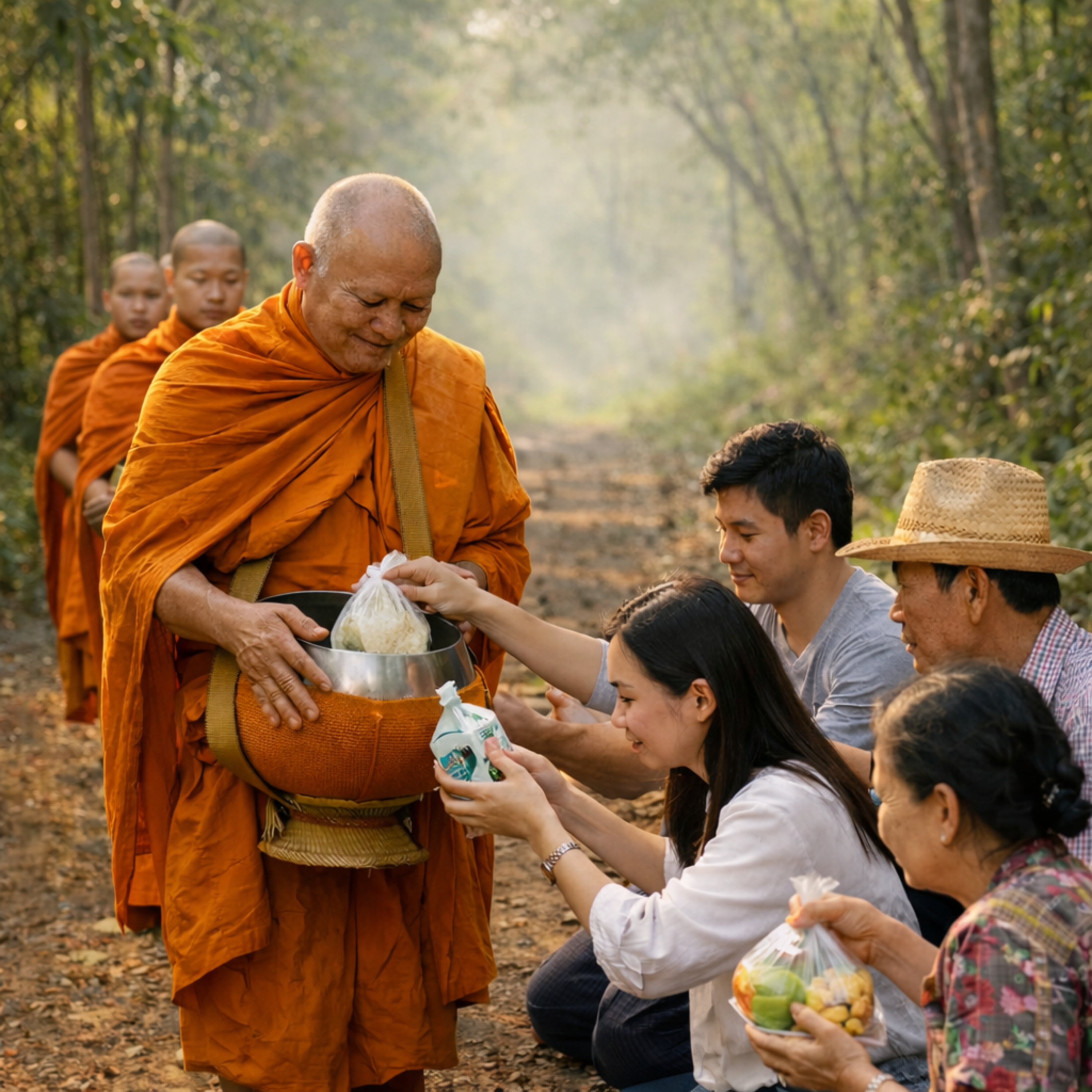 The Layperson’S Proper Practice | The Layperson’S Proper PracticeThen the householder Anāthapiṇḍika approached the Blessed One…. The Blessed One said to him:“Householder, a noble disciple who possesses four qualities is practicing the way proper to the layperson, a way that brings the attainment of fame and leads to heaven. What four?“Here, householder, a noble disciple serves the Saṅgha of bhikkhus with robes; he serves the Saṅgha of bhikkhus with almsfood; he serves the Saṅgha of bhikkhus with lodgings; he serves the Saṅgha of bhikkhus with medicines and provisions for the sick.“Householder, a noble disciple who possesses these four qualities is practicing the way proper to the layperson, a way that brings the attainment of fame and leads to heaven.”When the wise practice the wayproper for the layperson, they servethe virtuous monks of upright conductwith robes, almsfood, lodgings, and medicines:for them both by day and nightmerit always increases;having done excellent deeds,they pass on to a heavenly state.The Buddha's words, Gihisāmīcisutta AN 4.60 | — | ||||||
| 5/25/26 |  Impossible | Impossible. Translated by Bhikkhu Bodhi“Bhikkhus, if anyone should speak thus: ‘Without having made the breakthrough to the noble truth of suffering as it really is, without having made the breakthrough to the noble truth of the origin of suffering as it really is, without having made the breakthrough to the noble truth of the cessation of suffering as it really is, without having made the breakthrough to the noble truth of the way leading to the cessation of suffering as it really is, I will completely make an end to suffering’—this is impossible.“Just as, bhikkhus, if someone should speak thus: ‘Having made a basket of acacia leaves or of pine needles or of myrobalan leaves, I will bring water or a palm fruit,’ this would be impossible; so too, if anyone should speak thus: ‘Without having made the breakthrough to the noble truth of suffering as it really is, without having made the breakthrough to the noble truth of the origin of suffering as it really is, without having made the breakthrough to the noble truth of the cessation of suffering as it really is, without having made the breakthrough to the noble truth of the way leading to the cessation of suffering as it really is, I will completely make an end to suffering’—this is impossible.“But, bhikkhus, if anyone should speak thus: ‘Having made the breakthrough to the noble truth of suffering as it really is, having made the breakthrough to the noble truth of the origin of suffering as it really is, having made the breakthrough to the noble truth of the cessation of suffering as it really is, having made the breakthrough to the noble truth of the way leading to the cessation of suffering as it really is, I will completely make an end to suffering’—this is possible.“Just as, bhikkhus, if someone should speak thus: ‘Having made a basket of lotus leaves or of kino leaves or of maluva leaves, I will bring water or a palm fruit,’ this would be possible; so too, if anyone should speak thus: ‘Having made the breakthrough to the noble truth of suffering as it really is, having made the breakthrough to the noble truth of the origin of suffering as it really is, having made the breakthrough to the noble truth of the cessation of suffering as it really is, having made the breakthrough to the noble truth of the way leading to the cessation of suffering as it really is, I will completely make an end to suffering’—this is possible.“Therefore, bhikkhus, an exertion should be made to understand: ‘This is suffering.’ An exertion should be made to understand: ‘This is the origin of suffering.’ An exertion should be made to understand: ‘This is the cessation of suffering.’ An exertion should be made to understand: ‘This is the way leading to the cessation of suffering.’”The Buddha's words/Khadirapattasutta SN 56.32 | — | ||||||
| 5/22/26 |  The Siṁsapa Grove | The Siṁsapa Grove. Translated by Bhikkhu BodhiOn one occasion the Blessed One was dwelling at Kosambi in a siṁsapa grove. Then the Blessed One took up a few siṁsapa leaves in his hand and addressed the bhikkhus thus: “What do you think, bhikkhus, which is more numerous: these few siṁsapa leaves that I have taken up in my hand or those in the siṁsapa grove overhead?”“Venerable sir, the siṁsapa leaves that the Blessed One has taken up in his hand are few, but those in the siṁsapa grove overhead are numerous.”“So too, bhikkhus, the things I have directly known but have not taught you are numerous, while the things I have taught you are few. And why, bhikkhus, have I not taught those many things? Because they are unbeneficial, irrelevant to the fundamentals of the holy life, and do not lead to revulsion, to dispassion, to cessation, to peace, to direct knowledge, to enlightenment, to Nibbāna. Therefore I have not taught them.“And what, bhikkhus, have I taught? I have taught: ‘This is suffering’; I have taught: ‘This is the origin of suffering’; I have taught: ‘This is the cessation of suffering’; I have taught: ‘This is the way leading to the cessation of suffering.’ And why, bhikkhus, have I taught this? Because this is beneficial, relevant to the fundamentals of the holy life, and leads to revulsion, to dispassion, to cessation, to peace, to direct knowledge, to enlightenment, to Nibbāna. Therefore I have taught this.“Therefore, bhikkhus, an exertion should be made to understand: ‘This is suffering.’ An exertion should be made to understand: ‘This is the origin of suffering.’ An exertion should be made to understand: ‘This is the cessation of suffering.’ An exertion should be made to understand: ‘This is the way leading to the cessation of suffering.’”The Buddha's words/Sīsapāvanasutta Saṁyutta Nikāya 56.31 | — | ||||||
| 5/20/26 |  The Discourse on Teaching | The Discourse on TeachingThis was said by the Blessed One, said by the Arahant, so I heard: ‘‘Bhikkhus, there are two discourses on Dhamma given by the Tathāgata, the Arahant, the Perfectly Self-Enlightened One, in due course. Which two? ‘See evil as evil’—this is the first discourse on Dhamma; ‘Having seen evil as evil, become disgusted with it, dispassionate towards it, and liberated from it’—this is the second discourse on Dhamma. Bhikkhus, these two discourses on Dhamma are given by the Tathāgata, the Arahant, the Perfectly Self-Enlightened One, in due course.’’ The Blessed One spoke this meaning. Therein it is said: ‘‘Behold the sequential teaching of the Buddha, the Tathāgata, who has compassion for all beings; And the two Dhammas declared by him. And see this evil as evil, and become dispassionate towards it; Then, with minds dispassionate, you will make an end of suffering.’’ This meaning was also spoken by the Blessed One, so I heard.The Buddha's words/desanāsutta | — | ||||||
| 5/15/26 |  The Four Noble Truths | The Four Noble Truths. Translated by Bhikkhu Bodhi“Bhikkhus, there are these Four Noble Truths. What four? The noble truth of suffering, the noble truth of the origin of suffering, the noble truth of the cessation of suffering, the noble truth of the way leading to the cessation of suffering.“And what, bhikkhus, is the noble truth of suffering? It should be said: the five aggregates subject to clinging; that is, the form aggregate subject to clinging, the feeling aggregate subject to clinging, the perception aggregate subject to clinging, the volitional formations aggregate subject to clinging, the consciousness aggregate subject to clinging. This is called the noble truth of suffering.“And what, bhikkhus, is the noble truth of the origin of suffering? It is this craving which leads to renewed existence, accompanied by delight and lust, seeking delight here and there; that is, craving for sensual pleasures, craving for existence, craving for extermination. This is called the noble truth of the origin of suffering.“And what, bhikkhus, is the noble truth of the cessation of suffering? It is the remainderless fading away and cessation of that same craving, the giving up and relinquishing of it, freedom from it, nonreliance on it. This is called the noble truth of the cessation of suffering.“And what, bhikkhus, is the noble truth of the way leading to the cessation of suffering? It is this Noble Eightfold Path; that is, right view, right intention, right speech, right action, right livelihood, right effort, right mindfulness, right concentration. This is called the noble truth of the way leading to the cessation of suffering.“These, bhikkhus, are the Four Noble Truths.“Therefore, bhikkhus, an exertion should be made to understand: ‘This is suffering.’ An exertion should be made to understand: ‘This is the origin of suffering.’ An exertion should be made to understand: ‘This is the cessation of suffering.’ An exertion should be made to understand: ‘This is the way leading to the cessation of suffering.’”Khandhasutta SN 56.13 | — | ||||||
| 5/14/26 |  The Inscription | The Inscription.“Bhikkhus, these three types of individuals exist, are found in the world. Which three? The individual like an inscription on rock, the individual like an inscription on earth, the individual like an inscription on water. And which, bhikkhus, is the individual like an inscription on rock? Here, bhikkhus, a certain individual frequently gets angry. And that anger of his persists for a long time. Just as, bhikkhus, an inscription on rock is not quickly erased by wind or water, but lasts for a long time; even so, bhikkhus, a certain individual here frequently gets angry. And that anger of his persists for a long time. This, bhikkhus, is called the individual like an inscription on rock. “And which, bhikkhus, is the individual like an inscription on earth? Here, bhikkhus, a certain individual frequently gets angry. And that anger of his does not persist for a long time. Just as, bhikkhus, an inscription on earth is quickly erased by wind or water, it does not last for a long time; even so, bhikkhus, a certain individual here frequently gets angry. And that anger of his does not persist for a long time. This, bhikkhus, is called the individual like an inscription on earth. “And which, bhikkhus, is the individual like an inscription on water? Here, bhikkhus, a certain individual, even when spoken to harshly, even when spoken to roughly, even when spoken to disagreeably, still reconciles, still unites, still becomes agreeable. Just as, bhikkhus, a line on water quickly disappears and does not remain long; even so, bhikkhus, a certain individual here, though spoken to harshly, roughly, or disagreeably, still reconciles, unites, and becomes agreeable. This, bhikkhus, is called a person like a line on water. These three individuals, bhikkhus, exist and are found in the world.The Buddha's words/Lekhasutta. | — | ||||||
| 5/12/26 |  The Discourse to Dhanañjāni | Dhanañjānisutta — The Discourse to Dhanañjāni Thus have I heard: At one time the Blessed One was staying in Rājagaha, in the Bamboo Grove, at the Squirrels’ Feeding Place. Now at that time, a brahmin woman named Dhanañjāni, of the Bhāradvāja clan, had firm faith in the Buddha, the Dhamma, and the Saṅgha. Then the brahmin woman Dhanañjāni, while serving food to the brahmin of the Bhāradvāja clan, stumbled and three times uttered an exclamation of joy: “Homage to the Blessed One, the Arahant, the Perfectly Self-Awakened One; Homage to the Blessed One, the Arahant, the Perfectly Self-Awakened One; Homage to the Blessed One, the Arahant, the Perfectly Self-Awakened One.” When this was said, the brahmin of the Bhāradvāja clan said to Dhanañjāni the brahmin woman, “This low-caste woman, just like this, for any reason at all, speaks in praise of that shaven-headed ascetic. Now, you low-caste woman, I will find fault with that teacher of yours.” “Brahmin, I do not see anyone in the world with its devas, Māras, and Brahmās, among the generation of ascetics, brahmins, devas, and humans, who could find fault with that Blessed One, the Arahant, the Perfectly Self-Awakened One. But, brahmin, you go, and having gone, you will find out.” Then the brahmin of the Bhāradvāja clan, angry and displeased, went to where the Blessed One was; having approached, he exchanged greetings with the Blessed One. Having exchanged courteous and amiable talk, he sat down to one side. As he sat to one side, the brahmin of the Bhāradvāja clan addressed the Blessed One with a verse: “Having cut off what does one sleep happily? Having cut off what does one not grieve? The slaying of which single dhamma do you commend, Gotama?” “Having cut off anger one sleeps happily; having cut off anger one does not grieve; O brahmin, the noble ones praise the slaying of anger, whose root is poisonous, whose tip is sweet. For having cut it off, one does not grieve.”When this was said, the brahmin of the Bhāradvāja clan said to the Blessed One: “Excellent, good Gotama, excellent, good Gotama! Just as, good Gotama, one might set upright what was overturned, or uncover what was hidden, or point out the way to one who was lost, or hold up a lamp in the darkness so that those with eyes may see forms; even so has the Dhamma been made clear in many ways by the good Gotama. I go for refuge to the Blessed Gotama, to the Dhamma, and to the Bhikkhu Saṅgha. May I receive the going forth in the presence of the good Gotama, may I receive the full ordination.” And the brahmin of the Bhāradvāja clan received the going forth in the presence of the Blessed One; he received the full ordination. Not long after his full ordination, Venerable Bhāradvāja, dwelling alone, secluded, diligent, ardent, and resolute, in no long time, by realizing it for himself with direct knowledge, here and now entered upon and abode in that unsurpassed goal of the holy life, for the sake of which clansmen rightly go forth from home into homelessness. He directly knew: “Destroyed is birth, the holy life has been lived, what was to be done has been done, there is no more for this state of being.” And Venerable Bhāradvāja became one of the Arahants. | — | ||||||
| 5/9/26 |  Non-Decline | Non-Decline. Translated by Bhikkhu Bodhi“Bhikkhus, a bhikkhu who possesses four qualities is incapable of decline and is in the vicinity of nibbāna. What four? Here, a bhikkhu is accomplished in virtuous behavior, guards the doors of the sense faculties, observes moderation in eating, and is intent on wakefulness.“And how is a bhikkhu accomplished in virtuous behavior? Here, a bhikkhu is virtuous; he dwells restrained by the Pātimokkha, possessed of good conduct and resort, seeing danger in minute faults. Having undertaken the training rules, he trains in them. It is in this way that a bhikkhu is accomplished in virtuous behavior.“And how does a bhikkhu guard the doors of the sense faculties? Here, having seen a form with the eye, a bhikkhu does not grasp its marks and features. Since, if he left the eye faculty unrestrained, bad unwholesome states of longing and dejection might invade him, he practices restraint over it; he guards the eye faculty, he undertakes the restraint of the eye faculty. Having heard a sound with the ear … Having smelled an odor with the nose … Having tasted a taste with the tongue … Having felt a tactile object with the body … Having cognized a mental phenomenon with the mind, a bhikkhu does not grasp its marks and features. Since, if he left the mind faculty unrestrained, bad unwholesome states of longing and dejection might invade him, he practices restraint over it; he guards the mind faculty, he undertakes the restraint of the mind faculty. It is in this way that a bhikkhu guards the doors of the sense faculties.“And how does a bhikkhu observe moderation in eating? Here, reflecting carefully, a bhikkhu consumes food neither for amusement nor for intoxication nor for the sake of physical beauty and attractiveness, but only for the support and maintenance of this body, for avoiding harm, and for assisting the spiritual life, considering: ‘Thus I shall terminate the old feeling and not arouse a new feeling, and I shall be healthy and blameless and dwell at ease.’ It is in this way that a bhikkhu observes moderation in eating.“And how is a bhikkhu intent on wakefulness? Here, during the day, while walking back and forth and sitting, a bhikkhu purifies his mind of obstructive qualities. In the first watch of the night, while walking back and forth and sitting, he purifies his mind of obstructive qualities. In the middle watch of the night he lies down on the right side in the lion’s posture, with one foot overlapping the other, mindful and clearly comprehending, after noting in his mind the idea of rising. After rising, in the last watch of the night, while walking back and forth and sitting, he purifies his mind of obstructive qualities. It is in this way that a bhikkhu is intent on wakefulness.“A bhikkhu who possesses these four qualities is incapable of decline and is in the vicinity of nibbāna.”Established in virtuous behavior,restrained in the sense faculties,moderate in eating,intent on wakefulness:a bhikkhu dwells thus ardently,unwearying by day and night,developing wholesome qualitiesto attain security from bondage.A bhikkhu who delights in heedfulness,seeing the danger in heedlessness,is incapable of decline:he is close to nibbāna.The Buddha's words/Aparihāniyasutta Aṅguttara Nikāya 4.37 | — | ||||||
| 4/29/26 | 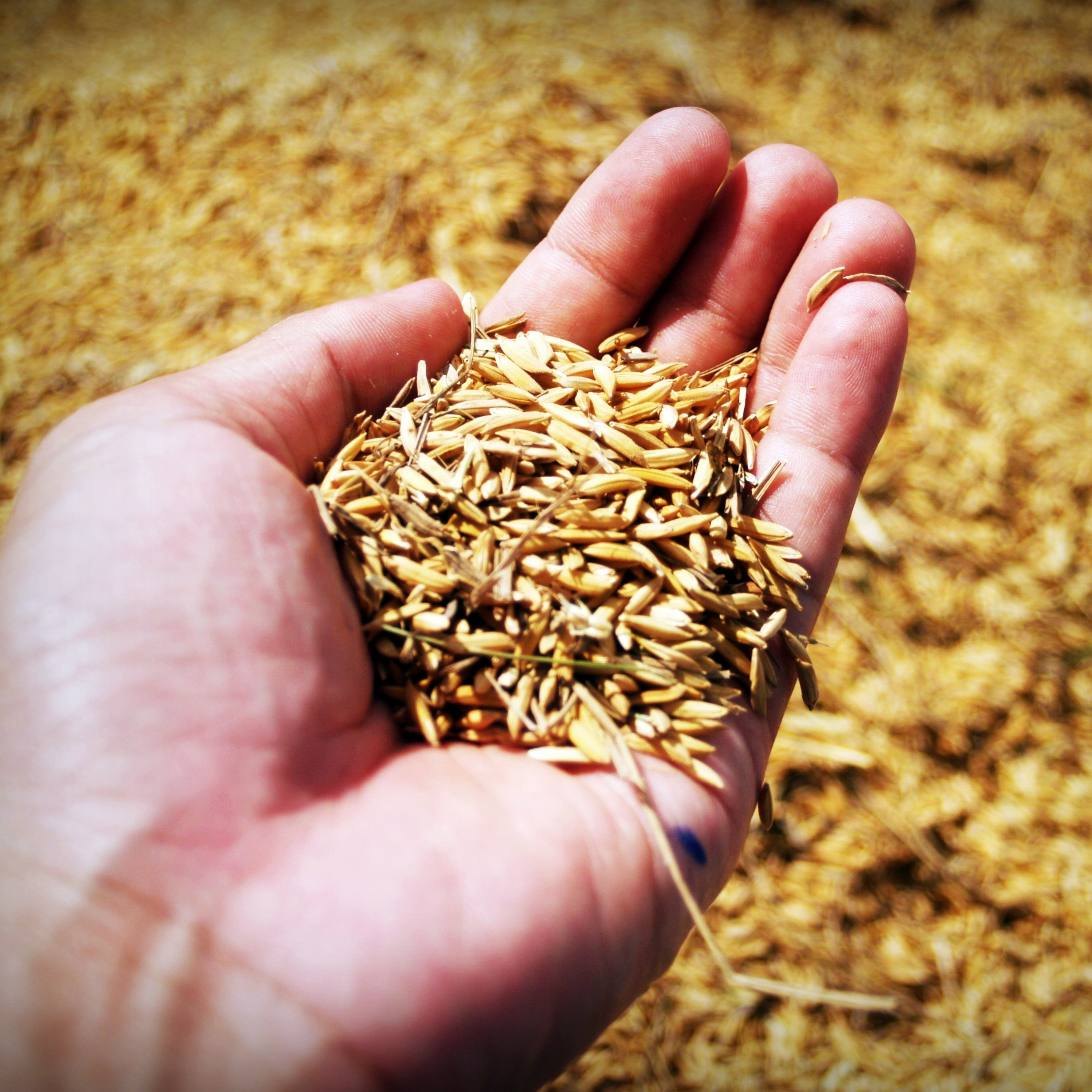 The Seed | The Seed. Translated by Thanissaro Bhikkhu“When a person has wrong view, wrong resolve, wrong speech, wrong action, wrong livelihood, wrong effort, wrong mindfulness, wrong concentration, wrong knowledge, & wrong release, whatever bodily deeds he undertakes in line with that view, whatever verbal deeds… whatever mental deeds he undertakes in line with that view, whatever intentions, whatever determinations, whatever vows, whatever fabrications, all lead to what is disagreeable, unpleasing, unappealing, unprofitable, & stressful. Why is that? Because the view is evil.“Just as when a nimb-tree seed, a bitter creeper seed, or a bitter melon seed is placed in moist soil, whatever nutriment it takes from the soil & the water, all conduces to its bitterness, acridity, & distastefulness. Why is that? Because the seed is evil. In the same way, when a person has wrong view, wrong resolve, wrong speech, wrong action, wrong livelihood, wrong effort, wrong mindfulness, wrong concentration, wrong knowledge, & wrong release, whatever bodily deeds he undertakes in line with that view, whatever verbal deeds… whatever mental deeds he undertakes in line with that view, whatever intentions, whatever determinations, whatever vows, whatever fabrications, all lead to what is disagreeable, unpleasing, unappealing, unprofitable, & stressful. Why is that? Because the view is evil.“When a person has right view, right resolve, right speech, right action, right livelihood, right effort, right mindfulness, right concentration, right knowledge, & right release, whatever bodily deeds he undertakes in line with that view, whatever verbal deeds… whatever mental deeds he undertakes in line with that view, whatever intentions, whatever vows, whatever determinations, whatever fabrications, all lead to what is agreeable, pleasing, charming, profitable, & easeful. Why is that? Because the view is auspicious.“Just as when a sugar cane seed, a rice grain, or a grape seed is placed in moist soil, whatever nutriment it takes from the soil & the water, all conduces to its sweetness, tastiness, & unalloyed delectability. Why is that? Because the seed is auspicious. In the same way, when a person has right view, right resolve, right speech, right action, right livelihood, right effort, right mindfulness, right concentration, right knowledge, & right release, whatever bodily deeds he undertakes in line with that view, whatever verbal deeds… whatever mental deeds he undertakes in line with that view, whatever intentions, whatever vows, whatever determinations, whatever fabrications, all lead to what is agreeable, pleasing, charming, profitable, & easeful. Why is that? Because the view is auspicious.”The Buddha's words / Bījasutta Aṅguttara Nikāya 10.104 | — | ||||||
| 4/27/26 |  Harmless | Harmless. Translated by Bhikkhu Sujato At Sāvatthī. Then the brahmin Bhāradvāja the Harmless went up to the Buddha, and exchanged greetings with him. When the greetings and polite conversation were over, he sat down to one side and said, “I am Harmless, worthy Gotama, I am Harmless!”“If you were really like your name, then you’d be Harmless. But a truly harmless person does no harm by way of body, speech, or mind; they don’t harm anyone else.” When he had spoken, Bhāradvāja the Harmless said to the Buddha, “Excellent, worthy Gotama! Excellent! As if he were righting the overturned, or revealing the hidden, or pointing out the path to the lost, or lighting a lamp in the dark so people with clear eyes can see what’s there, worthy Gotama has made the teaching clear in many ways. I go for refuge to the worthy Gotama, to the teaching, and to the mendicant Saṅgha. May I receive the going forth, the ordination in the worthy Gotama’s presence?”And the brahmin Bhāradvāja the Harmless received the going forth, the ordination in the Buddha’s presence. Not long after his ordination, Venerable Bhāradvāja the Harmless, living alone, withdrawn, diligent, keen, and resolute, soon realized the supreme end of the spiritual path in this very life. He lived having achieved with his own insight the goal for which gentlemen rightly go forth from the lay life to homelessness. He understood: “Rebirth is ended; the spiritual journey has been completed; what had to be done has been done; there is nothing further for this place.” And Venerable Bhāradvāja the Harmless became one of the perfected.The Buddha's words / Ahiṁsakasutta SN 7.5 | — | ||||||
| 4/24/26 |  Ignorance Is the Forerunner in the Entry Upon Unwholesome States | Ignorance. Translated by Bhikkhu BodhiTHUS HAVE I HEARD . On one occasion the Blessed One was dwelling at Savatthī in Jeta’s Grove, Anathapiṇḍika’s Park. There the Blessed One addressed the bhikkhus thus: “Bhikkhus!”“Venerable sir!” those bhikkhus replied. The Blessed One said this:“Bhikkhus, ignorance is the forerunner in the entry upon unwholesome states, with shamelessness and fearlessness of wrongdoing following along. For an unwise person immersed in ignorance, wrong view springs up. For one of wrong view, wrong intention springs up. For one of wrong intention, wrong speech springs up. For one of wrong speech, wrong action springs up. For one of wrong action, wrong livelihood springs up. For one of wrong livelihood, wrong effort springs up. For one of wrong effort, wrong mindfulness springs up. For one of wrong mindfulness, wrong concentration springs up.“Bhikkhus, true knowledge is the forerunner in the entry upon wholesome states, with a sense of shame and fear of wrongdoing following along. For a wise person who has arrived at true knowledge, right view springs up. For one of right view, right intention springs up. For one of right intention, right speech springs up. For one of right speech, right action springs up. For one of right action, right livelihood springs up. For one of right livelihood, right effort springs up. For one of right effort, right mindfulness springs up. For one of right mindfulness, right concentration springs up.”The Buddha's words / Avijjāsutta SN 45.1 | — | ||||||
| 4/22/26 |  Ignorance | Ignorance. Translated by Bhikkhu BodhiSitting to one side, that bhikkhu said to the Blessed One: “Venerable sir, it is said, ‘ignorance, ignorance.’ What is ignorance, venerable sir, and in what way is one immersed in ignorance?”“Bhikkhu, not knowing suffering, not knowing the origin of suffering, not knowing the cessation of suffering, not knowing the way leading to the cessation of suffering: this is called ignorance, bhikkhu, and it is in this way that one is immersed in ignorance.“Therefore, bhikkhu, an exertion should be made to understand: ‘This is suffering.’ An exertion should be made to understand: ‘This is the origin of suffering.’ An exertion should be made to understand: ‘This is the cessation of suffering.’ An exertion should be made to understand: ‘This is the way leading to the cessation of suffering.’”The Buddha's words/Avijjāsutta SN 56.17 | — | ||||||
| 4/19/26 |  The Benefits of Training | The Benefits of Training. Translated by Bhikkhu Sujato“Mendicants, this spiritual life is lived with training as its benefit, with wisdom as its overseer, with freedom as its core, and with mindfulness as its ruler.And how is training its benefit? Firstly, I laid down for my disciples the training that deals with supplementary regulations in order to inspire confidence in those without it and to increase confidence in those who have it. They undertake whatever supplementary regulations I have laid down, keeping them intact, impeccable, spotless, and unmarred.Furthermore, I laid down for my disciples the training that deals with the fundamentals of the spiritual life in order to rightly end suffering in every way. They undertake whatever training that deals with the fundamentals of the spiritual life I have laid down, keeping it intact, impeccable, spotless, and unmarred. That’s how training is its benefit.And how is wisdom its overseer? I taught the Dhamma to my disciples in order to rightly end suffering in every way. They examine with wisdom any teachings I taught them. That’s how wisdom is its overseer.And how is freedom its core? I taught the Dhamma to my disciples in order to rightly end suffering in every way. They experience through freedom any teachings I taught them. That’s how freedom is its core.And how is mindfulness its ruler? Mindfulness is well established in oneself: ‘In this way I’ll fulfill the training dealing with supplementary regulations, or support with wisdom in every situation the training dealing with supplementary regulations I’ve already fulfilled.’ Mindfulness is well established in oneself: ‘In this way I’ll fulfill the training dealing with the fundamentals of the spiritual life, or support with wisdom in every situation the training dealing with the fundamentals of the spiritual life I’ve already fulfilled.’ Mindfulness is well established in oneself: ‘In this way I’ll examine with wisdom the teaching that I haven’t yet examined, or support with wisdom in every situation the teaching I’ve already examined.’ Mindfulness is well established in oneself: ‘In this way I’ll experience through freedom the teaching that I haven’t yet experienced, or support with wisdom in every situation the teaching I’ve already experienced.’ That’s how mindfulness is its ruler.‘This spiritual life is lived with training as its benefit, with wisdom as its overseer, with freedom as its core, and with mindfulness as its ruler.’ That’s what I said, and this is why I said it.”The Buddha's words. Sikkhānisaṁsasutta AN 4.245 | — | ||||||
| 4/17/26 |  Three failures and three accomplishments | Three failures and three accomplishments. Translated by Bhikkhu Sujato“Mendicants, there are three failures. What three? Failure in ethics, mind, and view.And what is failure in ethics? It’s when someone kills living creatures, steals, commits sexual misconduct, and uses speech that’s false, backbiting, harsh, or nonsensical. This is called ‘failure in ethics’.And what is failure in mind? It’s when someone is covetous and malicious. This is called ‘failure in mind’.And what is failure in view? It’s when someone has wrong view, a distorted perspective, such as: ‘There’s no meaning in giving, sacrifice, or offerings. There’s no fruit or result of good and bad deeds. There’s no afterlife. There’s no such thing as mother and father, or beings that are reborn spontaneously. And there’s no ascetic or brahmin who is rightly comported and rightly practiced, and who describes the afterlife after realizing it with their own insight.’ This is called ‘failure in view’. Some sentient beings, when their body breaks up, after death, are reborn in a place of loss, a bad place, the underworld, hell because of failure in ethics, mind, or view. It’s like throwing sure-bet dice: they always fall the right side up. In the same way, some sentient beings, when their body breaks up, after death, are reborn in a place of loss, a bad place, the underworld, hell because of failure in ethics, mind, or view.These are the three failures.There are three accomplishments. What three? Accomplishment in ethics, mind, and view.And what is accomplishment in ethics? It’s when someone doesn’t kill living creatures, steal, commit sexual misconduct, or use speech that’s false, backbiting, harsh, or nonsensical. This is called accomplishment in ethics.And what is accomplishment in mind? It’s when someone is content and kind-hearted. This is called accomplishment in mind.And what is accomplishment in view? It’s when someone has right view, an undistorted perspective, such as: ‘There is meaning in giving, sacrifice, and offerings. There are fruits and results of good and bad deeds. There is an afterlife. There are such things as mother and father, and beings that are reborn spontaneously. And there are ascetics and brahmins who are rightly comported and rightly practiced, and who describe the afterlife after realizing it with their own insight.’ This is called accomplishment in view. Some sentient beings, when their body breaks up, after death, are reborn in a good place, a heavenly realm because of accomplishment in ethics, mind, or view. It’s like throwing sure-bet dice: they always fall the right side up. In the same way, some sentient beings, when their body breaks up, after death, are reborn in a good place, a heavenly realm because of accomplishment in ethics, mind, or view.These are the three accomplishments.”The Buddha's words. Apaṇṇakasutta AN 3.118 | — | ||||||
| 4/16/26 |  Depopulation | Palokasutta, Depopulation. Aṅguttara Nikāya 3.56. Translated by Bhikkhu BodhiThen a certain affluent brahmin approached the Blessed One … and said to him:“Master Gotama, I have heard older brahmins who are aged, burdened with years, teachers of teachers, saying: ‘In the past this world was so thickly populated one would think there was no space between people. The villages, towns, and capital cities were so close that cocks could fly between them.’ Why is it, Master Gotama, that at present the number of people has declined, depopulation is seen, and villages, towns, cities, and districts have vanished?”“At present, brahmin, people are excited by illicit lust, overcome by unrighteous greed, afflicted by wrong Dhamma. As a result, they take up weapons and slay one another. Hence many people die. This is a reason why at present the number of people has declined, depopulation is seen, and villages, towns, cities, and districts have vanished.“Again, at present people are excited by illicit lust, overcome by unrighteous greed, afflicted by wrong Dhamma. When this happens, sufficient rain does not fall. As a result, there is a famine, a scarcity of grain; the crops become blighted and turn to straw. Hence many people die. This is another reason why at present the number of people has declined, depopulation is seen, and villages, towns, cities, and districts have vanished.“Again, at present people are excited by illicit lust, overcome by unrighteous greed, afflicted by wrong Dhamma. When this happens, the yakkhas release wild spirits. Hence many people die. This is yet another reason why at present the number of people has declined, depopulation is seen, and villages, towns, cities, and districts have vanished.”“Excellent, Master Gotama! Excellent, Master Gotama! Master Gotama has made the Dhamma clear in many ways, as though he were turning upright what had been overthrown, revealing what was hidden, showing the way to one who was lost, or holding up a lamp in the darkness so those with good eyesight can see forms. I now go for refuge to Master Gotama, to the Dhamma, and to the Saṅgha of bhikkhus. Let Master Gotama consider me a lay follower who from today has gone for refuge for life.” | — | ||||||
Showing 25 of 70
Pitch Fit is a Pro feature
See how bookable this show is for guests, which brands already advertise, the per-episode ad value, and the best-fit guest and sponsor profile. The numbers are blurred on the free plan.
How readily this show books outside guests like you.
How proven this show is for host-read sponsorships.
For Guests
ProFor Advertisers
ProUpgrade to Pro to unlock guest cadence, sponsor categories, fit scores, and per-episode ad value for this show.
Chart Positions
2 placements across 2 markets.
Chart Positions
2 placements across 2 markets.