#35 - Everything is Connected: Why Systems Thinking is Needed
About this episode
Episode 35 explores the necessity of systems thinking in public policy and its implications on complex issues.
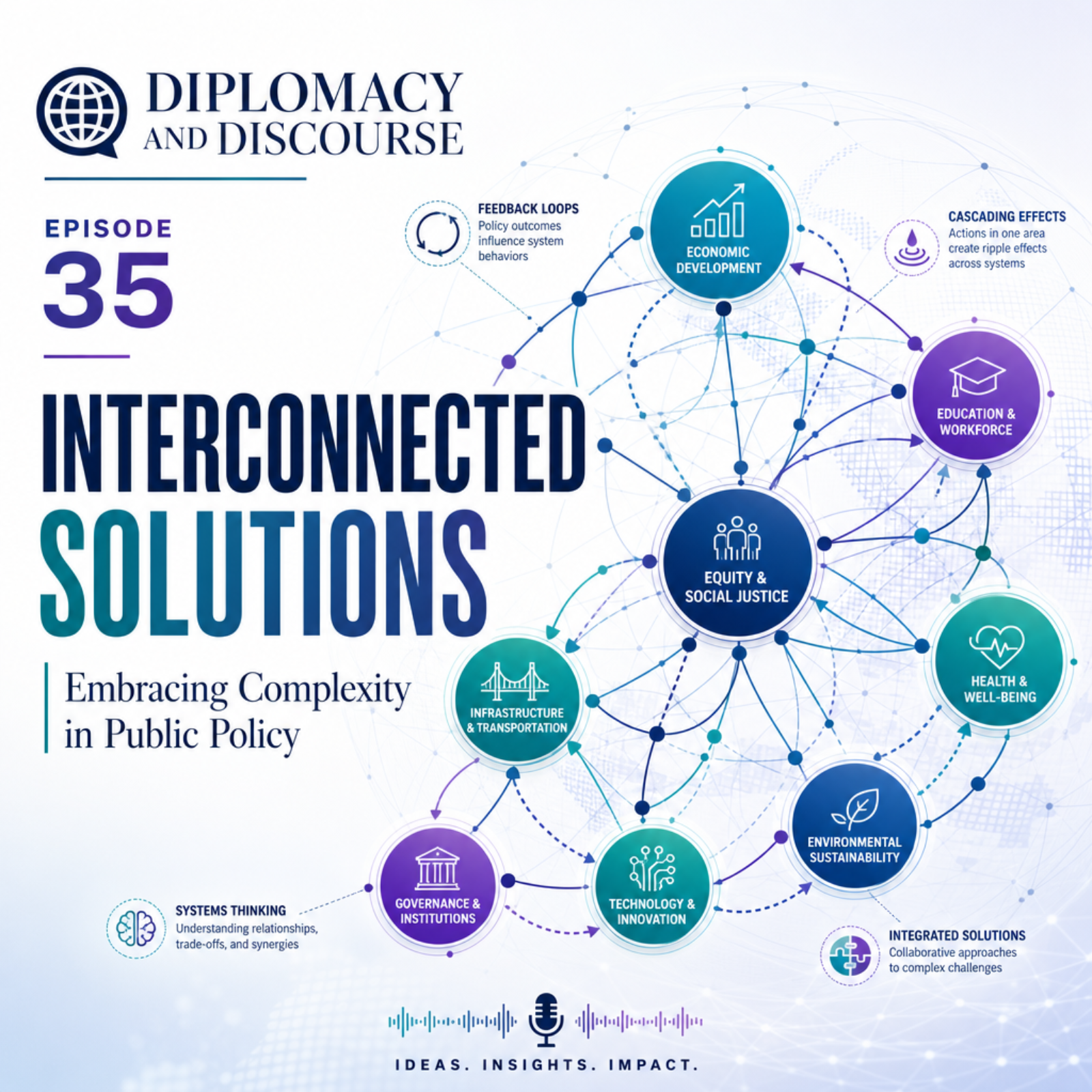
Why do policy solutions create new problems? Episode 35 explores systems thinking and complexity management in public policy—examining wicked problems, feedback loops, cross-sectoral coordination, and interconnected solutions through real-world examples including Afghanistan gender-cascade models, fuel subsidy effects, Mexico 2026 FIFA integration, and the UN Peacebuilding Fund approach. Core Concepts: - Systems thinking in policy-making - Complexity theory applications - Wicked problems characteristics - Interconnected policy challenges - Feedback loops and unintended consequences - Cross-sectoral coordination Real-World Examples: - Afghanistan gender-cascade model - Fuel subsidy policy effects - Mexico 2026 FIFA World Cup integration - UN Peacebuilding Fund approach Actionable Tools: 6 practical complexity-management tools for policy practitioners #systemsthinking #complexitytheory #publicpolicy #wickedproblems #policyintegration #feedbackloops #interconnectedsolutions #crosssectoralcoordination #complexitymanagement #policymaking #diplomacyanddiscourse #episode35
Explore listener stats, chart rankings, contacts and more on the Diplomacy and Discourse Podcast podcast page.