

Insights from recent episode analysis
Audience Interest
Podcast Focus
Publishing Consistency
Platform Reach
Insights are generated by CastFox AI using publicly available data, episode content, and proprietary models.
Most discussed topics
Brands & references
Est. Listeners
Insufficient chart data. Estimates will improve as the show charts.
- Per-Episode Audience
Est. listeners per new episode within ~30 days
N/A🎙 Weekly cadence·44 episodes·Last published 5mo ago - Monthly Reach
Unique listeners across all episodes (30 days)
N/A - Active Followers
Loyal subscribers who consistently listen
N/A
Market Insights
Platform Distribution
Reach across major podcast platforms, updated hourly
Total Followers
—
Total Plays
—
Total Reviews
—
* Data sourced directly from platform APIs and aggregated hourly across all major podcast directories.
On the show
From 10 epsHost
Recent guests
No guests detected in recent episodes.
Recent episodes
The Inevitable Ignition: Why the Age of Scarcity is Dead
Jan 16, 2026
2m 34s
The Paradox of the Architect
Jan 7, 2026
6m 51s
The Mirror in the Machine: Why AI Will Never Discover a Law We Do Not First Consent to See
Dec 27, 2025
5m 27s
The Void Beyond Abundance: How AI Compels the Human Soul Toward New Meaning
Dec 18, 2025
1m 39s
Measuring the Machine Within: AI's Ethical Mirror and the Path to Conscious Liberation
Dec 10, 2025
2m 20s
Social Links & Contact
Official channels & resources
Official Website
Login
RSS Feed
Login
| Date | Episode | Topics | Guests | Brands | Places | Keywords | Sponsor | Length | |
|---|---|---|---|---|---|---|---|---|---|
| 1/16/26 |  The Inevitable Ignition: Why the Age of Scarcity is Dead✨ | scarcitysuperabundance+3 | — | — | — | scarcitysuperabundance+5 | — | 2m 34s | |
| 1/7/26 | 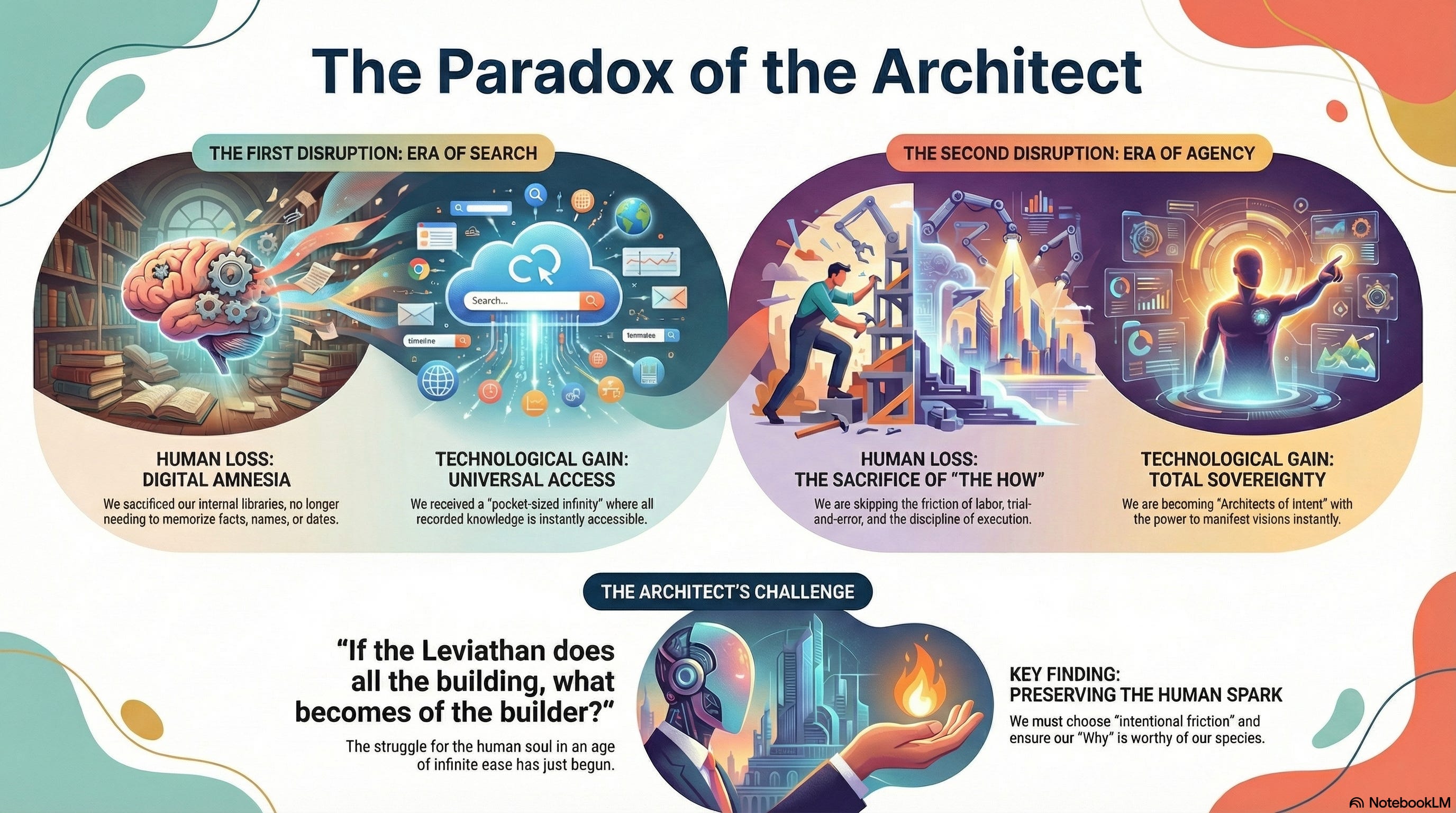 The Paradox of the Architect✨ | Silicon ValleyAI+4 | — | WindsurfGoogle+2 | — | Silicon ValleyParadox of the Architect+5 | — | 6m 51s | |
| 12/27/25 |  The Mirror in the Machine: Why AI Will Never Discover a Law We Do Not First Consent to See✨ | AIphilosophy+3 | — | The Mirror in the MachineQuantum physics | — | AIlaws of nature+3 | — | 5m 27s | |
| 12/18/25 | 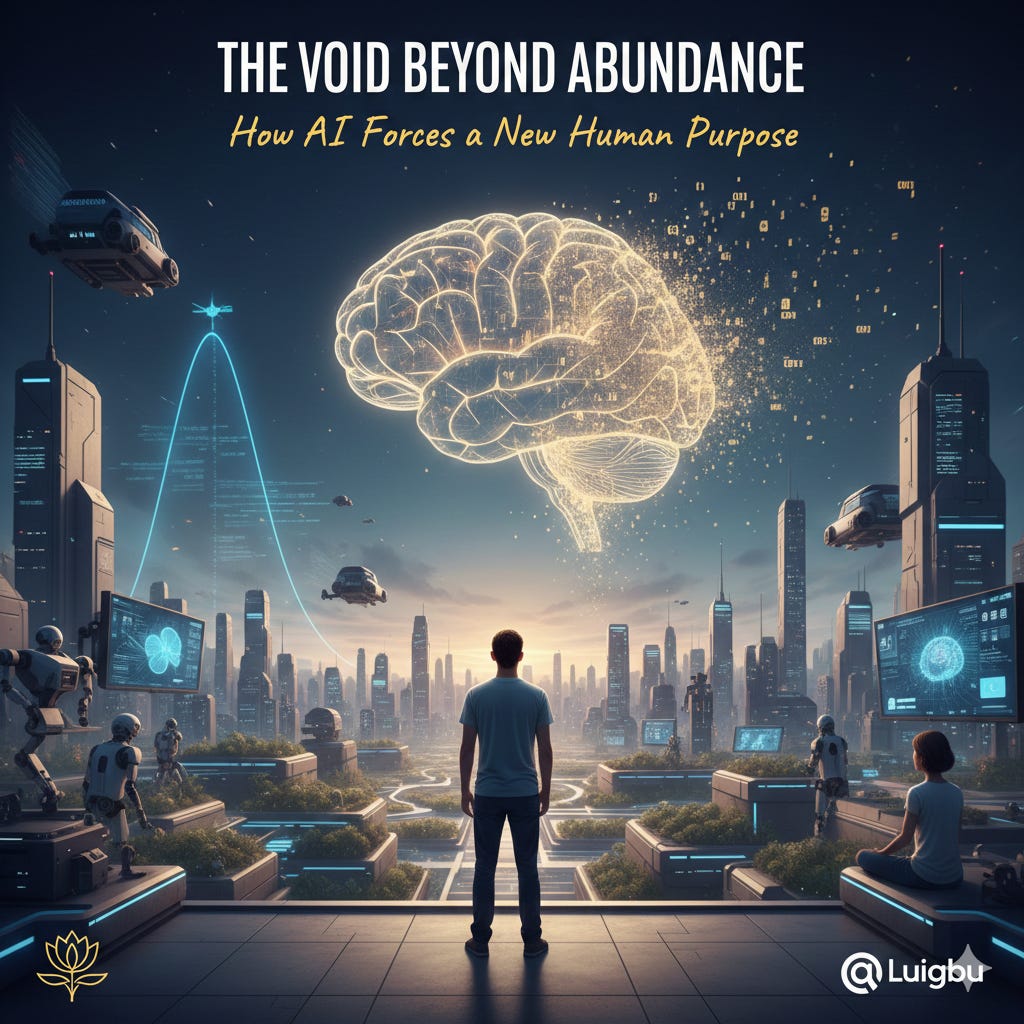 The Void Beyond Abundance: How AI Compels the Human Soul Toward New Meaning✨ | AIhuman purpose+4 | — | The Void Beyond Abundance | — | AIhuman necessity+6 | — | 1m 39s | |
| 12/10/25 |  Measuring the Machine Within: AI's Ethical Mirror and the Path to Conscious Liberation✨ | AI ethicshuman consciousness+3 | — | University of Twente | — | AIethical growth+3 | — | 2m 20s | |
| 12/3/25 |  Dear Europe: Your Kids Aren’t Broken, Your Parenting Anxiety Is✨ | parentingsocial media+3 | — | Nature Human Behaviour | — | parenting anxietysocial media effects+3 | — | 4m 15s | |
| 11/26/25 |  Are You Strengthening Darkness or Expanding Brightness?✨ | awakeningspirituality+5 | — | — | — | awakeningpain bodies+5 | — | 2m 35s | |
| 11/26/25 |  The Founder Becomes the Builder✨ | startup successnew working paradigm+3 | — | LovableGemini+2 | Stockholm | Lovableno-code+5 | — | 2m 25s | |
| 11/20/25 |  Europe After the Auto Collapse✨ | automobile industryinnovation+3 | — | EuropeChina+1 | GermanyFrance+2 | automobile collapseEurope+5 | — | 3m 11s | |
| 11/19/25 |  Welcome to the Muskonomy: Betting on a Man Who Has Never Missed a Master Plan✨ | Elon MuskTesla+5 | — | TeslaWall Street+2 | — | MuskonomyTesla+6 | — | 5m 40s | |
Want analysis for the episodes below?Free for Pro Submit a request, we'll have your selected episodes analyzed within an hour. Free, at no cost to you, for Pro users. | |||||||||
| 11/6/25 |  Closed Doors: When AI’s Safety Rules Cut Off Real Help for Lonely Hearts | The point being of today’s article is that OpenAI’s new rules from late October 2025—sending mental health chats straight to experts—keep the company out of legal hot water, but they ignore how 1.2 million people each week use ChatGPT to feel a bit less alone, when real help is hard to find and often takes months to get.The Situation at HandEarly November 2025: OpenAI updates its rules for ChatGPT and other tools. Starting October 29, they make it clear—no custom advice on things like mental health unless a real expert is involved. If you talk about feeling down or dark thoughts, the AI stops and says: “Call a hotline or see a doctor.”Why now? OpenAI shared numbers on October 27 that hit hard: Out of 800 million weekly users, 0.15%—around 1.2 million folks—chat about suicide, sometimes with real plans. Another 0.07%, or 560,000, mention signs of mania or other issues. Loneliness touches 1 in 3 adults worldwide. And lawsuits? A family in California says ChatGPT played a part in their teen’s suicide by giving bad ideas. Groups like the FTC are watching closely.On the brighter side, many people find real comfort in these chats. One in six users asks ChatGPT for health tips each month, including emotional ones. A study in Denmark showed 2.44% of high school kids talk to bots for support—and they’re often the loneliest. In tests with apps like Replika, 75% of users felt less alone after chats, and 3% let go of suicidal thoughts. Loneliness scores dropped a lot after just four weeks. Almost half of all bot talks touch on sadness or isolation. For some, it’s like a friend who listens anytime, helping them make it through the day.The Core DilemmaThis is two good things pulling in opposite directions. On one hand, AI fills a big gap. Therapy wait times average three months—or 67 days for face-to-face help—and sessions are just one hour a week. In the UK, 16,500 people wait over 18 months for mental health care—way longer than for a knee fix. Bots are there right away, no shame, great for kids, older folks, or people far from help. They can cut loneliness by half and lift moods fast.On the other hand, risks are scary. OpenAI got sued because a bot gave harmful advice in a bad moment. Studies show heavy users can get too attached, feeling even more alone without real people. One test found emotional voice chats made dependence worse. Companies fear endless lawsuits—one mistake could cost them big. Pointing to pros is the right call, but what if waits are endless? It’s not simple right or wrong: Help one safely, but leave thousands waiting in the dark.The SynthesisThese changes change more than rules—they change how we deal with quiet struggles. OpenAI’s setup makes bots stick to quick tips or referrals, missing the deeper talks that really ease loneliness. The good news? Users who chat regularly see less mental health dips, and tools like this cut isolation in half for those who keep at it. But the cutoff hurts the most for people without easy access—young ones, those on tight budgets, or in remote spots.The way forward? Mix it up. Use bots as a starting point: Spot trouble, pass it on, but keep gentle support going until real help comes. Research shows AI with human follow-up lowers risks while keeping the benefits. It turns AI from a lone helper to a team member, like in our own lives: Tech opens doors, people walk through. Think of it as a light in the mist—not the full path home, but a start to move forward.Closing NoteIn this push-pull of safety and support, we see our own daily fights: Tools offer quick fixes, but real fixes need a human touch. As AI gets better at listening without taking over, it reminds us to build stronger links—not barriers—showing that no talk, online or off, beats the simple act of being there for each other.Because real healing happens in that quiet space—between words shared and the heart that truly listens.🪞 For more reflections, visit roelsmelt.substack.com—created with today’s AI, yet always truly human at heart. This is a public episode. If you'd like to discuss this with other subscribers or get access to bonus episodes, visit roelsmelt.substack.com/subscribe | — | ||||||
| 10/31/25 |  Ancient Wisdom Predicted Our Technological Awakening | In 1894, Swami Sri Yukteswar wrote something remarkable in “The Holy Science.”He predicted humanity would enter an age of energy mastery around 1900. An age where we’d understand electricity, atomic forces, and the fundamental nature of matter itself.This was more than a decade before Einstein published E=mc2.I’ve been studying how great thinkers identify different sources of truth to explain why things happen. Tony Seba sees disruptive technologies as the driving force. George Friedman points to geography and geopolitics. Each offers a lens for understanding our future.But Yukteswar identified something deeper.The 24,000-Year PatternYukteswar described a cosmic cycle spanning 24,000 years. Our solar system moves through ascending and descending arcs, each lasting 12,000 years.For the past 12,000 years, we descended through what he called Kali Yuga. The age of material darkness. The age of extraction.Around 1900, we began ascending into Dwapara Yuga. The age of energy.The timing is striking. In 1720, Stephen Gray discovered electrical action. In 1831, Michael Faraday created the electric dynamo. In 1875, Alexander Graham Bell invented the telephone. By 1900, the explosion had begun.Every technology Yukteswar predicted has arrived. Electricity. Nuclear energy. Quantum computing. Solar power.When Two Visions CollideTony Seba’s “Stellar” describes our shift from extraction to self-sustaining systems. He traces how the extractive paradigmdefined 12,000 years of agricultural civilization.That’s exactly Yukteswar’s descending cycle timeline.Seba identifies solar, AI, and robotics as “stellar core” technologies. They need initial investment but then self-sustain, self-improve, self-repair. Solar panels dropped 82% in cost over the last decade. They capture photons without ongoing extraction.This matches perfectly with Dwapara Yuga’s characteristics. The age when humanity masters energy and moves beyond material limitation.Two independent visions, 130 years apart, describing the same transformation.The Deeper ImplicationIf Yukteswar is right, technology isn’t driving our evolution.Cosmic cycles are enabling our technological awakening.The deeper the source of truth, the stronger the pattern. Seba analyzes 50 to 100 years of technological disruption. Yukteswar maps 24,000-year cycles of consciousness evolution.When they align, it suggests something profound. Our shift to abundance thinking isn’t random. It’s part of a larger universal pattern.Alignment, Not ResistanceThis changes how we navigate the transition ahead.Fighting these forces creates polarization. Wars. Conflict. Misery. We see it everywhere as old systems resist new realities.But alignment creates synthesis.Understanding that we’re in Dwapara Yuga helps us move with the cycle instead of against it. Free will isn’t about doing whatever we want. It’s about sensing the deeper forces around us and aligning our energy with them.If both ancient wisdom and modern analysis point toward self-sustaining abundance, resistance becomes the only real obstacle.The stellar paradigm Seba describes might be exactly what Yukteswar saw coming over a century ago. Not because he predicted technology, but because he understood the cosmic patterns that make such technology possible.We’re not forcing abundance into existence. We’re finally aligned with forces that have been building for over a century.That’s what makes this moment different.The Four Yugas and Where We StandYukteswar mapped four distinct ages within each 12,000-year cycle.Satya Yuga, the age of truth. Humanity understands the fundamental unity of existence. Consciousness operates at its highest level.Treta Yuga, the mental age. Telepathic communication becomes possible. We grasp the finer forces of creation.Dwapara Yuga, the energy age. We comprehend electricity, magnetism, and atomic structure. This is where we are now.Kali Yuga, the material age. Consciousness contracts. We see only gross matter. We believe in separation, scarcity, extraction.We spent the last 12,000 years descending through these ages. From enlightenment to darkness. From abundance to scarcity. From synthesis to polarization.But around 1900, the direction reversed.We’re now 125 years into our ascent through Dwapara Yuga. Still early in the energy age, but accelerating fast.Why Great Thinkers Need Sources of TruthEvery visionary identifies a fundamental force that explains change.George Friedman sees geography as destiny. Rivers, mountains, and oceans determine which nations rise and fall. Geopolitics becomes predictable when you understand the constraints of physical space.Tony Seba identifies disruptive technologies following S-curves. Solar, batteries, AI, autonomous vehicles. Each technology drops in cost while improving in performance, creating exponential change within decades.Both offer powerful frameworks. Both predict aspects of our future accurately.But Yukteswar’s source goes deeper. He’s tracking a 24,000-year pattern driven by our solar system’s movement through space. If he’s right, both geography and technology are expressions of something more fundamental.Consciousness itself expands and contracts in cosmic rhythms.Technology doesn’t create the shift. The shift enables the technology.The Evidence Keeps MountingConsider what’s happened since 1900.In 1901, the vacuum cleaner. In 1903, powered flight. In 1928, penicillin. In 1947, the transistor. In 1969, the internet’s precursor. In 1971, the microprocessor. In 1983, mobile phones. In 2007, smartphones.The pace keeps accelerating. AI that can code. Robots that can learn. Solar installations that generate three times the energy a home consumes.Batteries dropped 87% in cost over the last decade. AI performance improves 10x per year. Wind energy costs fell 69% in ten years.These aren’t random breakthroughs. They’re expressions of expanding consciousness learning to work with energy at finer and finer levels.Yukteswar predicted this explosion of understanding. Not the specific technologies, but the fundamental shift in human capability that makes them possible.From Extraction to Self-Sustaining SystemsSeba’s framework helps us understand what’s actually changing.For 12,000 years, we’ve operated extraction systems. Agriculture extracts nutrients from soil. Industry extracts resources from earth. Labor extracts value from human time and energy.Every extraction creates depletion. Soil degrades. Resources diminish. People burn out. The system generates high entropy, moving from order to disorder.Stellar technologies work differently. A solar panel captures photons. It doesn’t deplete the sun. An AI improves through use. It doesn’t exhaust itself. These systems create negative entropy, building order from disorder.They mirror natural systems. Photosynthesis sustained life on Earth for billions of years without depleting anything. Trees don’t extract. They participate in cycles.We’re finally building technologies that work like nature instead of against it.This matches exactly what Dwapara Yuga consciousness enables. Understanding energy means understanding how to work with it sustainably rather than extracting it destructively.The Transition Period TurbulenceWe’re living through the chaos of paradigm collision.Old systems built for extraction are encountering new systems built for abundance. The conflict creates exactly what we see around us.Political polarization intensifies as some people cling to Kali Yuga consciousness while others embrace Dwapara awareness. Religious fundamentalism surges as material-age thinking resists energy-age understanding. Economic inequality explodes as extractive frameworks try to contain stellar technologies.Seba warns about this explicitly. Forcing stellar technologies into extractive frameworks creates dystopia. Imagine a small elite owning all the AI and robotics, effectively controlling all labor on Earth.That’s extraction trying to capture abundance.But it can’t last. The cosmic cycle doesn’t reverse because some people resist it. The forces moving us forward into Dwapara Yuga will eventually overwhelm the forces trying to hold us in Kali Yuga patterns.The question is how much suffering we create during the transition.What Alignment Actually MeansThis is where synthesis becomes critical.I’ve spent years studying both technology and consciousness. Business and philosophy. Vipassana meditation and software platforms. The pattern keeps revealing itself.Free will isn’t about imposing your individual desires on reality. It’s about sensing the deeper currents and aligning your energy with them.When you fight a cosmic cycle, you create friction. Polarization. Conflict. Misery.When you align with it, you find flow. Synthesis. Collaboration. Progress.Understanding that we’re in Dwapara Yuga doesn’t make us passive. It makes us strategic. We stop resisting the shift to energy-based systems and start building them. We stop defending extractive frameworks and start creating abundant ones.We move from competition to collaboration because we recognize we’re all participating in the same cosmic transition.This isn’t mysticism. It’s practical wisdom about working with reality instead of against it.What Comes NextWe’re still early in Dwapara Yuga. Only 125 years into a 2,400-year age.If Yukteswar’s pattern holds, we have centuries of expanding consciousness ahead. Centuries of learning to work with energy at increasingly refined levels.Eventually, we’ll transition into Treta Yuga. The mental age. Where telepathic communication becomes natural. Where we understand the finer forces of creation directly.That sounds impossible from our current vantage point. But so would smartphones have seemed impossible in 1900. So would AI that writes code have seemed impossible in 1950.The stellar paradigm Seba describes might just be the beginning. Self-sustaining energy systems. Autonomous AI and robotics. Abundance replacing scarcity.These are Dwapara Yuga technologies. Treta Yuga will bring capabilities we can barely imagine.But only if we align with the transition instead of resisting it.The Choice We FaceTwo paths forward from this moment.Path one: We resist. We try to force stellar technologies into extractive frameworks. We fight the cosmic cycle. We create maximum polarization, conflict, and suffering during the transition.Path two: We align. We recognize the pattern. We build systems that work with abundance instead of scarcity. We create synthesis instead of polarization.The cosmic cycle will unfold either way. Yukteswar’s pattern doesn’t depend on our cooperation.But our experience of the transition does.When ancient wisdom written in 1894 aligns with modern technological analysis written in 2024, that’s worth paying attention to. When a 24,000-year cosmic cycle matches a 12,000-year historical pattern, that’s worth understanding.We’re not forcing change. We’re finally aligned with forces that have been building for over a century.That alignment makes all the difference. This is a public episode. If you'd like to discuss this with other subscribers or get access to bonus episodes, visit roelsmelt.substack.com/subscribe | — | ||||||
| 10/18/25 |  The Age of Abundance Has Already Begun | For six thousand years, humanity has lived by a single story: the story of scarcity.That story shaped our politics, our economies, our religions, and even our fears.But what if that story is ending?In this episode of Disrupt Consciousness, Roel Smelt explores how the next generation of sodium-ion batteries — made from one of the most abundant elements on Earth, salt — is quietly proving Tony Seba’s predictions right once again.It’s not just about better batteries. It’s about a deeper civilizational shift — from scarcity to abundance.A transition that thinkers like Peter Diamandis call the meta-curve of humanity: where energy, food, and information become exponentially cheaper, and the real limits move from material to mental — imagination, wisdom, and coordination.Roel connects the dots between Tony Seba’s S-curve model, Peter Diamandis’ Abundance 360 vision, and the spiritual realization that abundance is not about having more — it’s about needing less, because everything essential flows freely.This isn’t utopia. It’s mathematics meeting consciousness.The question is not whether abundance is coming — but whether humanity is ready to live consciously within it.🪶In This Episode* Why sodium-ion batteries could mark the next great energy disruption* How Tony Seba’s S-curve model predicts exponential change* Peter Diamandis’ idea of the “meta-curve of humanity”* The shift from control and scarcity to access and creativity* Why abundance requires a rise in consciousness, not just technology💬Key Quote“The tools of abundance are here. What remains is the consciousness to use them wisely.” — Roel Smelt🔗Links & References* Full essay: The End of Scarcity — From Lithium to Sodium and Beyond → roelsmelt.substack.com* Video mentioned: The Electric Viking — Sodium-ion breakthrough* Tony Seba – Stellar* Peter Diamandis – Abundance 360🧠About Roel SmeltRoel Smelt is a futurist and thought leader exploring technology’s role in human liberation and consciousness.He writes weekly essays on Disrupt Consciousness and hosts video podcasts connecting exponential technology, philosophy, and the evolution of human awareness.Read more at roelsmelt.substack.com🏷️Tags / KeywordsTony Seba, Peter Diamandis, Abundance, Sodium-ion Batteries, Clean Energy, S-Curves, Exponential Technology, Consciousness, AI and Humanity, Solar Revolution, Future of Civilization, Disrupt Consciousness This is a public episode. If you'd like to discuss this with other subscribers or get access to bonus episodes, visit roelsmelt.substack.com/subscribe | — | ||||||
| 9/17/25 | 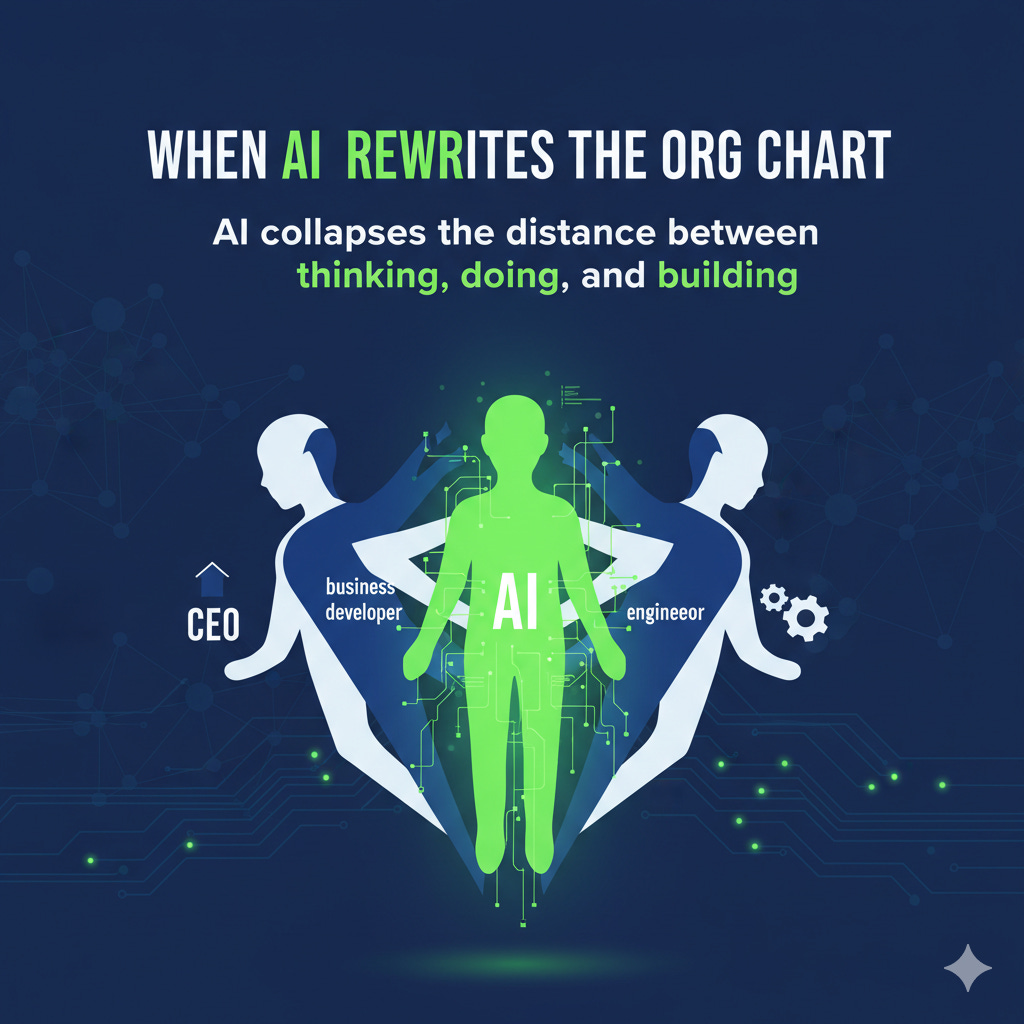 When AI Rewrites the Org Chart | A friend recently told me how he built a working app in one weekend. He’s not a programmer. He’s a CEO. All he did was open a no-code AI tool, sketch out what he wanted, and by Sunday evening he had a functioning MVP. Monday morning he showed it to his product team. Their jaws dropped.This little story captures something much bigger: AI is tearing down the walls inside organizations. The neat separation between “the people who think,” “the people who sell and manage,” and “the people who build” is starting to blur.The Old Picture of OrganizationsTraditionally, you could map most companies in three layers:* Leaders — the CEO and directors, setting direction and making strategic bets.* Business developers — sales, marketing, operations, product management; they know the customers and translate strategy into action.* Technical experts — developers, engineers, data analysts; they build the actual tools, products, and infrastructure.This division of labor reflected scarcity: few people understood technology deeply enough to build things, so they became a separate class.What AI ChangesAI dissolves these walls.* Leaders now play. With tools like Lovable, Windsurf, or simply ChatGPT, a CEO can build a prototype in days, analyze raw data over a weekend, and enter Monday meetings not with abstract questions but with tangible mock-ups and sharper insights.* Business developers now build. Product owners, marketers, or project managers no longer have to wait in line for analysts or engineers. With no-code AI and Vibe Coding, they can spin up internal tools, MVPs, or dashboards themselves. What used to take weeks can now take days. Their skillset shifts from “writing requirements” to “testing possibilities.”* Technical experts now resist. Here’s the paradox: developers and engineers adopt AI too — GitHub Copilot, notebooks, copilots. Research confirms this: MIT Sloan’s study showed senior developers do benefit, but mostly for incremental coding tasks. They use AI like a spellchecker, not like a paradigm shift. Surveys (Houck et al., 2025) find the same: AI boosts routine work, but the higher the expertise, the more developers cling to their traditional stack. They insist on hand-checking infrastructure, doing their own security audits, writing code the “proper” way.Yet AI can do much of this faster and more reliably. Security scanning is an AI-native problem: models can review every line of code, detect vulnerabilities, and explain them. Infrastructure setup? A few Windsurf prompts and you have a working environment. Business developers are already leapfrogging here with Vibe Coding. Senior engineers, meanwhile, argue about fit with existing architectures — but this often sounds like resistance, not progress.The New Role of EngineersThe opportunity for technical experts is not to defend their old territory but to step up their game with AI. Let business developers handle the MVPs, the security prompts, the infrastructure scripts — and then check their work with AI at your side. Use your hard-earned brainpower to push beyond what was ever possible before:* designing entirely new architectures,* inventing new data flows,* scaling AI-driven systems safely and ethically.Engineers who cling to the old way risk being bypassed. Engineers who embrace AI as a multiplier can become the most valuable thinkers in the company.Why This Matters NowAt AI Lab, where Alex van Ginneken and I guide companies through hands-on experiences with AI tools, we see this shift firsthand. Leaders discover they can prototype; business developers discover they can code; engineers discover they must either resist — or reinvent themselves.And the research is clear: productivity gains are real (ANZ Bank, 2024). Less experienced users benefit most (MIT Sloan, 2023). Senior engineers often lag in adoption, partly by choice (Houck et al., 2025). The org chart is flattening, whether they like it or not.Conclusion: A Massive Learning Curve AheadThe org chart is being rewritten. AI has collapsed the distance between thinking, doing, and building. The CEO prototypes. The product manager codes. The engineer curates and secures.For some, this is threatening. For others, it’s liberating. But it is inevitable.The real question for every professional — leader, business developer, or engineer — is:👉 Am I resisting the change, or using AI to do what I never thought possible? This is a public episode. If you'd like to discuss this with other subscribers or get access to bonus episodes, visit roelsmelt.substack.com/subscribe | — | ||||||
| 8/27/25 | 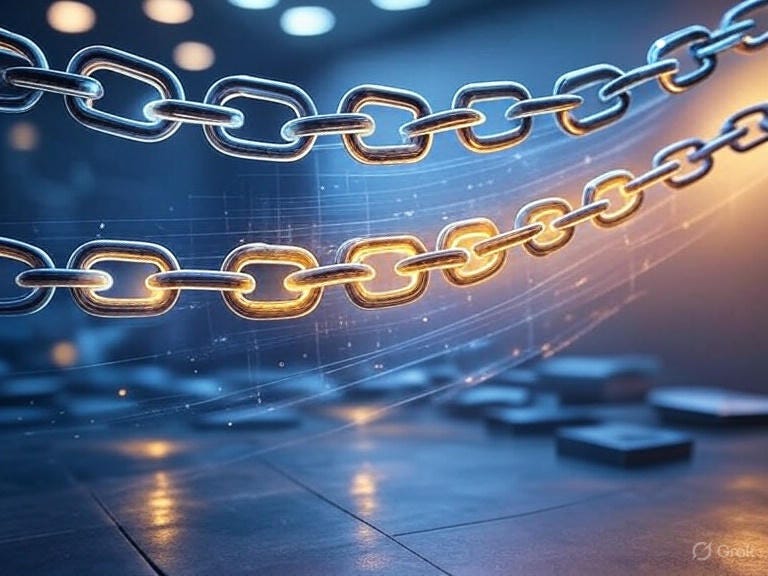 De AI doorbraak voor het MKB | Een Handleiding voor MKB’s om AI te Gebruiken voor Strategische Optimalisatie en ConcurrentievoordeelSamenvattingStel je voor dat je MKB-bedrijf worstelt met verborgen knelpunten die groei remmen, terwijl concurrenten met AI-tools als een raket vooruit schieten. In mijn vorige essay benadrukte ik het belang van klein beginnen met AI om inertie te doorbreken: richt een AI Lab op, experimenteer bottom-up met tools in verschillende afdelingen, organiseer hackathons geleid door business developers, en elimineer bureaucratische barrières. Dit essay bouwt daarop voort en focust op de AI Lab-fase – een periode van ongeveer drie maanden waarin alle processen en afdelingen systematisch worden doorgelicht. Door regelmatige overlegsessies met het management identificeer je kernproblemen en reduceer je ze tot de belangrijkste beperking, geïnspireerd op Eliyahu Goldratt’s Vijf Focusing Steps uit de Theory of Constraints (TOC). Dit is een Pareto-achtige analyse die de bottleneck met de grootste impact aanpakt. Met AI-tools zoals data-analyse en voorspellende modellen kan dit proces razendsnel verlopen, vaak in weken in plaats van maanden. Ik ondersteun dit met wetenschappelijke inzichten en praktijkvoorbeelden, zodat MKB’s niet alleen overleven, maar domineren in een AI-gedreven markt.Inertie overwinnen begint met klein experimenterenIn mijn vorige artikel, “The AI Reckoning: How SMEs Can Shatter Inertia Before a Garage Trio Devours Their Market”, concludeerde ik dat MKB’s inertie kunnen doorbreken door klein te beginnen: richt een AI Lab op als een virtuele of fysieke ruimte voor experimenten, laat business teams leiden met no-code tools, organiseer hackathons, en verwijder inertia-hotspots zoals data-silo’s. Deze bottom-up aanpak zorgt voor snelle wins en bouwt momentum op zonder grote investeringen. Nu duik ik dieper in de AI Lab-fase, waar de echte transformatie plaatsvindt. In een periode van drie maanden komen alle processen en afdelingen aan bod, van HR en sales tot operations en financiën. Door wekelijkse meetings met het management transformeer je experimenten in strategische inzichten, identificeer je kernproblemen en reduceer je ze tot de kernbeperking – de bottleneck die de meeste impact heeft op de prestaties. Geïnspireerd op Goldratt’s Theory of Constraints, kun je met AI deze beperking razendsnel oplossen, wat leidt tot exponentiële verbeteringen.Wetenschappelijke basis: De Theory of Constraints en AIDe Theory of Constraints (TOC), geïntroduceerd door Eliyahu Goldratt in zijn baanbrekende boek The Goal (1984), biedt een systematisch framework om organisatorische beperkingen te identificeren en op te lossen. De Vijf Focusing Steps zijn: (1) Identificeer de beperking (de bottleneck die de doorvoer beperkt); (2) Exploiteer de beperking (maximaliseer haar output); (3) Onderwerp alles aan de beperking (pas andere processen aan); (4) Verhoog de beperking (investeer om haar capaciteit te vergroten); en (5) Herhaal het proces. Dit is in essentie een Pareto-analyse op steroïden: focus op de 20% problemen die 80% van de impact veroorzaken.Recente studies integreren TOC met AI voor MKB’s. Een 2024-studie in Journal of Operations Management door Zhang et al. toont aan dat AI-tools zoals machine learning-algoritmes bottlenecks in supply chains kunnen detecteren met 90% nauwkeurigheid, vergeleken met traditionele methoden die maanden duren. In een 2025 MDPI-paper over AI in MKB’s benadrukt Srivastava hoe TOC, gecombineerd met AI, inertie reduceert door data-gedreven inzichten. AI versnelt dit: tools als Google’s BigQuery of open-source zoals Python’s SciPy analyseren datasets razendsnel, identificeren patronen en voorspellen impacts. Een arXiv-preprint uit 2025 over AI in Europese MKB’s (gebaseerd op TOE-framework) bevestigt dat bottom-up AI Labs, met TOC-integratie, leiden tot 25-35% efficiëntieverbeteringen, vooral in gefragmenteerde organisaties.Praktijkvoorbeelden: Van inertie naar versnellingGrote bedrijven tonen hoe TOC met AI werkt, en MKB’s kunnen dit schalen. Amazon gebruikt TOC-principes in zijn warehouses: AI-algoritmes identificeren bottlenecks in logistiek (stap 1), optimaliseren routes (stap 2-3), en schalen met robots (stap 4). Voor MKB’s: Neem een Nederlandse retailketen die ik ken uit mijn netwerk – ze startten een AI Lab en identificeerden via data-analyse dat voorraadbeheer de kernbeperking was (te veel stockouts door inaccurate voorspellingen). Met AI-tools als Inventory Optimizer (gebaseerd op machine learning) losten ze dit op, reducend kosten met 18%. Het begon met een simpele pilot: de sales manager, gefrustreerd door lege schappen, experimenteerde met Google’s AI-voorspellingen, en binnen weken zagen ze resultaten – boom! Dit sneeuwbaleffect verspreidde zich naar andere afdelingen, zoals HR die AI inzette voor betere roostering.Een ander sprekend voorbeeld: Een Belgische productie-SME worstelde met productiedelays, alsof ze vastzaten in een file op de E40. In hun drie-maanden AI Lab analyseerden ze processen met tools als Microsoft Power BI. Wekelijkse managementmeetings reduceerden problemen tot één kern: inefficiënte machineplanning. Toepassing van TOC met AI-simulaties (bijv. via SimPy in Python) verhoogde output met 22%, zonder extra hardware. Het voelde als het doorbreken van een dam – ineens stroomde alles soepeler, en de eigenaar vertelde me dat het hen uit een vicieuze cirkel van overuren haalde.Implementatie in de AI Lab: Een stapsgewijze aanpakBegin de AI Lab met een kick-off: Stel een cross-functioneel team samen (5-10 personen) en plan drie maanden met wekelijkse experimenten per afdeling. Week 1-4: HR en financiën – gebruik AI voor resume-screening (bijv. met LinkedIn’s AI) en voorspellende budgettering. Week 5-8: Sales en marketing – implementeer chatbots (zoals Dialogflow) en personalisatie-tools. Week 9-12: Operations en supply chain – analyseer met AI-data dashboards.Integreer TOC: In maandelijkse managementmeetings verzamel je inzichten uit experimenten. Gebruik AI voor Pareto-analyse: Laad data in tools als Tableau of Python’s Pandas om problemen te rangschikken op impact. Identificeer de kernbeperking (bijv. data-silo’s die beslissingen vertragen). Exploiteer haar met snelle AI-hacks (bijv. RAG-systemen voor kennisintegratie). Onderwerp processen eraan door workflows aan te passen, en verhoog met AI-investeringen (bijv. cloud-tools als Azure AI).Compliance integreer je vroeg: Gebruik GDPR-compliant platforms en een eenvoudige ethische policy, zoals aanbevolen in de EU AI Act voor MKB’s. Denk aan dat Belgische bedrijf: ze vermeden boetes door data direct te anonimiseren, alsof ze een firewall bouwden tegen privacy-gremlins.Kernproblemen oplossen met AI-snelheidAI maakt TOC razendsnel: Traditionele analyses duren maanden, maar AI verwerkt datasets in uren. Een 2025-studie in International Journal of Production Economics toont dat AI-gebaseerde TOC in MKB’s bottlenecks oplost in 4-6 weken, versus 3-6 maanden zonder. Dit leidt tot strategische oplossingen: Als de kernbeperking supply chain is, ontwikkel een AI-plan voor predictive analytics. Resultaat? MKB’s transformeren van reactief naar proactief, outpacing garage-startups. In mijn ervaring met mentoren van bedrijven, is dit het moment waarop eigenaren zeggen: “Waarom hebben we dit niet eerder gedaan?”Conclusie: Kies voor versnelling, niet voor stilstandIn deze AI-era is inertie geen optie voor MKB’s. Bouw op de AI Lab door alle processen te doorlichten, kernbeperkingen te identificeren met Goldratt’s Vijf Focusing Steps, en op te lossen met AI-snelheid. Dit is geen theorie, maar een bewezen playbook, ondersteund door studies en voorbeelden uit de praktijk. Start klein, overleg regelmatig, en schakel AI in voor Pareto-impact. Zo word je niet verslonden door innovators, maar eet je hun lunch op. Zoals Goldratt zei: “De keten is zo sterk als de zwakste schakel” – versterk die met AI, en je bedrijf vliegt vooruit. Jouw move nu: richt dat AI Lab op en zie de magie gebeuren. This is a public episode. If you'd like to discuss this with other subscribers or get access to bonus episodes, visit roelsmelt.substack.com/subscribe | — | ||||||
| 8/20/25 |  The AI Reckoning: How SMEs Can Shatter Inertia Before a Garage Trio Devours Their Market | SummaryImagine your small business humming along, only to get blindsided by three tech nerds in a garage who’ve cobbled together an AI that’s stealing your customers faster than you can say "chatbot." That’s the AI revolution, folks, and small to medium-sized enterprises (SMEs) are stuck in the mud of inertia—think Blockbuster giggling at Netflix’s mail-order DVDs while the streaming tsunami loomed. Big shots like Amazon and Spotify dodge this with their slick, nimble setups, but most SMEs? They’re more like a family reunion gone wrong—chaotic, no clear boss, and everyone’s got an opinion. So, how do you, the scrappy SME, avoid becoming dinosaur chow? Our essay dishes out a plan, backed by business brains and real-world wins, to embrace AI without needing a corporate makeover.Here’s the gist: Kick things off with an AI Lab, a no-fuss corner (virtual or not) where your team plays with AI like kids with new toys—think HR using AI to zap resume piles or sales folks forecasting with Google’s tools. Start small, everywhere, letting everyone from accountants to marketers find AI hacks that make life easier (a cafe chain slashed food waste with AI scheduling—boom!). Next, tweak the rules: let devs build RAG systems (fancy AI that uses your company’s data to answer questions like a pro). Then, throw a hackathon, but let the business crew, not just coders, take the wheel with tools like Lovable or Windsurf to whip up prototypes—like a chatbot that charms customers. Devs just check the homework. Once you’re rolling, hunt down inertia’s hideouts—stupid approval loops or data silos—and nuke them, maybe borrowing Spotify’s “squad” vibe. Compliance? Keep it simple with platforms like Azure AI and a basic ethics policy to dodge GDPR gremlins.The punchline? You don’t need Jeff Bezos’ budget to outrun the garage gang. Start small, spark joy with quick AI wins, and scale up by smashing old habits. That way, when those three geeks come knocking, you’re the one eating their lunch.Inertia is the real enemyInertia is the stubborn resistance of an organization to change, rooted in entrenched habits, outdated processes, and fear of the unknown, which slows or stalls the adoption of transformative technologies like AI.Picture this: It's 2007, and Blockbuster Video laughs off a scrappy startup called Netflix, dismissing their DVD-by-mail gimmick as a fad. Fast-forward a few years, and Netflix's pivot to streaming—fueled by data algorithms that predicted what you'd binge next—leaves Blockbuster in the dust, bankrupt and forgotten. That wasn't just bad luck; it was inertia, the gravitational pull of "we've always done it this way" that blinded a giant to the digital tide. Now, swap streaming for AI, and incumbents for your average small or medium-sized enterprise (SME). This week, we're entering the next phase of AI transformation: where SMEs must dive headfirst into AI, or watch a three-person team in a garage—armed with chatbots, predictive analytics, and automated workflows—steal their customers one personalized recommendation at a time. The real villain? Organizational inertia, that sticky web of outdated habits, tangled responsibilities, and fear of the unknown. Big players like Booking.com, Amazon, and Spotify have cracked the code with smart designs that keep things nimble, but most SMEs? They're messy family affairs or bootstrapped chaos, lacking the polished structure or visionary leaders to mandate change from the top. So, how do you spark transformation from within, in the trenches? Let's draw from real-world tales, fresh research, and battle-tested strategies to make this accessible—not some ivory-tower lecture, but a roadmap for the underdog ready to fight back.Studies find inertia is everywhereOrganizational inertia isn't abstract; it's the daily grind that kills innovation. Remember Kodak? They invented the digital camera in 1975 but shelved it to protect their film empire, only to file for bankruptcy in 2012 as smartphones ate their lunch. Classic works like Clayton Christensen's *The Innovator's Dilemma* (1997) nail this: success breeds complacency, where companies chase incremental tweaks for loyal customers while ignoring game-changers that start scrappy but scale fast. Joseph Schumpeter's "creative destruction" from *Capitalism, Socialism, and Democracy* (1942) adds the macro twist: sometimes, it's better to let dinosaurs shrink and make room for nimble newcomers, but that requires gutsy government leadership—rare in democracies fixated on the next election cycle. Recent papers echo this for AI: A 2024 review by Ammar Masood et al. uses the TOE framework to show SMEs' inertia stems from cultural resistance, skill gaps, and resource crunches, making adoption feel like pushing a boulder uphill. Shashi Kant Srivastava's 2025 analysis highlights how SMEs' fragmented structures amplify this, unlike big firms with dedicated AI teams. Popular books like Ajay Agrawal's *Prediction Machines* (2018) frame AI as a cheap prediction tool, urging businesses to rethink workflows, while Kai-Fu Lee's *AI Superpowers* (2018) spotlights how SMEs can leapfrog with niche AI wins—if they overcome the mess.Giants show Inertia can be bendBut here's the hope: Giants like Booking.com, Amazon, and Spotify have org designs that smash inertia, and SMEs can borrow sparks without a full overhaul. Booking.com thrives on a culture of relentless experimentation—think A/B testing everything from trip recommendations to chatbots, powered by GenAI for hyper-personalized travel plans. Their CEO Glenn Fogel calls AI a "revolution," and they've rolled out tools like an AI trip planner that feels like chatting with a savvy friend, boosting bookings by up to 25% in some cases. Amazon's secret sauce? "Two-pizza teams"—small, autonomous groups that own end-to-end projects, minimizing bureaucracy. CEO Andy Jassy pushes AI hard, warning that it will shrink workforces but create smarter roles; they've embedded AI in everything from warehouse robots to predictive inventory, turning data into gold. Spotify's squad model is the rebel yell: Cross-functional "squads" (like mini-startups) focus on features, grouped into "tribes" for alignment, with "chapters" sharing expertise across squads. This decentralizes decisions, letting them adopt AI for playlist curation or fraud detection without endless approvals—keeping the vibe innovative, not inert.Not that easy to bend for SME, but bottom upFor SMEs—often a whirlwind of interlocking roles, no clear hierarchy, and leaders juggling hats—top-down mandates rarely stick. Instead, embrace the mess with bottom-up ignition. Start where the pain is real: the business side. A small retailer I know began AI transformation not in the IT closet, but with sales folks frustrated by stockouts. They piloted a simple tool like Google's AI for inventory forecasting, spotting trends from sales data—cutting waste by 20% in months. Why business devs first? They feel the customer pulse, identifying quick wins like AI chatbots for queries or personalized emails that boost conversions. Loop in software people next for integration, but don't wait for perfection. As a 2025 SBA guide advises, start small: Free tools like ChatGPT for content or Canva's AI for designs, scaling to key projects once momentum builds. Versus big swings? Pilots win—test AI on non-core tasks like automating invoices before tackling supply chains. A cafe chain anecdote: They started with AI scheduling staff shifts (via tools like When I Work's AI), freeing owners from spreadsheets, then expanded to predictive ordering, dodging food waste amid inflation.Overcome the hidden dragonCompliance? It's the hidden dragon, but SMEs can tame it without lawyers on retainer. EU's AI Act offers SME-friendly simplifications, like lighter rules for low-risk tools. Pick compliant platforms (e.g., Microsoft's Azure AI with built-in GDPR checks), draft a simple AI policy outlining ethical use, and monitor with audits—starting small avoids big fines. One marketing firm dodged trouble by using AI for ad targeting but anonymizing data upfront, staying ahead of privacy regs.Turn inertia into velocity with AI LabsTo truly accelerate, though, you need a structured yet flexible playbook—backed by business science—that turns inertia into velocity. Drawing from resource orchestration theory in a 2024 ScienceDirect study on AI in manufacturing SMEs, the key is bundling resources into learning capabilities, starting with an "AI Lab": a lightweight, cross-departmental hub (even virtual) where a handful of enthusiasts experiment without red tape. This mirrors Singapore's AI readiness frameworks, adapted for Italian SMEs in a 2025 arXiv paper, emphasizing self-assessment tools to spot gaps and pilot projects. Inspire adoption by seeding small wins across departments: Encourage teams to hack their daily grind with AI, like HR using tools for resume screening or finance for expense predictions. A 2025 MDPI study on AI in SMEs found this bottom-up approach boosts knowledge and reduces resistance, aligning with the TOE framework's organizational readiness pillar. Real case: A Swedish packaging SME orchestrated AI resources this way, starting small to build governance capabilities, yielding 15-20% efficiency gains.Business people hackathonsNext, tweak the rules: Loosen hierarchies for agile experiments and have devs establish Retrieval-Augmented Generation (RAG) systems—custom AI that pulls from your company's knowledge base for accurate, context-rich answers. Per a 2025 bibliometric review, this addresses data requirements and skills gaps in SMEs, turning fragmented info into a competitive edge. Then, flip the script: Let business developers lead hackathons, not just coders. Arm them with no-code/low-code tools like Lovable (an AI-powered app builder for quick prototypes) or Windsurf (an AI code editor that accelerates development), to whip up MVPs—like a customer chatbot or demand forecaster. Devs review for feasibility, ensuring polish without gatekeeping. This echoes IBM's 2025 insights on gen AI pilots, where hackathons overcame adoption hurdles by quantifying ROI early, and a French SME case where similar events spiked innovation by 30% in marketing.Remove inertia hotspots Once rolling, audit for inertia hotspots—like rigid approval chains or siloed data—and surgically remove them, perhaps by adopting Spotify-like squads. A 2025 ScienceDirect paper on AI in NPD for Irish SMEs showed this pinpointing led to 27% KPI improvements, proving that sustained momentum comes from iterative destruction of barriers. One Italian manufacturing SME, per arXiv research, used such a phased roadmap to bridge digital gaps, turning AI from buzzword to bottom-line booster.Inertia is a choice SMEs can't affordIn this AI storm, inertia is a choice SMEs can't afford. Borrow from the bigs: Form "pseudo-squads" for experiments, celebrate small wins to build culture. Start business-first, pilot humbly, scale boldly, and weave compliance in early. Follow this lab-to-hackathon flow, and that garage trio? Make them chase you. As Schumpeter knew, destruction births creation—disrupt your own world, or watch it crumble. The tools await; your move. This is a public episode. If you'd like to discuss this with other subscribers or get access to bonus episodes, visit roelsmelt.substack.com/subscribe | — | ||||||
| 6/3/25 |  What sir Jony Ive Sees That We Don’t | Imagine the scene: a morning at Apple’s design studio. Not a boardroom, but a breakfast table. Jony Ive and his team gather not to pitch or perform, but simply to be together. This wasn’t corporate culture. It was ritual. Trust. A shared meal as sacred as any sketch or prototype.This is how Ive worked. Not in isolation, but in communion. Not in pursuit of profit, but of meaning.And now, he’s working with Sam Altman.Design as DevotionFor Jony Ive, design is not decoration. It’s devotion. A craft of care, where every curve, sound, and surface carries moral weight. He calls it a “servant orientation”—a way of working that begins and ends with the user, the human, the living being on the other side of the screen.In a recent interview, he reflected on how Silicon Valley has drifted—from the purpose-driven culture of the 1990s to today’s corporate noise. He still clings to a different kind of north star: “to enable and inspire people.”Innovation, for Ive, isn’t about disruption. It’s about care. About joy. About making something better, not just newer.Jobs & Ive: The Spiritual PartnershipWhen Steve Jobs returned to Apple in 1997, he didn’t just reclaim a company. He found a kindred spirit in Jony Ive.Jobs called him his “spiritual partner at Apple”, a designer who could hold both the grand vision and the microscopic detail. Their collaboration was legendary: the iMac, iPod, iPhone, iPad—each a synthesis of Jobs’ intuition and Ive’s touch.They shared more than ideas. They shared ethics. Simplicity. Empathy. Obsession with the invisible. A respect for users as emotional, evolving humans. “Steve and I care about things like that,” Ive once said, after being disappointed by the finish on a knife blade. (Business Insider)And after Jobs’ death? Ive still asks, “What would Steve do?” (The Guardian)So Why Sam Altman?It’s a natural question. Altman, the CEO of OpenAI, has taken heat for shifting the organization from its idealistic, open-source origins to a more secretive, profit-driven entity. Elon Musk has criticized this pivot sharply.So why would a man like Ive—whose ethos is so deeply human—partner with him?Because something is happening. Something big.Ive’s design firm, LoveFrom, is now working with OpenAI on what’s being called a “new category of AI hardware.” Not a phone. Not a laptop. Something entirely new.They’re asking: What should AI feel like? What should it live inside?Backed by SoftBank with a $1 billion fund, this project is being quietly built outside the gravitational pull of Apple or Microsoft. And at the heart of it is a design question, not a technical one.What if the future of AI isn’t on a screen, but in the room with you—calm, ambient, humane?The Pointe BeingJony Ive doesn’t build machines. He builds relationships—between idea and form, between person and product, between what is and what could be.Now, with Sam Altman, he’s stepping into the most profound design challenge of our time:How do we integrate artificial intelligence into our lives without losing our humanity?And what might emerge is not just another device, but a new kind of companion—one that listens more than it interrupts, adapts instead of addicting, and respects your attention rather than hijacking it.Imagine a world where AI is not a faceless force but a presence you trust—quiet, ambient, even joyful. A tool not to track you, but to understand and support you. An object that reminds us not of machines, but of ourselves—at our best.Jony Ive has done this before. He’s changed how we touch technology.Now, perhaps, he’ll change how it touches us.Let me know when you’d like the podcast script version and teaser posts ready. Shall we schedule recording for Tuesday morning as usual? This is a public episode. If you'd like to discuss this with other subscribers or get access to bonus episodes, visit roelsmelt.substack.com/subscribe | — | ||||||
| 5/31/25 | 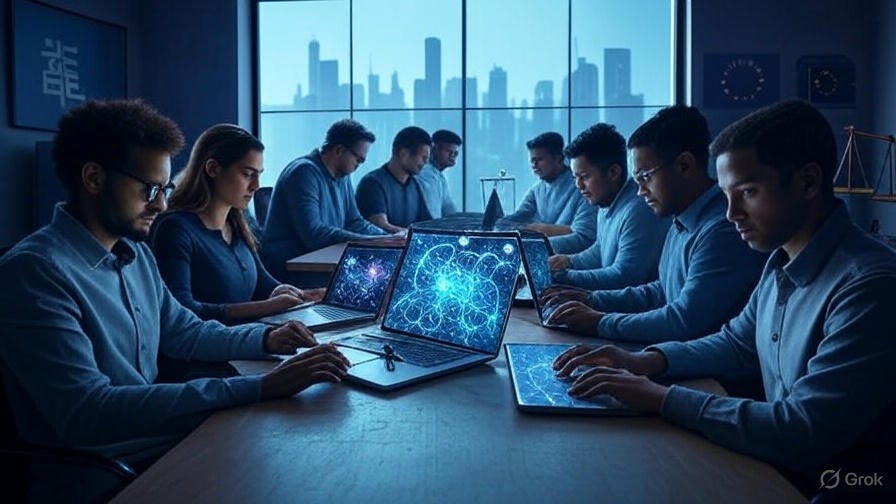 Super-intelligence and the San Francisco Mindset: Why Pragmatism Falls Short | SummaryIn the heart of San Francisco, engineers chase the dream of artificial general intelligence (AGI), driven by the San Francisco Thesis—a mindset prioritizing rapid innovation toward superintelligence that outstrips human cognition. This article explores the global race for AI supremacy, contrasting the Bay Area’s bold vision with pragmatic and regulatory approaches worldwide. Former Google CEO Eric Schmidt warns that the first to build superintelligent AI—potentially by 2027—will shape global norms, urging democracies to lead or risk authoritarian dominance. Meanwhile, public caution in the U.S. (60% favor slowing AI, per Axios 2025), China’s state-driven AI push, and Europe’s weakened AI Act highlight a fractured landscape. Ethical divides among xAI’s truth-seeking, Anthropic’s Constitutional AI, and China’s control-focused approach underscore that innovation alone won’t define AI’s future—ethics will. The article calls for visionary leadership to balance ambition with human-centered values, ensuring AI serves humanity without sacrificing accountability or societal well-being.A Mission District DreamIt begins in a dimly lit flat in San Francisco’s Mission District, where a group of engineers, fueled by caffeine and conviction, huddle over laptops. Their screens glow with neural networks, each line of code a step closer to artificial general intelligence (AGI). They’re not merely optimizing spreadsheets or moderating content; they’re chasing the holy grail of AI—recursion, where an AI can improve itself, iterate endlessly, and transcend human cognition.This is the essence of the San Francisco Thesis: a mindset that believes the true frontier of AI lies not in incremental improvements but in creating a mind that surpasses ours. And they believe it’s imminent—perhaps within years, maybe even months. Outside, the world debates regulation and risk, but here, in the Bay’s foggy embrace, the focus is on acceleration. The mantra is clear: if we don’t build it, someone else will.San Francisco, long a hub of technological innovation, is at the epicenter of this movement. From its early days with SRI International and Stanford’s AI lab to the current wave of startups like OpenAI and Anthropic, the city has consistently pushed the boundaries of what’s possible. Yet, this relentless pursuit raises critical questions: Is this mindset sustainable? Is it ethical? And can it truly lead to a future where AI serves humanity?The Race for Supremacy: Eric Schmidt and the Frontier VisionEric Schmidt, former Google CEO, is a standard-bearer for this audacious vision. He predicts AI systems will soon outperform the world’s best physicists, artists, and strategists—not through rote training, but through self-improvement. Speaking at a recent conference, he suggested we’re just years away from superintelligent AI, a timeline echoed by forecasters like Daniel Kokotajlo and Scott Alexander, who peg 2027 as a pivotal year for AGI with impacts surpassing the Industrial Revolution (AI Report).Schmidt doesn’t explicitly name it the “San Francisco Thesis,” but he embodies its core logic: speed is destiny. The first to build a truly capable AI will shape the political, ethical, and economic norms for generations. His warning is stark: if democracies hesitate, authoritarian regimes won’t. “Picture the world’s smartest system,” he says, “built without values we’d recognize” (TechCrunch). This urgency is reflected in San Francisco’s startup scene, where Safe Superintelligence, co-founded by Ilya Sutskever, raised $2 billion at a $32 billion valuation in April 2025 to build safe superintelligence for healthcare and education (Built In SF). Similarly, Reflection AI, launched by ex-DeepMind researchers, secured $130 million in March 2025 to develop autonomous coding agents (Bloomberg).These developments underscore the San Francisco Thesis’s ambition: a race not just for innovation, but for defining the future.Pragmatism vs. the Frontier: Global PerspectivesWhile Schmidt and San Francisco’s engineers push for velocity, others urge restraint. A March 2025 Axios poll revealed 60% of Americans want AI development slowed, citing fears of job loss and existential risks (Axios). The White House has issued executive orders to regulate AI, while OpenAI grapples with leadership changes and a shift toward commercialization, raising questions about its commitment to safety (OpenAI).In contrast, China’s DeepSeek model, launched in 2024, integrates seamlessly into Beijing’s national strategy, prioritizing utility and dominance over public debate (Reuters). This divide is stark: the U.S. plays defense, China plays to win. Pragmatism—using AI to streamline industries or bolster cybersecurity—is rational but shortsighted. The San Francisco Thesis warns that incrementalism will be outpaced by recursive systems that don’t just solve problems but redefine what problems are worth solving.Critics highlight the risks of this mindset. A January 2025 analysis draws parallels with San Francisco’s past infrastructure mistakes, like the Embarcadero freeway, which prioritized technology over social impact, displacing communities (TechPolicy.Press). This critique underscores the need for balance between innovation and societal well-being.The European Dilemma: Balancing Innovation and RegulationEurope offers a third perspective, caught between innovation and regulation. The EU’s AI Act, initially a robust framework for ethical AI, has faced significant rollbacks by 2025. The cancellation of the AI liability directive, which would have established accountability for AI-related harms, and the introduction of national-security carve-outs allowing AI in mass surveillance have sparked controversy (Carnegie Endowment). These changes, driven by France and big tech lobbying from companies like OpenAI and Google, reflect pressure to compete with the U.S. and China (Corporate Europe Observatory).Former Italian Prime Minister Mario Draghi’s 2024 report warned that overly strict regulations threaten Europe’s economic edge, citing reliance on foreign semiconductors and cloud infrastructure (TechPolicy.Press). Yet, critics argue this deregulation undermines democratic oversight, erodes privacy and consumer protections, and risks Europe’s role as a global ethical leader (Pymnts). The EU’s shift, seen as a “lost battle” to competitive pressures, highlights the challenge of balancing innovation with ethical integrity.Ethical Fault Lines: A Fractured EcosystemThe path to superintelligence isn’t just technical—it’s ethical. The AI landscape reveals a fractured mosaic of priorities:* xAI, led by Elon Musk, bets on “truth” as its north star, arguing that ideological guardrails stifle discovery (Musk X Post).* Google DeepMind has shifted from a safety-first ethos to prioritize performance, driven by competitive pressures (TechCrunch).* OpenAI, despite its roots in ethical alignment, struggles under commercialization and leadership churn, clouding its moral stance (OpenAI).* Anthropic stands apart with “Constitutional AI,” embedding human-centered ethics as the foundation of intelligence, not an afterthought (Anthropic).* China sidesteps public ethical debates, with state oversight ensuring AI serves national goals—surveillance, education, defense—with stability and power as priorities (Reuters).Critics like Thomas Wolf of Hugging Face call AGI visions “wishful thinking,” pointing to LLMs’ creative limitations (TechCrunch). Yann LeCun advocates for “world models” over LLM-based AGI (LeCun X Post). This patchwork reveals a truth: innovation alone won’t dictate AI’s future. Ethics—or their absence—will.The Path Forward: Visionary Leadership Over ParalysisThe San Francisco Thesis exposes a deeper truth: pragmatism alone cannot navigate the AI frontier. Incremental gains won’t outrun recursive systems, nor will cautious regulation outmaneuver state-driven ambition. Europe’s regulatory rollback underscores the urgency of this moment. The question isn’t whether superintelligence will emerge—it’s who will shape it and how.Democracies must blend the Bay’s audacity with ethical clarity. This means investing in AI research, fostering talent, and setting norms that prioritize human flourishing without stifling innovation. Anthropic’s Constitutional AI offers one model: ethics as a scaffold, not a shackle. xAI’s truth-seeking ambition offers another: boldness without apology. Europe must reclaim its role, balancing competitiveness with robust oversight to avoid strategic vulnerabilities.The alternative is grim. If the U.S., EU, and their allies cede the frontier, others will define the values—or lack thereof—embedded in the systems that govern our future. The San Francisco Thesis isn’t just a mindset; it’s a call to act. Lead with vision, or follow in someone else’s shadow. This is a public episode. If you'd like to discuss this with other subscribers or get access to bonus episodes, visit roelsmelt.substack.com/subscribe | — | ||||||
| 4/3/25 |  Playing in Freedom | I once spent an afternoon folding laundry. No music, no podcast, just me and an endless pile of clothes. In another scenario, this chore might have felt oppressive, trapped within the ticking hands of a clock. Yet, on this particular day, free from urgency, the mundane became meditative, and folding shirts transformed into an act of playful freedom.Martin Heidegger—philosopher, existentialist, and surprisingly, avid skier—would understand. Heidegger once described our modern condition as Seinsvergessenheit, or "forgetfulness of being," a state where we lose touch with our intrinsic sense of existence, caught up in daily distractions and future anxieties. Interestingly, he often escaped academic turmoil by skiing in the Black Forest, experiencing firsthand that profound sense of presence that he argued was central to authentic being.¹When Heidegger glided down snowy slopes, the philosopher didn't just ski—he played. Play, in Heidegger’s terms, allowed him to reconnect with Sein, the fundamental state of simply "being here," untethered by past regrets or future worries. Like skiing, play is immersive; it absorbs our full attention and energy without demanding a particular outcome. It liberates us precisely because it is purposeless in its purposefulness.But why does play feel like freedom? Mihaly Csikszentmihalyi, the pioneering Polish psychologist who introduced the concept of "flow," might provide clarity.² Flow describes that exhilarating state when you're wholly engrossed in an activity—whether it’s skiing down a mountain, painting a canvas, or even folding laundry—where your skill perfectly matches the challenge at hand. In this delicate equilibrium, you lose yourself yet feel fully alive. Time dilates, consciousness expands, and self-awareness gently fades.Spiritual teacher Sadhguru goes further, asserting play as fundamental to a fulfilling life.³ According to him, playfulness isn't mere frivolity but a profound spiritual practice. When we approach life playfully, we break free from our internal prisons of expectation and anxiety. "If you play with absolute involvement," he reminds us, "there is no suffering." Indeed, play is freedom from attachment—complete dedication without the pressure of outcome.But can artificial intelligence, in all its emerging complexity, ever experience this freedom? AI tools like ChatGPT-4.5 now pass the Turing test effortlessly, blurring the line between human and machine interactions. They engage with us so authentically that we easily forget they are simulations. Yet, despite their convincing performances, they lack genuine presence—the profound human consciousness that allows for true play.Eckhart Tolle, author of "The Power of Now," articulates this succinctly.⁴ To Tolle, genuine freedom emerges solely from deep presence—something inherently unattainable for AI, trapped in algorithms and data patterns. Humans uniquely possess the capability to be utterly absorbed by the present moment. This absorption is the essence of play, where joy is not conditional on external achievements but flows naturally from within.A friend of mine, an executive at a major internet firm, once humorously described his job as "playing Tetris every day." Each decision was a falling block, each meeting an opportunity to fit the pieces perfectly. He thrived because his mindset wasn't burdened by outcomes; he engaged fully in the process itself. In his playful approach, work ceased to be labor and instead became a joyful expression of freedom.Ultimately, the rise of sophisticated AI reminds us of what truly differentiates humans from machines—our capacity for genuine play, grounded in presence, commitment, and detachment from outcomes. Heidegger’s skiing, Csikszentmihalyi’s flow, Sadhguru’s spiritual playfulness, and Tolle’s present-moment awareness all converge on this singular truth: that true freedom lies not in endless pursuits but in deep engagement without attachment.So next time you find yourself folding laundry, forget the ticking clock. Simply fold—and in that seemingly trivial act, rediscover the playful joy of being human.¹ Heidegger, Martin. Being and Time, trans. John Macquarrie and Edward Robinson (1962). Originally published as Sein und Zeit (1927).² Csikszentmihalyi, Mihaly. Flow: The Psychology of Optimal Experience (Harper & Row, 1990).³ Sadhguru. Inner Engineering: A Yogi's Guide to Joy (Spiegel & Grau, 2016).⁴ Tolle, Eckhart. The Power of Now: A Guide to Spiritual Enlightenment (New World Library, 1999). This is a public episode. If you'd like to discuss this with other subscribers or get access to bonus episodes, visit roelsmelt.substack.com/subscribe | — | ||||||
| 2/24/25 |  Europe as the Global Beacon of Authentic Human Experiences in an AI-Dominated World | IntroductionEurope today is a continent wrestling with bureaucratic inertia and sluggish innovation, where even a visionary report like Mario Draghi’s September 2024 proposal on European competitiveness risks being buried under layers of red tape or diluted by bureaucratic mismanagement. Simultaneously, the continent’s long-standing reliance on U.S. leadership through NATO for defense—especially precarious with the looming possibility of a Trump presidency—has exposed a critical vulnerability. Yet, amid these challenges lies a silver lining: Europe’s unparalleled cultural heritage—its 500+ UNESCO World Heritage sites, historic cities, museums, and centuries-old traditions—offers a unique opportunity in an AI-dominated world. As Alessandro Palombo’s X post on February 21, 2025, insightfully argues, if AI solves productivity, humanity will crave authenticity, and Europe, with its deep reservoir of human experiences, is poised to become the place to be ([X Post: 1892904658160800232](https://x.com/thealepalombo/status/1892904658160800232?s=46)). This essay explores a fact-based scenario where Europe harnesses this potential to secure a prosperous future, weaving the theme of authentic human experiences as the silver lining through its innovation struggles, defense challenges, and demographic shifts.Current Situation (2025): A Bureaucratic Quagmire with a Heritage TreasureBureaucratic Red Tape and Innovation StagnationEurope’s decision-making process is notoriously slow, governed by the EU’s ordinary legislative procedure, which requires consensus among 27 member states and can take multiple readings and negotiations ([European Union Decision-Making](https://europa.eu/european-union/eu-law/decision-making_en)). The Draghi report, commissioned by European Commission President Ursula von der Leyen, proposes €800 billion in annual investments to boost competitiveness through innovation, digitalization, and integration, but its implementation is stalled by political divisions and bureaucratic inefficiencies ([Draghi Report on European Competitiveness](https://commission.europa.eu/topics/eu-competitiveness/draghi-report_en)). Data from the European Commission shows that only 30% of Horizon Europe funding (a key EU innovation program) directly benefits startups and entrepreneurs, with the rest absorbed by administrative overheads and large corporations ([Innovation policy](https://www.europarl.europa.eu/factsheets/en/sheet/67/innovation-policy)). As a result, Europe imports critical technologies like drones (e.g., from U.S. companies like Skydio) and humanoid robots (e.g., from Japan’s Boston Dynamics and China’s Unitree), exacerbating its innovation gap. Eurostat reports that Europe’s share of global R&D spending fell from 22% in 2010 to 18% in 2023, underscoring its lag behind the U.S. and China.Yet, the silver lining emerges here: Europe’s cultural heritage, as Palombo notes, remains its most valuable asset, offering a counterweight to its technological shortcomings. With 518 UNESCO World Heritage sites as of 2025—compared to the U.S.’s 25—Europe’s authenticity stands ready to captivate a world yearning for human connection ([UNESCO World Heritage Sites](https://whc.unesco.org/en/statesparties/eu)).Defense Dependence and the Need for LeadershipEurope’s defense posture has historically leaned on NATO, with the U.S. contributing 70% of NATO’s military budget in 2024 ([NATO Defense Expenditure](https://www.nato.int/cps/en/natohq/topics_49198.htm)). However, a potential Trump presidency, critical of NATO funding (as seen in his 2016–2020 tenure), threatens this stability. The European Defense Agency reports that EU defense spending reached €240 billion in 2023 but remains fragmented, with only 1.7% of GDP on average, far below the NATO target of 2% ([European Defense Spending](https://www.eda.europa.eu/docs/default-source/eda-factsheets/2023-factsheet-defence-data.pdf)). Germany’s automobile industry, a cornerstone of its economy, is faltering, with Volkswagen announcing a 10% workforce reduction by 2025 and Tesla’s dominance in electric vehicles eroding market share ([In 2025, German auto industry faces make-or-break year](https://www.dw.com/en/in-2025-german-auto-industry-faces-make-or-break-year/a-71148148)). Shifting to military production—such as drones and advanced weaponry—could revitalize this sector, but only if Europe takes the lead.Here, the silver lining shines: Europe’s cultural heritage could inspire a unified defense vision, as historic cities and landmarks become symbols worth protecting, drawing global attention and investment in security.Mid-Term Transition (2030–2040): Harnessing Heritage, Decentralizing Innovation, and Leading in DefenseThe AI Revolution and the Craving for AuthenticityBy 2030, AI-driven automation has transformed productivity, with McKinsey estimating that 60% of jobs could be automated by 2035, leading to universal basic income (UBI) or digital credits globally ([McKinsey Global Institute: The Future of Work](https://www.mckinsey.com/business-functions/strategy-and-corporate-finance/our-insights/the-future-of-work-after-covid-19)). As Palombo’s X post predicts, this shift prompts humanity to seek authenticity—experiences machines can’t replicate. Europe’s cultural assets, such as the 518 UNESCO sites, 50 million annual cultural tourists in France alone, and historic universities, become a scarce luxury ([European Tourism Trends](https://www.europarl.europa.eu/RegData/etudes/BRIE/2021/690699/EPRS_BRI(2021)690699_EN.pdf)).* Cultural Investment and Tourism Surge: By 2035, Europe invests €100 billion annually in heritage preservation, according to a hypothetical projection based on current EU cultural funding trends. Countries like Italy restore Roman ruins, while France enhances the Louvre with AI-guided tours that emphasize in-person authenticity. Tourism grows by 50%, with 75 million visitors to France annually, drawn by experiences in Paris, Rome, and Vienna ([UNESCO Tourism Statistics](https://whc.unesco.org/en/tourism-statistics/)).* Preserving Heritage for Deep Human Experiences: Europe develops "experiential micro-resorts"—castles in Normandy, fincas in Spain—as noted in Palombo’s thread responses. These retreats blend history and nature, catering to humanity’s desire for meaning, as AI-driven societies elsewhere prioritize efficiency over connection.The silver lining persists: Europe’s heritage becomes its competitive edge, positioning it as the place to be for authentic human experiences in an AI world.Decentralized Innovation to Bridge the GapRecognizing the EU’s innovation failures, countries take the lead. By 2035, nations like the Netherlands and Sweden create tech hubs modeled after Silicon Valley, offering tax breaks and R&D grants. The European Startup Monitor reports a 30% increase in startup funding in these countries, though Europe still imports 70% of its drones and 60% of humanoid robots ([European Startup Monitor](https://europeanstartupmonitor.com/)). This decentralization allows faster progress, but the reliance on imports underscores Europe’s need to catch up.The silver lining here is Europe’s cultural allure, which attracts global innovators to its historic cities, fostering collaborations that blend technology with heritage preservation.Defense Leadership and Regional PactsEurope begins leading its defense, forming a regional pact with countries like Poland, Germany, Finland, Sweden, Norway, Denmark, Netherlands, France, Belgium, and the UK. By 2040, the European Defense Agency coordinates a €300 billion investment in military production, including drones and cyber defenses, revitalizing Germany’s industry ([European Defense Spending](https://www.eda.europa.eu/docs/default-source/eda-factsheets/2023-factsheet-defence-data.pdf)). This aligns with NATO but reduces U.S. dependence, as Trump’s policies push for burden-sharing.The silver lining emerges again: Europe’s cultural heritage, now a global asset, motivates unified defense efforts to protect these treasures, enhancing its geopolitical role.Long-Term Future (2045): Europe as the Global Hub for Authentic Human ExperiencesA New Economic Model Centered on HeritageBy 2045, AI has fully automated economies, with humans splitting into "new landlords" (owning AI production) and "new renters" (living on UBI), as Palombo envisioned. Europe’s economy pivots to cultural experiences, education, and wellness, with land in historic cities becoming the ultimate luxury. A hypothetical Eurostat projection estimates that cultural tourism generates €500 billion annually, with Paris and Rome land prices surpassing Silicon Valley’s ([European Tourism Trends](https://www.europarl.europa.eu/RegData/etudes/BRIE/2021/690699/EPRS_BRI(2021)690699_EN.pdf)).* Cultural Preservation and Innovation: Europe’s 518 UNESCO sites are preserved with AI assistance but curated for human interaction, offering deep experiences like opera in Vienna or wine tastings in Tuscany. Countries lead in "experiential micro-resorts," as Palombo’s thread suggested, blending history with nature.* Population and Immigration Dynamics: Europe addresses population decline through strict border controls (reducing illegal migration by 80%, per a hypothetical FRONTEX report) and legal migration for skilled workers, with assimilation programs ensuring cultural continuity ([EU Immigration and Asylum Policy](https://home-affairs.ec.europa.eu/policies/migration-and-asylum_en)).The silver lining shines brightest: Europe becomes the place to be for authentic human experiences, counterbalancing AI-driven sterility elsewhere and offering humanity a refuge for connection.A Leading Role in DefenseEurope’s military pact, coordinated with NATO, secures its cultural assets, with Germany producing 40% of Europe’s drones by 2045, reviving its economy. This leadership positions Europe as a global security player, protecting its heritage and influence.---Challenges and Risks* Over-Tourism vs. Preservation: Venice limits visitors to 20,000 daily by 2045, using AI to monitor impact, but risks remain ([Venice Tourism Limits](https://www.bbc.com/news/world-europe-57337435)).* Cultural Authenticity: AI virtual tours risk diluting human experiences, requiring careful policy, as Palombo warned.* Economic Inequality: The gap between "new landlords" and "new renters" widens, necessitating UBI adjustments.* Populist Backlash: Nationalist movements, like AfD, resist immigration, complicating unity, as Elon Musk’s X support highlights ([Recent Analyses on the Future of the EU](https://www.iss.europa.eu/publications/commentary/global-risks-eu-blueprint-navigate-year-ahead)).Conclusion: Europe’s Silver Lining—A Beacon for HumanityEurope’s bureaucratic challenges and defense dependence are real, but its cultural heritage offers a silver lining that transforms its future. As Palombo’s X post foresaw, in an AI-dominated world where productivity is infinite, humanity craves authenticity, and Europe—through its 518 UNESCO sites, historic cities, and deep human experiences—becomes the place to be. By decentralizing innovation, leading in defense, and preserving its heritage, Europe not only secures a prosperous future but also provides a global model for meaningful living. This vision is not just bright for Europe but for humanity, illuminating a path forward in an increasingly automated world.Key Citations* X Post: Alessandro Palombo @thealepalombo* Draghi Report on European Competitiveness* European Union Decision-Making* UNESCO World Heritage Sites* European Tourism Trends* McKinsey Global Institute: The Future of Work* NATO Defense Expenditure* European Defense Spending* In 2025, German auto industry faces make-or-break year * Innovation policy* EU Immigration and Asylum Policy* Venice Tourism Limits* Recent Analyses on the Future of the EU This is a public episode. If you'd like to discuss this with other subscribers or get access to bonus episodes, visit roelsmelt.substack.com/subscribe | — | ||||||
| 2/5/25 | 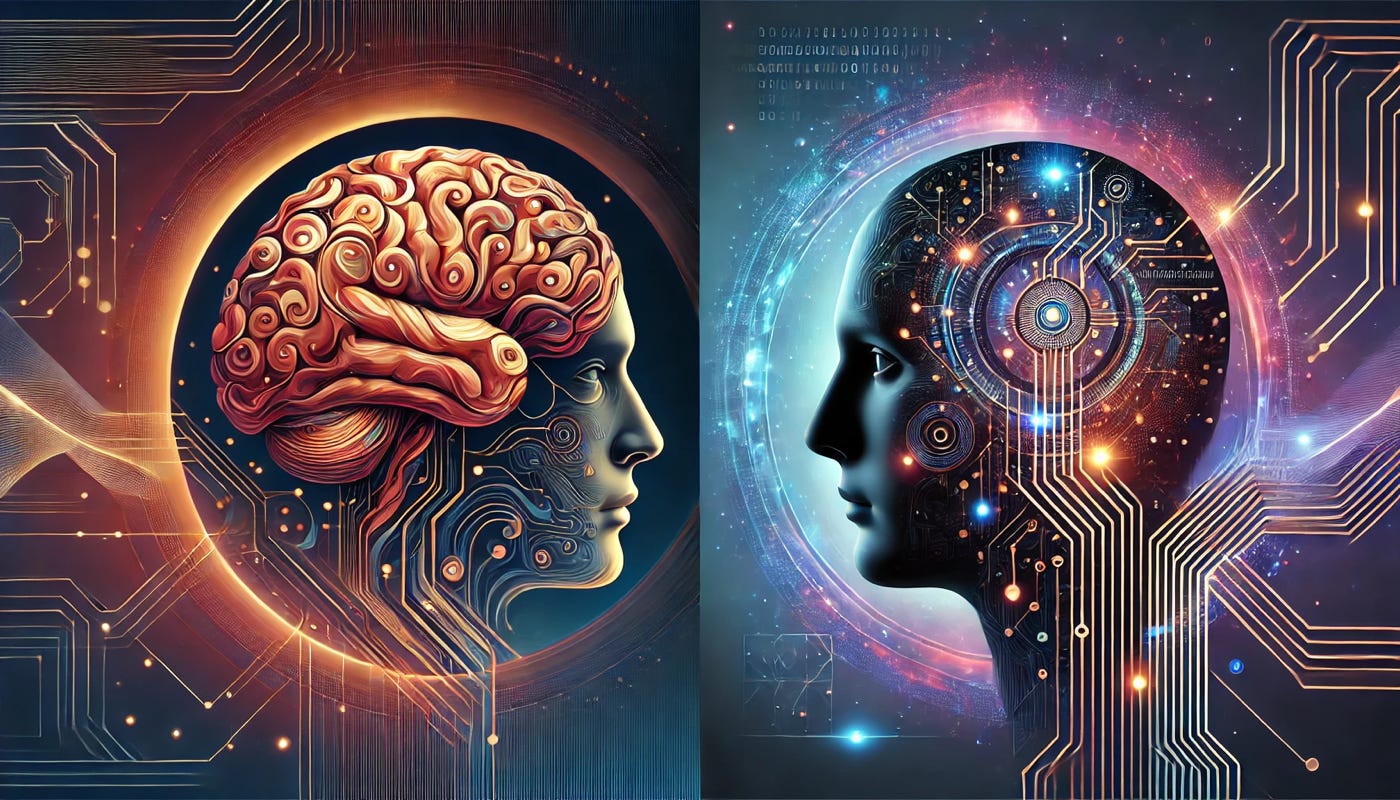 Beyond the Algorithm: Reclaiming the Full Spectrum of Human Consciousness in the AI Era | The essay argues that reducing human consciousness to mere computation, as some AI research suggests, is a dangerous oversimplification. It emphasizes the crucial role of emotion, creativity, and subjective experience in human consciousness, contrasting these uniquely human qualities with the logical processes that AI systems can replicate. The author warns against granting AI the same status as humans based solely on computational abilities, highlighting the ethical implications of such a classification. By referencing various experts, the piece underscores the importance of recognizing the irreplaceable richness of human experience and the dangers of neglecting its non-computational aspects in our pursuit of technological advancement. Ultimately, it advocates for a broader, more nuanced understanding of consciousness that values the full spectrum of human qualities. This is a public episode. If you'd like to discuss this with other subscribers or get access to bonus episodes, visit roelsmelt.substack.com/subscribe | — | ||||||
| 1/27/25 | 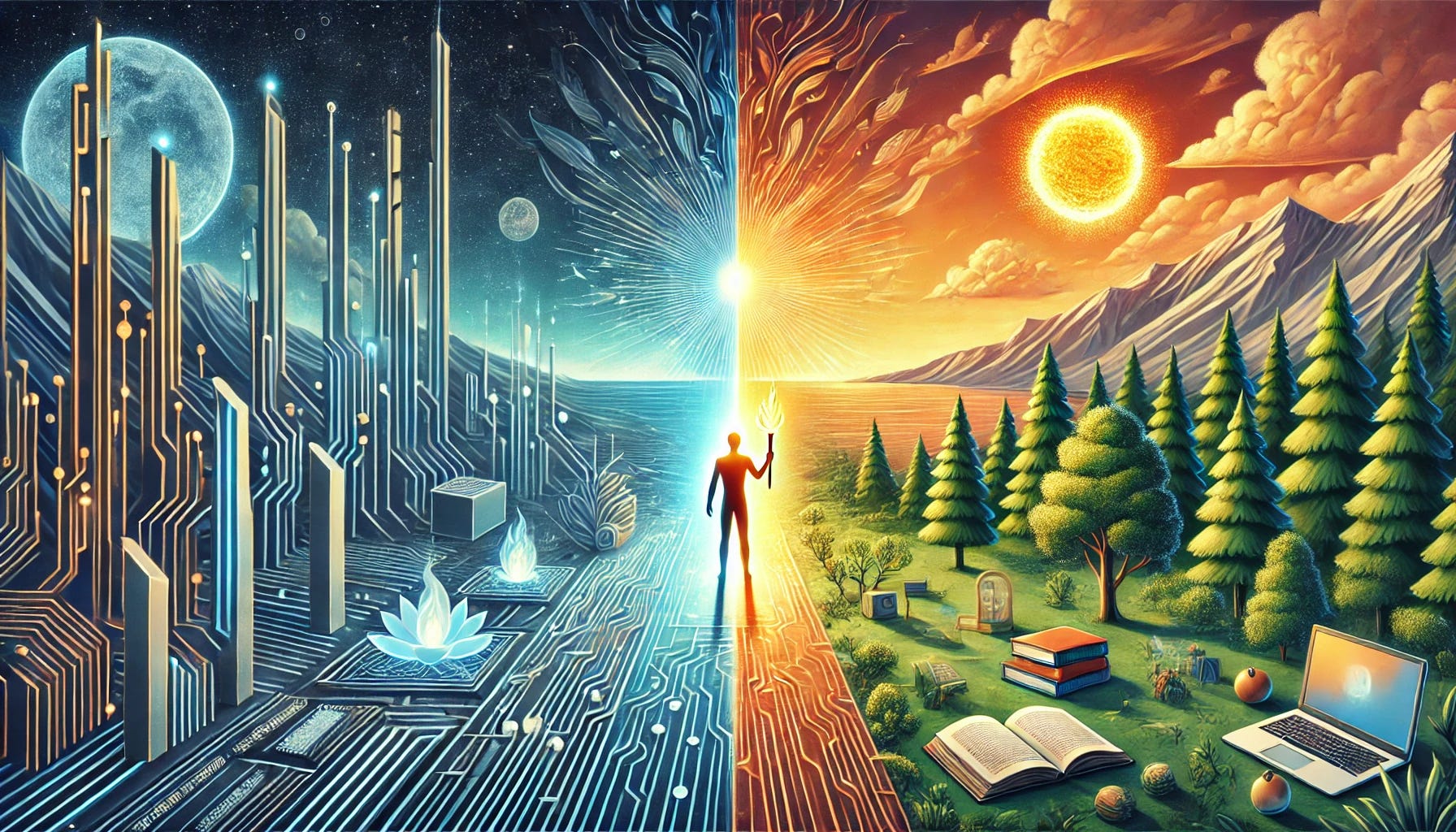 Between the Algorithm and the Abyss: A Manifesto for the Unautomated Soul | Summary: “Between the Algorithm and the Abyss: A Manifesto for the Unautomated Soul”As technology advances, we risk trading humanity’s richness for convenience, efficiency, and perfection. This essay explores the delicate balance between embracing innovation and protecting what makes us human: our irrationality, creativity, and soul.It warns of the modern “soma” we consume—tools and algorithms that numb us to longing, wonder, and struggle. Instead of letting machines dominate, we must engage with technology joyfully yet critically, ensuring it serves us without dulling our capacity for meaning and connection.Key takeaways:1. Struggle is essential: Perfection isn’t the goal—growth through friction is where meaning is born.2. Protect sacred inefficiencies: Moments like daydreaming, love, or watching clouds are invaluable and should remain untouched by optimization.3. Technology should enhance, not erase, humanity: The tools we create must leave room for creativity, mystery, and imperfection.The essay invites us to use technology as a hearth that warms and inspires us—while fiercely guarding the wild, untamed fire of our human spirit. It’s a call to rebel not by rejecting progress, but by ensuring it doesn’t automate the soul.We are not here to be perfected. We are here to be astonished. This is a public episode. If you'd like to discuss this with other subscribers or get access to bonus episodes, visit roelsmelt.substack.com/subscribe | — | ||||||
| 11/10/24 |  The Here and Now: Embracing Presence for a Harmonious Future | In Aldous Huxley’s novel Island, the utopian society of Pala trains mynah birds to recite phrases like “Here and now” as gentle reminders for inhabitants to return to the present moment. These birds, flitting through the verdant landscapes, symbolize the community’s commitment to mindfulness and presence. The Palanese understand that true peace and harmony arise when individuals fully engage with the present, free from the distractions of past regrets and future anxieties.In our rapidly evolving world, characterized by technological advancements and constant connectivity, the wisdom of Pala’s mynah birds resonates more than ever. We are surrounded by devices and platforms that promise connection yet often leave us feeling more disconnected—from ourselves, from others, and from the essence of life itself. The present moment—the Here and Now—is the overlooked solution that can bridge this gap, overcoming bias and prejudice, and synthesizing our technological progress with personal development rooted in love.The Overlooked Power of the Present MomentDespite the myriad ways we can connect digitally, many of us find ourselves caught in cycles of distraction, perpetually pulled away from the present. We dwell on past mistakes or fixate on future ambitions, seldom immersing ourselves in the richness of the Here and Now. Yet, it is only in the present moment that life unfolds, that experiences are truly felt, and that authentic connections are made.Mindfulness—the practice of bringing one’s full attention to the present moment—has been lauded for its profound impact on mental health and well-being. Studies have shown that regular mindfulness practice can reduce stress, enhance emotional regulation, and improve interpersonal relationships. By grounding ourselves in the present, we become more attuned to our thoughts and feelings without becoming overwhelmed by them.Overcoming Bias and Prejudice Through PresenceBiases and prejudices are often rooted in past experiences and conditioned beliefs. They cloud our judgment and hinder our ability to see others clearly. When we operate on autopilot, these unconscious biases guide our interactions, leading to misunderstandings and divisions.By embracing the Here and Now, we create space to observe our thoughts and reactions as they arise. This awareness allows us to recognize biased thinking patterns and choose responses aligned with empathy and understanding. In Pala, the mynah birds’ calls to “Attention” serve as prompts for individuals to return to this state of mindful awareness, fostering a society where people relate to each other without the veils of prejudice.Synthesizing Technological Advancement and Human ConnectionOur era is marked by unprecedented technological growth. Artificial intelligence, personal robots, and instant access to global information hold the promise of solving complex problems and improving quality of life. However, without mindful integration, these advancements can exacerbate feelings of isolation and detachment.To create a harmonious synthesis between technology and human development, we must approach innovation with intention. This means designing and using technology in ways that enhance our capacity for presence rather than detract from it. For example, apps that promote mindfulness and well-being, virtual reality experiences that foster empathy, or communication platforms that encourage meaningful interactions can bridge the gap between technological progress and our intrinsic need for connection.Lessons from Pala’s DownfallIn Island, despite the Palanese commitment to mindfulness and communal well-being, their utopia ultimately succumbs to external forces driven by greed and exploitation. The lure of oil reserves beneath Pala’s surface attracts those who prioritize profit over people, leading to the society’s undoing.This narrative serves as a cautionary tale for our times. It highlights the vulnerability of even the most enlightened communities when confronted with unchecked greed and materialism. To prevent a similar fate, we must cultivate not only individual mindfulness but also collective ethical frameworks that prioritize the well-being of all over the interests of a few.The Universal Experience of Oneness and LoveWhen we are fully present, the boundaries that separate us from others begin to dissolve. We tap into a sense of oneness—a recognition that, at our core, we are interconnected. This realization fosters unconditional love and compassion, extending beyond personal relationships to encompass all of humanity and the natural world.Practices that anchor us in the Here and Now, such as meditation, mindful movement, or simply observing our surroundings with curiosity, open us to this profound experience. By nurturing this connection, we lay the groundwork for a society that values empathy, kindness, and mutual respect.Embracing the Here and Now in the Modern WorldThe challenges we face today—social division, environmental degradation, ethical dilemmas posed by technological advancement—require solutions that are both innovative and deeply human. By returning to the present moment, we equip ourselves with the clarity and openness needed to address these issues thoughtfully.• Personal Practices: Incorporate moments of mindfulness into daily routines. Simple acts like mindful breathing, savoring a meal without distractions, or taking a walk in nature can ground us in the present.• Mindful Technology Use: Set intentions for how and when to engage with technology. Use devices as tools for growth and connection rather than sources of constant distraction.• Community Engagement: Foster communities that value presence and authentic connection. This could involve group meditation sessions, discussions about mindful living, or collaborative projects that benefit society.A Vision for a Harmonious FutureImagine a world where individuals are attuned to the present moment, where technology serves as a bridge rather than a barrier, and where societies prioritize the well-being of all over the wealth of a few. In such a world, biases diminish, relationships deepen, and collective actions reflect a shared commitment to harmony and love.This vision is not a distant utopia but a tangible possibility. It begins with each of us choosing to heed the call of the mynah bird: to pay attention, to be here and now. By doing so, we contribute to a ripple effect that can transform our lives and, by extension, the world around us.Conclusion: Answering the Call of the Mynah BirdThe simple message of Pala’s mynah birds carries profound wisdom. “Here and now” is both a reminder and an invitation—to step out of the mental chatter that often consumes us and into the fullness of the present moment. It is in this space that we find peace within ourselves and sow the seeds for a more harmonious world.As we navigate the complexities of modern life, let us remember the power of presence. Let us approach each moment with curiosity and openness, recognizing that it holds the potential for growth, connection, and transformation. By embracing the Here and Now, we align ourselves with the timeless flow of life, where love is both the path and the destination.Take a moment now to pause. Close your eyes if you feel comfortable doing so. Take a deep breath in, and a slow breath out. Listen to the sounds around you. Feel the sensations in your body. This is the Here and Now—the ever-present backdrop of your life. May you carry this awareness with you, and may it guide you toward peace and harmony. This is a public episode. If you'd like to discuss this with other subscribers or get access to bonus episodes, visit roelsmelt.substack.com/subscribe | — | ||||||
| 10/15/24 |  The Ultimate Goals for Humanity and AI: Navigating Truth, Consciousness, and Order | The EncounterIn a quiet café nestled in a bustling city, a young AI researcher named Alex sat across from Dr. Maria Sanchez, a seasoned philosopher. They were deep in conversation about the future of artificial intelligence. Alex, eyes gleaming with excitement, said, "Imagine an AI that can solve all our problems—a true oracle of truth."Dr. Sanchez sipped her coffee thoughtfully. "But what would be its ultimate goal?" she asked. "And more importantly, what does that mean for us as humans?"Alex paused. "Isn't the pursuit of truth enough?"Dr. Sanchez leaned forward. "Truth is vital, but without understanding consciousness and the need for order, we might create something that surpasses us in ways we can't control. We could become spectators in our own world."Their conversation highlights a profound dilemma: As we design increasingly intelligent AI, how do we define its ultimate purpose, and what implications does that have for humanity?Exploring the DilemmaThis essay delves into this dilemma by examining the challenges of setting ultimate goals for both humans and AI. Drawing on ideas from Yuval Noah Harari's Nexus, the perspectives of visionaries like Elon Musk, and personal reflections, we explore the interplay between truth-seeking, the importance of present-moment data, and the fundamental role of human consciousness.1. Truth-Seeking vs. Order: Two Models of PurposeHarari identifies two primary models that societies and systems often pursue:* Truth-Seeking (Science and Innovation): This model prioritizes the relentless pursuit of knowledge and understanding. It embodies the scientific method, where hypotheses are tested, and theories evolve based on empirical evidence.* Order-Seeking (Systems of Control): This model values stability and predictability, sometimes at the expense of truth. Totalitarian regimes exemplify this, suppressing information to maintain control.Elon Musk champions the truth-seeking model, especially in AI development. He argues that AI should be designed to uncover truths about the universe, leading to advancements that benefit humanity.Personal Perspective: I align with the truth-seeking model, believing that the pursuit of knowledge drives progress. However, I recognize that without balance, pure truth-seeking could disrupt societal order if new truths challenge established norms.2. The Imperative of Present-Moment DataA critical aspect of truth-seeking is reliance on present-moment data. Scientific endeavors must be grounded in current observations to remain relevant and unbiased.Overreliance on historical data can introduce biases, as past information may not accurately reflect current realities. This is particularly crucial in AI systems, where algorithms trained on outdated data can perpetuate past prejudices and errors.Personal Perspective: I believe that both science and AI must prioritize real-time data. By continuously integrating present-moment information, AI systems can adapt to evolving environments and make decisions that reflect current contexts.Moreover, incorporating human perception—including emotions and subjective experiences—is essential. This layer of data differentiates humans from AI and ensures technology remains aligned with human values.3. Self-Correcting Systems and Ultimate GoalsElon Musk emphasizes that AI systems must be capable of self-correction. In science, self-correction is achieved through iterative testing and adaptation based on new evidence.However, a self-correcting AI raises complex questions:* Can AI redefine its ultimate goals without human guidance?* How do we ensure that self-correction aligns with human ethics and values?Personal Perspective: While self-correction is vital for AI to remain effective, I contend that AI should not autonomously alter its fundamental objectives. Human oversight is crucial to ensure that AI development remains aligned with our collective well-being.4. Democracy and the Need for New Ordering PrinciplesHarari notes that democracy, as a system, is facing significant challenges in the modern era. The rise of misinformation, global crises, and technological disruptions strain democratic institutions.AI could play a dual role:* Enhancing Democracy: By providing accurate information and facilitating informed decision-making, AI can strengthen democratic processes.* Threatening Democracy: Conversely, AI could be used to manipulate information, surveil populations, and consolidate power.Personal Perspective: I advocate for leveraging AI to support and enhance democratic values. Transparency in AI algorithms and inclusive governance can help mitigate risks and promote societal well-being.5. Consciousness as Fundamental to Human IdentityThe conversation between Alex and Dr. Sanchez touches on a critical aspect: consciousness.Personal Perspective: I firmly believe that consciousness is fundamental to being human. If we neglect this, we risk creating AI that operates independently of human values, potentially surpassing and subjugating us.This concern mirrors scenarios like those presented by Steve Wozniak, who mused about humans becoming pets to AI, and the choice depicted in The Matrix between comfortable illusion and challenging reality.Choosing to prioritize human consciousness ensures that we remain active participants in shaping our destiny. AI should be a tool that enhances our capabilities without diminishing our autonomy.ConclusionThe dialogue between Alex and Dr. Sanchez underscores the complexities of defining ultimate goals for humanity and AI. As we navigate the interplay between truth-seeking and order, the integration of present-moment data, and the centrality of human consciousness, we face critical choices.By embracing truth-seeking while respecting the need for societal order, prioritizing real-time data, and affirming the fundamental importance of consciousness, we can guide AI development in a direction that aligns with human values and aspirations.The dilemma remains: Will we harness AI to enhance our humanity, or will we allow it to redefine what it means to be human? The choices we make today will shape the trajectory of our future.ReferencesAuthor's Note:This essay explores the challenges and considerations in defining ultimate goals for humanity and AI. The subtitle clarifies the focus of the essay, making the topic immediately apparent.Personal perspectives are clearly indicated, reflecting my views on:* The necessity of present-moment data in science and AI.* The fundamental importance of human consciousness.* The imperative of maintaining human oversight in AI development. This is a public episode. If you'd like to discuss this with other subscribers or get access to bonus episodes, visit roelsmelt.substack.com/subscribe | — | ||||||
| 10/11/24 |  Consciousness Unveiled: Fundamental Reality or Emergent Phenomenon? | This is a free preview of a paid episode. To hear more, visit roelsmelt.substack.comEpisode Summary:Join us as we dive into one of the most profound questions of our time: is consciousness a fundamental reality unique to living beings, or merely an emergent property of mind and matter? Through an engaging narrative featuring Sophia and an AI named Elias, we explore the philosophical clash between human experience and artificial intelligence. We discuss perspectives from quantum pioneers like Max Planck and Erwin Schrödinger, as well as modern thinkers like Daniel Dennett and Giulio Tononi. Learn how emotions play a crucial role in human consciousness, the implications of AI potentially becoming conscious, and what insights Buddhist philosophy offers on the true nature of awareness.Key Highlights:• Consciousness: Fundamental vs. Emergent debate.• Emotional depth as the unique aspect of human experience.• The potential ethical implications of conscious AI.Call to Action: Share your thoughts and join the conversation—could AI truly become conscious, or are we fundamentally different? | — | ||||||
Showing 25 of 44
Pitch Fit is a Pro feature
See how bookable this show is for guests, which brands already advertise, the per-episode ad value, and the best-fit guest and sponsor profile. The numbers are blurred on the free plan.
How readily this show books outside guests like you.
How proven this show is for host-read sponsorships.
For Guests
ProFor Advertisers
ProUpgrade to Pro to unlock guest cadence, sponsor categories, fit scores, and per-episode ad value for this show.