Insights from recent episode analysis
Audience Interest
Podcast Focus
Publishing Consistency
Platform Reach
Insights are generated by CastFox AI using publicly available data, episode content, and proprietary models.
Most discussed topics
Brands & references
Est. Listeners
Insufficient chart data. Estimates will improve as the show charts.
- Per-Episode Audience
Est. listeners per new episode within ~30 days
N/A🎙 Daily cadence·87 episodes·Last published yesterday - Monthly Reach
Unique listeners across all episodes (30 days)
N/A - Active Followers
Loyal subscribers who consistently listen
N/A
Market Insights
Platform Distribution
Reach across major podcast platforms, updated hourly
Total Followers
—
Total Plays
—
Total Reviews
—
* Data sourced directly from platform APIs and aggregated hourly across all major podcast directories.
On the show
From 24 epsHosts
Recent guests
No guests detected in recent episodes.
Recent episodes
Clinton, Area 51, and the Search for UFO Secrets
Jun 24, 2026
1h 03m 38s
Walt Disney: The Man Behind The Mouse
Jun 19, 2026
1h 02m 49s
Did Lyndon B. Johnson Help Kill JFK?
Jun 17, 2026
59m 58s
Ulysses S. Grant: The Curse of Loyal Friends
Jun 14, 2026
1h 17m 56s
Prohibition: Speakeasy In Chief
Jun 12, 2026
1h 12m 12s
Social Links & Contact
Official channels & resources
Official Website
Login
RSS Feed
Login
| Date | Episode | Topics | Guests | Brands | Places | Keywords | Sponsor | Length | |
|---|---|---|---|---|---|---|---|---|---|
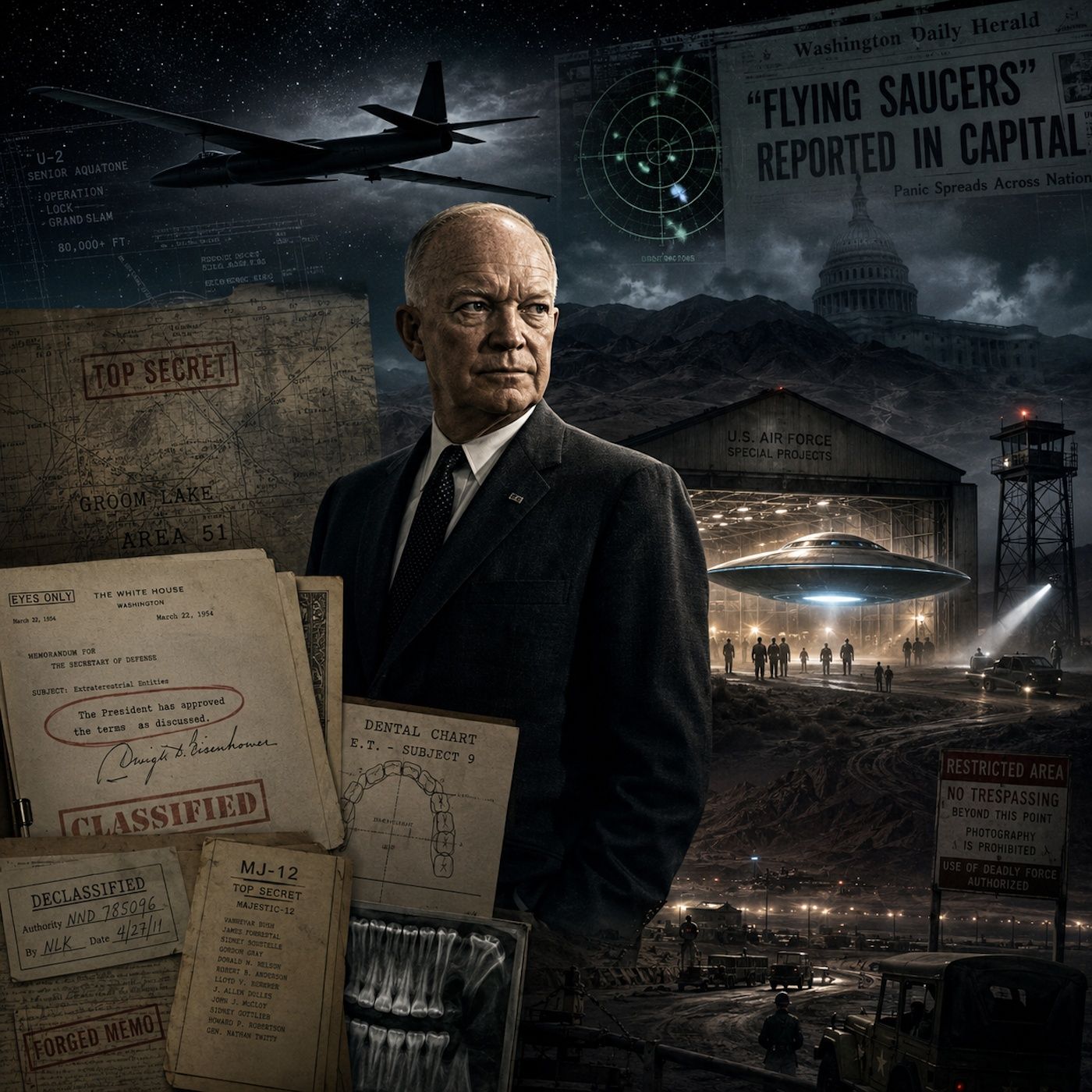
| 6/24/26 | ![]() Clinton, Area 51, and the Search for UFO Secrets | What happens when the most powerful man in the world asks his own government a direct question and still can't get a straight answer? When Bill Clinton took office in 1993, he wanted to know two things: who really killed John Kennedy, and whether the United States was sitting on proof that we aren't alone. He handed the assignment to his friend Webb Hubbell, the third-ranking official at the Justice Department, and Hubbell went looking with the access of a man who reported straight to the President. He came back with a wall.This episode traces that wall across thirty years, from a Justice Department office to the steps of the Capitol this June. Along the way we get into what Area 51 actually is, the dry lakebed at Groom Lake where the U-2 and the F-117 were tested in secret, and the boring true reason the government let people believe in saucers rather than admit what was really flying at sixty thousand feet. We follow the billionaire Laurance Rockefeller as he lobbies the Clinton White House for three years to crack the files open and gets nowhere. We sit with the Air Force's own Project Mogul explanation for Roswell, the crash-test dummies, and the detail that should bother you more than any of it, the government records that were simply destroyed before anyone could audit them. We watch Governor Fife Symington defuse the Phoenix Lights with a man in a rubber alien suit, then admit years later that he'd seen the thing himself. And we put the Kennedy files next to the UFO question to show how a law with a deadline and a presumption of disclosure can still take sixty years to pry a secret loose.Then we follow the thread into the present, through the 2017 New York Times story that exposed the Pentagon's AATIP program, the Navy's Tic Tac and the East Coast sightings, David Grusch's sworn testimony, the watered-down UAP Disclosure Act, AARO's finding of no verifiable evidence, and the June 2026 press conference where bipartisan lawmakers stood up and said the same thing Hubbell wrote in 1997. They asked, and nobody would tell them.This isn't a story about a president shaking hands with an alien. It's a story about compartmentalization, special access programs, and whether the line between elected authority and permanent secrecy runs where the Constitution says it does, or somewhere lower and quieter than we'd like to admit.Have a forgotten historical mystery, disturbing event, unsolved crime, or hidden conspiracy you think deserves investigation?Send your suggestions to brian@paranormalworldproductions.com.Disturbing History is a dark history podcast exploring unsolved mysteries, secret societies, historical conspiracies, lost civilizations, and the shadowy stories buried beneath the surface of the past.Follow the show and enable automatic downloads so you never miss a deep dive into history’s most unsettling secrets.Because sometimes the truth is darker than fiction. | 1h 03m 38s | ||||||
| 6/19/26 | ![]() Walt Disney: The Man Behind The Mouse | Walt Disney built the most trusted brand in the world, and he built it on top of a story the company has spent eighty years hoping you would never hear. Behind the castle, the cardigan, and the warm Missouri voice was a workplace that tore itself apart, a founder who treated a fair-pay dispute as a foreign conspiracy, and a man whose grudges ended up wired into the machinery of the Red Scare. This episode strips off the sanitized image and looks at the documented record of Walter Elias Disney as the complicated, contradictory figure he actually was.We start with the 1941 Disney animators' strike, the single most consequential event in the studio's early history and the one you will not find in the official mythology.After the financial wounds of Pinocchio and Fantasia in 1940, Disney workers who earned as little as 12 dollars a week while stars pulled 200 to 300 walked off the job over pay, screen credit, and the right to organize. We trace how Walt fired his greatest animator, Art Babbitt, the creator of Goofy, how a 315-to-4 strike vote put hundreds of his own cartoonists on a picket line at the Burbank gate, and how the founder of the studio nearly came to blows with Babbitt on a public street before the whole thing ended with Walt losing on every point.From there we follow the line that runs from that picket line straight to Washington. We cover Disney's role as a founder of the Motion Picture Alliance for the Preservation of American Ideals, his friendly-witness testimony before the House Un-American Activities Committee on October 24, 1947, and the names he gave Congress, including animator David Hilberman, whom Walt flagged in part for having no religion.We put union organizer Herbert Sorrell in his real context, the man Walt branded a communist who actually broke with the Communist Party to lead the violent 1945 Hollywood Black Friday riot, and we connect the dots to the Hollywood blacklist, the Waldorf Statement, and the careers it ruined.We then work through the decades of FBI files on Walt Disney, the 1954 designation that made him a Special Agent in Charge Contact, and the long-running fight over what that relationship with J. Edgar Hoover actually was, separating the documented record from the disputed claims in Marc Eliot's biography. Finally, we take the antisemitism question head-on, weighing the 1938 Leni Riefenstahl visit and the harshest accusations against the rebuttals from biographer Neal Gabler and the people who knew him, and we refuse the easy verdict in either direction.This is not the cartoon-villain Walt and it is not Uncle Walt either. It is the evidence-first account of a genuine artist and a frightened, controlling man who happened to be the same person, and a reminder that the brightest brand on earth was built directly over a fight it never wanted you to see.Listener discretion is advised for discussion of political persecution, labor violence, and historical bigotry.Have a forgotten historical mystery, disturbing event, unsolved crime, or hidden conspiracy you think deserves investigation?Send your suggestions to brian@paranormalworldproductions.com.Disturbing History is a dark history podcast exploring unsolved mysteries, secret societies, historical conspiracies, lost civilizations, and the shadowy stories buried beneath the surface of the past.Follow the show and enable automatic downloads so you never miss a deep dive into history’s most unsettling secrets.Because sometimes the truth is darker than fiction. | 1h 02m 49s | ||||||
| 6/17/26 | ![]() Did Lyndon B. Johnson Help Kill JFK? | The murder of John F. Kennedy in Dallas on November twenty-second, nineteen sixty-three remains the most contested crime in American history, and at the center of the contest stands the man who became president before Air Force One left Texas soil.This episode of Disturbing History takes on the theory that refuses to die, the claim that Lyndon Baines Johnson helped engineer the assassination of the president he served. It is, by design, a different kind of episode. The show deals in facts, but this is one of those rare cases where documented fact and unproven conspiracy run straight into each other, and rather than pretend otherwise, this episode walks the listener into that collision and lets them see exactly where one ends and the other begins.The story moves through the solid ground first, the timeline of the assassination, the arrest of Lee Harvey Oswald, the silencing of Oswald by Jack Ruby on live television, and the swearing-in of Johnson on the tarmac at Love Field beside a widow still wearing her husband's blood. From there it lays out the two official answers the United States government has given, the Warren Commission's lone-gunman conclusion of nineteen sixty-four and the House Select Committee on Assassinations' finding in nineteen seventy-nine that Kennedy was probably killed as the result of a conspiracy, a conclusion built on acoustic evidence that later collapsed under scientific review.That official contradiction is the soil everything else grows in.Then comes the case against Johnson at full strength. His ruthlessness and ambition. The Bobby Baker and Billie Sol Estes scandals closing in on him in the fall of sixty-three. The reported press scrutiny of his fortune. The Texas oil and defense networks behind his career.And the specific, named accusations that have circulated for decades, the Madeleine Brown account of a gathering at the Murchison mansion the night before the killing, the Billie Sol Estes claims naming Mac Wallace as Johnson's triggerman, and the Barr McClellan fingerprint allegation that briefly aired on the History Channel before independent historians rejected it and the network pulled the episode. Each claim is given fairly and then tested against the record, and each, examined honestly, fails to make the jump from story to proof, including in the roughly eighty thousand pages of long-secret files released to the public in twenty twenty-five, which revealed a great deal about Cold War covert operations and nothing that implicated Johnson.The episode closes where it must, in the uncomfortable middle. Johnson is the man who gained the most. Johnson is not, on any evidence that has ever held up, the man shown to have done it. Both are true. Drawing on an investigator's hard rule that motive is where a case begins and never where it ends, the host lays the documented facts and the unproven beliefs side by side and hands the verdict to the listener.This is the dark heart of twentieth-century American history, an open wound the country never fully closed, and tonight the ending belongs to you.Have a forgotten historical mystery, disturbing event, unsolved crime, or hidden conspiracy you think deserves investigation?Send your suggestions to brian@paranormalworldproductions.com.Disturbing History is a dark history podcast exploring unsolved mysteries, secret societies, historical conspiracies, lost civilizations, and the shadowy stories buried beneath the surface of the past.Follow the show and enable automatic downloads so you never miss a deep dive into history’s most unsettling secrets.Because sometimes the truth is darker than fiction. | 59m 58s | ||||||
| 6/14/26 | ![]() Ulysses S. Grant: The Curse of Loyal Friends | Ulysses S. Grant left the White House without a fortune, never took a bribe, and never sold an office, yet his administration produced more documented corruption than any presidency of the nineteenth century.This episode of Disturbing History continues our series on the dark history of presidential politics by walking straight into the Gilded Age and the Whiskey Ring, the federal liquor-tax fraud that siphoned millions of dollars out of the United States Treasury while a depression squeezed ordinary Americans, and traces how the trail of stolen tax money ran all the way to the desk of Grant's private secretary, General Orville Babcock, in the office adjoining the president's own.We open with the central question that runs through every scandal here. What happens when the honest man in the room is the reason the corruption survives? Drawing on sixteen years of law enforcement experience, your host lays out the pattern that connects Grant to crooked bosses and clean ones alike, the boss who stakes his spotless reputation on a guilty subordinate and makes that subordinate untouchable. Grant kept score on loyalty the way other men kept score on money, a habit forged during his years of failure before the Civil War, his binge drinking and resignation from the Army, the Hardscrabble farm, the firewood sold on St. Louis street corners, and the clerk's job in his brother's Galena leather store.Once a man was inside the wall of Grant's trust, almost nothing could throw him out, and the con men of the era learned to exploit that vulnerability like published exploit code.The episode follows that pattern through the Black Friday gold panic of September eighteen sixty-nine, where Jay Gould and Jim Fisk attempted to corner the New York gold market by buying access to Grant through his own brother-in-law Abel Corbin, and the scheme collapsed only when Grant ordered the Treasury to sell.From there we cover Credit Mobilier, the transcontinental railroad construction-company fraud that dragged Vice President Schuyler Colfax, future president James Garfield, and roughly two dozen members of Congress into the mud, the falling-out among thieves that exposed it, and the censure of Oakes Ames that closed the books while the rest of Washington walked. We set the political stage of the Panic of eighteen seventy-three, the spoils system, and the Salary Grab before turning to the main event.The Whiskey Ring itself gets the full treatment. We explain the seventy-cents-a-gallon liquor tax, the economics of crooked whiskey, and how supervisor John McDonald built a parallel tax system across St. Louis, Milwaukee, Chicago, Cincinnati, and Peoria, with gaugers and storekeepers and collectors all lying in the same direction, campaign money flowing into Grant's eighteen seventy-two reelection effort, and cipher telegram warnings arriving from Washington signed with the alias Sylph. We follow Treasury Secretary Benjamin Bristow and his solicitor Bluford Wilson as they ran a covert investigation against their own department, counting grain in and barrels out at the railyards to build a shadow ledger, and we cover the May tenth, eighteen seventy-five raids, the two hundred thirty indictments, and the hundred and ten convictions.Then we watch Grant's response to the indictment of Babcock, the order banning plea deals, the firing of special prosecutor John Henderson, and the sworn deposition the sitting president gave in defense of his private secretary, the only time in American history a president has been deposed as a witness in a criminal prosecution.The back half surveys the rest of the wreckage. The Belknap affair, where Secretary of War William Belknap raced to resign ninety minutes ahead of his unanimous impeachment over the Fort Sill post-tradership kickbacks, with George Custer's complaints riding off toward the Little Bighorn under Grant's anger.The Interior Department under Columbus Delano, the Navy Department under George Robeson, Attorney General George Williams and the carriage, the New York Custom House and Roscoe Conkling, and the battalion of Grant relatives on the federal payroll. We close with Grant's final message to Congress and its famous line about errors of judgment rather than intent, the Grant and Ward Ponzi collapse that left the general with eighty dollars in his pocket, and the dying race to finish his Personal Memoirs that restored Julia to comfort and secured his place in American letters.We also give Reconstruction its due, the Klan prosecutions and the Fifteenth Amendment, because the man who sent his deposition to defend Babcock and the man who sent the cavalry after the Klan were operating on the same code all the way down.Have a forgotten historical mystery, disturbing event, unsolved crime, or hidden conspiracy you think deserves investigation?Send your suggestions to brian@paranormalworldproductions.com.Disturbing History is a dark history podcast exploring unsolved mysteries, secret societies, historical conspiracies, lost civilizations, and the shadowy stories buried beneath the surface of the past.Follow the show and enable automatic downloads so you never miss a deep dive into history’s most unsettling secrets.Because sometimes the truth is darker than fiction. | 1h 17m 56s | ||||||
| 6/12/26 | ![]() Prohibition: Speakeasy In Chief✨ | Prohibitiontrue crime+4 | — | United States governmentCoast Guard+1 | New York CityCincinnati+1 | Prohibitionalcohol+8 | — | 1h 12m 12s | |
| 6/10/26 | ![]() Iwo Jima✨ | World War IIIwo Jima+4 | — | — | Iwo JimaTokyo+3 | Iwo JimaTadamichi Kuribayashi+6 | — | 1h 00m 33s | |
| 6/7/26 | ![]() Jimmy Hoffa✨ | labor leadershiporganized crime+3 | — | International Brotherhood of Teamsters | Brazil, IndianaDetroit | Jimmy Hoffalabor leader+6 | — | 1h 00m 10s | |
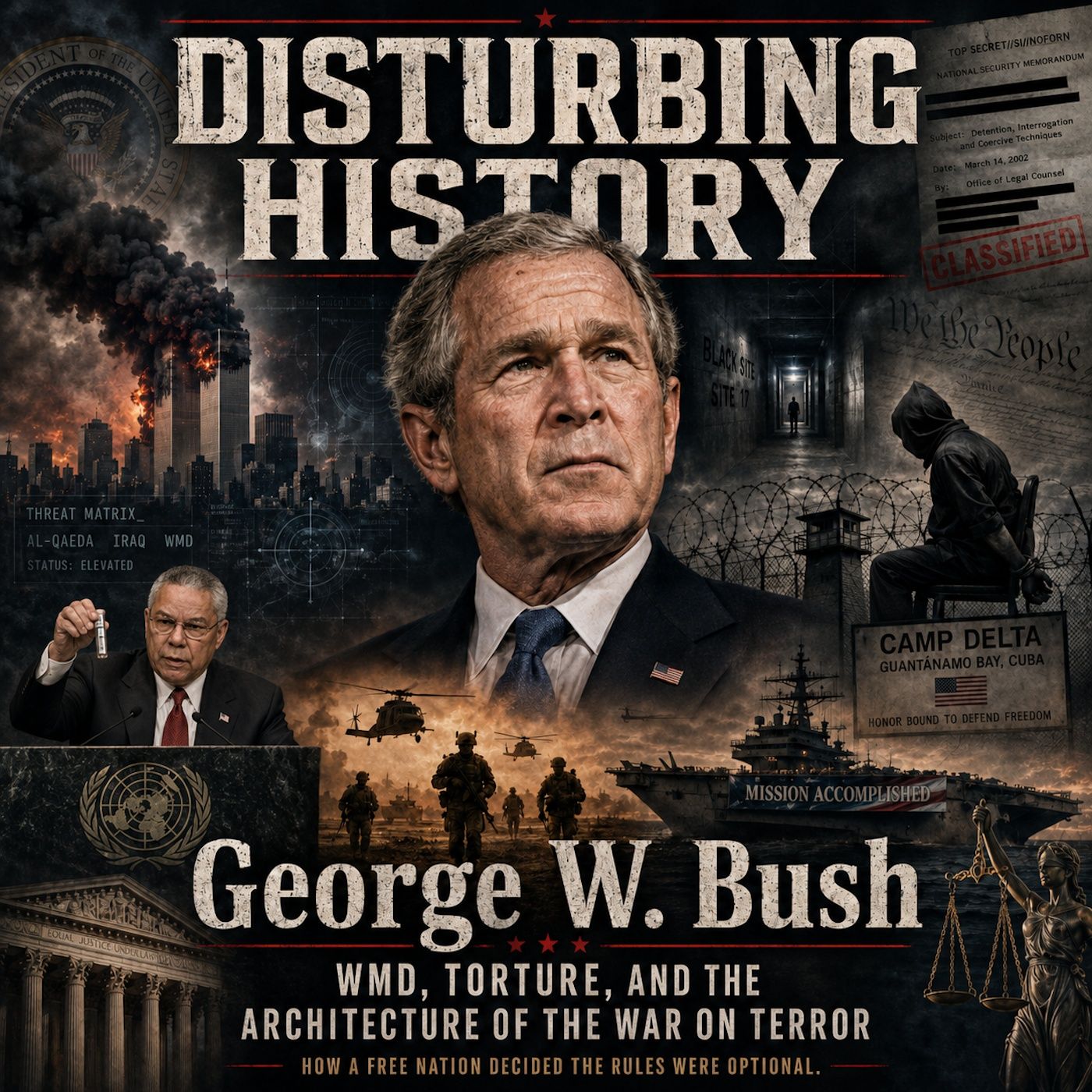
| 6/5/26 | ![]() George W. Bush: The War On Terror✨ | War on TerrorGeorge W. Bush+5 | — | CIA | Guantánamo BayThailand+4 | George W. BushWar on Terror+6 | — | 1h 14m 36s | |
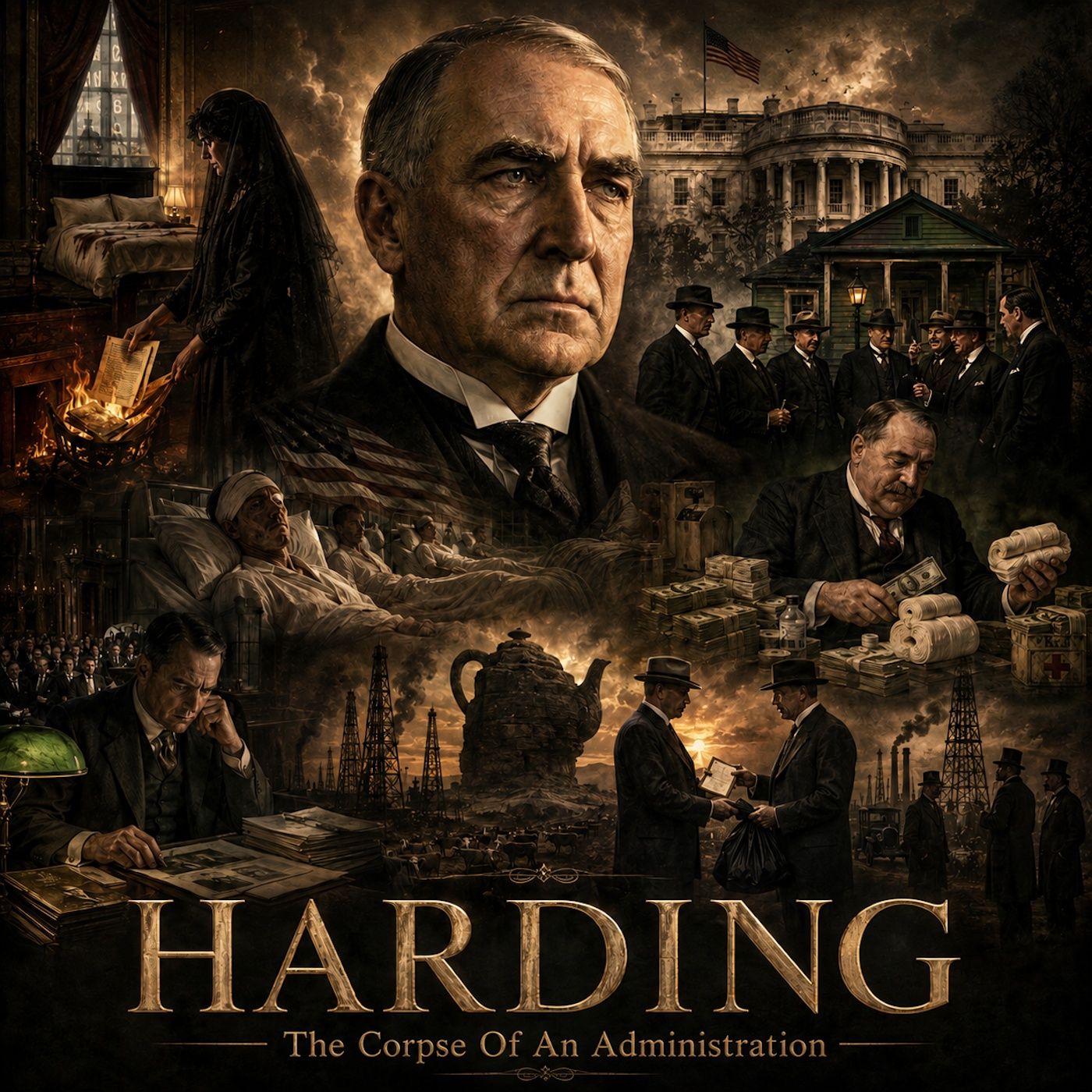
| 6/3/26 | ![]() Warren Harding: Corpse Of An Administration✨ | Warren G. Hardingpolitical corruption+4 | — | Veterans BureauU.S. Navy | San FranciscoOhio+1 | Warren G. HardingOhio Gang+7 | — | 1h 10m 23s | |
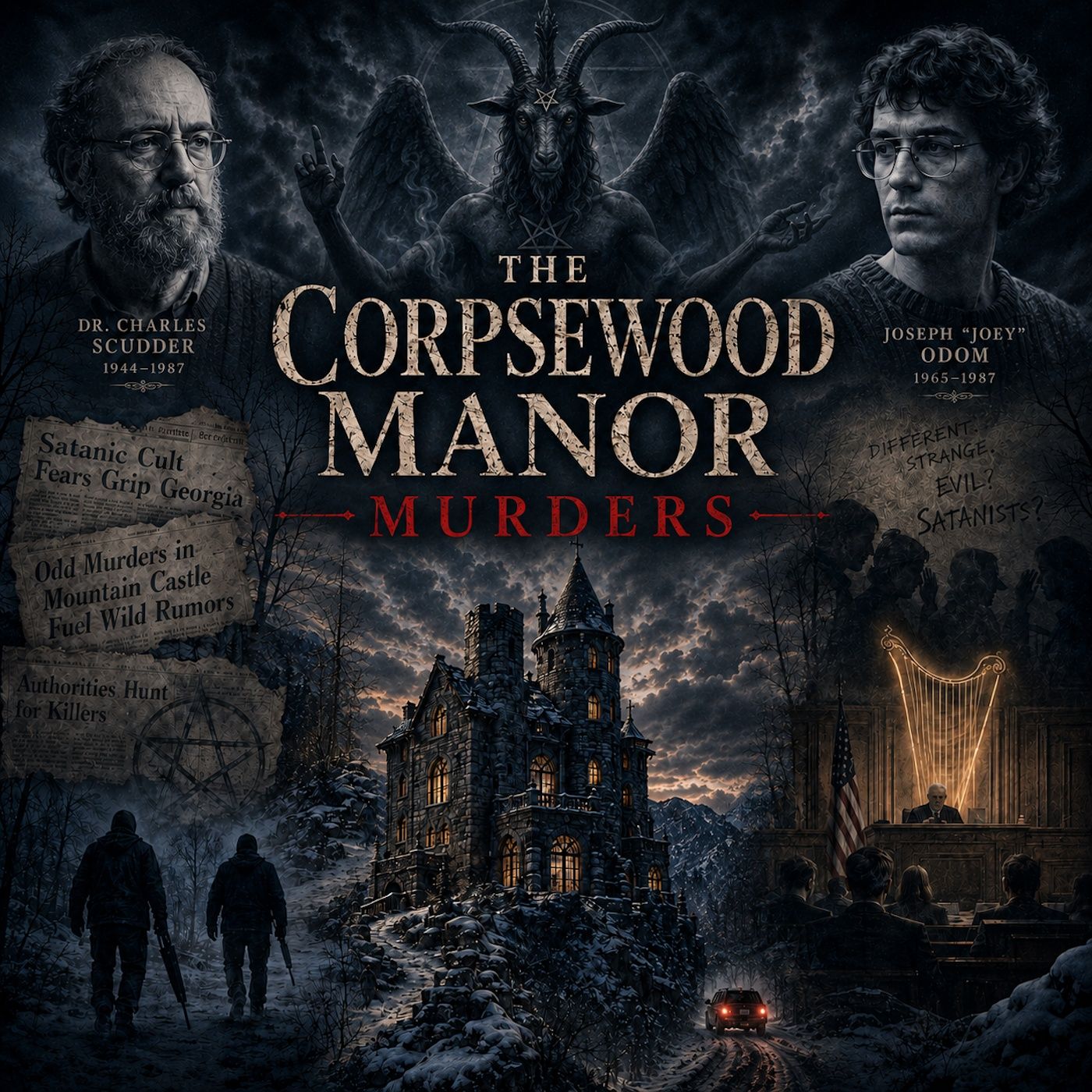
| 5/31/26 | ![]() The Corpsewood Manor Murders✨ | true crimemurder+4 | — | Loyola UniversityChurch of Satan | Corpsewood ManorNorth Georgia | Corpsewood Manormurder+6 | — | 59m 57s | |
Want analysis for the episodes below?Free for Pro Submit a request, we'll have your selected episodes analyzed within an hour. Free, at no cost to you, for Pro users. | |||||||||
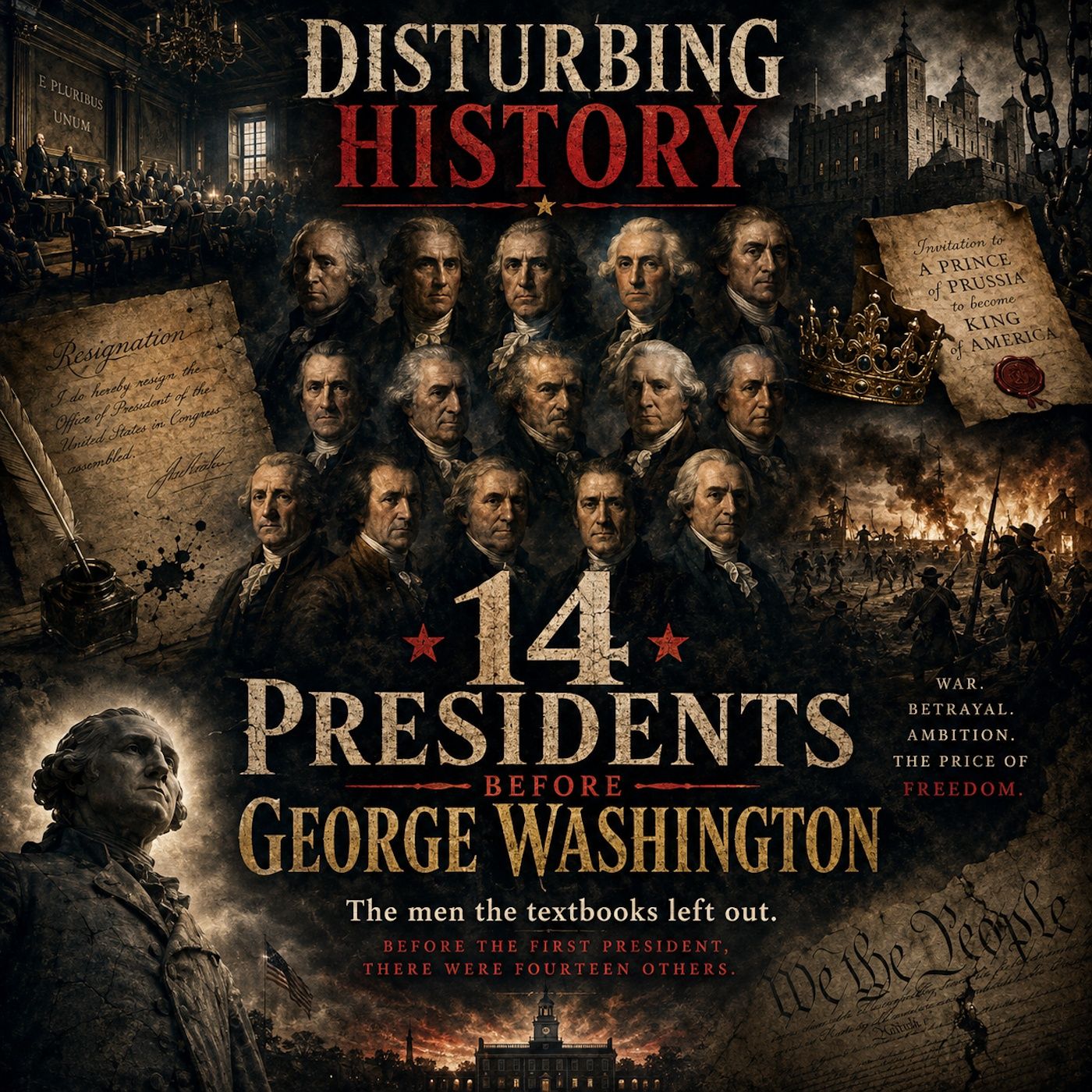
| 5/29/26 | ![]() The Fourteen Men Before George Washington✨ | American historyPresidency+4 | — | Continental CongressConfederation Congress+1 | — | George WashingtonContinental Congress+5 | — | 1h 05m 17s | |
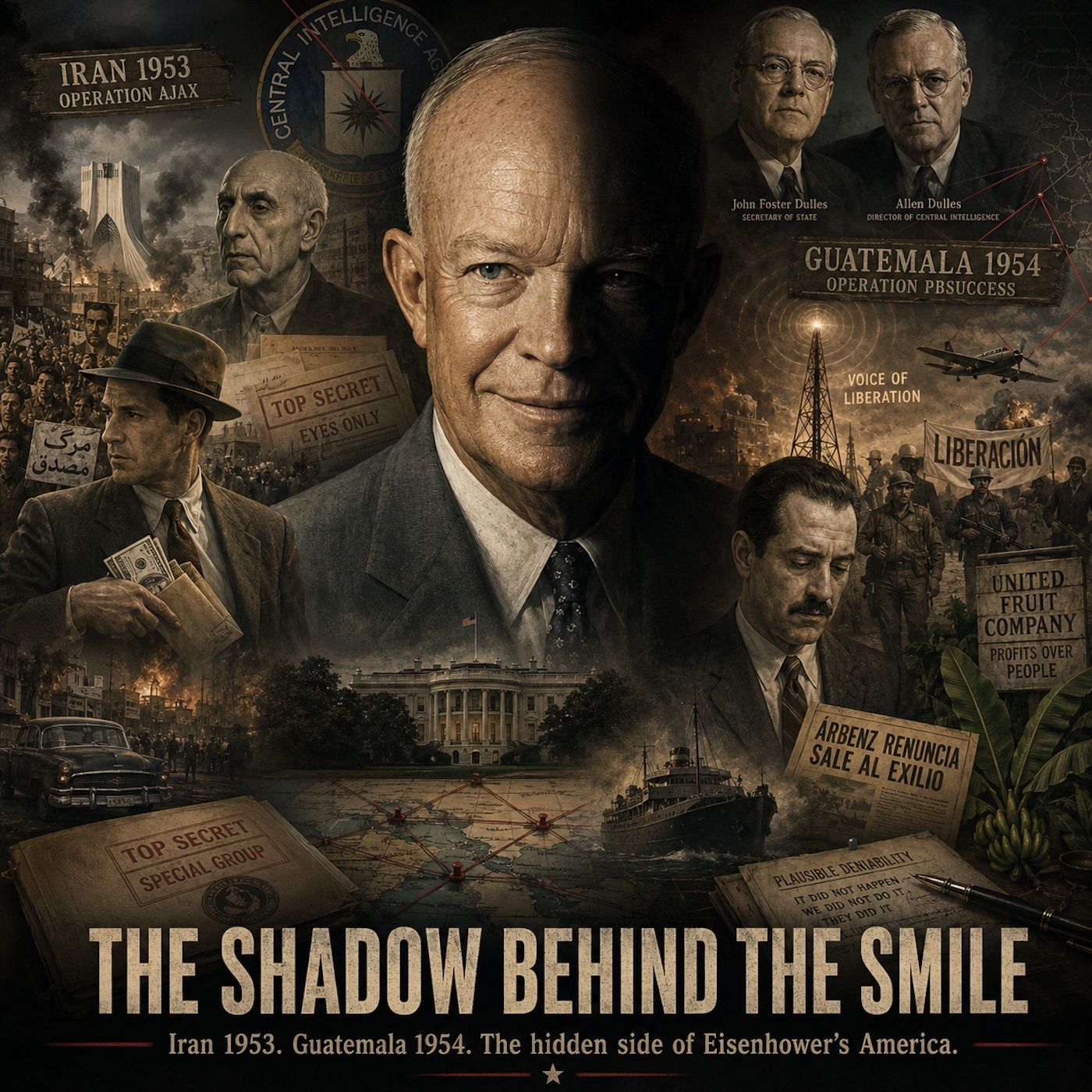
| 5/27/26 | ![]() Dwight Eisenhower: The Secret Coup Machine✨ | U.S. historyCIA operations+3 | — | United Fruit Company | IranGuatemala+2 | EisenhowerCIA+6 | — | 1h 06m 52s | |
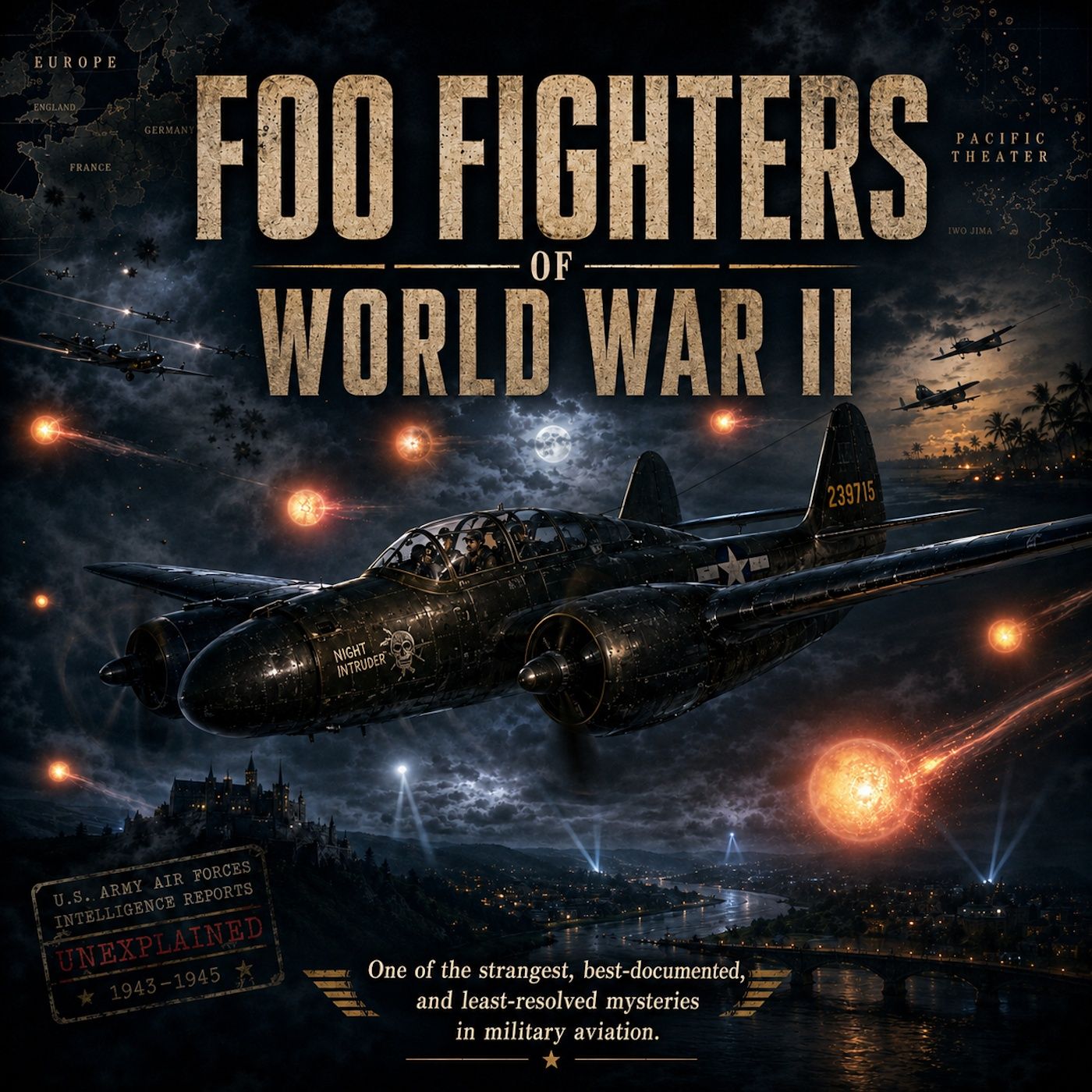
| 5/24/26 | ![]() The Foo Fighters of World War Two✨ | military aviationUFO phenomena+4 | — | Time magazineProject Blue Book+2 | — | Foo FightersWorld War Two+7 | — | 1h 01m 14s | |
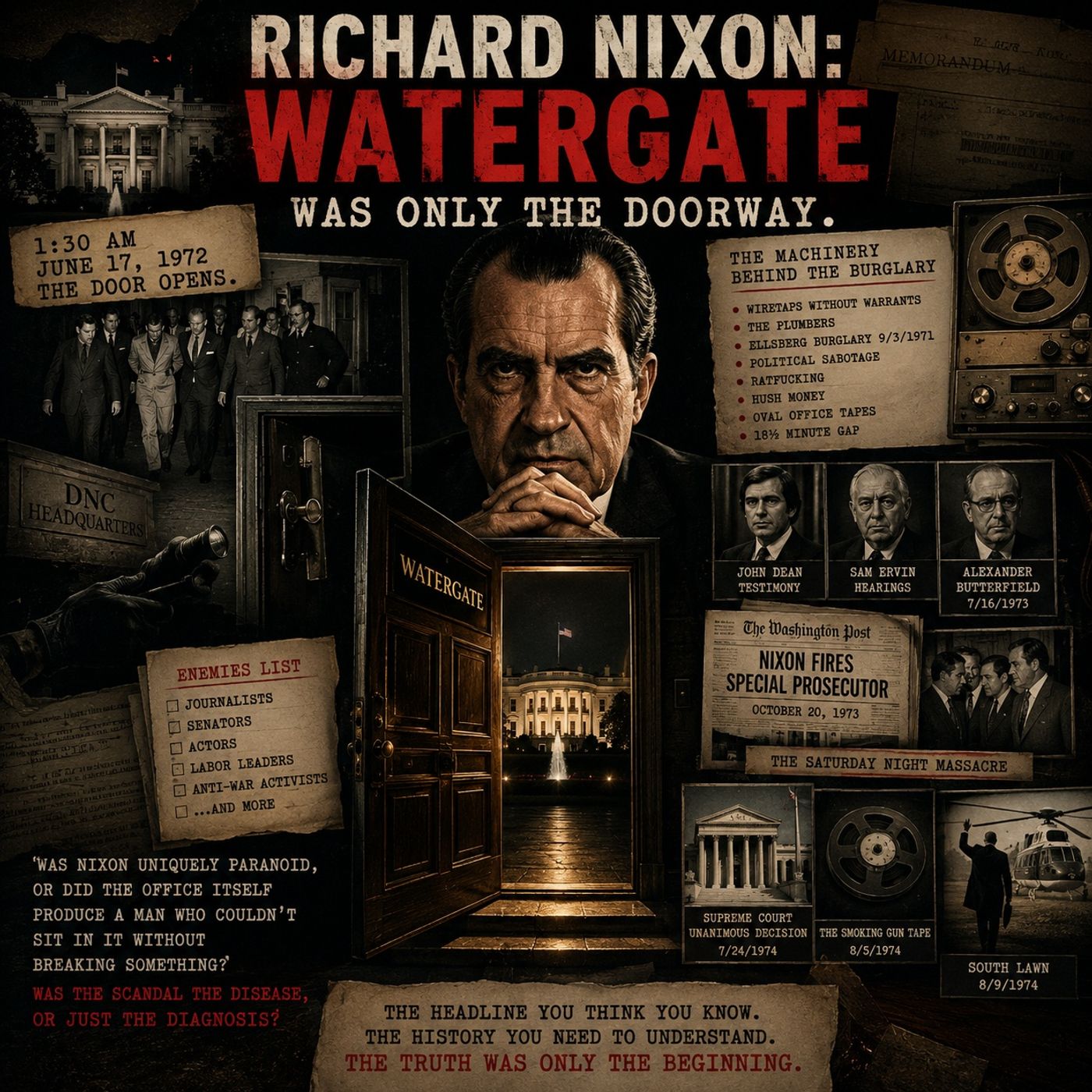
| 5/22/26 | ![]() Richard Nixon: Watergate Was Only the Doorway✨ | Watergatepresidential history+3 | — | Democratic National CommitteeCommittee to Re-Elect the President+1 | — | WatergateRichard Nixon+5 | — | 1h 04m 52s | |
| 5/20/26 | ![]() Ronald Reagan: Presidency Off the Books | In the late afternoon of November twenty-first, 1986, Marine Lieutenant Colonel Oliver North and his secretary Fawn Hall stood inside an office a short walk from the Oval Office and fed classified documents into a shredder. They jammed the machine. They smuggled pages out in her boots. They were trying to outrun a federal investigation that was already moving down the hallway toward them.What they were destroying was the paper trail of what investigators would later call a parallel government, a secret apparatus running an off-the-books foreign policy out of the Reagan White House, in defiance of an act of Congress and in contradiction of every public statement the President of the United States had made about negotiating with terrorists. In this episode of Disturbing History, host Brian unpacks the Iran-Contra affair, the biggest American political scandal since Watergate, and the moment the modern presidency learned how to operate off the books and survive.This is the story of how the Reagan administration secretly sold American TOW and Hawk missiles to the Islamic Republic of Iran through Israeli intermediaries beginning in August of 1985, despite the President's repeated public claims that the United States would never negotiate with hostage takers. It is also the story of how the same administration funneled the profits from those Iranian arms sales, through Swiss bank accounts controlled by retired Air Force General Richard Secord and Iranian-American businessman Albert Hakim, to support the Contra rebels in Nicaragua, after the United States Congress had passed the Boland Amendments in 1982 and 1984 explicitly prohibiting that exact kind of support.Two scandals, one architecture, one continuous criminal conspiracy stitched together inside the National Security Council under the direction of Lieutenant Colonel Oliver North, National Security Adviser Robert McFarlane, his successor John Poindexter, and CIA Director William Casey, with the knowledge or willful blindness of President Ronald Reagan and Vice President George H.W. Bush.The episode traces every thread in detail.It begins with Reagan's carefully constructed public persona of optimism, patriotism, and certainty, the General Electric Theater years, the 1984 reelection landslide, the image of the friendly grandfather that made the country reluctant to believe what was happening underneath. It moves through the 1979 Sandinista revolution in Nicaragua, the rise of Daniel Ortega, the Reagan administration's decision to back the Contras, the CIA mining of Nicaraguan harbors, the World Court case, and Congress's eventual push to cut off funding through the Boland Amendments.From there, the story crosses the world to Beirut, where CIA station chief William Buckley was kidnapped in March of 1984 and tortured to death by Hezbollah, where journalists like Terry Anderson, clergy like Reverend Benjamin Weir and Father Lawrence Jenco, and academics like Thomas Sutherland and David Jacobsen were taken hostage, and where Reagan's private anguish over American captives became the lever that Saudi arms dealer Adnan Khashoggi and Iranian middleman Manucher Ghorbanifar would use to open the secret arms channel.The epsiode covers the bizarre May 1986 trip to Tehran, when Robert McFarlane traveled under a false passport carrying a Bible inscribed by Ronald Reagan and a chocolate cake shaped like a key. It covers the October 5, 1986 shootdown of the cargo plane carrying Eugene Hasenfus over Nicaragua, the loose thread that began unraveling the entire Enterprise.We get into the November 3, 1986 Al-Shiraa magazine story out of Lebanon that broke the news of the arms sales, Reagan's failed November 13, 1986 Oval Office denial, Attorney General Edwin Meese's stunning November 25, 1986 announcement of the diversion of funds to the Contras, the Tower Commission report of February 1987, the joint congressional Iran-Contra hearings of summer 1987, Oliver North's six days of televised testimony in his Marine dress uniform, Fawn Hall's defense that sometimes you have to go above the written law, and John Poindexter's claim that the buck stopped with him.It covers the aftermath. CIA Director William Casey's brain tumor and convenient inability to testify before his death in May of 1987. Independent Counsel Lawrence Walsh's seven-year investigation. The convictions of Oliver North and John Poindexter, later overturned on immunity grounds. The misdemeanor plea by Robert McFarlane. The indictment of Caspar Weinberger. And, on Christmas Eve of 1992, the lame-duck pardons issued by outgoing President George H.W. Bush for Weinberger, McFarlane, Elliott Abrams, and three CIA officials, pardons that ended any chance of a courtroom reckoning over what Bush himself had known as Vice President.Drawing on the National Security Archive's documentation, the findings of the Tower Commission, the joint congressional hearings, and Lawrence Walsh's final report, this episode lays out the architecture of deniability that defined the Reagan-era national security state. It explains how cutouts, shell companies, third-country donors, private operators, and Swiss bank accounts allowed a President to authorize a policy his own Secretary of State and Secretary of Defense had warned him against. It examines the psychological gap between Ronald Reagan's public image and the machinery operating beneath it. And it asks the question that hangs over the entire affair and over every presidency that has followed: when an executive branch decides that its mission matters more than the law, what actually constrains it? Brian, drawing on his sixteen years of law enforcement experience, closes the episode with a sober reflection on what Iran-Contra normalized, what it taught future administrations they could get away with, and why a country that quietly accepted the Christmas Eve pardons of 1992 is still living with the consequences today. This is the Iran-Contra scandal as it actually happened, told in full, with the disturbing details most people have never heard.Have a forgotten historical mystery, disturbing event, unsolved crime, or hidden conspiracy you think deserves investigation?Send your suggestions to brian@paranormalworldproductions.com.Disturbing History is a dark history podcast exploring unsolved mysteries, secret societies, historical conspiracies, lost civilizations, and the shadowy stories buried beneath the surface of the past.Follow the show and enable automatic downloads so you never miss a deep dive into history’s most unsettling secrets.Because sometimes the truth is darker than fiction. | 1h 04m 15s | ||||||
| 5/17/26 | ![]() Abraham Lincoln and the Dakota Thirty-Eight | On the day after Christmas, 1862, 38 Dakota men were hanged from a single scaffold in Mankato, Minnesota. It remains the largest mass execution in American history. The man who signed the order was Abraham Lincoln. He signed it the same month he was finalizing the Emancipation Proclamation.This episode is the second in our presidential series, and it's about how mercy and brutality can run through the same hand on the same week. We go back to the U.S.-Dakota War of 1862, to the broken treaties and stolen annuity money that drove the Dakota to starvation, to the rushed military trials that followed, and to the decisions Lincoln made when 303 death sentences landed on his desk. He saved 265 lives. He sent 38 men to a gallows after trials that averaged less than 15 minutes each.He took a political hit for the men he saved. He moved on quickly from the men he didn't.We also follow what happened after, because the story doesn't end at the scaffold. Bodies dug up by physicians the same night they were buried, including by the father of the Mayo brothers. Dakota women, children, and elders held in a concentration camp at Fort Snelling.The exile to Crow Creek. The names buried in a sandbar, and then in the country's memory.This is an episode about moral compartmentalization, and about what gets lost when we decide a man is too sacred to look at honestly.Have a forgotten historical mystery, disturbing event, unsolved crime, or hidden conspiracy you think deserves investigation?Send your suggestions to brian@paranormalworldproductions.com.Disturbing History is a dark history podcast exploring unsolved mysteries, secret societies, historical conspiracies, lost civilizations, and the shadowy stories buried beneath the surface of the past.Follow the show and enable automatic downloads so you never miss a deep dive into history’s most unsettling secrets.Because sometimes the truth is darker than fiction. | 1h 04m 49s | ||||||
| 5/15/26 | ![]() Andrew Jackson: Democracy, Blood, and the Trail of Tears | Andrew Jackson sold himself as the champion of the common man. His face has been on the twenty dollar bill since 1928. There are statues of him in city squares from Tennessee to Washington. He's been claimed, in successive eras, by Democrats and Republicans, by progressives and conservatives, by every politician who ever wanted to wrap himself in the language of populism without owning what that language actually delivered when Jackson was the one speaking it.This episode is the other side of that mythology.We start in north Georgia in the spring of 1838, the morning soldiers arrive at a Cherokee family's door with orders to clear them out. Then we cut back to the man who set that morning in motion. Born in the Carolina backcountry in 1767.Orphaned by the Revolution at fourteen. A lawyer, a duelist, a slave owner, a planter who built his fortune on the forced labor of more than one hundred and fifty enslaved men, women, and children at the Hermitage. The general who broke the Red Stick Creeks at Horseshoe Bend, took 23 million acres of their land in the Treaty of Fort Jackson, and went home to grieve over the death of a Creek child he'd adopted from a different battlefield in the same war.We follow him into the White House. The Bank War. The cabinet shakeups. The temperament that made him willing to ignore his own Treasury Department, his own Congress, and eventually his own Supreme Court when they got in his way.We walk through the Indian Removal Act of 1830, passed by five votes in the House after Theodore Frelinghuysen spoke against it for six hours over three days. We follow the Cherokee Nation's legal fight to John Marshall's bench, where they won the ruling that should have saved them, and we sit with the fact that a Supreme Court decision is only as strong as the executive willing to enforce it.Jackson was not willing. We talk about the Treaty of New Echota, signed by fewer than five hundred Cherokee out of a nation of more than sixteen thousand, ratified by the United States Senate in 1836 by a single vote. We talk about what happened to the men who signed it. We talk about the bureaucracy that turned removal from chaos into policy: the muster rolls, the contracts, the chain of small decisions made by ordinary people in offices who could tell themselves they were just doing their jobs.We don't retell the Trail of Tears in this one. That road has its own episode. This one's about the man who pointed at it, and the country that picked up his face and put it in our pockets.If you've ever wondered how a democratic republic, working more or less the way it was designed to work, ends up administering an atrocity, this is that story.Have a forgotten historical mystery, disturbing event, unsolved crime, or hidden conspiracy you think deserves investigation?Send your suggestions to brian@paranormalworldproductions.com.Disturbing History is a dark history podcast exploring unsolved mysteries, secret societies, historical conspiracies, lost civilizations, and the shadowy stories buried beneath the surface of the past.Follow the show and enable automatic downloads so you never miss a deep dive into history’s most unsettling secrets.Because sometimes the truth is darker than fiction. | 1h 04m 55s | ||||||
| 5/13/26 | ![]() The Dozier School for Boys | This episode contains discussion of child abuse, physical and sexual violence against minors, and descriptions of deaths in state custody. Listener discretion is advised.For more than a century, the state of Florida ran a place in the panhandle town of Marianna that called itself a school. It opened on January 1, 1900 and didn't close until June 30, 2011. In those one hundred and eleven years, it operated under four different names. The Florida State Reform School. The Florida Industrial School for Boys. The Florida School for Boys. And finally, the Arthur G. Dozier School for Boys. Same campus. Same staff. Same building, set back near the trees, that the boys inside called the White House.In this episode of Disturbing History, we walk through the gates of one of the most brutal institutions ever operated by an American state. We trace it from its origins in the late 19th-century "child savers" reform movement to the small white concrete building where boys were beaten with a weighted leather strap until they passed out. We sit with the survivors who carried it in silence for half a century before finding each other on the internet and going public in 2008.And we walk into the woods behind the cemetery, where University of South Florida forensic anthropologist Erin Kimmerle and her team finally answered the question families had been asking for generations. Where are our boys.You'll meet Thomas Varnadoe, the 13-year-old who died 38 days after arriving on a malicious trespass charge for stealing a typewriter.George Owen Smith, the 14-year-old whose family was told he'd been found dead under a house. Earl Wilson, the 12-year-old killed at Dozier in 1944. Robert Stephens, identified through DNA from a nephew named after him who had never been told his uncle existed. You'll hear from the White House Boys themselves. Roger Kiser. Jerry Cooper. Robert Straley. Dick Colon. Bryant Middleton. And from the Black survivors whose accounts of the North Side rarely make the front page.This is also the story of how an institution survived six state investigations in its first 13 years, a 1958 U.S. Senate hearing, a 1968 governor's visit that called for a whistleblower, a 1983 ACLU class-action lawsuit, and decades of media reporting, before it was finally shut down.It's the story of the FDLE's 2009 report that found 81 deaths and the 2010 finding that no one would be charged. It's the story of the 2017 state apology, the 2024 compensation bill, and the 55 burials Kimmerle's team pulled out of the Florida dirt, including the ones under a roadway and a mulberry tree where no cemetery was ever supposed to be. It's a story about what we built. About who we let it happen to. And about how many other institutions across this country called themselves schools while functioning as cages.Have a forgotten historical mystery, disturbing event, unsolved crime, or hidden conspiracy you think deserves investigation?Send your suggestions to brian@paranormalworldproductions.com.Disturbing History is a dark history podcast exploring unsolved mysteries, secret societies, historical conspiracies, lost civilizations, and the shadowy stories buried beneath the surface of the past.Follow the show and enable automatic downloads so you never miss a deep dive into history’s most unsettling secrets.Because sometimes the truth is darker than fiction. | 1h 02m 20s | ||||||
| 5/10/26 | ![]() The Real "Wild West" | The Wild West most of us inherited is a marketing campaign. The cowboy in the lighter hat, the noble sheriff, the high-noon duel in a dusty street — those came out of dime novels, traveling shows, and ghostwritten biographies, often produced while the events themselves were still unfolding. The actual frontier was something else. It was a continent-sized arena of fraud, racial terror, corruption, hired killing, and government-protected theft, and the men we now call legends had a direct hand in selling us a version of it that left almost all of that out.In this episode we walk out into the real West.We start with the mythmaking machine itself, Beadle's Dime Novels, Ned Buntline turning William Cody into Buffalo Bill, and the way real frontiersmen quietly cashed in by playing fictional versions of themselves on stage. We reexamine Wild Bill Hickok's so-called battle with the McCanles "gang" at Rock Creek Station in 1861, which wasn't a duel against ten desperados but a debt collection that ended with three men dead, one of them shot through a curtain. We look at the Earps as they actually lived. The brothel arrests in Peoria. The horse theft charge in Indian Territory. The thirty-second gunfight in a vacant lot off Fremont Street that wasn't actually at the OK Corral. The revenge ride Wyatt led under the cover of federal warrants after his brother Morgan was assassinated. And Stuart Lake's 1931 biography, which took Wyatt's preferred version of himself and turned it into the cowboy myth nearly every later movie repeated.Then we follow the money. We walk through the Great Diamond Hoax of 1872, where two Kentucky cousins named Philip Arnold and John Slack salted a Wyoming mesa with industrial gemstones bought in London and sold the imaginary deposit to some of the wealthiest men in California for a generational fortune, before government geologist Clarence King quietly broke the case apart. We look at the homestead fraud machine that transferred enormous tracts of public land to timber and cattle interests through doghouse-sized "improvements" and signed-in-advance contracts, leading all the way up to Senator John Mitchell's 1905 conviction.We spend time in Skagway with Soapy Smith, who ran an entire American town as his personal racket, fake telegraph office and paid-off marshal and all, until a robbed miner named John Stewart finally moved the vigilantes against him on July 8, 1898.We reopen the Lincoln County War, which wasn't a moral fable about an outlaw with a heart of gold but a corporate fight over Army supply contracts.We open the Johnson County War, where Wyoming cattle barons hired a private army of Texas gunmen to ride into the county and kill a list of seventy people. We read Nate Champion's actual journal as he wrote it, alone in a burning cabin, surrounded by fifty hired guns. We walk the Pinkertons out of the detective novels and into their real job as a private violence service for railroads, mines, and cattle barons, and we meet Tom Horn, the stock detective whose signature was a flat rock under the head of the man he'd just shot from a quarter mile away. And we sit with the parts of this history that most school books leave alone. The Bear River Massacre of 1863. Sand Creek in 1864. The Marias River killings of 1870. Camp Grant in 1871, where a Tucson mob killed more than a hundred surrendered Apaches and sold thirty children into slavery in Sonora. Wounded Knee in 1890. The Los Angeles Chinese Massacre of 1871. The Rock Springs killings in 1885. The Hells Canyon murders in 1887. The long, ongoing campaign of Texas Ranger violence against Mexican-descended people along the border, climaxing with Porvenir in 1918. The sundown towns scattered across nearly every western state. And Mountain Meadows in 1857, where Mormon militiamen disguised as Native attackers slaughtered an Arkansas wagon train and walked off with the surviving children.We close with what the cowboy myth has actually been doing for the last hundred and fifty years, and with a small museum in Rawlins, Wyoming, where you can still see a pair of shoes made from the skin of an outlaw named George Parrott, worn by John Eugene Osborne to his 1893 inauguration as governor.The frontier that survived in our culture is mostly a story written by the men who came out of it on top. The one underneath it is messier, uglier, more diverse, and a great deal more disturbing. Once you've looked at it carefully, you don't quite hear the word "frontier" the same way again.Have a forgotten historical mystery, disturbing event, unsolved crime, or hidden conspiracy you think deserves investigation?Send your suggestions to brian@paranormalworldproductions.com.Disturbing History is a dark history podcast exploring unsolved mysteries, secret societies, historical conspiracies, lost civilizations, and the shadowy stories buried beneath the surface of the past.Follow the show and enable automatic downloads so you never miss a deep dive into history’s most unsettling secrets.Because sometimes the truth is darker than fiction. | 1h 24m 03s | ||||||
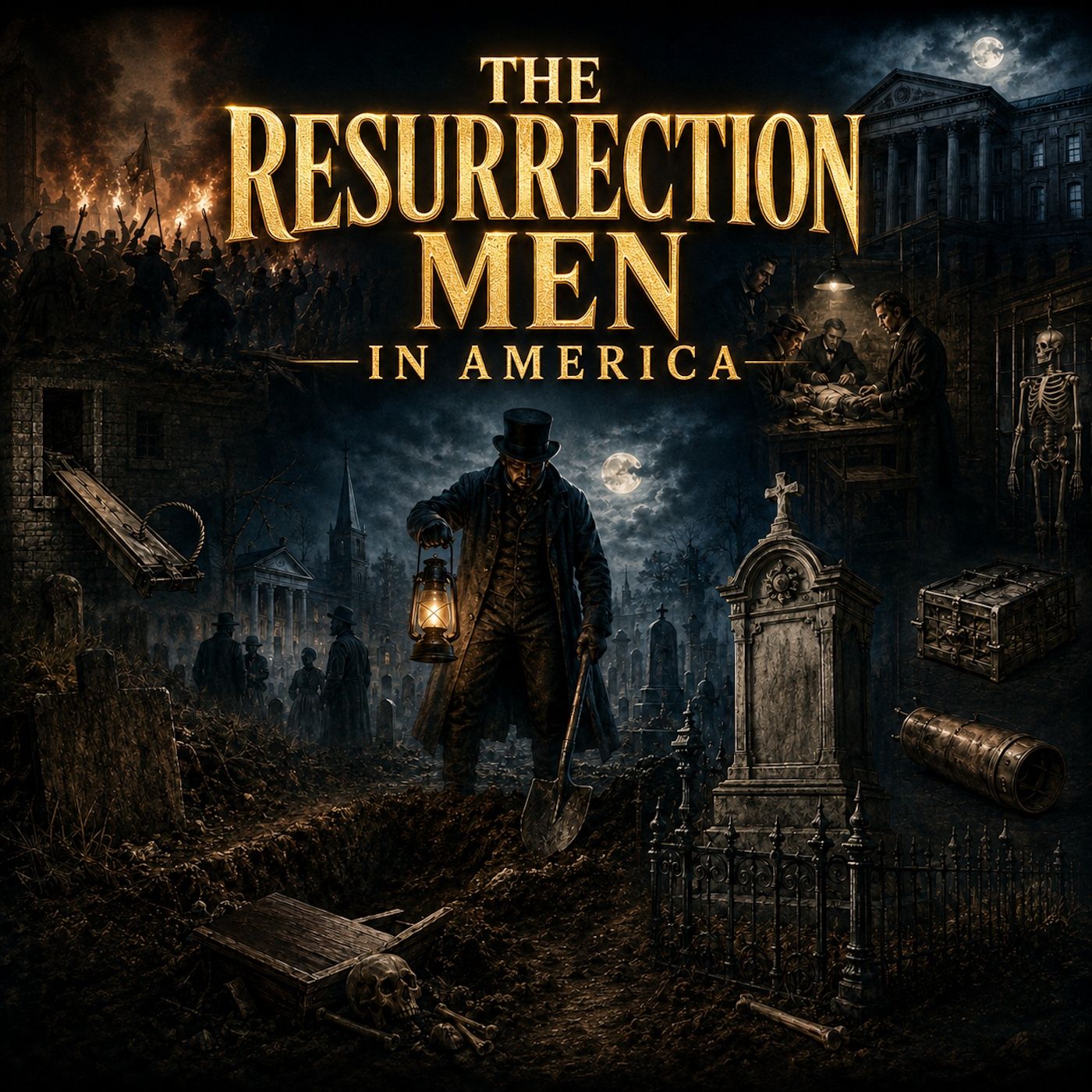
| 5/8/26 | ![]() The Resurrection Men in America✨ | grave robbingAmerican medicine+5 | — | Medical College of OhioMedical College of Georgia+1 | Cedar Grove CemeteryNew York City | Resurrection Mengrave robbing+8 | — | 1h 11m 34s | |
| 5/6/26 | ![]() The Forgotten Horror of the Lake Shawnee✨ | historyamusement parks+4 | — | Marshall UniversityConcord College | West Virginia | Lake ShawneeWest Virginia+6 | — | 1h 03m 26s | |
| 5/4/26 | ![]() The Real Stranger Things?✨ | Montauk Projecturban legends+3 | — | USS EldridgeStranger Things | Long IslandCamp Hero | Montauk ProjectStranger Things+3 | — | 1h 15m 31s | |
| 4/29/26 | ![]() Diamonds Are Forever✨ | diamond industrymarket manipulation+4 | — | De BeersSoviet Union | Sierra LeoneSouth Africa | diamondsCecil Rhodes+6 | — | 1h 08m 34s | |
| 4/26/26 | ![]() Who Found America First: Columbus or the Vikings?✨ | Norse explorationColumbus+4 | — | — | Newfoundland | Norse settlersVinland+6 | — | 1h 03m 35s | |
| 4/25/26 | ![]() The American Gold Rush✨ | Gold RushCalifornia history+5 | — | California legislatureCalifornia Supreme Court | CaliforniaMexico | Gold RushCalifornia+8 | — | 1h 07m 13s | |
Showing 25 of 113
Pitch Fit is a Pro feature
See how bookable this show is for guests, which brands already advertise, the per-episode ad value, and the best-fit guest and sponsor profile. The numbers are blurred on the free plan.
How readily this show books outside guests like you.
How proven this show is for host-read sponsorships.
For Guests
ProFor Advertisers
ProUpgrade to Pro to unlock guest cadence, sponsor categories, fit scores, and per-episode ad value for this show.