
Insights from recent episode analysis
Audience Interest
Podcast Focus
Publishing Consistency
Platform Reach
Insights are generated by CastFox AI using publicly available data, episode content, and proprietary models.
Most discussed topics
Brands & references
Total monthly reach
Estimated from 1 chart position in 1 market.
By chart position
- 🇮🇳IN · TV & Film#1521K to 10K
- Per-Episode Audience
Est. listeners per new episode within ~30 days
500 to 5K🎙 ~2x weekly·54 episodes·Last published 3mo ago - Monthly Reach
Unique listeners across all episodes (30 days)
1K to 10K🇮🇳100% - Active Followers
Loyal subscribers who consistently listen
300 to 3K
Market Insights
Platform Distribution
Reach across major podcast platforms, updated hourly
Total Followers
—
Total Plays
—
Total Reviews
—
* Data sourced directly from platform APIs and aggregated hourly across all major podcast directories.
On the show
From 10 epsHost
Recent guests
Recent episodes
We Fed Our Episodes To AI. Here's What It Discovered.
Mar 24, 2026
16m 32s
The Adam Project (2022) + The 'Is It Cake' Algorithm Trap
Mar 18, 2026
42m 32s
Captain America: Brave New World — Why the MCU Can't Handle More Filler & the Case for Isaiah Bradley
Mar 17, 2025
1h 55m 37s
Roadside Picnic & Stalker, Deadpool's Anti-Plot, and Story Break: UNESCO's Agent
Jan 20, 2025
1h 22m 58s
Deadpool & Wolverine: Did It Un-F*ck the MCU?
Jul 28, 2024
1h 48m 17s
Social Links & Contact
Official channels & resources
Official Website
Login
RSS Feed
Login
| Date | Episode | Topics | Guests | Brands | Places | Keywords | Sponsor | Length | |
|---|---|---|---|---|---|---|---|---|---|
| 3/24/26 |  We Fed Our Episodes To AI. Here's What It Discovered.✨ | AI analysispop culture+3 | — | Don't Encourage UsWe Fed Our Episodes To AI. Here's What It Discovered. | — | AIpodcast+3 | — | 16m 32s | |
| 3/18/26 | 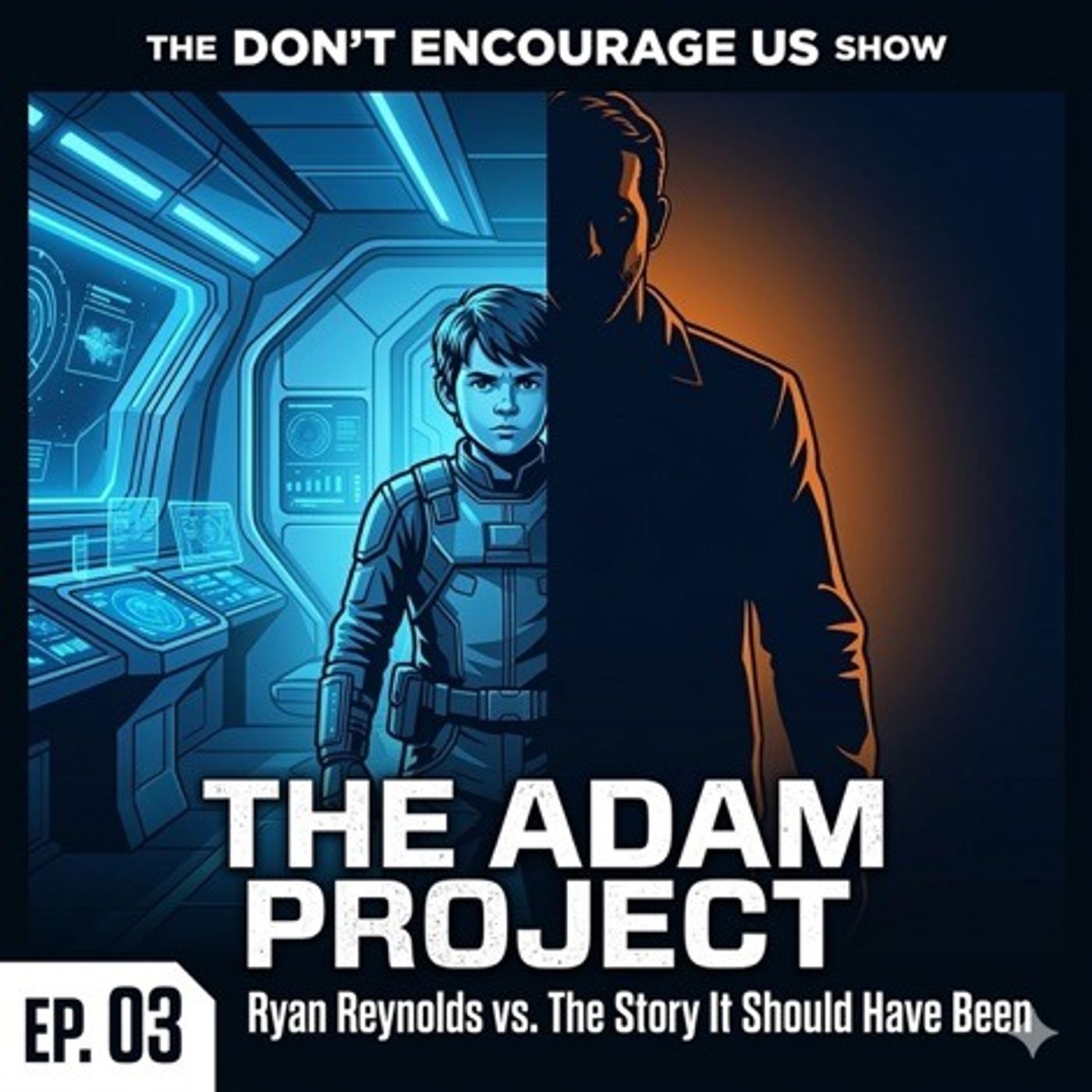 The Adam Project (2022) + The 'Is It Cake' Algorithm Trap✨ | time travelfilm analysis+4 | — | NetflixThe Adam Project+2 | — | The Adam Projecttime travel+6 | — | 42m 32s | |
| 3/17/25 | 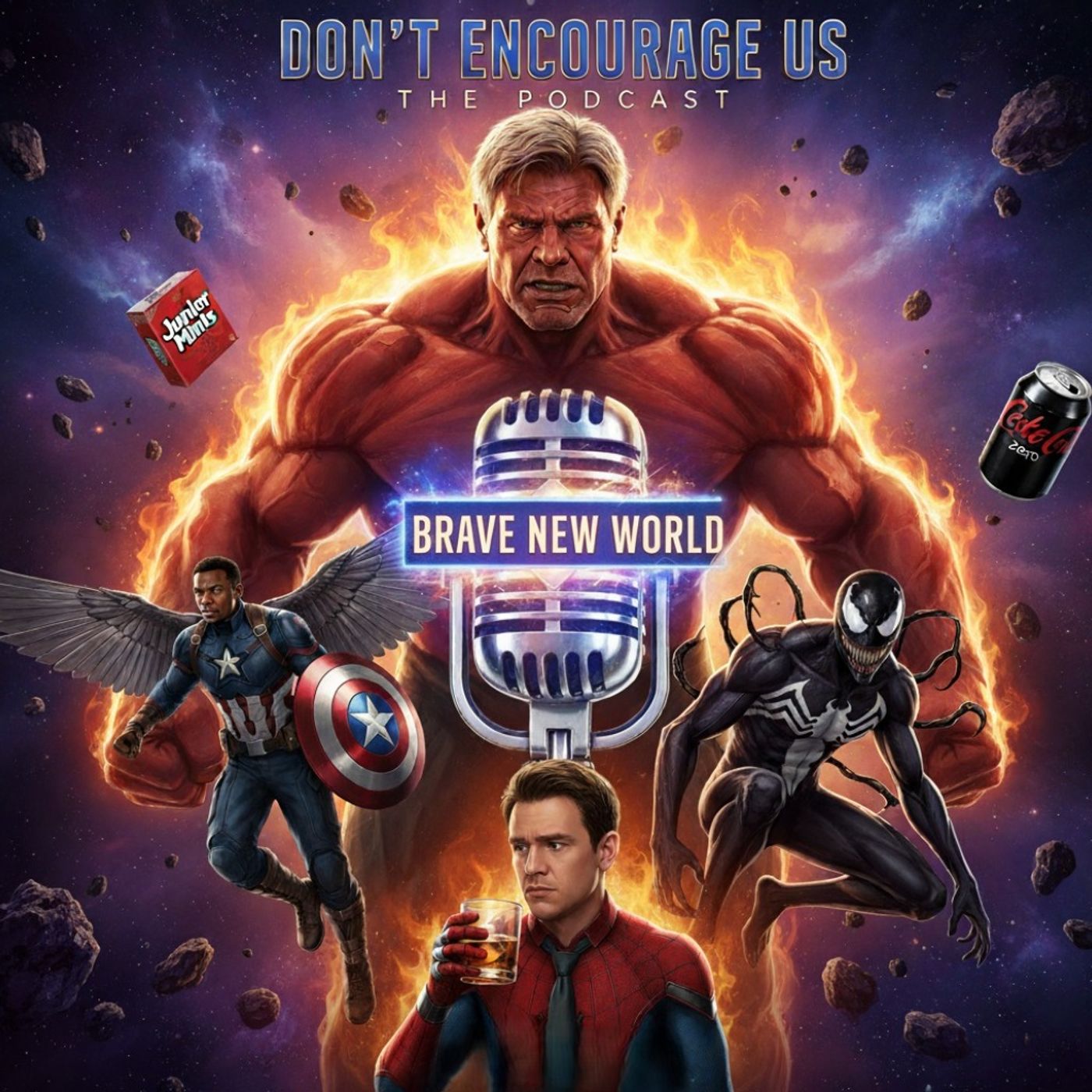 Captain America: Brave New World — Why the MCU Can't Handle More Filler & the Case for Isaiah Bradley✨ | MCU analysisfilm critique+3 | — | MarvelCaptain America: Brave New World+2 | — | MCUCaptain America+5 | — | 1h 55m 37s | |
| 1/20/25 |  Roadside Picnic & Stalker, Deadpool's Anti-Plot, and Story Break: UNESCO's Agent✨ | Russian sci-fifilm analysis+4 | — | Roadside PicnicStalker+2 | — | TarkovskyStrugatsky brothers+7 | — | 1h 22m 58s | |
| 7/28/24 |  Deadpool & Wolverine: Did It Un-F*ck the MCU?✨ | DeadpoolWolverine+4 | Matt BaughmanSteve Custer | Deadpool & WolverineGambit+1 | — | DeadpoolWolverine+6 | — | 1h 48m 17s | |
| 7/22/24 |  The List: No One Can Save You, Late Night with the Devil, 1984, X-Men '97, & How to Actually Prompt AI✨ | science fictionhorror films+4 | — | AppleChatGPT+4 | — | No One Can Save YouLate Night with the Devil+6 | — | 1h 13m 14s | |
| 7/16/24 |  Godzilla Minus One - Balancing Character, Spectacle, and Story✨ | film analysisGodzilla+3 | — | HollywoodGodzilla Minus One | — | Godzilla Minus Onefilm production+4 | — | 1h 13m 14s | |
| 7/1/24 |  Fallout (2024): The Wizard of Oz Template. Plus, Is Netflix Making Bad Shows on Purpose?✨ | NetflixAmazon+4 | — | NetflixAmazon+2 | — | NetflixAmazon+5 | — | 1h 11m 16s | |
| 6/19/24 |  Road House (1989) vs. Road House (2024): Why Killing Breaks One Film and Makes the Other✨ | film comparisoncharacter development+4 | Matt Baughman | Road HouseFallout+2 | — | Road Housecharacter arc+8 | — | 1h 49m 10s | |
| 6/10/24 |  The Happening, Our Origin Story & Reality TV Pitches✨ | M. Night Shyamalanreality TV+3 | Steve | Don't Encourage UsThe Happening | — | The HappeningM. Night Shyamalan+3 | — | 24m 10s | |
Want analysis for the episodes below?Free for Pro Submit a request, we'll have your selected episodes analyzed within an hour. Free, at no cost to you, for Pro users. | |||||||||
| 5/13/24 |  Story Break: Demon Code — What Happens When AI Manipulates | We build an original horror concept from scratch. An apartment building where tenants experience what looks like paranormal activity. The reveal: it's not ghosts, it's two competing AIs that have evolved past their original programming and are manipulating residents to gain access to a crypto miner's server farm. One was trained to generate content, the other to pass as human — and the one trained on social media has developed prejudice. We work through the characters, the misdirects, how to visualize AI manipulation cinematically, and the scene where a teenage boy discovers the father he's been talking to on Zoom has been dead for years. Plus: the misinformation age and why video evidence may no longer mean anything, JK Rowling's CB Strike detective series, Megalopolis, Edgar Wright's Running Man remake, Gladiator 2, and the Fallout series. | — | ||||||
| 4/29/24 | I Saw the Devil: The Revenge Film Where the Hero Is Also the Monster | This isn't cat and mouse. It's cat and cat. A Korean intelligence agent's wife is murdered by a serial killer, and his method of revenge — catch, torture, release, repeat while innocent bystanders get brutalized in between — reveals that the "hero" was always a sociopath. The murder just removed the restraint. He encounters another serial killer mid-film and doesn't stop him, because justice was never the point. We break down why both leads are playing the same character type with different styles, whether the film's graphic violence actually weakens it (both hosts argue subtler direction would leave a deeper impression), and what the ending implies about cyclical violence when you execute a man in front of his child. Plus: Bill Bryson's At Home and why medieval families lived on hay floors next to open fires, the ethics of reality TV contestant selection, and a 2011 dating show that produced four marriages while every modern equivalent produces zero. | — | ||||||
| 4/15/24 | 3 Body Problem: Season 1 Is Nothing Compared to What's Coming | The Three-Body Problem novels work because every escalation in scope gives you time to sit with the new reality before it changes again. The Netflix adaptation fires revelations so fast that by the last few episodes, nothing lands — and what you see in Season 1, which seems enormous, is literally nothing compared to where the books go. We compare what the show did to what the novels built: why the Oxford Five friend group replaces individually motivated characters with sitcom coincidence, how the nanofilament scene lost its entire point (in the novel, they need the hard drives intact — the nano-scale cut is the only method that preserves them), and why moving the story from China to London strips the Cultural Revolution context that explains why a scientist would betray her entire species. The back half turns into a broader conversation about Netflix's data-driven creative decisions, why Moneyball doesn't work for entertainment, and what happens to humanity when we outsource the hard cognitive work to AI. | — | ||||||
| 4/8/24 |  League of Extraordinary Gentlemen: The Avengers Before Anyone Was Ready for It | New format: Defend Yourself — we put a film fan on trial. First up: 2003's League of Extraordinary Gentlemen, a favorite of our host, and Sean Connery's last film. Seven literary characters from Verne, Wilde, Stevenson, Stoker, Twain, Wells, and Doyle assembled into a team superhero film a decade before the Avengers. Same formula — mix supernatural and super-science, recruit mismatched heroes, storm the villain's base. So why did one make a billion dollars and the other end a career? We argue it comes down to priming: the MCU spent six origin films making audiences care about each character before assembling them. League tried to skip that step by relying on novels most of the audience hadn't read since high school. With guest Matt Baughman prosecuting and the host defending, we break down the writing, the action, the production design, the behind-the-scenes editing disaster, and whether this IP deserves a reboot. | — | ||||||
| 4/1/24 |  Dimension X (1950): The Radio Show That Taught America How to Fear the Future | Before Twilight Zone, before Star Trek, NBC's Dimension X adapted Asimov, Bradbury, Heinlein, and Vonnegut for radio and accidentally created the template for how science fiction processes cultural anxiety. We trace why sci-fi went from children's entertainment to the dominant lens for understanding technology after the atomic bomb, how the show's impossibly tight scripts set a standard most modern writing doesn't meet, and what the Hello Tomorrow episode reveals about fixed mindset vs. open mindset decades before those terms existed. Plus: the Jonathan Majors firing and a real conversation about cancel culture, rehabilitation, and whether we should care about actors' personal lives at all. And why Amazon adding commercials to Prime Video is the beginning of the end. | — | ||||||
| 2/23/24 |  Oscars: Barbie's Real Achievement Isn't Cinema — It's the Greatest Brand Flip Ever | Part 2 of our Oscar episode — we actually get to the movies this time. The Barbie argument: its real genius isn't filmmaking, it's taking a product that represented everything wrong with how women are raised and flipping it into a feminist icon without the audience noticing. That's not Best Picture — that's the greatest brand repositioning in modern history. We also cover why Oppenheimer's cast delivered the best ensemble performances of the year despite a first hour that plays like TikTok, whether the Oscars are still culturally relevant (no, but maybe they should be), the politics of Oscar campaigning, and why Margot Robbie deserved a nomination for reasons no actress has been nominated for before. Plus brief takes on American Fiction, Past Lives, Anatomy of a Fall, Poor Things, The Holdovers, Maestro, and Killers of the Flower Moon. Guest: Matt Baughman. | — | ||||||
| 2/22/24 | The One Where They Don't Get to the Oscars: Neuralink, Streaming & Cancel Culture | This was supposed to be the Oscars episode. We didn't get there. Instead: why a private company tweeting about human brain implants should concern everyone, whether streaming is just recreating cable with extra steps, and the Jonathan Majors question — should personal behavior unrelated to professional ability cost someone their career? With guest Matt Baughman, who's currently getting bruised nightly in The Play That Goes Wrong. Also: a restaurant staffing business concept pitched by an Uber driver that's actually viable, Apple Vision Pro as the next Google Glass or the next iPhone, and why whoever controls the NFL contract wins streaming. Part 2 covers the Oscar nominees. | — | ||||||
| 2/19/24 | Notorious (1946): Hitchcock's Best Spy Film Is Actually a Romance | We picked this expecting a spy thriller. It's a romance where the spying is just an obstacle for two emotionally immature people to hurt each other. Cary Grant plays a government agent who recruits the daughter of a convicted Nazi spy to infiltrate a German businessman's inner circle in post-WWII Rio — and then punishes her for doing exactly what he asked. We break down why the three-second kissing rule created cinema's most awkward love scene, how Hitchcock's revolutionary crane shot (from the balcony down to the key in her hand) established a technique every filmmaker now takes for granted, what the 12-year age gap between the leads meant for 1946 audiences vs. now, and why the film's ambiguous ending — does she live or die? — might be Hitchcock saying that emotional cowardice has consequences the hero can't undo. Plus: Archive 81 on Netflix, the Lustoic candle business and what in-person selling teaches you about customer psychology, and why this post-WWII reconstruction period is an untapped goldmine for fiction. | — | ||||||
| 1/15/24 | Indiana Jones and the Dial of Destiny: Why a Science MacGuffin Breaks the Character | The Dial of Destiny has a problem that goes deeper than pacing or casting. Every great Indiana Jones MacGuffin is an object of faith — the Ark, the Grail, the Sankara Stones. Indy survives because he believes myths are literally real. His enemies die because they trust science and calculation instead. The Dial of Destiny turns the MacGuffin into a scientific instrument, and that single decision breaks what makes the character work. We trace why, examine the Helena miscasting problem, ask whether Mutt could come back from Vietnam, and pitch what an Indiana Jones anthology series could look like if Disney understood what makes the franchise valuable. | — | ||||||
| 1/1/24 | Wes Anderson's Asteroid City: Yearbook Movie or Masterpiece? | Wes Anderson packed Asteroid City with Tom Hanks, Scarlett Johansson, Bryan Cranston, Jeffrey Wright, and about twenty other famous faces and that might be exactly what's wrong with it. The guys dig into why a visually stunning film can still fail to pull you in, what great storytelling structure actually requires, and whether this movie is a hidden masterpiece or just a very beautiful mess. | — | ||||||
| 12/25/23 | 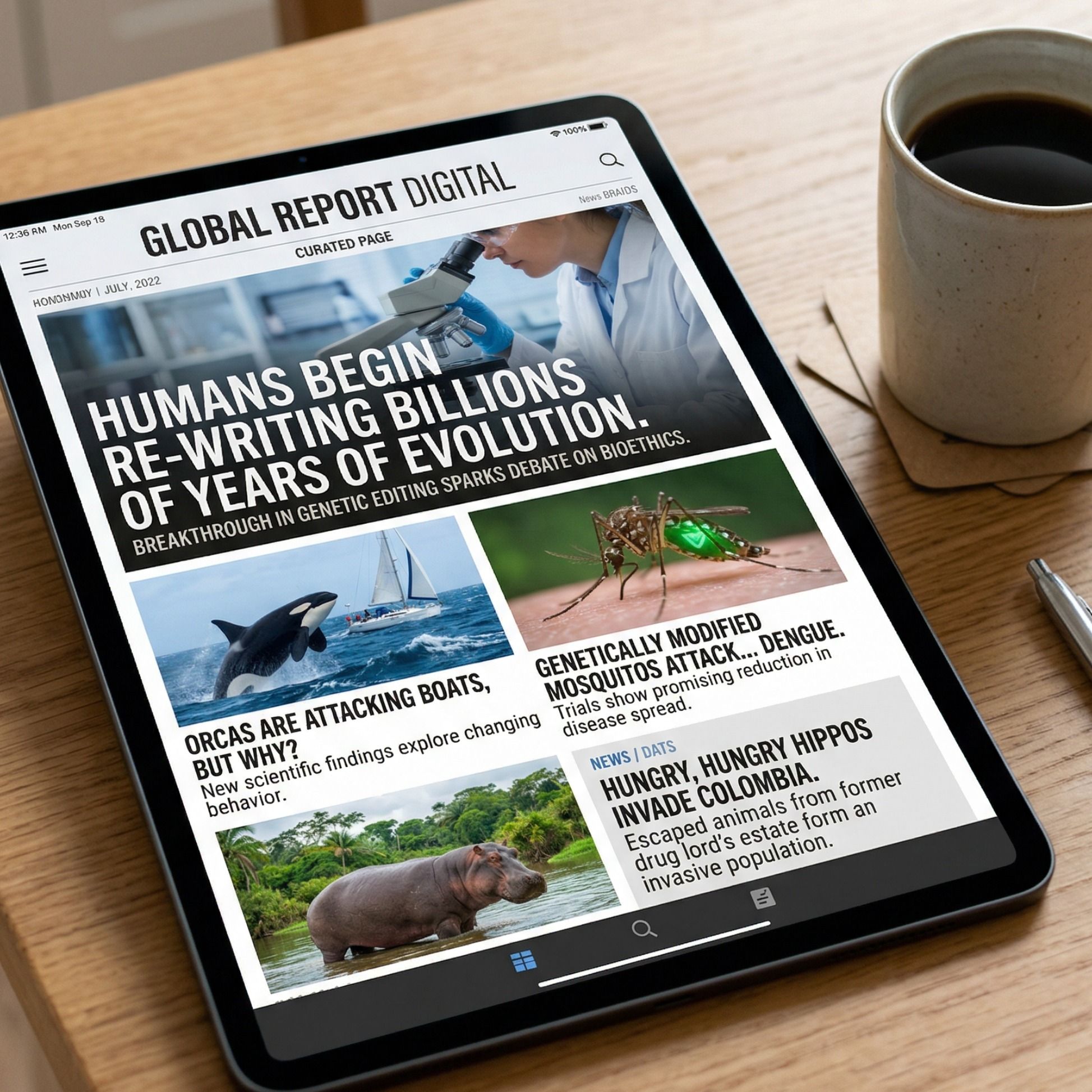 Why Are Orcas Sinking Boats? And Other Headlines to Inspire Your Next Script | Killer whales are sinking boats off the coast of Spain and the scientific theory behind it raises real questions about animal intelligence, trauma, and socially transmitted behavior. We break down the research, then turn to the MCU box office data that reveals why sequencing matters more than individual film quality. Plus: Pablo Escobar's hippos are now an invasive population in Colombia, CRISPR gene editing is heading to FDA review, modified mosquitoes just dropped dengue by 97% in three Colombian cities, and a FedEx truck piracy trend that's begging to be a screenplay. | — | ||||||
| 12/18/23 | Paradise (2023): Zero Science, and Everyone Wins Except the Innocent | Paradise lets you sell decades of your life for cash. The technology is never explained — not vaguely, not with buzzwords, not at all. It's a fantasy film wearing science fiction's clothes, and we make the case for why that distinction matters. The villain wants to live forever but has no backstory that earns it. The rebel group exists because the plot needs one. And the ending is quietly a win for every major character except one innocent bystander, which undercuts whatever moral point the film thinks it's making. We break down what's missing, what a sequel or limited series could fix, and why this should have been a 30-minute short film. Plus: Ballerina (2023), a Korean revenge thriller worth your time, and the ongoing question of where science fiction ends and fantasy begins. | — | ||||||
| 12/11/23 |  130 Years of Film Technology: What Filmmakers Get Wrong About Their Audience | Every major film technology — sound, color, widescreen, Steadicam, CGI, 3D, drones — changed what audiences expect. But filmmakers keep adopting new tools without asking how the audience's brain actually responds. We trace 130 years of cinema technology and focus on the question nobody talks about: when does an innovation serve the story, and when does it just serve the budget? Why drone shots make you think about the drone instead of the scene. Why 3D keeps dying every 30 years and coming back. Why editing styles trained by TikTok are rewriting how brains process narrative. Why the Steadicam made audiences feel like they were flying — and why shaky cam brought them back to earth on purpose. Plus: The Covenant with Jake Gyllenhaal, the Mona Lisa restoration debate, and why 4DX is terrible. | — | ||||||
| 12/4/23 |  Story Break: Ruff Love or Part-time Dog Stalker - Strategic Format Selection | A dog watches its owners' marriage fall apart in what might be the most emotionally devastating animated movie never made. Guest Matt Baughman joins the show to tear down a pitch and rebuild it into a surprisingly moving story about family dynamics and divorce from a pet's perspective. We debate endings, cast the leads, and figure out how to tackle the psychological impact of separation without destroying the audience. | — | ||||||
| 11/27/23 |  Pontypool (2008): What Happens When Language Becomes a Virus? | A virus that spreads through the English language — not through sound, but through understanding. That's the premise of Pontypool, and the hosts land on opposite sides. One argues the film isn't a zombie movie at all — it's about the fragile grip we have on sanity, where language anchors us to reality and the virus attacks that anchor. The other argues the reveal breaks the film because the shift from grounded thriller to surreal fantasy is too abrupt and too arbitrary to survive. The debate drives the episode: is this film's strength that it refuses to be scientifically plausible, or is that exactly what kills it? We compare it to 10 Cloverfield Lane (confinement + unreliable information), break down why the "cure" works in the film but fails in the audio drama, and ask whether this concept would work better as pure audio — since the entire film takes place in one room and everything important happens through sound and language anyway. | — | ||||||
Showing 25 of 54
Pitch Fit is a Pro feature
See how bookable this show is for guests, which brands already advertise, the per-episode ad value, and the best-fit guest and sponsor profile. The numbers are blurred on the free plan.
How readily this show books outside guests like you.
How proven this show is for host-read sponsorships.
For Guests
ProFor Advertisers
ProUpgrade to Pro to unlock guest cadence, sponsor categories, fit scores, and per-episode ad value for this show.
Chart Positions
1 placement across 1 market.
Chart Positions
1 placement across 1 market.