

Insights from recent episode analysis
Audience Interest
Podcast Focus
Publishing Consistency
Platform Reach
Insights are generated by CastFox AI using publicly available data, episode content, and proprietary models.
Total monthly reach
Estimated from 1 chart position in 1 market.
By chart position
- 🇦🇺AU · Social Sciences#8830K to 100K
- Per-Episode Audience
Est. listeners per new episode within ~30 days
15K to 50K🎙 Weekly cadence·13 episodes·Last published 2w ago - Monthly Reach
Unique listeners across all episodes (30 days)
30K to 100K🇦🇺100% - Active Followers
Loyal subscribers who consistently listen
9K to 30K
Market Insights
Platform Distribution
Reach across major podcast platforms, updated hourly
Total Followers
—
Total Plays
—
Total Reviews
—
* Data sourced directly from platform APIs and aggregated hourly across all major podcast directories.
On the show
Recent episodes
Episode 2.1: A Home Should Last a Lifetime But Most Don’t with Dr Tanja Tyvimaa
Apr 25, 2026
Unknown duration
Episode 1.13 Navigating the Rental Market During Housing Crisis with Alice Pennycott and Leo Paterson Ross
Dec 15, 2025
Unknown duration
Episode 1.12 Reframing the role of inclusive housing in Australia’s traditional housing system with Nicole Makin-Doherty
Oct 28, 2025
Unknown duration
Episode 1.11: After the flood - Policy pathways for housing and buybacks in climate-affected communities with Danny Rose and Patrick Leahy
Oct 23, 2025
Unknown duration
Episode 1.10: Can we solve the housing AND climate crisis at the same time with Ammon Beyerle and Jeremy Mansfield OAM
Oct 20, 2025
Unknown duration
Social Links & Contact
Official channels & resources
Official Website
Login
RSS Feed
Login
| Date | Episode | Description | Length | ||||||
|---|---|---|---|---|---|---|---|---|---|
| 4/25/26 | 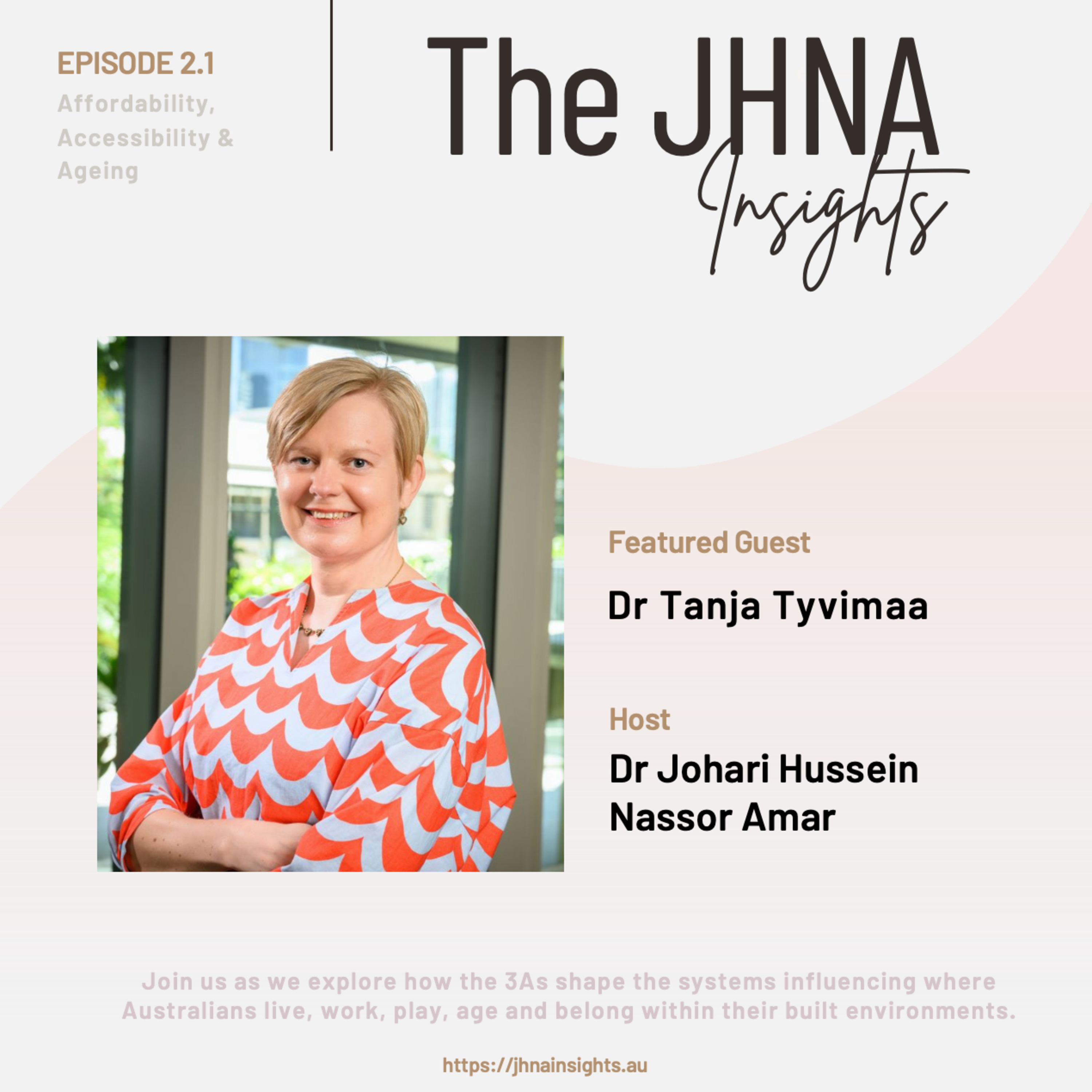 Episode 2.1: A Home Should Last a Lifetime But Most Don’t with Dr Tanja Tyvimaa | We design homes for one version of your life. Then life happens.Australia spends around $500 million a year adapting homes after a fall or injury, not counting the costs when households grow, shrink or shift in what they need. These costs show up later but they start with how we design and build.In this episode, I speak with Finland-based housing specialist Dr Tanja Tyvimaa about why housing needs to work across a lifetime, not just at move-in. She is involved with the Carbon Neutral Tampere 2030 initiative, with work centred on the building life cycle in residential development across municipal government, private developers and investors, and has led projects at universities in Finland, Australia and the US.From everyday design decisions to system-level choices, the question is simple.Why are we still building homes most people will outgrow? | — | ||||||
| 12/15/25 |  Episode 1.13 Navigating the Rental Market During Housing Crisis with Alice Pennycott and Leo Paterson Ross | Renting in Australia is no longer just expensive. It is unstable, exhausting and quietly wearing people down.In this episode of Navigating the Rental Market During Housing Crisis, I am joined by Alice Pennycott, Principal Lawyer (Tenancy) at Circle Green Community Legal in WA, and Leo Paterson-Ross, CEO of the Tenants' Union of NSW and a representative of the National Association of Tenant Organisations. This is an honest conversation about what renters are facing, beyond the headlines and the data: Why Australia’s rental system rewards profit while stability falls through the cracksHow vacancy rates mask the reality of people being pushed out, not just priced upWhy doing everything right no longer protects renters from serious mental and financial strainWhy different eviction laws in NSW and WA still produce the same fear of losing homeWhat we lost when housing stopped being a public good, and why rebuilding at scale mattersWhy rental or homelessness insurance won't solve this, and what actually wouldThis conversation names what renters know but rarely say out loud: the fear of being labelled difficult, the data you give up just to compete and the exhaustion of living on the edge.Contrary to what we hear often, this is not a wicked or unsolvable crisis. It’s systemic, human-made and entirely fixable — not through personal resilience, but by changing a system broken by design.What would it actually take to make renting stable, dignified again and humane again?If you rent, work in housing or want to understand why so many people feel stuck despite doing everything right, this is a grounded and necessary discussion worth listening to.#HousingAffordability #HousingInsecurity #HousingJustice #NSWRenters #TenancyRights #WArenters | — | ||||||
| 10/28/25 |  Episode 1.12 Reframing the role of inclusive housing in Australia’s traditional housing system with Nicole Makin-Doherty | Before recording this Episode 12, I read a story about a man who had been given a bath all his life and was finally able to take his first independent shower after moving into an accessible home.That moment captures my conversation with Nicole Makin-Doherty, CEO and Managing Director of Empowered Liveability, about dignity, independence and inclusion and why so many Australians are still locked out of housing that works for themWe explored why only 5% of new homes meet basic accessibility standards and how more than 40% of SDA rooms are unoccupied while thousands of people are still searching for a place to live. Nicole explained how this mismatch comes down to location, design and misunderstanding of how the NDIS actually works and what can be done to fix it.Here are some key takeaways:Why over 1,000 SDA homes are vacant and how location, design and policy all play a roleThe biggest misconception investors have about SDA and why the NDIS doesn’t guarantee rentHow inclusive design benefits everyone, from parents with prams to people recovering from injury and anyone who wants to age in placeThe crossover between SDA and social housing could help bridge the gap for people who need accessible homes but aren’t NDIS participantsPeople thrive when they can stay in their own homes. We need to move beyond compliance and design truly inclusive communities that don’t lock people out by focusing on:Physical access – homes that work for daily lifeSensory access – design that support sensory needsFinancial access – housing that is affordable, not just availableAgeing in place – staying close to family improves health and connectionCommunity access – transport, public spaces and workplaces that include everyoneAny of us could need accessible housing tomorrow. Inclusive homes and infrastructure create communities that support independence, connection and dignity for everyone.Resources mentioned:Housing Hub – quarterly data on demand and fundingSummer Foundation – research and advocacy on accessible housingEmpowered Livability – provider insights and case studies#AccessibleHousing #SDA #NDIS #AgeingInPlace #UniversalDesign #DisabilityInclusion #SocialImpact | — | ||||||
| 10/23/25 |  Episode 1.11: After the flood - Policy pathways for housing and buybacks in climate-affected communities with Danny Rose and Patrick Leahy | Over the past 48 hours, four states - Queensland, New South Wales, South Australia and Victoria - have been hit by extreme weather. Record-breaking October heat, destructive winds and severe storms have left parts of the country reeling from floods and widespread power outages.If anyone still thinks climate change is a future problem, look outside.By 2050, more than one million Australian homes could be uninsurable. According to the Climate Council, flood-prone properties have already lost $42 billion in value and disaster costs are projected to reach $73 billion each year.In Episode 12, I spoke with Danny Rose, Manager Roads and Stormwater Engineering at Tweed Shire Council and Deputy President Floodplain Management Australia, and Patrick Leahy, Director at SG Group Real Estate Advisors, about what happens after the disaster . We explored what happens after disaster strikes and how communities are rethinking resilience. Here is what they shared:How the 2011 and 2022 floods reshaped entire regions and led many residents to stop rebuildingWhat happens to roads, drainage and utilities when buybacks transform neighbourhoodsHow councils decide what to rebuild, relocate or retire to reduce future riskWhy advanced flood modelling and the checkerboard effect are changing where new homes can be safely approvedHow buyback lessons are informing recovery in bushfire, wind and landslide-prone areasWhy community education and trust-building are essential before disaster strikesWe are already seeing this play out across NSW and QLD as communities work out what it really means to rebuild safely.This episode builds on:Episode 8 Engineering and Planning Solutions for a Climate-Ready Australia with Pradesh Ramiah and Rob CowleEpisode 10 Can we solve the housing AND climate crisis at the same time? with Ammon Beyerle and Jeremy Mansfield OAM🎧 Tune in to hear how councils and communities are rewriting the rulebook on rebuilding after disaster, and what it means for your home, your investment and your future.Resources mentioned:Australia’s National Climate Risk Assessment (2025) – Australian Climate ServiceFloodplain Management Australia – national network for flood resilience and planningTweed Shire Council Floodplain Management – practical examples of recovery and adaptation#Buybacks #BuiltEnvironment #HousingResilience #FloodManagement #SustainableHousing | — | ||||||
| 10/20/25 |  Episode 1.10: Can we solve the housing AND climate crisis at the same time with Ammon Beyerle and Jeremy Mansfield OAM | Australia needs 1.2 million new homes by 2029, yet housing stress, rising homelessness and climate risks are intensifying. A typical new home releases around 185 tonnes of CO₂ before anyone moves in, and housing and construction already make up nearly 20% of national emissions.In this Episode 10, I spoke with Ammon Beyerle, Architect & Director of Here Studio, and Jeremy Mansfield OAM, Board Chair of Green Cross Australia and Founder/Director of Mansfield Advisory Pty Ltd about how adaptive reuse and nature-based urban design can help deliver the homes we need while cutting carbon and building more liveable communities.A few things from our chat really stayed with me:40% of carbon is locked in existing buildings and we simply can’t afford to demolish them all90% of existing buildings will need redesigning by 2040, not just for carbon but for accessibility and maintenance Key worker housing affordability has dropped below 1% in some Australian cities indicating secure job is no longer enough to guarantee a place to live for manyNearly every regional town in Australia has an underutilised heritage buildings that could provide housing Ammon shared his vision to transform 1,000 empty buildings across 1,000 towns in 10 years – not as the full solution, but to instill the culture of "We can’t afford to solve all problems by building everything new but work with what we’ve got".Jeremy questioned why we don’t have consistent policies across Australia’s 500+ planning schemes that ask: “Do we really need to build new?”We also talked about:How walkable, nature-connected neighbourhoods can reduce emissions and improve wellbeingHow ecological design, e.g. using trees, green spaces and natural systems, can cool cities and lower embodied carbonHow lightweight timber extensions can add three or more affordable housing floors without demolitionThe $1.3 billion Household Energy Upgrades Fund and the need to measure what actually requires upgradingWhy success should be measured beyond carbon – through inclusion, health and resilienceIf you care about housing policy, sustainability or urban design, this episode builds on earlier conversations about rooming accommodation, airspace development and modern methods of construction – exploring how innovation and policy can work together to meet housing targets while moving toward net zero.#SustainableHousing #Nature-basedUrbanDesign #AdaptiveReuse #Decarbonisation #ClimateAction #BuiltEnvironment #NetZero | — | ||||||
| 10/13/25 |  Episode 1.9: How Rooming Houses Could Help the Housing Crisis (If Policy Let Them) with Paul Zanetti | When more than 10,000 Australians experience homelessness every month and rental vacancy rates sit just above 1%, you would think every state would be doing everything possible to encourage affordable housing. The reality tells a different story.In this episode, I am joined by Paul Zanetti, Founder and Director of Brisbane Rooming Houses, to explore a housing model that provides secure, executive-style studios (30-60 sqm) designed for long-term residents at a more affordable price than traditional rentals, featuring:Private ensuite and kitchenetteAll bills included (power, water, internet)Furnishings, air conditioning and digital securityCommunal spaces that encourage social connection and reduce isolationRents around $400–$500 per week compared with $700+ for a typical one-bedroom apartmentThere is strong demand for this housing, especially from low-income workers and vulnerable households, and half of all enquiries come from couples who could share costs at about $200 each per week. However, Queensland’s rules prohibit shared occupancy, creating another barrier to supply when affordability is already under pressure.In the past five years, Queensland has gained about 146,000 new residents from other states, leading the nation in population growth. Yet it remains the only state charging up to $26,000 per room in infrastructure fees, rising by $2,000 each year, and adding more than $130,000 to a typical five-room project before construction even begins.Our discussion explores:Whether infrastructure charges reflect genuine growth costs or are limiting new housing supplyWhat Victoria and Western Australia are doing differently to attract investment and expand affordable optionsHow ‘convenient living’ of accommodation can reduce rental stress and create faster pathways to housingThe real cost of policy inaction and what reforms could make an immediate differencePaul’s key message is clear: government and private providers need to work together. With 95% of Australia’s housing delivered by the private sector, supporting affordable models like rooming accommodation could make a meaningful difference fast.🎧 Listen to Episode 9 to hear:How small regulatory changes could halve rent for many tenantsReal examples of investment shifting between statesWhat practical reforms could unlock thousands of affordable roomsWhy renting out rooms without proper rooming or boarding certification can lead to planning breaches, insurance issues and tax liabilitiesFor so long, the focus has been on Airbnb reducing long-term rental supply, yet rooming accommodation is growing but restricted by policy inconsistencies, highlighting the need to consider whether housing policy should be consistent across the nation or responsive to state/territories plans.#RoomingAccommodation #HousingCrisis #AffordableHousing #QueenslandHousing #UrbanPolicy #InfrastructureCharges | — | ||||||
| 9/30/25 |  Episode 1.8: Engineering and planning solutions for a safer, more affordable climate-ready with Pradesh Ramiah and Rob Cowle | Climate change, housing affordability and infrastructure resilience are colliding into one of Australia’s biggest challenges. Disaster costs already exceed $38 billion a year and are projected to reach $73 billion by 2060 – with Queensland and NSW expected to bear two-thirds of the burden. At the same time, property values in high-risk zones continue to rise even as insurance costs make many homes unliveable or uninsurable.In Episode 8 of my podcast, I am joined by two leading experts at the intersection of planning and climate resilience: Pradesh Ramiah – Urban and Environmental Planner at Moreton Bay Council, experienced in sustainable development and climate adaptation across Queensland and NSRob Cowle – Property Risk Consultant and Director at B3Creative and Greenstar Accredited Professional, helping communities future-proof property and business assetsThe conversation explores some big questions:With all 13 ‘Black Zone’ suburbs (where more than 80% of homes are high risk) still recording price growth, how can planning systems redirect housing to safer locations while keeping it affordable?Should Australia focus more on managed retreat, adapting in place or building denser housing in safer zones especially when 1.2 million homes are already climate-exposed?Why isn’t climate-ready construction standard practice when resilient features add just 2-3% to costs but can halve disaster repair bills?How should we respond when insurers withdraw from high-risk areas, with premiums in North Queensland already exceeding $5,000 a year?What would a climate-adapted housing system look like in 2040 and which international lessons could Australia adopt now?Find out why these final pieces of future-proofing advice matter for Australia's climate-ready housing future:Strengthen the NCC to address climate risks at location, precinct and property levelsWhen buying or renting, check for gaps and cracks that affect energy efficiencyMake climate risk disclosure mandatory, as most people don’t know what to askBalance permanent and relocatable housing in resilience planning and buyback programs🎧 Tune in to Episode 8 to hear some practical and innovative solutions for building safer and more resilient communities in a changing climate | — | ||||||
| 9/21/25 |  Episode 1.7: Modern methods of construction and scaling housing supply in Australia with Nicholas O'Neill and Damien Crough | Traditional construction now takes about 55 weeks just to finish one home and meanwhile more than 160,000 households are waiting for social housing. On top of that around 10,000 people fall into homelessness every month. We can’t keep up if we keep building the old way.In this Episode 7 of Season 1 Australian Housing Challenges and Solutions I talk with Nicholas O’Neill, Managing Director at Moov Modular, and Damien Crough, Co-founder and Executive Chairman of prefabAUS, about how prefab and modular housing might help ease Australia’s housing crisis by delivering the speed, quality and affordability we desperately need.What we askHow do prefab homes get built in 16 weeks versus 55 weeks and, if it works, why isn't everyone doing it?Why is some legislation e.g. NSW's Manufactured Building Act still blocking prefab homes that meet the NCC and even preventing the local governments from delivering affordable and social housing?Could prefab be the most practical option for regional and remote areas where builders are scarce and climate demands are tough?How do different transport rules across state borders create hidden costs and extra complexity for moving modular homes?Why does CommBank now back prefab mortgages and how do factory checks ensure fewer defects and lower risks thank traditional projects?Things you will discoverHow the end of the car industry in 2010s transferred automation knowledge and skills into the prefab sectorThere are six categories of prefab with 1,190+ companies in the supply chain, creating resilience but requiring coordination for quality standardsUpcoming release of a standardised contract backed by major banks will boost lender participation and build confidence in finance, planning and regulation.Channel 9 will air the TV program 'Epic Builds: The 90-Day Challenge' in 2026 showcasing the speed, quality and performance of prefab construction including its benefits for the housing sector.Damien and Nick cautioned that not all construction companies and builders have the expertise in MMC. It requires knowledge of both factory manufacturing processes and site-specific solutions, from assessing access constraints to matching the right prefab methodology to each location’s unique conditions.Stay informed about prefab housing regulations and certification schemes, and explore industry information plus a directory of local manufacturers and builders by state through resources such as the NCC Modern Method of Construction Handbook, prefabaus.org.au, CommBank Prefabricated HomesKeywords: affordable and social housing, Australian housing crisis, housing finance, modular housing, modern methods of construction (MMC), prefab construction, sustainable housing | — | ||||||
| 9/15/25 |  Episode 1.6: Understanding strata's critical role in the Australian housing ecosystem with Kate McHugh and Michael Lovell | By 2050 half of Australians are expected to live in strata accommodation, yet most buyers do not fully understand what they are purchasing, and this lack of awareness sits at the centre of Australia’s strata education crisis.As the housing crisis continues to deepen, strata developments have the potential to provide far more than a management framework by offering ways to increase urban density, strengthen communities and support sustainabilityIn this episode, I speak with Kate McHugh, Co-Founder and Engagement Lead at Strata Futures, and Michael Lovell, Senior Strata Development Consultant at Strata Dynamics, about how strata management can reshape communities and drive meaningful change in Australia’s housing ecosystem.Here are key takeaways:The ownership illusion: Do you really own your apartment - or just the space inside it?The surprise costs: Are strata levies just fees, or are they investments that protect your property's value?The lifecycle pattern: How can strata adapt as people move from apartments to houses and back again, while balancing geography, building lifecycles and socio-economic pressures?The transparency gap: How can buyers and tenants make informed decisions when disclosure laws vary so widely between states?The uncomfortable truth: If spending a million dollars on any other asset requires sophistication, why is housing treated like a free pass?The bigger pictureWith 3 million additional strata units forecast across Australia’s capitals, this is not just about individual buyers, it is about the future of urban living and housing supply. .Does getting it right requires:National consistency in strata regulationsRecognition that strata is a legal construct of ownership, not a housing affordability solutionBetter education so buyers understand they are making an investment, not just buying a homeThe industry reality check: We can't just build apartments and claim the housing crisis is solved without understanding what happens to those buildings after people move in. Catch the full conversation here | — | ||||||
| 8/24/25 |  Episode 1.4: From plans to homes - Planning a housing continuum for affordability, ageing and accessibility (3As) with Nicole Bennetts and Associate Professor Daniel O'Hare | Most people don’t think much about planners, yet they shape the way neighbourhoods grow and the liveability of our cities. The market may deliver housing, but planners create the frameworks that guide development and keep growth sustainable. Without their direction, cities risk becoming less affordable, less accessible and less able to meet the needs of an ageing population, while expanding without a clear plan.In this episode I speak with Nicole Bennetts, state manager of QLD and NT for the Planning Institute of Australia (PIA), and Dr Daniel O’Hare, associate professor of urban planning at Bond University, about the pressing housing challenges in Australia. We look at why planners are needed more than ever, why their work is often invisible, and how planning can help create stronger and more sustainable communities.Some of the key ideas we explore are:Demographic wheel for intergenerational housing – the idea that housing should support people at different stages of life and allow flexibility across generationsQuality in my backyard (Quimby) – moving beyond the extremes of YIMBYs (yes in my backyard) and NIMBYs (not in my backyard) to focus on quality development that benefits communitiesConsolidated growth – managing urban expansion by building inwards and upwards instead of sprawling outwardsA growth mindset in urban planning – encouraging communities to embrace change and see the opportunities that come with developmentDevelopers and housing finance – recognising that private investors provide most housing stock, so they cannot be blamed for everything, and calling for a shift away from housing as a financial asset towards affordability and accessibility, especially in well-located areasThe 3As framework, which sets out three key priorities:Affordability should include not only housing costs but also essential expenses, with climate resilience in mindAccess should cover design, tenure and transport that connect people to jobs, services and opportunitiesAgeing should involve homes and neighbourhoods that provide amenities, social life and flexibility across generationsUrban leadership change – highlighting the need for leaders who can guide growth with vision and innovation, build trust in communities and drive the kind of change needed to create sustainable and liveable citiesNicole’s passion for planning began with her love of SimCity, a game that opened her eyes to how cities could be designed. That interest grew when a planner visited her school. Daniel, despite growing up in a rural area, was drawn to urban planning because of vibrant, functional urban spaces led him to pursue a career where he could help shape the very cities he admired | — | ||||||
Want analysis for the episodes below?Free for Pro Submit a request, we'll have your selected episodes analyzed within an hour. Free, at no cost to you, for Pro users. | |||||||||
| 7/27/25 | 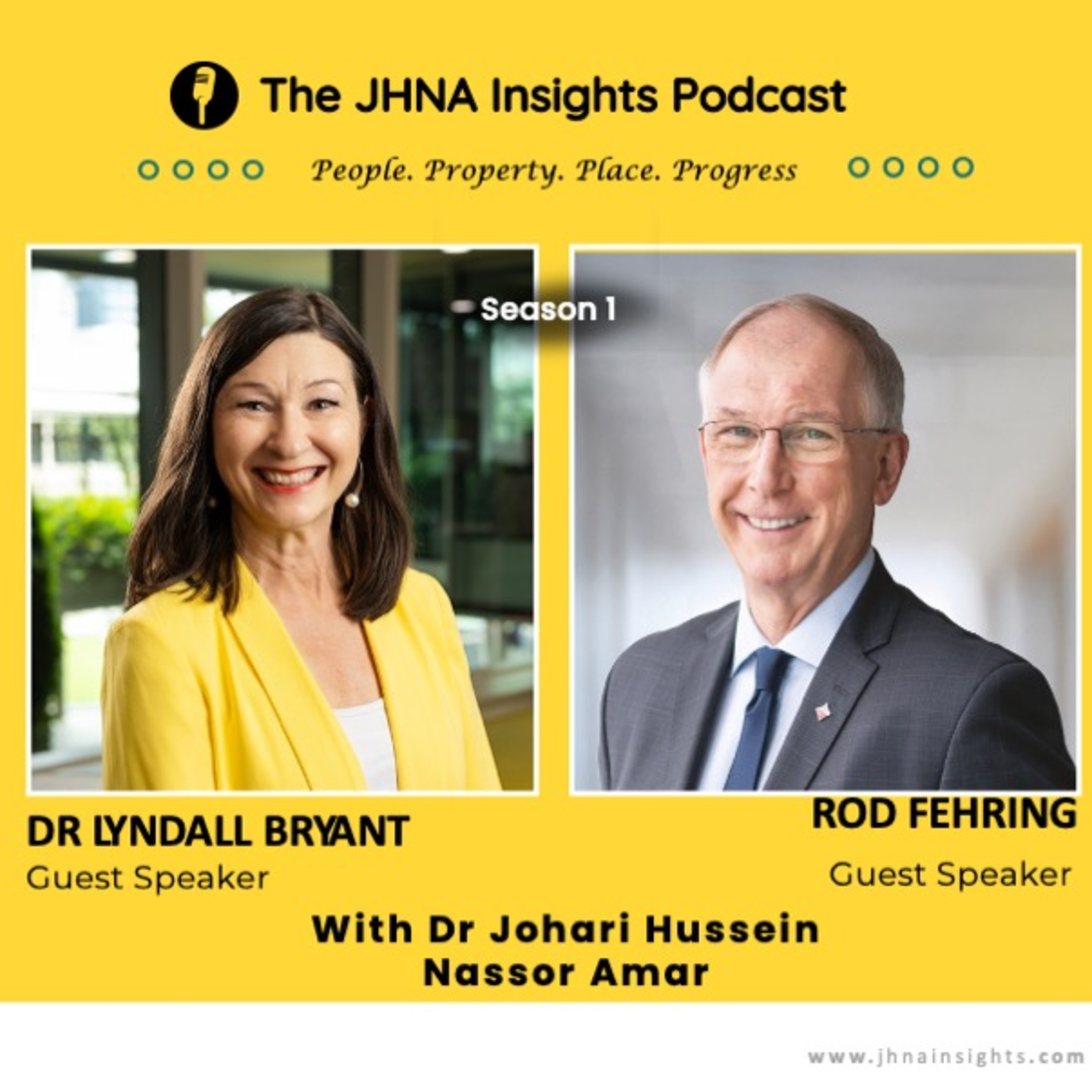 Episode 1.3: Infrastructure vs the housing trade-off in Olympic cities: Can Brisbane 2032 get it right? with Mr Rod Fehring and Dr Lyndall Bryant | Last week, Queensland Premier David Crisafulli described Brisbane 2032 as "the Queensland Games", promising global spotlight benefits through intergenerational infrastructure, tourism and sports. But behind the glossy Olympic vision lies a harder question: who wins and who loses when your city becomes the centre of the world?In this episode, we explore the hidden costs of Olympic glory and the trade-offs between infrastructure investment and housing affordability with two leading experts who have seen both sides of the housing equation: Mr Rod Fehring, Executive Chairman of Frasers Property and member of the NSW Housing Expert Panel, and Dr Lyndall Bryant, Senior Lecturer at QUT and Head of the QUT Housing Security Research Group.Here’s what we discussed:The infrastructure trap: New stadiums and train lines sound great - until you realise they are pricing out the very communities they are supposed to serve. With Brisbane property already unaffordable for many, can Olympic upgrades avoid making it worse?Renters get displaced: In Olympic host cities, evictions spike and short-term leases push out long-term tenants. With Brisbane's rental crisis already biting, how do we protect renters when the world comes to town?Hotel targets squeeze housing supply: Brisbane meets the IOC's 40,000 hotel room quota - but at what cost? As homeowners shift to short stays, where does that leave long-term renters?The missing middle squeeze: Brisbane struggles to build the medium-density housing that could house key workers and young families near Olympic venues. Without it, who gets to live in the city the Games are supposed to celebrate?Big promises, uneven gains: Since the 1960s, only Los Angeles has made money hosting the Olympics. Most cities are left with debt and deeper inequality. Will Brisbane’s infrastructure serve the whole community, or just the Games? And can affordable and social housing finally become part of the legacy?Listen now to hear how Brisbane can avoid the mistakes of past host cities and create a Games legacy that leaves no one behind.Keywords: Affordable housing, Olympic cities, housing displacement, infrastructure, modern construction methods, Airbnb, housing legacy, urban development, Brisbane 2032, housing accessibility | — | ||||||
| 7/18/25 |  Episode 1.2: The Current State of Australian Affordable Build to Rent (BtR) with Dr Diaswati (Asti ) Mardiasmo and Mr Mike Myers | In this episode, I sit down with housing expert Mr Mike Myers and economist Dr Diaswati (Asti) Mardiasmo to explore the challenges and opportunities facing affordable housing in Australia, with a particular focus on the Build to Rent (BtR) model. Mike, Chair of the Queensland Housing All Australians Committee and head of Project Solo, brings over four decades of experience in social and affordable housing. Asti, Chief Economist at PRD, draws on more than 20 years of analysing economic trends that shape property markets in Australia and abroad.The conversation examines the structural and policy barriers that limit the broader rollout of BtR, including its classification in Australia as a commercial asset rather than infrastructure. This treatment affects planning, taxation and investment incentives, creating hurdles that do not exist in comparable international markets. While institutional interest in BtR is growing, both speakers highlight that regulatory misalignment continues to stall its true potential.They also take a critical look at the current BtR business model, which often targets the upper end of the rental market to meet investor return expectations. As a result, BtR developments are frequently positioned as premium assets, offering high-spec amenities that price out many renters. This raises questions about BtR’s long-term sustainability and its ability to serve a broader demographic.One of the key challenges discussed is the reliance on cross-subsidisation — where market-rate tenants help fund a proportion of affordable dwellings within the same development. While this model may help create mixed-income communities, Mike and Asti question its long-term viability without consistent government support. They caution against the emergence of a two-tier rental system and argue that policy makers must address affordability head-on rather than relying on indirect mechanisms.The discussion also highlights the importance of regional equity, innovation in construction, and a more balanced housing mix. With an estimated shortfall of 750,000 affordable and social homes nationally, the speakers agree that CHPs alone cannot carry the burden of supply, and that broader partnerships are needed.Mike puts forward the idea that Ana Bligh, former Queensland Premier and now CEO of the Australian Banking Association, could play a pivotal role in driving national leadership and attracting international investment for affordable housing, helping to close the gap between good policy and practical outcomes.This episode offers a thoughtful and realistic view of where BtR fits in Australia’s housing future and what must change for it to become a truly inclusive, sustainable solution.Keywords: Build to Rent, affordable and social housing, housing policy, urban development, cross-subsidy, premium asset, housing future, Australia | — | ||||||
Showing 12 of 12
Sponsor Intelligence
Sign in to see which brands sponsor this podcast, their ad offers, and promo codes.
Chart Positions
1 placement across 1 market.
Chart Positions
1 placement across 1 market.