
Insights from recent episode analysis
Audience Interest
Podcast Focus
Publishing Consistency
Platform Reach
Insights are generated by CastFox AI using publicly available data, episode content, and proprietary models.
Most discussed topics
Brands & references
Total monthly reach
Estimated from 9 chart positions in 9 markets.
By chart position
- 🇪🇸ES · Buddhism#1101K to 10K
- 🇳🇱NL · Buddhism#1311K to 10K
- 🇹🇷TR · Buddhism#2210K to 30K
- 🇩🇰DK · Buddhism#603K to 10K
- 🇵🇹PT · Buddhism#783K to 10K
- Per-Episode Audience
Est. listeners per new episode within ~30 days
13K to 48K🎙 ~2x weekly·95 episodes·Last published 1w ago - Monthly Reach
Unique listeners across all episodes (30 days)
25K to 96K🇹🇷31%🇪🇸10%🇳🇱10%+6 more - Active Followers
Loyal subscribers who consistently listen
10K to 38K
Market Insights
Platform Distribution
Reach across major podcast platforms, updated hourly
Total Followers
—
Total Plays
—
Total Reviews
—
* Data sourced directly from platform APIs and aggregated hourly across all major podcast directories.
On the show
From 14 epsHost
Recent guests
No guests detected in recent episodes.
Recent episodes
equanimity's full range
Jun 26, 2026
30m 32s
the size of awakening?
Jun 21, 2026
35m 33s
Let the soft animal of your body, love what it loves
Jun 14, 2026
31m 35s
Shadeless Trees
Jun 7, 2026
39m 38s
Actualizing Care, Recognizing Beauty
May 31, 2026
27m 23s
Social Links & Contact
Official channels & resources
Official Website
Login
RSS Feed
Login
| Date | Episode | Topics | Guests | Brands | Places | Keywords | Sponsor | Length | |
|---|---|---|---|---|---|---|---|---|---|
| 6/26/26 |  equanimity's full range | Greetings Friends,I have been reflecting on the art of living a life of attention and intention. This is an art form I have dedicated much of my life to, and one that continues to bear fruit as I continue to practice it.What is the art of living?How is attention an art?Last night I was walking home with my partner from meditation, it was dusk. The fire flies had just started to flutter about, offering their pulsating flashes of illumination. The air was warm, a gentle breeze. We took the “longer” route, through residential roads where cone flowers, milk weed, bee balm, lilies and zinnia are brimming and blooming in hell strips and front yards. My body felt satisfied. My heart was full. Appreciation stirred in my cells. As the world darkened and the moon beamed brighter. The art of attention opens us to the magic and mystery of this world we live in, this life that we inhabit. Without thinking about it, we experience a life-world-self that is interconnected, emergent, alive. The art of attention also allows us to actually experience our lives, to let things flow, change. To feel the processes that move through us, to notice when we are hooked into a limiting belief or narrative about ourselves and the world. To notice when we are shutting down a particular feeling or emotion.the art of feeling our livesThis past Monday during our live online meditation group we read from the Hidden Lamp Case 23: Jiao-an’s Sand in the Eye. In it Jiao-an is told by her teacher Yuanwu, that she must, “erase all views” and then she “will finally be free.”Jiao-an responds to this in a verse:the pillar pulls out a bone sideways; the void shows its claws and fangs; even if one profoundly understands, there is still sand in the eye.In her commentary to the koan, Zenki Mary Mocine Roshi writes:When I began practice I struggled with what I took to be the instruction to suppress emotions. I heard that I would find equanimity by not having views, or emotions, and it seemed to me that I was being asked to give up my humanity and my personality. There may have been some such flavor to the teachings I heard, but I think I exaggerated it out of my own fear of the teaching of “no-self” and my own need to do it “right.”I have found that my life works when I do not try to suppress emotions or deny that I have views. When I deny them, they just sneak up on me later and cause problems.She goes on to share a memory about her early years of training at Tassajara where she did practice suppressing an emotion. She reflects:Had I allowed myself to feel the pain, to really physically experience it, I would have been able to let it go rather quickly. This is the emptiness of emotions. They arise, abide and pass away, but only if we allow them to arise in the first place.It is human to have emotions. However, it is our practice to not let them have us. In the years since that experience at Tassajara, I have learned to pay attention to my breath and my body. Then I’m suppressing something, my body feels heavy and my belly feels tense. Then I know to stop, breathe, and ask myself, “What is this?”I really appreciate how Zenki describes the emptiness of emotion, the tendency to suppress and how a certain hearing of the teachings/or experiences of emptiness or equanimity may lead us down the road to suppression.Part of the art of attention is the art of recognizing and then familiarizing ourselves with the empty yet apparent nature of experience. Sensations, thoughts, feelings, emotions, physical discomforts arise through the various causes and conditions that make-up our human life. We, as practitioners, as artists of the Way—can notice the composition of these sensations, feelings, thoughts and emotions. This is the courageous act of feeling our embodied experience, allowing emotions to arise and experiencing our lives. While this may seem simple in written word form—truly it is an embodied art. For we, as humans have developed habits for managing our experience. We have learned that certain feeling states are “bad” or “wrong” or “dangerous”. And have developed skill in ignoring, suppressing or pushing certain emotions away.On the other side there are feeling states, emotions, sensations, thoughts that we have deep habitual tendencies towards entertaining, getting identified with, and believing. The practice of emptiness is the art of experiencing life as it is. To allow what is happening to happen. To trust that we can feel our lives. I always love the analogy of experience being like weather, in that it is always moving through. Some feelings are stormy, some are bright, some emotions feel like layers of gray clouds, others like a light mist. Just like the sky allows the weather to pass through it—the sky of awareness allows the weather of emotion and feeling to move through us. The sky’s spaciousness is unobstructed by the weather, the clarity and openness of awareness is unobstructed by the panic, grief, fear, pain that passes through us.the many faces of suppressionSometimes on the road to realizing emptiness, we practice suppression. This could be because we want to do it right or good. Because we think we shouldn’t be feeling certain things or because certain feelings are uncomfortable. Also, because we are trying not to indulge or get hooked by the story and we haven’t quite learned or don’t quite trust that we can feel it and it will liberate itself. Or maybe we have experience of parts of us doing or saying really painful unskillful things, and at present the tool we have for working with them is to suppress or push them down. The art of attention is the art of noticing. As Zenki says in her commentary, we can begin to notice the tendency to suppress, the beliefs that surround this tendency and from there we can start to get curious about actually feeling the feeling itself.Practice is a practice of self-study, of awareness. There is not a set method for feeling our lives. Sometimes the path to feeling is through self-compassion and loving kindness, sometimes through including them in the breath, sometimes opening to the space around them, sometimes as we courageously open to our direct experience the way opens up—something unexpected arises to meet us.My experience is there are feelings I am not used to feeling and when they arise my mind can get really active about trying to figure out, fix or solve them.Sadness came up a few weeks ago when a client’s story touched something personal that was similar enough to something happening in the collective. After I finished my sessions for the evening, I watched my mind bounce into anger, blame, and then search and search for a story, a reason I was feeling the way I was feeling. But as I let myself feel the feelings themselves—tears came, then compassion and peace.Another more common way I experience this is I can get frustrated with certain people, and stay in the story of what they did or didn’t do. When I notice that I am doing this and let myself feel the feeling underneath I often discover that the feeling is really different then the story I am telling myself. I also find that through feeling the feelings, often clarity arises about how to respond in the relationship.Do you have experiences of turning towards a feeling or emotion that you did’t want to feel? What happened?What does suppression feel like, sound like or look like for you?What practices support you in feeling difficult emotions or sensations?Weekly Online Meditation EventMonday Night Dharma — 6P PT / 9P ET Join weekly for drop-in meditation and dharma talk. We are currently exploring the Hidden Lamp: Teaching from the Buddhist Women AncestorsFeel free to join anytime. Event lasts about 1.5 hours. ZOOM LINKIn-Person in OregonGrasses, Trees and the Great Earth Sesshin— August 10 - 16 at Great Vow Zen MonasteryIn-Person in Columbus, Ohio through Mud Lotus SanghaWeekly Meditations on Tuesday, Wednesday and ThursdayRetreats, Meditation instruction and other events can be found on our website.I’m Amy Kisei. I am a Zen Buddhist Teacher, Spiritual Counselor, Astrologer and Artist. I offer 1:1 Spiritual Counseling sessions using IFS and Hakomi (somatic mindfulness). I also offer astrology readings. Check out my website to learn more. I currently live in Columbus, OH and am a supporting teacher for the Mud Lotus Sangha. This is a public episode. If you'd like to discuss this with other subscribers or get access to bonus episodes, visit amykisei.substack.com/subscribe | 30m 32s | ||||||
| 6/21/26 | 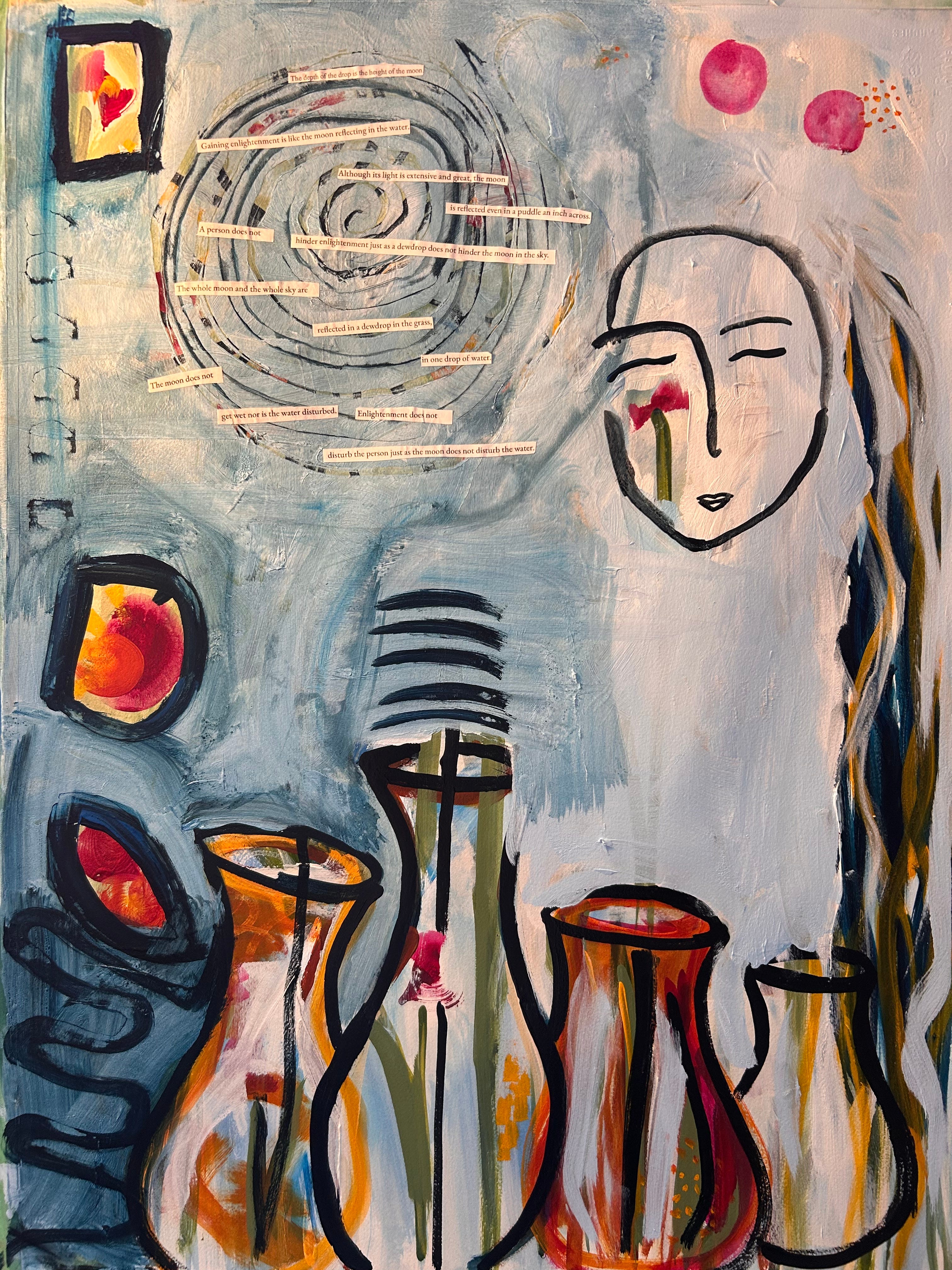 the size of awakening? | Greetings Friends,Happy Solstice! Here in the northern hemisphere it is the longest day of the year, one of two days of the year where the sun appears to stand still on the horizon. I feel interested in that teaching, here in what sometimes feels like the most active or busiest of seasons—what is stillness? where is stillness?What does it look like to let your inner sun rest, or to recognize that it’s already still, shining brightly—no matter what.This week’s koan from the Hidden Lamp is about big and small enlightenments. I’ll let you listen to the podcast for the case and reflection this time. In celebration of the solstice, I would like to share a passage from Dogen Zenji’s Genjo Koan, sometimes translated as “the way of everyday life.” The Mud Lotus Sangha has been exploring this teaching over the course of the last month. Sitting with the different images and passages. Gaining enlightenment is like the moon reflecting in the water. The moon does not get wet nor is the water disturbed. Although its light is extensive and great, the moon is reflected even in a puddle an inch across. The whole moon and the whole sky are reflected in a dewdrop in the grass, in one drop of water. Enlightenment does not disturb the person just as the moon does not disturb the water. A person does not hinder enlightenment just as a dewdrop does not hinder the moon in the sky. The depth of the drop is the height of the moon.I invite you to spend sometime today in stillness. Take a moment to open your awareness to the entire moon, the entire sky. Remember that you are one dew drop among many, reflecting vastness. You can not hinder awakening, it is your nature.As one teacher said, “so get used to it!”As always, I would love to hear your reflections!Weekly Online Meditation EventMonday Night Dharma — 6P PT / 9P ET Join weekly for drop-in meditation and dharma talk. We are currently exploring the Hidden Lamp: Teaching from the Buddhist Women AncestorsFeel free to join anytime. Event lasts about 1.5 hours. ZOOM LINKIn-Person in OregonGrasses, Trees and the Great Earth Sesshin— August 10 - 16 at Great Vow Zen MonasteryIn-Person in Columbus, Ohio through Mud Lotus SanghaWeekly Meditations on Tuesday, Wednesday and ThursdayRetreats, Meditation instruction and other events can be found on our website.Upcoming Sesshins at Saranam Retreat Center in West VirginiaInterdependence Sesshin June 29 - July 5 (Registration is now open!)I’m Amy Kisei. I am a Zen Buddhist Teacher, Spiritual Counselor, Astrologer and Artist. I offer 1:1 Spiritual Counseling sessions using IFS and Hakomi (somatic mindfulness). I also offer astrology readings. Check out my website to learn more. I currently live in Columbus, OH and am a supporting teacher for the Mud Lotus Sangha. This is a public episode. If you'd like to discuss this with other subscribers or get access to bonus episodes, visit amykisei.substack.com/subscribe | 35m 33s | ||||||
| 6/14/26 |  Let the soft animal of your body, love what it loves | Greetings Friends,Happy New Moon! This past week we explored the Hidden Lamp Case 21: Linji Meets the Old Woman Driving the Ox.Linji Meets the Old Woman Driving the OxChina, ninth centuryMaster Linji Yixuan went to see Master Bingdian An. On the way he met an old woman driving an ox in a field. Linji asked her, “Which way is the road to Bingdian?”The woman hit the ox with her stick and said, “This animal! It walks all over the place without even recognizing the road.”Linji repeated, “I asked you, which way is the road to Bingdian?”The woman said, “This beast! It’s five years old and still can’t be put to use.”Linji said to himself, “If you want to learn something from the person in front of you, first observe what the person does.” And he had the feeling that his sticking-point had been removed.Then, when he reached Master An, An asked him, “Have you seen my sister-in-law?”Linji said, “Yes, I’ve already been taken in tow.”I’m curious when you read this exchange is there a line or phrase that interests you, or that you have some sort of reaction to?Feel free to share. What touches you, what are you curious about? What feels aversive? What questions come up for you? How is this exchange relevant for your life and practice?These koans are teaching stories. And often what stirs in us is our way into them. If you are interested in hearing a little more about Master Linji and his origin story, as well as my comments on the koan, including being useless—listen to the audio recording. The Soft Animal of the BodyI am always curious when animals show up in koans. In reflecting on this koan, I got interested in the Ox. The Ox is a symbol for our true nature in the Zen tradition. There are a series of images called the Ox-herding pictures that portray important elements on this path of practice-awakening. They depict the movement from searching for our nature, to having a glimpse, to training ourselves to recognize and abide here, to eventually seeing through ideas of self/true nature, and living fully as we are in service to all beings.This week though, as I sat with the koan—a line from Mary Oliver’s poem Wild Geese came to heart, “let the soft animal of your body, love what it loves.” This is such a deep invitation into presence. To feel our lives. To feel our bodies. To recognize the pleasure, the bliss of embodiment—right here, right now.I can notice how my mind wants to come in and fantasize about the things my body might want or long for, but part of what I am interested in is how the body can only love what is. Our bodies are always in the present moment.Our bodies speak the language of sensation, feeling, movement, texture, touch. Our bodies love through experiencing. Notice right now— what does your body love, in this moment?To ask, we need to sink into to our embodied life. To feel the changes in air temperature, the movement of breath, the touch of clothing, the pulsing and flickering of sensation. To hear and see, to smell and taste—to open the senses. For this sense world is our embodied life.When we let ourselves abide fully in our sense experience, we naturally open to the truth of interconnection. We feel ourselves as part of this great earth and in community with all, truly our lives are interpermeated—our bodies are the body of the entire world.So this week, today, right now—sit like an ox, here in your own body—loving what you love. Be the animal walking all over the place, the beast that can’t be put to use!Weekly Online Meditation EventMonday Night Dharma — 6P PT / 9P ET Join weekly for drop-in meditation and dharma talk. We are currently exploring the Hidden Lamp: Teaching from the Buddhist Women AncestorsFeel free to join anytime. Event lasts about 1.5 hours. ZOOM LINKIn-Person in OregonGrasses, Trees and the Great Earth Sesshin— August 10 - 16 at Great Vow Zen MonasteryIn-Person in Columbus, Ohio through Mud Lotus SanghaWeekly Meditations on Tuesday, Wednesday and ThursdayRetreats, Meditation instruction and other events can be found on our website.Upcoming Sesshins at Saranam Retreat Center in West VirginiaInterdependence Sesshin June 29 - July 5 (Registration is now open!)I’m Amy Kisei. I am a Zen Buddhist Teacher, Spiritual Counselor, Astrologer and Artist. I offer 1:1 Spiritual Counseling sessions using IFS and Hakomi (somatic mindfulness). I also offer astrology readings. Check out my website to learn more. I currently live in Columbus, OH and am a supporting teacher for the Mud Lotus Sangha. This is a public episode. If you'd like to discuss this with other subscribers or get access to bonus episodes, visit amykisei.substack.com/subscribe | 31m 35s | ||||||
| 6/7/26 |  Shadeless Trees✨ | Zen BuddhismBuddhist Ancestors+4 | — | — | — | Zen BuddhismMokufu Sonin+5 | — | 39m 38s | |
| 5/31/26 | 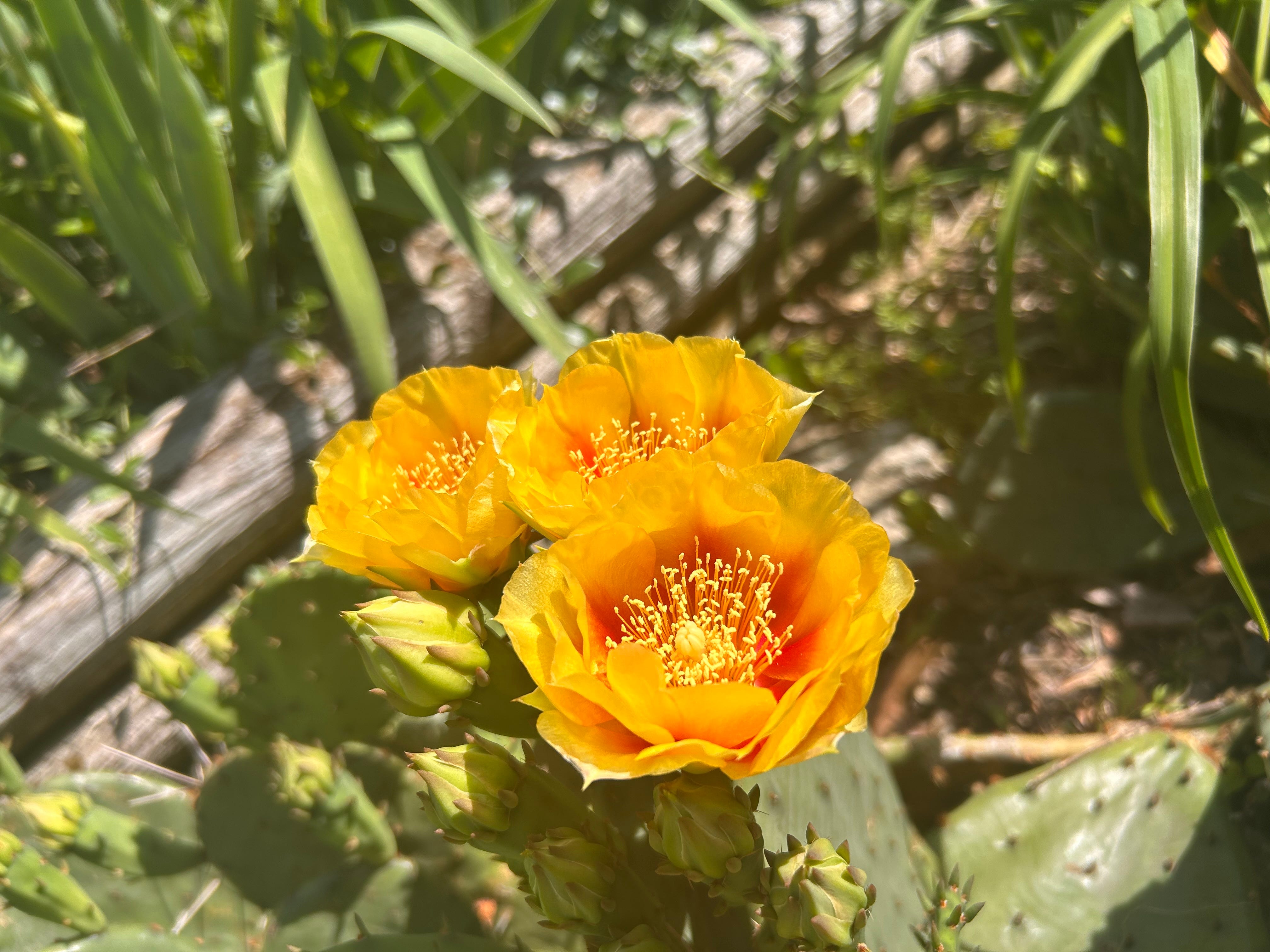 Actualizing Care, Recognizing Beauty✨ | Zen Buddhismkoan stories+4 | — | The Hidden Lamp | OregonTokeiji | Zen Buddhismkoan+5 | — | 27m 23s | |
| 5/22/26 | 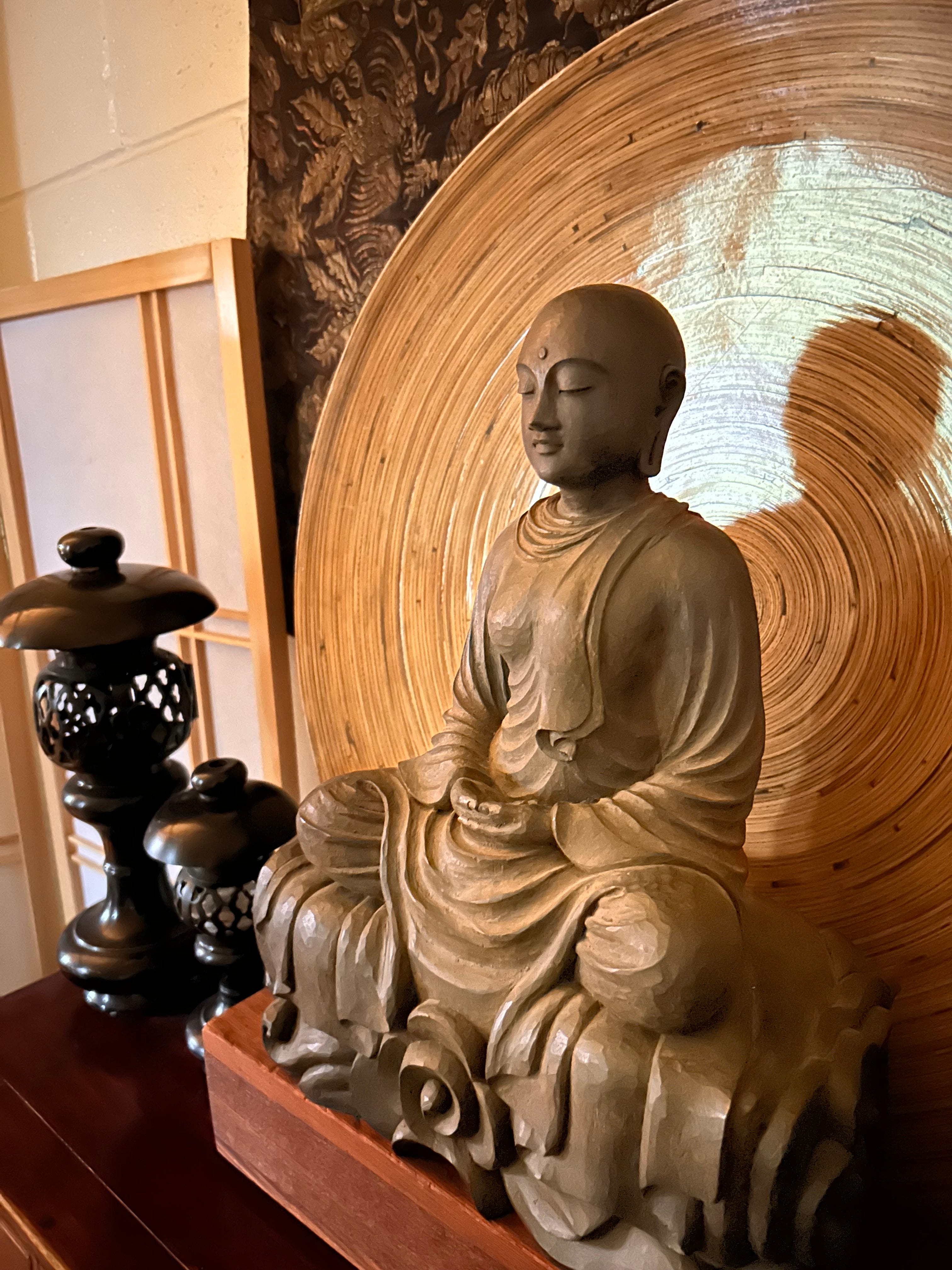 Not-knowing is Love✨ | Zen Buddhismspiritual practice+4 | — | Great Vow Zen MonasteryZCO+1 | — | Zen Buddhismspirituality+5 | — | 27m 57s | |
| 5/3/26 | 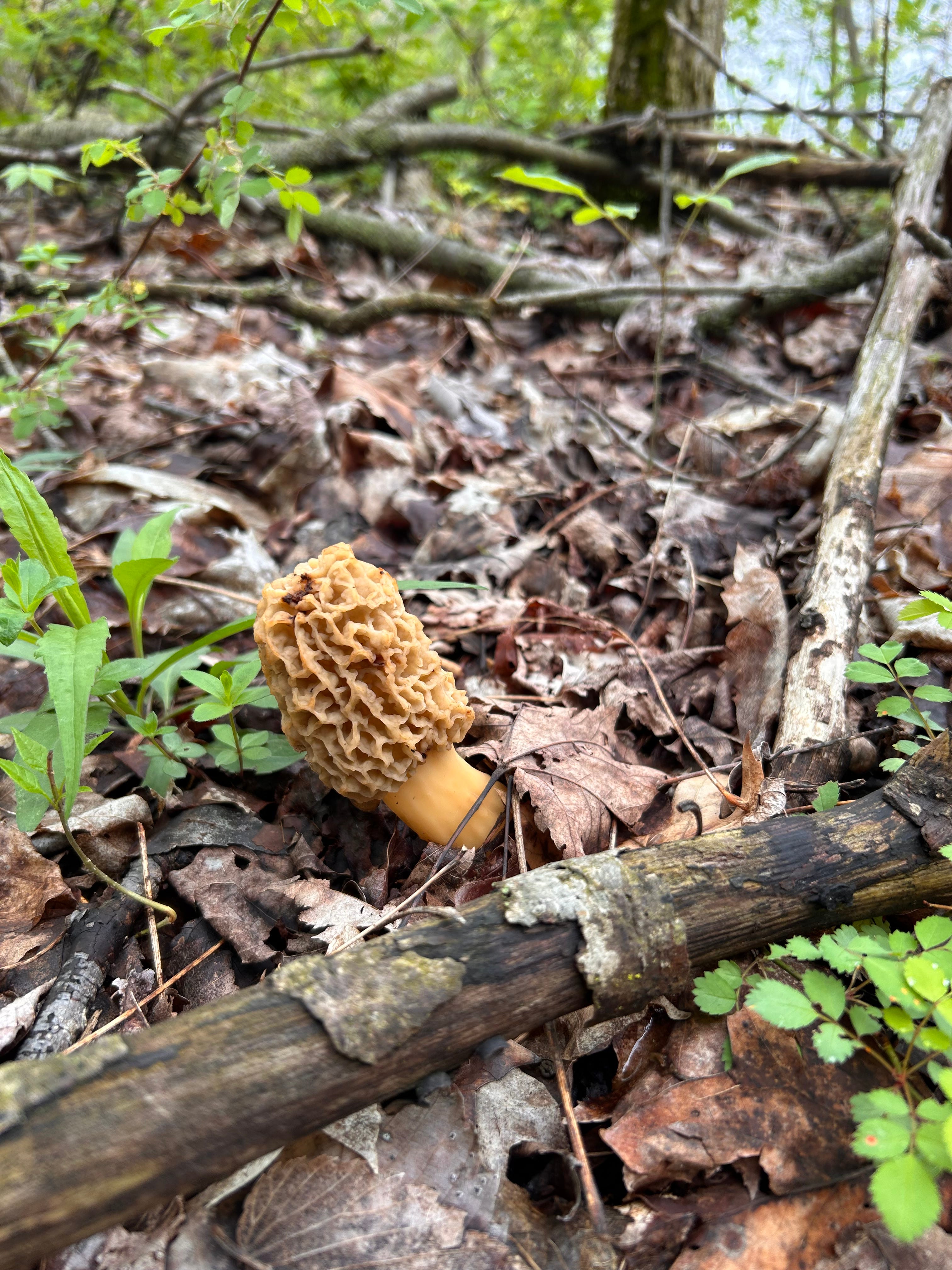 In Praise of Poetry✨ | poetryBuddhism+4 | — | Dongshan’s Enlightenment PoemIkkyu’s Death Poem+1 | — | poetryBuddhism+5 | — | 32m 52s | |
| 4/12/26 | 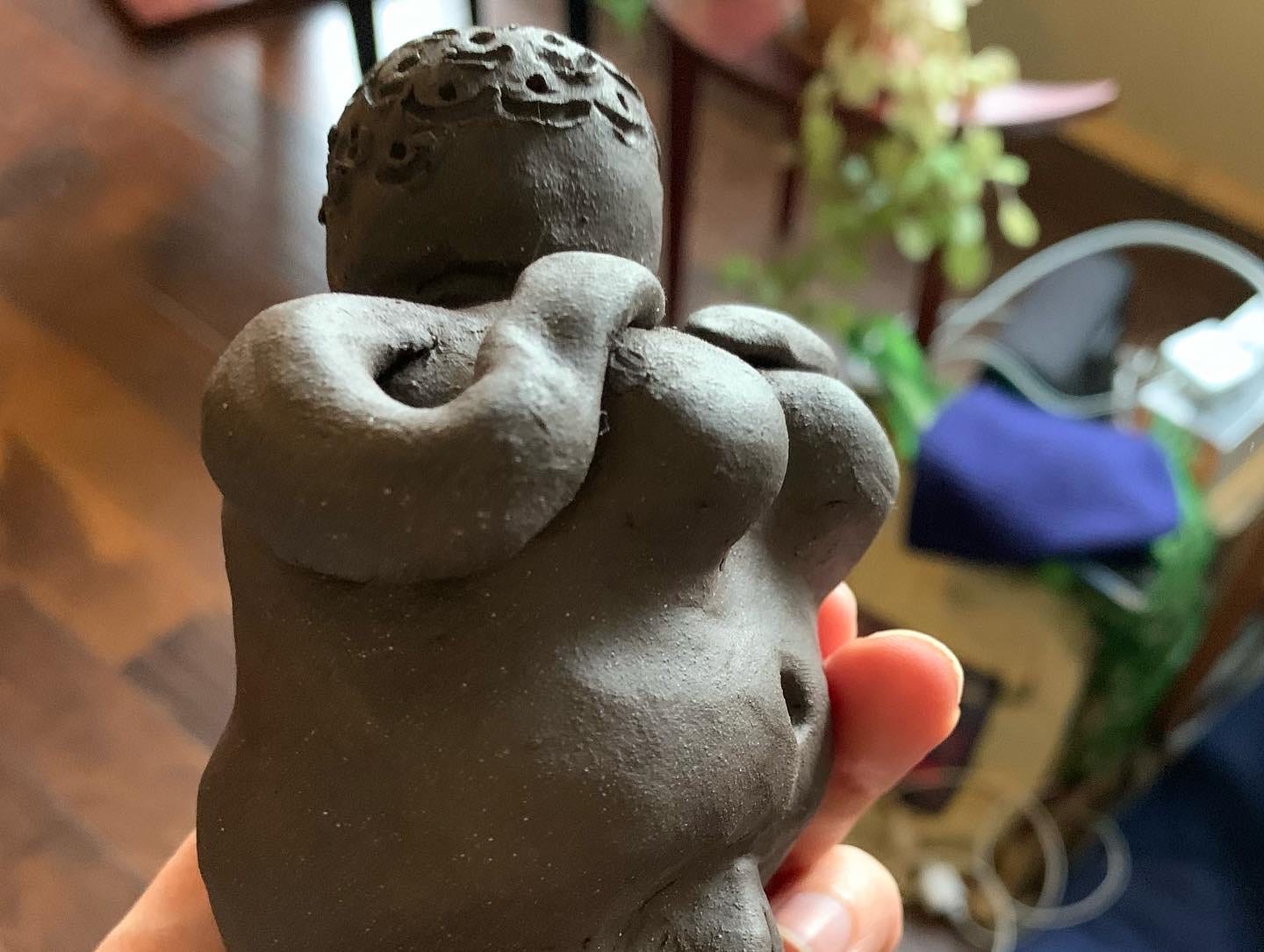 Encounters with the Stone Woman✨ | Zen BuddhismStone Woman+4 | — | Precious Mirror SamadhiMountains and Rivers Sutra | — | Zen literatureStone Woman+6 | — | 30m 24s | |
| 4/1/26 |  Circling Back to Ourselves✨ | Zen Buddhismmeditation+4 | — | Saranam Retreat CenterGreat Vow Zen Monastery | West Virginia | Zen sesshinsilent meditation+5 | — | 27m 21s | |
| 3/15/26 |  Mountains and Rivers are Sutra✨ | Zen meditationsesshin+4 | — | Mud Lotus Sangha | West Virginia | sesshinZen Buddhism+5 | — | 29m 59s | |
Want analysis for the episodes below?Free for Pro Submit a request, we'll have your selected episodes analyzed within an hour. Free, at no cost to you, for Pro users. | |||||||||
| 3/8/26 |  Being Born and Unborn✨ | beginner's mindZen Buddhism+3 | — | — | — | Zen Buddhismbeginner's mind+5 | — | 23m 17s | |
| 3/3/26 |  the world is not what we name it or think it✨ | Zen BuddhismDiamond Sutra+4 | — | Diamond Sutra | — | Diamond SutraZen Buddhism+5 | — | 28m 20s | |
| 2/22/26 | 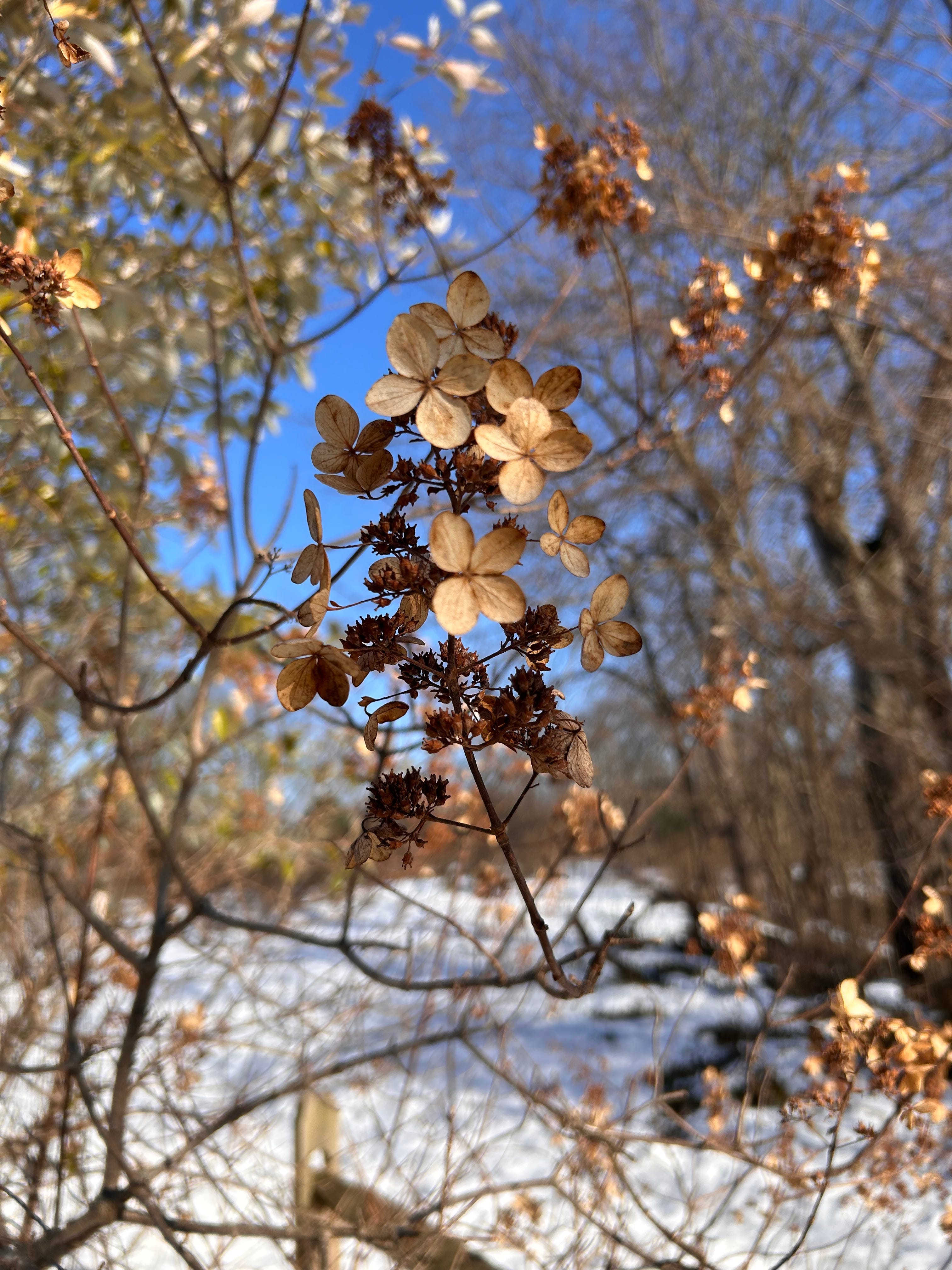 Realizing the Mind that Abides Nowhere✨ | Zen Buddhismspiritual awakening+3 | — | diamond sutra | — | Huinengdiamond sutra+5 | — | 27m 54s | |
| 2/15/26 | 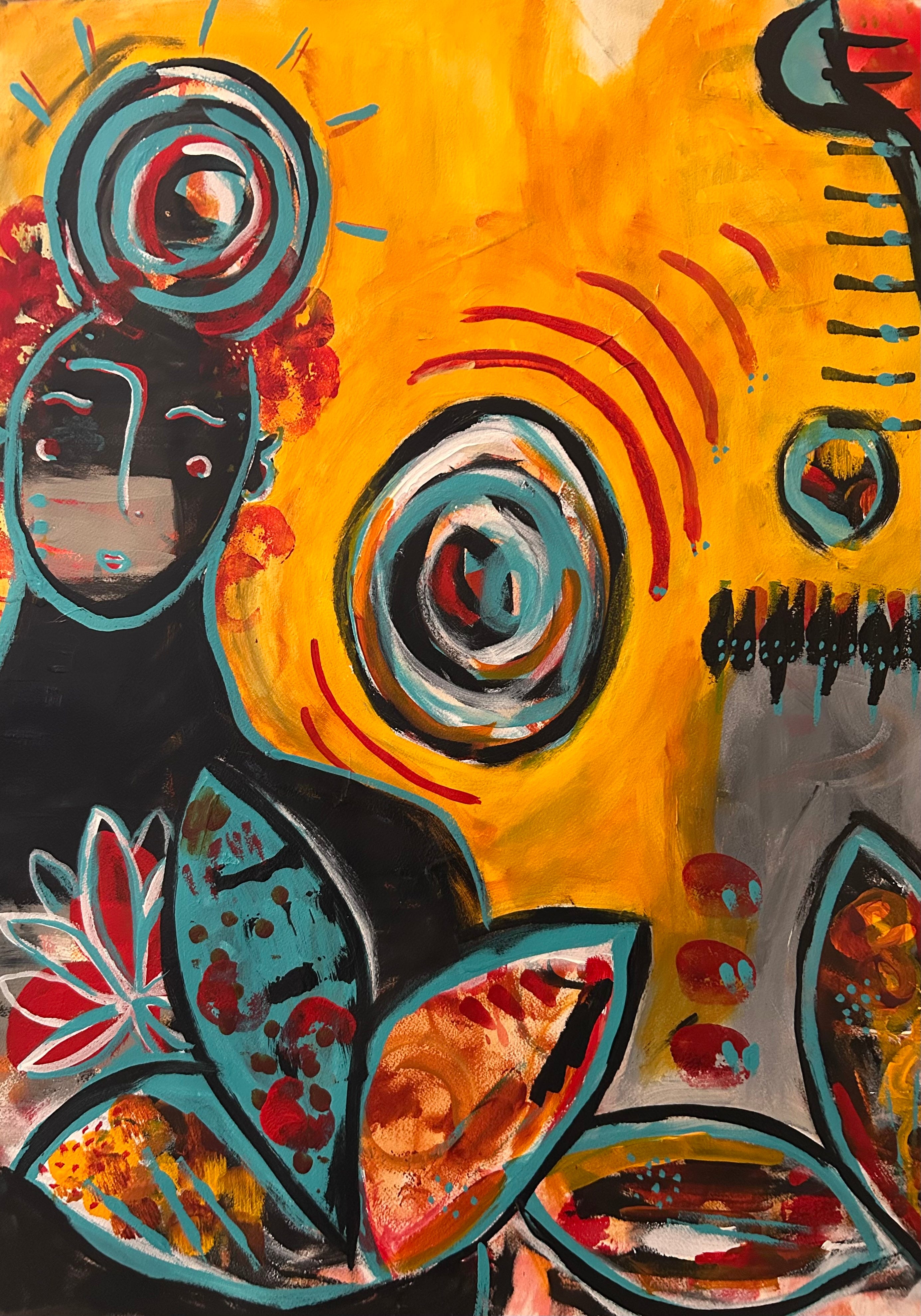 A Lotus Blooming in the Fire✨ | Zen Buddhismmeditation+3 | — | Mud Lotus | — | lotusfire+5 | — | 39m 06s | |
| 2/8/26 | 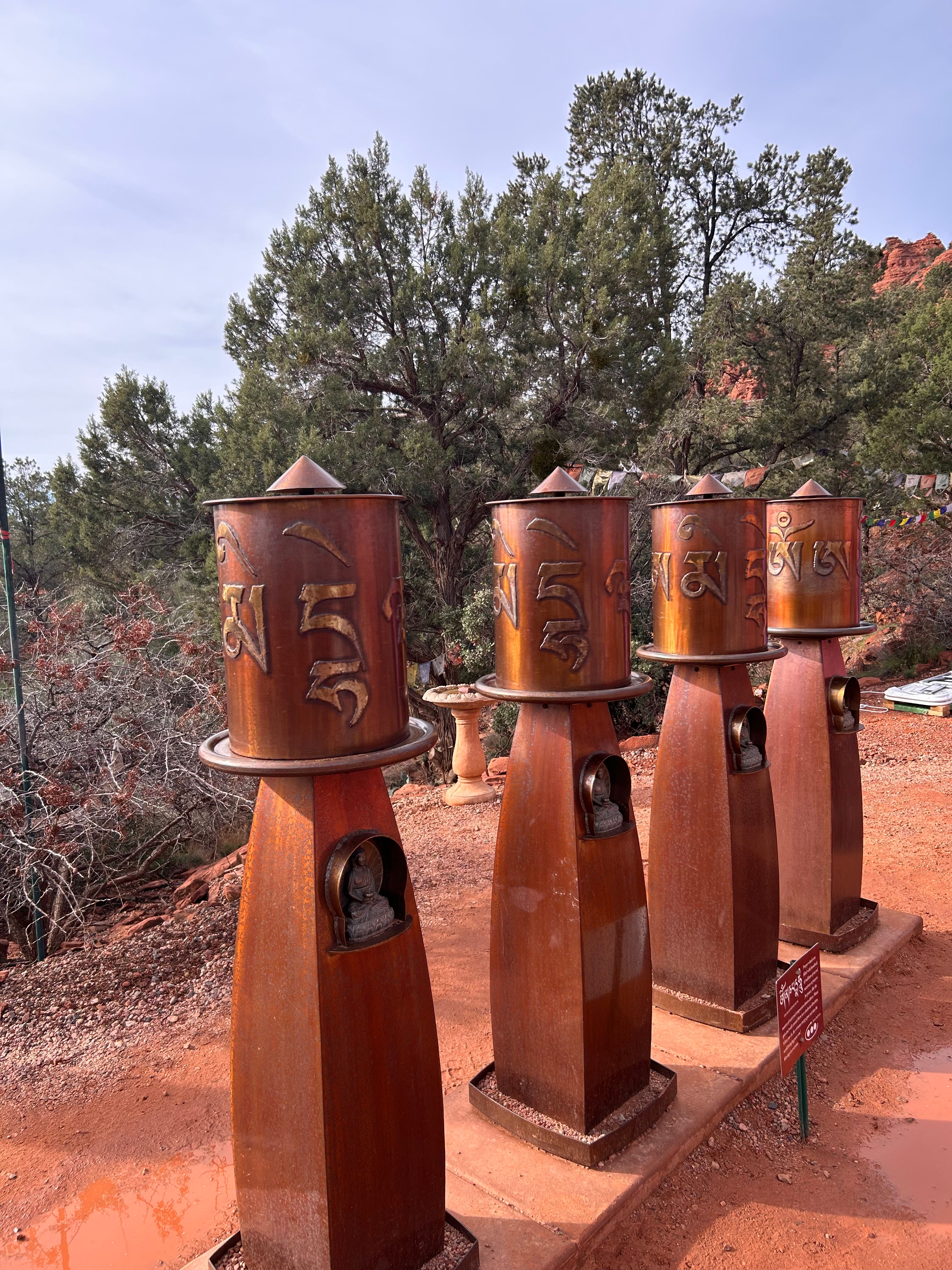 Our Extra-Ordinary Heart✨ | Buddhismspirituality+3 | — | Amitabha Buddha | — | extra-ordinary heartBuddhism+3 | — | 29m 16s | |
| 1/30/26 | 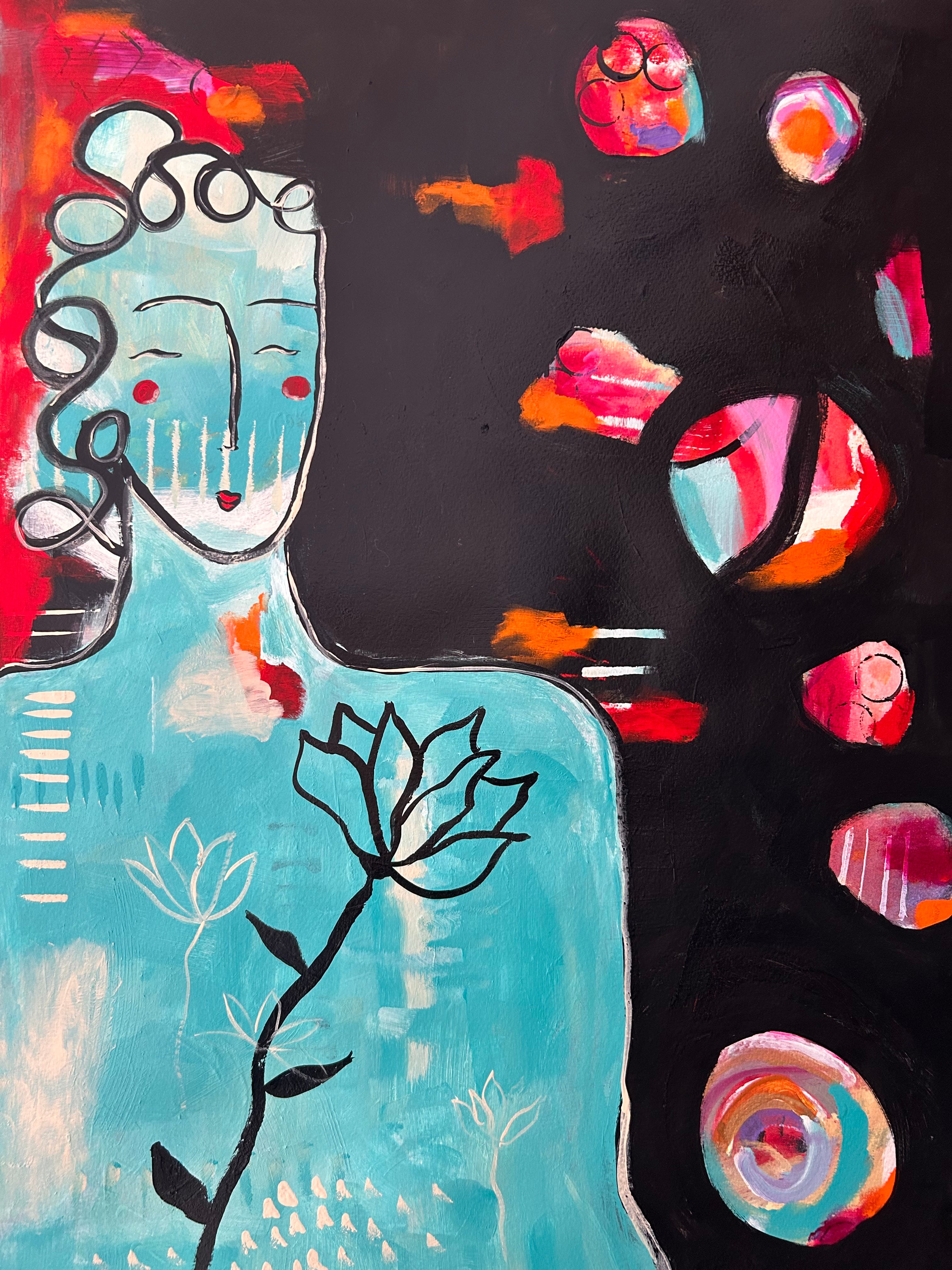 Compassion is Our Nature✨ | compassionBodhisattva+3 | — | The Way of the Bodhisattva | — | compassionBodhisattva+4 | — | 33m 43s | |
| 1/11/26 | 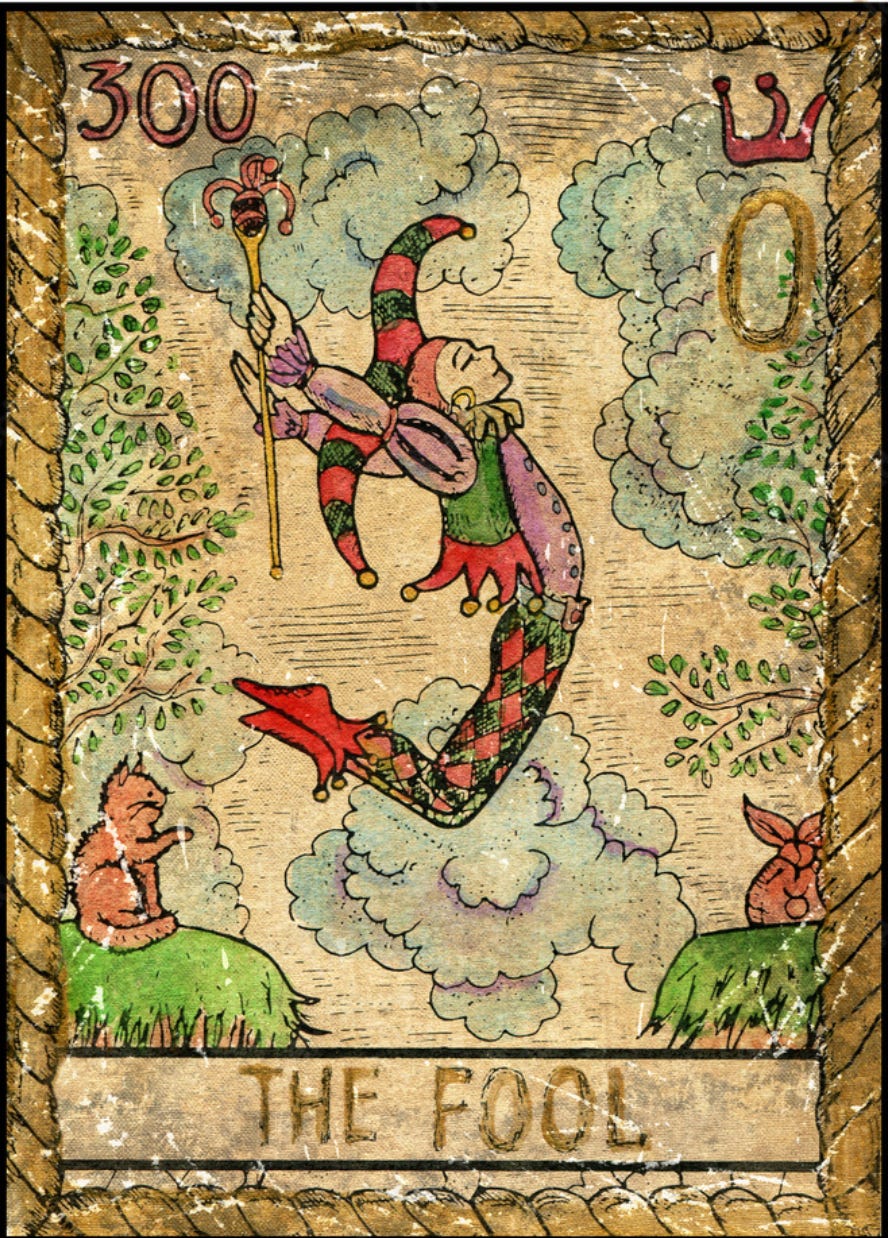 Stepping from the One-Hundred Foot Pole✨ | Buddhismkoans+3 | — | Mumonkan Case 46: Stepping from the Top of the Pole | — | Buddhismkoan+5 | — | 31m 45s | |
| 12/20/25 | 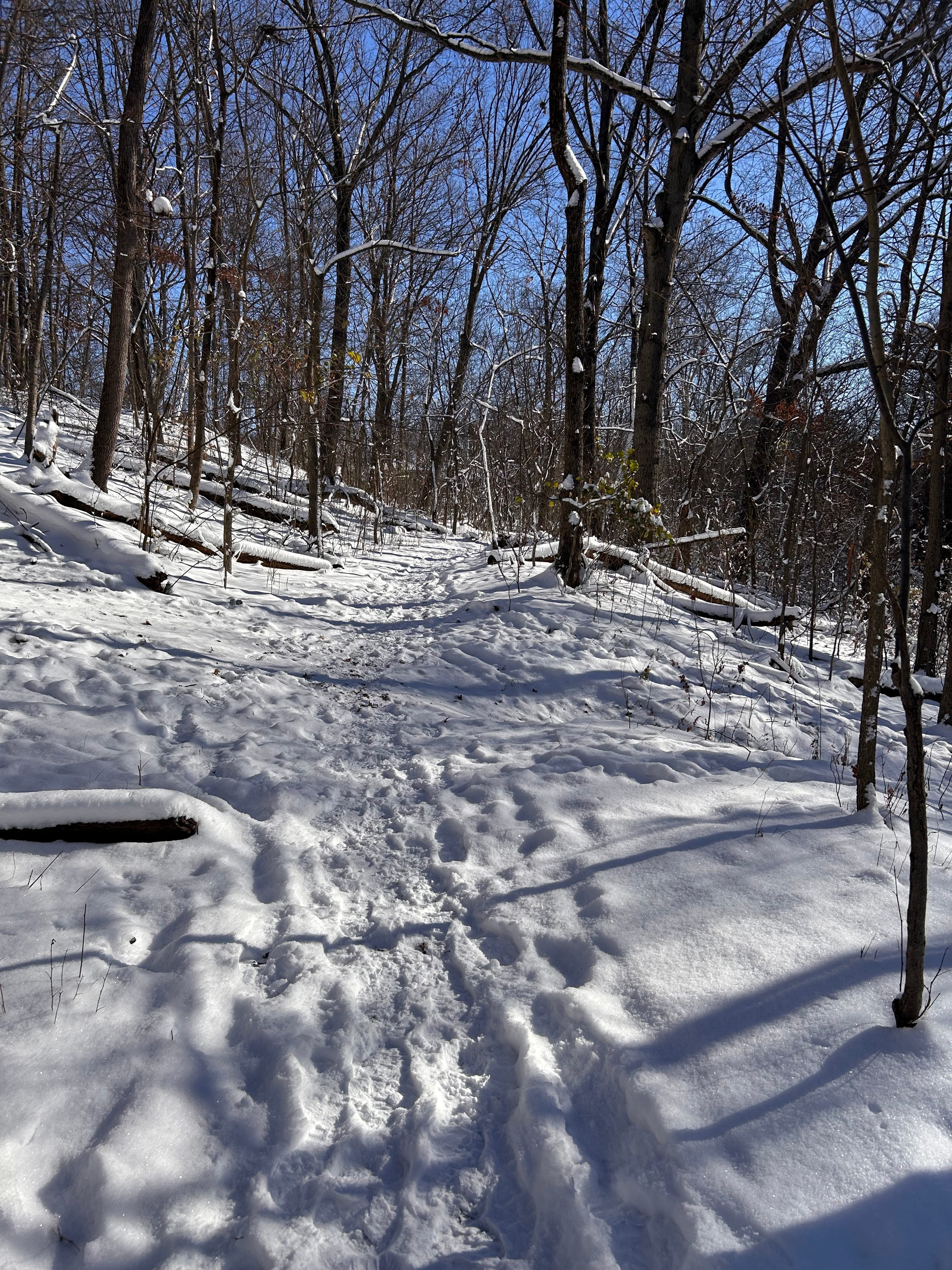 Faith, Heart and the Return of the Light | When faith and mind are not separate. And not separate are mind and faith, this is beyond all words, all thoughts.If you have been reading these posts this season, you may have noticed I have been writing about Faith. Writing, reflecting, wondering, wandering through the many expressions of Faith as I returned again and again to this practice poem, Affirming Faith in Mind. There is something both delicious and challenging about coming back to the same teaching, day after day, week by week.Above is the last stanza of the poem. The study of this poem has been part of an autumn practice period I was participating in. The practice period wound down this week, as autumn too is unwinding —turning into winter on Sunday with the solstice.The autumn in the Northern Hemisphere is a time when the daylight hours grow shorter, and night extends her dark embrace. I have found it deeply nourishing to practice and study faith as the earth darkens. It feels seasonally appropriate to contemplate faith as the comfort of the sun’s light and heat diminish. The zodiacal sign Sagittarius, which is where the sun is during this time of year, is often associated with faith, that flickering candlelight that we find in many windows this season. Sagittarius season also is a season of alchemy, art—the ways in which we find light, hope, faith, beauty in the dark.Whatever ways you have been walking through the dark this season or this year, I’m curious how it has offered opportunities for transformation, for unknowing, for faith to deepen in mystery’s obscure light.I offer the questions below, as a bit of a memory walk for the season. Feel free to contemplate them, through journaling, mindfulness or creative expression.* What aspects of life have felt loud during this last season? What has been tugging on your heart? Occupying your time/life energy/mind space? This could be more archetypal energies or particular challenges, inspirations, tasks, questions, inquiries.* Have there been particular moods, inner voices, thought patterns, somatic experiences that have been more present during this season?* What resources (inner or outer), practices, teachings, rituals have you been turning towards or taking refuge in? This could include verses from Affirming Faith in Mind.* Where/how do you feel supported? Is there a person, ancestor, friend, familiar, animal, bodhisattva, dream figure who has been an ally?* As we enter this period of the Solstice and return of the light/holiday season—What is the thread of practice you intend to connect to?As a way of honoring the end to the season and the study I have been engaged with around Faith. I wrote this poem. It’s an exploration of how faith has flickered during these autumn months. How it shows up in the ordinary moments of my living. It’s a practice inquiry I intend to carry. A thread through these holiday weeks and into the new year.I’d love to hear your responses to the reflections or a poem that has been lighting your way during these autumn months.Faith Mind PoemWhat is faith? I ask my hands They reach down and pick-up the cap to the oat milk that has started rolling down the kitchen floor fingers, wrapping around the cool, wet plastic releasing, they scratch an itch before returning lid to carton opening the refrigerator door All day long they touch They hold, open, prepare, grip, make, reach Recover Always in contact Responding before I can--- What is faith? I ask the lilac Whose gnarled branches Hold the frozen white, crystalline snow Not a single leaf remains Roots entangled with icy earth We breathe together, my breath Becoming wood, branch, trunk We do not speak But sit in each other’s silence Faith perhaps does not need A definition Words to explain it, no essay nor poem For it lives in us constantly Even as everything else appears to be resting Fallow, dark Faith glimmers in the empty space In this heart, in its waiting Upcoming Retreat and Weekly Drop-in EventsWeekly Online Meditation EventMonday Night Dharma — 6P PT / 9P ET Join weekly for drop-in meditation and dharma talk. Monday Dec 22nd we will meditate in the dark and by candlelight in celebration of the winter solstice.Feel free to join anytime. Event lasts about 1.5 hours. ZOOM LINKIn-Person in OregonUniverse Somatic: The Bright Thread in the Dark — January 22nd - 25thUniverse Somatic is a practice that integrates group meditation, movement and energy work with a spirit of experimentation and playfulness. We explore the union of spaciousness and embodied energies in a contemplative practice that is embodied and expressive.The theme for this Universe Somatic is The Bright Thread In the Dark. We will play in knowing and not-knowing, hope and despair, yin and yang, creation and destruction, dancing in deep relationship with these polarities while also listening for the thread that doesn’t get stuck on either side.Light of the Ancestors Sesshin—May 11 - 17 at Great Vow Zen MonasteryIn-Person in Columbus, Ohio through Mud Lotus SanghaWeekly Meditations on Tuesday, Wednesday and ThursdayRetreats, Meditation instruction and other events can be found on our website.Save the Dates! 2026 Mud Lotus Sesshins at Saranam Retreat Center in West VirginiaMountains and Rivers Sesshin March 18 - 22Interdependence Sesshin June 29 - July 5I’m Amy Kisei. I am a Zen Buddhist Teacher, Spiritual Counselor, Astrologer and Artist. I offer 1:1 Spiritual Counseling sessions using IFS and Hakomi (somatic mindfulness). I also offer astrology readings. Check out my website to learn more. I currently live in Columbus, OH and am a supporting teacher for the Mud Lotus Sangha.Earth Dreams is a reader-supported publication. To receive new posts and support my work, consider becoming a free or paid subscriber. This is a public episode. If you'd like to discuss this with other subscribers or get access to bonus episodes, visit amykisei.substack.com/subscribe | 35m 07s | ||||||
| 12/13/25 |  Telling the Story of Awakening | Tis’ the season for story-telling. I don’t know about you, but there are certain stories I can hear over and over again. These stories often have mythic and archetypal elements, that seem to resonate with the poetics of the soul.In the Zen Buddhist tradition the first week of December is the week we commemorate/remember/celebrate the Buddha’s awakening. We do this with our bodies. Sitting retreat with the orientation that we too can realize our true nature. That we too can awaken.We do this with our hearts and minds. Reading, listening, contemplating the elements of the Buddha’s story, which is mythic in nature. And as we hear the story of the Buddha we are reminded of our own path—that awakening is possible for us and that it is unfolding right here, in this precious life.Below I will share a brief sketch of the Buddha’s story. Please listen to the talk if you want to hear a more fleshed out version. Of course, like all stories, this one changes every time it is told. There actually isn’t any recorded biography of the Buddha in the Pali Cannon, we have some references he makes to his journey and scholars/practitioners have worked to put them together in a cohesive narrative. In this telling, I am choosing the elements that have resonated with me on my own path. I am appreciating how the Buddha’s story has elements of the hero’s journey as well as important dharma teachings.Maha Maya’s DreamThe story begins with a dream. Maha Maya, whose name means illusion, dreams one night that she is taken to the mountains by four spirit beings. She is then bathed, anointed with oils, perfumes and flowers. A white elephant appears, circles her three times and pierces her side with his six tusks. She awakens from the dream knowing that she is pregnant with a son.When she tells her husband, King Suddhodana, about the dream he invites the town seer to interpret it. The seer confirms that Maha Maya is indeed pregnant with a son and that he will be either a great king or the founder of a new religion.Upon hearing this prophesy, King Suddhodana decides to make his son’s life so comfortable that he will never want to leave the palace.So Siddaratha Gotma (the Buddha) is born, and lives a sheltered life. He describes it in one sutta, saying:I, lived in refinement, utmost refinement, total refinement. My father even had lotus ponds made in our palace: one where red-lotuses bloomed, one where white lotuses bloomed, one where blue lotuses bloomed, all for my sake… A white sunshade was held over me day & night to protect me from cold, heat, dust, dirt, & dew.Disillusionment with a Protected Life/The Four SightsEventually Siddhartha becomes a young man and one night he wakes before dawn after a party at the palace. He looks around and feels a bit disgusted by what he sees, bodies strewn around, sleeping, smelling of alcohol and sex—from having indulged in all forms of pleasure the night before. His heart questions what he is doing, what kind of life he is living.After this experience, he feels like he needs to see what is beyond the palace walls. So he enlists his charioteer to take him into the town. While they are there Siddhartha sees what has become known as the four sights. He sees someone who is ill, sick crying out in pain. He sees some who is old, hunched over, skin full of wrinkles and he sees a corpse. With each sight, he feels disgust and curiosity. A knowing arises in him that this will also happen to him. He too will age, become ill and die. He becomes disillusioned by his current state of health, youth and life. For what is the point in indulging in the pleasures of health, youth and life, if you are ignoring the truths of sickness, old age and death. Something about this experience really starts to way heavy in his heart, and fill him with great doubt.Then he sees the fourth sight, a renunciate sitting serenely under a tree. He is touched by the look of contentment on this person’s face. Something in him knows that there is a path to realizing a contentment that is beyond sensual pleasures, that one could know freedom, love and joy that wasn’t dependent on conditions.Leaving His Father’s HouseHe knows he has to leave his father’s house. It isn’t an easy decision. One I imagine he tries to ignore, but his doubt and curiosity grow stronger and stronger. In one telling of the story, his wife Yasodhara has eight dreams about the path he needs to take, and so encourages him to go. Before he leaves, they make love and conceive a son.Then Siddhartha shaves his head, puts on the ochre robes of a renunciant and begins the nomadic life of a home-leaver. He meets two teachers, studies with them for years and eventually masters their teachings. But finds that their dharma leads him into deep states of concentration, but does not bring him to liberation. So he eventually leaves them, even though they urge him to teach with them. He then meets five wandering ascetics and starts practicing austerities. He tries to suppress thought, stop his breath, and survive on one spoonful of food a day—none of these techniques work well for him. He speaks of undergoing great physical and emotional pain but being no closer to liberation. In a state of desperation and hunger, a memory arises from childhood, which he describes:“I thought: ‘I recall once, when my father the Sakyan was working, and I was sitting in the cool shade of a rose-apple tree, then — quite withdrawn from sensuality, withdrawn from unskillful mental qualities — I entered & remained in the first jhana: rapture & pleasure born from withdrawal, accompanied by directed thought & evaluation. Could that be the path to Awakening?’ Then, following on that memory, came the realization: ‘That is the path to Awakening.’ I thought: ‘So why am I afraid of that pleasure that has nothing to do with sensuality, nothing to do with unskillful mental qualities?’ I thought: ‘I am no longer afraid of that pleasure that has nothing to do with sensuality, nothing to do with unskillful mental qualities, but it is not easy to achieve that pleasure with a body so extremely emaciated. Suppose I were to take some solid food: some rice & porridge.’ So I took some solid food: some rice & porridge.So he takes some food to nourish his body and with a new clarity, a deeper connection to purpose and himself, he resolves to sit under the bodhi tree until he awakens.Mara’s TemptationsThough he is clear in his resolve and clear about the path forward, he still encounters great difficulty. Mara (the tempter or doubting voice in Siddhartha) appears during his meditations tempting him, creating feelings of restlessness in body and in mind, showing scenes from the pleasures he used to have at the palace, conjuring fear/doubt and telling him to give up.Siddhartha eventually sees Mara for what they are, a voice of doubt, and Mara slinks away. The Buddha awakens, upon seeing the morning star rising in the east, after a week of meditation. On the final night he has insights into impermanence, cause and effect and finally the nature of suffering/bondage and the path that leads to the cessation of suffering/bondage.He says in one story, “I, together with all beings and the great earth, awaken.”In another he says:House-builder, you’re seen! You will not build a house again.All your rafters broken, the ridge pole destroyed, gone to the Unformed, the mindhas come to the end of craving.The earth rises up and confirms the Buddha’s awakening. After Mara appears and throws more shade on the Buddha.The Buddha questions whether or not he can teach. And remains sitting under the Bodhi tree for another week. During this time a great storm rolls through, and Mucilinda (the snake king), protects the Buddha from the storm with his seven heads.It’s also said that on the night that the Buddha awakened, his wife, Yasodhara gave birth to their son, Rahula. She had been carrying their son for six years, and underwent he own spiritual journey, never leaving home.Does the story really end here? Not really, practice-awakening continues, on and on and on. There are many ways to appreciate a story like this, I have been enjoying looking at the story from the lens of the hero’s journey. So many of the elements of the Buddha’s story are elements that are a part of our own life and the path of practice-awakening. I the new year, I will offer some teachings and reflections on elements of the hero’s journey and the spiritual path. But for now, I would love to hear if any elements from the Buddha’s story touched you in anyway.* Have you had important dreams that gave you confidence about the next step on your path, even if it didn’t make rational sense?* What is your own experience of being disillusioned? Or needing to challenge a teaching, belief or lifestyle that you were raised in? How has doubt been part of your path?* Can you relate to having an experience as a child that feels connected to your path/practice now? Sometimes it feels like we are relearning something we knew naturally as children, does this feel true to you?* The Buddha was supported and protected by the Earth and the snake king—what protectors, supporters or allies have you had in your own life (people, animals, plants, places, dream figures)?* I appreciate Yasodhara’s story as one that happens in the dark space of unknowing, unfolding in her home as she cares for the child she is carrying. In what ways has your own path/practice had elements of darkness, hiddenness, not-knowing and/or nurturing something precious that perhaps you don’t yet know what it is?* Are there any other elements of the Buddha’s story that resonate or that you feel curious about? Weekly Online Meditation EventMonday Night Dharma — 6P PT / 9P ET Join weekly for drop-in meditation and dharma talk. Monday Dec 15th we will do some seasonal reflection as Ango ends and we approach the winter solstice.Feel free to join anytime. Event lasts about 1.5 hours. ZOOM LINKIn-Person in OregonUniverse Somatic: The Bright Thread in the Dark — January 22nd - 25thUniverse Somatic is a practice that integrates group meditation, movement and energy work with a spirit of experimentation and playfulness. We explore the union of spaciousness and embodied energies in a contemplative practice that is embodied and expressive.The theme for this Universe Somatic is The Bright Thread In the Dark. We will play in knowing and not-knowing, hope and despair, yin and yang, creation and destruction, dancing in deep relationship with these polarities while also listening for the thread that doesn’t get stuck on either side.Light of the Ancestors Sesshin—May 11 - 17 at Great Vow Zen MonasteryIn-Person in Columbus, Ohio through Mud Lotus SanghaWeekly Meditations on Tuesday, Wednesday and ThursdayRetreats, Meditation instruction and other events can be found on our website.Save the Dates! 2026 Mud Lotus Sesshins at Saranam Retreat Center in West VirginiaMountains and Rivers Sesshin March 18 - 22Interdependence Sesshin June 29 - July 5I’m Amy Kisei. I am a Zen Buddhist Teacher, Spiritual Counselor, Astrologer and Artist. I offer 1:1 Spiritual Counseling sessions using IFS and Hakomi (somatic mindfulness). I also offer astrology readings. Check out my website to learn more. I currently live in Columbus, OH and am a supporting teacher for the Mud Lotus Sangha.Earth Dreams is a reader-supported publication. To receive new posts and support my work, consider becoming a free or paid subscriber. This is a public episode. If you'd like to discuss this with other subscribers or get access to bonus episodes, visit amykisei.substack.com/subscribe | 45m 20s | ||||||
| 12/7/25 | 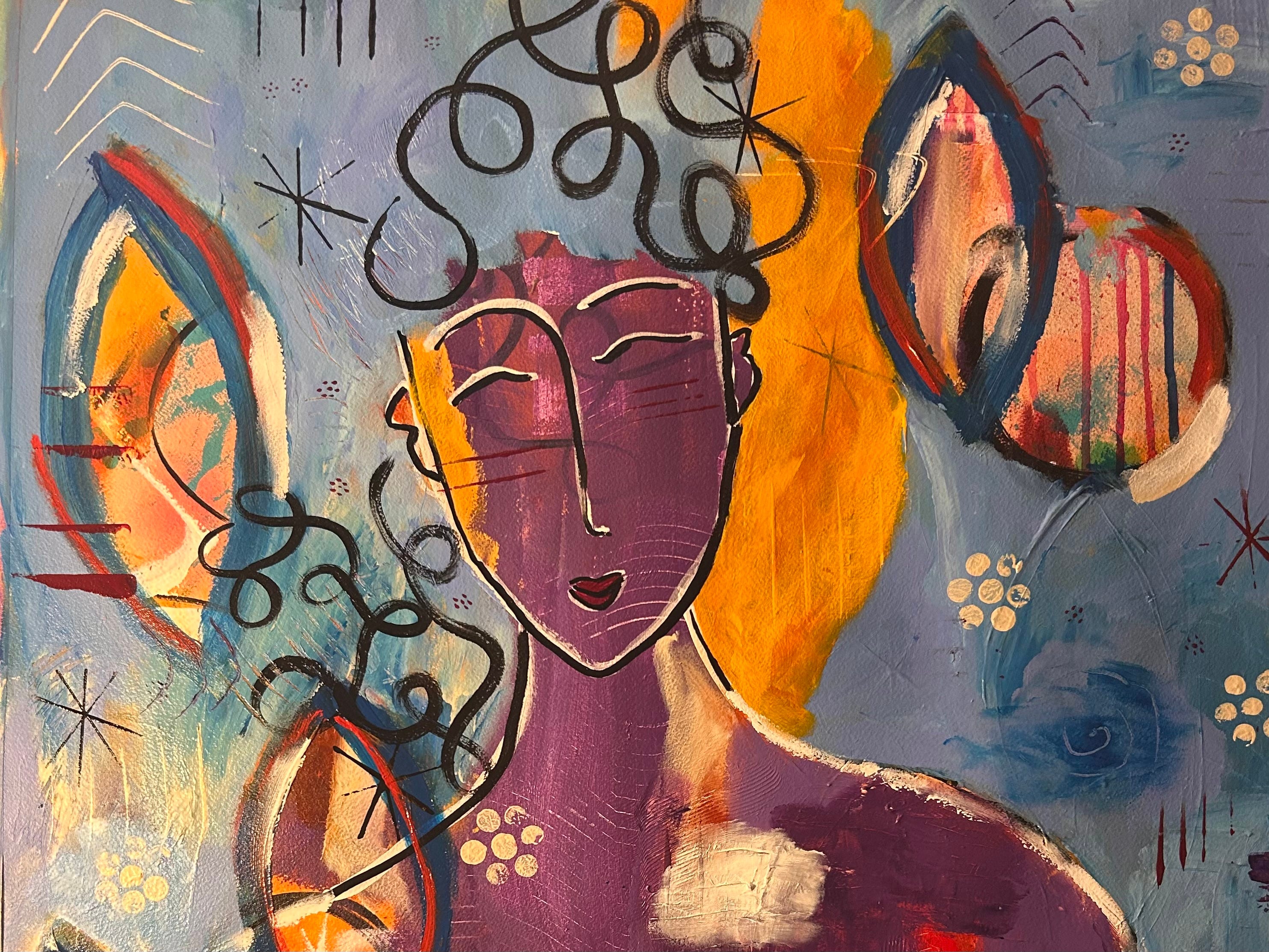 The mysterious source | I want to return to this profound poem we are studying for the autumn practice period—Affirming Faith in Mind.If mind does not discriminate, all things are as they are as one. To go to this mysterious source—frees us from all entanglements.When all is seen with equal mind, to our self-nature we return. This single mind goes right beyond all reasons and comparison.This poem is about Trust in Mind, Faith in our true nature, Trust in the Heart of WisdomDo we trust our heart-mind?Do you have faith in the nature of your own mind? Your own heart?This poem is a “pointing out” style teaching. Stanza by stanza, line by line—it’s pointing to the Mind beyond thought. It’s inviting us to recognize who we are beyond our strategies of defending, protecting, judging, identifying.We too can know ourselves as mystery.We too can know the source of all experience.There is encouragement and support to turn towards the apparent source of our suffering, and really look into its nature. To experience for ourselves the freedom, spaciousness, clarity and love of our nature. Right, here.Dahui in one of his letters addresses a student’s concern that he is dull, and his dullness is preventing him from realizing his true nature.Dahui responds:That which perceives dullness is certainly not dull itself…indeed you should use your very dullness in order to enter the Way. However, if you identify with dullness and regard yourself as incapable by nature of awakening, you will find yourself caught by the demon of dullness.As I see it, in our ordinary way of seeing things we tend to let the desire for awakening get ahead of us and thus turn it into an obstacle preventing our true understanding from manifesting. But this obstacle is neither outside ourselves nor separate from ourselves—it is none other than the Master perceiving itself as “dull.”For this reason everyday Ruiyan Shiyan would call to himself, “Master!” He would then answer himself, “Yes!” “Be wide awake!” he would say, and again answer himself, “Yes!” Then he would say, “Whatever the time, whatever the day, never be misled by others!” “Yes! Yes!” Try examining this in your own way. The one who asks, what is this? is none other than the one who perceives dullness. And the one who perceives dullness is none other than your own True Self.Whether it is dullness, distraction, anger, fear. Whatever we habitually identify with and appears to block our path. What happens when we turn our attention toward the one who is aware of this apparent block? The “master” or True Self is always at home.We are invited to recognize this always present awareness, for ourselves, in our own lives.Freedom and love. Always right here.We are entering the last weeks of this calendar year. Can we use this time to reconnect with our aspiration? To recognize the true self, and not be misled by others.And to also appreciate the season of practice we are in. There are times where we are actually developing our discernment, our discriminating mind. Some of us are learning to trust ourselves, to stand in our karma, to take responsibility for our lives.Part of Trust in Mind, is having the courage to take action, to follow the call when it arises. For some of us the call may take you to a monastery or into a period of inquiry and spiritual investigation. For others it may have more to do with how you are showing up in your lives, or it may be about healing, or responding to a relational challenge. I know some of you are sitting in the question and are listening for the next step. That’s part of this path too—I listened for 7 years before I had clarity, courage, conviction and life circumstances to move to the monastery. I am listening now for the next step on this path, as I continue to deepen my practice and develop new skills.Do not be deceived by others. I love this line. For many of us, it is a worthwhile practice to say this to ourselves, regularly. Who are these others? The thoughts in our own minds, the ones that are always comparing ourselves to someone else. What happens when we fully embrace this life? When we live our wisdom? When we honor our limitations, our karmic inheritance—and live the life we have?Tomorrow is Bodhi Day and I will be offering a telling of the Buddha’s awakening story. We will explore the hero’s journey in the Buddha’s story and see how elements of the Buddha’s path are part of our own journey’s. Join for the Monday Night dharma to hear this talk!I am also co-facilitating an exploration of the Astrology of the Winter Solstice with the Jung Association of Central Ohio this Saturday December 13th with Shawn Casey at the Burkhart Chapel.Weekly Online Meditation EventMonday Night Dharma — 6P PT / 9P ET Join weekly for drop-in meditation and dharma talk. Monday Dec 8th we will explore the Buddha’s awakening story!Feel free to join anytime. Event lasts about 1.5 hours. ZOOM LINKIn-Person in OregonUniverse Somatic: The Bright Thread in the Dark — January 22nd - 25thUniverse Somatic is a practice that integrates group meditation, movement and energy work with a spirit of experimentation and playfulness. We explore the union of spaciousness and embodied energies in a contemplative practice that is embodied and expressive.The theme for this Universe Somatic is The Bright Thread In the Dark. We will play in knowing and not-knowing, hope and despair, yin and yang, creation and destruction, dancing in deep relationship with these polarities while also listening for the thread that doesn’t get stuck on either side.Light of the Ancestors Sesshin—May 11 - 17 at Great Vow Zen MonasteryIn-Person in Columbus, Ohio through Mud Lotus SanghaWeekly Meditations on Tuesday, Wednesday and ThursdayRetreats, Meditation instruction and other events can be found on our website.Save the Dates! 2026 Mud Lotus Sesshins at Saranam Retreat Center in West VirginiaMountains and Rivers Sesshin March 18 - 22Interdependence Sesshin June 29 - July 5I’m Amy Kisei. I am a Zen Buddhist Teacher, Spiritual Counselor, Astrologer and Artist. I offer 1:1 Spiritual Counseling sessions using IFS and Hakomi (somatic mindfulness). I also offer astrology readings. Check out my website to learn more. I currently live in Columbus, OH and am a supporting teacher for the Mud Lotus Sangha. This is a public episode. If you'd like to discuss this with other subscribers or get access to bonus episodes, visit amykisei.substack.com/subscribe | 28m 07s | ||||||
| 11/22/25 | 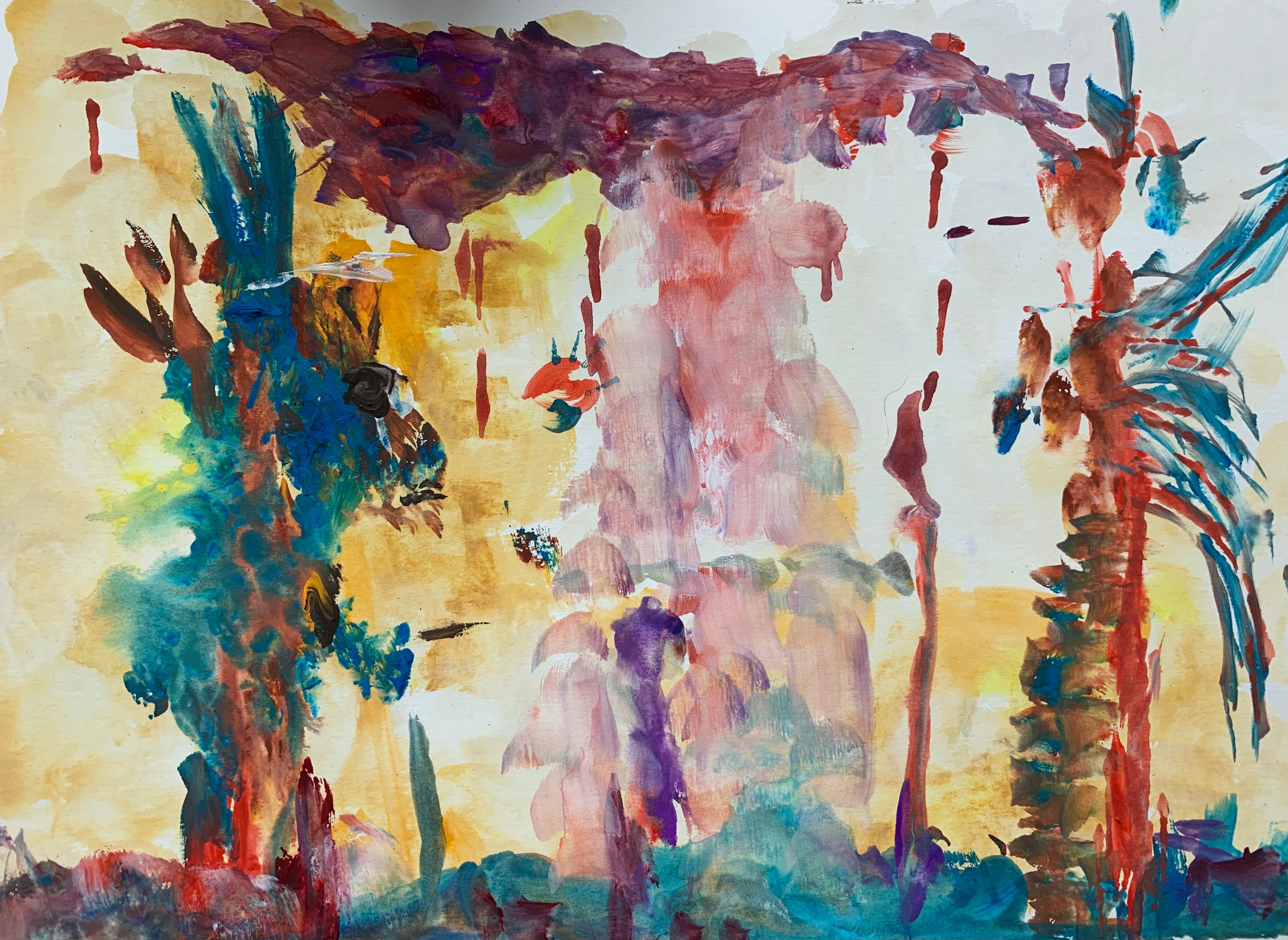 When Obstacles Become the Path | One stanza from the Trust in Heart poem says:Cut off all useless thoughts and words and there’s nowhere you cannot go.Returning to the root itself, you’ll find the meaning of all things.If you pursue appearances you overlook the primal source.Awakening is to go beyond both emptiness as well as form.I appreciate the clarity of these instructions. Here we find an invitation to practice with our thinking minds. I find that this instruction to “cut off” is more of an invitation to see through or into the thinking mind and recognize what thoughts really are. Especially thoughts that appear as hindrances. The repetitive inner critical thoughts, endless doubts, obsessive thinking about the future.What are thoughts made of? How long do they last?We are told in Buddhism to regard thought as another sense. What is this like? To notice the textural, auditorial, image-emotional experience of thinking.What happens when during a meditation period or in your daily life you turn attention to the thinking mind, to attend to the thought stream?When we see thoughts for what they are, they have less power over us. We don’t have to believe or even identify with everything we think—we also don’t need to get a in struggle with our thoughts.This teaching and practice empowers us to be more discerning. We use our thinking minds throughout the day—planning, reflecting, reasoning, contemplating, conversing.And it is possible to use the mind, without being used by the mind.This poem is inviting us to recognize the root of the thinking mind. The root of the thinking mind, is the root of all things. When we know experientially the true nature of the thinking mind which includes: doubt, inner critic, worry, anxiety, judgement, planning, other people’s thoughts, views, perspectives—then they have less power over us.Then everything turns around, we can see the light, bodhicitta— within each thought and/or emotion—no matter the content.Dahui, as great Zen teacher of the 12C says it this way in a letter to one of his students.This very moment just cease to entertain thought, putting an end to the confused mind. Then you will know that there is no delusion to be destroyed, no awakening to be aspired to, and no discriminatory thought to be cut off. With time erroneous views will disappear of themselves, and you will be like a person drinking water and knowing for themselves whether it is hot or cold.The mind that is clearly aware of discriminatory thought taking place—how can this mind possibly be obstructed? How can there possibly be any other kind of mind than this one?Since times of old the wise have taken to discriminatory thought like dragons to water and tigers to mountains. They regard discriminatory thought as a companion, employing such thought as upaya, and on the basis of discriminatory thought practice universal compassion and carry out all sorts of buddha deeds. For them, discriminatory thought is never a source of suffering because they understand its source. Once the source of discriminatory thought is fathomed it becomes the locus of liberation and of release from samsara.May we recognize the source of all thoughts and find freedom and love in our nature!Thank you! For the month of November Mud Lotus Sangha is sending 50% of our donations to the Clintonville-Beechwold Community Resource Center to help those in our neighborhood who are struggling with food insecurity this month. All of our communities can use extra support and there are many ways to practice generosity. Thank you for all the ways that you show generosity to me and the other beings in your life.Weekly Online Meditation EventMonday Night Dharma — 6P PT / 9P ET Join weekly for drop-in meditation and dharma talk. We are currently exploring the Faith in Mind poem by the 3rd Chinese Ancestor.Feel free to join anytime. Event lasts about 1.5 hours. ZOOM LINKIn-Person in OregonUniverse Somatic: The Bright Thread in the Dark — January 22nd - 25thUniverse Somatic is a practice that integrates group meditation, movement and energy work with a spirit of experimentation and playfulness. We explore the union of spaciousness and embodied energies in a contemplative practice that is embodied and expressive.The theme for this Universe Somatic is The Bright Thread In the Dark. We will play in knowing and not-knowing, hope and despair, yin and yang, creation and destruction, dancing in deep relationship with these polarities while also listening for the thread that doesn’t get stuck on either side.Light of the Ancestors Sesshin—May 11 - 17 at Great Vow Zen MonasteryIn-Person in Columbus, Ohio through Mud Lotus SanghaWeekly Meditations on Tuesday, Wednesday and ThursdayRetreats, Meditation instruction and other events can be found on our website.Save the Dates! 2026 Mud Lotus Sesshins at Saranam Retreat Center in West VirginiaMountains and Rivers Sesshin March 18 - 22Interdependence Sesshin June 29 - July 5I’m Amy Kisei. I am a Zen Buddhist Teacher, Spiritual Counselor, Astrologer and Artist. I offer 1:1 Spiritual Counseling sessions using IFS and Hakomi (somatic mindfulness). I also offer astrology readings. Check out my website to learn more. I currently live in Columbus, OH and am a supporting teacher for the Mud Lotus Sangha.Earth Dreams is a reader-supported publication. To receive new posts and support my work, consider becoming a free or paid subscriber. This is a public episode. If you'd like to discuss this with other subscribers or get access to bonus episodes, visit amykisei.substack.com/subscribe | 42m 39s | ||||||
| 11/8/25 |  Feeding the Hungry Heart | Calling all you hungry heartsEverywhere through endless timeYou who wander, you who thirstI offer you, this Bodhi MindCalling all you hungry spiritsAll the lost and the left behindGather round and share this mealYour joy and your sorrow, I make it mine. —KanromonGiving awakens the unbounded heart. What in our lives isn’t already shared? If we open to all the inter-relationships that make up our lives, we begin to see that this life is vast, and full of uncounted kindnesses.In the Zen tradition, we have ceremonies and rituals for awakening unbounded generosity. One seasonal ceremony is Sejiki, the Ceremony for the Hungry Ghost. During the ceremony we offer on the altar something for the hungry heart—the part of us that looks for satisfaction in things that often bring more pain, confusion and harm to ourselves and others.We often fear the hungry ghost. We sometimes feel haunted by it. We often feel a lot of shame around what it reaches for, want it seems to want.This ceremony invites us to meet this energy, this part of us—from a place of non-judgmental acceptance, loving kindness, curiosity.Welcoming them out of the shadows, we feed them an offering of something that they truly desire, consciously—with awareness—we let ourselves feel their hunger, as well as perhaps the nourishment of generosity, of kind acceptance and care. What happens when we when make an offering to our ghosts from a place of unbounded generosity and love?We practice Sejiki once a year, but the spirit of making offerings to the hungry heart can continue beyond this one ceremony. Transformation often happens through sustained care, dedication and vow. Below are some daily rituals I have practiced in relationship to the hungry heart.* Making offerings on my personal altar—I have a plate or bowl on my altar where I place offerings to my hungry heart. Whenever I interact with my altar, before or after meditation—I see the offering and have an opportunity to connect with the part of me that hungers.* Offering a bite of food—this practice comes from the Zen practice of oryoki, where we place a few morsels of food in an offering dish for the hungry heart with the prayer, “may all be equally nourished.” The offerings in the dish can be placed outside or in the compost feeding whoever next comes in contact with them.* Chanting the Kanromon—at the monastery we would chant the Chant to the Hungry Spirits or Kanromon every October. When I was on a two month private retreat and feeling the energies of the hungry heart strongly, I chanted this chant before every meal and sometimes more. Its a song about offering, about turning towards those lost and left behind with unbounded generosity. If you want to sing along, here is a recording of Krishna Das singing the Kanromon.Thank you! For the month of November Mud Lotus Sangha is sending 50% of our donations to the Clintonville-Beechwold Community Resource Center to help those in our neighborhood who are struggling with food insecurity this month. All of our communities can use extra support and there are many ways to practice generosity. Thank you for all the ways that you show generosity to me and the other beings in your life.Weekly Online Meditation EventMonday Night Dharma — 6P PT / 9P ET Join weekly for drop-in meditation and dharma talk. We are currently exploring the Faith in Mind poem by the 3rd Chinese Ancestor.Feel free to join anytime. Event lasts about 1.5 hours. ZOOM LINKIn-Person in OregonUniverse Somatic: The Bright Thread in the Dark — January 22nd - 25thUniverse Somatic is a practice that integrates group meditation, movement and energy work with a spirit of experimentation and playfulness. We explore the union of spaciousness and embodied energies in a contemplative practice that is embodied and expressive.The theme for this Universe Somatic is The Bright Thread In the Dark. We will play in knowing and not-knowing, hope and despair, yin and yang, creation and destruction, dancing in deep relationship with these polarities while also listening for the thread that doesn’t get stuck on either side.Light of the Ancestors Sesshin—May 11 - 17 at Great Vow Zen MonasteryIn-Person in Columbus, Ohio through Mud Lotus SanghaWeekly Meditations on Tuesday, Wednesday and ThursdayRetreats, Meditation instruction and other events can be found on our website.Save the Dates! 2026 Mud Lotus Sesshins at Saranam Retreat Center in West VirginiaMountains and Rivers Sesshin March 18 - 22Interdependence Sesshin June 29 - July 5I’m Amy Kisei. I am a Zen Buddhist Teacher, Spiritual Counselor, Astrologer and Artist. I offer 1:1 Spiritual Counseling sessions using IFS and Hakomi (somatic mindfulness). I also offer astrology readings. Check out my website to learn more. I currently live in Columbus, OH and am a supporting teacher for the Mud Lotus Sangha. This is a public episode. If you'd like to discuss this with other subscribers or get access to bonus episodes, visit amykisei.substack.com/subscribe | 19m 10s | ||||||
| 10/31/25 | 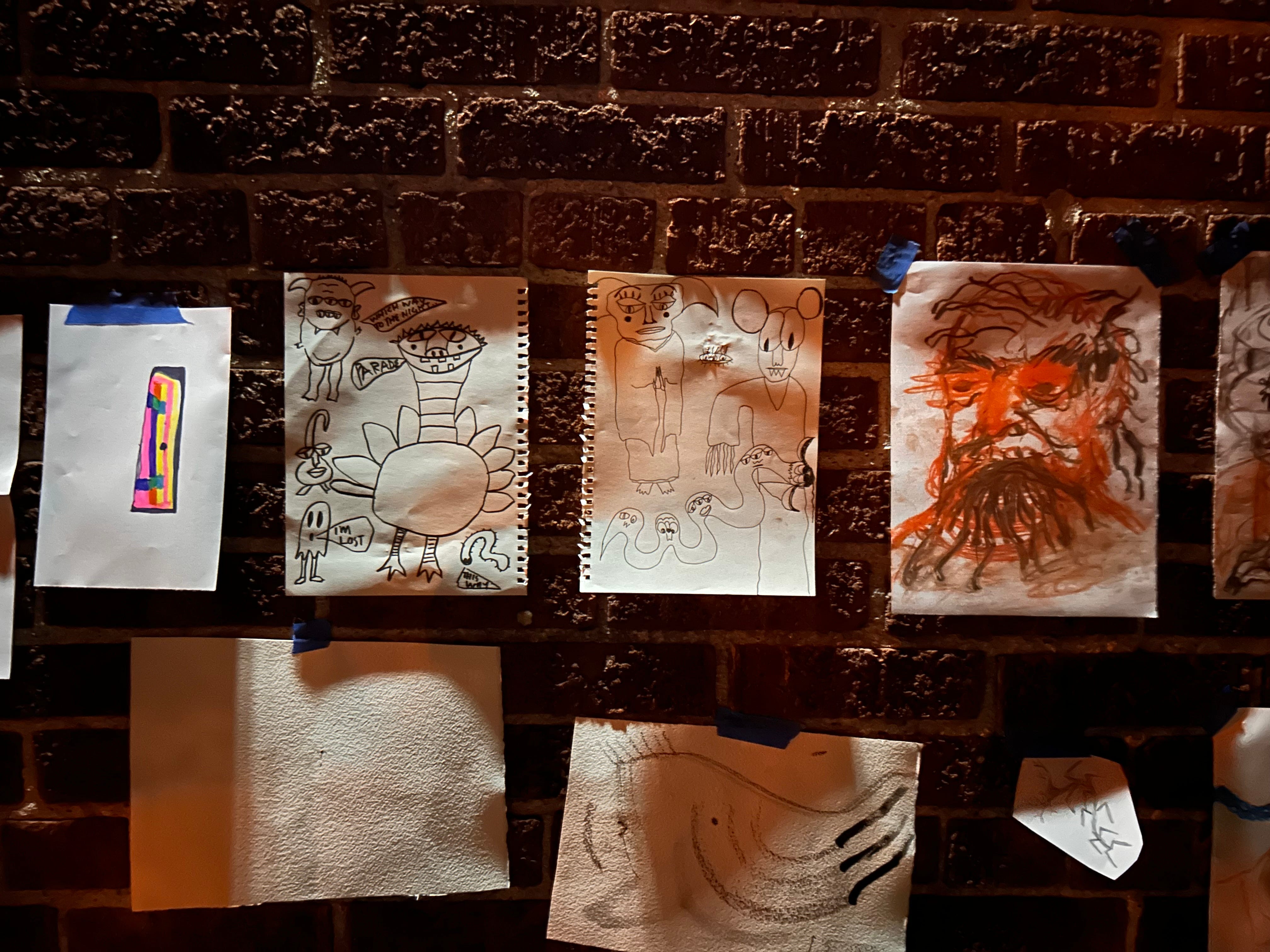 One Hundred Demons Night Parade | I am currently spending some time with this beautiful teaching poem, Affirming Faith in Mind as part of Autumn Ango through ZCO. As I was reading it this week, I thought about how would I summarize this teaching in one sentence. I came up with:Everything’s Included on the Path!Everything is included. Maybe it seems too simple, too obvious. And yet, how often are we looking outside of our experience for satisfaction, the answer, some-thing-else. How could it be that our doubt, fear, the wars and violence we bear witness to, as well as the love, pain, empathy, grief, sadness we feel is part of awakening? That anything the mind thinks, or the body feels. Not just the good feelings, the spiritual thoughts—but everything. Everything is included, is an expression of the Awakened Heart. Is liberation itself.If everything is included. What does that mean for our living? For our practice? Maybe best not to try to make meaning of it. But to practice, to live with this inquiry. For faith is something we discover through our embodiment.So we can ask, we can invite—Can I practice here? With these emotions? In this relationship? In this political environment? With this activation? When I am triggered or hurting—what does practice look like, where can I find refuge?Sometimes we imagine that if our meditation or dharma practice was “working” we would get immediate relief from the challenging emotion, the pain, the difficult belief. Or we would have the answer about how to respond to the complex relational and societal patterns we are a part of. Though sometimes astonishingly this does happen. I find that practice often offers a little more space, to be with and recognize things as they are.Practicing the all-inclusive heart can take many forms. At this time of year in the Zen Buddhist tradition we have rituals for turning towards the monstrous, neglected, wayward, confused, unruly energies in ourselves and the world—energies that we are often trying to control, get-in-line or banish. One Hundred Demons Night ParadeAt Mud Lotus Sangha on Sunday night we did a practice of the 100 Demons Night Parade. It was inspired by a scroll that the 17th Century Zen Master, Hakuin Zenji painted. The 100 Demons Night Parade or Hyakki Yagyo is a procession of the supernatural from Japanese folklore, that artists would often attempt to depict. It is said that Hakuin allowed his inner demons to take form and join this other worldly night parade.So we drew our demons, inner enemies, monsters, hungry ghosts—as a practice and way of expressing inner thoughts/feelings through art. Many people remarked that what feels scary or frightening inside—actually looked scared on paper. Others said that they recognized that all their demons seemed connected around a fundamental belief or feeling. We taped our pictures on the wall. It felt easy in that form to accept and love these creatures—that represented our challenges, fears, pains and struggles, the parts of ourselves that at times feel difficult to love. They were cute, awkwardly fearsome, sad and lonely beings. What is a demon, anyway?The 12th Century Tibetan Yogini Machig Labdron defines a demon as “whatever appears to hinder liberation—awakening to true nature.”What hinders awakening? Can anything hinder awakening?Yet, sometimes we feel hindered. Sometimes awakening seems 100 demons away.Machig Labdron categorized these “demons” or apparent hinderances to liberation into four categories.* Outer Demons—situations and circumstances outside of our control, this includes other people, organizations, institutions, diseases, wars, relationships that we tend to blame or feel burdened by in some way* Inner Demons—the thoughts, emotions, feelings, sensations, beliefs that we have a tendency to identify with, evade, push away, attempt to control or fight with this can include pain, irritation, rage, fear, anxiety, doubt, unworthiness, shame, disappointment, sadness, feeling not-good-enough, etc. (she also called the inner demons, the demons that go on and on and on…referring to mind’s capacity to constantly generate/pick-up on new information, stories, memories, etc)* Demons of Elation—pride and the good feelings that we tend to identify with but in doing so they make us feel as if we are superior to others* The Demon of Self-Clinging—our mis-identification with this elusive sense of self and our strategies of “selfing”Machig developed a practice for meeting these demons with wise unconditional love. A practice that sprung from her own meditation experience. One night she was meditating in a tree over a lake when suddenly the Naga-protector of the lake appeared and threatened her. Instead of retreating in fear or engaging in a fight with the Naga, Machig offered her body. The Naga-protector was so moved by Machig’s selfless generosity that he offered to be her protector.Making Friends with the MonstrousThe practice Machig developed is called Chod. It is a practice of all inclusive awareness, where everything and everyone is included. Her practice was to invite all the demons to a feast—the difficult people, the troubling emotions, the waring countries, the greedy billionaires, the sicknesses, the fears, the anxieties, the pride—as well as all the buddhas, bodhisattvas, guardian spirits, dharma protectors. You invite them all. And your body becomes the offering. This is a deep practice of prajna wisdom and generosity, recognizing that all that appears has this same root of Mind. All the demons, all our troubles, all the greed in the world, all the enlightened states of mind and heart—it all comes from the same source and appears in the same heart-mind of liberation.In Zen we have a similar practice called Sejiki or The Ceremony for the Hungry Ghost. It’s a ritual of inviting the lost, confused, needy-at-times, wanting parts of us as well as these energies found in the world—to a feast of debauchery. We make an altar with all the things we crave or thirst for, that the hungry ghost desires or reaches for. During the ceremony we invite them to come to the feast, we meet them with love, tenderness, an open heart of understanding as well as clear seeing. In this meeting transmutation is allowed to occur, like Machig’s Naga protector —in the space of kind acceptance and non-judgmental generosity transformation happens. We see the ghosts for who they really are, not monsters to be feared or gotten rid of—but creative, unruly-at-times, confused-at-times, fun-loving, a bit wayward energies that want satisfaction—the deep satisfaction of liberation —truly they are allies on this path! They are manifestations of bodhicitta—the deep-heart-vow for awakening.Ritual is powerful. We will be doing a version of the Sejiki Ceremony this coming Monday, you are invited to join! Information can be found below.Weekly Online Meditation EventHungry Ghost Ceremony and Meditation Monday Night Dharma — Monday, Nov 3rd 6P PT / 9P ET. Join weekly for drop-in meditation and dharma talk. This week we will be doing a ceremony for the hungry heart. There will be a guided meditation to help us connect with this energy, a short dharma talk and ceremony. You are invited to bring an offering for your hungry heart. This could be something that represents what you crave, reach for, long for, want, desire. Also bring a small piece of candy that we will offer to the hungry heart during the ceremony.Feel free to join anytime. Event lasts about 1.5 hours. ZOOM LINKIn-Person in Columbus, Ohio through Mud Lotus SanghaWeekly Meditations on Tuesday, Wednesday and ThursdayRetreats, Meditation instruction and other events can be found on our website.Earth Dreams is a reader-supported publication. To receive new posts and support my work, consider becoming a free or paid subscriber.I’m Amy Kisei. I am a Zen Buddhist Teacher, Spiritual Counselor, Astrologer and Artist. I offer 1:1 Spiritual Counseling sessions using IFS and Hakomi (somatic mindfulness). I also offer astrology readings. Check out my website to learn more. I currently live in Columbus, OH and am a supporting teacher for the Mud Lotus Sangha. This is a public episode. If you'd like to discuss this with other subscribers or get access to bonus episodes, visit amykisei.substack.com/subscribe | 40m 03s | ||||||
| 10/24/25 | 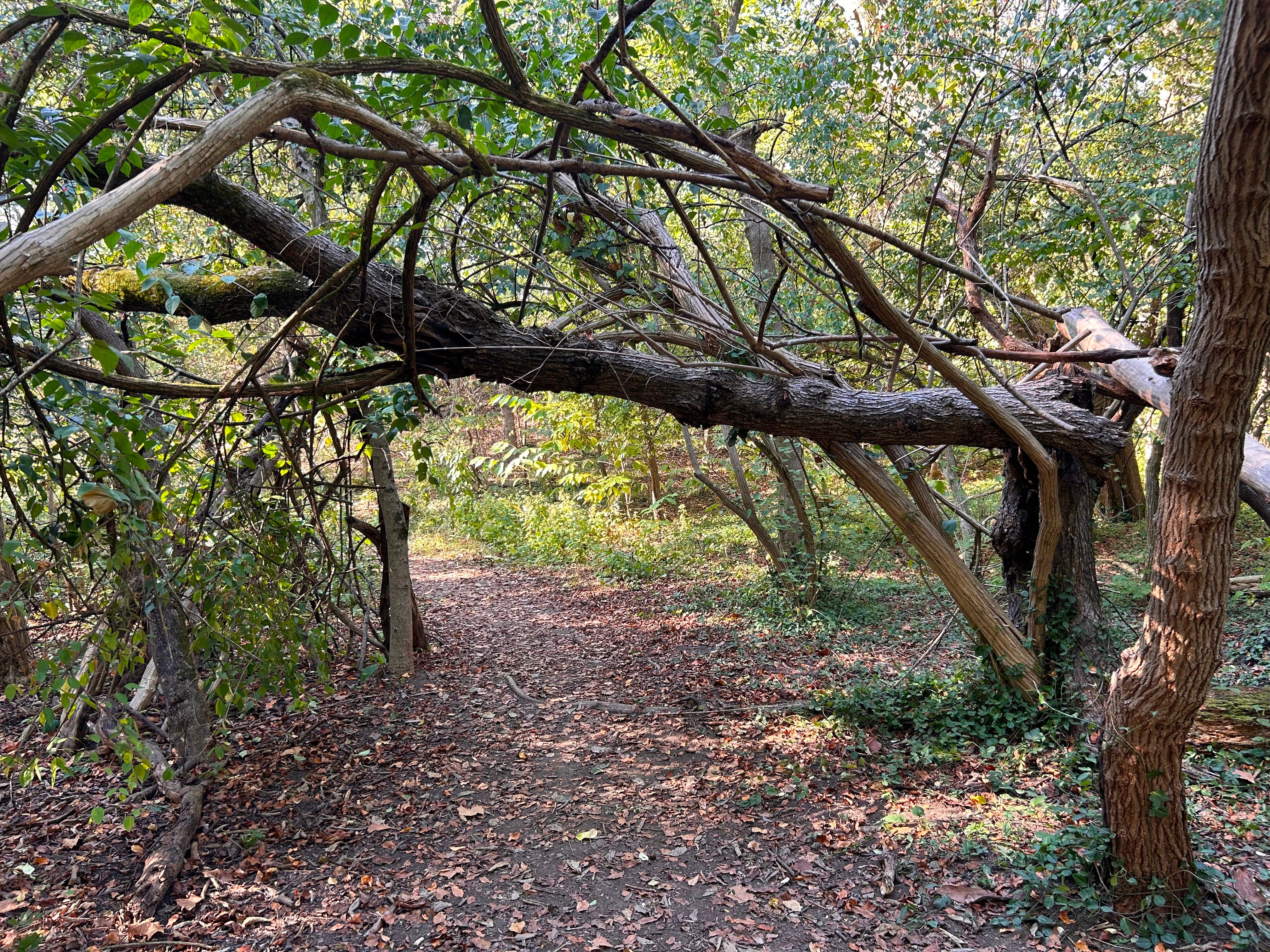 The Bright Dark | Deep Autumn Greetings Fellow Travelers of the Way!As autumn becomes us, I have been contemplating darkness and the creaturely way my body seems to respond to the cold-dark. Maybe you too feel a little more intimate with the night and the dark creature of the body at this time of year. Sometimes I feel, and I know others feel, that we are living in dark times—and whether this feels true for you—I think we all know something about the dark. Whether its as the seasonal darkening of autumn, energetic darkness, or political, personal, emotional, technological, relational, spiritual—darkness is often something we fear or feel uneasy about.Is it what is potentially lurking in the dark, or the darkness itself that sends shivers up the spine, drops dread in the gut, and perpetuates a sense of an impending doom?We often invoke darkness when hope feels sparse. When the way ahead feels hard, dismal, heavy, untenable or uncertain. Will we be ok? Will those we love be safe? Will the things we value and care about continue to be available?Dharma teachings throughout time remind us that there is a light within the dark. Call it bodhi, the awakened heart, vow, love. When we recognize even just an ember of this light—liberation is unstoppable. I feel grateful for my dharma friend Taishin Michael Augustin for reminding me of the unstoppable nature of bodhi this week. Having friends and practice companions on this path is essential. Our warm hearts and bright minds can point out a path together, footstep by footstep through whatever apparent darkness. I’m grateful for the many teachers, guides and friends that grace my life—they are truly bright points of light in this great mystery.Sometimes, and I imagine you have experienced this as well, we even find the dark nourishing in itself. The dark invites unknowing, unbecoming, self-forgetting, openness, mystery, shunyata. Darkness is alive—emergent, subtle, bright.darkness is the home from which we come—zen koanJogen and I will be exploring this theme of the Bright Dark in our upcoming non-residential retreat at Deep Waters in Portland, OR. What is your relationship to the dark? What happens when you get curious about the darkness? Is there a bright thread in the dark in your life? How do you nurture it? Universe Somatic: The Bright Thread in the Dark — January 22nd - 25thUniverse Somatic is a practice that integrates group meditation, movement and energy work with a spirit of experimentation and playfulness. We explore the union of spaciousness and embodied energies in a contemplative practice that is embodied and expressive.The theme for this Universe Somatic is The Bright Thread In the Dark. We will play in knowing and not-knowing, hope and despair, yin and yang, creation and destruction, dancing in deep relationship with these polarities while also listening for the thread that doesn’t get stuck on either side.During this retreat you will be invited to give expression to a full-range of energetic experience some of which may be familiar and comfortable, others which may challenge core implicit beliefs about who you are and what you do. We will be engaging in practices using our voices and our bodies, integrating movement and stillness, sound and silence.The retreat will commence on Thursday January 22nd from 7-9pm. The schedule on Friday and Saturday will run from 9am to 9pm with two separate two hour breaks for lunch and dinner. Sunday will conclude the retreat and we will meet from 9am-2pm.You, Darkness by Rilke You, darkness, that I come from I love you more than all the fires that fence in the world, for the fire makes a circle of light for everyone and then no one outside learns of you. But the darkness pulls in everything- shapes and fires, animals and myself, how easily it gathers them! - powers and people- and it is possible a great presence is moving near me. I have faith in nights. Faith in the Heart-MindThe Great Way is not difficult for those who do not pick and choose. When preferences are cast aside, the Way stands clear and un-disguised. But even slight distinctions made set earth and heaven far apart. If you would clearly see the truth, discard opinions pro and con. To founder in dislike and like is nothing but the mind’s disease. And not to see the Way’s deep truth disturbs the mind’s essential peace. The Way is perfect like vast space, where there’s no lack and no excess. Our choice to choose and to reject prevents our seeing this simple truth.Another light in the dark this autumn is the Faith Mind poem of the early Chan tradition. The podcast episode above is an exploration into the practice of awakening faith in ourselves as we walk this path of liberation in our lives. A reminder that the light of awareness is always right here, and that we can recognize this light for ourselves. The poem is an invitation to recognize Mind beyond thought and discrimination. An appeal to the seeker in us that knows that all that arises is the Way.We are exploring this poem on Monday Nights, feel free to drop in!On Monday Nov 3rd we will be doing a Ceremony for the Hungry Spirit. A practice of honoring the parts of us whose hungers and desires at times can feel bottomless. This ceremony will take place as part of the Monday Night Online Dharma offering. Bring an offering to your hungry spirit to participate in the ceremony. I will also offer a guided meditation to help us connect to the energy of the hungry heart that lives in us.If you live in Columbus, we will do this ceremony in-person on Wednesday Oct 29th!Weekly Online Meditation EventMonday Night Dharma — 6P PT / 9P ET Join weekly for drop-in meditation and dharma talk. We are currently exploring the Faith in Mind poem by the 3rd Chinese Ancestor.Feel free to join anytime. Event lasts about 1.5 hours. ZOOM LINKIn-Person in Columbus, Ohio through Mud Lotus SanghaWeekly Meditations on Tuesday, Wednesday and ThursdayRetreats, Meditation instruction and other events can be found on our website.Earth Dreams is a reader-supported publication. To receive new posts and support my work, consider becoming a free or paid subscriber.I’m Amy Kisei. I am a Zen Buddhist Teacher, Spiritual Counselor, Astrologer and Artist. I offer 1:1 Spiritual Counseling sessions using IFS and Hakomi (somatic mindfulness). I also offer astrology readings. Check out my website to learn more. I currently live in Columbus, OH and am a supporting teacher for the Mud Lotus Sangha. This is a public episode. If you'd like to discuss this with other subscribers or get access to bonus episodes, visit amykisei.substack.com/subscribe | 30m 55s | ||||||
| 9/13/25 |  Playing in Polarizations | Polarization & PlayPolarization (def)—division into two sharply contrasting groups, sets of opinions or beliefs. When we stop seeing similarity or what is shared, but only see difference. When difference becomes a threat.Play (def)— to engage in something for enjoyment or for sport. Be cooperative. Try something out.I want to say, we are living in a polarized time. But I find myself questioning each word. I look for polarization and find it in my social media feed, in the news, in my own inner dialogue —as certain views and opinions claim their rightness about what I should or should not do, believe or say.But, I don’t see such polarization in the setting sun, the migrating monarch butterfly who is sitting on this sunflower, here in my front garden. It seems like the monarch, the sun, the sky and serenading cicadas are not so concerned with the rifts of mind or media feed.Is it disrespectful to place play near the gravity of polarization, when Webster warns that play has nothing to do with serious things and when politicians are using words like “civil war?”Play is actually an important quality for awakening, for living in divisiveness—for it is an invitation to bring curiosity to righteousness, shame spirals, fear loops and the other players in polarized thinking.Play as LiberationThe play I want to invite is the play of liberation. The play that is invoked in the Mahayana Sutra of Vimalakirti. A sutra that emerged in an in-between-time in Buddhist history. Where there were forces in power who believed they had the “right” teachings, the correct practices to transcend this painful world of suffering and enter nirvana.Yet another view was emerging right in the midst of the dominant one. A view that seemed to turn the whole tradition on its head. A view, a practice, a teaching that pointed to the profound path of liberation that could be recognized by seeing through all views—awakening to the empty-yet-apparent nature of all form and concept. This view pointed to a liberation that was based in the direct experience of interdependence, where no one is separate from anyone else—where this world and this body are the place and vehicle for living an awakened life. This was the emergence of the way of the bodhisattva.An Extraordinary ImprobabilityThe teaching came through a sick man living the life of a householder in India. His name was Vimalakirti and was considered a great bodhisattva and teacher of the non-dual way. When asked why he was sick Vimalakirti replied: “I am sick, because the world is sick.”Joan Sutherland in her book Vimalakirti and The Awakened Heart says this about the Bodhisattva. “Vimalakirti embodies a number of provocative dualities in addition to being a sick bodhisattva: he’s a rich man who gives all of his money to the poor, someone who lives among family, but remains solitary, has children and frequents brothels but remains celibate, goes to bars, but doesn’t get drunk…The koans speak of him as an extraordinary improbability.”The sutra in its in-between-ness is considered a precursor to both the koan tradition of Chan and the tantric tradition of the Vajrayana. The sutra has well-known characters from the Buddhist pantheon such as the elder monk Shariputra and the Bodhisattva Manjushri engaging in discourse with this layman Vimalakirti and the goddess who happens to live in his room completely unseen until the middle of the story.The Goddess’s TransformationsAt some point in the story the goddess makes her appearance, and we are told that she had always been there (another nod to the incipient koan tradition: how can someone who has always been here, appear?)As she appears flowers rain down, falling to the feet of the Bodhisattvas but sticking to the robes of the elder monks. Shariputra is quite disturbed by this flower affixing itself to his robe—he has made a vow not to adorn himself with the fragrance and flamboyance of a flower.The goddess engages him here, asking him to show her the nature of flowerness.Their conversation spans topics such as the nature of self-obsession and liberation, before Shariputra asks the goddess why she continues to be a woman, when surely being male would be preferable for she would have a chance at liberation.This opens up a dialogue captured in Case 58 of the Hidden Lamp“I have looked for the innate characteristics of the female form to no avail. How can I change them? If a magician created the illusion of a woman, would you ask her, “Why don’t you transform yourself out of your female state?”Shariputra replied, “No. Such a woman would not really exist, so what would there be to transform?”She said, “Just so. All things do not really exist, so how can you ask something that doesn’t exist to change its form?”Then the goddess, by supernatural power, changed Shariputra into a likeness of herself and changed herself into a likeness of Shariputra and asked, “Why don’t you transform yourself out of your female state?”Shariputra cried, “I no longer appear in the form of a male! My body has changed into a woman’s body! I don’t know what to transform!”She replied, “Just as you are not really a woman but appear to be female in form, all women appear to be female in form but are not really women. Therefore, Buddha said that all beings are not really women or men.”Then she changed Shariputra back into his own form and asked, “And where is your female form now?”My teacher Chozen Roshi writes the commentary to this case and opens saying: “Once someone asked me, “In India it is said that you cannot be enlightened it you are a woman. What does Zen say about this?” I answered, “In Zen practice we say that in order to be enlightened, you must become completely a woman, completely a man, both, and neither.”The Four Positions of PolarizationChozen’s response is an articulation of Rinzai’s four positions. It’s an expression of the flexibility of heart that we train in, in koan practice. It’s a practice for recognizing the empty-yet-apparent nature of all concepts and forms and unsticking from our habitual ways of seeing the world.What is it to be completely A, completely B, both and neither?This is something we can explore anytime we have a set of opposites or polarized parts of us. This could be explored in a conflict with another person, an inner conflict, as koan exploration or as dream/soul work.To use the koan above as an example, here is a step-by-step way you might explore the polarity of Shariputra and the Goddess. Feel free to journal, draw or move between these positions in a more embodied way. Or listen to the audio above for verbal guidance on these steps.* Let yourself inhabit the position of Shariputra and shift your position slightly to the right. This could be the part of us that wants to do it right, is disciplined, has a sense of the rules, feels self-righteous. Let yourself feel your inner Shariputra. What does it feel like in the body to want to do it right or to feel self-righteous? What feelings are you aware of? What fears or wants? If you could speak as Shariputra what would you say? Now let go of Shariputra and come back to center.* Now move to the left and let yourself inhabit the position of the Goddess. The Goddess is a more sensual part of us, she embodies prajna wisdom, playfulness, a certain kind of faith that all is OK. Let yourself feel your inner goddess. What does it feel like in your body to embody faith, sensuality, playfulness, prajna wisdom? What feelings are you aware of? Are there fears or wants? If you could speak as the goddess, what would you say? Now let go of the goddess and come back to center.* Now reconnect with both Shariputra and the goddess. Let yourself feel both of these parts in your body at once. Notice what it is like to have them both present—not needing to choose a side or be one or the other, just allowing both energies. What do you notice?* Now let them both go. You might energetically step back, or imagine emptying out. Be a hollow bamboo tube or empty space. Nothing you need to do, just rest in the after glow of the journey. Notice what you see from this perspective of being no one in particular.Take a moment to notice your breath, move your body, shake out or stretch and come back to the felt sense of your body right here and now. Ground in your senses. Thanks for trying on this practice! You might take a moment to journal about anything you noticed or simply feel what it feels like in your body now.In koan work as well as working with personal material, there are always layers to the exploration. We meet or become aware of what perspectives feel more familiar and which ones we are more averse to, afraid of or resistant to feeling. This is a training in holding views lightly and seeing into the nature of perspective/part. Sometimes in describing koan work teachers talk about “the third thing”, not either A or B, but C.This movement between being fully A, fully B, both and neither allows new perspectives to emerge. It allows us to move more freely though the spectrum of being and to appreciate the flexibility of our open hearts. When I do IFS with clients, we often discover that the parts of us that seem polarized, often want the same thing for us—they just have really different strategies or beliefs about how to get it. To see this, often awakens openness + compassion—a third thing—which allows for transformation and healing.This practice is practical and mysterious—its an invitation to play in the mystery of being and to stay open to the possibility that exists within apparent polarities.I’m Amy Kisei. I am a Zen Buddhist Teacher, Spiritual Counselor, Astrologer and Artist. I offer 1:1 Spiritual Counseling sessions using IFS and Hakomi (somatic mindfulness). I also offer astrology readings. Check out my website to learn more. I currently live in Columbus, OH and am a supporting teacher for the Mud Lotus Sangha.I currently have a few openings in my Spiritual Counseling practice for the Fall. I offer a four-session intro package for $250.Weekly Online Meditation EventMonday Night Dharma — 6P PT / 9P ET Join weekly for drop-in meditation and dharma talk. This is where the Summer Read is happening if you want to join the discussion and practice live. Schedule here.Feel free to join anytime. Event lasts about 1.5 hours. ZOOM LINKIn-Person in Columbus, Ohio through Mud Lotus SanghaWeekly Meditations on Tuesday, Wednesday and ThursdayRetreats, Meditation instruction and other events can be found on our website. This is a public episode. If you'd like to discuss this with other subscribers or get access to bonus episodes, visit amykisei.substack.com/subscribe | 37m 39s | ||||||
Showing 25 of 102
Pitch Fit is a Pro feature
See how bookable this show is for guests, which brands already advertise, the per-episode ad value, and the best-fit guest and sponsor profile. The numbers are blurred on the free plan.
How readily this show books outside guests like you.
How proven this show is for host-read sponsorships.
For Guests
ProFor Advertisers
ProUpgrade to Pro to unlock guest cadence, sponsor categories, fit scores, and per-episode ad value for this show.
Chart Positions
9 placements across 9 markets.
Chart Positions
9 placements across 9 markets.