Eat Sleep Work Repeat - better workplace culture
by brucedaisley.com
Is this your podcast?Insights from recent episode analysis
Audience Interest
Podcast Focus
Publishing Consistency
Platform Reach
Insights are generated by CastFox AI using publicly available data, episode content, and proprietary models.
Most discussed topics
Brands & references
Total monthly reach
Estimated from 22 chart positions in 22 markets.
By chart position
- 🇬🇧GB · Management#20300K to 1M
- 🇺🇸US · Management#1175K to 30K
- 🇮🇹IT · Management#4730K to 100K
- 🇰🇷KR · Management#9510K to 30K
- 🇪🇸ES · Management#1101K to 10K
- Per-Episode Audience
Est. listeners per new episode within ~30 days
211K to 714K🎙 ~2x weekly·226 episodes·Last published 1mo ago - Monthly Reach
Unique listeners across all episodes (30 days)
421K to 1.4M🇬🇧70%🇮🇹7%🇮🇪7%+19 more - Active Followers
Loyal subscribers who consistently listen
126K to 428K
Market Insights
Platform Distribution
Reach across major podcast platforms, updated hourly
Total Followers
—
Total Plays
—
Total Reviews
—
* Data sourced directly from platform APIs and aggregated hourly across all major podcast directories.
On the show
From 13 epsHost
Recent guests
Recent episodes
Stop talking about culture - deal with behaviours
Jul 14, 2026
55m 42s
What chance do we have versus the machines?
Jun 11, 2026
43m 13s
Can one bad apple ruin your team?
May 7, 2026
47m 24s
Your colleagues like you more than you realise…
Apr 16, 2026
46m 38s
Life Reclaimed with Pippa Grange
Apr 2, 2026
39m 46s
Social Links & Contact
Official channels & resources
Official Website
Login
RSS Feed
Login
| Date | Episode | Topics | Guests | Brands | Places | Keywords | Sponsor | Length | |
|---|---|---|---|---|---|---|---|---|---|
| 7/14/26 | organizational culturebehaviour change+3 | Professor Rob Briner | Queen Mary University of LondonCorporate Research Forum | — | organizational culturebehaviors+3 | — | 55m 42s | ||
| 6/11/26 | AI job displacementhuman labour+3 | Sarah O'Connor | Financial TimesWe Are Not Machines | — | AIjob displacement+5 | — | 43m 13s | ||
| 5/7/26 | team dynamicsinterpersonal relationships+3 | Kate Murphy | Why We Click | — | bad apple effectinterpersonal synchrony+3 | — | 47m 24s | ||
| 4/16/26 | workplace relationshipsliking gap+2 | Dr Gillian Sandstrom | Once Upon A StrangerAcast+1 | — | conversationscolleagues+2 | — | 46m 38s | ||
| 4/2/26 | burnoutperformance psychology+2 | Pippa Grange | Life ReclaimedBBC+4 | England | regenerative psychologyEngland men's football team+2 | — | 39m 46s | ||
| 3/14/26 | psychological safetygroup identity+2 | Katrien Fransen | The impact of identity leadership on team functioning and well-being in team sportAcast+4 | — | psychological safetyteam sport+1 | — | 55m 06s | ||
| 2/26/26 | work cultureleadership+1 | Professor Benjamin Laker | Too Proud to LeadJob Crafting+9 | — | Meeting Free DaysHarvard Business Review+1 | — | 47m 03s | ||
| 2/3/26 | work fulfillmentgroup flow+2 | Daniel Coyle | Make Work Better newsletterThe Culture Code+2 | — | attentionresearch+1 | — | 39m 11s | ||
| 1/27/26 | best places to workwork culture+2 | Daniel Zhao | GlassdoorAcast+2 | USUK | cultureconnection+2 | — | 22m 18s | ||
| 1/23/26 | workplace culturepeople management+1 | Kevin Green | Make Work Better newsletterFirst Group+4 | — | culturemoments of truth+2 | — | 31m 46s | ||
Want analysis for the episodes below?Free for Pro Submit a request, we'll have your selected episodes analyzed within an hour. Free, at no cost to you, for Pro users. | |||||||||
| 12/1/25 | workplace psychologyleadership+2 | Dr Karen Bridbord | The Relationship-Driven Leader: Strengthening Connections to Enhance Productivity and Wellness at WorkAcast+1 | — | psychologyworkplace culture+2 | — | 42m 32s | ||
| 11/25/25 | Gen Zworkplace culture+3 | Jackie Cooper | the Edelman Gen Z LabEdelman+2 | — | Edelman Gen Z Labsafety+3 | — | 38m 38s | ||
| 11/11/25 | corporate trainingbureaucracy+3 | Andre SpicerMats Alvesson | The Art of LessAcast+3 | — | corporate sludgeThe Art of Less+1 | — | 42m 21s | ||
| 11/2/25 |  Strong team identity delivers success | Jeremy Holt is a psychologist and leadership coach who has spent more than 20 years helping teams get better. Read his research about better team results.This episode is the third part of a series about the power of identity in teams. Listen to the other Eat Sleep Work Repeat episodes about identity.Jeremy posting about identityWatch the Lebron documentary More Than a GameJeremy's book For the Love of the GameSign up to the Make Work Better newsletter or check out the best ever episodes at the website.Eat Sleep Work Repeat is made and hosted by Bruce Daisley. Hosted on Acast. See acast.com/privacy for more information. | — | ||||||
| 10/27/25 |  To understand leadership, you need to understand identity | This is the second part of an interview with Professor Alex Haslam, the world's leading voice on the study of social identity.You can hear the first part of this interview on the website.In this discussion we talk how social identity can help us understand leadership.Alex talks about the CARE model of leadership.C - Create the groupA - Advance the group (sometimes over themselves)R - Represent the groupE - Embed the group identity in everyday life for the groupIf you're interested in exploring Alex's recent contributions to discussions on leadership and culture these papers are a great place to start:Zombie LeadershipHuman Me-sources or Human We-sources - exploring leader narcissismAlex Haslam is Professor of Social and Organisational Psychology at the University of Queensland. He is one of the world’s leading researchers on group dynamics, leadership, and identity. Over the past three decades, Alex has helped reshape our understanding of how people think, feel, and behave as members of groups, and why social identity is central to motivation, resilience, and effective teamwork.Sign up to the Make Work Better newsletter or check out the best ever episodes at the website.Eat Sleep Work Repeat is made and hosted by Bruce Daisley. Hosted on Acast. See acast.com/privacy for more information. | — | ||||||
| 10/21/25 |  Everything is identity | “Why are we so fixated on the individual self? I think it was a big con. The individual self is a relatively modern invention. The idea that human psychology is about the individual self was really an analytical fiction that was devised in the 20th century.”This is the first part of a wide-ranging discussion with Professor Alex Haslam. He talks us why our group identities are so essential to us and define who we are as adults. He quotes his mentor John Turner who said, 'Social identity is what makes group behaviour possible'. By the time you've finished with this episode I'm sure you'll agree.Check out an utterly brilliant talk by Alex - consider this the best training you could send yourself on.Alex mentions his partner Cath Haslam, who is also a psychologist.Full transcript and notes are on the website - along with an Identity playlist of episodes. Alex Haslam is Professor of Social and Organisational Psychology at the University of Queensland. He is one of the world’s leading researchers on group dynamics, leadership, and identity. Over the past three decades, Alex has helped reshape our understanding of how people think, feel, and behave as members of groups, and why social identity is central to motivation, resilience, and effective teamwork.Alex is co-author of The New Psychology of Leadership and The New Psychology of Sport and Exercise, and his work has been applied widely—from health and education to business, politics, and the military. With over 300 research articles and multiple international awards to his name, Alex is recognised as a pioneer of social identity theory in practice, showing how a sense of “us” can unlock extraordinary human potential.Sign up to the Make Work Better newsletter or check out the best ever episodes at the website.Eat Sleep Work Repeat is made and hosted by Bruce Daisley. Hosted on Acast. See acast.com/privacy for more information. | — | ||||||
| 10/14/25 |  We need to tackle workplace loneliness | Simon Gilbody talks loneliness at workThe Loneliness of the American Worker - Wall Street JournalMake Work Better on lonelinessMore on solving lonelinessLoneliness in teamsDerek Thompson on elective isolationProfessor Simon Gilbody is a psychiatrist and clinical epidemiologist at the University of York. His work specialises in 'taking a population approach to mental health', trying to understand the aspects of modern life that contribute to how we feel.I was impressed by a talk that Simon did with the Financial Times on the topic of workplace loneliness.In our discussion Simon reflects on the toll of loneliness, how workplace loneliness can leave us with invasive thoughts, and what to do about it.Some links we discuss:Dr Lucy Foulkes - I really enjoy her TikToks, I think I gave a shout out to her book on adolescents a few weeks ago.Red Cross Report on LonelinessThank you to Mary Howarth at University of York for helping to arrange the discussion.Transcript on the website Sign up to the Make Work Better newsletter or check out the best ever episodes at the website.Eat Sleep Work Repeat is made and hosted by Bruce Daisley. Hosted on Acast. See acast.com/privacy for more information. | — | ||||||
| 10/9/25 |  Delivering culture through food | This sponsored episode is brought to you by Deliveroo for WorkSpencer Walker is the global director of Deliveroo for Work.The podcast has returned several times to the idea of food as a cultural trigger, something that catalyses connection and allows cohesion. We explore that idea further this week with Spencer Walker who runs Deliveroo For Work the workplace service provided by the delivery firm. The Deliveroo Feeding Employee Engagement ReportI mention a book by Robin Dunbar and Samantha Rockey, it's this: The Social Brain - Tracey Camilleri, Samantha Rockey, Robin Dunbar. They talk about giving curry to bond teams (because the sharing plates require people to pass them around). Hear them talking about it here.Deliveroo for WorkThe Deliveroo Feeding Employee Engagement ReportMore about food, rituals and culture Sign up to the Make Work Better newsletter or check out the best ever episodes at the website.Eat Sleep Work Repeat is made and hosted by Bruce Daisley. Hosted on Acast. See acast.com/privacy for more information. | — | ||||||
| 9/26/25 | 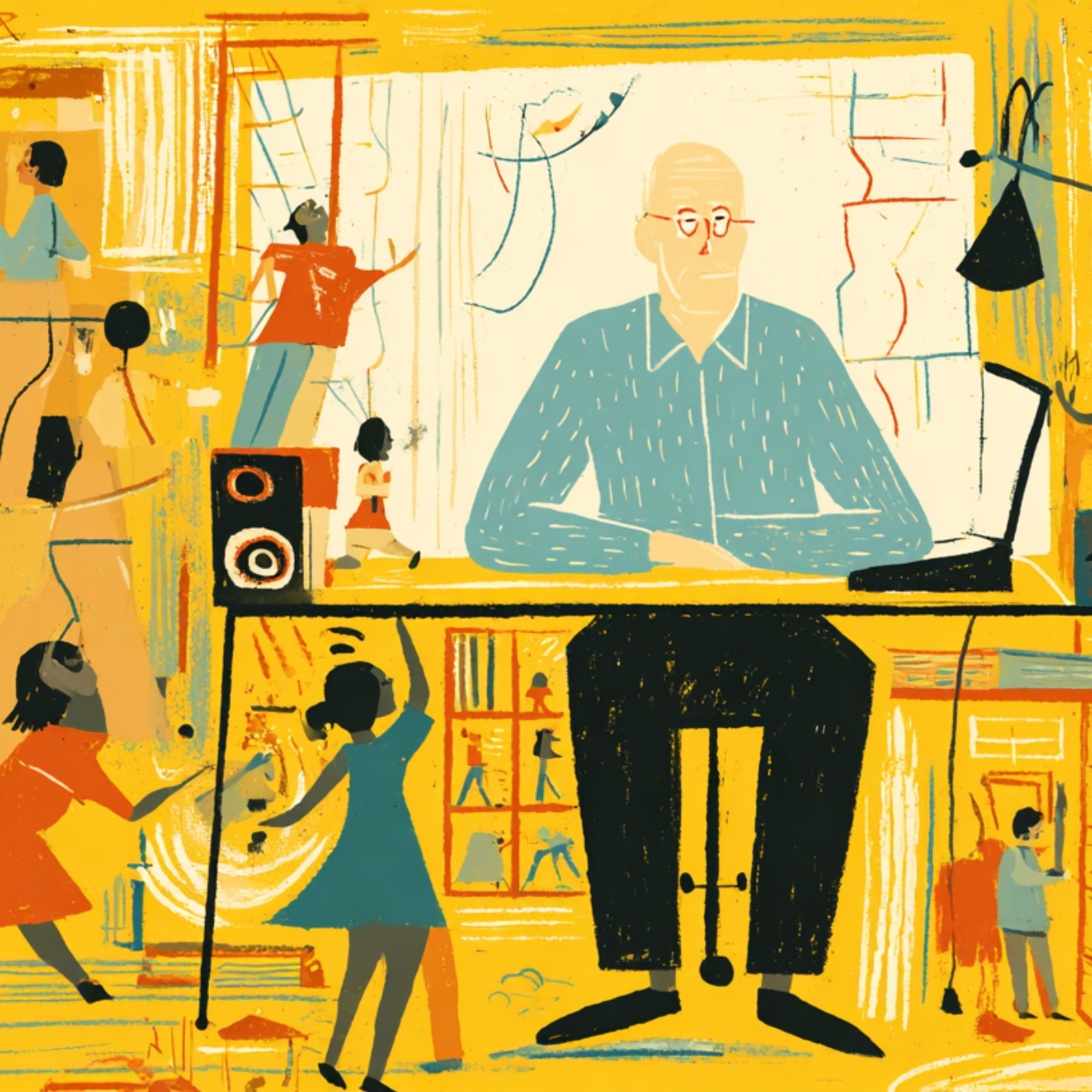 RTO mandates are caused by middle aged men not liking their wives | Delighted to post this small conversation with Nick Shackleton-Jones. Nick posts brilliantly witty rants on TikTok that are just the best things I hear about work and the futility of bureaucracy.TikTok is a fame machine and if creators drop a banger they can end up reaching a vast audience. Nick has posted some content about work, neurodiversity and philosophy that has had millions of views.It was his take on why middle aged men wanted to return to the office that I put in the newsletter last week and made up the reason why we chatted but there’s so much more to this - not least him talking about adaptive behaviours and masking for people on the spectrum.Great listen. If you don’t use TikTok then I’ve given a selection of his best posts below:Nick on LinkedInShackleton ConsultingNick on TikTok - this is the good stuffBest posts to check out:Middle aged men don't get on with their wivesThe original on middle aged menWhat I miss about corporateMore of what he misses about corporate (on company values)Adaptive processes for neutrodivergent peoplePedestrian bellChase differenceGet the newsletter here Sign up to the Make Work Better newsletter or check out the best ever episodes at the website.Eat Sleep Work Repeat is made and hosted by Bruce Daisley. Hosted on Acast. See acast.com/privacy for more information. | — | ||||||
| 9/21/25 | 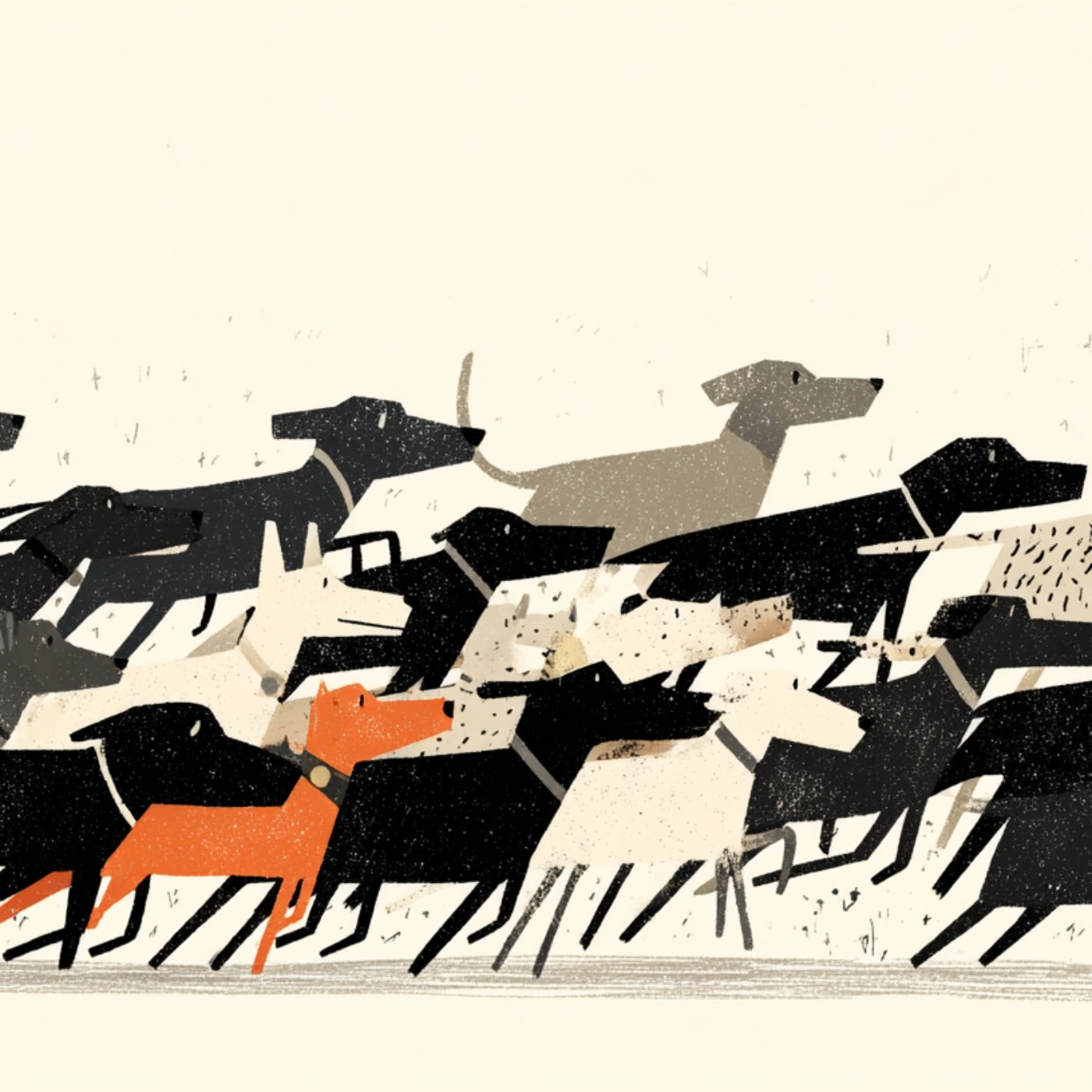 What gives a team the 'collective edge'? | If we shifted our focus from the individual to the collective how different would our results at work be?I'm joined by Colin Fisher who explains that great teams are the most important contributors to great outcomes at work. The problem is that for many of our teams they are equal to less than the sum of the parts. Groups get bigger and bigger and stop being effective. Managers avoid having discussions about trimming teams down - and it leads to failure.Colin's new book The Collective Edge breaks down the ingredients of forming good teams.Colin Fisher is a professor at UCL School of ManagementSign up to the Make Work Better newsletter or check out the best ever episodes at the website.Eat Sleep Work Repeat is made and hosted by Bruce Daisley. Hosted on Acast. See acast.com/privacy for more information. | — | ||||||
| 9/12/25 |  How behavioural psychology is shaping workspace | It’s been a while since I revisited a conversation on offices and how our physical workspaces are evolving. Disruption has made the property business hugely raise their games. With 20-25% of Gen Z workers self reporting having issues of neurodivergency the office is trying to prove that it's still the centre of great workplace cultures.I chatted to Susan Carruth, a partner a 3XN, an architecture firm who is pioneering thinking about the needs of occupants and Mike Wiseman Head of Campuses at British land.For more details on the 2FA project mentioned and British Land's campuses.As discussed: 12% of US mortgage backed office deals are 'delinquent' right nowSign up to the Make Work Better newsletter or check out the best ever episodes at the website.Eat Sleep Work Repeat is made and hosted by Bruce Daisley. Hosted on Acast. See acast.com/privacy for more information. | — | ||||||
| 9/5/25 |  Our personalities are changing, will it ruin work? | Last month the FInancial Times published an article by John Burn Murdoch in the form of an analysis of personality data, specifically looking at what are styled the Big Five personality traits: openness, conscientiousness, extraversion, agreeableness, and neuroticism.Typically these five factors are regarded as a statistically reliable way to measure personality. Unlike approaches like Myers Briggs these factors prove consistent over time and psychologists took a view that much of the variance of human personality can be understood using these factors. Interestingly these factors also prove predictive for other outcomes. Conscientiousness for example predicts academic success and job performance, neuroticism can predict mental health issues.To discuss it I'm joined by Nick McClelland, Nick is the CEO of Byrne DeanThe original article by John Burn Murdoch (archive version)Newsletter discussion on the dataDiscussion between John Burn Murdoch and Derek ThompsonChristopher Ferguson questions the effect sizeJay Van Bavel talks about the effect size of the dataAlex Haslam points out the questions that lead to the conscientiousness scoresSign up to the Make Work Better newsletter or check out the best ever episodes at the website.Eat Sleep Work Repeat is made and hosted by Bruce Daisley. Hosted on Acast. See acast.com/privacy for more information. | — | ||||||
| 8/11/25 | 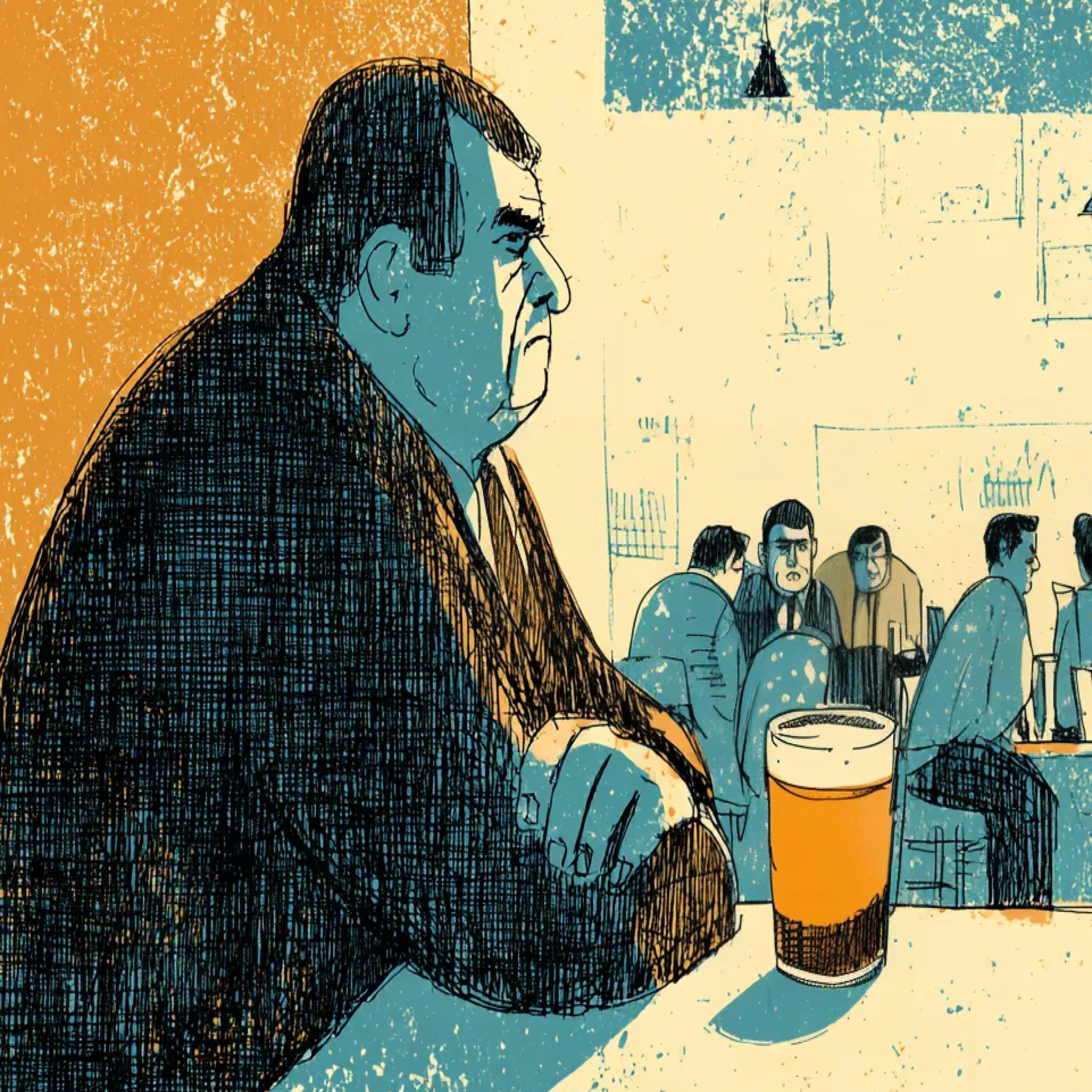 Did we do Big Ange dirty? | Sign up for the newsletterA couple of years ago, I was surrounded with so many happy Spurs fans that I bought into the euphoric buzz they were giving off.Ange Postecoglou had brought the smile back to Tottenham supporters. I chatted to Charlie Eccleshare from The Athletic about the cultural reinvention that the Australian manager that enacted.Reader, the Big Ange story didn't end well as a result a lot of fans of other clubs regularly message me asking about the episode, or my opinion of Postecoglou's demise. It was while I was joking about this one time that today's guest got in touch.Dan Jackson is a former Aussie Rules footballer who now acts as General Manager at Adelaide Football Club. He got in touch suggesting that I might be unfair backtracking on the support of Ange, challenging me to reflect on 'how the world's premier football competition has such little respect for building genuine high-performance culture?'He said 'I'm sure you'd agree it takes time and a lot of focused effort to change and build a good culture - two things that don't appear to be given any focus in most EPL teams'.I loved the pushback and immediately got in touch to have a conversation with him. We talk both about Postecoglou (and whether we did him dirty) but also about how he is part of a team that tries to build strong long-term culture in his team.Sign up to the Make Work Better newsletter or check out the best ever episodes at the website.Eat Sleep Work Repeat is made and hosted by Bruce Daisley. Hosted on Acast. See acast.com/privacy for more information. | — | ||||||
| 7/30/25 |  How Octopus Energy used culture to reach the top | I’m often asked asked which company cultures I admire, especially as I tend to be critical of the culture inside tech firms. It’s easy to have good vibes in small firms but organisations who manage to deliver good culture at scale are the ones I’m most interested in. I often call out Nando’s or Octopus Energy.I was delighted to get the chance to talk to the CEO of Octopus Energy Group, Greg Jackson. I’ve often reflected that the best cultures seem to be codified and made explicit, but Octopus’s culture isn’t really defined by formal values, Jackson doesn’t pin it down to three or four words. Instead the culture has a vivid feeling but is loosely articulated, a tangible mix of trust, autonomy and a shared mission.Cultures are often defined by what they’re against as much as what they are for. Many companies give a laundry list of desirable attributes they strive for. There’s an organisation at the end of my street that has ‘excellence’ and ‘respect’ on its windows, but would any business claim to be built on mediocrity or disrespect? Aren’t they just given? Sometimes these things are called the Pillars of Character. Yes, we have integrity here, but how does that help you work here?For businesses these pillars are useless for creating differentiation. Jackson’s approach at Octopus stands apart from that, he takes issue with common norms elsewhere. Researching for the conversation I listened to one interview where Jackson talked about the absence of back-to-back meetings in his day. He said:First of one thing I do that I think is unusual is I don't pack my day with meetings. I'm religious about having lots of time outside meetings because in the one hour that someone wants to have a meeting, I can make 10 phone calls or I could drop by the desks of half a dozen team members and I can be available for people to deal with what's going on that day. So one thing for me is your time is far too precious to let it get soaked up on other people's meeting requests. It's quite funny when I got a new PA, she came from a very large software company and I said, ‘I've got a lot of meetings tomorrow’. And she said, well, where I used to work, my job was to pack from 8 AM to 5 PM every day, hour by hour by hour. And I was like, Whoa, how does that person get any thinking time? How does it get any, any time to reset? And how does it get to do anything proactive that changes the world?After the conversation, which was recorded live on stage near Guildford, someone came up to me. ‘My son works at Octopus,’ he said. Here we go, I thought. ‘Every single word he said up there is true. He says he wishes he’d joined there years ago’.Links:Greg on High Performance podcastTranscriptMake Work Better newsletterTake a listen, I’d love to hear your thoughts.Sign up to the Make Work Better newsletter or check out the best ever episodes at the website.Eat Sleep Work Repeat is made and hosted by Bruce Daisley. Hosted on Acast. See acast.com/privacy for more information. | — | ||||||
| 6/6/25 |  Getting to grips with workplace AI | This is the second episode this month about AI and the implications for our jobs.Two weeks ago I went along to a huge event run by Workday down in North Greenwich. Workday, their partners and their customers took to the stage to talk about applications of AI that are coming to their platform. As part of the event I was able to run a discussion with a couple of voices from the company who are helping businesses navigate the challenges that AI presents to us. Sign up for the newsletterMore about Workday ElevateI was joined by Jerry Ting. Jerry is the founder of Evisort and now teaches at Harvard Law School and is a senior leader at Workday. And the other contributor was Angelique de Vries Schipperijn, she's the EMEA president for Workday. The conversation was fascinating for me in a few ways, firstly we can be so daunted about what AI represents in our jobs and this seemed simple and easy to understand, but secondly because as I mentioned last week the conversations I got from the audience suggested that there’s a lot of businesses who have barely started their own journeys.Look, here’s the challenge of the moment, I think the conversation at the event described a future that we have the agency to participate in. It seems real and like something we can connect with, but also everyone who came up to me afterwards anxiously told me that their organisations are doing nothing at all. That’s why I got so much value from this conversation. I think inverted commas “doing AI” feels scary and huge whereas incorporating it into some of the things we’re already going feels possible and easily achievable. I need to declare that this is a promoted episode in the sense that Workday is a client that I was working with at this event and have worked with before, but critically it was a conversation that I’m delighted to be sharing here. I want to give a shout out to Hollie Benneyworth at Workday who has worked so hard to make this happen.You can find a full transcript for this on the website.Sign up to the Make Work Better newsletter or check out the best ever episodes at the website.Eat Sleep Work Repeat is made and hosted by Bruce Daisley. Hosted on Acast. See acast.com/privacy for more information. | — | ||||||












Showing 25 of 229
Pitch Fit is a Pro feature
See how bookable this show is for guests, which brands already advertise, the per-episode ad value, and the best-fit guest and sponsor profile. The numbers are blurred on the free plan.
How readily this show books outside guests like you.
How proven this show is for host-read sponsorships.
For Guests
ProFor Advertisers
ProUpgrade to Pro to unlock guest cadence, sponsor categories, fit scores, and per-episode ad value for this show.
Similar Audience Demographics
Podcasts that attract a similar listener profile


Chart history for Eat Sleep Work Repeat - better workplace culture
Peaked at #8 in Ireland, top 10 in 1 of 23 tracked markets, currently #8 in Ireland.
| Market | Genre | Peak | Current | Trend |
|---|---|---|---|---|
| Ireland | — | #8 | #8 | — |
| United Kingdom | — | #20 | #20 | — |
| South Africa | — | #32 | #32 | — |
| Italy | — | #47 | #47 | — |
| IS | — | #48 | #48 | — |
| HU | — | #66 | #66 | — |
| CL | — | #66 | #66 | — |
| MY | — | #75 | #75 | — |
| Ireland | — | #80 | #80 | — |
| GR | — | #84 | #84 | — |
| NG | — | #94 | #94 | — |
| South Korea | — | #95 | #95 | — |
| ID | — | #100 | #100 | — |
| KE | — | #100 | #100 | — |
| VN | — | #107 | #107 | — |
| Spain | — | #110 | #110 | — |
| India | — | #111 | #111 | — |
| United States | — | #117 | #117 | — |
| RO | — | #118 | #118 | — |
| New Zealand | — | #147 | #147 | — |
Chart Positions
23 placements across 22 markets.
Chart Positions
23 placements across 22 markets.