

EBRD podcasts
by European Bank for Reconstruction and Development
Is this your podcast?Insights from recent episode analysis
Audience Interest
Podcast Focus
Publishing Consistency
Platform Reach
Insights are generated by CastFox AI using publicly available data, episode content, and proprietary models.
Most discussed topics
Brands & references
Est. Listeners
Insufficient chart data. Estimates will improve as the show charts.
- Per-Episode Audience
Est. listeners per new episode within ~30 days
N/A🎙 Weekly cadence·84 episodes·Last published 7mo ago - Monthly Reach
Unique listeners across all episodes (30 days)
N/A - Active Followers
Loyal subscribers who consistently listen
N/A
Market Insights
Platform Distribution
Reach across major podcast platforms, updated hourly
Total Followers
—
Total Plays
—
Total Reviews
—
* Data sourced directly from platform APIs and aggregated hourly across all major podcast directories.
On the show
From 1 epsHost
Recent guests
Recent episodes
Brave old world- the launch of EBRD Transition Report 2025-26
Nov 26, 2025
1h 32m 17s
Navigating industrial policy challenges and opportunities for emerging markets
May 22, 2025
Unknown duration
Regional Economic Forecasts 2025
May 22, 2025
Unknown duration
Launch Of The EBRD Transition Report 2024 - 25 Navigating Industrial Policy
Nov 27, 2024
Unknown duration
EBRD Transition Report 2023-24 live launch
Nov 22, 2023
Unknown duration
Social Links & Contact
Official channels & resources
Official Website
Login
RSS Feed
Login
| Date | Episode | Topics | Guests | Brands | Places | Keywords | Sponsor | Length | |
|---|---|---|---|---|---|---|---|---|---|
| 11/26/25 |  Brave old world- the launch of EBRD Transition Report 2025-26✨ | demographic changepopulation ageing+5 | Professor Sarah Harper CBEEghosa Omoigui+2 | University of OxfordOxford Institute of Population Ageing+4 | — | demographic shiftsageing societies+5 | — | 1h 32m 17s | |
| 5/22/25 |  Navigating industrial policy challenges and opportunities for emerging markets | In the context of escalating geopolitical tensions, environmental challenges and rapid technological change, industrial policies – state-led strategic interventions designed to reshape an economy’s production structure – have made a comeback in both advanced economies and emerging markets. These policies seek to address global market failures such as climate change, foster economic growth, boost innovation and improve competitiveness. However, they have a mixed track record and pose complex challenges, which this panel will explore. Tis discussion examined whether and how emerging markets can use industrial policy to drive sustainable economic growth, diversify economies and enhance competitiveness while navigating global geopolitical uncertainty and avoiding the mistakes of the past. It also explored how these economies can manage the delicate balance between national competitiveness and international cooperation. Speakers: Richard Porter, MD, Communications, EBRD Beata Javorcik, Chief Economist, EBRD Jeromin Zettelmeyer, Director, Bruegel Bernardo Sestini, Chairman and Chief Executive Officer, SIAD Group Leslie Maasdorp, CEO of British International Investment | — | ||||||
| 5/22/25 |  Regional Economic Forecasts 2025 | Listen back to the launch of the latest EBRD’s Regional Economic Prospects launched in May 2025 during the 34th EBRD Annual Meeting and Business Forum in London.The discussion covered the latest economic forecasts for the regions where the EBRD invests. The EBRD’s Chief Economist, Beata Javorcik, and leading regional experts discussed the challenges confronting policymakers amidst rising geo-political tensions and intensifying pressures on government finances. Speakers: Jonathan Charles, Strategy Advisor Sergey Guriev, Dean, Professor of Economics, London Business School Beata Javorcik, Chief Economist, EBRD Lord Jim O'Neill of Gatley | — | ||||||
| 11/27/24 |  Launch Of The EBRD Transition Report 2024 - 25 Navigating Industrial Policy | Listen to the discussion on the industrial policy at the launch of the EBRD Transition Report, moderated by Richard Porter, EBRD Managing Director of Communications. It featured: Joseph Stiglitz, Nobel laureate in economics and Professor at Columbia University Rana Foroohar, global business columnist and associate editor at the Financial Times Jeromin Zettelmeyer, Director of Bruegel, the European Union’s economic think tank Beata Javorcik, EBRD Chief Economist The Transition Report report takes an extensive look at industrial policies in the EBRD regions and beyond. Such policies, which are aimed at changing the sectoral composition of production in an economy, have seen a resurgence in recent years, seeking to address increasingly pressing market failures such as environmental degradation. Their track record is mixed, with their growing popularity being shaped primarily by domestic political economy considerations and rising geopolitical tensions. While industrial policies are typically employed by higher-income economies, they are also being seen more frequently in economies with less administrative and fiscal capacity to implement them. Read it here: https://2024.tr-ebrd.com | — | ||||||
| 11/22/23 |  EBRD Transition Report 2023-24 live launch | Listen to the live launch of the EBRD Transition Report launch. The global shift to net zero will require major structural changes in economies, as well as extensive change in daily lives. The scale of the transition is unprecedented: from the rush to source critical raw materials to the reconfiguration of global supply chains; from the rise of green skills in the workforce to the development of environmentally sustainable housing markets. The EBRD Transition Report 2023-24: Transitions big and small, published today, offers revealing insights into the way macro-level trends leading to carbon neutrality impact the types of job sought, household management and, ultimately, the perceived level of happiness in the regions where the Bank operates. EBRD Chief Economist Beata Javorcik said: “The change and upheaval that stems from these trends will affect people’s lives for the foreseeable future. Policymakers will need to establish a deep understanding of those effects in order to plan future stages of the green transition, as individual attitudes will both shape and be shaped by that transition process. […] “The success of the green transition will depend on winning their hearts and minds as we continue our journey towards a cleaner future. If there is one thing we have learned from 30 years of transition in the EBRD regions, it is that reforms will not last unless they have broad-based support.” The discussion features Charlotta Källbäck, Head of Internal Audit, Volvo Cars Sandra Bates, specialist on mining and clean energy with Executive and non-Executive Director experience Mark Keese, Head of the Skills and Employment Division, OECD Professor Beata Javorcik, Chief Economist, EBRD Moderated by Jonathan Charles | — | ||||||
| 5/26/23 |  War And Post - War Economics Lessons For Ukraine | Policymakers and investors need to be aware of the short and long-term challenges Ukraine faces during the war and those that the country will have to deal with in the post-war period. This panel takes a broad look at the historical experience of war and peace and examines the impact that armed conflicts have had on economic performance and political, social and population trends, both during the wars and after they end. This retrospective provides some indication of the sheer scale of the challenges that Ukraine has been subject to and will face during the reconstruction stage. On that basis, the panel draws conclusions that can inform policymakers’ and investors’ short- and long-term responses to those challenges. Moderator Jonathan Charles, Strategic Communications Consultant and Broadcaster Speakers Beata Javorcik, Chief Economist, EBRD Fiona Hill, Senior Fellow - Foreign Policy, The Brookings Institution Harold James, Professor of History, Princeton University Thomas Kleine-Brockhoff, Guido Goldman Distinguished Scholar for Geostrategy, GMF Peter Frankopan, Professor of Global History, Oxford University | — | ||||||
| 5/24/23 |  Regional Economic Prospects 2023 | The much-anticipated EBRD Regional Economic Prospects were back in the new panel discussion format for a special EBRD Annual Meeting 2023 edition. The interactive discussion covered the latest economic forecasts for the regions where the EBRD invests. EBRD Chief Economist Beata Javorcik discussed with outstanding regional experts the extraordinary challenges that policymakers are confronted with in the world of relentless inflationary pressures and repeated economic crises. Keynote speaker Beata Javorcik, Chief Economist, EBRD Moderator Jonathan Charles, Strategic Communications Consultant and Broadcaster Speakers Sergei Guriev, Professor of Economics, Institut d'Études Politiques Heike Harmgart, Managing Director, Southern and Eastern Mediterranean, EBRD | — | ||||||
| 12/12/22 |  Ukraine Event Special: Investment in the real economy and the role of the EBRD | Nearly nine months after the Russian invasion, the war has seriously affected Ukraine’s economy, which is facing daunting tasks. These tasks require collective efforts and coordination among the country’s policymakers, businesses and international community, including the EBRD. The main objective of this discussion is to bring together representatives of key stakeholders to discuss optimal policies and necessary investments to help the process of Ukraine’s stabilisation and rebuilding. | — | ||||||
| 12/7/22 |  Ukraine Event Special: Sustainable macroeconomic policies for the war and beyond | Nearly nine months after the Russian invasion, the war has seriously affected Ukraine’s economy, which is facing daunting tasks. Macroeconomic and financial sector stability are essential for the continued functioning of the economy and maintaining the war effort. Supporting and stimulating the real economy are the key elements of its economic sustainability. Participants: Odile Renaud-Basso, President, EBRD Tymofiy Mylovanov, President, Kyiv School of Economics Torbjörn Becker, Professor of economics, Stockholm Institute of Transition Economics – SITE and CEPR Beata Javorcik, Chief Economist, EBRD (moderator) | — | ||||||
| 11/24/22 |  Launch Of the EBRD Transition Report 2022 - 23 Business Unusual | Launch Of the EBRD Transition Report 2022 - 23 Business Unusual by European Bank for Reconstruction and Development | — | ||||||
Want analysis for the episodes below?Free for Pro Submit a request, we'll have your selected episodes analyzed within an hour. Free, at no cost to you, for Pro users. | |||||||||
| 9/28/22 |  A Cold Winter Ahead? Latest economic forecasts from the EBRD | This special episode in Fearonomics series looks at the economic risks of recent geopolitical turmoil. Ths live event, where the EBRD launched their economic forecasts, analysed the impact of recent turbulence on the economic outlook, including fallout from Russia’s war on Ukraine, the energy crisis and rising inflation. Participants: Beata Javorcik - Chief Economist, EBRD Sergei Guriev – Professor, Sciences Po Provost Heike Harmgart – EBRD Managing Director, SEMED Jonathan Charles (Moderator) - former EBRD Managing Director, Communications | — | ||||||
| 6/21/22 |  Fearonomics: the cost of discrimination | Rate, review and subscribe to our podcast At a time when we’re living through the highest inflation in decades, a cost of living crisis and dramatically falling rates of growth, the new Fearonomics episode looks at the cost of discrimination to the global economy. Despite the recent advancement in the equality of rights and inclusion, 45 per cent of American workers have experienced discrimination in the past year, according to Gallup. The World Bank’s Women, Business and the Law 2022 report states that around 2.4 billion women of working age lack equal economic opportunities and 178 countries maintain legal barriers that prevent their full economic participation. In early 2022,the LGBTQ+ advocacy group HRC Foundation published a study showing that LGBTQ+ workers in the US earn about 90 cents for every dollar earned by a typical heterosexual worker. Join Jonathan Charles, the EBRD’s Managing Director of Communications, Sergei Guriev, former EBRD Chief Economist and currently Professor of Economics at Science Po, and Beata Javorcik, the EBRD’s Chief Economist who is also Professor of Economics at Oxford University, to discuss how to protect the world economy’s most vulnerable groups. Listen to the latest episode of Fearonomics on iTunes, SoundCloud or wherever you get your podcasts. Review our podcast on iTunes or tweet us @EBRD #Fearonomics You can rate, review and subscribe to Fearonomics on iTunes, Spotify and Soundcloud. | — | ||||||
| 6/13/22 | Fearonomics: why we fear migration | Rate, review and subscribe to our podcast The new episode of the EBRD’s Fearonomics podcast looks at the most common fears around migration. The rate of growth of displaced people in the world is alarming. A 100 million is the latest UNHCR estimate -which equals to 1 per cent of the global population. This stark anti-record reflects the precarious state of the world we are in. The War on Ukraine, other conflicts, human rights violations, persecutions and violence are behind the unprecedented movement of people. At the same, as the Covid-19 restrictions are being lifted across the world, the economic migration is expected to bounce back to pre-pandemic levels. For centuries, the world has been living with the idea that migration has to hurt us and bring the world down. But why? Why are we so afraid of migrants? Listen to Jonathan Charles, the EBRD’s Managing Director of Communications, in discussion with Sergei Guriev, former EBRD Chief Economist and currently Professor of Economics at Science Po, and Beata Javorcik, the EBRD’s Chief Economist who is also Professor of Economics at Oxford University. Listen to the first episode of Fearonomics on iTunes, SoundCloud or wherever you get your podcasts. Review our podcast on iTunes or tweet us @EBRD #Fearonomics You can rate, review and subscribe to Fearonomics on iTunes, Spotify and Soundcloud. | — | ||||||
| 5/20/22 | Fearonomics: the future of pandemics | Rate, review and subscribe to our podcast The new episode of the EBRD’s Fearonomics podcast explores the risks of future pandemics. With new cases of monkeypox globally detected, the looming risks of growing anti-microbial resistance and the impact of climate crisis, is the next pandemic just around the corner? The IMF has recently forecasted the global cost of the Covid-19 pandemic will rise beyond $12,5 trillion through 2024, fuelled by vast gaps in vaccination rates, widening divergence between rich and poor and disproportionate gender impacts. But we have yet to suffer many of the hidden costs of the pandemic. Such as the impact of education missed, the toll taken on mental health, the eroding of trust in governments. Listen to Jonathan Charles, the EBRD’s Managing Director of Communications, in discussion with Sergei Guriev, former EBRD Chief Economist and currently Professor of Economics at Science Po, and Beata Javorcik, the EBRD’s Chief Economist who is also Professor of Economics at Oxford University. Are we ready for the next pandemic? Listen to the first episode of Fearonomics on iTunes, SoundCloud or wherever you get your podcasts. Review our podcast on iTunes or tweet us @EBRD #Fearonomics You can rate, review and subscribe to Fearonomics on iTunes, Spotify and Soundcloud. | — | ||||||
| 5/5/22 | Fearonomics: why should we fear inflation | Rate, review, download our podcast In the new episode of the EBRD’s Fearonomics podcast Jonathan Charles, the EBRD’s Managing Director of Communications, Sergei Guriev, former EBRD Chief Economist and now Professor of Economics at Science Po, and Beata Javorcik, the EBRD’s current Chief Economist, examine the threat to our economies from inflation and whether we risk an era of stagflation. Policymakers had to step up support for businesses and the population at large when Covid-19 was at its worse. The strain on public budgets was palpable – even before Russia’s war on Ukraine. The latest IMF forecast sees “war-induced commodity price increases and broadening price pressures” pushing inflation in 2022 to 5.7 per cent in advanced economies and 8.7 per cent in emerging market and developing economies. So what’s next? Destabilised financial markets? Stagflation? Is this what the future of poverty looks like? Listen to Fearonomics on iTunes, SoundCloud or wherever you get your podcasts from. Review our podcast or tweet us @EBRD #Fearonomics You can rate, review and subscribe to Fearonomics on ITunes, Spotify and Soundcloud. | — | ||||||
| 4/20/22 |  Fearonomics: death of globalisation? | Rate, review and subscribe to our podcast The new episode of the EBRD’s Fearonomics podcast explores the risks of rolling back globalisation. Globalisation connected the world’s economies as never before. Cross-border trade in goods and services became a routine. The financial crisis of 15 years ago highlighted how fast contagion can spread around the globe. The Covid pandemic exposed how fragile supply chains can be. And now Russia’s war on Ukraine suggests that economic links can be a source of weakness, not strength. Listen to Jonathan Charles, the EBRD’s Managing Director of Communications, in discussion with Sergei Guriev, former EBRD Chief Economist and currently Professor of Economics at Science Po, and Beata Javorcik, the EBRD’s Chief Economist who is also Professor of Economics at Oxford University. Will the war on Ukraine – and the sanctions imposed on Russia as a result - deliver a fatal blow to the concept which has underpinned our understanding of the world economy for decades? | — | ||||||
| 4/7/22 |  Fearonomics: will the global energy crisis end the shift to green? | Fearonomics: will global energy crisis end the shift to green? Rate, review and subscribe to our podcast In its second episode the EBRD’s new Fearonomics podcast is exploring what are the risks and solutions to the global energy crisis. Listen to Jonathan Charles, EBRD’s Managing Director, Communications, Sergei Guriev, EBRD former Chief Economist and professor of economics at Science Po and Beata Javorcik, EBRD’s Chief Economist (current) and also professor of Economics at Oxford University discussing As Europe scrambles to find alternatives to Russian gas, some countries face the prospect of rationing and even fuel poverty. Energy security, which had slipped down the priority lists of western policymakers, has made a big come back. Even before the outbreak of the war on Ukraine, the hike in energy prices had brought coal use globally to record levels over last winter, whilst clean energy use decreased- a worrying tendency. Meanwhile, the latest UN International Panel for Climate Change report warning that even if all the policies to cut carbon that governments had put in place by the end of 2020 were fully implemented, the world will still warm by 3.2C this century. The next few years are critical, say the researchers, because if emissions aren't curbed by 2030, it will make it become impossible to limit warming up of climate. Is there any way to avoid the climate catastrophy? Listen to the first episode of the Fearonomics on iTunes, SoundCloud or wherever you get your podcasts from. Review us podcast on iTunes or tweet us @EBRD #Fearonomics You can rate, review and subscribe to Fearonomics on ITunes, Spotify and Soundcloud. | — | ||||||
| 4/1/22 | Fearonomics: can we fix the looming food crisis? | In its first episode Fearonomics: can we fix the looming food crisis? Jonathan Charles, EBRD’s Managing Director, Communications, will be discussing the most pressing issues with Sergei Guriev, EBRD former Chief Economist and professor of economics at Science Po and Beata Javorcik, EBRD’s Chief Economist (current) and also professor of Economics at Oxford University. They will explore a wide range of economic fears from global famine to energy security and the death of globalisation. In its first episode Fearonomics will be exploring whether the looming food crises is avoidable. Even before the war on Ukraine and the pandemic according to the United Nation’s Food and Agriculture Organisation, 690 million people or 9% of the world’s population, were already facing food insecurity and hunger. Now with Food Price Index reaching highest levels of all time, the consequences could be stark: from price hikes to social riots. Is there any way to avoid the catastrophe? Listen to the first episode of the Fearonomics on iTunes, SoundCloud or wherever you get your podcasts from. Review us podcast on iTunes or tweet us @EBRD #Fearonomics | — | ||||||
| 11/17/21 |  Transition Report 2021-22 launch | System upgrade: Delivering the digital dividend Our report explores how advanced digitalisation has affected the economies where we invest. The digitalisation process is destined to continue and will remain one of the key forces shaping developments around the world – including in the EBRD regions. It is therefore quite fitting that this year’s Transition Report is devoted to that subject. It explores the size of the digital divides in EBRD countries, the digital infrastructure and its link to firm performance, teleworking, artificial intelligence and the labour force as well as fintech and banks in transition. The report also introduces a financial market development index, and features the regular analysis of structural reform. Speakers: Toomas Hendrik Ilves is an Estonian politician who served as the fourth president of Estonia from 2006 until 2016. Daron Acemoğlu is an MIT Institute Professor of Economics. Dina Matta is the EBRD Vice President, Chief Transformation Officer. Oleksandr Bornyakov is Deputy Minister at the Ministry of Digital Transformation of Ukraine. Beata Javorcik is the EBRD Chief Economist and Professor of Economics at the University of Oxford. | — | ||||||
| 10/8/21 |  COP26: what’s at stake for the EBRD regions | Listen, download and rate our podcast COP26, or the 2021 United Nations Climate Change Conference, will bring international stakeholders together to accelerate action towards the goals of the Paris Agreement and the UN Framework Convention on Climate Change. It takes place next month in Glasgow. The stake are very high, as the climate emergency, highlighted in the IPCC report from earlier this year, requires urgent and decisive action from the world’s governments. The climate emergency cannot remain an abstract notion but must become a strong driver of macroeconomic policy if we are to avoid the “hell of earth,” the report concluded. Our COP 26 special EconTalk gathered experts in the field to discuss climate action, the obstacles to achieving net-zero, and the social and economic implications of a Just Transition. Join Jonathan Charles, EBRD Managing Director for Communications, in conversation with: Professor Mike Spence, a Nobel Laureate in Economic Sciences (2001). He is also a senior fellow at the Hoover Institution and the Philip H. Knight Professor Emeritus of Management in the Graduate School of Business at Stanford University. Jean Pisani-Ferry, a non-resident senior fellow at the Peterson Institute for International Economics. He holds the Tommaso Padoa-Schioppa Chair of the European University Institute in Florence and is a senior fellow at Bruegel. Beata Javorcik, EBRD Chief Economist and Professor of Economics at the University of Oxford. The discussion was opened by a special address from Odile Renaud-Basso, EBRD President. Like what you hear? Review our podcast on iTunes or tweet us @EBRD #EBRDEconTalks. | — | ||||||
| 5/25/21 |  Robots v Covid-19: the future of work? | Robots v Covid-19: the future of work? Rate, review and download our podcast “Telecommuting”, “quaranteams”, “doomscrolling”, “upperwear” and curating one’s Zoom background have all become a part of our new remote working reality. If we were unnerved by the way digital technology was transforming our world before the pandemic, Covid-19 has only made the speed of change even faster, It is estimated that in the next five years close to 85 million jobs may be displaced by algorithms, artificial intelligence and robotics. According to the World Economic Forum Jobs Report 2020, “automation, in tandem with the COVID-19 recession, is creating a ‘double-disruption’ scenario for workers. Technological adoption by companies will transform tasks, jobs and skills by 2025. Time spent on current tasks at work by humans and machines will become equal.” The report also estimate that 97 million new roles may emerge as the new division of labour between humans, machines and algorithms emerges. Our presenters Jonathan Charles and Kerrie Law discuss what the Covid-19 transformation means to the future of work in the latest episode of our podcast Pocket Dilemmas. They are joined by: Jason Furman, the Aetna Professor of the Practice of Economic Policy jointly at Harvard Kennedy School (HKS) and the Department of Economics at Harvard University. He is also a nonresident senior fellow at the Peterson Institute for International Economics, Beata Javorcik, our Chief Economist and Professor of Economics, University of Oxford. Is the future of work already here? What is a bigger threat to our future: Covid-19 or robots? All of this and more in our latest podcast. Like what you hear? Review our podcast on iTunes, email us at dilemmas@ebrd.com, or tweet us @EBRD #EBRDdilemmas You can rate, review and subscribe to Pocket Dilemma on ITunes, Spotify and Soundcloud, or wherever you get your podcasts. | — | ||||||
| 5/17/21 |  Can finance reduce pollution during the Covid-19 crisis? | Rate, review and download our podcast With the 26th UN Climate Change Conference of the Parties (COP 26) scheduled for November, governments are under growing pressure to meet their national commitments to decarbonise. Green transition at scale will require a lot of collaboration and, in a global economy still in the throes of the coronavirus pandemic, finance will have a key role to play in ‘building back better’ and ‘building back greener’. For instance, one proposal as to how to fund a green recovery from Covid-19 is through carbon taxation. It can change the status quo by encouraging investments in innovation and climate friendly technologies. But without inclusive policies addressing existing inequalities it risks making the poor poorer. The Governor of the Banque de France, François Villeroy de Galhau, recently called for a decarbonisation of trillions of euros worth of corporate bonds. But how realistic it is for already struggling firms and industries to survive new heftier taxes? This and many other questions are discussed in our latest episode of Pocket Dilemmas podcast, where Kerrie Law and Jonathan Charles are joined by: * EBRD’s Director of Research Ralph de Haas * Associate Professor of Economics at Imperial College London, Ralf Martin Can finance reduce pollution during the Covid-19 crisis? Listen to our latest episode. Read research papers related to the subject: Like what you hear? Review our podcast on iTunes, email us at dilemmas@ebrd.com, or tweet us @EBRD #EBRDdilemmas You can rate, review and subscribe to Pocket Dilemma on ITunes, Spotify and Soundcloud, or wherever you get your podcasts. | — | ||||||
| 4/16/21 | 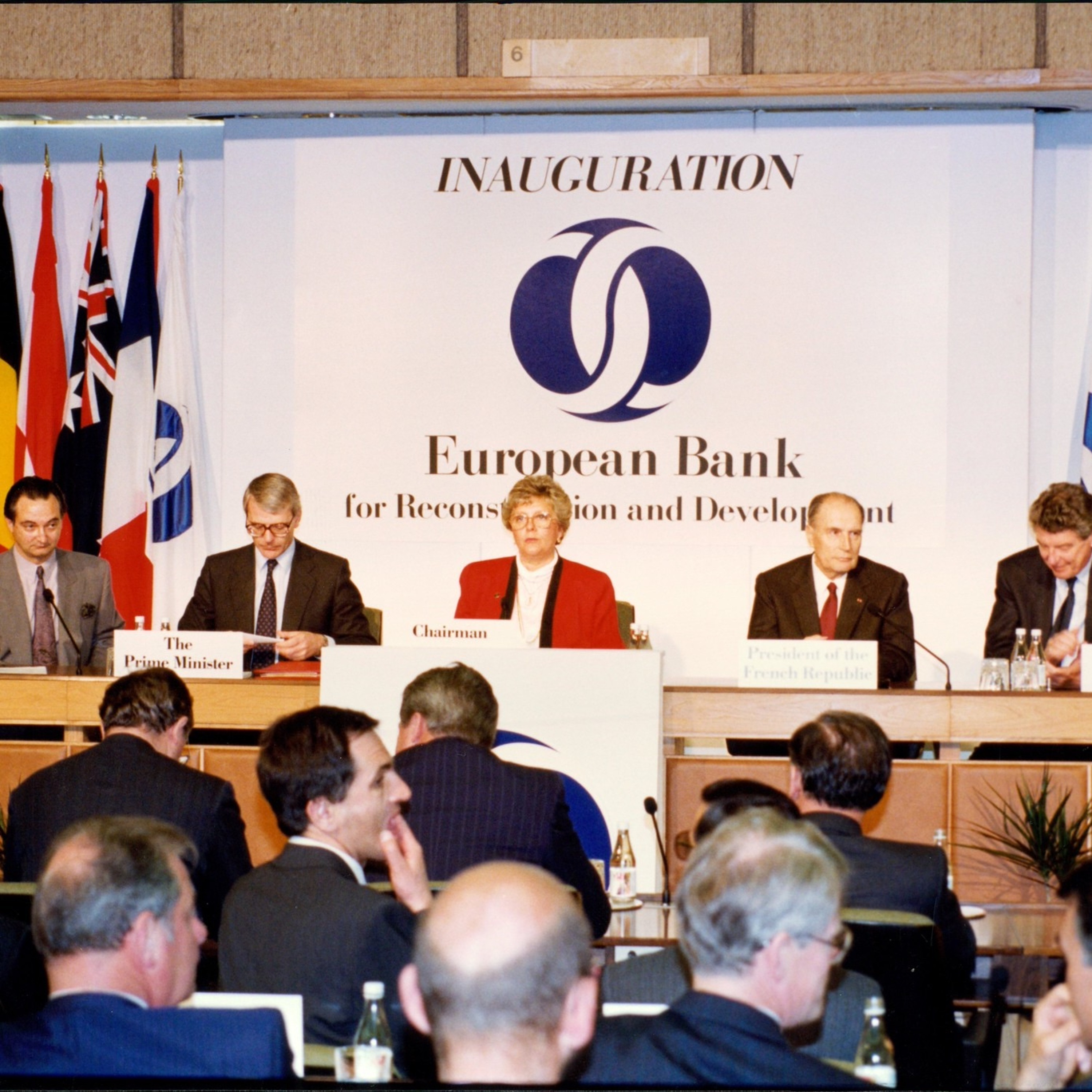 The EBRD at 30: what’s next? | Rate, review and download our podcast On the 15 April 1991, the European Bank for Reconstruction and Development opened its doors for business for the first time. It was conceived by its founders as ‘a new and unique structure of co‑operation’ for a continent still recovering from the shock of the collapse of communism. Its mission then, as now, was to further progress towards market-oriented economies and promote private and entrepreneurial initiative. So, at the age of 30, how is the EBRD doing? What are the challenges for its future? What has the EBRD taught some of its former staff? This special discussion brought together four EBRD Chief Economists, past and present, who shared their insights into the Bank and its influence on the countries where it works, global development and the world of international financial institutions. The inaugural Chief Economist of Asian Infrastructure and Investment Bank, Erik Berglof, talked about the technical banking skills which are unique to the EBRD as well as its knowledge of its regions. These are particularly important as the Bank helps them overcome the impact of the Covid-19 crisis. “Technical skills, structuring projects, infrastructure or financial… All those skills we assume in the models, but when you live with them on a daily basis…, it is both humbling and reassuring,” he said. “At this point most economies are still on life support. Nobody knows what the real state of the economy is… Then we will see the first firms fighting for survival. And the true test will be: will the firms close to the governing elites be bailed out?,” said the current EBRD Chief Economist Beata Javorcik in a stark warning of the challenges ahead. Lord Stern, IG Patel Professor of Economics and Government and Chairman of the Grantham Research Institute on Climate Change and the Environment stressed some positives that the coronavirus pandemic has brought about, such as people being less averse to change and a unified willingness to build back better. Sergei Guriev, now Professor of Economics at Science Po in Paris, highlighted the importance of digitalisation for inclusive recovery, especially when some of the EBRD regions enjoy only partial internet coverage. The discussion was joined by EBRD President Odile Renaud-Basso and chaired by EBRD Communications Managing Director Jonathan Charles. Like what you hear? Review our podcast on iTunes or tweet us @EBRD #EBRDEconTalks. | — | ||||||
| 3/5/21 |  How to measure impact of multilateral lending | Rate, review and download our podcast The Multilateral development banks were set up after the Second World War to be the original impact investors, fighting poverty, inequality or more currently climate change. “To demonstrate our impact is crucial at a time where multilateralism is often challenged, when there is a tendency to think that, we are more effective when we work at a country level than at the global level. And I think that the ability to show that and acting in this mutual framework is helpful to deliver some impacts on values because we are building on a very good experience,” said EBRD President Odile Renaud-Basso during the opening of the digital discussion. Now more than ever, the MDBs have a very important role to play. The Covid-19 recovery will not be easy. The climate emergency is here. Furthermore, the national governments are dealing with growing mountains of debt. How can we ensure that multilateral lending is effective to help the world emerge from this crisis? What is “iwashing” and the difficulty of attribution were all discussed by: Dean Karlan is the Frederic Esser Nemmers Distinguished Professor of Economics and Finance at Northwestern University and President and Founder of Innovations for Poverty Action Pavan Sukhdev is an environmental economist, banker, former Special Adviser and Head of UNEP's Green Economy Initiative, currently CEO of GIST Advisory, and President of WWF International; Beata Javorcik- EBRD’s Chief Economist and Professor of Economics at Oxford University. The discussion was chaired by EBRD Communications Managing Director Jonathan Charles. Like what you hear? Review our podcast on iTunes or tweet us @EBRD #EBRDEconTalks. | — | ||||||
| 1/22/21 |  Combatting inequality during and after Covid-19 | Rate, review and download our podcast Inequality is emerging as the “biggest policy challenge” during and after the Covid-19 pandemic, with the World Bank estimating that extreme global poverty is to rise for the first time in over 20 years. “The coronavirus pandemic is possibly the first so-called ‘global event’”, said Professor Branko Milanovic in the latest EBRD Economics Talk. Sir Angus Deaton, Nobel Prize laureate, also took part in the discussion on the nature of inequality and how it will be aggravated by the pandemic. EBRD Chief Economist Beata Javorcik sounded the alarm about coronavirus’s impact on emerging markets across the EBRD regions. What’s next? How can our societies be made more equal? What are the roles of the state and the private sector in combatting inequality? Professor Angus Deaton is a Nobel Prize laureate in Economics and Senior Scholar at the School of Public and International Affairs, Princeton University. His latest book “Deaths of Despair” is co-written with Anne Case and is a ground-breaking account of how the flaws in capitalism are fatal for America’s working class. Professor Branko Milanovic is a Presidential Professor at the Graduate Center of the City University of New York and a senior fellow at the Stone Center on Socio-Economic Inequality. Beata Javorcik is the EBRD Chief Economist and Professor of Economics at the University of Oxford. The discussion was joined by EBRD President Odile Renaud-Basso and chaired by EBRD Communications Managing Director Jonathan Charles. Like what you hear? Review our podcast on iTunes or tweet us @EBRD #EBRDEconTalks | — | ||||||
Showing 25 of 84
Pitch Fit is a Pro feature
See how bookable this show is for guests, which brands already advertise, the per-episode ad value, and the best-fit guest and sponsor profile. The numbers are blurred on the free plan.
How readily this show books outside guests like you.
How proven this show is for host-read sponsorships.
For Guests
ProFor Advertisers
ProUpgrade to Pro to unlock guest cadence, sponsor categories, fit scores, and per-episode ad value for this show.