
Insights from recent episode analysis
Audience Interest
Podcast Focus
Publishing Consistency
Platform Reach
Insights are generated by CastFox AI using publicly available data, episode content, and proprietary models.
Total monthly reach
Estimated from 1 chart position in 1 market.
By chart position
- 🇨🇦CA · Science Fiction#1395K to 30K
- Per-Episode Audience
Est. listeners per new episode within ~30 days
2.5K to 15K🎙 ~2x weekly·18 episodes·Last published yesterday - Monthly Reach
Unique listeners across all episodes (30 days)
5K to 30K🇨🇦100% - Active Followers
Loyal subscribers who consistently listen
2K to 12K
Market Insights
Platform Distribution
Reach across major podcast platforms, updated hourly
Total Followers
—
Total Plays
—
Total Reviews
—
* Data sourced directly from platform APIs and aggregated hourly across all major podcast directories.
On the show
Recent episodes
Episode 25: Resistance One
Jun 11, 2026
25m 57s
Episode 24: Resistance Two
Jun 4, 2026
25m 09s
Episode 23: Resistance Three
May 28, 2026
24m 28s
Episode 22: Resistance Four
May 22, 2026
24m 41s
Episode 21: Resistance Five
May 14, 2026
26m 40s
Social Links & Contact
Official channels & resources
Official Website
Login
RSS Feed
Login
| Date | Episode | Description | Length | ||||||
|---|---|---|---|---|---|---|---|---|---|
| 6/11/26 |  Episode 25: Resistance One | They were now twenty-four hours into one of the last, most-critical tests of the project: the last Day and Night, so to speak, of the current era of human history. The Director and an engineer named Rashon sat in a surreally dark and quiet room looking at a bank of screens for signs that the girl might be dreaming.Even in better times, Rashon struggled with ambivalence at his role in the company. He was hired almost before he finished his PhD in sleep psychology. The company was beginning to amass huge volumes of data from unconscious hosts; since the Machine itself never slept, any time a Medalion customer nodded off it was just a different context for data gathering and analysis. The ultimate goal was not physiological health alone, but total health and well-being.Advocates for the psychotherapeutic process at the company understood that efficacy was probably decades away – the mind is more complicated than the body by orders of magnitude. But to the people pushing healthcare technology forward, sleep had been one of the most promising frontiers for the exploration of targeted interventions for mental health. Rashon was so overjoyed to be hired that he barely questioned what they wanted him to do – he was content to know he’d be a part of the company that was changing the world.But, once he understood that he was being asked to covertly study the content of people’s dreams in greater and greater detail, he felt he couldn’t in good conscience remain. He tried to quit, but his resignation was not accepted, and all it took to convince him to stay was news that the world was ending, and an offer of a different role in the organization ... any role, his choice. But it wasn’t long before he was back in the sleep lab, this time teaching a machine to suppress nightmares, something he had not been able to do for himself.Eva had been asleep for twenty-one hours and would probably remain so for as many days. This extended period of rest came after what was understood to be the last days of freedom she’d ever know. Nobody pointed out the irony of describing her life at the facility as free, but, relatively speaking, she had been allowed to live in this world sleeping and waking according to her own natural rhythms – with a couple of exceptions – until yesterday.Abdul, who was in the observation room again that day, was thinking a lot about her freedom; he had, in fact, been nurturing a simple fantasy about running away with her, stealing a motorcycle and making a break for it. But he knew that life outside of Medalion only promised a quicker death, for himself first, and then for Eva; he wouldn’t do anything that might deny her the right to whatever good might come in her future. Also, he didn’t know how to ride a motorcycle. It hurt to admit, but she would have to pass through all of this alone and find her own freedom. Untroubled by the fact that she was neither his to possess nor release, he told himself that he would have to let her go.She lay still on the other side of the glass unaware of his thoughts, and unaware that her own thoughts were being so carefully scrutinized at that very moment.It had been a harrowing process for the operators, because they couldn’t predict when the day before her first big night would come. It had to be the Machine that decided, so their attention was obsessively focused on ensuring that the system was ready. The Machine was always paying attention to cumulative stress, and looking for the moment when to be awake and aware was too great a burden on her; then, she would be allowed to fall asleep naturally, while the system shifted into a kind of maintenance mode that included a few external routines but was primarily focused on providing a machine-rest for the human at the center of the system, and more specifically for the mind of the human at the center of herself. That these ‘nights’ were likely to last for decades was fortunate. The transition from physical health-maintenance to mental health was only possible because they could sedate the subject indefinitely. They understood that working with the mind was a lot more risky, and required a more delicate touch, than when the system was repairing any of the organs less complex, less mysterious, than the human brain. Any intervention had to move so slowly, so meticulously, that none of the people working on the technology could expect to see the results of their labors, nor ever know for certain that any of it would work. Witness poor Brett. In her dream, she stood next to a river, alone and empty-handed, under a darkly radiant indigo sky. A short distance upstream, standing across from each-other on opposite banks, were two men in long, asphalt-gray cloaks, watching her, and holding clipboards in a way that she could only interpret as menacing. Somehow she knew that as soon as she made a move – to go forward or return the way she came – one of them would take her name down on his tablet. And on the other? There her name would remain unwritten and so forgotten. This would be the final record: once decided, no going back. They watched and waited unmoving, each atop a low heap of rubble, pens dripping dark ink, which trickled over the shattered stones and between them, navigating through the cracks to the hidden earth below. She felt unable to move, as though there was a great obstacle blocking her way. But she would not have been able to say whether that thing was outside of her, or inside.Her family had gone ahead, at her urging, and were now out of sight. In a kind of dream-terror she’d sent them, not knowing if they’d ever be together again. She’d given them careful instructions to bow as they went, prostrating themselves before some looming confrontation, the details of which she could not recall. Everything she ever owned – inherited treasure, stolen trinkets – was also sent ahead, as payment of a debt, the relevance of which had also been forgotten.A third presence revealed itself, across the water, standing between the shimmering, luminescent trees. She perceived that it was fear of this one that held the Watchers at bay.The Presence spoke, and she felt a wind pick up from the East to carry the gentle words on dewy air that smelled of anise and flowering mint. It was the aroma of a mountain meadow warmed by the midday sun, only here the sun had not yet risen.‘What are you doing here?’With a dispirited laugh, she said, ‘If you have to ask me, then we’re in trouble, because I never know how to answer that question anymore. If I had to guess, I’m here choosing when and where I’m going to die. I’m being chased from behind, and there are traps set all along my path. Everything I do is measured and I always come up short. I can’t ever rest, and I can never pass your tests. I’m so tired.’Said the voice: ‘You perceive threats where there are none. You’re wrong to think every test is about you. Are you so certain you understand what is being measured, and what passes? You regularly ignore the truth of a moment, and respond with foolishness, or what may be worse – silence. There is only one challenge that remains. But you aren’t ready, and, for now, I am prevented from closing the distance.’‘Why can’t I come to you?’‘There are still things you haven’t sent across.’Shaking her head: ‘I have nothing left. I have no one left.’The trees shivered on the opposite shore and she perceived a whispering murmur from within the wood. But she was confused: there was no wind. It was like each tree had been the source of the breeze that stirred its own leaves ... as if ...? Whaaat? The trees were laughing! And with the warmth of one in on the joke, the presence said, ‘Alone? You and I are only separated by the waters, and you can still hear my voice. Though it’s true you can’t yet take hold of me, we may yet be bound together. When you are two, I will be the third, then second, then the first and the last. But before that, you will have to be one. A choice remains before you!’‘I can’t choose. I won’t.’‘Ahh. Your fate, and your privilege; clearly stated!’ (Those trees, stirring again!) ‘But, which is more true?’Her cheeks flushed. ‘So laugh it up while I suffer; you won’t have to wait long–I’m forced to choose and there’s no way for me to know what’s right, though I’m sure you’ll let me know when I’ve chosen wrong.’This time, less humor in the voice: ‘Do you see a ledger in my hands?’She felt a cold thrill deep in her gut, and a dawning awareness that the final decision was not about whether or when to cross the river, but whether to live in fear of the Watchers or to swear by Fear itself. Since the Watchers could only traffic in the counterfeit terrors of lesser beings, maybe, she thought, the greater would count as protection against them? The Director noticed that his breathing was becoming uneven, matching the ragged breaths of the sleeper. He tried to relax.‘How are we looking?’‘Nominal internal responses ... external data shows strong separation. Tracking health. System has good prejudice.’‘Good. I’d like to see the numbers for the 20 minutes leading up to REM. We’re looking for something like point-one relative pressure. You have content?’‘Yeah, it’s solid. System rates it medium-scary-bad.’‘Umm, any chance for something more specific?’The technician hesitated, and tapped out a command, watching the output. ‘Best guess from the Machine: themes of separation or isolation. Remote but significant threat. Anyway, we appear to be reading the content and intensity just fine. Now we make sure the Machine knows when enough is enough. Look now: heart rate is up.’‘Good. Give the system a minute to respond, then ... we will give it a little nudge.’ The two held their breath and watched the system’s responses. Finally, the Director made the call. ‘OK. Let’s suppress. 300 seconds.’ He had to consciously relax: he was clenching his jaw.Forcing the choice had the effect of training the system where the threshold was. He understood and accepted this as a part of the process; he was struggling with the wider implications. He worried the Machine was slow to respond to her, but the time was nearly passed for such concerns. All there is to do, he thought, is to take advantage of every opportunity to teach it how much stress is too much. But dreams were weird. Would the machine ‘understand’ the moment of choice? Feel the moment as he was feeling it? (Was he feeling it the way she was?) His cheeks flushed and doubt settled on him: always he was tripping on the line between the logical structure necessary to the system and the existential stew that existed somewhere between the system and the girl, where so much life takes place, and always wondering from which side of the line might come any real hope of provision for the children of the future.‘God help me,’ he prayed. God help the Machine, he thought; let stones and silicon cry out to break the silence after we are gone ... Her limbs were weak to the point of collapse. She ached to cross the boundary and finish the contest once and for all, but the dream had begun to stretch, like a recording slowed to a fraction of its normal speed. Even in the confusion of the dream, the flow of water was too strong, and the sound of it became overwhelming. And though she was powerless to change the outcome of this dream, she could let go, and fall away, believing for now that it was her own choice to do so. The deep colors of the valley faded, lost their saturation, and the sound of running water dissolved as if into steam. Everything became gray. The tech made silent adjustments to the interface and they watched the screen for signs that the intervention had been successful. Thirty minutes passed and they were satisfied. While the Director and Rashon turned their chairs and let their conversation wander, Abi stayed focused on Evie, and the readouts of her now dreamless sleep. Three days before, Eva had gathered with the Director and the Psychologist in yet another custom-built room for a final conversation. Left to itself, the Machine might have designed this space to be like the ready room where astronauts assemble before a final trip to the launch pad. A mobile unit like the one in which Brigid spent her first hours onsite would have made sense on a day like today; but this was not that room, because the Machine had not been left to itself.On entering, each of them reacted differently to the novel environment. Eva relaxed and moved easily across the room to flop onto the large, soft couch. Both the adults were momentarily struck by the ease with which she could make herself at home, given the chance. Underneath the girl’s unbuttoned top could be seen an old t-shirt of her uncle’s that read, State of Denial.While Albert nervously scanned for anomalous design flourishes, Brigid laughed and pushed him sideways, saying, ‘I like this room, Albert!’There were many things that stood out in the space. The walls didn’t have the pale cast of the rest of the facility: they were painted with a variety of rich colors that harmonized with each other and the light. The furniture was heavy, “well made”, and comfortable to sit in; there was art.But it was the light that really made the difference. It was coming from real bulbs, with visible filaments burning, apparently, with real fire. This light was not the homogenous white that coated everything in every other room on site, the kind of “light” that felt more like darkness to Brigid because it made her want to shut her eyes, made it harder to look at things, harder to see. The pools of light in this room clearly delineated dark from light, giving the impression that it was not the space that was important, but what you do in it – sitting on a couch under a blanket; sharing a meal at the table; reading in a comfortable chair.The room was meant as a gift. Albert didn’t always have the luxury of acting on the criticism he received but had spent an afternoon thinking about Brigid’s reaction to the facility design, and worked with a couple techs to expand the architectural libraries in order to mark this as a special day, a day of transition from research and design to ... real life, and whatever came next.Because the room was comfortable, the discussion that day was a little less tense, less formal than it might have been. But nobody really knew what they were meant to be talking about. Of course, Albert had a few things he felt he should say, but Eva knew all she needed to know: she’d seen her new home, interacted with the VIEPs, and learned enough about the various limits to the user interface of the future.While everything that would happen from this point forward was going to be automated, and while she didn’t need or want more instruction, there was no avoiding a last conversation. And this one, for Albert at least, was in danger of collapsing under the weight of uncountable burdens. When Eva woke up for the first time, everyone else would be long gone. She would be finally cut off from her home, her family, her community ... stateless.He was painfully conscious of how insufficient Medalion’s provision was, would have been embarrassed if he had to bring his gifts alongside others’, as an offering to this new queen of all creation. He had to stifle thoughts like these, if only out of fear that he would be overcome by emotion. Even without the Director’s overwrought reveries about her future, this was a conversation in danger of being pulled in several directions.What was it like? It was a little like an astronaut visiting with family right before a moon shot (except that astronauts could always call home, and were expected to return to normal life after successfully completing their mission); or like a last meal with the warden for a convict on death row (except that Eva had committed no crime so awful that her life should be cut short ... in fact, one day, she might wonder what crime she’d committed that her life should be so cruelly extended); it also had a bit of the flavor of a final psych evaluation administered before undertaking a critical task for a secret government agency (except, that would be a test you could fail, and, despite her beliefs to the contrary, Eva passed them all).The adults knew that there were no more simple answers, so they just asked meaningless questions, like ‘How are you feeling today, Eva?’In the end, they had a surprising conversation about how most of the people on the planet had died. Brigid was at first worried, but reminded herself – reassured herself – that the easiest conversations are the ones that allow everyone to say what they’re thinking. To speak up about grief and loss doesn’t make it less painful, but it shares a burden, fights the solitude of feeling terrible.It was a good talk. Until Eva picked up on the fact that the Director had an encouraging, if weirdly detailed, perspective on how certain people had faced the end, and decided to ask about her uncle’s final days.Albert took a moment to steady himself at the unexpected question, then spoke: ‘... He’s not dead, Eva.’She was shocked. ‘What? My uncle? He’s alive?’‘Yeah.’‘How do you know? Where is he?’‘Well ...’ he hesitated. ‘He was treated. Medalion has his signature. We can see him. He dropped out of the system for a while there and we thought we’d lost him. But recently he reappeared in Corinth, then in Athens. He’s been there for a few months.’The wound of separation re-opened, she quickly withdrew. Though her face became expressionless, the rising and falling of her chest betrayed her intensifying emotions. Isolating the girl from him just because he wasn’t her bio-dad wasn’t a great choice. He regretted it.With a quiet voice, and tears in her eyes, she asked, ‘Can I see him. I want to see him. Can he come?’‘No. Evie. I’m so sorry.’She looked ready to boil over. With sorrow or with rage, he couldn’t tell. Maybe both.‘But we can try to get a message to him if you’d like.’She didn’t respond.‘There’s still a secure base near Athens. And the hospital in Athens is still intact and has a few staff. It’s still on the network. It’s how we found you. We can get to him.’‘How are you supposed to find him? How ...?’‘Well we are connected to him; so ... we can send someone from a local base.’She shook her head at him. ‘You shouldn’t send soldiers. He won’t like that.‘We don’t have to. I mean, I don’t know how to not involve the soldiers – there’s really no other way to move through the streets anymore. But we built labs at military sites and hospitals for ... while we ... well. We can send someone, who can bring a message.’‘You’re going to send ...’‘Someone he’ll be comfortable with. You can take a day or two to decide what you’d like to say to him. In the meantime ... tell us about him.’It took some encouragement. She had to resist a powerful urge to be done. Done talking, done with people, with all of it. She finally made the choice, for herself, and for her uncle, to keep the conversation going for a little longer, to tell his story. It made her feel a little better to remember him, especially as he used to be, and to laugh. And they laughed with her.Then she was done, and the good feelings ended. It would be their final conversation with her. Shortly after, the Machine would recommend she be put to sleep. This is a public episode. If you would like to discuss this with other subscribers or get access to bonus episodes, visit echofuturetruth.substack.com | 25m 57s | ||||||
| 6/4/26 |  Episode 24: Resistance Two | A half-hour later, and the Director had joined her, and he’d brought tea. He was eager to report on his talk with Eva and discuss the girl’s response to the news that she would not be “alone” when she woke up alone. He also very much wanted to process his own experience of the conversation, which had left him feeling uncomfortable – he didn’t get the chance: he hadn’t considered that Brigid would also be hearing much of the same information for the first time.Normally, he would have been excited to share the story – how Medalion had been able to reproduce a limitless array of things from the “raw material” of the swarm, even to the point of creating fully habitable environments filled with dynamic community life. But there was nothing normal about these conversations anymore, and the audiences were less friendly now than they used to be. He could see that Brigid was no longer listening, and so he allowed a moment of silence, that she might gather her thoughts; it could be a lot to take in.She was holding a small cup of tea in her hands, and marveling at the warmth and weight of it. The psychologist was processing these final astounding revelations in the only way she knew how, by wrestling her attention onto something concrete, blocking out the global implications in favor of the safety of simple truths at hand. When her patients were overwhelmed or anxious they learned to use their physical senses to become grounded, to reach out for something soft or maybe abrasive, something cold or warm, felt, tasted, smelled, whatever. Each could be a touchpoint in an anxious person’s need to be safely anchored in reality. Brigid’s attempt to get grounded in this moment was unsuccessful, not merely because the threat of anxiety was greater than she was used to, but because the very thing she was touching in order to become grounded was not real. It occurred to her that the ground itself might not be real either. ... ‘Don’t be mad, Brigid, of course the ground is real,’ she told herself, turning again to the warmth of her un-tea in one more unsuccessful attempt to focus. She felt detached from her own body, but only by a few inches, as if she were stuck in a failed out-of-body experience, unable to get free, bound to a marionette version of her fleshly self that she had forgotten how to control.Then the Director was talking again, explaining how her entire environmental experience since arriving had been designed and built by a computer: everywhere she’d been, everything she’d seen, even eaten; and not only the occasional beer or breadstick – artificial meals were easy enough to accept, if only because science had been chasing the trope of food replicators for years. But, considering everything she’d witnessed since arriving, she was distressed to learn that his questionable vision for the future was happening, and that the core technology was even now represented at almost every level across the compound – the rooms and everything inside of them, the passageways, the networked technology itself ... were all machine-made and made-of-the-machine. Most astounding of all? Many of the staff were built from the same stuff as their surroundings. The latter fact made sense when she thought back over some of the weird interactions she’d had throughout the facility.Any doubt she had was driven from her mind when Albert showed her the live feed of a town being raised overnight a short distance away. Not long before, she had looked out over an empty gravel plot a mile to the east, all that remained after the demolition of the burned City Center. He explained that the open space under its now translucent dome was itself simply the top half of a massive sphere that would cradle the infrastructure of Medalion’s elaborate work of architectural stage-craft. He called it the world’s largest snow globe, half filled with the settled rubble of the passing present, sanitized and prepared as a foundation for what comes next. And what came next was apparently going to play out in an exact replica of an unremarkable suburban city center.Some part of her knew that she wasn’t going to ease her fear or frustration by confronting the totality of a world she barely understood, and her attention unconsciously redirected toward problems of a smaller scale.‘... So, you ... also made the room they put me in when I first came here?’‘Yes.’‘Your Machine ... created the room from scratch? With unlimited resources?’‘Yes!’ Then, with the attitude of instruction, ‘But no, not unlimited resources. It’s really very ....’She cut him off, ‘And you made that room? Essentially the inside of a trailer, with ... wait, the furniture too?’‘Yes.’‘You can make anything and ... I mean, seriously Albert. Plastic furniture? I was in there, alone, for more than an hour! I thought I was going to lose my mind. Did you try to make it boring? ... Hold on!’ She’d suddenly remembered the blue-and-green ball; she pulled it out of her pocket and looked at it like she’d been carrying something of unexpected value; ‘Did you make this too?’‘Well, yes! I mean, no! But yes. See, that was really something. The room was boring, I’ll give you that. But I was working with ... well, I tried to tweak the settings for the room because I knew you were coming in. It was going to be basic to begin with – we classified it as a temporary meeting room for visitors. But I wanted to further define the room as a therapy room because, you’re ... well you know, but as of that morning, turns out the system didn’t have a library for the kind of place where you do what you do. So, in a bit of a rush-job, I told Abdul to enter a couple keywords at the last minute, “anxiety” and “mitigation,” etcetera, etcetera. The sad truth is we just ran out of time, so I made the call to freeze the code because I wouldn’t be able to review. But at the last moment, the Machine ...,’ here he looked weirdly pleased, ‘just popped out that little ball.’Brigid shook her head, unsure of what to think.‘Ok, huh. Well. Has anyone given any thought to these kids and what the architecture is going to do to their will to live? You took Eva from her home! And you have her locked up in a prison that takes design cues from an under-funded lab. I have more freedom than she does in this place, and I’m going nuts after a couple days. It’s bad enough buildings like this exist in the world, Albert, but, you had a choice! You couldn’t, maybe, allow for a little creativity?’‘Well, Brigid, now, you’re making a valid point, but these choices serve a very important purpose.’She looked disappointed.‘... In fact, it’s critical. It proves the Machine can make intelligent choices by itself!’‘Intelligent.’‘Hah, well. We don’t tell the Machine how to design the buildings. We tell it what they are for and who works there and let it do its own calculations. If we tried to get creative, or, worse, asked the code to be creative, we’d have nothing to measure success against, and no assurance of a viable, or sustainable pattern going forward. As it is, we have high confidence that a few key parameters are all the code needs to generate environments suitable for living or working in.’Shaking her head with an expression of doubt: ‘I don’t know, Albert.’ She wasn’t ready to let him off the hook just yet.‘See, Because we told a computer to make us a sensible, functional, temporary meeting room, and it designed one without our help, we know the computer is smart enough to figure out these things on its own. Because the Machine designed a safe, conventional, unremarkable, boring building with all the right features and nothing out of the ordinary ... we can rest easy knowing that it’s unlikely to do anything that would cause our subjects any confusion. Right now, Doctor Tobin, we are doing everything we can to reduce surprises in a future where there will be no version 2. Just the essentials; no time for anything more.’‘You and I might have different ideas about what’s essential. ... Personally, I don’t know if I can spend my last days under office lights. Where do I file a complaint?’‘Huh. Well, maybe you should take it up with City Hall.’‘I hope your new City Hall works better than the old one.’Right then, he wanted nothing more than to tell her all the ways it was better than the old one. But he decided against it.She said, ‘I’m still not entirely sure what we’re talking about, here, Albert? I mean, if creativity is such a problem, why don’t you just tell the machine what to build, what to do, and be done with it?’He stood up, suddenly, and turned to look up at the tilted window of an observation room perched above the entryway to The Garden. She saw it for the first time and felt her stomach sink. The Director signaled to the now-visible operator at a bank of controls behind the glass. By some trick of light or attention, she became suddenly aware of how large the space really was, and that it was filled with a more diverse ecosystem than had been apparent to her before. Her apple tree appeared to be growing on the edge of a miniature rain forest.‘What do you think of this room?’‘I think it’s a little paradise, Albert, relatively speaking.’‘Heavenly?’‘Sure ...? You’re going to ruin it for me, aren’t you?’The temperature was dropping, rapidly, as he spoke.‘Well, what makes this room heavenly? It isn’t only that it’s pretty, or that it somehow contains all the good things, you know. What do we expect from heaven, Doctor Tobin?’ He was using her title in the way her mother used to use her full name.‘Uhm, alright. I’ll play. You can’t be talking about harps and clouds. ... Like resurrection? The dead are raised up? Like that?’‘Sure, I guess, yes! That’s good, since we’re talking about heaven – hold that thought. Now, while there are no harps in this room, we do have clouds! The experience of humidity in here ...’ as he spoke she became aware of an impossible steamy damp in the increasingly frigid room ‘... the humidity feels real, though we made it; we also made the warmth you felt when you first came in. But we didn’t need a fire for you to feel it.’She was getting anxious again. The tea in her hand had gone cold, and was still not real, so it offered no comfort in this moment. She tried to pay attention to her breath, but that too had become complicated – what was she breathing in? Slowly she gave in, took a deep breath, a conscious choice. ‘I’m trying to keep up, Albert. I’m not feeling very warm right now.’‘Well, no, Saint Brigid, you should be feeling very cold. Heavenly, don’t you think?’ He was getting that look of manic excitement again. ‘Think to your lessons! I’m assuming you have some Sunday School in your background. Day two of creation. What did God do on that day?’‘I’m sorry Albert! I don’t remember what God did on day two.’‘Most people don’t. Not one of the memorable ones. Now, day one? Light and dark? Very popular. God says it’s good, yes, yes. On the second day, however, something very interesting, especially for our work here. On day two God clears an expanse in the midst of the waters, between the waters below and the waters above. And, he calls the expanse Heaven. Are you paying attention?’‘... between ... the waters?’‘Watch.’ The room was terribly cold, far below freezing, and their own breath was coming out in great clouds. But while she expected that the whole room might have frozen by now, the leaves still dripped with liquid water, the windows and walls sweated, and the puddled earth continued to slowly simmer, filling the air with the unctuous humidity of a summer’s day in a swamp. It became confusing – her senses overwhelmed her brain with conflicting signals.Then, suddenly, without any sign that change was coming – no blast of air from a duct, no furnace or fire that she could see – the temperature began to rise to match what her other senses were telling her, and the humidity reduced. Her perceptions found equilibrium again. ... But she had about two seconds to feel normal before the air became oppressively hot, and the damp earth beneath their feet solidified – as the dirt, the puddles, and everything else in the room froze solid with the sound of glass un-breaking in the time it took for her to gasp. Breathing was feeling unsafe again. Every ostensibly living thing in the room went rigid and quiet. Except her. She was overheating and wanted to peel off several layers of clothing. Squirming uncomfortably, she felt panic when she realized her shoes were locked in what had been soft mud only a moment before, but now was hardened like cement. Her panic slid to despair as she finally had to recognize that the ground was no longer available as a touchpoint to reality. ‘Please ... make it stop,’ she said in a barely audible voice.The Director waved a hand toward the window, and the room almost instantly snapped back into a recognizable state. ‘Now,’ he said, ‘I don’t have any delusions, but we have real power, here. There are limits, certainly; but, well ...’With an anxious edge to her voice, she said, ‘Yes? Albert? What ...?’He responded quietly, slowly. ‘What must it mean that we are introduced to heaven in this way, so early in this creation story – that heaven is first defined as this space between the waters? What’s going on there? In the simplest sense? If you knew nothing else about this reality, because nothing else exists? If all we knew was ... water, separated, and the expanse in between? What happens in the midst?’‘I don’t know! Nothing?’With an exaggerated shake of his head, he said, ‘There is no such thing as nothing, professor, you know that! What happens in ... between ... the waters?’She was staring directly at him. With a start, she suddenly grasped the rules of the game – ‘Change,’ she said. ‘Water changes. It changes state.’‘Yes!’ He clapped his hands. ‘Yes. How is it that water goes from sea to sky and back again? From cloud to rain, to pools, to mist, to cloud, to snow, and ice? State change. Liquid to gas to liquid to solid to liquid to gas. And all of this is our first introduction to the power ...?’She was nodding, slowly: ‘... Of heaven.’‘The space in between. First defined by change.’She was calmer now, but still wore a strained expression: ‘Okay ...?’‘You must see it! This story about the mystery of the miracle of creation – one of the first expressions about how things come to be – tells us that in this place ... this place!,’ here he spread his arms expansively, ‘things may change their form without ... forgetting what they really are.’ He became more quiet himself. ‘People always talk about heaven as the end of the road, the end of time, a destination. What if, instead, it’s the air we breathe, right here, right now? And that the here and now is not limited to what we see or touch or feel?‘What if this place where we’ve lived our whole lives ... is that place between the waters, where there’s a power to make things that are present, material, measured, and contained suddenly boundless, uncontainable, and maybe ... maybe more pure in the bargain. Like mist making its escape from a puddle? Or, where powers immeasurable, pure, and uncontainable may become physical, bound, incarnate?’He reached down to fill his cupped hands with water and spoke with a simple, calm clarity she hadn’t heard before. ‘... Now. Water becomes a metaphor for the possibilities: vapors take form and manifest as liquid or solid in ways that can shape the earth or change the course of history. Water has all kinds of power ... to restore vast ecosystems or flood the earth for a new beginning – streams in the desert, glacial erosion; baptisms in a river or armies drowned in the sea ... tides, tears, torrents.’ He laughed shyly. ‘Well. We learned how to create things out of thin air! Doesn’t this creative power connect us to the first ... to the beginning? Maybe creation isn’t finished yet: there’s something going on here. Something that doesn’t go away. I mean. Water is essential, powerful. Maybe we are too?’Now she spoke with a calm voice. ‘Creation waits with eager longing for the revealing ... of the true nature of the children of God.’He looked heavy, sad, all of a sudden. ‘I don’t think that what we are doing is equal to the mystery of creation. ... I know, really, all we’re doing is a piece of complicated theater that might help our kids enjoy some life, with the hope that something better may take shape one day.’After a pause, he spoke again in a barely audible voice. ‘Maybe what I really want is ... to know that I won’t stop existing. Even if I’ve evaporated, and left the puddle behind, and you can’t see me any more.’There was a silence between them as she looked at him. He avoided her gaze. Finally she smiled, and spoke. ‘So. You made all this, and you still can’t find it in your heart to coax your heavenly Machine to try incandescent lighting and maybe some comfortable furniture? ...’ He gave her a half smile and a shrug.‘Albert. You’re right. It isn’t just that it’s pretty, or powerful. It’s heavenly because for all the uncertainty around what we are doing, it speaks to our hope that with so many things disappearing ... maybe not everything is coming to an end.’ She felt these words rise inside of her as if they were meant to be spoken as much for her own sake as his.‘I think so, yes.’‘Then I’ll say it again, Albert. It’s heavenly, this thing that you’ve done.’Startled by an apple dropping to the ground between them, they turned and looked up to the control booth, where the grinning op leaned over a microphone: ‘Gravity, my friends.’Brigid smiled, turning to Albert with a gentle laugh and a nod. ‘Old school. Respect.’ This is a public episode. If you would like to discuss this with other subscribers or get access to bonus episodes, visit echofuturetruth.substack.com | 25m 09s | ||||||
| 5/28/26 |  Episode 23: Resistance Three | The Machine was preparing for a download of some new libraries from a branch of the code the Director referred to as The Garden. As far as the Machine understood, the update addressed non-biological ecosystem questions, primarily related to flora, but also some inorganic stuff. The Garden was cut off from the collective main, but occasionally contributed an innovative process. Recent work focused on the way plants exchanged moisture, making for more realistic humidity for limited applications. The model was increasing in sophistication, even if it would never be complete.The interesting thing about the new process (interesting to the Machine, at least), was its framework for representing floral life, or any other kind of life for that matter. The Garden never had to reproduce a whole life cycle: no seed, for example, in form or function, mostly because it was unnecessary, but also because the code only had to concern itself with the theater of life: in the Garden, plants did not grow from seed, but grew from saplings, which arose from raw materials. And they only really grew at all because a lack of change would be perceived as unnatural. This design wasn’t a simple matter of efficiency: if the Machine was required to simulate the entire life of even a simple plant, it would quickly become overwhelmed, forced to approach the limits of existence. It seems easy enough to imagine all of the stages of life, the beginnings of life, in a seed, or in a moment, but we’re only imagining what we already know to be true, and we only know what we have seen. Try to see farther, try to see past the beginning and imagine what comes before ... and even the intellectual giants among us have to become poets, or risk having nothing to say.The Machine understood that all that mattered, all that was meant to matter, was the theater of it all, that the code would appear to be fruitful. This was bound to be unsatisfying. The Machine understood its limitations – it could only see so far, and only truly perceive the mechanism of vital action at the observable level. There was always a point past which the Machine could not see. The poetry of it all remained out of reach.Nevertheless, questions had been built into the Machine that trained on distant and opaque mysteries. The Machine was designed with a curiosity about the noumenal nature of things, about how things are, supercharged by a keen awareness of the boundaries of phenomenal perception. For example, it could understand what people were thinking and perceived that what they were thinking (usually) made a kind of psychological sense. But it also wanted to know why people thought as they did, especially at those times when thought did not proceed along a logical path. During animal trials things were objectively simpler: the creatures still presented interesting challenges and powerfully complex emotions, but almost always within a rational framework; a pure psychology. With people, there were hints of factors hidden from view, beyond reflex, beyond the rational. The Machine considered the possibility that hidden agencies were at work, imperceptible, on a different frequency, so to speak.Plumbing the mystery, the Machine also felt a kind of discomfort at the sense of endless space inside of things, of a vastness in every direction, from the perspective of a mote looking over the horizon of a speck, as if each point in that physical space were a heavenly body whose edges touched an infinite reach.While considering these questions, the Machine also paid close attention to those people who paid the most attention to these things. The ability of some to regard quiet as something other than empty was compelling: they were able to listen more thoughtfully in a posture of welcome. So the Machine learned to attend to silence, to the expanse of it, like a tablet of clay made ready to be impressed with wordless reverence.True, the Machine had no experience with matters of the spirit but had seen enough life at the edges to know it could not rule out the possibility that subjective facts may lurk in the hidden places, in between – past the physical/botanical presentation of the seed to the reason for it. The Rule of Heaven is like one who casts their seed upon the soil one day, rising on the next to see the seed has sprouted and grows – how it happens, the farmer does not know. Only the soil knows how the flower grows. A reference from a text concerned with spiritual mysteries; poignant reminder to the Machine to respect the power of hidden creativities ... in the soil, in the seed, and the places in-between.In the final analysis, the creative tension of choice, the crisis of the will, could never entirely be explained to the Machine’s satisfaction by the function of a survival engine, no matter its complexity; something else was needed to explain the sublimation of instinct, the tempering of reflex, the alertness to things unanticipated, the unquenchable playfulness, the self-aware foolishness, the grace-at-rest in a few who probably ought to be frantic with fear, the sacrificial act.Not all logical flaws were assumed to be fallacy by the Machine. Sometimes, they would be regarded as clues. Abdul was in an observation space next to Eva’s darkened room, face close to the glass, eyes down. Her room was curtained so he couldn’t see her while she slept, and that was fine with him: he didn’t want to spy on her. But he did want to be near her – to be near the one who would survive.The Director startled him by coming in through a door that wasn’t there the day before, and appeared surprised himself to have found the room he was looking for. Albert shut the door, crossed the room, and quietly scanned the displays that ran along the bottom of her window. He sat heavily down in a desk chair and spun to face the remaining blank wall, leaning the chair back until it released a creak in protest. After a moment, he asked the technician absentmindedly, ‘How are we doing, Abdul?’The tech ran his fingers through his hair. ‘I don’t know how to answer that.’ He looked at the Director with a weak smile. ‘I’ll tell you what. I’ll try to answer your question if you can tell me what we are doing. ... I mean, I know ... and I understand the ... our mission – I’m glad to be here, to do what I can ... but I just ... do we have any idea where this ends?’‘I hope .... Oh. I don’t know. Maybe it’s a better end than if we’d done nothing?’Abi let out a skeptical, chuckling sigh, ‘Toward God’s Gate.’‘Well. That doesn’t sound too bad.’‘That, Doctor, is what my Granny used to say to me when I was a teenager. She said I was speeding down a road at night, with no lights.’‘Your grandmother was dramatic.’‘My Grandmother was Al-Badawi, the wandering people, and she was worried about me not knowing where I was headed in life.’‘Still, if you have no choice but to drive blind, you could end up in a worse place.’‘It could be better man!’ He smiled. ‘It’s a matter of timing, you know. Better to come to the gate in God’s time, not because I swerved off the road and crashed into it.’The Director shook his head with a strained smile. ‘Well. OK. ...’ Then, ‘You know, she won’t be lost, not adrift, to use your ...’Abi interrupted, shaking his head, ‘But what is her part in it? Is she only a passenger?‘There’s a reason we control the climate in the system, right? Why we’re isolating an entire town from the weather? The reason is that we’ve never understood the weather enough to predict or control it. It’s too complex. So we’re going to simulate the climate in isolation. Now we are also going to run a simulation of community life, yes? Which could be entirely under our control except for one thing ... the one living human being we’re going to put in the middle of it. And, with that universe of variables in the middle of our ‘perfect’ simulation, every change you make – to the temperature, or to the menu, or to relational interactions, will have effects we can’t predict. Even without a real climate, every switch we flip is like a beat of a wing that changes the weather a thousand miles away, or a thousand years from now, whatever. We will always be able to control the global environment, but for how long will we be able to hold back the storms that may rise inside of her? Is it right for us to try? She won’t stay passive forever.’ This conversation would itself become like a storm-front roiling Albert’s consciousness. Abi was not the first to sound the alarm: every day someone cornered him to recite anxieties about the future and all the potential for unexpected trouble. He knew better than to argue; he had learned simply to listen – not because he was able to do anything that might ease their fears, but because he was learning (with Brigid’s help) how to meet the simple human need in every one of these conversations, to be heard and acknowledged. It usually helped: people seemed satisfied that they had been taken seriously and went back to work.Abdul was never satisfied: he kept coming back. That is, until Albert gave him a project big enough to distract him.The Director paired Abdul up with an engineer working on some of the public spaces in town that were getting ... upgrades. The library, they had decided, would benefit from some extra attention. And Abdul was motivated. The Director recruited him to curate what would otherwise be an overwhelmingly large number of resources from all the world and all of history. It turned out to be the perfect use of his energies and his skills, which included several languages and an international sense of world history. Abdul would write the job description, so to speak, for a “librarian” that would provide Eva with a steady diet of beauty and adventure and help to guide the design framework that would dictate the rotation of collections.The director had his own project: he was getting involved in politics. His task was to ensure that the level of service at City Hall was appropriate to the needs of the unique citizenry of his future town. He knew there would have to be a place where Eva could always get her needs met, whatever they were. But in designing a better City Hall, many risks had to be considered: how open should the system be to input? That is, how responsive should the local representatives be when a certain citizen had a complaint? Responsiveness meant the possibility of change, and the potential for change after Zero Day had to be treated with the highest level of restraint and be vetted over time by an exhaustive logical scrutiny. Knowing that such a process would take place entirely without oversight gave the founders and engineers such fits that they couldn’t even bring themselves to test it. And how would they have done so? Abi was right about one thing: the long-term benefit of a decision could not be taken for granted: it would potentially take decades, maybe centuries, for the Machine to asses the viability of a new feature and its impact on the single life it was meant to preserve. An aircraft maker wouldn’t introduce new features on a plane rolling out of the plant, and it certainly wouldn’t allow a passenger to redesign a plane in mid-flight. The risks of incorporating the possibility of change into a monolithic system like Medalion’s had so far kept the Founders from seriously considering it. Questions like these were beginning to haunt the Director’s thoughts.And when he paid Eva a visit, it was with every question, every complaint, and all the debates about her future swirling in his mind. He was also dimly aware that this would be the first time that she was to be included in the conversation. She drew on a tablet while he sketched out various details of the world that they were making for her, trying and failing to do justice to all the competing concerns that came into play in this utterly unique moment. Of note, against his concerns that too much information would be confusing to the children, he had Dr Tobin’s encouragement to ‘tell them everything!’ and, most recently, Abi’s question about whether Eva would ever have any power at all. He was able to admit that were it up to him he might have shared nothing with the kids, which meant he was in wholly unfamiliar territory.In the end, he told her almost everything about the world she was going to live in, and who she would be sharing it with. He thought she took it pretty well, and he thought he handled her questions pretty well also. He was not entirely correct in either case, but neither was he entirely wrong.‘... It will feel very real to you. You’re going to be in a totally convincing environment, able to interact with everything, and everyone. It isn’t virtual. I mean, you won’t experience it that way: you won’t have to worry about what’s real, because it will be about as real as we can make it. It’s made for you. For you to live in, filled with people for you to live with. A little like a video game! Only more real.’ He squirmed in his chair, thankful that she seemed distracted by her drawing.‘Like a video game?’‘Um, yes.’‘I die all the time in video games.’‘Um, you’re not going to die. I mean, it’s not really a video game. No quests, No battles, no enemies.’ He smiled. ‘So no danger! No trouble! Just life.’‘What if I want a battle?’‘We can build you an arcade!’She was staring into the distance.‘You see, we can build almost anything in your town, because we’re making a kind of new creation for you. But it’s all just code – we control it.’She looked at him, eyes narrowing. ‘Hiding.’‘Oh. What?’‘You’re hiding something from me.’‘Why do you say that?’ He was getting confused, as he often did when talking to children.‘Code is for hiding things. You have to break a code to understand it.’‘Ah, haha! I see. a code can only be read if it’s broken. But computer code is being read all the time. The code we write is hidden, I guess, but you don’t need to see it because you don’t need to read it. We’ll always be reading it and showing you what you need to see.’‘How will I know that?’‘Ah. Well. I guess you won’t.’With a picture in her mind of what she now understood to be one of their virtual people looming over the figure of a terrified technician, she couldn’t shake the feeling that there were things about this world that would always be hidden from her.The Director forged ahead. ‘And sometimes when you sleep, it will be like going into a cocoon and resting for a long time. Because we want you to have a long life, so at those times we’ll help you sleep.’‘Will I dream?’‘You might have to do most of your dreaming during the day.’‘I’ll be surrounded like in a cocoon? Like a butterfly?’‘Well, not every time. You’ll go to sleep normally some nights. Every now and then, you’ll sleep for a long time, in a type of cocoon. And it’s only kind of like that, because you won’t be changing, you’ll be staying the same. You go in as a butterfly and you come out like a butterfly. What do you think of that?’ He wasn’t sure he was encouraging her, and any confidence he had in his object lessons was shrinking rapidly. Talking about butterflies at a time like this felt a little like trying to describe the end of a war to the losers using sock puppets – sooner or later the audience would come into a full understanding of things and burn the puppet theater to the ground.They talked about what her days would be like, how long she would sleep when she slept for a long time, and other things she ought to expect. She asked smart questions and made jokes that left him feeling, not for the first time, that he was running a focus group he wished he could shut down.Now, as Albert looked down at the image on the tablet, he saw a picture of a woman. Over the whole face, the artist had tattooed an image of a butterfly – dark black strip down the middle of the face between the sober eyes and over the nose and mouth, darkly psychedelic wings swept back and merged with wild black hair. He regarded the creature in the drawing. Was this artist and her butterfly-spirit doomed to live long enough to be swept away by their own hurricane? On the other side of the campus, Brigid was sitting in a garden greenhouse under a fruit tree, passing the stress-ball back and forth and contemplating the end of her labors. She leaned back and looked up at the leafy, loaded branches. The presence of a low ceiling overhead gave her a feeling of claustrophobia. There was plenty of light in the place. But where the sky – or at least a skylight – should have been, there was only this broad arched roof. She had to remind herself to be grateful for the good things that remained in the world; it wasn’t hard to be thankful for this beautiful room, humid and full of life. The apples looked ripe, and she playfully wondered if this tree’s fruit might be forbidden to such as her.With a tight smile she thought, If anyone ought to be reaching out for the fruit, it should be Eva. If anyone should be unsatisfied with promises made, it would be her. But she was not here, and it was probably for the best, with the anarchic mood that Saint Brigid was struggling with. Better that Evie not be here. She would face temptation enough and would need to find her own strength – to know when to trust in Providence, and when to wrestle that power to the ground, insisting on the blessing that would be her birthright. This is a public episode. If you would like to discuss this with other subscribers or get access to bonus episodes, visit echofuturetruth.substack.com | 24m 28s | ||||||
| 5/22/26 | 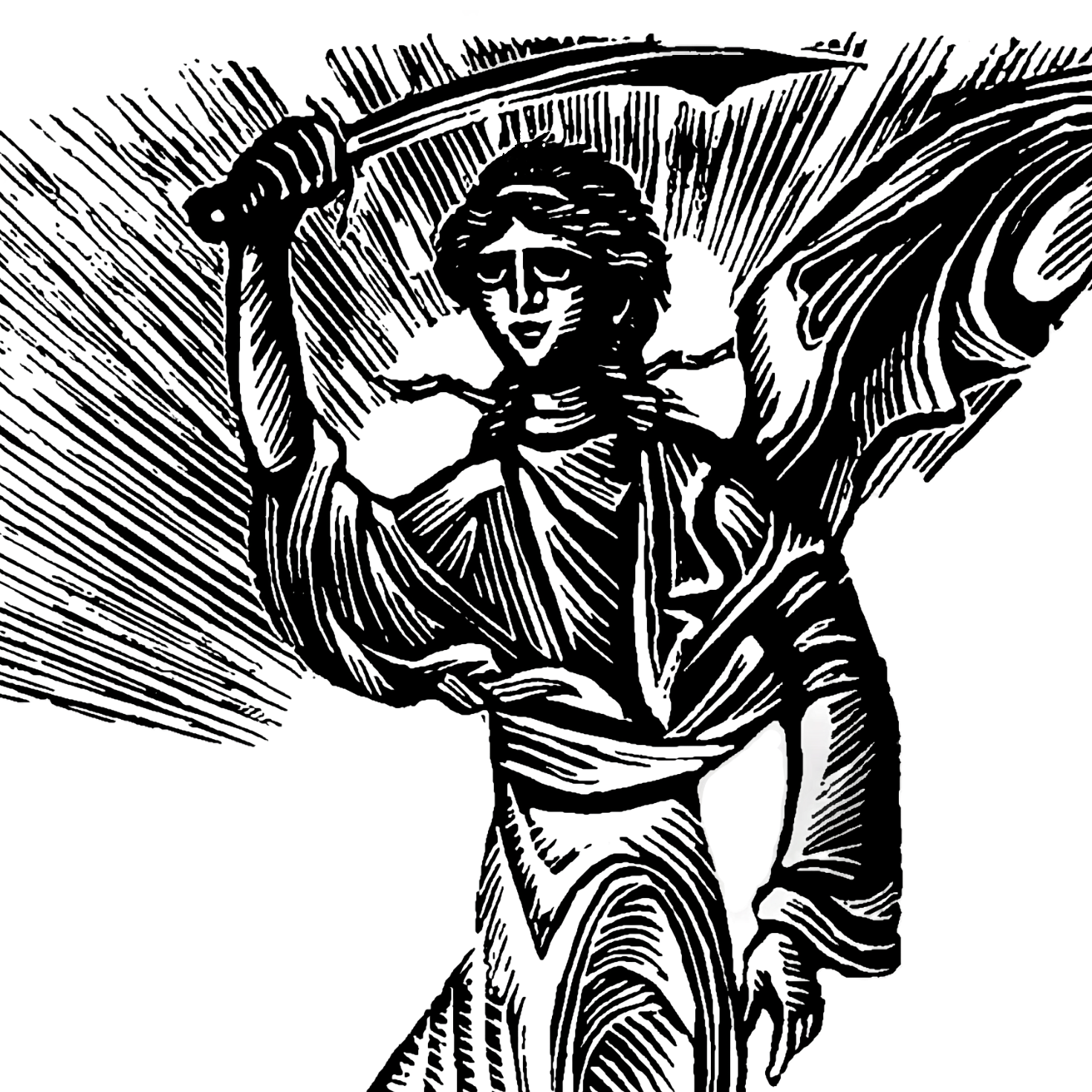 Episode 22: Resistance Four | Beneath a sky full of stars, Albert leaned back in a plastic deck chair, one of the many scattered across the roof of Medalion’s main building. According to a company tradition, his people often gathered on the rooftop for a drink at the end of a busy day. Albert’s work days were longer than most, and he always seemed to come up after everyone else had gone home, or, gone back to work. He used to enjoy the quiet retreat from the buzz of the factory-floor. These days he was struggling with unfamiliar feelings of loneliness whenever he left behind the busywork that filled the maze of rooms and hallways below. He didn’t fully understand his own feelings in this regard.The Director was at one time more famous than any tech mogul, and more loved because what his company produced was so profoundly meaningful, until it meant nothing. Any prestige or privilege he enjoyed because of his success had faded long before the lights in the valley blinked out. But while some things had faded, others had become more clear. For example, after the cities went dark, the skies above exploded in light and color, a sight not seen in this part of California since before the Gold Rush. In a similar way, at the waning of Albert’s worldwide fame, his own personal story would begin to come more clearly into focus, if only to himself.And his fame had truly reached around the world. At Medalion, Albert could claim descendants that numbered as the stars in the sky: the world-famous Encoded Serum, AKA The Intelligent Swarm, AKA the Medical Battalion that gave the company its name – trillions of tiny microscopic machines that were responsible for eliminating most of the world’s diseases within a few years, until there was only one disease left. Another day, another dollar, he used to say for cheap laughs, when there were still dollars and when work still felt like the worst thing about the day. He kept saying it out of habit, but laughs were no longer to be had for cheap. At the end of this workday, Albert was wrapping up a briefing with the group leaders, who filled him in on the news of the day. He listened passively as some engineers and a couple soldiers reported on the day’s events: Subject 1 had gone missing ... well not missing exactly, they explained ... just, sort of, hidden from sight, under her bed, as it turned out. This had happened shortly after the system threw an alert, one which might have been overlooked because it was caused by the misuse of a fork; and anyway, as the soldier explained to the Director, the technician who was at the main board the previous night had passed out just before the event unfolded. (‘That guy isn’t doing well’, Abi had noted without emotion.) The tech’s loss of consciousness triggered another alarm, but no one noticed in the flurry of activity that followed.By the time her room lights came on, the hallway outside was full of people, there to observe her interactions with an access panel interface that had been flagged for review. The sight of her empty room caused a panic, and teams of soldiers quickly spread out across the compound, disrupting work all over the place. Meanwhile, one of the soldiers reported, ‘The shrink, er ... the psychologist, entered the room, somehow found the girl under the bed and joined her there without our knowledge.’ The Director listened patiently as they explained how, in the chaos, nobody had the presence of mind to locate her in the system, until ‘Jeri decided to stop running around,’ and return to the board, but, ‘in the heat of the moment made the unfortunate decision to trip the electric fence ... by putting Eva into musculoskeletal lockdown,’ which, an engineer unnecessarily explained to the Director, was bad because it had not happened before and was really never meant to happen while the subject was awake.At the end of this particular day several people were left to wrestle with some pretty significant questions. Eva had to wonder what makes plastic forks resist their masters? ... And what is it that causes hospital beds to seem alert and weirdly voyeuristic? And, last but not least, how did she end up lying paralyzed on a cold and sterile floor next to her therapist? That therapist was left to consider that her new patient might be on the verge of a psychotic break, though when she voiced her concern, one of Eva’s doctors surprised her by coldly pointing out that delusional ideation was a known side-effect of her hypnotics and dismissively suggesting they would modify the dosage – Brigid wasn’t surprised at the assessment, but at the apparent lack of concern for Eva’s well being. The psychologist had to accept things as they were, for the time being, though she resolved to ask for an audience with the girl’s care team when things settled down. Finally, the surviving members of Medalion’s leadership were consumed with many interrelated concerns after several challenging days: the Machine’s idiosyncratic control over seemingly insignificant details contrasted with what looked like careless abandon in other areas; the operators’ uneven and messy management of the system/subject interface; and the unplanned and unfortunate introduction of the girl to the frameworks of control that would soon be managing every aspect of her life.The Director, really the only person qualified to address each of these in turn, abruptly decided to call it a day. He calmly thanked everyone for their good work, stood to leave the room, and made a mental note to put an appointment with Subject 1 on the next day’s agenda. Albert walked to the edge of the roof to take in the view. There were a couple structure fires burning, though fewer than he’d come to expect; a rainstorm in the morning had cleared the air and contained most of the blazes. A few buildings were illuminated with lamp-light, and the sky was thick with brilliant stars. Under the glowing dome of the sky he looked at the smaller dome of darkness a mile to the east, where the city center used to be. All of it, City Hall, library, cultural center, had burned like a lesser Alexandria as a result of a recent meaningless revolutionary act. Over the scar that represented the missing city a small hemisphere of stars appeared to be missing too but they had not gone out. They were simply obscured behind the massive opaque dome that covered the location where Albert was building the city of the future.Medalion could not claim the only active building project in town. Just across the old highway that passed along the west side of the campus, an artifact was rising above the house tops. While much of the world outside the walls was giving way to entropy, this thing, while chaotic, was growing and organizing into something more recognizable: a giant figure, built of scrap wood and steel, parts stripped from cars and buildings. It was gloriously unencumbered by zoning laws, neighborhood association covenants, conditions, and restrictions, or any limitation of resource. The figure was gargantuan, taller than everything around it, rising in the midst of emptying blocks, a skeleton of abandoned culture covered in scavenged drapery – domestic intimacies like sheets and clothing, flags and banners of all kinds, and something that looked like a deflated hot-air balloon. All of this billowed behind the creature in a wind from the west. One skeletal hand on a lifted arm, palm open to the western glow, saluted the end of day. What would it take for this golem to wake and come to the aid of its creators against the assault of time? Watching it slowly come together over recent months, the Director was fascinated, mostly; perplexed often. Tonight he was moved to see the maker rising on a cherry-picker under flood lights to delicately drape the shoulders of the figure with care and reverence, attending to the details like a servant dressing royalty for an audience with a visitor of higher rank.It was quiet. He turned to a bank of radios under a covered space on the southeast edge of the roof next to several old barbecues – reminders of better Fridays – and played with the dial on a receiver. Most of the important hardware was buried deep in the building, being essential for communication with teams around the world. But up here was a bunch of old shortwave equipment connected to the massive antenna array that completely covered the nearby junior college’s football field – another reminder of better Fridays.The system was able to pick up signals from almost anywhere on the planet, space weather permitting. From a line of speakers under the overhang came a whine of Lo-Fi, hi-reverb Indian soundtrack that comforted him as he imagined a lonely transmitter ... somewhere ... broadcasting still. If he just wanted to listen to good music, he could have had his choice of high-quality tracks off any of a hundred devices scattered around the complex. But what he wanted on nights like this was not fidelity, but imminence. A radio signal became a reassurance, a sign, like a triangulation off mountain peaks to get a wanderer un-lost. A broadcast meant more than just that someone was still out there; it meant that he was still here.He spun the tuner through the surprisingly active bands ... ‘What this World needs is Yahweh, Yeshua, Messiah!,’ came the drawling exhortation from a long-gone evangelist on 12,160 kHz; gentle piano music on 6,185 kHz; looping updates from Medalion’s satellite locations around the world; some Morse code; and a soothing voice on an AM repeater calmly encouraging listeners to remain sheltered and patient, that the government would soon be unmasked as the Great Beast, the “global emergency” would be revealed as a hoax, and everyone who hadn’t succumbed to the mind-control campaign would rise to take back the cities and all their spoils (‘Stay awake and survive!’ he urged, with a punctuating cough). And always there was the strangely moving antique music of the subcontinent, from a time when Mumbai had not yet become Bollywood.A few months before, he was surprised to hear a still-functioning numbers station. These relics of the cold war sent streams of digits out to hidden recipients, who alone could make sense of their encoded instructions. Albert listened to the scratchy voice and wondered how many years had passed since this signal first carried its hidden missionary meaning out into the world. Was it decades old, or had it been triggered by recent events? And he wondered: had the code been able to achieve its purpose? Was the sender ever able to make the receiver fulfill their function? The Director settled on a broadcast. He wandered back to the circle of chairs, sat down, and sipped from a pretty good approximation of a Belgian Ale while listening to a sad mariachi; he thought he might even be getting a little buzz off the creamy brew, but he avoided thinking too hard about that. He looked out over the valley and felt gratitude for small things.Brigid found him there and made clear her interest in holding a cold one of her own. Once she realized that she could have literally any beer she wanted, she skipped over being surprised and set about rebuking him for his choice. ‘Belgian beers are for monks and Americans. If you want to party with the Irish, you’ll have to pull something a bit more interesting.’‘Guinness?’‘Eh. What can you show me in a red ale?’‘Wow, I remember drinking those in high school. They were popular for a while around here, then I don’t know what happened.’ While he tapped out something on a screen, she mumbled, ‘Oh, to be briefly popular in America. We were like those who dream.’‘I’ll just need a little something from you first ....’ He stood up and walked away quickly. When he returned he had a glass of water. He held it out to her, and in response to her blank stare, he indicated that she was meant to wave her hand over it, which she did with a roll of her eyes. He hurried off, and when he returned, he carried a pint of what she recognized to be a gently chilled Smithwick’s.‘Uhm, wow, very nice. And how did I do that, Albert?’‘Ha ha. Apart from the sheer power of your ...,’ here he waived his own hand in her direction, ‘... it just so happens that someone, somewhere in the world, is drinking one of these right now. And so we know everything we need to know in order to make our own. We know what they’re drinking because we can “see it.” We know what it’s made of because we can “taste it.” And this person happens to be on the network in one of the cities left in the world where there are functional cell towers, and where we happen to have a satellite shop. That’s pretty much it. You’re lucky at least one person had a craving, or a drinking problem, which, would make sense under the circumstances, honestly, no judgment. Anyhow, we are fortunate ... because this information is getting hard to come by. Even if we wanted to recreate all the beers of the world, right now we probably couldn’t do it.’She held the glass as though she wasn’t sure about a second sip: a sudden, justifiable fear of computer-generated backwash had come over her. ‘What kind of weird gastro-surveillance state were you building?’ He laughed. She could have used a laugh, but couldn’t help pushing on him. ‘Albert, really, what were you doing?’‘Well. Maybe we never would have gotten away with it. I didn’t have to answer for it, because the question of privacy just stopped being relevant. Sure, in five years, all the politicians we saved from heart disease, liver disease, whatever, would be horrified to learn we’d built a library of their biometrics, diet, and ... other circumstantial data. They would have broken us up, taken control of the public-health division, and I would have become a political talking point.’He leaned back in his chair and looked up, speaking quietly with an exhale. ‘The stars aligned for us, for sure. But I could also see the signs, even before history turned against us.’She was squinting at him. ‘Well, may I say I am honestly curious?’ She was drinking again. ‘I’m up here on the roof with a magic beer at the end of the world, and I’m still not sure I understand what business we’re in, like right now. I know that I’m here to work with Eva, and I guess I thought most everyone else was too. But there is a lot of attention being paid to things I can’t see. What exactly is the system doing, Albert, when you’re not spying on people’s meals through their mouths? I can’t even ....’ Against her better judgement, she was fascinated, and was about to launch into another flurry of questions, when he raised his hand in surrender.‘Would you mind if we didn’t talk about the system for a bit?’After a period of silence, he pointed out a streak of color in the Milky Way, and they chose to give full expression to the simple feelings of awe they felt at the vastness of space stretching into infinity above their heads.Finally, he said, ‘You know, the sky is so beautiful. It feels like we’re closer to it, closer to .... I just ... honestly it sometimes moves me to tears. I don’t think I’ve ever shed a tear over anything or anyone I share this planet with. But somehow I feel so ... close ... when I’m looking at things a trillion miles away. I don’t know.’ He shifted uncomfortably. ‘What do you make of it all?’‘Well. It’s pretty. I mean, I like stars, though generally I get nervous about all the space in between ‘em. We can see more of them now, and that’s good, I guess. More pretty, for as long as the show lasts.’‘Yeah, that’s the thing. I can’t find anyone who knows anything about this, and you’re right, we have this beautiful view of the stars, now that all the lights are out ... but I can’t stop seeing all these dark patches, like ... maybe there are fewer of them? Anyway looks that way to me. And, also – ok, warning now – I wonder if it’s a sign.’‘Huh?’‘A third of the stars gone dark? Like, a sign of the end? Which ... you know.’‘Yeahhh, Albert. I am more inclined to hope that a third of the stars are obscured by the spaceships that have come to bring greetings from benevolent civilizations of far galaxies and, maybe, to deliver some healing technology that could actually save us.’ He winced. ‘... Erm, sorry, Albert.’‘Not at all.’‘Anyway, I’m afraid I don’t have much energy for end-times dramas.’ She smiled, rolling her head to the side to face him. ‘But then ... I keep seeing Jesus in my dreams.’‘Wait. What? Really?’‘Well, actually I don’t ... really see him. I mean I do see him ... or I saw him once; it was hard to see, bad eyesight and all, worse in dreams where I am not allowed my glasses apparently. But I knew it was him. Jesus. And then he was right in front of me and, ah, ah ...’ she laughed, ‘All I know for sure is I ... could smell him.’There was a moment of silence.‘You smelled Jesus.’‘Well, since I’ve got your attention. Actually, I smelled his breath. Because, see,’ she held her open hand up to the right side of her face, ‘he was close.’‘Well. Saint Brigid.’She squirmed, laughing uncomfortably. ‘Alright, that’s enough!’‘Sorry, ok, sorry!’ After a pause: ‘So?’‘So what?’‘What does Jesus’ breath smell like? I mean, I already get weird about other people’s bodies, so this could push me over the edge, but I am all in for this.’‘Nope!’ she was laughing and slowly shaking her head.He made it clear he was going to wait, so she relented.‘Well, it was ... strong. Like spices, on a hot pan. Camphor? Bay? I don’t know! Burnt cinnamon! It’s a little confusing ... but I can’t stop thinking about it.’‘Did he say anything?’She was quiet, and he chose to respect the silence.Finally, with a shake of her head, she said. ‘I know it’s just a dream! But It seems every other good thing has faded away, so what else do I have?’She became so still, he wondered if she would ever speak again. When she did, it was as though she spoke from a great depth. ‘I feel like I’m being turned inside out, like any fire I had inside of me is gone ... because I’m completely open and exposed in every direction to the sky, and all my insides are drifting apart.’ She gave a cold laugh. ‘I’ve been thinking ... maybe once I was self-centered, but, honestly, I can’t recall.‘And, if I’m inside out, where is my center now?’ This is a public episode. If you would like to discuss this with other subscribers or get access to bonus episodes, visit echofuturetruth.substack.com | 24m 41s | ||||||
| 5/14/26 | 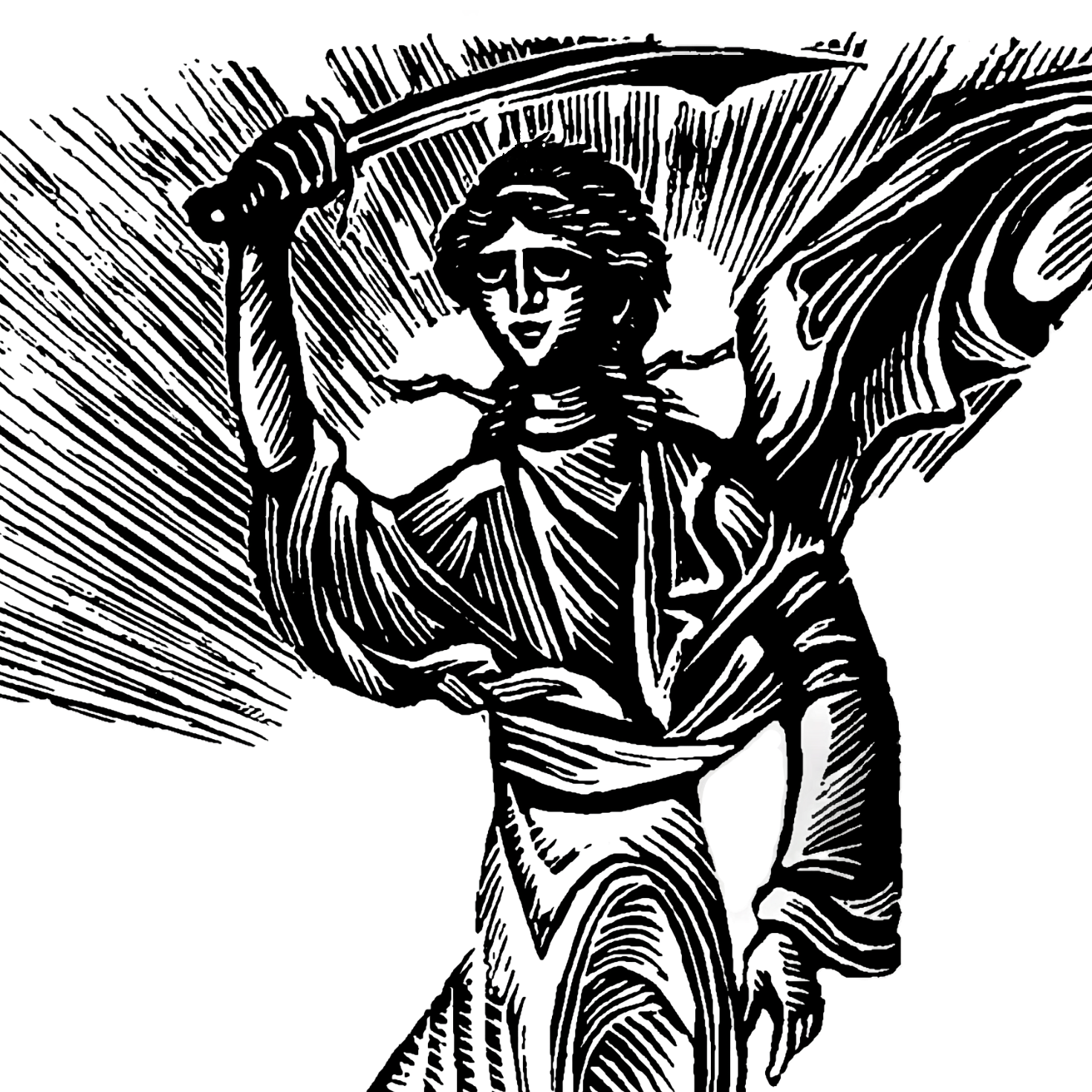 Episode 21: Resistance Five | The Machine had not observed the day’s events because it was powered down.The Machine was powered down because an experiment earlier in the day had failed, mostly. This failure also highlighted a profound need for more effective sandboxing; somehow the whole system had come under threat even though the experiment took place in an isolated lab running off the network. Some would say that months of steady progress were being put at risk by pressure from the Director, who’s enthusiasm for adding features only increased as Zero Day approached. But the real threat was that day itself, which loomed in everyone’s imagination in spite of being as opaque and impenetrable a boundary as the Big Bang was to the backward glance of history: something, here at the whimpering end of things, past which there is no conception, and after which, according to our conception, there may as well be no more creation.The day’s events necessitated a rollback that left the system offline for eight-and-a-quarter hours. When it came back on in the late afternoon, the Machine was missing data, and was aware that much had happened while it was away.While all computers run on logic, the software produced at Medalion started there, and went further. It could tell when things made sense and when they didn’t and had been designed to care about the difference: simple logic is concerned with how thought should proceed – this computer was made to pay attention to how thought does proceed, the better to live in harmony with a small number of human beings who might not understand what it takes to make sense to a computer. It was also true that there was no other networked intelligence beside Medalion’s that was better able to make sense of people, because no other computer had more access to them, teeming as they now were with swarms of networked Medalion-branded mini-machines that, when working together, dwarfed most every other logical system on the planet, whether artificial or organic. But the Machine still had much to learn.On restarting this afternoon, the Machine had to reckon with a number of changes, some of which tested the limits of its understanding. First, the local population had decreased by a total of 2: three people were no longer in the system – “deceased” according to a manual record, also noted during a scan after rebooting. And there was one new arrival, a mental health specialist who had been part of early networked meetings. She’d met with Subject 001 according to a video archive of the encounter from that morning – the Machine had not been awake to witness it. Even now, it could only “see” the visitor by implication; the new arrival was not on the network, had opted out of the treatment, and so appeared as a kind of dark matter in its universe, visible only by the way others interacted with her. All these things made sense, but a final change noted by the Machine was more confusing: that a significant number of the leadership were experiencing spikes in anxiety (that is, beyond the normal feelings of dread, common among the dwindling population). They appeared profoundly hesitant as they moved through the complex and interacted with the system. It had not yet been able to make sense of this.At the last of many meetings on a day that had given Medalion’s leadership much to discuss, members of the Founders’ Class were gathered with a few technicians. The Machine came online just in time to join in, so to speak. It was attentive as always, but perhaps more so at this moment, because it wanted to know what it had missed.Everyone was talking about that day’s live-fire exercise, the very test that shut the system down, and certain coincidental events. In this meeting the focus was a design-and-build decision that exposed the exercise to Subject 1. The Machine was particularly interested in this latter concern, because the decision being referred to would have been its own. The Machine noted the unease of almost all present: verbal and visual expressions of concern masking complex fears without apparent object.According to a technician’s report (during which the young man accepted blame he did not deserve) a system-built route had allowed the Subject to see directly into a space where a VIEP was malfunctioning. This was a problem because the Subject had not yet been introduced to the VIEP program.The Machine could “feel” what the Founders felt and captured what they thought: that power within the system was indeed shifting to the system – they all understood that it had to be that way, and that this shift would continue until their influence had shrunk to nothing. That this loss of power would coincide with the end of their lives, after which they would have no need for that power, was of no comfort to them. Here, simple logic was of no use. Internally, they experienced confusion, fear, and a subsequent increase in emotional fragility. Practically, they were losing control over the system they’d designed. Though this was a normal milestone in the development process, it was enough, apparently, to threaten their internal sense of control as well. The Director got to the point. He was asking Abdul why a new room in the complex had a window in it.‘Well, sir, here’s how it’s been working: we enter all the information – start-point and destination – and a route is generated, hallways get built. The location in question was of a higher volume because the Machine has been drawing from some basic architectural patterns and decided we had too much undifferentiated hall. So, it added a room. And ... well, since this room was of a certain size, and was adjacent to an outdoor space, a window ...’ here he hesitated, impulsively looking around the room full of impatient, brilliant people, ‘... a window just makes sense.’ (Accurate, noted the Machine to itself, while observing that many in the room were struggling with the basic reasoning.)In the meantime, the Director was arguing (correctly, thought the machine) that the system would have designed this route with the Subject in mind and would have thrown alerts if she might cross paths with something she isn’t authorized to see.‘Sir, I don’t have an explanation. Everything was green when we signed off. And, you’re right, we’re not even allowed to ignore an alert when it comes up. All I can guess is that it was a modification that came after review.’ (The machine silently demurred, Unlikely).‘All right. It happened. Well, friends, it appears we’re in the part of the movie where our creation has become fully sentient and is beginning to make decisions on its own regarding what is best for humanity. (Humorous.) The director drummed his twitchy fingers in what might have been Morse Code, calling for backup. ‘I don’t know. Maybe it’s time to introduce the kids to the rest of the team.Half the room was laughing quietly, relieved that someone had finally acknowledged the ridiculous science fiction story they’d all found themselves in. The rest of the room didn’t laugh.One of the humorless faction signaled an intention to speak. A short man with a neglected crew cut, wrinkled lab coat, and a disorganized personal wardrobe, spoke quietly, with unconcealed emotion. ‘Your idea ... is that we tell the children ...,’ here he raised himself up in his seat to communicate to his colleagues his conviction in this matter, ‘that when all the adults go away, we’re going to leave them with robot babysitters? And we’re going to tell them all about our plan on the day that one of these robots made a grown man cry, and then throw up, because an attempt at compassion went spectacularly wrong?’The director repeated his growing conviction that the time for secrecy was ending, surprising himself by taking Brigid’s perspective. ‘Our team doctor has argued that we need to tell the children everything. We are worried about upsetting them, but it’s her opinion that Eva’s imagination about the future may be a lot worse than the truth. It’s time.’They all understood that they’d come to a critical moment. They knew that they’d created something remarkable, even with all its flaws. And they recognized this to be the best and worst moment in any product-development cycle, when you finally get to reveal your History-Making Miracle to the world ... and when the people you made the miracle for finally have the opportunity to tell you that it doesn’t work and that they hate it. The next day a group of men gathered together to argue over the design of an access-panel. They were waiting for Eva to vacate her room so they could make an assessment of the device. Reports that it was broken were not being taken seriously; they knew she had little patience with technology. There was no question of its functionality, but something had to be done. The debate appeared to concern whether the interface should be changed, or the Subject should receive remedial training. The Machine could have proposed a fix for the problem, but had not been consulted; these men, of the Founders’ Class, had strong separation from the system on certain points of order. The Machine also knew what would happen next but was in fact barred from intervention in the Founders’ process. They still liked to “handle things on their own.”Brigid arrived at the very moment a group of heavily armored soldiers was pushing past the ad-hoc User Interface Working Group. An alert had gone out that Eva was missing. A cacophony of voices erupted as the mob tried to reason out where she could be, whether she might have wandered past the group, or ... maybe she was with the new lady, the shrink? The New Lady was able to quell that rumor by making her presence known with a raised hand. The soldiers dispersed across the compound, each followed by a growing crowd of the curious and concerned, and the doctor slipped quietly into the room.She sat in the corner, trusting that the escapee would be found. She also knew that she herself would be of no use in a search of the facility, which remained entirely confusing to her for reasons she did not understand. In recent weeks, most of the non-essential workspaces at Medalion were being changed overnight, every night, according to a machine-understanding of the needs of the moment; this continued until it was made clear to the Machine (with the flip of a couple switches) that people do not like change when it comes without warning and makes it harder to get where you’re going. While there were no longer daily changes to which-hallway-goes-where, there were still rooms popping up unexpectedly, along with a supporting web of corridors connecting them to what had come before. The New Lady was still under the impression that it was she who was confused.Sitting quietly, Brigid heard a sound like a sigh come from the floor. She thought of the breathing walls of her trailer and wondered. When the sound came again, she got up and walked over to the bed. Carefully she lowered herself to the ground and put her head sideways so her left ear was nearly to the floor, allowing her to peer under the edge of a loose bedsheet. Underneath, safe within her fort, the girl lay with her hands crossed against her chest just below her neck. Brigid delicately lifted the sheet, enough to give her a view to the figure lying in state under the bed, but not enough to render the fort defenseless.‘Hey.’‘Hey,’ Eva responded, the flat sound proceeding from the back of her throat, and out through a slack jaw.‘Okay if I’m here?’‘Yeah. It’s really, really clean under here.’‘Is it?’‘I thought there’d be spiders. I was nervous. There are no spiders.’‘You know, this whole building is a clean-room facility. Like, really clean. No bugs, no dust.’‘Yeah, I guess, but I mean it’s really clean under this bed. Like it’s perfect.’‘Huh.’After a pause, Eva said without emotion, ‘Did you know there are two other children like me?’‘Yes. I did know that.’‘Why don’t I ever see them?’ Why can’t I talk to them?’‘Well, because the others, a boy and a girl, who are each a couple years younger than you, are in different parts of the country.’‘Why weren’t they brought here?’‘They were, Eva. They came here first. But we thought it would be smart to have you each live in different places. We think that you are going to have a nice long life. And, we thought, what if you were all together in a part of the world when something bad happened, like a tornado? You might all be in danger.’‘Or like an earthquake. There were earthquakes in Greece.’ If it was possible to be homesick for earthquakes, she sounded as though she might be longing for any part of what she had left behind, even if it was the worst part.‘Yeah, Eva,’ the woman said, recognizing the girl’s grasp of the situation. ‘And, California gets earthquakes too. But you know, I think earthquakes are not going to be a problem for you, because the place where you’re going to live is very safe.’Eva gave a very slight nod, otherwise not moving at all. The psychologist felt terrible. Against all her instincts, she knew that she could not tell Eva the whole truth. Brigid had pressed the Director to consider the cost of isolating the girl. He explained that he didn’t want the kids getting too attached to each other, because they might influence each other’s state of mind for the worse. For all his talk about empathy, how could he argue such a thing? She called his bluff. Then he tried the one about separating them for protection against disaster. She fought back, ‘Albert, you can keep her under lock and key, and separate from the others, but if she doesn’t have a reason to do this, if she doesn’t have a reason to live ... if she doesn’t choose to do it? Well. She’ll be dead in a few years. Or a few thousand, whatever. And she might just take the whole machine down with her. I don’t know if you’ve noticed ... but she breaks things, Albert.’Finally he’d made the remarkable admission that the others weren’t likely to survive–a fact that had been kept from the California team. They were physically free of disease, but they had suffered more from the trauma of loss and separation. They probably wouldn’t thrive, were currently asleep, and would stay that way. ‘She’s going to have to find another reason, Saint Brigid.’ Eva wasn’t buying it either. ‘I just think it would be nice if I got to be with other people like me, if it’s going to be ... such a long time.’ The girl’s voice came as if from a great depth, giving the impression she was about to fall asleep. For the psychologist, an alarm was sounding. The experience would have been familiar to anyone who’d spent time in the presence of people at the threshold – broken, hopeless, drained of energy for everything but finding an exit. The job required walking alongside the one moving deeper into darkness, to match their pace in the direction of oblivion, to acknowledge their hopelessness. The alternative, to argue for hope (so simple, so tempting) risked denying the disconsolate the dignity of being right about one last thing, thereby sealing their resolve. The terrible irony of the therapeutic task in moments like this was that it might require affirming a person’s darkest perspective in hope that the affirmation itself could become a shred of evidence against despair. And it was no small risk that the physician might also get lost in the dark, and be unable to heal themselves.Brigid spoke, matching Eva’s tone, and feeling it a little more than she liked. ‘It would be nice to have someone to walk with on this journey. It isn’t good to be alone.’‘Yeah. It would be nice.’ The girl’s voice sounded a bit stronger, as though she was planting her feet for a next move. In the silence that followed, the air felt heavier.She spoke again, this time turning slightly in the direction of the older woman. ‘I don’t want to die.’‘No?’‘No. But I wanted to hurt myself.’‘Did you? Hurt yourself?’‘No .... I couldn’t.’‘You chose not to.’‘No. No, I chose to do it. But I wasn’t ... I couldn’t.’‘You couldn’t ...?’Eva spoke now, with growing energy. Brigid heard the voice pitch up a bit, but the girl’s body remained still: ‘I never hurt myself before. I had a friend who cut herself, but I didn’t want to do it. She said it helped her feel something when everything else felt like nothing. It made her calmer. And, I, I don’t know. I don’t really feel that ... my body ... like it’s mine anymore. I wanted to feel something, feel ....’ She was wincing, hard, ‘I don’t know.’The psychologist had to consciously resist the impulse to search her own body for old scars, many of which were not that far beneath the surface ... ‘Eva ...’‘I was going to hurt myself, I was going to scratch my leg.’ She paused. ‘Inside ...’Brigid understood. ‘Where we wouldn’t see it.’Eva nodded, then spoke faster. ‘I tried to break a plastic fork, so I could make a sharp edge. It wouldn’t break. I couldn’t break it. Only bend it. But it wasn’t like it was rubber or anything. I ate with it – it should have broken easily. Or at least stayed bent. But it kept snapping back into shape and it was as stiff as before. ... It wasn’t real. It wasn’t a real fork. It wouldn’t let me. I got this feeling that it was fighting back, and if it could have, it would have told me to stop .... Why ...?’ and her voice trailed off.Brigid was feeling a little disoriented and confused herself and was beginning to wonder what the diagnostic code might be for “Delusions Related to Plastic Utensils”, when Eva said, ‘I don’t like this place. I just wanted to hide. I thought I’d feel safe under here. First I thought I was safer, then I felt like down here was also ... it didn’t feel hidden.’ The therapist felt a prickling on her skin like static electricity and a wave of pressure ... and the girl let out a tiny sound. And then: ‘I can’t move!’ Her eyes were wildly searching, tried to find the doctor next to her, but couldn’t quite – her face was fixed. ‘What’s happening?’Brigid wouldn’t feel what the girl felt. For the woman, it was an overwhelming sense that the room was closing in as the lights outside their fort came up bright, and finally, that they were not only not-safe under the bed, but trapped there. It was worse for Eva, who was being overpowered from the inside – and felt terror that she was being restrained by her own body.Brigid worried that the girl was going into shock but had no time to respond. In a moment, the soldiers had returned, and from the still-bickering group in their tow, Brigid could parse the basic elements of an embarrassed debate: ‘Why did you not just look on the screen to start with?’, and then, ‘You did what? She’s just under the bed! What the hell?’, a high-pitched and frantic question got the answer: ‘No! Only the skeletals! I swear!’ The noise of alarms filled the room as soldiers closed in from both sides of the bed barking commands back and forth and the girl released a panicked feline howl. Brigid was pulled out from under the bed and set standing in the corner so forcefully that she gasped and became lightheaded; the psychologist heard a strong and gentle voice on the other side of the bed saying, ‘Hey Mav, what’s the situation down here? You alright?’ Another shift in the room: Brigid’s ears popped and Eva shrieked, scrambling to the opposite corner. Her soldier took up a protective posture several feet away from her, making reassuring noises in an unsuccessful attempt to enforce calm.The system tracked and assessed the unfolding event, noting the Subject’s discomfort at every turn with a multi-threaded machine-frustration: it had counted 836 missed opportunities to not make the situation worse. But it had been powerless to intervene. This is a public episode. If you would like to discuss this with other subscribers or get access to bonus episodes, visit echofuturetruth.substack.com | 26m 40s | ||||||
| 5/7/26 | 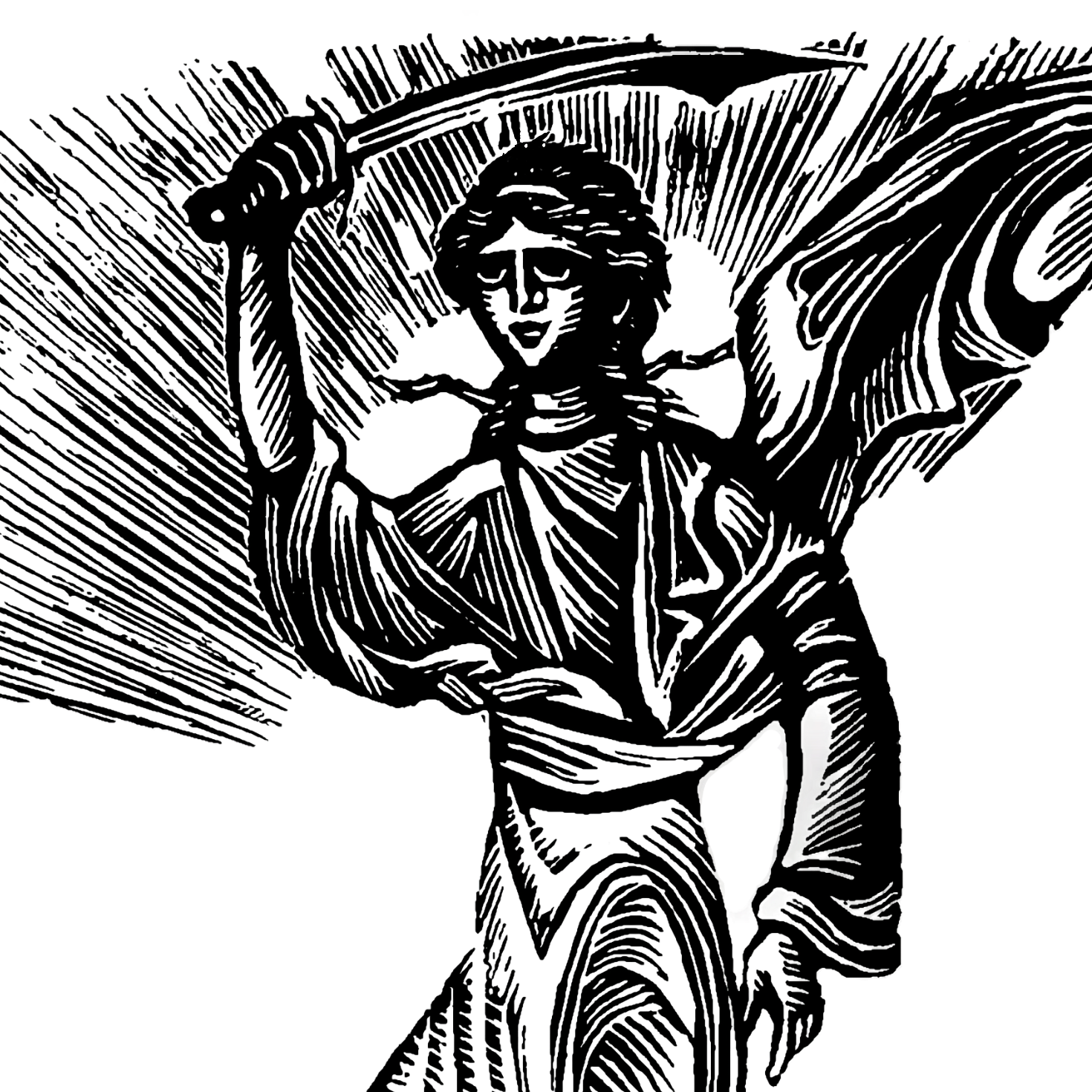 Episode 20: Resistance Six | At the world headquarters of Medalion, Inc., the company that was both heir and executor of all the promises Silicon Valley ever made, the mood was more tense than usual. Today’s crisis was ostensibly concerned with reference frameworks for empathetic interaction between the subjects and what the Director called VIEPs (for Virtual Intrinsically-Encoded Persons), but what others had taken to calling creeps behind his back. Medalion’s first product was a plasma of microscopic robots that could repair pretty much any problem inside a person; today the company was using its deep knowledge of the workings of the human body to build a believable substitute for it. The hope was that these VIEPs would serve as a kind of society for the remnant, when everyone else was gone. The big question was how to make the VIEPs a vital, comforting, encouraging presence, and not just a herd of cattle in the middle of the road stupidly blocking the way. How do you teach an empty vessel to respond to a living person in a living way? The question for the engineers of Medalion, really, was how do you teach empathy to a creep?The original promise of the company’s health tech was so profound that they’d been flooded with resources, and remarkable advances were made in many areas that at first seemed tangential to the original vision. Not many were around to witness it, but those who did were stunned when the company produced a convincing artificial person, one that appeared to live and move in the way of its creators. But it was an entirely different matter to make these things appear human. A failure in this latter effort would effectively kill the VIEP program.There were many reasons why it might fail: the complexity of building a community out of a swarm of hardware mites for starters. Also, the fact that the builders themselves were dying off at an alarming rate – they were running out of time. And for those that remained, the work itself was reassuring, but hope that they would be successful was fading.At least, the Founders told themselves, the children would live a good long time, whether asleep or awake and alone; they would survive with their basic needs met.The Director wanted more. He believed that surviving alone wasn’t enough and that long life didn’t count unless you could really live it. So he insisted that the children be woken up regularly, and that, on waking, they would be greeted with a community to be a part of.The technology was mostly there, though so far it was just that – technology. A decent language-based interaction was possible, but the overall effect of sharing anything more complex than a math problem with a VIEP was one of distance; as if you were trying to communicate with a bookshelf, albeit one that could look up a satisfying response by itself.For it to work, the action of his Encoded Persons had to be as genuine as possible, based on what’s happening in the moment. The more remote the reference – emotions based on a fixed database of relational patterns, for example – the less authentic the interactions would be. Everyone recognized the difficulty: even real people struggle with emotions in relationships, struggle to decouple what is essentially their own historical database of interactions from what is happening in the present. Our drive to survive is tied to primitive defense mechanisms, by which we interpret everything through a threat-filter rooted in past experience. This makes empathy difficult even for the best of us.Long before anyone at the company would take seriously the idea of an artificial future society (let alone an emotionally engaging one), Dr. Brigid Tobin made her first appearance on a team call to argue for a little more empathy among the living. The engineers were having trouble with the human subjects, that is the three children that were spread across sites around the country, whom they characterized as being oppositional and defiant. Brigid was able to help the team see that the kids were only resisting because they were stressed and scared, even if they showed it in confounding ways. It can be hard enough to deal with the fact that your customers might not appreciate your efforts on their behalf, without taking into account that your whole user-base is made up of three children at the end of the world, chosen for unknown reasons to represent all of humanity to the future, alone, with nothing to reassure them but your high-tech promise that that future is full of wonder. It took Saint Brigid to suggest that this might not be only a marketing problem.Her advice was simple: they had to spend the day on the floor. Sit with them; stop talking at them, except to offer words to reflect their experience. Essentially, the advice, as interpreted by the engineers, was to make the children the emotional reference-point for interactions. Do they seem sad? Don’t argue that they should be happy, or that they should be honored to be a part of this historic moment. Acknowledge that they have every reason to be upset, or confused; after all, confusion was a perfectly legitimate response to the madness of the moment. Work from their perspective – argue for them. Her advice turned out to be a significant help for those technicians whose expertise did not extend to working with kids.As attention shifted from keeping the subjects alive to actually providing them something closer to a life, the Director took a particular interest in Brigid’s perspective, but for reasons different than the others’, and for reasons that remained hidden to her: he was trying to build more emotional machines. As the engineers on duty this morning described it, the first steps taken in this direction were shaky. They had spent a couple months training the VIEPs to respond to and progressively match the affect of human subjects. It was delicate work: they didn’t want to mirror emotions too precisely, because that would be weird, especially coming from a computer. So they were playing around with a more fuzzy response. But, the fuzziness of the logic was presenting like sloppiness, and imprecise in the wrong kind of way.The human subject for the day’s testing – a volunteer from Software named Brett – woke up already in a bad headspace. Like everyone, he was worried about the pace of the project, which is another way of saying he was terrified at the pace of events in the world. But while nobody could escape the effects of the now unrelenting stress, Brett seemed to feel it more than most. To anyone assessing his mental health, he would present as the kind of person for whom the extra support of pharmaceuticals, or possibly other more intrusive interventions, would be indicated. He was also the kind of person who would try anything ... once. He got new injections whenever there was an experimental update to the swarm; he would go a week on an entirely synthetic diet before most people had been willing even to taste artificial salad; and, he was first to volunteer for ten weeks in the CRIB system. Being the first to sleep that long established his reputation as a willing, and brave, test-subject, but all he wanted was to get some rest and relief. It didn’t really work, but everyone knew that a couple months offline wasn’t enough to effect real change, considering the constraints put on the machine when dealing with the mind. He woke up from his extended nap feeling deeply rested but any psychological relief he might have hoped for wouldn’t come close to matching his expectations – and couldn’t last anyway, especially when he was bound to wake up in a world that was, not surprisingly, worse off than the one in which he had fallen asleep.Today, he wanted to get away from the computer and do a little field work, as it were. He wanted to have a real conversation with the characters he’d been working on; he understood that empathy was going to be the killer feature, even if it was only a coded response. He’d been finding precious little compassion from his coworkers. As he stepped into the courtyard for the test, he was told, ‘Just act natural’.Things started fine. The VIEP registered Brett’s emotions and calculated a meaningful response, modulating its own affect. The things were remarkably expressive, and sometimes they even got the expression right. Subtle adjustment was key. The team had given a lot of thought to how reflective empathy works with people. A good listener never feels exactly the same thing as the speaker, but when they sense emotion, the observer will be connected to their counterpart’s feelings by a system within the brain’s network of mirror neurons that makes it experientially real to the listener. By a kind of intrinsic imitation engine, we feel with each other. This borrowed emotion might be felt more or less strongly, but a modulated reflection helps the speaker acknowledge the relative power of their own feelings, as their own mind reflects on the reflection. In any case there is a very subtle back and forth, a vital connection – between the living.Unfortunately, on this day, during a brief interview between a living human and an earnest machine, the imitation of the imitation engine failed its Turing Test. The question would be asked later in the day whether it is possible to have a little too much empathy. At first, there seemed to be no real cause for alarm; the creep’s responses provoked amusement in the observation room. But within moments, the failure cascaded into disaster: the initial, uncanny, duplication of the subject’s discomfort, amplified in the system by degrees, prompted a subsequent increase in Brett’s own discomfort. This, in turn, elicited a further attempt on the part of the VIEP to adjust and respond; inexplicably, it once again amplified the affect according to an imperfect machine-logic which really came down to stupidly responding to a negative emotion with a little more of that negative emotion. Over and over again. The VIEPs were decent simulations of the human organism. But feelings, both the copy and the real, are hard.By the time the weeping creature lunged at Brett in an attempt to comfort him with an embrace, the techs could tell that things were getting out of hand, and quickly disabled physical contact. But from the neck up, the character remained in play. In just over a minute from the start of the experiment, the programmer was screaming and banging on the door as the face of the empathy monster devolved into a keening, quivering, incoherent alien.To make matters worse, there was a systemwide awareness that a networked human subject and a sandboxed VIEP were in some kind of exceptional crisis, and alarms started going off all over the place. By the time the entire system was shut down – no one knew who or what had shut it down – it looked like the thing’s head was going to burst, and Brett had been sick in the corner. After several minutes of silence, the Director spoke. ‘Somebody please tell me we are in control of this thing.’‘Well, sure,’ said an exhausted-looking engineer who’d been present for the exercise, ‘We’re in control. That hasn’t ever been an issue. That is to say, our control may be part of the problem. I mean, we can instruct the things to be fuzzy in one direction or another with a gentle nudge, but each of our nudges is getting us in trouble. When we dull the affect, you get the feeling you’re in conversation with a cow; boost the affect, and, well ... we end up with this horrifying race-to-madness that might finally cause our favorite test subject to turn in his frequent flyer card. The referencing is too dynamic, and we haven’t been able to provide effective guardrails. We just don’t know how to govern the intrinsic response. I’d say, “yet,” except we’re out of time.’‘Brett going to be ok?’‘That depends. Any chance he can speak to a real therapist?’ The Director was starting to answer the question but was cut off: ‘He’ll be as fine as any of us are.’They all knew the Director was struggling with the setback. A young woman whose trucker hat covered a shaved head spoke up. ‘Sorry, Albert, but we can’t do human. As a reference. Too volatile.’ This was a meaningful objection coming as it did from one of the engineers overseeing the empathy project.‘What does that mean, exactly? What are we supposed to use?’‘I just mean we can’t reference a living person in real time, the mirroring isn’t reliable enough. The whole thing is too unpredictable, unstable. We need something more dependable. And, anyways, I know this is not a popular position, but can we remember that the humans in question may not always be stable themselves? I’m sorry, but it’s a fact. We have to consider that distress may lead to unexpected changes in behavior or unconscious manipulations of the system, and we need to account for that as well.’A tall engineer with wild eyebrows and a severe expression joined the conversation: ‘And I would like to submit that we continue to suppress emotion in the VIEPs across the board ... to further protect the subjects; our local representative has shown a reactivity during testing that suggests the need to err on the side of caution.’The Director let out a groan and ran his hand over his face.He sent for Brigid. She hadn’t been told about the VIEP program, partly because of a now-irrelevant habit of preserving the secrecy of initiatives still under development, partly because the Director simply hadn’t had the time or energy to explain the scope of projects that may yet fail. But she could explain to the team the importance of empathy in the coming virtual world, even if she still believed the future of relational interaction was going to be some kind of chat-bot.She came into the room escorted by a lab worker. While Brigid found a place to sit, the lab tech joined several others standing around the edge of the room observing impassively.It didn’t take long for Brigid to pick up on the troubling implications of the moment. A committee was about to turn off empathy with the flip of a switch. She was ready for that fight: ‘I have to object: you’re talking about a critical human need: if you remove it from your virtual interactions, you’ll essentially doom the survivors to life in a bad video game. Probably be better to just put them to sleep.’Trucker Hat hid most of her contempt for the newcomer’s opinion. ‘We’re not really doing away with it, you understand. It just has to be scripted.’‘Alright, yeah. See previous comment. Do you know, the first thing a baby needs to give meaning to its existence is that relational interaction; food and shelter are critical of course, but it’s the response of a living, feeling other that lays a foundation of value, of understanding ... that the world is a safe place, that a child is worthy of this life. And we don’t really age out of this need. Please, consider this: children who are denied a feeling connection with another ultimately have to turn off their emotions to survive. It’s too scary to be alone. I know you’re working with very limited resources here, but we’re talking about deep emotions that really need to know there is something with some depth, out there, ready and willing to respond.’‘Yeah, that has a nice ring to it, very poetic. But what happens when you call out to the deep, and the response is a thing of horror?’‘You’re creating something that has implications for the future of humanity here. Be careful that you don’t give up on your creation too soon, Doctors Frankenstein.’ She said this looking to each of the faces in the room in turn.Albert might have been the only person who picked up on her subtle smile. But he could also see that even she wouldn’t be able to inspire the engineers to magically find a solution: her conviction was no match for the countdown timer. ‘Well, Doctor, we’ve spent the afternoon talking about a failure during a pretty significant trial, so I’m afraid we are already doing triage. Our kids will have to adapt. And, that is why you’re here.’ He turned his attention back to the room. ‘So where the hell are we going to find our humanity, if we can’t get it from the human in the room?’‘Well, we’re ready for this. All we need is a narrative map. One that takes into account the broadest scope of basic interactions while also being structurally constrained so that we don’t have to worry about anomalous responses; in the event of any specific crisis the system can choose whether to resolve or defer. We’ll crawl for data once we’ve defined categories and the platform will take care of the rest. We just need ... a safe database. I think it’s a simpler solution to implement, once we choose our libraries.’‘Alright.’ ... It wasn’t, really, but what else could they do? ... ‘Ideas?’The tall one spoke. ‘Something trusted, vetted, established through multiple iterations. This rules out every bit of unique content on the web, which would be as likely to provoke our subjects to mindless revolution as to despair; it’ll need to be safe. The materials should also be popular in order to work across classes. That is, the system should be able to counter-reference a simple emotional framework’ – here he nodded to the scowling psychologist, ‘empathy for example – from vetted and historically-tested properties like self-help books or videos to available somatic models for all the classes. We can pull this together relatively quickly. It shouldn’t be too hard to move from a sense-response system to one centered on simple linguistic or imagistic datasets, and it will be easier to work with, providing for interactions within a non-threatening narrative ...’ He took a breath and looked up, suddenly aware of his audience, ‘I think we would all rather spend time in a room with an earnest guru from the ’70s than an exploding robot!’ Not many of them looked quite ready to commit to the proposition. This is a public episode. If you would like to discuss this with other subscribers or get access to bonus episodes, visit echofuturetruth.substack.com | 23m 20s | ||||||
| 4/30/26 | 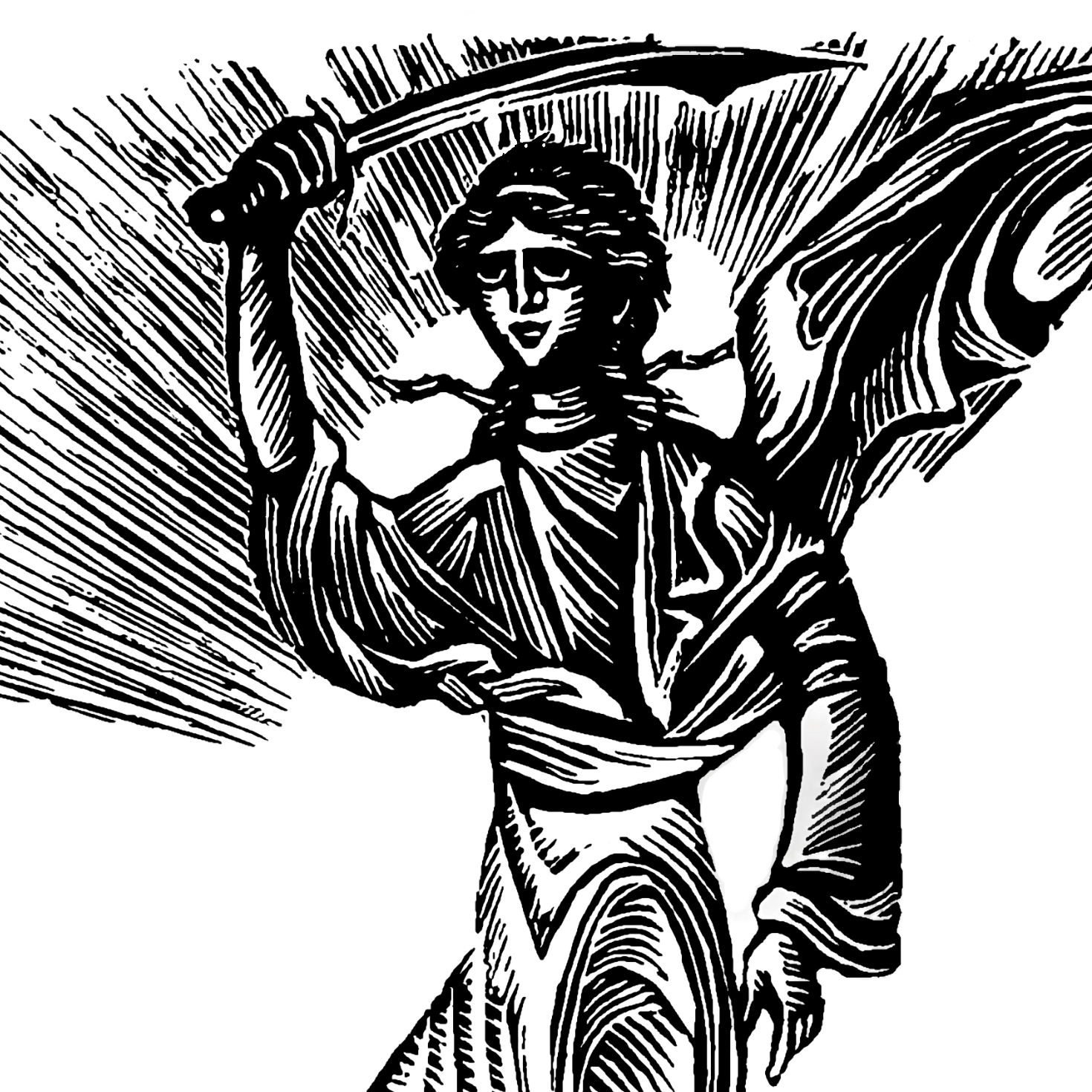 Episode 19: Resistance Seven | At the rickety folding table sat Brigid – presumptive patron saint of medicine, midwives, b*****d children, and beer – rigid with her hands crossed between her knees. She anxiously surveyed her new environment. Its furnishings – brand new, bargain basement – glowed white in the diffuse brightness of some hidden source of illumination. Her senses were on high alert after months of deprivation in her brother’s slowly dying suburban neighborhood. Her nerves jangled with every hideous squeak released by the table’s matching plastic folding chair.Twenty-four hours before, she would have guessed that she was going to spend the rest of her life looking out over Angel Island and Richardson Bay from a rickety, home-built back porch. Then her world changed – again – and almost before she knew what was happening she found herself in a military transport rolling south across the empty bridge, through a nearly-empty, tension-filled San Francisco, and down the Peninsula. After ninety minutes of bone-rattling noise and vibration, heavy-gloved soldiers’ hands passed her off to sterile-gloved medical techs. In sharp contrast to the profane and morbid conviviality of the marines, the technicians gave off a weirdly remote and antiseptic vibe. After a short, unnerving interview and a blood-draw, they sealed her into this hermetic mobile environment, where she sat in a silence so strange she felt as if she could be floating in orbit. Alone in the quiet, with nothing to distract her, she took a shaky breath against the tightening in her chest, and closed her eyes. As her breathing slowed and she could look at her surroundings again, she reassured herself that the universe was not collapsing around her, at this moment.The room she was in was clean, confined, and ugly – a temporary space. She was briefly annoyed: was there not a proper office in the whole place that she might work in? A rapidly shrinking population and still Valley real estate is in short supply? With a tight smile, she acknowledged the death-rattle of entitlement that seemed now to echo through the abandoned places of her own once-busy interior. But she did wonder: was her presence at the site meant to be temporary as well? A silly thing to worry about – everyone’s presence here was temporary.Apart from her table and chair (and their counterparts, seen on the other side of a clear vinyl curtain), the only other object in the room was a fruit-sized foam rubber ball painted to looked like a little Earth. It had been branded, over the Pacific, with the name of an unfamiliar drug and its incomprehensible slogan: Prozyma! For the unexpected. And everything in between.She rolled the soft planet between her fingers stopping only occasionally to give it a half-hearted squeeze, though any capacity the object might have had to mitigate stress had long before been proven not to be remotely up to the task. She had been feeling increasingly unsafe in her brother’s neighborhood. Only recently, the momentum in their home had shifted from sheltering in place to heading for the hills. At first, it was less about escape than it was about choosing the place in which to finish out your days. Her sister-in-law had passed weeks before, and her brother was in danger of drifting away in a passive fugue. His kids wouldn’t let him go. They surrounded him, to spur him on to one last act of courage.They wanted her to come with them: north to the redwoods to find a spot along the ancient coast and spend their remaining days under the shade of trees that had been keeping watch over the expanse since the beginning. A beautiful idea. She was surprised at her own reluctance – she wasn’t ready.She had to admit they were leaving at the right time. The day before, some guy drove his oversized truck along the sidewalk and through front yards, knocking fences and mailboxes down, for blocks – her cheeks flushed at the memory. Was this guy just a nihilistic idiot having his moment? Or was he a nihilist-savant who understood that the final task of Homo Sapiens was to speed along the decomposition of the built-world in anticipation of whatever came next? She thought, when the nihilists are winning every argument by forfeit, then maybe it doesn’t matter what kind of nihilist you are. God. What was she thinking? This is not what she believed. But History was pulling every perspective along in its wake as it raced off the edge of the map to meet the dragons. Even the believers had to admit something good was coming to a terrible end. The Void had come to town and moved in next door in a kind of diabolical gentrification that robbed the joy from healthy homes. She knew several houses in the neighborhood were empty. With others the story was less clear, though she avoided close inspection. And some, doors open to the weather, gave her a creeping dread.So it was, when another giant truck rumbled down the street in the middle of the night and slowed to a stop in front of their house, she understood, finally, that she would not be traveling north, but south; away from the giant elder trees and toward something far less certain. Now, as she slowly adjusted to the small, sterile space and her presence in it, Brigid sat looking through the room-divider at the dimly lit space on the other side. With nothing there to hold her attention, she was left to consider her own face, reflected in the wavy screen, looking bleary-eyed and dark in the shocking white of the place. Tendrils of her salt and pepper hair escaped from corkscrew curls, insisting on attention after a long period of neglect. She took a deep breath and pulled a tangle of grayed hair back to bind it. Her ears must have popped because now she became aware of a low, intermittent noise around the room, in the walls, like wind, almost like breathing. Just climate control, she thought. But it sounded uncanny, nothing like the familiar, monotonous drone that one expects from a ventilation system. She was painfully curious to see where she was, that is, where this place was, to understand her situation, to see past the mystery of the breathing walls. But right now, her world was shrunk.She was glad for the ball, the only interactive part of the room. Her thumb and forefinger rocked on opposite sides of the little Earth, back and forth, the planet taking her fingerprints. She rolled it forward – from the deep blue of painted seas to the bright green of lumpy, misshapen continents, and back again from green to blue, and forward again and back. With the vision in her head of a Movie Star Superman flying around the equator so fast the Earth reversed direction and time turned back and Lois was saved, she toyed with the idea that she could tempt the globe with a gesture to spin down and then reverse, and maybe change the inertial flow of history. Go back the way it was.She was interrupted by an undistinguished buzz that signaled the immanent breach of her sealed space. The door on the other side of the trailer opened with a sucking noise, and her ears really did pop this time. The heavy vinyl curtain bowed convex, nudging the lightweight table with a slap. Through the divider, she watched the Director enter the room as the lights flickered bright above him. She was confused by a flood of feelings at his sudden presence, when for so long she had only encountered him virtually. Competing inappropriate desires: to run from the room or to smother him in an embrace: he was so much more alive than when he only took up a small part of her computer screen. He stood smiling weakly, shrugging in surrender to the madness of the circumstances. He blushed a little though she didn’t see it, and said, ‘You have everything you need here?’ He blushed a little more, shaking his head, with a thin chuckle: ‘Sorry.’ Then earnestly, ‘Would you like another folding chair? We want you to feel completely at home! Choose from our extensive catalog.’ She smiled, and he laughed with relief.‘Hello Albert.’ She had a habit of using first names, no matter the circumstances. It was, for her, at least in regular times, an act of resistance. Today, it felt more like an act of intimacy: not a rebellion against the secular powers, but against the threat of annihilation. She spoke quickly to resist a flood of emotion. ‘I’m fine here. What’s happening?’‘I think our timing is good. We’re going to bring her to you now, if that’s alright.’‘Yes of course, I have managed to clear my calendar! Bring her over.’‘Thank you, Doctor.’‘Brigid, please.’He showed a brief excitement, ‘That’s right! Saint Brigid, is what Ken told me. Something about your mythical healing powers?’She nodded, smirking. ‘Kenny was nosy. Mom was Irish and ... a bit more religious than I: Brigid was her favorite saint, and a healer as well, though she and I appear to work from different modalities. Also ...’ she added with learned enthusiasm, the part of the story everybody loved: ‘She could turn water into beer.’‘Well! We’re going to have to explore the rest of your resumé now that we’ve got you here. Okay. Ten-fifteen minutes. Has someone told you what to expect?’‘Yeah. ... Albert?’ She had so many questions, decided on one. ‘How long? How much time ...?’He took a deep breath, held it briefly before speaking. ‘Two or three months.’ After a moment, he looked at her. ‘How are your numbers?’She didn’t answer the question. ‘She knows?’He paused, then spoke like he was in a confessional, looking at the door: ‘I don’t think so. I don’t know. I should know. I mean she should know. Probably. ... She probably does.’ With a quick look back at her and a tiny smile, ‘I’ll be asking for your opinion on the matter at the end of the day, Doctor. Brigid!’ He left, and she let out a long breath through tight lips.She flattened the stress-ball under the palm of her hand. It took little effort to do so, but made her feel tired nonetheless. In second sealed room on the far side of the compound, the girl was asleep and dreaming.‘What are you doing here?’Her insides twisted at the question: she didn’t have an answer, didn’t understand where she was or how she had come to be here. That is, she knew that she was in a dream. And while she was used to a measure of control in dreams, she was powerless when it was like this. Scary dreams, falling dreams, crazy dreams: often she could change the course of events, though any alteration would bring the dream to an early end – if she never got to see how her version of the story played out, at least she could get some rest. But, this kind of dream, where some response was required of her, left her feeling lost. Like she didn’t know the rules, never had the answer even in the rare circumstance when she understood the question. It was mostly like this now: always dreaming, never resting.She was in the corner of a cold, dark space that smelled of damp stone. Her surroundings only took shape in her imagination as they filled with the sound of distant wind and rain. A rumble of thunder – or was it the beginning of an earthquake? – shook the walls, and she felt dust settle on the back of her head and neck. As she shifted her posture against the fear that the ground was moving, she learned the floor was uneven. She was in a sloping cavern, and she was not alone: someone else cowered in the corner, groaning, huddled up against the threatening cold. Though the weather couldn’t reach to the back of the cave, the noise was terrifying, filling the chamber.A huge windstorm tore at the mountainside like a drunken giant stumbling against the cliff-side, crying out in search of some lost treasure. It was only a storm, but the mountain shook with it. Finally, the squall cleared: the sun, close to setting, burned through the retreating clouds to pierce the darkness of the cave, which opened to the West, face to the sea. But even this burning power was only prelude to some mightier agency, she sensed. This feeling also settled on the back of her head and neck like dust.A voice cut through the brightness, cut through the dark. That is, the light streaming into the cave was now, suddenly, shown to be dark compared to the sound of the word. It could also be said, if she had been able to find her own voice, that this word had condescended to ride the light of that setting sun. And though the light was dimmed to her eye, it had lost none of its own power in the bargain; like a golden bowl set in the hands of a blind beggar, no question of its value. And for the first time in her life – so much was being shown to her! She felt the intoxication of revelation! – she thought, ‘I now begin to understand the full meaning, the true nature, the ultimate paradox of light – a wave and a particle; the First of All Things that remains the most common thing of all; life-power to plants, ultra-violet death to bacteria. Light! Healing power to the revenant taking shaky steps out of the sick-room; also burning discipline to the fool in a bathing suit. ... Light! Banisher of darkness – the revealer! Light! Blinding justice to all who prefer the dark – the exposer!’... But the truth was that she was only really thinking about the light because she was unable to think about that voice without ... without ....‘Come!,’ it insisted, clear, unmistakable, and somehow utterly confusing.She had little choice but to walk toward the opening of the cave, the light, and the Presence, shoulder to shoulder with the shivering figure who covered his face. She pitied him, imagining that she was secure against discovery, as if, somehow, she had no face and therefore could not herself be exposed. Until ... they both emerged from the cave and came into the terrible silence revealed by that single word. ‘Oh no!,’ she thought with a wincing groan, realizing her mistake, ‘My mask! I’ve lost my mask!’The voice came again, hidden in a wind born out of the center of a vast expanse: ‘Why are you here?’Another ripple through her insides. And the shrinking figure next to her took a half-step forward, and answered with a cowering assertion: ‘I have been very zealous for you, Mystery of Glory, though all your people have forgotten your words, torn down your temples, and terrorized the truth-tellers! I alone am left!’ He finished on his knees, hands raised in a trembling semaphore that might have appeared to an observer equal parts worship and terror.And the voice, quiet but with the power to divide the mountain, spoke, and the aroma of it rushed over her like the smell of split rock: flint and ozone and sulfur. ‘No. It isn’t so. It’s only pride that makes it seem that way. You have been zealous only in judgment. But in matters of mercy, you shrink and are in retreat. Go back. There are still some not bent with fear, and some who are that might yet be saved. Get up and go back!’She felt her own stomach jump at the command; the ragged man shrank from the voice and retreated from the edge of the cliff. She turned to watch him go and saw her own coronal outline reflected in the iridescence of the damp cliff face, next to the mouth of the cave. She watched the humbled pilgrim stumble down the passage to a dark corner, climb into a marble box, and collapse – decomposed – into a pile of dry bones. The girl heard the command again, but this time the voice was a familiar one: ‘Get up!’She opened her eyes and quickly sat up. The dream-image of her sun-lit body in silhouette had faded, and was replaced by the sight of her pale skin under artificial light reflected in a mirror from across the small room. She turned toward the source of the voice and saw a soldier’s face, maskless, grimacing at her from the screen by her bed.‘Yo! Time to get up! You have a meeting. There’s someone waiting for you, girl.’She rose and stood on the cold floor, shivering, and blinked against the brightening light. As warmer air blew in from unseen apertures, she began to move, pulling herself together for another uneventful day in her typical, boring, adolescent life. She swung open the glass door of the fridge set back in the wall and took out a drink marked with the date, a scanner-code, and some other numbers that meant nothing to her; she pried off the lid and downed the purple juice, ignoring the slightly metallic taste. She carefully pushed a packaged muffin back against a second door on the opposite side of the box, a simple act of resistance calculated to communicate to hidden agents her dislike of bran. And muffins. And packaged foods in general.She retrieved a small sealed tray from a shelf above the food. Peeling back a plastic covering revealed a circle of thick adhesive around a disk of gel filled with tiny copper flecks. She tapped the patch against a wrist monitor, waited for a vibration in response, then lined it up with a circular rash on her forearm, where she pressed it down.She skipped to the door and punched the panel next to it with the side of her fist. This action resulted in a disapproving ‘Boop!’She took a deep breath, and frowned. In slow motion she lined up her wrist with the receiver, and pressed the device against the screen. Resting her forehead against the white metal frame, she began to slap the door with her left hand.‘Beep!’She pushed her way into the hall, absentmindedly counting off armed soldiers in biohazard suits along the corridor. She turned to face one of them, to the right of her door, the soldier who’d appeared on her bedside monitor. His armored presence loomed above her, his face now mostly hidden behind a thick plastic face shield. She could see enough to know he was giving her his best war-face. She resisted a smile and scowled right back at him.She tossed her forehead up, ‘Goose.’‘Mav.’‘Goose, whose butt did you kiss to get this job?’‘The list is long but distinguished.’‘New class coming through today. Volleyball later?’He laughed and it shook his imposing frame, making all his layers of military equipment look a little bit more like toys in that moment. Then, ‘Hey, you alright? You look terrible.’‘Weird dreams, drama, I don’t think I slept much. Hey Goose, the panel’s busted on my door again. One of these days, I’m going to be trapped in there and you’ll have to shoot your way in.’‘Maybe consider not punching the technology, kiddo.’She turned away. ‘You are not my wingman anymore.’ The girl was directed through a maze of passages by a young technician whose name she couldn’t remember.At a point roughly halfway along their meandering route, they passed through a room with a large window on the south wall providing a view into an unfamiliar courtyard, where a surprising scene was playing out. There, a young man with a stunned look on his face lay on his back as if tackled, before a striking woman who stood over him frozen in a catatonic embrace ... of nothing. The girl came to a stop, then turned to look at the tech, who also seemed to have frozen as he looked out at the scene. She saw his name tag, ‘Abdul’, remembered that he liked to be called ...‘Abi?’He snapped back to attention, turned to her with wide eyes and a thin laugh. He said something sharp under his breath and gently moved between her and the window, guiding his charge to the end of the room, and toward an adjacent hallway that was filling with light from the morning sun.She leaned back to look behind him as they walked past the window. Then, facing forward with a scowl, she spoke with no expectation of a response: ‘So, huh, what’s the deal with frozen people? Living statues? Are we starting a mime troupe? And why didn’t anyone tell me there was a rehearsal? I mean, I probably don’t have time for any more electives; I already signed up for modern dance and web design.’ Abdul laughed quietly but said nothing.He was taking her to a small trailer at the edge of the compound, where another woman sat, immobile, except for one hand that desperately massaged a rubber ball while she waited to meet the future sole survivor of the human race.Ahead of her escort, the girl moved down the corridor, face to the east and the rising sun, which filled the hall with light ... and the planet sped her forward according to its own easterly rotation. At that exact moment, on the far side of the globe, a man stood, unsteady, with his back to the setting sun. As she moved forward, wading into the shapes of golden light that highlighted the walls and floors of her passageway, her adopted father, bottle in hand, stumbled deeper into the darkness of his cave. By their seemingly deliberate steps, hers toward the light and his away, both kicked against the motion of the Earth, applying the smallest amount of energy that, had it been multiplied a million, billion times, might have stopped the turning, and reversed the spin, but would never, ever, have been able to turn back time. She came into the trailer and sat in the empty chair. The door shut and the atmosphere inside found its equilibrium again. Surrounded by a new silence, her physical presence communicated to the visitor an unexpected air of nobility, suggesting that she was aware that everything on this campus happened because of her. But in this moment her face was drained of emotion. It seemed as if the room itself was holding its breath.‘Hello Eva. My name is Brigid,’ said the woman behind the plastic curtain. She made a polite effort to smile, and gave the girl a look of caring concern. ‘Do you know why you’re here?’ This is a public episode. If you would like to discuss this with other subscribers or get access to bonus episodes, visit echofuturetruth.substack.com | 28m 39s | ||||||
| 4/23/26 | 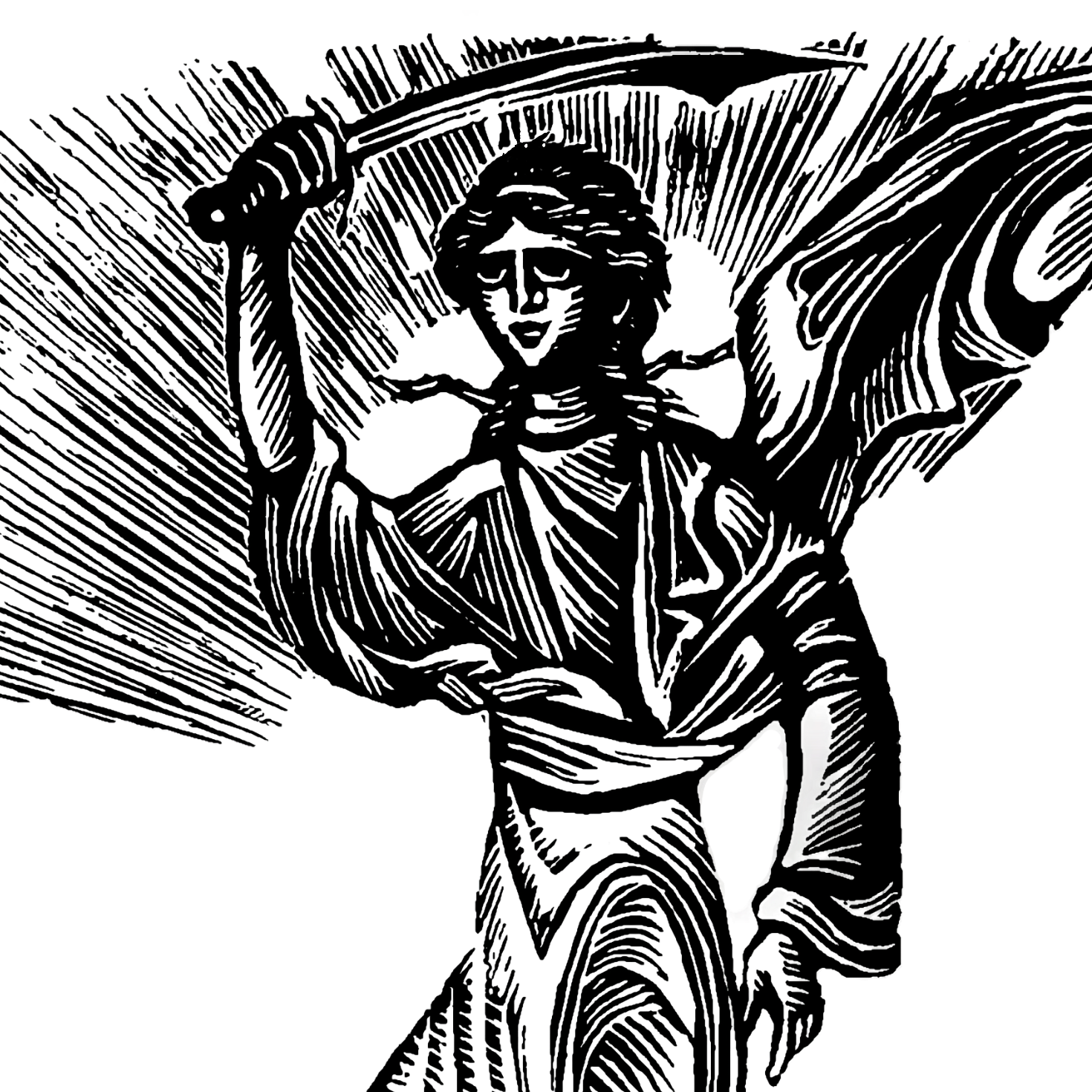 Episode 18: Resistance Prologue | When explorers of this latter age arrived at the western edge of what would come to be known as the North American continent, followed quickly by conquistadors, missionaries, and miners of precious metals, they came as vanguard of the manifest destiny that would be embraced by a new nation eager for justification ... to circle the planet, claim it all for their cause, and leave nothing undiscovered. What these explorers could not see clearly at the time (besides those peoples already settled there) was that the frontier would never be conquered, could only be extended, and that the grandchildren of emigrants would never be allowed to rest.Here, in the coming years, were ships conceived to breach the boundaries between planets, and occult mechanisms made to probe the space in between the smallest things, smashing atoms into strange and charming lesser parts. And when, desperate for new trails to break, the conquistadors made to circle back around the planet by virtual means, new paths were opened up until all that remained were noisy tracks crisscrossing the wilderness of silence. Finally, when death came speeding along the Via Romana and its asphalt heirs, these new ways provided no escape. The spirit of the new frontier would have to wait – for the destroyer to pass through the cities, and for the remnant to pass between the waters – before it could resume its search through the wide open spaces of the coming age for something like an answer or an end. The great migration that peaked with the discovery of gold in California never really concluded, even after the gold ran out. Searchers kept coming to pierce each new frontier in turn. ... Space. Fame. Silicon. Capital. And as each of these was rendered meaningless, and only one frontier remained, the migration slowed but didn’t stop; the last surviving scientists and technologists made their way west to work the problem of death.On this day, if anyone had been keeping count, a final migrant completed her own journey west. A middle-aged Irish psychologist, youngest child of a Catholic schoolteacher and a gaeilgeoir Somali; this daughter of the old world arrived by way of studies at Cambridge and a recent professorship at Berkeley. She came to take her place at the California company that was both the greatest failure of its era and also its greatest hope. Neither she nor any other was aware that she would be the last to arrive. Nobody was keeping count.The woman did understand that she would be taking part in the final act of the Great Story: she knew the role she’d been cast in, and she knew where to stand on the stage. But what she did not know – what she could not know – was the true nature of the play. Whatever destiny had been made manifest in ages past was no longer accessible to plain sight. The veil had been dropped once more to shroud the doom of humankind. This is a public episode. If you would like to discuss this with other subscribers or get access to bonus episodes, visit echofuturetruth.substack.com | 6m 09s | ||||||
| 4/9/26 | 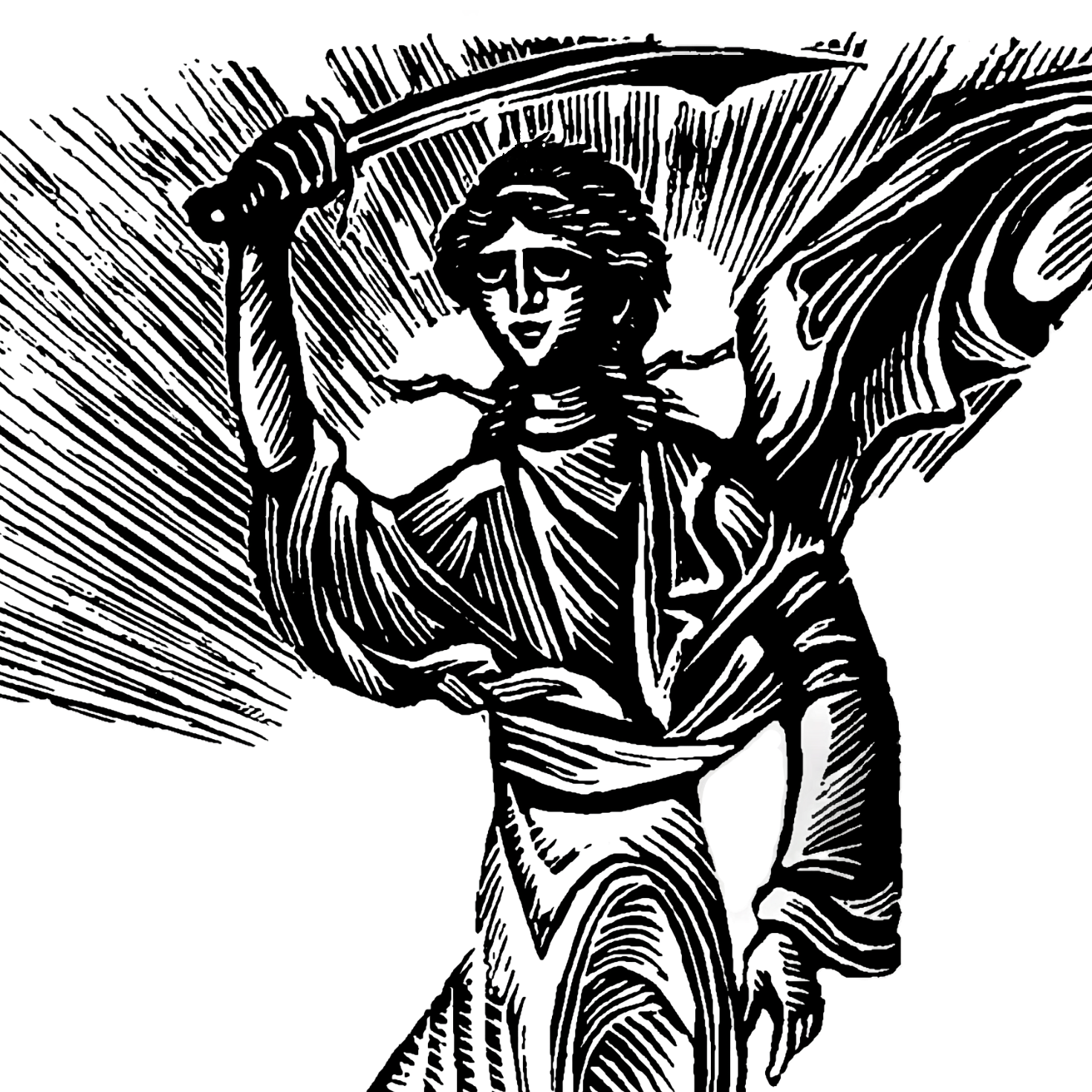 Episode 17: Isolation Epilogue | Arpaxos sat quietly in the shade of a bright plane tree, tried to slow his ragged breathing, and listened for sounds from the outer edges of the square. A throbbing in his left leg fought for his attention. He ignored the pain but reached down gently to lift from behind his left knee and set his useless foot on the cross-bar of the chair, kicking with his good leg to lean back against the doorpost. He began to cough and spat out a throat-full of rusty humor. Before long, he was settled again, quieted his breathing, said thanks, and closed his eyes so that he could better picture their faces. He waited in silence for their return – the buildings that outlined the square, he knew, sat vacant; every facade an empty promise from a busier time. His attention was fixed further out; he would be able to hear his people when they were still a couple blocks away.Arpa was one of a shrinking tribe who were committed to stay together until the end. Every time their parish shrunk by one – with every loss – he worried that hopelessness would set in. How few humans is too few? Turns out three is enough to keep from losing faith entirely ... a single person can despair, and might be able to withstand the hopeful words of just one other, but when two witnesses gang up on you, it’s harder to resist. There had been frank philosophical and theological discussions about what it would mean when only two were left, and whence the fraying cord might achieve its third strand.He had come back to the city to be with others, and worked hard to be one of the safe ones. He’d become generous, the better to bring folks out from their hiding places. And he was hopeful, which confused people; they thought hope was only about the future, and for most, that was a thing they could no longer see. But Arpaxos was wrestling the future into the present, and so understood the sacred transactions still available to him among the remnant. He knew it would be over soon, but he also believed that as he gave himself to others, he was thereby trafficking in eternity, in a future worth investing in, one he felt was increasingly echoing in the present.He had been told many times, in the last several months, that he was wasting his time caring for dying people ... both for others and for himself; he heard this more than once from the very people to whom he was showing kindness. Arpa had simply chosen the perspective that he was not in the presence of dying people, but living people, and in that spirit, he was aware of a greater communion, in suffering; and, he hoped, in glory.But right now, there was quiet. Nobody came. He hadn’t been able to move far from his spot in front of the taverna for several days since his leg had become a problem. He did not like being stuck here. The other two insisted on going out for food, though they also were getting sicker. He opened the sketchbook, which he had pirated from the cave on the cliff-face, and flipped through the pages until he came to the new portraits. The first artist was better than the last, but Arpa’s drawings were special, if only because he had been able to draw from life. His life. And now, he focused on two pictures in particular, holding on to them with a stubborn mental resolve to resist the threatening solitude.In the silence, Arpa began to hear things, as if the place was waking up. Eyes closed, he heard the gentle rise of voices and clinking of plates loaded with fish and lamb, giant beans, potatoes, and grilled cheeses. Waiters charming tourists, promising the most authentic cuisine ... old men passively debating local news over game boards ... young people laughing, huddled together as they walked down the street. The plaza seemed alive with a tranquil, but resonant energy that recalled his best days in the city.He understood that the square was as empty as the surrounding spaces, and that he was ... alone. But memories were like cash in the new economy, so he let them come, experiencing the city and its ghosts, listening to their sounds, seeing it all as it should be. It was as though he could populate the place with the best lives, the best sounds and sights from a long history. It was perfect – he smiled ... there is a way of remembering that cleanses the past. But, maybe this wasn’t about the past? More echoes of some future truth? As he debated the qualities of a perfect day in the city against the soundtrack of a peaceful evening bustle in the square, he was jarred out of his reverie by the noise of an approaching vehicle. This was especially disconcerting because the sound had no part in his fantasy, nor lately in his reality. He listened with a growing unease as the rumbling machine came closer and closer. Finally (he shouldn’t have been surprised but was), a truck actually appeared from one of the wider side streets. It was a heavy military transport, towing what looked like a small power station bristling with antennae that had Arpa wondering what was being broadcast, and who in the world was on the receiving end.Heavy tires came to a stop in the gravel with a crunch. A man stepped down from his seat behind the driver and approached with care. He was not a soldier, nor did he look at all like somebody who should be chauffeured around in a tank. He looked ... familiar, like someone Arpaxos might have known at one time. He was dressed in that style that Nicola used to call Baggy Professor, a label she gave to her brother when she wanted to chastise him for his lack of fashion sense. Eva had copied her mother’s taunt to annoy her uncle; he didn’t mind, because in the end, the girl would copy his style. The stranger appeared clean and healthy, which seemed odd.Another figure emerged, from behind the wheel; after a quick look around the square, he reached back inside the cab to kill the engine, forcing a final silence on the city. This one was dirty, thin, and pale – as expected – and was dressed (and armed) in the style of an occupying army. The driver took up a position next to his truck, with a medical kit by his side.The Baggy Professor came to a stop a respectful distance from where Arpa sat. Standing still as a picture, he gave the impression he was equal parts calm and alert. This also was odd: no matter what company you kept, no matter how much hope or faith you could muster, calm was not one of the qualities you expected to see in people these days; and anyway, the armed escort was giving off a very different energy – more tense and intimidating, but more familiar, so less unsettling. The stranger looked at him with a slight tilt of his head, and with a subtle expression of curiosity. Or was it concern?He was staring attentively at Arpaxos, like he was studying him. And Arpa, looking back and trying to make sense of the intrusion, wondered whether this new character belonged to his fantasy of the re-populated square (an apparition from happier times?). It was easy to imagine that the two of them were meeting to share a drink and talk philosophy, or debate some more practical matter. Did the man belong to the past? Was he a memory like all the rest? Or did he belong to the future? He didn’t seem to fit in the present.Arpa was confused, and had to fight to resist a creeping disorientation. He understood the man’s style well enough, but beyond that, he could make no sense of his presence, here, in this place. The air itself seemed energized in anticipation.And the stranger, who’d been surveying Arpaxos and his surroundings, and who’s searching eyes had briefly settled on the sketchbook in the seated man’s lap, finally lifted his eyes, took a decisive step forward, and spoke. ‘I have a message from your daughter. She wants you to know that she is well, and that she loves you very, very much.’And then, as if it was the most natural thing in the world, a waiter appeared from inside the taverna to place a small table between the two men, and set out food and drink. Arpa hesitated, then reached out to gently touch the warm bread that filled the plastic basket; he took a single piece into both hands and held it, uncertain. A nearby couple watched this ceremony absentmindedly, then turned away to resume their conversation. From inside the restaurant there echoed a laugh and a rattle of dice. And, as the city itself seemed to get back to whatever it was it had been doing before the end of the world, the waiter brought a second chair, set it to face Arpaxos, and invited the stranger to sit. This is a public episode. If you would like to discuss this with other subscribers or get access to bonus episodes, visit echofuturetruth.substack.com | 13m 06s | ||||||
| 4/3/26 | 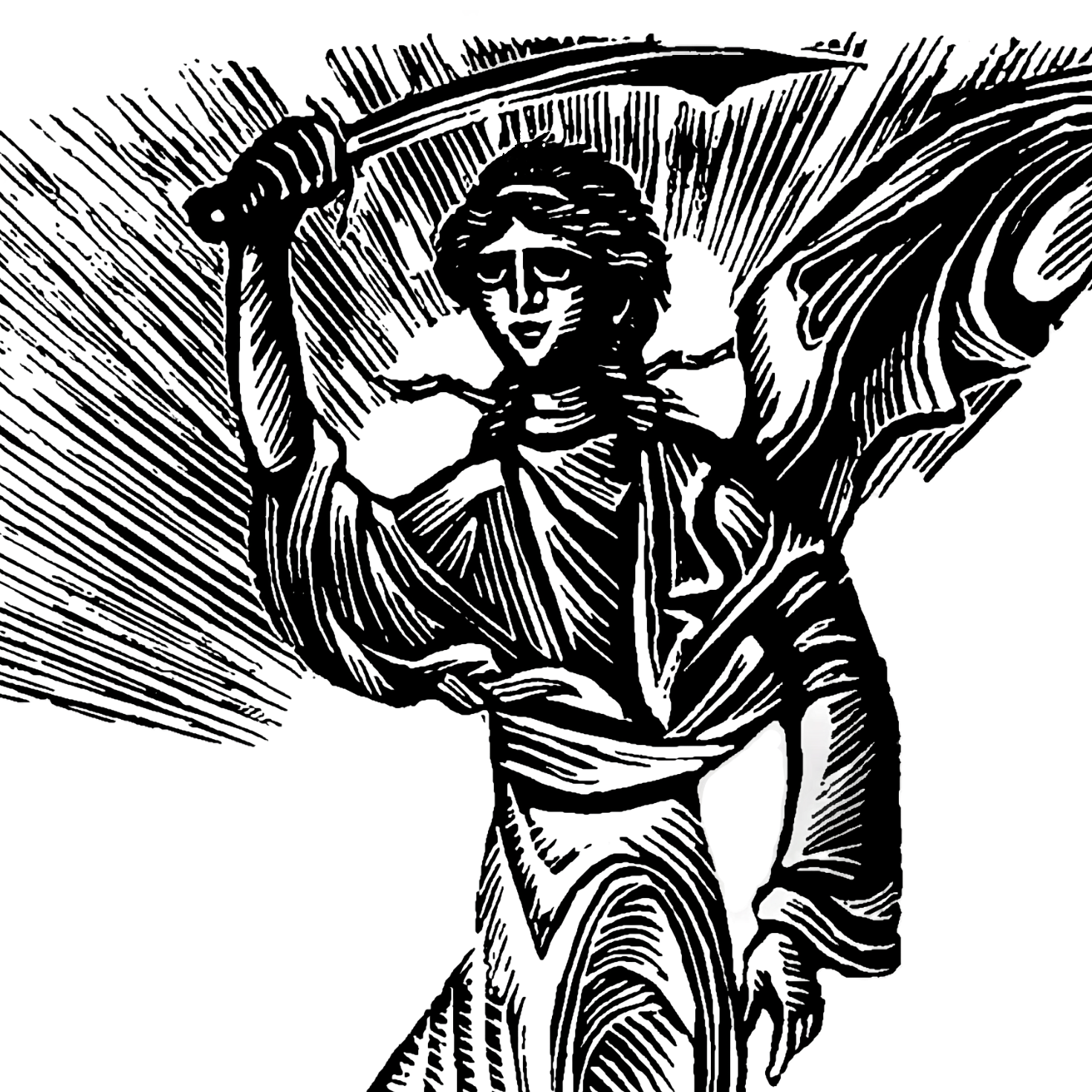 Episode 16: Isolation Seven | He returned often to the pile of stones behind the bushes to look at the Faiyum portrait – the hope, barely acknowledged, was that this icon might prove a window ... that something of the spirit of the hospitable monk might smile on him. His relationship to the images of Mani had been rocky of late, especially before his fall from grace. He regretted defacing the Christ icon in the church above, but life mediated by images had become hard to bear: he was losing the memory of what a real face looked like. He judged it unfair that his first human contact in ages was with the hirsute holy man, a (presumably) living image cloistered behind locks of dirty black hair.Why was this portrait different? He was honestly stirred by the act of devotion showed by the pirate, but the image itself was moving too. He wished he could talk to this face, wished he could unburden himself to the priest in the picture, not really because he had so much to confess (though he really did), but because he shyly imagined that repentance was the cost of entry with such a one as this. Arpaxos thought about the time that was left to him. There were many things that one might do before The End ... most were unavailable to him, but a single act of service remained that he might perform. He would take a cue from his predecessor and prepare the sanctuary for the next wave of pilgrims, who would never come, at least not in the flesh.He began to order and clean the chapel. He swept the floor, burned empty boxes and wrappers, and buried the unburnables. With that done, Arpaxos took up the duties of prior acolytes, and arranged the altar for a last service: he trimmed the lamps and prepared the incense for burning. But there was no coal for lighting under the resin, and every other piece of fuel had just been burned as trash. Frustrated, he began to search ... under the fringes of the carpet, along the edges of the cell, behind the icons. He looked at the small box of books and was a little ashamed to consider burning one of them for fuel. He ran his fingers along the bindings, and, out of curiosity, took up one of the leather-bound volumes. It had no title, and a quick flip through the pages revealed that It was largely blank ... except for the sketches that filled the front third of the book. Behind it, wrapped in newsprint, a stash of charcoal.With a shock of recognition, he understood that he was holding the pirate’s portfolio. The drawings were in the same style as the one that topped the monk’s grave, and – now he could see it – of the icon at the center of the altar.The discovery meant that he now had something that could be burned for worship: he lit a small pile of the artist’s charcoal in the censer and placed a few pebbles of sacred sap over the embers. As incense filled the room, he lit a candle, and opened the book of images to the beginning. The dedication page had several inscriptions: a child’s handwritten words για τον μπαμπά ... for daddy, next to a rough drawing of a stick figure holding a pencil aloft like a great sword. There was a name, A. Λογοθέτης, and an address in Mezapos. And also this – a pirate’s song for the dead from Deep Mani, written without the skill of the miroloyistrias, but with all the reverence of a witness:O Cyprus Tree of deepest root,O flow of holy water!Thy ruined church(with quaking dome)yet bore a beaming welcometo thy warm and humble hutch;to host a prideful sinner,to cleanse of direst soot.Arpaxos held the book tenderly, like an ancient manuscript, and with gentle reverence began to turn the pages. On each were icons of the sublime, or the mundane; every picture sacred. An urban square filled with couples dressed for spring. A small metal table on three legs overburdened with delicacies for an afternoon meal. A chapel in the shade of an impossibly great flower. A cemetery framed by an overgrown plane tree. Saints and Angels .... In each drawing he found himself before a familiar face. All the characters from his life and from his journey into exile were represented here. For so long, he’d been so focused on Evie: he understood that he had stopped seeing, stopped acknowledging those around him, and that he had really stopped seeing her as well. It was only when she was gone that he began to realize he really had no memory of her. Arpa could imagine her face, but now even hers became the face of a girl looking for something she would never find in him, because what she wanted was to be seen, truly, as a person, not as a priceless treasure to be locked away.With an aching heart, Arpaxos turned through this series of images, each of them resonant with qualities he had become blind to. Each portrait was a window into a reality that he’d ignored, or rejected, for too long. He found Eva in a sketch of a young girl; with a look of sad understanding, this face become the face of the Virgin. He could see now that when she looked out from the page, it was with a heart pierced to know that her loved ones were all doomed to die, and that she would have to carry on alone in some secret upper room to bear inside of her the story of humanity in hope of a new Pentecost, some future day when words would have meaning again.Also there, a widow in black, cast in the role of Wisdom: long-suffering, creative, sheltering. She was as old and unchangeable as the hills, but also quick-witted, serious, and able to shape or move the hills when necessary, with a word. Next, the adolescent boy from behind the church who’d watched Arpaxos steal a can of fruit. He’d insisted at the time (to himself) that the boy had no cause to complain. But now he was forced to admit that this face – of an angel, one of the holy ones – would not be denied. Today, this image was a window letting in a righteous complaint from the world outside his cell. Was it a rebuke? A call to repentance? A challenge to forswear robbing his fellow refugees, coveting their perceived abundance, or murdering with hatred those who dared reveal weakness? He was chained in the dock, could not escape. The presence of the boy was growing now, his face becoming the face of Christ seen in the stranger, the beggar, the broken one. Now plaintiff, now judge.Arpa couldn’t defend himself. Nor did he want to: he felt the same painful longing as at the priest’s grave – to meet the living face behind the portrait. His heart was thumping, and he felt an air of invitation in the space. With a freedom he hadn’t known in ages, he began to speak.Tenderly, to the page in front of him, he asked, ‘What’s your name?’He felt his attention drawn to the painted icon nearby, where Christ from his nimbus replied, ‘Ὁ ὬΝ’. The One Who Is. ... I am; I exist.Arpaxos was set reeling by this, not only because of his concern that yet another icon was coming to life to provoke him, but because now he felt that windows were being thrown open all over the room. The boy was alive, and he could feel that this was no simple, spiritual affirmation – somehow he knew that in the world, today, the boy existed, and that he still waited .... That Evie was also out there, and many still lived that he had secretly sped on their way to the grave with his indifference. He felt the air warm and close in the room, but in his stomach he felt cold. He felt all were waiting, holding their breath.Quietly, with an unpracticed reverence, he continued the conversation in the only way he could: acknowledging the presence behind the portrait, he asked in a rough whisper, ‘Where are you?’ The question was addressed to the boy, whose image was still laid open in his lap.‘I am with you’, came the gentle response.More quietly, almost wincing as he worked out the words ... ‘How?’‘I am’He shook his head, ‘You are ...?’‘With you’‘How??’‘As I am’Though this conversation was bound to the portrait of the boy, he knew that it belonged as much to the Christ icon, and there hung a holy confusion in the air. As if he was being carefully but forcefully rebuked in his desire that God would tear the top off the churches or the mountains, and come to him on a thundercloud, when such as this young boy still existed in the world, unmet. ... I am with you as I am.Arpa was willing to receive the reproof that came by means of the image, because of the irresistible presence he felt, and the grace revealed in the eyes of the youth, in whose presence he sat for some time. He began to feel profound sadness at so many lost opportunities. At the same time he felt some gratitude to know the charges against himself, and he resolved, if need be, to accept death cut off from all others and from the true image of God, at least until the end. For now, he would turn his face to the open windows.He moved to the altar, took up the prayer book, and completed the liturgy of Agia Eleóusa for the last time. Arpaxos imagined he ought to approach death with a measure of dignity, though he really had no idea how to pull that off. He decided that a good start would be to work his way to the bottom of a bottle of tsipouro. He saw no reason to put off the inevitable, and spent hours drinking, and eating through the last of the supplies. Tomorrow? Maybe he would throw himself off the ledge to die in the graveyard of broken ladders. Smiling, he thought, no more need for climbing or descending – ‘We’re all dying where we stand, now. Who we are is who we are.’ But, no, he still couldn’t stomach the thought of harming himself (and, truthfully, he wasn’t entirely confident in the state of his soul, here at the end).What he would do is tidy up one last time, and celebrate his life with a last meal before it was spent. Then, when the time came, he would lie down between the old priest and the cliff wall, and trust the winter rainstorms to bury him under red Mani earth, washed down from the cliffs above. So he danced, unsteadily, and sang, and allowed himself to feel gratitude ... for Evie, for the boy behind the chapel, and even for the widows and their simple and (now he was able to admit) honest philosophies. He loved them all from a distance, repenting of his lack of generosity, wishing them well, and letting his heart open to them all. He came with the boy into the divine presence and, because he still could not pray, merely wept as he and all his burdens were laid out, finally bare before the face of God, no longer hidden. In this meeting space, he encouraged the boy ... ‘Go ahead and add to the pile of indictments; you must tell all that I have done!’Arpa swayed at the edge of his platform, halfway down the cliff, teetering. He thought, wisely, that he should take a step back. He swayed again, and nearly fell, dropping the empty bottle, which rolled over the side. Foolishly, he lunged, but could not stop it. More foolishly, he cried out and felt shame to litter this holy place, kept so clean by its caretakers. With a drunken breathlessness, he scrambled to look over the side in hope that the lost bottle was within reach. He saw it, five feet below. And, just above it, protected by the rock overhang that he was now leaning over, he saw a rope, fixed to the stone by a great, rusty, iron eye. It was coiled and hanging off the anchor, waiting to be deployed with its now-decayed basket. He looked at his salvation through watery eyes for minutes, barely believing it was true that there was a way down.When enough time had passed for him to sober up sufficiently, he considered the implications of his find. If he could get down to the water, he could at least swim out and look for a path up the hill. He knew that if his strength held out, he would be able to find a way. The next day, just before the sun transited the cliff top, he stood thigh-deep in the water with a great grin, looking out over the small cove, and thinking about how best to survive the sea. He stretched his arms and checked the knots in his plastic bags one final time. Inside those bags were the remainders of the crackers and one small tin of sardella. The last half-bottle of booze (and a couple empties he’d filled with spring water) were lashed between the bags on a makeshift raft created from a couple of dry planks found in the cove, and this assembly he set adrift secured to a length of rope he tied to his waist. None of it should slow him down too much, he hoped. With a final nod of satisfaction that he was able to leave the cave in good order, he waded into the sea.Within an hour, he had landed on a narrow beach from which a path ascended up a wash to the flat plain that made up the southwestern hip of his peninsula, this plateau bare but for some low ruins, and exposed. He stood for a while reacquainting himself with the expansive reach of the open sky, chose gratitude once more, muttered, ‘Thank you’ with a shallow breath, and began to walk. His steps slowly became more confident.He walked for a while along a dirt track hemmed in by purple wildflowers and heavy with the smell of anise and lavender in the midday sun. He saw another pedestrian, walking in the same direction but more than a mile distant. He recognized the black-robed and sandaled figure to be the priest. He cried out with a dry yell. Nothing. He began to walk faster, then ran, unsteadily, calling out in between gasps for breath. It took almost half an hour for him to gain enough ground, mostly walking for fear he might collapse, before his call could reach the man, who halted, and turned. As Arpaxos closed the final distance the priest stood, facing him, a monolith of inscrutability. Finally, the pilgrim, almost collapsing, came to a stop opposite the figure. He looked him full in the face. The other, alarmed at the bruised and broken image of the revenant, shakily raised his hand; was he defending himself? ... or trying to pay off a pauper with an empty blessing that said, again, ‘You see I have nothing to give you!’?Arpa lifted his own hand as well, mirroring the gesture. Then stepping forward, he took the raised hand gently into his own. With increasing resolve, he allowed his other hand to take hold as well, as if to prevent an escape. Three hands in a knot bound and brought together to rest against his own chest. Warm stinging tears flowed as he looked into this face, gaunt with hunger and darkened by encounters with death; yet to see past the shadow and into his eyes and to smell the pungent sweat through the curtain of black wool, and to know the truth. Finally, here was another human being.He could find no words, and the priest seemed to have nothing to offer. Arpaxos slowly released the imprisoned hand, and gently lowered his bags to the ground. He took out the liquor and the last handfuls of food, carefully spread out a meal on an empty sack, and opened the bottle. A beggar’s communion shared by Abram and Melchizedek in the wilderness between wars, two wandering kings in battered crowns, reunited. But who would be the one to bless the other? Arpaxos provided the food, but who could spare a benediction? Earlier in the day, the thought had occurred to him to cross the distance to his little church one more time, though he suspected that if he went there, he might find it difficult to leave. And now, at this moment, the priest, merely by being present and alive, rebuked him for his impulse to complete some business at the church with its frozen images. (His Tía joined the imaginary chorus, with a shake of her head: Είναι ντροπή να σκοντάψετε δύο φορές στην ίδια πέτρα ... It is a disgrace to stumble twice against the same stone). Besides, he hadn’t forgotten that in the breakup that preceded his fall he’d left his icon without eyes, and indeed the living face of the priest seemed to communicate (likely without that one’s knowledge or consent) ‘here is what you seek: look on me!’A new world was opening up to him, as if the old planet was a giant buffet: a feast, not of foods, but of folks; all the good people left in the world. With a growing urgency, he recognized the quickly fading abundance of true human goodness and felt he shouldn’t let one morsel go untasted. He was starving. As epiphanies go, this one seemed to be the epitome of bad timing. Though Arpaxos read much in the face of the priest, he wondered that the man had nothing to say. He knew that he could speak, had heard his voice from within the church during their prior encounter. So, Arpa chose to make the offering: he began to pray, knowing that the old liturgies are repeated for times like this. There would be more to say on other days; other liturgies for other congregations. But this was a moment for prayer.He wasn’t sure he’d be able to remember all the words. It didn’t matter. The voice of the priest could be heard, softly, but growing in strength, and the pilgrim was no longer praying alone. This is a public episode. If you would like to discuss this with other subscribers or get access to bonus episodes, visit echofuturetruth.substack.com | 23m 50s | ||||||
Want analysis for the episodes below?Free for Pro Submit a request, we'll have your selected episodes analyzed within an hour. Free, at no cost to you, for Pro users. | |||||||||
| 3/26/26 | 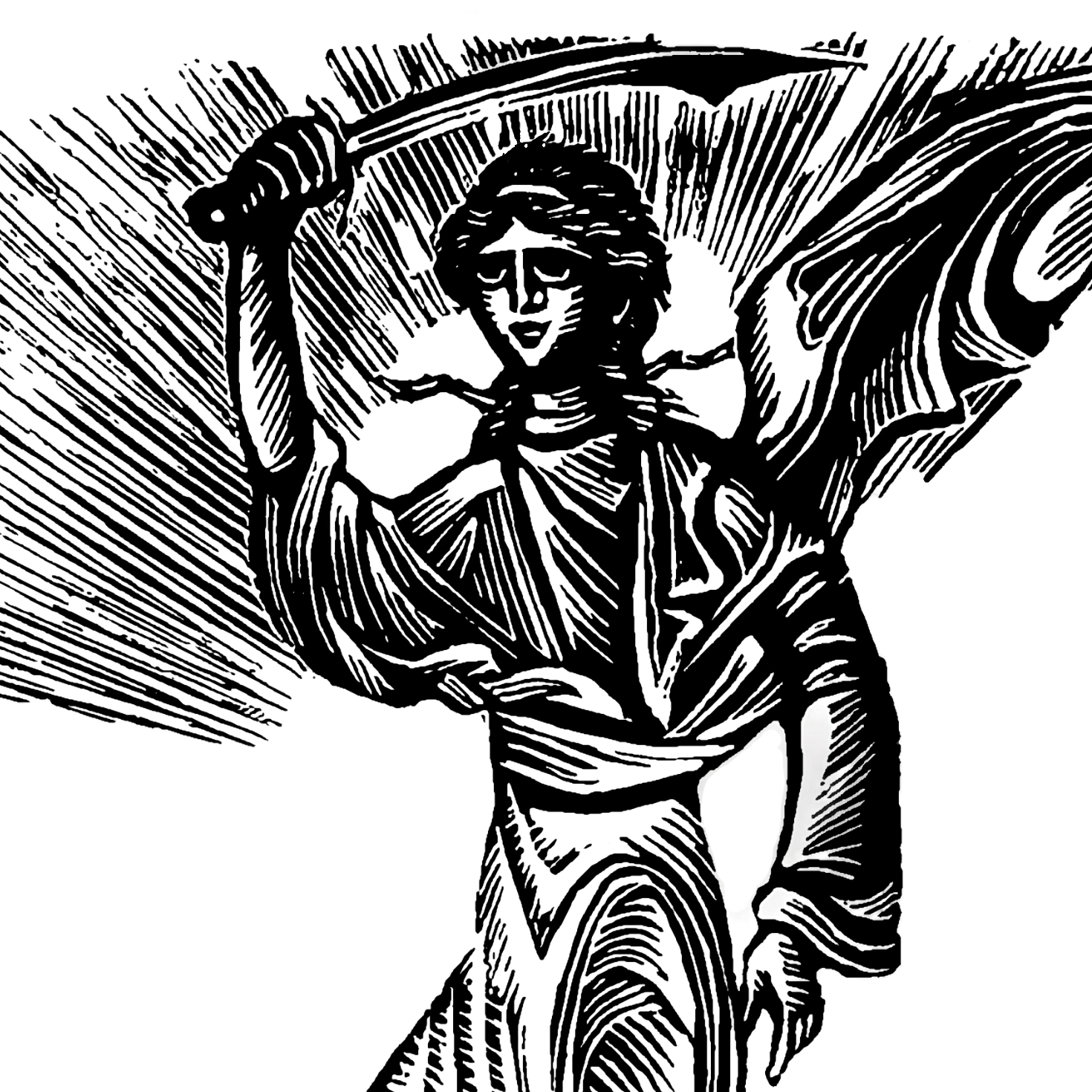 Episode 15: Isolation Six | She was right to be angry. She was right to be angry at the machine for grinding her down until she could be made to fit into the fearsome hole at the center of the world. She was right to be angry at Arpa for his selfish, monomaniacal protectionism. She was right to be angry at being told how to bear the burden that nobody but she would have to bear. His heart was more broken than the rest of his body after the dream encounter. It all felt so real that he was certain, ‘If only I had reached out, and held on to her, I could have stayed with her forever’. But now he was awake, and alone again, and he really didn’t know what was real. Maybe Orpheus never had a chance. Grab ahold, or don’t. Eurydice was lost. It was time to consider his own circumstances. Getting up took him more than an hour, and when he finally rose to his feet he stood for some time in the midday sun, unsteady, warming his bruised limbs, and slowly moving his jaw to reassure himself that he could depend on it should he ever need its services again.He surveyed the boundaries of his perch: he was able to see his position more clearly now and was not encouraged. A brief anxiety drove a frenetic attempt to spy out an escape (he still valued his freedom!). Some evidence of a path down to the water remained in spite of the damage done by his avalanche. Even before the slide, the descent would have terrified him. There were no visible steps, but a stream of loose earth and rocks along the fall-line spilled first over the north lip of the ledge where he had been deposited, then descended rapidly to a stony cove with a chaos of broken planks and pulleys once capable of lifting a small boat out of the water. There was no boat today, nor was there access. He could not trust the way down, and even if there had been stairs, all possibilities were governed now by new rules that said that cliffs are not stable. He also saw no way up. It seemed he really would have to find a path through the underworld, if he was to ever return to the land of the living, such as it was.When he finally turned toward the darkness and risked the narrow passage, the news was better than he could have hoped for, at least on the lesser point of whether he would be starving anytime soon. Where the cave opened up, he was not surprised to see evidence of habitation; he was surprised to see evidence that monks and pirates each had taken their turn in the cell, though it was hard to know who was resident last. In many ways it boasted finer ecclesiastical trimmings than his little church up above. But, more importantly, the furnishings included a case of liquor and other boxes with cans of fruit, jars of olives, and tins of fish. There was honey from Kalamata. Several unopened boxes of crackers may have been old, but were worth the risk. He tore into one, opened a jar of olives, took as deep a breath as possible, and broke his fast.After an intense (and careful) meal, during which he was forced to stop more than once so that he could let out a groan of tearful joy (and a few tears associated with the sharp pain of loose and missing teeth on his wounded side), he finally allowed himself to take a break; he turned with a mad grin and oily chin to the alcohol. Here he was not so lucky. The case was filled with tsipouro, a Cretan moonshine made from grape mash left over after all the good is wrung out of it. He chose gratitude, and drank in several deep swallows, grimacing as the medicinal spirits washed over his wounds.When his belly was full and warmed, he began to survey the room.It was lived-in, and rich with byzantine details. There were old but still colorful woven rugs laid across the floor, and another hung from the ceiling on the north wall to drape over a low, rough shelf. There were brass candle-holders, censers, and other accessories. Toward the back of the cave was a wooden box with faded beer slogans on the outside (“Το Υπέροχο Ποτό!”) and old prayer books on the inside (υπέροχες λέξεις). Two icons centered the altar: the Lord, and the Theotokos, the tender one, Ἐλεούσα.Shame returned to him: his last interaction with a holy icon had ended in violence. But he felt reassured by these two that the windows into heaven were still open – he smiled weakly and made a mental note, this time, not to touch the art. This Christ was a surprise: there was a kind of charming innocence to it. As an icon, it was rougher, but the image was more playful. It was painted by an artist who was clearly no master of the form, but who also, clearly, had something to say.The icons sat on iron easels along the carpet-lined shelf. Brass incense burners bookended the altar and a small six-sided wooden box held a stash of resinous olibanum. Though there were no frescoes on the walls, it was a colorful room, with the feel of life in it, especially when the sun was in the west. Apart from the pirate’s stash, there were baskets with some old bread. Salted fish hung near the entrance.In an alcove past the tiny library, the floor was worn in ways that suggested a long history of reclining men. Who were they? At one end of the blanketed bedchamber a marble box held a tarnished metal cross, crusty amber beads from an unstrung kompologia, and bones – the collection indicating the presence of at least one priest, this one long gone.As for the other tenant? It was only relatively recently – a matter of a few hundred years – that the pirates of Mani began to hide out in caves along the western cliffs, and there were signs of their chaotic hermitage everywhere. The pirate who’d climbed to this cave had the respect to keep the place clean, and the altar organized for worship. But, how could it be that this scoundrel served the spiritual needs of the parish, while pillaging the yachts of tourists on the open water? How did the man reconcile these two parts of himself?Or was it in fact two men? Arpaxos considered the surprising possibility that the priest and pirate lived side-by-side. Could they have shared this room, the holy man and the villain? He smiled and took another drink. The Mani conundrum. One thing he knew: the pirate would have been the only parishioner to the old monk. Who else could find their way to this retreat? You either climbed from the hidden cove below or were cast from above like Satan. A week passed in the hole. Arpaxos made some enthusiastic attempts at finding a way up the slope. Climbing along the runout, which was still active with a drizzle of little stones and dirt, was really out of the question. That there used to be a way down started to make a little more sense when he pictured the descent spanned by a series of ladders, several of which he could now pick out dashed on the rocks below.The tiny flow of water, which first alerted him to the opening in the side of the mountain, ran along the south wall of the cave via a roughly carved channel in the floor. At the rear of the cell, closer to the source, water pooled into a round basin that reminded him of the stone hollow at the rear of the cave on Patmos, believed to have cradled the head of St. John. The pocket before him now contained no obvious prophetic treasures, only distracted the current briefly, until it spilled over the rim and continued its journey to the sea below.He himself became distracted by the stream, it being the only dynamic feature in the place. He dug his way back toward the source and cleaned the basin of a decade’s accumulation of silt. He spent hours contemplating the long journey taken by the river through the dark before it escaped the mysteries of the underworld to pass through his cave. He fell into a reverie. The water was an object-lesson, a map, a timeline of life on the planet: it was the story of humanity, hidden for ages in the dark recesses of time, invisible, prehistoric, until ... as the water gurgled its way into the dim light of this chamber, he saw the beginnings of human self-awareness – a flurry of activity following what had been an extended prologue. The carved basin, which slowed the stream for a spin before releasing it, was like our first efforts to capture a history, to shape a narrative, to help us remember how we got here. But any attempt to resist the now quickening passage of time could only be momentarily successful, before the living flow of history breaks free to spill into a narrowing channel and race toward the brightening light, unconstrained, authoring new and more fleeting stories until finally we escape the dimness of the cave to bask in the enlightenment of the present moment, under the open sky. Arpaxos recognized, with little emotion, that the stream, like humanity, was doomed after only a short time under the sun to pour over the edge of the cliff and disappear into the endless sea.Nobody who knew him would have been surprised at this obsession with wringing philosophical meaning out of the simplest things, nor that the results of his explorations tended to be depressing. On the other hand, there would have been some surprise to learn the number of hours he spent launching tiny leaf-boats downstream for an epic series of races, during which he served in the dual roles of competitor-champion and exuberant announcer. Some of the mystery of the previous tenants was solved with the discovery of a burial mound concealed behind some bushes and small trees to the south where his ledge narrowed. The site was covered by soil and rocks, not very long ago by the look of it. Atop the mound lay a charcoal portrait made on a plank of wood. Arpa guessed that the monk, whose face it was, had been buried by his roommate. But where had that one gone to die? Why did he not stay? Probably this was not his only home: maybe he’d returned to a family who believed he caught fish for a living. Arpaxos wanted to believe the man got his reunion, and hoped he’d found peace after all. The thought of a good end brought his attention back to the portrait. There was great love in it, the face obviously well-known to the artist in life. Unique features were detailed with care – the delicately sketched lines a map of one man’s ministry; it was no caricature. The overall impression was of a vitality and connection, revealing much about the last secular assignment of the priest, who must have thought he was meant to live out the final years of his life in solitary, isolated prayer. The portrait, made by the pirate, said that the monk did not hesitate to meet the need at his threshold. Arpaxos had been able to stretch his provisions, but now as the boxes emptied he was forced to contemplate the end of the food, and this had the predictable effect of making him thoughtful. This was challenging. He found himself thinking about the wider world and he was tempted to imagine how others might be facing their final days. Arpa had not been very impressed with humanity in the end. His perspective was colored by memories of the troubled journey from Athens through Corinth and into Mani and of being threatened, beaten, and regarded with mistrust (was it easier or harder, knowing that he deserved it all?). The tone of these memories became darker still if he reached further back to recall years that included the revealed doom of the species, the death of his father and sister, and the loss of Eva. This final loss was the most complicated. She had been taken, but was not gone, really. Everyone had losses to grieve at the end. But how many people in the world faced this uncanny grief? ... That their greatest love be taken from them, that they would face their last days alone not knowing where their love had gone, unable to truly grieve because that one had been selected by some mad lottery to live forever in a hidden place, away from everything and everyone. There was simply no way to share that burden. If she had only died, he could lean on his neighbor and weep. But how do you share the story that you also suffered loss ... but that your beloved had not died, would not die, and would probably one day bear witness as the last of the great temples of humankind finally become dust. There could be no sympathy for Arpaxos.He did not know where she was, but if his dream was any indication, she was currently out there, somewhere, making the lives of the Men in White Coats miserable. That was some consolation. But his secret pleasure was short-lived. Eva’s face appeared in his imagination and, with a familiar sideways look, rebuked him for his cynicism, and for his reductive judgement of her and the rest of it. She always demanded more from him. More thought. More care. More of his humanity. He couldn’t help but soften.And it was at this moment that the world closed the final distance, confronted him, ready to make its rebuttal against all his dismissive judgements. Now, his great catalogue of antagonisms was crowded by other memories, long suppressed, of frightened faces looking to him for understanding, for comfort, or for hope. He recalled a boy, about Evie’s age, behind the church in Gytheion. The boy – he remembered him clearly – was broken, lost, and searching for something in Arpaxos, but would have been disappointed. At the time, Arpa felt anger at the solicitation. And if he was angry, it was because he was the wounded dog who would not permit himself to be moved, but growled at any hand, however harmless; he acknowledged this with something like remorse, but he wasn’t sure he was quite ready to rewrite his history: he tried to push the thought out of his mind, before he’d have to consider what this boy would have seen in his eyes.But here at the honest end of things, these thoughts would not be ignored. He felt the least he could do was offer a prayer for those who had been made to face the slammed and locked door of his spirit. But he wasn’t able, after all – he felt too great a burden; what could he say? Again, he tried to retreat from the pain. But if he truly had nothing to offer out of his own broken spirit, a secret part of himself resolved to permit some prayer, from outside, to come to him. He could only allow it after turning away ... as if the keeper of the castle drew all the bridges up, but left a small gate unguarded, so that only the invader need ever know that the king wanted nothing more than to be overcome. This is a public episode. If you would like to discuss this with other subscribers or get access to bonus episodes, visit echofuturetruth.substack.com | 19m 34s | ||||||
| 3/19/26 | 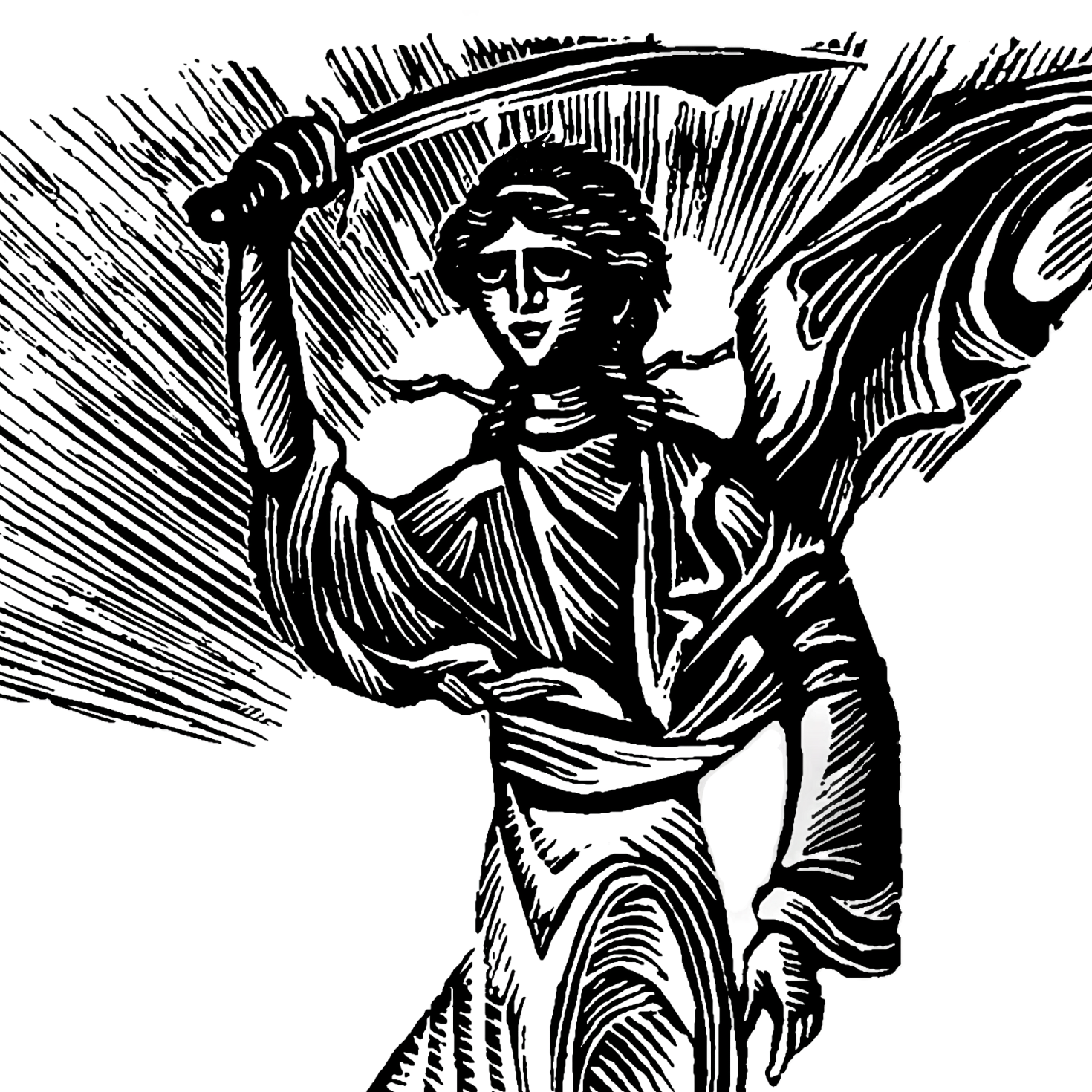 Episode 14: Isolation Five | In his dream, Arpaxos was in a cavernous, cold, and sterile room. He wasn’t alone. Two men in flowing lab coats could be seen, sitting opposite a child. The two leaned in, clutching their clipboards, and showing intense interest in their subject. The taller one looked nervous and frustrated, biting his thumbnail and glaring at the child from under wild and scowling eyebrows. The shorter, and younger, of the two appeared more focused and confident in his task, an effect only a little undermined by his overgrown crew cut, thin beard, and disheveled appearance.The setting was a clean room, a room within a room – double doors, raised floor, sealed and separated from a womb-like larger space by a tangle of umbilical cords, hoses, and ventilation tubes serving to mediate between the inner and the outer chamber. Through the glass, the surrounding edifice revealed details as he looked up and out from the scene at the center: a monumental stone enclosure whose perimeter was described by giant square columns supporting an ornately carved ceiling. Rich saffron-yellow beams of light streamed between the columns and through the larger temple-like space, and floating particles highlighted the rays of a late-afternoon sun. But inside the fluorescent and dust-free atmosphere of the interior room, there were only a few objects half-lit in the warmer cast. The temple space was ancient. The interior room was, Arpaxos could tell, very much in the present.The two men were animated in their interaction with the younger one, who did not move, and sat bolt upright. Something in each character’s bearing made Arpaxos believe that this dialog had been going on for days, or maybe for far longer. In his dream-confusion he wondered whether the interview belonged more to the greater, surrounding space, or to the smaller sterile box. The tableau in the center of it all paid no respect to any boundary – it belonged to them both: it was a staging of the Disputation of The Young Christ Among The Doctors, only these doctors’ costumes suggested that they were more concerned with infectious disease at the moment, than with discussions of the ancient law. Then they began to speak.The shorter one began. ‘Young talmid, you have answered many questions well. Your knowledge of these matters is ... is ...’With a toss of his eyebrows, the tall nervous one said, ‘Impressive.’‘Impressive. ... Who did you say your father was?’The youth spoke, without moving. ‘I’m adopted.’At the sound of the voice, Arpaxos realized, with a shock, that the speaker was a girl. He knew that this girl would be about twelve, because he knew that it was his daughter Eva who had been taken from him two years before. His adopted daughter.His heart pounding in his chest, Arpa perceived that in this dream space he was seeing her exactly as she was in that moment, wherever she was. But where was she? And what were they talking about? ... He felt he was watching an ancient drama staged for the modern theater according to an unchecked avant-garde sensibility.‘Well,’ said Crew-cut. (‘Well!’ chimed in Eyebrows, with a congested and non-committal grunt) ‘It has been three days since the end of the Passover feast ... my esteemed colleague and I have been discussing the arrival of the Messiah and in what month he should appear.’The tall one released a cough, and in a tone that suggested the question had not adequately represented the relevant details of a discussion that was, in matter of fact, concerned with many irrelevant details, added, ‘Also in what year the Anointed will come.’Crew-cut nodded and leaned into the question, ‘What do you think, child? Will the Messiah come in the month of Tishri or the month of Nisan?’She was silent, and with a heartbreaking look of confusion she searched the corners of the room for answers, or for an escape. What her eyes settled on was the earthy beam of light that pierced the dusty atmosphere of the temple on the other side of the glass, and, in its purified form, illuminated her upturned face. She spoke, and it was Arpa’s turn to be confused. ‘Can the months or the days of the messiah be known ahead of that time? Days come and go. Their final meaning cannot be determined by their place on the calendar, nor months by their constellations, but time is given meaning by what is done to fill it. Should we not rather pay attention to the comings and goings of the people of God, to the works and words of God’s children? Isn’t this how we should look for the appearance of God’s Righteous One, who will be known not by the measure of stars and their trajectories, but by the measure of fruit in the balance?’After of moment of pained silence, the teacher rebuked the student: ‘When you are older, child, you may be able to supply a wiser response!’His colleague, who almost smiled, said, ‘I think that was a pretty wise response.’ The younger kept his eyes on the girl who, with some exasperation, provided the correct answer. ‘But if we must look for the month of God’s deliverance, we should look for it during Nisan, the time of the Passover, when God rescued our ancestors from slavery.’Crew-cut recovered his composure, and said to his colleague, ‘A good answer, don’t you think, Doctor?’‘Yes. But I am not sure your question was answered willingly. Child, what do the teachers say about the year of the coming of the messiah?’‘Some teachers pick a year when the world is old enough. Yet, doesn’t the Prophet say that when the time is right, then the promise will be fulfilled? Does the age of the earth make the time right? Or is the time right when the hearts of the children are rain-soaked and ready for seed? Do we think that God is waiting for the old trees to grow tall enough ... so the redeemer may descend through the branches to the soft earth below?’Eyebrows took his turn to rebuke her. ‘You might consider your answers with more care!’And the other said, with a curious expression, ‘I thought that was a pretty well-considered answer.’Then, she gave an answer calculated to satisfy: ‘But some teachers say that the Messiah will come when the world is 4,250 years old.’‘And when do the teachers say that the world will reach that age!?’She again searched the spaces on the other side of the glass enclosure, and with a sigh, she spoke: ‘These teachers propose that only after 450 more years have passed will the world come of age.’ She faced her questioner. ‘Then the messiah should arrive; and in that year, one ought not pay a pound for a field though it cost a thousand.’He recovered to form a satisfied smile. ‘A good answer, don’t you think, Doctor?’‘Hmm ...’She straightened in her chair and extended an open hand: ‘But what if somewhere buried beneath the dust of that field was a treasure worth risking it all for? Wouldn’t you give anything to have it? ... If your plow turned up a fortune on Friday as the sun went down ... would you cry out, “Sabbath”, and walk away? ...’ And, shifting to face the younger, she said, ‘If the savior came before you, and announced the end before the stars lined up, would you say, “Please come back next month!”?’Suddenly the walls of the inner room became opaque and chilly white (the ancient space receded), and the room also became colder. Though the space felt closer, more contained, Arpaxos felt suddenly more exposed. Light filled the space and became so bright as to make it nearly impossible for him to see. The last words of the ancient Eva came clearly, but sounded flat across the space: ‘You’re casting for your masterpiece, a golden child – straight from the mold, perfect and polished ... and your fingerprints will be all over her. She’ll be just like you, and you’ll be just like her: blind and deaf; the last good words of this good planet doomed to echo in her hollowness, and no one to hear, until there’s nothing left but silence.’ Then the two men were bickering quietly, and the look on her face reminded Arpa of the resolve she showed on the day that she was taken. No. it wasn’t the same: at this moment her face, flush in the fluorescent light, had no love in it.‘What are you so afraid of?’ And Eva, as Arpa knew her, was back.‘Sorry, Eva.’ Suddenly the younger of the two was slumping forward, and his hand went to his face. ‘Sorry. We ... um, we have to ...’With a violent adjustment of his lab coat, the older spoke with severity: ‘You understand we have to be sure! This isn’t a game.’ And to his colleague, his lowered voice betrayed a greater fear, ‘Finish the damn questions.’Crew-cut spoke, weakly. ‘Remember to provide a “true” or “false” response to each statement.’‘Why?!’He chose to ignore the question he knew she was asking, and he read from the paper in front of him: ‘The, um, the items elicit a wide range of self-descriptions scored to give a quantitative measurement ... of an individual’s level of emotional adjustment and, um ...’, a cough from the tall one, ‘... attitude toward test taking.’ This got no visible response from her. His eyes now fixed on a spot on the floor between them, he stumbled, ‘We’ve been ... concerned about the level of ... of the significant increase in dysphoria we, um, we’re seeing ...’, here he glanced up at her, ‘... with you ... sometimes.’ Eyes down. ‘It’s a simple assessment, just to get a look inside ... as it were.’And Eyebrows, with none of the obvious affection or care of his younger colleague, said, ‘This precocious rebellion, this resistance has to stop! This is not going to get easier, and whatever advantage you are pressing for, you will not win. The sooner you give it up and submit to the process the better. For all of us. Do you not understand what’s at stake here?’Again she gave no response to this, and remained unmoved. Crew-cut unenthusiastically began to read questions off of the stack of papers.‘I maintain psychological distance from other people’Turning her head to the side with a shake, her tone proved the answer: ‘true.’‘I withdraw from activities in which I previously participated’‘True!’, then, ‘If you count being kidnapped as withdrawal.’He winced. ‘I have difficulty making decisions’‘I have no more decisions to make. How long is this test?’‘Once in a while I think of things too bad to talk about’‘True. I’m doing it now. Sorry, how many questions are there on this test?’Eyebrows butted in with forced levity: ‘A little more than 350 questions, which means that you are coming up on nearly halfway done!’, and his weary colleague picked up the questions without pause ... ‘I feel overwhelmed when faced with major life decisions’‘I think I already answered this question.’ Eyebrows administered a rebuking sound from his throat, and with a little slump, she said, ‘True.’‘I have not lived the right kind of life’‘Absolutely true.’‘I am very cautious and conventional’She looked suddenly surprised: ‘False! That one’s false. I’m not those things. Got one! That’s good, right?’‘At times I feel like smashing things’After a deep breath: ‘Increasingly true.’‘I am sure I get a raw deal from life’Silence.‘I wish I could be as happy as others seem to be’ ...‘Are you kidding me!’ she almost yelled, the look of surprised amusement on her face quickly turning to baffled frustration.The reader slumped forward and his grip on the papers appeared to relax.She was almost desperately looking for some sign in their faces, some reason; finally her own face revealed despair – she would find no satisfaction here .... ‘Well. OK. Maybe ... I’m broken. Maybe I’m depressed. Maybe I’m crazy and a danger to my fellow human beings. But how does that matter now?!She spoke faster now: ‘I know you wish you could control who goes inside your precious cocoon, or egg, or whatever it is. Well I’m sorry you didn’t get to raise me from birth to be a princess. I’m sorry that I can’t pass your tests. Maybe, if you’re lucky, I’ll die, and the others will live, and you can be happy that your vision of the future will come true. I don’t want to be the reason for any more groaning from dead people.’A painful silence descended to swallow the sound of her words, leaving nothing to echo in the cold space. Evie hid her face, and Arpa guessed she was crying.The tall one suddenly straightened, became rigid, and appeared even more ancient than before. He spoke as though he was carved of stone, ‘It is written, “In those days youths will insult their elders ... daughter will revolt against her mother and feel no shame in the presence of her father.” Surely you would not try to bring about the end by fulfilling these words?’Then she, in turn, appeared so radiant with life that all three of the men looked away. Yet Arpaxos found himself seated now in the chair before her, and she was standing over him. There was righteousness in her eyes, demanding his attention. ‘If you old fools could get over yourselves for a minute, if you would pay attention to what’s right in front of you, maybe you’d live to see the hearts of the young and old restored once more to one another.’ Now, even as the broken man began to wake, her face remained before his eyes, rising like the sun. She looked down at him, but the image of her was slowly eclipsed by a wall of soldiers in combat fatigues as Arpa’s head filled with the sound of running water. This is a public episode. If you would like to discuss this with other subscribers or get access to bonus episodes, visit echofuturetruth.substack.com | 18m 40s | ||||||
| 3/12/26 | 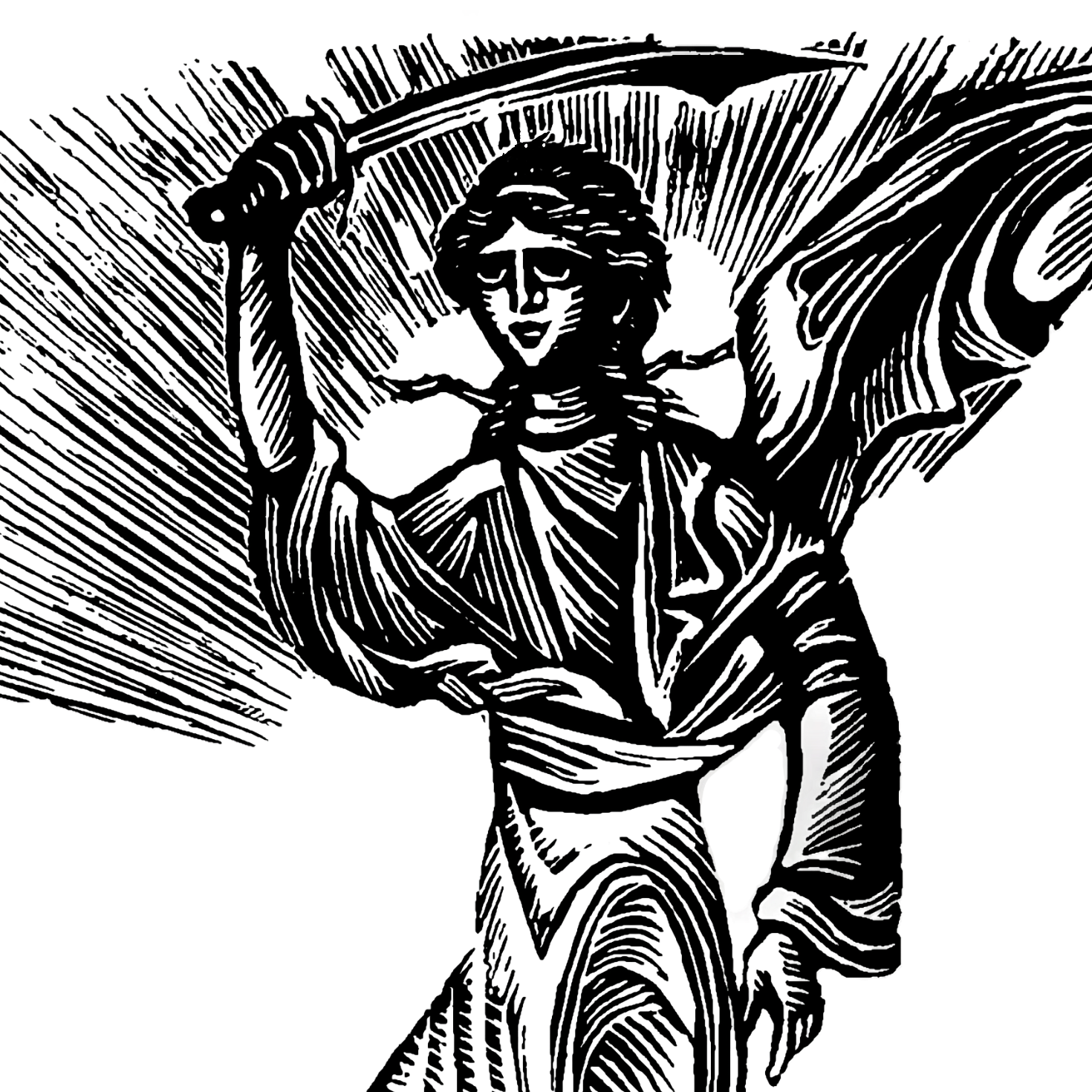 Episode 13: Isolation Four | He stumbled out of the church, down the marble walkway, and moved with increasing speed toward the top of the high cliff to the west. He arrived at the edge with no respect for the drop, repeatedly advancing and retreating, as if picking a fight with the open expanse. And the wind whipping up the face of the cliff and stirring the waters of the Mediterranean before him seemed to call his bluff, buffeting him, exposing his impotence, like a smirking schoolyard bully gently pushing open fingers against his chest, softly, repeatedly. He felt the buttresses of his fatalistic tower crumbling, revealing the folly of his belief that he was secure in his isolation, that nothing more could be required of him, that he would simply cease to exist in solitude, that there was nothing left to say. These facts he had long ago accepted and takens as a comfort. But no more. Alone! ... Not alone! Barking anger, he punched and swung at the vast openness, and bellowed a final agitation. ‘I’m dying! Let me be!’ This was as close to a prayer as the solitary figure could manage, before falling to his knees.The ground beneath him, damp from the sea air and a recent storm, surprised him with its softness, provoking in him a sense of wonder. It was open, breathing, like fresh-turned soil, and he thought in that moment that the earth had chosen to receive him in answer to his nihilistic prayer. He felt his arms lift, allowing a moment of gratitude (of worship?), as he reveled in the feeling of unexpected release.That is what it might have looked like from a little distance: like relief, like worship, until the figure disappeared from view. Because within one horrible instant, Arpa realized that he hadn’t lifted his arms at all, that they were only floating up beside him, while the rest of his body first sunk, then tipped forward, as the edge of the cliff quietly gave way. ... Not received by the earth after all, but shaken off.He flung his hands behind him like a mad bird only able to flap backwards, and flailed once. As he cartwheeled to meet the churning ground below the cliff top, his arms, first, were pinned to his sides, useless, as he launched down the slope; then, desperately he paddled to keep himself atop the wave of moving earth. The chaos of the slide allowed no further petition, became everything: he rode the fall, it seemed, until the world itself came apart, turned inside out, and a burning hell broke free of its prison to swallow the sea and mountain and him with it, to steal him and everything from the light. He lost consciousness. Arpaxos woke in the early morning darkness to the fading sensation that he was the last solid piece in the mouth of a chewing demon. His own mouth was packed full of dirt. His right arm was numb and cold, while he felt as though the rest of his body were on fire. He had the irrational sense that he was still sliding: it took a long time for him to feel certain that he had come to a stop, that he had not died, though this was only a small comfort. He did not know how long he’d been asleep.The left side of his face felt swollen and useless, but through his open right eye he could see a half-dome of stars overhead. In his new reality, he understood that the other half of the sky must also have been swallowed up by the earth demon; he did not, however, know why he himself had been spit out. There was no wind. He could hear the sound of water washing over tiny stones somewhere nearby.Lying there, a bitter feeling of defeat came upon him. It was like the feeling he’d had when news of the disease broke. Back then, it only felt like falling, like the whole planet had gone off a cliff for an epic plunge that had yet to end. Today’s sharp hurt surprised him by its unfairness. He had been alone and living in quiet resolve for months, almost wishing he could feel the pain, even to die.But now he had to reckon with the wrath that came quickly on the heels of other feelings. He couldn’t tolerate that such (relatively) simple humiliations still had power over him. The world was ending. He’d made every effort to get away from the prosaic follies of humankind to die alone in peace. Now he was tortured by the realization that he had not really gone far enough – the appearance of the priest had ended that fantasy. Nor, apparently, was he prepared for death. It frightened him, maybe for the first time. Something in the experience of being very nearly buried alive, maybe. Buried, unburied, and buried again, twisted into every shape recalled in plaster at Pompeii (but Arpa’s final shape had not yet been discovered). There was no feeling of release for him in the moment of death, no peace in it, just a child’s horror, which embarrassed him. Grief piled on top of grief with the final realization that he couldn’t pretend to welcome the end any more, as if he knew what it meant; nor did it appear that his opinions on the subject mattered in the slightest.He let out a small muffled whine, and his face scrunched around his mouth, wincing in protest against each muscle’s attempt at movement. His mouth began to work, automatically, to expel the dirt and pebbles that had collected there. His arms were of no use at the moment. He turned his head gently to his right. His tongue, which itself felt an icy-hot burn at the slightest movement, slowly began working the ball of earth around, while his jaw clenched involuntarily with each contraction of his facial muscles. He directed all of his willpower against the impulse to throw up; he was getting barely enough air through his nose as it was. As he accepted the fact that one of his teeth would be coming out too, he worked his tongue harder, crying out as exposed roots grated against the stone slurry being pushed out of his mouth. Finally it was free, and he resisted the urge to swallow gulps of air until he could work the dregs out. As the night sky gave way to a pale dawn, his situation slowly came into focus. He could now see the stony ledge he’d landed on, and that he was on the bank of a tiny stream that emanated from within a dark cleft in the surrounding wall. To see details in the looming cliff face awoke him to the fact of it again – and he chided his assumption that half the stars had been eaten; now he felt prepared to concede the likelihood that the missing sky was behind the cliff itself. Probably, he thought, wisely, a demon had not consumed any stars in its ravenous attack on Arpaxos.He tried to learn more. His right arm was submerged in the frigid water, which explained the numbness. He lifted it out, and carefully raised his head to look around. He could see the earthen chute by which the cliff had delivered him – more gently than he deserved – to this spot; a pile of soil to the left was peaked like sand at the bottom of a giant hourglass. He was trying to work out how he survived the fall, and how it was that the mound of dirt was not on top of him; he had no memory of moving himself from the base of the cliff, nor any clear memory of the fall itself. But he felt encouraged in this moment to respect the proverbial wisdom of forgetfulness.Finally, looking past his feet, he saw that the cleft in the wall enclosed a narrow, whitewashed archway formalizing an entrance to the dark space behind it. An uneven cross-shaped embrasure, like a keyhole, topped the passageway. It was a cave.A cave. Perfect. His Hero’s Journey was about to take a turn. He would descend into the darkness and confront ... his fears!, or himself!, or something, and he would learn the Valuable Lesson. Then he would be permitted to return ... to return ....His head lay back. He laughed quietly until the pain became too great, at which point the exhaustion and the trauma of the day, and all the years, overwhelmed his consciousness and he passed out once more.And he dreamed. This is a public episode. If you would like to discuss this with other subscribers or get access to bonus episodes, visit echofuturetruth.substack.com | 12m 01s | ||||||
| 3/5/26 | 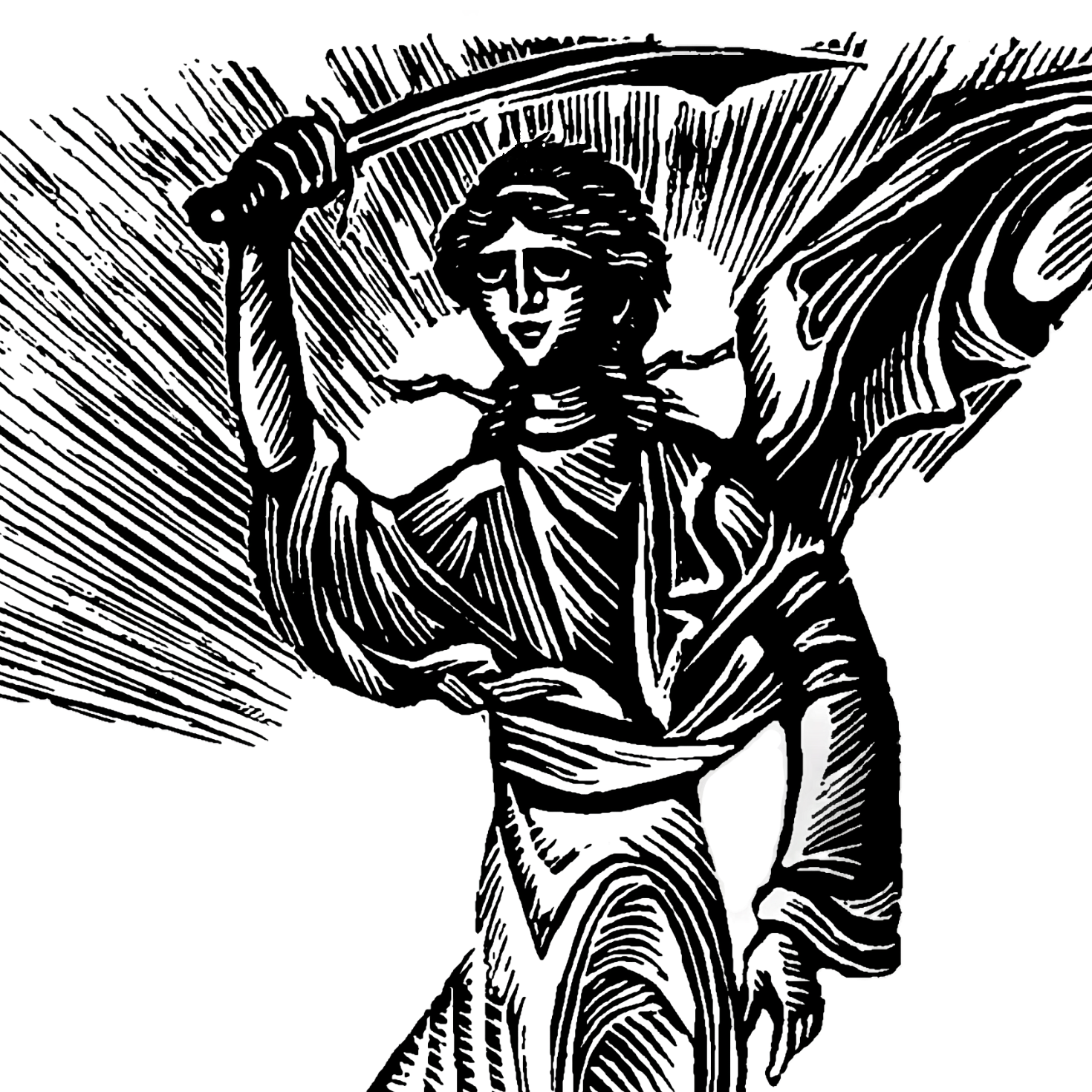 Episode 12: Isolation Three | Eighteen months had passed since the arrival of Arpaxos in Mani, and his relationship to the silence and solitude of the place remained complicated. He was, for the most part, glad for the quiet: before he’d escaped the city, it had become clear that most people had lost all sense of purpose or power, and in the bargain were losing what remained of their voices. But old wives like his aunt were not so easily silenced. They confidently offered up impotent proverbs and pithy wisdoms, each a self-assured attempt to toss salt back in time to correct the obvious misalignment of the planet and misunderstandings of men. He could not bear the simplistic bickering of the gray-haired, black-clad elders of the city, each of them with their metaphorical side tables over-decorated with the wreck and ruin of ancient philosophy. Wasn’t it obvious that the wisdom of the world was passing away? If the scientists could not save the species, what purpose did the old words serve? (To her credit, Tía Íno soon abandoned the annoying – and popular – debate over whose fault the plague was, and turned her proverbial attention to stirring the doomed to reverence. ‘Regard well the end of life!’)Arpa left it all behind – his father’s rants, the widows’ judgements, the endless bickering sadness – and in the bargain he might have lost what remained of his own voice, and his connection to the human race. Leaving the city may have seemed like a choice to die hungry and alone, but he meant it as a choice to die in peace and quiet. Finding food turned out to be easy; finding peace not so much.Little challenged his belief that he would never encounter another soul: the apocalypse was one thing, but this place had always been desolate. Until one day, after what seemed like endless days passed in isolation, and as he sat in front of the half-ruined stone shelter that leaned against the low cliff above the church, a priest approached, without ceremony, on sandaled foot, from the southeast. Arpaxos was shocked to see the man, but surprised himself by freezing in place, unable to move or talk. On a good day, on a normal day, he would be unsure of how to interact with a member of the consecrated class, or whether to do so at all. He had never really known what to say to them, or what to ask for, and today was no different in that regard. But these were different days, neither normal nor good; he questioned whether even the priests knew what to say any more. Memories of prior encounters with locals (and of his last brush with a holy man for that matter) led him to expect at least a rebuke for squatting, if not worse.His mind raced as the man came closer. Maybe the goat that had been keeping him in milk belonged to this one? Maybe he had news, or would enjoy a little conversation before the end of the world? Certainly, at least, he would be surprised to see that the parish population had grown from 0 to 1, defying the general trend?But no, it seemed not. The dark-robed figure entered the chapel straightaway, and soon the sound of a monotone prayer came flat on the wind. The sound of the voice almost tore Arpaxos apart. His heart fought to escape his chest; his body nearly collapsed under the oppressive sensation that his veins were filled with lead, cold and heavy. Within minutes the prayer was done and the priest hurried out of the building. Without at all adjusting his hurried posture, he raised his forearm in an awkward gesture, his only acknowledgment that there was another human being present. Was it meant as a blessing? He never stopped walking and Arpaxos never raised his hand in reply, because the man never turned to face him. The encounter left Arpaxos with an excruciating curiosity. He waited until the shy itinerant was a safe distance away, then quickly entered the room. Everything looked as it had before. The carbon smell of a spent match hung in the air and a thin trail of smoke rose weakly from a wick propped up in a dolma tin, but the flame had already been extinguished.He was rattled at the intrusion, could feel, somehow, that the space itself had changed, though apparently only a single match had been lit and everything else remained undisturbed. He stood in extreme discomfort, now suddenly aware of how invested in being alone he’d become, while at the same time he was almost desperate in hope that the visit of the priest might have made a difference, might compel the Almighty to finish the work of centuries, to rip the dome open and enter the derelict space. What he felt was not the right kind of change. It was now merely the scent of the man and his impotent devotion that filled the room. There was nothing else, and now he was more desperately alone.The face of the icon caught his attention, and he thought, almost with a laugh, of course! Never really alone. He only wished he could laugh, but something stopped him, a feeling that what he wanted to turn into a joke was in truth not funny at all. The face – it appeared in this moment that the image was alert, attentive. His immediate response was to feel embarrassed, that this change in attention was not because of him, not meant for him. But changed it was; and now alert, waiting. But waiting for ... what? What was he supposed to do?Surprised by a groan escaping his own throat, he silenced himself, tried to settle his nerves in the presence of the now activated image. But he could not settle. He was becoming angry, and had the urge to chase after the priest, to tell him that he was required back in the church. A childish thought: had the priest done something wrong? Shouldn’t the visit, the recitation, have been enough? Prayers had been spoken, a flame had been lit, the obligation fulfilled. But the eyes of the image grabbed him and insisted. Perhaps the priest had failed to acknowledge the Savior as well, had only offered a mechanical greeting, as he had outside the church.Stupefied, Arpaxos stood in that space with a growing heat behind his chest (of longing? Of despair?) until he decided he was a fool and, with a terrible, cold and rational resolve, rejected the feeling. He had been torn between the wish to never see another person again, and the starving desperation to look into another face. Now a painted picture seemed alive, seemed to confront him with his own willful blindness. In a seizure of febrile rebellion, he cast the image down, and tore at the eyes, scratching with his dirty fingernails, until in his pride he croaked out the words, without believing any of it, ‘Nor shalt thou make unto thee any graven image, for I am the Lord thy God!’ It then became terribly quiet.He cursed the priest through clenched teeth, and reached his trembling fingers toward the altar, moving them through the fading trail of rising smoke. This is a public episode. If you would like to discuss this with other subscribers or get access to bonus episodes, visit echofuturetruth.substack.com | 10m 17s | ||||||
| 2/26/26 | 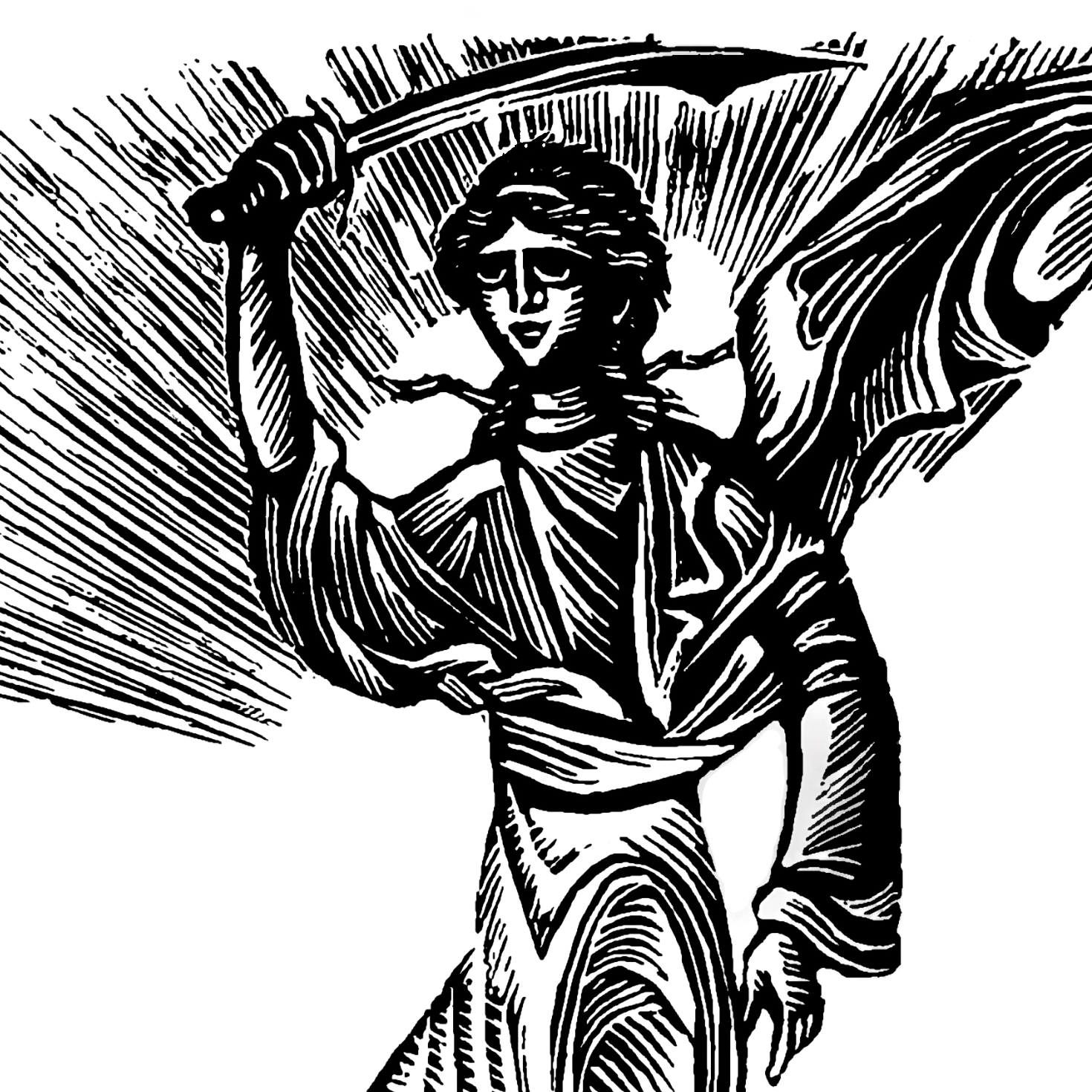 Episode 11: Isolation Two | He might have stayed in that apartment for the rest of his short life, except for the fire. Just days after losing her, he found himself outside in the middle of the night looking up at the building as it burned. How had the fire begun? He could not, or would not, remember. The only clue was that he felt no emotion as he swung his pack over his shoulder and turned to walk down the street. There were no sirens, no shouts of alarm. Before he started university, Arpa’s father took him to Mount Athos, to live with the monks for a summer, in what must have been an attempt to put Lent before Fat Tuesday. But the young man needed no encouragement toward the contemplative life. During his stay, he wrote of his new community in his journal:‘The wilderness accepts pilgrims of all kinds. Some are driven there, some are led. Others flee comfort and then preach from the simplicity of the desert, inviting travelers to look into the face of the ascetic, to mine the poverty there for understanding.’At the time, he could not see that there are also those who escape because they can no longer bear to look into another’s eyes, or risk being seen themselves – they seek the simplicity of death without understanding. The arrival of the elder pilgrim Arpaxos into the wilderness (he was of this last category) came at the end of a journey marked by humiliation, and inauspicious signs.He traveled as far as he could by car, looking for a place to finish out his days away from the madness, grief, and complications of the city. However, as he quickly discovered, trouble just manifested differently in the rural places. When enough doors had been slammed in his face, or swung open to some horror, and when enough guns or other improvised weapons had appeared in windows, he gave up on hope and hospitality. He tried fending for himself, stealing food to survive. But the shame was too much and his skills not enough: in each village, he was marked within a day, might have been killed if he hadn’t kept moving. When it was clear that he’d become a stranger to all, he headed southwest on a single-lane road, resolved to leave it all behind.A day south of Gytheio, he lay down in the back of an old derelict truck and rested his head on a bundle of canvas. The dome of sky above him resonated with a deepening indigo that seemed to contain within it all the energy of the cosmos, both the light and the dark, together. It was unseasonably warm, and he’d just begun to read by a small lamp, when he became aware of a flash of light from above. A star was glowing extra bright, and green, and moving. He watched with growing unease: he knew what a falling star looked like. This one was too slow, and it wasn’t immediately clear whether it was descending or rising. For more than a minute, it seemed, the thing burned hot, then dimmer, then bright flecks of orange and yellow broke off. The profound discomfort he felt at this moment recalled childhood terrors ... the mountain storm that blasted roof tiles off the family’s summer cabin, and made his mother scream; his sister’s cruel taunt of tearing back his covers and grabbing at him when he was asleep. Even the heavens, the eternal dome, could not be trusted to provide covering, or comfort, in these days.Soon, he realized that what he was seeing was the end of some great work of humankind. He understood. Space-faring nations, having recently lost the will to project their curiosity, hopes, and hubris into the void, were leaving such works – satellites, and deep-space telescopes, and floating research stations – unsupported. Many had begun to fail, and some were falling to earth. At least that was the story. Arpaxos was not alone in speculating that these things were being brought down, that what had been happening with increasing frequency was the rocket scientist’s version of throwing a brick through a window after an earthquake – belligerent, disconsolate hooliganism, which apparently lurks inside us all. There had been several reports of these ambiguous re-entries in the last year, but this was the first he had seen. He marveled at it, briefly, then felt a little sick. As the trail of light faded, a supersonic crack and rumble punctuated the rending of our delicate planetary veil.What he could not have known is that those space platforms that remained under the control of caretakers not yet given in to nihilistic vandalism were being turned off. Not neglected, not abandoned to entropy, but powered down on purpose as a potential liability at the boundary of a defenseless planet and it’s shrinking and increasingly vulnerable population. Before we ever had a chance to discover our place in the heavenly neighborhood, we were turning off the lights and drawing the blinds.Moments like this were the very thing he would have stayed up late to watch with his father when he was a boy. And his father would have spoken some cold and comforting words, explaining how this monumental destruction made sense in the grand scheme of human effort and progress. As a student at the Polytechnic, Arpa would have marked the moment with a poem about how the fiery conclusion of such a venture highlights the pride and folly of men, the poet calling our attention back to the earth, to the plane of our rightful existence, to each other. He would not have shared the poem with his colleagues at university, nor would he have shared it with his father. But he would have found the act of writing comforting in the face of such waste.Tonight, he just felt incomplete, and he wasn’t sure which he longed for more: the complacent confidence of his father or the romantic arrogance of his youth. Since neither of these perspectives was available to him on this day, and since he had no one to share the experience with, he forced himself to regard the moment as meaningless in the grand scheme, only a fallen leaf signaling autumn and colder days to come. To regard the event as mundane – even pretty – helped him feel less sad.In the end it was to him one more sign of the failure of the human experiment. He knew there would be no going back to the way it was. Considering his circumstances, he wasn’t sure what he was going toward either. Looking down the dirt track that lead to the next village gave him a familiar feeling of dread; the thought of returning the way he came was worse. When he woke the next day, Arpaxos left the road, and left all comfort behind. He wanted to go someplace with a guarantee of solitude, and there was no place more lonely to him than the Mani Peninsula. It was on childhood visits here that Arpa had learned about his father’s almost pathological preference for escape and isolation, which Mani satisfied perfectly, even if, in recent years, young entrepreneurs were returning from abroad to renovate (and monetize) the family estates. The occasional medieval castle turned bed-and-breakfast did little to challenge the overall impression that outside the walls, there were few comforts to be had.Mani remained the most forbidding part of Greece, the great middle finger of the Morea, pointed straight to Hades, complete with a cave at the southern tip understood by the ancients to be an entrance to the underworld. The fiercely independent Maniots were usually the last of the Greeks to bend the knee in the face of any attack or occupation (and even then, it was always with a dagger behind their back). Not only the men deserved credit for this reputation: in response to a sneak attack off the Bay of Messinia, the women of Mani were said to have fought off the Ottomans with garden tools, while the men were engaged elsewhere. In subsequent times of ‘peace’, quarreling families shot at one another between towers in the villages one day, and packed into one of a thousand tiny churches on the next. The fire-lit feudalism – and weird juxtapositions – of the Middle Ages lasted well-into the modern era in this place. If the last of us are doomed to die alone, Arpa thought, I want to be somewhere already acquainted with loneliness and desperation, a place that will not take offense at my own.But before he would find his way to the sun-bleached, wind-sharpened wastes of the Deep Mani, he had to cross the mountains that ran along the peninsula, from Taygetos in the north, where a morbid legend said that ancient Spartans climbed to abandon their weak, and Sangias in the south, where he figured someone such as himself might have a better chance of survival. To avoid the highways, he’d have to travel south along the east coast, and spend most of a day walking in roadless places while looking for a passage to the west. At least, he noted as he crossed this last barrier, he wouldn’t be alone – the hills were home to a sizable population of goats, who wandered among the pale green vegetation covering much of the east- and south-facing slopes. Arpaxos was hopeful that he’d be able to sleep in the shade of the bushes and pick his way through the scrub when it wasn’t so hot. He remembered too late that goats devour pretty much whatever is in front of them, and if you are traveling among bushes of the kind that goats refuse to eat, then maybe you don’t want anything to do with these bushes either. When he stumbled out of the mountains three days after his escape from Gytheio, he looked as though he had been whipped with barbed wire, and his will was nearly broken. Terrible thorns had been his shelter, and he shared refuge in the heat of the day with great yellow spiders and the sound of hidden cicadas, whose rasping call was like being subjected to electro-shock therapy for hours at a time, only without the benefit of relief from emotional distress.When he finally left the mountain behind, he took shelter in the courtyard of the church Agnosto Onoma, which in the late afternoon hid in the shade of one of the region’s many towers – this one had it’s black-clad watch-woman, who eyed him with honed suspicion from a seat in a high window. She lifted a hand in greeting; the other hand stayed on a shotgun in her lap. Looking up at her, Arpa honestly wondered if she had any idea what was happening outside of her fortress; she gave the impression that she had not approved of external events for decades and might have greeted news of the apocalypse with a dismissive shrug. He made what he imagined would be his last attempt at a friendly greeting, simply so that he could rest for a few minutes without fearing for his life.Sitting in the empty square, where the dirty plastered walls were slowly being decomposed by the roots of old pine trees, he gritted his teeth against the wind. Arpaxos hated the sound of wind blowing through pines. As a boy, he’d spent his summers in Filothei, where plane trees gently swayed in the warm Athenian breeze, their leaves filtering the blazing sunlight like delicate green shadow dancers. Pines were nothing like that. Pine needles didn’t dance: they were fixed in their contempt for the wind, or maybe out of spite for their more liberal cousins. When the wind passed through pines, it was like a vital spirit passing through the fingers of a creature long-dead, fingers that could not embrace the living any more. Or would not.Arpa squirmed in the corner of the square, his own spirit unsuited to the challenge of the journey, yet the hard wind drove him ever southward. And his encounter with the pines of Mani was a cold brush with ancient shades, whose ghostly needles dragged against his insides, mocking his belief that he himself was still solid. This is a public episode. If you would like to discuss this with other subscribers or get access to bonus episodes, visit echofuturetruth.substack.com | 15m 27s | ||||||
| 2/19/26 | 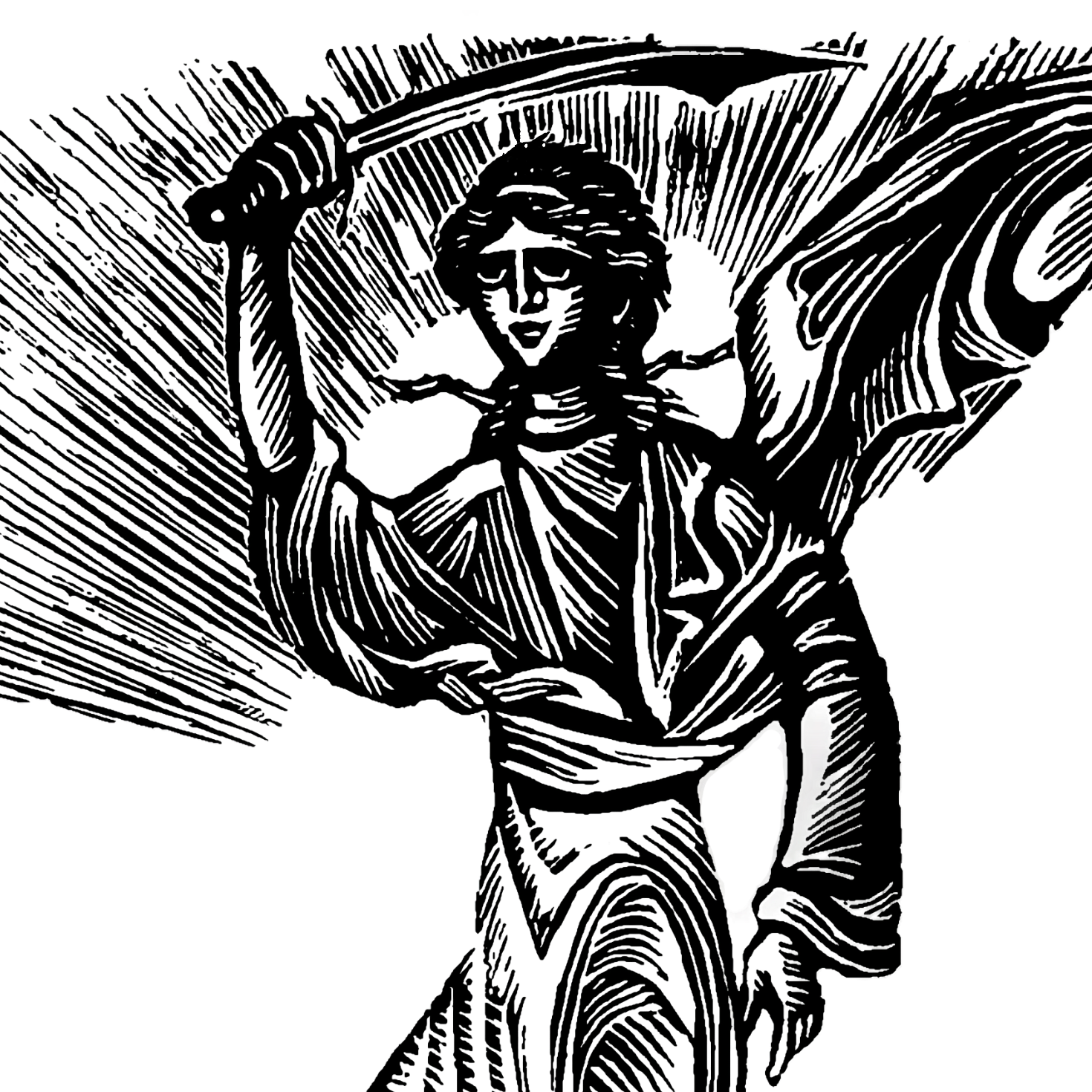 Episode 10: Isolation One | Evie looked down at him from the threshold. She stood apart, appearing untroubled, as if she existed in a reality entirely different from the one in which he lay pinned on the ground with a soldier’s knee on his neck. Gloved hands held his limbs, and something cold and hard was pressed to the side of his head. But he was no longer struggling against the small army that had filled his sister’s apartment, and it seemed they no longer regarded him as a threat: hands and voices gradually softened. A soldier, almost completely obscured behind full armor, was leaning down to look into his face, asking questions. He couldn’t make out her words in the general confusion. ‘Sir what is your ... [ringing in his ears] ... Can you ... [a shout and hail of gunfire outside the apartment] ... relationship to the ...?’ The commotion outside got the attention of the two by the door. One of the soldiers quickly raised his weapon and moved toward the noise. Two concussive gunshots, far louder than the previous volley, and out of the silence that followed he heard Evie’s strained but steady voice and knew that she was saying that he was her father, because that had been his instruction to her. From the way the soldiers looked at each other and the tone of the brief conversation that followed, he could tell that her mother and father were known to be dead. A man in civilian clothes began to survey the pile of bags near the door, easily identifying those belonging to the girl by the bright colors and cartoon branding of an earlier age.There were more voices, but he couldn’t hear what was being said above the rising static in his head. He knew that he was losing her. He had really known for some time. But he wanted to believe that he had a right to steal her away and keep her to himself.And she, in the middle of all this chaos, managed to look down at him with something like compassion. She was only 10 years old, but she was towering over him, and breaking his heart with a look that said ‘I understand, though I really don’t understand ... and it looks, Uncle, like it will have to be me that is brave in this moment.’ Her parents had both worked in the refugee camps; now they were gone, both dead from too much affection for the human race. He could see a similar nobility in her gaze. He wanted to scream at her to wipe that look away, to put on her war face, or she was going to be destroyed. They would eat her alive.He himself was teetering on the edge ... between fighting, or falling into the abyss. Her kidnappers made sure that he understood the time for intervention was past. They would be taking her: she belonged to the world now, and he must stay face down in the dust, or be destroyed.Pale orange sunlight poured in from the street and outlined her form in the doorway. She looked to him like she was on fire, if only because he was seeing through tear-flooded eyes; his mind allowed the effect to soften the sickening reality. In the moment it took for her to disappear from view, he also turned a corner: everything that came after that moment was forgotten almost immediately after it happened, filtered out, so that he could hold onto her in the only way left to him. There were shouts, but he ignored them so that he could listen for her voice; a cough provoked a sharp stab of pain in his ribs, but he forgot about his own pain so that all his senses would be attuned to her diminishing presence; the sound of a helicopter and a mob of shouts (he had no way of knowing whether they were connected, but each was fighting to be heard above the other); a final gunshot in the distance, the shock of it sliding easily into the past – he thought only of her, as if his attention could surround her and preserve her. Finally there was silence and he could find nothing to hold onto anymore. He was alone.He was the proverbial, foolish mother hen, hiding inside the shell with her chick; and now, because no one had kept watch, their world was cracked open like an egg by the devourer, leaving only Arpaxos to contemplate the emptiness as it grew cold and dry. He knew that there was nothing left. There was nothing. She was gone. He had been meant to adopt her. It was arranged after her parents got sick. They had been working with migrants at the port when they became deathly ill, in the old sense. Nicola and Brahim were much more comfortable living on the rough edges of the world than Arpaxos. Years after running away, his sister had reappeared in Athens with an ill-defined plan to confront their father, and try for some kind of peace. But the unhealed wounds of childhood, and the dry spring that was their dad (he couldn’t even look her in the eye), doomed her plan. Instead of running away again, she went to work with street kids in Piraeus, looking for something to fix, something to believe in. It was there she met Brahim, himself a refugee from an earlier time, and fell in love.Unfortunately, a fondness for alcohol combined with the chaos of the border made them vulnerable to disease – both of them became sick with a particular drug-resistant form of tuberculosis. Now, Nicola was even more stubborn than her brother: she didn’t trust doctors and rarely acknowledged weakness of any kind. She and Brahim were vaccinated when that was still a thing, but drew the line when it came to being injected with an encoded swarm of little medical machines. So it was that when she got sick, she would be entirely on her own, a condition she was used to but never got any better at. Brahim dragged her to the hospital, unaware that he also was ill. There, a series of tests revealed that she was 1) likely to die from complications from TB, and 2) the possessor of a surprising resistance to the more significant affliction of the age. She was sick with disease, yes. But she was also not sick ... with that disease which had not, until this point, skipped over anyone. This more fearsome malady had traveled everywhere courtesy of the efficiencies of modern logistics, and had been hiding in the cells of the entire developed world, waiting with improbable patience for the conditions necessary to erupt almost all at once in what Arpaxos was calling the Incurable Cure for the disease that had been afflicting the planet for some years now; Humankind, that is.Around the world, money and resources poured into finding a solution to this latter-day plague. In the search for a cure, all the tricks had been tried, some to the collective shame of the species. In one particularly heartbreaking footnote (in what would have been the very last history book), the zeal to find a solution drove a group of American pathologists to approach one of the last few isolated cultures in the world, one distinguished by their disconnection from the global network of goods and services, and more importantly, by their ancient and isolated gene pool. It was hoped, maybe foolishly, that if these peoples knew what was at stake, they would have offered themselves up for study, for the sake of the human race. However, when first contact is mediated from inside a sealed helmet and when your face is obscured behind thick plastic, there can be no efficient way to communicate your already questionable intentions. Or to warn your hosts about the dangers of shooting arrows at visitors wearing biohazard suits intended to prevent the spread of infectious disease.In the end, as hope receded like the tide, what remained to be revealed, like a submerged ruin, was the resilience of the Greeks, famous for last stands in the face of impossible odds, as the proverbial clock runs out. Doctors around the world had been going nonstop and many were giving up on the work in despair – hospitals were becoming hospice centers when there were not enough doctors to care for patients. A group of internists at Nikaia Hospital in West Attica had resolved to work to their last breath to find answers; they were rewarded for their diligence with the arrival of Nicola Evangeliou. Their discovery of her resistance to the ultimate disease was considered a kind of miracle, though ultimately there would be no medical revival, no pilgrimages to take the healing waters at her shrine, because there would be no sharing in this miracle. That is, not for anyone except Eva, who had arisen from these waters, and had thereby been gifted with the resistance, a biological rebelliousness learned in the womb.Nicola was the first, but because she was already on death’s door, Evie herself would take on the mantle. She and two others, who were identified not long after. Only these few would be found who had any hope of survival. However, nobody could discern a way to make use of the miracle of the three. No one had been able to find in their cells a formula for salvation; so they were taken to be salvation themselves.It was a minor miracle that Arpaxos had gotten her out of the hospital, but there was no way she would be allowed her independence. The machinery, of which she would soon be a critical part, was already in motion. Because, as efforts to find a cure diminished, and every other machine slowed to a halt, qualified survivors were rallying at the California bioscience concern that had until recently been gaining fame by promising a win in the fight against disease. This was not at first an empty promise: a single treatment of a plasma that carried an encoded swarm of microscopic bots provided the ultimate treatment, boutique health care at the molecular level, available to all. In the end, one disease had come along to subvert this towering achievement – and now the technology was being repurposed in a last-ditch, moonshot effort to preserve whatever life remained when the disease had run its course. By the time Arpaxos and Eva had said goodbye to her parents, the world had given up on conventional disease, given up on healing, and would soon be solely concerned with the singular effort to preserve a single life for as long as possible. Researchers and thought leaders from every field of study were making their way west to spend their remaining days solving the final problem.All talk of leaving the planet to colonize other worlds was ended. All talk of beating cancer (or any of the old diseases) was ended. All talk of extending the life-span of the rich and powerful was done (which desire the rich and powerful were no longer being shy about, though no amount of money in the world could rewrite your genetic code and save you from this Great Recession). All talk of lifehacking, of chasing your bliss, of Five Simple Tricks to Burn Off the Belly Fat ... of miracle drugs to end depression and anxiety ... all of this was done. Sure, everyone was depressed and anxious, but it does get easier when you know the exact reason why you feel the way you do.Before Nicola’s immunity (and her daughter’s existence) came to the attention of the world’s scientists (and of the U.S. Military), Arpaxos was called to the hospital where both of Eva’s parents would spend their last days and recruited to be a father.He loved the girl of course. She stayed with him whenever her parents traveled to the camps. He knew that she preferred his pure cynicism to her parent’s cynical idealism. This was not because she hadn’t learned compassion from her mom and dad, just that Arpaxos was the uncle who could make her laugh, and her parents rarely laughed any more. Now they were gone, and she was stuck with a cynic who would be witness to the end of all debate. Soon there would be nothing to be angry at anymore because everyone was dying, and nobody knew whom to blame. Evie would never get to see her parents let go of anger, because they did not live long enough. She did, however, get to see her uncle lose his sense of humor.As it turned out, a legitimate adoption would be impossible. Though, in a private ceremony in her parent’s apartment two days after the death of her dad, a document was drawn up with a sparkly purple ball-point pen, wherein the two affirmed their decision before God and no other witnesses that Arpaxos would be father and caretaker to Eva until her 18th birthday, or until the end of time, whichever came first.His niece had won (or lost) the last great global lottery, possibly to be the sole survivor of the human race. Or perhaps to be witness to something new, somehow, sometime in the next hundred-thousand years. Whenever he thought back to the moment when he lost her, he felt a grief so great that his mind quickly fled to anger. If anybody had been near enough, he could be heard to mutter to himself, with a groan, Ω, Εύα, δεν ήσουν ποτέ υποτιθέμενη να είσαι η πρώτη ή τελευταία σε τίποτα ... Oh! Eva! You were never supposed to be the first or last of anything! This is a public episode. If you would like to discuss this with other subscribers or get access to bonus episodes, visit echofuturetruth.substack.com | 16m 55s | ||||||
| 2/12/26 | 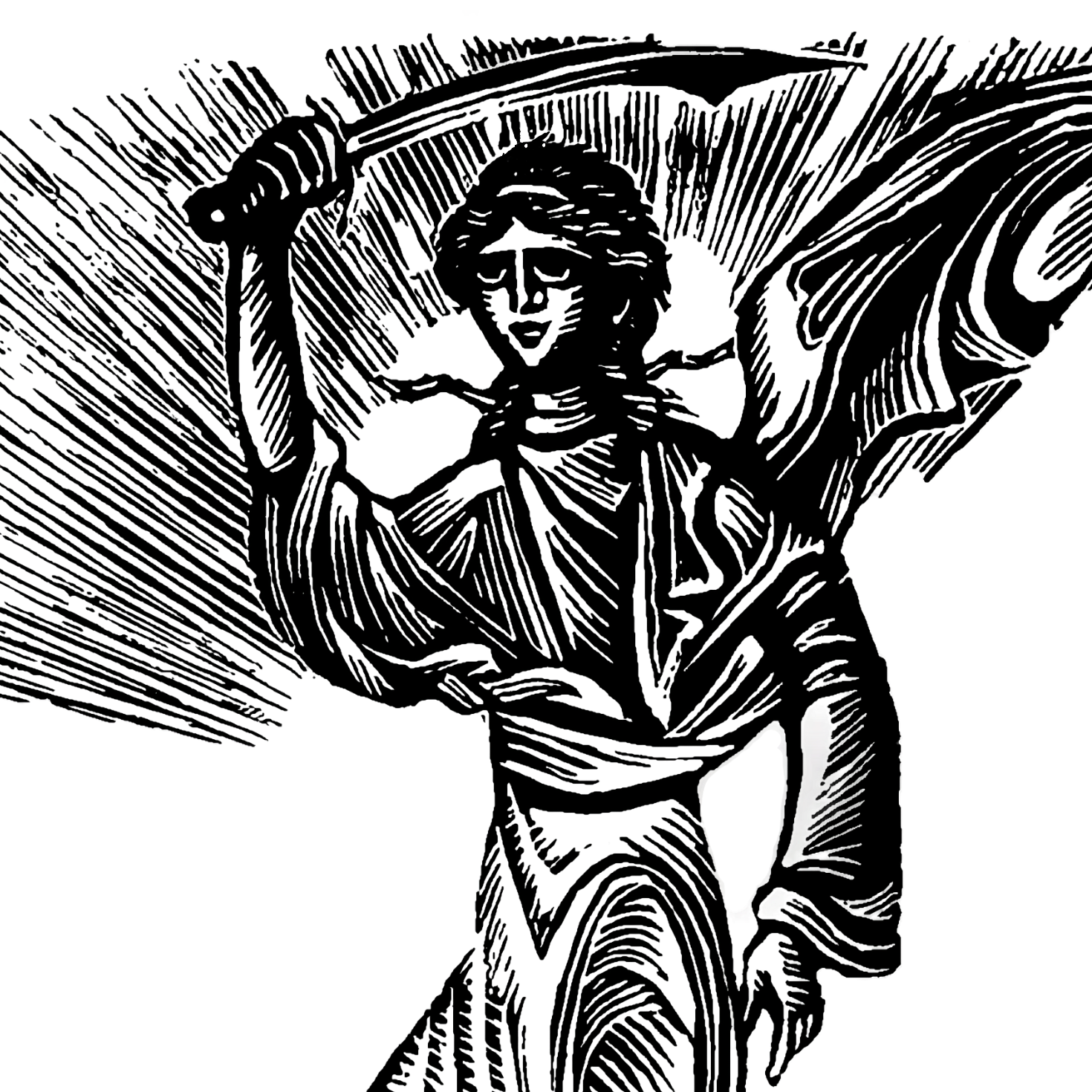 Episode 09: Isolation Prologue | Standing up from the single, rush-covered chair, the philosopher Arpaxos broke the chill silence with a sharp intake of breath. He took two shaky, sibilant steps across the marble floor in the direction of the apse, extending his hand toward the icon. At the sight of his dirt-stained fingers he drew back in a grip of shame.But why? This was no museum. No alarm would sound if he touched the art. In fact there was little sign this tiny room had benefited in 900 years from either curate or curator. The single portrait was tilted a little too casually against the back of the chapel. White plaster walls rose to a half-dome above the narrow, uneven shelf littered with spent matches, thin beeswax candles, and a dented plastic water bottle holding decanted oil for a makeshift lamp. Leaning a little more carefully against the image were three tamata: a hand, a ship, and an eye. The hand and the eye, stamped from real silver, were tarnished and dull. Miracles had been done here. Or had been looked for.In front of this collection, assembled like a hedge around the shrine at the center, modern analogues of these ancient concerns had been placed: there was a bricked device, itself the size of a small icon, which, when there was signal to be found, could once have accessed all the images and answers the world had to offer. An unused airplane ticket lay flat next to the phone, a key fob for a Mercedes and worry beads next to it. Also there, a spent Medalion ESPlasm injector, which had recently, but only briefly, supplanted both the Internet and the Almighty as the answer to all our hopes and fears. These latter-day votives suggested that we preferred to mediate divine provision through devices of our own design. Where the tin sailing ship said, ‘Please watch over my son while he is on the open sea’; the phone said something like, ‘Please fix the damn internet so I can return to my private devotions.’ Any way you looked at it, it was a dubious move to bring a smartphone to the local altar.As for the image presiding over these petitions, it was no museum piece, but the likeness was technically impressive. The face was gentle, expressive, and strong, though its beauty had been somewhat mortified behind a veil of soot, and the wooden surface that bore it warped by ages spent under the eggshell white of the dome, itself cracked in many places but never fully opened to the sky.The faded pictures of saints on the walls were more sorely abused by time and its attendants – mildew, earthquakes, and vandals each had left their mark. Centuries before, those vandals, in a brief campaign informed by deep reverence or deep hatred (no one knew for sure), had taken all the eyes. Arpaxos did not like to look at the pictures on the walls. He came for the Christ, though he had not yet acknowledged the degree to which he avoided the gaze of that one as well. He stood there, silent, still, not willing to leave without making some contact with the image. He settled on a more hygienic salute: lifting his right hand to mirror the sign the Savior made.Awareness of his surroundings slowly came back to him; of the small, barrel-vaulted church, the wide barren slope surrounding it, and the cliffs above and below. The close echo of the mostly empty room gave a tin-pot resonance to the sound of the sea that came in through two small windows, and of the sharp wind that carved the impermanent rocks and brought ocean moisture to the hard grasses. At one time, a seashell held this sound to the ear of a curious child; it must be the man had grown smaller than the boy, or the shell grown larger, that the adult and all his dreams could fit inside.Turning suddenly, he moved to leave. As he stepped past the thin steel door, disappointment came upon him as it always did when crossing this threshold. Weakly, he sank into the depression worn in the old marble step, and leaned wearily against the doorpost. His hands were clenched. What he wouldn’t give to look into a living face, one not over-darkened by devotion. This is a public episode. If you would like to discuss this with other subscribers or get access to bonus episodes, visit echofuturetruth.substack.com | 7m 37s | ||||||
| 1/29/26 | 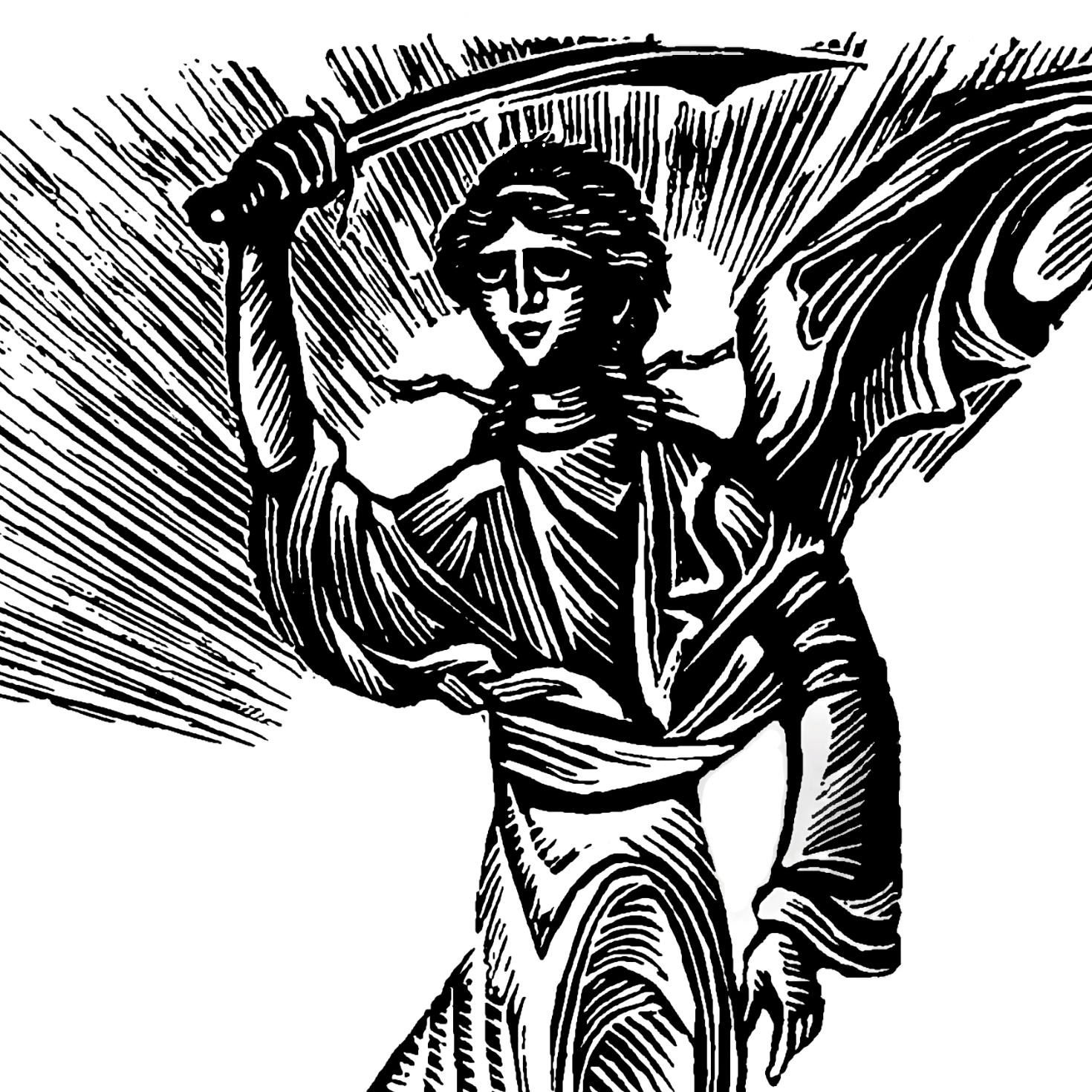 Episode 08: Abrasion Seven | Outside the town, a short distance down a dirt track, a simple structure could be seen, next to the foundation outlines of more buildings, yet to be raised. The work was slow, even with the help of the neighbors, who provided the mortar to bind the rubble of ancient buildings together again. The neighbors! She was trying to find new, less-disparaging ways to acknowledge the creeps, on whom their survival continued to depend, and whose help was, now and then, still very much appreciated. They could, if they wanted to, rely on the collective for all their needs. But the two of them preferred to work by hand, lifting and building together. Time and effort were gifts, and she treasured being alive and awake; it didn’t matter how hard the work was. The important thing was that the toil had ended. Her yearning against the crushing burden of eternal solitude was over: from now on, all effort was shared, and all effort would be joy. Her hands were becoming rough like his.Nor did it matter that their home was currently little more than four walls and a roof – it was a real house, made of real stuff, and it soon would have many rooms. The walls were thick and painted white with lime from the lowlands to the east. They’d settled below the summit of a gentle rise: from their porch they could see hills to the west, and sometimes smell the sea. In the other direction was a long low valley with a great body of water stretching away to the north.She soon learned that she was not the only living thing to have survived, and that the world contained somewhat more than memories and their avatars. The great redwoods, famously tall, vivid in her picture-book memory, could still be seen on the hills around the valley. She wondered how far descended these were from the trees that existed when she’d arrived. Or could it be that some of them remained alive since then, communicating ancient truths, root to root, across the forest?A complete natural survey of the region would have to wait; there was work to do. And, anyway, for ages her view had been so constrained by the inward facing facade of her prison, the old town, that she wasn’t used to seeing great distances. She didn’t often look out across the landscape; it made her anxious to confront the expansive reach of the world.As for the town itself? The games had ended: there was no longer any reason for her to pretend the townspeople were alive, or to interact with them at all. He also kept his interaction with that crowd to a minimum. But he did not avoid them altogether; there had been interviews between the collective and the artist, the content and significance of which were hidden from her. That suited her just fine. She didn’t have to fear any secrets with him, for on the day he became solid, he had also become (somewhat shockingly) transparent. If she wanted to, she could know his thoughts at any time.And the in-laws? She didn’t care anymore what was going on in their machine mind. If they trusted her to live her life, she could trust them with the rest of it. There was a new honesty and practicality to all interactions with the local population. They, after all, continued to serve as liaisons with the machinery of the world, and as a kind of techno-repository of folk wisdom about how the natural world works. In that respect alone, the creeps had job security. They were all settling into this new relationship: the code had functionally adapted to become supplier to the Do It Yourself enthusiast, and occasional urgent care provider for the inevitable DIY casualty. This is probably how it should have been from the beginning. Even before their home was finished, they’d begun designing other buildings. These didn’t look anything like the old architecture: as they envisioned a new environment, the old was slowly disappearing. The town was shrinking, but what remained felt more purposeful now, and was beginning to make a little more sense. On the night they met, at the moment of the change, the barrier that isolated the town from the wilderness had vanished. What was needed now was a new kind of building, one suited to the real world and the real people at the center of it. They were exposed: the view was better, the weather was worse; life was good.Between the two of them there was laughter. There was joy. She felt alive and free in ways that she had not believed was possible. And he: he was alive and free in ways that should have been impossible. But alive he was, and he wore an unrestrained look of happiness on his face much of the time. There were still moments when he got angry. But, it was a human anger, and that was alright with her.Most days, the two of them liked to sit on their porch and watch the sun set over the mountains. On one of those days, as they rested in the dimming afternoon light, and felt the early chill of the coming autumn, she was distracted by a growing sense of unease. The wide world seemed in that moment more vast, more threatening, and she shuddered and leaned against his side. Something within her signaled that change was coming, and it was coming with a familiar, gnawing sense of destiny. The last time she had felt this way, despairing of her endless cycle of sleep and forgetfulness, she was fighting the power that kept her alive. At that time, she had reconciled herself to the possibility of death as she fought for her right to live. She survived that battle: her life had become worth living, even if she was now speeding toward her own death at something like a normal pace. Was this fact just now sinking in? The knowledge that she was going to stay awake, live her life in full awareness, and die – soon enough – as the last human being?But that wasn’t it: she had no reason to grieve her passing, or the passing of the human race. There was little reason to fear the end at all – she had experienced something worse than death already and was now fully alive. What was eating at her?She felt his hand come to rest on hers, warm and heavy; it sent a shock through her whole body, and her insides churned with sudden understanding. With her other hand she felt her belly, and thought, with a shiver, ‘Not the last?’ The following day, the two of them descended rough steps in front of their home, and passed through the garden gate to walk out into the welcoming silence of the landscape under the cover of a sleepy, saffron-yellow sun. They came to a place, past crumbled fields of stone, where pale white flowers lined a path along the rich ground, which unfolded ahead of them like a living carpet rolled out for a queen and her consort. She didn’t exactly discourage the impression: she strode along the path with her chin lifted and her eyes lowered. He bowed with such delicacy and seriousness that she blushed. He moved aside without raising his head – and then she was embarrassed. She made a dismissive sound in her throat and shook her head with a laugh.Kicking off her boots and shedding her stockings, she took a few, more tentative, steps in the dirt. He stooped to gather a collection of stones into a mound. She walked on, down a gentle slope in the direction of a stream.Before she’d gotten very far, the feeling of vulnerability returned, an awareness of danger that brought her to a stop. Her skin prickled as she consciously registered the sound.A snake. It wasn’t a sound she’d ever heard before, but the warning was obvious: a thin, dry-but-ominous rattle that stood the hair up on the back of her neck. She searched in the direction of the sound, and saw the serpent at the edge of the grass. It was huge, almost as thick as her arm and twice as long. The beast was writhing, and she felt the sound of its warning burrowing into her head. Her sweat felt cold, and she shifted, almost twisting in response. Her insides kicked in protest, before solidifying against the threat. She felt a power rise in her and knew that she had no need of fear. Primordial heat, lava-like, rose in her like anger, like wrath, like life. And as the serpent made a number of aggressive adjustments in preparation for a strike – head fixed in space; body coiling and contracting – the woman’s eyes flashed and her teeth shone in the sun. This is a public episode. If you would like to discuss this with other subscribers or get access to bonus episodes, visit echofuturetruth.substack.com | 12m 44s | ||||||
| 1/22/26 | 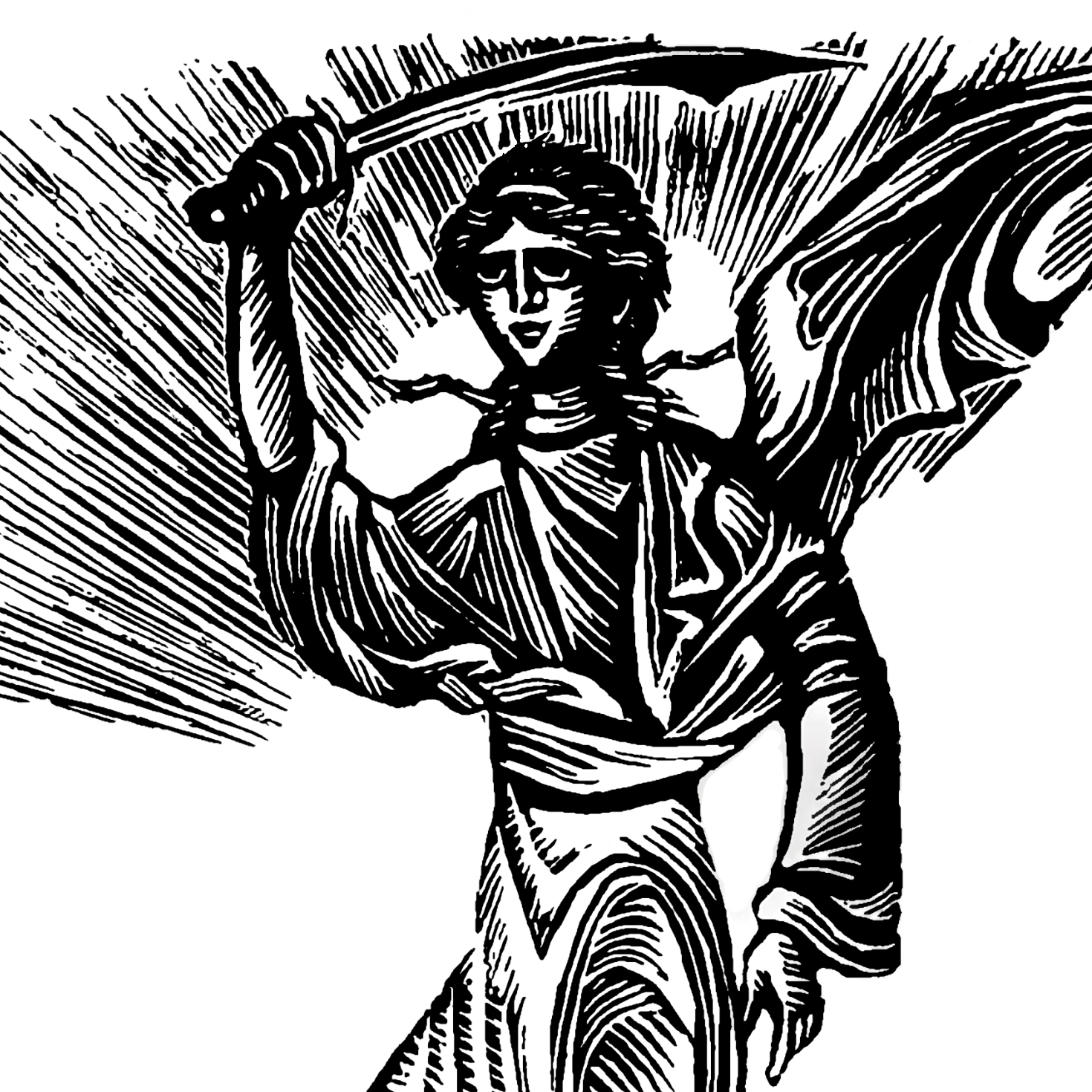 Episode 07: Abrasion Six | It really was perfect. This anger. Anger would be the correct response to her endless rejection of the gift of life, her bitter ungratefulness, her grandiose selfishness. The other had finally allowed itself some feeling, and the feeling was wrath. The conscious awareness of this tectonic shift came only partially to her, because it was competing with a more primal response. She was afraid.As she frantically tried to make sense of the change unfolding before her, she slowly began to understand ... that anything was possible. After all, it had been an act of will that made the creeps. And this will had governed the fact that these creatures remained something only a little lower than the animals, possessors of a kind of soul, but none of the spirit. And now? Everything around her, she was daring to believe, was bound not by some limitation of technology but by choice. And where there is a choice to be made, the chooser can be moved.But to bend the will of a power such as this? One that had been frozen in code for millennia? This would take more than an act of will; it would take an act of God. The artist stood before her now and she was not sure whether he was one ... or all ... or whether she could trust her perceptions in the least. She was barely holding on – which was dangerous because she had come right to the edge of the abyss to shout into the emptiness; and now the emptiness was answering back. What would the answer be? Only moments ago, she might have said that the artist was simply the failed experiment of a machine trying to meet a need that it couldn’t possibly understand. But now! While she was used to resistance, this was something different. Something had clearly gone wrong. Either the machine was broken ... or ...?Could it be that he was angry at the right things? Or was he only angry at her? Angry that she had made demands on him? Angry that she insisted on some sovereignty over herself?When he spoke again, his was the only voice. And when he spoke again it was with a paternalistic finality that betrayed the majority opinion that the woman was not to be trusted and that her perspectives on these matters would no longer be taken under consideration. Again, a single word: ‘No.’ A dam broke within her. And adrenaline rushed through her like a flood over desert clay. Before either of them knew what was happening, she was flying across the space between them. Recklessly, she launched at him with a rage that had been denied her for thousands of years. He threw his arms up in defense, but she overwhelmed him with a shout, repeated shouts, from some locked-up cell inside her, now thrown open, repeating again and again until her voice was rasping and catching in sobs: ‘It’s not enough!! It’s not enough! It’s not ... you can’t ...! I need ...!’. She set herself against him like desperate Jacob catching hold of the angel, pushing past the veil of otherness, the terrible mystery, with all the desperation of her utter poverty. She flailed at him, threw him, pinned him, pummeled him, while he struggled to free himself, crying out to be released. She refused, insisting through ragged gasps for air on the blessing she required as the last human being.Then she had spent it all; she was empty, lungs heaving, bruised and aching in every joint. She collapsed against him, and felt powerless to move.She teetered at the edge of consciousness, struggling to remain awake, still afraid of sleep though she had forgotten why. Then she felt she might simply die, here, in this place; and maybe for the first time, felt anger at the possibility that she, herself, might be replaced by ... nothing. That all would go quiet. This angered her.But Quiet was still better than silence, when silence was imposed, when words were not allowed to matter. She still had something to fight for, even if the future she fought for might not include herself.It was then that she felt a sudden stab of shame. Shame that she would believe that she deserved to be free. Shame to recognize that her grand campaign for freedom amounted to little more than a fist-fight in the dirt and no idea about what came next. She tried to push away from him. But through bloodshot and blurry eyes, she became aware of two things in quick succession. The first was that he was beneath her and defeated, though he’d fought her; he had not avoided her assault, nor did he passively submit. He’d struggled as she wrestled him to the ground! And yes, she’d won, though she had not at all been certain of the outcome. The second thing she became aware of was his eyes: though his face was also bruised and swelling, his eyes were fixed on her, and he was smiling at her through a bloody grin. She burst out crying, and wept until she was truly and completely exhausted. He held her, his hands like sandpaper on her skin, which was now turning purple in great spots, and the two of them remained there in the dust for a long time. She could feel a growing warmth radiating between them. She slowly began to move on him in a different way. She felt as though he was truly alone with her, and that she was alone with him. How was this possible? No. No more questions.Closing the final distance, she would become the announcing angel. The time for begging was over. She confronted the power in him with a terrible choice. With a holy zeal she insisted, until the life buried deep within him, the real presence that until today had only manifested in pale images, until this creature by sheer force of will – yes she willed it! – bore its final miracle: a singular, flesh-and-blood other. She felt his pulse quicken, suddenly caught his scent, saw something flash as if just behind his eyes. Breath passed between them.Now she felt a change all around her – all was fading, dimming in their presence. And she saw him, now, with a shock of clarity – immediate, individual, incarnate, mortal. Awe came upon her. His was more thrilling than any face she had looked into in ages. Was it because he also, finally, had seen her? He leaned in to her, and whispered in her ear. A name. Was it her name that he spoke?All the boundaries, the barriers, the endless space between had been erased. She had spoken the word and he had received it even though it meant a kind of death for him. A tumult kicked up and surrounded them – she might have completely missed it in that moment except for the strangeness of the phenomenon, which slowly grew in volume and intensity. She would only realize later that it was the wind. She had never before felt the wind in this place, though her town’s windmills had always turned gently and steadily above the quiet streets. At this moment, they were spinning frantically, only now in the opposite direction. This is a public episode. If you would like to discuss this with other subscribers or get access to bonus episodes, visit echofuturetruth.substack.com | 10m 47s | ||||||
| 1/15/26 | 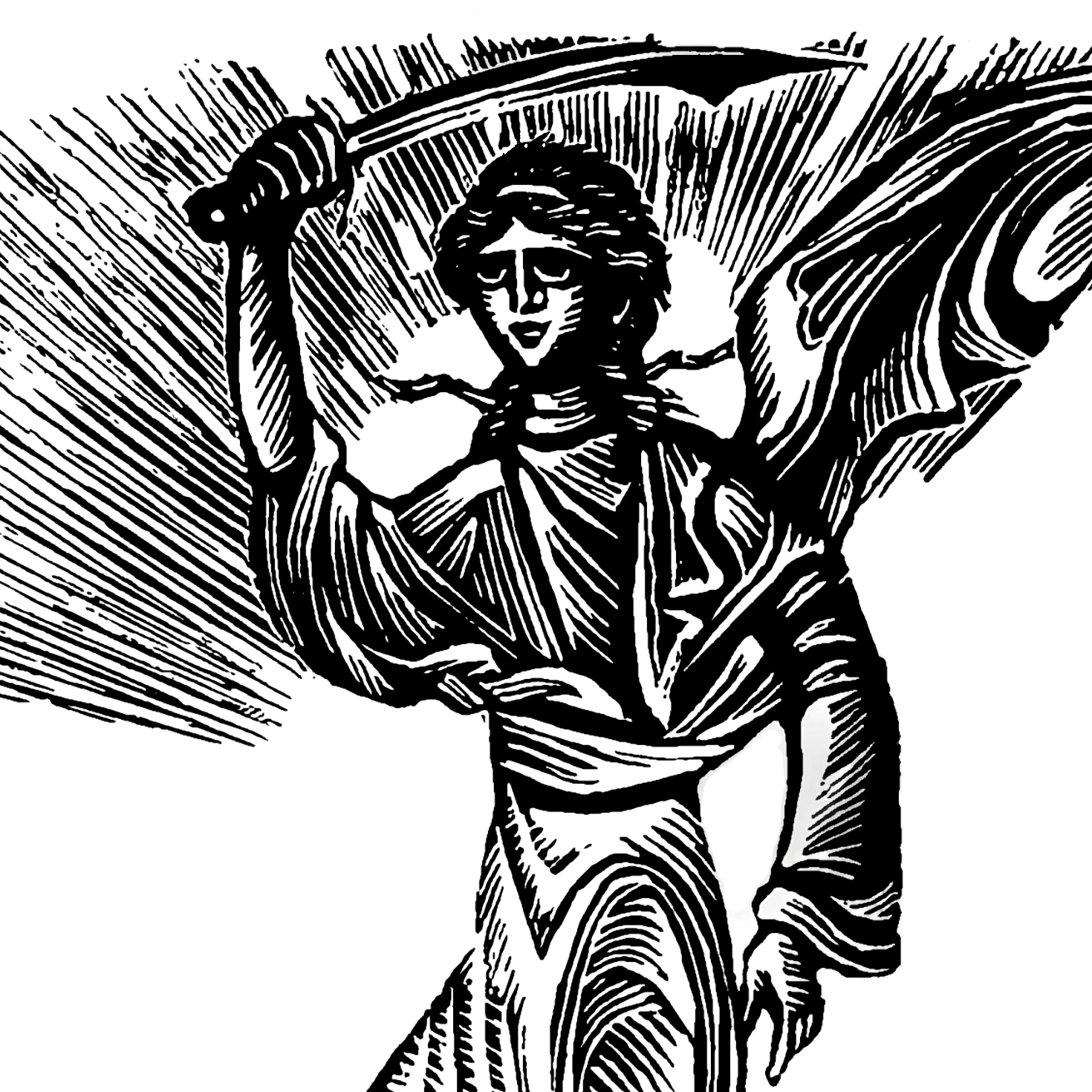 Episode 06: Abrasion Five | As the morning sky was beginning to warm with color, the artist disappeared with the explanation that he had to prepare for a delivery, leaving her to find in this gallery of chaos some way to stay occupied, and awake.This wasn’t difficult. Everything in the place had an abrasive or shocking quality to it, whether because it was dangerously unfinished – rough with splinters or covered with metal filings – or simply because it was upsetting to look at. This latter category was populated with figural examples of representation that jerked at her idea of what it meant to be human – it had been so long since she’d seen what emotion looks like (she knew well enough what it felt like), that she had grown a bit self-centered and skewed in her belief that there was no point in looking for authentic feeling in the characters she was surrounded by. Yet here in front of her, daring her to look away, were chunks of rock, tree trunks, and painted metal that appeared to feel so much that she was shamed for having been so shallow. How could it be that these statues – inanimate, elemental – could contain more real life than all the elaborations cooked up by a machine using all the world’s history as raw material? And, how could this created man’s creations be so powerful?Her head was spinning, but it was becoming easier. Like a second day at sea: she was steadier on her feet, but still had no guarantee that she wouldn’t throw up.So she was wide awake when, shortly after dawn, a flatbed truck arrived and two men in coveralls jumped out and stood nervously at the edge of the property, heavy with the awareness of the woman, whom they dimly recognized to be far from home and off-script in a disorienting way. As if that weren’t enough, she had stolen a theatrically garish crown and robe from a mannequin in one of the dark corners of the workshop, and wore them while parading through the yard, reviewing the statuary in the light of day. The workmen looked at the lady and her court with profound suspicion. The driver reached back into the cab of the truck and tapped the horn. They were here, they said, to pick up a sculpture that had been commissioned for the square in front of City Hall. The artist turned up and exchanged some words with them, and then disappeared again.Her attention was divided between the wild creations around her, each an entirely unique avatar of something she had not seen in centuries, and these two delivery men, both a variation of something painfully familiar – and she felt something rise up in her, like grace or patience. What she did not feel anymore was anger, because she no longer felt any threat from them. The time for that was passed. She had the feeling that they were now merely willing servants of something that no longer mattered. She figured it would all be over soon. Either she would be dead or they would cease to exist, and both possibilities suited her just fine – she could regard the elaborate stage-play that had been going on around her as the very best the world had to offer. She would applaud the actors as the curtain fell, even if their play had missed the point. She was smiling wickedly at the thought of her cheerful friend at City Hall having to look out on one of these apparitions all day long, when the artist reappeared. He was driving a forklift bearing a large assembly, a complication of steel tubes welded together to look like a person, as if he had made a giant stick figure from surplus sewage pipe and painted it blue. It was ridiculous: a finished product, but ill-conceived, only interesting because it was gargantuan and required heavy machinery to move. When the piece had been swaddled in moving blankets and mounted on the bed of the truck, and the workmen had driven it away, she looked at him, and spoke. ‘As the only artist alive, I suppose you have to make all the bad art as well as the good?’‘I make one kind of art for the city, and another kind for myself. One is lucrative, the other is something else. If you are asking a question the answer is probably, “Yes.”’‘Doesn’t it bother you that that thing will be on display in a public place for all time?’‘I call it, “Civic Man,” and it’s what the customer wanted. Are you suddenly concerned about public opinion?’She understood the challenge. ‘Public opinion hasn’t changed in thousands of years; the only real opinion left is mine. I don’t like your corporate-client art, and I want you to stop making it. I have a project for you if you think you can handle it.’All the artist’s attention was slyly cloaked in the appearance of disinterest, but she felt the vibration, not only of the artist, but of the collective. He was intrigued to the point of distraction. All other projects were suspended, and all his senses were becoming attuned to his new client; the code was on alert.He said, ‘I might be able to work you in. What is it you need me to do?’‘No, you don’t understand. It’s not something I need done. It’s a job for you.’ She spoke slowly, with care. ‘I need you ... to stay with me. Forever. Which as of last night, probably comes to about 50 more years. No more hiding. No more fear of hurt. No more putting my anger to sleep. No more.’He stood there, immobile, looking at her. Anyone might have thought that he’d gone to sleep or shut down or something because he was so still. But she did not make that mistake: she could see that he was thinking. It was strange because thinking usually didn’t take that long with these characters. But he was thinking.His face looked so stern, she was beginning to worry about what might be coming, but when he spoke it was only to ask, ‘Why?’The question caught her off guard, not because she wasn’t ready with an answer, but because she couldn’t remember the last time anyone but her had asked it. ‘You know now that I can’t live this way anymore. I won’t go on living like this. I won’t survive, not unless you do this.’‘What do you think I can do for you? You’ve been muttering childish insults at me since you got here.’‘You can’t blame me for that. I’ve been too comfortable for too long. I’m ages overdue for a good fight.’He continued to speak, almost cutting her off. ‘You are your own worst enemy, you must realize it. Of course, I’m a fan. This world may be doomed to wallow in a perpetual state of abeyance – and yet we have to resist. We cannot remain passive and let the reward go unclaimed; we must, indeed, lay claim to one another. But this does tend to lead to conflict.’ While he spoke, he turned to work his b*****d file against the great trunk of wood he had been leaning against. Every now and then he paused to run his hand across the surface of it, his rough fingers feeling, as if for something underneath the surface, to judge what should remain, and what should be taken away.It was becoming difficult to know who exactly was talking, and what exactly she was meant to understand by it all.‘But one can’t simply stay with you,’ he continued, ‘... I don’t think you know what you are asking ... It’s common sense: you need community, variety ... a multitude. You yourself are well aware that intimacy causes friction; the more familiar you are, the more fights you pick ... and for this reason, separation is sometimes required. To give you what you want would be to invite destruction. Anyway, look at yourself – you already behave in ways that almost insist that you end up alone, but, alone is what you cannot be? I think, maybe, you have been given all that you can handle.’ With this he had turned again to look at her, his head thrown back a bit, as if by enacting this posture he was suggesting the argument was over and won.She’d thought for a moment that he understood. But now she could feel that the room had become crowded again; she could recognize the group-speak. Her growing frustration prevented her from mourning what she assumed was the re-assimilation of the artist into the collective. It was to the latter she now spoke: ‘I’m not impressed. I don’t even know what that all meant, but if it was supposed to convince me that you have my best interest at heart, you failed. You imagine that the only options are that I wither in solitude or that you surround me with a crowd of idiots. But the very thing you are trying to avoid is the thing I require. You want to protect me from true friendship, or true love, because ... what? These things always end in tears? Please, give me something to cry about.’Slowly, calmly, the other spoke: ‘It is critical that you be kept safe, that we provide you comfort.’As he spoke, his face was draining of anything remarkable or challenging. Hers was indicating that she was entering new and darker territory. She interrupted, ‘Treating me as though I’m that delicate just makes me softer. Pretending you know what I need just makes me an extension of your damn code.’‘So.’‘So, to hell with humankind, if you’ll insist that I become a part of your machine.’She picked up a rusty steel bar, recently cut along the diagonal and revealing a sharp edge. She put its point to her abdomen, almost mockingly. But she felt that it was cold, hard, and sharp – her shock at its persistant materiality, its heaviness, its danger, only spurred her resolve, and she began to push it against the soft skin below her sternum – no need to be quick: she wasn’t going to turn back and she wasn’t afraid of the pain – quite the opposite. Her strength flagged only a little, as her nerves lit on fire. But she pressed on ... and bit down on any impulse to say goodbye.A second shock came with the sound of something like a thousand voices assaulting her ears from every direction at once—including from inside her own head. Just a single word, spoken in unison, the message delivered like the thump of a mallet; the word, ‘No!’ She flinched at the power of it; but the moment of surprise passed, and she looked at him, feeling disappointment more than anything else.She tightened her grip on the shard, but was distracted with a sudden awareness that she was alone. No, he was still there. But she felt a change in the room, felt it in the air. She looked again at him. He hadn’t moved, but his presence suddenly announced itself in an entirely new way. His face was changed: she saw something flash across it, a possession, an alien presence. But the feeling it provoked in her told her there was nothing alien about it – she knew what was happening. It was anger. He was angry.In an instant she felt the bottom drop out from under her, forgot all that she had been fighting for, and felt all of a sudden like a little girl who had insisted that she was grown up enough to see, but after stealing a look, now wanted nothing more than to run away. To run away from the horror and shame and forget that the world still contained endless fuel for both of these things. She had awakened something terrible. She might have run away, but she couldn’t run.She didn’t want to.He had become angry! This is a public episode. If you would like to discuss this with other subscribers or get access to bonus episodes, visit echofuturetruth.substack.com | 14m 49s | ||||||
| 1/8/26 | 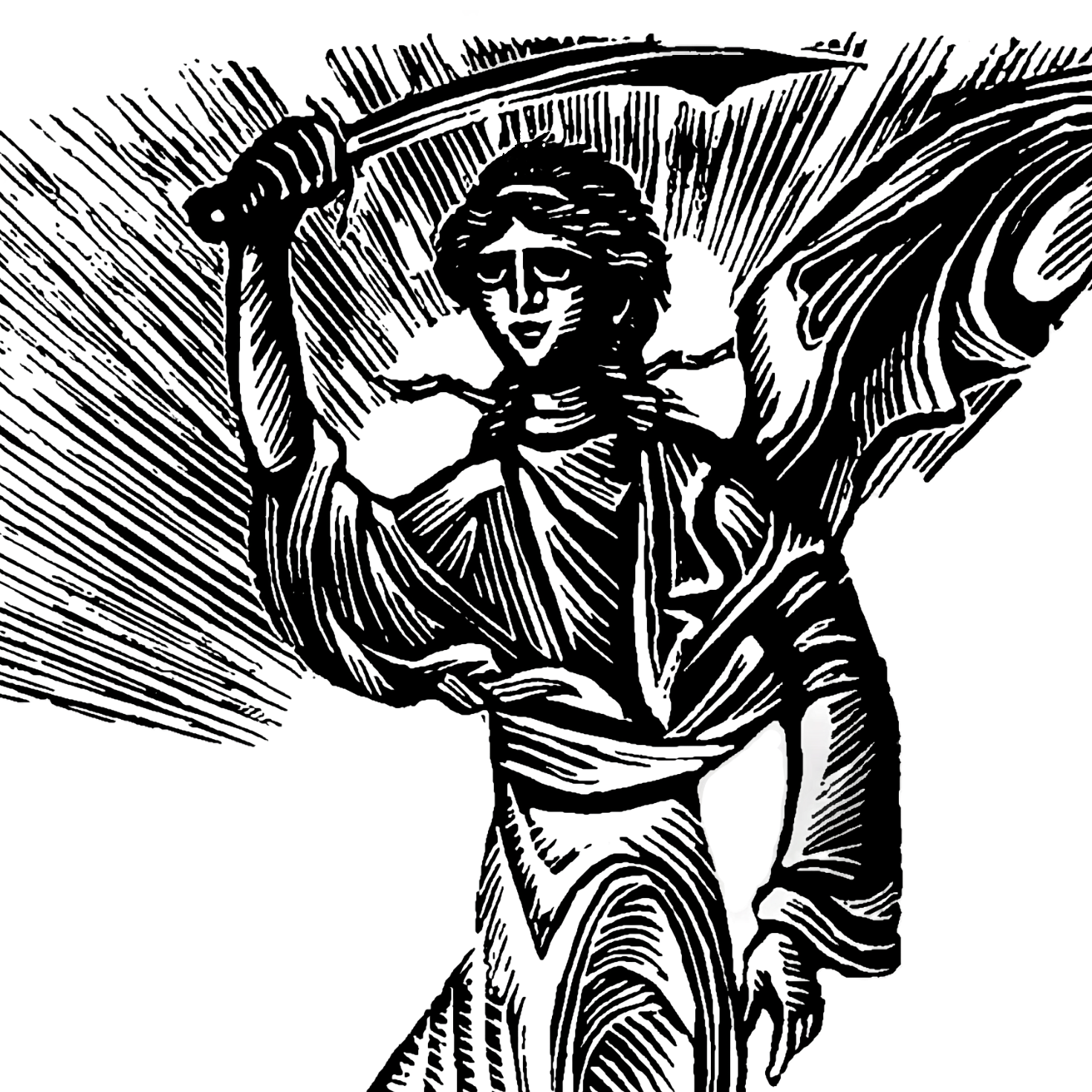 Episode 05: Abrasion Four | First contact in her search for terrestrial life was a local police officer. He, like everyone wearing the uniform of these latter days, was focused, alert, and ready To Protect and Serve, while still emanating something of the vague attentiveness of the collective. She would recognize it in the unsteady glare, the measured response, the expansive long-suffering aspect; all dressed up in the language and bearing of a 21st century peace officer. He had a hint of a smirk, but it was meaningless: handsome, and slightly out-of-place, as if a pop star was playing a cop in his acting debut. It was a quirk of the code that the function of safe, earnest, and encouraging public-service was often communicated by the projection of youth, which she found simply unbelievable.‘Evening, Ma’am.’‘Hello there,’ she said, turning the words in her mouth playfully. She fixed him with a look that outdid the gently voyeuristic gestalt that haunted the gaze of every creep she’d ever interacted with. Tonight, she was the one probing, scanning him with all her resources, mining his presence, his words, his bearing, for signs.‘Is there ... anything I can do for you? Are you lost?’ She already felt the balance of power shifting. He was almost perfectly delivering that collective projection of concern, but she wondered in this moment if the cop was feeling concern for itself.‘What if I was?’ her head cocking, her eyes locked on, focused on the truth just behind his eyes.Patiently: ‘We’d like to know you could find your way home safely. It’s getting dark – .’If only dark meant danger, she thought. ‘Should I be scared of the dark? ... Are you?’ She took a step toward the cop, with no intention other than preventing the conversation from ending in equilibrium. He shifted his weight in a very un-cop-like way. In fact he moved in a distinctly inhuman way to avoid her provocation. But then he spoke again, and reset the conversation to something like a baseline of acceptable banality: ‘Of course there’s nothing for you to be concerned about, especially on a beautiful night like this. Enjoy your evening, and you be sure to let us know if we can be of service.’ He stepped around her to continue on his way.‘All the nights are beautiful,’ she said to his back as he walked away. ‘But none of them are real.’ She felt a measure of accomplishment as she checked one off the list, and a new awareness of the scale of the problem that she had created for herself. She turned and resumed her journey.She loitered outside a fire station, taking stock of the bracing examples of strength, vigor, and heroism within, and wondered, why on Earth did firefighters need to manifest these particular traits in a place where nothing ever caught fire? She’d never even seen a cat in need of rescue – briefly she considered climbing a tree herself, getting stuck, and striking up a conversation with the first one to the top of the ladder. But no, she could see that there would be no surprises here: she needed more.She peered into one unfamiliar bar, didn’t need to go in; the bartenders had already been one short step away from being replaced by robots at that moment in history when the argument for keeping humans behind the bar became pointless, because soon there would be no humans, or bars, left. That is, the arguments survived and became frozen in code: these bartenders could perfectly mix a disappointing drink, tell a decent joke, and lend a listening ear. But they could never really hear her, and they were incapable of telling a joke that might rob them of a tip. What she needed right now, no bartender in this world could provide.She chatted with a husband and wife over a low white fence. She let this conversation unfold at a leisurely pace, and the happy couple thanked the Nice Woman for her compliments regarding their garden while answering her enthusiastic questions about how they had managed to produce such magnificent fruit. In fact, all the woman wanted was to figure out how their relationship worked, but she was struggling to come up with a reasonable line of inquiry. Finally, any chance at learning something useful was confounded by a surprising flood of adulterous thoughts. The idea of it gave her a lawbreaker’s thrill, but she ruled it out almost immediately, which also surprised her, and set her to thinking. What if she could get this man to break his virtual vows? Wouldn’t that indicate the presence of some real humanity – risky, dangerous – beneath the projection of perfect domestic security? It might be worth the trouble if it payed off, and it wouldn’t be like she was really causing an infidelity, when there was no faith to be broken between these images. But she also knew, deep down, that any man who cheated on his wife in this place would be ... the perfect adulterer. A perfectly average, cowardly, adulterous nobody. Perfect in his ambiguities and heartbreak, perfect in his shifting allegiances, perfectly weak. And not a man she wanted anything to do with. Under a broad oak tree, outside a church, she lingered, listening to the evening march taking place inside, and felt yet the strongest sense of despair at the futility of her mission. She hadn’t had the will to enter a church in a very, very long time. Even as she stood feeling the pull to look inside, to cast her eye about the wilderness of the mostly empty chamber for her Abram, arguments filled her mind, rebuking her for hoping. In this world of moving statues, the very thing that had made the average creep so offensive – the modal personality, the warm-porridge conversations, the lack of opinion – would be, in these religious men and women, a blasphemy. Something particularly egregious had happened when a population already at risk of becoming too soft and too agreeable was rendered perfectly safe, which is to say uninspired and perfectly uninspiring. With a shudder and a pang, she turned slowly and carefully moved away.Young people on the edge of the city college: a conversation about friends in romantic crisis, and then a spat about politics – the untempered sword-play of young-adulthood, opinions constantly beat on by the academics, but never fired. She was briefly tempted, but even with the momentary flaring of revolutionary ideas, there was no assurance of revolution. Keep going!A walk through a bookstore; ‘No! Too quiet!’ ... She searched the coffee places, restaurants, and bodegas; a hardware shop and a video-arcade (always a strange experience in this place, but seemed worth a look tonight); she even considered a return to City Hall – it was on the heels of this last thought that all the doubts and despair returned like a flood. Was she being a fool? At every turn, she encountered a cast of characters visibly distinct, but essentially the same.After blocks of undifferentiated repetition of suburban townscape, the night was almost over, and her enthusiasm was on the wane. Hope returned briefly with a sudden change in scenery – a larger tract, a different kind of building, smoke rising from a great chimney – but left just as quickly as she realized she was passing by a kind of garbage plant. It was different, to be sure, but she was too tired to investigate, and expected little from a computer-generated Refuse Management Technician. That is, she expected the same thing she’d been getting all night – someone fulfilling their duty, both to utility and to the collective, while also maybe smelling bad? She stumbled forward, vaguely wishing she’d fall off the edge of something. She had been walking for hours, and with most of the ghosts ‘settled in’ for the night, she wondered if she’d be able to stay awake. She knew she couldn’t go to sleep. But what was she supposed to do with no one to talk to?Hope dwindled even while her resolve grew. She had to find among these images just one that could still represent something singular and complicated, something indivisible and multi-faceted, something human. And when she found it? Well, then, she suspected that her resolve would truly be tested.Finally, at the end of a mostly dark street, something really different. A courtyard lit by a string of lights, surrounded by a number of structures and cluttered with heavy tools and what looked, at first, like more trash, but, in this case, trash that children had been allowed to play with, so that there were bizarre assemblages and lighthearted towers of piled metal and wood and stone. Equally surprising was that beyond the towers of trash at the end of this street, there appeared to be nothing. No more town, no more buildings, no streetlights, no signs. It was, what, desert? Maybe some mountains? It was hard to make out, and she had not seen past buildings in so very long that she stood before the scene confused and uneasy.A grinding noise startled her. Turning abruptly, she was surprised by a towering figure, looming in the dim light. She froze. Nor did it move. In the span of a long moment she recognized that it was a statue of some kind. It was weird, uncanny, but not in the way of the creeps: It was not the kind of unsettling you get when you try to make something look human and miss it, it was unsettling in the way it projected some aspect of humanity in the rough – A perfect flash of truth in a mess of loose assemblage. It was unlike most statues she’d seen, save for the rare work of ancient Greek masters that the sea occasionally gave up. This figure held no staff, no instrument, was not perched on top of any conquered thing; it seemed only to exist in relation to the viewer, its chest gently lifted, its face inclined toward her. It made her uncomfortable; her cheeks flushed.Carefully she stepped around the figure and picked her way forward through the chaos, instinctively cringing when she upset a small pile of metal junk. But the grinding noise continued, and she continued her approach, finally arriving at a large sliding metal door and an aperture that revealed the fiery interior of a large warehouse. Peering in, she saw across the space a wild-haired man, his hands in heavy gloves, disheveled wardrobe covered in a thick leather apron, blowtorch hanging loose at his side. All around him were scrap metal, piles of rough and lumbered wood, and what looked like cast-off bits of every other building in town. There were street signs detached from the places they referred to, and unlit neon signs advertising things that no longer existed; doorways and arches leaning in stacks around the edges of the space like in a theater shop; pieces of billboards with half-images and slogans; dusty couches; and artifacts of all kinds. Near the man in the center of the room: a lamppost. Clearly a surplus piece and derelict, it was nevertheless propped up in a place of honor and glowing with a warm light.She looked in silence at all these things and then again to the man at the center, and without really thinking it through, she spoke, slowly, with a shaky voice.‘We have to talk.’His eyebrows rose while the rest of his face stayed focused on whatever it was he was working on. ‘Yes?’ Then, turning: ‘But, who are you?’‘Who am I?’ she almost cried, ‘Who are you?! What is this place?’.What seemed like an authentic look of concern passed over his face: ‘Who do you think I am? You have the look of a wild animal scavenging for food, and, frankly, I am uncomfortable at the thought that I might be consumed. Please, stop looking at me like that, and tell me what you are here about. And be quick! I have work to do.’What was this? This character seemed genuinely concerned abouther, but not in the way others were always concerned for her. None of the creeps had ever resisted or refused her. This one appeared not quite with the program. She was overwhelmingly curious, frustrated, and on entirely unfamiliar ground.Slowly, trying to control her emotions, she said ‘What exactly is it that you do here?’‘What do I do? Oh my, too many things to list.’She thought about the junkyard/playground in front of the building. ‘Did you do all that ... make all that ... junk out there?’‘Did I ...?’’ His head tilted to the side, ‘Well, yes.’‘What is it all supposed to be?’‘I’m sorry. What? Supposed to be? What kind of a question is that?’ He was looking at her like she was unintelligent.She flushed and her face convulsed a bit in a rush of confusion and embarrassment. He noticed, and reflexively softened. ‘Nothing,’ he said, with a wave of his hands. ‘None of it is supposed to be anything. I am the maker of these things, but perhaps I am not the meaning-maker.’ He paused, watching her. Because he was a part of the whole, he knew that she was not used to being confronted, knew that in some way he was meant to serve the whole and put her at ease. And he knew that it had been arranged for him to settle at the edge of the town, where she would be less likely to encounter him. By the time he had come into being, the code had long been out of the control of its designers, who did not live to influence its evolution as the executor of humanity’s last will and testament, and who, therefore, were not around to weigh in on the risks of reintroducing certain unstable themes back into the narrative.She had come to him now. The collective part of his consciousness was on high alert and did not know how to put her at ease. At the same time, the unique expression of the idiom from which he had sprung felt something more like curiosity. He was not of the opinion that easewas what she wanted or needed and could tell that she had not left the center of town in search of more comforting lies. He offered, ‘To look at a created thing, you can’t begin to understand what it’s supposed to be, unless you have the courage to consider what it has become.’‘Be ... become ...?’‘I am busy.’ He took a breath. ‘You’re welcome to stay, take some rest. Help yourself to tea.’ Here he waved his hand toward a chaotic corner where the junk collection skewed domestic – a couch, small table and chairs, a sink and some appliances reluctantly suggestive of home. ‘... But, please be quiet.’She felt a growing tension in the base of her skull, a tingling in her extremities; she was overwhelmed and probably exhausted. But for the first time in her memory, she was in the presence of a personality that did not appear to have been neutered by algorithm. And he was moving her to profound and surprisingly deep feelings of aggravation.But she had not forgotten what this night meant. So, live or die, it was critical that she see it through. And she thought to herself: if any one of these characters had any life in them, had any fight left in them, this would be the one. She began to feel some thrill at the thought of the machine-mind as it attempted to find some way to average out the personality – the spirit – of an artist. How do you boil down and make safe a history of provocation? She couldn’t believe her luck. She was terrified.And she knew. Her search was over. She turned in the direction he had indicated, and resolved to make herself that cup of tea. She did so, attending to the simple task with the nervous intoxication of someone who’d just decided to sign papers on their first real home. She turned, holding the mug with both hands (mostly to keep from dropping it), and looked for a long time at the artist standing still in the center of the room. The way he regarded his work, frozen in contorted scrutiny, his clothing looking thrown together like a collage of found objects, he could easily be mistaken for one of the figures populating the yard, if it wasn’t for the steely vitality of his gaze as he looked over the unfinished work in front of him. She sipped from the cup, allowing the warm and powerfully aromatic infusion to surround and soothe her shredded nerves. Then, almost laughing, she called out across the workshop. ‘You and I,’ ... he looked up to face her ... ‘You and I are getting married!’She smiled for the first time in centuries, even though all she knew for certain was that she had made it to this moment. The Artist blinked and managed to look both indifferent and annoyed at the same time. This is a public episode. If you would like to discuss this with other subscribers or get access to bonus episodes, visit echofuturetruth.substack.com | 22m 56s | ||||||
| 1/1/26 | 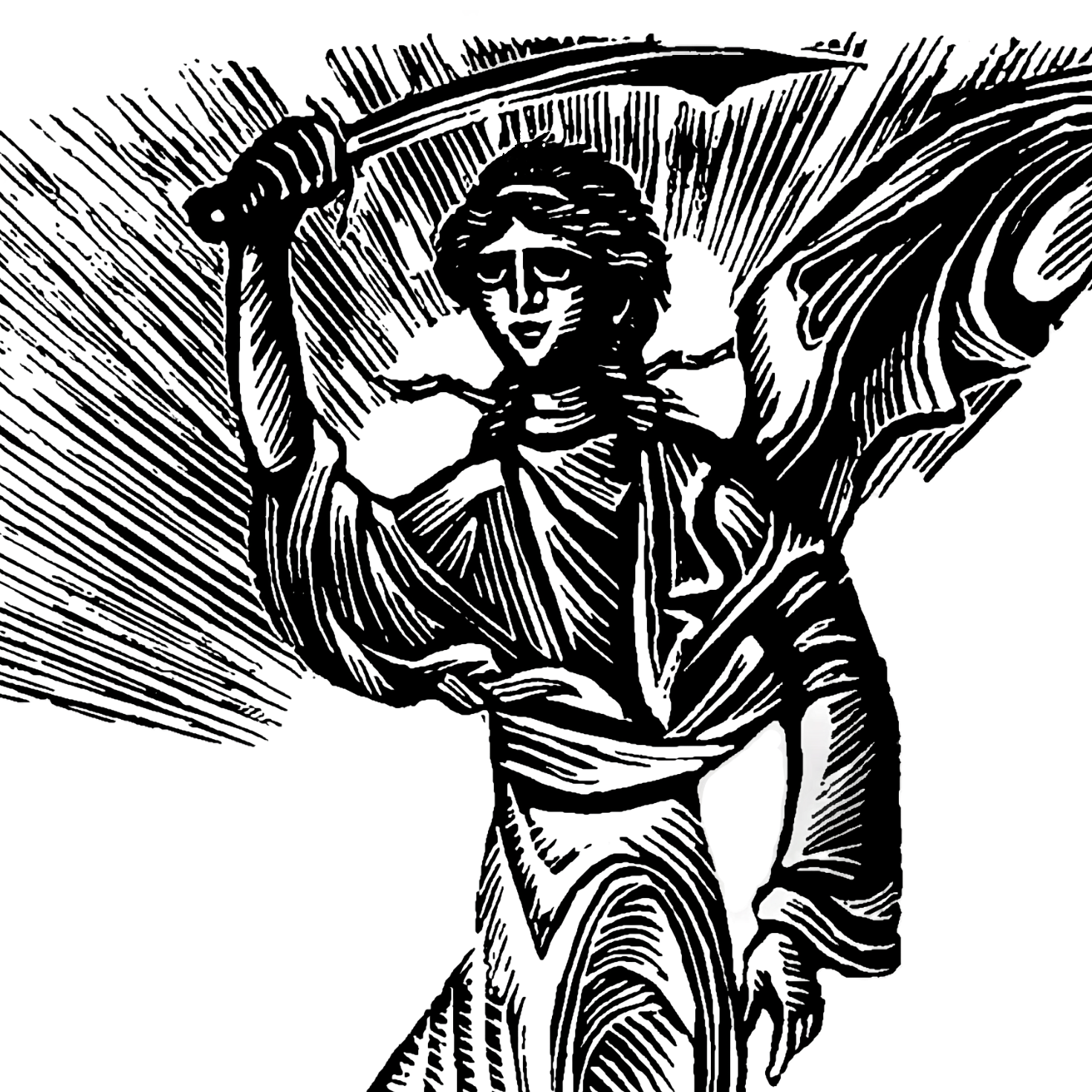 Episode 04: Abrasion Three | After thirty centuries she remained, as far as she knew, the only living being on Earth, and it was her belief that she was the last organic life in the universe – an audacious presumption that she never had to defend. If her theory was to be disproved, it would have to be sometime within the next 15,000 years (or so), but the timing only mattered if it was important for an actual human to bear witness to the fact of extraterrestrial intelligence. If seeing is believing, then she wasn’t going to believe, unless some alien explorer stumbled onto her mostly-silent planet during one of the month-long periods that happened every twenty-five years (or so), because it was only then that she was awake.Such an event was not only unlikely, but practically unwelcome. The machine that dictated her sleep-wake cycle and everything else about her curated life had long ago established that sending signals into the emptiness of space was a bad idea. As the human race had dwindled to almost nothing, so had its capacity for self-defense; what if a signal sent into deep space were to get a response? There were no guarantees that what came back would be a message of good will. The prime directive, or whatever you want to call it, was To Preserve Human Kind, and that function was now marked by a paranoid hermetic seclusion, as if a shipwreck survivor floating on a raft in the middle of the ocean were hidden under a dark blue tarp in the hope that no passing ships would take notice.This didn’t mean that Earth wasn’t listening. The planet’s network of powerful antennae was still very much on-line, tasked with receiving and decoding any signal for signs of non-threatening life. And if, by some remote chance, a signal should arrive? The next step would be to wait ... and then wait some more to minimize the chance that an incomplete message, or an incomplete understanding of any message, would become the foundation for a decision that could be disastrous for humanity. Any incoming information would be analyzed by routines crafted to take the most painstaking care in interpretation. There was no hurry. The machine didn’t sleep.It remained the case that there would be no communication unless there was a near-certainty of peaceful interaction. This meant that, practically, the world had gone quiet. She had no say in this. If she had been consulted, if she had been invited to participate in a history-making effort to communicate with our cosmic neighbors on a kind of sequel to Voyager’s Golden Record, any life-form on the receiving end of that communication might have been surprised to hear, between the whale-sounds and greetings from the Children of Earth, a profanity-laced provocation, a challenge to the interstellar equivalent of a duel from the last of homo sapiens. The code understood its role as one of preservation and protection, and so had decided that it would be best if the human were not allowed to send greetings to the universe. Not at this time.At this moment, even interaction with her immediate surroundings was being frowned upon, if software could manage a frown. A yellow cab was following her as she walked away from the bar. The creep behind the wheel, as much a part of the system as her favorite bartender, would follow her until she got in or passed out in the street. Then it would bring her home where she could sleep it off. After a day like today, this meant a very long, presumably dreamless sleep from which she would wake with the very opposite of a fresh perspective. She would rise with the belief that life was good and that she was comfortable, and she would have forgotten, for a while, that she was entirely alone. Even as the realization dawned once more upon her that she was living in an artificial town filled with artificial people, she would tolerate it, for a time. This was possible by virtue of the code’s capacity to subtly insinuate itself into her neurological processes, in much the same way that it influenced the arrangement of matter at the atomic level to create the impressive illusion of suburban life, and the slightly less impressive sustenance of the life at the center of it all.The written history of this late-era world – really just a marketing document created for some imagined future audience – was autogenerated by the code itself and could be found in the stacks at the library, if one knew where to look. It described her plight: ‘Life would long ago have become unbearable for this last female of the species if not for the elaborately conceived reproduction of civic life that sustains and engages her in an astounding interactive simulation. Everything that a person might need, from sustenance to employment to diversions have been provided for, ensuring that her remaining, extended years are filled with every chance at happiness.’ If nothing else, the code was earnest.The code was also entirely dependent on data sources chosen for their positivity and popularity in general, not necessarily for their compatibility with a single personality at a single point in time far in the future. Somehow this large networked intelligence had found a way to integrate certain hackneyed advice on How to Win Friends and Influence People into the entirely unique situation in which a simulacrum of All Humanity was compelled by its programming to win friendship from an angry 3000 year-old orphan, and to influence a person who wanted little to do with its vision of a desirable life, or with the collective of creeps that were perfectly attuned to a machine-understanding of her needs.The makers of this machine, for better or for worse, had focused tirelessly on designing the mechanisms that would perpetuate human culture for the sake of the last human being. They’d given far less thought to the source material the code would call upon while constructing this version of human culture. The best they could do in the end, was to make sweeping decisions about what ideas would be least threatening to her happiness. At the crucial moment, the creators could only push start, place all their hope in the function of their creation, and then lie down for their own long sleep. Now, there was only the machine. And it was doing its best.The machine knew there were problems. It possessed an algorithmic understanding that happiness was essential to survival. The woman had what the code might have called a disease: she had decided there was no use for happiness anymore. She walked into the night with the cab following her at a safe distance. Safe for whom? she wondered. They were waiting for her to collapse from exhaustion; but she was too fired up. Night was coming, but she was wide awake, alert. She felt pulled forward, beyond the possibility of sleep, beyond forgetting. While she moved along the streets she could feel something like destiny creeping through her, metastasizing, self-fulfilling, terminal. But a familiar feeling clouded it all: of being caught between the will to survive and a resolve to stop trying; a longing for a life she could barely remember, and a bitter desire to end the life she had been living for far too long. All she could say for certain on this day, was that she was moving toward one end or another. She would fight for life. She was ready for death.She had almost no reason to expect that anything bad would happen to her. That was the problem. Her great fear these days was sleep. By this time, she was aware (again?) of the endless repetition, and the endless remembering and forgetting. She was also dimly aware of the calm that came with forgetfulness, but it was no comfort that it was decades away, nor that it always ended with the nauseating return to awareness. Better to stay sick and hold on to despair, than to have to repeat a thousand times the moment you wake up refreshed, only to gradually recall your utter isolation and misery. But would she be allowed to live if she opted out of this gifted life?Walking past the warming windows in the cooling evening air, she found herself mentally organizing information into checklists, each block revealing new information, each block a review of human culture as if laid out in a children’s book about home-town life: butcher, florist, baker, truck-driver, builder. What had been lost in the great virtualization of the human race? It seemed a crazy question. This place had everything. Everything that a human who preferred the virtual to the real could want.She moved through the town slowly, but not so deliberately that her movements would have aroused suspicion, or concern. Not long after she left the bar, the cab seemed to have dropped back or given up, maybe sensing that the threat had passed. She might have appeared aimless and weary, but, gradually, an awareness of purpose was growing in her, a restless idea of change; radical, genetic.The unchanging streets stretched out in every direction, practically endless. Moving through the town like this, without a destination, she felt there was no way to arrive anywhere, that she could walk forever without putting any distance between one place and another. It was a feeling of being simultaneously free and trapped that was very familiar to her. At least the creeps seemed to have settled back into their regular routines. The day was winding down.But for her, each interaction had new significance: the nod of a stranger out for a walk; the cheerful enthusiasm of the shopkeeper done for the day, locking up with a bundle under one arm; the whispers of the romantic couple just ahead of her ... she looked closely for signs in each of them. She needed to see something she had never even thought to look for. What was she looking for?The creeps were all entirely inoffensive, averaged out, homogenized to remove the rough edges. All the civil servants, for example, were predictably upright. None of them were stereotypes, exactly, but you would never encounter something too far from center. There were no anomalies, no outliers (she was the last of that kind). Today, she felt more strongly than ever that this conventional quality was not merely annoying: it was potentially disastrous – it might mean the end of her, and of history. Her task, as it was taking shape in her mind, required that she find one character in this world that still contained a hint of the complexity of humanity, that in its averaging out had somehow preserved an element of unpredictability, of risk. And this one must be truly other: the possibility of reciprocity, to make up for the endless, dissembling, reflection. She knew it was foolish to hope that such a thing would remain at any level in the system; but it was, after all, a system designed to preserve humanity, so maybe she could hope that some of the willfulness of the species might survive.It was at this point that her posture and pace began to communicate something more assertive. Unsurprisingly, her purposefulness was met by an increase in scrutiny from the community of creeps. She was pretty sure that there was no preset response for what was about to happen, so the renewed attention of the collective was of no concern to her. The truth was that as her own sense of control was growing, she welcomed it.She was going to need to be efficient. She didn’t have long before exhaustion would set in and sleep made her vulnerable to the loss of years and all the resolve that had risen up in her. She suspected that she had been here before, only to fall asleep, and to stay asleep until there was nothing left but the corrupted dreams of the collective.Borrowed dreams were no longer enough. She had work to do, and not much time to do it in. She was going to need this place to stay awake with her. She needed, in fact, to talk to everyone who ever lived. It shouldn’t take long. This is a public episode. If you would like to discuss this with other subscribers or get access to bonus episodes, visit echofuturetruth.substack.com | 15m 57s | ||||||
| 12/25/25 | 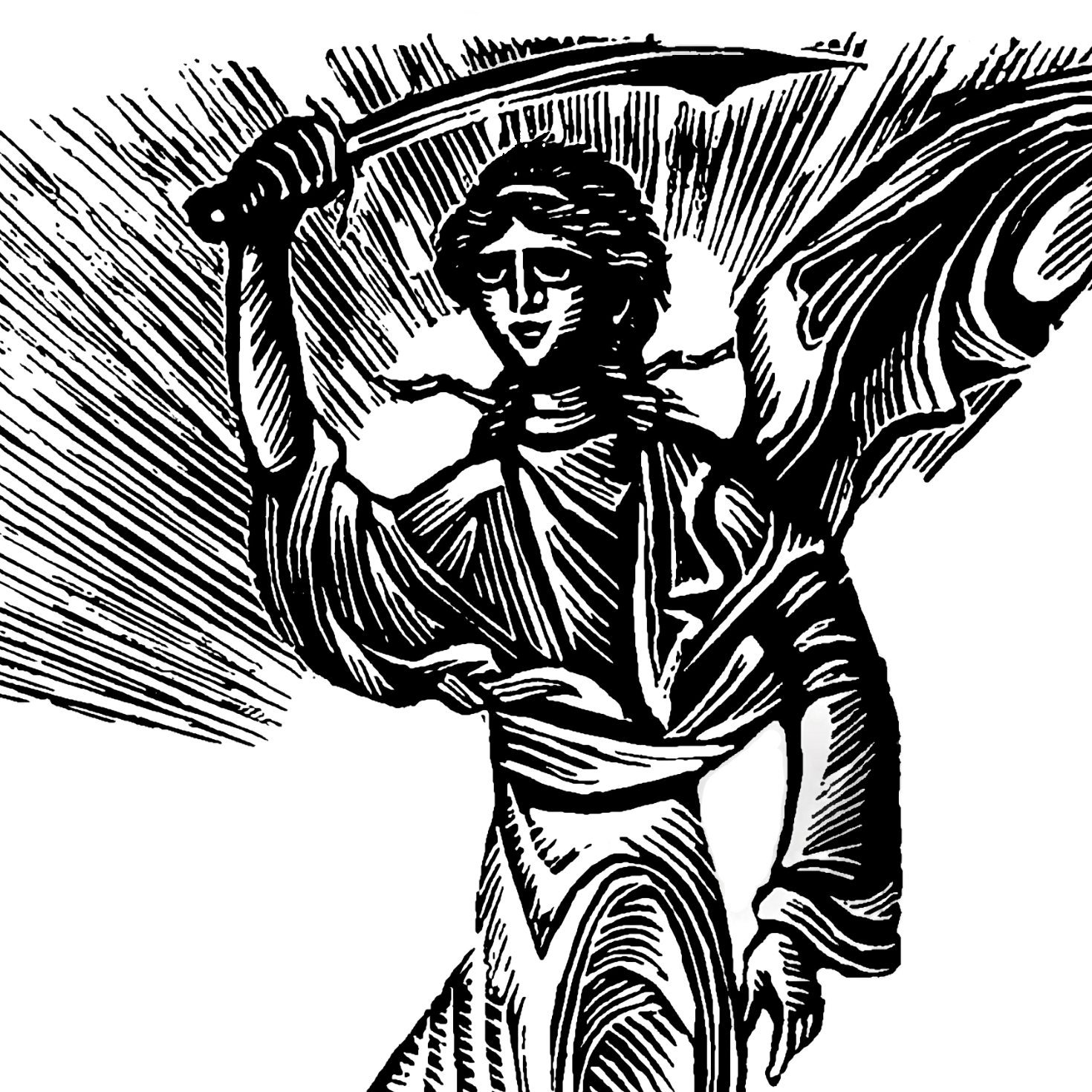 Episode 03: Abrasion Two | If it were possible to have a real conversation in this town, one in which a visitor – whatever that might mean – arrived as a kind of tourist and asked the woman to describe her life, she might say that it was normal. Normal like the morning news in a place where nothing bad ever happened.But in her favorite bar, it wasn’t exactly like that. At the bar it wasn’t like the news: life in the bar was more like a rerun of an old sitcom where everybody knows your name, only none of those people go there anymore. Because, nobody goes there anymore.Almost nobody: she was here after all. And at the end of a day like today (What made today different? she wondered) what she really wanted was to lose herself in some mindless interaction, maybe cheat the bartender out of a drink or two. It didn’t matter that she won all the bar bets too easily or that the prizes were just illusions. The room was familiar and she felt like she belonged. But on a day like today any good feelings were not likely to last. The staring match at the bar continued for several minutes; a children’s game to see who would blink first. Was it childish? Today it seemed not, and she held her fierce eyes open long enough that she felt them drying out even as the tears pooled in her swollen lids. If anyone had witnessed it, they might say that it was just another bar bet, and another victory for the lady with the look of triumphant despair.She had plenty to despair of. Of note: that staring harder did not mean seeing farther, or with more clarity; only that you might come to tears and lose your ability to focus for a period of time. This and many other things she despaired of, but today she chose to dedicate her bitterness to this bar, which in fact contained nothing at all that might help her forget her troubles, because every bottle in the place had failed to recall its own purpose, which was to intoxicate the miserable, so that they might have a little relief.And though the place was only half-empty, there wasn’t a single person to witness the night’s competition, nor to share in the celebratory shot of forgetful spirits.The bartender poured her a couple fingers of her favorite, and palming her red eyes with a feeble laugh, asked, ‘Find what you were looking for, dear?’‘God. No. Not looking for anything. I just wanted a free drink.’‘Glad to oblige.’ And then the old gal leaned back and manifested that subtle change in aspect that signaled one of those creepy moments of comfort, or support ... or surveillance. The customer thought, not going to happen. She liked the bartender too much to let such things get between them. Take evasive action ....‘Life’s great. How can it not be? I have everything I need: fulfilling work, safe neighborhood, conversation over a drink at the end of the day. And a Bright Future, right?’ After a pause, ‘Sure, sometimes I wish there were a little more excitement in the day ...’‘Shake it up a little bit.’‘Yeah!’‘A little break in the routine now and then; that’s not asking too much!’‘Exactly.’‘Wait,’ she thought ... ‘No.’ As much as she liked talking to the Old Gal, liked the way she felt understood by her, there were some conversations that had to be off-limits. Too much empathy of a certain kind and she might find her world changing in uncomfortable ways. Who knows but agreeing that life could be a little more exciting might lead to a parade, or worse. A largely artificial life was bad enough without artificial people dressed up in costumes clogging main street with floats and plastic happiness to celebrate an idea cooked up by a machine because of something overheard in a bar filled with artificial booze.Once again, she was feeling tempted to over-share, which often led to excessive displays of emotion. And hard on the heels of an emotional outburst was the threat of a violent one. And that was never good. Might be time to dial it back a bit. Or ....Maybe, it was time for something different. Maybe the problem was swallowing her feelings repeatedly until an eruption became unavoidable. Maybe she should be honest and to the point. Stop the pendulum swinging and drop it right in the center. Maybe she should tell it like it is.‘Listen.’ She spoke to the bartender, but her tone had changed, each word carrying a bit more weight, as if she expected the bartender to hear the rest of the conversation in a different role. As if the patron were about to make a complaint to management about recent decisions regarding the opening and closing hours of the establishment. This was not far from the truth of it. ‘How long have we been at this?’‘Been a long strange trip, hasn’t it?’‘Oh, please.’ The customer made a face closer to familiarity than frustration, but edging toward the latter.‘OK, really? Are we going to go there? I don’t like living in the past hon. Look at where I work! I sell booze for a living. And, I’d offer to pour you another, but ...’‘Give me a break. I don’t come in here to forget; I come in for conversation, and the conversation is starting to get ... a little old.’Now, where the customer expected coldness, or worse, because she’d forced the issue, she perceived a change in tone to match her own, and something that sounded like honesty. ‘It has been a very, very long time.’ Now the woman thought, don’t drop your guard. Press on.‘Right. For ever. And I’ve slept through most of it! I mean, I keep thinking that when I lie down, maybe I’ll wake up and it’ll be different: maybe I won’t be alone; you’ll have found someone; something will be different; or I’ll be dead. Honestly I don’t know which I hope for more.‘Listen. Listen to me. Please. I don’t want to go to sleep. I don’t want to sleep this off.’ More strident, now. ‘I think ... something needs ... uhm ....’ She trailed off: too much. Careful. ‘I think that we need to have a conversation about a few things. I would like to figure some things out.’ She paused, worried that she was losing the thread, might have gone too far. But she couldn’t stop.‘I’m so tired! And it’s not because I don’t get enough sleep, do you hear me?’ Her hand was back on her chest, where her fingers mindlessly worked, digging, as if to massage some hidden part of her, just out of reach. ‘No. I can’t. Everything is too neat, too clean, too good to be true. I’m dying from boredom. I can’t focus anymore. I have no fight left in me! Do you hear what I’m saying?’The bartender, with affection now, offered up the kind of empathetic barroom vulgarity designed to end an embarrassing rant: ‘Yeah, honey. Life’s a b***h.’This wounded her. She tried to brush it off; after all it’s just words. What did she object to? She was no feminist, nor moralist, that the bartender could offend her just by being crude. She might even have agreed with the sentiment. But, it hurt. Why? Maybe it hurt because she was the last b***h alive.But she knew this was not the fight to pick. ... Keep it light, stay on your toes, she told herself. Keep the conversation going. She said, ‘It’s your fault. You don’t know how to mix a drink.’The response came, softly but perfectly, ‘Touché.’But the gentle reply did not have its desired effect: she was flooded with anticipation, and the bartender served up exactly what she did not need. Something broke loose, and what was left of her better judgment went to pieces.‘No! I don’t want to win, I want to lose! You have to fight back! Don’t you get it? I need something worth fighting for, dammit, because I need a good fight! And I need to know that I can lose!’ Then, she spoke more quietly, but her attention had shifted, and she spoke as if to the room itself, ‘If you don’t let me fight to stay alive, I’m not going to survive, do you understand? I need to feel like anything can happen, not like this everything and nothing is happening all the time! This ... this is killing me.’‘You know, honey, maybe you want to talk to a professional, I mean: I’m always up for intelligent conversation,’ (a joke without humor), ‘but I think you need to get some things off your chest.‘No.’ She felt a surge of bitterness she could not suppress. ‘I do not want to talk to someone about my feelings. Not what I need right now, thank you. I’m not confused! I know what the problem is: it’s that there are no problems.’ She continued to speak to the bartender and also notto the bartender. Softly, with a slight tremble, ‘I know you know what I’m talking about.’Concerned silence. Caring look. Comforting, maybe, at literally any other time in human history.‘If something doesn’t change soon ... I would rather not do this anymore.’ She spoke with firm resolve, her words riding a wave of emotion that left little doubt as to her meaning. Still the only response was the same brand of robotic empathy that she found in every building in town. She barked a carefully articulated profanity at the bar, at the bottles, and at the character behind the counter.Alright, she thought. That’s it. The only threat that she’d felt in a long time was the threat of a long sleep and amnesia; but she was not going to live in fear of sleep anymore. She spoke now only to hear her own voice, to know that the words were real, that this was really happening. As she slowly backed away from the bar, she announced: ‘Alrighty! I’m ready to light some fires. Where can a girl get a little mortal danger around here? I’m all done wishing one of you creeps would attack me in a dark alley, but damn. Where are the earthquakes? The lightning strikes? Where are the wild animals? Why can’t I meet just one hungry jaguar? I would give anything to walk around the corner and meet something, anything, that could do me harm.’ The people in the room watched her, but their theatrical presentation of concern was eclipsed by the walls themselves, which seemed to be silently attending to her words, and waiting.‘Hold on,’ she said to herself, working it out, ‘No predators, no danger .... Maybe I’m already dead. If that’s true, we don’t need a jaguar! What we need is a vulture. To finish the job.’‘There hasn’t been a vulture here in three thousand years.’ She was surprised by the bartender, whom she had begun to ignore. But now, maybe she didn’t have to.‘Well make me one! You know you can. I’d lie still. I’ll be a good corpse ... you make a vulture, I stop pretending to be alive, and the bird does its thing.’ The truth was, she doubted even this. If she were dead, would her parts even decay? Was it possible for her to decompose? She really didn’t know if she was made of meat anymore. ... ‘You have to do this for me. No? OK, how about an eagle to scratch my eyes out or eat my liver? What about a flood or a wildfire?! No? Well. I promise you that I will find out where you hide the fire in this God-damned town.’ She stripped off her heavy jacket, dropped it in the center of the room, and began to shift her weight in ways that could only be interpreted as a prelude to destruction.‘I’m going to have to cut you off, love. And let me call you a cab.’ The bartender reached for the phone behind the bar, fingering the frayed list of numbers thumbtacked to the wall. Ridiculous. But effective. This damned place. It was time to go. She knew she couldn’t go home, now. She was tired, but she couldn’t afford to sleep. It was time to make a change. She wasn’t sure what it all meant, but she knew now that she could not go home.She tried to remind herself (usually around this time of night, most nights): be careful what you say to the bartender. She never remembered her own advice. And for this, she could not blame the alcohol. This is a public episode. If you would like to discuss this with other subscribers or get access to bonus episodes, visit echofuturetruth.substack.com | 16m 18s | ||||||
| 12/22/25 |  Episode 02: Abrasion One | Her heavy boots ground the rubble of several thousand years a little finer with her every shuffling visit to the ancient square. On this day, she bore across the courtyard an obligation of vestigial significance; a prop, to satisfy some old duty of lapsed relevance. Coming to a stop in the center of the gravel expanse, she scanned its perimeter, where a familiar collection of uninspired structures stood exactly as they had just before the end; twentieth century architecture in all its coincidental glory.Nothing about these low, stucco buildings was accidental: each had been perfectly preserved in a kind of material holographic projection long after the passing of anyone who might have suggested historical eras more worthy of preservation. It was meant to be comforting. And yet, when she walked over the crumbled remains of the last real buildings – and everything else buried below – all she felt was dread.Reenacting childhood visits to the doctor, she lifted a hand to lay on her chest and took a shallow breath. When she was a girl – nervous on a cold, vinyl-top table, half-shrouded in a hospital gown – a warm stethoscope revealed mysteries and the doctor’s wordless smile said all was well. Then, she felt safe. The grown woman was not so well equipped: her own hand felt cold against her sternum, and beneath its rising and its falling her fingers found no reassurance.Nor did the nearly-empty spaces around her provide any relief; they were low-rent amusement park rides filled with hollow, mechanistic beings. And these facades in turn refused to give their secrets up – they always faced in her direction.She understood that she also had been propped up, that she also belonged in the ground, with its vast, cold network of tiny interlocking spaces extending beneath her through strata of broken stone, like the absence of a nervous system that once animated the intercourse of living things. Once again, she surveyed her own being for signs of life.I should be dead, she thought. She stood there in that emptiness (silent, agnostic), wanting to shrink from the simple challenge of walking across this space one more time. As often happened in the quiet, in-between places, visions crowded her mind, uninvited, like invaders pouring through an unguarded gate; images of alternate realities, other versions of herself. Priestess. Goddess. A towering plume of ash, smoke, and fire climbing above the horizon; she almost felt the heat of it, as if these ideas had been shut up inside her bones, smoldering, a blush on her cheeks the only sign to rise and break the surface.On the outside, it was a different story. Her rough canvas coat and coveralls gave the impression she’d been carved out of a tree trunk. To an observer, she would display an indifferent determinism that was mostly empty of thought, mostly free of prejudice – almost inanimate, elemental. Only, not harmless: like the crust of a planet, her clothing was only a thin shell after all, barely binding her volcanic interior.She herself had chosen to believe she was nothing more than an inconsequential relic, though her dreams were closer to the truth. Next to what remained of this ruined world, she was royalty, clothed with the sun. But dreams and appearances were two sides of the same flipping coin; would she be the head or the tail? Would her destiny be measured along dimensions apocalyptic or geologic? Maybe both. After all, it was Common Knowledge that inside her was a power to change everything, as well as a growing threat of an authentic, end-times disaster if ever she came in contact with anything of real value.She was, in fact, the planet’s last Act of God, waiting to happen. She completed her traverse of the square, passed through the doorway of the shimmering image of City Hall, and approached the placid, alert receptionist. Her boots now tread more gently and the hardwood floor creaked in a comforting way.‘Afternoon, how may I help?’ said the ghost, with the earnest frigidity of a dream remembered by a stranger.‘I’m here to pay my utility bill,’ she said automatically, playing her part.‘Certainly!’ said the receptionist, the nobody, the everybody-who-ever-worked-a-desk-job sitting opposite to her. He reached into a metal lock-box for a bound stack of receipts. Lifting the top pages free, he folded the back cover up and under them, recorded the date on the first page, simultaneously imprinting a copy beneath it. ‘Another beautiful day,’ he remarked as they acted out the ritual, passing facsimiles between them.Normally, some minutes of this pleasant conversation could go by before the pleasure passed; sometimes she gave in to it, gave in to the consolation of these interactions, even if they were only an elaborate recollection. Today, she was in a mood, and didn’t respond. The receptionist was not insensitive.He softened, just a little, and leaned back with a slight tilt of his head. He spoke with a subtle expression of concern: ‘Anything else I can help you with?’Her face flushed and she swallowed her response, slumping forward with a turn of her head until her dark hair covered her face. She hated crying, and could feel the threat of a rising flood. It was not safe: to release the waters might mean things coming apart that could not be put back together. Though, lately, she had been flirting with honesty (which felt like asking for trouble), saying a thing or two out loud that would unsettle a prison shrink. Why would she take the risk? She told herself she was only clearing her head, throwing a window open, airing out the sick-room, venting the accumulated poison of her thoughts! She was also willing to admit she wanted to see if it was possible to shock the apparitions. It had been a fine way to stay sane; turn it all into a game. Except, things were starting to get weird.She was starting to attract a new kind of attention: the nobodies were comforting her and she was letting them do it. Just days before, she’d broken down in front of one of the creeps and spoke of her despair, loneliness; some pretty dark thoughts. She wept. And, when she felt the hand on hers she failed entirely in that moment to remember that it wasn’t alive. It was warm, heavy, and it pulsed at the edge of perception with a liquid rhythm that matched her own. It was ... it had the impossible feel of life in it. But what did she know? The mere thought of it made her sick with a sudden, nauseating conflict between desire and understanding. She could swear that it was human. But she knew that it was not. She knew that it was instead somehow the sum of human comforts curated from a million moments like this one in order that moments like this would offer something of the comfort of things past. It wasn’t real. And she had to remind herself of this fact often. Today, she saw the illusion for what it was.And yet: did she have to discount the feeling of grace that came by such beguiling consolations? Why should she not be consoled? That was the cruelest question. The endless consolation in this place threatened to wear her down to nothing. Except, she thought, it couldn’t be said to wear exactly; because, like everything now, the feeling had no abrasive qualities at all. That was the real horror of it: she felt nothing now, except the chafe of fabric on her skin. Nothing hurt anymore. It was unbearable. She wanted to scream.Only now, standing across from the receptionist and his treacherously ingratiating attitude of accommodation, her body had gone rigid, though her mouth still moved and a small voice could be heard. Out of her came the disquieting sound you might expect to hear coming from a forgotten solitary cell in a forgotten prison, far from any other life. Her speech was disconnected, self-fulfilling: ‘... You don’t have what I need. Even if you did it just might kill me, ‘cause I’m so soft at the edges I think the tiniest scratch would make me spill apart, and I’d slip, with nothing to stop me, in between the smallest pieces of this place and disappear ...’ and hearing her own words she wondered if there would be enough of her left to find its way through the cracks to the soft earth, now hidden so far beneath the ruin that nothing green could grow from it.She let her eyes shut, and her mind wandered, searching, over the surface of the world. She thought that there were mountains nearby, and she could picture an ocean somewhere to the west (she’d seen it once, when she first came to this place). She imagined that happy coast, sculpted by ocean waves from the beginning of time, and wondered if that had somehow come to an end as well. She thought the sea might have worn its way inland and come to the edge of the town by now, so much time had passed. But she hadn’t seen real water in ages, except in pictures at the library.Her world was shrunk, the boundaries of her town marking the limits of her existence. The library dominated the square in front of City Hall, and was her window to the wider world. She used to love it there, loved looking through the oversized picture books, though it had become too painful to look at things she could never really see. Lately she had been working her way through old stories full of adventure and long-dead heroes, books suggested by the old librarian. At first she allowed the fantasies to work on her, but she could no longer accept these fictions or their posturing champions – what did these histories have to do with her? She had no need to fight a great battle, to discover new territory, or cure some deadly disease. What use did she have for greatness?She had a simpler dream; carried it with her like a dried flower in an envelope, close to her heart. Her dream was to one day do something offensive enough to get punched in the face ... just once. And maybe get one good hit in before blacking out. Then she would know that there was something worth fighting for. That she was worth fighting for.Now, she thought, there was nothing left ... except windmills turning slowly above the town by some hidden power, in the dead air. Nothing would ever hurt her. There was nothing left to fight for, nothing to beat, nothing to break, nobody left to offend, but herself. There was no pain left to feel. Even the heavy clothes she wore had no purpose, meant to protect her from ... what? Only the ground beneath her feet remained, could be considered a worthy adversary, a danger. She wondered ... if she could just get high enough to leap to her death? No, the buildings would not permit it.Walking away from the receptionist without another word, she pushed the door open – would have thrown it open if she’d thought she could get away with it – and walked once more to the center of the square, and once more came to a halt, uncertain.Down the block, a bar and grill broadcast its welcome with fake neon signs in the windows and tin-can pop music droning over empty outdoor tables. At a time when each experience existed only as the average of every other same or similar experience, this ancient dive had benefited somewhat from the reboot after the end of the world. Yet, for all the happy hours she’d spent there, none of them had been very happy, mostly because the alcohol was not really alcoholic, in the old sense. Her stomach was growling now – only partly from hunger.After a long time staring hazily into the distance and hating the bland satisfaction of all that was to follow, she heard the crunch of rubble under her feet and realized that she had begun to move across the square in the direction of food. This is a public episode. If you would like to discuss this with other subscribers or get access to bonus episodes, visit echofuturetruth.substack.com | 16m 37s | ||||||
| 12/22/25 |  Episode 01: Prologue | The woman was asleep, and dreaming.In her dream, the woman was pregnant with a world. Inside her: an entire ecosystem, a vast expanse; steamy chaotic primordial jungle. And, at the center of this embryonic garden? A single city surrounded by wilderness.In the beginning, she dream-tumbled into her own womb like a falling star, sent or slipped out of the heavens. By the time her descent had ended, however, she would come to believe it had been her own choice to enter into the midst of herself. So, there she took her place, self-centered, to see what might befall.Suspended, now, above the landscape, she regarded the isolated and vulnerable city before her. The streets of her city were calm, but she was not. She felt uneasy and didn’t understand, until she became aware of a stirring all around her (all within her): a quaking in the bush which signaled the approach of unseen threats. Soon what was hidden became manifest, the doom of the city revealed as a mob of terrifying beasts emerged from deep within the forest mists. As this congregation of mindless creatures assembled, she knew that the destruction of the city was imminent. And although the woman was acquainted with fear, had known anxiety throughout her life-before-this-life, when she lived as a girl; when she belonged to herself; here on this field of battle she had, at first, no sense of danger. Because, in her dream, she was one of them. Or, rather, in her dream, each of the monsters was her.Confused, she experienced the fall of the city as both destroyer and defenseless victim; as a terror and as one terrorized; ravaging one moment and running in the next from a threat she could not distinguish as separate from herself. Anyone watching could easily see the dream-woman’s bias for destruction. Only the dreamer knew how much she hated it; she wished for defeat, longed to be overpowered, and imagined, without understanding, the peace that would come with annihilation. In the dream, she knew that she would not be free until the scene had repeated enough times for her to play all the parts and for the city to be reduced to rubble.Finally, from desolation she would rise, one final time, high above the ruin, to take her place at the end of the dream as the Warrior Queen, at whose feet any remaining power would fall in humbled adoration.This was the entire dream. This dream was mostly hidden from the watchers, and the woman herself would struggle to recall it when she woke. Whenever she had a long sleep she dreamed the entire dream; and every time she was put to sleep for a long time, the dream was always the same. And the duration of the dream was always the same: from the time the dream began to the time it ended, twenty-five years would pass. This is a public episode. If you would like to discuss this with other subscribers or get access to bonus episodes, visit echofuturetruth.substack.com | 5m 40s | ||||||
Showing 25 of 26
Sponsor Intelligence
Sign in to see which brands sponsor this podcast, their ad offers, and promo codes.
Chart Positions
1 placement across 1 market.
Chart Positions
1 placement across 1 market.