
Insights from recent episode analysis
Audience Interest
Podcast Focus
Publishing Consistency
Platform Reach
Insights are generated by CastFox AI using publicly available data, episode content, and proprietary models.
Total monthly reach
Estimated from 2 chart positions in 2 markets.
By chart position
- 🇲🇾MY · History#803K to 10K
- 🇳🇿NZ · History#893K to 10K
- Per-Episode Audience
Est. listeners per new episode within ~30 days
1.8K to 6K🎙 Daily cadence·176 episodes·Last published today - Monthly Reach
Unique listeners across all episodes (30 days)
6K to 20K🇲🇾50%🇳🇿50% - Active Followers
Loyal subscribers who consistently listen
2.4K to 8K
Market Insights
Platform Distribution
Reach across major podcast platforms, updated hourly
Total Followers
—
Total Plays
—
Total Reviews
—
* Data sourced directly from platform APIs and aggregated hourly across all major podcast directories.
On the show
Recent episodes
The Strangest Battle of WWII: The Battle of Castle Itter
Jun 12, 2026
1h 10m 18s
Yang Kyoungjong: The Man who Fought For 3 DIFFERENT ARMIES in WWII
Jun 5, 2026
1h 12m 09s
Battles That Changed History: From Ancient Rome to WWII
May 29, 2026
1h 34m 21s
Operation Kantokuen: Japan's Secret Plan to Invade the Soviet Union
May 22, 2026
1h 31m 38s
Operation long jump: Hitler's Secret Plot to Kill Churchill, Roosevelt & Stalin
May 15, 2026
1h 06m 49s
Social Links & Contact
Official channels & resources
Official Website
Login
RSS Feed
Login
| Date | Episode | Description | Length | ||||||
|---|---|---|---|---|---|---|---|---|---|
| 6/12/26 |  The Strangest Battle of WWII: The Battle of Castle Itter | On May 4th, 1945, something impossible happened on an Austrian mountainside. Americans, Germans, and even an SS captain joined forces in what military historians call the strangest battle of World War II. But this wasn't about politics or ideology—it was about honor, survival, and an alliance forged in the final desperate hours of a dying war. The Battle of Castle Itter is a story so extraordinary that most people have never heard of it, yet it proves that even in humanity's darkest hour, unexpected heroes can emerge. Captain Lee and his small band of American soldiers infiltrated deep into hostile Austrian territory on May 4th and 5th, 1945, discovering something the Nazis had kept hidden: French VIP prisoners held at Castle Itter. These weren't ordinary captives—they included top-ranking French officers and dignitaries of immense strategic value. But when fanatical SS Waffen units launched a desperate attack to prevent their rescue, something remarkable unfolded. With German defenders and American soldiers fighting side by side, and with an extraordinary German ally—Major Ysef Gangel—providing crucial intelligence and firepower, an impossible defense was mounted. Despite waves of fanatical SS assaults and heavy artillery barrage, Captain Lee's men held the line. Austrians waving white flags offered wine and flowers as they passed through villages, symbolizing a region ready to break free from Nazi tyranny. This incredible true story challenges everything we think we know about WWII's final days. It's a tale of soldiers choosing principle over propaganda, of enemies becoming allies in seconds, and of a moment when the fog of war cleared to reveal shared humanity. The Battle of Castle Itter remains one of history's most overlooked yet pivotal moments, and for the first time, we're telling the complete story with vivid detail and historical accuracy. Don't forget I have a Youtube Membership: https://www.youtube.com/channel/UCbp8JMZizR4zak9wpM3Fvrw/join or my Patreon: https://www.patreon.com/pacificwarchannel where you can get exclusive content like "What if Japan invaded the USSR during WW2?" | 1h 10m 18s | ||||||
| 6/5/26 |  Yang Kyoungjong: The Man who Fought For 3 DIFFERENT ARMIES in WWII | The Man who Fought For 3 DIFFERENT ARMIES in WWII, but did he exist? The Incredible Story of Yang Kyoungjong During World War II, there emerged a legend so improbable it reads like fiction: the story of a man who allegedly fought for three different armies across continents—and yet historians still can't confirm he ever lived. This is Yang Kyoungjong, and his tale challenges everything we think we know about WWII history. In this deep dive, we explore one of history's most controversial figures: a Korean soldier allegedly conscripted into the Japanese Imperial Army, captured by the Soviet Red Army, forced into the Nazi Wehrmacht, and finally captured by American forces on D-Day. It's a story of impossible coincidence, wartime chaos, and the power of historical mythology. But here's where it gets interesting: despite decades of claims and a famous photograph supposedly showing Yang among captured German POWs, historians remain deeply divided. Some respected authors like Antony Beevor cite his existence as fact—without providing sources. Meanwhile, historians like Martin K.A. Morgan argue Yang Kyoungjong is a person who "never existed because he certainly never left us any proof that he ever existed." A 2005 Korean documentary investigation concluded there was no convincing evidence of Yang's existence. The iconic photograph long attributed to him has never been verified, and the soldier's true identity remains a mystery. Some experts believe he may have been a Georgian, not Korean at all. So why does this story persist? Why do we believe in Yang Kyoungjong despite the lack of evidence? And what does his legend tell us about how history gets written, especially the histories of ordinary soldiers from marginalized nations? Join us as we separate fact from fiction, explore declassified documents, and uncover the truth behind one of WWII's most intriguing and elusive figures. Whether Yang existed or not, his story reveals something profound about the forgotten soldiers of World War II and how easily historical narratives can be created and spread. Perfect for history enthusiasts, WWII buffs, and anyone interested in how legends are born. Don't forget I have a Youtube Membership: https://www.youtube.com/channel/UCbp8JMZizR4zak9wpM3Fvrw/join or my Patreon: https://www.patreon.com/pacificwarchannel where you can get exclusive content like "What if Japan invaded the USSR during WW2?" | 1h 12m 09s | ||||||
| 5/29/26 |  Battles That Changed History: From Ancient Rome to WWII | What if a single battle could collapse an empire, reshape a continent, or alter the destiny of millions? Throughout history, certain military confrontations have transcended mere combat—they've become the hinge points upon which civilizations turn. In this episode of Echoes of War, we celebrate reaching over 100 episodes by diving deep into the battles that fundamentally rewrote human history. From the clash at Zama where Scipio defeated Hannibal and ended the Punic Wars, to the Battle of Hastings that brought Norman conquest to England, each confrontation shaped the trajectory of civilizations. We explore how Tsushima revolutionized naval warfare, how Lepanto challenged Ottoman dominance, the conquistador siege of Tenochtitlan that ended the Aztec Empire, and the brutal island-hopping campaign of Guadalcanal that turned the Pacific War. These weren't just military victories—they were pivotal moments that altered the course of human history. Join hosts Craig and Gareth as they bring historical analysis to life through genuine conversation and storytelling. Rather than dry recitations of facts, we explore the human drama, strategic brilliance, and consequences that made these battles transformative. The Battle of Zama shifted power in the ancient Mediterranean. The Norman Conquest at Hastings reset the course of English civilization. Tsushima showed the world that traditional naval power could be challenged. Lepanto demonstrated Christianity's capacity to unite against the Ottoman threat. The Fall of Tenochtitlan marked one of history's most consequential collapses—a civilization brought down by disease, diplomacy, and military innovation. And Guadalcanal proved that Pacific island warfare would define World War II strategy. Whether you're a history enthusiast, military strategy buff, or simply curious about how pivotal moments shape our world, this episode delivers the analysis and narrative depth you crave. We don't just tell you what happened—we help you understand why it matters. Support the podcast and gain exclusive access to extended conversations, early episode releases, and bonus historical deep dives. Your support directly funds the research and production that brings these stories to life. Don't forget I have a Youtube Membership: https://www.youtube.com/channel/UCbp8JMZizR4zak9wpM3Fvrw/join or my Patreon: https://www.patreon.com/pacificwarchannel where you can get exclusive content like "What if Japan invaded the USSR during WW2?" | 1h 34m 21s | ||||||
| 5/22/26 |  Operation Kantokuen: Japan's Secret Plan to Invade the Soviet Union | What if Japan had stabbed the Soviet Union in the back while Germany tore through its western front? In the summer of 1941, that decision was agonizingly close — and it had a codename: Kantokuen. As Wehrmacht divisions thundered toward Moscow during Operation Barbarossa, Imperial Japan secretly mobilized over 700,000 troops in Manchuria, drawing up detailed invasion plans to strike Soviet Siberia from the east. The Kwantung Army was ready. The window was open. And yet — Japan hesitated. In this deep-dive episode of Echoes of War, Craig and Gareth unpack one of World War II's greatest "what ifs": why Japan ultimately chose not to execute Kantokuen, what the actual war plans looked like (including the ambitious Hachigo Plan A and Plan B), the fierce internal debate between Japan's army, navy, and imperial leadership, and what a two-front Soviet collapse might — or might not — have meant for the outcome of the war. This isn't armchair speculation. The logistics, force ratios, Soviet defensive posture, and the brutal realities of Manchurian geography are all on the table. With 22 maps and two historians who refuse to cut corners, this is the definitive treatment of Kantokuen. Whether you're a veteran of Pacific War history or discovering this forgotten chapter for the first time, this episode will change how you think about 1941. Don't forget I have a Youtube Membership: https://www.youtube.com/channel/UCbp8JMZizR4zak9wpM3Fvrw/join or my Patreon: https://www.patreon.com/pacificwarchannel where you can get exclusive content like "What if Japan invaded the USSR during WW2?" | 1h 31m 38s | ||||||
| 5/15/26 |  Operation long jump: Hitler's Secret Plot to Kill Churchill, Roosevelt & Stalin | In 1943, with Nazi Germany reeling from catastrophic defeat at Stalingrad, Hitler allegedly approved one of the most audacious assassination plots in history — a plan to kill Roosevelt, Churchill, AND Stalin simultaneously. All three Allied leaders. In one city. In one strike. Operation Long Jump, as it has come to be known, was an alleged German scheme to eliminate all three leaders in a single, devastating strike. The plan reportedly relied on a sophisticated intelligence network already embedded in Iran, a country that, despite Allied occupation, remained a hotbed of Axis sympathizers and covert operatives. German intelligence services, operating under a fractured and rivalrous Nazi security apparatus, are said to have activated assets in Tehran to support the mission — a logistical undertaking of enormous complexity in the middle of a world war. Yet the operation never came to fruition, and the reasons why remain a matter of significant historical debate. Soviet intelligence claimed credit for uncovering and dismantling the plot before it could be executed. Roosevelt, meanwhile, was persuaded to relocate from the American legation to the Soviet embassy, ostensibly for security reasons — a move that, intentionally or not, placed him squarely within the reach of NKVD surveillance and raised uncomfortable questions about Allied trust and communication security. The validity of Operation Long Jump has been questioned by historians ever since. British and American intelligence agencies expressed skepticism at the time, and the absence of corroborating German documentation makes the plot difficult to verify. Much of the evidence originates from Soviet sources, including confessions extracted by the NKVD through methods that were notoriously coercive. Historians point out that the operation, as described, would have been logistically near-impossible given the wartime conditions of 1943. Compounding the intrigue is the context of Roosevelt's rapidly deteriorating health, which made his presence at Tehran symbolically vital yet physically precarious. The conference went ahead, the leaders survived, and the war continued on its course — leaving Operation Long Jump as one of history's most compelling, and most contested, what-ifs. Don't forget I have a Youtube Membership: https://www.youtube.com/channel/UCbp8JMZizR4zak9wpM3Fvrw/join or my Patreon: https://www.patreon.com/pacificwarchannel where you can get exclusive content like "What if Japan invaded the USSR during WW2?" | 1h 06m 49s | ||||||
| 5/8/26 |  The Battle of Breitenfeld (1631): How Gustavus Adolphus Modernized Warfare | What if one battle didn’t just decide a campaign—but helped invent “modern” warfare? In this episode, Craig and Gaurav are joined by guest Simon to unpack the Battle of Breitenfeld, a pivotal fight from the Thirty Years War that reshaped how Europeans thought about battle. We start with why Breitenfeld mattered: it’s often described as a turning point where the Swedish war machine under Gustavus Adolphus showed what coordinated firepower, discipline, and battlefield momentum could do against the Imperial forces. Rather than treating it like a simple clash of armies, the episode breaks down the practical mechanics—how artillery, pressure, and the chaos of attrition can overwhelm even experienced troops. A big focus is how tactics evolved in the early modern era. The discussion highlights the growing importance of musket fire, the role of artillery barrages, and the way troop movement and cohesion affected outcomes on the ground. We also get into the human cost and the scale of what changed after the fight, including casualties that are discussed in terms of major damage to the opposing force and the shockwaves it created across the wider war. But Breitenfeld isn’t only about the minutes of fighting. The episode connects the battle to the longer story that follows: how victories like this fueled Sweden’s reputation as a new European power, how Gustavus’s personal standing soared, and how the aftermath translated into months of momentum before campaigns met the limitations of winter and geography. Along the way, the hosts also share why they love history and how the podcast series reaches into other lesser-known military topics. If you enjoy battle maps, tactics, and the “why it happened” behind major turning points, this one is for you. Don't forget I have a Youtube Membership: https://www.youtube.com/channel/UCbp8JMZizR4zak9wpM3Fvrw/join or my Patreon: https://www.patreon.com/pacificwarchannel where you can get exclusive content like "What if Japan invaded the USSR during WW2?" | 1h 30m 25s | ||||||
| 5/1/26 |  Answering Questions about Tolkien's Third Age | What really happened during the Third Age of Middle-earth—the age of fading kingdoms, rising shadows, lost heirs, and the One Ring’s long road back into history? In this episode, Craig and Gaurav dive into the Third Age of Tolkien’s Legendarium, exploring the major events that shaped the world leading up to The Hobbit and The Lord of the Rings. From the aftermath of Isildur’s victory and the loss of the One Ring, to the decline of Arnor, the strength of Gondor, and the slow return of Sauron, this discussion connects the deep history behind Tolkien’s most famous stories. We look at how kingdoms rose and fell, why Gondor’s golden age mattered, how Rohan was founded, and why the choices of figures like Isildur still echo thousands of years later. The episode also touches on characters, legends, and adaptations connected to the wider mythology, including Talion and the legacy of shadow in Middle-earth. Whether you’re a longtime Tolkien fan or just beginning your journey beyond the films, this episode offers an accessible guide to one of the most important periods in Middle-earth history. Join us as we unpack the politics, wars, bloodlines, betrayals, and ancient powers that define the Third Age. If you enjoy deep dives into Tolkien lore, Middle-earth history, The Lord of the Rings, The Hobbit, and fantasy worldbuilding, make sure to like, subscribe, and let us know what topic we should explore next. Don't forget I have a Youtube Membership: https://www.youtube.com/channel/UCbp8JMZizR4zak9wpM3Fvrw/join or my Patreon: https://www.patreon.com/pacificwarchannel where you can get exclusive content like "What if Japan invaded the USSR during WW2?" | 1h 13m 56s | ||||||
| 4/24/26 |  The Siege of Alesia: How Julius Caesar Crushed the Gauls | How did Julius Caesar defeat a larger Gallic force and secure one of the most famous victories in Roman history? In this episode, we explore the Siege of Alesia, one of the defining clashes of the Gallic Wars and one of the greatest examples of Roman siege warfare in the ancient world. If you’re interested in Julius Caesar, ancient Rome, Roman history, military history, and ancient warfare, this is a battle you need to know. Craig and Gaurav break down the full story of the Battle of Alesia, from the wider Roman conquest of Gaul to the rise of Vercingetorix, the Gallic leader who united tribes against Caesar. They examine how Caesar’s political ambitions were tied to military success, why the campaign in Gaul mattered so much to his future, and how his leadership style helped shape one of the most important victories in classical history. The episode looks closely at Caesar’s military tactics, including troop morale, battlefield decision-making, logistics, and the construction of extraordinary fortifications around Alesia. Facing overwhelming numbers, Caesar relied on discipline, engineering, and tactical flexibility to hold off both the defenders inside the stronghold and the massive relief force outside. The result was a masterclass in Roman military tactics and a dramatic turning point in the fall of Gaul. You’ll also hear about earlier struggles in the campaign, the resistance Rome faced from Gallic and Germanic tribes, the role of key commanders, and the brutal aftermath of Caesar’s victory. The Siege of Alesia explained in full, this episode shows why many historians consider it a peak moment of ancient history and one of the clearest demonstrations of how the Roman Empire expanded through force, strategy, and relentless determination. If you enjoy history podcasts, ancient history explained, and deep dives into famous commanders and decisive battles, this episode is for you. Don't forget I have a Youtube Membership: https://www.youtube.com/channel/UCbp8JMZizR4zak9wpM3Fvrw/join or my Patreon: https://www.patreon.com/pacificwarchannel where you can get exclusive content like "What if Japan invaded the USSR during WW2?" | 1h 34m 23s | ||||||
| 4/17/26 |  The Taiping Rebellion | What if a single belief system could spark one of the deadliest civil wars in world history? In this episode, we dive into the Taiping Rebellion (1850–1864)—a catastrophic uprising that reshaped Qing China and left millions dead. The Taiping Rebellion (1851–1864) was the deadliest civil war in human history, fueled by religious vision, political ambition, and massive social upheaval in Qing-dynasty China. It began when Hong Xiuquan, a failed exam candidate, claimed divine revelations and formed a movement that blended biblical ideas with Chinese traditions. Over time, that faith-inspired message became a revolutionary program that rejected Qing rule and promised a radically new society. Several forces helped drive the uprising. Widespread poverty, corruption, and instability left many communities vulnerable, while the effects of the opium trade accelerated economic decline and social breakdown. As Taiping armies grew, they used both military pressure and strict ideological commitment—turning conquest into a cultural and political project. A major turning point came in 1853, when the Taiping captured Nanjing and made it their capital, establishing the Heavenly Kingdom of Taiping. The rebellion then spread across large parts of southern China through campaigns, sieges, and battles—often accompanied by harsh internal crackdowns and leadership rivalries that weakened the movement. Ultimately, Qing forces rebuilt their strength through more effective regional commanders and modernizing tactics. The rebellion was crushed after years of grinding warfare, culminating in the fall of Taiping power in the mid-1860s. Estimates of deaths commonly reach 20–30 million, making the Taiping Rebellion a defining tragedy of 19th-century China—and a key topic for anyone studying revolutionary ideology, imperial decline, and the human cost of civil conflict. | 8h 52m 15s | ||||||
| 4/10/26 |  The Seven Years' War | This war didn’t just reshape Europe—it remade the entire world. In this Echoes of War Podcast we discuss the entire Seven Years' War The Seven Years’ War (1756–1763) was one of the most important conflicts of the 18th century, reshaping empires across Europe, North America, Africa, and Asia. Often called the first truly “global” war, it pitted major powers against one another in a struggle over trade routes, colonial territory, and political influence. The war’s roots lay in long-running rivalry between Britain and France, alongside shifting alliances in Europe. In 1756, the conflict effectively exploded when Britain and Prussia faced off against France, Austria, and their partners—dramatically widening the scale of the fighting. In Europe, the conflict centered on Prussia and Austria, especially after Frederick the Great defended Prussia against overwhelming odds. Decisive victories at Rossbach (1757) and Leuthen (1757) helped secure Prussian survival and military reputation. In North America, the war is closely linked to the French and Indian War, where Britain fought to wrest control of French-held territories. Major campaigns included battles around the St. Lawrence and the eventual British success that culminated in the capture of Quebec in 1759. Meanwhile, fighting in India and elsewhere further confirmed the global stakes, as European companies and local allies dragged imperial competition into regional power struggles. By the end, exhaustion and mounting losses pushed the belligerents toward negotiations. The Treaty of Paris (1763) fundamentally changed the colonial balance: Britain gained Canada, while France ceded key territories, and Prussia kept Silesia, preserving its status as a major European power. With massive consequences for empires—and the conditions that would later fuel other revolutions—the Seven Years’ War remains essential history for understanding modern global politics. | 6h 37m 18s | ||||||
Want analysis for the episodes below?Free for Pro Submit a request, we'll have your selected episodes analyzed within an hour. Free, at no cost to you, for Pro users. | |||||||||
| 4/3/26 |  The End of the Taiping Rebellion | The Dramatic end to the deadliest civil war in history, the Taiping Rebellion! In this Taiping Rebellion finale, we trace how one of the deadliest uprisings of the 19th century reached its breaking point as the Qing dynasty tightened its grip and the Taiping state began to collapse from within. After years of fierce fighting, the Taiping leadership faced a perfect storm in the final chapter. Disease swept through key strongholds, including a devastating cholera outbreak in Shanghai, while military pressure intensified around Nanjing—the rebellion’s political and symbolic center. As resources ran short and control weakened, Taiping forces struggled to hold territory, protect civilians, and maintain command unity. The siege conditions, combined with collapsing supply lines and mounting casualties, turned desperate resistance into a shrinking circle of survival. This episode explains the turning points that sealed the Taiping Rebellion’s fate: the fall of major positions, the breakdown of battlefield effectiveness, and the brutal aftermath that followed the end of organized Taiping resistance. You’ll see why the rebellion’s final months matter—not only for what happened on the ground, but for what it meant for the future of imperial China. If you’re learning about Hong Xiuquan’s movement, the rise of the Taiping state, and how the uprising ended in 1864–1865, this history documentary brings the finale into clear, chronological focus.Don't forget I have a Youtube Membership: https://www.youtube.com/channel/UCbp8JMZizR4zak9wpM3Fvrw/join or my Patreon: https://www.patreon.com/pacificwarchannel where you can get exclusive content like "What if Japan invaded the USSR during WW2?" | 1h 37m 06s | ||||||
| 3/27/26 |  An Emperor's Fall, Empress's Rise and Taiping's Last Stand | With the Emperor dead, the Empress Dowager in charge, how will this effect the Taiping Rebellion? In this captivating podcast episode, hosts Craig and Gaurav explore the dramatic turning points in the Taiping Rebellion, one of history's deadliest civil wars (1850-1864), which ravaged China and claimed 20-30 million lives. They focus on the death of the Taiping leader, the self-proclaimed Heavenly King Hong Xiuquan—referred to here as Emperor Xianfeng—and its profound impact on the rebellion's momentum and the Qing dynasty's fragile stability. Xianfeng's demise in 1864, amid illness and the fall of Nanjing, created a power vacuum that accelerated the Taiping's collapse, with his young son briefly succeeding him before the movement's total defeat. The discussion delves into the rise of Empress Dowager Cixi a key Qing figure who seized control in 1861 through a palace coup, steering the dynasty toward reforms while suppressing rebellions. Craig and GauravHong Xiuquan analyze the military strategies employed by both sides: the Taiping's fanatical, religiously driven guerrilla tactics and mass mobilizations versus the Qing's reliance on modernized armies, foreign mercenaries like the Ever-Victorious Army led by Charles Gordon, and superior artillery. They highlight the evolving dynamics between Taiping and Qing forces, marked by brutal sieges, betrayals, and shifting alliances. Foreign relations play a central role, with Western powers like Britain and France intervening via the Opium Wars, providing aid to the Qing through treaties and arms, ultimately tipping the scales against the Taiping. The episode underscores the rebellion's themes of religious zeal, social upheaval, and anti-Manchu nationalism, offering insights into how it weakened the Qing and paved the way for modern China's emergence. Don't forget I have a Youtube Membership: https://www.youtube.com/channel/UCbp8JMZizR4zak9wpM3Fvrw/join or my Patreon: https://www.patreon.com/pacificwarchannel where you can get exclusive content like "What if Japan invaded the USSR during WW2?" | 1h 40m 15s | ||||||
| 3/20/26 |  Taiping Rebellion: Frederick Ward's Eastern Campaign Chaos | Craig and Gaurav dive into the Taiping Rebellion’s Eastern Campaign, where the war’s brutality collides with foreign opportunism and panic in the treaty-port world. As Taiping forces threaten key cities and supply lines, Shanghai becomes a focal point: a booming international enclave surrounded by instability, rumor, and competing interests. Western residents and Qing-aligned officials fear the collapse of trade and security, but their options are limited—regular imperial forces are unreliable, local militias are chaotic, and command structures are fractured. Into this volatile situation steps Frederick Townsend Ward, an American adventurer often described as a filibuster or mercenary organizer. Ward helps assemble and lead foreign-drilled troops meant to bolster local defenses and push back Taiping advances. The episode emphasizes that this wasn’t a clean “West vs. Taiping” story; it was a messy scramble of self-interest, improvisation, and shifting alliances, with money, prestige, and survival shaping decisions as much as ideology. The hosts recount disastrous assaults on Taiping-held positions—attacks driven by urgency and overconfidence, executed with poor intelligence and coordination. These failures reveal how hard it was to fight the Taiping on their ground and how quickly modern weapons and “professional” leadership could still be squandered by confusion and hubris. Ultimately, the discussion highlights the conflict’s complexity: foreign involvement deepened local power struggles, intensified the violence around Shanghai, and left civilians caught between armies, experiments in private warfare, and a rebellion reshaping China.Don't forget I have a Youtube Membership: https://www.youtube.com/channel/UCbp8JMZizR4zak9wpM3Fvrw/join or my Patreon: https://www.patreon.com/pacificwarchannel where you can get exclusive content like "What if Japan invaded the USSR during WW2?" | 1h 36m 33s | ||||||
| 3/13/26 | 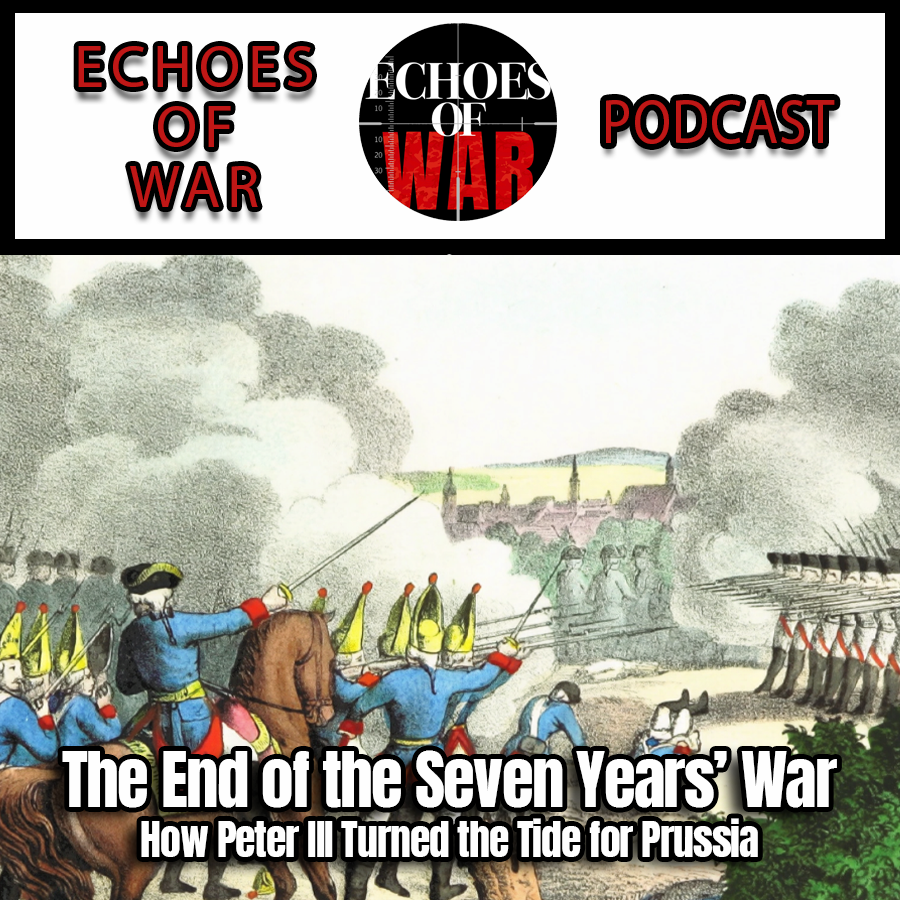 The End of the Seven Years’ War: How Peter III Turned the Tide for Prussia | What if a losing streak rewrote European power forever? The Seven Years’ War didn’t end with a single decisive battle; it ended with a reshaped continent. This video dives into the final acts: Frederick the Great’s brutal setbacks in the mid-war years, the seismic shift sparked by Peter III’s accession in Russia, and how Prussia’s stubborn resilience and shifting alliances carried the war to a historically transformative conclusion. We’ll trace key campaigns in Saxony and across the European theaters, examine how Russia’s stance flipped fortunes, and explore the dramatic diplomatic aftermath that sealed new borders and futures. You’ll see how Britain’s naval supremacy and Russia’s continental power redefined who dictated terms on the map, and how the Paris and Hubertusburg treaties reset balance of power for decades to come. Juxtaposed with portraits, maps, and battlefield sketches, the narrative highlights leadership decisions, logistics, and the long shadow this conflict cast on European diplomacy, military doctrine, and national prestige. If you’re curious about how a global war seeded the rise of Prussia as a European heavyweight and set the stage for future coalitions, this deep-dive is for you. Like, subscribe, and turn on notifications for more history that connects the dots between past clashes and today’s geopolitics. Don't forget I have a Youtube Membership: https://www.youtube.com/channel/UCbp8JMZizR4zak9wpM3Fvrw/join or my Patreon: https://www.patreon.com/pacificwarchannel where you can get exclusive content like "What if Japan invaded the USSR during WW2?" | 1h 54m 07s | ||||||
| 3/6/26 |  The Taiping Rebellion: Rise of Hong Rengan! | Unraveled in a whirlwind of faith, blood, and red banners, the Taiping Rebellion reshaped 19th-century China and challenged the Qing state from the margins of history to the center of world affairs. This video traces how a millenarian movement, led by Hong Xiuquan, grew from Anhui villages into a vast civil war that destabilized one of Asia’s oldest empires. We examine the social discontent that fed the rebellion: famine, taxation, and regional strife, alongside promises of equality, land redistribution, and shared property. As Taiping forces advanced, they carved out a rival capital at Nanjing and installed their own governance, creating a stark alternative to Qing rule. Yet the rebellion’s size did not guarantee endurance; internal factionalism, military overreach, and logistical struggles drained resources, while disciplined Qing counteroffensives gradually reclaimed ground. The narrative also situates the conflict in a global context, showing how Western powers and the Second Opium War influenced contemporary strategies and diplomacy, sometimes offering support or shaping international responses. By the mid-1860s, oaths, edicts, and mountains of corpses underscored the human cost of civil war, and the Qing dynasty slowly recovered its authority at enormous price. The Taiping legacy persists in discussions of reform, regionalism, and rebellion’s limits as a catalyst for state modernization. Viewers will leave with a clearer sense of how ideology, leadership, geography, and external pressures converged to end one of history’s most devastating uprisings and to redefine China’s path forward. This exploration reveals why this rebellion remains a turning point in modern Chinese memory. Don't forget I have a Youtube Membership: https://www.youtube.com/channel/UCbp8JMZizR4zak9wpM3Fvrw/join or my Patreon: https://www.patreon.com/pacificwarchannel where you can get exclusive content like "What if Japan invaded the USSR during WW2?" | 1h 31m 52s | ||||||
| 2/27/26 |  The Taiping Rebellion: Campaigns, Purges and Murder Amongst the Kings | Uncover the brutal underbelly of the Taiping Rebellion in this riveting episode from the Pacific War Channel! Hosts Craig and Gaurav delve into the campaigns, purges, and murders that shattered the Heavenly Kingdom of Great Peace. Led by the messianic Hong Xiuquan, who proclaimed himself Jesus Christ's brother, the Taiping forces captured Nanjing and launched ambitious Northern and Western Expeditions. But ambition bred betrayal: Yang Xiuqing's manipulative trances and power grabs sparked deadly rivalries, culminating in Wei Changhui's assassination of Yang and a horrific purge of thousands. Shi Dakai's eventual exodus marked the rebellion's fracturing, as internal civil war weakened their stand against Qing armies led by Zeng Guofan. This episode exposes how religious visions turned to violent paranoia, with kings murdering kings amid failed military pushes and sieges. From the bloody streets of Nanjing to the desperate expeditions against imperial forces, discover the human cost of this 19th-century Chinese civil war that claimed millions. Perfect for fans of dark historical tales, this analysis highlights leadership betrayals, strategic blunders, and the Qing's resilient countermeasures that doomed the Taiping dream. Don't forget I have a Youtube Membership: https://www.youtube.com/channel/UCbp8JMZizR4zak9wpM3Fvrw/join or my Patreon: https://www.patreon.com/pacificwarchannel where you can get exclusive content like "What if Japan invaded the USSR during WW2?" | 1h 43m 52s | ||||||
| 2/20/26 | 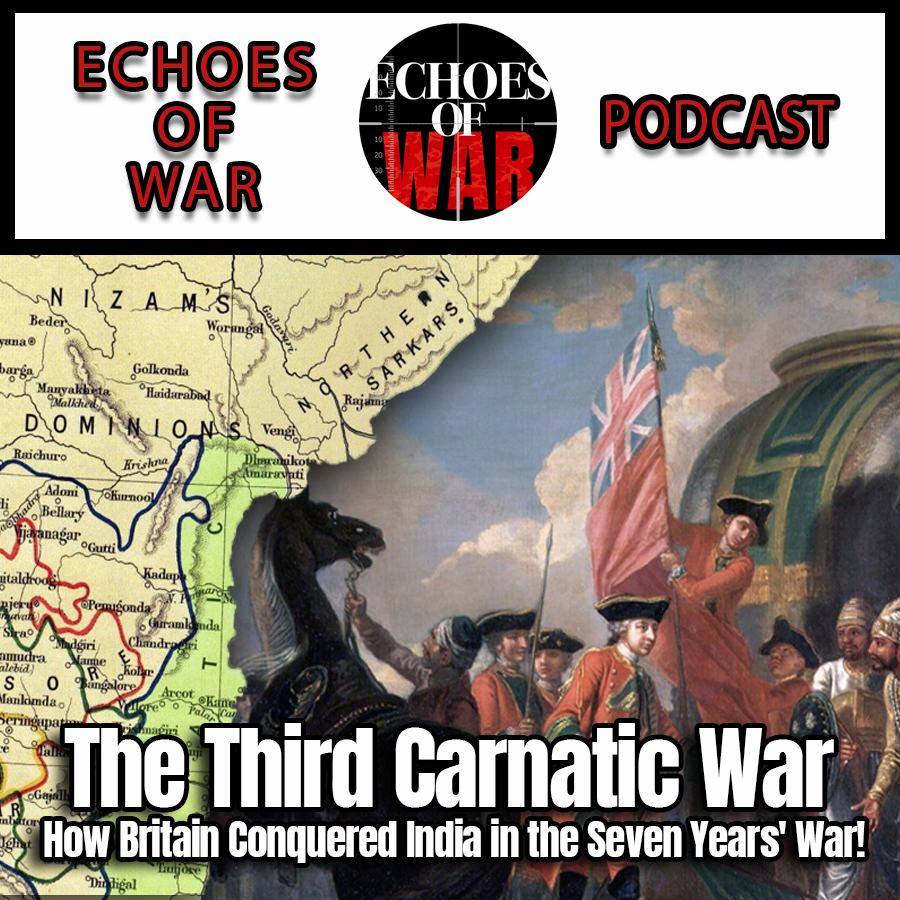 The Third Carnatic War: How Britain Conquered India in the Seven Years' War! | This echoes of war podcast, hosted by Craig Watson and Gaurav explores the Third Carnatic War (1756–1763) as the Indian theater of the Seven Years' War. It details the decline of the Mughal Empire after Aurangzeb's death in 1707, leading to fragmented provinces like Bengal and the rise of the Maratha Empire as a dominant power. European influences are highlighted: the British East India Company with bases in Bombay, Madras, and Calcutta, and the French with strongholds like Pondicherry. The narrative focuses on key events starting with the Black Hole of Calcutta in 1756, where Nawab Siraj ud-Daulah imprisoned British captives in horrific conditions, prompting retaliation. Robert Clive's victory at the Battle of Plassey in 1757, aided by betrayal from Mir Jafar, secured British control over wealthy Bengal (20-25% of India's GDP). The episode covers the Siege of Madras (1758–1759), where French forces under Comte de Lally failed due to supply issues and British reinforcements. The decisive Battle of Wandiwash in 1760 saw British General Eyre Coote defeat the French, leading to the Siege of Pondicherry (1760–1761), which ended French influence. Britain's naval superiority, alliances, and strategies established dominance, marking 1759 as the "Annus Mirabilis." The podcast emphasizes colonial expansion parallels with North America, using maps and portraits for a documentary feel. It concludes with the Treaty of Paris, where France regained possessions but without fortifications, ensuring British ascendancy in India. Don't forget I have a Youtube Membership: https://www.youtube.com/channel/UCbp8JMZizR4zak9wpM3Fvrw/ join or my Patreon: https://www.patreon.com/pacificwarchannel where you can get exclusive content like "What if Japan invaded the USSR during WW2?" | 1h 30m 21s | ||||||
| 2/13/26 | 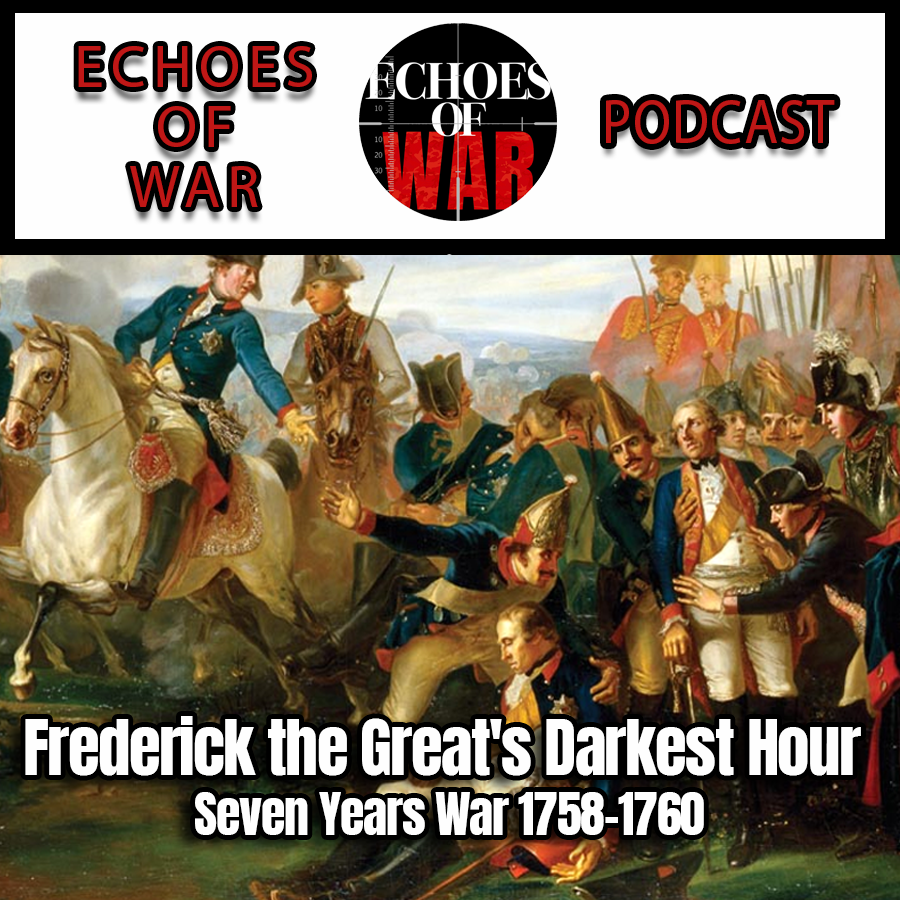 Frederick the Great's Darkest Hour | Seven Years War 1758-1760 | This episode from the Pacific War Channel podcast, hosted by Craig with co-host Gaurav and guest Simone, dives into the European theater of the Seven Years War (1758-1760), focusing on Frederick the Great's struggles against overwhelming Austrian, Russian, and French coalitions. It covers key battles and strategies, starting with the disastrous Prussian siege of Olmütz, thwarted by Austrian ambushes at Domstad, leading to heavy supply losses. The narrative shifts to the Hanoverian front, where Duke Ferdinand of Brunswick's allied forces repel French advances at Crefeld. The brutal Battle of Zorndorf sees Prussians clash with Russians in a bloody stalemate, highlighting Russian ferocity. Frederick suffers a major setback at Hochkirch due to Austrian surprise attacks under Field Marshal Daun, losing commanders like Keith. The episode escalates with Kunersdorf, a Pyrrhic Prussian victory against Russo-Austrian forces, costing Frederick dearly in men and morale. It also touches on failed French invasion plans against Britain, naval defeats at Lagos and Quiberon Bay, and smaller clashes like Liegnitz and Torgau, where Prussian resilience shines despite attrition. The discussion emphasizes Frederick's tactical genius amid resource strain, coalition disunity, and the war's grinding toll, with vivid maps and bios of figures like Daun and Seydlitz enhancing the storytelling. Overall, it portrays a war of attrition testing Prussia's limits. Check out the Video format at: https://youtu.be/5Quhfgs90OY | 1h 48m 28s | ||||||
| 2/6/26 | 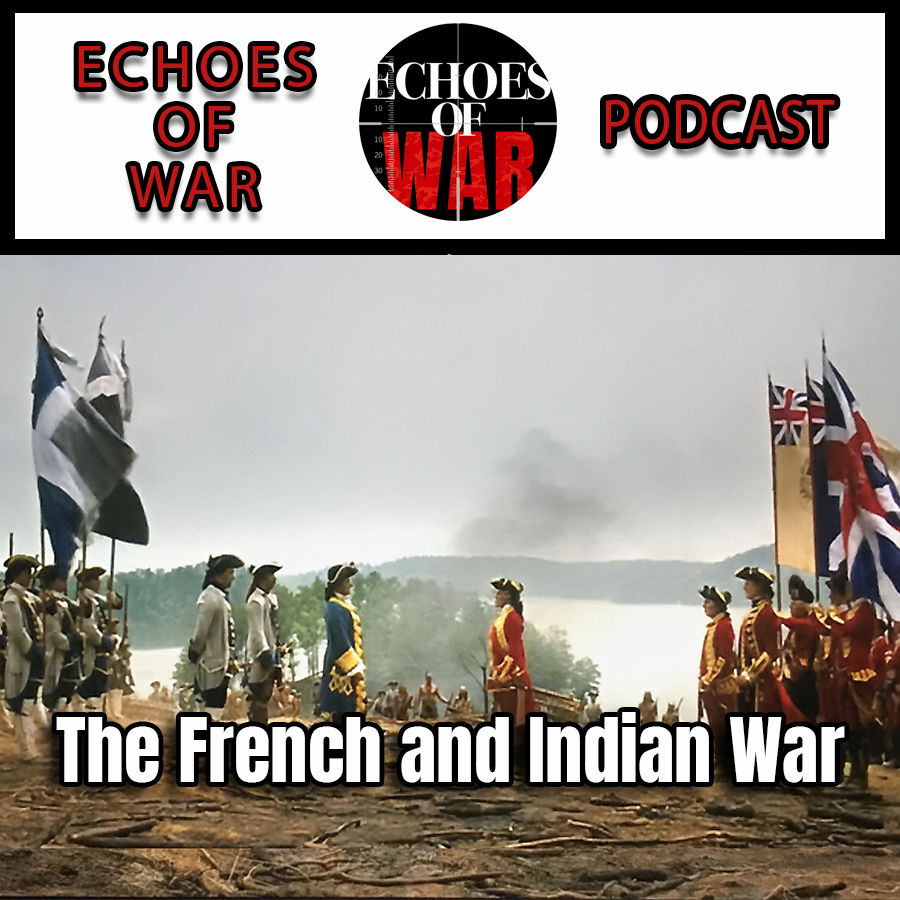 The French and Indian War 1754-1763 | Explore the complex origins of the French and Indian War (1754-1763), the global conflict that reshaped North America. This concise deep dive explains how competition over the Ohio River Valley between Britain and France ignited a wider struggle, drawing in Native American tribes, colonial militias, and seasoned European generals. We’ll unpack the strategic minds behind the war: British commanders who favored coalition-building and aggressive offensives, alongside French leaders who emphasized fortifications and alliances with Indigenous nations. Along the way, you’ll meet pivotal moments: the contested fortifications of Fort Duquesne, early skirmishes along the frontier, and the turning points that led to the dramatic Battle of Quebec. We’ll analyze battlefield tactics, logistics, and how leadership decisions, including those of young George Washington, influenced the course of the war. The video also connects these events to the wider Seven Years’ War and explains why outcomes in North America led to the Treaty of Paris in 1763 and far-reaching consequences for France, Britain, and Indigenous peoples. Whether you’re new to the topic or brushing up for a history exam, this clear, tightly paced overview helps you remember key dates, players, and strategies. Don’t forget to like, subscribe, and ring the bell for more history explainers. Share your questions about colonial conflicts in the comments, and tell us which battle you’d like us to cover next. Time-stamped chapters jump to origins, battles, and legacies. Topics like the Treaty of Paris 1763, scope of the Seven Years' War, colonial mobilization, and Native diplomacy are explored.Don't forget I have a Youtube Membership: https://www.youtube.com/channel/UCbp8JMZizR4zak9wpM3Fvrw/join or my Patreon: https://www.patreon.com/pacificwarchannel where you can get exclusive content like "What if Japan invaded the USSR during WW2?" | 1h 53m 43s | ||||||
| 1/30/26 |  The Road to the French and Indian War | An overview of the French and Indian War in North America, its link to the Seven Years’ War, the Ohio River Valley, and Washington’s early campaigns. Discover the origins of the French and Indian War, the North American front of the broader Seven Years’ War, and how a river system, fortifications, and Native alliances shaped the conflict. This video traces the clash of British and French empires from competing Ohio Valley claims to the climactic engagements around Jumonville Glen and Fort Necessity. Learn how Washington's early reconnaissance and diplomacy set the stage for a continental war, and how Native American Confederacies such as the Iroquois and their rivals navigated shifting alliances to advance or resist, with beaver trade and imperial charters driving choices. The narrative covers riverine warfare, fort-building on inland frontiers, and the dynamics between European-style tactics and guerrilla warfare that defined mid-18th-century North America. By examining logistical networks, supply lines, and strategic actors, viewers gain a clearer picture of why the war expanded beyond North American borders and how it set the stage for later colonial and global conflict. Don't forget I have a Youtube Membership: https://www.youtube.com/channel/UCbp8JMZizR4zak9wpM3Fvrw/join or my Patreon: https://www.patreon.com/pacificwarchannel where you can get exclusive content like "What if Japan invaded the USSR during WW2?" | 1h 22m 09s | ||||||
| 1/23/26 | 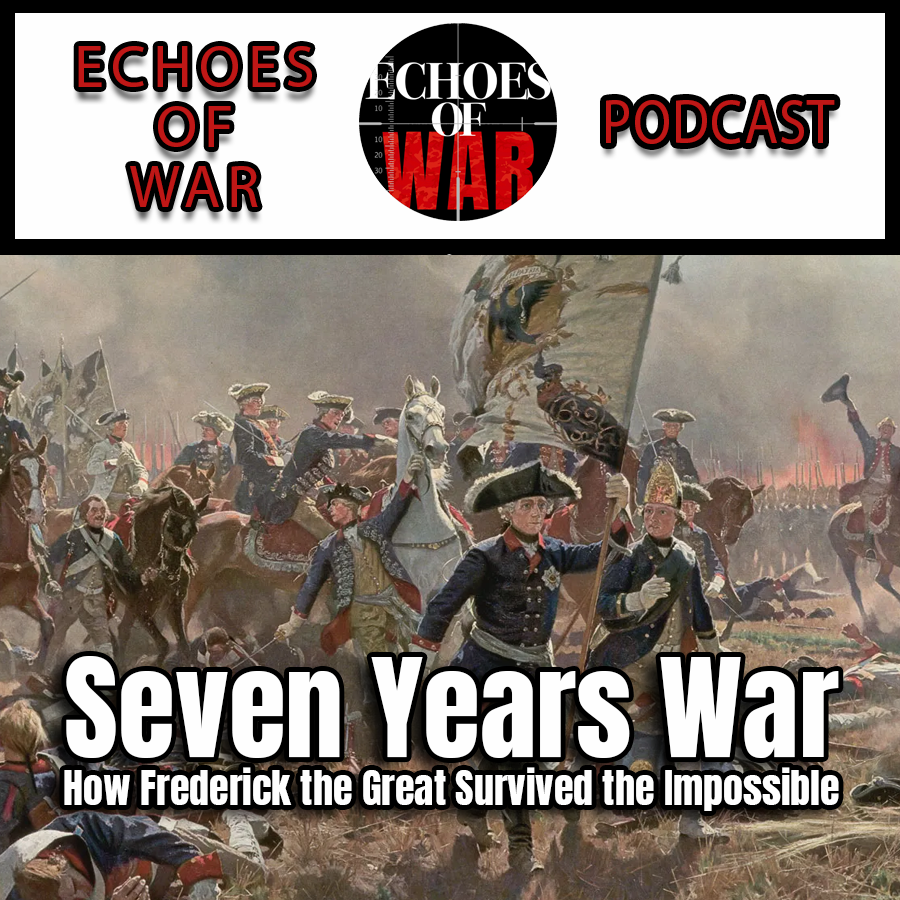 How Frederick the Great Survived the Impossible | Seven Years War | In this engaging podcast from the Pacific War Channel, hosts Craig and Gaurav, joined by guest Simon, dive into the European theater of the Seven Years War (1756-1763). They explore the diplomatic revolution that reshaped alliances: Prussia aligns with Britain against Austria, France, Russia, and Sweden. Frederick the Great's aggressive invasion of Saxony sparks the conflict, driven by his seizure of Silesia and fears of encirclement. The discussion covers the evolution of 18th-century warfare, from pike-and-musket formations to disciplined line infantry, flintlock muskets, and improved artillery, emphasizing mobility over sieges. Key battles are analyzed: Lobositz (1756), a tactical draw highlighting Austrian artillery; Prague (1757), a costly Prussian victory leading to a siege; Kolin (1757), a disastrous defeat for Frederick, shattering his aura of invincibility; Rossbach (1757), a brilliant rout of French-Imperial forces restoring Prussian morale; and Leuthen (1757), Frederick's masterpiece of maneuver, defeating a larger Austrian army through oblique order and flanking. The hosts highlight Frederick's resilience amid suicidal despair, his innovative tactics, and the war's attrition. Russian invasions of East Prussia and French advances on Hanover add pressure, but Prussian discipline prevails. The episode underscores the war's global scale, with morale swings and strategic blunders shaping outcomes, setting up colonial theaters in future parts. | 1h 47m 03s | ||||||
| 1/16/26 |  The Road to the Seven Years' War: Rise of Frederick the Great | The Road to the Seven Years' War traces the intricate web of European rivalries in the mid-18th century, setting the stage for a global conflict often called the first "world war." It begins with the Treaty of Aix-la-Chapelle (1748), which ended the War of the Austrian Succession but left simmering tensions, particularly over Silesia, seized by Prussia from Austria. Key players include Prussia under the ambitious Frederick William I and his son Frederick the Great, who transformed Prussia into a military powerhouse through rigorous reforms, emphasizing discipline and innovation. The narrative explores the Diplomatic Revolution of 1756, where traditional alliances flipped: Austria allied with France and Russia to crush Prussia, while Britain backed Prussia to counter French colonial ambitions. France and Britain's colonial clashes in North America (e.g., the French and Indian War) and India escalated the conflict globally. Russia's Empress Elizabeth and Austria's Maria Theresa sought revenge against Frederick, viewing him as a threat. The discussion highlights Frederick's strategic genius, including his preemptive invasion of Saxony, which ignited the war. Economically, mercantilism fueled imperial rivalries, while Enlightenment ideas influenced military tactics. The war's prelude underscores how personal ambitions, territorial disputes, and shifting alliances created a powder keg, leading to devastating battles across Europe, America, Africa, and Asia. Ultimately, it reshaped global power, weakening France and elevating Britain and Prussia. Don't forget I have a Youtube Membership: https://www.youtube.com/channel/UCbp8JMZizR4zak9wpM3Fvrw/join or my Patreon: https://www.patreon.com/pacificwarchannel where you can get exclusive content like "What if Japan invaded the USSR during WW2?" | 1h 17m 52s | ||||||
| 1/9/26 |  The Taiping Rebellion: the Fall of Nanjing | The video from the Pacific War Channel, hosted by Craig and Guarav, delves into the early phases of the Taiping Rebellion (1850-1864), one of history's bloodiest conflicts. It begins with a recap of Hong Xiuquan's rise as the leader of a Christian-inspired cult rebelling against the Qing Dynasty, fueled by ethnic tensions (Han vs. Manchu), class struggles, and religious fervor. The Taiping forces, starting at around 60,000, capture key cities like Yongan and Wuchang through strategic maneuvers, evading Qing encirclements. They employ lightly armed troops with spears, halberds, and limited matchlock rifles, contrasting the Qing's outdated artillery and muskets. Key figures include the Taiping's "kings" (North, South, East, West, Flank), with losses like Southern King Feng Yunshan and Western King Xiao Chaogui to Qing sharpshooters. The Qing military, comprising the Eight Banner Army (Manchu/Mongol elites) and Green Standard Army (mostly Han police forces), suffers from corruption, embezzlement, and inefficiency. Emperor Xianfeng mobilizes militias, leading to the formation of new armies like Zeng Guofan's Xiang Army, emphasizing disciplined, well-paid rural recruits. Battles highlight Taiping tactics: riverine campaigns, sieges with tunneling and mines, and propaganda to recruit peasants. The capture of Nanjing in 1853 marks a turning point, with massacres of Manchu residents. The rebellion's growth to potentially 750,000 followers underscores its threat, though strategic errors prevent a march on Beijing. The discussion touches on broader contexts like the Opium Wars and ethnic divides, blending military history with cultural insights. | 1h 28m 44s | ||||||
| 1/2/26 |  The Rise of Hong Xiuquan: the Self Proclaimed Brother of Jesus | The Taiping Rebellion (1850–1864) stands as the bloodiest civil war in human history, claiming an estimated 20–30 million lives and reshaping 19th-century China. It was ignited by Hong Xiuquan, a failed civil service exam candidate from Guangdong, who experienced profound visions in 1837. Interpreting these as divine messages, Hong believed he was the younger brother of Jesus Christ, tasked with establishing a "Heavenly Kingdom" on Earth. Influenced by fragmented Christian teachings from Protestant missionaries, he converted and began preaching a unique blend of Christianity, Confucianism, and anti-Manchu sentiments. The rebellion's roots lay in widespread discontent against the Qing Dynasty, fueled by economic hardships, opium addiction from the Opium Wars, corruption, overpopulation, and ethnic tensions between Han Chinese and Manchu rulers. Hong's Taiping Heavenly Kingdom attracted millions of followers, including peasants, women, and ethnic minorities, promising land reform, gender equality, and the abolition of foot-binding and opium. Starting in Guangxi, the Taiping forces rapidly expanded, capturing Nanjing in 1853 as their capital. They implemented radical reforms but faced brutal opposition from Qing armies, aided by foreign powers like Britain and France, who intervened to protect trade interests despite initial neutrality. The conflict featured massive battles, sieges, and atrocities on both sides. The rebellion weakened the Qing Dynasty, paving the way for its eventual fall in 1911. Hong's death in 1864 and the recapture of Nanjing marked the end, but the Taiping legacy endures in discussions of millenarian movements, religious fervor, and social upheaval. | 1h 12m 48s | ||||||
| 12/24/25 |  When Enemies Laid Down Arms: The 1914 Christmas Miracle | Dive into one of history's most heartwarming wartime stories! In this episode of "Echoes of War," we uncover the incredible Christmas Truce of 1914 during World War I. As Europe descended into chaos, sparked by the assassination of Archduke Franz Ferdinand, alliances pulled nations into a devastating conflict. From Austria-Hungary's invasion of Serbia to Germany's Schlieffen Plan and brutal battles like the Marne and Ypres, the Western Front became a nightmare of trenches and stalemate by late 1914. But on Christmas Eve, something miraculous happened. Amid the mud and misery near Ypres, British and German soldiers set aside their rifles. It started with carols echoing across no man's land—"Silent Night" sung in harmony. Soon, troops emerged, exchanging gifts like cigarettes, chocolate, and even helmets as souvenirs. They buried their fallen comrades together, shared meals, and famously played impromptu football matches in the frozen fields. Eyewitness accounts describe handshakes, laughter, and a profound sense of shared humanity, with around 100,000 soldiers participating in this unauthorized ceasefire. Though high commands disapproved and quickly ended it with bombardments and troop rotations, the truce symbolized the soldiers' longing for peace. It didn't repeat in later years as the war's horrors intensified with battles like Verdun and the Somme. Join us to explore this poignant reminder of hope amid horror—proof that even in war, humanity can shine through. | 1h 21m 25s | ||||||
Showing 25 of 184
Sponsor Intelligence
Sign in to see which brands sponsor this podcast, their ad offers, and promo codes.
Chart Positions
2 placements across 2 markets.
Chart Positions
2 placements across 2 markets.