

Insights from recent episode analysis
Audience Interest
Podcast Focus
Publishing Consistency
Platform Reach
Insights are generated by CastFox AI using publicly available data, episode content, and proprietary models.
Total monthly reach
Estimated from 8 chart positions in 8 markets.
By chart position
- 🇰🇷KR · Social Sciences#1841K to 10K
- 🇷🇴RO · Social Sciences#753K to 10K
- 🇵🇪PE · Social Sciences#793K to 10K
- 🇵🇹PT · Social Sciences#983K to 10K
- 🇫🇮FI · Social Sciences#140500 to 3K
- Per-Episode Audience
Est. listeners per new episode within ~30 days
6K to 26K🎙 Weekly cadence·7 episodes·Last published 2mo ago - Monthly Reach
Unique listeners across all episodes (30 days)
12K to 52K🇰🇷19%🇷🇴19%🇵🇪19%+5 more - Active Followers
Loyal subscribers who consistently listen
3.6K to 16K
Market Insights
Platform Distribution
Reach across major podcast platforms, updated hourly
Total Followers
—
Total Plays
—
Total Reviews
—
* Data sourced directly from platform APIs and aggregated hourly across all major podcast directories.
On the show
Recent episodes
Homes not assets: the case for housing first
Apr 28, 2026
Unknown duration
From ‘Lost Decades’ to Human Rights Economies: Rethinking Development from Sri Lanka’s Experience
Apr 21, 2026
Unknown duration
Advancing a Rights-based Just Transition in South Africa
Apr 14, 2026
Unknown duration
Reducing Inequality: Inside Brazil's approach to a fairer taxation that shapes redistribution
Apr 7, 2026
Unknown duration
Walking The Talk: How Spain is building an economy that works for people
Mar 31, 2026
Unknown duration
Social Links & Contact
Official channels & resources
Official Website
Login
RSS Feed
Login
| Date | Episode | Description | Length | ||||||
|---|---|---|---|---|---|---|---|---|---|
| 4/28/26 | 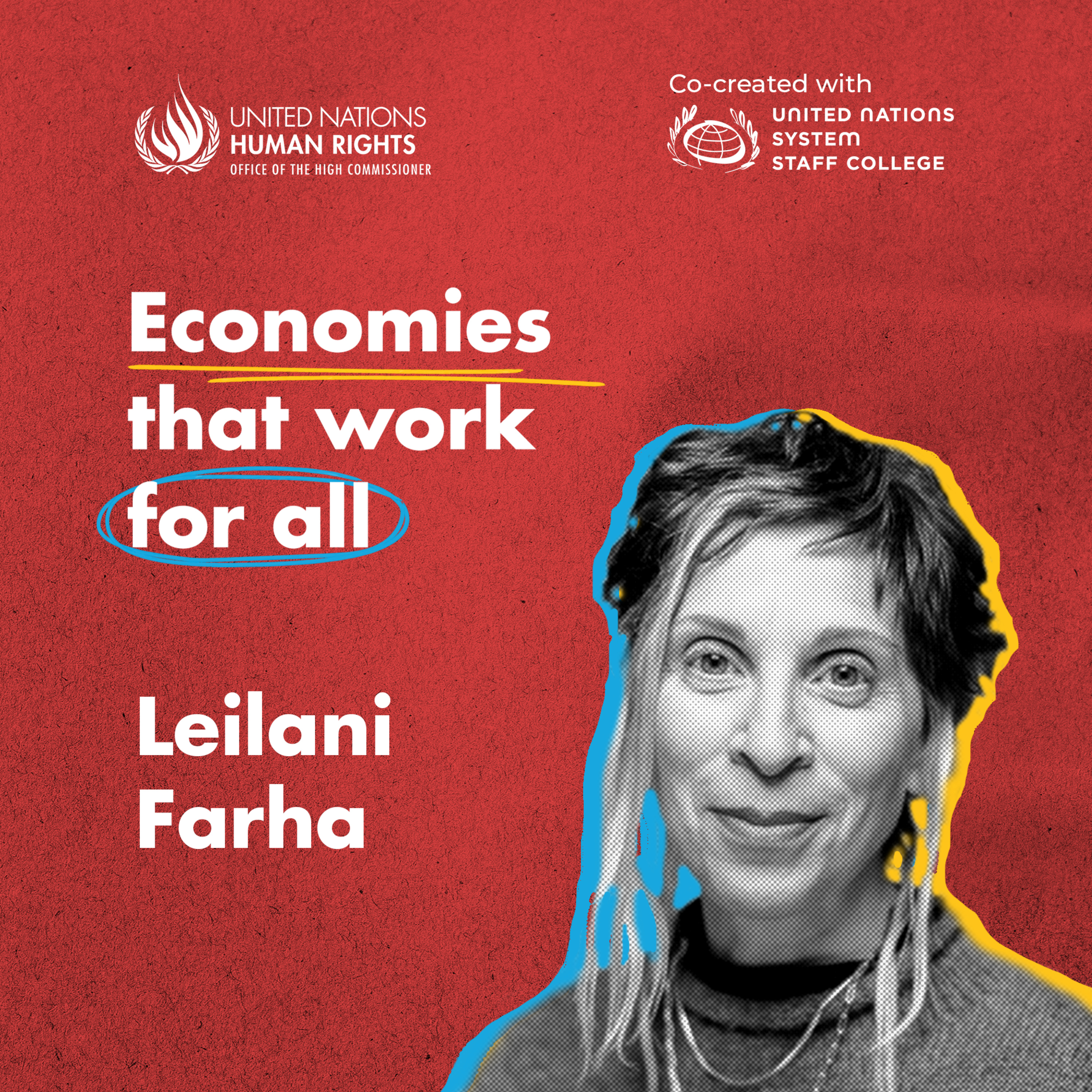 Homes not assets: the case for housing first | Leilani Farha—former UN special rapporteur on the right to adequate housing and global director of THE SHIFT—joins us in this episode for a timely and thought-provoking conversation on housing as a human right. Farha describes housing as a “springboard” to nearly every other human right, emphasizing that without a safe and secure home, it is nearly impossible to live a full and dignified life. She argues that meaningfully enforcing the right to housing is key to confronting the deepening global housing crisis. Building on this foundation, our conversation turns to the structural forces shaping today’s housing landscape—from the financialization of housing markets to the systemic roots of homelessness. Rather than viewing homelessness as an individual shortcoming, we examine it as a policy failure embedded in broader economic systems. We also discuss the role of corporate actors, and why greater accountability, while not a silver bullet, could be a powerful step toward creating fairer and more sustainable housing systems. If you’d like to learn more about the Human Rights Economy, the work of OHCHR or UNSSC, check this link. | — | ||||||
| 4/21/26 | 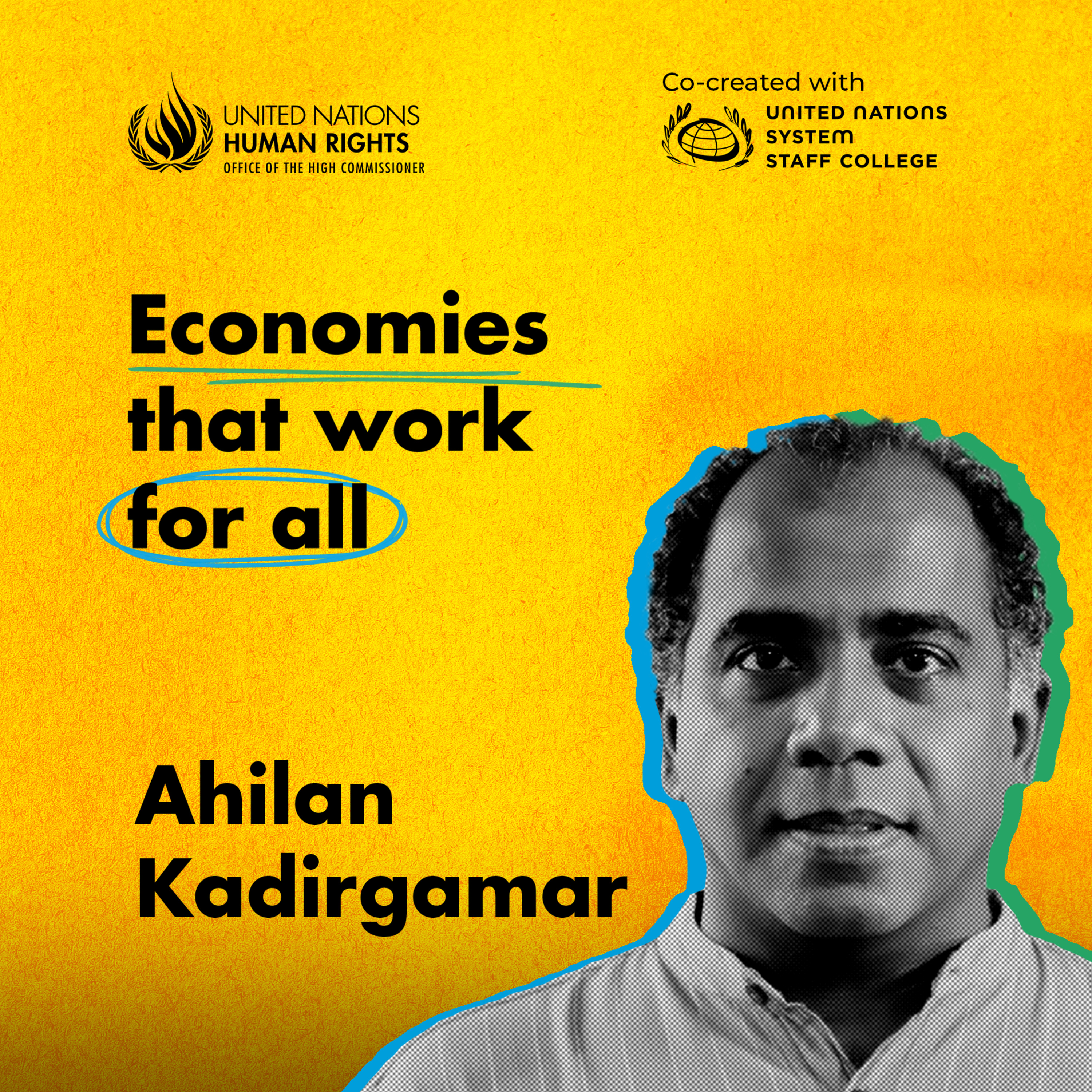 From ‘Lost Decades’ to Human Rights Economies: Rethinking Development from Sri Lanka’s Experience | We welcome Dr. Ahilan Kadirgamar—a leading Sri Lankan economist and Senior Lecturer at the University of Jaffna, examines Sri Lanka’s so-called “lost decade,” marked by a shrinking economy, rising debt burdens, widespread food shortages, and skyrocketing inflation. He traces how misguided economic and development policies compounded over time to erode what was once a relatively prosperous economy. While rooted in Sri Lanka’s experience, his analysis resonates far beyond one country, offering insights into the structural pressures shaping economic development across many countries. Dr. Kadirgamar makes the case for a Human Rights Economy grounded in collective action,participation and democratic economic policymaking, calling systems designed to improve people’s lives rather than maximize profits.If you’d like to learn more about the Human Rights Economy, the work of OHCHR or UNSSC, check this link. | — | ||||||
| 4/14/26 | 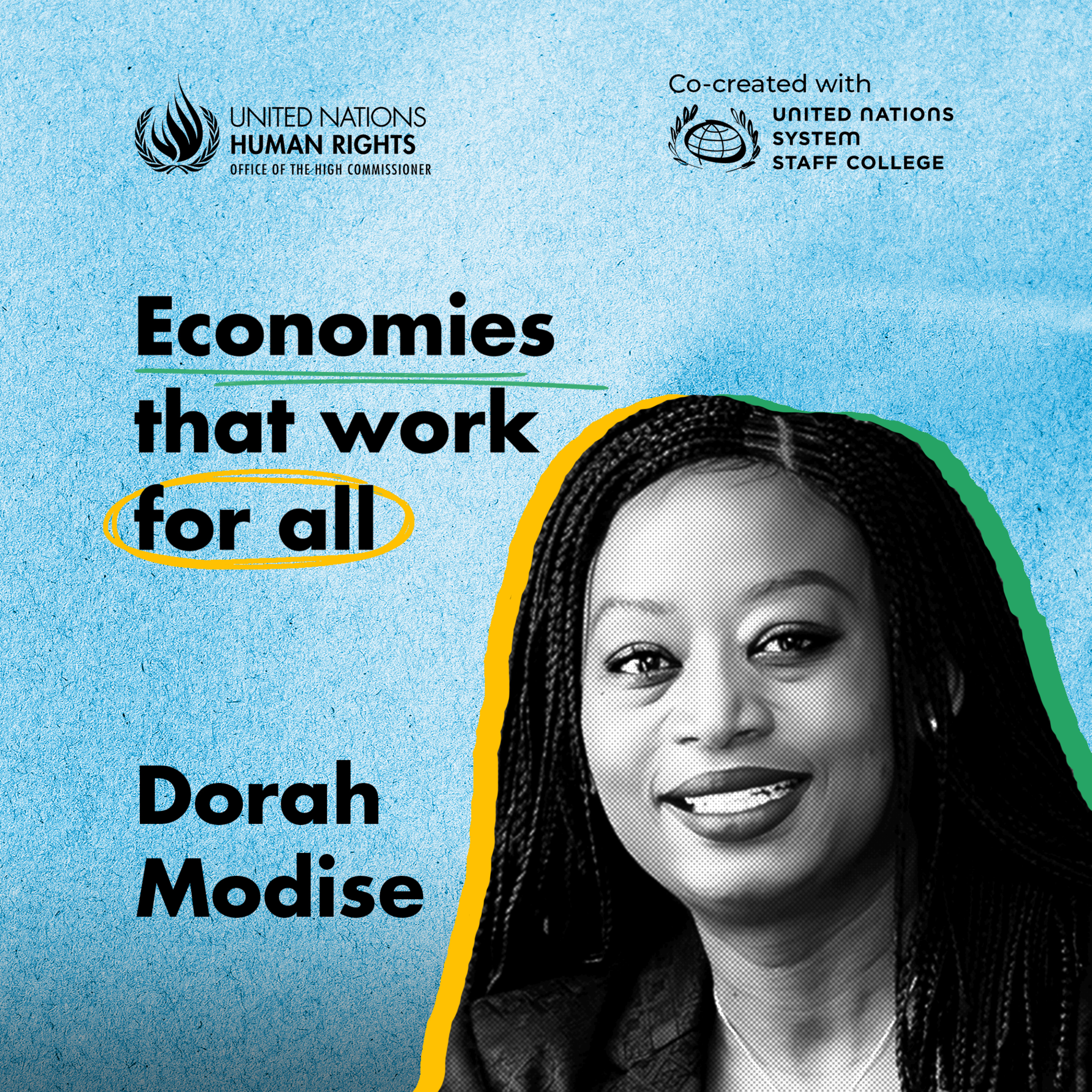 Advancing a Rights-based Just Transition in South Africa | For the third episode of the Economies that work - for all, we welcome Dorah Modise, Executive Director of the Presidential Climate Commission of South Africa. The episode explores South Africa’s efforts on just transition, examining plans to move toward a low-carbon economy and the government’s strategy for developing the country’s significant critical minerals sector, all within a framework that places human rights at the centre of the transition. The conversation highlights the country's transformative policy approaches, including the decentralization of power supply and a growing reliance on renewable energy sources such as solar and wind. Together, these efforts seek to ensure that the transition not only reduces emissions but also avoids deepening energy poverty or creating new inequalities—delivering benefits that are both equitable and far-reaching. The episode further provides an inside perspective on the complexities of steering a national energy transition, as policymakers gather support from government and industry, and ensure that workers, Indigenous peoples and affected communities have their rights respected. If you’d like to learn more about the Human Rights Economy, the work of OHCHR or UNSSC, check this link. | — | ||||||
| 4/7/26 | 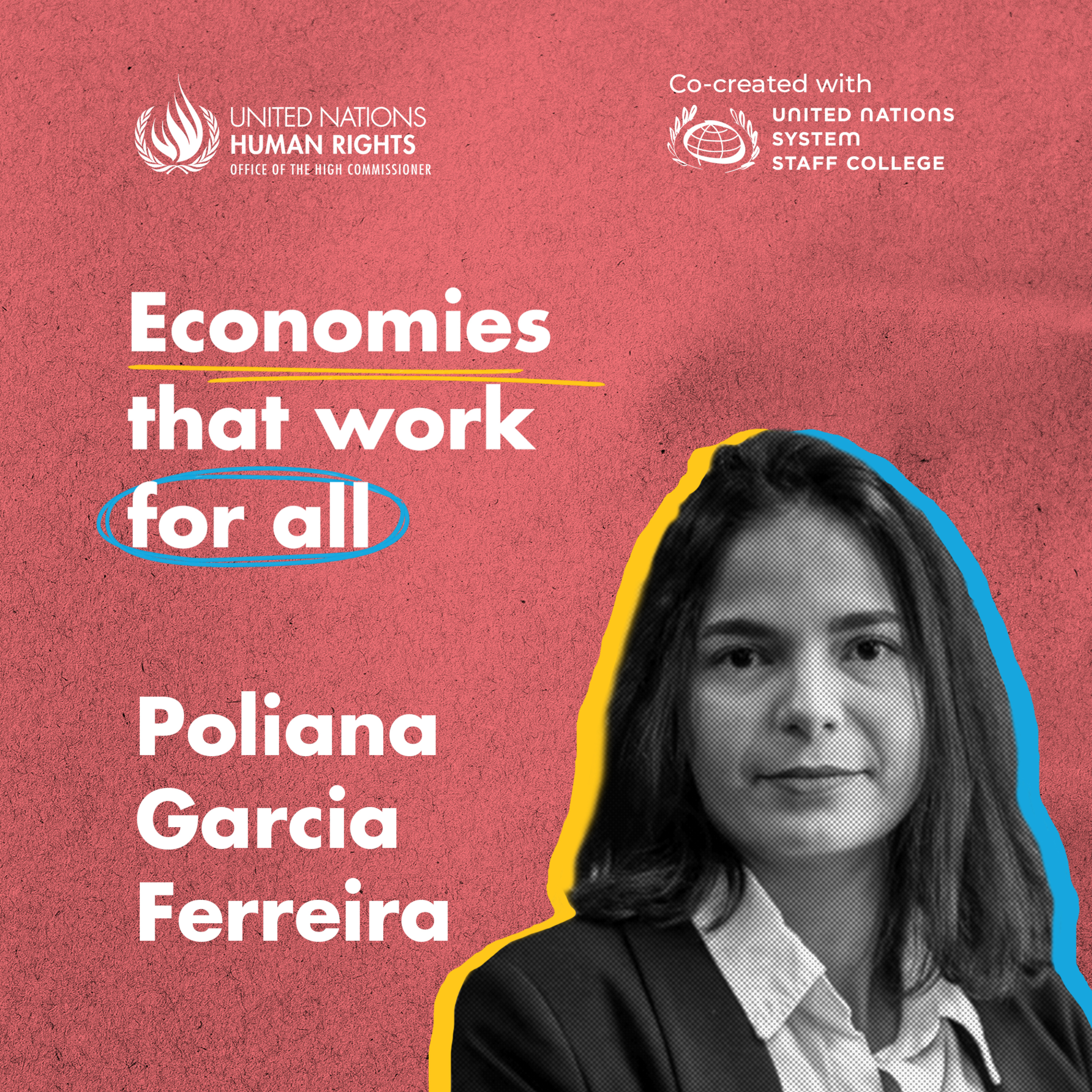 Reducing Inequality: Inside Brazil's approach to a fairer taxation that shapes redistribution | In the second episode of Economies that work-for all, we are pleased to welcome Poliana Garcia Ferreira, General Coordinator of International Tax Cooperation in Brazil, for an in-depth conversation on poverty and extreme economic inequality in developing countries. Using Brazil as a case study, the episode explores how governments can leverage fiscal policy, progressive taxation, and targeted social spending to address entrenched poverty and reshape unequal economic structures. Framed within the broader field of social policy and the human rights economy, the discussion highlights how the strategic and intentional use of public finance tools can shift the status quo and expand access to economic opportunity. The conversation further examines why tax policy can no longer be treated as purely a national concern. In today’s globalized economy, multinational corporations and ultra-wealthy individuals pay way less taxes than they should, while the poorer are overburdened. As Ms. Garcia Ferreira emphasizes, transparent dialogue and coordinated cooperation — both domestically and internationally — are essential to building an intelligent and effective global tax architecture that strengthen human rights and support a life with dignity for all. If you’d like to learn more about the Human Rights Economy, the work of OHCHR or UNSSC, check this link. | — | ||||||
| 3/31/26 | 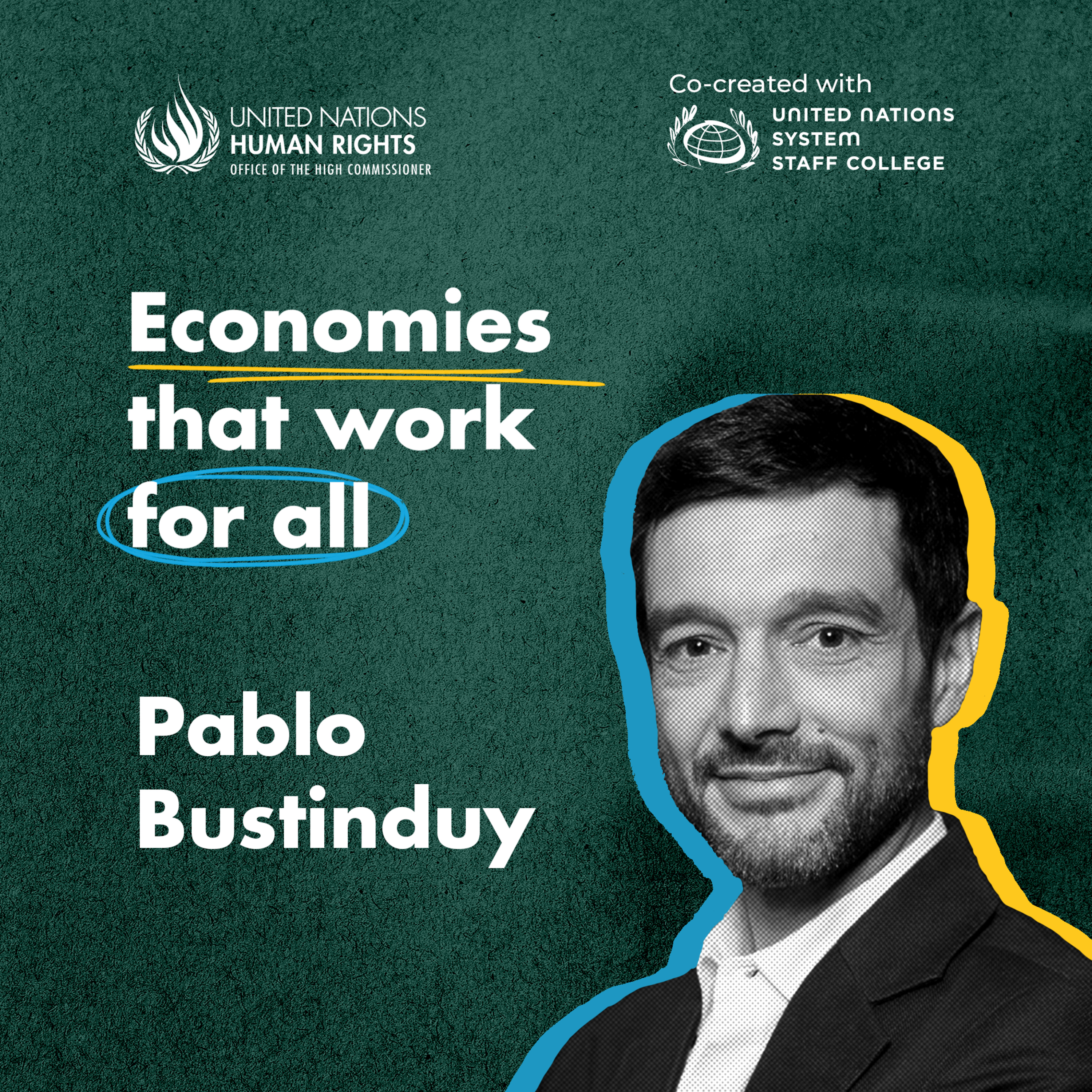 Walking The Talk: How Spain is building an economy that works for people | In this episode, we welcome Pablo Bustinduy, Spain’s Minister of Social Rights, Consumer Affairs, and the 2030 Agenda, for a conversation on the responsibility of democratic governments to advance social policy through both legislation and economic strategy. Drawing on recent reforms in Spain, Minister Bustinduy discusses how embedding human rights principles and the UN 2030 Agenda into fiscal and economic policy is essential to building a modern welfare state fit for the 21st century. The discussion explores why wealthy democracies cannot allow poverty and social exclusion to persist, and why leaving welfare to market forces alone is a political and economic mistake. Minister Bustinduy argues for a rights-based approach to economic governance—one that recognizes workers and their labor, paid and unpaid, as the foundation of society and treats redistribution not only as a matter of justice, but as an economic necessity. This episode offers key insights for anyone interested in fomenting a fairer and more equal society. If you’d like to learn more about the Human Rights Economy, the work of OHCHR or UNSSC, check this link. | — | ||||||
| 7/8/25 | 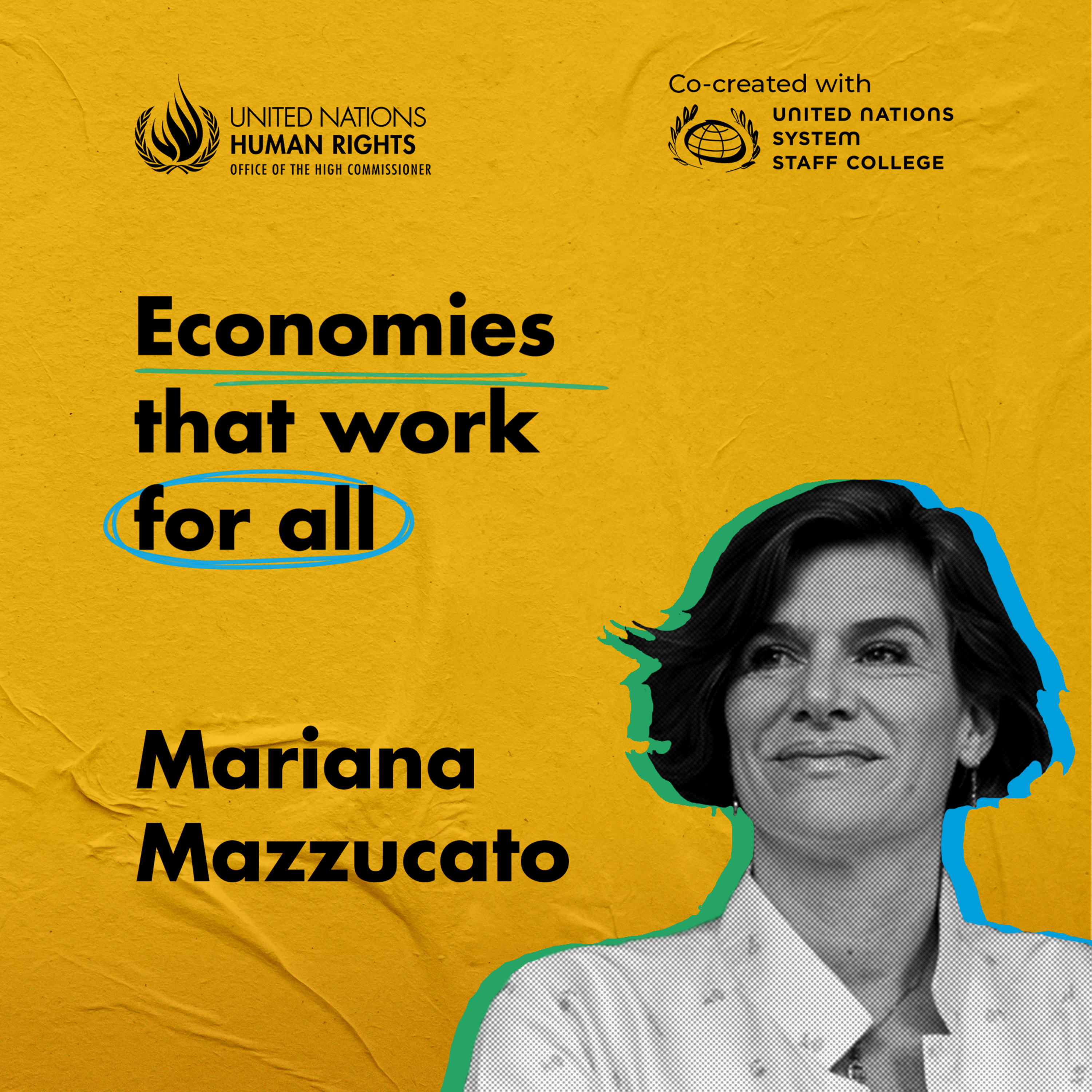 Mission oriented economies: putting human rights at the centre- with Mariana Mazzucato | This week, we speak to Mariana Mazzucato, Professor in the Economics of Innovation and Public Value, about creating ’mission-oriented economies’ that place human rights and the common good at their centre.Rather than simply fixing market failures, Professor Mazzucato argues that governments must shape markets around bold societal missions – from achieving net zero to ensuring health for all. This requires fundamental changes: moving from being ‘lenders of last resort’ to ‘investors of first resort’, setting conditions on public funding to ensure risks and rewards are shared, and building state capacity for long-term public value creation.She makes the case for mission-oriented development banks that don't just de-risk private investment, but actively direct patient capital towards transformational change. From redesigning procurement policies to embedding conditionalities in public-private partnerships, this approach demands a new social contract between business, government and communities - one that prioritises public value over shareholder value and ensures that collectiveintelligence leads to collectively shared rewards. Human rights are a key framework to guide these transformations. Topics/Chapters(00:00) Introduction of Mariana Mazzucato and "Mission-oriented economies: putting human rights at the centre" (01:01) ‘Shaping’ instead of ‘Fixing’ the free market(03:09) The concept of ‘mission-oriented’ economies: reshaping the economy with purpose and agency(08:25) Putting HRs at the center of this ‘mission’(20:13) Integrating human rights into the financing for development: addressing the dysfunctional dynamics of the current international financial system and intentionally reshaping where the money goes(31:34) Integrating Human Rights principles into the financing for development: redistributive policies but also promotion of agency and dignity(39:48) Conclusion: Call to Action to the listenersIf you’d like to learn more about the Human Rights Economy, the work of OHCHR or UNSSC, check Economies that work-for all Podcast | Trello | — | ||||||
| 7/2/25 | 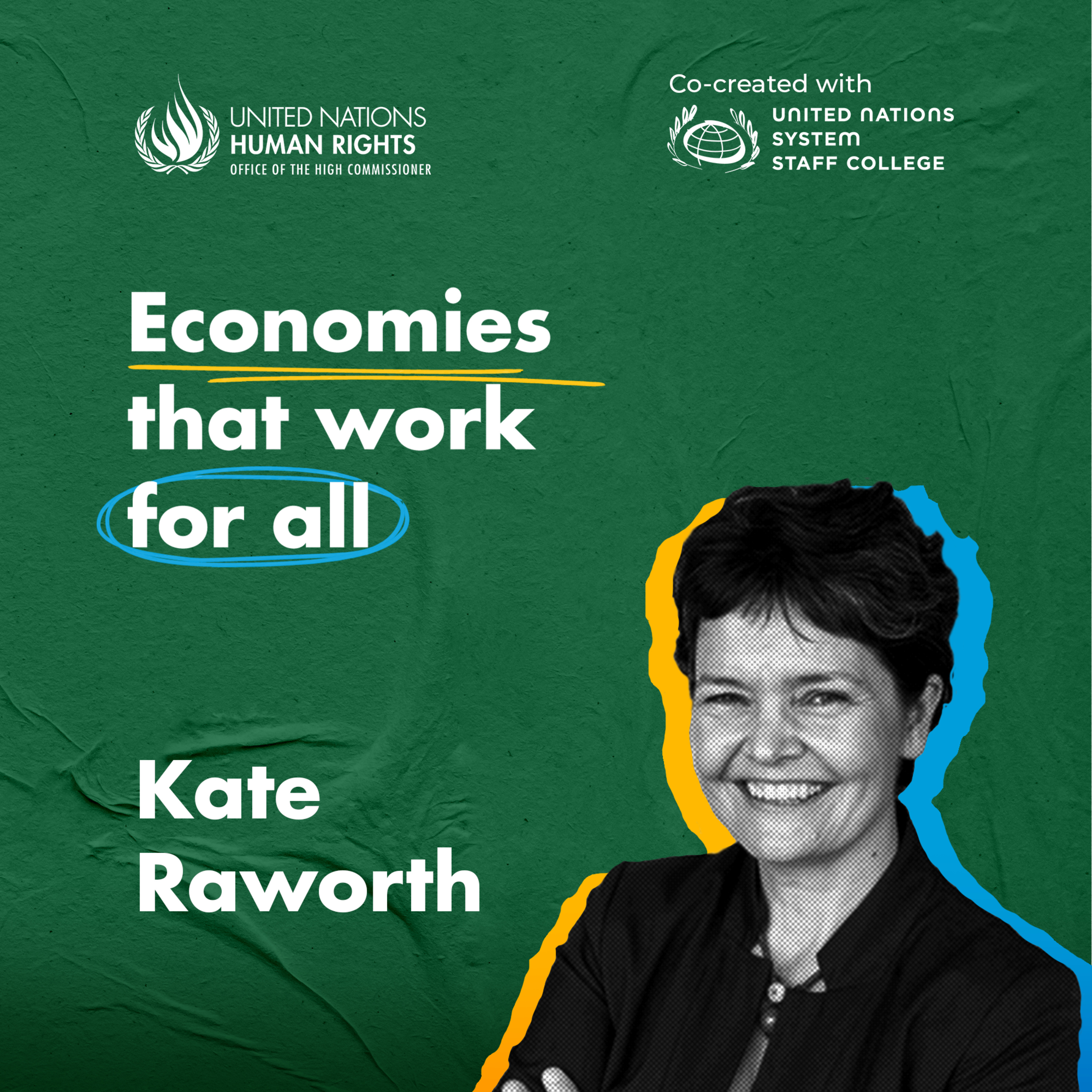 The Doughnut Economy: promoting a development model that focuses on people and the planet - with Kate Raworth | We welcome economist and ‘Doughnut Economics’ founder, Kate Raworth, to discuss how we can create economies that satisfy everyone’s fundamental needs while respecting Earth’s limits. Using the ‘Doughnut Economics’ framework, which places human dignity, social justice, and environmental sustainability at the core of economic policy-making, Raworth presents another alternative vision for redefining progress in the 21stcentury, that is closely aligned with the idea of a ‘human rights economy’.If you care about economic equity and sustainable growth, this episode presents a tangible approach to tackle the climate crisis and work towards a sustainable future for both people and the planet.Topics/Chapters(00:00) Introduction of Kate Raworth and "The Doughnut Economy: promoting a development model that focuses on people and the planet" (01:03) The flaws of the current economics teaching and thinking(03:31) The need to go beyond GDP and to integrate ‘the living’ into economics(06:22) The alternative vision offered by ‘Doughnut Economics and how HRs underpinned its development (17:31) Transforming how we define 'economic success' - practical implementation: “the countries which are doing well are not the ones you think”(28:03) The Doughnut and the HRE: tools for both a systemic analysis & change and for addressing people’s everyday issues(38:35) The Economy in service to the living world – change of the economic paradigm If you’d like to learn more about the Human Rights Economy, the work of OHCHR or UNSSC, check Economies that work-for all Podcast | Trello | — | ||||||
| 6/27/25 | 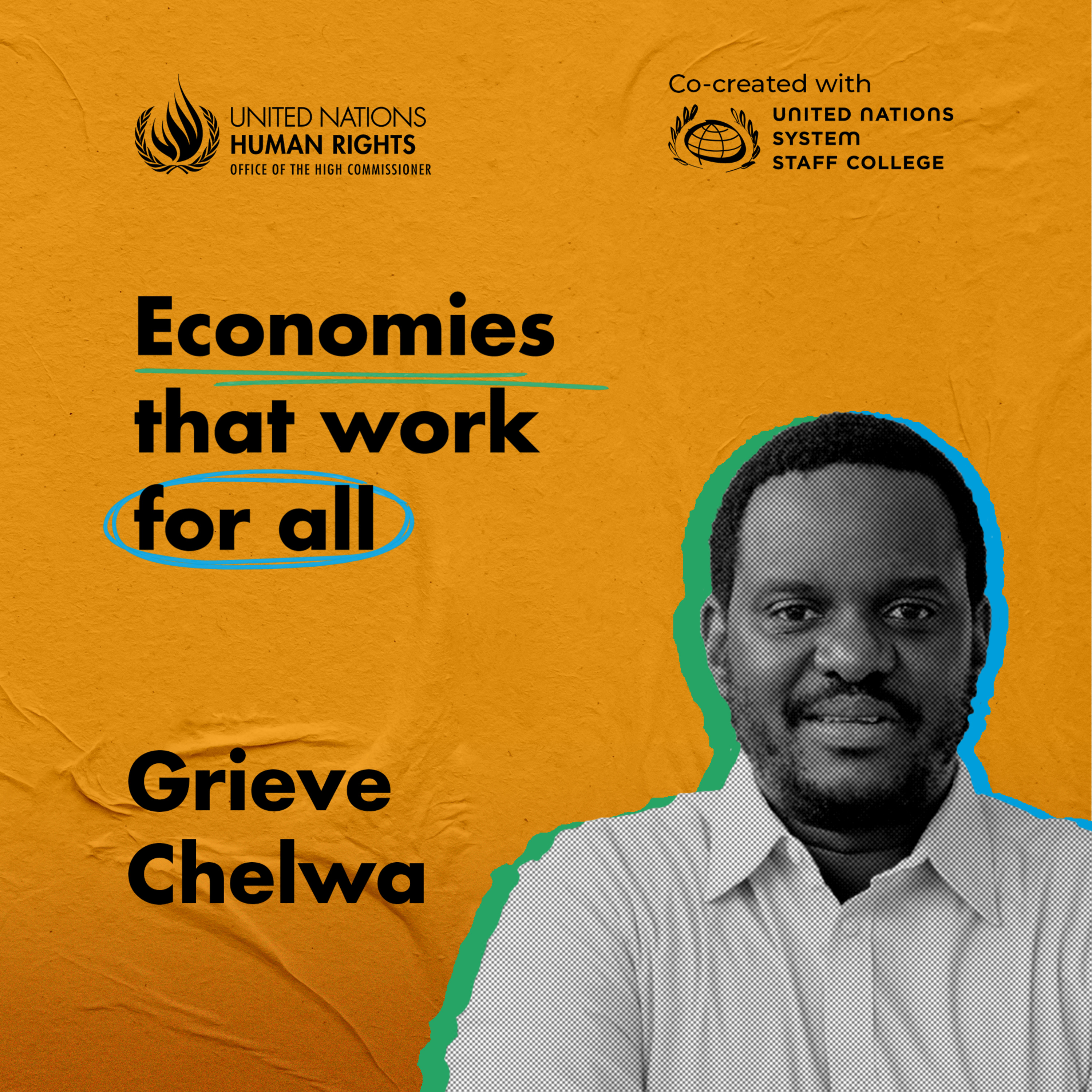 Life and Debt: Why the SDGs cannot progress under austerity - with Grieve Chelwa | Dr. Grieve Chelwa (Associate Professor of Political Economy at The Africa Institute) questions the prevailing belief that countries in the Global South are at fault for the current global debt crisis. He points to the current and historical inequities in the current global financial system, which traps nations in debt cycles that undermine human rights, economic sovereignty, and progress on the Sustainable Development Goals (SDGs). When debt is caused by external factors which countries have no control over, imposing crushing fiscal austerity to fix the debt situation is unlikely to work.He presents the interlinkages between the human rights economy and his concepts of ‘Inclusive Economic Rights and Emancipatory Development’ and details how a human rights economy could revolutionize this system by outing the accent on people and ensuring governments can prioritize their human rights obligations for everyone’s health, education, and social protection. Tune in for a compelling conversation on debt justice, economic reform, and what it takes to build a more equitable global economy.Topics/Chapters(00:00) Introduction of Grieve Chelwa and "Life and Debt: Why the SDGs cannot progress under austerity" (01:53) The debt trap and austerity measures ‘false solution’, and how they are preventing States from meeting their people’s socioeconomic rights(08:04) The debt crisis is getting worse with growing private bilateral debt(10:58) The source of the debt crisis: an outdated and unfair international financial architecture and governance system(15:48) The positive contribution a HRE approach can bring (22:09) Human Rights obligations: not a burden but a tool to solve the problem(24:54) ‘Inclusive Economic Rights’, ‘Emancipatory Development’ and the HRE(32:10) Human Rights are a necessary condition for developmentIf you’d like to learn more about the Human Rights Economy, the work of OHCHR or UNSSC, check Economies that work-for all Podcast | Trello | — | ||||||
| 6/24/25 |  Is the solution hiding in plain sight? Political choices for a new economic model - with Jayati Ghosh | Economist Dr. Jayati Ghosh unpacks how our dominant economic model perpetuates inequality, disregards environmental constraints, and continues to marginalize the unpaid care sector. She questions the conventional fixation on GDP as a benchmark for a country’s progress and contends that the existing global financial system perpetuates global power disparities that result in the neglect of the needs and rights of billions of people across the world.Dr. Ghosh argues for a ‘human rights economy’ focused on dignity, fairness, and sustainability. Drawing from her research on unpaid care work via the “5 Rs” and reimagining global financial systems, she outlines a transformative approach that places human rights at the center of economic policy. Topics/Chapters(00:00) Introduction of Jayati Ghosh and "Is the solution hiding in plain sight? Political choices for a new economic model" (02:05) Reflecting on the inadequacy of our current economic systems(04:35) GDP, “a fundamental flaw”(07:28) Power imbalances and Relative power(09:11) How to ‘flip the question’ and rethink our economic systems(11:50) The role of global finance(16:37) The need for accountability and the role of Human Rights as guardrails(18:39) Gender and the Care Economy: the five ‘Rs”(27:57) Human Rights, a tool to tackle power imbalances and to respond to growing discontent and polarizationIf you’d like to learn more about the Human Rights Economy, the work of OHCHR or UNSSC, check Economies that work-for all Podcast | Trello | — | ||||||
| 6/17/25 | 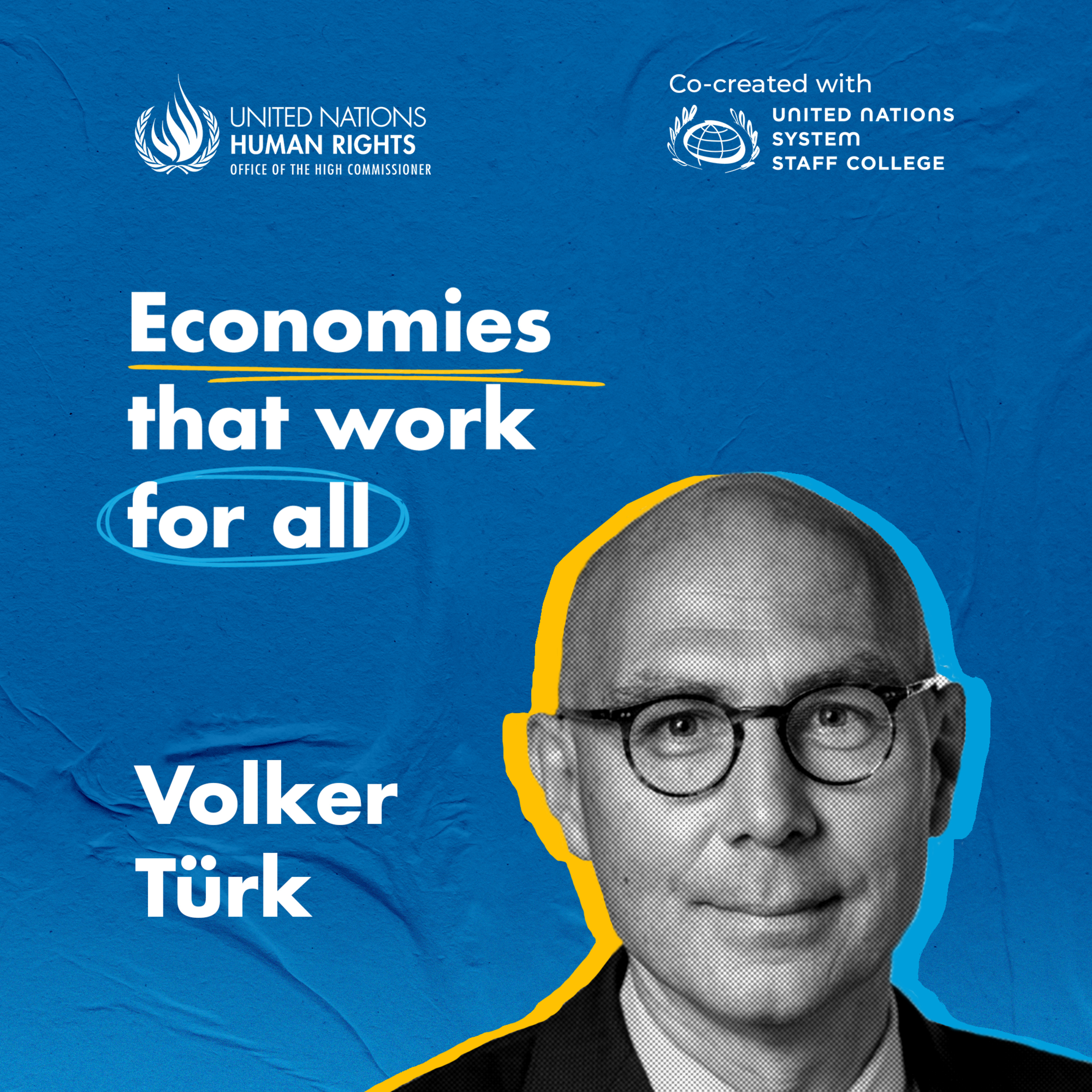 Why is our economic system failing the 2030 Agenda? -with Volker Türk | UN High Commissioner for Human Rights Volker Türk opens the series by exploring why aligning economies with human rights is essential for improving our economic systems and achieving the 2030 Agenda. He challenges current understandings that see human rights and economic systems as separate entities. He introduces the idea of a ‘human rights economy’ as key to rebuilding ties that bind societies together and achieving long-term sustainable development for all people in all countries. Volker Türk explores the structural reforms needed at both national and international levels to reform the global economy in support of equality, justice and sustainability.Topics/Chapters(00:00) Introduction of Volker Türk and "Why is our economic system failing the 2030 agenda?" (01:40) Human Rights Economy: a toolbox(03:08) The value of adding Human Rights into economic policymaking(04:45) The change we want to see through a human rights economy(06:33) Critical shifts needed for the HRE concept to be fully applied(11:18) How to mobilize political leadership for a HRE(13:55) A rallying call to economists If you’d like to learn more about the Human Rights Economy, the work of OHCHR or UNSSC, check Economies that work-for all Podcast | Trello | — | ||||||
Want analysis for the episodes below?Free for Pro Submit a request, we'll have your selected episodes analyzed within an hour. Free, at no cost to you, for Pro users. | |||||||||
| 6/13/25 | What if economies worked for all? | The 2030 Agenda for Sustainable Development is the global promise for an equitable and just society. With a rise in extreme economic inequality, a climate emergency and over half the world’s poorest countries spending more on debt than development, our economic system is failing both people and the planet. It is high time to make our economies work for human rights. In this podcast series, we will explore the contributions that human rights can offer to economic policymaking. We will talk with prominent economists who have dedicated their lives to advancing economic growth that promotes equitable societies and discuss how to reinforce the interconnections between economic policy and human rights to advance more just and sustainable societies. | — | ||||||
| 6/12/25 | 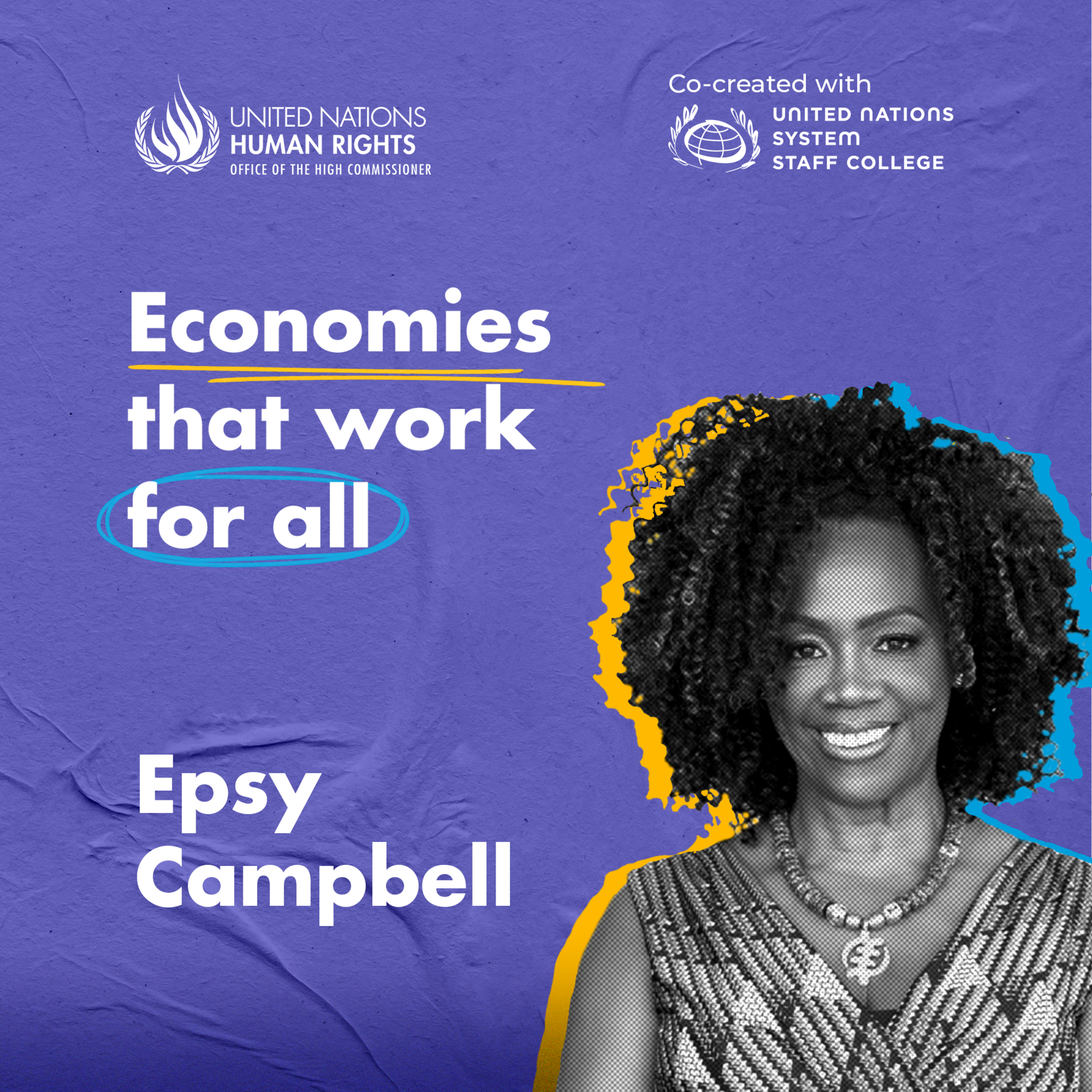 Can economic policies promote inclusivity? - with Epsy Cambell | What does economic justice for African and Afro-descendant communities look like in the 21st century? We talk to economist and former Vice President of Costa Rica, Dr. Epsy Campbell Barr, and explore how colonialism, slavery, and systemic racism have solidified structural inequalities. From her vital work with the UN Permanent Forum for People of African Descent, she argues for the importance of reparations, affirmative action, and inclusive governance to address centuries of racial injustice. She reflects on the Human Rights Economy as an opportunity to have a more just economy grounded on dignity for all, and urges transformative leadership from governments, private entities, and civil society.Ranging from worldwide development to local situations, this dialogue serves as a rallying cry to establish a new economic agreement, one that truly provides freedom, justice, and opportunities for all.Topics/Chapters(00:00) Introduction of Epsy Campbell and “Can economic policies promote inclusivity?” (01:27) The need for reparation against the socioeconomic legacies of colonialism and consequences of systemic racism, to leave no one behind (the 2030 Agenda)(08:58) Leveraging the 2030 Agenda(13:19) A Human Rights Economy enables dignity for all people(16:45) The necessity of affirmative action(21:20) The UN Permanent Forum for People of African Descent and the integration of racial justice into socioeconomic global agendas(27:36) Conclusion: call to Action to the listenersIf you’d like to learn more about the Human Rights Economy, the work of OHCHR or UNSSC, check Economies that work-for all Podcast | Trello | — | ||||||
Showing 12 of 12
Pitch Fit is a Pro feature
See how bookable this show is for guests, which brands already advertise, the per-episode ad value, and the best-fit guest and sponsor profile. The numbers are blurred on the free plan.
How readily this show books outside guests like you.
How proven this show is for host-read sponsorships.
For Guests
ProFor Advertisers
ProUpgrade to Pro to unlock guest cadence, sponsor categories, fit scores, and per-episode ad value for this show.
Chart Positions
8 placements across 8 markets.
Chart Positions
8 placements across 8 markets.