
Insights from recent episode analysis
Audience Interest
Podcast Focus
Publishing Consistency
Platform Reach
Insights are generated by CastFox AI using publicly available data, episode content, and proprietary models.
Most discussed topics
Brands & references
Est. Listeners
Insufficient chart data. Estimates will improve as the show charts.
- Per-Episode Audience
Est. listeners per new episode within ~30 days
N/A🎙 Daily cadence·36 episodes·Last published today - Monthly Reach
Unique listeners across all episodes (30 days)
N/A - Active Followers
Loyal subscribers who consistently listen
N/A
Market Insights
Platform Distribution
Reach across major podcast platforms, updated hourly
Total Followers
—
Total Plays
—
Total Reviews
—
* Data sourced directly from platform APIs and aggregated hourly across all major podcast directories.
On the show
From 21 epsHosts
Recent guests
Recent episodes
What "no tech sundays" can teach us about AI
Jun 25, 2026
Unknown duration
Education Futures Live: AI & Education Meetup (London)
Jun 23, 2026
Unknown duration
Why we can't teach AI Literacy yet
Jun 22, 2026
Unknown duration
Measuring the real impact of AI in education
Jun 18, 2026
Unknown duration
Making AI safe for children before it's too late
Jun 15, 2026
Unknown duration
Social Links & Contact
Official channels & resources
Official Website
Login
RSS Feed
Login
| Date | Episode | Topics | Guests | Brands | Places | Keywords | Sponsor | Length | |
|---|---|---|---|---|---|---|---|---|---|
| 6/25/26 |  What "no tech sundays" can teach us about AI | Bethany Koby-Hirschmann is a designer, social entrepreneur, and co-founder and Chief Vision Officer of Fam Studio, a research and design practice based in Somerset, England. She holds a BA from the Rhode Island School of Design and an MSc in Responsibility and Business Practice from the University of Bath, and is completing a PhD on youth co-creation and the uses of enchantment. In 2012, after finding a discarded laptop in a skip near her home in East London, she co-founded Tech Will Save Us with her husband, Daniel Hirschmann, on the conviction that children should be producers of technology, not just consumers of it.Tech Will Save Us grew into a STEAM company selling in 97 countries and partnered with the BBC, Microsoft, Samsung, and ARM to design the BBC micro:bit — a pocket-sized computer distributed free to a million UK children that has since reached more than four million users worldwide. After selling the company in 2021, Bethany founded Fam Studio, which co-creates with families and children to build technologies, learning content, and experiences centered on people and the planet. Current projects include a multimodal "Imagination Tool" that uses generative AI to bring children's voices into large-scale co-creation, and a wellbeing-and-AI research partnership with Oxford's Reuben College and its Child-Centred AI Design Lab.In this episode, Bethany talks with Svenia Busson about:Finding a laptop in a skip — the origin story behind Tech Will Save UsDesigning the BBC micro:bit with Microsoft, Samsung, and ARM — reaching four million children across 97 countriesWhy Fam Studio exists to serve "the village," not just the childTechno-optimism versus AI anxiety — holding both at onceWhether AI reinforces the industrial-era school model or finally breaks it openBuilding the "Imagination Tool" — using generative AI to bring children's voices into co-creation at scale"No Tech Sundays" and the house rules her family set for her teenager's AI useMoving from human-centered to life-centered design — what biomimicry teaches educatorsShe closes with future-guest picks: Caroline Essame, author of Why Nature Matters (Routledge); Noan Fesnoux, creative adviser to Dubai's Museum of the Future (LinkedIn); Liz Robinson, CEO of Big Education (bigeducation.org); and Jenny Gibson of Cambridge's PEDAL Centre (pedalhub.net). | — | ||||||
| 6/23/26 | 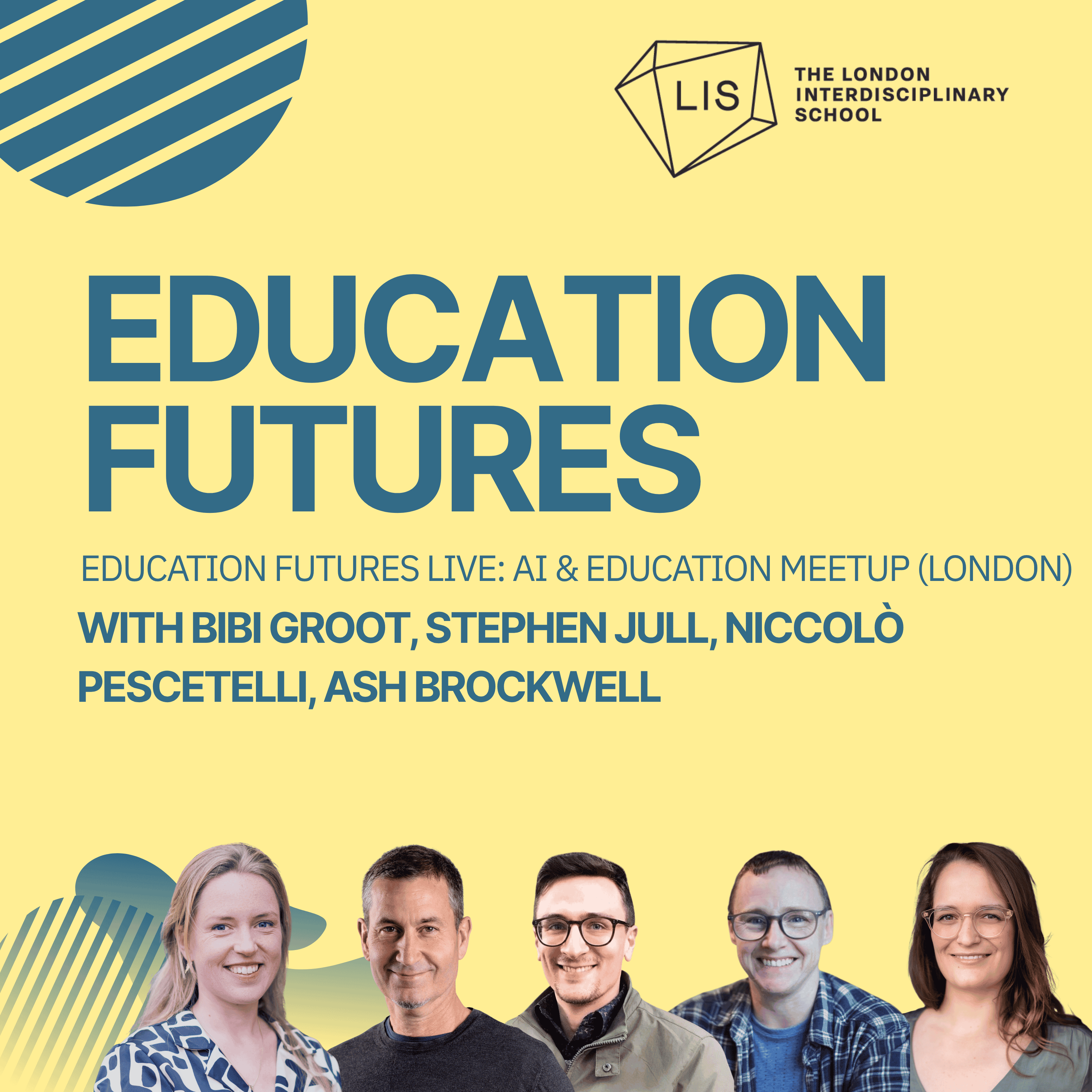 Education Futures Live: AI & Education Meetup (London) | This special episode is a recording of a live panel discussion from the AI & Education Meetup series, hosted by Education Futures at the London Interdisciplinary School (LIS).Svenia is joined by four guests at the intersection of AI and learning: Ash Brockwell, LIS associate professor and lead of the new Education Futures master's; Niccolò Pescetelli, LIS associate professor leading the AI & Collective Intelligence program; Stephen Jull, GeoGebra GmbH co-founder now Global Head of AI Educational Technology at Teach For All; and Bibi Groot, behavioral scientist and Chief Impact Officer at Eedi, who runs large-scale RCTs on AI tutors.The conversation moves through what it means to "learn" when AI can retrieve and summarize anything instantly, the risk of cognitive offloading and "cognitive surrender," and evidence from a 12-week chess RCT on hints and productive struggle. The panel also digs into relationality and embodied learning, how Teach For All is building AI literacy at scale across 63 countries, tools designed to cut screen time while still using AI (like Eedi's QR-code diagnostic system), and closes with each guest's vision of a preferable — not just probable — future for education, including a sharp reminder from the audience that 70% of children globally still lack basic literacy access.Recorded live in London as part of Education Futures' ongoing meetup series exploring desirable futures for education in the age of AI. | — | ||||||
| 6/22/26 |  Why we can't teach AI Literacy yet | We asked one of the most respected education technology researchers in the world a simple question: how should schools teach students to use AI?His answer? We don't know yet, and pretending we do is the problem.Justin Reich is an Associate Professor at MIT and Director of the MIT Teaching Systems Lab, author of Failure to Disrupt (Harvard University Press), host of the TeachLab podcast, and the force behind The Homework Machine — a landmark 7-part podcast series investigating what's really happening with AI in classrooms across the US.In this conversation with Svenia Busson, Justin explores:Why "AI literacy" follows the same broken playbook as digital citizenship and computational thinking — and will likely fail students the same wayWhat the history of web literacy teaches us: it took 25 years to find strategies that actually workWhy domain expertise — not AI knowledge — may be the most critical factor in using AI wellWhat to make of "AI-powered" schools like Alpha SchoolWhat students themselves are saying: two-thirds of US students say AI is harming their critical thinkingWhy "the homework machine" is the most honest name for what's happening in classrooms todayAlso mentioned in this episode:Mike Caulfield's SIFT framework for teaching web literacy: https://guides.lib.uchicago.edu/c.php?g=1241077&p=9082322A Guide to AI in Schools: Perspectives for the Perplexed — MIT Teaching Systems Lab guidebook (August 2025) https://tsl.mit.edu/wp-content/uploads/2025/08/GuideToAIInSchools.pdf"Stop Pretending to Know How to Teach AI" — Justin's article in the Chronicle of Higher Education (November 2025) https://www.chronicle.com/article/stop-pretending-you-know-how-to-teach-aiThe Homework Machine podcast: https://podcasts.apple.com/us/podcast/the-homework-machine-what-ai-is-really-doing-in-classrooms/id583456652?i=1000747231954 (a must listen) | — | ||||||
| 6/18/26 |  Measuring the real impact of AI in education | What does it actually take to know if an AI tutor is helping kids learn? Bibi Groot, Chief Impact Officer at Eedi Labs, has spent her career answering exactly that question — first at the Behavioral Insights Team (aka the Nudge Unit, co-founded with Nobel laureate Richard Thaler), then in classrooms across the UK and Latin America.In this episode, Bibi walks us through how Eedi's diagnostic engine works — 60,000 carefully designed multiple-choice questions, each distractor linked to a specific misconception — and why understanding why a student gets something wrong matters as much as knowing they got it wrong.Bibi also introduces a concept that should alarm everyone in edtech: cognitive surrender — the risk that when AI does all the thinking, students stop learning altogether. Her solution is architectural: don't ask students to self-regulate, build the constraints directly into the system. She references a striking study by Poulidis and Bastani on chess students — those who received AI hints at system-chosen moments improved 64% vs. only 30% for those who could ask for help whenever they wanted.This is a rare, rigorously evidence-based conversation about what responsible AI tutoring actually looks like — and how far most of the field still has to go.References mentioned in this episode:Behavioral Insights Team (the Nudge Unit)Eedi Labs — including the free Eedi School platformGoogle DeepMind's LearnLMLearning Engineering Virtual Institute (LEVI) — created by Schmidt Futures & Renaissance PhilanthropyDavid Yeager, 10 to 25: The Science of Motivating Young PeopleAI Hub for Education (Stanford) — reviewed 800+ papers on AI in education; only 20 had causal evidencePoulidis & Bastani chess study (system-chosen AI hints → 64% improvement vs. 30% for on-demand help)London EdTech Week — Meet Bibi & Svenia at the London AI & Education Meetup on June 18, 2026 | — | ||||||
| 6/15/26 | 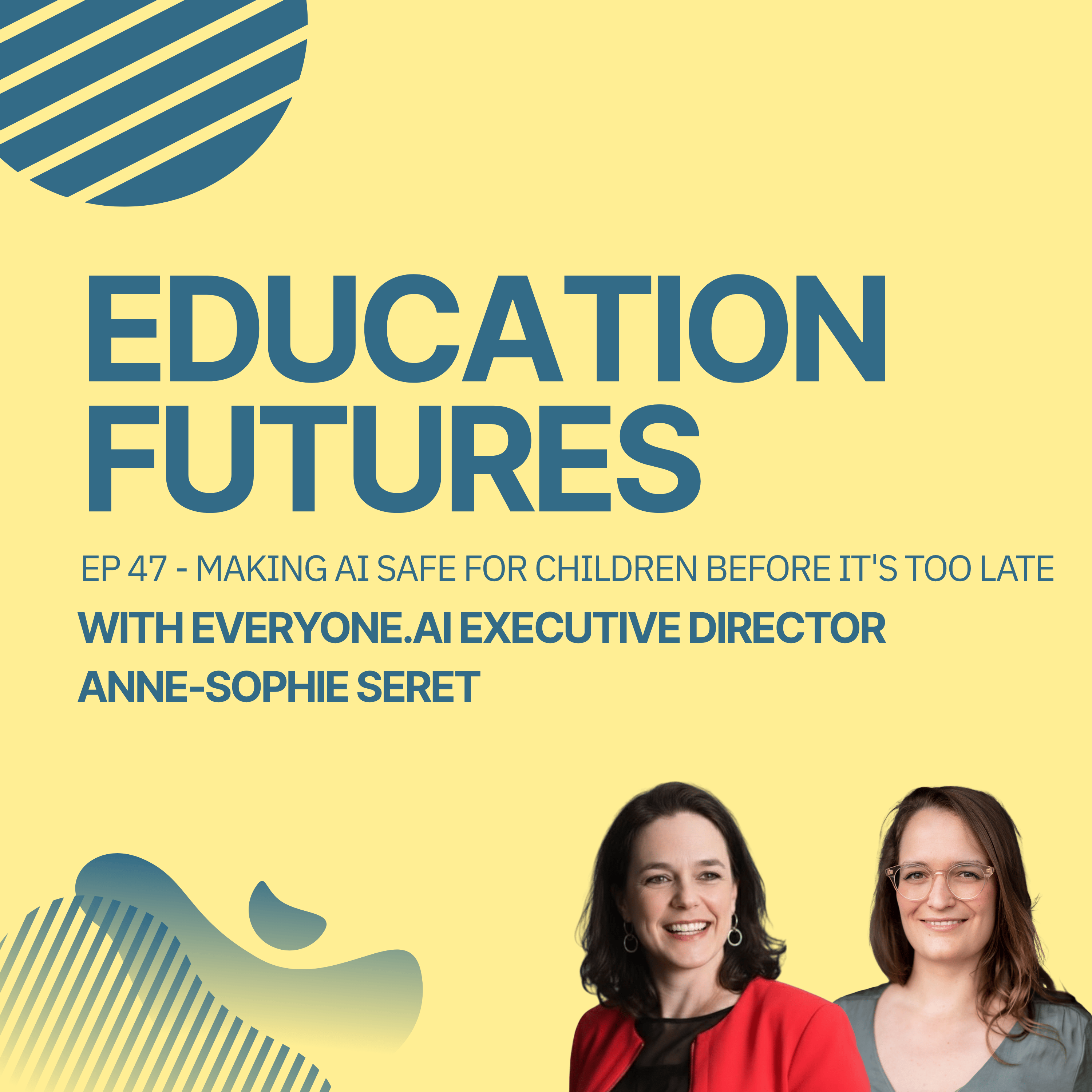 Making AI safe for children before it's too late | The tech industry is building powerful AI tools for children, often without understanding how children actually learn and grow. That's the gap Anne-Sophie Seret set out to close.Anne-Sophie is the co-founder and Executive Director of everyone.ai, a Silicon Valley nonprofit bridging artificial intelligence and developmental neuroscience. She is also the Chief Program Officer of iRAISE (International Research-driven Alliance for AI Serving Every child), the global coalition she launched at the Paris AI Action Summit alongside 11 governments, UNESCO, UNICEF, and companies including OpenAI, Anthropic, and Google.In this episode, she and Svenia explore why children's brains are not mini adult brains, and why that changes everything for AI design. They discuss the critical developmental windows AI is currently disrupting (0–6 for language acquisition; 12–14 for social skills development), what the research on teenagers and anthropomorphic AI actually shows, and where the line is between AI as a scaffold and AI as a crutch. Anne-Sophie also shares the story of how iRAISE was built in just three months, what a "proactive" approach to AI safety looks like in practice, and why regulating AI is actually easier when children are the focus.She also previews the AI Safety Builder, a new science-backed tool launching at VivaTech that helps EdTech founders evaluate how their conversational AI interacts with children, detecting anthropomorphic, interactional, and relational risk cues based on the work of 30+ researchers.Resources mentioned:everyone.ai — nonprofit at the intersection of AI and child developmentiRAISE Coalition — launched at the Paris AI Action Summit (February 2025) https://parispeaceforum.org/initiatives/beneficial-ai-for-children-coalition/Research: "Adolescents & Anthropomorphic AI: Rethinking Design for Wellbeing" https://everyone.ai/wp-content/uploads/2026/02/Adolescents-Anthropomorphic-AI-Rethinking-Design-for-Wellbeing-.pdfResearch: "Mapping of generative AI impacts on child development" — mapping of risks and opportunities by age group, contributed to the G7 agenda https://everyone.ai/wp-content/uploads/2026/05/Mapping-of-GenAI-impacts-on-child-development-1.pdfBook recommendation: Love to Learn by Isabelle Hau (Stanford) https://www.isabellehau.com/ | — | ||||||
| 6/11/26 | 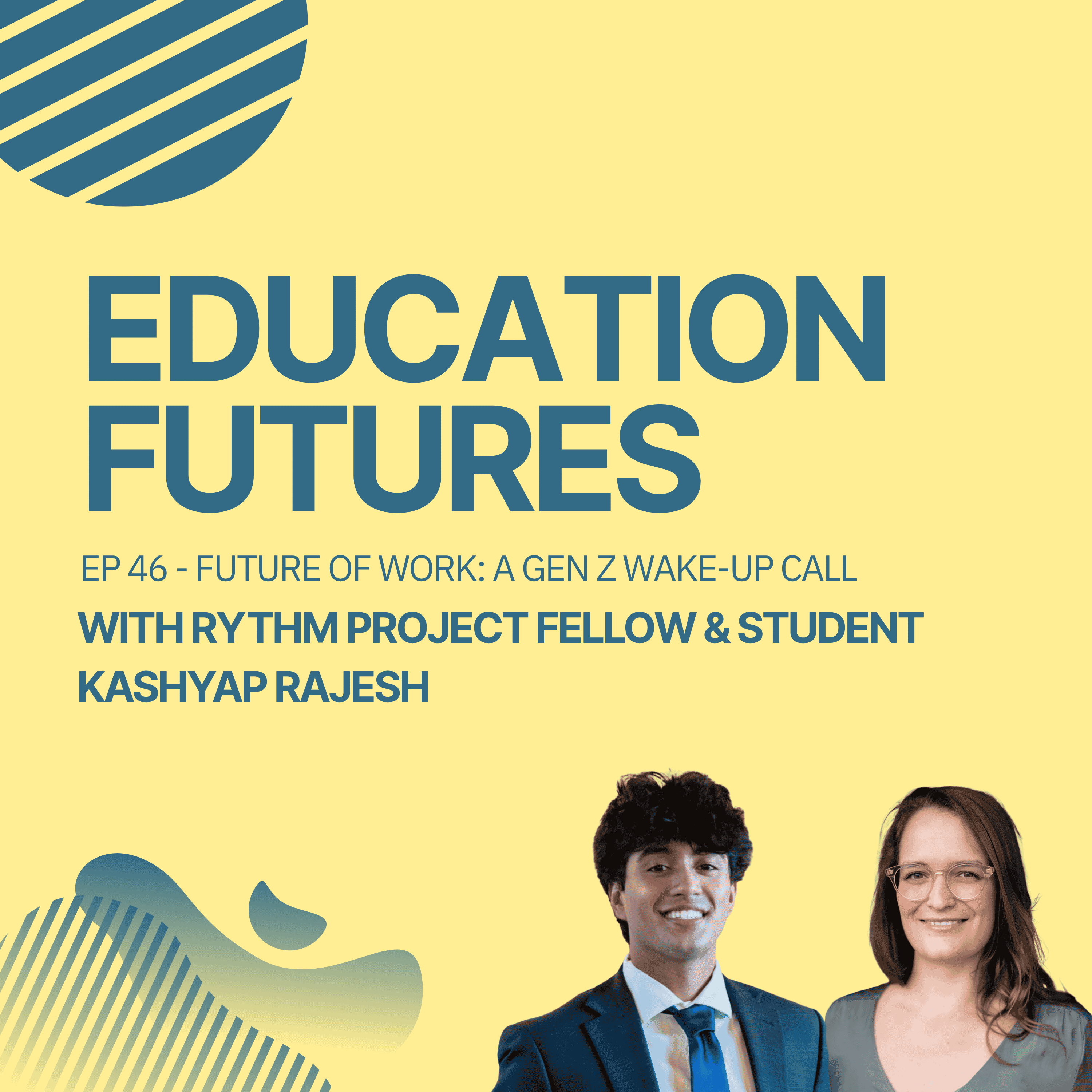 Future of work: A Gen Z wake-up call✨ | future of workGen Z+4 | Kashyap Rajesh | EncodeWhite House Office of Science and Technology Policy+4 | CaliforniaCornell University | AIGen Z+7 | — | 47m 19s | |
| 6/8/26 | 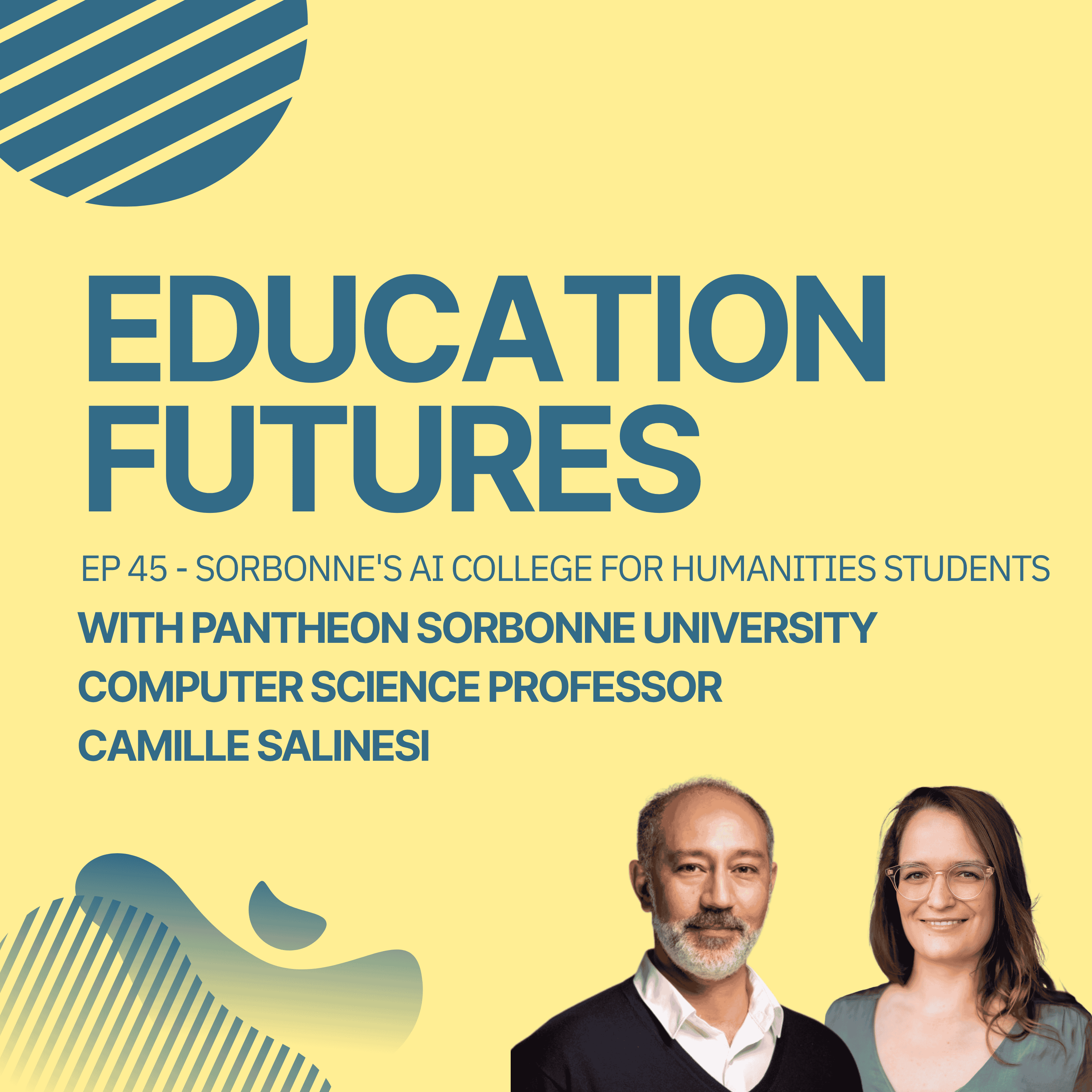 Sorbonne's AI college for humanities students✨ | AI educationhumanities+4 | Camille Salinesi | University of Paris 1 Panthéon-SorbonneFrance 2030 | — | AI educationhumanities+4 | — | 39m 19s | |
| 6/4/26 |  A Philosopher's case against AI✨ | AI and creativityphilosophy of AI+5 | Dr. Alex Carter | University of CambridgeFitzwilliam College+2 | — | AIcreativity+5 | — | 55m 01s | |
| 6/1/26 |  Measuring what actually matters in Edtech✨ | Edtechlearning measurement+4 | Dr. Asyia Kazmi | Gates FoundationWISE+3 | UKParis+2 | Edtechlearning measurement+6 | — | 47m 02s | |
| 5/28/26 |  Making computer science tangible for children✨ | computer science educationchildren's learning+4 | Linda Liukas | CodecademyHello Ruby+2 | Silicon ValleyHelsinki | computer scienceeducation+6 | — | 44m 54s | |
| 5/25/26 |  SuperSkills: The 7 human skills AI can't replace✨ | AIhuman skills+4 | Rahim Hirji | World Economic ForumMcKinsey+5 | North London | AIhuman skills+8 | — | 40m 45s | |
| 5/21/26 |  AI, companions & EdTech: A VC's perspective✨ | AI companionsEdTech+3 | Rhys Spence | Brighteye VenturesMe, Myself and My AI: The Rise of AI Companions | — | AIEdTech+5 | — | 42m 09s | |
| 5/18/26 | 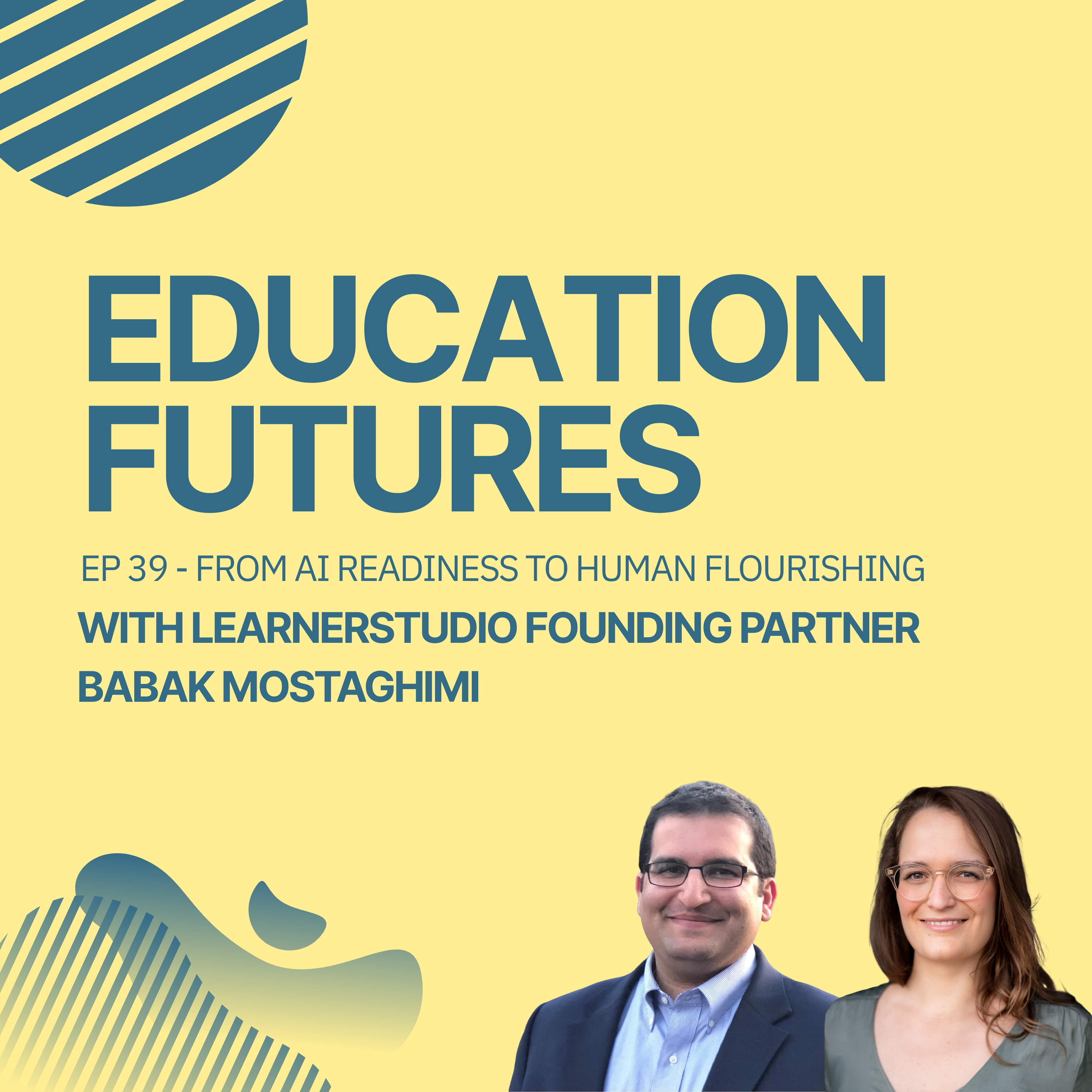 From AI readiness to human flourishing✨ | AI in educationhuman flourishing+4 | Babak Mostaghimi | McKinsey Global InstituteNetflix+1 | — | AI readinesshuman development+5 | — | 52m 05s | |
| 5/14/26 |  MOON: A new pedagogy for the age of AI✨ | AI in educationpedagogy+4 | Delphine Le Serre | EdHu 2050LinkedIn | MontrealToronto | AIeducation+7 | — | 45m 47s | |
| 5/11/26 |  Socratic Dialogue in the age of AI✨ | Socratic dialogueartificial intelligence+3 | Alexander Montag | Tulane UniversitySt. John's University+5 | — | SocratesAI+7 | — | 59m 03s | |
| 5/6/26 |  When teachers become co-architects of AI✨ | AI in educationteacher involvement in AI+3 | Stephen Jull | GeoGebra GmbHTeach for All+1 | — | AI LiteracyEdTech+5 | — | 35m 59s | |
| 4/27/26 |  A new blueprint for AI in higher education✨ | AI in educationhigher education+4 | Boris Walbaum | Forward CollegeLondon School of Economics+1 | — | AIhigher education+5 | — | 53m 31s | |
| 4/23/26 |  How AI chatbots reshape children's brains✨ | AI and children's developmentchatbots and safety+3 | Pilyoung Kim | University of DenverCenter for Brain, AI, and Child (BAIC)+1 | Capitol Hill | AI chatbotschildren's brains+5 | — | 46m 46s | |
| 4/20/26 |  Protecting children in the age of AI✨ | AI and childrenAI safety+4 | Tara Steele | Safe AI for Children AllianceMeta | — | AI riskschildren safety+5 | — | 35m 41s | |
| 4/16/26 |  Is AI safe for children? Inside KORA's benchmark✨ | AI safetychildren+4 | Stéphie Herlin | KORABrio | — | AIchildren+5 | — | 45m 16s | |
| 4/13/26 |  AI in education: separating the hype from the evidence✨ | AI in educationevidence-based practice+4 | Wess Trabelsi | Ulster BOCESStanford AI Hub for Education+2 | New YorkU.S.+1 | AI in educationK-12+7 | — | 54m 27s | |
| 4/8/26 |  Teaching and measuring soft skills in the age of AI✨ | soft skillsmetacognition+4 | Michaela Horvathova | Beyond EducationOECD+2 | — | soft skillsmetacognition+5 | — | 37m 29s | |
| 4/6/26 |  Rethinking assessment in the age of AI✨ | assessmentAI in education+4 | Alina von DavierElie Bechara | DuolingoDuolingo English Test | — | assessmentAI+7 | — | 1h 02m 42s | |
| 4/2/26 |  From knowledge to durable skills: rethinking higher education✨ | higher educationartificial intelligence+4 | Art Markman | AI Tutor PlatformMinerva University+2 | — | higher educationAI+7 | — | 49m 25s | |
| 3/30/26 |  The trust crisis in education and the role of AI✨ | trust in educationAI in learning+4 | Mary Burns | Brookings InstitutionA New Direction for Students in an AI World: Prosper, Prepare, Protect | — | trust crisisAI education+5 | — | 55m 03s | |
Showing 25 of 55
Pitch Fit is a Pro feature
See how bookable this show is for guests, which brands already advertise, the per-episode ad value, and the best-fit guest and sponsor profile. The numbers are blurred on the free plan.
How readily this show books outside guests like you.
How proven this show is for host-read sponsorships.
For Guests
ProFor Advertisers
ProUpgrade to Pro to unlock guest cadence, sponsor categories, fit scores, and per-episode ad value for this show.