

Insights from recent episode analysis
Audience Interest
Podcast Focus
Publishing Consistency
Platform Reach
Insights are generated by CastFox AI using publicly available data, episode content, and proprietary models.
Most discussed topics
Brands & references
Est. Listeners
Insufficient chart data. Estimates will improve as the show charts.
- Per-Episode Audience
Est. listeners per new episode within ~30 days
N/A🎙 ~2x weekly·96 episodes·Last published 1mo ago - Monthly Reach
Unique listeners across all episodes (30 days)
N/A - Active Followers
Loyal subscribers who consistently listen
N/A
Market Insights
Platform Distribution
Reach across major podcast platforms, updated hourly
Total Followers
—
Total Plays
—
Total Reviews
—
* Data sourced directly from platform APIs and aggregated hourly across all major podcast directories.
On the show
From 11 epsHosts
Recent guests
Recent episodes
7. From Upheaval to Action: A Conversation with Arthur Levine
May 20, 2026
35m 43s
6. AI, Accreditation, and the Art of Dreaming Big: A Conversation with Marjorie Hass
Apr 23, 2026
21m 08s
5. Mission, Culture, and the Art of Leading Change: A Conversation with David J. Dausey
Apr 8, 2026
34m 56s
4. Navigating History and Innovation: A Conversation with Catharine E. O'Connell
Mar 18, 2026
42m 26s
3. Navigating Online Education: A Conversation with Audra Spicer
Feb 25, 2026
34m 36s
Social Links & Contact
Official channels & resources
Official Website
Login
RSS Feed
Login
| Date | Episode | Topics | Guests | Brands | Places | Keywords | Sponsor | Length | |
|---|---|---|---|---|---|---|---|---|---|
| 5/20/26 |  7. From Upheaval to Action: A Conversation with Arthur Levine✨ | higher educationleadership+3 | Dr. Arthur Levine | Brandeis UniversityFrom Upheaval to Action: What Works in Changing Higher Ed | — | higher educationleadership strategies+3 | — | 35m 43s | |
| 4/23/26 |  6. AI, Accreditation, and the Art of Dreaming Big: A Conversation with Marjorie Hass✨ | AI in higher educationaccreditation reforms+4 | Marjorie Hass | Council of Independent CollegesASU+GSV+3 | — | AIaccreditation+7 | — | 21m 08s | |
| 4/8/26 |  5. Mission, Culture, and the Art of Leading Change: A Conversation with David J. Dausey✨ | mission-driven leadershipprovost role+3 | Dr. David Dausey | Duquesne University | — | leadershiphigher education+3 | — | 34m 56s | |
| 3/18/26 |  4. Navigating History and Innovation: A Conversation with Catharine E. O'Connell✨ | academic leadershipliberal arts education+4 | Catherine E. O'Connell | Illinois College | Illinoisfrontier | academic leadershipIllinois College+5 | — | 42m 26s | |
| 2/25/26 |  3. Navigating Online Education: A Conversation with Audra Spicer✨ | online educationcareer readiness+4 | Dr. Audra Spicer | CSU Global | — | online universityflexibility+4 | — | 34m 36s | |
| 2/18/26 |  2. Bridging Research and Academic Administration in India: A Conversation with Raul Villamarin Rodriguez✨ | academic administrationinterdisciplinary research+4 | Raul Rodriguez | Woxsen University | India | academic leadershipinterdisciplinary research+5 | — | 40m 49s | |
| 1/28/26 |  1. Transforming Education: A Conversation with Dr. Iris Lafferty✨ | educational philosophycompetency-based education+4 | Dr. Iris Lafferty | Capella UniversityLa Roche University | — | competency-based educationAI in education+5 | — | 29m 39s | |
| 11/19/25 |  12. Academic Freedom and Freedom of Speech: A Conversation with Roger J. Ward✨ | academic freedomfreedom of speech+4 | Dr. Roger J. Ward | Chief Academic Officer’s Handbook: A Provost’s Guide to Visionary Leadership | — | academic freedomfreedom of speech+4 | — | 37m 47s | |
| 11/12/25 | 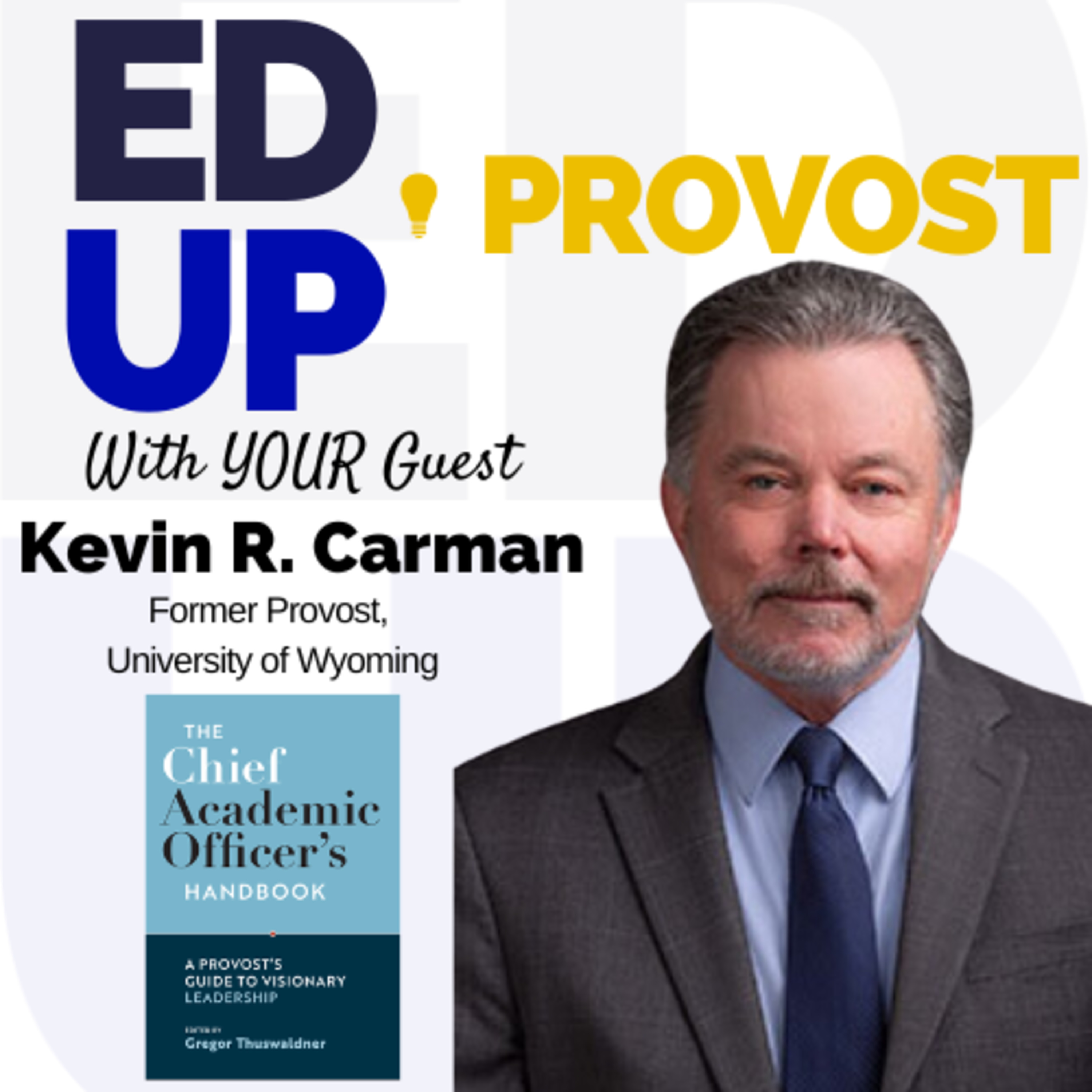 11. “Self-Management for Provosts:” A Conversation with Kevin R. Carman✨ | self-managementleadership+4 | Dr. Kevin R. Carman | Johns Hopkins University PressThe Chief Academic Officer’s handbook: A Provost’s Guide for Visionary Leadership | — | provostself-management+7 | — | 34m 48s | |
| 11/5/25 | 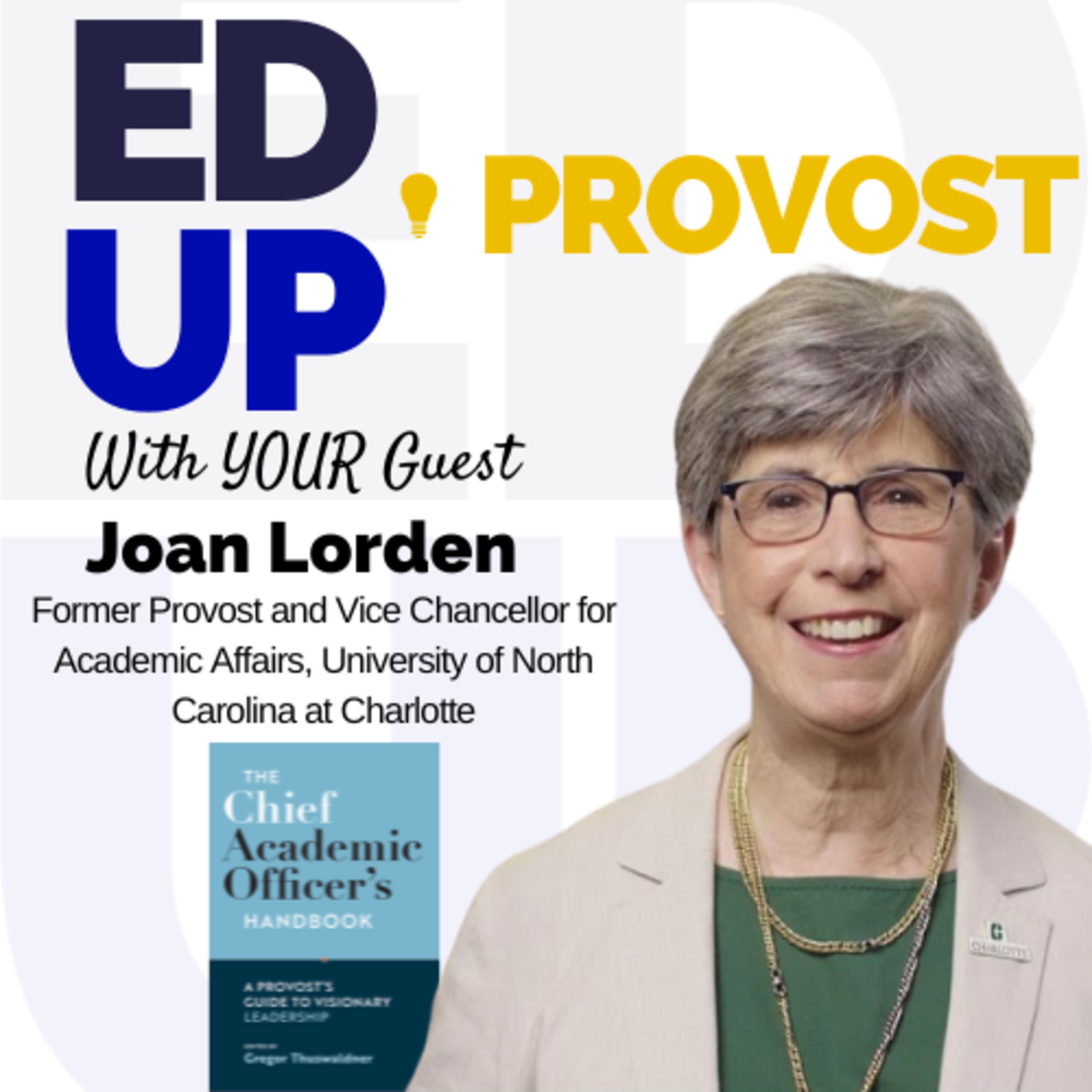 10. “At the Pleasure of the President:” A Conversation with Joan F. Lorden✨ | provost relationshippresidential partnerships+3 | Dr. Joan F. Lorden | Johns Hopkins University PressThe Chief Academic Officer’s Handbook: A Provost’s Guide to Visionary Leadership | — | provostpresident+5 | — | 31m 38s | |
Want analysis for the episodes below?Free for Pro Submit a request, we'll have your selected episodes analyzed within an hour. Free, at no cost to you, for Pro users. | |||||||||
| 10/29/25 |  9. Visible and Shadow Structures in Higher Education: A Conversation with Chris Heavey and Tondra De✨ | visible structuresshadow structures+4 | Tondra DeDr. Chris Heavey | The Chief Academic Officer's Handbook: A Provost’s Guide to Visionary Leadership | — | higher educationleadership+5 | — | 35m 27s | |
| 10/22/25 | 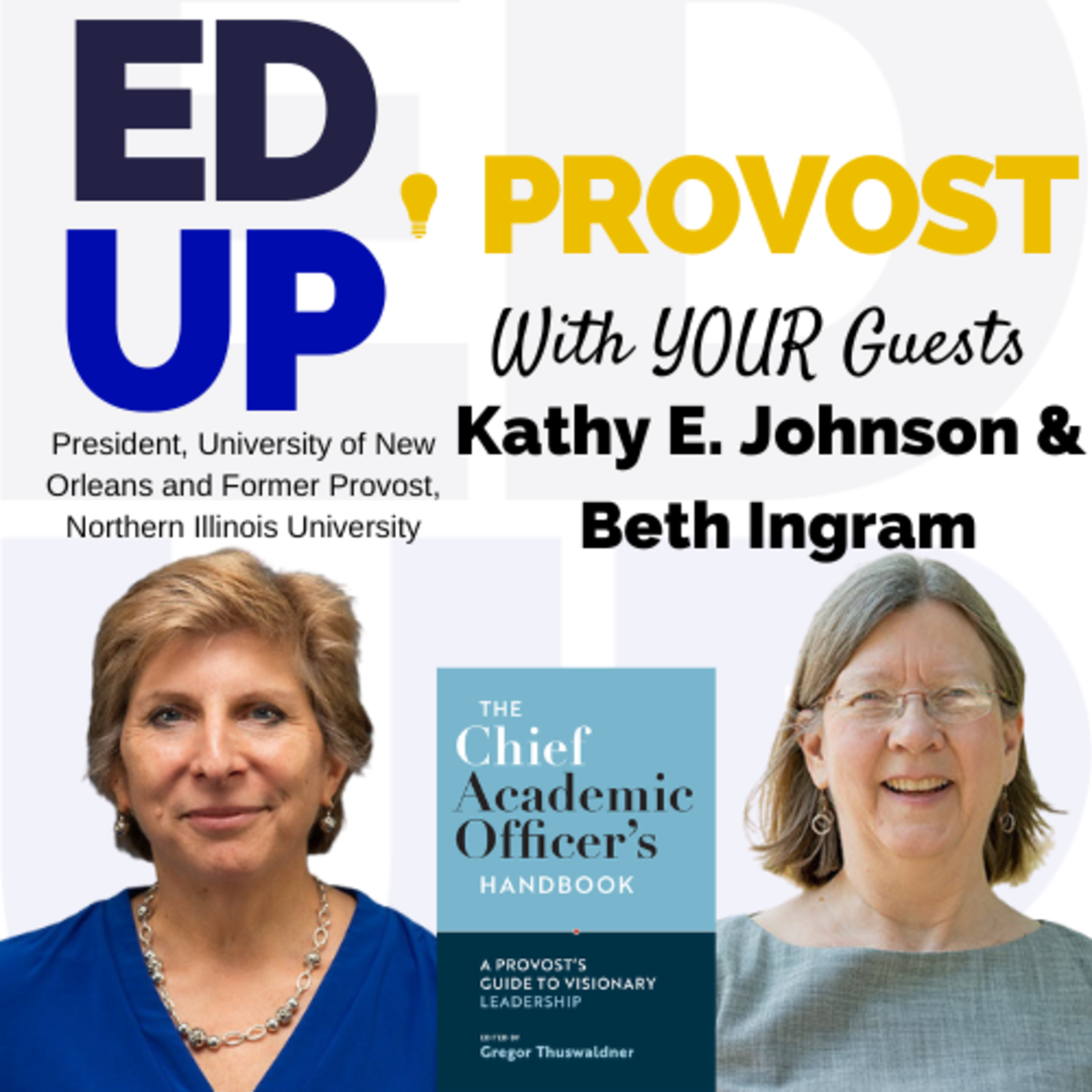 8. “Seasons of a Provost:” A Conversation with Kathy E. Johnson and Beth Ingram | In this conversation with EdUp Provost host Dr. Gregor Thuswaldner, Dr. Kathy E. Johnson and Dr. Beth Ingram discuss their chapter “Seasons of a Provost” in The Chief Academic Officer's Handbook: A Provost’s Guide for Visionary Leadership (Johns Hopkins University Press, 2025). They explore the often-overlooked topic of provost career transitions, the importance of aligning with presidential vision, and the necessity of having a plan B for unexpected changes. They also delve into the dynamics of cabinet relationships, fostering faculty relations, and the reflective practices that can guide provosts in assessing their career paths. The conversation concludes with personal reflections on knowing when to stay or go in one's career and book recommendations that emphasize empathy and understanding in leadership.Takeaways• Provosts often operate in the background compared to presidents.• Career transitions for provosts are rarely discussed openly.• Aligning with the president's vision is crucial for provosts.• Having a plan B is essential due to high turnover rates.• Building a network of support can provide valuable insights. | — | ||||||
| 10/15/25 | 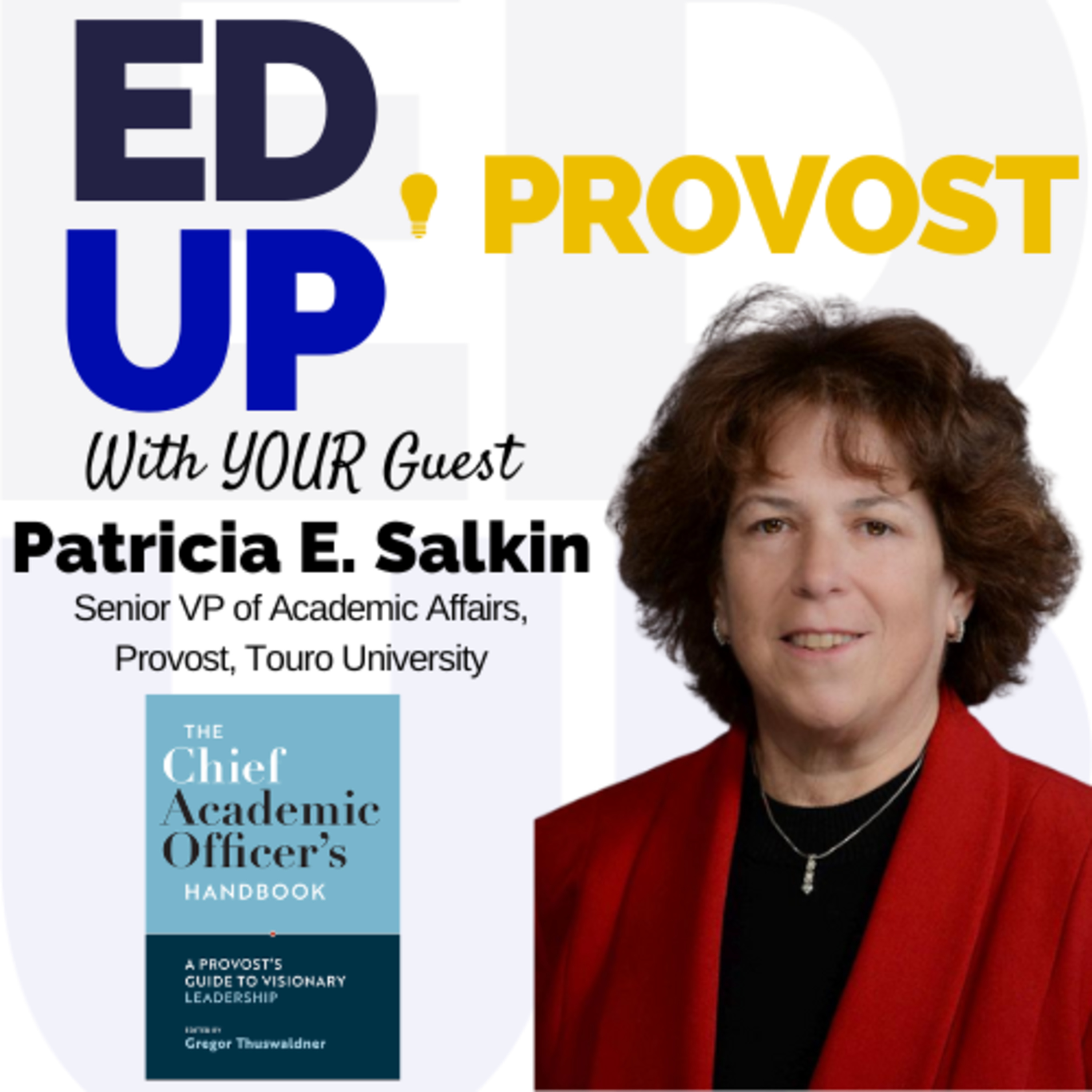 7. Defining the Roles of the Provost: A Conversation with Patricia E. Salkin | In this conversation with EdUp Provost host Dr. Gregor Thuswaldner, Dr. Patricia E. Salkin discusses the evolving role of the provost in higher education, emphasizing the essential skills required for effective leadership, the impact of COVID-19 on academic expectations, and strategies for crisis management. She highlights the importance of building trust with faculty, balancing administrative duties with student engagement, and advocating for academic funding in resource-constrained environments. Dr. Salkin discusses the multifaceted role of a provost in higher education, focusing on the budget process, compliance with accreditation standards, strategic vision, work-life balance, and the evolving responsibilities of the position. She emphasizes the importance of collaboration with deans and the president, the need for transparency in budgeting, and the challenges posed by changing regulations and societal issues. Takeaways• The role of the provost has expanded significantly in recent years.• Creativity and critical analysis are essential skills for provosts.• Networking and understanding institutional culture are key for aspiring provosts.• Crisis management requires strong communication and teamwork.• Provosts should maintain transparency and open dialogue with faculty. | — | ||||||
| 10/8/25 |  6. The Provost as Fundraiser: A Conversation with Kevin R. Carman | In this episode of the EdUp Provost Podcast, host Dr. Gregor Thuswaldner and Dr. Kevin R. Carman discuss the chapter on fundraising they co-wrote for The Chief Academic Officer’s Handbook: A Provost’s Guide for Visionary Leadership (Johns Hopkins University Press, 2025). They delve into the evolving role of Chief Academic Officers (CAOs) in fundraising within higher education, exploring strategies for balancing academic leadership with fundraising responsibilities, the importance of building relationships with development offices, and engaging advisory boards in fundraising efforts. The conversation also covers aligning fundraising with academic priorities, leveraging alumni connections for corporate partnerships, and the significance of stewardship in maintaining donor relationships. The episode concludes with reflections on managing corporate partnerships and the personal transitions faced by academic leaders.Takeaways• Fundraising is increasingly vital for Chief Academic Officers.• Balancing academic leadership with fundraising is challenging.• Building relationships with development offices is essential.• Advisory boards can effectively engage alumni in fundraising.• Fundraising efforts should align with institutional priorities | — | ||||||
| 10/1/25 |  5. What Makes an Effective Provost from a Dean’s Perspective? A Conversation with Forrest Anderson | In this conversation with EdUp Provost host Dr. Gregor Thuswaldner, Dr. Forrest Anderson discusses the chapter on “What Makes an Effective Provost?” from the perspective of a dean. Dr. Anderson stresses the fact that provosts need to balance vision with day-to-day operations, build trust with faculty, and emphasize the significance of kindness in leadership. He explores the challenges provosts face, including navigating competing demands and ensuring that initiatives have a lasting impact despite their typically short tenure. Dr. Anderson discusses the challenges faced by provosts in higher education, including high turnover rates and the need for a cultural shift. They emphasize the importance of supporting faculty well-being through various means, such as professional development and community events. The discussion also underscores the importance of proactive leadership in fostering a culture of belonging and inclusion within academic institutions. Drs. Anderson and Thuswaldner explore strategic steps that provosts can take to foster an inclusive environment and reflect on the importance of literature in reigniting passion for education.Takeaways- Provosts should focus on setting a vision rather than getting bogged down in details.- Building trust with faculty can be achieved through informal interactions and transparency.- True shared governance involves listening to all stakeholders and making informed decisions.- Faculty often feel overwhelmed by administrative tasks, and provosts should work to alleviate this burden.- Kindness in leadership fosters a positive institutional culture and helps resolve conflicts. | — | ||||||
| 9/24/25 |  4. The Provost as “Chief Academic Vision Caster:” A Conversation with Jennifer E. Walsh | In this conversation with EdUp Provost host Dr. Gregor Thuswaldner, Dr. Jennifer E. Walsh discusses her chapter “Chief Academic Vision Caster,” which appeared in the newly released Chief Academic Officer’s Handbook: A Provost’s Guide to Visionary Leadership (Johns Hopkins University Press, 2025). Dr. Walsh explores the evolving role of provosts in higher education, highlighting the importance of visionary leadership, community engagement, and collaboration with deans. She addresses the challenges posed by technological disruption and the need for institutions to adapt to changing workforce demands. Dr. Walsh shares practical strategies for fostering innovation while respecting traditional academic values and highlights the significance of managing relationships with university leadership to align academic vision with institutional goals.Takeaways• Provosts must balance day-to-day management with long-term strategic vision.• Collaboration with deans is essential for aligning institutional vision.• Innovation in academic programming must be balanced with tradition.• Provosts should manage up to ensure alignment with university leadership.• Engaging with the community can lead to new program development. | — | ||||||
| 9/17/25 |  3. Building Networks of Trust: A Conversation with Anthony Laden | In this conversation with EdUp Provost host Dr. Gregor Thuswaldner, Dr. Anthony Laden discusses his book Networks of Trust: The Social Costs of College and What We Can Do About Them and explores the social costs of college education. He emphasizes the importance of understanding the networks of trust that students form, how these networks are transformed in college, and the implications for faculty and staff. Dr. Laden addresses the need for inclusivity in politically diverse classrooms, the framework of epistemic nests, and the importance of charitable thinking in fostering a supportive learning environment. He advocates for recognizing the caring profession of teaching and the need for faculty development to better serve students from diverse backgrounds.Takeaways• There are two networks: social and informational trust networks.• College shapes students' informational trust networks.• Awareness of student transformation is crucial for faculty.• Political diversity in education requires open and welcoming spaces.• Charitable thinking helps bridge divides and promotes understanding. | — | ||||||
| 9/10/25 |  2. Multiplicity, Belonging, and Free Speech on College Campuses: A Conversation with Naomi Zack | In this conversation with EdUp Provost host Dr. Gregor Thuswaldner, Dr. Naomi Zack discusses her book on rethinking affirmative action and DEI initiatives in higher education, advocating for a framework of multiplicity and belonging. She critiques the limitations of current approaches and emphasizes the importance of the humanities in fostering human well-being. The discussion also touches on the challenges of class and upward mobility for first-generation students, highlighting the need for a nuanced understanding in faculty development and curriculum design. In this conversation, Dr. Zack discusses the evolution of class theory, emphasizing a new perspective that allows individuals to embrace aspects of different social classes without abandoning their roots. She addresses the complexities of campus speech and the importance of reclaiming academic freedom amidst student activism. The dialogue also explores the dynamics of student protests, highlighting the need for better communication between faculty and students. Ethical considerations in higher education are examined, particularly regarding adjunct faculty and their treatment. Finally, Dr. Zack defines what it means to be 'College Smart' in today's context, advocating for flexibility and transparency in academic institutions, and reflects on the challenges of free speech on campus.Takeaways• Multiplicity allows for a broader understanding of student identities.• The humanities should focus on ethical dimensions and human well-being.• Class discussions are crucial for understanding first-generation students. The old theory of class assumes total identities determine interests.• New class theory allows for economic mobility without losing roots.• 'College Smart' requires flexibility and understanding of institutional dynamics. | — | ||||||
| 9/3/25 |  1. Bridging vs. Breaking in Higher Education: A Conversation with john a. powell | In this conversation with EdUp Provost host Dr. Gregor Thuswaldner, Dr. john a. powell discusses his book The Power of Bridging: How to Build a World Where We All Belong, focusing on the concepts of bridging and breaking in higher education. He highlights the role of provosts and academic leaders in creating environments that foster connection, belonging, and understanding across diverse groups. Topics include free speech, the need for “safe enough” spaces, and the moral imperative to expand our circle of human concern. DR. powell emphasizes the importance of systemic change, the power of storytelling, and the courage required to navigate fear and resistance. The conversation also explores the evolving role of religion in building community and belonging.Takeaways• Bridging fosters connection and belonging across differences.• Academic leaders must model and support inclusive, compassionate dialogue.• Free speech must not dehumanize; “safe enough” spaces are key.• Bridging requires both personal courage and systemic change.• Storytelling and shared values—like dignity and belonging—strengthen community. | — | ||||||
| 5/15/25 |  42. Transforming Meetings in Higher Education: A Conversation with Steven Rogelberg | In this conversation with EdUp Provost host Dr. Gregor Thuswaldner, Dr. Steven Rogelberg discusses the importance of reframing meetings in higher education as opportunities for engagement and collaboration rather than mere obligations. He emphasizes the need for effective facilitation strategies to foster psychological safety and open dialogue, as well as the importance of intentional meeting design to enhance productivity. Rogelberg also highlights the significant costs associated with meetings and the necessity of evaluating their effectiveness regularly. Ultimately, he advocates for a shift in mindset towards meetings as a valuable tool for fostering trust and community within academic institutions. In this conversation, Dr. Rogelberg discusses the significance of effective meeting practices in higher education, emphasizing the role of stewardship in meeting leadership, the common pitfalls in meeting design, and the transformative potential of one-on-one meetings. He highlights the importance of intentionality, strategic focus, and the effective use of silence in meetings, while also addressing the impact of meeting location on engagement. Takeaways• Meetings can be places of gain when done well.• Effective meetings lead to better employee engagement and retention.• Establishing ground rules fosters psychological safety in meetings.• Leaders should talk less and listen more during meetings.• Framing agendas as questions can enhance engagement. | — | ||||||
| 5/13/25 |  41. Leading from the Margins: A Conversation with Mary Dana Hinton | In this conversation with EdUp Provost host D. Gregor Thuswaldner, Dr. Mary Dana Hinton discusses her evolving perspective on leadership, particularly from the margins, emphasizing the importance of resilience, courage, and vulnerability. She highlights the power of storytelling in higher education and how provosts can use their unique experiences to advocate for their institutions. The discussion also addresses the tensions faced by provosts in navigating faculty advocacy and institutional realities, especially in politically charged environments. Hinton encourages leaders to remain hopeful and committed to their personal and institutional missions, even in challenging times. In this conversation, Mary Dana Hinton discusses the importance of authentic leadership, resilience, and mentorship in higher education. She emphasizes the need for provosts to embrace their vulnerabilities while advocating for their institutions. Hinton also highlights the significance of understanding the diverse needs of students and the role of marginalized institutions in providing opportunities. The discussion culminates in a reflection on the importance of resilience and the value of mentorship in fostering diverse leadership.Titles• Leading from the Margins: A New Perspective• Courage and Vulnerability in Higher Education Leadership• The Transformative Power of Storytelling• Navigating Tensions in Academic Leadership• Resilience and Hope in Higher Education | — | ||||||
| 5/8/25 |  40. Reimagining Graduate and Doctoral Education in a Global Era: A Conversation with Stan Taylor and Karri Holley | In this conversation with EdUp Provost host Dr. Gregor Thuswaldner, Dr. Stan Taylor and Dr. Karri Holley explore the evolving landscape of doctoral education, emphasizing the importance of global perspectives, the changing roles of supervisors, and the need for programs to adapt to diverse career paths. It addresses equity, access, and inclusion, as well as the challenges of maintaining quality amidst rapid growth. The impact of the pandemic on educational delivery and the future of international student mobility are also discussed, alongside innovative approaches to measuring success in doctoral programs.Takeaways• Doctoral education is often overlooked in higher education discussions.• Global trends are influencing doctoral education in the US.• The role of doctoral supervisors is becoming more complex.• There is a need for doctoral programs to prepare students for diverse careers.• Equity and inclusion are critical in doctoral education. | — | ||||||
| 5/6/25 |  39. Rethinking the Community College Reform Movement: A Conversation with Milton E. Clarke | In this conversation, EdUp Provost host Gregor Thuswaldner and Milton E. Clarke discuss the Community College Reform Movement, exploring its ideological foundations, the influence of neoliberalism, and the impact on faculty governance and institutional memory. They emphasize the need for shared governance and the importance of retaining institutional knowledge as educational policies evolve. In this conversation, Thuswaldner and Clarke discuss various aspects of higher education reform, focusing on community colleges. They explore the importance of building community among retired faculty, the implications of performance-based funding models, and the challenges posed by acceleration and online education. The discussion also highlights the need for reforms that prioritize teaching and learning, as well as the potential futures for community colleges in the face of austerity or reinvestment. Finally, Milton Clarke shares book recommendations that have influenced his views on education reform.Takeaways• The Community College Reform Movement is shaped by various ideological and economic forces.• Embedded neoliberalism highlights the inconsistencies in educational reform policies.• Performance-based funding and workforce development are gaining traction in both community colleges and four-year institutions.• The diminishing role of faculty in governance poses challenges for academic freedom.• Empowering faculty and creating community is essential for effective governance. | — | ||||||
| 5/1/25 |  38. Rethinking STEM Careers and Higher Ed’s Role: A Conversation with John D. Skrentny | In this conversation with EdUp Provost host Dr. Gregor Thuswaldner, Dr. John Skrentny discusses the disconnect between the number of STEM graduates and the actual demand for STEM workers, emphasizing systemic issues within higher education and the role of provosts. He critiques the prevailing shortage rationale for STEM education and advocates for a focus on foundational skills that prepare students for a volatile job market. The discussion also highlights the importance of embedding ethics into STEM curricula and the interconnectedness of universities, employers, and investors in shaping the workforce. Takeaways• There is a significant disconnect between STEM graduates and the actual demand for STEM workers.• The shortage rationale for STEM education is often overstated and needs critical analysis.• Universities should focus on sustaining careers, not just launching them.• STEM graduates may not want to pursue traditional STEM jobs, highlighting the need for diverse career paths.• Embedding ethics into STEM education can help students understand the societal impact of their work. | — | ||||||
| 4/29/25 | 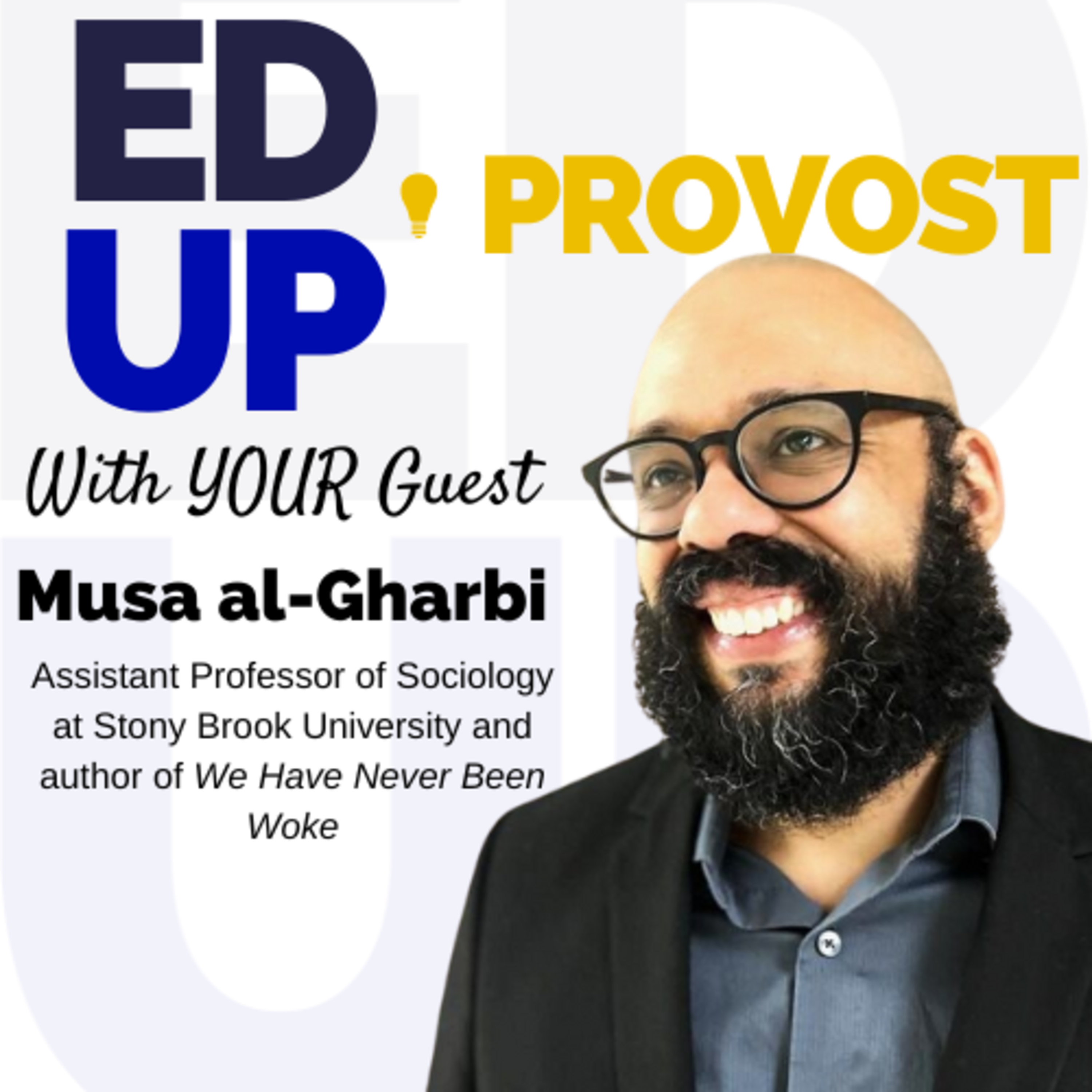 37. Why Higher Ed Has Never Been Woke: A Conversation with Musa Al-Gharbi | In this conversation with EdUp Provost host Dr. Gregor Thuswaldner, Dr. Musa Al-Gharbi discusses his book 'We Have Never Been Woke', which critiques the prevailing narratives in higher education regarding social justice and progressivism. He introduces the concept of 'symbolic capitalism' and explores the disconnect between intentions and outcomes in educational institutions. Dr. Al-Gharbi highlights the hostility faced by socially conservative views in academia and emphasizes the importance of belongingness over mere inclusion. He critiques the effectiveness of current DEI initiatives and calls for a reevaluation of credentialing practices that perpetuate inequality. In this conversation, Dr. Al-Gharbi discusses the perception of academia, the political biases within higher education, and the implications of these biases on public trust. He emphasizes the need for universities to acknowledge their shortcomings while defending their value and academic freedom. Dr. Al-Gharbi also reflects on the historical context of social dynamics and the importance of understanding these patterns to avoid repeating past mistakes. Takeaways• The title 'We Have Never Been Woke' challenges existing narratives.• Higher education often perpetuates inequality despite progressive intentions.• There is a significant disconnect between intentions and actual outcomes in academia.• Belongingness is a crucial factor for student success and retention.• Current DEI initiatives often fail to produce desired outcomes and can be counterproductive. | — | ||||||
Showing 25 of 97
Pitch Fit is a Pro feature
See how bookable this show is for guests, which brands already advertise, the per-episode ad value, and the best-fit guest and sponsor profile. The numbers are blurred on the free plan.
How readily this show books outside guests like you.
How proven this show is for host-read sponsorships.
For Guests
ProFor Advertisers
ProUpgrade to Pro to unlock guest cadence, sponsor categories, fit scores, and per-episode ad value for this show.