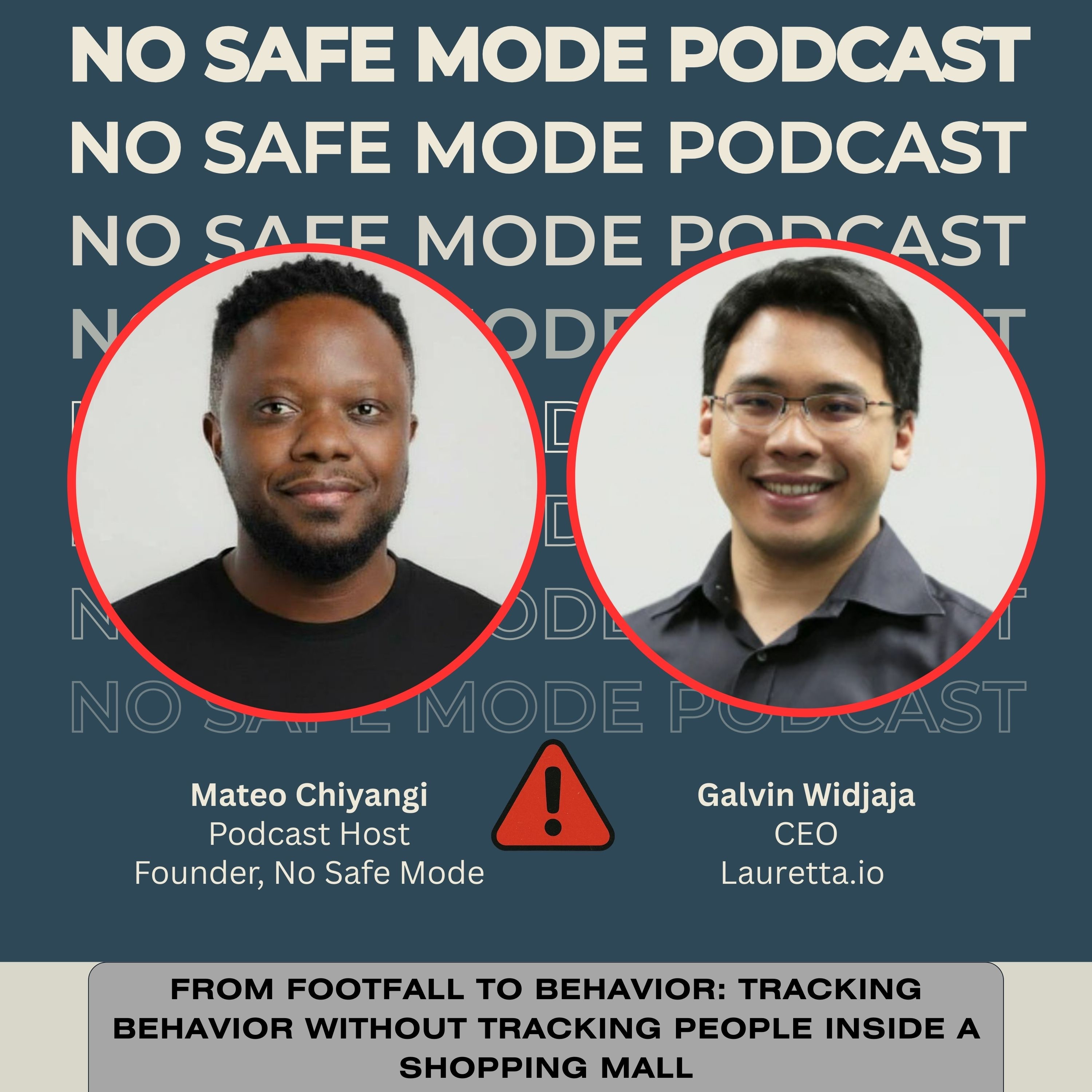
From Footfall to Behavior: Tracking Behavior Without Tracking People inside Shopping Malls
From Efficiency in CRE by Mateo Chiyangi
January 12, 2026 · 38 min
About this episode
The episode discusses the challenges and considerations of using computer vision AI to understand behavior in physical spaces without compromising privacy.
In this episode of the podcast, I sit down with Galvin Widjaja, CEO of Lauretta, to unpack what it really means for computer vision AI to “understand” the physical world. Moving beyond hype around models and automation, the conversation explores why most computer vision systems fail in real environments touching on dataset limitations, time and identity problems, and the difference between counting people and understanding behavior. Drawing on real-world deployments with organizations such as Lendlease (shopping mall), Changi Airport, the Transportation Security Administration (TSA), and the U.S. Department of Homeland Security (DHS), Galvin explains why effective physical AI isn’t about giving machines human-like intelligence, but about designing systems that detect patterns, respect privacy, show anomalies, and leave judgment and action to humans who have skin in the game.
People in this episode
Host: Mateo Chiyangi
Guest: Galvin Widjaja
Topics covered
- computer vision
- AI
- behavior tracking
- privacy
- real-world applications
- data limitations
Keywords
- computer vision
- AI
- behavior tracking
- privacy
- real-world deployments
- data limitations
- pattern detection
Mentioned in this episode
Organizations: Lauretta, Lendlease, Changi Airport, Transportation Security Administration, U.S. Department of Homeland Security
More episodes of Efficiency in CRE
- Riding the Grey Wave: The Coming Urgent Need for Senior Housing · November 25, 2025 · 29 min
- From Forced Labor to Fortune: 230 Years of Building America (and Bending the Rules) · November 9, 2025 · 29 min
- How Toronto Became an AI Powerhouse And Why Tech Companies Choose Canada · October 6, 2025 · 25 min
- The New Software Layer: How AI Agents can Run your GTM (Go to Market) and Stay Smart at Scale · September 30, 2025 · 29 min
- Juniper Square: The GP’s (General Partner) Playbook for a Shifting Real Estate Market · August 10, 2025 · 34 min
- Ottawa Unlocked: Planning Risk, Land Constraints and Hidden Opportunity · July 21, 2025 · 30 min
Explore listener stats, chart rankings, contacts and more on the Efficiency in CRE podcast page.