Insights from recent episode analysis
Audience Interest
Podcast Focus
Publishing Consistency
Platform Reach
Insights are generated by CastFox AI using publicly available data, episode content, and proprietary models.
Most discussed topics
Brands & references
Est. Listeners
Insufficient chart data. Estimates will improve as the show charts.
- Per-Episode Audience
Est. listeners per new episode within ~30 days
N/A🎙 ~2x weekly·71 episodes·Last published yesterday - Monthly Reach
Unique listeners across all episodes (30 days)
N/A - Active Followers
Loyal subscribers who consistently listen
N/A
Market Insights
Platform Distribution
Reach across major podcast platforms, updated hourly
Total Followers
—
Total Plays
—
Total Reviews
—
* Data sourced directly from platform APIs and aggregated hourly across all major podcast directories.
On the show
From 10 epsHost
Recent guests
Recent episodes
The Notorious R.O.D.
Jun 23, 2026
1h 43m 12s
Non-Producer Character (NPC)
Apr 21, 2026
1h 26m 33s
The Reservation Broadcasting System
Apr 2, 2026
1h 20m 57s
I Get Schooled on Marx
Mar 26, 2026
1h 25m 33s
Crime Story
Mar 19, 2026
1h 36m 10s
Social Links & Contact
Official channels & resources
Official Website
Login
RSS Feed
Login
| Date | Episode | Topics | Guests | Brands | Places | Keywords | Sponsor | Length | |
|---|---|---|---|---|---|---|---|---|---|
| 6/23/26 | ![]() The Notorious R.O.D. | Damon Linker is back on the pod to talk about another former guest, the notorious R.O.D., Ray Oliver Dreher Jr. — i.e. Rod Dreher, one of the more fascinating, tragic, and infuriating writers of the Christian right over the last few decades.Linker and Dreher first met back when Linker, who is now a man of the solid center-left, was a conservative and an editor at the Catholic conservative magazine First Things. They bonded over their shared horror at the Catholic priest abuse scandal, a lot of details of which were unfolding at the time, and also over their shared frustration with various figures on the Catholic right, including some important people at First Things, who seemed to be in some kind of denial about the severity of the scandal, or if not in denial about the severity of it then intent on shifting as much blame as possible away from the Catholic Church and onto other folks or forces.The two remained friends over the next decade and a half, even as both of them went through various evolutions and migrations. Linker migrated towards the left, although not too far to the left, and Dreher went through a series of shifts, or perhaps repetitions, ever in search of some kind of structure or vessel or institution to contain or pacify his various aspirations, contradictions, and demons.A few years ago they broke, as Dreher has broken with many former friends and comrades over the decades, over what Linker would characterize as Dreher’s extremism, though they’ve been in touch a bit more recently in the aftermath of Dreher’s public denunciations of the right’s tolerance of anti-Semites within its ranks.In a recent essay, Linker writes of Dreher:I’ve written enough posts about Rod Dreher down through the years that I could almost dedicate a stand-alone section of this newsletter to him. (That’s an exaggeration, but not by much. Here is the most recent post, from just a few months ago, in which he plays an important part.) When I write something on him, my most engaged readers usually respond in comments that they used to admire Dreher and read him fruitfully but that at some point he became a reactionary and racist crank they could no longer abide. I’ve had periods when I’ve felt like that. But I keep coming back to him, even as he’s drifted further and further away from the (perhaps idiosyncratic) skeptical and pessimistic liberalism I affirm in my work.One reason why I keep coming back to Rod is that I know him personally, we developed a friendship nearly a quarter century ago, and I don’t believe in dropping friends for political reasons. There are limits to that, of course. (A friend who began telling me Adolf Hitler made a lot of good points in Mein Kampf would no longer get invited over to dinner.) But I try as best I can to exemplify the ancient virtue of liberality in my dealings with people. That means demonstrating generosity and openness to difference.But it wouldn’t be entirely honest to suggest I remain drawn to Rod purely out of a principled commitment to tolerate a longstanding friend who holds views with which I sharply disagree. The truth is that I feel like I “get” him on a deep, spiritual level.I don’t feel like I get Dreher on a spiritual level, but I do feel like I perceive him insightfully, from the outside, on a psychological level, and though my perceptions and Linker’s don’t perfectly align, they end up proving (as you’ll appreciate it you listen to our conversation) quite complementary.For both of us, Dreher is such a compellingly open wound of a person. He’s endlessly vulnerable, incredibly affable in one-on-one interactions (as I learned when I did my interview with him), reliably hysterical and apocalyptic when he’s dealing with the broad sweep of things, and also very principled in his idiosyncratic way, unable to gloss over the sins of his own side, in the name of unity, when they conflict with deeply held values of his. This all is, in other words, primo Eminent Americans content, and it was a pleasure to have Linker back on for it. This is a public episode. If you'd like to discuss this with other subscribers or get access to bonus episodes, visit danieloppenheimer.substack.com/subscribe | 1h 43m 12s | ||||||
| 4/21/26 | ![]() Non-Producer Character (NPC)✨ | audio productionwork-life balance+4 | Robert Scaramuccia | Eminent Americans | — | audio producerMFA program+3 | — | 1h 26m 33s | |
| 4/2/26 | ![]() The Reservation Broadcasting System✨ | genre televisionNative American literature+4 | Sherman Alexie | Substack | — | Sherman Alexiegenre television+5 | — | 1h 20m 57s | |
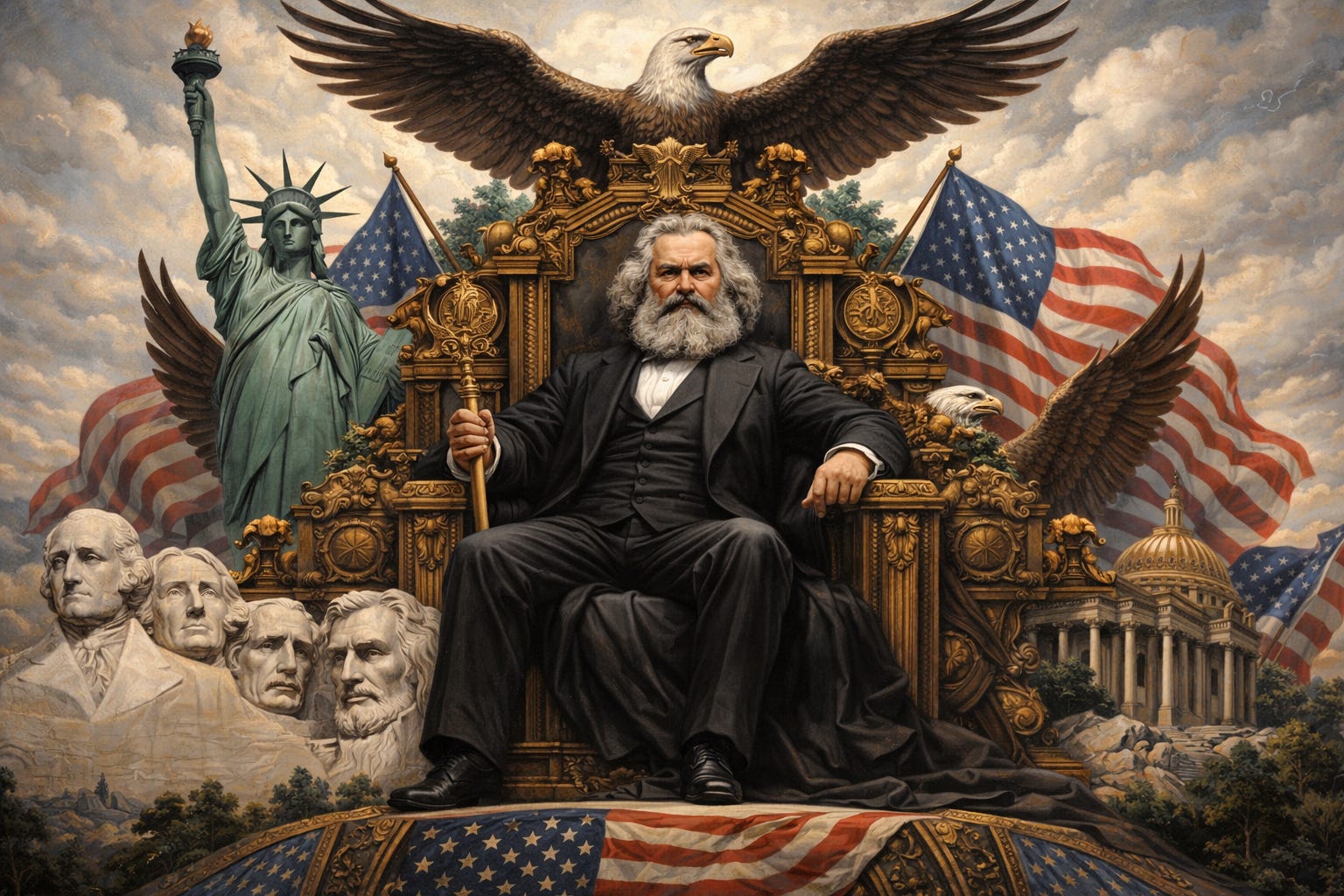
| 3/26/26 | ![]() I Get Schooled on Marx✨ | MarxismAmerican left+4 | Andrew HartmanJames Livingston | Karl Marx in AmericaNo More Work: Why Full Employment Is a Bad Idea | — | MarxismAmerican left+3 | — | 1h 25m 33s | |
| 3/19/26 | ![]() Crime Story✨ | criminal justiceanti-woke liberalism+3 | Greg Berman | Center for Justice InnovationSmall Sanities Substack | — | crimejustice+3 | — | 1h 36m 10s | |
| 3/5/26 | ![]() Deconstructing the Broligarchy✨ | tech eliteSilicon Valley Canon+3 | Blake Smith | Colossus magazineTablet | — | BroligarchySilicon Valley+5 | — | 1h 49m 11s | |
| 2/26/26 | ![]() Jonathan Lear, Local Exemplar✨ | philosophypsychoanalysis+3 | Jonny Thakkar | Swarthmore CollegeThe Point+2 | — | Jonathan LearJonny Thakkar+5 | — | 1h 25m 08s | |
| 2/19/26 | ![]() Big Tent Energy✨ | liberal politicshistory+3 | Timothy Shenk | The George Washington UniversityAir Mail+1 | — | liberal politicsTimothy Shenk+3 | — | 59m 16s | |
| 2/5/26 | ![]() The Mandarins, Their Virtues and Vices✨ | cultural eliteWASP legacy+5 | Ash Carter | Air MailNew Republic+4 | — | Ash CarterDaniel Oppenheimer+6 | — | 1h 04m 11s | |
| 1/29/26 | ![]() Homosexual, Gay, Queer (and a soupçon of porn)✨ | gay culturehomosexuality+3 | Blake Smith | — | — | gay mencultural world+3 | — | 1h 22m 08s | |
Want analysis for the episodes below?Free for Pro Submit a request, we'll have your selected episodes analyzed within an hour. Free, at no cost to you, for Pro users. | |||||||||
| 1/15/26 | ![]() Whittaker, William, Sam, and Me✨ | biographypolitics+3 | Sam Tanenhaus | — | — | William F. BuckleySam Tanenhaus+3 | — | 1h 01m 55s | |

| 1/8/26 | ![]() The Fall of Affirmative Action | My guest on the show today is Justin Driver, the Robert R. Slaughter Professor of Law at Yale Law School and, more importantly, an old friend of mine.Among his many recognitions, he was appointed by President Joseph Robinette Biden, Jr. to serve on the Presidential Commission on the Supreme Court of the United States, and is also a recipient of the American Society for Legal History’s William Nelson Cromwell Article Prize.He’s the author of two books, the first of which was The Schoolhouse Gate: Public Education, the Supreme Court, and the Battle for the American Mind, and the second of which is his new one, and the reason I had him on the show, The Fall of Affirmative Action: Race, the Supreme Court, and the Future of Higher Education.The first time I met Justin, knowing only that he was a law school professor and not what topics he worked on, I said to him, a propos of I’m not sure what, that it felt like the conversation on race in America was kind of passé. It didn’t feel, I said, like there was much going on in the intellectual space around race that was very interesting.This was 2009 or 2010, not long before the death of Trayvon Martin and then the birth of BLM, so it was a comically anti-prophetic thing to say. It was also rather insensitive, given that Justin was a young academic planting his flag, in part, in that space. But I don’t think it was wrong, precisely. Given Obama’s election, there was certainly a ton of words that people were writing about race, and an older generation of important race-focused intellectuals—the Cornel West and Henry Louis Gates types— still working steadily. What there wasn’t, and hadn’t been for some years, was a figure able to bend the political intellectual discourse around his or her gravitational force on the topic of race. It would soon be Ta-Nehisi Coates, of course, and then a whole explosion of important intellectuals writing about race, including Justin himself. And so it’s been my good fortune to have him as a conversation partner these last 15 or so years, and a pleasure to have the chance to talk to him in the context of his new book, which was a surprising reading experience for me, given that I thought, incorrectly, that I had such a good handle on the debate around affirmative action that even reading an expert on the topic might feel gratuitous. This is a public episode. If you'd like to discuss this with other subscribers or get access to bonus episodes, visit danieloppenheimer.substack.com/subscribe | 1h 29m 03s | ||||||
| 12/25/25 | ![]() Is the Cat in the Cradle? | On this special Christmas episode of the podcast, my 9-year-old son Gideon interviews me for a school assignment about my writing, my day job, and my theories on why I’m an interesting person. He’s hoping there will be comments, so if you have any thoughts please share them. This is a public episode. If you'd like to discuss this with other subscribers or get access to bonus episodes, visit danieloppenheimer.substack.com/subscribe | 13m 50s | ||||||
| 12/19/25 | ![]() Taking On the Texas 10th | This episode, with Democratic congressional candidate Caitlin Rourk, has an interesting backstory. Back in May my wife wrote an op-ed for the Austin American Statesman criticizing Republic congressman John Carter, whose district is adjacent to the one we live in. Carter isn’t particularly noxious, as these people go, but nor is he at all in possession of actual principles. He’s just a stooge for Trump and MAGA. My wife was frustrated and feeling powerless, as many of us were and are, and this was a small way to feel like she’s doing something, putting Carter on notice, to whatever extent he pays attention to the local news, that people are seeing what he’s doing and more importantly not doing, which is actually exercising independent judgement about what’s good for the country.Here’s a bit of it, to give you a sense:Republican Congressman John Carter, whose 31st district covers North Austin up to northwest of Waco, has long styled himself an old school defender of the U.S. Constitution. He invokes the founding document frequently — to oppose hate crime legislation, advocate for gun rights, criticize the Affordable Care Act, and decry executive actions by Democratic presidents. He presents himself as a public servant guided by deep constitutional principles.When it comes to Donald Trump, however, those principles disappear.In recent months, Trump has been openly contemptuous of the Constitution and its embedded system of checks and balances. He has willfully ignored bipartisan legislation requiring him to force a divestment of TikTok from its Chinese parent company, a direct challenge to the separation of powers and the legislative process. He has deported lawful U.S. residents without due process, in some cases sending them to countries where their lives are in grave danger. He has targeted activists and institutions for exercising their rights to free speech and academic freedom.These are not small matters. They are bright red constitutional lines that no president, regardless of party, should be permitted to cross.Congressman Carter has had nothing to say on the subject. One searches in vain—on his website and social media feeds, in his public appearances and newsletters—for a word of dissent or even disquiet. When he speaks at all, which seems increasingly rare, he focuses elsewhere. On April 14, for example, Carter said nothing about President Trump’s suggestion, in a joint press conference with El Salvador president Nayib Bukele, that perhaps American citizens should be sent off to prison in El Salvador. That same day, Carter issued a press release touting proposed legislation to address … a shortage of bus drivers in America.…If he truly cared about the rule of law and the balance of powers, he would speak out when anyone — Republican or Democrat — undermines them. Instead, he reserves his outrage for moments of partisan opportunity. He cries constitutional foul when it suits him and shrugs when the violations come from within his own political tribe.As Thomas Jefferson once put in, in a line that Carter quotes on his own website, “When governments fear the people, there is liberty. When people fear the government, there is tyranny.” Carter may wrap himself in the Constitution, but he cannot claim to honor it while turning a blind eye to the fear that the administration is instilling in the people.After that ran, Jess got an email from Rourk, who—at the time of our interview—was planning to run as a Democratic candidate for the U.S. Congress in Carter’s district. She has now shifted her candidacy to Texas’s 10th congressional district, I’m pretty sure because of court rulings on redistricting in Texas. It’s an open seat left by the retirement of Michael McCaul, and like Carter’s seat, a pretty safely red one, which in a normal election year would safely go to the Republican by 10 or 12 points. So, she’s no longer challenging John Carter, but the issues we discuss are all entirely germane.I asked Caitlin to talk I think out of the same motive that drove Jess to write the op-ed. I wanted to do something, or at least think about how one would do something. Winning the open 10th district seat as a Democrat is a long shot, but even if she (or whoever wins the Democratic primary, if it’s not her) loses, the fact of running a vigorous challenge is meaningful. A smaller loss than what would occur in a typical election year, e.g., would be a signal to Republicans that Trump is dragging them down. An energetic campaign is also an end in itself. It gets people involved, brings them into the process. It provides information about what kinds of attacks or policies work or don’t. It pushes the opposition to defend itself. And, and I think this is important too, it wards off despair.Caitlin and I talk about that. We also talk about her military service, why she chose to run, the realities of running in a district without national party backing, and the challenges—and opportunities—of building a campaign from the ground up. We talk about what it means to be authentic as a candidate, how to connect with voters who feel alienated or overlooked, and the importance of taking risks and trying new approaches in districts where the traditional playbook hasn’t worked. This is a public episode. If you'd like to discuss this with other subscribers or get access to bonus episodes, visit danieloppenheimer.substack.com/subscribe | 1h 13m 29s | ||||||
| 12/4/25 | ![]() The Terry Gross Project: Part Deux | This is part two of my two-part episode on Terry Gross. In part one, which was a paid episode, I talked to Sarah Hepola, Jason Thurlkill, and Meghan Daum about Terry Gross, what makes her great, and who should replace her whenever she chooses to retire. On this episode, which is a freebie, I talk to Mark Oppenheimer, Mike Pesca, and Jesse Adams/The Ivy Exile.Aside from being my brother, Mark Oppenheimer is host of his own podcast, the Arc podcast, or Arc with Mark, which is the flagship podcast of the magazine he edits. He is also the author of Judy Blume: A Life, the forthcoming biography of Judy Blume, which drops in March of next year. Mike Pesca is the host of The Gist, the longest running daily news podcast in history, and its affiliated Substack, The Gist List. He has two other, non-daily podcasts: Funny You Should Mention, in which he talks to stand up comedians, and Not Even Mad, which is dedicated to “joyful disagreement.” He is the author of Upon Further Review: The Greatest What-Ifs in Sports History, which came out in 2018. Jesse Adams is the author of The Ivy Exile Substack, and a writer for, among other publications, the Washington Examiner and the New York Post. Thanks to all my guests, and listeners, for joining me in this endeavor. I have no immediate plans to do another special episode, but this felt like a success to me, so I’m sure at some point I’ll do it again. This is a public episode. If you'd like to discuss this with other subscribers or get access to bonus episodes, visit danieloppenheimer.substack.com/subscribe | 2h 01m 33s | ||||||
| 11/20/25 | ![]() The Terry Gross Project: Part 1 of 2 | This is a free preview of a paid episode. To hear more, visit danieloppenheimer.substack.comThis is episode one of my long-awaited Terry Gross Project, where I tackle the question of who Terry Gross’s successor should be on Fresh Air and what we can learn, by playing around with that question, about the magic of Terry Gross, the cultural meaning and trajectory of NPR, the art of the interview, and various other related topics. | 41m 17s | ||||||
| 11/6/25 | ![]() Conversation with Kiese | The text for today’s episode is Conversations with Kiese Laymon, which is a new anthology of interviews with Laymon. My guests are Laymon himself, , a previous guest on the podcast and one of the best nonfiction writers of my generation, and the editor of the book, Constance Bailey.Laymon’s memoir Heavy, which came out in 2018, was #60 on the New York Times list of the best hundred books of the 21st Century, and that really understates its brilliance. It’s a pretty amazing book, which you should read. He is also the author of the novel Long Division and the essay collection How to Slowly Kill Yourself and Others in America. He has a new children’s book out this year, City Summer, Country Summer, and is scheduled to have another memoir out next year, which is provisionally titled Good God. Constance Bailey is an assistant professor of African American literature and folklore at Georgia State University and, like Laymon, a native of Mississippi, though neither of them lives there now. Bailey’s in Atlanta and Laymon, who did go back home for a number of years to teach at Old Miss, is now in Houston, where he has an endowed chair of English and creative writing at Rice University.We talk about the origins of the book, both in terms of how Bailey sold it, as a new installment in part of the University of Mississippi Press’s storied “Literary Conversation” series, and why it was so appealing for Laymon to sign on (the series, as we learn in the conversation, was a meaningful influence on his development and self-conception as a young writer).We talk a lot about Mississippi itself and how it’s affected both of their lives and writing. We talk about race, money, writing, speaking, and what it means to perform for white dollars. It’s a good conversation—such a good conversation, in fact, that if anyone ever plans to do another collection of interviews with Kiese, they should let me know and I will send them the transcript of this conversation and give them permission to include it in their collection. This is a public episode. If you'd like to discuss this with other subscribers or get access to bonus episodes, visit danieloppenheimer.substack.com/subscribe | 1h 11m 04s | ||||||
| 10/23/25 | ![]() CORRECTION! The Dan and Blake Show | This is a free preview of a paid episode. To hear more, visit danieloppenheimer.substack.comBlake and I talk about the long essays that each of us has written recently: Blake’s essay in Aeon on the New York intellectual and art critic Harold Rosenberg, and mine on the recent back and forth between Ezra Klein and Ta-Nehisi Coates. We also engage Blake’s feelings about the the recent death of his father, Billy Smith, or rather on his evasion of my effort to get him to talk about his feelings | 49m 11s | ||||||
| 10/2/25 | ![]() Fields of Dreams | I invited Alex Perez and Ross Barkan to join me for this episode of the podcast because I’d seen both of them write essays or posts recently reflecting on their days as baseball players.Ross, as you’ll hear, topped out as a decent high school player. Alex was recruited to play for a top college team, and for a while had not implausible dreams of playing professionally.Both have experienced an intimate relationship between baseball and their lives and identities as writers.We talk about that. We also talk about the locker room culture and camaraderie of sports teams in general, its complicated set of pros and cons. We talk about the rival cultures of sports and literature, and how class status and mores play out in these two domains.One of my old friends who listens to the show said to me once that it’s all really just about men and masculinity. I don’t think that’s quite true, but it’s not totally untrue either. I could easily assemble a playlist of episodes of the podcast that deal either explicitly or heavily implicitly with the topic, and this one would certainly be on it.Ross is a writer and author who writes most often for New York magazine and also frequently for the New York Times Magazine. He is the founder and co-editor of the Substack native publication The Metropolitan Review, and his latest books are a novel, Glass Century, and a nonfiction work, Fascism or Genocide: How a Decade of Political Disorder Broke American Politics. He’s working on a book about presumptive New York mayor Zohran Mamdani.Alex is an associate editor at Panamerica Books, which is the new publishing imprint of County Highway. He’s also an editor for Real Clear Books, and has written for Tablet, County Highway, Compact, and other places. My opening anointment of him as an eminent America “by the power vested in me by the white women of publishing,” is a reference to a notorious interview he did with the Hobart Review (which I would link to except that it’s been taken down from their site) that featured a great deal of his unvarnished thoughts on issues of race, gender, and class in publishing. It led to a total meltdown of that journal as well as the creation of a general aura around Alex as a kind of barbarian of the literary scene.It’s a fun conversation. Hope you enjoy. This is a public episode. If you'd like to discuss this with other subscribers or get access to bonus episodes, visit danieloppenheimer.substack.com/subscribe | 1h 00m 59s | ||||||
| 9/25/25 | ![]() Left Behind | This episode of the podcast, with Sam Kahn and David Sessions, was recorded after Sam, David, and I happened to have all written essays about our divorce from, or ongoing issues with, the American left. The conversation isn’t an extended attack on the left, though. It’s more an exploration of what the left is or has been or could be, what our own personal relationships to it are, and how it exists in relationship to the liberal space that I think David and I inhabit and maybe Sam too, though he seems more unallied at this point, politically and philosophically, than we do. This is a public episode. If you'd like to discuss this with other subscribers or get access to bonus episodes, visit danieloppenheimer.substack.com/subscribe | 1h 24m 13s | ||||||
| 9/18/25 | ![]() Pornography and the Men and Women Who Watch It | This is a free preview of a paid episode. To hear more, visit danieloppenheimer.substack.comOne of the essays in my private canon of great essays that no one else seems to have read is philosopher Nancy Bauer’s essay “Pornutopia,” which first ran in the winter 2007 issue of N+1 and then was included in Bauer’s 2015 book How to Do Things With Pornography.I don’t talk much about my enthusiasm for this essay because it’s embarrassing. You can’t r… | 32m 43s | ||||||
| 9/4/25 | ![]() Dungeon Crawler Matt | My guest on the show today is Matt Dinniman, author of the Dungeon Crawler Carl series, which is seven books into a projected 10 volume run.I happened upon the book when I was trawling Kindle unlimited for science fiction to read. It kept recommending it to me, and I kept resisting, because it was hard to take seriously a novel called Dungeon Crawler Carl. Finally I gave it a try, and literally within about three weeks I’d burned through all seven novels in the series, each of which runs around 600 pages or more.They are a blast: hilarious, absurd, propulsively plotted, just an immense amount of fun. Matt and I talk about the series, which was initially self-published but has now been re-issued by a big commercial publisher and is being adapted for television by Seth MacFarlane. We talk about his career prior to the recent success, when he mostly made his money by painting cats and dogs. We talk about changes in the publishing industry, and more. I enjoyed talking to Matt, who is precisely the kind of person you want enjoying this kind of unexpected mid life success. This is a public episode. If you'd like to discuss this with other subscribers or get access to bonus episodes, visit danieloppenheimer.substack.com/subscribe | 51m 04s | ||||||
| 8/28/25 | ![]() Crypto Dreams | My guest on the show today is Brady Dale, crypto reporter for Axios and author of the 2023 biography of Sam Bankman-Fried, SBF: How The FTX Bankruptcy Unwound Crypto's Very Bad Good Guy.Our topic, as you may have guessed, is crypto. And more broadly: what are the ideologies and ideas swirling around the technology of cryptocurrency. I just re-listened to the conversation, and I think it ended up being a really good, smart but not too technical primer on crypto in general.I used Brady, in a sense, to answer all my questions about what crypto is, who some of the key players are, what the utopian aspirations around it were, and whether any of them survive to the present. This is a public episode. If you'd like to discuss this with other subscribers or get access to bonus episodes, visit danieloppenheimer.substack.com/subscribe | 1h 05m 55s | ||||||
| 8/21/25 | ![]() Freddie deBoer Agonistes (now unpaywalled) | Freddie deBoer an author, blogger, essayist, and now Substacker who has carved out a niche for himself as a left-wing critic of liberals and the left, with a particular emphasis on the characteristic flaws and sins of identity politics and what we now call wokeness. He's also a critic of education reform and certain modes of mental health and disability rights advocacy. He's also a bit of a pill. This is a public episode. If you'd like to discuss this with other subscribers or get access to bonus episodes, visit danieloppenheimer.substack.com/subscribe | 1h 14m 30s | ||||||
| 8/7/25 | ![]() Rust Belt Hero | My guest on the show today is John Pistelli, proprietor of the Grand Hotel Abyss Substack newsletter and its affiliated lecture course, The Invisible College. John is also the author of the novel Major Arcana, which was originally serialized on Substack. It was then picked up and republished by Belt Publishing, an indie press (now under the auspices of Arcadia, a larger indie press) founded to promote voices from the Rust Belt. We talk a lot of about John’s novel, which I enjoyed immensely, but we talk more about what the novel represents, and has led to, in terms of the arc of John's career and his public reputation. In a very modest way, he's blown up over the last year or two. He's one of the presiding sages of Substack. He's been mentioned, mostly favorably, in the New Yorker. He's been criticized respectfully in the Wall Street Journal and somewhat derisively in Compact magazine. I ask him: What has that felt like? Is there discomfort in being the center of some attention when his sense of himself as a literary figure was forged as someone on the margins. Is he enjoying the attention? What does he make of the criticism he’s received? What was it like to travel to New York to launch the book? Was it as romantic as he made it sound? This is a public episode. If you'd like to discuss this with other subscribers or get access to bonus episodes, visit danieloppenheimer.substack.com/subscribe | 1h 06m 55s | ||||||
Showing 25 of 73
Pitch Fit is a Pro feature
See how bookable this show is for guests, which brands already advertise, the per-episode ad value, and the best-fit guest and sponsor profile. The numbers are blurred on the free plan.
How readily this show books outside guests like you.
How proven this show is for host-read sponsorships.
For Guests
ProFor Advertisers
ProUpgrade to Pro to unlock guest cadence, sponsor categories, fit scores, and per-episode ad value for this show.