
Insights from recent episode analysis
Audience Interest
Podcast Focus
Publishing Consistency
Platform Reach
Insights are generated by CastFox AI using publicly available data, episode content, and proprietary models.
Most discussed topics
Brands & references
Est. Listeners
Insufficient chart data. Estimates will improve as the show charts.
- Per-Episode Audience
Est. listeners per new episode within ~30 days
N/A🎙 Daily cadence·97 episodes·Last published 3d ago - Monthly Reach
Unique listeners across all episodes (30 days)
N/A - Active Followers
Loyal subscribers who consistently listen
N/A
Market Insights
Platform Distribution
Reach across major podcast platforms, updated hourly
Total Followers
—
Total Plays
—
Total Reviews
—
* Data sourced directly from platform APIs and aggregated hourly across all major podcast directories.
On the show
From 15 epsHosts
Recent guests
Recent episodes
Why PJM is looking at the Texas grid
Jun 24, 2026
37m 47s
Inside the PUC's Cost-Allocation Overhaul with PUC Chairman Gleeson
Jun 10, 2026
43m 17s
How will data centers pay for power?
Jun 3, 2026
44m 29s
How Texas decides which data centers to connect
May 27, 2026
49m 30s
How Texas plans to serve ‘infinite demand’
May 20, 2026
43m 03s
Social Links & Contact
Official channels & resources
Official Website
Login
RSS Feed
Login
| Date | Episode | Topics | Guests | Brands | Places | Keywords | Sponsor | Length | |
|---|---|---|---|---|---|---|---|---|---|
| 6/24/26 |  Why PJM is looking at the Texas grid | ERCOT made a choice years ago that most of the country is now reconsidering. Texas runs an energy-only market with no capacity payments, connects generation through connect-and-manage, sorts out delivery in dispatch, and pushes interconnection risk onto developers. That design is a big part of why Texas has added generation faster than any other U.S. grid.PJM, the operator for much of the eastern U.S., is now weighing whether to move in that direction. A white paper from the operator describes a shift from managing surplus to managing scarcity as data center demand outruns new supply. The paper lays out three pathways: long-term bilateral contracts, differential reliability standards for new loads, or an ERCOT-style tilt toward an energy and ancillary services market with a smaller role for capacity. The scale is large in both regions. ERCOT is now considering roughly 445 gigawatts of large-load interconnection requests against an 85-gigawatt system, while in PJM, one Dominion territory alone projects 70 gigawatts of new demand against a 24-gigawatt peak.On this episode of the Energy Capital Podcast, Joshua Rhodes talks with Josephus Allmond, Virginia’s chief energy officer, about what separates the two grids and what PJM can take from the Texas model. Allmond points to ERCOT’s interconnection speed as the clearest lesson, given PJM’s projected 700 days from queue to agreement before construction even starts.He also points to the state line, where borrowed fixes hit a wall. Virginia’s State Corporation Commission requires large customers to pay a generation charge for 14 years, even when a data center builds its own power. A load that sources its own generation, Allmond says, ends up “paying their own way and then turning around and paying Dominion.” The conversation works through:* ERCOT versus PJM structure, energy-only and connect-and-manage against PJM’s capacity market and consensus-driven stakeholder process, and why one moves faster.* PJM’s three pathways, and how the energy-market tilt is the one Allmond reads as closest to ERCOT.* The large-load tools, controllable load resources, and behind-the-meter generation in Texas, and the Virginia charge that makes the same moves uneconomic.* Interconnection speed, ERCOT’s developer-risk model against PJM’s roughly 700-day queue.What PJM borrows from ERCOT, and what it refuses to give up, will shape how fast the East Coast grid can serve the load now lining up.Timestamps* 00:00 - Introduction and Guest Background* 01:52 - Virginia’s Chief Energy Officer Role* 04:15 - Data Center Alley and Virginia’s Hub Status* 06:29 - ERCOT vs. PJM: Governance and Transmission* 10:53 - PJM’s Shift from Surplus to Scarcity* 19:29 - PJM’s Three Reform Paths* 24:19 - Virginia’s Minimum Demand Charge Problem* 29:36 - The Data Center Tax Exemption Fight* 31:50 - Path C and the ERCOT Parallel* 35:17 - What Has to Give: Allmond’s Closing AnswerResourcesPeople & Organizations* Joshua Rhodes (LinkedIn)* Webber Energy Group (Website - LinkedIn)* IdeaSmiths (Website - LinkedIn)* Micalah Spenrath (LinkedIn)* Matt Boms (LinkedIn)* Texas Advanced Energy Business Alliance (Website)* Energy Capital (Website - LinkedIn - YouTube)* Texas Energy & Power (Substack)* Josephus Allmond (LinkedIn)* Office of the Virginia Chief Energy Officer (Website)* Southern Environmental Law Center (Website)* PJM (Website)* Monitoring Analytics — PJM Independent Market Monitor (Website)* ERCOT (Website)* FERC (Website)* Dominion Energy (Website)* Virginia State Corporation Commission (Website)* Virginia Department of Energy (Website)Books & Articles Discussed* Powering Reliability Through Market Design — PJM White Paper (PDF)* How Will Data Centers Pay for Power? — Travis Kavulla, American Affairs (Website)Company & Industry News* PJM floats options for capacity market overhaul (Utility Dive)* Spanberger creates new cabinet position, appoints Allmond chief energy officer (Virginia Mercury)Related Podcasts by Energy Capital* How Texas Plans to Serve Infinite Demand, with Eric Goff (Texas Energy & Power)* NRG’s Gigawatt VPP in Texas, with Travis Kavulla (Texas Energy & Power)* Who Pays for Texas Grid Growth? — Roundtable Discussion (Texas Energy & Power)* Who Pays for the New Grid, with Pablo Vegas (Texas Energy & Power)TranscriptJoshua Rhodes: Hey everyone and welcome to another episode of the Energy Capital Podcast. I’m really excited to have Josephus Almonds on today to get us out of our comfort zone a little bit here in Texas and ERCOT and talk a little bit about PJM, kind of some of the things that are happening in other grids. PJM is one of the other grids that is experiencing large amounts of load growth, particularly from things like data centers. Texas is no stranger to that. And so it might be useful to figure out kind of how other regions are doing it, approaching it, and maybe we canCross-collaborate on some of those. So Josephus got his JD from Duke, where he did a couple of stints at BakerBots and Kirkland and Ellis. And then he was an attorney with the Southern Environmental Law Center, where I should say that we worked together on Dominion’s IRP a couple years ago, intervening in that. But recently was named CEO, should say Chief Energy Officer, although this may be one of the few podcasts where Chief Energy Officer might get you more kudos than Chief Executive Officer for sub.But Josephus was recently named Chief Energy Officer from Governor Spanberger. Josephus Alman. Welcome to the Energy Capital Podcast.Josephus Allmond: Yeah. Thank you so much for having me, Josh. It’s good to see you.Joshua Rhodes: Yeah, it’s good to see you too. So first I gotta ask, how’s dad life treating ya?Josephus Allmond: It’s great. We actually just had his first birthday party this past Saturday. So awesome. We went all out with a clues theme, had paw prints all over the house, a bunch of decorations. We had my in laws were in town from California and some of her aunts from Texas. So full house, lots of friends and family over and a blue smash cake that Josephus really loved.Joshua Rhodes: Nice. That’s awesome. You know, Aiden’s only just about a month ahead there. I remember when I when we were working together when you were at SELC and I was like, hey, I’m not gonna be able to make this like super important meeting that I said I’d be at because it’s literally on the day of my son’s birth. I think you told me that y’all were also expecting. So that’s awesome. We’re right in there together. Neither of us are probably getting any sleep at all. So we’ll see where this goes.Let’s start out with the job title. So Virginia now has a chief energy officer. So what was the problem that the Commonwealth was trying to solve with creating that role? And what does success look like for you there?Josephus Allmond: Yeah. So historically we’ve got a Virginia Department of Energy, used to be known as the Department of Mines Minerals and Energy. And so they do all of the permitting for mines for oil and gas, mostly out in Southwest Virginia, and recently started to do more of the state energy office stuff as Virginia created the RPS and started its clean energy journey six years ago with the Clean Economy Act. So that’s sort of one agency within the Secretary of Commerce and Trade, butWe all know that energy sort of touches everything. And so the governor really wanted to create a more nimble cabinet level position that could work with the different secretariats on energy issues as they pop up and as they’re impacting the different secretariats. And so the Virginia Department of Energy is still under the Secretariat of Commerce and Trade and we’re working really closely together. They’re doing some modeling to inform an energy plan that we gotta put out later this year.But I’ve really got sort of the ability to work not only with them, but with the Secretary of Labor when it comes to apprenticeship requirements or the Secretary of Education when it comes to apprenticeship programs in K twelve or energy savings performance contracting, as we’re looking at trying to get more efficient government buildings to even working with our Secretary of Public Safety and thinking aboutCan we develop some distributed solar facilities at our jails and prisons and incorporate some training there? So really trying to bring energy to the forefront in sort of everything that we’re doing. And in today’s world where affordability is sort of dominating the conversation, having that position at a cabinet level, I think really just elevates the importance of it and puts more of a high profile on it, just given how much it sort of seeps into everything that we’re doing.Joshua Rhodes: Yeah, totally. I mean, particularly on the affordability front with all the load growth and with electricity and data centers. I mean, Virginia’s no no stranger to data centers. You’re kind of the original area. Can you talk about data center alley? Where is that located and what’s the importance of that region and the energy that it consumes?Josephus Allmond: Yeah, so we are sort of the data center capital of the world. Loudoun County is home to Data Center Alley up in Northern Virginia. And there are a number of reasons why I think that emerged as a hub. We’ve got a great fiber network already built out, the proximity to DC for the three letter agencies and their needs. And then our tax exemption is something that we’ve had on the books for a really long time and gives an exemption forBasically all of the equipment that you purchase for your data center facility, that’s going back, you know, fifteen years at this point. And the way that that exemption has played out over time is that once a data center sort of obtains that exemption in a specific county, everything else that they do in that county is rolled up into that same memorandum of understanding. And so even if, you know, the subsequent facilities don’t hit the original investment and jobs numbers to get you that initial exemption.you can still sort of roll new facilities into that. And so that’s why we’ve sort of seen that clustering effect in Northern Virginia, but even now in some other counties where they’ve started to develop.Joshua Rhodes: Okay, I’d never heard that part. That makes a lot of sense. I mean, on Texas has some economic development tax codes and things like that for abatements and things. Well, we won’t get down into the weeds of those necessarily. I remember hearing something like seventy percent of the world’s energy traffic goes through Northern Virginia and data center alley. I think Texas is trying to give Virginia a run for its money when it comes to data center capital of the world. I think we’ve, you know, got hundreds of gigawatts of data centers that are trying to connect. I haven’t I haven’t believed these numbers in a long time.Around here. I don’t know that anyone believes load forecasts right now. But I mean a lot of the focus of this podcast is really around electricity and we’re deeply steeped in ERCOT. Can you explain for an audience like what the biggest structural differences as you see in between like ERCOT and PJM are?Josephus Allmond: Yeah. So I think the the biggest one that comes up to me is sort of the governance. And so PGA app has a stakeholder consensus process that can really slow things down. And so they’ve got to reach a certain threshold of votes to get to consensus on any given issue before that even goes to the board for consideration. And then more often than not, you also need FERC approval after that. Whereas less FERC oversight with ERCOT.And then for transmission planning, Texas had the competitive renewable energy zones a long time ago that really laid the foundation for transmission. PJM does transmission, I say more of an incremental fashion through the RTEP process, regional transmission expansion process that sort of looks to build out infrastructure over the next several years, but not quite as comprehensive as sort of that competitive renewable energy zone process from Texas.Joshua Rhodes: Yeah, we’ve built a lot of transmission down there. You mentioned the Kres lines. We’ve got another tranche of lines coming, the Permian Reliability Project or the STEP lines, as it were, building some really big 765 transmission lines, some really even higher even higher voltage ones. They’re working their way through the siding process right now, which, you know, is a whole another regulatory kind of firms. Whenever you’re, you know, moving that linear infrastructure. You mentioned like a prettydetailed like consensus. I talked to a consultant named Eric Goff on a couple of podcasts ago and ERCOT used to have a stronger consensus. He said ERCOT used to have a stronger consensus mechanism and then post URI it became more of kind of an advisory body. It became less consensus or less binding. If the consensus is slowing things down, is there any look in how that might change in PJM or anything like that?Josephus Allmond: Yeah, I think that’s one of the big issues is sort of how slow things are moving and also how fast they need to be moving going forward with the supply-demand gap that PJM is projecting, these sort of long, drawn out stakeholder processes might be good in an environment with no load growth where careful planning can sort of take its time. But when we need to be making really significant overhauls of the capacity market generally.It’s good to see how that stakeholder process can sort of lead to that result in any amount of time that sort of solves the problem that we’re we’re needing to solve.Joshua Rhodes: One of the biggest differences also between like ERCOD and other regions like PJM is, you know, this kind of multi-state governance situation you got going on. There’s a lot more people in the room when it comes to making decisions, a lot more people maybe represented in the room. There were some recent statements out of FERC saying that maybe BJM was a little bit ungovernable when it comes to that. Is that that’s all I’ve heard really of that? But I mean, is that making any waves around in your part of the world?Josephus Allmond: It’s something that I’ve heard more and more. I was at an energy conference last week and heard someone talk about maybe it makes sense to have some of the regulated states, you know, Virginia, West Virginia, North Carolina sort of form a PJM South. Not say I’m endorsing that idea, but that’s something that’s coming to the forefront as I’ve grown into this role sort of appreciating the difference between regulated and unregulated states within PJM.and sort of the different positions they take and how that affects, you know, how they view the actions that P J M’s taking, because certain things that P J M’s thinking about has a much larger impact on a state like Pennsylvania than it does on a regulated state like Virginia.Joshua Rhodes: Can you pull that thread a little bit? Like when you’ve got all these folks in the room, are disagreements like falling along those lines, the regulated versus the unbundled or kind of deregulated states? What’s the tension there?Josephus Allmond: Yeah. So I’ll I’ll just give an example and we’ve actually hopped into the PGM Governors Collaborative, which is my counterparts in other PGM states that have been thinking about this problem for over a year now. And this goes back to sort of Governor Shapiro driving for the cost cap a while back and their continued engagement. But I think this comes up a lot when we’re talking about how we’re doing resource adequacy versus how we’re doing bilateral contracts to sort of hedge long term.And especially with some recent decisions that have come out of our State Corporation Commission that make that bilateral contracting a little bit more difficult for large load customers.Joshua Rhodes: Got it. I want to get to some of the Virginia specific pieces in a a little bit later. But one of the things, like when we were going back and forth about this, trying to get you on the podcast, is you sent me a white paper that PJM had just put out, I think just a couple days before when we were having that conversation. The white paper basically, you know, says you’re moving from managing a surplus to managing scarcity. I remember back in the early days of Energy Twitter making charts showing how big PJM’s reserve margins were compared to everybody else’s.And being like, isn’t that silly? So for moving from, you know, managing surplus to managing scarcity, do you think the core is of the issue is that PJM’s market design is broken or is it just demand is moving too fast? What caused them to want to write this white paper?Josephus Allmond: Yeah, I think the problem sort of inherently is that new demand is just coming faster than new capacity can beat it in PJM. And the markets were designed to reach lowest cost units in an era of declining load, and they’re now unable to incentivize sort of high capital investment that we need, the growing demand. But I want to put a caveat on that and sort of going back to something you mentioned about the Texas load, it’s like I think before we even start.This discussion, we’ve got to get a much more informed view on the load forecast and the confidence that we have in that load forecast. The numbers coming out of, you know, just Dominions, DOM LC alone is 70 gigawatts of new capacity from large loads coming online in the next couple of decades. Our system peak right now is 24 gigawatts. And so the idea that we’re gonna triple our capacity over the next couple of decades.The independent market monitor was on a panel at a conference I was at last week and called the numbers fantasy. And I largely agree. I mean, if we sort of rewind to Virginia back in 2018 when Mark Christie was still on the State Corporation Commission here, he basically ordered Dominion to stop using their own loop forecasts and to start using PJMs because for years and years they had consistently over forecasted demand at about a five percent annual clip.And so now they’ve shifted to using the PJM load forecast, but the wrinkle there is that the only thing that’s driving up the PJM forecast are the sort of supplemental forecasts that they get from individual utilities that then they do not vet. So the utilities who have a history over forecasting demand have been feeding these supplemental forecasts to PJM that indicate really serious growth without sort ofAny check on the back end by PJM to see if there’s duplication across those loads. Something that I know we talked about going back to that IRP proceedings, this I idea of phantom load where you’ve got developers putting in bits in a number of jurisdictions trying to see where they can get the best deal. And if you don’t really have a process to suss that out, then you’ve got really overstated loads.Josephus Allmond: Coming at you from a number of utility jurisdictions. And I think that’s exactly what PJM is dealing with right now. And so if you’re thinking about hitting that aggregate demand number that really has never been investigated, then I think that’s partially driving the because we’re trying to solve a problem that is really unsolvable. There’s no way we’re going to build an additional 45 gigawatt of moon generation in the DOM zone here. SoI think that’s step one is like really investigating, interrogating the forecasts and trying to figure out what’s real there.Joshua Rhodes: Yeah, sounds like Dom’s trying to add a basically a Texas word about eighty five gigawatts, but getting kind of close there. Yeah, I mean, I think this is a conversation that’s being had across the country. And I’ve had a couple discussions with folks around, you know, ERCOT is setting up this dispatch zero process where they’re gonna try to figure out of all this load, which is like four hundred and forty-five gigawatts of like large load right now, again on an eighty-five and a half gigawatt system, they’re trying to figure outWe’re gonna try to shove all this into a study, but we’re gonna have some inclusion criteria of who makes it into the study. And you gotta get in the big study if you’re gonna get, you know, any megawatts out of the other end. It’s one thing they’re trying to figure out, okay, do you have like land controlled? Do you already order equipment? They’re trying to figure out what’s real, kind of what’s not. And Texas is working from SB6, which also forces these developers to say if they’ve got the same project in multiple different areas.I recently talked to Travis Cavula who had a piece in American affairs where he was talking about, well, we should just like set this up to the highest bidder. It’s basically as like whoever can all the transmission folks get out there and say, Okay, we’ll build this much and then you start bidding that out to the highest bidder, and then you’d really find like you’d only get as much as you can support and then you’d find what it was worth. Is there any movement over there in terms of any of those two approaches or kind of what’s the current thinking?Josephus Allmond: Yeah, it’s sort of the open season contract that he was discussing at.Joshua Rhodes: Yeah. Well there’s a couple and there’s like four open season, fronting capital, transmission service agreements and then like BYOG. There’s a few things, but his main one was that open season. Yeah.Josephus Allmond: Yeah, I’ve talked to Travis quite a bit. He was someone I reached out to first to try and get a handle on some of these PJM issues and just talk to some really smart folks. In Virginia, and I would I haven’t looked at the orders from other states that have like gone down the line of establishing large load tariffs. There’s sort of a structural problem that really is preventing these large loads from going out and doing something like that and bidding, trying to build out their own generation. Because with sort of the take ofor pay requirements that the SEC established. Basically you’ve got to pay 60% of your minimum generation for 14 years. That applies even if you go out as a large load customer and acquire your own capacity to match what you’re bringing online. And so you’ve got a situation where if data centers wanted to go out and provide for their own needs, like we’re seeing from the White House Protection Pledge or calls across the country really for data centers paying their fair share.they would sort of be paying their own way and then turning around and paying Dominion sixty percent of that minimum generation charge over those fourteen years. And so not quite a double payment, but about a hundred and sixty percent for the energy that you would need normally.Joshua Rhodes: Yeah. And my understanding is that like if you were doing that and like the utility went out and bought generation to cover that, or, you know, built generation to cover that. And then something happened to the data center, the risk there would be on the remaining ratepayers, right? That’s the big issue, right? Is like these data centers, they’re going out and we’re getting our own stuff, but we’re having to make this other side payment to get more capacity. But that risk is on the rate payer, not the shareholder from like the first round. Is that right?Josephus Allmond: Yeah. So they’re really insulated from the utility is really insulated from risk there because they’ve got these sacred pay arrangements. And so that’s sort of the worst case scenario, right? Data center show up and that’s sort of put back on the rest of the rate base. The commission did do some things about allowing for sort of transfer capacity and so if that were to happen, maybe they could line up anotheryou know, large load customer that was in line for them to sort of assume that as opposed to it being socialized. And so I think they’ve done some things to mitigate against that. But yeah, that’s sort of the overall structure here.Joshua Rhodes: Got it. I mean, that was definitely one of the things Travis was suggesting in that kind of open season that it would be a transferable thing. It’s like, you know, if you get it and then you decide, I don’t want to build my data center or whatever, you can sell that right, which then makes it easier to go out and get the right from the get-go and maybe even drives the cost up because there’s, you know, not as much risk of, you know, if you don’t end up getting what you want and dropping out and losing everything, which is the current way it’s happening in ERCOT, really. It’s likeYou know, if you make it into the process and you make it to the third out of five step and decide to drop out, it’s kind of use it or lose it. But anyways, we’ll see kind of where we go from there. So I mentioned the PJM white paper. It kind of laid out three different pathways for PJM, you know, path A, path B, path C. Would you be able to give like a high level overview? Like these potentially could be some pretty major changes for PJM. Like what are they suggesting are some pathways forward here?Josephus Allmond: Yeah. So path A is really looking to lean more on long term bilateral contracts to secure most of the supply and then the capacity market would sort of be a residual, not as much of an emphasis on it. Path B is what they’re calling sort of differential reliability, and so differing standards of reliability for new loads that are coming to town. Path C is what I’ve thought of as more of the ERCOT.approach, which is moving more to an energy and ancillary services market with a a really small role for the capacity market to play in the background. So at a high level, those are sort of the three routes that they’ve laid out. They don’t really pick one that they think is the preferred way forward. It’s just sort of a menu of options.Joshua Rhodes: Got it. Yeah. So Path A is kind of like a cum hedged model. It’s like, if I understand it, it’s like load is procuring that capacity, right? It’s not going necessarily through or as much going through like the centralized, but you’re, you know, the bilateral part there. It’s funny, is like Texas actually considered something like this post winter storm Uri. We called it the man, there were so many acronyms at that point. It was like the load side energy reliability obligation. I I think I butchered that.I always called it LASO, even though that’s not the acronym. L S E R O or something like that. This is when we were flirting with all kinds of capacity mechanisms, we decided to go with none of Do you think path A would be a practical fix, or is it just shifting risk around from investors to consumers?Josephus Allmond: Yeah, I think it’s more of the latter and also an issue, especially in Virginia, because of that minimum generation demand charge. And so because you’re asking sort of the loads to come edge, you’d be putting the loads in a position where they would be going out and doing this bilateral contracting, but then still have that requirement back to the utility. And so I imagine the the large loads, especially in Virginia, where a lot of them are located.aren’t fans of sort of path A, especially with that minimum demand charge hanging over them.Joshua Rhodes: Yeah, got it. And so path B gets kind of this like this differential path B is this differential reliability. I mean, essentially utilities that kind of had this obligation to serve at the highest levels, say three nines or five nines, you know, nine nine point nine nine nine percent reliability. Is how would path B work out in terms of like when would the reliability suffer here if it needed to be?Josephus Allmond: Yeah. I think it would be sort of to the extent that they didn’t bring the capacity that they needed. And so they would be curtailed in those sort of peak hours where capacity wasn’t sufficient to serve them. This also I think has a problem, especially in Virginia, because, you know, if you put large loads in Virginia in that position, not many of them are gonna go out and hedge. And so they’re gonna be exposed to this sort of differential.reliability where they would be curtailed, I would think, more than large loads elsewhere in PJM where they would be more free to contract and secure their own capacity.Joshua Rhodes: Are you saying path B would be applied differently in different states, just based on kind of what the state level regulatory structure is like?Josephus Allmond: Yeah. And you see sort of PJM encouraging states to get their cost allocation in order. And I think this applies more to like the deregulated states who haven’t really done this, but sort of in anticipation of this trying to figure out how they’re going to allocate those costs.Joshua Rhodes: There’s a couple ERCOP parallels in here. One of the things we’re doing in the batch zero process is like we’re potentially only giving large loads like a set amount of offtake. Like say a large load wants to be 300 megawatts, and we say, well, we’ll only give you a hundred megawatts. But if you sign up to be this controllable load resource, it’s a PCLR, during times when the grid’s got capacity, we’ll let you go above that. But like if we ever need to, we might shut you back down to that one hundred.Or there’s a second pathway, which is kind of a BYOG like pathway where it’s like you can only withdraw or inject a certain amount, like say a hundred megawatts. But if you have a three hundred megawatt data center, then you can bring your own two hundred megawatts of generation and that’s going to be fully kind of behind the system. So I mean, I guess it kind of depends on where you define like that level of reliability. I guess in Texas we’re trying to define it at that point of interconnection where we’re saying we’ll only give you this, but you can dowhat you want with your own generation. Is there discussions around that? Like how is behind the meter gener is there behind the meter generation allowed and kind of how is that working out for large loads in the region?Josephus Allmond: Yeah. So I think it depends on which state you’re in. And so behind the meter gen is allowed. And I think Dominions had sort of a self generation tariff on the books for thirty, forty years that some old manufacturers have used to do their own coal or gas on site. So it is an option at just again, frustrated by that minimum demand charge because even with that on site generation.Powering your own needs, you’re still on the hook to Dominion, basically for 60% of that generation cost. So at least in Virginia, a lot of these PJM proposals sort of run into roadblocks that weren’t designed as such by our state corporation commission, but just as the way they’re functioning, I don’t think is going to allow large loads in Virginia to participate in these PJM options in the way that they’re envisioning them, which which seems to be moreTailored towards the deregulated states.Joshua Rhodes: Okay. So that sounds like a policy issue. I mean o obviously the policy issue. Electricity’s physically the the physics are the same everywhere. Is that something that has any room to wiggle or would that be a pretty tough mountain to climb?Josephus Allmond: You know, so the SCC established that in their most recent order in the rate case. I don’t think they’re gonna sort of be upsetting that decision. And so there is always the option to affect change through legislation, which would also be difficult just politically speaking, because utilities also have lobbyists at the General Assembly and also trying to protect their interests. And so they see that minimum demand charge as something that protectsthe rest of their customers in the event that data centers don’t show up. And so I think there’s some room, but also some discussion I think needed to be had about, okay, if we are going to allow large loads to go and shop, what’s the standard that we’re subjecting them to in the event that they have to come back to the utility? Cause I think that’s a concern that has merit from the utilities. They don’t want to end up in a situation where half of the data center load in their territory goes andyou know, shops and then a big chunk of that all of a sudden decides that they want to come back to utility service, that puts the utility in a tough spot where they’ve got to come up with a bunch of generation or capacity, very short amount of time. We just shortened the notice return window. It used to be five years that you had to give the utility heads up that you were coming back from being a shopper. Now it’s just 18 months. And soWhat happens if that large load decides to shop and then wants to come back? Are they sort of subjected to some sort of curtailable schedule like PJM’s considering here? I think that’s something fair to think about. But I think there’s gotta be some trade offs if we’re thinking about sort of unraveling that minimum demand charge, making it easier for large loads to shop. How are we protecting customers in the event that a lot of them come back to the system after a excursion in retail shopping?Joshua Rhodes: Got it. And if you don’t want to opine on other states in the general vicinity, I think West Virginia is setting up something or like some micro gridding. It’s funny to call them micro grid. These things are massive hundreds of megawatts. But setting aside these kind of special tariffs and things like that for some of these large loads, I think to make it easier is just right across the border. Is that do you think that might pull some data centers over that away or some large loads, I should say?Josephus Allmond: They’re certainly trying their hardest to pull data centers over there. Yeah, I think there’s a lot of reasons why Virginia has become the pub that it is. And so a lot of that’s the fiber that’s been built out. I question whether West Virginia has some of that infrastructure ready to serve these data centers in a sort of to the extent that they need it, right? That’s something a concern that I hear when we’re, you know, looking to diversify geographically where these data centers are located, even within Virginia.Once you get out to sort of the southwest corner of the state, your broadband is more sparse, there’s less fiber, even though there’s excess capacity in the APCO system down there, those other factors sort of lead data centers to deciding, maybe this isn’t the right place for me.Joshua Rhodes: Yeah, totally. I mean, I I think one of the biggest aha moments or whatever I had recently was looking at okay, where is fiber located? And everyone said, Okay, well fiber’s located along we built the fiber optic network in the nineteen seventies around kind of where we had existing rights of ways. And that was where the interstate highways were, which was determined from where we’d be originally built the railroads. You gotta go like, so why are there so many data centers, you know, in Northern Virginia or in Texas, it’s in Dallas.There’s this huge convergence of all of these much older rights of ways that we had the ability to build this infrastructure and so we did. Which really fascinating. We touched a little bit on like, okay, some policy change, things like that. I mean, I guess you don’t have to opine on this one if you don’t want to either, but I mean, it seems like data centers don’t have that many political friends right now or don’t have that much popular support, I should say. Like there’s a lot of groundswell like kind of opposition. SoAs I was asking that question, I’m like, Maybe no one wants to even try to spend any political capital there right now. We’re starting to see that in Texas, but I’m sure that’s happening around the rest of the country too.Josephus Allmond: Yeah, it’s sort of central to the budget fight that we’ve got here in Virginia. Typically the General Assembly sends the governor a budget and that’s finalized by the end of the General Assembly session. We’re still waiting to get a budget deal done in part because of a difference on what to do about the data center tax exemption. And so Democrats in the Senate here have proposed just eliminating it entirely. I think that comes out to about one point six billion dollars, just eliminating that.exemption entirely. The governor is not there. And so it’s not just a tax exemption that these data centers have. It’s a tax exemption and then a subsequent memorandum of understanding that they’ve entered into with the state of the Commonwealth of Virginia. And so there’s two sort of categories of this. The sort of lower investment in jobs level gets you an exemption out to twenty thirty five. And then there’s a much higher investment threshold this year.If you’re bringing $70 billion of investment to Virginia and a higher jobs threshold, you get the exemption out to twenty fifty. To date, Amazon is the only one that has entered into an MOU pursuant to that higher investment threshold, but that was really recently. And so the Commonwealth entered into a contract with Amazon to get them to expend that capital here in Virginia. The governor is really worried about the signal that sends to business if the Commonwealth just decidesone legislative session that we’re going to get rid of tax exemptions that have been long fought and negotiated for. And so as opposed to that sort of more rash approach of just ripping the rug out from under the data center industry, we sort of see an opportunity here to really affect some change in the way that data centers are operating by potentially attaching some conditions to that tax exemption and saying thatHey, on energy, on water, on backup generators. You’ve got to do some things differently to be able to be in a position to keep that exemption. So that’s actually a big wedge issue that’s sort of holding up the budget here in Virginia. And I’m hoping we can get to a good place with colleagues in the Senate and the House of Delegates here.Joshua Rhodes: That makes sense. Quickly get to pass C, so there’s a third option or a third pathway in this white paper. It shifts more revenue recovery into energy and ancillary services, but I think it it still kind of keeps the capacity market kind of in there. Is that PJM inching towards like an ERCOP structure or would it be a fundamentally different kind of hybrid model there?Josephus Allmond: I think it’s a little bit of both. So it’s kind of getting trying to get more like ERCOT is, but keeping a capacity market in a way that ERCOT, as you mentioned earlier, has sort of explicitly decided against. So maybe that’s just a little bit of the organizational inertia and wanting to cling to the capacity market. But, you know, I think energy is already sort of the largest component of the wholesale cost of electricity here. And so moving to this energy only framework probably provides greaterbenefit to intermittent resources and limited duration resources, which wouldn’t be bad from our perspective. Getting more solar and storage online. That was a big focus of the governors in the most recent legislative session is really expanding the amount of storage that our law calls for. And so now Dominion is tasked with getting 16 gigawatts of short duration storage over the next 20 years, four gigawatts of long duration storage. And so I think thesemore of an energy only approach actually benefits those resources in a way that the current system just doesn’t.Joshua Rhodes: Yeah, I mean one of the things that like absent the capacity market, if you’re not necessarily chasing a capacity payment or have to show deliverability during time, you can get closer to the thing we do in Texas called connect and manage, where we’re like, we’ll connect a lot of generation and we’ll just like manage it through the dispatch. Generation is mostly a competitive, you know, aspect in ERCOT. And so that shifts that risk to the developer, but it’s one of the things that has allowed us to move much quicker. And so as we’re having these conversations around flexibility, ERCOT has someinstitutional inertia on that. Like we’ve got some institutional inertia on be like, okay, we’ll flex you because we’ll have to. And we’re trying to figure out if we can do that with load. I do see that as one of the issues in terms of if you’ve got that capacity kind of payment or that capacity market issue that makes it quite a bit harder. I don’t know, it’s always been weird to me like how you can give like solar in the region like a six percent effective load carrying capacity, but then require full deliverability in the studies. To me that makes no sense. Like that’s something that could be easily done.very quickly because they don’t even care about capacity, not getting paid for capacity. Am I getting that wrong?Josephus Allmond: No, I mean like at six percent ELCC, I don’t know, put the question to developers. Like, do you want full deliverability at the six percent capacity value? Are you willing to take the risk of being curtailed at certain times? PJM has this energy resource interconnection service option that they say is sort of similar to connect and manage, but I think when you dig into it, they’re still treating that E risk more akin to how youtraditionally study generators. And so there’s a lot more contingencies in place. And it ends up being almost as much of a headache as sort of going through the full study process. And so streamlining that process and really simplifying it to something that resembles ERCOT’s process more closely, I think would really allow the developers to make that choice. Because right now they look at the E-Ris option in PJM and they say, that’s almost as much work as doing the full study.Why don’t I just do the full study and I’ll get the six percent, right?Joshua Rhodes: Yeah, no, totally. I know we’ve talked about that before in different roles. So kinda last question. So if Virginia wants affordable power, data center growth, reliability, clean energy at the same time, like is there anything here that’s gotta give, like speed of load connection, who pays for transmission, tolerance for curtailment, or you know, the old assumption that every customer gets the same, you know, reliability product? Is anything gonna have to give to move quickly as you said, like the Commonwealth needs to move?Josephus Allmond: Yeah, I think the thing to me that could make the biggest dent is really simplifying that ERIS process and making it something more akin to what you see in ERCOT. Because even with the sort of updates to the interconnection process, PGM’s still projecting almost seven hundred days from getting in line to getting your interconnection agreement. You’ve got another several years for construction after that. And so if we’re really trying to solve this near termcapacity shortfall, we should be trying to get as many resources online as quickly as we can. And so borrowing some of the things that have led to record deployments in Texas, I think is a really smart idea. And so, you know, maybe that involves looking at past C and looking at that option more seriously going forward. But that to me sticks out as one of the sort of biggest things that we could do to really get at this problem in a concrete way.Joshua Rhodes: Yeah, absolutely. I mean, we’re not perfect and you know, we’re not doing it perfect, but we’re down here trying to figure it out. So like ask us anything, we’ll we’ll try to help out as as as much as we can. Josephus Salman, thanks for coming on the Energy Capital Podcast.Josephus Allmond: Yeah. Thanks so much for having me, Josh. Good to see you. Absolutely.Joshua Rhodes: Thanks for listening to the Energy Capital Podcast. If today’s conversation helped you make better sense of how the energy system actually works, share the episode with a colleague and hit follow on your podcast app. You can find us on Apple Podcasts, Spotify, and all the usual platforms. For deeper analysis and context each week, subscribe to the Texas Energy Empower at Texas Energy Empower.com. That’s where you’ll find every episode, every article, and our latest updates. We’re also on LinkedIn, X, and YouTube.where we share clips, insights, and ongoing commentary on energy policy, markets, and the grid. Before we go, a quick note. The views expressed on this podcast are my own and do not represent the official positions of the University of Texas, Idea Smith, Austin Energy, or Columbia University. A big thanks to Nate PV, our producer. I’m Joshua Rhodes. Thanks for listening, and we’ll see you next time. This is a public episode. If you'd like to discuss this with other subscribers or get access to bonus episodes, visit www.texasenergyandpower.com/subscribe | 37m 47s | ||||||
| 6/10/26 |  Inside the PUC's Cost-Allocation Overhaul with PUC Chairman Gleeson✨ | cost allocationelectric grid+4 | Thomas Gleeson | Public Utility Commission of TexasERCOT+1 | — | electric gridcost allocation+6 | — | 43m 17s | |
| 6/3/26 |  How will data centers pay for power?✨ | data centerspower industry+4 | Travis Kavulla | American AffairsMontana Public Service Commission+5 | — | data centersgrid access+5 | — | 44m 29s | |
| 5/27/26 |  How Texas decides which data centers to connect✨ | data centersTexas grid+4 | Joshua RhodesTiffany Wu | ERCOTMcAdams Energy Group+1 | Texas | ERCOTdata centers+6 | — | 49m 30s | |
| 5/20/26 |  How Texas plans to serve ‘infinite demand’✨ | Texas energy infrastructuredata centers+5 | Eric Goff | ERCOTGoff Policy+1 | — | Texasdata centers+7 | — | 43m 03s | |
| 5/13/26 |  Austin Energy Enters the Next Phase of Decarbonization✨ | decarbonizationrenewable energy+4 | Stuart ReillyLisa Martin | Austin EnergyERCOT+1 | — | carbon-freeload growth+4 | — | 41m 28s | |
| 5/6/26 |  Process is Killing Texas Data Center Projects✨ | data centerselectricity contracts+5 | Maura Yates | Mothership EnergyERCOT+1 | Texas | data centerelectricity service+6 | — | 42m 01s | |
| 4/29/26 |  Texas Bets on Speed, with Gin Kinney✨ | energy planningERCOT grid+4 | Gin Kinney | NRG EnergyKiewit | TexasERCOT+1 | TexasNRG Energy+7 | — | 48m 18s | |
| 4/22/26 |  Transmission Takes a Decade, Load Doesn't — with Raina Hornaday✨ | transmission linesrenewable energy+4 | Raina Hornaday | ERCOTCaprock Renewables+1 | — | transmissionERCOT+4 | — | 37m 40s | |
| 4/15/26 |  What a Wind Lease Is Worth Now with Rod Wetsel✨ | wind leasesland negotiations+3 | Rod Wetsel | Texas Tech UniversityWetsel & Lederle+1 | Sweetwater, TexasNolan County | wind leaselandowners+5 | — | 40m 12s | |
Want analysis for the episodes below?Free for Pro Submit a request, we'll have your selected episodes analyzed within an hour. Free, at no cost to you, for Pro users. | |||||||||
| 4/8/26 |  Who Pays for the New Grid with Pablo Vegas✨ | Texas gridERCOT+4 | Pablo Vegas | ERCOT | Texas | ERCOTTexas grid+6 | — | 45m 26s | |
| 3/26/26 |  Texas Growth Is Running Into Power Grid Limits with Katie Coleman✨ | Texas electricity marketERCOT grid challenges+3 | Katie Coleman | O’Melveny & Myers LLPERCOT+1 | Texas | ERCOTTexas energy+4 | — | 41m 48s | |
| 3/18/26 |  SPECIAL REPORT: Texas Feels the Iran Oil Shock with Michael Webber✨ | Iran oil shockTexas energy market+5 | Michael Webber | — | TexasStrait of Hormuz | Iran oil shockTexas+6 | — | 21m 04s | |
| 3/11/26 |  Build Fast or Fall Behind with Michael Webber✨ | electricity demandenergy growth+5 | Michael Webber | U.S. energygeothermal power+6 | Texas | electricity demandenergy growth+6 | — | 46m 16s | |
| 3/4/26 |  The Data Behind Texas Reliability with Max Kanter✨ | Texas electricitygrid data+3 | Max Kanter | GridStatusERCOT | — | ERCOTGridStatus+3 | — | 36m 06s | |
| 2/25/26 |  Who Pays for Texas Grid Growth? - Roundtable Discussion✨ | Texas electricity demandERCOT grid+4 | Matt BomsDr. Joshua Rhodes | ERCOTUtilities | Texas | Texas gridelectricity demand+8 | — | 38m 58s | |
| 2/18/26 |  The New Rules Behind ERCOT Prices with Andrew Reimers | Texas keeps adding load, adding generation, and adding complexity. But attracting the next wave of investment often comes down to a crucial question:How does ERCOT use market forces – especially signals that determine where energy prices are set – to boost reliability on the grid?In this episode, Josh Rhodes sits down with Andrew Reimers to pull back the curtain on the machinery most people never see, including operating reserves, scarcity pricing, and what changed when ERCOT launched real-time co-optimization in December.The quiet lever: reserves, scarcity, and incentivesAndrew breaks down the pricing story to a simple idea: when electricity on the grid gets tight, the value of the next increment of reliability rises fast, which should signal to investors that they can make money by building more generation in Texas. ERCOT tries to reflect that through scarcity pricing and its operating reserve demand curve.The hard part is running the grid in a way that ensures affordable, reliable electricity, and that doesn’t smother the very price signal that’s supposed to attract new capacity to the market.“Carrying this large volume of operating reserves… you can suppress the prices… disincentivizing investments in new generation.”That tension – lowering the risk of outages today vs. maintaining investable signals for tomorrow – drives the entire market design debate in Texas.Reliability policy is also investment policy.What changed on Dec. 5, and why it mattersIn this episode, Josh and Andrew discuss ERCOT’s move to real-time co-optimization late last year and what it means for the ways reserves are procured and obligations show up in real time. That can change outcomes, even if the physical grid looks the same.The conversation covers:* Why pricing can look wrong even when the grid is fine.* How rule changes can create unexpected incentives.* Why these mechanics matter more as demand rises and the resource mix shifts.Batteries, forecasting, and the value of looking aheadJosh and Andrew also show how this all connects to batteries.Andrew frames batteries as a question of timing and trade-offs, not just megawatts.“Batteries… it’s opportunity cost. If I discharge now, I can’t necessarily discharge in the future.”If ERCOT’s market structure encourages operators to look ahead even an hour or two, the state will end up valuing flexibility more intelligently – and customers will avoid the excess cost of simply buying more reserves to cover forecasting errors.Final ThoughtsThis episode shows that the Texas grid is not just about steel in the ground. It’s also a unique, and largely successful, experiment in how free-market policy – with smart guardrails – can translate individual investment into reliability for all.If you want to understand why ERCOT decisions spark so much argument, and why market design tweaks can have outsized consequences, this conversation is a great map.If this prompted questions for you, drop one in the comments. And if you know someone who cares about ERCOT prices but hates reading market docs, send them this episode.Energy Capital Podcast is produced by ClarityForge Studios.Timestamps:* 00:05 – Episode Setup, Why This Matters* 01:09 – Andrew Reimers, Role of the IMM* 05:03 – Operating Reserves and Market Design* 09:55 – Real-Time Co-Optimization Explained* 14:30 – ERCOT vs Other Markets* 16:42 – Post-Uri Conservatism and Price Signals* 19:12 – Scarcity Pricing and Investment Incentives* 23:50 – DRRS, RUC, and Reliability Tradeoffs* 28:26 – NPRR 1309 vs 1310 Debate* 31:02 – Load Forecasting and “Officer Letter Load”* 36:55 – Solar, Wind, and Shifting Peak Dynamics* 40:45 – Batteries and Multi-Interval Markets* 49:15 – Out-of-Market Actions and Hidden Impacts* 53:59 – Final Takeaways and Wrap-UpResources:Guest & Company* Andrew Reimers (LinkedIn) * Potomac Economics (Website - LinkedIn) * Potomac Economics - ERCOT IMM overview* Joshua Rhodes (LinkedIn) * Webber Energy Group (LinkedIn) * IdeaSmiths (Website - LinkedIn) Company & Industry News* ERCOT NPRR 1310, IMM comments (Feb 3, 2026) * S&P Global, ERCOT ancillary services rule changes and IMM perspective (Aug 6, 2025) * RTO Insider, ERCOT and IMM ancillary services study (Jul 1, 2024) * Potomac Economics, 2024 State of the Market Report for ERCOT (PDF) Books & Articles Discussed* Ancillary Service Study, Initial IMM Results (Aug 28, 2024) TranscriptJosh Rhodes (00:05.174)Right now, Texas is planning for rapid load growth while still catching up on transmission and interconnection constraints. The challenge is not whether demand is coming, but how fast the system can realistically respond. Welcome to the Energy Capital Podcast, where we cover the decisions, data, and debates shaping the Texas grid and the energy future. I’m your host, Joshua Rhodes. Today’s guest is Andrew Reimers. He’s deputy director of ERCOT at Potomac Economics, the independent market monitor. Andrew is an expert on grid planning, Josh Rhodes (00:35.234)load growth, and how infrastructure decisions actually get made in Texas. In this episode, we walk through what planners know, what they are assuming, and where uncertainty is doing real work in the system. We discuss load forecast, transmission bottlenecks, and the trade-offs between moving quickly and maintaining reliability. You’ll walk away with a decision-useful lens for understanding how Texas is navigating growth right now, and where the biggest pressure points are likely to emerge next. Let’s get into it. Josh Rhodes (01:09.25)Andrew Imers, welcome to the Energy Capital Podcast. Andrew Reimers (01:11.566)Happy to be here. Thanks for the introduction. You and I have, I think, known each other for like 13 years now. Josh Rhodes (01:17.154)Yeah, I it has been a while. I was wondering at a high level if you could just describe what Potomac Economics does relative to Earth. Andrew Reimers (01:24.098)Yeah. So, you you have ERCOT who is the independent system operator. So they are sort of a quasi government institution. They’re really a nonprofit institution with a charter through the state of Texas to manage the flow of electricity on the transmission network, and then also run various wholesale electricity markets. And, you know, there are several different flavors of that. The most important one for the conversation we’re going to have today is the real time market. Andrew Reimers (01:53.752)So that’s really where the physical scheduling of generation happens and everything ultimately is transacted according to the prices that come out of the real time market. That’s ERCOT where Potomac Economics comes in. This whole concept of an independent market monitor, if you kind of take it back historically, all of these power grids and deregulated electricity markets used to be like vertically integrated. Andrew Reimers (02:18.58)utility markets where you’d have retail customers that were in a monopoly all the way up to the firms that own the generation and stuff. and that model still exists in certain parts of America. Yeah, the Southeast parts of the Midwest are still kind of like this. The Rockies are like this, although that’s kind of an evolving situation. Yeah. Most of the rest of the US is what we call deregulated. That means that you have Josh Rhodes (02:30.328)like the Southeast. Andrew Reimers (02:44.204)divested the transmission system from the generation system. And there is no longer necessarily as strict of a monopoly on the retail side. And be that as it may, you still had a lot of legacy firms that had a lot of concentration in the market. So like in Texas, the big firms might be Luminant slash Vistra that historically could be traced back to Dallas Power and Light. And maybe you have NRG Reliant. Andrew Reimers (03:13.24)who can be traced back to Houston Power and Light, these two firms, even though they’re now in a deregulated market, are still very big players. And so there’s a concern about the ability of these players to exercise market power and whether or not the market is sufficiently competitive to kind of incentivize those players to bid competitively. That’s really where the role of an independent market monitor comes in. We kind of have... Andrew Reimers (03:41.56)two different fundamental roles. The first of which is to monitor the market for uncompetitive behavior. We have various screens and things going on that are meant to catch peculiar looking behavior, maybe uneconomic offer behavior, uneconomic outage behavior. And then related to that to identify problematic market design. Andrew Reimers (04:07.126)situations, maybe make recommendations for improving market design to kind of improve the competitiveness of the market. My firm in particular is called Potomac Economics. And so we have a contract with the state of Texas to serve as the independent market monitor for ERCOT. We also are the independent market monitor for several other of the big deregulated systems in America. So MISO, which is kind of the big Midwestern ISO, ISO New England. Andrew Reimers (04:36.726)New York ISO. And then we also are the market monitor for Reggie, RGGI, which is the regional greenhouse gas initiative in the Northeast. those are all different aspects of what our firm does. And my team in particular focuses on ERCOP. And my role within that team, I kind of manage the personnel. And then I’m particularly Andrew Reimers (05:03.222)oriented around the market design aspect of the job. So most of my work kind of individually has been more on market design stuff than necessarily the market monitoring stuff. And in particular, what I’m hoping we can talk a lot about today, I’ve worked a lot on operating reserve policy. And so that is a big part of market design where things are changing very quickly and it’s very important that we kind of get the details right. Josh Rhodes (05:33.26)Yeah, no, I know that that’s a really big aspect of what’s going on in Texas and ERCOT. I do want to get there. But before we get there, I kind of wanted to ask like, so in that role, you know, there’s the market monitoring and then there’s the market design. You know, what do you see in that role that other folks in ERCOT don’t see? Andrew Reimers (05:49.944)Well, the biggest thing if you’re taking what we see versus everyone who isn’t ERCOT, the biggest difference would just be we have direct access to all of ERCOT’s data. And so, you know, that is a major distinction between what, say, market participants would be able to see versus what we can see. As far as what we’re doing and why it’s distinct from what ERCOT does, several of the ISOs have an internal market model. Andrew Reimers (06:16.758)So, KAISO and SPP, for example, have their own internal market monitoring division. Some of the ISOs, to my understanding, have both internal and external market monitors. I know it’s the case with New England and it might be the case with NISO as well. The reason to have an independent market monitor is really that there are going to be cases where you’re making recommendations that go against what the ISO has proposed and you need an independent third party to effectively Andrew Reimers (06:45.322)make an alternative case than what the ISO has proposed for why they want to do things. You know, this sort of situation is going to vary depending on the kind of nature of the ISO. So for example, a single state ISO has a different kind of set of political incentives than a multi-state ISO. Right. The other thing is that Texas is unique in furcot being entirely isolated in Texas. So in Kaizo or Andrew Reimers (07:14.412)New York ISO, even though they’re single state ISOs, they’re synchronized on a bigger grid. And so there still is some extent to which the politics of those states can’t entirely dictate what the ISO is going to do. In Texas, that’s a lot less the case. And, you know, that has implications for the role of the ISO. Josh Rhodes (07:35.47)Josh Rhodes (07:35.95)Yeah, that’s really interesting. You talked a little bit about that, you know, pushing back against Irkut and that as the role is the independent, like why it’s important to be independent. mean, Potomac has pushed back on Irkut against several rulemakings. You know, what usually drives those disagreements? Andrew Reimers (07:50.062)Well, at least since I’ve been here, it’s mainly been operating reserve policy. And so I mentioned that earlier. It might be worth going ahead and explaining what that is. But there have been plenty of other issues in the past and they aren’t always directed at ERCOT per se. So we also have proposals against rule makings at the legislative or PUC level. So for example, we’ve been critical of 4CP a lot. We can talk about that later. I know that’s topic that you’re interested in. Andrew Reimers (08:19.554)But as far as things at ERCOT, it’s probably helpful to explain what an operating reserve is. So your audience, know, you know, I listened to this show, I suspect your audience is fairly savvy about how some of this works. Worth going into the background a little bit. So the real time market for electricity technically clears every five minutes. So every five minutes, the market is kind of producing new instructions for who’s supposed to be generating how much. Josh Rhodes (08:24.684)Yeah, go for it. Andrew Reimers (08:49.014)Importantly, one of the kind of nuances here is that this market isn’t necessarily instructing resources to turn on or off. So that aspect of things we call that commitment is a more complicated scheduling process. And ideally the way this market functions when everything’s going smoothly is generators decide for themselves when they’re going to turn their resources on. Usually it takes Andrew Reimers (09:16.224)More than an hour to turn those resources on. And so it’s something they kind of have to have a view for what prices are going to be during the day. And then once they’re online, the real time market moves them up and down according to changes in supply and demand. You can think of, you know, on a summer day, the sun is coming up in the morning. We might turn down some of the thermal power plants because the solar is starting to enter the system. Andrew Reimers (09:45.26)We might also start having higher temperatures. so the demand for electricity overall is going up as the air conditioning load is going up. And then maybe at some point in the day, thermal power plant trips and you need to schedule some generation to fill the gap from that power plant tripping offline. So those are all examples of kind of what the real time market is doing to schedule generation. Josh Rhodes (10:09.666)And before December, those reserves are being scheduled in the day ahead market, but now they’re being co-optimized in the real time market. Is that right? Andrew Reimers (10:16.376)That’s right. Yep. And so what you’re referring to is called real time co-optimization, which also happens to be a former Potomac economics recommendation for ERCOT to implement. Yes. We finally made it. took almost two decades. So, but we got there. So you referred to December. on December 5th, real time co-optimization went live and so far we haven’t seen any major system issues. There are some pricing outcomes that we think are Josh Rhodes (10:28.088)Congratulations on getting it through. Andrew Reimers (10:46.254)problematic that we might get into later, but that’s all very in the weeds. Yeah. So just to clarify the point you were saying before, until December 5th, the way the market worked is operating reserves were only procured in the day ahead market. And then that award was effectively a physical obligation to carry operating reserves in real time. There were nuances to this. You could trade in and out of these positions, what have you, but Andrew Reimers (11:14.542)In real time, if you were carrying an operating reserve, then you were expected to be able to provide it. Whereas the way it works now, you don’t even have to sell operating reserves in the day ad market. If you do, they are entirely just financial positions and your awards in real time kind of determine what you’re physically obligated to do in real time. And you’re kind of just arbitraging between day ad and real time. Andrew Reimers (11:38.85)That introduces all sorts of things that we haven’t really covered yet. We haven’t really covered what the day ahead market is or what operating reserves even are. So maybe it’s helpful to go back into that. So if the market only clears every five minutes and we’re not actually scheduling who turns online, that is really where the need for operating reserves kind of comes from. So you can imagine the demand and supply of electricity are actually changing on a much faster time scale than every five minutes. Andrew Reimers (12:08.738)So you need some capacity in the system that can respond to those short-term fluctuations. So for example, a common type of operating reserve is something called regulation or regulating reserve. If you’re providing regulating reserves, you’re getting signals every four seconds to adjust your output to address every time someone flips a light switch, someone turns on their dryer or something like that. There needs to be capacity in the system that can respond to those short-term fluctuations in supply and demand. Andrew Reimers (12:38.062)But then you also have issues related to how these commitment decisions work and if there were forecast uncertainty in the day. So for example, there’s really volatile weather conditions and at 12 p.m. we think demand at 4 p.m. is going to be relatively low. And then as 4 p.m. approaches, we realize demand is actually a lot higher than we thought. The clouds are clearing. It’s hotter than we expected. Andrew Reimers (13:05.996)Maybe the clouds are coming in and it’s just cloudier than we expected and we don’t have as much solar generation online. These dynamics can leave you where you don’t have enough generation online to serve load effectively. And so you procure some amount of reserves in advance to handle these kinds of forecast errors. And for some added context to that, that problem has gotten a lot more complicated. Andrew Reimers (13:34.092)with the combination of intermittent renewables, duration limited resources, i.e. batteries, and then the kind of aging of the thermal fleet. And so those are all different things that are leading to a situation where operating reserves are a much more impactful policy and where there’s a lot of new thinking about how to handle them correctly. So, you know, the forecast there for the weather. Andrew Reimers (14:00.724)is more impactful on the supply side than it used to be. It always was impactful on the demand side, but now it also has big implications for how much you’re generating with wind and solar. Josh Rhodes (14:11.374)is Josh Rhodes (14:11.494)affecting both sides of that supply must equal demand equation. That’s right. Yeah. OK. And this is in contrast to how other regions do it, right? Like ERCOT has SCAD, Securities Constrained Economic Dispatch, but PJM, believe, also in the day ahead, or other regions have SCUD. Andrew Reimers (14:27.202)I’ve heard it called STUCK is what KAISO calls it, short term unit commitment. Josh Rhodes (14:30.826)Okay, so there’s a whole alphabet soup of things, but basically it’s like they pre-commit generators in the day ahead, right? Andrew Reimers (14:37.132)So as far as the biggest difference between ERCOT and other ISOs in terms of operating reserve policy, the biggest difference is that we are in electrical islands. And so if things really hit the fan in Texas, the downsides are a lot greater. You have a lot of generation trip offline, something like that. In the big Eastern interconnect, PJM can kind of rely on the fact that they’re in a big synchronized network and Andrew Reimers (15:03.692)They don’t need necessarily as much of their own operating reserves to keep things stable. The NERC kind of requirements for grid reliability and things like that are sort of the minimum requirements. And then what you see in Texas is a lot more, you know, extreme than that. And some of that is valid and some of it is questionable. The other big thing is just the percentage of generation from intermittent renewables and storage is way higher in Texas than just about anywhere. Andrew Reimers (15:32.78)The only place that might be comparable and I think Texas is rapidly exceeding this would be maybe like California, which has a ton of solar demand isn’t as high. So the percentage is, you know, maybe about the same, but like I said, California is in the Western interconnect. So they are less anxious about having to deal with all of this on their own. You know, random States like Iowa have a lot of their generation from renewables. Iowa is actually the Josh Rhodes (15:53.89)Yeah, they can import power. Andrew Reimers (16:00.406)second or third biggest wind generating state in America, despite only having, you know, three or 4 million people or something like that. And so there are exceptions, but for the most part, the island nature of the ERCOT grid and the much larger penetration of renewables make it sort of a unique situation from operating reserves. Josh Rhodes (16:22.646)Yeah. And want to touch on some of those implications, the fifth anniversary of winter storm Uri. And I want to get there and chat about that. But before we kind of leave some of the disagreements and things that Potomac has had with either ERCOT or the PC or the legislature, can you point to an example of like, maybe there’s a current one, but like a well-intentioned change that created issues or long-term risk or pricing issues like we might be seeing right now? I know you’ve been working on some stuff like that. Andrew Reimers (16:48.194)Yeah. So this ultimately does kind of get into the winter storm URI talk. So yes, does. So the elephant in the room is still the kind of aftermath of winter storm URI and without relitigating that whole situation, even though it really didn’t have much or anything to do with operating reserves. One of the kind of political effects of it was that a decision was made that the grid would operate more conservatively. Josh Rhodes (16:52.824)It all does these days, right? It all- Andrew Reimers (17:17.326)And what was meant by that is that more operating reserves would be kept online to deal with potential supply shortfalls or something like that to avoid, you know, not just to avoid outages, but even to avoid the concern about outages. So you might recall a few summers ago when it seemed like every other day we were getting a conservation warning. This kind of stuff was seen as politically problematic, especially after how traumatizing. Josh Rhodes (17:37.87)2023, I believe, Andrew Reimers (17:45.366)Winter Storm Yuri was. And so a decision was made that we’d operate the system with a lot more reserves. That can have negative impacts on pricing in either direction. So it’s important to kind of spell out the nuances here. You mentioned PJM and the fact that they schedule a lot of their generation the day ahead. That is really a downstream consequence of the fact that they have a capacity market. And so Andrew Reimers (18:14.934)ERCOT, famously energy only market, the signals for investment decisions only come through the energy and ancillary service prices in the real time market. We’ll get more into how that actually works. In pretty much every other ISO, there is some kind of forward capacity construct, which is how you go about looking ahead to see how much demand you think you’re going to have and then acquiring capacity through an auction. Andrew Reimers (18:43.48)to cover that kind of future demand. One downstream aspect of that is if you are picked up in that capacity auction, there are certain must offer obligations in the day ahead market in PJM. so that day ahead scheduling, a lot of that is a function of how many of those resources participated in the capacity market. And so you have something like 95 % of all of the available generation has to participate in the day ahead market. And so you come into real time with. Andrew Reimers (19:12.938)a schedule that’s already pretty close to what you’re expecting in real time. Workout isn’t like that. Instead of having this capacity construct, we have all of our kind of revenue for incentivizing new generation comes from the real time market ultimately. And the important aspect to how those prices are formed is something called scarcity or shortage pricing. Basically in situations where Andrew Reimers (19:41.622)reserves get really tight. Conceptually, what’s happening is the probability of some kind of loss of load event is getting higher. And you try to impose something called a operating reserve demand curve on top of that, which is going to produce elevated pricing to reflect the fact that the marginal value of the reserves is going up as they’re becoming more scarce. So Andrew Reimers (20:07.82)You can imagine what that looks like. Basically, the tighter the system is, the smaller the difference between the available supply and demand. You’re going to clear at bigger prices. part of the problem with conservative operations, as it’s called, i.e. carrying this large volume of operating reserves. One of the problems is you can suppress the prices. now your MO is that outages are to be avoided. Josh Rhodes (20:17.87)Hmm. Andrew Reimers (20:36.566)And the way you’re avoiding it is causing prices to be suppressed, which is disincentivizing investments in new generation, which you can see coming back to bite you in the long run, if you are concerned about demand increasing. So that’s one aspect of it. You kind of alluded to something earlier with how the market design has changed before co-optimization. It’s also possible for this. Andrew Reimers (21:04.974)kind of conservative operations posture to result in prices being higher than they should be. So what happened a few years ago, ERCOT introduced a new ancillary service called ECRS. The way this was implemented before real-time co-optimization meant all of that capacity was kept out of the energy market. And so in the summer of 2023, we now had Andrew Reimers (21:28.29)thousands of megawatts of capacity that used to be in the energy market and was effectively removed from the energy market and kept in reserve. And now what happened a lot that year, even though we had a lot of capacity in reserve, the energy market perceived itself as being in scarcity because it couldn’t access those reserves because we didn’t have real-time co-optimization yet. And so rather than suppressing prices, this caused prices to blow out. Andrew Reimers (21:57.256)And we estimated billions of dollars of excess costs caused by how the situation was managed. And so you can have price distortions in either way. And on one hand, they’re reducing the incentive to build new generation, which creates kind of resource adequacy concerns. On the other hand, you’re creating excess and unreasonable costs for consumers. And in either case, you’re creating a lot of uncertainty and risk for anyone who’s trying to figure out. Andrew Reimers (22:26.616)How should we go about investing in this market, whether it’s on the load side or the generation side? Josh Rhodes (22:33.58)Yeah, it’s been interesting, you know, since winter storm, Yuri, we’ve had a bunch of discussions of, well, frankly, capacity like products, right? know, capacity is a four letter word in RECOT, but I remember there was the LSE obligation. There was the PCM performance credit mechanism. We’re now looking at another ancillary service. mentioned ECRS, we’re talking about DRRS. Do you want to touch on DRRS? Like what that might look like, what it actually stands for, et cetera. Andrew Reimers (23:01.57)Yeah. So DRRS stands for Dispatchable Reliability Reserve Service. And believe it or not, the origins of DRRS also come from a Potomac economics recommendation. know, part of the story with conservative operations that I haven’t really touched on is a concept called reliability unit commitment. So I mentioned in general, the market does not Andrew Reimers (23:30.134)decide when to commit resources. So ideally resource operators decide for themselves when they’re going to turn their power plants on based on some view of what prices are going to be that day. But in the case of forecast error or what have you, ERCOT does have the ability to force generators to turn on. And this process is called reliability unit commitment or Ruck. Everybody hates Ruck. Josh Rhodes (23:58.412)Why does everyone hate Ruff? Andrew Reimers (23:59.562)Everyone hates Ruck because the impact it has on clearing prices and because it isn’t hedgeable. And what that might mean is if you’re a load serving entity, whatever your cost exposure to Ruck is, you may have hedged your other kind of cost exposure. So regardless of what happens in real time, you have a price locked in. But if you’re then on the hook to help cover the cost of committing these resources. Andrew Reimers (24:28.088)then you weren’t able to hedge that in advance. So that is one reason people hate it. Another reason is a lot of times what’s getting committed are older resources and it’s just kind of a pain to start these up and there’s an implied opportunity cost of starting them up. So if you imagine like CPS in San Antonio has big issues with their emissions constraints. So since they’re right near a city, there’s air quality constraints they’re trying to manage. If you turn on my resource in March, Andrew Reimers (24:58.304)And it say it’s an annual emission limit that I’m trying to stay under. Now I’m running in March. I would really like to save my emissions kind of threshold for in the summer when the prices are higher, for example, or I might not want to have to keep as many staff around in March, or I might not want to have to do my maintenance during this window when the kind of maintenance market is more expensive. So, you know, I know you’ve reported on this before. Andrew Reimers (25:24.802)the maintenance window in ERCOT keeps getting tighter and tighter because everyone wants to be available in the summer when prices are elevated, that we increasingly have big winter events where people need to be around. And so in the fall and spring, everyone’s competing for the same relatively small market of maintenance vendors. And so you might want to be able to kind of stagger when you’re getting some of your facilities worked on. And if you keep getting instructions from ERCOT, Andrew Reimers (25:53.656)to turn on these old plants, it’s harder for you to do that. So those are just some examples of why people hate rock. And DRRS in some respects was really imagined as a way to bring that process into the market in a more economical, transparent, hedgeable way. And we initially referred to it as an uncertainty product. So kind of like what I was talking about earlier, you look a few hours ahead, Andrew Reimers (26:23.03)And it looks like you had been under forecasting load and over forecasting renewables. And you realize you have a supply shortfall on your hands and we can send out an instruction to commit a resource now or several resources because we see that there’s this looming shortfall. That’s the idea of the RRS originally. Now people tell me that if you went to those hearings where they were referring to DCRS, where they were talking about it. Andrew Reimers (26:51.552)It was also well understood that part of the motivation of DRRS was to, to some extent, incentivize new investment in dispatchable generation. That might’ve been part of the spirit of DRRS, but it’s hard to say. There was all this other stuff in the mix. There was the PCM, like you mentioned before. Eventually there was the Texas Energy Funds. There are all these different things in the mix that are trying to incentivize new thermal generation. Josh Rhodes (27:19.328)at Texas Energy Insurance product. Remember that 10 gigawatt thing too? Yeah. Andrew Reimers (27:23.298)Yep. Andrew Reimers (27:23.718)So the PCM didn’t really get off the ground. There were various proposals to try to design something that would satisfy the legislation. TEF seems to be having a hard time maintaining interest and the original series of proposals for it has winnowed down to a relatively small stack and it’s unclear how much of that’s actually going to get built. And now we’re left with the RRS and ERCOT feels like they Andrew Reimers (27:52.994)have to at least try to inject a kind of resource adequacy objective into the DRRS product. And so one of our big fights with ERCOT right now is to push back against this concept and insist that DRRS be developed as strictly an operating reserve product because there are some kind of fundamental flaws with the resource adequacy concept they’ve come up with. Andrew Reimers (28:21.332)And I’m happy to get into all that. This is something we’ve been talking a lot about lately. Josh Rhodes (28:26.038)Yeah, if you could, mean, you know, part of what Potomac does is comment in dockets and other types of things like that. Can you talk a little bit about those disagreements there that y’all have had in the public sphere? Yeah. Andrew Reimers (28:37.228)Yeah. So they’ve had various workshops on DRRS. I’ve been at all or most of them. They have two distinct rule makings out. These are called NPRRs. Nodal protocol revision request. so anytime there are changes to the ERCOP market, they are usually instantiated through this NPRR process. And the two NPRRs related to DRRS currently are 1309. Josh Rhodes (28:47.63)And what does that stand for again? Andrew Reimers (29:06.798)which defines DRRS as an operating reserve product. And 1310, which incorporates the kind of resource adequacy components for DRRS. We are mostly okay with 1309. I think it might be too in the weeds to explain where we have issues with that, but sure. 75 % on board with it, know, qualified support for it. 1310, we recommend that it be. Andrew Reimers (29:34.252)dismissed with prejudice. we have severe issues with 1310. So what are we talking about? ERCOT is talking about implementing an hourly capacity product, which they want to refer to as an ancillary service. And so you can imagine that every hour you are procuring a certain amount of capacity. The idea of this capacity product is simply to inject revenue into the market to support Andrew Reimers (30:03.18)resource adequacy. Fundamentally, the problem with this concept is you can’t effectively set procurement targets today to satisfy demand in the future. So we’re procuring this capacity in the day ahead in real time markets, according to a demand curve. And that’s supposed to produce enough revenue that we’re going to get the investment that we need to have the capacity built for the future. Andrew Reimers (30:33.048)So that’s kind of the fundamental issue here. Josh Rhodes (30:35.97)Yeah. Anymore thoughts you’ve got on that, that would be great. I mean, you also brought up a good point about it’s trying to plan today for what the future looks like. And that’s also somewhere where I wanted to go because I mean, you know, the future of five years from now, at least from all the charts and all the reports and like, you know, everything in terms of demand growth look way different than they did five years ago. Right? Sure. And so what’s different there? And if you want to tie in like, Josh Rhodes (31:02.508)what your feelings are on this product relative to where demand looks like it’s going. That’d be great to know. Andrew Reimers (31:08.472)Yeah, so we covered the kind of demand forecast prospectus in our last edition of the State of the Market Report. So I don’t know if I mentioned that at the top. So one of the main deliverables that my office produces is something called the State of the Market Report. Right. Every IMM produces these for whichever ISOs they monitor. And it’s a series of metrics and trends and things like that that have been observed in the market over the last several years. Andrew Reimers (31:37.376)And then usually there are deep dives into a handful of contemporary issues where we’ve either identified something strange or problematic, or we are using it as a case study to propose some kind of recommendation. Josh Rhodes (31:51.864)Okay. It’s a very useful report. I’ve used every single one of them, think, for the past decade or so. On some level. Andrew Reimers (31:57.614)Happy Andrew Reimers (31:57.774)to hear it. The 2024 edition of the report features a kind of long deep dive into the whole demand forecast situation. And these numbers are really crazy to put it simply. as far as the actual, yes, as far as the actual forecasts on demand, our position on that has been that the analysis that’s been done to produce those forecasts Josh Rhodes (32:13.933)I that’s the scientific term. Andrew Reimers (32:26.808)probably is over forecasting how much load we’re going to have. I could get into specifics. There’s this officer letter load business, which is effectively transmission utilities get a request to interconnect something. And the developer of that project signs something saying that they intend to develop this project. That gets sent to ERCOT. Now this is in ERCOT’s demand forecast. Josh Rhodes (32:53.59)And part of that was driven by like a bill in 2023, like HB 5066, right? It’s not just ERCOT, it’s the legislature saying thou shall consider this, right? Andrew Reimers (33:01.794)Right. Andrew Reimers (33:01.994)Well, a lot of the problem that we are seeing for better or worse is the way that legislation actually manifests itself on the ground. And, you know, I’ve seen it firsthand. I totally sympathize with how difficult it is to satisfy the language of a lot of this legislation, because once you actually start trying to implement these things, it’s hard to do it in a way that Andrew Reimers (33:27.872)is going to satisfy the statutory language while also being sound market design and everything. Josh Rhodes (33:34.102)I remember like post-URI, it seemed like the legislation was getting more and more specific, whereas before it was the legislature sets like general goals, the public utility commission puts them into like policies and then ERCOT creates metrics or protocols, right? Andrew Reimers (33:50.328)Well, and actually designs the, you know, technical things that are needed to satisfy the PUC rulemaking or what have you. And that is conceptually how I think it’s supposed to work. And the more detailed the legislation is, the harder it is to actually implement it properly or in a way that isn’t going to have other negative consequences. And so I’m not an expert on how you would necessarily go about doing this. If you were trying to do it effectively, it’s a perfectly reasonable. Andrew Reimers (34:19.274)idea that future demand growth should be factored into whether it’s, I mean, a big part of it would be transmission upgrades, for example. And maybe if you want to factor into your shortage pricing mechanism in a market like ERCOT, having some future view on both supply and demand. Cause I keep mentioning how forecast error factors into the operating reserve situation. If you’re imagining the rate at which we’ve built more solar, Andrew Reimers (34:48.386)then you might want to formulate your shortage pricing over the next year based on the fact that you’re expecting even more solar in the system. The magnitude of your forecast area is gonna grow a certain amount and you want to account for that in the way your shortage pricing works. And so it’s a reasonable enough thing that you’d wanna factor these forecasted changes into market design, transmission planning, things like that. But when we looked into it as far as last year, Andrew Reimers (35:17.964)The forecasted load growth didn’t seem to be very reasonable to us based on what we were able to get our hands on. And so if you’re going to use that kind of forecasted load to justify some kind of market design change, that’s going to be a problem. But the real problem with the DRS thing isn’t so much that they’re trying to incorporate future demand growth into some kind of resource adequacy product. It’s they want to clear that product in real time. Andrew Reimers (35:46.37)based on real-time operating conditions to produce the revenue to satisfy capacity needs in the future. And that’s really where the disconnect comes from. It’s a completely different thing if you’re talking about, we have scarcity pricing in the market today. You’re getting paid based on the value you’re providing the system today, but that elevated pricing is also telling investors, okay, there’s room in the market for more capacity. If we’re producing high prices like this today, Andrew Reimers (36:15.33)then that means that already based on the current kind of supply and demand dynamics in the system, we can expect prices to stay high until more generation gets built. And so in that sense, producing prices today based on real-time operating conditions is an effective incentive to build more capacity for the future. Putting in a capacity product where you’re trying to produce revenue, even if the supply and demand conditions today are not stressed, Andrew Reimers (36:45.002)And the whole objective is to hope that that’s going to be like some efficient allocation of capital to invest in the future. The signals just don’t work very well that way. Josh Rhodes (36:56.59)Okay. So we’ve talked about pricing and we’ve talked about products. We’ve talked about, you know, summer demand and all this kind of thing. And we talked about 2023. One of the things that I have seen the past couple summers though, is prices seem to be a bit divorced from peak demand, right? I mean, the past couple summers, 2024 and 2025 didn’t hit the peaks that 2023 did. But I mean, I think one of the big drivers there was like a lot more solar, right? So even when the systems... Josh Rhodes (37:24.162)Delivering the maximum amount of electricity to end users like prices have been low and the spicy part of the grid has been pushed to like, you know, the net peak demand the 7 to 9 p.m. like How are y’all thinking about that in terms of price signals and things like that? seems like that price window is getting a bit narrower and I whether been any conservation alerts in the past couple years Andrew Reimers (37:47.546)Right, right. So you’re definitely correct that the massive increase in solar has kind of disconnected the correlation between prices and demand. So you still have some elevated pricing like in the evening when the sun is going down. Batteries are quickly kind of cannibalizing all of that. They’re really effective at managing that situation because usually it’s pretty predictable. Like every night the sun goes down and you need Andrew Reimers (38:16.652)batteries to fill the gap of tens of gigawatts of solar coming offline. And we have something like 15 gigawatts of batteries in the network now. And so they’re pretty effective at doing that. Even though they’re duration constrained, usually they can generate power for one or two hours at full output. And so that’s more than enough usually to handle this kind of situation. But like I’ve been saying all along, it’s not as simple as just what’s the peak demand or even the peak net demand. It’s really the Andrew Reimers (38:46.552)Forecast error. So something that happens not infrequently is, know, wind is a lot trickier to forecast than solar. you know, the sun comes up, the sun goes down, know, in regularity. Yes. Shocking regularity. Clouds do complicate solar and the magnitude of the forecast error is still, you know, something that has to be designed around. But the general shape of the generation profile is pretty consistent. Wind is Josh Rhodes (38:58.83)shocking. Andrew Reimers (39:15.722)more mercurial and just a quick aside on a Andrew Reimer’s take that is not a Potomac economics take. think wind is a trickier resource to design your system around for all those reasons. mean, it generates a lot, which means it kind of cannibalizes the market for other resources. So maybe a lot of thermal resources that used to stay on overnight now turn off overnight because the wind is blowing a lot and. Andrew Reimers (39:43.182)they’re not going to make any money because prices are depressed. And then you can’t necessarily count on the wind to be there when you really need it. And an example of that is say the solar downramp happens almost every day. The way that happens is the sun is going down and then the wind kind of picks up as it cools off and gets darker. Well, say that wind picking up is just delayed by 30 minutes to an hour. Now you have a Andrew Reimers (40:09.706)reliability situation on your hands where you’re probably going to see elevated pricing. And depending on how big that delay is and the magnitude of that delay, are you concerned that you’re going to use your storage resources effectively to manage it? This is all kind of a long way of getting to my point. We think the way to kind of manage that situation is something called a multi interval real time market. So they already have these and Kaizo has this. You really need something like this. If you’re going to. Andrew Reimers (40:38.7)strategically and economically schedule batteries. So batteries, the important thing to think of is opportunity cost. If I discharge the battery now, I can’t necessarily discharge it in the future and I might really prefer to have it in the future. It might even make more money in the future. And so if you can run a real time market that looks ahead over the next hour or two hours and sees that you want to reserve some of that battery capacity, Andrew Reimers (41:08.226)because demand is going up and because the wind forecast has changed or something like that. That’s really how you would go about doing that rather than what we see ERCA doing, which is trying to account for more and more forecast error in their operating reserve policy. Josh Rhodes (41:25.216)Is this kind of the pushback that y’all have been having on the post real-time co-optimization in terms of like the battery duration requirements? Andrew Reimers (41:32.896)It 100 % is. for example, non-spinning reserve. Non-spinning reserve is, you know, until taking DRS out of the question or whatever, kind of the lowest, lowest grade quality of reserves that ERCOT has in the system really meant for over an hour or so dealing with forecast error. ERCOT has committed to maintaining a four hour duration requirement for non-spin, meaning whatever. Andrew Reimers (41:58.39)volume of non-spin they want to procure is related to the forecast error over four hours. You know, where does that four hour number come from? A lot of it comes from looking at the existing gen mix where we, seem to be rucking these four and six hour start time units a lot. It is based on concerns over duration constraints or duration limited resources rather. Our position on that has basically been. Andrew Reimers (42:28.268)Say you have an issue that manifests itself over an hour and you’re worried about the duration that the batteries have. If this is a real, you know, scarcity situation, you’re going to expect elevated prices. And as that hour goes along, that’s plenty of time for, we usually have a gigawatt or more of quick start gas turbines that can turn on in an hour. And so the idea would be the batteries have more than enough juice to Andrew Reimers (42:58.688)handle things for an hour and then by the end of that hour you’ve sent the signal to this gas generation to commit. And so the idea that you need all of that baked into your operating reserve policy as opposed to letting real-time market prices incentivize more generation to come online, that has been sort of a big part of our complaint here. Another aspect of this complaint, and this is a little more technical, but let’s see if I can explain it. Andrew Reimers (43:25.858)By imposing a four hour duration requirement on batteries to provide non-spend, you’re actually incentivizing them to sell energy rather than to carry operating reserves. So I always use the example of as a hundred megawatt, hundred megawatt hour battery. So I can only output at full power for one hour. I can either sell a hundred megawatts of energy or I can sell 25 megawatts of non-spend. Andrew Reimers (43:52.128)And so unless the price of non-spend is four times higher than the price of energy, I would just rather sell energy and say all the other operating reserves are fully subscribed. So this, I’m just making a trade-off between non-spend and energy. So now I’m going to sell energy and I’m going to run out of state of charge and then say the problem persists. I mean, if I had just been selling reserves instead of selling energy, I’d have more gas in the tank to be around for this problem. You can see how this is the kind of thing that a multi-interval market Andrew Reimers (44:20.76)could potentially help mitigate. Josh Rhodes (44:23.542)Is that something Potomac’s making recommendations on and push for? Andrew Reimers (44:26.622)Yeah, yeah, it’s been a recommendation of ours for a while. It’s something that would take forever to actually make its way through the ERCOT stakeholder process. It’s not a trivial thing at all. Josh Rhodes (44:35.916)Yeah, who would be for and who would be against that? Would there be camps on that one? Andrew Reimers (44:40.066)I’m sure there would be, but I would need to think more about it because a lot of entities, even if you can imagine them benefiting from the situation, they might have their business model oriented around the status quo. Sure. You could imagine like if you’re a thermal resource where I’m like a 30 minute turbine or something like that, having the ability to be economically committed by the system could be beneficial to me. It could reduce risk that I’m going to commit. Andrew Reimers (45:09.258)and prices aren’t going to be like sufficient to cover my costs, for example. I think it could also be beneficial to batteries, but you create all this uplift problem as well, which is if I, you know, am looking ahead and see a need for generation in the future, but then it turns out I had the forecast wrong and I saved you now. I didn’t discharge you now and I discharged you 30 minutes from now and you lost money because I didn’t discharge you when prices were actually high. Andrew Reimers (45:39.01)that creates kind an opportunity cost problem that you have to figure out how to deal with. So it introduces new complexities. It’s really an effective kind of reliability scheduling tool more than anything else. Josh Rhodes (45:51.054)Josh Rhodes (45:51.655)Okay. Just a couple more questions. What’s one thing you wish policymakers better understood about the electricity system in Texas? Andrew Reimers (45:59.662)Yeah, so here’s the story I have been spinning recently. Let’s follow the logic of conservative operations a little bit and let’s take it for granted and try to fix it instead of arguing against it. So say you want to operate the grid more conservatively because you have a very low tolerance for outages. Well, one thing you’re saying is you have a very Josh Rhodes (46:15.084)Okay. Andrew Reimers (46:28.034)high value of lost load. We haven’t really gotten into value of lost load. It’s a, it’s a very controversial topic. I actually have a paper here from our friend, Will Gorman at Lawrence Berkeley. Also former Weber group, the quest to quantify the value of lost load. So it is as academic as it gets, but conceptually it relates to how you formulate shortage pricing. So if you’re worried about some probability of load shed, Josh Rhodes (46:41.036)Also a Weber Group student. Andrew Reimers (46:57.538)You have to also put a price on how costly load shed is before you can really do anything about scarcity pricing. So we need to adjust this shortage pricing to reflect the fact that we have a very high value of lost load. So now we’re going to take all those demand curves I was talking about earlier, and we’re going to calibrate them to the fact that we have a low tolerance for outages. So far, so good. That’s at least a consistent way to go about doing things. But now what are you going to do? Andrew Reimers (47:26.786)You’re going to tend to raise the price of electricity. You’ve effectively bumped up the floor on the clearing price for electricity. Maybe that’s okay. Maybe people are really, would prefer to pay more for electricity if it meant that they were really buying themselves, you know, security against outages. Josh Rhodes (47:45.272)Like you pay for firm gas versus like market gas or something like that. Andrew Reimers (47:49.304)Perhaps it’s not entirely unlike thinking about insurance or something like that. I would posit that as a native Texan, the whole kind of reason that this, you know, sun bleached hellscape has become a massive economy and a very dynamic place is really because it’s been a good place for doing business. It’s been cost effective, the energy markets and things like that, whatever their flaws have been, have been efficient and Josh Rhodes (47:53.368)Yeah, okay. Andrew Reimers (48:17.248)relatively lower cost than a lot of the competition. mean, if you compare Texas and California, there’s a big difference in the access to and cost of energy. And so I would just suggest that if you follow the logic where to get the reliability that conservative operations supposedly is trying to get you, the only way to do it is ultimately to pay more for electricity. And then you’re left with a real conversation about how much more are we willing to pay for? Andrew Reimers (48:45.654)this level of reliability and is this kind of a reasonable end goal? Josh Rhodes (48:50.936)Hmm, sure. I’ll make a plug for my part of Texas, East Texas, which is less sun bleached. Lots of pine trees, really tall pine trees. Yeah, yeah, yeah. I guess my last question is, Andrew, is there anything I didn’t ask you that you wish I had? Andrew Reimers (49:07.008)Okay, so something that you didn’t ask me about that is another topic that, you know, relates to this whole issue is the concept of out of market actions. And so basically there are all these different programs that get glued into the electricity market design kind of landscape. And you’re familiar, I’m sure with a lot of these, we have emergency reserve service, we have firm fuel supply service. There’s a proposal for an out of market. Andrew Reimers (49:36.278)residential demand response service. Something I want to highlight for listeners of this podcast who are interested in these topics is that all of these programs are ways of kind of injecting revenue into the energy market that is not directly coming out of the clearing prices themselves. And what they actually do is they incentivize behaviors that tend to suppress the energy price. So for example, if you’re paying Andrew Reimers (50:04.878)through some sort of backdoor mechanism to turn down residential load, for example, that’s going to have an impact on the clearing price of electricity. And so what we’re trying to get at here, and this is kind of a big push from my office is all of these programs ultimately are pulling revenue out of what is set by the energy price and sort of inefficiently allocating it through all of these other programs. We’d really recommend Andrew Reimers (50:32.032)Really nailing down the shortage pricing mechanism as the primary way that investment signals are made in ERCOT is kind of the overriding mission of this office presently. Josh Rhodes (50:44.504)So to keep it pure, what you’re saying? Andrew Reimers (50:46.83)Keep it Andrew Reimers (50:47.05)pure. mean, you know, we don’t want to be overly ideological about it. It’s just that there are counteracting forces here if you go the other direction. So you might think you’re improving the situation by implementing some of these programs, but it’s hard to actually say how any of that’s going to net out. And what we’re confident of is that it’s going to have an impact on efficient price formation. And if you believe that the wholesale market is a really efficient way of allocating Andrew Reimers (51:14.978)you know, scheduling who’s going to run and forming a price, then you would be apprehensive to do anything that’s going to interfere with that. Josh Rhodes (51:25.294)So would that look like all of these programs figuring out how to actively bid into the market? Andrew Reimers (51:32.844)Yeah, sure. So a good kind of juxtaposition here. The AIDR program we’ve generally been pretty favorable for. you know, the guys from base may have been on the podcast already. I’m not sure. They’re basically like a residential battery developer. They have a pretty interesting business model where they’re now a pretty big player in our cuts. AIDR program where that is one way of kind of getting retail customers exposed to wholesale prices. Andrew Reimers (52:01.826)That’s a much more efficient solution than this resDR program that our cot has proposed. Josh Rhodes (52:08.256)And ADER stands for Advanced Distributed Energy Resources. Andrew Reimers (52:11.906)I think it’s aggregated distributed energy resources. Cause they basically for each kind of load zone, you aggregate all of the customers who are participating in that program. And now they’re treated as one resource in kind of the ERCOT market model per load zone. Josh Rhodes (52:29.368)So if you’re in that program and you’re actively participating in, you know, ERCOT’s market dispatch through SCED, I mean, that’s kind of like, you’re participating in the energy side of the market, right? Versus like some of the other things you’re saying, if they’re more capacity type products, because we don’t have a capacity market, like they’re being shoehorned in there. Is that the fair summary? Andrew Reimers (52:46.808)Well, so for example, ERS, ERCOT recently presented that a huge percentage of the emergency reserve service market has been taken over by crypto operators. I’m not here to throw crypto operators under the bus. I used to work for one. Fair enough. But part of the whole point of the way the economics of that kind of business is it’s very price responsive. And so when wholesale prices are higher, Andrew Reimers (53:16.882)they have a strong incentive to reduce their load. And so they’re already going to be responsive to price conditions on the grid that are supposed to be reflective of the reliability situation on the grid. And now you’re just funneling all of this extra money to them for something they were going to do anyway. And so that would be another example where, you know, rate payer money is being distributed really inefficiently. You’re not really getting anything extra for what you’re buying in that case. Josh Rhodes (53:45.442)Yeah, okay. That sounds like something that the market monitor would want to be on top of. Andrew Reimers (53:50.156)Yeah, this is definitely something we’re kind of working on our response to now that we’ve seen this report from ERCOT at a recent market meeting presentation. Josh Rhodes (53:58.776)With that, Andrew Remmers, thanks for being on the Energy Capital Podcast. Andrew Reimers (54:01.806)Thanks a lot Josh, it was fun. Josh Rhodes (54:04.984)Thanks for listening to the Energy Capital Podcast. If today’s conversation helped you make better sense of how the energy system actually works, share the episode with a colleague and hit follow on your podcast app. You can find us on Apple Podcasts, Spotify, and all the usual platforms. For deeper analysis and context each week, subscribe to the Texas Energy and Power at texasenergyempower.com. That’s where you’ll find every episode, every article, and our latest updates. We’re also on LinkedIn, X, and YouTube. Josh Rhodes (54:34.35)where we share clips, insights, and ongoing commentary on energy policy, markets, and the grid. Before we go, a quick note. The views expressed on this podcast are my own and do not represent the official positions of the University of Texas, Ideasmiss, Austin Energy, or Columbia University. A big thanks to Nate Peevee, our producer. I’m Joshua Rhodes. Thanks for listening, and we’ll see you next time. This is a public episode. If you'd like to discuss this with other subscribers or get access to bonus episodes, visit www.texasenergyandpower.com/subscribe | 54m 59s | ||||||
| 2/11/26 |  Stop Heating Texas Like It’s 1985 (with Kurt Heim) | Every time a winter storm hits, Texans run through a mental checklist: gather more blankets, drip the pipes, and hope the grid holds up. Kurt Heim, Vice President of Environmental Advancement at Daikin Comfort Technologies North America Inc., understands why that anxiety stuck after 2021’s devastating Winter Storm Uri.But this reliability and affordability problem has a surprisingly accessible solution.In this episode, Kurt and host Matt Boms zero in on a big part of winter peak demand that doesn’t get enough attention: electric resistance heating, especially in older houses and apartments. These systems use excessive amounts of electricity to heat homes in one of the least efficient ways possible.It’s an easy issue to miss … until you run the math for millions of housing units.As Matt notes, if Texas has to serve roughly 12 gigawatts of resistance heating load during extreme cold temperatures, that represents real low-hanging fruit. Addressing it would fortify the grid in a way that helps Texans who struggle to afford their power bills:“What it would do is pay some really good dividends around affordability.”Kurt also talks about “flattening the peaks” so Texas gets more value out of infrastructure that Texans already paid for, instead of constantly adding fixed costs that show up in rates.That framing lands even harder in light of ERCOT’s booming load forecasts: if Texas is serious about serving this growth, we should be just as serious about reducing waste, especially during the most extreme weather.Policy levers that are already movingDiving into the weeds, Kurt discusses updates to the technical reference manual that sets industry calculations for energy efficiency. The updates will make it easier for new construction and multifamily development to have more efficient systems. New construction is only part of the story—improving existing structures will take more work. But as this episode makes clear, such investments will pay off in greater reliability and affordability.Final ThoughtsTexas can chase growth and reliability at the same time. But we can’t afford to do so with outdated systems that exacerbate grid weaknesses and punish the people least able to absorb their bills.The grid has a waste problem. Texas needs to deal with it. The best place to start is with a readily accessible solution that addresses a clear problem, lowers bills, frees up capacity when Texas needs it the most, and allows the grid to keep growing.If this sparked a question for you, drop it in the comments. And if you know someone who still thinks winter reliability is only about power plants, send them this episode.Energy Capital is produced by ClarityForge Studios.Timeline:* 00:00 – Winter peaks, why it matters* 01:20 – Kurt Heim, background* 02:59 – Winter anxiety, resilience mindset* 05:08 – The resistance heating problem* 07:08 – How big these loads get* 09:21 – Heat pumps, how they work* 13:11 – Climate tech, variable speed* 15:10 – Efficiency math, 1x vs 2–4x* 16:50 – Economics, bills and adoption* 18:57 – ACEEE study, scale of savings* 26:58 – What blocks heat pump adoption* 29:05 – Codes, standards, and design basis* 35:30 – Incentives and contractor training* 37:53 – Political will, signs of progressResources:Guest & Company* Kurt Heim - LinkedIn * Daikin Comfort - LinkedIn * Matt Boms - LinkedIn* Texas Advanced Energy Business Alliance - LinkedInBooks & Articles Discussed* Transforming Texas: How Heat Pumps Can Replace Electric Resistance Heat, Reducing Costs and Winter Power Peaks * Quantifying the impact of residential space heating electrification on the Texas electric grid* Our Homes Aren’t Ready for Extreme Cold and Power OutagesRelated Posts by Texas Energy and Power* Texas Got Tested, Grid Stayed Upright* 2022 Cold Snap Shows Resistance is Futile* ERCOT calculates a 1:7 chance of outages in December; could be worse in January and February* ERCOT Still Doesn’t Understand Winter Demand* NRG’s Gigawatt VPP in Texas with Travis KavullaExternal References and Tools* Energy Efficiency at the PUCT* Texas Climate Zones by County * State Energy Conservation Office Programs TranscriptMatt Boms (00:05.004)Why does Texas continue to see winter peak demand spike so sharply during cold weather, even years after winter storm Uri put winter reliability front and center? Welcome back to the Energy Capital podcast. I’m Matt Bombs. And today we have a really special guest and someone I’ve been excited to talk with for a very long time. Joining me is Kurt Heim. Kurt is vice president of environmental advancement. Matt Boms (00:32.662)and Texas Government Affairs at Deichen Comfort Technologies, one of the world’s largest manufacturers of high efficiency heating and cooling systems. Kurt has spent more than two decades in the HVAC industry, including leading the development of Deichen’s massive manufacturing facility in Waller, Texas, one of the largest HVAC plants in the world. He works at the intersection of technology, manufacturing, policy, and grid reliability. Matt Boms (01:02.102)And he is exactly the right person to help us talk about how heat pumps can lower bills, strengthen the Texas grid and help us stop panicking every time winter shows up. So Kurt, you’re the star today. Welcome to the show and thanks so much for your time. Kurt Heim (01:20.108)Matt, thank you very much for having me. I’m a long time listener of the podcast and I’m really excited about the direction that you’re going in. I’m just really pleased to be here and get a chance to talk about ePumps. Matt Boms (01:32.91)Thanks so much, I appreciate that. So I want to kick us off. We’re coming off of this winter storm Fern and it feels like this anxiety cycle that we go through in Texas. You can trace this all the way back to Yuri and understandably Texans get nervous when they hear a winter storm is coming. We had a few since then, we had winter storm Heather that hit, now we have Fern. And I think just to tee this up, why do we still feel like the grid is on knife’s edge? Matt Boms (02:02.41)every time it gets cold in Texas. Kurt Heim (02:05.036)Yeah, that’s a good place to start. I am probably going to say that really Yuri was a shared experience in a searing event that touched a lot of people. I don’t know anybody that didn’t have some level of disruption in their life. Mild forms of it would have been that you lost your power for a few days, but you know, a lot of people had severe issues. My neighbor was one of them that lost power, but then had pipes burst in his Kurt Heim (02:34.026)ceiling in his attic. And so he had a major, you know, rehabilitation of his, of his house. So those things really make an impression in your mind when we watched it happen in front of us. And there were a lot of scary things that were talked about at the time. Like would we lose the grid? Would it lose functionality? And that was something that I think sticks in our mind going forward. So I think that’s why we still have some anxiety around it. Kurt Heim (02:59.434)I think for me, I try to use the anxiety to my benefit. Like, Hey, let’s prepare for it. Let’s get things in line to do it so that you can personally be more resilient. But I think that’s where it comes from, Matt. We just all had that very, very visceral experience with Yuri. Matt Boms (03:14.87)Yeah, it’s definitely a shared experience. And I know that the media pays a lot of attention now when a winter storm comes. And the question that I get asked the most is, you know, will the grid survive this winter storm? And luckily we did make it through the last one, right? But I want to really pick your brain on what the root of the problem is here, right? Does Texas have a winter grid problem and what can we do to solve it? Kurt Heim (03:43.148)Yeah, I think you’re putting a fine point on it. You know, we’ll talk a little bit about technology and heating technology specifically as one of the, I guess you could call it vulnerabilities that we have. But you know, what these events really teach us is that we can put a button on some of the things that we need to change and do. And so, you know, out of URI, there was a lot of attention paid to weatherization. And I think that the Kurt Heim (04:11.106)The legislature has done a lot of good work and then the PUC and ERCOT have done a lot with that too. We may have that largely behind us, but then we’re also exposing these other rocks. And one of them is around heating technology. We’ll talk a lot today about electric resistance heating. And that is a form of heating that is extremely wasteful. It’s an old technology that we still have on our grid, but we have it its scale. Kurt Heim (04:38.986)And so that’s the concern really that we’re driving forward and one that we really need to keep in front of us. And one that we can solve as, you know, if we’re talking about the energy discussions, one of the nice things about where we are today is that it’s more of an all of the above discussion. And I truly sense that when I’m talking to people about it. so finding places to understand where we have opportunities, where we have levers, where we have things that we can change. Kurt Heim (05:08.546)that are not terribly expensive, but they need to be addressed is really where we are. so I think winter grid problem, I think we have an electric resistance heating issue that we need to solve. And that’s one that we’ll probably talk about some of the stats in this discussion, but it’s not insignificant. And I think that it fits a lot with where Texas wants to go. We probably want to use that power that we could save by changing heating technology. Kurt Heim (05:34.882)to do other more value added things that will help the state prosper. that’s really what I think we have is a heating problem, heating technology problem. Matt Boms (05:43.862)Yeah, well said and help us understand what that means, Kurt. So when you say resistance heating for someone listening to this podcast and maybe they’re in a house or an apartment and they have resistance heating, what does that look like? And how could that person look at alternatives, right? Like walk us through why so much construction in Texas is already built with resistance heating versus more advanced technologies. Kurt Heim (06:14.076)yeah, this is a good place to start. So an electric resistance heater is basically what you see in your toaster. What you do is you run electric current through resistive wires and those wires heat up and they glow. And so then if you push air across that, now you’re heating with electric resistance heating. And they’re called a lot of different things like electric furnaces, for example. Kurt Heim (06:38.7)But what it is is it’s one unit of electricity produces one unit of heat, heating energy. And so it requires a lot of electricity to generate a lot of heat so that you can heat a dwelling. A couple examples of where that is. If you’re in a single family home and that home was about, let’s say, 2,000 square feet, you might have 10,000 watts of electric resistance heating if that’s how you’re heating it. Kurt Heim (07:08.334)10kW. If you’re in an apartment, like a one bedroom apartment in Houston, Texas, you might have five. So that’s a lot of energy that you’re using. Now you’re not heating. We don’t have the most severe winters, but really that starts to kick in around, you know, where your set point is. So if you keep your thermostat at about 68 degrees, you’re going to start seeing that electric resistance heater come on. Kurt Heim (07:36.052)at that point. Now it operates a little bit different than other technologies, but that is the most basic heating technology I think that’s out there other than, you know, like a gas furnace. And I think one of the reasons why we see it quite a bit is if you look at multifamily, a lot of multifamily is all electric. So in all electric areas, you really don’t have a lot of options for other fuels. So that’s why you see there, but at its core, it’s a hot wire that you blow air across. Matt Boms (08:04.448)Yeah, that’s really well said and I want to hear more about heat pumps from you because you’re such an expert on this. And I think there’s a myth out there that heat pumps don’t work in the cold. So can you take us through this and just explain in simple terms what a heat pump does and why it’s so much more efficient than resistance heating? Kurt Heim (08:26.21)Yeah, completely. think you’re right. I think there’s some misperceptions out there and it may stem from really what a modern heat pump is to maybe what a heat pump might’ve been and how it works. And really and truly most of the time you’re not going to know the difference between an air conditioner and a heat pump because the technology is held in the outdoor unit. And so what it is at its core is an air conditioner that can run backwards and it doesn’t create heat, it moves heat. So even Kurt Heim (08:56.136)zero degrees Fahrenheit or freezing, there’s a lot of heat in the atmosphere. And when the refrigerant cycle runs backwards, it collects that heat from outside and it moves it inside. So the parts of your air conditioner in the summer that get cold that you blow air across get warm and you blow that warm air around your dwelling and you get heat from it. So Kurt Heim (09:21.292)Because it doesn’t have to create the heat, it moves the heat and it uses the refrigerant cycle to do that. It can do it up to four times more efficient than the electric resistance heat. So think about it that way. It’s an air conditioner with a few different technology differences that allow it to run backwards and then collect that heat, which we know the sun’s renewing that heat all the time, but even at those low temperatures, there is... Kurt Heim (09:47.65)heat there to gather and move into your house to provide that more efficient heating. Matt Boms (09:53.922)Yeah, that’s really helpful, Kurt. And you mentioned the history and I think it actually is worth diving in a little bit and unpacking that because that’s the great thing about a podcast is we have time to talk and the long form conversation I think lends into getting into the weeds a little bit on this. So help me unpack how far heat pumps have come over the past few decades here. And maybe that’s where some of the misperceptions are. Matt Boms (10:21.782)as far as how efficient or how effective heat pumps can be in cold weather. Kurt Heim (10:26.594)Yeah, I think using kind of Houston or most of our state is in two different climate zones, climate zone two and three. So you think of it this way, Houston’s in two, Dallas is in three. So you get that kind of differential and that’s where most of the population is kind of, you know, above I-20, around I-20, between I-20 and I-10 and then south of I-10. But in those particular climates. Kurt Heim (10:53.63)We don’t have severe winters, right? We’ll have an occasional winter storm. But one of the areas that heat pumps have improved over the years is in their capacity, their ability to deliver and gather more heat and move more heat at lower ambient temperatures. And so one of the things that I think contributed to some hesitation about using heat pumps in the past is that that capacity would, start to run out of capacity at higher ambient temperatures. Kurt Heim (11:21.868)So if your heat pump wasn’t working well around 30 degrees and you need to design for 30 degrees, then you’ve got to look at some other technologies. But as things have evolved, compression technology, refrigerants, and things of that nature have improved, it’s improved the efficiency and capacity of that. And so now you see them operate very well in our climate zone. I think part of what we, I think, want to... Kurt Heim (11:49.134)talk about as well is the future. So one of the things that Dyken has as a core technology is variable speed. So a lot of what we’ll talk about in basic heat pumps is a single speed technology, which is really like your air conditioner turns on, it turns off. But variable speed will actually modulate or adjust with the need of heating and cooling that is required. Kurt Heim (12:14.754)what’s exciting about where the technology is going, it’s starting to move more into variable speed. And variable speed actually offers even more heat delivery at lower temperatures. So even, you know, as low as negative five, you’re going to have some variable speed heat pumps that are going to perform very well. For reference, you know, that negative five is probably mostly out of the design standards for, you know, Texas. Maybe you might get into some of that. Kurt Heim (12:42.198)in the pan handle, some of those variable speed will require no heating backup at all. So a lot of heat pumps will have a backup electric heater. Kind of the one that we talked about before will work the same way that if you are starting to get into a temperature where the capacity is going down, you’re not left without heat. It’s going to work in conjunction with that heater to deliver. But the promise that we really see a variable speed is being able to go to a lot lower ambient temperature. Kurt Heim (13:11.978)with very little, if any requirement for electric resistance heating. And another exciting thing just to kind of put out there for variable speed. I know you guys have done a lot of work on, you know, what needs to be on the grid. How can we actually create value with our consumption, so to speak? Variable speed offers a lot of promise for being responsive to grid conditions and Kurt Heim (13:38.702)because of the efficiency that it delivers. But the fact that, you know, if you needed to do a demand response in today’s world, you got to turn your system off, basically, you know, either move your set point to where it’s off or physically turn the system off. Variable speed could just go down to like, well, we’re operating at 80 % speed, we’ll go to 75 % or we’ll go to 65 % speed and really still have a lot of comfort. Kurt Heim (14:03.97)I say comfort. If some people really need, it’s a health issue. They need to have a pretty moderate climate in their home. They need a certain amount of heat, a certain amount of cool, but you may be able to achieve that with variable speed and not really have to turn anything off. So that’s really kind of going from, you know, the past where the capacities weren’t as good as they are now, improvements in refrigerant compression technology and heat exchange, bringing it to the future. Now variable speed is factoring into it and Kurt Heim (14:32.554)even getting to a place where backup heating isn’t really required in a lot of climates with those variable speed systems. Matt Boms (14:41.184)Yeah, that’s a game changer. And it sounds like what I take away from that is Texas is uniquely suited for heat pumps, right? Like I think some people think of heat pumps as, you know, a great solution in a place like New England or the Midwest. But what I’m hearing from you is actually we’re uniquely positioned in Texas to benefit from heat pumps because of the climate that we have down here. And I think what I wanted to know, Kurt, also is when you were talking about resistance heating, said, you talked about that one to one. Matt Boms (15:10.956)Right, one unit of electricity yields one unit of heat. What does that look like on the heat pump side? Kurt Heim (15:17.654)It’s more like two to four times. So that’s where the efficiency is gained really, and not having to create, not having to use the energy to create the heat, but actually just use it to move around. So it can have what’s called the coefficient of performance. electric resistance heat has a one on your scale and heat pumps are going to be anywhere up to four. So that’s where you’re really driving a lot of efficiency. Let’s put that in perspective. Kurt Heim (15:46.976)And I’ll use for a point of reference, a project that we did in Houston’s fifth ward in an apartment complex where we took about 25 % of the HVAC systems that were electric resistance heat, and we converted them to heat pumps and nothing else was done to the dwelling. No added insulation, no windows and door ceilings. Nothing of that, just technology A and replace it with technology B. Kurt Heim (16:13.07)In those particular instances, we’ve seen about a 50 % reduction in the demand for energy in order to heat those dwellings. So those went in, in December of 2024. So we caught a really cold February in 2025. And now we’ll catch the data from this past winter storm as we’re kind of sitting here recording it. We’re on the last day, I guess, of the winter storm that we had in January of 2026. So we’ll catch. Kurt Heim (16:41.794)some of that data and it’ll be interesting to see, but yeah, those are delivering about 50 % reduction in demand. Matt Boms (16:50.146)That’s so wild because your baseline is cutting energy costs in half basically for folks who have heat pumps installed. And I want to jump into that and talk about the economics because Texans are very savvy when it comes to energy use, right? And we’ll jump into that in just a second. But I didn’t want to skip over the grid level conversation and how much of a difference this could make during a winter storm event, right? Because we have a winter problem in Texas. Matt Boms (17:18.68)There was a Texas A study that came out last year that talked about resistance heating over 2.7 million homes in Texas and still use electric resistance heat. They can each pull about nine kilowatts of, you know, during a cold snap like we saw last weekend. And if you add that all up, that’s 12 gigawatts of winter demand equivalent to 40 large power plants, right? So are we essentially looking at Matt Boms (17:47.99)millions of homes turning into giant space heaters at the same time. Is that really what we’re doing in Texas, the way that we built our homes and apartment buildings? Kurt Heim (17:58.274)Sometimes I look at it that way. Sometimes I’ll drive around and I’ll see a new apartment complex going up. And I think about each one of those with the five KW heater or maybe a bigger apartment with an eight KW heater in it. And we know that that’s happening. We’ve done our own research in the market. And we know that about 85 % of the apartments that you see, if we just talk about multifamily as a big cohort. Kurt Heim (18:28.064)About 85 % of those are going in with electric resistance heaters. So, and they’re going in at scale. And when you think about that, the life of that equipment could be 15 years. So you’re 15 years away from an end of life technology change where you have the opportunity to make a different decision, not necessarily that you are going to, but you’re about 15 years away from that. And so the Texas A study. Kurt Heim (18:57.094)And the ACEEE study really put a bright light on the potential that we have in changing out that technology and what that could go towards. You you hit it on, on the head about almost 3 million homes. think a big percentage of those are apartments. And I think a big percentage of those are all electric apartments, but that’s a big number, 9 KW per using that to heat. You know, that starts to. Kurt Heim (19:26.786)help you reason around why we had a winter peak that was over 80 gigawatts. You know, that’s like an August number, right? And so you start to see that at scale and it is something that really needs to be addressed and thought through. You know, we’ll probably talk about it. There are some levers to get there, but really that you framed up the problem right there. There’s a lot of waste there, but I think in our state, one of the good things about it is that Kurt Heim (19:56.556)You know, you could reframe where that energy could go and that energy could go to adding industry and jobs and prosperity, but we’ve got to draw big distinctions in how we go after it and really divvy up the problem and find these little pockets and areas of opportunity and go after them. Matt Boms (20:14.758)Absolutely. And now that Texas is ushering in this new age of data centers and AI and we’ve seen some load forecasting over at ERCOT that sees us doubling our peak demand in the next five or six years, right? So considering those numbers, you’ve got 12 gigawatts on the table right now in the form of resistance heating, right? So you would think that Matt Boms (20:42.988)The easiest and quickest solution would be picking that low-hanging fruit and saying, that’s something we could take care of tomorrow. That’s just an easy solution that’s sitting on the table. And it could at least, at a very minimum, avoid the anxiety that we all go through every winter time when there’s a storm and we’re sitting around wondering if the grid will survive. Kurt Heim (21:05.6)I think going after it makes a lot of sense. What it would do is pay some really good dividends around affordability. So if we, if we need to add that capacity, like you’re talking about, what we’re really talking about is increasing the fixed cost of our energy bill, right? There’s a lot that needs to go into that. Now there will be users of all that load, but if we can find ways to more fully use the capacity that we have. Kurt Heim (21:33.878)We can hold down the costs and the costs are going to be very important. There’s a lot of good research by TEPRI that really gets into how energy vulnerable people are and the things that they go through with their own curtailment and discomfort. You know, in the summer, they’re too hot. In the winter, they’re too cold and they’re trying to save. And really we can find these areas and eliminate this waste and help hold those costs down. We are going to grow and that’s going to happen, but I think. Kurt Heim (22:02.772)One of the things that sticks in my mind is at the Texas Energy Summit, Doug Lewin gave kind of a really nice Ted talk kind of thought discussion. And he talked about utilization of the existing infrastructure that we have and higher percentages of utilization are really what we need to strive for. We need to flatten the peaks so that we can get more utilization. Cause there we’re using the assets that we already have. Kurt Heim (22:28.908)And so that actually can start to make an argument that it could lower costs over time. So really that’s got to be part of the focus is getting to that. Matt Boms (22:37.294)Absolutely. Yeah. And let’s get into the economics here, Kurt, and you mentioned the AACEE study and we’ll share the study in the notes. Can you walk us through the economics here at, you know, just the household level? And there’s, think, common misperception that heat pumps are so expensive that they don’t make economic sense, right? So help us understand the real economics here. Matt Boms (23:04.012)What’s the return on investment, right? How long will it take me to recover those upfront costs? Kurt Heim (23:09.762)Yeah, really when we think about this, let’s go back to the kind of the original discussion that we had where, you know, what is a basic single speed heat pump look like? It looks like your air conditioner outside. So that’s kind of the starting point. And what does it have that’s different than that air conditioner outside? It’s got, you know, a few modifications to it. It’s got something called a reversing valve, and then it’s got a little bit of a different control board. Kurt Heim (23:34.988)When you’re talking about the added costs of that, you’re talking about a few hundred dollars between, you know, the sunk cost of buying a basic air conditioner and then the amount of additional spend and costs that you have to buy a basic heat pump. So a few hundred dollars in that. In that ACEE study, it looked at couple different ways that you would get into a heat pump. There’s a little bit more expense for retrofitting. So let’s say. Kurt Heim (24:04.878)$700, $800 or less on average is what they found. I think those are probably pretty good figures, but the savings could be substantial and it could be as high as, you know, close to $400 a year. So you’re looking at one to two year paybacks for the rate payer on that. They also looked at new construction. New construction is the cheapest way to put in a heat pump. You’ve got a lot of things at your advantage in that, in the procurement. Kurt Heim (24:32.142)because you’re buying at scale probably, you know, if you’re, if you’re a builder and you’re putting in a neighborhood, you’re not buying one system, you’re buying, you know, dozens, if not hundreds of systems. So there’s some benefit there and then lower cost if it’s designed in as a basis of design. And so, you know, we took that seven, $800 retrofit example, ACEE thought that that would come down by about half. So what would that give you? Kurt Heim (24:59.126)That would give you like a one year payback, right? On that for the people that go in that direction and the people that use a heat pump. So those are the economics. I think if you start to roll that into annual, if we started today and we started working through getting more and more systems retrofitted and then in construction, if we started, you know, having a higher percentage of them go in with heat pumps, that would have been electric resistance furnaces. Kurt Heim (25:26.668)then you could start to see in the billion dollar range per year after a few years in bill savings. And so there’s, you know, some calculations on that. What are the costs going to be per kilowatt hour? But right now we’re expecting those to probably go up 30 % over the next, you know, period of time before 2030. And I don’t think that’s a crazy thing to think about. So those improvements and paybacks are even going to go up. Kurt Heim (25:52.578)So in the example that we’re giving, it’s really, you you’re the homeowner. This is something that you should really take a hard look at. You’re the rate payer as well. So you’re making the decision in that. But also we talk about the multifamily piece of it. That’s where there’s some need for some economic alignment around incentives because the landlord or the builder or the developer has one set of incentives that are different from the rate payer. The rate payer doesn’t get to participate in the choice. Kurt Heim (26:22.106)of the heating technology so they can be the recipient of a higher bill due to that technology. Matt Boms (26:29.292)Yeah, you teed up my next question perfectly because in listening to you, it’s such a no brainer, right? Like, why wouldn’t you do this? If you’re saying that for new construction, essentially you’re getting a hundred percent ROI, right? On that initial investment of the heat pump. And then for retrofits, you’re making your money back in the initial one or two years. So the fundamental question in my mind is, well, why haven’t we fixed this already? Like. Matt Boms (26:58.434)What are the main obstacles here? Because it just sounds like a no brainer, Kurt. It sounds like we should all have heat pumps up and running in our homes and businesses. Yeah. Kurt Heim (27:08.406)Yeah, know, this is a question that vexes me quite a bit. Why can’t we get there? I think we’ve got a lot of tools to help us get there. Sometimes it’s a little frustrating because those tools are, you know, like incentives and rebates, et cetera, will pay for the switch back, you know, switch from electric to heat pump. But what is making you make the right decision out of the gate, right? How do we get there? Kurt Heim (27:38.516)And so really, I think it comes down to education because if somebody’s designing, we’ll use the apartment as an example. They’re designing an apartment. There’s a basis of design. If that basis of design is the code minimum, which is really what probably it is or heavily influences it, then you’re going to get the cheapest alternative, the least expensive capital outlay to get there. And that’s going to be an electric resistance heat, you know, an electric furnace. Kurt Heim (28:08.52)And why is that okay? Because you’re not the rate payer, right? You’re putting capital into the system, but you’re not actually paying the operating costs of it. So I think basis of design is something that we have to really look at, which goes back to the energy codes. And so really happy that the state is, you know, through a process in the midst of a process of updating those to a 2024 standard. But when you peel back the onion on that 2024 standard, it doesn’t deal with electric resistance heating. Kurt Heim (28:37.976)the way it needs to. It has a lot of restrictions on electric resistance heating for climate zones for and above. But remember earlier in the podcast, we talked about most of our state’s population is in climate zone two and three, and it doesn’t address climate zone two and three. That’s something that we’re hoping that the State Energy Conservation Office and Texas A who’s doing the evaluation will take a very hard look at. Because if they can Kurt Heim (29:05.366)understand how to make that code work better for the population in the state, then we’re going to get a basis of design that is going to be more restrictive of heat pumps. And then we’ll start to see the market change on that. But you asked a very good question. And I think for me today, as I sit here, we studied this problem quite a bit. It’s really comes down to a lot of a basis of design. Matt Boms (29:29.27)Yeah, it sounds like a combination of inertia, maybe lack of awareness and just business as usual, right? We’ve always built this way and this is how we’ll continue to build instead of looking at more advanced technology that really could save hundreds if not thousands of dollars for folks that are actually living in these homes, right? It’s a huge opportunity. mean, this is every time we have these winter storms in Texas, Matt Boms (29:56.054)It’s heartbreaking when you see the bills that folks have to pay because they just have old resistance heating and their homes can’t keep up with these temperatures that dip into the teens. if God forbid we end up in single-pitch temperatures, that could be a grid crisis, right? Just because of resistance heating. Kurt Heim (30:12.844)Yeah, you really put a good visual on it. I would say one other thing contributes to it in business as usual, I think is good, but we’re almost a victim of our own success. the rates, the kilowatt hour rate in the state is low relative to a lot of other parts of the country. That’s why we’re seeing a lot of load growth come to the state and the potential is even more. Kurt Heim (30:38.038)So there’s a lot that this state has exactly right, which attracts it to it. We just have a few of these tweaks that we need to go after in order to really shore things up. But, you know, I would add to that just kind of a victim of our own success. Matt Boms (30:54.338)Yeah, absolutely. And for someone who’s living in a multifamily apartment building, that person might not feel like energy is affordable because of how much energy they’re forced to consume, right? Because they’ve got resistance heating and the kilowatt hour might not be expensive, but if you add up all the kilowatt hours, it certainly is a lot of money that they’re paying at the end of the month. Kurt Heim (31:18.946)Yeah, you could, you you kind of set this up in a nice way to think about it from a cost perspective. The human part of it is really hard. People are dealing with a lot, but you could see somebody with a winter storm bill. Like if we had an extended cold snap, you know, they’re using 5kWs to heat that one bedroom apartment to cool it in August. You know, they’re probably using half of that for the compressor to run. Right. And so that compressor. Kurt Heim (31:47.552)in a heat pump is going to deliver the same heating that you’re going to get out of the summer, but it’s going to do it at a lower kilowatt per hour. And so they’re not experiencing that. And so for them, they’re not getting a break and they have to adjust their behavior. think in our fifth ward project, we’ve seen on average right at a hundred dollars in savings in the first winter that we had the units in. And I’m expecting that we’ll see that again. Kurt Heim (32:14.894)this winter, maybe even a little bit more, because we didn’t get them in until December of 2024. So we missed a little bit. It was a warmer winter, but 2025 was pretty cold for that. And then 2026 is starting off pretty cold too. So you think about the impact that somebody on a fixed income, know, hundred dollars, or we even saw one that was closer to $140. You spread that all across two or three months. That can really be a big impact to their budget. Matt Boms (32:44.512)Absolutely. Yeah. Well, I do want to focus here in the last bit of our conversation on what can be done to solve this problem, right? Like it’s a hard nut to crack. We’ve already talked about the reasons why heat pumps aren’t widely installed in Texas and why they should be installed in Texas is pretty much common sense for anyone who’s made it this far into the podcast. So what can we practically do about this problem, Kurt? You know, Matt Boms (33:12.728)Texas is a pro-business state, we’re not mandating anything anytime soon, but we do want a free competitive market that supports common sense technologies like heat pumps, right? So business as usual can’t be acceptable anymore. And for decision makers in this state, they are certainly looking at this as the next logical solution for saving money for their constituents. Kurt Heim (33:38.208)I think we’ve got to really engage more with policymakers and do a good job of educating on the issue. had Chairman Anchi of Dallas introduced a bill and Senator Boris Miles of Houston introduced it in the Senate in the last legislature and we had a hearing on it and the hearing started to really educate the lawmakers on, you know, electric resistance heating and why the bill was actually asking them to. Kurt Heim (34:05.698)prohibit it from being used as a primary heat source. So electric resistance heating under that bill could be a backup or supplemental heat, but you had to have a heat pump as the primary, which is kind of similar to the building code that we talked about that won’t really impact our state. So now you’re starting to see why, you know, the legislative route made sense. We’ve got to educate more on the topic. We’ve got to really draw good examples. Kurt Heim (34:32.386)You know, talk about the economics of it, talk about what you can do in terms of greater grid utilization. We have good programs out there for utilities. We’ve got to publicize those. I think of Dyken as an OEM, a manufacturer. We want to make sure that our customers are aware that there are options out there offered by the utilities to supplement or, you know, provide rebates and incentives to change the technology, right? To transform that. So we have to educate more on all that and bring it forward. Kurt Heim (35:02.552)We also have to take a hard look at some of our building standards. And then I think we have to look at the priorities that we need to make. think that if you take the ACEE at 12 gigawatts or Texas A at almost 14 gigawatts that they think this is, there’s a lot more higher value add that the state can bring to bear by spending those gigawatts on new business or expanding industry, et cetera. And we have to start to look at that. Kurt Heim (35:30.744)paradigm, so educate on the value, educate on the ways that exist today to transform the market by way of incentives and rebates. We’ve got to continue to focus on contractor training. One of the things that we see is, you know, who the expert is on HVAC when you’re sitting in August in a hundred degree home. The contractor is really the expert that you rely on to help you make a technology selection. We’ve got to help them understand what they can offer in terms of different technologies. Kurt Heim (36:00.854)And then just public education. think we have to raise the issue as much as we can. And I think all those things will contribute. We see really positive results when the legislature and the different policy agencies in the state are well informed on an issue. And it just looks like this is almost a no brainer, but it’s one that you have to get out there and really advocate for and educate. Matt Boms (36:26.242)Yeah, absolutely. And there was a great article that came out recently in the Houston Chronicle from Claire Howe talking about how this is the next logical step for Texas in meeting all of this load growth that’s coming, right? And if you can bring in more market incentives for this technology, as an example, the utilities are responsible for upgrading our distribution grid in Texas, right? So Matt Boms (36:54.146)They ultimately spend millions of dollars and recover those costs and the rate payers end up paying for the infrastructure. But there are cases where technology like heat pumps could step in and play a really important role in reducing the local load, right? Like we’re talking about 12 gigawatts or even 14 gigawatts here. That’s a significant chunk of our winter peak load, right? So if a utility can come in and say, look, Matt Boms (37:23.266)we know we can solve part of this problem with heat pumps, then the state should take a serious look at that and actually allow utilities and different market players to come in and provide that solution for the customer. Because ultimately we’re all trying to help the customer here, right? Like we’re all trying to make sure that we’re lowering bills for customers and making energy more affordable. I’m cautiously optimistic here listening to you, Kirk, because I feel like we do have the next steps that we need to take here as a state. Matt Boms (37:53.014)I just hope there’s enough political willpower to get it done. Kurt Heim (37:56.578)Yeah, I agree with you. I would like to highlight something that really encourages me quite a bit. know, utilities need tools or they need the PUC to kind of align with where they want to go. And one area that I can talk about is a success area is that we had a heat pump working group that was helping provide feedback on potential updates to the TRM, the technical reference manual, which is kind of like the rule book in the score book. Kurt Heim (38:24.504)for how utilities work with incentives. And one of the things that we found was that the baseline, so anything you get benefit from, you have to exceed the baseline, but the baseline for new construction and multifamily actually assumed that the heat pump was being put in. So you had to go to an Energy Star heat pump or a high efficiency heat pump in order to really qualify. The working group kind of provided some data and information to the PUC that say, actually, Kurt Heim (38:52.032)We don’t think that that’s accurate. And they made a change and they lowered the baseline. So what that is going to allow is that, you know, greater amount of incentive could be paid for somebody installing like a mid-efficiency heat pump than before where the baseline just assumed you had a heat pump in there anyway. This is one of the great things about this state that we’re really practical in how we operate. But when facts and figures and people align on it, you can see change, but that change is really. Kurt Heim (39:21.494)going to be for utilities can offer that, but they have to offer a program. Somebody has to take you up on the program and then they have to, you know, put in the system and that’s really for new construction. So it helps us stop digging the hole, but really the nearly 3 million homes that we talked about earlier are already out there. They’re already built, the built environment is there. We need more to address that, but it’s very encouraging that when you can bring all that together, you can actually see some change happen. Matt Boms (39:51.822)Absolutely. you know, Texas is obviously leading the country in a lot of different categories. It’s a pro-business state. I think that technology moves a lot quicker than the policy does sometimes, right? But no better company or business or case study than Dyken, one of the largest HVAC manufacturers based right here in Waller, Texas. So keep up the great work, Kurt, and I’m sure we’ll have you back and we’ll be hearing from you soon. Matt Boms (40:19.276)I think this is just the easiest step that the state could take to meet all of its energy demand and lower bills for customers. So thank you so much for joining us today and thanks for unpacking all of these complicated topics for us. Kurt Heim (40:31.66)You bet, Matt. Really appreciate getting the opportunity to come in here and talk about heat pumps today and how we really think that they offer something that is a tremendous benefit to the state. So good luck to you and the rest of your podcast this year. And really, really glad to be a part of this one. Matt Boms (40:47.736)Thanks, Kurt. Matt Boms (40:50.786)Thanks for listening to the Energy Capital Podcast. If today’s conversation helped you make sense of the energy world, share the episode with a friend and hit follow on your podcast app. You can find us on Apple podcasts, Spotify, and all the usual platforms. For deeper analysis each week, subscribe to the Texas Energy Empowered newsletter at texasenergyempowered.com. That’s where you’ll find every episode, every article, and all of our latest updates. We’re also on LinkedIn. Matt Boms (41:20.038)X and YouTube where we post clips, insights and ongoing commentary. Big thanks to Nate Peavey, our producer. I’m Matt Bombs and I’ll see you next time. Stay curious, stay engaged and let’s keep building a stronger, smarter energy future. This is a public episode. If you'd like to discuss this with other subscribers or get access to bonus episodes, visit www.texasenergyandpower.com/subscribe | 41m 37s | ||||||
| 1/31/26 |  Texas Got Tested, Grid Stayed Upright | Texas just got another winter gut-check—not on the level of the deadly 2021 freeze, but still with enough ice, outages, and anxious headlines to remind everyone how fast confidence can evaporate.In this episode, Matt Boms and Josh Rhodes unpack what they saw in real time. The biggest takeaways are simple: a lot has improved, and some of the hardest problems are still sitting right in the open.“There were a lot of questions… what has changed since Winter Storm Uri [in 2021]. The first part of that is absolutely the winterization efforts.”“Texas deserves a lot of credit for how far it’s come since then.”The first misunderstanding, grid vs. everything elseA chunk of what people experience as grid failure is not the bulk power system at all, but rather the distribution layer: the poles and wires in neighborhoods, tree limbs, cars that skid into poles, and ice that turns ordinary infrastructure into a brittle mess.That distinction matters:even if ERCOT grid is in decent shape, plenty of Texans could still be in the dark because local equipment gets wrecked.What actually got better since UriThe hosts give credit where it is due: far more power plants have been winterized since 2021.At the same time, their conversation keeps circling back to one big concern: natural gas.Texas leans hard on gas in peak winter conditions, so energy insiders end up asking some version of: Will the gas system hold up when demand spikes and the weather is ugly?That question is not ideological. It is operational.The quiet headline: new capacity, new shapeOver the last five years, Texas added a lot of generation, and a big share of it is solar plus batteries. That changes the daily rhythm of how ERCOT meets load.And it changes the conversation during winter events, too.Renewables and batteries strengthened the grid last weekend and helped shield Texans from theprice spikes that other regions saw. While batteries do not solve winter, this storm shows how they provide essential electricity when conditions are tight and every megawatt matters.Josh also gets specific about how people should think about storage—not as a magical substitute for everything else, but as a tool that can provide particular services at particular moments.The public narrative still lags the realityCoverage of extreme weather events often flattens into a single question: Did the grid fail?That framing misses the more interesting, more actionable questions:* What failed: generation, transmission, distribution, fuel supply, or communications?* What was close to failing, but did not?* What investments best reduce the next risk Texas will face?As the panelists note, there was some tightness and scarcity on the grid last weekend. It was not nothing. But it was nothing like the challenge we faced in 2021.The next wave is not weather, it is loadWinter events are the stress tests everyone feels, but load growth is the slow-motion pressure that can change everything, including market behavior and planning decisions.The hosts touch on the reality that even partial progress matters. That is not a victory lap, it is just what real system improvement looks like.As they note, Texas needs to focus on reliability math, not vibes. What policies move the needle, and what trade-offs Texans are making when we choose between speed, cost, and resilience?The ERCOT grid is getting stronger. Winterization has helped. The resource mix is changing quickly. Batteries are becoming real operational players. Gas still matters.But distribution outages still hurt. And load growth is coming, ready or not.Energy Capital is produced by ClarityForge Studios.Timestamps:* 00:05 – Winter Storm Fern, system performance* 01:56 – Uri comparisons and media anxiety* 03:17 – ERCOT forecasts, winterization progress* 05:21 – Batteries, frequency and morning ramp* 07:30 – Natural gas risk and Permian freeze-offs* 11:56 – Resistance heating and winter peak demand* 16:00 – Diversified grid, solar, wind, gas together* 24:33 – DOE order, demand response, what’s next This is a public episode. If you'd like to discuss this with other subscribers or get access to bonus episodes, visit www.texasenergyandpower.com/subscribe | 32m 54s | ||||||
| 1/21/26 |  Is Texas Ready for Winter Now? (with Will McAdams) | In two weeks, Texas will observe the five-year anniversary of Winter Storm Uri — the devastating 2021 freeze that drove electricity demand to unprecedented heights, froze gas lines and plants, and triggered a blackout that darkened nearly half of the state.The anniversary will come just days after the latest arctic blast hits Texas; this coming weekend, people across the state will likely see lows well below freezing, as well as snow and freezing rain.It’s meaningful that state leaders expressed confidence this week that “there will be sufficient generation to meet demand this winter,” thanks both to five years of weatherization efforts and burgeoning supplies of renewables, especially batteries.But as this week’s Energy Capital Podcast shows, the defining grid issue in Texas is not simply whether it will survive the next extreme weather event.It’s whether Texas can serve skyrocketing load growth without once again facing the systemic risk that Winter Storm Uri exposed.Former Texas PUC Commissioner Will McAdams joined The Energy Capital Podcast to reflect on what really went wrong five years ago, how Texas legislators and regulators responded, and what has to go right next.As McAdams notes, Uri was not a single failure — it was a cascading series of failures.“There were a number of events that occurred that stacked on top of each other. You had generation outages, you had frequency issues, you had other generators tripping offline as they tried to arrest the frequency freefall of the system. And then that led to deep load shed, situations where power was curtailed to the entire energy system. So it was a series of dominoes that ended up falling.”In the years since, the state has bolstered protections against extreme weather. ERCOT now conducts regular winterization inspections of generators, McAdams said, and the Public Utility Commission has authority to hold generators accountable.“ERCOT has hired hundreds of inspectors that go out every season to inspect to those standards… the PUC can fine [generators] up to a million dollars per day per incident where they’re out of compliance.”The state’s booming battery storage industry has also changed the game. In 2021, Texas had less than one gigawatt of batteries on the grid. Today, it has more than ten times that. McAdams said that dispatchable battery capacity can transform the way the system responds to a Uri-like emergency:“If we had had the batteries that we have today during Winter Storm Uri, those batteries would have instantaneously reacted. They would have arrested the frequency freefall, stabilized the system, and bought time for other generation to respond. That doesn’t mean it solves everything, but it changes the dynamics dramatically.”That helps ERCOT navigate extreme weather — and accommodate massive load growth.ERCOT’s large load interconnection queue grew nearly 300% last year, with large industrial and data-center loads seeking service at a scale ERCOT has never managed before. But just as he expressed confidence about the state of the grid heading into next winter storm, McAdams said the state is well-positioned to serve the economic growth that’s coming.“This feels unprecedented because of the size and speed, but Texas has gone through major load growth before. After World War II, with the buildout of air conditioning, we saw huge increases in demand. And we innovated our way through that. That’s what we’ve always done.”Five years after Uri, Texas is more prepared than it was in 2021. The grid is bigger, stronger, faster, and safer. That will matter this weekend, helping keep the lights on when the cold temperatures arrive. It will matter even more down the road, as large loads come to Texas. Please subscribe and share.Timestamps:* 00:05 – Intro, Will McAdams* 01:19 – PUC path, lessons from Uri* 05:20 – Weatherization rules, what changed* 07:33 – Demand growth, defining decade* 09:38 – Building generation, lead times* 11:45 – Why bills rose, T&D costs* 16:32 – DERs and new grid tech* 20:50 – ADER, dispatch at distribution level* 22:38 – Flexible demand, smart load shifting* 26:51 – Deferring wires, market incentives* 30:31 – Batteries, volatility, price impacts* 32:41 – Transmission vs DERs, politics* 35:17 – What Will is doing next* 38:52 – Final thanks and outroResources:Host, Guest & Company* Matt Boms - LinkedIn* Texas Advanced Energy Business Alliance - LinkedIn* Will McAdams - Linkedin * McAdams Energy Group - LinkedIn* Texas Lobby StrategiesBooks, Articles, Reports Discussed* The Value of Integrating Distributed Energy Resources in Texas - TAEBA* Aggregate Distributed Energy Resource (ADER) Pilot Project* Winter Weather Readiness - ERCOT Related Podcasts • All Energy Capital Podcasts • Flexibility Driving Reliability and Affordability with Matt Boms• How AI Data Centers Can Go From Villain to Hero with Varun SivaramTranscript: Matt Boms (00:00.0)Hi everyone, I’m really excited to welcome Will McAdams to the podcast today. This is a really exciting chapter in our state’s energy history and I am very excited to be joined by an amazing guest today. So thank you so much, Will, for joining. Will McAdams (00:22.156)What a privilege, all right. Matt Boms (00:24.088)Will is a former commissioner at the Public Utility Commission of Texas. One of the architects of Texas’s modern grid reforms after Winter Storm Uri. At the PUC, Will helped establish some of the most stringent power plant weatherization standards in the country. He also led the creation of the ADER pilot program, the first program in the U.S. to allow virtual power plants to provide reliability services to a major grid. Will also represented Texas at the Southwest Power Pool. Matt Boms (00:54.274)shaped regional energy reliability policy, and he also served in senior roles in the Texas legislature. Will is also an Army veteran, and I want to thank him for his service on the podcast here, and really just for your leadership, Will, in the state of Texas, and just to say thank you on all of us who work in the industry, because we are all following your footsteps, and just thank you for playing such a pivotal role in our energy policy. Will McAdams (01:17.784)Glad I could help Matt. Thanks. Matt Boms (01:19.714)So I wanted you to take us back in time here. You stepped into a role in probably the most dramatic grid event in Texas history. We’re coming up on the five year anniversary of Winter Storm Yuri. So if you could just reflect on that and what was going through your mind in the first few weeks when you were appointed commissioner. Will McAdams (01:39.554)Yeah, Will McAdams (01:40.034)the first thing I had to do was try to figure out what happened. And, you know, there was information for public consumption and then there was information that we needed just to figure out the mechanics of the disaster, the crisis, how it unfolded, the sequence, how one step led to another that resulted in such deep and long lasting outages, which resulted in loss of life and property damage and just devastating economic effects for the state. Will McAdams (02:09.695)And we did that. So that first week was just a series of calling in, you know, former colleagues, friends that I knew in the industry and just asking them point blank in front of a dry erase board, what happened? And at some brutally honest answers, a lot of it was very fresh for them. A lot of them were picking up the pieces to businesses, to facilities that were damaged by the crisis, power generators that were wrecked. Will McAdams (02:38.38)We really had to rebuild the system, rebuild how the system operated together and take a look at how to hold people accountable and how to check that this never happens again. Matt Boms (02:48.118)Yeah. And obviously we’ve got a lot of folks now asking questions at the five year anniversary of how are we better prepared now than we were five years ago. And I can’t think of a better person to ask that question to. Will McAdams (03:01.102)Yeah, actually, I was speaking with a new commissioner not that long ago. And they asked me if I thought we were ready. And I said, point blank, absolutely. And the reason I said that is because in my experience in that first week, asking those questions, how did this happen? What happened? You got to remember how the event transpired. We had 14 days of... Will McAdams (03:25.504)weather forecast that showed that as that storm crossed the Great Plains, was building power, speed, force, temperatures continued to drop. As it moved into Texas, it brought freezing rain and we lost four gigawatts of power generation in less than 30 minutes, which is unheard of. That caused frequency variations and volatility on the system that ended up tripping up other essential generation as they were tried to arrest the frequency freefall of the system. Will McAdams (03:54.464)And then that led to deep load shed situations where power was curtailed to the entire energy system, the natural gas system that was moving gas molecules along the pipelines to power generation plants. And when those molecules stopped, when the power was cut off, they froze in place. And that led to even longer lasting blackouts. And we didn’t come out of it for another four days. So it was a series of dominoes that ended up falling. And I want to point out Will McAdams (04:22.604)Because of that frequency anomaly, because the stability of the system was the first trigger that began leading to the cascading outages, we only had one gigawatt of batteries on the system at that time. One gigawatt to 1.5 gigawatts. If we had had the batteries that we have today, then there would have been no frequency volatility on the system because those batteries would have instantaneously reacted. They would have arrested the frequency freefall, stabilized the system, allowed the gas fleet to catch up. Will McAdams (04:52.722)And we may not have had any outages at that time. mean, we don’t know. It’s really, you know, Monday morning quarterbacking five years later, but that was a critical capability that we did not have. And so today, instead of one gigawatt of batteries, we have 15 gigawatts of batteries, 11 to 15, many that are in development that will be energized in the next three months before summer. Will McAdams (05:20.654)And then, as you stated, we imposed the most conservative and stringent weatherization requirements in the entire United States in the aftermath of that. And we imposed an ambient weather temperature standard on our entire generation fleet, where if you’re in the panhandle of Texas, you have to weatherize your power plant to a minus 17 degree standard. That necessitates you wrapping pipes. That necessitates you putting up windshielding. That necessitates you putting in space heaters and making sure that Will McAdams (05:49.428)intake valves or steam vents don’t freeze up. You’re going to have to take steps and you’re going to have to have people there before these weather events to maintain them throughout the event. And our generators have done that. And not only that, but ERCOT has hired hundreds of inspectors that go out every season to inspect to those standards. And if those generators don’t meet those standards, there’s fines that start to apply. And the PUC can fine them up to a million dollars per day per incident. Will McAdams (06:19.138)where they’re out of compliance. That’s in the statute. So our power generators take this very seriously. The PUC takes it very seriously and ERCOT takes it deadly seriously. So you won’t have the catastrophic cascade of events like we had in URI. That sequence is disrupted. Now it’s not to say we’re not going to have outages in the future. We’ve got a lot of load growth. We’ve got a lot of Will McAdams (06:45.664)new industrial development in Texas, the economy is booming, it’s growing. And the grid hasn’t caught up to that. And it’s going to take years for that to catch up. So you’re going to, you may have temporary disruptions, but you will not have the long lasting outages like we saw in 2021. Matt Boms (07:04.814)Yeah. And so you hinted at this and we’re entering this new chapter in Texas Energy and it’s, think no one knows exactly where this chapter is headed. We have an idea of how much load is coming online over the next few years. Looking at the interconnection queue, about 2000 projects adding up to 435 gigawatts, which is more than five times the peak demand that we have today. And so the question I want to ask you is, are we entering Matt Boms (07:33.452)the most consequential decade in Texas grid history? Are these decisions gonna define what our grid looks like here moving forward? Will McAdams (07:42.496)Look, I’d advise everybody not to, you know, let the magnitude of the moment just cloud their perspective of history. We’ve seen this before. Load growth after World War II and air conditioners started becoming ubiquitous. It was pretty extreme. And Wall Street Journal has published graphs of basically the big spike in the 1950s and 60s after the home builders started building out all the ranch style homes for all the GIs coming back, settling in. Will McAdams (08:11.66)The middle class boomed and that drove large scale energy consumption growth for almost three decades, two and a half decades, 1950s and 60s leading into the 1970s. That’s why all the nuclear power plants were built during the 70s to satisfy all that load growth. But then globalization happened, industries moved overseas. We’re just coming off of 25 years of negligible load growth compared to that historic comparison. Will McAdams (08:41.078)And that’s why we think this is unprecedented, but we’ve seen this before and we innovated our way out of it. We grew our way out of it. And that’s what we’re going to do again. And that’s why you see the PUC policymakers, state legislature, and basically businesses of all shapes and sizes collaborating to become innovative. And how do we incrementally allow energy consumers to receive grid service over the next five years? And you threw out. Will McAdams (09:10.146)very large numbers, you know, the amount of energy consumers that we have in queue that want to receive grid service, they are not all going to be served in the next five years. There’s not enough capacity of either delivery capacity, like the wires capacity outside of your homes and towns, or the high line capacity to move power over great distances to serve that need at the moment. So we’re going to have to build that and it’s going to take time and there’s not enough supply right now. Will McAdams (09:38.914)So there’s not enough power generation units in the state to serve that amount of supply. So that’s going to take some time. Everybody’s going to have to be patient. And frankly, we need to be creative about old systems that we hadn’t, you know, looked at for efficiencies for 50 years. We’re going to need to reevaluate that and see if new technology can be brought to bear to more efficiently utilize existing systems in the intervening years. The grid that we have versus the grid that we will have. Matt Boms (10:06.954)Yeah. Well, I think on that point, we’ll take us through some of the load growth that’s coming because the one you hear most about is certainly data centers and AI. What you don’t hear as much about would be on the industrial side, on folks moving to Texas from other places. There’s a lot of other key factors here that are driving load growth in Texas, not to mention our booming economy. So the question I have is, do you have some really creative solutions for how you can meet that load moving forward? Matt Boms (10:36.822)And if you can touch on how you can limit costs to rate payers, think that’s going to be a really important piece of this, right? It’s like the pie is expanding for everyone. How do you keep the rates low for millions of Texans who ultimately have to pay their electric bills at the end of every month? Will McAdams (10:51.916)Yeah, everybody, and I was really sensitive to this when I was at the PUC, but all former commissioners are sensitive to affordability of power. And look, there’s two parts of the electricity bill. If you’re a Texan, there’s the energy and then there’s the delivery charge that it takes to move the power to you. Okay. The energy is by definition deregulated. Will McAdams (11:14.786)That’s basically going to be a combination of whatever the fuel cost is, know, whatever gas you’re burning to make the electricity to power your home or renewable energy, which is zero marginal cost. And it’s based on the market, wherever it settles. That’s what you pay. The delivery charge is regulated. Okay. So that’s based on how much that big power line cost over 30 years. You divide that up by 30 and you give a return on the investment to the utility to manage it. Will McAdams (11:45.056)And that’s what you see in the delivery charge on your utility bill. And, you know, that number stayed relatively constant with little blips over 25 years, but now we’re in a growth cycle. So we need new infrastructure. So the delivery charge is actually going to start to incrementally go up on people’s bill. Traditionally over the last 25 years, when we didn’t have big industries moving into Texas, other than oil and gas, which is traditional industries. Will McAdams (12:14.712)the big energy consuming industries. Basically, our load growth consisted of air conditioner based load growth of normal people living in their homes, turning on the AC at four o’clock in the afternoon in August. And they would get charged a lot of money for doing that because the energy is expensive and the delivery charges were applying. And there wasn’t a lot of other industries to spread the cost over. So there wasn’t a lot of other Will McAdams (12:43.426)Businesses to socialize the cost that average Texans were paying for because the average Texans were driving the need case for the new infrastructure. That’s how costs are assigned. So here’s where this moment is an opportunity for Texas. For the first time in a long time, we’ve got some big businesses moving in that are starting to put in some major pieces of investment. And they’re going to consume a lot of energy. And every electron that they consume, they’re going to pay a delivery charge on. Will McAdams (13:13.792)And because they’re consuming more, they’re going to socialize the cost of all the infrastructure that’s coming in across a broader base of ratepayers. Because of that, that should incrementally reduce the need for residential ratepayers to pay more of that regulated cost. It actually should bring down electric rates over time. But here’s the trick. You have to synchronize Will McAdams (13:43.112)grid of today and as they’re building out, you have to continue to allow those large industrial consumers to incrementally keep interconnecting and receiving grid service so that they can pay their regulated delivery charges and take the burden off of the residential consumer. And so there’s a tension there because you still need to safely integrate those large loads. Will McAdams (14:09.43)So you don’t want there to be a lag in the big new transmission lines being built and those costs being imposed on people and new loads coming in to help pay for it. And so that’s the situation we find ourselves in. We’ve never had loads of this size requesting grid service. When you have a facility that consumes as much power at a single point of interconnection, a single point of grid service, Will McAdams (14:39.192)that’s the same level of consumption as the greater Los Angeles area in California. That is something we’ve never seen before. And we are technically trying to figure out how to safely manage, that grid service to that consumer. And that’s something that our scientists, our industry, our researchers are all trying to figure out right now. So, Will McAdams (15:07.714)That’s why we, in these intervening years, in order to keep consumers’ cost down, we need as many innovative solutions as possible to support grid resiliency, to support grid reliability, to allow consumers to take themselves off the grid if they want to. That means solar panels on houses, batteries on the back of houses. Put that both systems on businesses. Will McAdams (15:35.072)allow them to take tax deductions, allow them to invest in the grid, and then create mechanisms like we did with the ADR pilot where they can participate in the market and help align their interests with the reliability and affordability of the system. And then hopefully, if enough of that starts to happen and allow technology to manage that, if enough of that starts to happen, that starts reducing costs in and around the concentration of those consumers for everyone else. Will McAdams (16:03.17)because they’re producing, storing, and discharging power when those people in and around that system most need it. And that’s the beauty of the sophisticated grid that we’ve built. There’s an opportunity. It requires our regulators and our grid operators to be innovative. And I know that’s a hard ask because they want to retreat to the means of providing power that they’ve known for the last hundred years. But we do have Will McAdams (16:32.002)brilliant new technologies coming into the system. We do see how these are being employed in other areas of the world. And it is supporting reliability and affordability. So we have test cases that we can follow. And frankly, Texas has always been a leader in these approaches and we need to continue that tradition. Matt Boms (16:52.482)That’s great. Well, and I was going to ask you about the AIDR program specifically. So I’m happy you brought this up. You played a really important role at the commission in spearheading the pilot program. It has grown to, I believe, seven aggregated DER pilots that are currently running over at ERCOT. And it feels like we’re at a pivotal moment now where it should be moving from the pilot phase to becoming just a fixture in normal ERCOT operations. Matt Boms (17:20.907)What do you see as the next logical step? mean, there were the discussions over telemetry, interoperability, all the technical hurdles, and it feels like we’re at a point now where most of those hurdles have been cleared, but is there some more unlocking that needs to be done as far as the real economic value of these distributed resources? Will McAdams (17:43.04)Yeah, I mean, especially now where you have these large industrial consumers coming in, that’s going to impact prices on a neighborhood by neighborhood basis on a very granular basis. right. And our market system in Texas is hyper sophisticated in that it receives price signals based on the substation that’s outside of your neighborhood. OK, that’s very locationally driven. Will McAdams (18:10.274)The ADR pilot was never able to receive what we call locational marginal prices, which is that nodal price at the substation that’s outside of your neighborhood. And the reason was, is because it’s based on aggregations. So you have a, could have a concentration of homes in disparate areas within a certain geographic territory. So take Centerpoint. Centerpoint covers what we call Houston zone. It’s the city of Houston. Will McAdams (18:39.598)3.3 million people, actually closer to four now. Most of the Houston Ship Channel, all that industrial activity, it’s the economic engine of the state. They only get a price point that’s settled on a regional basis. And that dilutes the overall value for anybody wanting to participate in the program. But if someone living in Pasadena, okay, right there on the ship channel, right there next to Exxon and Chevron’s industrial plants, Will McAdams (19:08.782)Those industrial consumers consume a lot of energy and the the nodal price at that substation is really high because they’re consuming a lot of energy and they need a lot of energy. So if someone was able to put solar panels and a battery in the Pasadena area next to the substation, next to the Chevron and Exxon refinery and produce more power, generate more power than they ultimately consume, if we had prices that were set just like we do on the regular market, Will McAdams (19:38.346)at that substation, that household would be able to make a lot of money. And that would demonstrate value for them. And that would demonstrate value for any of their neighbors who want to do the same thing. And then you have like a replicative effect across entire neighborhoods, cities, regions. And that is the system we need. And as these new loads come in that are so big, Will McAdams (20:05.888)If they should trip offline, if we have a system of batteries at every household or at every business that could help absorb the shock and help re-stabilize the system, those business owners and Texans are assisting in resiliency and reliability, which is the spirit of how the market’s to work. Matt Boms (20:25.582)That’s the competitive market that we have in Texas and that works so well. Yeah, so what’s stopping us from getting there? Like it feels like you can go down the list of categories that were number one and fill in the blank, number one in everything, but on distributed resources, it does feel like there’s more work to be done. It does feel like we could be setting the standard for the entire country. What is it going to take to get there? Will McAdams (20:30.102)a real world experience. Will McAdams (20:50.754)technology. ERCOT has been testing, expanding, and conducting exercises with new technology to see how safely they can settle aggregations of energy dispatch on these very small levels, in these distribution levels, to see if they can actually safely dispatch energy on a neighborhood-by-neighborhood basis, on an area-by-area basis. Will McAdams (21:19.638)so that they can actually apply those values on a nodal basis for the ADER. If they can, this opens up the entire distribution system for resource development. This would allow gas stations, warehouse owners and operators, apartment building complexes, residences of apartment buildings or cooperatives to experience the value off the energy system and tie the realization of that value Will McAdams (21:49.518)to reliability, resiliency, and energy security of the system. That co-optimizes and aligns everyone’s interests. And I think we’re right there. It is my hope in the next six months to 12 months, ERCOT is able to employ this technology and implement that. Matt Boms (22:07.756)Yeah, that’s really exciting. And I think it would set an example and a strong signal to the rest of the country because it shows that the free market, the competitive market works really well, right? When there’s an equal playing field and when customers have their resources set up, they’re able to generate their own energy. Essentially, they should be rewarded or compensated for that accordingly. So that’s, think we’re moving, we’re getting there. It’s going to take some time, but I think you deserve a lot of credit for the AIDR pilot program has come a long way since Matt Boms (22:36.12)when it was first launched. Will McAdams (22:38.378)I think we’re going to need this. Like I said, the numbers are just getting bigger. At single points of interconnection on what energy needs look like and are supposed to look like, that means we need to fully utilize every resource that we have at both the transmission level and the distribution level. We can’t leave any tools on the table now. Matt Boms (22:59.34)Yeah, I think that’s right. And the next logical question for you there would be, does the same principle apply to residential demand response or whether you have a smart thermostat, you’re able to pump up your thermostat a couple of degrees on a hot day in August. Should those customers also be getting some compensation if they’re able to have some more flexible demand than what we’ve seen traditionally? Will McAdams (23:23.796)Absolutely. So, here’s going to be the system that we see in the next two to five years. The system used to be, it would be down 90 % of the day, you’d have a system that basically ran at 30 % of your installed capacity. Consumers were consuming 70 % less than they normally would. Because during the morning hours it’s cooler, or in the winter the afternoon hours are warmer. Will McAdams (23:53.346)Your heating system or your cooling system would have to run less. But then as the sun rose and it got hotter or colder, depending on the season, all those appliances would crank up and they’d move up and the system would be very peaky. Now, with these consumers who consume energy all hours of the day, OK, the system is going to run much more efficiently. Those generation resources are going to try to produce power much more consistently. Will McAdams (24:23.438)70 % of the time, but the peaks are still going to be there because AC load is going to fill in right on top of that. So that’s going to present a value proposition for anybody wanting to participate in the energy market. And that’s where aggregations and most especially demand response are going to serve a vital purpose. It will allow us to shave off those peaks at the most critical time so that the impact of air conditioning load or heating load isn’t so acute on the system. Will McAdams (24:52.972)and grid managers can more accurately prepare for how those demand response systems are going to engage and assist the system through those tight moments. So they should experience value. The systems are already in place for them to be able to do that at ERCOT. But like the ADER, they just haven’t been allowed to settle on the most valuable points within the market. Once that is completed, Will McAdams (25:23.192)we’re going to have a lot more capabilities. average residential consumers should be able to be part of the value proposition of the system unlike today. Matt Boms (25:32.172)Yeah, it’s really exciting because what I hear you saying is customer empowerment and handing the keys over to the customer and saying, look, if you’re able to make your demand more flexible during these key hours, then you’ll be rewarded accordingly. If you’re able to have a battery in your garage or a backup generator, whatever it might be, they also will be rewarded. Right. So. Will McAdams (25:54.24)And the key thing between all of the capabilities, is why was it different a year ago for energy efficiency versus where it’s going next year? What I would say to that is technology. What makes this more dependable for ERCOT to count on today? There was the threat in the past when you said residential demand response that a consumer would override a thermometer. Will McAdams (26:23.66)that had been adjusted to take demand off the system. Technology is available now to manage that consumption over not just that consumer’s home, but across tens of thousands of consumer’s homes. So that whatever is provided to the utility and ERCOT, for ERCOT to be able to count on, they will build in a margin to where they know they are going to hit their number. And ERCOT can actually plan for that load to be reduced. Will McAdams (26:51.522)That will negate the need for future transmission potentially, distribution infrastructure, saving costs for every one of the ratepayers along that system. Matt Boms (27:02.38)Yeah, we just did a study on the value of DERs in ERCOT and it came out to about $1,850 per customer over the next 10 years in savings. So there’s a lot of money on the table potentially if you’re able to unlock that value and give customers, know, Texas don’t get enough credit, I think, because they’re extremely savvy energy customers compared to the rest of the country, right? We’ve got a competitive market where they already have an existing relationship with the retail provider. Matt Boms (27:32.566)And I think that what you’re saying is the retail providers are going to have to innovate, right? The free market forces them to innovate. That competition is good ultimately for the customer. Will McAdams (27:40.95)Well, so the system we’ve set up is after Yuri, people didn’t want to have to be savvy, you know, about the energy market. They didn’t like it. The energy market had harmed them because of that catastrophic sequence of outcomes that I described earlier. But the beauty of our system is they actually don’t have to be that savvy. We have entire industry set up to empower the consumer to share value with them, as long as they will empower that industry. Will McAdams (28:10.018)to act on their behalf. And that’s where you have retail electric providers. That’s where you have municipal utilities or cooperatives that can innovate as well that participate in the market on their behalf. They take on the risk, shielding the consumer from the risk in exchange for the consumer allowing them to use their capabilities on an aggregated basis to engage in that market. And that’s, again, like I said, it’s the alignment of interests. Will McAdams (28:38.752)And so that retail electric provider has an interest in taking power needs off the system so that they can pay less for the next incremental value of energy. And they’re well incentivized to do that. And they buy and sell and trade power all day long, every day, 365 days a year. And it helps manage their exposure to the risks of the market. And that’s just business. Matt Boms (29:03.054)Yeah. Well said, Will. Well, you mentioned batteries earlier and that being one of the main differences in our grid, if you compare what it looks like today to five years ago. And I mentioned that the Q, there’s about 160 gigs of solar, 174 gigs of battery storage, about 53 gigs of natural gas. All of the Q is rising, but what does it say that storage is now the single largest category? Matt Boms (29:32.94)when it comes to the interconnection queue. Will McAdams (29:35.63)I think it’s great. One, I was in a debate with the independent market monitor. Oh gosh, I guess it was 10 years ago now, a long time ago. And I said, why are all these batteries coming in? And she said, because that’s what the market is telling the system is needed. And the reason is, is because we have very granular pricing. If something bad happens to anyone, like if a load trips offline or if a generator trips offline, Will McAdams (30:04.81)Outside of a substation, want that substation to scream loud and clear that something is needed at that location and that sets a value. The price either goes sky high or the price goes rock bottom. Batteries are the Swiss Army knife of utility tools. right. They can be located outside of every substation. They can be located anywhere. They can be as big or small as you want. Will McAdams (30:31.468)And that battery either absorbs power or it discharges power. And so, in effect, what it is, it acts as like a shock absorber to the system. It acts as a shock absorber on price. It also acts as a shock absorber on physical stability. And so, if something bad happens, that battery can buy you time. The more batteries we have across our system, in every disparate location through Texas, they will actually solve for volatility. Will McAdams (31:00.352)And consumers don’t like volatility. And that’s a good thing for Texans. So a lot of grids have criticized Texas that we love volatility, we feed off volatility. We’ve created a system that at its core is volatile, but it attracts innovative solutions to help solve for volatility. And I know that may not make sense, but think about it, it does. And the cure for high prices Will McAdams (31:29.622)are high prices and batteries follow that. since 2021, matter of fact, since 2022, and we really crossed a real demarcation line on batteries, I think we had, we went from five gigawatts of batteries to 10 gigawatts of batteries. After that point, we haven’t hit the system wide offer cap, but like two times, or we didn’t in all of 2024, which meant prices didn’t shoot to the roof, but two times. Will McAdams (31:59.456)And the reason they didn’t shoot to the roof is because batteries were sitting there, ready to go. And every time a price went higher than the next value, a battery was sitting there dispatching into the system, solving the condition. That’s exactly the way Texas is supposed to work. Matt Boms (32:14.126)Yeah, well, I’m going to ask you then a controversial question, which is, you know, we’re building these high voltage 765 lines, the first of their kind in Texas. And I think the commission deserves a lot of credit for their advocacy and for pushing for the high voltage lines, because we’re not going to grow as a state if we can’t move these cheap electrons around more efficiently. And a lot of the lines are just overloaded, as you know, in South Texas and different parts of the state. my question is, you know, Matt Boms (32:41.484)while we get those lines built, it’s gonna take time, right? Those lines don’t get built overnight. Couldn’t a utility come in and put some batteries along one of those lines in Texas? Now they’re not allowed to deal in generation, right? But should they be, right? Like that’s a controversial question. So shouldn’t a utility be able to come in and say, look, we can do this for a fraction of the cost. We can line up batteries. We can get those electrons moving through distributed energy versus the more traditional capital expenditure. Will McAdams (32:54.446)how to own the battery. Will McAdams (33:12.886)Well, one, that’s a political topic. It’s a subject for argument, certainly at the Capitol. I think a position that we should all agree to is a distribution operator. A wires delivery system operator should have access to the technology of batteries. Whether that is through owning it or renting it, they need access to batteries because they are, like I said, the Swiss Army knife of utility tools. Will McAdams (33:41.944)They can do amazing things. They can act as a substation if they need to. Basically converting power flows up and down. Whatever that area of the system dictates is needed. And as we enter the, I call this the Jurassic Age of grid evolution. Because everything’s just bigger. Think of dinosaurs. My kids like Jurassic Park. Everything is bigger now. And you’re gonna need batteries to help stabilize the system when everything is bigger. Matt Boms (34:11.084)Yeah, I think you’re right. And it feels like we’re moving in that direction. And I love what you said about batteries answering the call because you can see other states looking at Texas as the example and kind of building the roadmap for how you manage those peaks and valleys with batteries charging and discharging. But the way we did it is so unique, right? Like it’s all with competitive markets and there are very few parts of the country that can really do what Texas did. Will McAdams (34:36.448)No, and our queue has responded to the sense of urgency so quickly. Our queue expanded so quickly because they saw the need and it was based on the market signals. And our market is criticized, but one thing our market is, is hyper efficient. And you can see 40 gigawatts of natural gas generation installed over 10 years. And then you can see 10 gigawatts at a time have a signal to retire. Will McAdams (35:04.706)But that is what the market is signaling. Now, we will debate whether we need insurance policies and extra money in the system. That’s a political argument, but we are efficient. Matt Boms (35:17.878)Yeah, yeah, that’s for sure. Well, I want to wrap this up. I don’t want to take up too much of your time, but I do want to mention that since leaving the commission, you started your own firm. So McAdams Energy Group, that’s the plug for everyone who’s looking for great energy expertise. And, you know, I’m working at a trade association. We both have those relationships with companies that are innovating. I want to hear from you from, you know, the commission to advising some of these companies. Matt Boms (35:44.332)which side is moving faster, right? Like what are you seeing in the private sector that maybe you weren’t seeing on the policy side and vice versa? Like what can you give us a little bit of, what are the differences there? Will McAdams (35:55.43)companies, people are bringing their own tools. So Matt, when we were working together and I was on the commission, what was put in motion in the aftermath of Yuri driven by fear. Okay. Fear of it reoccurring again has only picked up pace, but it’s not fear. It’s I need these tools. You know, I need to provide for myself or at least have the capability to provide for myself because Will McAdams (36:21.952)I know that that next factory is going to come in next door to me and they may change up the level of service that I experienced. I just need to provide for myself. So the beauty of ERCOT is we can align the interests of everybody in a given area very quickly with a price signal or a market-based mechanism. And that’s loads of all shapes and sizes. I see them all. I see a factory come in to Texas because they’re reshoring. I mean, this is happening. Will McAdams (36:49.954)because the United States wants to have their own capabilities here. And they are bringing their own capabilities. They’re putting in their own behind the meter generation. They’re putting their own batteries in. They’re putting their own solar panels up. And it’s all of the above. It is not a one trick cony. There’s not just natural gas. It’s natural gas paired with battery, paired with solar, all this stuff. It’s an amazing time. And the reason I’m out of the commission and I feel for the commission because they have a lot of Will McAdams (37:20.014)truly consequential decisions left to make. But it is fun being on the outside, being able to innovate, work on what is the optimal configuration of capabilities at a given location and how does that serve the greater good of that entire area around that. That is a good feeling and I’m blessed to be a part of Matt Boms (37:41.164)Yeah, I completely agree. Like the private sector moved so quickly and a lot of times the technology pushes the policy, right? So it’s fun seeing where the technology is at and then anticipating where the policy is heading over the next five to 10 years. Well, thank you so much, Will. I want to say thank you again for your service to the country, to the state. I think you deserve a ton of credit for all of your leadership during your time at the legislature, during your time as a public utility commissioner. And you really got us to the place we’re at now, which is a state that’s leading the charge. Matt Boms (38:11.296)and welcoming all of these new innovative businesses. So thank you so much and just looking forward to rolling up our sleeves and getting to work. Will McAdams (38:19.968)Me too. Good to be with you, Matt. Thank you. Matt Boms (38:22.958)Thanks for listening to the Energy Capital Podcast. If today’s conversation helped you make sense of the energy world, share the episode with a friend and hit follow on your podcast app. You can find us on Apple podcasts, Spotify, and all the usual platforms. For deeper analysis each week, subscribe to the Texas Energy Empowered newsletter at texasenergyempowered.com. That’s where you’ll find every episode, every article, and all of our latest updates. Matt Boms (38:52.834)We’re also on LinkedIn, X, and YouTube, where we post clips, insights, and ongoing commentary. Big thanks to Nate Peavey, our producer. I’m Matt Bombs, and I’ll see you next time. Stay curious, stay engaged, and let’s keep building a stronger, smarter energy future. This is a public episode. If you'd like to discuss this with other subscribers or get access to bonus episodes, visit www.texasenergyandpower.com/subscribe | 39m 11s | ||||||
| 1/8/26 |  More Power that's Faster and Fairer — Roundtable Discussion | Texas is not short on energy.Texas is short on time.New load is arriving faster than the grid can plan, permit, and build, raising a question that will shape our state’s future: can Texas grow without sacrificing reliability or pushing costs onto the wrong people?That was the backdrop for our first Energy Capital roundtable with Matt Boms, Joshua Rhodes, and Micalah Spenrath.The Defining Story of 2025When we talked about the biggest energy story of 2025, everything circled back to load. Not just more demand, but uncertain demand.Planning gets harder when projections keep shifting. Transmission, interconnection, and long-term investments all depend on forecasts, and those forecasts suddenly feel less stable.And yes, data centers are at the center of it.As Josh put it, you almost cannot talk about energy anymore without talking about data centers. They are reshaping how fast demand shows up and where reliability pressure lands.Markets still matter, but speed does tooTexas remains an energy-only market. Resources still need to compete on cost, reliability, and performance.But markets only work if the system underneath them can move fast enough.ERCOT and the PUC are working to plan for the future, but compressed timelines make responsible planning harder. Speed is no longer just a project challenge. It is becoming a grid constraint.What constraints unlockThis is about more than just generation — ERCOT’s transmission system also is racing to keep up with rising load. Given such constraints, Texas needs to embrace fast, close-to-home energy strategies, including:* Distributed energy resources (DERs)* Demand response* Backup power* Energy waste reductionAs Josh noted, constraints force innovation. When the old approach cannot keep pace, the economics for flexibility get much clearer.What we’re watching in 2026Looking ahead, Micalah, Matt, and Josh kept returning to a few basic themes:* Clean, firm power that can scale* Backup power and resilience* The untapped potential of DERsThese policy solutions sit at the intersection of reliability, affordability, and speed, which is exactly where the grid debate is heading.Texas is going to build a lot of infrastructure in coming years. That brings real benefits, especially to rural communities, but also real impacts.Micalah framed it simply: this is about balance and fairness. Growth works best when communities understand the trade-offs — and they trust that costs and benefits are being shared responsibly.Closing ThoughtsTexas is entering a build-fast era where speed itself becomes a grid resource.That does not mean cutting corners. It means prioritizing the highest-value infrastructure, being honest about who pays for what, and using every available tool to maintain reliability and affordability.Moving forward, we’ll keep these conversations grounded, curious, and practical. If you have thoughts on what Texas should prioritize next, jump into the comments.Energy Capital is produced by ClarityForge Studios.Timestamps:* 00:06 – Welcome, roundtable kickoff* 01:49 – Micalah origin story, policy path* 03:54 – Josh background, technical roots* 04:08 – Host reactions, early framing* 13:19 – SB 6, PUC, building infrastructure* 15:27 – Data centers, speed-to-power reality* 18:58 – Siting, community benefits and burdens* 20:37 – Pushback, bad actors, headlines* 22:03 – AI hype, narratives, who shapes perception* 24:12 – ADER, DER potential, batteriesResources:Guest & Company* Matt Boms - LinkedIn * Texas Advanced Energy Business Alliance - LinkedIn * Joshua Rhodes - LinkedIn* Webber Energy Group* IdeaSmiths* Micalah Spenrath - LinkedInTranscript:Matt Boms (00:05.966)Hi everybody, welcome to the Energy Capital podcast. I’m Matt Boms and I’m here for our first round table today with Dr. Josh Rhodes and Michaelis Benrath. I’m gonna ask each of you to introduce themselves and then we’ll get started. Josh, you wanna kick us off? Joshua Rhodes (00:22.894)Sure, sounds good. Hey everybody, my name is Joshua Rhodes. I wear a bunch of different hats. I’m research scientist at the University of Texas at Austin where I study electricity system, the grid, just energy writ large, CTO of Ideasmus, as well as commissioner for Austin Energy. And yeah, just excited to be here. Micalah Spenrath (00:40.0)All right. Hi, everybody. My name is Micalah Spenrath. I also wear lot of hats, but my main and biggest hat is that I am a Deputy Director of Policy and Energy at the Houston Advanced Research Center, where I spearhead our legislative and regulatory engagement, specializing in energy policy. So happy to be here. Matt Boms (00:56.824)Well, I’m really excited to be with you both. And we’ve been tasked with this enormous responsibility of co-hosting this podcast. And I’m happy that we all have the chance today to talk. And I want to get into each of your backgrounds and ask each of you to just explain kind of how you got into the energy world, what inspired you to get into this topic and kind of how did it all start? What’s your origin story? Josh, Micalah, whoever wants to kick us off. Micalah Spenrath (01:21.758)Mine was actually already previewed on LinkedIn. So I’ll give you the Spark Notes version. I actually did not intend to get into energy policy. It just happened kind of serendipitously. I went to grad school for engineering, dabbled in some law and policy courses and was really inspired. And then I got some guidance from a mentor who said you should really look into getting into policy. He didn’t specify which kind, but Micalah Spenrath (01:48.888)Considering I’m very interested in climate action and things like that, I figured energy would be a great place to plug in. So yeah, I got a job with Matt. And then that was years ago now, and I’ve just been getting such positive feedback from the community and the work is so rewarding and intellectually challenging. And yeah, why mess with a good thing? I think I’m going to keep this going for a while. Joshua Rhodes (02:16.376)Yeah, so I didn’t start out with the idea of getting into energy. Like I like science, I like STEM. My undergrad and master’s are actually in mathematics. It’s Stephen F. Austin in Texas A And really every time I kept getting out of school was like during an economic recession. And so there was like no jobs to be had. And it was kind of like, well, I’m pretty good at the school thing. So I guess I’ll just keep going. Cause I found that if you keep going to school, you don’t have to pay your loans back. Like they just keep going. Joshua Rhodes (02:44.332)And so I just kept going and going and going, but after I got to like the masters in math, was like, well, I just don’t want to do this for like the math stake anymore. So I switched to engineering to try to be a bit more applied when I came to the University of Texas. One of the first classes I took was a thermodynamics course. And it took the math that I had learned and like knew, and it put it in terms of real systems, how systems use energy, like how nothing’s a hundred percent efficient. There are no perpetual motion machines. Just kind of made it all make sense. Joshua Rhodes (03:13.638)And from then I started working with Dr. Michael Weber at the University of Texas who does a bunch of energy stuff and first got into like how buildings consume energy. Did my dissertation work, you know, based on that topic from like American recovery and reinvestment funds from ARA funds. And then when I graduated, kind of switched more to the supply side. So I’ve been doing more grid modeling and other types of stuff, but it’s just like, I’ve just always been fascinated with just how Joshua Rhodes (03:40.898)we do things and it’s like the energy side of things let me kind of put my interest in kind of how things work and the math side into like doing something good, doing something good for people, for society and all that. Here we are. Micalah Spenrath (03:54.296)sounds very similar to my story as well. And actually thermodynamics was one of my favorite classes in college. So I double click on thermodynamics, but we won’t dive too much into that. Joshua Rhodes (03:56.632)Yeah, absolutely. Joshua Rhodes (04:07.608)would love to actually, but we won’t. Man, that’s a rarity to hear to be honest with you. Matt Renison. Micalah Spenrath (04:12.238)All right, pitching it to Matt. Matt Boms (04:15.534)Well, it’s fun to hear how everyone kind of gets into energy through the back door. Like a lot of us didn’t necessarily intend to work in this industry, but here we are and we’re kind of neat in energy issues. came into it through economics, like trying to study local economic development and understand how some communities are left behind while others seem to thrive. And I think energy plays a huge role in that. think, you know, working in Texas, we have a first row seat to Matt Boms (04:44.856)kind of how the state has undergone this amazing development over the past few decades. And a lot of that is really, you can draw a straight line between that and energy, right? Just the abundance of energy that we have in Texas. So I wanted to ask both of you, in your experience, the way that people think about energy in Texas, what is the most common misperception or how do you think about energy and how is that different from how the average person thinks about energy in Texas? Micalah Spenrath (05:14.54)I can start with that because I used to just be an average person not too long ago. And quite frankly, I just didn’t even think about it. Outside of thinking about emissions and cost, of course, because we all paid utility bills, I really did not consider utility regulation. I did not think about reliability. I didn’t think about ERCOT, except when they were asking me to voluntarily conserve multiple times a year, which was fun. Micalah Spenrath (05:43.64)Having that frame of reference is completely a 180 to have, think, about energy now. In fact, I think it’s one of the most integral aspects that we can focus on to provide better futures for communities, for individuals, and for the planet if we really wanted to tackle decarbonization. So it’s right up there with transportation, if I recall correctly, in terms of sector emissions. Micalah Spenrath (06:07.328)If you really want to plug in to climate, the environment, and community wellbeing, it’s hard not to see how energy isn’t a player in that. So I think about it from a regulatory standpoint now. I think about it in terms of affordability and also legislation. So seeing how, you know, our lawmakers are basically setting the ground rules when it comes to how our energy system works. And that impacts my bill at the end of the day. Micalah Spenrath (06:36.108)So it really does behoove us to keep an eye on what’s happening. yeah, that’s pretty much where I’m at now, which never really appeared in my mind prior to getting into energy policy, but it is so important. Joshua Rhodes (06:50.06)I think most people used to really only to consider energy like gasoline because it’s the big number that’s kind of on billboards everywhere as you’re driving around. really in Texas, I think since, you know, when winter storm Uri hit, really shoved the electricity sector like front and center. I used to have to explain what ERCOT was, what the grid was. And then, you know, after that didn’t really have to. Sometimes when I said that I’ve worked on that, I’d have to duck afterwards. You know, energy is really kind of in the Texas psyche now. Joshua Rhodes (07:19.298)We’ve always been the energy state. mean, we produce and consume pretty much the most of all forms of energy. And we’d be in top 10, you know, if we were a country. But like, it’s so much more to the average Texan than it is to other, other folks. You’re just given, you how many people work in the industry, whether it’s the oil and gas industry or electricity or renewables or all these other kinds of things. Like, I think it’s probably more front and center. Joshua Rhodes (07:41.28)nowadays and it has been in the past and now even more so with things like all the data centers and electricity growth and like affordability, like it’s even becoming even more kind of front and center. Matt Boms (07:51.416)Yeah, you raised that Josh and I wanted to ask you both about as this year comes to an end and you know, what really was the top story in 2025 when it comes to energy? it, to me at least it feels like a lot has changed from this time last year and we’re in a completely different energy paradigm than we were a year ago. So for you both, what was the big story of 2025? Micalah Spenrath (08:16.512)Well, the biggest story for me was certainly the changes to federal policy related to a lot of different energy technologies, particularly wind, solar, but also batteries, looking at some of these large programs like the Solar for All program, which was intended to deploy distributed solar and storage in communities that were really energy burdened. And unfortunately, that has been a very bumpy road. Micalah Spenrath (08:44.946)And a lot of changes that aren’t necessarily positive have occurred based on the changes that we saw in the One Big Beautiful Bill Act. So that’s the biggest story for me is that federal policy does actually make a difference. And having an all of the above energy strategy within the state is of course advantageous. But having that mirrored on the federal level, we can achieve so much more. Micalah Spenrath (09:09.762)So I think for moving forward over the next few years, I’m really hoping that we can align those two visions between our state and the federal level and really make progress on a diversified energy strategy that brings down cost and enhances reliability and affordability. Cause I think both are important. So that was the biggest story for me. And even though the changes were fairly negative from a lot of the renewable side, I’m optimistic that, you know, markets will continue to work. Micalah Spenrath (09:39.0)consumers will continue to be heard and say that we want what we’re paying for essentially and we don’t want to have prices rising for ideological reasons, for example. Joshua Rhodes (09:52.75)absolutely. I mean, so much happened in Texas this year around energy. mean, I think one of the big ones for me, for sure, and this has been for everyone else is like, just watching the graph for the number of large loads and data centers just continued to like tick, tick, tick, tick, tick, tick, tick, like up faster and faster and faster. I mean, I didn’t even think the numbers last year were reasonable and now they’ve even just gotten more unreasonable. Right. And so just like how that’s going to impact everything that we are doing. It makes it hard to plan. Joshua Rhodes (10:21.422)It makes it hard to figure out where the system needs to grow. Our peak demand is 85 and a half gigawatts, but there’s 225 gigawatts of large load in the cube by 2030. And given the pace at which the utilities move and all this kind of stuff, there’s just no way we can triple the grid in five years. But at the same time, like we’re building stuff, right? Like we approve like these 765 KVA lines, these huge power lines to go out into far west Texas to electrify oil and gas operations. Joshua Rhodes (10:48.334)This kind of reminds me of the Cres lines that we built to like go get the wind out in West Texas. I mean, it gets a lot of things up in the air, but it’s a lot of big numbers and like a lot of us pointing towards good stuff, I think. Micalah Spenrath (11:01.132)Yeah, I do want to double click on that. Like in Texas, we are still building things and you cannot point to every single state and have that same perspective. So I think even with the uncertainty, even with the changes that we’re seeing, it seems that Texas by design is quite resilient. And I’m really optimistic that we’re going to continue our energy leadership and really show what we can achieve when you are tech neutral, when you are an energy only market, when you allow resources to compete. Micalah Spenrath (11:31.45)on cost and showing up and reliability and affordability, not necessarily if you’re a fuel-based resource or if you’re intermittent and things like that. So I think, yeah, I’m a bit optimistic about it. Matt Boms (11:46.146)Yeah, I agree with both of you. And I think, you know, when Josh was mentioning Winter Storm URI and you think about how far we’ve come in the last four years, right? Almost five years now. I want to hear if you both agree with me on this, but I think ERCOT deserves a little more credit than it normally gets. And the reason I say that is because a lot of the projections that came out of it was house bill 5066 that was allowing the utilities to essentially inflate the Matt Boms (12:15.2)load projections and ERCOT came in and adjusted those projections and took a serious look at how much of this load is legitimate. Like how many of these data centers are really coming to do business in Texas because just from an operations standpoint, they need a number to work off of and that determines how much generation we need to build out. And it also determines how much transmission we need to build out, which again, I think ERCOT and the PUC deserve a lot of credit for a more forward thinking. Matt Boms (12:42.838)mindset than we’ve had traditionally in Texas, at least over the past decade or so, trying to work with all this load growth, figure out how much of it is really coming to Texas and then what do we need in order to meet the new demand that’s coming. Joshua Rhodes (12:55.182)So you’re sticking with the transmission lines. I think to the state’s credit, these are economic enablers, right? There’s no one individual project or group of projects that would justify this, but you basically make the sandbox bigger for everyone to work. Again, if you build this infrastructure, it is going to benefit all kinds of energy across the state, from oil and gas to renewables and et cetera. Micalah Spenrath (13:18.794)Yeah, Micalah Spenrath (13:19.164)so my perspective is that we really have started to lay the foundation to integrate large loads in a much more sustainable fashion with Senate Bill 6. And the PUC is doing a lot of great work on that. They have several projects that are dockets that are open and they really are taking it seriously and they’re making progress with the capacity that they have available. So I definitely think the PUC does deserve some kudos, but ERCOT as well, because even before we had Micalah Spenrath (13:46.048)a finalized Senate Bill 6. They were already looking at the interconnection process for large loads. I forget the number of the MPRR, but yeah, so they were all really considering this and then getting the legislative direction just added fuel to that fire. And I think we are moving in a very positive way. There are things that we still need to hash out, right? So making sure that data center... Micalah Spenrath (14:10.25)load is met with sustainable outcomes, right? So we don’t necessarily want all data centers to just have their own natural gas plant. That would not necessarily be the best thing for air quality and community well-being for the communities that are located near these data centers. We do want them to be good neighbors. I think that there’s a lot of work to be done in terms of making sure the policies at the state and local level align to make sure that that can happen. Micalah Spenrath (14:38.9)And yeah, if we can encourage like using solar and storage to meet that load, I think that that would be a real significant movement in the right direction. You’ve seen other states like Oregon, they’ve passed a bill that does actually aim to have sustainable or renewable fuels, I should say, renewable technologies provide the energy for these data centers. And that’s something that Texas can certainly replicate if we wanted to. Matt Boms (15:09.25)Yeah. Then they’re the cheapest megawatts out there. And it feels like a lot of these data center companies are because of their own internal corporate goals. They’re going out there and trying to procure renewables and storage as the market is currently structured. Right. I wanted to ask you both. sorry, Josh, go ahead. Joshua Rhodes (15:27.374)You know, heard something mentioned the other day, a comment that like, you know, right now with data centers, it’s kind of speed to power. And so it’s kind of like whatever we can do to get the megawatts the fastest, but eventually they’re going to have to compete with each other once they get it. Right. And so like, they’re going to want that, you know, unit costs of energy to go down. Like such that they’re, you know, dollar per token, know, dollar per my students cheating on their homework goes down. Right. So, I mean, I think we’ll get there. is a weird time right now with like how fast things are moving and how, how much they’re willing to throw at it, but. Joshua Rhodes (15:57.196)I think long-term equilibrium, yeah, I think we do end up kind of with that lowest cost energy, which yeah, like you said, when solar in storage right now. Micalah Spenrath (16:05.87)But to your point, Josh, you mentioned something that was really interesting, which is what’s unique about this particular load is that they do move so fast and they are of such a great magnitude, right? We typically have not seen that before and it creates a lot of challenges when it comes to energy planning to a previous point. So I think that if there’s an opportunity to align how these loads actually materialize on the grid with our planning processes, we’ll be in a much better place. And I think that Micalah Spenrath (16:35.33)the acknowledgement that that’s needed is already there. Joshua Rhodes (16:39.342)I mean, that’s like where the, crux of like the affordability argument hits. We’re trying to build so much infrastructure so fast right now, but it’s also the fact that that infrastructure is really expensive right now, right? It’s like the top of the market for transformers and for poles and for power plants. Like with my commissioner had on like, know that, you know, natural gas power plants are two and a half times what they cost a few years ago. Transformers are, you know, double what they cost a few years ago. Lines, the wires cost way more than they did. And it’s just like, you buy your house at the top of the market. Joshua Rhodes (17:07.48)when the market corrects, like you don’t get to readjust that principle, right? If we buy a bunch of expensive stuff right now, we’re gonna pay for it for a long time. So we’ve got to look into like, how do we cost share this thing or how do we do this differently than we have in the past? It’s a big deal. Matt Boms (17:23.0)Yeah, it feels like unprecedented times. I wonder listening to you both, like, I agree with you, Josh, that we’re, building out the sandbox for everyone. However, this stuff has to get built somewhere and communities are already starting to push back against some of the 765 transmission build out. We’ve seen legislation the last three sessions in Texas against renewable siting. So. Matt Boms (17:50.082)My question would be for both of you, how much do you worry about that? And I think what can be done to make communities feel like this is the right thing to do for economic development in Texas? Joshua Rhodes (18:01.646)That’s a good question. So, I mean, I’ve done quite a bit of work on like the impact of renewables, renewables and storage. Someone, know, a wind farm is built in a certain community. What does that mean for like landowner payments and taxes? And generally it can be, you know, quite large. In fact, if you look at like the sum total of landowner payments and taxes that the existing and soon to be built fleet are looking to pay, it’s like $50 billion. It’s not a small amount of money. It’s a lot of money. A lot of that flows to rural parts of the state, right? And so it’s areas that don’t... Joshua Rhodes (18:30.934)normally get economic development and it can be helpful in terms of having longer term sources of energy. But transmission is harder, I will say. Transmission is harder, it’s more diffuse, it’s spread over more areas, it can be more visible. Yeah, I know there were fights during CREZ and I’m not surprised that there are gonna be fights during this one as well. It’s just compensating people for bearing the burden, right? It’s like we do that via the tax. Joshua Rhodes (18:57.602)benefits that communities get for like hosting this infrastructure and the landowner payments. and just making sure that those are commiserate. Micalah Spenrath (19:05.582)So when it comes to siting, the main thing that I think about is balance. So, and compensation, of course. So it’s very Texan to say, you know, let’s go ahead and do something, but compensate me fairly for it. And I think that that is very fair. Also risk management. So if we’re asking them to host this infrastructure and these projects, we want to make sure that they’re safe and secure. I think that’s absolutely valid as well. For me, it’s also a conversation about Micalah Spenrath (19:32.692)sustainable outcomes. So we do need to build a lot of things. And that’s no surprise to many people. But we need to do it in a way that preserves our natural resources to the extent possible. And I actually think a lot of rural stakeholders would agree. I mean, if you’re raised in the country, you know it’s a beautiful place to be. And there’s a relationship to the land that you may want to preserve. And I think that that should be honored and respected as well when we’re having these conversations. Micalah Spenrath (20:00.268)So I think that it’s all about balance, it’s all about trade-offs, and it’s all about optimizing emissions reductions with natural resource stewardship and community fairness and compensation. Matt Boms (20:12.064)I agree and it’s highlighting the positive stories because I think for every negative story out there, there’s a hundred positive ones that maybe aren’t spoken about as much. So some of this really has to do with communications and I think how some of these projects are interacting with communities, maybe highlighting the good actors as much as those bad actors get highlighted in the news. You know, we can always find out your positive examples for every bad one, but Josh, you were going to say something? Joshua Rhodes (20:36.642)Well, Matt, what do you think has been the biggest energy story this year? Matt Boms (20:40.366)I mean, this year’s got to be data centers. Like it’s unavoidable. And I think it’s not just a Texas issue. It’s all over the country, right? Like there’s no energy conversation now without talking about data centers. And I think it’s interrelated with everything else we talk about in energy. Like the whole conversation around the 765 lines, it did come from the Permian originally as far as oil and gas and electrifying those operations. But at the same time, you can’t really accommodate all this new load if you don’t have a Matt Boms (21:09.196)know, sufficient transmission infrastructure. And Micalah and I have worked on this in the past at the Capitol, at the PUC, at ERCOT, trying to push for transmission build out, but it didn’t quite happen until the load was really clear that this, this is this huge tsunami that’s going to hit us very quickly in Texas. And if we don’t build out transmission quickly enough, then we’re not going to be able to meet that demand. So for me, that was definitely the number one story in 2025. And then all the flexibility around like DERs, demand response, reducing energy waste. Matt Boms (21:39.116)All of that is now very much on the table in a way that it wasn’t this time last year. And I think that’s because of the AI data center growth. Joshua Rhodes (21:48.232)I’ve got a joke going around that like, can’t talk about energy for more than five minutes in this state without talking about data centers and all my energy newsletters have become AI newsletters. Yeah. I’m sure it’s vice versa on the other side. All the AI newsletters have become energy newsletters, et cetera, et cetera. Micalah Spenrath (22:03.154)Yeah. Matt, I have a follow-up question for you. So you work with a lot of advanced energy companies, some of which are solar and storage organizations. So what gives you the most optimism when it comes to renewable growth in the next year? Matt Boms (22:18.69)think it’s those private power purchase agreements that are happening. A lot of this stuff is happening in the private sector and doesn’t need the government to interfere. And I think that’s why a lot of these data centers are coming to Texas because they have deep pockets. And like you said, Micalah, the number one issue for them is not how much the energy is going to cost. It’s how quickly they can get their energy, right? So that flips the whole thing on its head. We actually do have cheap, abundant energy in Texas, but the key Matt Boms (22:47.596)factor here is the speed. I think they’re seeing that, you know, Google can come in and partner with any number of renewable companies that can get them up and running relatively quickly by building that co-located array of solar and batteries, right? In a way that you can’t really build it as quickly in other states. So that’s what I’m excited about. Like, I feel like we’re best positioned to meet the load quicker than any other state is, but I want to bounce that back to you and Josh and see what you both think about that. Micalah Spenrath (23:13.086)just look at our interconnection queue. You’ll get happy real fast. Well, that’s simplifying it, but I certainly find reasons for optimism when looking at our interconnection queue and also just how readily deployable solar and storage and some of these renewable technologies can be to meet load. Because speed is going to matter. Scalability is going to matter. And so I think that those are great assets of these resources and we should really lean into that. Micalah Spenrath (23:42.158)That’s my perspective, but you also mentioned DERs and circling back to my comment about balance, not every renewable project has to occur on a greenfield site on undeveloped land. It can actually be a parking garage roof. It can be commercial building roofs. And so I really am excited to see like how much we can do in that landscape when it comes to distributed energy, because I think there’s so much potential there if we could just tap into it. Josh? Joshua Rhodes (24:12.418)I think the thing that I’ve been really kind of excited about is like the distributed battery space with, you know, announcements from the ADER program with like the base and Tesla and Bandera that are finally kind of getting these, you know, more dispatchable assets at the grid edge. Like it’s been, there’s been a lot of movement really quickly. I feel like in the past year, year and a half or so, I’m really excited about that too. Cause like, you know, as we run into constraints on getting Joshua Rhodes (24:40.494)know, large loads and generation and all this stuff, you know, in greenfield sites, like we do have a lot of points of interconnection that could take small stuff. And finally, it seems like people are starting to get that business case to work out. And that’s really exciting for me. Matt Boms (24:55.498)Awesome. Maybe to close this episode, we can give one area of like one item that we’re looking forward to in 2026, whether it’s a policy, just an issue that you’re interested in, but like one thing you’re looking forward to next year. Joshua Rhodes (25:08.866)Yeah, so real quick, this year has also been a big year for Texas and critical minerals in the East, the lithium in the smack over to uranium in the panhandle, critical minerals, Brewster County, all these other places like all around the state. I just think that bodes well, bodes good for like Texas and our country as a whole. And so I’m excited to see where that goes kind of in the future. Micalah Spenrath (25:29.048)Clean, firm power. I want to see that grow and scale, and there’s a lot of positive indicators for it. So I’m really excited where it’s going to go in 2026. Matt Boms (25:39.19)Awesome. And I think I’ll go with backup power because I hope that that program will get off the ground next year. And I’m looking forward to that because that should be really fun to see how these technologies can play a role in backing up our critical facilities. So that’s something I’m looking forward to, but thank you both so much. This has been a really great conversation and I’m really looking forward to seeing the guests that you bring on the podcast next year and listening to those amazing conversations. And we’re definitely going to get together more frequently and do these roundtables next year. Matt Boms (26:08.558)And this has been the Energy Capital Podcast. I’m Matt. Micalah Spenrath (26:12.386)I’m Mikayla. Joshua Rhodes (26:13.921)I’m Josh. Matt Boms (26:15.246)See you time. Matt Boms (26:44.77)We’re also on LinkedIn, X, and YouTube, where we post clips, insights, and ongoing commentary. Big thanks to Nate Peavey, our producer. I’m Matt Bombs, and I’ll see you next time. Stay curious, stay engaged, and let’s keep building a stronger, smarter, energy future. This is a public episode. If you'd like to discuss this with other subscribers or get access to bonus episodes, visit www.texasenergyandpower.com/subscribe | 27m 03s | ||||||
| 12/14/25 | 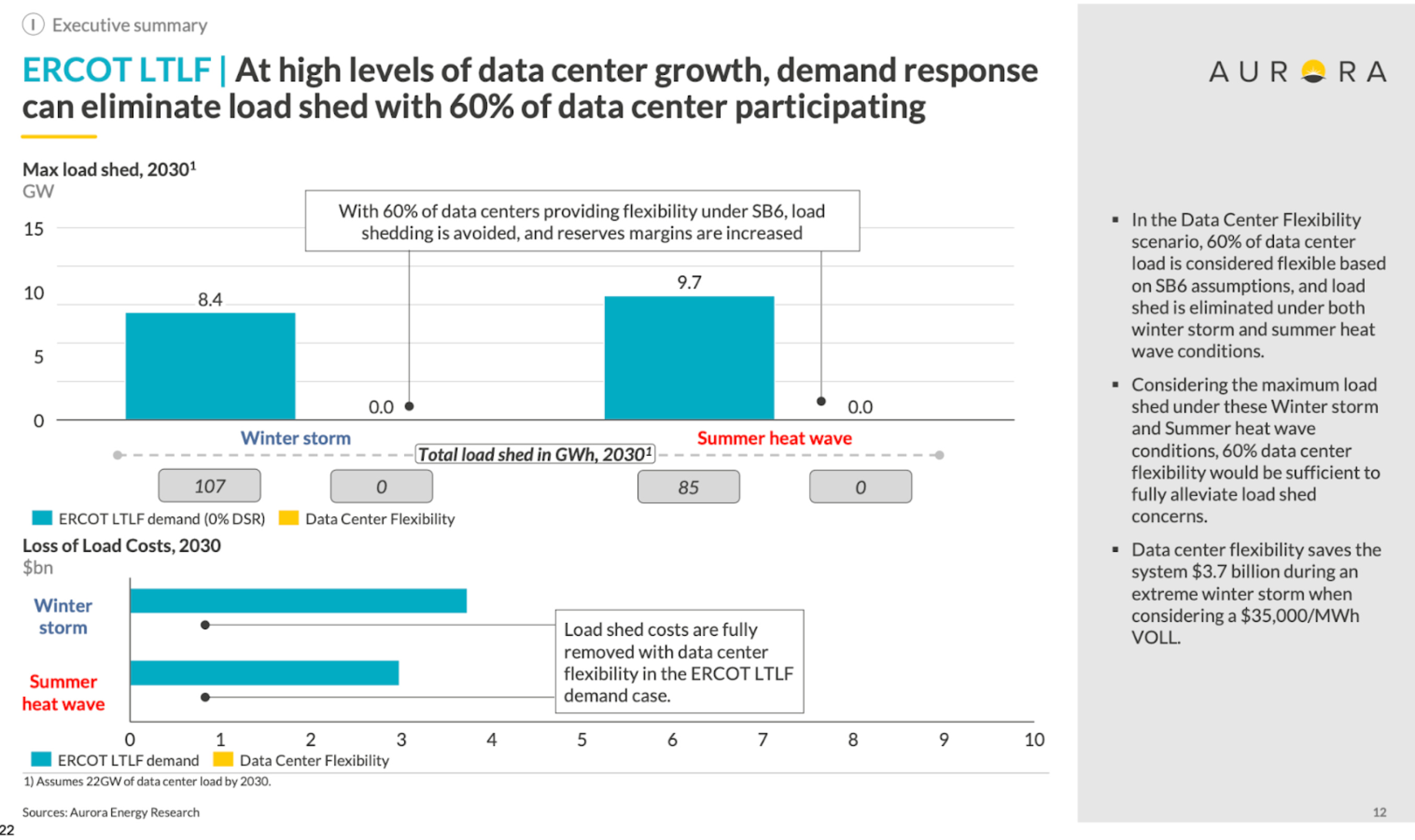 Flexibility Driving Reliability and Affordability with Matt Boms | This episode is a little different. As I wrote on Friday: this is both a transition and an expansion. Several folks will be stepping up to use this platform and I couldn’t be more excited to hear what comes next.A platform, now with more places to standArchimedes said: “Give me a place to stand and I will move the Earth.” This podcast will become a platform for more people to stand.The podcast is moving into a multi-host format, and one of those new voices is Matt Boms, Executive Director of the Texas Advanced Energy Business Alliance (TAEBA). Matt has been a leader on some of the most important energy work in Texas: distributed energy resources, affordability, energy waste reduction, grid flexibility, and much more.How I got “bit by the bug”Matt asked how I got into energy. The real answer is, slowly and then all at once.My early work in energy policy was at the Texas Legislature, in a stretch (2005 to 2009) when a lot was happening and the instincts to build and expand were strong. That period mattered because it shaped a belief I still hold today: Texas works best when we put pragmatism above ideology. Texas is a place to build and do big things.The next frontier is the grid edgeOne of the big themes in this conversation with Matt is that the “cheap electrons” story is true on the generation side, but bills keep climbing because transmission and distribution costs keep rising.So if we’re serious about affordability, we have to talk about the distribution grid, and the tools that can help us defer (or avoid) some of the costs associated with building out the grid. We’re still going to spend a lot but can we avoid some of it?That’s where distributed energy resources (DERs) come in, and where Texas has a real opportunity to lead.Matt and TAEBA recently looked at what DERs could do in Oncor’s territory. The numbers are big, but here’s the one that sticks: about $279 per family per year in savings. If you want a sense of how big a difference that would make for many Texans, check out my discussion with Margo Weisz of the Texas Energy Poverty Research Institute:There are two core value buckets behind these savings:* Wholesale market value (DERs competing through aggregation, the work ERCOT is already moving through)* Transmission and distribution deferral or avoidance (often the larger, currently under-valued piece)If we get the policy design right, DERs can help lower system costs, enable load growth, and reduce the pressure that shows up on people’s bills.Final ThoughtsIf you’ve been listening for a while, let the new team (more announcements on that soon) know what topics you want them to cover next. The next chapter is going to be great. I can’t wait to listen!Energy Capital is produced by ClarityForge Studios.Timestamps* 00:00 – Introduction* 02:30 – Matt asks his first question!* 04:00 – Doug’s first energy experiences* 05:30 – * Beginner’s mind ** 07:00 – Politicization of energy, what brings us together, * 10:00 – The need to look for similarities first* 14:00 – How do we meet Texas’ rapid demand growth? (Here’s the slide I was referring to:)* 16:00 – How do we continue to grow the economy and electric demand?* 18:00 – Distributed energy resources * 20:00 – Matt’s work on demand side * 23:00 – Distributed batteries can last a lot longer than an hour or two!* 25:00 – The TAEBA study showing $2,000 savings per family in DFW from DERs. More on T&D cost avoidance and deferral here:* 29:00 – The potential for Texas leadership* 32:00 – What does Matt want to cover next?* 32:00 – The under-discussed part of the Texas Energy Fund: the Texas Backup Power Package Program for critical facilities* 36:00 – Matt’s thank you, Doug’s excitement to stop talking and start listening!ResourcesGuest & Company* Matt Boms - LinkedIn* Texas Advanced Energy Business Alliance (TAEBA) - LinkedInCompany & Industry News* The Value of Integrating Distributed Energy Resources in Texas’ Oncor Territory* New Study Finds Oncor Customers Could Save $8.5 Billion With DERs* Texas Energy Fund, Backup Power Package ProgramTranscriptDoug Lewin (00:04.526)Welcome back to the Energy Capital podcast. I’m your host, Doug Lewin. Today’s episode is a little different. The platform is expanding into a multi-host format. I’m really excited about these changes. I cannot wait to be a listener to this podcast and hear where it’s going. I’ve been working with your new hosts and there are several on the issues and topics and speakers they’re going to be inviting and I could not be more excited. Doug Lewin (00:33.504)about where this is gonna go. I put out a post this morning at the Texas Energy and Power newsletter called It’s a Transition and an Expansion. And that is exactly what it is. Change can be hard, but change can also be really good. And this is an opportunity for a lot of folks to use the platform that I have helped to build. There’s a famous quote from Archimedes where he says, give me a place to stand and I’ll move the earth. Doug Lewin (01:03.768)You all, dear listener, come on, it’s the Energy Capital podcast. Y’all, dear listeners, have given me a place to stand, given me a voice, and I’m deeply, deeply grateful for that. Now, other folks are gonna have this place to stand to move the Earth. Stand with them, help them through this transition and expansion, and I know you’re gonna be really excited to hear what comes next. So today, again, this is a little different. Doug Lewin (01:31.2)and thrilled to introduce one of the new voices who will be carrying this work forward. That’s Matt Bombs. Matt is the executive director of the Texas Advanced Energy Business Alliance, TABAA for short. They do some great work in Texas and Matt has done some great work, particularly around distributed energy resources. He was part of that aggregated distributed energy resource task force that has had a lot of success in Texas. He’s also part of the advisory committee on the backup power package program I talk a lot about. He was instrumental Doug Lewin (02:00.138)in getting the Texas Energy Waste Advisory Committee established here in Texas. So he’s done a lot of great work. He is an expert in his own right. He is very interested and curious about all this stuff, just like I am. And I’m thrilled that he’s one of the people that is going to be stepping onto this platform. So what you’re here today is me interviewing Matt and Matt interviewing me. A little bit of a retrospective looking back. I hope you enjoy this episode and I hope you enjoy all the episodes going forward. Doug Lewin (02:28.364)I can’t wait to listen myself and I know you’re gonna like what comes next. So with that, thanks for listening and let’s jump in. Matt Boms (02:43.352)Hi everybody, I’m Matt Bombs and I’m here with Doug Lewin on the Energy Capital podcast. Doug, it’s great to have you here on the podcast that you built. And now that I’m hosting the podcast with a few of my very talented and brilliant colleagues, it’s just a great opportunity to pick your brain and to hear more from you. I really do want to hear more about your story and how you first got into energy. What was the key factor that really brought you into this industry and how did you first get started? Doug Lewin (03:11.522)Yeah, Matt, before I jump into that, just want to say how thrilled I am to be able to take this platform that I think really is reaching a lot of people that are really interested in Texas energy. Texas is such a dynamic place and you’re such an important part of that ecosystem. And I’m thrilled that you’re excited to step into this role, like you mentioned with some others. So, you know, we, often joke in the energy world about energy transition and energy expansion. This is both, it’s going to be an energy transition and an expansion. Doug Lewin (03:41.154)You know, with, new hosts coming in and there’ll be multiple of them that’ll allow more exploration. And I’m just so thrilled you’re in that mix. So thanks, Matt. So to answer your question, it’s something I’ve talked about a little bit on the pod over the years, but not a lot. And yeah, look, I can’t even like tell you like, Hey, there was this moment or this, you know, day or week or month or year where it would like all clicked and like, this is what, like what I want to do with my professional life. It kind of happened over time. Matt Boms (03:49.59)Awesome. Thanks so much Doug. Doug Lewin (04:09.614)Certainly some of my first experiences with energy policy were at the legislature. And it was a time at the legislature, there was a really good time to be there. It 2005 to 2009. It was just a very different time over there, particularly related to energy policy. So like a lot of things were happening, right? 2005 Senate bill 20, which had an expansion of global portfolio standard, the big expansion of the transmission system commonly known as CREZ, but really that enabled a lot of the economic growth Texas had over the last 20 years. Doug Lewin (04:39.758)You know, that was passed in 05, 07, there was a major efficiency bill that was passed then. I had the privilege to work on that. That was with Representative Strauss before he was Speaker Strauss. And then, you know, 2000, when 2008, right, people forget this, but you had both Republican and Democratic candidates running on platforms that were extremely pro clean energy, climate action, all that kind of stuff. And obviously 2009, you had... Doug Lewin (05:05.166)President Obama and there was like RF funds and all that kind of stuff. So like, it was just kind of a fascinating time to be in there. Add to that, that like 2005, six Al Gore puts out inconvenient truth and Rick Perry fast tracked 11 coal plants. Now Perry was like, you know, pro wind and solar and pro transmission and pro coal. He’s got to like pro everything, but you know, 11 coal plants, right in the middle of that context of like this dawning awareness around climate change. It was just kind of, it was just a fascinating time. Doug Lewin (05:33.932)to be in it and I’ve always found the energy space to be dynamic and fast paced and interesting. And it’s just one of those subject areas that almost any subject areas this way, if you get bit by the bug and you’re into it enough, right? That there’s no like end to learning in it. I always feel that beginner’s mind thing is there that like any corner you turn, it’s like, wow. I didn’t know about that whole thing. Tell me about that. Right. I want to, I want to read up and get smart on that and Doug Lewin (06:03.406)after 20 years of doing this, I still have the same feeling. And to your point and your question, like that’s even more so now, right? The acceleration is accelerating, right? So like what I thought has always been a pretty dynamic space, way more dynamic now. And the amount of stuff that we all have to learn just to keep up, right? Not even get ahead, but just keep falling off the back of the treadmill. It’s, there’s so much right now. And I find that challenge of not just keeping up, but like, Doug Lewin (06:32.962)that challenge of really comprehending what’s going on, really seeing different stakeholders point of view and how do different entities view this very same problem so differently. So there’s this whole kind of social dimension to the work that I absolutely love as well. yeah, I can’t really like pinpoint a day or a year or something like that. It was just like the ledge through to be in the head of an energy efficiency organization to go into clear result. Everything throughout my career has just added to it and just sort of like. Doug Lewin (07:01.398)increased that passion every step along the way. Matt Boms (07:04.866)That’s really interesting, Doug, and I am really interested in hearing more about how things got more political. So you started in this role, you were working in the energy industry at a time where these different technologies were all emerging. And at a certain point, the technology itself began being painted as red or blue or whatever color of your choice. And I want to hear more about the politicization. Matt Boms (07:29.718)even leading up to Winter Storm Yuri, about how did that change happen and what was it like as someone who was actively working in the industry at that time? Doug Lewin (07:36.61)I Doug Lewin (07:36.71)think the politicization of energy, you know, is thankfully not as bad as in a lot of other areas, but it has at least tracked, if not equally, but sort of tracked the polarization that is happening in the countries and all. I’ll tell you, one of the, I’m proud of all the podcasts that I’ve done with Energy Capital Podcasts. And I’m going to be proud to hear all the ones you’re going to do. I’m so looking forward to being a listener going forward, but. Doug Lewin (08:02.646)You know, one of the ones I’m most proud of was with David Spence and it was about, you know, his book, brilliant book, Climate of Contempt, which sort of was the whole thing is about the polarization of climate policy. And I’ll say, I think that’s actually probably how it became so polarized was like climate change has become very polarized. The things that you wouldn’t have imagined 20 years ago could have become that polarized. know, McCain and Obama both running on doing something about climate change. Doug Lewin (08:31.608)Who would have thought like vaccinations would have become as politically polarized as they are. But I will say, I think this is an issue area where you see really, really interesting alliances, left, right, center. And I think it’s because if you can kind of step back and kind of focus on first principles, we all want a reliable and affordable and clean grid. Like I don’t care what your political ideology is. You don’t like air pollution. Like nobody wants to have polluted. Doug Lewin (09:00.394)skies and water. Like that’s not something somebody sets out to do. I think in this industry, people are actually pretty mature about understanding that there are trade-offs and that those trade-offs are quite real. And so I think as much as possible, Matt, what I have tried to do, and I hope you’ll continue to do this on this platform, is to dial down that temperature, to have discussions with... Doug Lewin (09:26.996)The first question of asking somebody to come on the podcast isn’t what political tribe are you a part of? It’s do you have interesting thoughts on energy? They may not be the same as my thoughts on energy. I actually hope they aren’t because if we’re only talking to people we agree with 100%, like what’s the point? I mean, you know, some of it is to explore differences. Some of it is just to learn from experts that know, you know, that’s been my great joy in doing this is having people on that know so much more than me that I can ask questions of. Doug Lewin (09:57.014)and get smarter and help the audience get smarter too. And I’ll tell you, I mean, I’m just so excited about some of the possibilities of, you know, cross ideological cross partisan. And I don’t even want to just say bipartisan. Like it could be all kinds of different beliefs that if you come to this from, want cheap, fast, reliable, clean power. Like Doug Lewin (10:22.764)Let’s talk about what are the things we can do to get all those. know, competition, right? That’s one of those places that like, you know, you get broad agreement in general, not a hundred percent, but broad agreement left and right that like competition is generally a good thing, particularly on the right, which has made things like really, really interesting in Texas. So I think as much as possible to depoliticize it, to dial the temperature down, to look for areas of commonality, you know, it’s interesting. Doug Lewin (10:52.29)Chairman Flores of ERCOT gave a speech at, I think it was at Gulf Coast Power Association where he talked about like, can we look for our similarities first and our differences next? And I just think that’s so powerful. And I’ve always tried to do that in my career, like connect with somebody first and then explore the differences. I think too many people are just leading with their differences. And like that’s on a human level makes it very hard to work with anybody. Matt Boms (11:18.286)Yeah, I completely agree with you. And that is not limited to energy, right? We’re seeing that across our entire society. And I think you said at the outset that speaks to kind of your curiosity as a person, but the fact that you’re not married to your ideas, right? Things change. We’re constantly learning. A lot of these concepts are new and emerging. AI is only beginning to emerge as this new pillar of society. We’re all going to have a lot to learn here. Matt Boms (11:46.508)moving forward. I think that at the outset, if we can just drop our prior set of expectations and maybe any biases that we have, that will help us all come together and work in a more productive way. And I certainly think that what you mentioned about competitive markets being, know, historically Republican principle in a Republican state, that was probably the single biggest factor in the renewable industry having success in Texas and continues to be right. So that will be Matt Boms (12:16.334)crucial moving forward. And I think that’s what’s bringing a lot of solar, wind and battery companies to Texas because of the competitive market that we have here. You don’t see that in other states. see even blue states having trouble with the renewable build out because of permitting problems or because of regulatory issues that they’re facing, because of the backlogs and interconnection that they have. And as a state, we’ve been able to leapfrog a lot of those problems. And there’s a whole bunch of reasons behind that that you can take us through. Matt Boms (12:45.486)But I think overall you’re right that the taking the ideology out of it and maybe focusing less on politics and more on practical solutions is probably how we’re going to move forward here and meet the load growth that’s coming. So that’s what I want to hear from you too is how are we going to possibly, some of the numbers are mind blowing. You’ve gone through this in previous podcast episodes. How do you see us meeting this next big challenge and this big tsunami of load growth that’s coming? Doug Lewin (13:10.092)Yeah. Well, first, before I get to that, I just want to back up to something you said just a minute ago, right? So like competition, yes, Texas has been a red state for a long time. When Senate Bill seven was passed, the house was still democratic. So it was a very bipartisan bill. Senate was Republican. Governor was Republican. House was democratic. And they had to find those solutions across, know, bicameral, bipartisan. And competition had strong support in the democratic house with Speaker Doug Lewin (13:39.182)Pete Laney, if I’ve got this right, and I think I do, it’s within a couple of votes, but I think it was 146 out of 150 voted for Senate Bill 7. So like, and again, I came into the legislature like a few years after that, and I think we’ve seen, there’s still a lot of bills that get that many votes, but not as many big bills. And that’s what I would hope we can start to get to is as a state, if we say these are the things we prioritize, right? Again, clean, cheap, fast, reliable, like, Doug Lewin (14:08.81)What are the things that kind of meet all of those things or most of those things? And how do we balance those using competitive market forces? And I’ll tell you, as far as the load growth goes, it’s really amazing. There was a study that Aurora did for ERCOT on the Dispatchable Reliability Reserve Service. There were a lot of different models they ran and there’s a lot of different results that came out. There was only one result. Doug Lewin (14:34.776)that had 0.0 gigawatts worth of load shed in a winter storm Elliott, which was the 2022 winter storm in December, right before Christmas or 2023 heat wave. There’s only one that had zero rolling outages. And that was the very high data center load growth scenario. That was the only one like, you know, you could spend all this money and build new ancillary services and capacity markets, capacity constructs, all that kind of stuff. And you would still have. Doug Lewin (15:05.022)some outages. The one exception was the high load growth. And what they were modeling was if we had high load growth and data centers are bringing their own generation and 60 % of them have flexibility in them, that would get you down to 0.0. So I think, again, no matter what your political persuasion is, the investment that could be coming to the state, the potential to actually get the most reliable grid possible, right? Doug Lewin (15:34.398)while spreading the fixed cost of the system out to more users. Like all of this is there right in front of us. And I couldn’t be more excited to continue to be working in Texas towards this vision of a clean, reliable, affordable, you know, power grid, which we’ve made huge strides over the last five years in this state. There’s just no denying it. We got a long way to go. And pretty soon here, we’re going to flip the mic around. I’m going to ask you questions, Matt, because I know you over the last several years. Doug Lewin (16:01.986)have been working on some of the very things that I think are like most essential to get to that clean, reliable, affordable grid. So yeah, we’ll do that in a second, but I don’t know. I don’t want to cut you off. had any other like burning questions you want to ask. Matt Boms (16:16.716)Well, yeah, what changes now, because for most of your career, you know, correct me if I’m wrong, we didn’t have the kind of low growth that we have now, right? So that’s right. That’s a huge, drastic change from how energy has functioned over the last few decades, right? So where do we go from here? Like, where do you see policymakers really changing their views and making sure that we’re bringing these businesses to Texas instead of turning them away because we don’t have enough power? Doug Lewin (16:47.202)Yeah, look, to me, there’s so much, right? This is so complicated. Obviously, there’s a long record there for people to go back and listen to, hearing all this stuff. But to me, this kind of boils down to three main things, right? You’ve gotta keep the conditions for new supply to want to come to Texas. We have built more supply here than any other state by far. It’s not close. Doug Lewin (17:11.406)And that’s because of the competitive market design. So I think being protective of that competitive market design, keeping those price signals, you know, at the ERCOT board meeting, there’s some discussion around, not getting enough gas built. The gas queue has tripled in the last 18 months because those signals are coming from the new demand, right? So I think keeping that where particularly solar storage and gas, like those are the things that are going to be built over the next years. Wind too, there’ll be some wind in the mix, but. Doug Lewin (17:40.194)you know, probably not as much as the other three. Transmission, to be able to move all that power around and to be doing it in a way that is not, it’s not always congested, driving up costs, causing reliability problems. Congestion is not just a cost issue. It’s a reliability problem too. If you’ve got generation in a part of the state and you can’t move it to where it’s needed, you got reliability problems, right? We’ve had that South of San Antonio the last several years and we got it, we got to get ahead of that. Doug Lewin (18:06.702)And think ERCOT’s work on building out a 765 system, we’re recording on a day when the ERCOT board approved the building of the Eastern half of the 765 system. So that I think is really key. And then the last one, and this is probably a good segue to flip this around. And let me start asking you some questions, is the demand side. And I know you, Matt, you’ve played a huge leadership role in Texas on demand side. Doug Lewin (18:30.686)Demand side to me, look, I’ve spent a big part of my career working on energy efficiency and DERs, VPPs before anybody knew what a VPP was. Well, a few people knew, but it wasn’t as talked about as it is now, right? And I think that for a long time, the perception was, those are interesting and nice. Sure, who’s supposed to saving some energy and getting lower bills? Those are nice, but it was always just kind of like, there’s a little pat on the head, great work. Doug Lewin (19:00.334)cool, but that’s not the real stuff. In this environment with rapid load growth, those demand side solutions become absolutely essential and central. There’s a big discussion going on right now in the Twitterverse around this. Matt Iglesias had an article out, which I haven’t read yet, so I probably shouldn’t talk about it. I’ve only seen his tweets. So I will go read the article, Matt Iglesias, and digest your whole argument. But what I can gather from the Twitter spats is like, Doug Lewin (19:29.548)there is this kind of debate going on of like, is it more supply or demand side stuff? we be like demand flexibility and energy efficiency just aren’t going to be enough to meet our needs. We need to build more supply. And it’s like, well, of course, like, but, that’s not a binary. You don’t have to choose one or the other of those things. And, and as a matter of fact, if you choose one or other of those things, you’re probably going to end up short. We’re going to need resources everywhere we can get them. And that includes demand side resources and supply side resources. Doug Lewin (19:59.616)I just think that is a false choice if ever there was one. So I really think building up energy efficiency, distributed energy resources. So if you’re okay, Matt, I’m start asking you questions. Is that all right? Matt Boms (20:12.856)Yeah, I think you just did ask me like five questions. Doug Lewin (20:14.958)Doug Lewin (20:15.359)So talk to us about distributed energy resources and energy efficiency. Tell us a little about your work in that area and what kind of excites you about that, what you’re excited to be working on. Matt Boms (20:26.36)Yeah, well, I think the way I like to think about this is electricity is the backbone of our economy, right? Like I went to school, I studied economics and the feeling that I have is the electric grid is the backbone for local economic development. There are other countries that don’t have the luxury that we have in the United States of having an abundant electric grid. And there are countries where businesses simply can’t operate because they don’t have a stable grid. Matt Boms (20:55.33)to count on like we do here. They also don’t have cheap electricity, right, which is something that we take for granted, just generally speaking, right? We have some variations across states, across counties, but for the most part, Americans have access to reliable, affordable electricity. And those are the key words that we want to keep it affordable. We want to keep it reliable. And that’s, think, the challenge that we’re going to be facing now with all the new data centers that are coming to Texas. So I think my feeling on this, Doug, is also that it’s not black and white. It’s not one or the other. Matt Boms (21:25.292)You can make the same argument that I just heard you make when it comes to different technologies, whether it’s solar, batteries, gas, wind, DERs, energy waste, transmission infrastructure. We need all of that. It’s not going to be choosing winners and losers. It’s going to be all of these different technologies playing their role in meeting our energy needs moving forward. Yep. So the key piece for me is how do we keep it flexible? Matt Boms (21:51.466)And I think the flexibility is what’s going to drive affordability and reliability in Texas. I don’t think that we’re at a point now in ERCOT where we can say our grid is sufficiently flexible to meet all of the load that’s coming. I think we have a lot of work to do. I think you can see that through price volatility. You can see that in parts of the state where during heat wave or a winter storm, the price signals are exorbitantly high and Matt Boms (22:19.852)distributed resources aren’t being valued the way that they should, right? There’s no reason we shouldn’t be valuing battery storage or backup generators or smart thermostats for the value that they’re bringing on those days that we really need them. And that might only be 1 % of the year, but when we really do need to count on them, that’s where we’re going to have to think of ways to support those technologies. And by doing that, you’re going to bring the costs down for consumers, right? Because right now it certainly feels like Matt Boms (22:49.282)For anyone that owns a home in Texas that has looked into rooftop solar or batteries, the prices are still too high. They’re just not affordable enough. And I think that’s where the policy comes in because the policy creates the market that we need to set up for distributed resources. Doug Lewin (23:05.25)Yeah, I was just going to say like that is, you when you talk about yes, like power is more reliable here, or more, I should say more affordable, more reliable too. But your point was it’s more affordable here than is a lot of places in the world. A lot of places you just can’t get electricity. Important to acknowledge, and I know you do acknowledge this, you just started to talk about it there, that like for a lot of people, power is, is unaffordable, right? We have a, we have a large portion of the population. Doug Lewin (23:30.808)that is really struggling to pay their bills, 30 to 40 % that are making choices between paying their power bills, paying for food and medicine. So this is really where I think it becomes really important when you’re talking about flexibility, if we can bring those flexible resources, whether they be batteries or demand response, right, through thermostats, heat pumps that are connected to a thermostat and have variable speed, all of those kinds of things. Doug Lewin (23:58.434)that you can meet, just like you said, Matt, that 1 % of the year, maybe it’s 2 % some years if there’s a really bad heat wave, but you’re talking about, you know, a few hundred hours, right, during a winter storm, right, having those batteries that are on the distributed network. And a lot of people say the batteries only last for one or two hours. If you’ve got a battery in your garage, it could be configured to last a lot longer than an hour or two. This is a common perception I think we’ve really got to get after, that every battery is only a one or two hour battery. Not true. Doug Lewin (24:27.958)It depends how it’s configured and we can stretch them out and have all kinds of different configurations to them. And if we can do that, not only does that bring the price of generation down, that means in some cases we won’t have to do as extensive a build out of the distribution grid, right? Which is the biggest driver of higher energy bills right now is on the distribution grid. So I know Doug Lewin (24:53.422)You and the organization, Texas Advanced Energy Business Alliance, put out a study recently looking at the encore service territory and what DERs could mean for that. I think the number was something like eight and a half billion in savings over 10 years. Tell us a little about the findings and how could we actually get to those savings? What policy solutions might unlock some of those savings for consumers? Matt Boms (25:16.43)Sure, yeah, the calculation was around $2,000 in savings per rate payer over the next 10 years. And that’s a huge amount of savings for, like you said, folks that are struggling to pay their energy bills that really could use that relief, right? And might not necessarily have the capital to go out right now and buy a huge solar and battery system to install on their house. Or for a small business that frankly we’ve seen in Houston. Matt Boms (25:45.272)small businesses that after Hurricane Barrel went out and purchased backup generators because they can’t just accept a week without a business because a hurricane swept in and wiped out their power, right? And to your point, there are plenty of stories after Barrel of folks that did weather the storm through battery systems and through rooftop solar. So I think we have the arguments and we have the case studies to show that the technologies are working. You asked about what are the policies that could be put in place to solve the problem. Matt Boms (26:15.054)The way that the number was calculated as far as the roughly $2,000 per rate payer is on the one hand, you have the wholesale market value, right? So you have, if these technologies could compete in the wholesale market, how much potentially could we assign in value to those distributed resources? And that’s happening through the aggregated DER project, right? There’s a lot of work that needs to be done there, but it’s working its way through ERCOT. Matt Boms (26:40.77)The other half that is not at all being valued right now is through the transmission and distribution deferral, right? So for every distributed resource that’s put on the grid, you are ultimately deferring transmission and distribution that needs to be built out in the long-term, right? So that means an overloaded substation that might need to be replaced, but can you replace that with batteries or with whatever distributed technology works best for that particular location in Texas, right? Matt Boms (27:10.614)Right now we have a system set up where we are just building out poles and wires through our transmission and distribution utilities and we’re not assigning any value to DERs when they can be a more cost effective technology for rate payers. Because ultimately we’re trying to save money for rate payers through these technologies. So that’s where most of the value comes from, Doug. I know that you had Astrid Atkinson on your podcast recently who spoke about Matt Boms (27:37.794)The fact that it can be up to 75 % of the value of distributed resources could be attributed to that TND deferral, right? That’s the big piece here that we’re missing within the ERCOT system because that whole part of the value stack is missing currently in the way that our market is set up. Doug Lewin (27:53.998)Yeah, and the podcasts with Charles Hua, with Margo Weiss, like, you know, we see that the lines for generation have been relatively flat to some years down. Every once in a while you get a little blip like 2022 with the Russian invasion where like generation goes up. But generally, overtime cost of generation going down for two reasons. And when we talking about the competitive market earlier and you said, you know, it’s brought a lot of renewables, it also brought a ton of gas, right? Especially in the mid-aughts, right? Really cheap gas. Doug Lewin (28:22.35)cheap renewables have lowered the cost generation. Meanwhile, the lines for transmission and distribution are going up. Now I said earlier, I really do believe we need the 765 build out. It’s really important to be able to move power around more efficiently. Large amounts of power, those lines can carry four to six times the amount of the next voltage down. So we’ve really got to look to that distribution grid. And that’s really what I think this study is a really good one. We talked about it a little bit, I hope. Doug Lewin (28:47.862)Matt, you might be able to have Demand Site Analytics that did that excellent study. And I understand you guys are doing another one that is ERCOT wide that’ll come out at some point. So maybe that’ll be a good interview for you on the podcast going forward is really getting into that study and breaking down some of the assumptions there and how could those savings go bigger? How would they be smaller? What kinds of policies do we actually need to unlock those savings, right? Matt Boms (29:10.584)Yeah, that’s right. I also think this is an area where Texas could lead the country, right? Like it really is the new frontier. If you think about all the data centers that are being built and how they can contribute to that flexibility in Texas, that’s a huge opportunity. Like that’s the way we can unlock all of this load growth and the business opportunity in Texas, because all of a sudden you’re talking about dozens of gigawatts that are going to be coming online over the next few years. Matt Boms (29:38.162)And you have the capital to make it happen. You’ve got data centers that really the number one priority is how fast can I get power, right? It’s not about the capital that they have on hand. It’s about the speed that they can possibly get connected to our grid. So there’s an incentive there for making the grid more flexible and that enables more data center interconnection. So I’m hopeful that this will happen. I just think that we need to change the way we think about electricity, right? For those of us that have worked in this industry, we’re used to thinking about Matt Boms (30:06.85)the utilities delivering electrons to our homes and businesses. And something that is true, and like you said, we need those 765 lines to bring us cheap electrons from rural parts of the state. However, we also need to flip that on the table and say, well, these technologies weren’t around when the system was created, right? And so now all of sudden you have this great battery storage technology that can enable folks to generate their own power, right? And they should be rewarded for bringing flexibility to the grid. Doug Lewin (30:34.862)And you know what’s a great way to get like new resources onto the grid competition and markets. I actually got chills, Matt, when you said Texas could lead this, cause that has been a huge theme on this podcast, right? For years. And I’m so happy that you’re like grabbing the torch and going to keep that going forward. Cause that really is a theme here is Texas has a lot going for it. We have the elements here to put all that together. And I think you’ve got that vision. Doug Lewin (31:04.66)You can see that. You can kind of see that you got a puzzle in front of you. All the pieces are there. We’ve got the competitive market. You know, that means we’ve got competitive retail electric providers. We’ve got very innovative co-ops and munis as well. There’s a ton. I hope you’ll do some podcasts with, especially some of the co-ops. think I only did, I think it was only Bandera. Was that the only co-op? So like that’s kind of a big, big hole in this podcast that needs to be filled. There’s a lot going on at co-ops right now. Doug Lewin (31:33.696)in the competitive market, et cetera, Texas really has all those pieces to put together markets that send a price signal to these distributed resources to lower that distribution spending, bend the curve downward. And while we’re doing that, put those resources on people’s premises so that they have reliable and resilient service, even through those storms. Before we end, I just want to ask you just one more thing. And again, we’re teeing up like a bunch of different Doug Lewin (32:03.768)podcast episodes. hope the audience is getting a sense here, right? Dear listener that like there is no shortage of stuff to cover. There’s no shortage of people to cover it. I’m so excited to become a listener and hear where all this is going. But you’ve been working a lot on this Texas backup power package program, right? So this is this very innovative. think it instantly talk about Texas being a leader. Here’s Texas actually putting $1.8 billion towards Doug Lewin (32:30.934)Effectively microgrids, they may or may not actually be microgrids depending on how they’re configured, but effectively microgrids backup power systems at critical facilities like police stations and nursing homes, water treatment facilities, et cetera. You’ve been involved in that from the very beginning. Can you just share with the audience a little bit kind of a little bit more about what that is and why that’s exciting, why that’s been a priority for you over the last few years to work on and you know. Doug Lewin (32:57.026)what you might explore here on the podcast related to that really innovative program Texas has. Matt Boms (33:02.062)If we go back to the 2023 legislative session, this was part of SB 2627 that initially set up the Texas Energy Fund. think when folks hear Texas Energy Fund, they think of gas plants, That just automatically where our mind goes. But I constantly remind people that there’s the 1.8 billion allocated to the Backup Power Program, right? Of the 10 billion, 1.8 is for Backup Power. And so there’s a significant amount of resources that the state has allocated to this program. Matt Boms (33:31.552)I was surprised when it was first created that this hadn’t been done since Winter Storm URI. Like that was something that really stood out to me because you would hope that by now we would have backed up critical facilities. And I think it’s our obligation as people who work in this industry to make sure that hospitals, police, fire stations, nursing homes have power. If God forbid we have another Winter Storm URI event, we want to make sure that we’re taking care of. Matt Boms (33:58.178)our most vulnerable Texans, right? That’s something that we can all agree on. That’s not a partisan issue at all, right? We all want to protect vulnerable people in our state. So that was the impetus for the program. And I give a lot of credit to Alison Silverstein, who really put her blood, sweat, and tears into this program. And it’s something that we continue to work on with the Public Utility Commission. So I think the hope is that this will be launched next year. Matt Boms (34:21.698)This will be a program that ideally will bring in all the different vendors that are already manufacturing these technologies. It has to be a combination of solar, battery, and generator, right? It has to have those three. As an alternative, it could be electric school buses because those are essentially batteries on wheels, right? So those could be, if the load is small enough at some of these facilities, the electric school bus could absolutely power the facility for 48 continuous hours, which is what the statute says. Matt Boms (34:50.082)So I think what I’m looking forward to is the rollout of the program. I’m looking forward to bringing in private sector companies that are excited to roll up their sleeves and get these technologies out to rural communities across the state. And I think we also have to think about bringing in the critical facilities, making sure that they’re aware of this program, because, you know, it’s like when a tree falls in a forest kind of deal with if the critical facilities aren’t paying attention to this program, then they won’t know it exists. So I think we also have to support the program by bringing in all the different stakeholders and making sure that. Matt Boms (35:20.12)they’re aware that the program is here to support them. then hopefully next time a winter event or a summer event happens, these backup power packages will be in place to provide reliable power for those facilities. Doug Lewin (35:33.902)It’s such, such an important program. It’s such an important policy. And by the way, an example of where, you know, you had good bipartisan bicameral policy making happening. Like those are major policy decisions that take a lot of different input from a lot of different folks and kudos to the ledge for figuring that out. Now the PC is working to implement that and you’ll continue to cover that here. know that the backup power packages will be something also that could be talked about. Doug Lewin (36:01.262)at the Texas Energy Waste Advisory Committee, which you helped to get going. So we won’t talk about that one right now, but I’m just trying to tee up a lot of the different things that I know you’re gonna be talking about in the coming months. And I hope the audience is as excited as I am to get some different voices in here, explore some different topics that maybe I didn’t cover as much. And I just couldn’t be more excited about this next chapter. Matt, since we were interviewing each other, the question I always ask at the end, as you know, Doug Lewin (36:29.704)Is there anything I forgot to ask you? want to say anything you want to add? And then guess you can ask it back of me, but I’ll add, I don’t have anything to add. I’m good. Anything you want to add, Matt. Matt Boms (36:39.15)I just want to say that we’ll miss you and I know you’ll still be around. And I want to say thank you because you’ve been really an inspiration and source of so much knowledge and information that this podcast has served a lot of people over all the episodes that you’ve recorded. You’ve just been a wealth of knowledge and leadership and inspiration for me, Doug, and I know for a lot of my colleagues. So just want to say thank you and salute you. And I know you’re not disappearing, but just as this chapter comes to an end, I just want to say thank you on behalf of Matt Boms (37:08.778)of all of us that work in this industry, you’ve been really a great asset for so many of us. Doug Lewin (37:13.598)I appreciate that deeply. means a lot, especially coming from you, Matt. you, again, as I said at the outset, you’ve done some amazing work. so while I appreciate that and the look back, I hope everybody’s looking forward and as excited as I am for this next chapter of the Energy Capital podcast. Can’t wait to listen and discuss all the episodes with friends and colleagues. So thanks for agreeing to step up and do this. And yeah, man, can’t wait for what’s next. Thank you. Matt Boms (37:39.566)All right, thanks, Doc. Thanks for listening to the Energy Capital Podcast. If today’s conversation helped you make sense of the energy world, share the episode with a friend and hit follow on your podcast app. You can find us on Apple podcasts, Spotify, and all the usual platforms. For deeper analysis each week, subscribe to the Texas Energy Empowered newsletter at texasenergyempowered.com. That’s where you’ll find every episode, every article, and all of our latest updates. Matt Boms (38:09.666)We’re also on LinkedIn, X, and YouTube, where we post clips, insights, and ongoing commentary. Big thanks to Nate Peavey, our producer. I’m Matt Bombs, and I’ll see you next time. Stay curious, stay engaged, and let’s keep building a stronger, smarter energy future. This is a public episode. If you'd like to discuss this with other subscribers or get access to bonus episodes, visit www.texasenergyandpower.com/subscribe | 38m 28s | ||||||
| 12/10/25 | 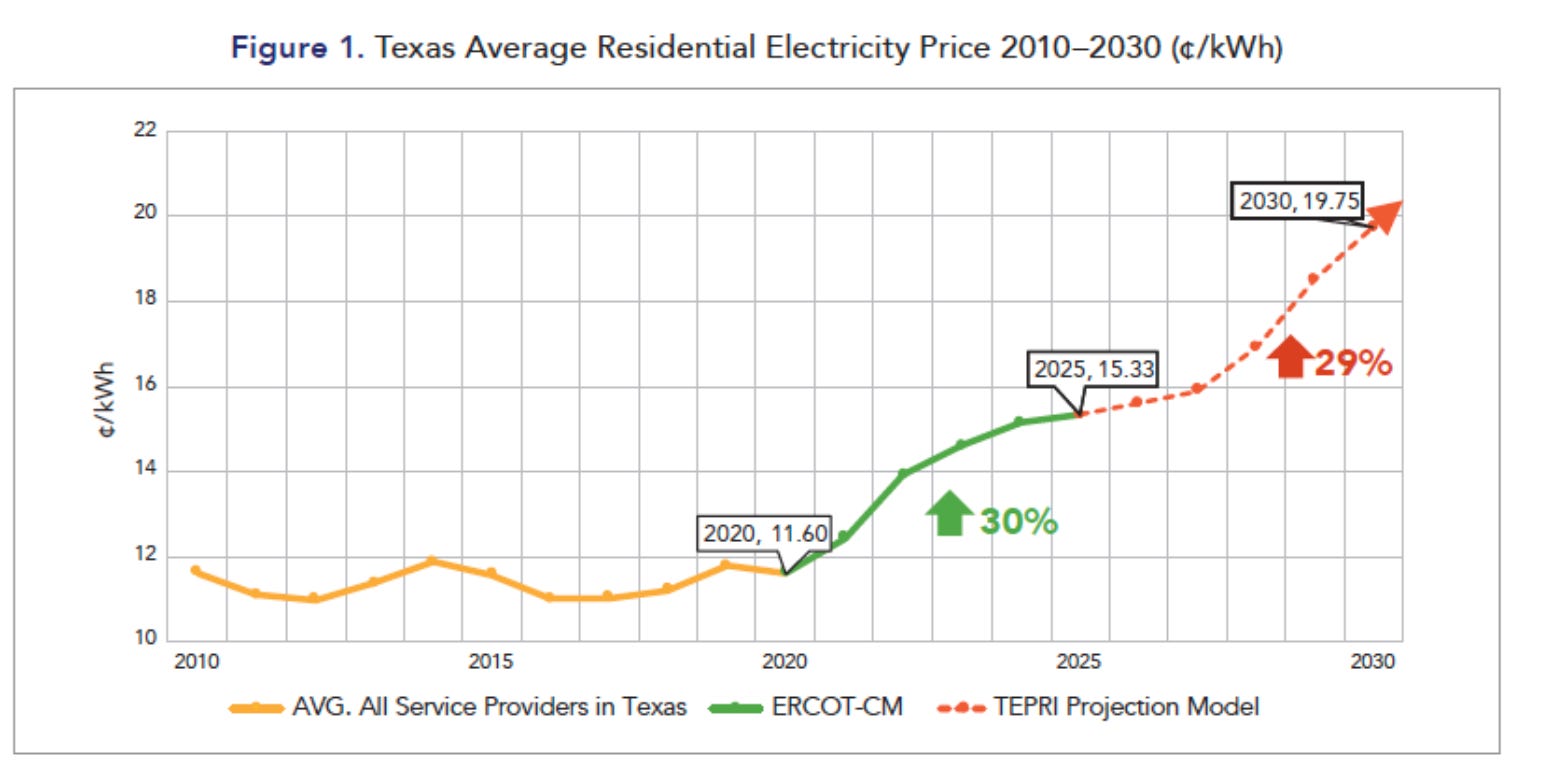 How Much Are Texans' Power Bills Going Up? with TEPRI's Margo Weisz | Everyone’s talking about the cost of power lately. But the Texas Energy Poverty Research Institute has been studying, talking, writing, and working to do something about it, for over a decade. In recent research, TEPRI found that 65 percent of low and moderate income Texans are cutting back on essential energy use, often turning off AC in extreme heat. But their demand reductions aren’t necessarily saving them much money or supporting the grid. Affordability is now a very high salience issue and there’s no one better to help us understand than TEPRI Executive Director, Margo Weisz. She talked about energy burden and affordability in Texas and the clearest paths to ratepayer relief.TEPRI’s latest research shows bills increasing sharply over the last five years and again in the next five years: TEPRI Releases ERCOT Electricity Affordability Outlook: Forecasting Residential Electricity Prices and Burdens (2025-2030)Energy burden is rising sharplyEnergy burden is the share of income spent on electricity. In Texas:* ~4.5 million households are low or moderate income.* Their average electricity burden for a low income Texan is nearing 7% — that is, they pay 7% of their income for their power costs alone — and expected to be 9% by 2030.* TEPRI’s modeling shows about a 29 percent increase in the cost of power over the last five years, with another 29 percent projected for the next 5 years.* The biggest increases are coming from transmission and distribution utilities.Wages are not keeping pace, leaving an average affordability gap of roughly $850 per year.Because of this, households are taking risky steps — or getting shut offAs TEPRI’s survey shows, they are turning off or limiting AC in dangerous heat, skipping essentials to pay the bill, and accumulating arrears until shutoff notices arrive. And 12% were actually shut off. But Texas does not track disconnects so we don’t know if this survey matches actual shut-offs.These actions point to system-level strain. They increase health risks and make reconnection more expensive for everyone.Efficiency and distributed energy are long term solutionsEfficiency is the fastest, cheapest way to cut bills and peak demand. Weatherization and efficient HVAC could reduce load and permanently lower costs for the households who feel the most pain.Distributed energy goes one step further. Community solar, batteries, and virtual power plants at homes and apartments can lower bills, reduce peak load and improve resilience. Final ThoughtsEnergy burden is the lived reality of the Texas grid. Millions of Texans are paying nearly 9 percent of their income for electricity, and many are already taking unsafe steps to stay connected.But we have real options. Smarter enrollment for bill help. Scalable efficiency. Community solar and virtual power plants that lower costs and support ERCOT.If this work matters to you, share it with someone who cares about Texas energy, and consider subscribing so we can keep tracking what works and where Texas can lead.Timestamps* 00:00 – Intro and why energy burden matters* 02:00 – Margo’s background and TEPRI’s mission* 04:00 – “energy limiting behaviors” often aren’t saving much money* 05:00 – Community Voices Energy Survey and behaviors* 06:30 – How Bandera Electric Co-op is helping their customers* 08:30 – Texas does not track disconnect data* 10:00 – “Sexy energy efficiency” and heat pumps; the split incentive problem* 12:00 – TEPRI’s approach to applied research* 13:30 – Defining and measuring energy burden* 17:00 – the potential for energy abundance and what that means for low-income Texans * 19:00 – Texas rates are lower but rising faster than the national average. Why?* 22:00 – How do we allocate costs for socialized grid upgrades and storm recovery? (SB 6 implementation)* 27:00 – What’s going to happen to bills in the next 5 years?* 30:00 – Where some downward pressure for prices could come from* 32:00 – What do we do about all this?* 35:00 – Bill assistance and the future of LIHEAP* 36:00 – Scaling efficiency and demand response in Texas* 39:00 – Virtual power plants in low-income communities* 41:00 – Enlightened self interest: helping those in need helps everyone* 43:00 – Margo’s closing thoughtsResourcesGuest & Company* Margo Weisz – LinkedIn* Texas Energy Poverty Research Institute (TEPRI) - LinkedIn Company & Industry News* TEPRI New Report: “ERCOT Electricity Forecast Outlook”* TEPRI Receives Outstanding Non-Profit Award at Texas Energy Summit* TEPRI 10-Year Anniversary Celebration and Future of Energy in Texas * Community Voices Energy Survey* E4-TX Geo-Eligibility Tool* Low Income Energy Assistance Program on TX System Benefits ChargeRelated Podcasts by Doug* Why Your Utility Bill Keeps Rising YouTube* Creating a Distributed Battery Network with Zach Dell YouTube* How Data Centers Can Strengthen the Texas Grid with Astrid Atkinson YouTubeRelated Substack Posts by Doug* The Affordability Crisis Deepens: Reading & Podcast Picks, August 31, 2025 * An Expensive and Unnecessary Capacity Market* Energy Inflation* Texas Has Never Had a Summer Blackout — Here’s Why That May ChangeTranscriptDoug Lewin (00:05.548)Welcome to the Energy Capital Podcast. I’m your host, Doug Lewin. And my guest this week is Margo Weisz. She is the executive director of the Texas Energy Poverty Research Institute or TEPRI. Everybody these days is talking about affordability, and rightfully so. Affordability played a very important role in the recent elections in New Jersey, Virginia, and Georgia. And we are seeing increasing numbers of Americans and of Texans that are struggling to pay their bills, that are making that terrible choice between food, medicine, and their power bills. As high as 30 and sometimes 40% of Texans making those choices. TEPRI has done incredible work with their Community Energy Voices survey, where they surveyed 6,500 low-income Texans and found that more than 60% of them were engaged in energy-limiting behaviors. Translation of energy-limiting behaviors is, in some cases, particularly with medically vulnerable populations, extremely medically risky. This is a problem we’ve got to solve together. And as I talked about with Margo, who’s just a fantastic leader in this space in Texas, the solutions actually can help across the grid. One of the things TEPRI is working on is distributed energy resources at multifamily facilities. And one of the things we talked about there is how all of us benefit from implementing those kinds of solutions. It’s what I’ve referred to—I didn’t come up with this term; I’ve heard it in a lot of different places—but enlightened self-interest. If we are getting solar and storage and energy efficiency out widely, particularly to low-income Texans, that strengthens the grid for all of us while it lowers their energy bills. So looking for those win-win-wins is what Margo and TEPRI are all about. I hope you enjoyed this episode and, as always, if you did, please share it with a friend, family member, or colleague and please leave us a five-star review wherever you listen. And with that, here’s my conversation with Margo Weisz.Margo Weisz, welcome to the Energy Capital Podcast.Margo Weisz (02:11.64)Thank you, Doug. It is awesome to be here with you. Yeah.Doug Lewin (02:15.662)We’ve been talking about this for a while, but this is timely because you guys have a really important paper coming out that we’re going to talk through a little bit. But before we get into all that, can you just share with the audience a little bit about the Texas Energy Poverty Research Institute? What do you guys do? What’s it all about?Margo Weisz (02:29.486)Right, we’re a statewide nonprofit and we address the acute energy needs of people with low incomes. And we do it in a variety of different ways. As our name says, we do some research and we’re going to talk a little bit about that today. And the cornerstone of our research is a survey of low-income households throughout the state. And I know we’re going to get to that. We also do some pilot projects. So we take what we learn in that research and then we try to figure out some strategies to solve some of the challenges that low-income households face by doing a variety of different pilot projects on the ground. We also have some web-based tools that we use, that we’ve created, and we do a little bit of education as well.Doug Lewin (03:09.134)Great. Thanks for that. We’ll have information on the organization in the show notes. So folks that want to learn more about TEPRI, I encourage you to go check out their website. You just mentioned the Community Voices Energy Survey. You all surveyed 6,500 Texans who are low or moderate income. Can you talk a little bit about what are some of the key takeaways from that for you? What a fantastic exercise. Yeah. So what did you guys learn?Margo Weisz (03:32.626)Right. I mean, it’s so important for us to really have our work guided very much by the experience and the priorities of the people that we serve. So we focus on affordability, reliability, and clean energy. What are their behaviors around it? What are their priorities? What are their concerns? So that’s kind of—we just ask a whole variety of questions about their experience in a day-to-day environment with energy. It’s very illuminating for us.Doug Lewin (03:59.756)Yeah, and one of the things that really stuck out to me out of that was 65% of the low and moderate income Texans you surveyed said they engage in, quote unquote, energy-limiting behaviors. I mean, that to me was sort of an eye-popping figure. Can you talk about why that’s so important?Margo Weisz (04:16.649)Yes. So I think these are the ways that people try to lower their bills. So they think to themselves, “How can I lower my bills? I can turn off my air conditioning when it’s, you know, a hundred degrees outside, because it’s probably really expensive if it’s a hundred degrees outside,” or “I can turn off my heat or turn down my heat.” You know, those are the variety of things—unhooking their appliances. I think what’s most interesting, though, about that, probably not so surprising that low and moderate income people are doing that, but they may not be doing it in a way that really optimizes savings for them. And so I think the takeaway from that is that there’s a lot of opportunity with demand response for them to be using these behaviors in ways that not only more positively impact their bills, but also support the grid. So knowing that 65% of them are already engaging in these behaviors, well, if they had more information about... Don’t turn off your air conditioner in the middle of the afternoon.Doug Lewin (05:16.62)We have a lot of solar power. Power is actually really cheap.Margo Weisz (05:19.106)Zero-cost energy in the middle of the afternoon. You know, so you can have your air conditioner on, but maybe, you know, at five o’clock, especially if you could get a little text that your retail electric provider let you know, you could save $5 if you, you know, right now turn your air conditioner up by three degrees. So I think that is the piece of the Community Voices Survey that is most helpful: what are people doing now and what are they trying to do and is it achieving that or are there ways to help them do that better to meet their goals?Doug Lewin (05:56.654)Yeah, I can’t tell you how many times over the last 20 years working in this space, people said, “Oh, demand response isn’t for low-income people. You know, too many of them or they don’t have the right technology or they’re like older and they can’t really understand it.” And it’s like, look at the data. Like 65% of them are doing it right now. But to your point, they may not be actually getting paid for that. They may be saving some, but to your point, like three and four in the afternoon in Texas with 36 gigawatts of solar power, like that’s not the time to be turning down. You should actually, if you had the right rate structure and incentives in place, you could actually be using more at three or four, as long as you’re set up to use less.Margo Weisz (06:39.714)Right, cool down your house. And one of the really interesting kind of case studies that we’re looking at right now is Bandera Electric Co-op because they have fairly large, low and moderate income household membership. And they created some software that allowed them to have really efficient and effective communication with their members about their energy use. And what they found, and we’ll be digging much deeper into this in 2026, is that they were able to make tremendous impact on their members’ bills by feeding them the information about when they should be using those behaviors. And so they’re also doing a lot of other really interesting things that we’re excited to dig into at Bandera. But I think this software that allows them to communicate in real time with their customers has had a huge impact on customer bills. So we’d like to see that and figure out, is that something that could be replicated by other providers?Doug Lewin (07:35.886)I mean, yeah, it obviously can be replicated. It may not be the exact same in every place, but that communication is just so absolutely critical.Margo Weisz (07:43.582)Right, and it really speaks—like people are already doing this, they want to do it. They want to do it well, and they’re really concerned about their bills. We know that we keep hearing about that. So, you know, and I know we’ll talk a little bit about what can people do.Doug Lewin (07:56.876)Yeah, we are gonna get there towards the end, but I will say, because I think it’s appropriate to say at this point, one of the things we could be doing is more energy efficiency, because what is actually—when people are taking those energy-limited behaviors, depending on how they’re doing it and when they’re doing it, it can actually be unsafe. And then you’ve actually got, I think the number you guys had—we’ll quickly, I’m gonna have a link to this in the show notes so people can find the exact facts and figures—but something along the order of 30% of the low and moderate income folks you interviewed had received a bill of disconnect notice of some kind.Margo Weisz (08:27.886)Right, and 12% of them had actually been disconnected. And I think it’s really important to note that because other states actually track their disconnection data, but we don’t do that in Texas.Doug Lewin (08:37.336)Which I find just wild. Like, I mean, you can’t manage what you don’t measure. And we’re like literally—like it’s being measured, but it’s not being reported. So like, great, you’re measuring it, but nobody knows.Margo Weisz (08:47.468)Right, it’s not only costs for the households. There’s ripple effects throughout the whole industry. I mean, there’s bad debt expense.Doug Lewin (08:53.681)This is good for nobody. This is good for nobody. Nobody benefits.Margo Weisz (08:56.514)This is good for nobody. So to understand, like, well, what is the extent of the problem? So our survey shows that 12% of low and moderate income households reported—this is what they report—that they were disconnected in the last 12 months from the survey. So we’ll go out again and see, because we also know since we did the survey in 2023, that rates continued to go up. So it will be really interesting in 2026 to see, well, in the last 12 months, what percentage of low and moderate income households report that they were disconnected or received a disconnection notice.Doug Lewin (09:28.11)Yeah, and one of the things I would love to see happen is, not the reporting—you’re absolutely right. Like that should come first. Like we just need to have a better sense of the data in Texas. Policymakers, particularly legislators need to like demand that of the PUC and hopefully the PUC can like figure out how to just get that out there. ERCOT has that information. There’s a number of ways to get that information, but then starting to connect the energy efficiency programs to those that are being like—that is a way, like yes, you can do bill assistance and that’s really important, like a one-time bill assistance, but if you do energy efficiency, it’s actually lowering your bill every single month and making those energy-limiting behaviors, which we know 65% are doing, less risky for them. Because if you have better insulation and better equipment and things like that, that’s gonna make it more safe when you’re engaged.Margo Weisz (10:15.202)The least sexy thing to talk about is energy efficiency.Doug Lewin (10:18.134)The most sexy, damn it! If a listener, if you haven’t realized yet how sexy heat pumps are, please look into them. They’re incredibly sexy. They’re sexy. Go ahead. At least as sexy as solar panels and batteries. At least, if not more.Margo Weisz (10:38.946)Right. Way more sexy than virtual power plant technology. Let’s just say. I think the challenge with energy efficiency, which we also are huge proponents of, is that you really have the split incentive for landlords and for low and moderate income households. Just a very large percentage of them are living in rental housing and in urban areas in multifamily. So we need to be more creative. And when we think about it, it’s just not a straight-out incentive, but what are sort of the targeted incentives for multifamily and for landlords to really invest in energy efficiency? Because it’s gonna be a huge impact on people’s bills and keep them a lot safer when it’s really hot or really cold outside and they’re exhibiting these energy-limiting behaviors. Well, it won’t be so bad if their home is already cool enough, you know, and then they do that and then retaining that air conditioning. So we think it’s really important as well and would like to see those programs expanded. We have created a web interface tool that four of the utilities currently subscribe to because one of the challenges that they have with their energy efficiency programs for low-income people is that historically contractors go out, they knock on doors and they collect income information. Well, in this day and age in Texas, who’s going to pass over their income information to some rando that knocks on their door? So the customer acquisition cost for utilities was very, very high and people were very uncomfortable with the process. So TEPRI created a geo-eligibility tool where households are automatically qualified based on where they live. The four largest utilities currently subscribe to that program through TEPRI and their contractors use it. And so those customer acquisition costs should be significantly lower. And hopefully, as our colleagues go and advocate for more energy efficiency dollars, the issue of customer acquisition for low income should not any longer be an issue.Doug Lewin (12:30.562)That’s amazing. It’s one of the things I really love about TEPRI is you guys have these great research reports. You’re kind of that, you know, it’s a little cliché, but like the think and do tank, right now. Right. You guys are actually building these tools to make the experience—well, to increase the likelihood that you can actually deliver energy efficiency.Margo Weisz (12:47.414)Right, like the think part is really important because you can’t know if what you’re doing is right if you’re not doing the research, but the doing part is equally as important because then you have to say, “Well, let’s try these things out and get to that next level of learning of what are the obstacles.”Doug Lewin (13:05.66)It’s really like a virtuous cycle, right? Because you’re thinking, you’re doing, you’re thinking, you’re using. Like as you’re doing, you’re getting that feedback from the market, from actually what’s going on in the world that then informs the next research. I’ve always loved that about TEPRI. You guys are awesome. So I want to make sure we talk about energy burden. This is a phrase that I think is getting used more and the sort of literacy around what that means is going up, but I still think it’s actually fairly low. Can you describe what energy burden is and what you found from your survey about what energy burden in Texas is like?Margo Weisz (13:36.63)Yeah, sure. So energy burden is a term used nationally to describe the percentage of a household’s income that goes to their total energy costs. And in the industry, anything over 6% of your income going to your energy costs is considered energy burdened. And so we do find that low and moderate income people are disproportionately, as you would expect, energy burdened. I think most concerning is that we’re seeing that those energy burdens have gone up and are continuing to go up. In Texas specifically, and I know we’re going to get to this, 80% of somebody’s energy costs are derived from electricity. And so what’s going on with electricity prices is most consequential to their energy burden. So I know we’re going to talk a little bit about it. We are about to put out a paper on affordability, and we distinguish electricity burden, which is a TEPRI term, but just in Texas, sort of perhaps most meaningful. And we say anything above 5%, the way that we calculated it, is electricity burdened. And we’re seeing those burdens really going up over the next five years. And they have gone up over the last five years as well.Doug Lewin (14:50.478)So for the average low to moderate income Texan from your survey, the energy burden was just about 8% and electricity burden was 7%. And again, just to put a finer point on that, that means all the income a person is taking in—like I want people just to stop and let that sink in a minute. If you imagine, dear listener, whatever you make in income, if 7 or 8% of what you made was going to pay your energy bills, this is what the reality is like for, what is it, 40% of Texans that are low to moderate income? I mean, this is not a small number of people.Margo Weisz (15:27.21)I mean, about 4.5 million households in Texas are struggling, you know, or low and moderate income. So it’s a big percentage of that. And so what do people do to be able to afford their bills? I want to step back a second because I think when people talk about poverty and they talk about challenges, we often think a lot about homelessness, as we should. We think about people having food on their table. And I think this idea that energy is consequential to the way that they live is just not something that hits people’s radar screen. Yet, it’s really foundational to how we live in the modern world. You know, not only is it a health issue in that, you know, we have very, very hot summers, we can have incredibly cold spells in the winter. So, especially for people who are medically vulnerable, which again tend to be disproportionately low and moderate income. But it’s like if you work these days, there’s so much—you know, you got to take a virtual call at home. Schools for the students, this thing’s everything. When my son was in school, in high school, everything was posted that he had to find. So if you don’t—what do you have to do if you’re not hooked up? You know, you really actually need energy in your lives. And when you think about your refrigerator, I mean, food costs are really high, but if you can’t keep your food cold, it goes bad really quickly. These are huge costs for people. So I think a lot of times people don’t think about how foundational energy is in our lives. I mean, our communication systems. In the case of an outage, the thing that people were most concerned with was communication systems. I need to know what’s going on and I don’t have access. So I think when people sort of think through all the different ways that they’re using energy, it becomes clearer to them, “Wow, this is really important. If people can’t afford their bills, what are they going to do? They don’t want to be cut off.”Doug Lewin (17:16.205)Yeah, and this is where, I mean, there’s obviously a whole discussion and dialogue going on in this country right now—right, left, center, everything—about sort of abundance, right? This is like a word everybody’s talking about. Some of it because of, you know, the Ezra Klein and Derek Thompson book. But just in general, you’re hearing this again, like a lot of the—I mean, in Texas, there’s a group active called Abundance Institute, and they’re like, there is this potential, I think, in the moment we’re at right now with particularly this scale-up of renewables and storage going on, particularly if we can get the demand side right, which is a huge if, if we could do the energy efficiency and DERs, that we could get to a point where we actually are driving costs—at maybe overall bills, if not rates, and we’re going to talk about that—downward. And I think that it’s important just to really—what we’re doing right now, right, is like diving deeper into what does that actually mean? If you could, somebody who’s making $30,000 a year, I’m going to do math on the fly, that’s, yeah, so 7% is roughly like two grand a year. If you can drive that down even a percent or two, and you’re giving somebody with $30,000 a year an extra few hundred dollars in their life, that makes a big, big difference. So that’s why this is so important. Anything else you want to say about that before I start asking you about rates?Margo Weisz (18:35.124)No, I mean, I think that’s, yeah.Doug Lewin (18:35.124)So in the report, while we’re recording is not out yet, but hopefully we’ll get this all lined up right. And when this comes out, the report will be out. It’s called ERCOT Electricity Forecast Outlook. And you guys have done some fantastic research again here, just like in addition to the Community Energy Voices Survey, this is a real contribution to really—I get asked this a lot, like what’s going on with Texas rates and you kind of point to EIA data and all that, but you guys have really put this together in a great way. I appreciate you sharing it before this so I could dive into it. So what you found was Texas rates are lower than the national average, but are rising faster than the national average. And one of the stats you had in there was rates were basically flat from 2010 to 2020. It was a little bit of up and down, but like basically flat for that decade. And then up 29% from 2020 to 2025. That seems like a pretty extraordinary finding. Can you talk a little bit about what is driving that 29% increase in the last five years?Margo Weisz (19:36.31)It was several different drivers. I think it was gas prices going up. I think it was investments in transmission and distribution. So it’s been weather and having to really figure out how to pay for all of the damage and the upgrades from weather. So yeah, we saw starting in 2020, just this big kind of movement upwards. I think we’re also seeing that a larger percentage of bills, when you look at them, the composition of your bill is becoming transmission and distribution costs. So as we continue to make more investments in transmission and distribution, that’s having an increasingly bigger impact on the bill. So not only are our investments going up for a whole variety of reasons in transmission and distribution, but transmission and distribution has increasingly become a larger percentage of the bills. And I think people don’t understand that. They’re like, “But you know, we can get the costs of energy in the afternoon,” you know, the generation piece of it towards zero. But if 40% of your bill is transmission and distribution, and that’s going up at a quick clip, then you’re going to see some increases in your bill. So yeah, I mean, to your point, like we did see that electricity rates are generally lower than the U.S., but when we compared them to states with similar climates, they weren’t really any lower. In fact, they were a little bit higher than those states with similar climates. And then additionally, while we did see rates going up across the board, Texas was going up at a much higher rate and higher than the U.S. average. So that’s what’s concerning.Doug Lewin (21:12.172)Yeah, and it’s really, it’s a little bit of a catch-22 kind of a problem too, because what you’re talking about is like all the extreme weather—that is one of the factors, right? Natural gas was clearly a factor 2022, the Russian invasion of Ukraine. By the way, to be clear, when we’re talking about rates, we’re talking about the all-in rate, right? Because you said T&D is making up, and I think you had a number in there, again, dangerous to this from memory, but it’s something on the order of magnitude of like 10, 15 years ago, like 28% of the bill was T&D, and that’s all the way up to 39, almost 40%. But this is the all-in bill you’re talking about, and a lot of that driven by gas, but a lot of it driven by the extreme weather, which then leads you as a, naturally, as a policymaker or a regulator or stakeholder advocate, you know, nonprofit think tank, like whatever, it probably leads you to say, “Well, we’re gonna need some more investment in the transmission distribution grid, we need to be more resilient to these storms.” But now you’re...Margo Weisz (22:08.974)You don’t want people to have these outages. And they’re very concerned about these outages. And for good reason, because the outages usually happen when there’s inclement weather. And so bad time to have an outage. So it is, it’s a little bit of a catch-22, but these investments are very expensive. And I’m sure you might ask me about this, but like how we allocate those costs—of who pays for it.Doug Lewin (22:30.35)Let’s talk about that now. How do we allocate those costs? Who pays for it?Margo Weisz (22:34.71)So historically, there’s been a different way to allocate those costs to the residential and commercial sector compared to the industrial sector. And so I think that we’re looking at that. The good news is we’re going to look at that allocation. Currently, the residential sector carries a disproportionate amount of those costs. So it hasn’t been particularly fair. And the good news is that we’re finally taking a look at it. And by the end of 2026, there will be some sort of a draft plan that should hopefully address those sort of inconsistencies in how those costs are allocated and who’s responsible for those costs.Doug Lewin (23:10.816)Yeah. And that’ll all happen through the Senate Bill 6 implementation that’s happening at the Public Utility Commission. So that draft plan, there’ll be some sort of... We don’t know what form this is going to take. It could just be a report with options. It could be a recommendation. I don’t think...Margo Weisz (23:26.178)It could be nothing at all.Doug Lewin (23:27.699)Well, there’s going to be something because the legislature did say in SB 6 that they needed something from the PUC. They needed them to look at it and give them a report. So there will be something on paper go into the legislature, whether or not that includes recommendations or merely options we don’t know, but there will be something. And to put a little finer point—go a little deeper into that with the transmission cost allocation—we’re really talking about that four coincident peak pricing. So I’ll put some links in the show notes. I’ve covered this in other podcasts, but the basic point for this conversation is if you are a really large user, if your load is over 700 kilowatts, it’s like a really large big box store and up, and far up, right? Including big manufacturing facilities, big data centers, all of that. You have the ability by reducing your peak usage on four days, June, July, August, September, to get your transmission bill way down. So that 40% you’re talking about, there’s the ability of a large user to reduce that, right? As a residential or small commercial customer, you cannot. All you could do is just reduce during that hour, but it’s just the reduction for that one hour, whereas the large users can reduce their bill for the entire year just by turning down during these four increments. So to bring this back full circle to where we started, those 65% of low to moderate income Texans that are taking energy-limited behaviors, if they were large users, that would save them money all year. But for these folks, like it’s only saving them money on that day.Margo Weisz (24:56.268)Right, right, right. So probably not even saving them money because they’re not really optimizing their behavior to actually when they would optimize their bill savings. And as we know, the market really isn’t set up to currently make sure that they are getting compensated for their behaviors at the right times. That’s the future. That’s the hopeful.Doug Lewin (25:16.198)That is the future. And I think what I’m hopeful—one of the things that will come out of that 4CP, you know, whether they go to some kind of 12 CP and make it 12 months or 6 CP, there’s all kinds of different sort of proposals floating out there. And there was a workshop held on this. I talked a little bit about this, actually quite a bit in the podcast with Travis Kavulla of NRG. And one of the things NRG has been advocating for is make whatever it is, 4CP, 12CP, whatever it ends up being, make that something that the load serving entity is exposed to. You don’t want to expose the individual customer to that. They don’t have the sophistication of a big manufacturing firm or something like that with energy managers on staff. But if they want to participate in something and save on their bills all year round, they could do that through their load serving entity, through their co-op or retail electric provider. Right. You think that one maybe holds some promise? Have you thought that one through?Margo Weisz (26:10.69)I think it does hold promise and I think there’s a lot of innovation. I feel like one of the things that’s so fun about my job and probably your job is just like all this innovation and all this possibility that you see. I think innovation has happened pretty quickly and I think a lot of people are seeing this. I think there’s a lot of reasons across the board for us to start looking at this in terms of grid support and our ability to use sort of all customer markets to support the grid. So yes, I feel fairly optimistic that we will see more services coming out that will impact customers. So there’s also some things that could be positive and there’s things that could negatively impact customers too in the future. So, I mean, one of the things that our paper looks at, and we think it’s pretty conservative, is what’s going to happen to bills over the next five years. So you sort of talked about like we looked first at what actually happened over the last five years. We can see that. Well, you know, an almost 30 percent increase in bills has been, you know, an incredible burden for all people, but especially for low and moderate income people. So going forward, we’re seeing that bills are going to rise almost another 30 percent. And we think that that projection is fairly conservative because it’s based on things that we feel that we can build into a projection model. And yet we do acknowledge that there’s all sorts of things that could be impacting bills that we will have to come back in three or four years and take a more granular look at and re-project out because we’ll know more. I think that people were very fearful that as we lost a lot of support for renewables, that that would really impact bills. But the truth is in Texas, we have so much solar in our interconnection queue and the batteries are playing such a huge role that the generation over the next three years probably is not going to go up that much. We’ve got a lot. We’ve got a lot of supply.Doug Lewin (28:09.814)And a market that still has price signals for the lower cost resources. So I think it’s important to note that with that in place, that counteracts some of that rising cost on the T and D side. Maybe, maybe not a lot, but some—puts a little down.Margo Weisz (28:25.166)Yeah, it’s close to $90 billion of investment that’s been approved for transmission and distribution upgrades. That’s a lot of money. So that’s going to impact bills. And if it’s 40% of your bill or 39% of your bill, maybe becoming a bigger percentage of your bill, we’ll have to go back and look. Then somebody’s got to pay for that. Now, that doesn’t include, what if we have another weather event in the next five years?Doug Lewin (28:53.09)I mean, again, that’s a big part of what’s caused the rising bills over the last five years, right? All the Winter Storm Uri surcharges, the Hurricane Beryl surcharges, the Derecho surcharges, they all stack up.Margo Weisz (29:02.862)It’s looking like we’re probably going to have some unexpected weather that’s going to require us to make investments that we can’t see right now. That didn’t go into our projection model because we don’t know. We could have said, “We don’t want to be conservative. Chances are, let’s add some more in there.” But we didn’t. So this is going up almost 30% and we feel like it’s fairly conservative. We looked at what we thought we could predict. We didn’t think that over the next three years, generation was going to be constrained in a way that would cause upward pressure, but it could. It could. We did show some increases in those costs starting in 2028. So we did see upward pressure and that is built into our model.Doug Lewin (29:45.558)And some of that, right, is I would assume the tax credits going away. Because there’s a lot of safe harboring going on where folks are still doing the projects with the tax credits, but that only has a runway out till... Well, I think even in ‘28, you can have some safe harbor, but it starts to go away somewhere right around ‘29.Margo Weisz (30:04.31)2027. Right, so we sort of show that that pressure is gonna start around 2028, a little bit, and then kind of goes up 28, 29, 30. But again, we’ll have to come back in a few years and see what’s going on. It could look worse than we think, it could look better than we think. Sure, of course. You know, those are things we didn’t know. So that was not a huge driver in our projection model, but we acknowledge it could be. We might have some benefits from co-optimization. We might have some benefits because DER integration and technology really becomes commercialized and there’s an uptake in the market faster than what we think. And so we know that could be a positive, but we didn’t put it in our projection model because it’s hard to know. We call it out in the paper, we describe it, we know that these are drivers that might affect the model, but not things that were easy for us to understand how to predict.Doug Lewin (30:54.766) Yeah, and if you’re wondering what co-optimization is, we’ll put in the show notes a link to a podcast I did with Beth Garza a year or so ago where we talked about it, but this is the sort of co-optimizing ancillary services in the real-time energy market, and it will go live right around the time this episode comes out. December 5th is the go-live date, and ERCOT projects that will save a couple billion dollars. So it’s nice to have all these low-cost generation resources coming onto the grid. It’s nice to see batteries getting in there and competing in major ways and some of the really spiky days that normally we would have seen thousands of dollars a megawatt hour. Now we’re seeing a few hundreds of dollars because all these batteries are competing against each other. So we are seeing some downward pressure there, but not to lose the point, 29% increase the last five years, projected 29% increase the next five years with, you know, 65% of over 4 million Texans already engaging in energy-limited behaviors.Margo Weisz (31:51.982) And already 12% already reporting that they’re getting a shut-off in that they’re actually being shut off and a much larger percentage of those reporting that they at least received a warning for shut-off. So they’re not paying their bills on time.Doug Lewin (32:03.982) So we’re likely to see those numbers go up, which brings us, I think, to what is one of the most important questions I could possibly ask. What do we do about this? So as part of your research is what are the things that can be done to help folks that are struggling and maybe even potentially some of these things like strengthen the grid at the same time? You guys had a few ideas in your report. You want to talk through some of those?Margo Weisz (32:26.668) I do, but before we do, just really want to quickly point out that the other thing we look at in the report is how do these changes specifically impact low and moderate income households? And so what we see is you talked at the beginning of our conversation about what those percentages of energy burden look like. And so if we’re seeing in 2025 that the average low and moderate income household has an electricity burden—because we’re just projecting out, we’re just looking at electricity for this paper, which is again 80% of the average household’s bills—if their electricity burden is 6.7%, 5% is considered energy burden. So they already have an energy burden starting in 2025. What’s it going to look like in 2030? And we’re looking at that going up to almost 9%. So that’s like almost 9% of their income. And we do put into that model an income increase of about 1 to 2% a year, depending on the geography. So we took a look. OK, we’re already showing, well, there’s going to be some income increases that we’re projecting in there. Even with that, this is what’s going to happen to the bills. We’re going to see almost a 9% electricity burden. Huge. This is not even their energy bill.Doug Lewin (33:35.772) So for low and moderate income folks, imagine—again, if you are low and moderate income, you don’t have to imagine this. If you’re not low and moderate income, imagine whatever your number is, take a minute, picture it in your head. Now take roughly 10% of that and imagine paying that on your power bill.Margo Weisz (33:51.63) Just your electricity alone. Yeah, just your power alone. That’s crazy. The interesting thing about that is, so I’m just gonna—I can’t remember the exact number, but it’s about $850, a delta of what we consider affordable and what—there’s about $850 that you just can’t afford.Doug Lewin (34:06.962) So annually, if we lower the number by $850, it would move back into like an affordable, not quite energy-burdened kind of a...Margo Weisz (34:14.156) But it gets a little bit harder because when you say a low and moderate income household, well, that includes everybody who’s at 80% or below of area-wide median income. Well, some of those people are at 30% or below. So those people are seeing, you know, $1,500 deltas in what they can afford each year. So it can be much higher depending on what your income is. So we’re just giving you an average. It’s an average of about $850-ish, the delta. But for some people, it’s much higher than that. So as we go into what can you do about it, we’re really looking at kind of a tidal wave of a problem in terms of affordability for low and moderate income people.Doug Lewin (34:57.334) And so some of the things you outlined, we talked about some of them, but energy efficiency, distributed energy resources, these things can help. We probably need some form of just straight bill assistance. We used to have this in the state in the form of the system benefit fund, but it went away 10 years ago or so. So we haven’t had any statewide—there’s federal bill assistance.Margo Weisz (35:16.17) There is federal bill assistance. We still have the LIHEAP dollars, but currently most of the staff for LIHEAP have been laid off. So it’s sort of unclear what the future of LIHEAP is, but the money’s still there. The money comes down to the states. I mean, again, this is just my thinking. This is not coming from anything I’ve read, but because the LIHEAP dollars come down to the state, we might not need that many staff at the federal level. That’s sort of our hope. Maybe it doesn’t need that staff.Doug Lewin (35:41.833) Administered here through Texas Department of Housing and Community Affairs.Margo Weisz (35:44.468) Right, right, and then out to these community service organizations throughout the state. So that money is still there and we’re, again, hopeful that it will continue, but it’s hitting such a small percentage of people who qualify. Again, I think we may quote it in the paper, but I believe it’s something like 5% of the people who qualify for that money actually receive it.Doug Lewin (36:05.98) Literally only a couple. Yeah, we’ll look it up and we’ll put the citation.Margo Weisz (36:09.672) Yes, it’s a small percentage. Yeah. So yes, but we need more. We need that state-level support. I think some of the munis have some support, depending on where you are. There’s probably some local support. But yeah, there’s just a huge challenge. Outright bill assistance is needed. But what are market-based strategies that we can be looking at? I think we should just be from here on out calling it sexy energy efficiency. It’s just, you know, it’s sexy energy efficiency. It’s what it is. We need to rebrand it. Absolutely. I do think it’s the lowest hanging fruit. I think again, Doug, you will know the numbers better than me because I do not have them in my head. But years ago, Texas used to be, I believe, number one in requiring energy efficiency.Doug Lewin (36:57.08) We were the first state to have what was called an energy efficiency resource standard. There were other states that like California had been doing it before that, but we innovated that model. We were the first to do it. Now of all the states, I think there’s like 27 that have a resource standard, we’re dead last in the size.Margo Weisz (37:11.564) Yeah. I mean, you know, it’s time. Yeah. It’s time for us to put money into sexy energy efficiency. And so I’d say that’s the easiest and probably the most impactful strategy. However, as we’ve talked about, we really need to think about that split incentive and what are those incentives for multifamily housing developers at the front end? How can we support those kinds of—whether it’s building codes or some kind of credits, tax credits they get for putting heat pumps in to multifamily and to be doing energy efficiency? So I would say that’s always number one. I think demand response has, as we’ve talked about, I think there is a lot of potential for that because we’re already seeing those behaviors being demonstrated. So now how can we really hone in on those to make sure that those behaviors are optimizing their bill savings? I think there’s a huge opportunity. Again, I’m super excited this year to be doing that case study on Bandera Electric Co-op and just understanding—I always sort of joke, you know, that when I sit in meetings, especially when I started this job, you know, I didn’t come from the energy world. I came from the finance world. So when I started this job and, you know, the acronyms and the complexity, and we’re talking about five different markets, and I was just like, okay, I just got to listen really carefully here to get caught up. I always would say this industry more than any I’ve ever been in needs like communications people. We need a lot of communications people, and how are we going to take demand response technology and demonstrate the value proposition to customers? And I think it requires kind of a different or a bolstered skill set than we have today. So, and I think if I had to say what are the biggest challenges, I think that’s one of the biggest challenges, but I also think it is one of the biggest opportunities. We are super interested, whether you call it distributed power plants, virtual power plants, in this technology because it’s potentially revenue-producing. I think it has a lot of potential for low income. It’s a little bit harder. I think it has a lot of potential for resilience. And we’re looking right now, we’ve just recently put some solar and storage on two multifamily sites and we’re talking to the REP about connecting these batteries, these commercial-sized batteries, to virtual power plant technology. And so again, I think when we got into this, it was much more nascent than we realized. We thought the technology just wasn’t being utilized for low and moderate income households. And we thought, you know, well, this is generating revenue and it supports the grid and there’s all these great opportunities for it. It can reduce transmission and, you know, it has all these layered benefits. This is the new best thing. And so as we’ve gotten deeper into it, which honestly is just a ton of fun, it’s like endlessly interesting, but it’s also got just a lot of kinks that need to be worked out and I often use the analogy as we’re just trying to like build a little trail of like how could this work, just like bang a trail out and then hopefully like that’ll be a pathway and that’ll become a road and then in the future there’ll be this like freeway where we have these distributed generation and it’s all just much more efficient and it lowers bills and provides support to the grid and that’s the future I think, you know, several people in the industry are hoping for.Doug Lewin (40:30.156) Love it. Love it. And I really do think that that’s a great sort of metaphor to use there because we do need to blaze some trails here. Like you said, it is early days with virtual power plants. And I would encourage everybody listening in whatever kind of role you’re in, whether you’re in energy or not, like to be thinking about these things because we’re going to need innovation from all different places. That comes from the nonprofits and NGOs and think tanks. It comes from the companies in the space. It comes from regulators, policymakers, and the general public. Like everybody uses energy. Like how would you like to see these products get rolled out to you? What kind of price points do you need? Like there’s so much thinking to be done here, so much innovation that is needed from all the sectors. And I’m thrilled you guys are playing a role. I want to say one more thing before I ask you if there’s anything else I should have asked you that I didn’t and give you a chance to say anything in closing. I want to also just frame this up that like there’s a phrase I kind of like here, which is enlightened self-interest, right? There’s a reason to help folks that are struggling that is just right and moral and just in and of itself. And we should do these things for those reasons. It’s in all of our religious traditions. We’ve all been taught this from a young age. It should be in all of our core, but we all know we live in the world and that is usually not enough. The enlightened self-interest comes in when you think of all those apartments with all those split incentives, right? And to be clear, the split incentive is the landlord owns the building and doesn’t pay the energy bill. The tenant pays the energy bill, but they don’t own the assets. So when they leave, they leave that stuff behind. So we’ve got to solve that problem. If we can solve that problem, we’re not only helping people. Winter Storm Uri was a lot about resistance heat in apartments driving demand sky high. To replace resistance heat with a mini-split heat pump, the sort of one that goes, attaches to the wall, you’re talking about like a few hundred dollars per kilowatt reduction. A gas plant is a few thousand dollars per kilowatt reduction. We could have a more reliable grid. All of us save money. So it’s like, yes, you’re helping people that really need help and you’re helping yourself at the same time, right? And I think if we could, if policymakers could see it that way, like nobody, nobody wants to see another Winter Storm Uri. And I do think the state’s better off than it was five years ago, but we still have problems on the demand side. And we’ve got these multiple drivers, reliability and affordability. Like we would all benefit from taking these actions. So you can respond to that, add to that, and then whatever else you want to say in closing, you want to leave the audience.Margo Weisz (43:05.718) Right. I think it’s lucky. It’s not always the case that the strategies that will help low and moderate income people will help us all, you know? And so when we do a project, we really try to look at what are those layered benefits? What are the layered benefits for the household? But what are the layered benefits for the energy landscape at large? And I think maybe we haven’t talked about being in an enviable place, but in some ways we are in an enviable place because the solutions will benefit the energy landscape at large and for us all.Doug Lewin (43:39.958) Is there anything else you wanted to say? I really appreciate you doing this. I’m so excited about all the work TEPRI’s doing. Anything I should have asked you that I didn’t?Margo Weisz (43:46.958) I don’t know, I can’t think of anything. Thank you, Doug. I appreciate you.Doug Lewin (43:49.183) We covered a lot of ground. Margo, thanks for tuning in to the Energy Capital Podcast. If you got something out of this conversation, please share the podcast with a friend, family member or colleague and subscribe to the newsletter at douglewin.com. That’s where you’ll find all the stories where I break down the biggest things happening in Texas energy, national energy policy, markets, technology, policy, it’s all there. You can also follow along at LinkedIn. You can find me there and at Twitter, Doug Lewin Energy, as well as YouTube, Doug Lewin Energy. Please follow me in all the places. Big thanks to Nathan Peevey, our producer, for making these episodes sound so crystal clear and good, and to Ari Lewin for writing the music. Until next time, please stay curious and stay engaged. Let’s keep building a better energy future. Thanks for listening. This is a public episode. If you'd like to discuss this with other subscribers or get access to bonus episodes, visit www.texasenergyandpower.com/subscribe | 44m 46s | ||||||
| 11/26/25 |  Replay: Using Wasted Energy to Power AI with Crusoe's Cully Cavness | Thanksgiving Week RepostThis episode originally aired in June 2024. We’re resurfacing it because the core idea discussed here were timely then and even more timely now.We’ve also refreshed the audio, with improved mixing and mastering for a clearer, smoother listen.Crusoe has scaled dramatically since this conversation, including major new funding and new projects in Texas. With so much energy news focused on problems, it felt right this week to highlight solutions in action.When most people see flares in the Permian, they wonder why all that energy is being wasted. Crusoe’s co-founders figured out how to put that wasted energy to good use. They started with cryptocurrency mining and have steadily moved to AI data centers. Over the last few years, they have found themselves perfectly positioned to grow as the AI boom took hold. They’ve recently completed the 8th building at Stargate in Abilene for Open AI and Oracle. They’re also building facilities for Google near Amarillo. In this conversation from May 2024, Crusoe Co-Founder, President, and COO Cully Cavness and I talked about the rapidly growing size of data centers, the flexibility of different kinds of data centers, and how large loads can increase grid reliability. This was one of the earlier podcasts on these topics and I think it holds up really well. For those looking for more on the topic, here are some other Energy Capital Podcasts covering similar ground:What Has Changed Since ThenWhen this episode first aired in mid-2024, Crusoe was already shifting from “flare mitigation plus computing” to a broader energy-first AI infrastructure model.In the time since:* Crusoe has become one of the most aggressive builders of AI data centers in the country. It is now described as an “AI factory company” with a vertically integrated cloud platform built around stranded and low-cost energy.* Abilene, Texas moved from concept to centerpiece. Crusoe is building a 1.2 gigawatt data center at the Lancium Clean Campus outside Abilene — Stargate — as the first phase of a planned 5 GW campus. * The company’s capital and pipeline exploded. Since 2024, Crusoe has raised hundreds of millions of dollars to scale “clean energy data centers,” then a further $1.3 billion in Series E financing, bringing total funding close to $4 billion and valuing the company around $10 billion.In other words, the approach Cully describes in this episode has scaled — rapidly. Why The Core Idea Still Matters For TexasThe heart of the episode is simple:* Methane mitigation is still some of the lowest-hanging fruit in climate policy. Crusoe’s digital flare mitigation aims for 99 percent plus combustion efficiency, cutting the climate impact of flaring while turning waste into power.* Curtailment and congestion are still big problems in West Texas. A “go to the energy” model lets data centers soak up low-priced or stranded wind and solar instead of forcing renewable operators to shut down when prices go negative.* AI loads can be designed to help rather than hurt the grid. Some training workloads can be paused or shifted toward hours when renewables are plentiful. That kind of flexibility is exactly what ERCOT needs as large loads and renewables grow together.Texas sits at the center of all three issues. We flare and vent more than we should. We waste clean power when transmission is full. We are a magnet for AI and industrial loads.Crusoe’s solutions help with all of these challenges. Final ThoughtsThis episode is worth revisiting because it offers a concrete picture of one possible future for Texas: fewer wasted molecules, less wasted renewable power, and more large loads designed with the grid in mind.If you listen again with today’s headlines in mind, I would be interested to hear what stands out for you. If you know someone working in oil and gas, renewables, or AI infrastructure in Texas, feel free to share it with them.We will not get every siting decision right. But we do have choices about whether AI growth deepens our problems or helps solve them.Energy Capital is produced by ClarityForge Studios.Timestamps* 00:00 – Introduction* 01:30 – Cully’s background and the origin story of Crusoe* 08:00 – How digital flare mitigation works and why it cuts methane emissions* 15:00 – Digital renewables optimization, negative pricing, & stranded wind power* 21:00 – Data center and AI demand growth and what it means for the grid* 28:00– Flexibility of AI workloads and how data centers can act as flexible loads* 38:00 – Efficiency gains in AI chips and power density in modern racks* 41:00 – Location-based versus market-based carbon accounting* 43:00 – “Tally’s Law” and what it tells us about the energy transition* 50:00 – Policy and regulatory changes that could accelerate this kind of solutionShow NotesHost, Guest, & Company• Cully Cavness - LinkedIn, Twitter/X• Crusoe Energy - Crusoe Careers Page - LinkedIn, Twitter/X• Doug Lewin - LinkedIn, Twitter(X), Bluesky, & YouTubeMentions in the Podcast:• Tally’s Law and the Energy Transition by Cully Cavness• The Extraction State by Charles Blanchard (book)• AI, Data Centers & Energy, Interview w/ Michael Terrell - Redefining Energy Podcast• AI is poised to drive 160% increase in data center power demand - Report from Goldman Sachs• Nuclear? Perhaps! - Interview with Jigar Shah on the Volts Podcast• Texas Advanced Nuclear Reactor Working Group at the Texas Public Utility CommissionRelated Energy Capital Podcast episodes:• The Energy Capital Podcast with Former PUC Commissioner Will McAdams• “The Name of the Game is Flexibility,” a Conversation with ERCOT’s Pablo VegasTranscriptDoug LewinCully Cavness, welcome to the Energy Capital Podcast.Cully CavnessThank you so much for having me.Doug LewinReally looking forward to this conversation. Crusoe is really a fascinating company. You guys are doing some really innovative, interesting, and different things. So why don’t we start with you, Cully? Tell us a little bit about your background and about Crusoe. Explain to the audience a little bit who you guys are as a company, if you would.Cully CavnessGreat. I’m excited to be here and share a little bit about what we’re doing at Crusoe, where we came from, where we’re going. In terms of my personal background, I grew up in Denver, Colorado. I went to Middlebury College in Vermont to study and I studied geology and economics thinking I was gonna go into oil and gas. But at Middlebury, anybody who’s familiar with the school will know that the climate conversation was a huge theme and a huge focus in that student body. And it made a big impact on me.And so I actually, right after I graduated from college, I was awarded a Thomas Watson Fellowship, which is a program where you’re sort of banished from your home country for a year and you get to go study whatever subject you really want to study for that year. And I wanted to think about this sort of morality of energy and the balance between energy and the economy and the environment. And so I was really fortunate to be able to go to Iceland where I worked with a lot of geothermal power and hydro producers. I went to China where I was much closer to coal. And then I went to Spain. I worked with wind and solar developers for the CFO of a large renewables group there. And then I went to Argentina and I worked with a hydroelectric engineer.And I got to really see a pretty broad survey of the global energy system, everything from finance to project development and management to engineering and operations. I saw power plants that had broken and were in stages of repair and learned a lot from that experience.And from that, I ended up going into the geothermal energy industry. I had a mentor who was the CEO of a company called Global Geothermal, and he took me under his wing. And for the first few years of my career, I was developing geothermal power plants, mostly internationally. And then sort of long story short, I ended up doing an MBA over at Oxford in England and came back to an oil and gas focused investment bank here in Denver. It was sort of the one energy focused investment banking role in Denver, primarily oil and gas clients. And that brought me back into the oil industry. I ended up being a Vice President of Finance for a private equity backed oil and gas company after that. And we were drilling some exploratory oil and gas wells in Eastern Colorado. That was sort of a step out from the core shale play, the Niobrara. We were miles away from the core of the activity. We drilled some wells that ended up being good oil wells, but there was no natural gas pipeline infrastructure in that area. And so the default then is, at least at the time was, all right, if you can’t get the gas into a pipe, you put the oil into a truck and you send the truck to the refinery. That’s how you sell the oil. And you can’t do that with the gas, so you just light it on fire and you burn it. It’s called a flare. And I thought that was pretty insane. And I was frankly, I was embarrassed about it. You know, just considering the path that I’d gone through and that I had really wrestled with that intersection of climate and environment on one side, but then the economic and human benefits of energy access on the other.Wasting the energy the uncombusted methane emissions. I had a big problem with that and I’ve been you know, I’ve been playing around with mining Bitcoin as a hobby in my basement and my wife was observing that you know, the there’s like hot wind coming out of the basement and our power bill had dribbled and that’s also a commercial problem related to energy and an environmental problem related to energy. And the insight was basically maybe one of these problems can solve the other. What if we could package a modular data center that could go to the oil field, actually sit on pad next to a flaring well site, capture that gas that was being flared, turn it into electricity, use the electricity to power the modular data center and basically new way to, we called it the digital pipeline. So a new way to take that gas molecule and convert it into value. The view was that it would be simpler and more cost effective to transport a bit than a molecule or an electron in these stranded gas locations. And that thesis really bore out.Doug LewinThis is really interesting. So, you know, you, what you’re, what you’re describing in Eastern Colorado was obviously a problem all over the place in the oil and gas industry. And obviously this podcast is very focused on Texas. It’s a huge problem in the Permian and, a little bit less in the Eagleford though. It’s still a problem down there too. There’s just a lot more of a gas focus down there, but particularly in the Permian where it’s mostly oil and what you’re describing, as I understand it, is what is often called associated gas, right? You’re really drilling for the oil. That’s the valuable product. Gas, depending on what’s going on in the market, when today it’s very low, right? 2022 is obviously, it was very high, but over the last six, seven, eight years, it’s generally been very low.One of my favorite energy books is called Extraction State by Charles Blanchard, a History of Natural Gas in the United States. And he describes for those listeners that are Seinfeld fans, the famous episode of the muffin tops where they start this business. Like everybody only wants the top of the muffin. Nobody wants the bottom of the muffin. So they create this business and just sell muffin tops. And they end up in this huge problem because they can’t dispose of all of the bottoms of the muffin that nobody wants. They can’t get anybody to haul it away. And Blanchard in his book, Extraction State, likens the associated gas to the bottom of the muffins, the oil to the muffin top. So what you’re describing is a very interesting solution to instead of, and you mentioned flaring as a matter of fact, like in Texas, an even bigger problem is the venting. Like people think when they see those flares, that’s a problem. And it is, it’s actually a bigger problem when you can’t see it and it’s being vented directly into the atmosphere.So what you’re doing is trying to use that. Can you talk just a little bit and help me and the audience understand? Because I think for a lot of folks who approach this from a climate perspective, they’re going to say, well, wait a minute, but you’re still burning gas to power the data centers or the Bitcoin mines or whatever. That’s still contributing to emissions. But what is the difference? And you don’t have to get into great gory detail, but rough order of magnitude, the difference in the emissions, how much are you reducing emissions by actually using that gas for power rather than flaring or venting it?Cully CavnessYeah, some great questions. On the emissions reduction piece, so if we just compare the status quo, there’s a big ball of fire, it’s a flare situation, and we come in and we deploy what we call digital flare mitigation. That’s what we call our technology. And we reduce that flaring volume. The important thing to know is that flares don’t fully burn methane, and there have been a lot of studies on this over the years that have shown that probably 8 or 9% of the methane is escaping to the atmosphere, uncombusted from that flare. And it can vary. I mean, it can be as much as half in a really bad, poorly run flare, and it can be much more efficient, but that’s sort of like a reasonable average to think about. And methane is 82 times as potent as CO2 over a 20 year timeframe. So when we talk about mid-century 2050 kind of climate goals, there’s an 82 multiplier to take into account there. And our generators get 99.9% combustion of the methane. So dropping that basically to zero, it’s absolutely true. We’re still emitting CO2 from converting the gas through the combustion process. But by eliminating the methane, it’s reducing about two thirds to 70% of the CO2 equivalent emissions compared to status quo flaring.The other way to think about that is that, you know, like of all the gas that does get burned into CO2 by the flare, the remaining residual methane is three quarters of the total CO2 equivalent impact of the flare. And so by dealing with that, you’re dealing with like the majority of the CO2 equivalent problem, especially for those newer term climate goals, which I really do think about a lot because I think the crux of these climate goals isn’t really actually about where do we get to from a parts per million perspective ultimately, like what’s the right level in the atmosphere. Often there’s a focus on it. We can’t go beyond 450 ppm. There was an organization called 350.org that said we shouldn’t go beyond 350.The bigger issue, I believe from a biodiversity standpoint, is actually the speed at which you get there. Because species just can’t adapt fast enough to accommodate some of these faster pathways. And methane is kind of the key culprit in that acceleration and that speed side. So getting it from methane to CO2, it sort of buys time, I call it extending the climate runway. And it gives it literally a couple more decades for species to adapt. And you’re moving from a semi-arid environment habitat to an arid habitat. Well, if that happens over the span of 10 years, you might go extinct. If it happens over the span of 100 years, there’s a potential for a little bit more adaptation or migration for the species to be stressed but not extinct.And, you know, so speed really does matter in that context, which is why methane is kind of like the low-hanging fruit that makes a lot of sense to go for first. It’s also something that we can do that’s economic. So it turns out there’s a virtuous cycle of this does make sense economically. We can provide basically a free solution for flaring that mitigates the methane. It provides us with access to a low-cost energy source that was previously being wasted and valued almost at zero. And there’s an economic incentive to do more of that. So today we’ve deployed more than 200 megawatts of that across seven states, including your state in Texas. I was just in Midland and Hobbs, New Mexico earlier this week. And we’ve got kind of our fastest growing area of operations is down there in the Permian where there is a big flaring challenge, but hopefully we’ve got a solution that’s going to make a dent in that really quickly.You know, I’d also just point out that we’re also moving into a lot of renewables based projects as well. So we can talk about that later. And there are other forms of stranded energy that are on the other end of the energy transition where there’s an inefficiency that needs to be dealt with and computing in a very interesting way can be the solution there as well.Doug LewinSo let’s talk about that. But before we do, just really quickly on the, I think this is really important on methane, because I agree with you, the speed at which the climate impacts hit us, our species and other species, and affect biodiversity and all that matters. I think the other piece of that, Cully, too, is that, you know, if you’re, if you can reduce the most potent greenhouse gasses, which, which methane is, is certainly in that group, CFCs and things like that go in there too. You’re, you’re also then, buying time for technological improvements to come along. Right. I mean, and I’m not am you know, I’m anticipating the criticism I’ll get and it’s, and it’s legitimate criticism. I’m not representing some kind of techno optimist like view of this that like oh technology is going to save us. We’ve got a lot of things we got to do right. But one wedge of the pie is technology. And we have seen tremendous technological advancements in the energy and climate space. Just where we are right now with solar and storage, it would have been very hard to even 10 years ago, imagine the kinds of price declines that we’ve seen. Some people imagined it, but not many. So I think that that’s part of it too, is you’ve really got to address that most potent piece. And so anything we can do on methane just kind of has an outsized impact.So let’s do talk about renewables because there’s sort of an interesting kind of corollary here, almost like the associated gas part of renewables or the bottom of the muffin, if you will, in that you have times and they’re becoming quite common now, particularly in Texas, I’m not as familiar as with other markets, how much we’re seeing this, but in Texas, the amount of curtailment and congestion that we see on the system is very, very large and rising very fast as we’re not able to keep up with the transmission needs as generation is coming into the market. And so you end up with a lot of times where the renewable energy that is produced is not able to reach any place where it’s actually used. So they’re literally just curtailing, just shutting down wind or solar power. And it’s not just wind or solar, there’s actually other kinds of power that can get congested, caught behind a congested node and just not able to be used.So if I understand what you guys are doing, similarly what you’re doing with the flares, where you’re putting a data center next to it and capturing that flare and making a power plant, you can kind of do the same thing near congested nodes where you have a lot of renewable production and actually reduce energy waste and actually use that at the data center. Is that correct? And either correct me if I got something wrong and then maybe give us some more context and details around how that works.Cully CavnessYeah, that’s right. So I mentioned we called that first business model DFM, digital flare mitigation. And the second model we call DRO, digital renewables optimization. Meaning you can bring a data center into one of these congested nodes, especially if it’s really saturated with wind power where you have this intermittency effect. You can have 20% to 30% of the hours of a year in some nodes, and Texas is a good example, that are negatively priced. So that has a number of interesting knock-on results. One is that older wind farms that don’t have the production tax credit…Let’s back up and say how is something negatively priced? How is there actually a negative price on the grid? What’s happening there is there’s so much wind power that the grid can’t accept it all. Either there’s a transmission constraint or there just simply isn’t demand at the end of the lines and so people are effectively having to pay transmission and distribution fees and receive zero revenue because there’s no bid for that power. And so you’re getting like an all in price that’s actually a negative price. And you can do that if you get a rebate from the federal government in the form of the production tax credit. So you could sell for negative one penny if you get two and a half pennies from the federal government, your net price is actually positive one and a half. Those production tax credits expire after about 10 years. If you’re an older wind farm, you don’t get that anymore. So when the price on the node goes negative, you actually just have to stop producing wind power, which is like the worst outcome from an energy transition perspective. You literally could be producing more renewable power, but for an economic constraint reason, it’s just actually being shut off. Even for newer wind farms that are still receiving the production tax credit, this is obviously like a very frustrating problem. And it’s like a breakdown in the supply and demand connection in the market.So our view again is that bringing energy to the data center isn’t always the right answer. Sometimes you should bring the data center to the energy. And that’s really our origin story is we’ve been bringing data centers out to stranded energy locations. This is just another form, frankly, of stranded energy. They’re also hard places to operate. They’re not your traditional data center markets like in Virginia and around Dallas, and the Pacific Northwest. This is, you know, to again use the Texas example, this is rough West Texas kind of desert territory without a lot of the existing infrastructure. However, if you do it the hard way, there’s access to a lot of low-priced clean energy. I believe more in the location-based approach to emissions accounting rather than the market-based approach. The market-based approach would say, I built my data center anywhere, I bought renewable energy credits for all the megawatt hours, and therefore I have zero emissions. The location-based is more like, depending on where you located that load, what actually happened in the physical real world. And if you located in some areas, the answer is you spun up a coal power plant. And if you located in other areas, it’s like you absorbed a lot of otherwise curtailed or negatively priced wind power and maybe drew some power from the grid as well but the average emissions of that location-based view leads you to some very different outcomes compared to the market-based approach to carbon accounting.And so we’ve really embraced that location-based energy first approach to how and where we locate our data centers. We’ve got projects going in Iceland, for example, the ultimate stranded renewable energy resource, a place that I spent several months of my life. And they’ve got gigawatts of potential of geothermal and hydropower and 300,000 people. And what are they going to do with it? When I used to live there, they were talking about running a power line to Scotland. So we’re bringing AI training workloads to Iceland, and we’re deploying what will be the largest computing cluster in the country of Iceland. And it will be serving AI customers with 100% geothermal and hydropower as another example of how this can work from a location-based standpoint.Doug LewinI do have questions about the location based and sort of some of this move towards 24/7, but before we go there, I just, I want to cover a couple of things that I think are really important to AI. Can you help again, me and the audience kind of understand the magnitude of the AI loads? This is like, obviously it’s almost becoming cliche cause every conference you’re at, it’s all AI all the time. But I think to a certain extent, and this is one of the reasons I was so excited to have you on is, you know, you hear all these things floating around, but there’s so many different sources of information. You guys are working on this very directly. Can you talk a little bit about just sort of like what size of data centers you’re seeing? And we’ll put a link in the show notes. There’s a pretty good report a couple of weeks ago by Goldman Sachs, and they talked about 160% increase in data center power demand. I think it’s very important when you’re thinking about that too, to your point about location, that’s not going to be 160% increase everywhere, right? It’s going to be concentrated in areas where, you know, like Virginia, that’s this well-known kind of data center hub, Iceland, you were just talking about, but Texas, I think will be one of those places too, because of the energy abundance and the general ability to get low cost power, which isn’t super easy, but it looks like you guys have a big part of the solution to sort of make that happen. But anyway, talk a little bit about the size of these data center loads and what that means for an energy system. You could talk about it in different places, but in Texas, our peak so far is somewhere around 85,000 megawatts, a little higher. Anyway, yeah, talk a little bit about the size of the load, if you would.Cully CavnessYeah, maybe again zooming back like where’s the load coming from? It’s interesting to just think about physically what’s happening in these AI data centers compared to a traditional data center. So traditionally a data center, you go inside there are racks, racks and racks of servers. And those racks traditionally were like seven kilowatt racks. That was a very standard, maybe 14 kilowatt racks. Those were kind of standard power densities. And the current kind of leading edge GPUs coming out of Nvidia, for example, are really optimal around a 50 to even 100 kilowatt rack. And there are prototypes that are not far off that they’re being demonstrated at conferences that are hundreds approaching a megawatt in like a rack. And it’s this incredible density of electrical and thermal cooling capabilities. So literally liquid cooling to every single chip on the server. There’s an in and an out of cold water and hot water going to every single chip on the server. It’s allowing them to just compress more and more computing power into smaller footprint. There’s that going on. And then there’s this insight, which is that the more GPUs can be networked together on the same cluster, the more performant that cluster will be at training, for example, a large language model. And there’s a physical constraint element to that. So you actually have fiber distances that have to be considered, how far away can the farthest GPU on the cluster be away from the center of the cluster? And that leads you to wanting to have these really dense configurations of lots of computers close together so they can all be networked together on the high-performance networking.And when you play that out, what that’s meaning is that what used to be a big data center was like a five megawatt data center, and then a 10 and a 20 megawatt data center. These were kind of beyond belief huge, even just a decade or two ago. Now it’s sort of looking like we’re going towards 100 megawatt data centers that have 100,000 GPUs all networked together in a single cluster. And perhaps that’s even going to be small in the not too distant future. We might go to hundreds of megawatts and campuses that are going to be gigawatts. And there’s this arms race of who can train the best models and who can operate the best inference off of that model. And it seems right now that size is going to matter and it’s leading to a real land grab around access to megawatts, access to digital infrastructure. And our view is that it’s really important how and where we kind of locate those megawatts on the grid and potentially even off grid. And so that’s really where we take that energy first approach to development and construction and operation of data centers. We’ve got a piece of our business which is building the data centers, the 100 megawatt scale. We have our own design, which we think is really an optimized design around heating, cooling, those physical constraints and distances within the data center. And those can be essentially offered and leased to larger technology companies for them to host their own GPUs in there and do their own workloads. We also have our own GPU cloud product called Crusoe Cloud where we put our own computers in there. We rent them out by the hour, by the three-year contract. We have different models, but we actually are the cloud provider within the infrastructure as well in some cases. And we have two different ways to then basically take those megawatts to market. But it all starts with energy first locations that we can develop into that data center infrastructure.Doug LewinThank you for that. And so just to put that in perspective for some folks that may not be as in the weeds on power as others, when you talk about the old racks used to be 7 or 14 KW. A home on an average day might be using two or three KW, an average sized home, couple thousand square feet or something like that. On a really hot day, it might be five, six, seven. So, one rack would have been equal to like one home on a very hot day. I’m speaking in generalities, obviously it matters how much insulation and what kind of HVAC and what you’re doing inside your house. If you’re running multiple hairdryers or something at once, it might be different. But these Nvidia racks you’re talking about, now you’re getting up to 500 to, excuse me, 50 to a 100 KW. So right now you’re talking about something like 10 to 20 homes. And when you talk about a data center that’s a hundred megawatts and even clustered, and actually one of the previous podcasts was with ERCOT CEO Pablo Vegas. And he talked about how we’re seeing 500 megawatt, I believe the numbers he said were 500 megawatts, 700 megawatts popping up on the grid, like all at once. So that’s probably what you’re describing as one of these campuses or clusters. Now you’re talking about like small cities. It’s like a small city popping up on the grid potentially in the space of 6 to 12 months, give or take. About right?Cully CavnessI think your order of magnitude is right. I used to think about a house as one KW.Doug LewinYeah, not in Texas. Everything’s bigger down here.Cully CavnessBut yes, I mean, roughly that’s right. I mean, these are huge sources of power demand when they come online at this kind of scale.Doug LewinAnd so can you talk a little bit about the flexibility of that demand? So this is becoming a bigger and bigger issue. In Texas, ERCOT has established a large flexible load task force, which spends a lot of time, has spent a lot of time thinking about Bitcoin, but is going to more and more need to be thinking about these AI data centers. And I’ve heard a lot of different things. There’s no flexibility at all. There’s a lot of flexibility. I’ve heard everything in between. Can you just kind of share your perspective on how much these can be flexible and if flexibility can be built into the design. You mentioned you guys are designing some for heating and cooling. Are you thinking about building flexibility in? And let me just, before I turn it over to you to answer that, I would imagine with what you guys are doing, that flexibility would be important because when you’re siding next to a congested node, like you wanna be running as much as you can during those periods. But then when it’s not congested and power prices are getting really high on the grid and there’s actually not enough power, maybe you could move that wind or solar rather than using it, the data center, you could move it onto the lines and let it flow to Dallas or Houston or whatever. And the prices are higher than you would want to use less there. So maybe you do that through changing around how much cooling is going on or you site batteries there or if it’s a large language model, maybe you’re batching functions and not running them 8,760 hours, which is the number of hours there are at a year, but maybe 8,500 and even not needing power for even a couple hundred hours would make a huge difference. So can you talk a little bit about what flexibility there is or is not with AI data centers?Cully CavnessYeah, I think it comes back to the customers that are using the servers. And right now, I think a lot of the market is still stuck in an old mental model of data centers need to be tier four, meaning 99.999% uptime reliability. And it seems to me that many of the incumbents still have that perspective as it relates to this new wave of AI data centers, it’s not clear to me that all the use cases of AI computing require that kind of uptime. And I think that you actually had an insight, which I’ve been thinking about a lot, which is this batching idea. So you can checkpoint these models, meaning if the power goes out in a worst case scenario, you don’t have to restart training the whole model. It kind of falls back to your last point that you saved the model. It’s like if you’re playing Mario and Bowser kills you, you get to start back at the beginning of the level. You don’t have to go all the way back to the beginning of the game.And that’s important, right? Because that means that, okay, maybe you would tolerate a certain amount of outage and it becomes an economic decision. If I can offer you a much lower price point per hour of training on average throughout the course of the year, provided that I can interrupt your workload 1% of the time or 10% of the time or something. Is that a trade that you’re willing to make?I believe that for some percentage of the customers that will be a trade that they’re ultimately able to make, the market hasn’t really moved there yet. But I think some of the kind of frontier folks are starting to realize that. And we would really advocate for that because that would allow for more of the demand response feature that, for example, in Texas is such a big deal in you’re deregulated market, you’ve got this really kind of beautiful, again, market-based incentive driven system to provide flexibility back to the grid. And when it gets really hot and everybody’s AC is on, you can get paid to turn off if you’re able to. And we need that economic signal to flow through to the customers that are doing the training workloads. I would say there’s going to be a difference between training and inference.So broadly in this AI computing world, there’s these two categories. Training is the very kind of it’s a longer term, it can be days, weeks, months of running a model over large amounts of data to find the insights and create the weights and balances, weights and biases in the model that sort of builds the model, let’s say. And then inference is once that’s been built, it’s using the model to do tasks. So it might be for a self-driving car to detect, is that a stop sign or a yield sign? That’s like using the model to make one inference or for ChatGPT, it would be answering the question that you just posed in the chat box. That’s an inference. And, you know, clearly that is a more, you need to be up and available to provide that service. Can these be federated across multiple data centers? So one can be offline at any given time if as long as another one is online. I think these are really interesting questions and it’s just a totally new approach to the digital infrastructure and the kind of interaction of digital infrastructure and the energy infrastructure. It just, we need to get a lot more sophisticated on that.That’s what I’m really excited about at Crusoe is we have a team that’s a hybrid of energy professionals from grids and utilities, from upstream oil and gas producers, from renewables developers. And we have a team of really seasoned executives who have built and operated data centers and cloud products. And you know, we are sort of merging those two disciplines in a pretty special way that we’re going to try to find and use these kind of insights of how digital infrastructure can and should interact with energy infrastructure.Doug LewinYeah, I think that’s really, really interesting and a really sort of potent mix, one that is really needed at this point. We’ll put in the show notes a link to, there was a podcast, I believe it was Redefining Energy did one with Michael Terrell from Google. And he was describing how they’re not there yet, I think, if I remember right, he was talking about sort of where this might be headed in that with what you’re talking about with inference, where the task needs to be done, you need to know, is that a stop sign or a yield sign? You can’t wait till later, but they could move those functions. And you sort of suggested this just a minute ago, but just to dive a little deeper into it, you could move those functions to different data centers based on how much energy is available.And I was sort of getting this image in my head of like, there’s the saying, the wind’s always blowing somewhere, the sun’s always shining somewhere. And so if you picture some of these data functions actually moving around the world with the sun, so that solar power is providing a lot of these tasks, but at different data centers. And you don’t really care as a customer, as an end user, I don’t care what’s happening in Iceland or in Texas, right? It doesn’t matter as long as when I need the information, it’s there, right? And so you could kind of see some really interesting, and it’s going to take this close integration of, as you’re describing, this sort of energy expertise and the data center expertise for where is that possible, where is it not.Cully CavnessYeah, I think it’s, you’re probably more right than wrong. And if you think about what that means from an infrastructure build perspective, it’s like a huge undertaking. It’s like a global rebuilding of the digital infrastructure, the fiber infrastructure, and all the energy that has to go into it. I mean, we’re talking about many trillions of dollars of capital investment. I think on that specific idea, there’s this latency constraint, which is some things need to be really fast. Like that if it’s a stop sign, you really need to know it’s a stop sign and you need to know it immediately. There’s other forms of inference that you probably could wait a couple hundred milliseconds to get the ping back from Asia. If there was, if it was sunny in Asia, it’s nighttime here, you know, you could you could actually imagine that. Right now, most of the latency, if you type in a prompt into ChatGPT, is still the model itself doing the computing. But as they’re getting more efficient, that portion is getting smaller and it’s going to be the percentage that’s borne by the networking latency is going to be a larger percentage as that happens. And so there will eventually be this interesting question of how close does the workload need to be to the problem? And for some, it’ll have to be very close. And for others, it could maybe be anywhere on Earth.Doug LewinYou were also talking earlier about how much of these loads are actually cooling loads, right? And so there’s probably also some demand flexibility there, I would think. I don’t know. And so let me phrase it in the form of a question. Could you do, like for instance, as on the residential side, if you have a home that is well insulated, you can pre-cool your home. So Texas is a great example. It’s going to be a hundred degrees basically every day this summer. We’ve already hit a hundred a couple times and we’re not even as we’re recording out of May yet. But you know, you have all these days that are a hundred degrees, tons of solar power, pretty low prices at two o’clock and three o’clock in the afternoon. It’s really not an issue. The issue on the grid, the tightness is going to be seven, eight, nine o’clock as the sun is going down. So you pre-cool the home you use less in those evening hours. Is there the ability to do some of that at data centers too, where you’re actually making it a little colder, or does it have to be like, it’s got to be at this temperature and it can’t vary?Cully CavnessIt’s more of a run rate kind of problem. I mean, you’ve got just 100 megawatts of heat being produced 24-7, and that has to be evacuated on a very continuous basis. There’s a little bit of thermal inertia if you were to pre-cool, but…Doug LewinNot as much as with a home.Cully CavnessNever say never. I mean, maybe you get a big reservoir of cool water and you kind of like pre-chill some big thermal mass or something. But in your normal data center, it’s less of an opportunity. There’s definitely a lot of efficiency opportunities. Having the most efficient chillers and being thoughtful on the designs, the engineering, there’s a lot to do there.Doug LewinAnd there’s efficiency in the chips as well, right? Can you talk about that? You were talking about the Nvidia chips and they’re obviously, they use a lot of power right now, but I think Nvidia, at one of their last events did talk about how their chips are more efficient. Are you seeing that on the data center side?Cully CavnessThe chips are more efficient, but there’s more chips and bigger chips. And so the power consumption of the server isn’t necessarily declining. In fact, it might even be rising. I mean, again, if you back up to just kind of first principles of what’s going on here, you’ve got the sophistication of making these chips has gotten to such an insane point that there has to be some kind of like tailing off of the efficiency gains.So just as an example of how these things are made. They’re mostly made in Taiwan and there’s a factory there owned by TSMC. A lot of people might have heard of this company. It’s the largest semiconductor fab in the world. And they have this machine which is made by a company called ASML. And this machine costs something like $800 million per machine. And it’s transported in like four jumbo aircraft to Taiwan.And they have 80 plus of these machines in TSMC, as far as I understand. Each one of these things is like a major installation engineering project to put this thing together. And then once it’s there, the way it works is they’re liquefying a droplet of metal that’s falling into like a convergence of a bunch of lasers. These lasers are blowing up this droplet of metal into a very specific wavelength of ultraviolet light that bounces off a bunch of mirrors. And then it goes on to a piece of silicon that’s like 10 atoms thick or less.Doug LewinWow.Cully CavnessAnd it’s etching a pattern of circuitry into this and then another deposition of a substrate and another blast of this extreme ultraviolet light. And it’s doing this like tens of thousands of times per second across this whole factory.When you’re measuring things and just like atoms thick, you’re running up against real boundaries of physics can do and I don’t know how much you can just depend on the chips getting more efficient.Are there different versions of chips and different designs of chips coming that are definitely different approaches? Yes, absolutely. There’s some new startups that have released some new chips that look like they could be way more efficient on the inference side, for example. The training piece, it’s a little bit less clear that you’ve got huge gains that can still be made there. But again, never say never when it comes to technology. I’m just pointing out that they’ve been at this for like decades now and it’s gotten really optimized. And there are certain pieces of it that might be kind of asymptoting.Doug LewinYeah. And it’s a little bit of a law of diminishing returns, right? At a certain point, like you just, you reach that kind of limit where, I mean, we’re seeing this like on, we’re not there yet, there’s still more cost declines in solar and storage, but when you see those curves and you can only get so close to zero before there, there wouldn’t be any money left to be made in it. So at some point you hit that terminal point.Cully CavnessMaybe. I mean, I just worry when people say it’s going to be solved by more efficient chips. There might be limits there.Doug LewinNo, that makes a lot of sense. That makes a lot of sense. All right, so let’s come back to something you mentioned earlier. You were talking about carbon accounting and the location-based. There’s, again, a lot of emphasis among some of the major tech companies, but I’m seeing this get talked about a lot more, what is often called kind of the 24-7. So you were describing this earlier. A lot of companies want to have 100% clean power, 100% renewable power. Sometimes they describe it different ways. But what they’re trying to do is do like hourly matching. You were talking about location matching. Are you seeing more and more companies actually asking about that sort of thing, actually getting much more granular about carbon accounting? Obviously the majors, the Googles and the Microsofts and that are doing that sort of thing. Is it getting beyond those companies or is it still pretty concentrated in a few companies that are doing that kind of work?Cully CavnessI think it’s still kind of early days on a bunch of this and they keep modifying the rules and editing them over time as I think people just realize there are better approaches to carbon accounting and the standards that go into it.You know, location matching is important, but it’s also like really important like what’s happening at that location. I guess that was the point I was trying to make is that when you add a load to a specific node, it causes a specific set of energy generation resources to get called up. And in some of those situations produce a lot more emissions than others would. So just kind of first being thoughtful about the location and the realities on the grid of what happens when you add load there. Then to me, the second thing is, okay, you’re buying RECs and you’re providing that economic incentive for the renewables to get developed, which is valuable. It’s a great thing that we have that mechanism in the market. But to me, the bigger question is kind of that physical reality of where was the load located?Doug LewinFor sure. And you’re starting to see, I think they’re called TEAKS. There’s like time energy attribute or something like that. There’s a time-based attribute kind of accounting that is already going on. It’d be interesting to see if that could be extended to location as well. I think it’s a really interesting idea. I actually hadn’t, I’m embarrassed to say I hadn’t really thought about it before, but it’s a little bit embedded in the time thing because where you are would matter, but it’s not explicit and it probably could be teased out more. It’s really interesting.So I want to ask you just a couple more things before we wind down here. A couple of years ago you wrote an article on Medium. We’ll put a link to it in the show notes. Tally’s Law and the Energy Transition. Can you talk a little bit about, give people a little preview if they go and read that. What are they going to see? What’s sort of your thesis in that piece?Cully CavnessYeah, I mean, this goes back to some of that early, my early experiences in the energy industry and wrestling with just the identity of wanting to work in the energy industry. I mean, I think it’s the most fascinating industry. It impacts people. It impacts human lives in a lot of really positive ways. Just having access to any form of energy is huge and transformational for so many people. And back in the early 2000s when I went from Iceland to China, China’s pretty wealthy, but in the mid 2000s, it was still pretty rough for the majority of the people there. And most of them could not care less if the power was coal or solar or wind or the climate impacts of any of it. And they just wanted to have the economic means to have another meal that day, you know, like to add protein to their diet, to upgrade from a bicycle to a motor scooter or from a motor scooter to a small car or something like that.And, you know, starting in Iceland, it’s the exact opposite. It’s like this abundance of riches of unlimited renewable power. And it’s very easy to say, yes, we’ll just have 100% renewable power. We only have 300,000 people and we have more hydro and geothermal than we know what to do with. So just two very different realities for those two countries at that time.And it led me to that framework of the triangle of ease, energy, the economy, the environment. And I sort of formed a formula of how I thought about the world along these lines, which was RT equals PQV. And people can look it up if they want to, but basically natural resources times technology on one side of the equation and population, quality of life, and environmental health on the other side of the equation. It’s a mental model for like, if you change one of these five variables, what happens? So if you increase population or increase the quality of life of a population and you don’t have any change on the energy technology side or the natural resource side, then the variable that has to fall is V, environmental health. And conversely, like if you can innovate with technology and increase the left side of the equation, you could increase population, you could increase quality of life without impacting environmental health.And, you know, there’s more to it than that, but I think that’s like kind of a simple way to summarize the viewpoint. And I guess I do take a little bit of the techno-optimist’s viewpoint. And well, in the sense that I do think technology will largely be the solution or it won’t be, but we’re definitely not shutting off the energy. And buying time, more time for technology to end up being the solution is really the most important thing we can do right now. So the low-hanging fruit being things like waste, things like methane emissions. Let’s solve those now so we have more time for the technology to grow and increase the T variable so that we can continue to have better quality of life and more people without having a big climate impact. And I’m hopeful on that. I mean, I think there are a lot of things that are on the horizon that look great. It appears carbon capture and sequestration is getting there. A lot of interesting things happening on batteries. Radia just came out with this new wind turbine that looks incredible. I don’t know if you’ve looked into this company at all. You should have Mark on your podcast if you want to talk to a really interesting entrepreneur in the wind space right now.You can go on and on, all the nuclear stuff that’s happening. There’s a bunch to be excited about, but it’s clearly going to take a while for this to mature and to really scale up. So again, back to extending the climate runway, we got to stop emitting all this methane just needlessly. We got to stop wasting energy. Let’s stop curtailing renewables. Let’s tap into the latent stranded renewables where we can, if we can locate a load in Iceland versus in the Eastern Seaboard where it’s going to be much more fossil oriented. Maybe that’s a good idea. So again, we’re going to energy first, trying to be thoughtful about these things and extend the climate runway while still accommodating this wave of AI demand, which is clearly happening. So it’s just sort of like, how can you influence it to be least impactful?Doug LewinYeah, I mean, it’s happening and I think we’re also gonna see increasing demand for all sorts of different things, including quality of life, right? There’s still, like you’re talking about China 15, 20 years ago, there’s still a billion people in the world that don’t have access to electricity and they need to get it. That’s just wrong. We’ve got to figure out ways. So that formula you just described I think is really, really interesting.I’ll tell you, I mean, I think we’re all creatures of our experiences. And, you know, we have, obviously as any two people have had different experiences. I do think technology will play a big role in it, but I think there’s this kind of interplay happening all the time between technology and markets and policy, right? And so if you’re in a place where like you could have the greatest technology, but if the policy makers set up a system where they’re favoring other technologies or just not allowing market entry, right? And there’s this interplay between those things because you can only hold back, you know, the water, if you will, hold back the deluge so long and a technology will kind of like water flowing, right, will find its way to get in even where policy is trying to keep things out. But policy can really slow down or to put it more positively, policy can really enable markets to bring technologies in really quickly.Anyway, I just, while technology will have a big role, I do think there’s always going to be this interplay and depending, I don’t know if you have any thoughts on that, any place in particular that you’re operating where you see like policy stands in the way or makes things easier. I kind of like this Texas market because what you were describing earlier with like, it’s going to depend on the customer when I asked you about flexibility, right? We have a market that kind of accommodates that. Like if you’re willing to pay thousands of dollars a megawatt hour, you can have the power whenever you want it, but everybody’s going to have their price as to when they’re willing to curtail. So there’s an example of a market sort of enabling technologies and flexibility. That’s mostly on the large customer side. We need more of it on the small customer side, but that’s a topic for a different podcast.Cully CavnessThis isn’t as close to our business, but I would really love to see a streamlining of nuclear permitting. I just think there’s so much potential there and the fear of it has led to a permitting regime that makes it almost impossible to get anything done. And it’s sort of disproportionate to the risks at this point. I think if you really talk to experts, they would say that, which I’m not a nuclear expert, but I’ve been to how many hundreds of energy conferences, I’ve heard enough to know that it’s really, really safe. When it goes wrong, it goes really wrong, but other things go a little bit wrong all the time. And the actual impact on human health and the environment is probably worse from a lot of other energy sources than nuclear running very safely for 99.999% of the time and having a big accident even once in a while, which it does appear they’re even getting better at really minimizing that outside risk with the new generations of nuclear reactors.And updating our framework to allow more nuclear to get permitted and built would be huge. Obviously, the grid transmission permitting is a big deal. At some point we might have to get a little bit more aggressive with like eminent domain or something. I don’t know, you just can’t let every potential objection, get in the way of building out the really critical infrastructure that we need for the whole country. And there’s a balance. Personal property rights are essential. They’re like the cornerstone of the country. But there has to be a practical solution to get things done. And these things really need to get done. And so that’s a hard problem. But we’ve got to figure that one out.And I think, yeah, the Texas grid is a good example. I mean, you guys get a bad rap with some of the outages from some of the winter storms recently, sometimes. But I would say by and large, it is viewed as the epicenter of entrepreneurship and dynamic business models in the power industry because of the way it’s been deregulated. And I think ERCOT’s being pretty thoughtful. It’s like they’re still regulating and controlling the really bad edge cases, right? There are like caps to power pricing. There are kind of like curtailment mechanisms to avoid the blackouts that things are changing so fast. They’re clearly not perfect yet, but they seem like they understand the problem and they’re moving in the right direction really fast. But in the middle range, like the normal course of business stuff, just let the free market operate and it’ll tell you what kind of power resources and what kind of, you know, do you need battery storage? Do you need peaker plants? do you want more renewables? Let the market figure all that out and not picking too many winners there. That seems great and also kind of reducing the gatekeepers of the traditional grid players, the traditional utility players, letting all that kind of be a little bit more flexible so more participants can come in and find their niche, it just seems to be like it’s on a really healthy track in Texas in general, despite some of the headlines, which, you know, look, I wasn’t there when the power went out, and I know a lot of people were, got hammered by that in really bad ways. And maybe, though, in the ultimate grand view, it’s like a price that was paid for making the grid a lot better in the long run and making it this kind of free market approach where a lot of really cool innovations can come in and make the grid much better 20 and 50 and 100 years from now.Doug LewinAnd I think for anybody listening that wants to dive more into Winter Storm Uri, we’ll put a link in the show notes to the very first podcast of the Energy Capital Podcast we recorded, which was with former Commissioner Will McAdams. He was just a week or two out of the Public Utility Commission. We recorded it. And we talked there about what happened during Uri and how it really wasn’t a quote unquote market failure. It wasn’t like the... That was really if we weren’t yet regulating, and I would argue we’re still not yet regulating natural gas supply to be winterized. Power plants weren’t well enough winterized. And we hadn’t weatherized homes and buildings, so demand was kind of off the charts. And that’s something TUC continues to look at and may do more on.On the nuclear piece, and we’re going to have, there’s going to be lengthy show notes for this one. This is good. We’ve covered a lot of ground. We will put a link. There is an advanced nuclear working group at the Public Utility Commission. Governor Abbott put Commissioner Glotfelty in charge of that. I’m really intrigued by nuclear. I think, you know, just today, the day we’re recording, Secretary Granholm, obviously in the Biden Administration, was at a ribbon cutting in Georgia for the new nuclear plants. And she said, we need 200 more. We got two here. We need 198 more. It’s one of the few areas where I think Republicans and Democrats seem to really want to kind of both pursue a similar solution. And to your point about the dangers of nuclear versus other energy sources, we’ll put a link to a great podcast, Dave Roberts, the Volts Podcast did with Jigar Shah and comparing, for instance, the radiation of coal ash sitting around on coal sites compared to what’s at a nuclear plant, far worse. What is just sitting around like basically uncovered in these coal retention ponds.Cully CavnessThat’s what I was sort of referencing. I mean, there’s this, people are afraid of crashing in an airplane much more than crashing in a car, right? Because the airplane crash, the mental model is so gruesome and horrible and the car crash seems like something you do every day. So it’s not something to be as afraid of. But the reality is the car is gonna kill you a hundred times more often than the airplane is gonna kill you.Doug LewinYeah, it’s like 40,000 deaths a year in automobiles or something like that and a very low number…Cully CavnessI think it’s a little bit like that with nuclear. I mean, it’s scary because you think of Chernobyl, but if you actually do the kind of risk math, it’s not the scary one to be worried about.Doug LewinYeah. Cully, I really appreciate you doing this. The model Crusoe has with this, you know, really citing, big energy loads next to areas where there is abundant and so abundant that it’s often wasted energy is really fascinating, really thrilled to hear you’re in Texas and doing things here. We’ll definitely want to follow your company very closely and encourage our audience to do the same. Is there anything else you’d like to say? Anything I should have asked you that I didn’t that you’d like to talk about before we end?Cully CavnessYou know we’re hiring and if anybody wants to join the team we’d love to have you. We’ve got a really special team of talented, entrepreneurial, hard-working, creative folks here and we need more of them. So check out our website, Crusoe.Ai and look at the careers page. I’m recruiting for a Chief of Staff which I’m really excited about. So if anybody wants to check that roll out in particular I’m just starting to look through resumes right now. Yeah, I think other than that, we’re just happy to introduce ourselves to your audience and we’d love to stay in touch and do it again sometime.Doug LewinThanks so much, Cully. And we’ll put a link to the, if you send us one, we’ll put a link to where that job posting is. And yeah, I can’t think of, you know, I mean, it’s gotta be on the short list of most interesting places if somebody really wants kind of a front row seat into the energy transition and AI data centers, rising load growth, all these things that are going on. What an interesting position you have open. So we’ll be sure to, to put a link to that as well. I learned a lot from this discussion. I really appreciate you taking the time. Thanks so much, CullyCully CavnessMe too. Thanks for having me. This is a public episode. If you'd like to discuss this with other subscribers or get access to bonus episodes, visit www.texasenergyandpower.com/subscribe | 56m 11s | ||||||
| 11/19/25 |  How AI Data Centers Can Go From Villain to Hero with Varun Sivaram | “Everyone hates data centers.”That was the subject line on the email newsletter from Heatmap Daily the day before I sat down with Dr. Varun Sivaram, co-founder and CEO of Emerald AI. Communities see huge new loads coming onto the grid, hear about billions in new infrastructure, and worry that their bills will go up.It doesn’t have to work that way.Varun argues there are two paths. On the villain path, AI data centers drive up power bills and increase the likelihood of outages. On the hero path, they become flexible grid assets that help us use existing capacity better, absorb much of the cost of new grid infrastructure, and help residential and small commercial customers pay for distributed batteries, heat pumps, and more.Texas and ERCOT are at that fork in the road.Two futures for AI data centersVarun calls this a “critical juncture.” If ratepayers have to pay more and grid reliability takes a hit, communities start pushing projects away and the U.S. falls behind in the global AI raceThe alternative is the hero path, where data centers show up as flexible partners:Data centers in this hero path are going to contribute to grid reliability and help us to avoid rolling blackouts. I think we can get there, but we’re not on that path right now and folks are right to worry. And this is the moment where we switch from the villain to the hero.Texas has a chance to innovate — both technologically and with policy. Regulatory innovation is as important as technological innovation — maybe more so.Turning AI load into flexibilityEmerald AI is a software layer that makes AI workloads flexible. Varun breaks it down into four kinds of flexibility:* Temporal. Once you know what can move, you can shift it in time. Training a big model at 6 p.m., when ERCOT is tight, is very different than running it at 2 a.m. when prices are low and resources are abundant.* Spatial. Many jobs can move across locations. If a Texas node is stressed and another region is fine, traffic can be shifted without changing the user experience.* Resource. Some tasks truly need instant answers, others can wait minutes, hours, or days. Emerald deploys and optimizes onsite resources when necessary.* Adjacent. Data centers can purchase flexibility — putting money into the pockets of residential and small commercial customers — from distributed batteries, HVAC systems, and other controllable equipment. Put together, these layers make a data center behave less like a rigid block of demand and more like a flexible grid asset when conditions require it.The Energy Capital Podcast is a reader-supported publication. To receive new posts and support my work, consider becoming a free or paid subscriber.ERCOT’s stakes and the Texas choiceVarun shared a conversation with ERCOT CEO Pablo Vegas. Vegas said he did not just want a tool that jumps in during emergencies. He wanted something that keeps the grid from getting to an emergency. Don’t want for the flashing red lights; have data centers contribute flexibility when the lights are flashing yellow.That is the heart of the hero path.ERCOT was already dealing with intense load growth from industrial projects, crypto-miners, traditional data centers, increasing population, hotter temperatures, and now AI data centers. Texans will not accept anything less than high reliability and lower bills. If the PUC and ERCOT treat AI as inflexible, we will need to build a lot more capacity and infrastructure than we might otherwise need.If we require and reward flexibility, we can serve more load at lower cost, then add new infrastructure when truly needed.Final ThoughtsThe hardware and software inside AI data centers means they are already some of the most controllable loads connected to the system. With the right tools, incentives, and market structures, AI factories can act as shock absorbers instead of stress multipliers.Texas leads on gas. Texas leads on wind. Texas leads on solar and storage. We can also lead on making AI an ally to the grid, not a villain. That will take work but it is possible. It’s a choice we can make.If you enjoyed this podcast, please share it with a friend or colleague or family member or neighbor. The more Texans engage with these decisions, the better chance we have for a grid that is reliable, affordable, and cleaner for everyone.Energy Capital is produced by ClarityForge Studios.Timestamps:* 00:00 – Intro, Varun bio, Emerald AI* 02:15 – The villain and hero paths for AI data centers* 05:30 – Phoenix pilot as a tangible example of the hero path* 09:00 – California simulation of 2020 outages* 10:00 – Possibility of doing a pilot in ERCOT, Pablo Vegas’s comments* 12:00 – What exactly does EmeraldAI do?* 14:00 – Breaking down four flexibilities: temporal, spatial, onsite resource flexibility, adjacent* 20:00 – Emerald AI’s focus is on onsite flexibility* 24:00 – Real-world stress test results* 27:00 – What excites Varun about AI* 32:00 – How AI can help lower power bills: the central tenet of the hero path* 36:00 – Why ERCOT is potentially the global model for speed to power* 40:00 – Connect-and-manage for loads* 43:00 – A reference design for AI factories from a pilot in Virginia* 46:30 – The hero and villain path for AI and emissions* 49:00 – Optimizing the system to buy time until nuclear, geothermal, etc. are ready* 51:30 – Getting a win-win-win: on affordability, on AI innovation, and sustainable, reliable systems* 52:30 – Final thoughts: the Emerald AI teamResources:Host, Guest & Company• Varun Sivaram - Linkedin • EmeraldAI - LinkedIn• Doug Lewin - LinkedIn, Twitter(X), Bluesky, & YouTubeCompany News• Sharing Our Seed Extension - Press Release• National Grid and Emerald AI announce strategic partnership - Press Release• How AI Factories Can Help Relieve Grid Stress - Press Release Books & Articles •The Worlds I See: Curiosity, Exploration, and Discovery at the Dawn of AI by Dr. Fei-Fei Li•The Country’s Biggest Grid Has a Plan to Manage Data Centers’ Power Use. Everyone Hates It. - Heatmap News •The mechanics of data center flexibility - Catalyst Podcast (Latitude Media) •How the world’s first flexible AI factory will work in tandem with the grid by Arushi Sharma Frank in Latitude MediaPolicy & Reports • Report on disorganized integration of data centers - Texas Reliability Entity • 2025 State of Reliability - NERC• The Worlds I See - Dr. Fei-Fei Li• Arushi Sharma Frank’s ERCOT Planning Guide Revision Request• Retail Electricity Price and Cost Trends: 2024 - Lawrence Berkeley Labs• Rethinking Load Growth - Tyler Norris and Duke University• ANOPR on Large Load Interconnection - FERC• Emerald AI: presentation to ERCOT Large Flexible Load Task Force • PGGR 135: Large Load Interconnection Queue Process RevisionRelated Podcasts by Doug• How Data centers Strengthen the Grid - Astrid Atkinson• Texas’ Load Growth Challenges – And Opportunities, with Arushi Sharma Frank• How Load Flexibility Could Unlock Energy Abundance with Tyler NorrisRelated Substack Posts by Doug• AI Data Centers Aren’t Causing Higher Prices • Demand Side Resources Could Enable Load Growth• Can AI Data Centers Lower Costs for Residential Consumers?Transcript:Doug Lewin (00:05.154)Welcome to the Energy Capital Podcast. I’m your host, Doug Lewin. My guest this week is Dr. Varun Sivaram. Varun is one of the most interesting guests I’ve had in the three years now I’ve been doing podcasts, both the Energy Capital Podcast and going back to the Texas Power Podcast. He is the founder of Emerald AI, a company which is transforming energy-intensive data centers into grid assets and grid allies. We talked about all the different ways that data centers, if integrated right... The Texas reliability entity brought this up in a report: the possible disorganized integration of data centers into the grid is one of the biggest reliability risks. I would argue, and clearly Dr. Sivaram argues, the counter is true as well. The organized integration of data centers can actually make grids more reliable and spread costs out to more customers.We got into all of that. Just a couple of notes on Varun: He was formerly the chief strategy and innovation officer at Ørsted. He was the chief technology officer of India’s largest clean energy company, ReNew Power. He was a diplomat at the US State Department. He is currently a senior fellow at the Council on Foreign Relations. He was named as one of Time Magazine’s Time 100 Next for the next 100 most influential people in the world. MIT Technology Review named him one of the top 35 innovators under 35. You get the idea. He also has a PhD in condensed matter physics from Oxford. This bio is kind of ridiculous. Clearly one of the smartest people out there in this space, and this company, Emerald AI, is really doing some super innovative things with some really high-level partners, including NVIDIA and others. I think you’ll enjoy this conversation as much as I did. Please leave us a five-star review wherever you listen.And most importantly, if you are not already a subscriber at douglewin.com, please go there and become a subscriber today. Your support for the podcast really makes it possible. And with that, here is my conversation with Dr. Varun Sivaram.Varun Sivaram, welcome to the Energy Capital Podcast.Varun Sivaram (02:19.256)Thanks so much for having me. It’s an honor.Doug Lewin (02:21.514)Hey, it’s great to talk with you. I have been reading article after article about Emerald AI. I saw your presentation to the large load task force a couple of months ago in Texas and have been meaning to do this for a while. So thanks so much for taking the time. We’re going to obviously talk about Emerald AI. We’re going to talk about Texas and data center growth. We’re going to talk about all of these things, but I just want to start from a very high level, Varun. We are recording here on November 7th. Yesterday, Heatmap News had a very provocative headline: “Everyone hates data centers.” I don’t know that that’s actually true, but I know what they’re trying to say. There certainly is a lot of opposition to data centers right now. You are doing a lot of work, obviously, around data centers, data center flexibility, just from a grid perspective, thinking about affordability, reliability, lower emissions—all these aspects of data centers. Why should people not hate data centers?Varun Sivaram (03:19.928)Well, look, Doug, I think we’re at a critical juncture, and that juncture is between what I consider to be the villain path for data centers and the hero path for data centers. And I don’t think either one of them is preordained. I think that folks may be right to say that they’re worried about the impact of data centers in their community the way things are headed today, right? The average annual household power bill in Columbus, Ohio rose by $240 directly attributable to data centers in 2025. And you’ve seen NERC studies, for example, and other reports showing that the advent of AI data centers could cause grid reliability issues. So there is a scary villain path that I’m worried about in which data centers come to town and communities don’t want them. They raise rates, they destabilize grids, and as a result, you just have fewer data centers getting built. I think the villain path is not just bad for the AI industry. The villain path is very bad for America because America needs AI infrastructure and AI data centers to compete in the 21st century in the most important economic sector we’ve ever seen. And data centers can provide economic development, and they can help us to compete with China. So we absolutely need a lot more AI data centers.The hero path is the one that I’m obsessed with getting us onto because I actually think AI data centers, far from being the thing that undermines the grid, can actually be the asset that saves the grid. And in that hero path, if we get on it, data centers come to town, they actually lower your rates, or at least they arrest the increase in rates because they’re more efficiently utilizing your existing system. We can connect far more data centers much more quickly to existing power systems and defer the massively expensive overbuild of infrastructure and more prudently expand our grid and expand our generation. And by the way, data centers in this hero path are going to contribute to grid reliability and help us to avoid rolling blackouts. I think we can get there, but we’re not on that path right now and folks are right to worry. And this is the moment where we switch from the villain to the hero.Doug Lewin (05:25.878)Yeah, I definitely want to talk a lot about both paths because I think we’re seeing elements of both of them. But obviously, to me anyway, the hero path is much more interesting. Maybe this is my sunny outlook on life or something, but I think that there really is an opportunity here when you see the scale of investment that you see, and we know that the grid has been underinvested in. This is an opportunity to bring a lot of investment to the grid.Where I think I want to go next is I do want to ask you about Emerald AI. And I think the way I kind of want to bring that in here is this test you guys did in Phoenix recently. Can you talk a little bit about what you did there and connect that, obviously, to the hero path?Varun Sivaram (06:10.528)Absolutely. So Phoenix, Arizona: deployment one of now four Emerald AI deployments. In that first deployment, we went to Phoenix with a range of very credible and authoritative partners like EPRI, the utility association that runs DCFlex, Oracle, in whose data center we were operating, NVIDIA, who’s both our investor and partner in this demonstration, as well as the local utility Salt River Project. The goal was to prove that on a grid that faces summertime strain—let’s say you’ve got a peak moment sometime in the summer where a million air conditioners are straining in Phoenix, Arizona—that a data center can actually flex its power consumption. It can reduce its power consumption at that very moment to provide badly needed relief. And in doing so, that data center demonstrates the kind of behavior where you say, “This is one of those grid-friendly data centers that if one of these comes to interconnect to my grid, I would love to have this hero of a data center connect—not in seven years, requiring me to build out transmission lines and power plants, but right now in seven months because it can provide badly needed relief when I need it and it’s not going to raise my peak load unsustainably.”And so we went out to Phoenix and we worked with our partners, as well as the chief scientist of Databricks, to design a representative set of customer workloads running on this cluster of NVIDIA GPUs—a representative set of workloads across inference, fine-tuning, training of large language models. We went ahead and said, “Is it possible that if we get a signal during the peak demand on that day from the local utility that we can then reduce the power consumption by 25% for three hours?” And those were the parameters set to us by our utility partners. The test succeeded. In fact, the test didn’t just succeed once, it succeeded many times. And we’re really pleased—I think this is the first time I’m sharing this publicly, Doug—we’re very pleased that those results have now been formally peer-reviewed and accepted for publication at one of the world’s top scientific journals, Nature Energy.So we’re delighted that this is kind of an inaugural first demonstration of AI computational flexibility where the data center itself is changing the way it operates in a way that is supporting the reliability standards of the AI customers. We made sure that our AI customers and partners were happy with the performance of their AI workloads while at the same time, the grid got exactly the performance it needed—to see that reduction over a controlled ramp rate, that 25% reduction over a three-hour period, which is what the instruction to us from the grid was, and then a controlled ramp back and no snapback beyond the baseline energy consumption. That’s the kind of behavior that if you replicated across many data centers can save a grid from a blackout.Just very briefly, I’ll say, Doug, we also simulated a real California event. A little over five years ago in August 2020, we simulated what happened in California where a 500-megawatt gas plant just tripped offline. Had we had Emerald AI deployed on data centers in that service territory, we could have avoided the rolling blackouts that ensued. And what we demonstrated in this trial—again, this was in Phoenix, but now responding to a CAISO emergency need—we demonstrated that we could first reduce the consumption by a little bit and then reduce by a further amount if that’s what the grid operator signals that we need to do. And so this kind of dynamic ability to respond to the grid’s needs as they evolve while protecting the performance of the AI workloads, the most valuable workloads in human history—that’s the dual optimization that Emerald AI enabled in this Arizona test. And it’s just the first of many deployments that we’re super excited about.Doug Lewin (09:48.246)Now you had, I think a few months ago, again at that large load working group, said you guys were at least considering doing some kind of a test in Texas. Is that happening or on the roadmap?Varun Sivaram (09:58.996)It is my deep desire to get that test up and running. You know, ever since the Arizona demo, we went ahead and did another commercial demonstration again with EPRI DCFlex, and we’ll be excited once we finish EPRI’s independent technical validation to present those results to the public. We have a test that’s been announced and that will be done in the United Kingdom, our first international expansion to London, with National Grid, the national utility there, and a large data center with the most advanced NVIDIA GPUs. And then last week we made a major announcement about our fourth deployment—happy to talk more about it—a commercial scale of nearly 100 megawatts in Virginia with NVIDIA. So there’s a lot of excitement for what’s to come.I really would like to do this in ERCOT. And I’ll just share that one of the most impactful statements I have heard came from Pablo Vegas, the CEO of ERCOT, who shared with me, he said, “Look, I would like your technology not just to try and relieve the grid when we’re in an emergency moment—imagine, you know, all signals flashing red—but rather when they’re flashing yellow.” That’s right. When they’re flashing yellow and it looks like, you know, we might be approaching a scarcity event, that’s when our grid-friendly data centers can really help bring the grid right back to that green zone and therefore avoid ever coming into the emergency situation to begin with. It’s why I’m so enthused about this hero pathway. If you have grid-friendly AI data centers—and Doug, we should talk about why Nvidia calls them AI factories—if you have these grid-friendly assets, they help every day to keep you in balance and avoid you entering that emergency condition from which then you have to take drastic action to recover from.Doug Lewin (11:39.542)Yeah, so I think there’s a ton of applicability here. What I’m trying to think through, and I do want to come back to talking some about AI and why there are data factories and not data centers and all of that is really interesting. I just want to get grounded a little bit more in what the technology is. So I’m going to repeat it back and then you’re going to tell me where I got it wrong and/or expand on it. You’re certainly going to tell me where I got it wrong. I’ll get it wrong somehow.But let me see if I can break this down. So with an AI data center or data factory or however you want to call it, you’ve got a lot of different things going on. You’ve got some inference that could be doing things like, for instance, routing calls to a 911 call center or helping an autonomous vehicle interpret that that thing moving across the street is a pedestrian and it needs to stop. So there are certain functions that you can’t shut off. Those need to run and they’ve got to run quickly. You can’t even necessarily move them to a different data center. Latency is a major issue for those kinds of applications. That’s kind of on the extreme end. On the other extreme might be a large language model that’s training over a long period of time. Could be done from anywhere, could be done almost any time. And then there’s like a whole lot in between there. And what you’ve done is developed a software that understands all of those different use cases and can, within those use cases, kind of move workloads around and even sort of maximize the efficiency of the chip performance. This part I don’t understand. This part seems like magic and maybe this is just the magic of the technology you’ve developed and maybe you don’t want to say too much about it, but it seems like from what I’ve read, you’re maximizing the efficiency of that GPU in that moment such that for those use cases where they can’t be shifted, you’re still getting the exact same output, but at less energy use, which is basically the definition of energy efficiency.Okay, so if I got that all wrong, you could just start over and describe what you do. If I got it partly right, then you could correct the other parts I got wrong. What did I get right, what did I get wrong? Grade my paper, Varun.Varun Sivaram (13:49.858)Doug, you get an A. You did a great job there. I’m really impressed. We’ve got to bring you on staff here. Look, let me just go up a level just to explain the broad framework of flexibility here. I think of kind of four components of flexibility for a data center.Component number one is what we call temporal flexibility. Within a data center, you might have, just like you said, Doug, you might have some really mission-critical time-sensitive workloads that you can’t pause or slow down. You might have some other ones that you can pause or slow down and everything in between. And temporal flexibility takes advantage of slowing or pausing certain workloads. And you can do that in many ways, and we take advantage of all of these different ways as we demonstrated in Arizona, whether it’s changing the clock frequency on the Nvidia GPUs or it’s rescheduling workloads, or it is changing the resource allocation—what’s called in the industry auto-scaling—the GPU utilization for particular workloads, et cetera, et cetera. So there are lots of different things you can do, but basically in one data center, temporarily over time, I can slow or pause to create flexibility, reduce the energy draw from the grid in time.The second way is what I call spatial flexibility. This is a very unique trait that data centers have, but other economic users like electric vehicles don’t have. Data centers can move their workloads from one location to another at the speed of light over the fiber optic network. Again, this works for some workloads, but not other ones. It’s probably not gonna work for a large training run because there’s too much data to transfer, but it can work. You can move queries for an inference query, for example. You can move queries from one location to another so long as you had the model set up in multiple locations. So the second is spatial flexibility, where if you have a problem in Arizona, the grid is strained, you move your query over to Dallas, right?Doug Lewin (15:39.438)Before you go to the third one, just real quick on that. So, because I think that’s where a lot of listeners will have some familiarity and direct experience with AI. If you’ve done a ChatGPT or Gemini or Grok or whatever kind of search you prefer—all three—it will often say like on OpenAI, you know, it’ll say on ChatGPT, it’ll say “thinking,” right? And you get that little lag there, right? And sometimes you want to, you can, you can change that and optimize it to give you a real fast answer. Sometimes you want it to think more, but that thinking, you know, when you’re dealing with fiber optics, like that could go around the world multiple times in a second. Like you think 15 seconds is a long time or a short time or whatever you think it is. Like you could move that around the world a bunch of different times. So, and the reason I want to dive into that, Varun, is one of the things I hear so often in conversations with energy people about data centers is there just is no flexibility in these things. The data centers are paying so much for these GPUs. They’ve got to run 100% of the time, not even 99.999%. They just got to run all the time. And that is true for some use cases, but for some of them, and perhaps the ones that are the biggest use case, maybe you can expound on that a little bit, there is a lot of this spatial flexibility because somebody’s asking a question and 10, 15 seconds is a perfectly fine response time.Varun Sivaram (17:01.462)Yeah, absolutely. You make a great point, Doug. The latency or the delay that you’ll face if you move a query from Phoenix, Arizona to Dallas or San Antonio is not going to be a second. It’s going to be measured in milliseconds, right? You will not notice it. You absolutely will not notice it. And that’s important because AI workloads in many ways are different from the historical class of workloads that data centers used. And again, we should talk, Doug, about why we’re moving toward this paradigm called AI factories. Yes, a factory that’s optimized for converting electricity into tokens of artificial intelligence. Historically, data centers have done all kinds of heterogeneous or different things. Those include routing 911 calls, by the way. No one ever wants to mess with routing a 911 call. No one ever wants to mess with Doug Lewin trying to send a Venmo transaction to Varun. I know you haven’t done this yet, but no one wants to mess with—Doug Lewin (17:51.446)Do I owe you money? Are you trying to tell me I owe you money? Oh dear.Varun Sivaram (17:57.848)Sorry, inapt example. But no one wants to mess with a transaction like that, right? Going forward, the set of AI workloads, there are these new sets of flexibility parameters. If you’re fine-tuning a model, for example, you might have some temporal flexibility. It may be okay for that fine-tuning operation to pause for an hour or two. When it comes to inference, you mentioned these chatbots. Yes, the time to first token, which is the time you wait around waiting for that first response or that first word back to you from ChatGPT, that can take a second, it can take a few seconds. And so the few milliseconds of moving the query is not noticeable.I’ll also say that although Doug, you and I interact with ChatGPT every day, that’s not the only use case for AI. There are lots of use cases. You might be a scientist, for example, and you might send a request for protein folding configurations and expect that request back in the morning or next week. Right? That is what we call a batchable request, which you might be able to pause again for an hour if the Phoenix grid is strained. So there’s a range of different ways we’ll use AI and almost all of them have some kind of temporal or spatial flexibility.So again, we had four ways. I told you about the first two: temporal and spatial. They’re computational flexibility. The third one is what I call resource flexibility. This one’s intuitive. You might have some batteries on site and you’re able to reduce your grid draw because you’ve got fully charged batteries and for that limited amount of time that your batteries can run, you can locally power your data center or part of your data center. And the fourth kind of flexibility is what I call adjacent flexibility. Adjacent means not on site. You might have, for example, at the same transmission node, you might have neighborhoods with batteries or Nest thermostats, and you may be able to aggregate them all together and provide a little bit of flexibility to that substation, for example, and the utility might be willing to treat that as flexibility that counts toward the data center’s own flexibility.So these are the four types. The first three are onsite. The first two are computational, temporal, spatial. The third one is onsite resource flexibility. And the fourth one is adjacent flexibility. You put all those together, and I sincerely believe we can make AI a flexible resource. And Emerald AI is the software layer that sits above and enables this flexibility. We are orchestrating the temporal and the spatial computational flexibility. We are co-optimizing that with the resource flexibility, the batteries on site, for example, so that you can best harmonize what you’re doing on the compute side with what you’re doing with the resources on site. And my sincere hope is over time, we will also harmonize all of this with adjacent flexibility and all the other resources that are offsite.Doug Lewin (20:38.456)So is your software already doing this or set up to do the adjacent part of it? Because that part I’m really fascinated with, because you talk about a hero path, right? The potential for data centers to pay for reductions from customers and, to be very clear, and people will get tired of me saying this, but I’m going to say it every time I talk about this: on a voluntary basis, nobody will ever be required to do this if you just want to pay a lot for electricity and you just don’t care. That is your right as an American and I will defend it. But if you would like to lower your bill by participating, like you could actually have data centers paying for thermostats and batteries, and this is what markets are all about, right? There’s a price for that. You figure out what the price is. What’s the price to add another increment of battery on site? If the price is lower to put money into the pockets of the people at the neighborhood just across the way and be a hero and save money, right? The data center... I mean, you talk about a win-win-win all around. I’m really fascinated by that piece. I’m really glad that you laid it out with, because I was going to ask about it, but you gave it without a prompt. I’m curious though, is that something that is like part of the software or is your software more like one and two—temporal, spatial—and then that’s done by somebody else?Varun Sivaram (21:55.02)So look, right now, if I’m being perfectly transparent, Emerald AI is focused on flexibility at the data center. So we’re doing temporal flexibility, spatial flexibility, and coordinating with onsite resource flexibility, right? Emerald AI makes it possible to co-dispatch an onsite battery alongside with your computational flexibility. So we do the first three, but I’m a big fan of all the different buckets.Let me just say a moment on this hero path. Look, data centers are already striving to be heroes. My friend, Chase Lochmiller runs Crusoe. He’s an investor in Emerald. And they’re a standout example of a company that, when they come to town to Abilene, Texas, for example, they invest in the community, they invest in the workforce. Chase actually has this vision of building even more generation than the data center will need so that you’re actually reducing overall power system costs. And by the way, to your point, Doug, it would be wonderful if data centers, through their high willingness to pay for their compute costs, are also willing to therefore subsidize flexibility in the adjoining communities.And another good friend, I was recently on a panel with Justin Lopez at Base Power. Base Power is an example of a company that is putting together a range of battery resources in a neighborhood or in a community, and they’re able to bid that in or dispatch that as an adjacent flexibility to data centers. So I’m just delighted that all of these great innovators are coming with solutions. Emerald seeks to be this glue that makes it possible for the data center itself to flex and to play nicely with all that adjacent flex out there.Doug Lewin (23:24.928)And so, okay, that’s super helpful. I appreciate that. And so it’s obviously like, you don’t necessarily need a company to do all pieces of that. I had Astrid Atkinson from Camus on recently and they do a lot of that like aggregation of the JSON you were talking about. There are lots of different companies that do that. I was just wanting to be clear on what you guys do, but you do those first three and I’m interested in how you think about, and I guess maybe it’s not you thinking about it, it’s the software, but you’re sort of training the software like, what are the kind of trade-offs between those things? I mean, it’s got to still be early days, right? There’s not a ton of information yet, I wouldn’t think, but maybe there is, about how to sort of stack those things against each other. We’re going to switch a workload, do a different data center. We’re going to move the time, or we’re going to use the resource that’s on site, or we don’t have enough resource on site. We need to put more. That, I assume, is what is going on with the tests you’re doing and the early deployments, is you’re getting the information to train the model to continue to refine it? Is that accurate?Varun Sivaram (24:26.262)Yeah, absolutely. Doug, you asked, you know, “Hey, Varun, are you doing the thinking here?” You better hope I’m not the one thinking because... Far too slow, far too slow to pull this off. The magic, the secret sauce behind Emerald AI—the thing that takes my breath away—is the autonomous intelligence, the closed-loop functionality, the way the Emerald AI set of agents actually just operate at scale. And so there was a recent test where, you know, we were just watching it, but it was kind of epiphenomenal. We had no ability to change it. We were just like watching the results pour in. And one of our partners was like maniacally changing the workload mix, starting and stopping workloads. And at one point, one of the workloads failed because I think it was improperly prepared. And the Emerald system did some behavior we had never seen it... We’d never designed it to do, but it was fascinating. It enabled the overall power draw to look to the utility like we were still very smoothly ramping down by 20, 25% and holding steady, even while under the surface, there’s this churn of all of these different workload behaviors. Some are starting, stopping, some are even failing, which we had never encountered before.So I love watching the system autonomously and intelligently make these trade-offs in real time by taking into account, hey, what’s the user okay with? What’s the user’s priority level for these jobs? What can be tolerated in terms of temporal or spatial flexibility? And then to your question Doug, how does this stack along with the battery, right? Because the battery comes with its own set of constraints. It has a particular state of charge. You can dispatch a battery but you then need to recharge it before you dispatch it again. What if you get two back-to-back events without a recharge time in between? This is why we’re going to need a combination of flexibility approaches. It’s why compute flex is so impressive, right? Compute flex is powerful because we can do multiple events in one single day. We can do long events, even if you haven’t sized your battery to achieve an eight-hour event. Let’s say you’re in PJM and there is a long event. This has historically happened. Compute flex can really bail you out if you exceed the capacity of your batteries.I like to think about a supply curve. There’s a supply curve along many dimensions of different interventions you’ve got at the data center. You’ve got your temporal flex, your spatial flex, you’ve got your batteries on site, maybe you’ve got a fuel cell. You’ve got a diesel generator that you’re only allowed to run for X number of hours because of the air permit reasons. And you’re stacking all of these interventions and intelligently and autonomously, you’ve got to make good decisions in the moment because, and we should talk about this Doug, the utility and ERCOT are counting on you not to screw this up, right? They’re counting on you that if there is a curtailment signal, you better perform. And so for the data center, the goal is to make sure you perform while protecting the sanctity of these customer workloads, which are again, the most economically valuable workloads in history. Don’t screw them up.Doug Lewin (27:21.08)So before we were going to talk about ERCOT in just a minute, before we do that though, I do want to just linger on this for a minute. I think there are two things I want to kind of unpack a little bit more because I think they’re just fundamentally important on just a kind of a foundational level. Because again, back to that Heatmap headline, “Everyone hates data centers.” Like I feel like there’s a disconnect with the general public here. You’re obviously like, I could just see you just like light up as you’re talking about this. Would you talk about some of the use cases of AI that excite you the most? I just finished reading, it’s sitting over there, The Worlds I See by—I don’t know how to pronounce her name—is it Dr. Fei-Fei Li, who’s one of your investors, right? It’s a beautiful book. I highly recommend folks read it. She gives some of those insights into how AI could actually improve healthcare outcomes. I feel like sometimes, and it is an energy podcast, so of course we’re gonna talk about energy, but we sometimes skip over and I think that’s some of the disconnect with the public. So just take a minute and just like on a human level, like what excites you about AI? It’s a big question.Varun Sivaram (28:22.626)Everything. The best way I can frame it is, you know, just last week, the King of England’s Coronet Awards just awarded this major prize to both Dr. Fei-Fei Li, our investor, as well as to Jensen Huang, the CEO of NVIDIA. NVIDIA is another big investor in Emerald AI, as well as to NVIDIA’s chief scientist, Bill Dally. Jensen says, you know, there is this paradigm shift we’re seeing. AI is different from other inventions. Other inventions have been tools. AI can actually use tools. This agentic AI future in which AI agents are using tools that formerly humans would use opens a whole new world of discovery.It’s why I love Dr. Fei-Fei Li’s book that you just mentioned, The Worlds I See. You know, fine, putting my science fiction hat on, I fully expect that it’s AI that will cure cancer. It’s AI that will enable the end of road fatalities. Yes. As we have far safer transportation, road transportation, autonomous vehicles. It’s AI that will end the rigmarole of meaningless work and open up far more leisure activities for everyday working-class citizens who don’t have to do things that we can now automate. And for those worried about job displacement, it’s AI that I believe will create almost unbounded economic gains. They will, I hope, help the United States become more fiscally sound through this incredible economic growth and revenue. And I hope that they will create enough of an economic bounty that even ordinary working-class citizens just get to share in those rewards and live meaningful, productive lives.But we do not get there unless we invest right now. I do fear that if we don’t take this seriously—first, if we’re uncompetitive with other countries in the world, and second, if we just slow our trajectory compared with what we could achieve—we won’t realize these rewards. And every year we go that we haven’t cured every kind of cancer is just a year of unnecessary deaths. I know I’m exaggerating in some sense, but seeing AI solve protein folding or solve... these are fundamental advances.Doug Lewin (30:39.514)I think about a lot, I haven’t talked about this publicly or, but my dad has Parkinson’s. It’s a devastating, just devastating disease that doctors just don’t, they just don’t know. Everybody just kind of like, it’s kind of a shrug. We don’t know what causes it. We don’t know really how to treat it. They can give you some medicine that does a little bit here and there, but my God, like if we could use AI to try to understand what causes that, I mean, just the amount of human suffering from Alzheimer’s and dementia and Parkinson’s. There was just a constitutional amendment in Texas to establish some additional Alzheimer’s research. Now, I don’t want to be Pollyannaish. We all know AI could be used for bad stuff too, right? But this is where, when you talk about hero path and villain path, there’s that on the grid, and then there’s that more generally. And all these things we should talk about, which is really important, is why we’re talking about it right now. But I think a lot of times people are not thinking enough about how much it can help.You mentioned cars. 40,000 people die on the roads every year. I think the math is something like equivalent to like a couple of plane crashes every week where everybody on board dies. If that was happening, the public would be up in arms, right? We wouldn’t accept it. We absolutely would not accept it. But somehow with cars, we all just kind of go, “Oh well.” It is unnecessary. We’re already seeing with Waymo the crashes and they’re running around Austin all the time and they’re... the rates of both injuries and of even any kind of crash are down. I forget what the numbers are—70, 80, 90%, something like that. So anyway, okay. Anything else you want to say about that before we move on? So we’re going to go to ERCOT in a minute. The other piece I just wanted to, and this relates to the ERCOT discussion as well, but the other piece I wanted to dial down into just a little bit more, drill into a little bit more is affordability. So we were talking about that fourth bucket you were talking about—adjacent where data centers could pay for reductions. I’m real excited about that, but there is a more fundamental way that data centers actually can help lower costs, which is, and this was in that LBL study that’s gotten a lot of traction recently over the last couple of weeks that states that have higher energy use actually have seen their rates go down. Now that’s uneven. Rates are going down more for large users than for residential. And that’s something we need to talk about and work on.But overall, like the math is pretty simple, right? You have a fixed cost of a system and the more you spread those fixed costs out over multiple users, the lower costs go. So I don’t know if you want to say anything about that, but it’s just something I want to put out there more and more for folks to think about. That’s sort of part of the hero path as well, is as long as we have the right regulatory systems in place and ERCOT will be working on changing some of the transmission cost allocation and all that, there’s a real potential for costs for everybody to go down just from that simple math equation before you get into any of the whiz-bang exciting things AI can actually do to make the grid more reliable or affordable.Varun Sivaram (33:33.826)Doug, you’ve nailed it, so I won’t spend too much time repeating what you said, but it is a simple equation, but it’s central to the hero pathway. Because if you have to build out infrastructure faster than you’re bringing on the revenue from new kilowatt-hours, in other words, if you have to pay for new kilowatts faster than you get revenue from new kilowatt-hours, then everybody’s rates go up. Today we have a cost allocation problem because peak demand is rising rapidly, you have to pay for all of these new pieces of grid infrastructure, transmission lines, substations, as well as generation. And there aren’t as many kilowatt-hours getting paid for in order to make the math work. And so we socialize the cost. And then we have arguments over, “Well, should data centers pay more or should communities pay more?” et cetera. You can sidestep a lot of that through data center flexibility that allows data centers to better utilize the existing infrastructure.Look, I still think we’re gonna need more. We’re gonna need to build more grid infrastructure and to modernize it, we’re gonna need more power generation capacity, but we can build it out prudently. And so the pace of kilowatt increases is outpaced by the kilowatt-hours that we get productive revenue from and that pays for all of this. So you have less of a cost allocation problem because you don’t have to fund this and therefore, it’s less about “What should communities pay or should data centers pay?” It’s that, as you said, flexible data centers coming on the system should actually reduce costs for everybody because the new kilowatt-hour payments really ought to pay for more than their share of what the kilowatt capacity increases are. So that’s the simple equation that I want us to keep in mind as the central tenet of the hero path.Doug Lewin (35:17.934)Unless anybody think that that just sounds very futuristic, this has actually happened over the last two years in Texas where the peak demand, the highest peak demand we had in 2023, we did not reach in 2024 or 2025. But our minimums for every month, the minimum demand in 2025 is up every single month compared to 2024. Our electric use is up like 11, 12% over the last two years. EIA thinks it’s going up 14% next year alone. So usage, overall usage of the system is going up while the peak is not. So exactly what you’re describing, it’s not just a futuristic thing. It has happened over the last two years, whether we keep it going or not, is gonna depend on good policy and market structures and all that kind of thing. Which brings me to, let’s talk about ERCOT and good market structures. You made a presentation to the Large Load Working Group. You’ve talked in this conversation about Pablo Vegas, ERCOT CEO. I saw you describe somewhere else, a very visionary thinker. Texas passed Senate Bill 6. Let’s just start at wherever you want to start. What is most interesting about Texas? What are you kind of either watching or participating in as far as how large loads are dealt with in the ERCOT market?Varun Sivaram (36:28.93)Let me first say, Doug, and I’m not just saying this because I’m your podcast guest today and you’re in Texas. I am a huge fan of ERCOT. Just to give you a sense, I used to work in India. I was the chief technology officer of a big Indian power producer. And in New Delhi, when folks would ask me, “Hey, what electricity sector reform should we be doing?” I’d say, “Look at ERCOT first. That is the electricity system you want to emulate.” I didn’t say any other system. I said ERCOT. So I’m a huge fan and I believe ERCOT does a lot of things right, whether on the generation side, it’s connect and manage, whether it’s using market signals to drive investment. Customers in ERCOT both have a lot of choice. They also have lower costs than everywhere else where it’s not requiring mandates and government preferences to drive the way that you decide to get your own energy and giving you a lot of choice and flexibility in the process. I’m ideologically a very big fan of ERCOT.So why do I think ERCOT’s a big opportunity here? Three reasons. First, I think data centers and tech companies want to come to ERCOT. It’s a great opportunity for economic development for the state and for Texas to be a leader in AI. And as you know, that’s been a little difficult as we run into constraints on connecting new loads. So that’s the first point. Second though is, I think there’s a lot of headroom in ERCOT. Look, let me try this experiment out and you tell me if I’m doing this wrong, but your video producer started me off like this. He said, “Hey Varun, look at all that headroom.” For those of you listening on audio, I just tilted my camera up. And so now my head’s in the bottom of the frame. And he said, “You need to reduce that headroom.” Well, this is ERCOT today. There’s a lot of headroom, right? There’s 10 gigawatts or 15, depending on how you read Tyler Norris’ Duke study. And this is what I want to do. I want data centers to be flexible enough to take advantage of all of that spare headroom. So, you know, point number two is I think there’s a lot of headroom. And point number three is I think ERCOT moves fast. And we should talk about some of the fast-moving proposals right now, but I think ERCOT has this unique governance ability to move fast and lead the rest of the country. I’d love to see large flexible loads, AI factories that are flexible take root in ERCOT first in the nation.Doug Lewin (38:40.334)Everybody’s talking about speed to power, right? And I said earlier, you know, a lot of conversations I have, I just hear this all the time, right? That like, there’s just not flexibility in these data centers. It’s not that, usually when I drill down, when I ask the follow-up, “What do you mean there’s not flexibility?” Typically the answer I get, Varun, is that chips are just so expensive, and the next chips that are coming out in 12 or 18 or 24 months or six months, right? Or three months, like this thing is moving so fast, you have to be able to maximize the investment you made in the generation of chips you have so you don’t have any flexibility. You’ve got to just run all the time. But as you were just talking about, there’s flexibility, temporal, spatial, resource, all the things you said earlier, adjacent, like there’s flexibility there. And then there’s also that like you might have the chips or a line to get the chips or whatever, but if you don’t have the power, those chips don’t do you a lot of good, right? So it’s kind of speed to power. And then to kind of connect that to something ERCOT does very well on the generation side, but I don’t think it’s doing very well yet on the load side, but I agree with you. I’m very bullish on ERCOT. I think ERCOT is doing things quite well, and let’s be clear, relative to everywhere else, right? It’s like you have to grade all this on a curve, right? Because there’ll be a lot of people listening, they’re like, “I’m dealing with ERCOT and I’m very frustrated.” Okay. But you’re probably less frustrated here than you are in MISO or PJM or New York or CAISO or other places around the world even. But this connect and manage on the generation side, I keep thinking like where we need to get to is connect and manage on the load side. That yeah, we’ll connect you, we’re gonna manage that while we’re building out transmission. And that’s kind of exactly what you’re doing. Does that concept work or is there something that’s just too simplistic about trying to apply that to load? It applies to generation, but it doesn’t quite work for load. What are your thoughts on all that?Varun Sivaram (40:35.362)Look, the inspiration is absolutely right, Doug. Connect and Manage has worked so well for ERCOT on generation that the rest of the country is trying to copy it and they’re stumbling over themselves to do it. And we’re so proud that on the load side, our Emerald AI Senior Advisor, Arushi Sharma Frank, has recently put forward and worked very closely with ERCOT to develop this planning guide revision request related to this concept, Connect and Manage for the load side, to enable a large flexible load like an AI data center to connect and provide this kind of flexibility as a controllable load resource and thereby reduce its interconnection time below a couple of years. I mean, you said it right, Doug. The largest value here is speed to power and energy is the critical bottleneck. It’s no longer chips in the supply chain. You can get your chips now, but if you’re stuck waiting in the queue, that’s billions of dollars. We actually have $4 trillion of investment sitting on the sidelines waiting to build these AI data centers and speed to power is by far the most important value proposition to get a faster and a larger power interconnection.So we’re delighted with that proposal. We co-signed it and I actually urge you to take a look both at the filing at the reply comments as well from another Emerald AI senior advisor, Peter Hirschboeck at Impact ECI. He’s got this magnum opus coming out on the four pillars of flexibility. But what Arushi has done, she’s been a real leader in Texas at Tesla and we’re very lucky to get to work with her. I know she was on your podcast recently and she’s done some great work on this. But I will say, I will say Doug, not everything is analogous. It is the case that a generator that connects will be subject in the connect and manage framework to curtailment at any time. Right, right. And a load, a large load, a data center... Look, there are limits to what data centers are going to be willing to tolerate. You and I have talked now three times in this podcast, Doug, about how economically valuable AI is. You don’t want to curtail AI 2000 hours a year, right?Now the good news is that 10 to 15 gigawatts of headroom in ERCOT is achievable just with very minimal curtailment with 25% reductions in load for a couple hours at a time for up to 200 or fewer hours a year. So it’s not a whole lot of curtailment, right? It’s on the order of 0.5% of curtailment is what Duke University found. And so connect and manage with some guardrails along the lines of, you know, a data center that connects in this way can expect that it still gets to, you know, operate normally most of the time. That’s a very attractive proposition for AI factories. And I think, you know, we’re so proud that we are working with Nvidia and with others like Digital Realty and Eprion in PJM, not yet ERCOT, but delighted to come to ERCOT and do this. We’re working with them in Virginia on the world’s first power-flexible AI factory. And that’s going to be a 96-megawatt, almost a hundred megawatt facility. But more importantly, it’s the reference design for future AI factories. So the next thousand AI factories will have this capability to be power flexible, protecting your users’ workloads, but also precisely meeting what the grid needs from you in order to get that early connection. And you’re seeing this connect and manage framework in ERCOT, we hope that Arushi’s proposal is taken forward. And in addition, you’re seeing federally, you’re seeing Energy Secretary Chris Wright directing FERC, the Federal Energy Regulatory Commission, to consider this new what’s called an ANOPR to potentially speed the interconnection of flexible loads. So I’m seeing this pop up everywhere. I think it’s a wonderful idea. And again, I hope the rest of the country takes ERCOT’s lead.Doug Lewin (44:18.434)Yeah, and a little bit more on that. Kristi Hobbs, VP of, I think it’s System Operations or something like that at ERCOT, gave a presentation to the PUC just a week or two ago. I’ll just read one sentence from her slide. This is an official ERCOT slide, we’ll put it in the show notes. “With an evolving grid, large loads that are willing to respond to system conditions could have an opportunity to interconnect if they can adjust their consumption until transmission and/or resource additions can be incorporated on the system.” The key takeaway from the slide: large loads who are flexible could utilize available transmission capacity if they’re willing to curtail under certain conditions. So like you said, they don’t want to just be curtailed. This notion of ERCOT with some big red button they’re going to press and shut it down isn’t going to work. But as long as there is telemetry that is measured and verified reductions that can happen on site, that should be able to speed the interconnection of some of these massive investments. Anything you want to add to that or amend?Varun Sivaram (45:15.032)Well, look, that’s so important. And I’ll just say, you mentioned a big red button. We need to do this in a way that is amenable to these data center operators, America’s critical economic infrastructure. So you really don’t want the data center to feel like at any given time a big red button is going to come down, the circuit breaker is going to be flipped. And that’s why at Emerald AI, what we’re building is what we hope to be an elegant interface between the data center and the grid, enabling the data center to credibly, verifiably, and enforceably control its own load in response to signals that it receives and to prove that it’s doing that. This elegant software interface should give the grid a lot of comfort that the data center is going to perform the way that it needs to perform. And the data center operator, a lot of comfort that, look, I and my cloud tenant and the AI users of the compute are all comfortable that our workloads are going to continue at the level of stringent performance requirements that they demand. If you have any other inelegant solution, you threaten to drive away data centers from your service territory. And then you’re on neither the hero nor the villain path. You’re on the path where AI just doesn’t get better. And that’s the worst path of all.Doug Lewin (46:28.812)Yeah. Yeah. So I just kind of want to cover this before we end, Varun. This has been great. And we’ve obviously covered reliability and affordability in a lot of different ways, but I don’t want to leave out sustainability, especially because I know you’re somebody that’s worked on climate issues throughout your career. And, you know, this is again, something I hear a whole lot in conversations is AI is driving up emissions and we do see AI data centers purchasing a lot of gas, and in a lot of cases just kind of like old refurbished turbines. From your perspective as somebody again that has worked for many, many years on climate issues and obviously deeply cares about these issues, what do you say to folks that are really concerned about climate change and worried about the impact that AI data centers will have on emissions? Yeah, what’s the villain and hero path on climate for AI data centers?Varun Sivaram (47:23.318)It’s the correct framing, Doug. Those folks who say, “Look, this is just not gonna matter,” I think are wrong. I think AI, because it’s so transformative, and Doug, I don’t have to convince you, I think AI could become the world’s largest energy user this half of the century. I think you could see AI within a decade, decade and a half, start to use 25% of power on the grid. And therefore, the villain path is one in which AI drastically increases emissions alongside increasing rates and reducing reliability. The hero path is one that I think is very achievable, again, with flexibility. And that’s one in which we first don’t have to radically overbuild our infrastructure. We also can integrate a wide range of energy sources, firm, dispatchable and clean sources, such as nuclear and geothermal that we’ve kind of bought ourselves the time to get to by first utilizing existing grid capacity and second, variable and intermittent sources, including solar and wind, which are cheap and abundant, but unreliable. I will grant that they are unreliable. Well, if AI data centers are a little bit flexible. In the future, I believe that as they act as giant shock absorbers on the grid, they make a system with more variable renewable energy more stable.So the third way of course is by turbocharging AI innovation itself, AI can help to advance clean energy systems. And we’re seeing this in a small way at Emerald AI. It’s our AI intelligence that makes it possible for these AI data centers to be orchestrated, to be flexible. And at a large scale, AI, I think, will make a very big impact in operating very efficient grids, which are, again, great for affordability, but also great for emissions. So AI’s ability to intelligently use tools, to invent new materials, to invent new clean energy technologies, and to operate very efficient grids only comes about if we improve AI itself. And so this is extremely meta and recursive, but Emerald AI is an AI for AI to make better AI.Doug Lewin (49:32.972)Love it. And look, we haven’t even talked about this yet, but like just things like dynamic line ratings, just using the transmission system better, right? I mean, the impacts of AI, we talked a little bit about through the adjacent stuff on the distribution grid, just optimizing devices around your house when your hot water heater actually heats up. You probably don’t care when it heats up as long as when you turn the shower on, it’s hot. There’s so much intelligence that can be brought to stuff that there literally is no intelligence. The example I love to use is like on a hot Texas summer when the sun’s going down. Now, thankfully, solar’s kind of solved the summertime problem as far as 4 PM. But when the sun goes down, you may get, you know, sometimes where energy is scarce. How many pools are in the Dallas and Houston area? All those pool pumps just running at seven o’clock. Like it’s really kind of a dumb grid. Like we’ve got all these devices just running whenever.AI can do a lot of optimization there too. And I love the way you put that, Varun. I was actually, as far as the nuclear and geothermal and buying time, I was at the Texas Energy Summit this week and the ERCOT chairman, Bill Flores, spoke there and he was asked a question about nuclear as often happens at these energy summits. Everybody’s talking about nuclear these days. They said, “How quick do you think it can be?” He’s like, “Am I most optimistic? I’d love to see it be five years. I think realistically it’s probably 10.” And I think that’s probably right. Like who knows, right? We’re all guessing, but somewhere in that five to 10 year range. But if you can actually optimize the system that you have now, using what you have now, speed to power with solar and wind and some gas, a lot of batteries, and then buy that time to get to some of those clean, firm dispatchable technologies, I think there definitely is a hero path that I can see for AI data centers. I know everybody’s not seeing it, but I would encourage the audience, especially those that are particularly concerned about climate, to be open-minded and to work towards that, to engage with data centers wherever they are in your community, to say, like, we need you to be as low emission and reliable for the grid and affordable for consumers. Like, those things are possible. But it’s going to take a lot of discussions, a lot of participation, involvement from a lot of different thinkers to get to that future. So I’m going to let you respond to that. And I also want you, Varun, as we’re wrapping up here, is there anything I didn’t ask you that you wish that I would have? I’d love you to speak to that and anything else you want to leave the audience with in closing.Varun Sivaram (51:56.842)Absolutely. I’ll say just two things. The first is it’s rare in life to find these triple wins, right? You don’t get free lunches very often and politicians that tell you otherwise are probably wrong. There are real trade-offs in life. I started Emerald AI because I was astonished that there was a real win-win-win here. You could win on affordability. You could win on AI innovation, getting data centers built way faster. And you could win on sustainability and reliable power systems and you get it all at the same time. In fact, you don’t even have to care about emissions. You just get it for free if what you’re focused on is getting data centers connected really fast and making sure that rates don’t skyrocket through AI flexibility. So, you know, I feel blessed to have stumbled upon a win-win-win and that’s why I’m making Emerald AI my life’s work.But the second thing I’ll say is it’s not just my life’s work. I’m the talking head, Doug. And Emerald AI is an intelligence, a superintelligence that’s doing its own thing, but in between is the extraordinarily committed team. I talked to you about some of our senior advisors, Tyler and Arushi and Peter, but in addition, we’re also so grateful to have just the world’s best team. Our chief scientist, Professor Ayșe Coskun, who spent over a decade building grid-friendly data center technologies at Boston University. Shayan Sengupta, who came from Amazon, ran a million GPUs. Aroon Vijaykar, who ran virtual power plants at Sunrun and so many other PhD AI scientists and others. So let me just thank them for making it possible for me to be the talking head to talk to you, Doug. And thanks to you. I know the work you do is amazing. ERCOT is the most exciting place in the land to work on energy issues. And I can’t wait to come down and do our next demonstration there in ERCOT, or ideally a big commercial deployment, because as you know, everything needs to be bigger in Texas.Doug Lewin (53:44.962)Let’s make it happen. Let me know how I can help. And Varun, I’m just so delighted by this conversation, so excited about Emerald AI and to watch as this company develops—an incredible team you put together, incredible technology. We’re all rooting for your success because your success will be all of our success in making all this stuff work. And with that, thank you so much for being on the Energy Capital Podcast.Varun Sivaram (54:07.118)Thank you, Doug.Doug Lewin (54:09.112)Thanks for tuning in to the Energy Capital Podcast. If you got something out of this conversation, please share the podcast with a friend, family member or colleague and subscribe to the newsletter at douglewin.com. That’s where you’ll find all the stories where I break down the biggest things happening in Texas energy, national energy policy, markets, technology, policy—it’s all there. You can also follow along on LinkedIn. You can find me there and on Twitter, Doug Lewin Energy, as well as YouTube, Doug Lewin Energy. Please follow me in all the places. Big thanks to Nathan Peeby, our producer, for making these episodes sound so crystal clear and good, and to Ari Lewin for writing the music. Until next time, please stay curious and stay engaged. Let’s keep building a better energy future. Thanks for listening. This is a public episode. If you'd like to discuss this with other subscribers or get access to bonus episodes, visit www.texasenergyandpower.com/subscribe | 54m 57s | ||||||
Showing 25 of 106
Pitch Fit is a Pro feature
See how bookable this show is for guests, which brands already advertise, the per-episode ad value, and the best-fit guest and sponsor profile. The numbers are blurred on the free plan.
How readily this show books outside guests like you.
How proven this show is for host-read sponsorships.
For Guests
ProFor Advertisers
ProUpgrade to Pro to unlock guest cadence, sponsor categories, fit scores, and per-episode ad value for this show.