
Insights from recent episode analysis
Audience Interest
Podcast Focus
Publishing Consistency
Platform Reach
Insights are generated by CastFox AI using publicly available data, episode content, and proprietary models.
Est. Listeners
Based on iTunes & Spotify (publisher stats).
- Per-Episode Audience
Est. listeners per new episode within ~30 days
10,001 - 25,000 - Monthly Reach
Unique listeners across all episodes (30 days)
25,001 - 75,000 - Active Followers
Loyal subscribers who consistently listen
15,001 - 40,000
Market Insights
Platform Distribution
Reach across major podcast platforms, updated hourly
Total Followers
—
Total Plays
—
Total Reviews
—
* Data sourced directly from platform APIs and aggregated hourly across all major podcast directories.
On the show
Recent episodes
Energy Realities Podcast Round Table
May 4, 2026
Unknown duration
US Gasoline Prices lower than Europe: California says 'Hold my Beer'
Apr 27, 2026
Unknown duration
Geopolitics Reshapes the Energy Markets
Apr 20, 2026
Unknown duration
Rupert Darwall, author of Green Tyranny, the Age of Global Warming Stops by The Energy Realities
Apr 13, 2026
Unknown duration
The World On Edge, Fuel Rationing Begining
Apr 6, 2026
Unknown duration
Social Links & Contact
Official channels & resources
Official Website
Login
RSS Feed
Login
| Date | Episode | Description | Length | ||||||
|---|---|---|---|---|---|---|---|---|---|
| 5/4/26 |  Energy Realities Podcast Round Table Energy Realities Podcast Round Table | We covered the world with Irina Slav, Dr. Tammy Nemeth, Stu Turley, and David BlackmonIrina Slav did a great job today leading the discussion, and it was interesting with the great comments from the live audience.Irina had a great point about the new Ford's ability to shut down or allow you to use your own car due to heightened stress. This is not good, and I will not be buying a car with those capabilities. I highly recommend subscribing to her Substack.“ So if you have an accident and you really need to go to the hospital urgently and you’re not in a stable psychological state because you just had an accident, you can’t do it because your car wouldn’t let you. “Irina Slav, Energy Writer, OilPrice.com, Substack1. Amsterdam’s Advertising Ban & Climate ActivismThe hosts discuss Amsterdam’s controversial ban on public advertising for meat, cruises, air travel, and petrol cars as part of net-zero efforts. They debate the effectiveness of such measures, noting that meat ads represent only 0.1% of advertising spend, and question whether advertising actually influences consumer behavior. The conversation touches on broader climate activism movements and their expansion to other cities and countries.2. Venezuela Oil & ExxonMobil’s Investment ReversalA significant shift in ExxonMobil’s stance on Venezuela is analyzed. After initially calling Venezuela “uninvestable” in January, the company announced interest in investing there by May. The hosts discuss how changing political conditions make Venezuela’s massive oil reserves attractive again, and explore potential offshore development adjacent to Guyana operations.3. Guyana’s Oil Boom & Economic GrowthGuyana is highlighted as an emerging oil powerhouse, with production expected to reach 2.5 million barrels per day by 2030. The discussion covers the country’s rapid economic growth, infrastructure development (converting coal plants to natural gas, building wind and solar), and the importance of ensuring wealth benefits the population through sovereign wealth funds.4. UAE’s OPEC Withdrawal & Geopolitical ImplicationsThe UAE’s departure from OPEC is analyzed in detail, with a discussion of its desire to pump more oil before demand destruction occurs. The hosts explore geopolitical consequences, including the UAE’s withdrawal of funds from Pakistan’s central bank and Saudi Arabia’s subsequent intervention, suggesting tensions over Pakistan’s alignment with Iran.5. Pipeline Projects: Keystone Light & Canadian ExportsTrump’s authorization of the Bridger pipeline expansion (550,000 barrels/day capacity) is discussed as a way to utilize existing infrastructure and boost Canadian crude exports to the US. The conversation covers permitting challenges, environmental litigation, and the trade-offs of increased reliance on US markets.6. Oil Price Forecasts & Market ScenariosGoldman Sachs’ five scenarios for oil prices are examined, ranging from $60 to $150 per barrel through 2028. The hosts debate the realism of these forecasts, the impact of Iranian low-pressure oil fields, and the critical assumption that Hormuz Strait flows resume by July.7. Energy Security vs. Net Zero PoliciesA central theme is the bifurcation of global energy policy: countries pursuing energy security and domestic drilling (experiencing GDP growth) versus those following net-zero policies (facing economic challenges). The UK, EU, and California are criticized for regulatory overreach, while China is noted as playing both sides—promoting net zero while expanding coal and natural gas.8. Renewable Energy Challenges & Sustainability QuestionsThe hosts challenge the sustainability narrative of wind and solar, citing a $10 billion investment yielding only 3% energy gain globally. They discuss blade disposal liabilities ($89 billion for US wind farms), maintenance costs, and the reality that renewable infrastructure doesn’t last as long as promised.9. UK & EU Regulatory Alignment Post-BrexitDespite Brexit, the UK is aligning regulations with the EU, including bans on air-vented tumble dryers and discussions of enhanced strategic cooperation. The hosts question why the UK is essentially rejoining EU frameworks through the back door.10. Canada’s Potential EU Membership & Sovereignty ConcernsA surprising discussion emerges about Canada potentially joining the EU, with Mark Carney and EU officials discussing “enhanced strategic cooperation.” The hosts express concern about Canada surrendering sovereignty to Brussels bureaucracy.11. North Sea Oil Infrastructure at RiskThe UK’s scheduled phase-out of the 40s pipeline system (which carries 23% of UK liquids) by 2035 (possibly 2028) is highlighted as a policy-driven infrastructure crisis rather than a geological one. The UK is leading the world in bad energy policies.12. Shell’s Montney Play Investment & LNG Export ChallengesShell’s $15 billion acquisition of Arc Resources for Montney assets is discussed, along with challenges in building export infrastructure like the Prince Rupert Gas Trunk Line, which faces environmental litigation.13. US Military Presence & Geopolitical ShiftsThe hosts discuss Trump’s potential reduction of US military bases abroad, particularly in Germany, and the economic implications for local communities. The question of who fills the power vacuum when the US withdraws is raised.Check out for Stu Turley on The Energy News Beat Substack: https://theenergynewsbeat.substack.com/For David Blackmon https://blackmon.substack.com/For Tammy Nemeth https://thenemethreport.substack.com/For Irina Slav https://irinaslav.substack.com/ | — | ||||||
| 4/27/26 |  US Gasoline Prices lower than Europe: California says 'Hold my Beer' US Gasoline Prices lower than Europe: California says 'Hold my Beer' | When you follow bad energy policies, bad things happen. And California has tried to emulate the EU and UK standards for Carbon Taxes, Net Zero, and the elimination of oil products. That's the good news, and the bad news is they both are in trouble with spiking diesel, gasoline, and how are they going to fix the problems they caused? You won't want to miss this episode of the Energy Realities Podcast with David Blackmon, Dr. Tammy Nemeth, Irina Slav, and Stu Turley. Buckle up! We had great listeners and comments from the live audiences across all of our channels! Thank you to all real commenters. 1. The Strait of Hormuz Blockade & Global Oil Supply CrisisThe podcast opens with a major focus on the disruption of oil shipments through the Strait of Hormuz, with approximately 10 million barrels per day of oil supply affected. The hosts discuss how this crisis is exposing vulnerabilities in global energy infrastructure and forcing countries to reconsider energy security strategies.2. Net Zero Policies & Their Unintended ConsequencesA central theme is criticism of aggressive net-zero policies in the EU and UK, which the hosts argue have created energy vulnerabilities rather than security. They contend that:Refining capacity has been deliberately reducedDomestic oil and gas development has been discouragedCountries are now dependent on imports during crisesThe policies have contributed to inflation and high energy prices3. European Energy Vulnerability & Policy ResponseThe discussion examines how Europe is struggling with:Reduced refining capacity (UK down to 2 refineries)High heating oil and fuel prices (up significantly since March)Limited storage capacityPotential need to reconsider Russian energy importsProposed pipeline alternatives (Iraq to Mediterranean, Oman pipeline)4. California's Energy Crisis & Fuel Price InflationThe hosts highlight California's precarious situation:Only 6 refineries (with one closing)Must import 40-60% of fuelFacing potential $10-15 gasoline pricesPolitical blame-shifting rather than policy solutions5. China's Strategic Advantage in Global Supply ChainsA significant discussion about how China has positioned itself as the dominant player in:Critical mineral processingSolar panel and wind turbine manufacturingBattery productionEV manufacturingIndustrial capacity and refiningThe hosts argue Western countries offshored industry to China and are now dependent on them6. Globalization & Offshoring ConsequencesThe hosts discuss how Western nations offshored manufacturing and refining to avoid environmental regulations, only to discover they're now vulnerable when supply chains are disrupted. They argue this was a strategic mistake that has left countries without domestic industrial capacity.7. Oil Price Dynamics & Paper vs. Physical MarketsDiscussion of the disconnect between:Paper oil prices (~$107/barrel)Physical delivery prices ($143-200 depending on tanker/location)The implications of this gap for future price movementsPredictions that $60 oil is gone for the foreseeable future8. Alternative Pipeline Routes & Energy GeopoliticsThe hosts examine proposed pipeline projects:Iraq's planned Mediterranean pipeline (2-3 million barrels/day capacity)Challenges with Turkish routes due to geopolitical instabilityMediterranean as the preferred destination to bypass Hormuz and Red Sea chokepoints9. Fuel Taxes & Government Policy ContradictionsDiscussion of how governments:Impose high fuel taxes as "green policy"Then blame external factors (Trump, oil companies) for high pricesUse temporary tax relief while implementing offsetting carbon taxesCreate inflationary policies while blaming external shocks10. Electric Vehicles & Energy Transition ChallengesThe hosts raise concerns about:EV insurance costs skyrocketing due to fire hazardsCharging infrastructure limitationsThe need for reliable baseload power (nuclear) to support EV adoptionThe reality that electricity cannot replace oil for all applications (aviation, shipping, plastics)11. AI & Digital Transformation in EnergyBrief discussion of AI applications in energy sector, including:Validation of AI-generated data for accounting systemsConcerns about AI tokenization of natural assetsThe double-edged nature of AI deployment12. Energy Security & Domestic ProductionA recurring theme emphasizing that:Energy security starts at homeCountries need to develop domestic resourcesNew exploration and refinery construction are essentialThe myth of an oil "glut" was never realThe overall narrative suggests a fundamental reckoning with energy policy decisions made over the past 30-40 years, with the Strait of Hormuz crisis serving as a catalyst for reconsidering net zero policies, energy independence, and the strategic importance of domestic industrial capacity.#netzero #energysecurity #energynewsbeat #straitofhormuz #oilandgas #ev Check out for Stu Turley on The Energy News Beat Substack: https://theenergynewsbeat.substack.com/For David Blackmon https://blackmon.substack.com/For Tammy Nemeth https://thenemethreport.substack.com/For Irina Slav https://irinaslav.substack.com/ | — | ||||||
| 4/20/26 |  Geopolitics Reshapes the Energy Markets Geopolitics Reshapes the Energy Markets | What a wild day with Irina Slav, Dr. Tammy Nemeth, David Blackmon and Stu Turley on the Energy realities podcast. We had GREAT questions from the live viewers on YouTube and LinkedIn! Thank you all. 1. Geopolitical Conflicts & Energy MarketsThe podcast extensively covers the U.S.-Israel-Iran tensions and how these conflicts directly impact global energy markets, particularly affecting oil and LNG (liquefied natural gas) prices and availability.2. Global Oil Pricing ComplexitiesThere's significant discussion about the disconnect between futures prices (Brent, WTI) and actual physical delivery prices at different global locations—highlighting how financial markets don't always reflect real-world energy flows.3. Europe's Energy Security CrisisA major focus is Europe's struggle to find alternative energy sources, especially LNG, to replace Russian gas supplies following geopolitical disruptions. This has major implications for energy prices and continental security.4. Renewable Energy DebateThe discussion critiques the effectiveness of renewable energy investments (wind and solar), questioning whether the massive capital deployed has delivered proportional increases in energy supply contribution.5. Geopolitical Realignment & Trade BlocsDiscussion of potential new energy trading relationships and blocs involving Canada, the UK, EU, and China, reflecting shifting global power dynamics.6. North American Energy SecurityParticular attention to California's reliance on imported oil and gas, and what this means for broader U.S. "energy dominance" goals.7. Market Manipulation & Financial DisconnectsThey explore how traders and political actors manipulate energy markets, and the gap between financial markets and actual physical energy flows.8. Coal's Ongoing RoleDespite a renewable energy push, coal remains relevant in the global energy mix, with challenges in transitioning away from it.9. Energy Infrastructure ProjectsDiscussion of new pipelines and LNG terminals as potential solutions to energy security, along with their political and regulatory challenges.Check out for Stu Turley on The Energy News Beat Substack: https://theenergynewsbeat.substack.com/For David Blackmon https://blackmon.substack.com/For Tammy Nemeth https://thenemethreport.substack.com/For Irina Slav https://irinaslav.substack.com/ | — | ||||||
| 4/13/26 |  Rupert Darwall, author of Green Tyranny, the Age of Global Warming Stops by The Energy Realities Rupert Darwall, author of Green Tyranny, the Age of Global Warming Stops by The Energy Realities | This was a great episode with Dr. Tammy Nemeth leading the discussion with our special guest Rupert Darwall. The link to his book is below, and he has a new one coming out soon. We could have used several other titles as well: Who's Paying for the Green Transition? or Energy Security or Green Dreams? 1. Energy Crisis & Net Zero PoliciesThe discussion centers on a debate about the UK's energy strategy, particularly around lifting the ban on North Sea drilling and developing domestic energy resources. Key political figures like Ed Miliband and Keir Starmer's positions on net zero policies are discussed, along with concerns about how these policies affect energy security, costs, and the UK's industrial competitiveness.2. Renewable Energy & the "Green Agenda"There's significant discussion about the challenges and limitations of relying solely on renewable energy sources like wind and solar. The conversation addresses the high costs, subsidies required, and questions about whether the push for renewables is driven more by ideology than practical energy needs.3. Economic & Geopolitical ImplicationsThe group explores how high energy prices and deindustrialization are impacting living standards in the UK. It also examines the role of international institutions (EU, UN) in shaping energy and climate policies, with comparisons drawn to how the US approaches similar issues.4. Media Narratives & Political CommunicationThere's a discussion about perceived bias in media coverage of energy and climate issues, and the difficulty of breaking through dominant narratives to help people understand the real-world impacts of policy decisions.5. Policy Solutions & "Energy Realism"The transcript proposes a more pragmatic, evidence-based approach to energy policy, including reconsidering the role of traditional energy sources like coal and natural gas, market-based reforms, and overcoming entrenched interests in the current net-zero agenda.Check out our special Guest - Author Rupert Darwall - you can get his book here: Green Tyranny: Exposing the Totalitarian Roots of the Climate Industrial Complexhttps://a.co/d/03VAPfxmCheck out for Stu Turley on The Energy News Beat Substack: https://theenergynewsbeat.substack.com/For David Blackmon https://blackmon.substack.com/For Tammy Nemeth https://thenemethreport.substack.com/For Irina Slav https://irinaslav.substack.com/ | — | ||||||
| 4/6/26 |  The World On Edge, Fuel Rationing Begining The World On Edge, Fuel Rationing Begining | A wild week in energy around the world. Tammy Nemeth leads the discussion, and we have an interesting discussion around the world on the potential energy lockdowns based on the closed Strait of Hormuz. 1. EU Energy Crisis & Demand Reduction MeasuresThe Podcast discusses EU Energy Commissioner Jorgensen's proposals for fuel rationing, including car-free Sundays and remote work mandates. These are compared to 1970s oil crisis policies, with concerns raised about their feasibility, particularly in Eastern European countries.2. European Refining Capacity CrisisA significant decline in EU and UK refineries over the past decade is examined, driven by emissions standards and regulations. The discussion highlights the risks of losing refining capacity, including increased reliance on imports and potential fuel shortages.3. US Energy Supply ConcernsThe transcript addresses potential fuel shortages in the United States, particularly in California due to its dependence on imported refined products. It also discusses Canada's role as a crude oil supplier and the implications of Colonial Pipeline disruptions for the Eastern Seaboard.4. Politics & Ideology of Energy TransitionThere's critical analysis of policymakers' push for rapid renewable energy adoption and demand reduction, even at significant cost. The discussion includes concerns about influential organizations like the World Economic Forum and their climate agenda, alongside criticism of inadequate long-term planning.5. International Energy Agency (IEA) EffectivenessThe transcript critiques the IEA's outdated recommendations and perceived irrelevance to the current crisis, questioning its leadership and mission drift.6. Agricultural & Food Security ImpactThe discussion covers rising fertilizer costs and the threat of a global hunger crisis due to agricultural sector disruptions.Check out for Stu Turley on The Energy News Beat Substack: https://theenergynewsbeat.substack.com/For David Blackmon https://blackmon.substack.com/For Tammy Nemeth https://thenemethreport.substack.com/For Irina Slav https://irinaslav.substack.com/ | — | ||||||
| 3/30/26 |  Global Energy Supply Crisis - The Dominos are falling aand we had a great live discussion. Global Energy Supply Crisis - The Dominos are falling aand we had a great live discussion. | The Energy Domino Crisis In Motion is really showing the world the weak points in energy security and the total interdependence of the global markets. The Energy Realities Team will break apart the current situation and the most impactful stories impacting consumers, investors, and world leaders around the Globe. You won't want to miss this episode from Dr. Tammy Nemeth, Irina Slav, David Blackmon, and Stu Turley. 1. Global Energy Crisis and Supply ShortagesThe team extensively covers the worldwide energy supply challenges affecting multiple regions, including Australia, the UK, Europe, and North America. It discusses shortages in oil, natural gas, diesel, and refined products, examining how these shortages are impacting different parts of the world.2. Policy Responses and Energy Transition DebatesA significant portion focuses on how governments are responding to the crisis, with particular emphasis on the tension between:Doubling down on renewable energy investmentsIncreasing fossil fuel productionCriticisms of "net zero" policies and their effectiveness3. Renewable Energy Infrastructure ChallengesThe discussion addresses practical issues with renewable energy adoption, including:Disposal and recycling of wind turbine blades and solar panelsLand use impacts of renewable energy projectsEnvironmental concerns related to renewable infrastructure4. Economic Impact on Industries and ConsumersWe also explore how the energy crisis affects:Agricultural sectorTransportation industryRefining operationsConsumer prices for fuel and food5. Geopolitical FactorsThere's mention of how international conflicts, particularly the Russia-Ukraine situation, influence energy supply and infrastructure in Europe and the Middle East.Check out for Stu Turley on The Energy News Beat Substack: https://theenergynewsbeat.substack.com/For David Blackmon https://blackmon.substack.com/For Tammy Nemeth https://thenemethreport.substack.com/For Irina Slav https://irinaslav.substack.com/ | — | ||||||
| 3/23/26 |  Global Energy Supply Crisis Global Energy Supply Crisis | A wild day on the Energy Realities podcast with Dr. Tammy Nemeth, Irina Slav, David Blackmon, and Stu Turley. Just as we started, President Trump postponed the bombing of Iranian Electrical Plants, and we had a wild discussion around the energy supply chain problems. Lots of wild comments from the live group. 1. Global Energy Supply CrisisThe podcast centers on disruptions to oil and gas supply, particularly from the Middle East and critical chokepoints like the Strait of Hormuz. There's significant concern about shortages affecting major energy importers in Europe and Asia, with discussions about oil, natural gas, LNG, and other energy commodities.2. Geopolitical Tensions & Energy MarketsA major theme is how potential conflicts between the US, Iran, and other Middle Eastern countries directly impact energy security. The discussion covers sanctions, infrastructure disruptions, and supply route vulnerabilities, with concerns about retaliation measures affecting energy availability.3. Government Policy & InterventionsThe discussion explores policy responses, including:Strategic Petroleum Reserve (SPR) releases by the US and other nationsEnergy transition policies and renewable energy debatesThe role of fossil fuels in addressing the crisisQuestions about the effectiveness and unintended consequences of these interventions4. Market Dynamics & Price VolatilityThere's a detailed discussion of oil and gas price fluctuations, factors driving market changes, and the potential for continued price spikes. The implications for consumers, businesses, and the broader economy are analyzed.5. Broader Supply Chain VulnerabilitiesBeyond energy, the panel addresses interconnected systemic issues, including fertilizer shortages affecting global food production, microchip supply chain vulnerabilities, and helium scarcity.Check out for Stu Turley on The Energy News Beat Substack: https://theenergynewsbeat.substack.com/For David Blackmon https://blackmon.substack.com/For Tammy Nemeth https://thenemethreport.substack.com/For Irina Slav https://irinaslav.substack.com/ | — | ||||||
| 3/16/26 |  Energy Security is Center Stage Energy Security is Center Stage | It is a wild news cycle, and Energy Security is in every single news story - Buckle up. The gang from Bulgaria, the US, and the UK is rolling. We are going to talk about the top energy topics rolling around the world. Live on X, LinkedIn, and YouTube. You will want to comment on David Blackmon, Tammy Nemeth, Irina Slav, and Stu Turley's discussion and pinpoint what matters to you. 1. Energy Security & Geopolitical RisksThe discussion centers on critical energy security challenges, particularly the vulnerability of global oil supplies. Key concerns include the closure of the Strait of Hormuz, disruptions to oil tanker traffic in the Red Sea (potentially involving Houthis), and the impact of regional conflicts on energy markets. Canada's lack of a strategic petroleum reserve is highlighted as a significant vulnerability.2. Nuclear Power & Europe's Energy PolicyA major focus is Europe's energy strategy, specifically:Ursula von der Leyen's acknowledgment that abandoning nuclear power was a strategic mistakeGermany's nuclear phase-out and its consequencesThe role of ideology and politics in shaping these decisionsThe need to reconsider nuclear energy as part of Europe's energy mix3. Oil & Gas Industry & InvestmentThe transcript discusses:The depletion of existing oil reserves and the need for continued exploration and productionTechnological innovation, including AI and advanced drilling techniquesThe importance of sustained investment in the fossil fuel industry4. Geopolitics & Global Energy MarketsThe broader geopolitical context affecting energy, including the influence of the U.S. and other countries on energy policies and security.5. Censorship & Platform BiasThe hosts address challenges with social media platforms (LinkedIn, X) regarding streaming and perceived censorship, particularly on energy and climate-related topics.Check out for Stu Turley on The Energy News Beat Substack: https://theenergynewsbeat.substack.com/For David Blackmon https://blackmon.substack.com/For Tammy Nemeth https://thenemethreport.substack.com/For Irina Slav https://irinaslav.substack.com/ | — | ||||||
| 3/9/26 |  Energy Security Replaces Net Zero Energy Security Replaces Net Zero | The Iran Conflict is having a massive global ripple that is turning into Energy Chaos. With Qatar cutting production, it will be weeks, if not months, before 20% comes back online, and the EU is in a meltdown over Russian gas, what to do next, and what the world leaders' next move is as far as energy is concerned? You will not want to miss this episode of the Energy Realities Podcast with Tammy Nemeth, Irina Slav, and Stu Turley. 1. Energy Security vs. Net-Zero Targets The transcript emphasizes a significant shift in priorities, where energy security concerns are now outweighing net-zero emissions targets. This reflects consumer demand for reliable energy supplies and highlights how the EU's energy management has created increased dependence on external sources, particularly following disruptions to Russian energy supplies.2. Infrastructure Development Challenges There's substantial discussion about the difficulties countries like Canada face in developing new natural gas export infrastructure. Political and environmental obstacles are creating barriers to expanding energy capacity, and the transcript underscores the need for international cooperation through organizations like the International Energy Agency (IEA) to address supply disruptions.3. Geopolitical Tensions and Energy Markets The transcript covers how Middle East conflicts—particularly tensions between Iran, the US, and Israel—directly impact global oil and gas supplies and pricing. It also discusses the role of Lloyd's of London in insuring tanker traffic through critical chokepoints like the Strait of Hormuz, which is essential to energy security.4. Renewable Energy Transition Feasibility There's a debate about whether renewable energy sources like wind and solar can realistically replace fossil fuels, especially during the current energy crisis. The discussion includes concerns about increased costs and supply chain disruptions that could slow the renewable transition.5. Political Responses and Policy Dynamics The transcript explores how the energy crisis is shaping policy decisions across the UK, EU, and Canada, including potential government interventions like strategic oil reserve releases to stabilize prices.03:00 Energy Security vs Net Zero05:00 LNG and Europe08:00 Canada's reluctance to build out more LNG12:00 Strategic Oil Reserves and Oil Prices19:00 Geopolitical Tensions and Tanker Traffic24:00 Heavy traffic through the Strait of Hormuz, 32:00 The role of Green Energy 39:00 The role of green energy party and GermanyCheck out for Stu Turley on The Energy News Beat Substack: https://theenergynewsbeat.substack.com/For David Blackmon https://blackmon.substack.com/For Tammy Nemeth https://thenemethreport.substack.com/For Irina Slav https://irinaslav.substack.com/ | — | ||||||
| 3/2/26 |  Energy Realties Round Table Energy Realties Round Table | We have too many way-cool topics to pigeonhole into a single title. We will be ready to cover some major energy stories after David Blackmon returns from touring. You won't want to miss David Blackmon, Irina Slav, Tammy Nemeth, and Stu Turley discussing the huge changes in the energy markets. We cover a wide range of energy-related topics, from geopolitics and market dynamics to the challenges facing the energy transition and the changing role of environmental advocacy groups.Based on the analysis, here are the main topics discussed in this podcast:1. U.S. LNG Industry Milestone The transcript celebrates the 10-year anniversary of the first LNG shipment from the United States, highlighting the remarkable transformation of the U.S. natural gas sector. The discussion emphasizes how the shale gas revolution completely reversed earlier projections of gas shortages, enabling the U.S. to become a major global LNG exporter in a relatively short timeframe.2. Middle East Geopolitical Tensions A significant portion of the discussion focuses on energy security implications of geopolitical conflicts, particularly involving the U.S., Israel, and Iran. The speakers examine how regional tensions could disrupt oil and gas supplies, influence global energy prices, and the role of external actors like China in regional dynamics.3. Renewable Energy and Net-Zero Transition Challenges The panel critically examines the gap between political commitments to net-zero goals and the practical implementation of these policies. Key concerns include the economic burden on consumers, the feasibility of transition timelines, and the disconnect between ambitious rhetoric and realistic energy policy.4. Environmental Advocacy and Politicization The transcript explores how environmental organizations, particularly groups like Greenpeace, have evolved over time. The speakers discuss concerns that these groups have shifted from their original environmental mission toward more politically motivated agendas, which complicates industry collaboration and problem-solving.5. Data Transparency and Energy Research There's a discussion about the International Energy Agency (IEA) restricting access to historical energy data by placing it behind paywalls, raising concerns about transparency and the impact on independent research and analysis.Check out for Stu Turley on The Energy News Beat Substack: https://theenergynewsbeat.substack.com/For David Blackmon https://blackmon.substack.com/For Tammy Nemeth https://thenemethreport.substack.com/For Irina Slav https://irinaslav.substack.com/ | — | ||||||
Want analysis for the episodes below?Free for Pro Submit a request, we'll have your selected episodes analyzed within an hour. Free, at no cost to you, for Pro users. | |||||||||
| 2/16/26 |  Europe's Energy Implosion Europe's Energy Implosion | Europe's Energy Implosion is looming, and it seems like they are making all of the wrong decisions. What was once the poster child for Green Energy is now the hallmark of deindustrialization and fiscal collapse. You won't want to miss this episode of the Energy Realities Podcast with David Blackmon, Tammy Nemeth, Irina Slav, and Stu Turley. We will be live on X, LinkedIn, and YouTube on Monday, February 16th at 7:00 AM Central US. The main topics and themes discussed in this Podcast include:1. The energy crisis and deindustrialization in Europe: - The European Union's policies around net-zero emissions and their impact on heavy industries like chemicals, steel, and manufacturing - The contradiction between the EU's net-zero goals and the need for energy-intensive defense capabilities - The risk of companies moving production out of Europe due to high energy costs2. The geopolitics of energy: - The EU's dependence on Russian energy and the implications of the Ukraine war - The potential for the EU to resume buying Russian gas and oil after the war - The role of the United States as an LNG exporter and the EU's efforts to diversify its energy sources3. The governance and decision-making in the European Union: - The centralization of power in the EU and the erosion of national sovereignty - The use of financial leverage by the EU to enforce its policies on member states - Concerns about the EU's undemocratic tendencies and manipulation of elections4. The climate change debate and policy: - The fixation on CO2 emissions reduction as the primary environmental priority - Critiques of the EU's "emissions mania" and the regulatory overreach in the name of climate action - The role of carbon credits and emissions trading schemes5. The broader context of policy failures and unintended consequences: - Examples of failed policies and initiatives in the automotive and energy sectors - The lack of foresight and consideration of unintended consequences by policymakers - The disconnect between rhetoric and reality in the implementation of policiesThe Energy Realities team talks about environmental policy, highlighting the complexity and contradictions within the European Union's approach to these issues.**1. Europe's Energy Crisis and Deindustrialization**The conversation focuses heavily on how the EU's net-zero emissions policies are creating severe economic consequences. Heavy industries—chemicals, steel, and manufacturing—are facing unsustainable energy costs and are relocating production outside Europe. There's a fundamental contradiction highlighted between pursuing aggressive net-zero goals while simultaneously needing energy-intensive defense capabilities.**2. Geopolitics of Energy**We explore Europe's complex energy relationships, including:- Historical dependence on Russian energy and the implications of the Ukraine war- Speculation about whether the EU might resume purchasing Russian gas and oil post-war- The US role as an LNG exporter and Europe's efforts to diversify energy sources**3. EU Governance and Sovereignty Issues**A critical theme is the centralization of power within the EU and erosion of national sovereignty. The discussion covers:- How the EU uses financial leverage to enforce policies on member states- Concerns about undemocratic tendencies and manipulation- The tension between central EU authority and member state independence**4. Climate Policy and Environmental Regulation**The transcript critiques the EU's approach to climate action, including:- An alleged fixation on CO2 emissions reduction as the sole environmental priority- "Emissions mania" and regulatory overreach in climate policy- The role and effectiveness of carbon credits and emissions trading schemes**5. Policy Failures and Unintended Consequences**A recurring theme is how policies in automotive and energy sectors have failed to achieve their intended goals, with policymakers lacking foresight about broader consequences and a disconnect between policy rhetoric and real-world implementation.Check out for Stu Turley on The Energy News Beat Substack: https://theenergynewsbeat.substack.com/For David Blackmon https://blackmon.substack.com/For Tammy Nemeth https://thenemethreport.substack.com/For Irina Slav https://irinaslav.substack.com/Key Chapters: 02:39 New trading blocs based upon Energy Policies04:46 Net Zero and the EU11:02 The US can get along without the EU market15:51 EU control is financial17:55 Gaslighting at its finest22:14 Is the EU going to buy Russian Gas after the end of the Ukraine War?31:26 Great chart at the EPA on historical air quality45:42 Pay to Pllay in the UK | — | ||||||
| 2/9/26 |  China’s Evolving EV Monopoly China’s Evolving EV Monopoly | In the rapidly transforming landscape of global energy and transportation, China’s grip on the electric vehicle (EV) sector has become a dominant force. With control over critical supply chains, particularly batteries, China is reshaping the industry through aggressive strategies that blend state support with market tactics. This dominance, however, comes at a cost—raising alarms about fair competition and the survival of auto industries in regions like Canada, the UK, and the EU. Meanwhile, scandals within China’s own market expose vulnerabilities, contrasting sharply with Tesla’s pivot toward a tech-driven future. As we examine these dynamics in early 2026, the implications for energy security and automotive innovation are profound.The main topics discussed in this Podcast are:1. The challenges facing the electric vehicle (EV) industry, particularly the struggles of Western automakers to compete with Chinese EV manufacturers. Speakers discuss the significant financial losses and write-downs reported by major automakers like Stellantis, Ford, and GM in their EV divisions.2. The potential for China to dominate the global EV market due to factors like lower production costs, government subsidies, and vertical integration of the supply chain. Speakers express concerns about Western countries becoming overly dependent on China for EVs and related technologies.3. The policy decisions and government interventions in various countries that are shaping the EV market, such as emissions regulations, EV mandates, and subsidies. Speakers critique the effectiveness and unintended consequences of these policies.4. The broader geopolitical and economic implications of the shift towards EVs, including the potential impact on domestic manufacturing, energy security, and trade relationships. Speakers discuss how the EV transition is tied to larger issues like de-industrialization, dependence on foreign suppliers, and the competition between the US, China, and other powers.5. The role and responsibility of corporate leaders and executives in the EV transition, with some speakers criticizing the lack of pushback and advocacy from automakers against government policies that undermine their competitiveness.6. The potential political and economic disruptions that could arise from the EV transition, including the possibility of regime changes, trade disputes, and realignments of global alliances and power dynamics.02:33 What is going on in the EV markets? 03:30 Western Car companies vs China 06:01 Write downs on EV losses 09:02 EU car companies losing money even with subsidies 11:21 Clown show in US car companies 14:39 Deindustrialization as a plan implemented through Net Zero policies 20:21 Subsidies will lead to collapse 21:28 Supply Chains 27:13 Carbon taxes, grid failures, and how? 41:31 Defence Manufacturing with Net Zero 51:51 CBAM is another tipping point 56:41 OPEC and the future of oil pricingCheck out for Stu Turley on The Energy News Beat Substack: https://theenergynewsbeat.substack.com/For David Blackmon https://blackmon.substack.com/For Tammy Nemeth https://thenemethreport.substack.com/For Irina Slav https://irinaslav.substack.com/ | — | ||||||
| 2/2/26 |  Natural Gas: Shifting Markets Challenge the 'Bridge Fuel' Narative Natural Gas: Shifting Markets Challenge the 'Bridge Fuel' Narative | Boy it was a lively group on the comment sections of the Energy Realities live Podcast.The discussion of natural gas is only the beginning. We need to have an honest discussion about relooking at the grid. We need wind, solar, and storage to pay for reliability, and I even feel that they should pay for the additional wear and tear on natural gas and coal turbines that must cycle to enable wind and solar to generate, thereby costing consumers millions.The podcast with Irina Slav, David Blackmon, Tammy Nemeth, and Stu Turley is always entertaining, and today we had lively comments from regular listeners and even some troglodytes.The main topics discussed in this Podcast are:1. The role of natural gas as a vital fuel, not just a “bridge fuel”, especially during extreme weather events in Europe and Texas. Speakers emphasize that natural gas was crucial for keeping people warm and the grid stable during recent cold snaps.2. Criticism of the over-reliance on intermittent renewable energy sources like wind and solar, which failed to perform when needed most during the extreme weather. Speakers argue this has led to higher costs for consumers.3. The challenges facing nuclear power development, with concerns that it is not being built fast enough to replace retiring nuclear plants and provide reliable baseload power.4. The potential for using cleaner coal technology and the importance of maintaining coal power plants as a reliable baseload source, especially in regions lacking sufficient natural gas infrastructure.5. Discussions around energy policy, subsidies, and the impacts on consumers, with speakers arguing that the push for renewable energy has led to higher utility bills.6. Geopolitical issues related to Europe’s reliance on Russian natural gas and the need to diversify supply, including increased LNG imports from the US.A shout-out to our own The Electric Grandma Merideth Angwin, as we mention her several times. We strongly recommend purchasing her book, and we need her to lead the effort to plan how the grid should be built.Best Quotes for the Day!Here are some of the most interesting and impactful quotes from the transcript:1. “Gas is here to stay because people need it, especially in winter. They will be needing it in summer as well when it will be hot and we’ll need air conditioning. So yeah, that’s what I wanted to say. We have to forget this whole bridge-fuel story.” - Irina Slav2. “If you just force the developers to ensure against real retirement costs at the end of life, which means digging up those foundations and retiring them, because we’re just, we’re condemning millions of acres of arable lands in the United States to build these damn windmills that will never be usable again. And that’s because there’s no requirement for proper retirement. If there You wouldn’t Nobody would invest in it.” - David Blackmon3. “In Texas, most people don’t realize that both the Texas and California grids and then many other grids throughout the country afterwards were modeled by, They were created by Enron and Kinlan. The Texas legislature deregulated our market in 99 and 2001 sessions and adopted the Enron model for our grid. We never had blackouts prior.” - David Blackmon4. “If you just put more capacity on. Capacity, who cares? You could have a thousand solar panels, but they don’t operate at night when it’s freezing. You could a thousand windmills that don’t operate when it’s calm, cold and calm. So what good does it do when it not there when you need it?” - Dr. Tammy Nemeth5. “We have now as rate payers in Texas paid to build two separate power grids in Texas. We’ve got this virtue signaling power grid for the politicians to brag about. That’s wind and solar and batteries that fails when we got a weather emergency. And then we’ve got the conventional grid made up mainly of natural gas.” - David BlackmonIrina SlavInternational Author writing about energy, mining, and geopolitical issues. Bulgaria Irina SlavDavid BlackmonPrincipal at DB Energy Advisors, energy author, and podcast host.Principal at DB Energy Advisors, energy author, and podcast host. David BlackmonTammy NemethEnergy Consulting Specialist The Nemeth ReportStuart TurleyPresident and CEO, Sandstone Group, Podcast Host | — | ||||||
| 1/26/26 |  Davos 2026 - The Fall out On Energy Davos 2026 - The Fall out On Energy | You won't want to miss this episode of the Energy Realities Podcast with Stu Turley, Irina Slav, Tammy Nemeth, and David Blackmon as we unpack the wild Davos 2026 World Economic Forum meetings and their impact on Energy. We were live on X, YouTube, and LinkedIn at 7:00 am Central US from Texas, Bulgaria, and the UK. The main topics discussed in this Podcast are:1. The World Economic Forum (WEF) summit in Davos, Switzerland: - Highlights of the event, including Mark Carney's speech which was seen as critical of the United States - Discussions around the failure of the net-zero emissions push and the admission by German Chancellor Olaf Scholz that the green energy transition is not working as planned2. The geopolitical and economic implications of Canada's potential trade agreements with China: - Concerns about Canada undermining its trade relationship with the United States - Potential job losses and economic impact on Canada if the U.S. imposes tariffs in response - Allegations of China's involvement in illegal activities in Canada3. The performance and challenges of energy grids, particularly in Texas and Europe: - The resilience of the Texas power grid during the recent winter storm, compared to the 2021 outages - Issues with the integration of renewable energy sources like wind and solar into the grid - Europe's struggles with natural gas storage levels and the high cost of LNG imports4. Criticism of progressive policies and regulations, particularly in Canada and the United States: - Concerns about government overreach, censorship, and infringement on individual freedoms - The role of organizations like the World Economic Forum in promoting these policiesThe pannel provide detailed analysis and commentary on these key topics, drawing on their expertise and personal perspectives.04:29 Net Zero Push has failed09:15 Canadian Problems 11:08 Key points at Davos from the Trump Administration - Global plans don't work19:23 Quebec built a new interconnect with New England20:10 "Only Stupid People use Wind Power" - Trump22:44 Nine European countries proudly announced offshore wind24:29 Texas Grid 25:23 Meredeth Angwin - Author Shorting The Grid26:18 Chancleor Mertz admitting that regulations and net zero are catastrophic for business. 29:11 Trade deal with India and the EU31:54 China has 5 illegal police stations operating in Canada43:56 Scott Bessent hits it out of the park.Irina SlavInternational Author writing about energy, mining, and geopolitical issues. Bulgaria Irina SlavDavid BlackmonPrincipal at DB Energy Advisors, energy author, and podcast host.Principal at DB Energy Advisors, energy author, and podcast host. David BlackmonTammy NemethEnergy Consulting Specialist The Nemeth ReportStuart TurleyPresident and CEO, Sandstone Group, Podcast Host | — | ||||||
| 1/19/26 | 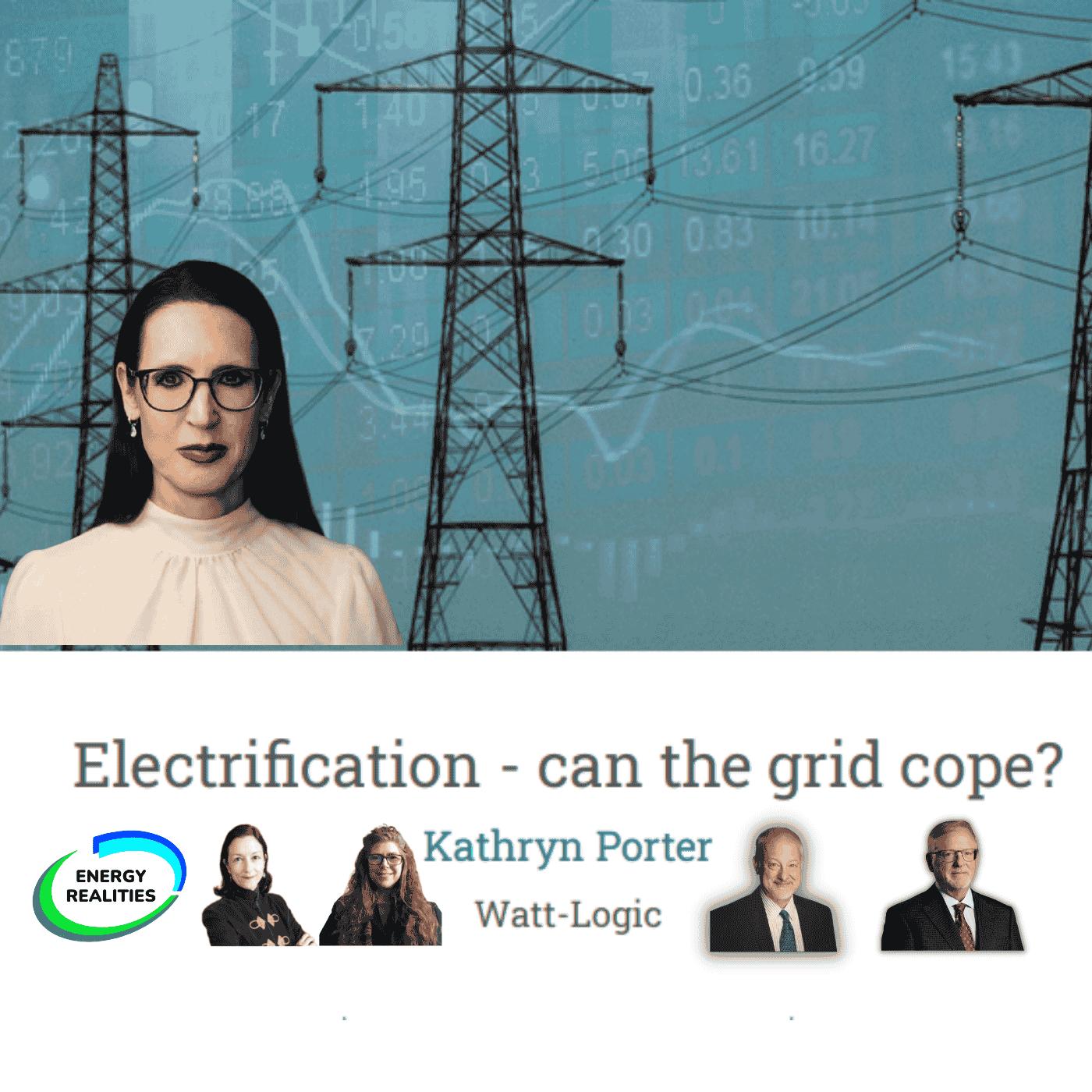 Electrification - Can the Grid Cope? - Kathryn Porter's Report from Watt-Logic Electrification - Can the Grid Cope? - Kathryn Porter's Report from Watt-Logic | Kathryn’s report “Electrification - can the grid cope?” has taken the world by storm.On the Energy Realities podcast today, with David Blackmon, Dr. Tammy Nemeth, and Stu Turley, we have an eye-opening discussion about the UK's totally horrific energy policies. Irina Slav was unable to attend this week’s podcast.Just to tee up the next interview with Kathryn, she has another one on the UK’s oil and gas markets rolling out next month, and we have already asked for her to hop on the Energy Realities or Energy News Beat podcast.The report by Kathryn Porter at Watt-Logic delves into whether the UK's electricity grid can handle this transition, especially amid reliance on intermittent renewables like wind and solar. The analysis highlights stalling deployment due to high costs, grid constraints, and reliability issues, while drawing parallels to similar policies in the European Union and "blue" states in the United States. As I often emphasize, understanding these dynamics is crucial for consumers bearing the financial brunt.The main topics discussed in this podcast are:1. The state of the UK power grid and the challenges it faces due to electrification and the retirement of legacy power generation assets. Catherine Porter, an energy consultant, discusses her recent report on this topic.2. The potential issues with the UK’s gas grid and pipeline infrastructure as North Sea gas production declines. This could lead to gas shortages during peak demand periods.3. The political and policy landscape in the UK, including the role of the Labour party under Keir Starmer and the rise of new political movements like Reform UK. There is discussion around the disconnect between government policies and the ability to implement them effectively.4. The broader themes of deindustrialization, the economic challenges facing the UK, and the impacts on ordinary citizens, particularly those from lower-income backgrounds.5. The debate around the motivations and ideological drivers behind the UK’s energy and climate policies, with differing views on whether this is driven by genuine beliefs or a hidden agenda to control people’s lives.Here is the link to the full Report:I highly recommend connecting with Kathryn on her LinkedIn here: https://www.linkedin.com/in/kathrynporter26/https://theenergynewsbeat.substack.com/p/electrification-can-the-grid-copeIrina SlavInternational Author writing about energy, mining, and geopolitical issues. Bulgaria Irina SlavDavid BlackmonPrincipal at DB Energy Advisors, energy author, and podcast host.Principal at DB Energy Advisors, energy author, and podcast host. David BlackmonTammy NemethEnergy Consulting Specialist The Nemeth ReportStuart TurleyPresident and CEO, Sandstone Group, Podcast Host | — | ||||||
| 1/12/26 | US Withdrawal from the IPCC - With special guest Tom Nelson | This is a huge story, with great implications for the United States, but not so much for UN climate funds. Tom Nelson is a great friend to the Energy Realities podcast, a movie producer, and a podcast host. He will bring some fun insights to this huge story. Buckle up as Dr. Tammy Nemeth, Irina Slav, David Blackmon, and Stu Turley pile in to have some fun on this great start to a new year. The main topics discussed in this Podcast are:1. The United States' withdrawal from various UN and international organizations, conventions, and treaties, particularly those related to climate change. This includes the United Nations Framework Convention on Climate Change, the IPCC, and other climate-related institutions.2. The implications and potential impacts of the US withdrawal from these organizations, with differing views expressed. Some see it as a positive development that will undermine the "climate change scam", while others are concerned it will reduce US influence and participation.3. The debate around the role and validity of climate science, with some participants strongly criticizing the IPCC and climate change narratives as being unscientific, alarmist, and driven by political and financial agendas rather than facts.4. The discussion of alternative energy sources, with participants expressing support for fossil fuels, nuclear power, and criticizing the push for renewable energy like wind and solar as impractical and ineffective.5. Broader geopolitical and ideological themes, including the perceived links between climate change activism, globalism, and communism, as well as the idea of a "global reset" and shifting power dynamics.6. The impact of events like the COVID-19 pandemic in shaping public skepticism towards expert consensus and government policies related to climate change.Check out Tom Nelson's Substack https://tomn.substack.com/Time Stamps:05:01 Tom Nelson spending 50 trillion dollars on wind and solar26:13 David Blackmon CO2 is plant food30:52 Tom Nelson CO2 has never been the climate control knob31::34 Irina - you can call them cultists40:03 Stu Turley: Countries begging for Trump to capture their leaders43:32 Clean Coal , Nuclear 44:38 Dr. Tammy Nemeth - More CO2 when dinosaurs were aroundIrina SlavInternational Author writing about energy, mining, and geopolitical issues. BulgariaDavid BlackmonPrincipal at DB Energy Advisors, energy author, and podcast host.Principal at DB Energy Advisors, energy author, and podcast host.Tammy NemethEnergy Consulting SpecialistStuart TurleyPresident and CEO, Sandstone Group, Podcast Host | — | ||||||
| 1/5/26 | Energy Trends in 2026 - And we are starting off with Venezuela, EVs and CBAM | The Energy Realities team of David Blackmon, Irina Slav, Dr. Tammy Nemeth, and Stu Turley kicks off 2026 with a bang! This is a wild ride, and we are off to the Energy Realities Races in 2026. 00:00 Introduction02:09 Dr. Tammy Nemeth looks to kick off energy trends in Canada and Oil markets05:00 David Blackmon Venezuela06:29 Irina Slav - Common Sense 09:34 David - Battery Advancements11:18 Stu Turley - batteries must be recyclable, and it will take Billions to get Venezuelan oil moving14:57 If North Korea, Democrats, or Republicans who allegedly took money grumble, it means you're on the right track.15:26 Trillions spent on the energy transition, only to have higher costs22:07 EVs and Norway30:55 Corporate Sustainability Due Diligence Directive 34:33 Orsted and Equinor43:26 Climate action faces key tests1. Energy trends and outlook for 2026: - The impact of the situation in Venezuela on the global oil market and Canada's oil exports - The European Union's Carbon Border Adjustment Mechanism (CBAM) and its expansion to more industries - Challenges facing the energy transition, such as the viability of new battery technologies and the reliability of renewable energy sources like wind and solar2. Geopolitical and economic issues: - Tensions between the US, Canada, and the EU - Concerns about corruption and fraud in China's electric vehicle industry - The potential impact of the US taking action in Venezuela on Chinese investments in South America3. Energy policies and their effects: - The differences in electricity prices and affordability between Democratic-led and Republican-led states in the US - The unintended consequences of renewable energy policies, such as increased electricity costs for consumers4. Specific energy-related news and developments: - Legal challenges by offshore wind companies against the US government's suspension of offshore wind projects - The decline in oil prices in 2025 and OPEC's efforts to manage the resulting glutThe transcript covers a wide range of energy-related topics, from geopolitics and policies to technological developments and market trends, providing a comprehensive discussion of the key issues facing the energy sector in 2026.Irina SlavInternational Author writing about energy, mining, and geopolitical issues. BulgariaDavid BlackmonPrincipal at DB Energy Advisors, energy author, and podcast host.Principal at DB Energy Advisors, energy author, and podcast host.Tammy NemethEnergy Consulting SpecialistStuart TurleyPresident and CEO, Sandstone Group, Podcast Host | — | ||||||
| 12/15/25 | 2025 Year in Review - the End of the Transition - and what to expect in 2026 | We had a great discussion with David Blackmon, Irina Slav, and Tammy Nemeth, who tried to join in but had a little spotty connection. 01:19 2026 Predictions03:24 Dark Fleet Tankers filling up in Venezuela 04:48 Naval Assets in the Caribbean Sea and Panama21:43 ExxonMobil cutting investments in low-carbon solutions26:51 The world is healingThe main topics discussed in this podcast are:1. Sanctions and their effectiveness (or lack thereof): The discussion covers how sanctions, particularly those imposed on Russia and Venezuela, have not had the intended impact on the oil and gas markets.2. The energy transition and its challenges: The Energy Realities team analyzes the failures and "dead ends" of various clean energy technologies and initiatives, such as fuel cells, green hydrogen, and sustainable aviation/shipping fuels.3. Geopolitics and trade blocs: There is discussion about the shifting global trade dynamics, with mentions of the potential for the U.S. to align more with India, China, Russia, and Japan, rather than the G7 countries.4. The oil and gas industry: The gang analyzes trends in the oil and gas sector, including the pivot of major oil companies away from renewable investments and towards data centers, the potential for regime change in Venezuela, and the impact of subsidies on the solar and wind industries.5. The economic and political landscape: Topics include the state of the U.S. economy, the popularity of the Trump administration, and the challenges faced by the EU in addressing the energy crisis.Check out the full transcript https://theenergynewsbeat.substack.com/Or https://energynewsbeat.co/Got Taxes? https://energynewsbeat.co/invest/ | — | ||||||
| 12/9/25 | Did Trump Just Kill Joe Biden's EV Dreams | The Energy Realities Team drives it home - "Come On Man"This was a fun podcast with Tammy Nemeth, Irina Slav, David Blackmon, and me! We had way too much fun and had some great comments from the live audience.We also had some great insights from Dr. Graham Conway, Principal Engineer in the Automotive Division at Southwest Research Institute. A shout-out to Rodney, who found out who he was. I have included the full TED Talk clip below, along with the key bullet points.Key Points for the Energy Realities Podcast this morning:The main topics discussed in this transcript are:1. The impact of Trump’s policies on the electric vehicle (EV) industry in the United States. The transcript discusses how Trump’s actions, such as rescinding California’s EV mandate and the CAFE standards, have negatively impacted the growth of the EV market in the US.2. The challenges and limitations of EVs, including their high costs, limited range, battery fires, and lack of consumer demand. We provide detailed analysis on why EVs are not a viable or sustainable solution compared to traditional internal combustion engine vehicles.3. The impact of government subsidies and incentives on the EV market. We discuss how the removal of subsidies, such as the $7,500 tax credit, has led to a significant drop in EV sales in the US.4. The geopolitical and economic implications of the transition to EVs, including the impact on manufacturing, infrastructure, and energy security. We touch on how this transition is affecting countries like Canada and the European Union.5. The broader context of the “green energy transition” agenda, criticizing it as an ideological and unsustainable approach that is harming economies and energy security.Key Chapters:00:00 Introduction - Irina Slav03:18 David Blackmon’s view on how the Trump Administration’s impact on EVs09:55 Dr. Tammy Nemeth covers Norway and the UK’s impact.18:40 Dr. Graham Conway on his TED Talk and how EVs are not as environmentally friendly as advertised.24:44 Irina Slav is pointing out that the EU wants smaller EVs and shorter ranges.30:44 Dr. Tammy Nemeth Zelensky, Starmer, and Macron meeting to figure out the next action items.32:48 Dr. Tammy Nemeth brings up that EU and Canada allowed deindustrialization to become a service economy, and may have caused harm to long-term manufacturing capabilities.Dr. Graham Conway's TED Talk was outstanding; here is the TikTok video. I will be reaching out to him to get him on the podcast.https://theenergynewsbeat.substack.com/p/did-trump-just-kill-joe-bidens-evIrina SlavInternational Author writing about energy, mining, and geopolitical issues. BulgariaDavid BlackmonPrincipal at DB Energy Advisors, energy author, and podcast host.Principal at DB Energy Advisors, energy author, and podcast host.Tammy NemethEnergy Consulting SpecialistStuart TurleyPresident and CEO, Sandstone Group, Podcast Host | — | ||||||
| 12/1/25 | The Global Fall Out from COP30 | The Energy Reality team from Bulgaria, the US, and the UK had a fun energy discussion at the expense of the COP30 participants. When you get Tammy Nemeth, David Blackmon, Stu Turley, and Irina Slav on a podcast, buckle up, as fun is around the corner. The main topics The Energy Realities Team discussed in this podcast episode include:1. The outcomes and implications of COP30, the recent UN climate change conference:- The lack of significant progress or agreements made at the conference- Discussions around censorship and information control efforts that emerged from COP30- The role and influence of the US, particularly under the Trump administration, on the outcomes2. The geopolitical and economic shifts happening globally related to energy and climate policies:- The diverging paths and trading blocs forming between countries/regions pursuing net-zero policies versus those resisting them- China's growing influence and the West's increasing reliance on China for manufacturing and energy- Concerns about deindustrialization and the fiscal impacts of net-zero policies in Western countries3. Specific energy and climate policy developments:- The "memorandum of understanding" between the Canadian federal government and the province of Alberta on oil pipelines- The UK's plans to tax electric vehicle drivers- Germany's increasing gas usage and LNG import needs4. Commentary and analysis on the media's coverage and portrayal of these energy and climate issues.The podcast features in-depth discussion and differing perspectives from the co-hosts on these major topics shaping the global energy landscape.Irina SlavInternational Author writing about energy, mining, and geopolitical issues. BulgariaDavid BlackmonPrincipal at DB Energy Advisors, energy author, and podcast host.Principal at DB Energy Advisors, energy author, and podcast host.Tammy NemethEnergy Consulting SpecialistStuart TurleyPresident and CEO, Sandstone Group, Podcast HostIf you want to get your story out, consider sponsoring the Podcast and reaching out to anyone on the team. | — | ||||||
| 11/10/25 | Brian Zinchuk, talks Canadian Energy | We have Brian Zinchuk, PipelineOnline.ca, Saskatchewan’s Energy News, stopping by the Energy Realities Podcast, and we’re ready to dive deep into Canada’s evolving energy markets. It’s always a great time having Brian on the show as he brings sharp insights and real-world perspectives on the challenges and opportunities facing Canada’s energy future.From the federal clean energy mandates to the realities of coal, gas, and nuclear development, this conversation explores how Saskatchewan is navigating the path to reliable, affordable power. Buckle up, some true energy realities are hitting the podcast as we uncover what’s shaping the future of Canadian energy.This was a lot of fun, and Brian and I were able to catch up after the show and talk about his reporting and how we can help him out with more coverage.Please follow Brian on LinkedIn https://www.linkedin.com/in/brianzinchuk/Check out his news site: Pipelineonline.caHighlights of the Podcast00:00 – Introduction01:42 – Saskatchewan’s Energy Reality04:12 – Coal as a Bridge to Nuclear10:26 – Challenges with Wind, Solar, and Gas12:11 – Lessons from Europe and Maintenance Issues22:18 – CO₂ Capture and Enhanced Oil Recovery26:19 – Federal vs. Provincial Energy Conflict29:09 – The Price of Unreliable Energy35:51 – The Storage Mirage39:33 – Saskatchewan Pushes Back44:54 – Doubling the Grid is Unrealistic53:25 – Nuclear’s Massive Future55:56 – Preparing the Next Generation58:31 – Closing Remarks | — | ||||||
| 11/3/25 | The Opportunity Cost of Bill Gates Climate Crisis | In a shocking flip, Bill Gates announced that Climate Change, while a real issue, is not an "existential threat" to humanity. Wow, how much has his Climate leadership impacted global markets and society and how has it harmed kids' mental health? You have to ask, how much has the global market of carbon credits and Net Zero been influenced by Bill Gates' money and involvement? And how do we move forward without being censored?In this episode of the Energy Realities Podcast, David Blackmon, Tammy Nemeth, Irina Slav, and Stu Turley dive into Gates’ sudden change in tone and what it reveals about the broader climate agenda. From the fading dominance of the Green movement to the growing backlash against global sustainability mandates, the hosts unpack how billionaire-driven policies, corporate influence, and political narratives have shaped public perception and distorted energy markets. They also explore the real “opportunity cost” of these policies how resources poured into questionable green ventures have stifled innovation, strained economies, and undermined energy security worldwide. Tune in for sharp insights and real talk you won’t hear in the mainstream.Highlights of the Podcast00:00 – Opening and Introductions01:41 – Bill Gates’ Shift on Climate Change05:11 – Gates’ Motives and Investments06:45 – Gates’ Profit Motives & Backlash10:28 – Media Clip: “Opportunity Cost”15:14 – Exxon’s Pushback and Policy Overreach21:14 – The Battle over Corporate Climate Mandates28:15 – EU’s Overconfidence and Federalization Push34:01 – EU’s Political Shakeups and Doubling Down39:42 - Climate activists lose human rights case over Norway oil and gas drilling42:36 - Tests find that Chinese manufacturer can manipulate electric busses in Norway46:46 - Chris Wright talks China Deal, Alaska, Bill Gates and More 47:44 - Bill Gates Lurch into Energy and Climate Reality48:33 - Save the animals. But only the ones we say54:50 - ExxonMobil Sues California Over Climate Reporting Laws55:23 - Surge in Rooftop Blazes Sparks Concern Over Miliband’s Solar Panel Boom57:46 – Global Climate Governance01:01:46 – Closing Remarks | — | ||||||
| 10/31/25 | The Changing World of Energy | You won't want to miss this episode of the Energy Realities Podcast with David Blackmon, Irina Slav, Tammy Nemeth, and Stu Turley as they dive into the major shifts shaping today’s global energy landscape. From geopolitical tensions and critical mineral shortages to the ongoing tug-of-war between renewable ambitions and oil and gas realities, the hosts unpack how policy, production, and politics are redefining the future of energy.As markets react to new trade deals, environmental directives, and economic divides, the team breaks down what these changes mean for consumers, investors, and nations alike. This episode brings powerful insight and candid analysis on the forces driving the world’s transition and why understanding them has never been more important.Highlights of the Podcast00:01 – Introductions03:32 - Promises Made, Promises Kept: Trump Keeps Another One in ANWR12:06 - The momentum on trade is with the United States22:23 - Greenpeace and the Net Zero Followers are Wrong - The World is Bifurcating into New Trading Blocs29:49 - Europe Faces an Economic Reality Check on Its Climate Agenda31:47 - Europe struggles to catch up in race to stockpile critical minerals38:54 - U.S. Energy Secretary and Qatari Energy Minister Send Letter to EU Regarding Proposed Corporate Climate Regulations45:44 - Household electric bills to change with the weather54:22 - Spain Reconsiders Its Nuclear Phaseout as Utilities Seek Almaraz Extension55:53 - Secretary Chris Wright has a plan for Rare Earth and Critical Minerals - What is the timeline?01:00:00 – Closing Thoughts and Takeaways | — | ||||||
| 10/21/25 | The Real Cost of Electricity to Consumers With David Turver | The world is facing a massive increase in electricity prices, but nobody has a straight answer on why the prices are up hundreds of percent. We have a special guest, David Turver, a first-principles thinker who writes about Net Zero and Energy Policies. We will have our regular band of energy misfits — David Blackmon, Tammy Nemeth, Irina Slav, and Stu Turley. Buckle up for the truth.In this eye-opening discussion, the panel uncovers the real factors driving today’s skyrocketing electricity costs from renewable subsidies and carbon taxes to grid infrastructure burdens and political mismanagement. David Turver breaks down how these policies have led to economic stagnation, industrial decline, and an uncertain energy future. Tune in to hear how the UK and U.S. are both feeling the impact, and what real solutions could restore affordability and reliability to our power systems.This was an excellent follow-up to the article Wind Turbines are Made by Coal and Are Not SustainableHighlights of the Podcast00:01 - Introduction03:04 - The Real Cause of High Energy Bills08:19 - Hidden Infrastructure Costs12:59 - Political Pushback and Reform Party Response14:59 - U.S. Parallels: Texas’ Two Power Grids20:15 - Economic Impact: Stagnant GDP and Industrial Decline23:07 - Carbon Border Taxes and Global Competitiveness27:12 - Double Carbon Taxes in the UK28:45 - Will Power Bills Ever Go Down?34:18 - Wind Turbine Lifespans and Decommissioning Scandals38:09 - Bureaucratic Capture and Net Zero Ideology43:34 - Reliance on Interconnectors and Norway’s Discontent46:50 - UK Politics and the Future of Net Zero54:03 - Real Solutions: Cutting Subsidies and Redash for Gas57:24 - The Case for Clean Coal and Energy Security59:11 - Net Zero Equals Deindustrialization01:00:05 - Closing Remarks | — | ||||||
| 10/13/25 | China v. America on Rare Earth and Critical Energy Minerals | You won’t want to miss this live discussion from the Energy Realities team on China v. the US in the Critical Mineral market control that is getting global attention. China has been taking additional steps to control supply in various ways, and we will cover how the Trump administration is looking to secure key sources of critical minerals. With David Blackmon, Irina Slav, Tammy Nemeth, and Stu Turley.As China tightens its grip on rare earth and critical energy minerals materials vital to modern technology and defense systems, the Energy Realities team dives deep into what this means for the global economy and Western energy security. From supply chain dominance and environmental resistance to national security implications and policy failures, this discussion unpacks the strategic challenges the U.S. and its allies now face.We had a great discussion, and Stu brought up the fact that General Flynn had pointed out last week, when they were recording the podcast, that we all need to get involved and not sit on the sidelines anymore. The fact that we stood by and let our country get this bad is something we need to take to heart and take action locally. That episode with General Flynn is releasing tomorrow morning.President Trump is going to get the critical mineral issue figured out, and we need to encourage Secretary Zeldin to get after regulatory reform before it is too late. We only have months, not years, to get the ore-refining capacity moving, and we will probably see wartime investments and action from the Trump administration.Highlights of the Podcast00:11 – Introduction03:00 – China’s Global Influence and U.S. Response04:16 – Warnings Ignored: The West’s Missed Opportunities06:50 – Environmental Barriers to Mining08:11 – The Irony of Green Resistance12:03 – National Security and Supply Chain Risks19:01 – Political Compromise and Chinese Influence in the West23:09 – Useful Idiots and Ideological Alignment26:56 – Political Incompetence in the West30:00 – Call for Action: Building Domestic Capacity32:17 - Nations Rallied To Stop the 1970s Oil Crisis. It’s Time To Do The Same For Critical Minerals34:45 - Carney's dead end for Alberta oil37:31 - Foreign Billionaire Pours Millions Into U.S. Politics to Push Radical Green Agenda38:35 - China v America on Rare Earth and Critical Energy Minerals 38:46 - Ferrari slashes 2030 electric car plan in half 42:43 - China and Iran Seal Oil-for-Infrastructure Deal to Bypass U.S. Sanctions 43:24 - Phil Mickelson says if you want cleaner Beaches, then restart oil drilling44:23 - Greenpeace Threatens Crown Estate With Offshore Wind Lawsuit45:26 - European Union and energy 49:46 – Climate Litigation and Political Hypocrisy50:59 – Closing Remarks | — | ||||||
Showing 25 of 201
Sponsor Intelligence
Sign in to see which brands sponsor this podcast, their ad offers, and promo codes.
Chart Positions
1 placement across 1 market.
Chart Positions
1 placement across 1 market.