Insights from recent episode analysis
Audience Interest
Podcast Focus
Publishing Consistency
Platform Reach
Insights are generated by CastFox AI using publicly available data, episode content, and proprietary models.
Most discussed topics
Brands & references
Est. Listeners
Insufficient chart data. Estimates will improve as the show charts.
- Per-Episode Audience
Est. listeners per new episode within ~30 days
N/A🎙 ~2x weekly·95 episodes·Last published today - Monthly Reach
Unique listeners across all episodes (30 days)
N/A - Active Followers
Loyal subscribers who consistently listen
N/A
Market Insights
Platform Distribution
Reach across major podcast platforms, updated hourly
Total Followers
—
Total Plays
—
Total Reviews
—
* Data sourced directly from platform APIs and aggregated hourly across all major podcast directories.
On the show
From 10 epsHosts
Recent guests
Recent episodes
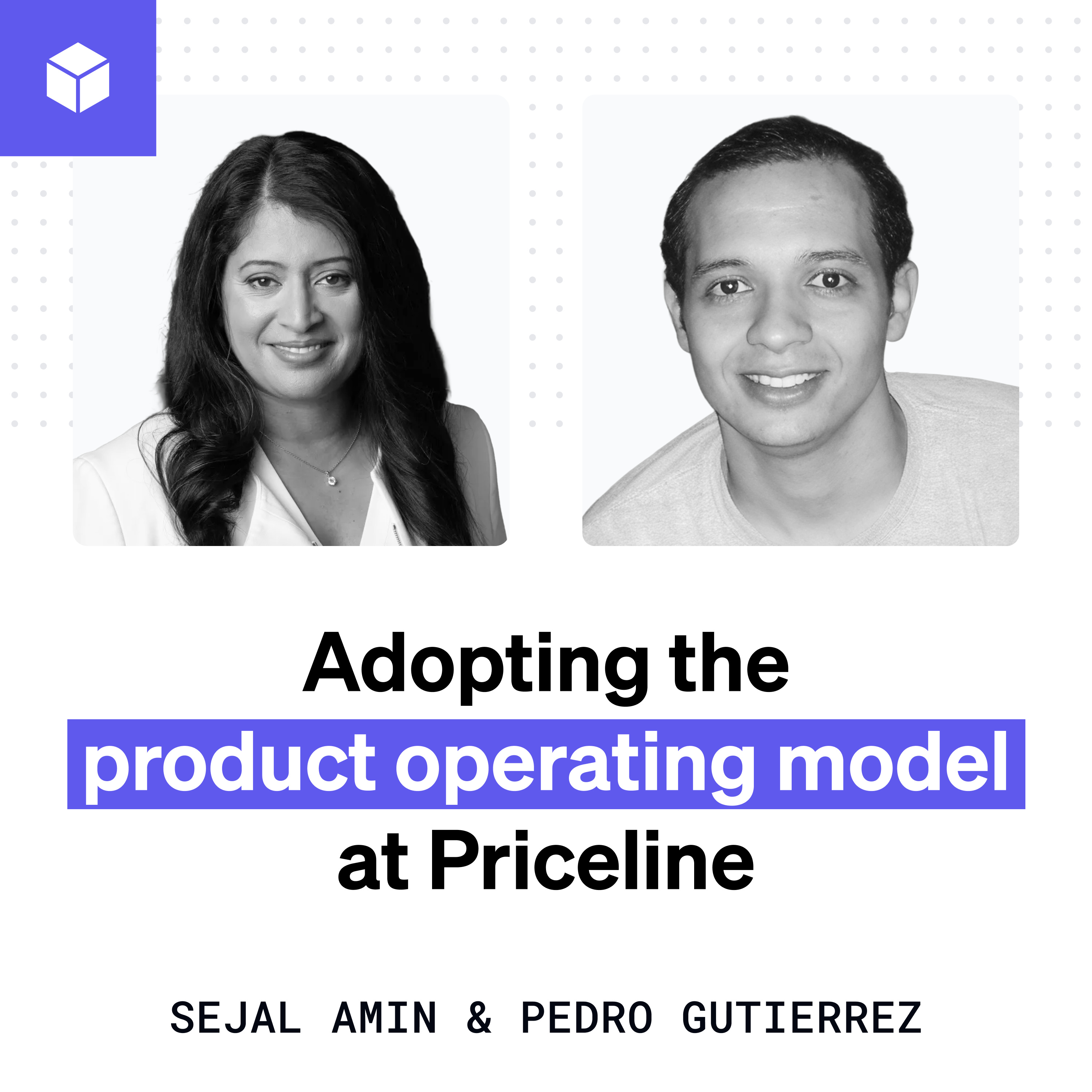
Adopting the product operating model at Priceline
Jul 10, 2026
Unknown duration
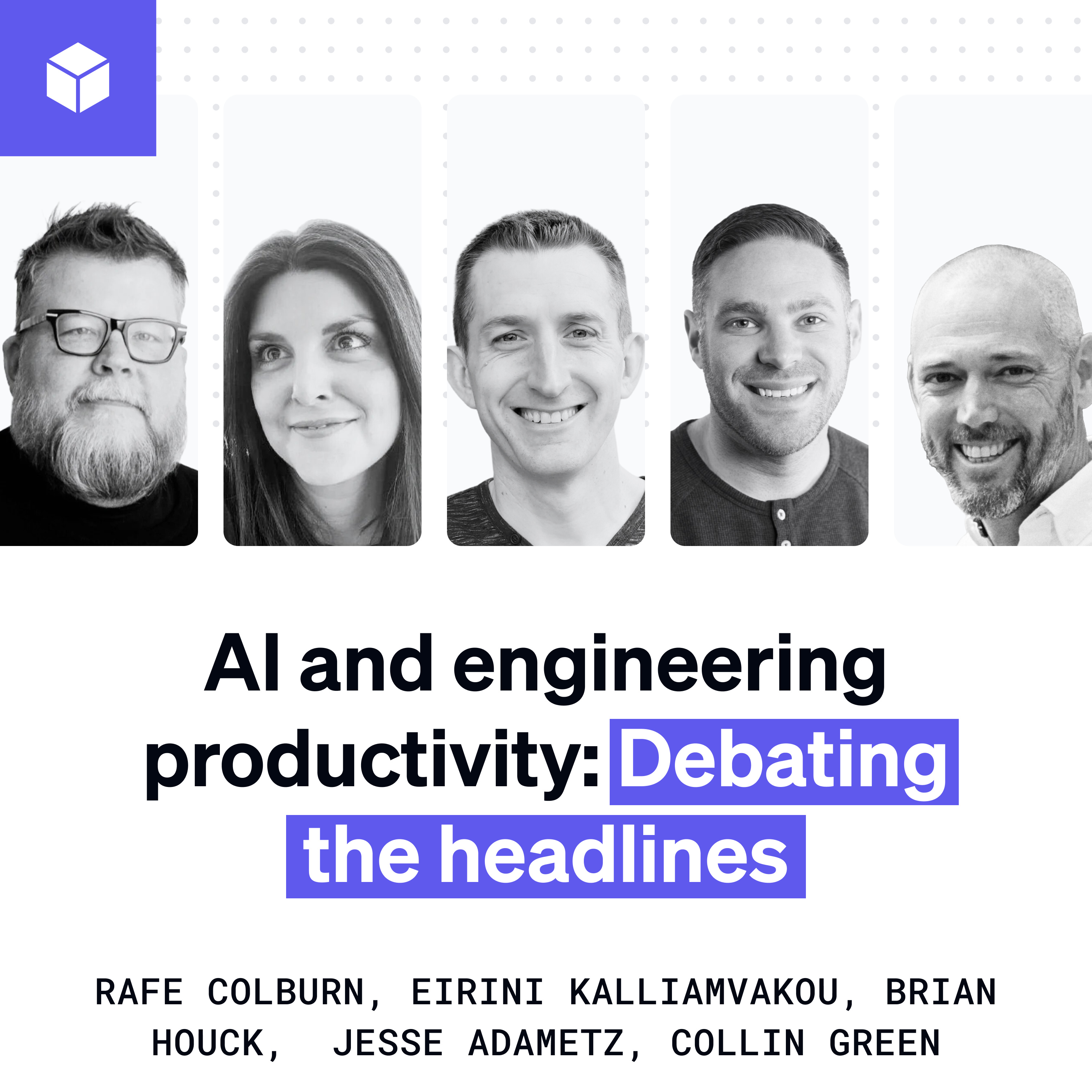
AI and engineering productivity: Debating the headlines
Jun 29, 2026
Unknown duration
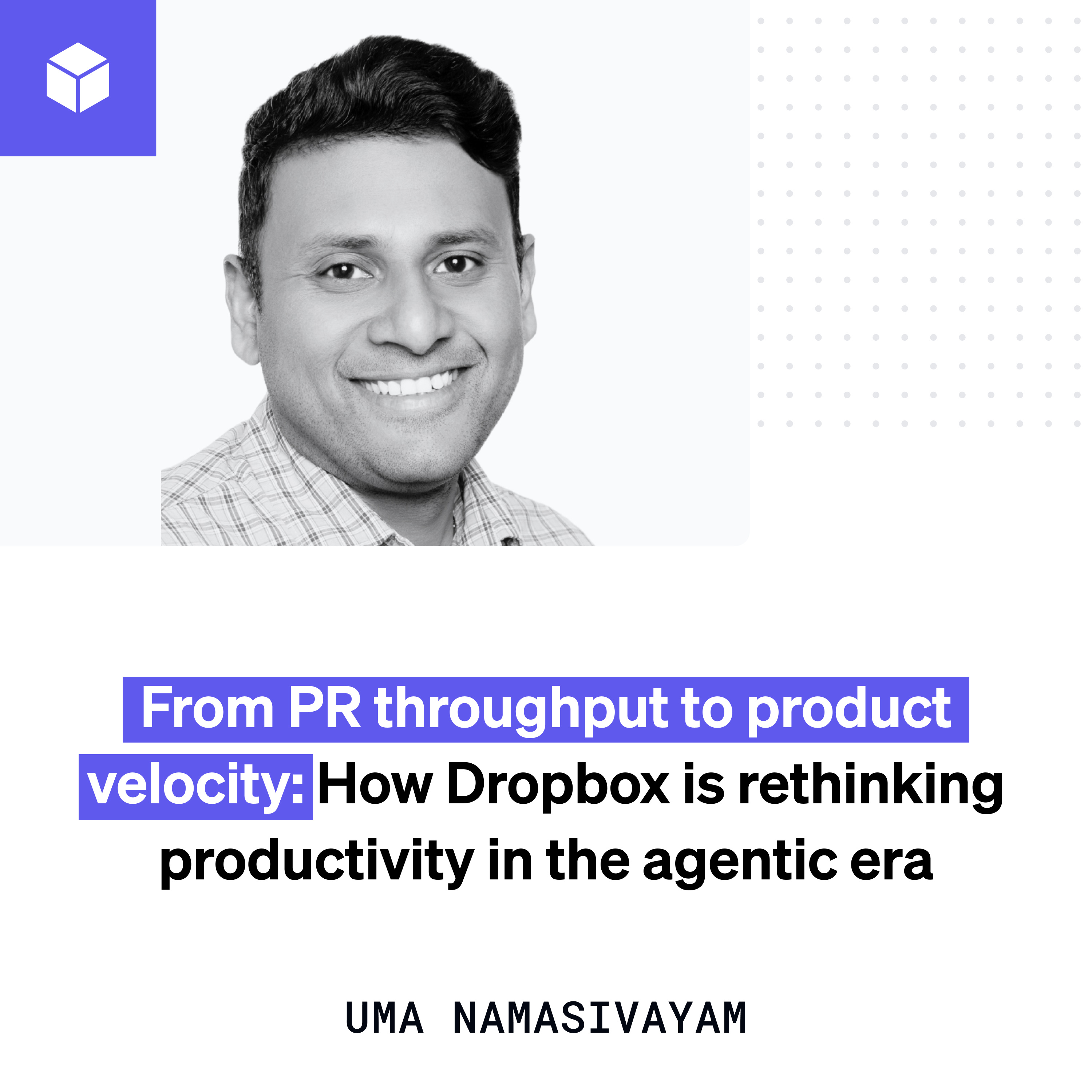
From PR throughput to product velocity: How Dropbox is rethinking productivity in the agentic era
Jun 29, 2026
Unknown duration
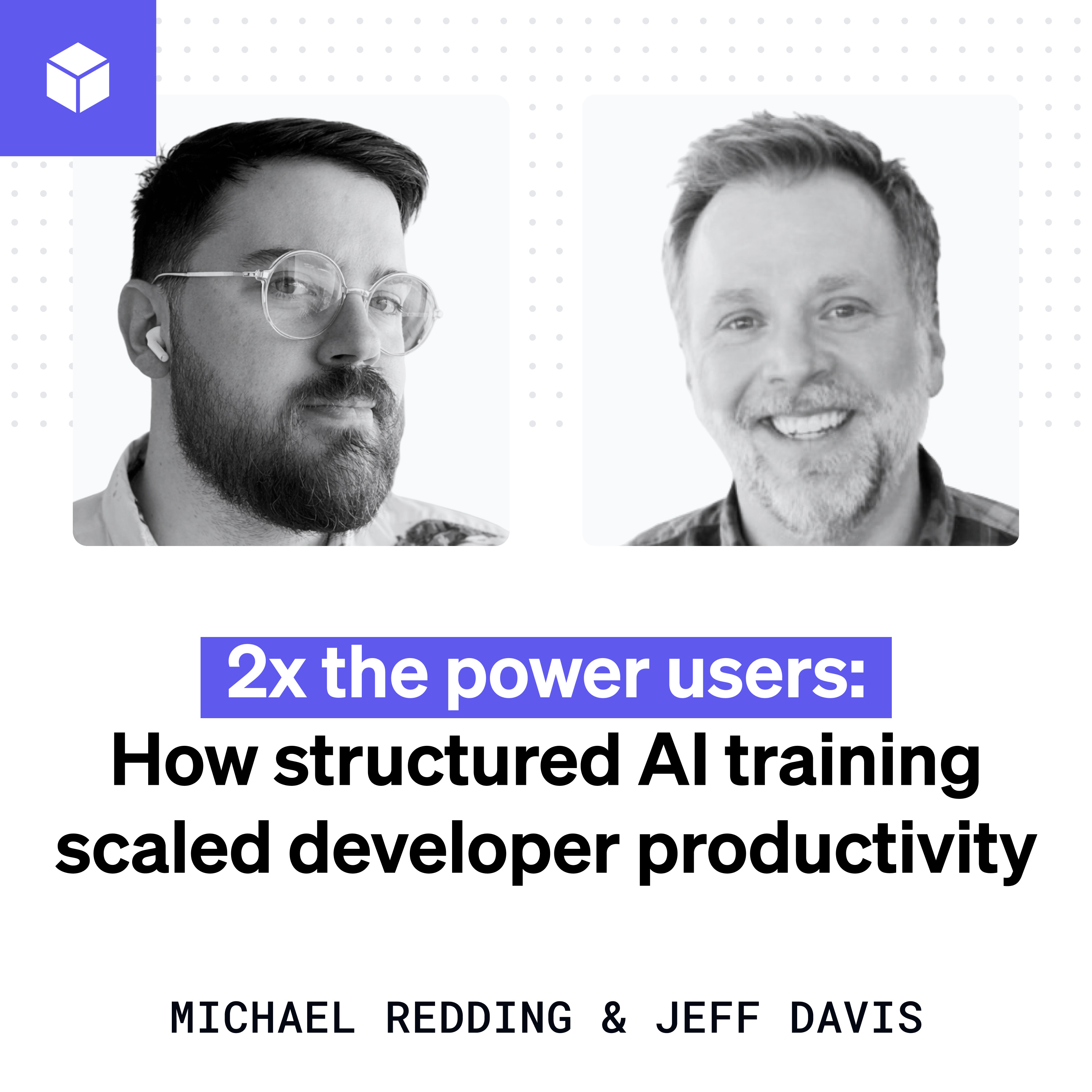
2x the power users: How structured AI training scaled developer productivity
Jun 29, 2026
Unknown duration
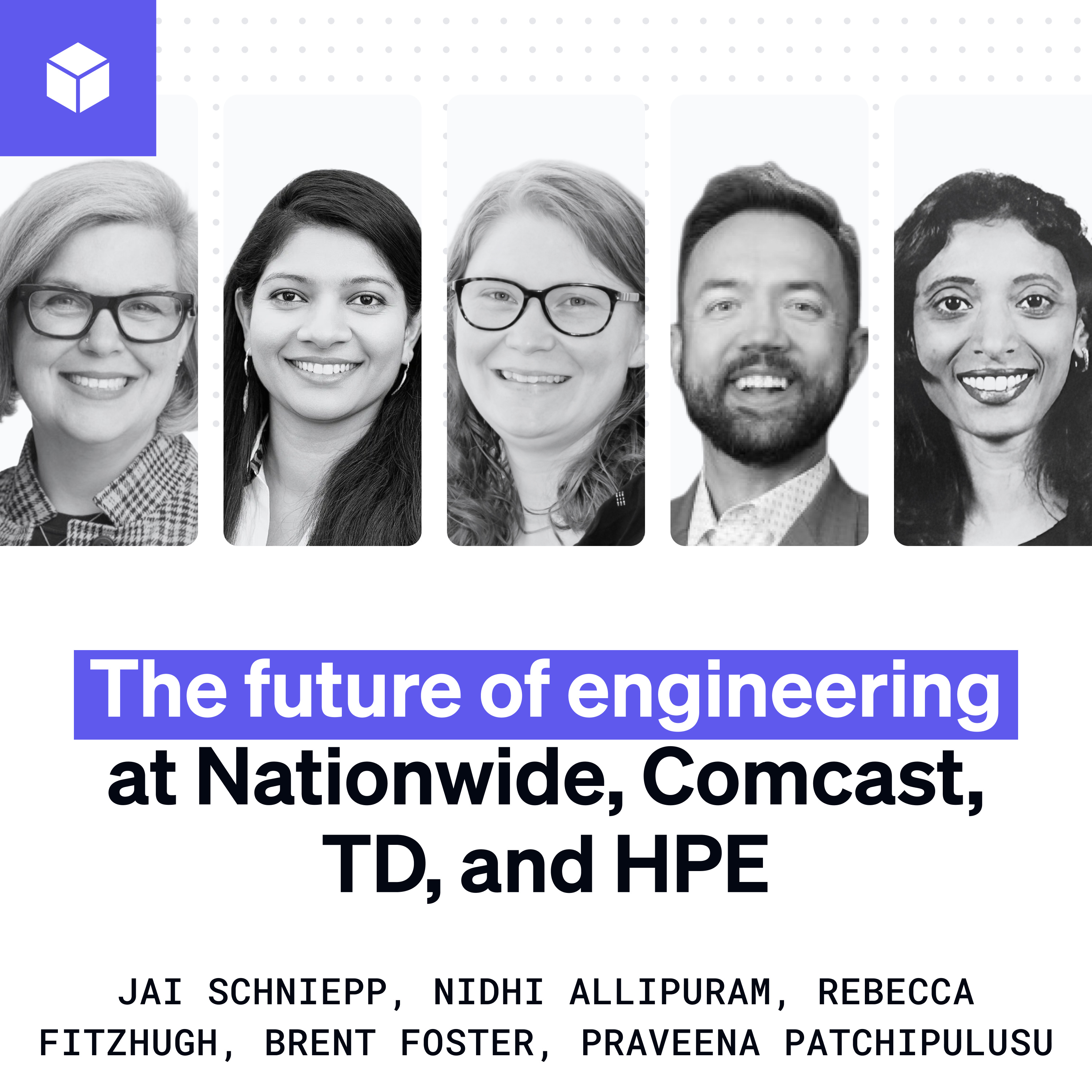
The future of engineering at Nationwide, Comcast, TD, and HPE
Jun 22, 2026
Unknown duration
Social Links & Contact
Official channels & resources
Official Website
Login
RSS Feed
Login
| Date | Episode | Topics | Guests | Brands | Places | Keywords | Sponsor | Length | |
|---|---|---|---|---|---|---|---|---|---|
| 7/10/26 | Adopting the product operating model at Priceline | Sejal Amin is the Chief Technology Officer at Priceline, where she leads product engineering, infrastructure, data, and technology operations. Pedro Gutierrez is Senior Director of Software Engineering, where he has helped drive developer experience initiatives and the adoption of Priceline's product operating model.In this episode of the Engineering Enablement podcast, Justin Reock talks with Sejal and Pedro about Priceline's journey from a project-based organization to a product operating model and the role developer experience played in making that transformation successful. They discuss how DX metrics and developer feedback helped identify organizational bottlenecks, guide structural changes, empower engineering managers, and build trust across teams. They also explore the importance of clear communication, creating a dedicated developer experience team, and how their operating model has helped prepare Priceline for AI-driven software development.Where to find Sejal Amin: • LinkedIn: https://www.linkedin.com/in/sejal-aminWhere to find Pedro Gutierrez: • LinkedIn: https://www.linkedin.com/in/pedro-gutierrez-b6605422Where to find Justin Reock:• LinkedIn: https://www.linkedin.com/in/justinreock In this episode, we cover:(00:00) Intro(01:07) Meet Sejal Amin and Pedro Gutierrez(01:47) How Priceline's developer experience journey began(04:55) Lessons from Priceline's first developer experience surveys(06:55) How DX improved Priceline's developer experience surveys(09:47) Identifying the causes of organizational slowness(12:33) How the product operating model changed the way Priceline works(14:10) Priceline's phased rollout with DX(18:14) How DX insights drove organizational changes(19:33) Why Priceline improved developer experience before org change was complete(22:18) How clear communication builds trust(24:25) Early results from Priceline's Core Four(25:38) Creating a culture of continuous feedback to build trust(27:40) What has changed in the engineering manager role(30:10) Resources for learning about the product operating model(32:40) What Pedro learned from implementing DX(34:51) The developer experience team(35:59) How AI tools have impacted Priceline’s teams (37:20) How the product operating model supports AI-driven development(39:13) Final advice for engineering leadersReferenced:• Measuring developer productivity with the DX Core 4• Transformed: Moving to the Product Operating Model (Silicon Valley Product Group) • Team Topologies• Flow Framework• Project to Product: How to Survive and Thrive in the Age of Digital Disruption with the Flow Framework | — | ||||||
| 6/29/26 | AI and engineering productivity: Debating the headlines | In this closing panel from DX Annual, Rafe Colburn, Chief Product and Technology Officer at Etsy; Jesse Adametz, Senior Director of Engineering, Platform Engineering at Twilio; Eirini Kalliamvakou, Research Advisor at GitHub; Collin Green, Senior Staff UX Researcher at Google; and Brian Houck, Senior Principal Applied Scientist at Microsoft debate some of the biggest questions surrounding AI and engineering productivity.They discuss whether AI will reduce the need for engineers, how AI is affecting technical debt, the future role of software engineers in an agentic world, and whether organizations should mandate AI adoption. They also explore how bottlenecks are shifting across the software development lifecycle, the challenges facing junior engineers, and why learning, culture, and change management may ultimately matter more than the tools themselves.Where to find Rafe Colburn:• LinkedIn: https://www.linkedin.com/in/rafeco• Blog: https://rafe.codesWhere to find Eirini Kalliamvakou: • LinkedIn: https://www.linkedin.com/in/eirini-kalliamvakou-1016865• X: https://x.com/irina_kAlWhere to find Brian Houck: • LinkedIn: https://www.linkedin.com/in/brianhouckWhere to find Jesse Adametz: • LinkedIn: https://www.linkedin.com/in/jesseadametz • X: https://x.com/jesseadametz • Website: https://www.jesseadametz.com Where to find Collin Green: • LinkedIn: https://www.linkedin.com/in/collin-green-97720378In this episode, we cover:(00:00) Intro(01:16) Why an AI-first SDLC doesn’t mean fewer engineers (03:09) The debate over AI and technical debt(07:40) AI-generated code and the future role of engineers(14:16) Why mandating AI use doesn't necessarily lead to better outcomes(20:43) Predictions for the future of junior engineers (23:22) Where the bottlenecks are in the SDLC now(28:25) How risk influences AI use (32:38) Why the human side is the biggest AI adoption challengeReferenced:• Etsy• GitHub• Microsoft• Twilio• Google • Stewart Reichling• What is the SPACE framework and when should you use it? | — | ||||||
| 6/29/26 | From PR throughput to product velocity: How Dropbox is rethinking productivity in the agentic era | In this session from DX Annual, Uma Namasivayam, Senior Director of Engineering Productivity at Dropbox, shares how the company's developer productivity efforts evolved from improving developer experience to preparing for the agentic era.He explains how Dropbox approached AI adoption across its engineering organization, the impact it had on developer productivity, and why faster code generation is creating new bottlenecks in areas such as code review, validation, and CI/CD. He also discusses Dropbox's efforts to rethink engineering systems, measurement, and workflows, including the development of agentic tooling and new metrics designed to move beyond PR throughput and toward product velocity.Where to find Uma Namasivayam:• LinkedIn: https://www.linkedin.com/in/unamasivayIn this episode, we cover:(00:00) Intro(00:57) The beginning of Dropbox’s DX journey(02:34) AI adoption at Dropbox: what made it work (04:46) The results of Dropbox's AI adoption efforts(05:39) What the results mean for the business (06:55) The phases of AI adoption and where they are now(08:00) The new bottlenecks(09:16) Three challenges Dropbox faces moving into agentic engineering(10:05) How Dropbox is redesigning the SDLC for agentic engineering(15:46) The new metrics that matter (19:16) Final takeawaysReferenced:• Dropbox • Developer Experience Index (DXI) | DX • DX Core 4 Productivity Framework• Cursor• Claude Code | Anthropic's agentic coding system• JetBrains • Visual Studio Code• Jira | Project Management for the AI Era | Atlassian• GitHub | — | ||||||
| 6/29/26 | 2x the power users: How structured AI training scaled developer productivity | Indeed increased AI coding tool adoption from roughly 25% to 97% across its engineering organization, but getting engineers to use the tools was only part of the challenge.In this session from DX Annual, Michael Redding, Principal Product Manager, and Jeff Davis, VP of Core Infrastructure at Indeed, explain how the company used structured training, leadership support, and ongoing community engagement to help more than 2,000 engineers build practical AI skills. They share why an early train-the-trainer model fell short, how they redesigned their approach around hands-on learning, and what they learned about balancing adoption, measurement, and psychological safety.They also discuss the impact of the program on coding time, the role of continuous enablement after formal training ended, and how Indeed is preparing for the next phase of AI adoption, including agentic workflows and AI-powered coaching.Where to find Jeff Davis: • LinkedIn: https://www.linkedin.com/in/utjeffd Where to find Michael Redding:• LinkedIn: https://www.linkedin.com/in/reddingsetgoIn this episode, we cover:(00:00) Intro(01:05) Indeed's DX survey from January 2025(02:30) The two-part strategy to double engineering productivity(04:21) How Indeed increased AI adoption from 25% to 97%(15:40) Results from Indeed's AI training program(18:33) How Indeed sustains AI adoption and learning(23:06) What's next for AI enablement at Indeed(24:41) Q&A: How coding time was calculated(25:25) Q&A: How Indeed uses AI playbooks(26:40) Q&A: Balancing asynchronous and live AI training(28:22) Q&A: Psychological safety during AI adoption(31:44) Q&A: Why AI adoption spikes after the holidays(33:20) Q&A: The metrics Indeed tracked (35:22) Q&A: Where the time savings are going (36:54) Q&A: Reaching engineers who skipped the training(38:08) Closing thoughtsReferenced:• Indeed• Claude Code | Anthropic's agentic coding system• Cursor• Windsurf• Amp Code• The Complete Guide to Building Skills for Claude | Anthropic• Measuring developer productivity with the DX Core 4 | — | ||||||
| 6/22/26 | The future of engineering at Nationwide, Comcast, TD, and HPE | In this session from DX Annual, Rebecca Fitzhugh, Lead Principal Engineer at Atlassian, moderates a panel featuring Nidhi Allipuram, Vice President, Enterprise Developer Experience and Platform at Nationwide, Jai Schniepp, Senior Director, DevX Product Management at Comcast, Brent Foster, Vice President and Head of Architecture and Strategy at TD Bank, and Praveena Patchipulusu, Vice President of Engineering at HPE.Together, they discuss how large enterprises are approaching AI adoption, what it takes to build an AI-first software development lifecycle, and how engineering leaders are balancing speed, security, governance, and developer experience. They also share their perspectives on the changing role of engineers, human accountability, and how organizations can prepare for the future of software engineering.Where to find Rebecca Fitzhugh: • LinkedIn: https://www.linkedin.com/in/rmfitzhugh • X: https://x.com/RebeccaFitzhugh Where to find Jai Schniepp:• LinkedIn: https://www.linkedin.com/in/jessicaschnieppWhere to find Nidhi Allipuram: • LinkedIn: https://www.linkedin.com/in/nidhi-allipuramWhere to find Brent Foster: • LinkedIn: https://www.linkedin.com/in/engineeringthefuture• Website: https://brentfoster.meWhere to find Praveena Patchipulusu: • LinkedIn: https://www.linkedin.com/in/praveena-patchipulusu-158741In this episode, we cover:(00:00) Intro(02:28) The AI journey across TD Bank, Comcast, and HPE(05:59) Inside Nationwide's AI-assisted development lifecycle(10:04) Reimagining the software development lifecycle with AI(11:32) Security, governance, and human accountability(15:27) Embedding security and guardrails into AI workflows(17:55) How AI is changing the role of an engineer(21:52) What developer experience looks like in the AI era(26:55) What software engineering may look like in 2030(32:47) How to prepare for the AI-driven futureReferenced:• Atlassian• TD Bank• Comcast Corporation• Hewlett Packard Enterprise (HPE)• Nationwide • GitHub Spec Kit• Abi Noda | — | ||||||
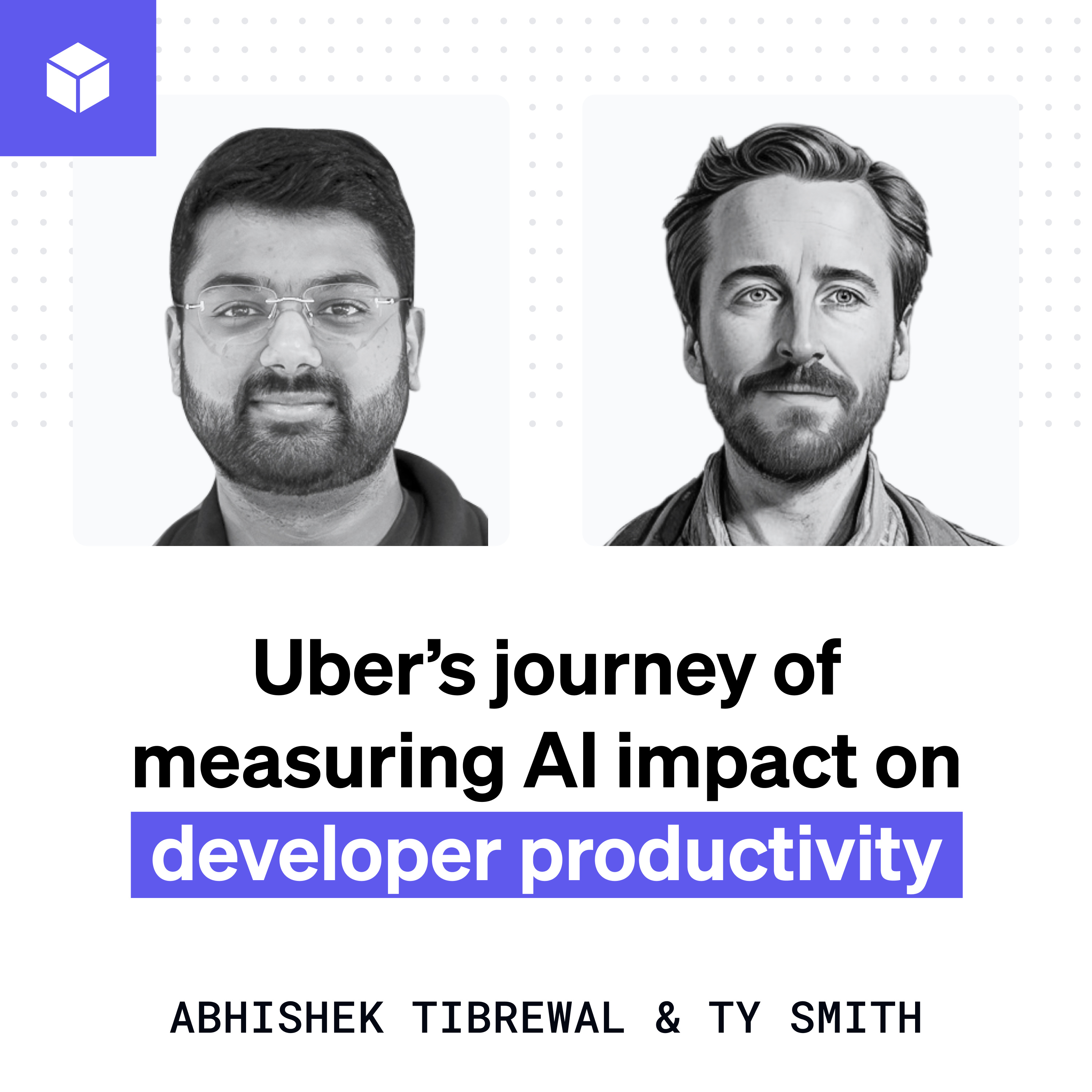
| 6/22/26 | Uber’s journey of measuring AI impact on developer productivity | As AI becomes embedded in software development, many of the metrics that engineering organizations have relied on for years are starting to break down.In this session from DX Annual, Uber's Ty Smith and Abhishek Tibrewal share how their approach to measuring AI's impact on developer productivity has evolved over time. They walk through the different phases of their measurement journey, from adoption and engagement to measuring impact, ROI, and agentic value, explaining what they chose to measure at each stage, what worked, what failed, and how their thinking changed along the way.They also discuss the role of qualitative feedback before telemetry existed, the challenge of identifying meaningful engagement signals, why "developer years saved" failed as an ROI metric, and how AI agents forced them to rethink traditional productivity measurements. Finally, they introduce Uber's emerging framework built around feature velocity and explore the unanswered questions that remain as software development becomes increasingly agent-driven.Where to find Abhishek Tibrewal • LinkedIn: https://www.linkedin.com/in/aabhishektibrewalWhere to find Ty Smith: • LinkedIn: https://www.linkedin.com/in/tyvsmithIn this episode, we cover:(00:00) Intro(01:30) Steve Yegge’s 8 stages of AI-assisted development (03:22) Uber’s shift to a generative AI-powered company (04:20) Uber’s pre-AI productivity metrics (06:55) Important questions from stakeholders that previous metrics didn’t answer (08:25) How Uber measures AI before telemetry exists(11:11) Metrics used to measure adoption(12:49) Measuring engagement(14:30) Measuring impact(16:32) The challenge of measuring AI ROI(19:32) Rethinking adoption, engagement, and impact for agentic AI(26:01) The new north star: Feature velocity (28:41) PR classification + feature velocity: the questions it can answer (33:01) What comes next and what’s still unanswered (34:30) Lessons learned and what they'd do differently(37:11) Q&A #1: How Uber defines a feature (38:50) Q&A #2: Measuring success and AI ROIReferenced:• Welcome to Gas Town• Dara Khosrowshahi (Uber CEO) | — | ||||||
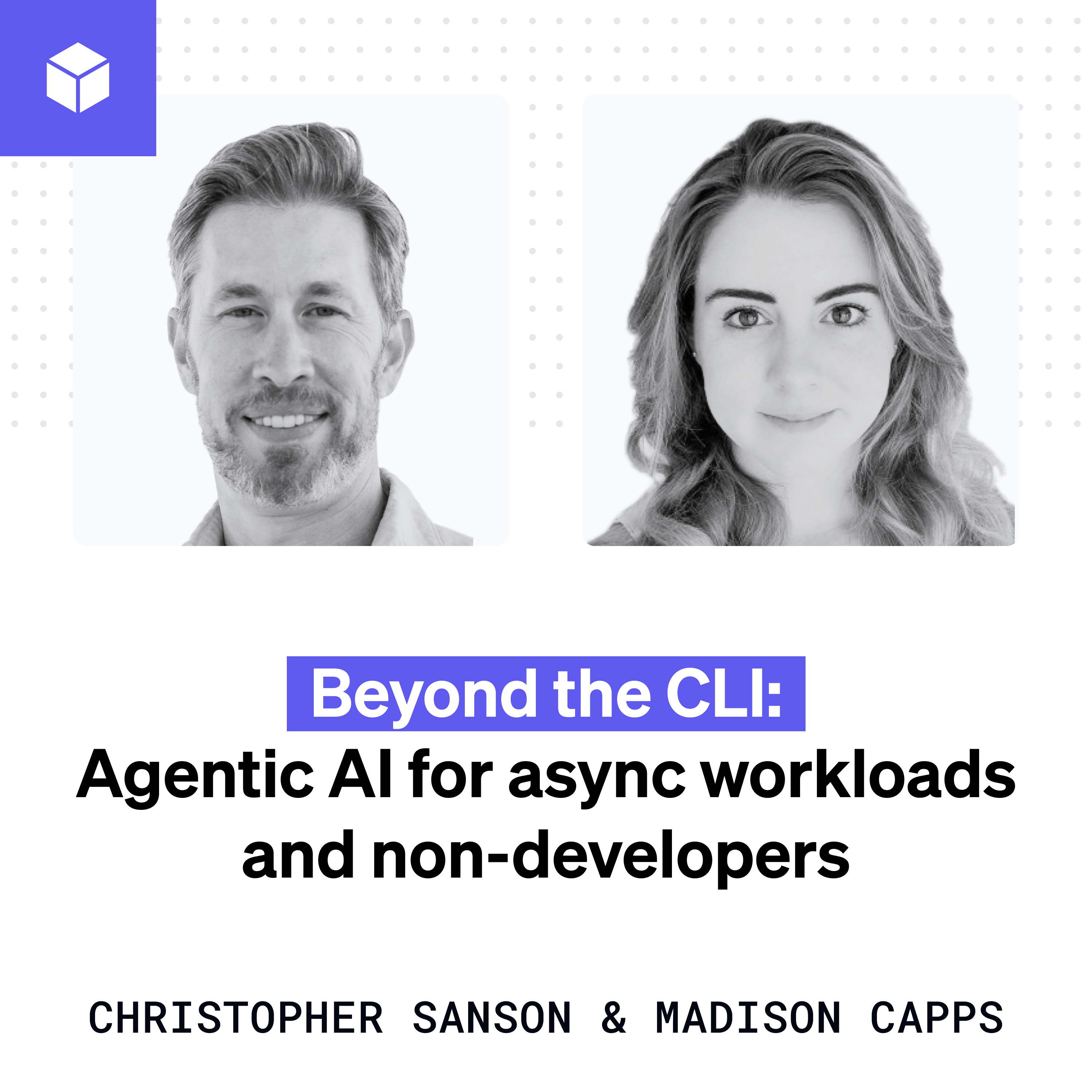
| 6/22/26 | Beyond the CLI: Agentic AI for async workloads and non-developers | In this session from DX Annual, Christopher Sanson, Product Lead, AI Developer Experience, and Madison Capps, Engineering Manager, Infrastructure at Airbnb, challenge some of the most common assumptions about AI. Is AI primarily about replacing humans? Do organizations need mandates to drive adoption? And are the productivity gains really as small as some studies suggest?Using examples from Airbnb's own AI journey, they share how the company achieved widespread adoption of agentic AI through AirChat, community enablement, and internal tooling rather than top-down mandates. They also discuss the impact AI is having on developer productivity, how non-developers are increasingly using coding tools, and how teams are rethinking product development in an AI-first world.Finally, Madison takes a deeper look at the infrastructure powering Airbnb’s AI strategy, including AirChat CLI, the AirChat SDK, and AirChat Remote, along with the company’s vision for asynchronous agent workflows and the next generation of AI-powered development.Where to find Christopher Sanson:• LinkedIn: https://www.linkedin.com/in/christophersanson Where to find Madison Capps:• LinkedIn: https://www.linkedin.com/in/madison-capps-66950625In this episode, we cover:(00:00) Intro(01:37) Myth #1: AI is about replacing humans(03:22) Myth #2: You need mandates to drive AI adoption(05:21) AirChat, agentic AI, and Airbnb's adoption strategy(08:07) Myth #3: AI has little impact on productivity(09:33) Airbnb's increase in coding time and PR throughput(14:20) Myth #4: AI coding tools are just for coders(15:39) How non-developers are using coding tools(17:24) Rethinking product development in an AI-first world(20:30) Myth #5: Vibe coding isn’t coding(22:16) Unsolved problems in agentic AI tooling and how Airbnb is addressing them(26:30) Airbnb’s overall AI philosophy in practice(29:15) Using agentic AI to accelerate code migrations(30:18) AirChat SDK: How Airbnb enables teams to build AI-powered applications(33:17) AirChat Remote and asynchronous agent workflows(36:07) Predictions for what’s nextReferenced:• Airbnb• Steve Jobs’s Bicycles for the Mind • Jennifer St Pierre • Justin Reock• AI-generated merged code holds steady at ~30%• Andrej Karpathy's post on X | — | ||||||
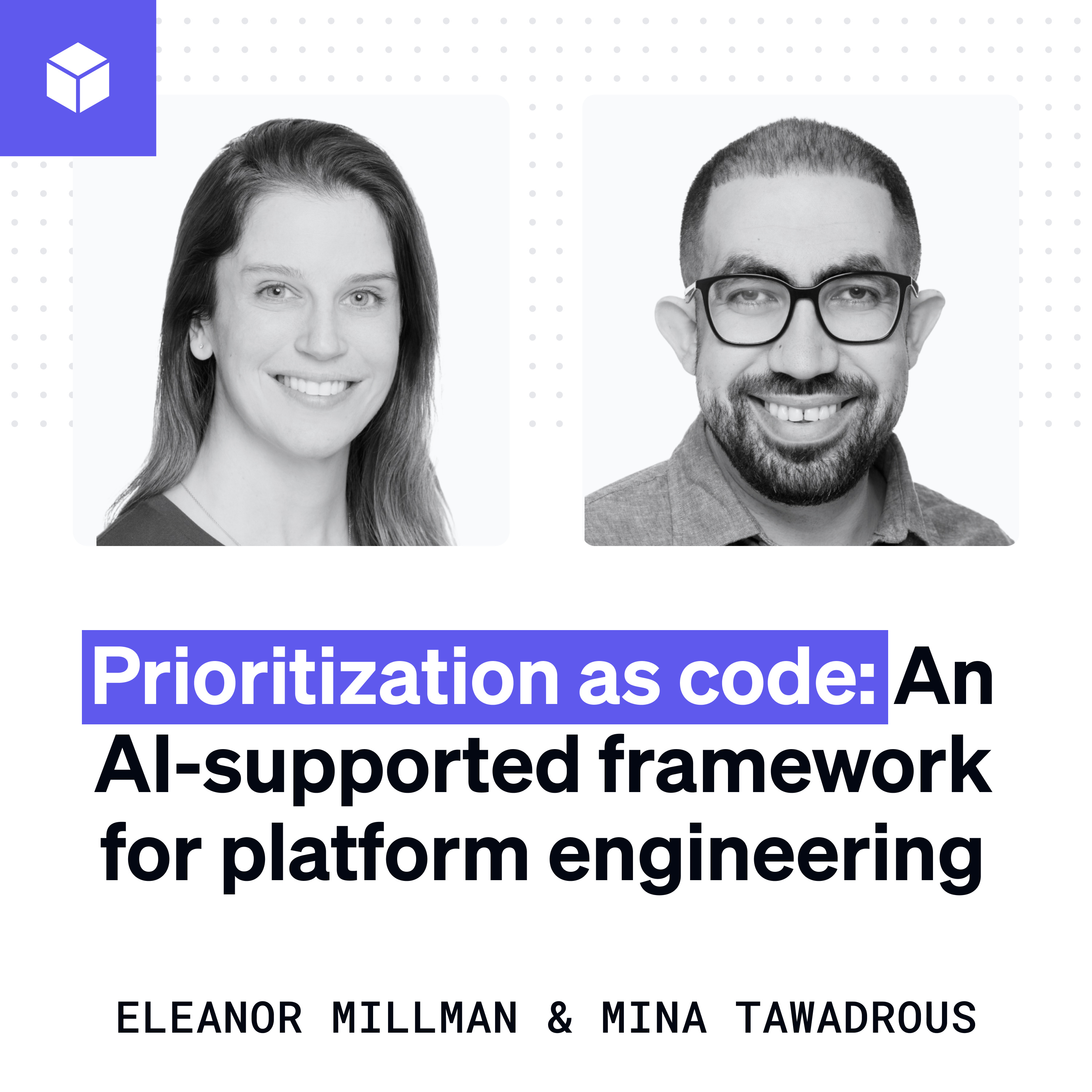
| 6/15/26 | Prioritization as code: An AI-supported framework for platform engineering (Eleanor Millman and Mina Tawadrous) | In this session from DX Annual, Eleanor Millman, Senior Staff Product Manager, and Mina Tawadrous, Associate Director of Product Management at SiriusXM, share how their platform engineering organization developed a prioritization framework for platform engineering teams serving hundreds of developers across a complex cloud platform.They explain how they define and weight platform-specific impact factors, use developer data to refine priorities, and score projects more consistently. They also explore why prioritization debates often stem from conflicting, invisible, or outdated assumptions, and how SiriusXM began treating assumptions like code by documenting, versioning, and reviewing them in source control.Finally, they demonstrate how AI can surface assumptions, connect initiatives to existing knowledge, and support project scoring while keeping humans in the loop. Throughout the session, they offer a practical framework for making prioritization decisions more transparent, data-driven, and scalable. In this episode, we cover:(00:00) Intro(02:58) Building a platform engineering prioritization framework(04:59) The seven platform engineering impact factors(09:38) Using impact factors to score projects(13:11) Using developer data to refine priorities(16:33) Three ways assumptions fail (17:40) Assumptions as code (21:00) New problems created by assumptions as code(22:00) Using AI to surface assumptions(23:44) Building an AI-powered feedback loop(25:44) Inside the AI prioritization tool(28:18) Three steps to build your own framework(30:02) Q&A #1: Evaluating high-cost projects(31:30) Q&A #2: The cadence of iteration (32:10) Q&A #3: When the framework conflicts with a stakeholder's priorities(35:26) Q&A #4: Using the framework for non-developersReferenced:• AWS• Databricks• RICE: Simple prioritization for product managers• Designing developer experience surveys• GSB Preserve | View | The Curse of Knowledge | — | ||||||
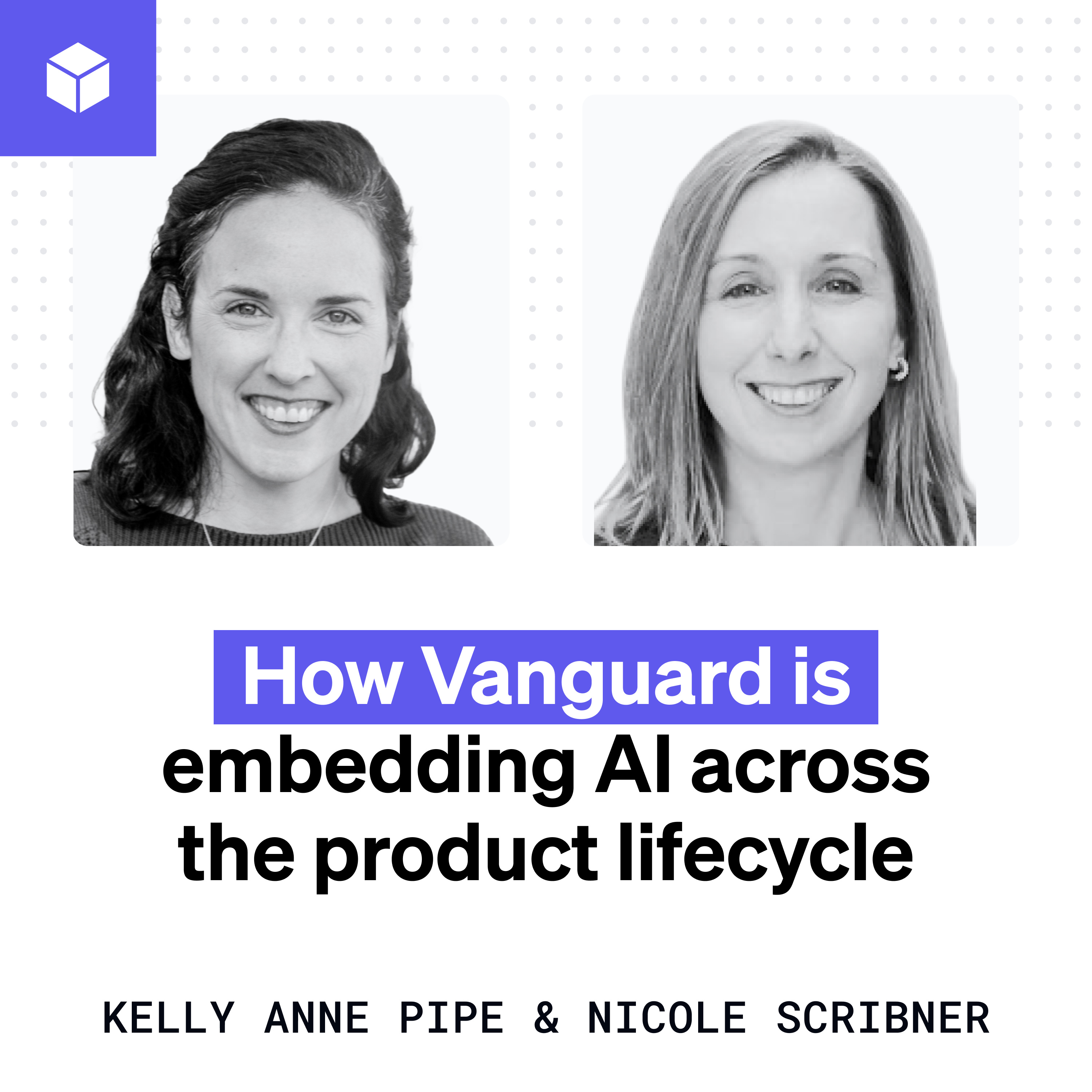
| 6/15/26 | Augmented, accelerated, autonomized: How Vanguard is embedding AI across the product lifecycle (Kelly Anne Pipe and Nicole Scribner) | Kelly Anne Pipe is Head of Developer Experience at Vanguard, and Nicole Scribner is a Director in the firm's Chief Technology Office focused on engineering enablement and advancement.In this session from DX Annual, Kelly Anne and Nicole share how Vanguard is expanding its AI strategy beyond software engineering to the entire product development lifecycle. While the company initially focused on tools like GitHub Copilot for engineers, they found that faster coding alone did not significantly improve delivery speed. Product managers, designers, QA teams, and organizational processes were still operating at a different pace.To address this challenge, Vanguard developed a product team maturity model built around three stages: Augmented, Accelerated, and Autonomized. The framework spans six dimensions, from AI-powered delivery and AI-ready codebases to team autonomy, operations, and responsible AI.Kelly Anne and Nicole explain how Vanguard is applying the model across more than 800 product teams, the behaviors they believe will enable faster delivery, and the lessons they have learned about measurement, organizational change, dependencies, and scaling AI across the product development lifecycle.In this episode, we cover:(00:00) Intro(02:16) The state of AI one year ago at Vanguard(02:54) The engineering bubble(05:05) Building an AI maturity model for 800 product teams(08:24) Dimension 1: AI-powered product delivery(10:00) Dimension 2: AI-ready codebase(12:20) Dimension 3: Autonomous agent utilization (13:00) Dimension 4: AI-augmented operations(14:00) Dimension 5: Team autonomy and enablement(16:11) Dimension 6: Responsible AI(18:15) The people problem: role evolution (20:00) The measurement problem (22:55) Lessons learned from rolling out the maturity model (26:46) What’s ahead (30:10) Q&A #1: Getting your codebase ready for AI(32:22) Q&A #2: Audit trails and responsible AI(34:16) Q&A #3: Vanguard's maturity model progress(36:15) Q&A #4: Measuring cycle time across 800 teamsReferenced:• Vanguard• Jennifer St Pierre - Dell Technologies | LinkedIn• Mercari | — | ||||||
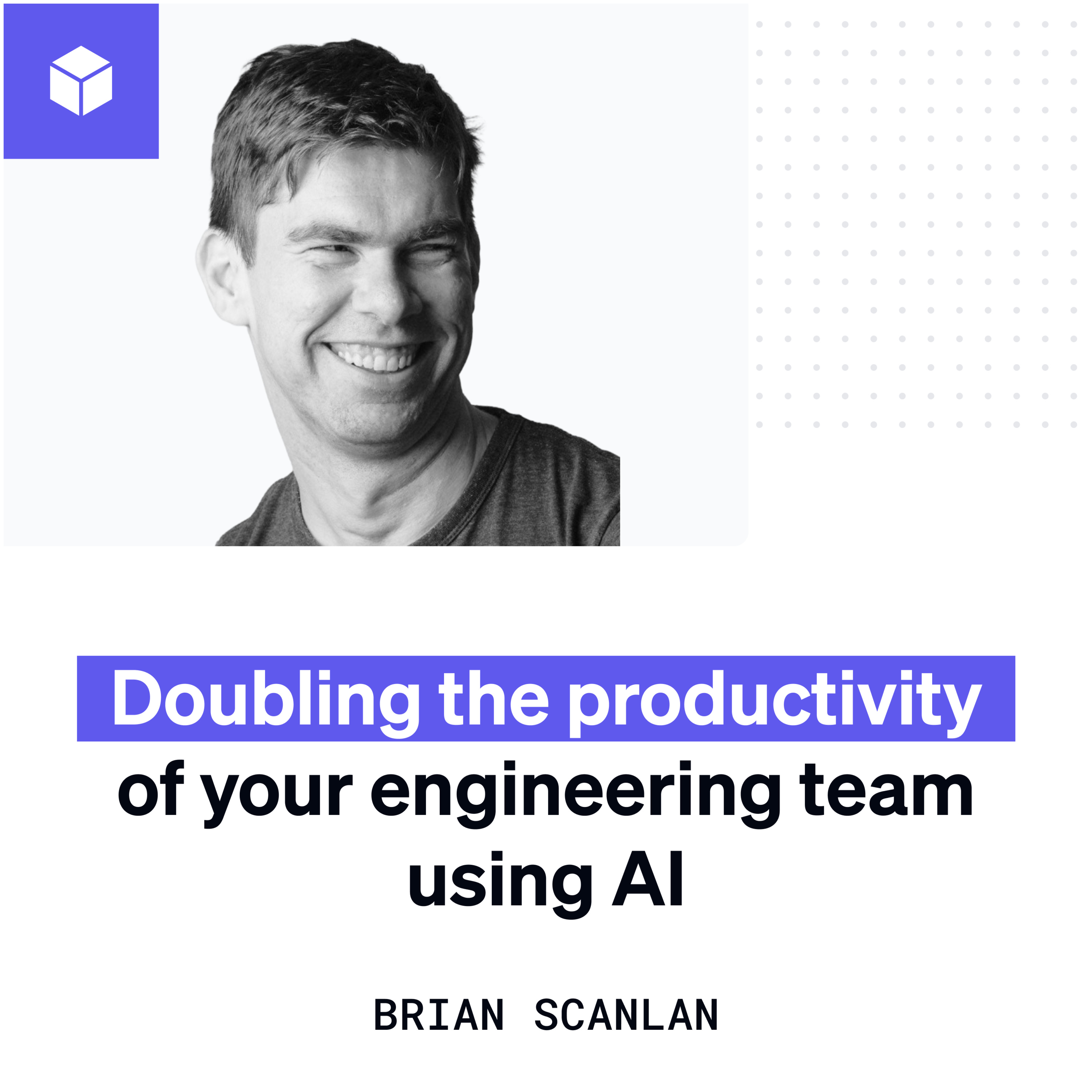
| 6/15/26 | Doubling the productivity of your engineering team using AI (Brian Scanlan) | Brian Scanlan is a Senior Principal Systems Engineer at Intercom, where he works on platform engineering, developer productivity, and AI adoption across the company.In this session from DX Annual, Brian shares how Intercom set out to double engineering throughput and ultimately achieved that goal in nine months. Rather than treating AI as an optional productivity tool, the company standardized on Claude Code, updated performance expectations, invested heavily in enablement, and adopted an agent-first approach to technical work.Brian explains why Intercom views Claude Code as a platform rather than a tool, how the company is building domain-specific skills and workflows for agents, and why it believes agents should eventually be able to perform any technical task a senior engineer can complete on a laptop.He also shares the data behind Intercom's AI adoption efforts, including gains in throughput, reductions in defect backlogs, improvements in code quality, and the growing use of automated pull request approvals. Throughout the talk, Brian offers a practical look at what it takes to scale AI adoption across a large engineering organization and the lessons Intercom has learned along the way.Where to find Brian Scanlan:• LinkedIn: https://www.linkedin.com/in/scanlanb• X: https://x.com/brian_scanlan • Website: https://brian.scanlan.ie In this episode, we cover:(00:00) Intro(02:54) Intercom’s goal of doubling throughput (07:30) The platform strategy (09:30) Their agent-first strategy (10:58) Evergreen capabilities vs custom tooling (12:28) How Intercom works with agents(16:43) What the data reveals about AI adoption and impact(19:20) Using session data to improve AI workflows(20:20) Cutting the defect backlog in half(22:44) Inside Intercom’s Claude Code setup(28:09) Claude Code beyond engineering(30:49) Q&A #1: Token cost (32:52) Q&A #2: Preparing for AI pricing changes(34:14) Q&A #3: Stress testing and auditing skills(36:31) Q&A #4: Criteria for agents approving PRsReferenced:• Intercom• Software? No Way. We’re an A.I. Company Now! - The New York Times• Anthropic• Snowflake• Linear• LaunchDarkly • Fin AI• Microsoft Copilot• Cursor• Claude Code | Anthropic's agentic coding system• Steve Yegge (@Steve_Yegge) / Posts / X • Honeycomb• Fin Ideas• Fin CLI | AI Agent Command Line Interface | — | ||||||
Want analysis for the episodes below?Free for Pro Submit a request, we'll have your selected episodes analyzed within an hour. Free, at no cost to you, for Pro users. | |||||||||
| 6/15/26 | From AI experiments to organizational shift: Lessons from Mercari’s transformation (Michael Galloway and Snehal Shinde) | Michael Galloway leads Platform Engineering at Mercari, while Snehal Shinde leads Cost and Performance Engineering. Together, they have been at the center of Mercari's effort to become an AI-native company.In this session from DX Annual, Michael and Snehal share what happened after Mercari's CEO mandated 100% AI adoption across the organization. While AI accelerated code generation and increased engineering output, the team quickly discovered that their existing dashboards could not answer a simple question: was AI actually improving productivity?They discuss how Mercari built new visibility into AI usage and software delivery, the bottlenecks they uncovered across the SDLC, why faster coding did not automatically translate into faster delivery, and the lessons they learned rolling out AI at scale. They also share how Mercari is rethinking software development around agents, feedback loops, and new ways of working.In this episode, we cover:(00:00) Intro(01:46) Mercari’s scale and engineering culture(02:51) DX awards at Mercari(03:44) Mercari’s push to become AI-native(06:34) The mandate to rethink everything(08:02) Mercari’s AI visibility problem and how they solved it(11:30) Mercari’s early findings on AI implementation(18:47) Closing the AI awareness gap at Mercari(21:11) Mapping AI opportunities across Mercari(31:32) Unpacking the results from the second rollout(34:14) Agent spec-driven development and what’s next(37:37) A multi-loop SDLC(40:50) Some hard lessons(42:55) Closing thoughtsReferenced:• Mercari• Cursor• Devin• Claude Code | Anthropic's agentic coding system• GitHub• Datadog• Tim Bozarth - Microsoft | LinkedIn• Airbnb• Jim Collins - Concepts - The Stockdale Paradox | — | ||||||
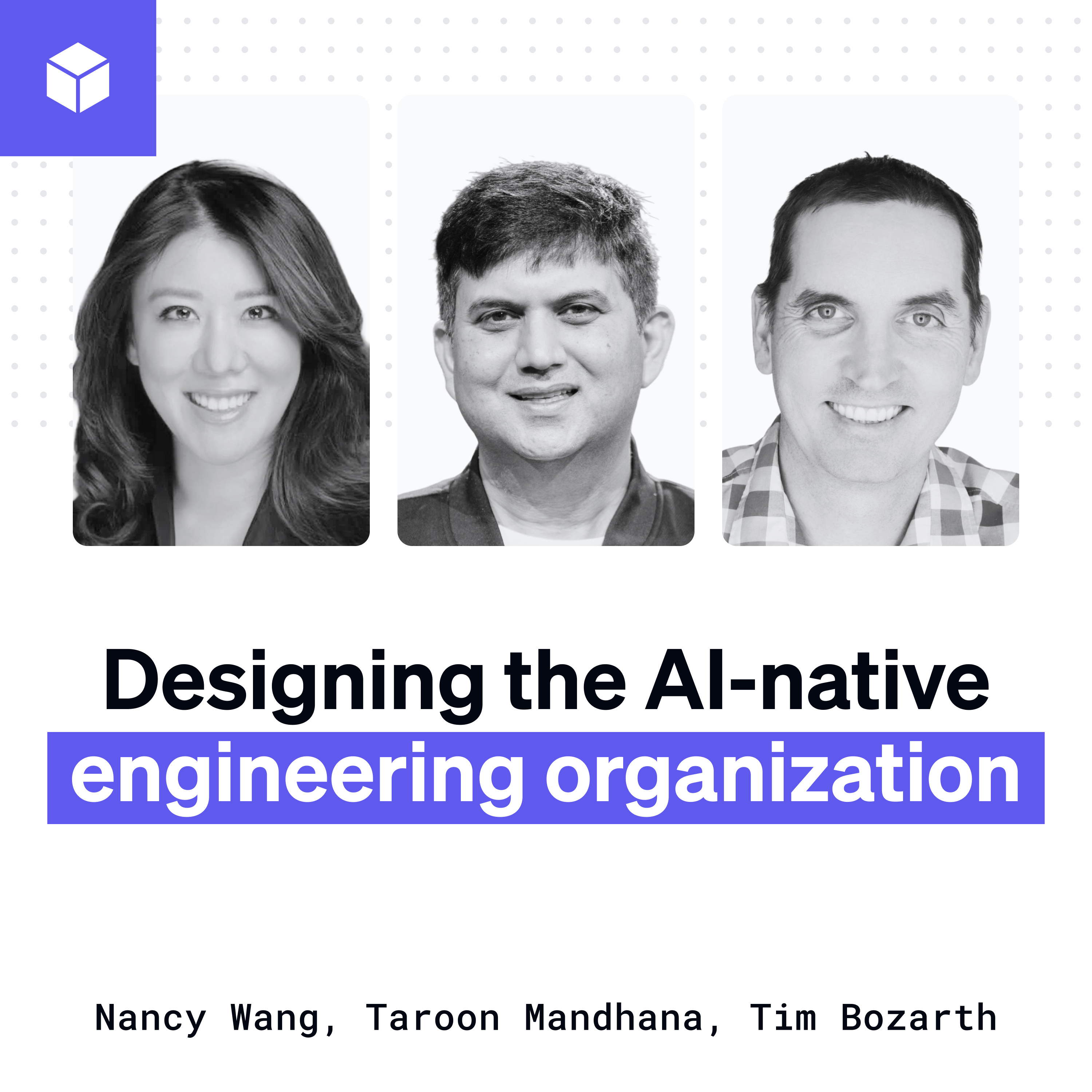
| 6/8/26 | Designing the AI‑native engineering organization with 1Password, Microsoft and Atlassian✨ | AI adoptionengineering organizations+5 | Tim BozarthNancy Wang+1 | Microsoft1Password+2 | — | AIengineering+5 | — | 43m 31s | |
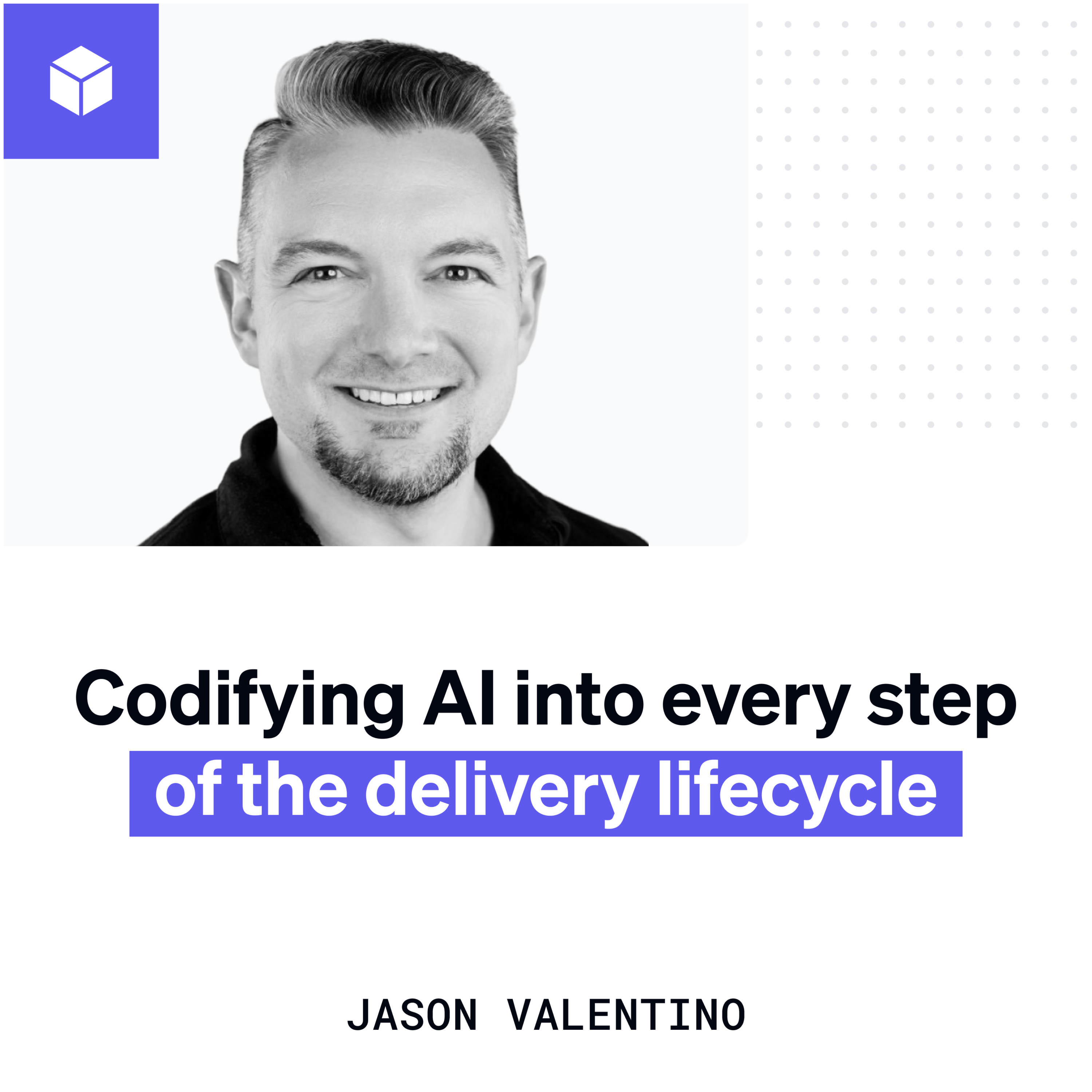
| 6/8/26 | Mapping the new SDLC at BNY: Codifying AI into every step of the delivery lifecycle (Jason Valentino)✨ | software delivery lifecycleAI in engineering+4 | Jason Valentino | BNYDX+1 | — | AI coding assistantsSDLC+5 | — | 33m 24s | |
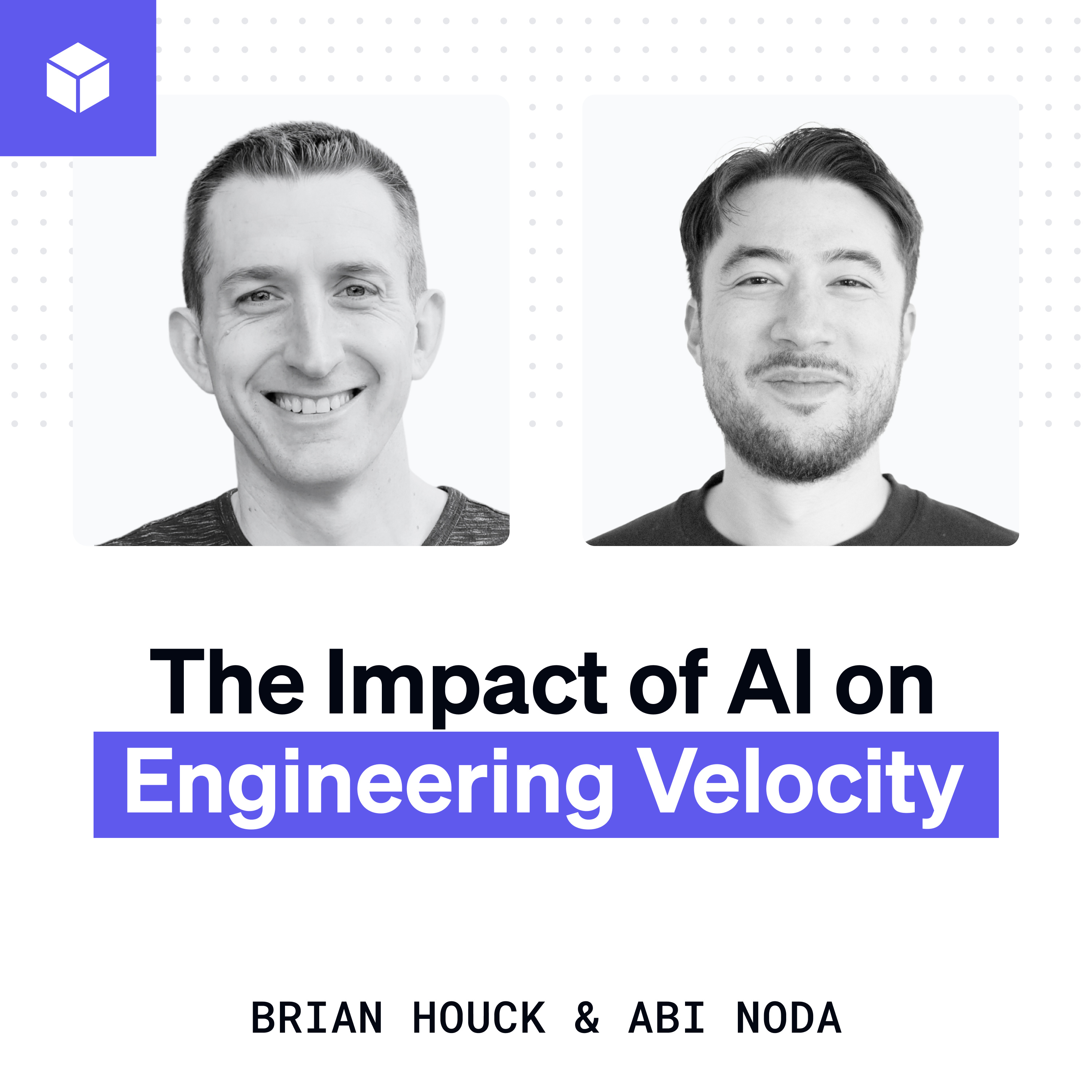
| 6/8/26 | The current impact of AI on engineering velocity: What 400 companies are seeing (Abi Noda & Brian Houck)✨ | AI impactengineering velocity+3 | Abi NodaBrian Houck | DXMicrosoft | — | AIengineering velocity+3 | — | 26m 56s | |
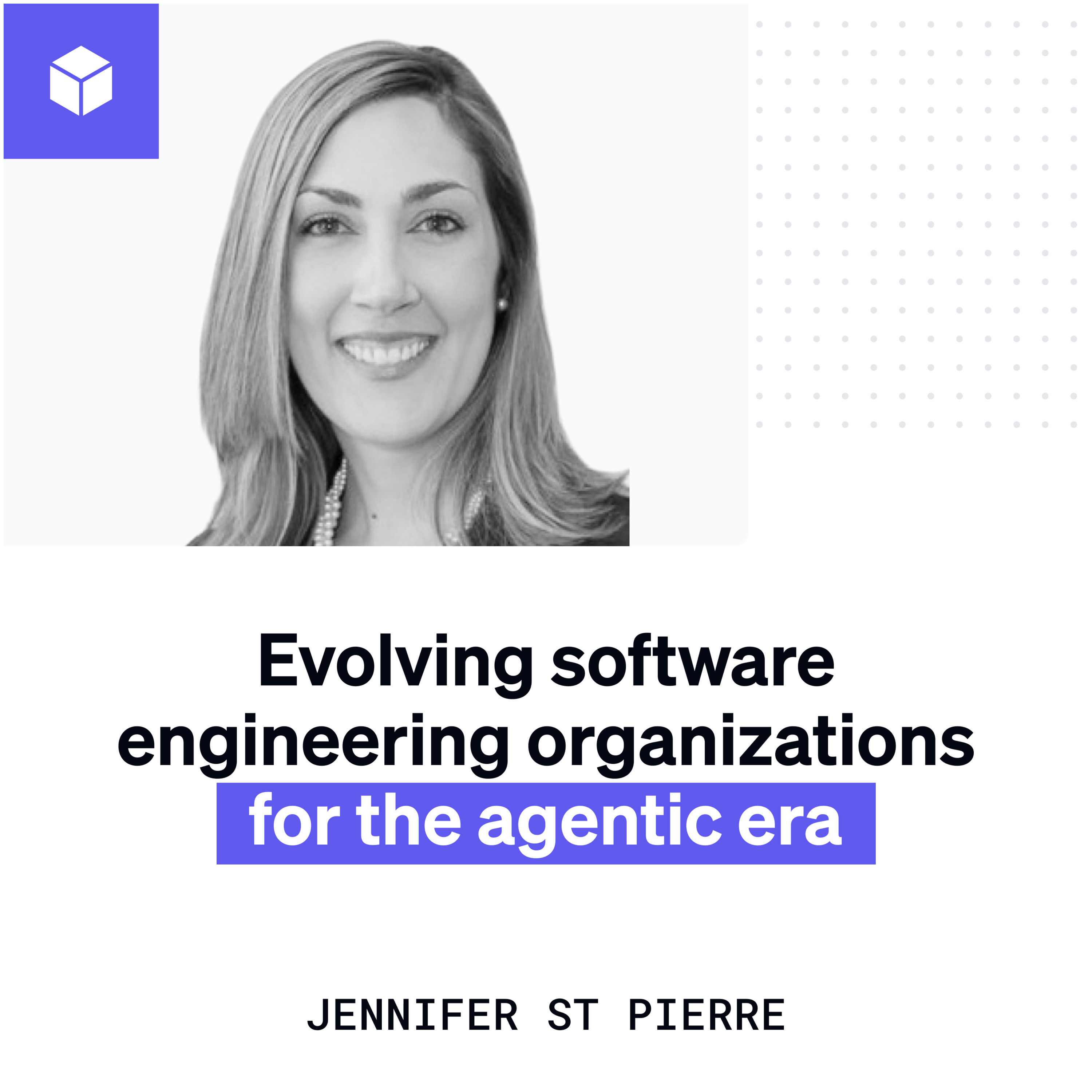
| 6/8/26 | Beyond AI tools: Evolving software engineering organizations for the agentic era✨ | AI adoptionsoftware engineering+3 | Jennifer St Pierre | Dell TechnologiesInfrastructure Solutions Group+1 | LinkedIn | agentic AIsoftware engineering+7 | — | 29m 46s | |
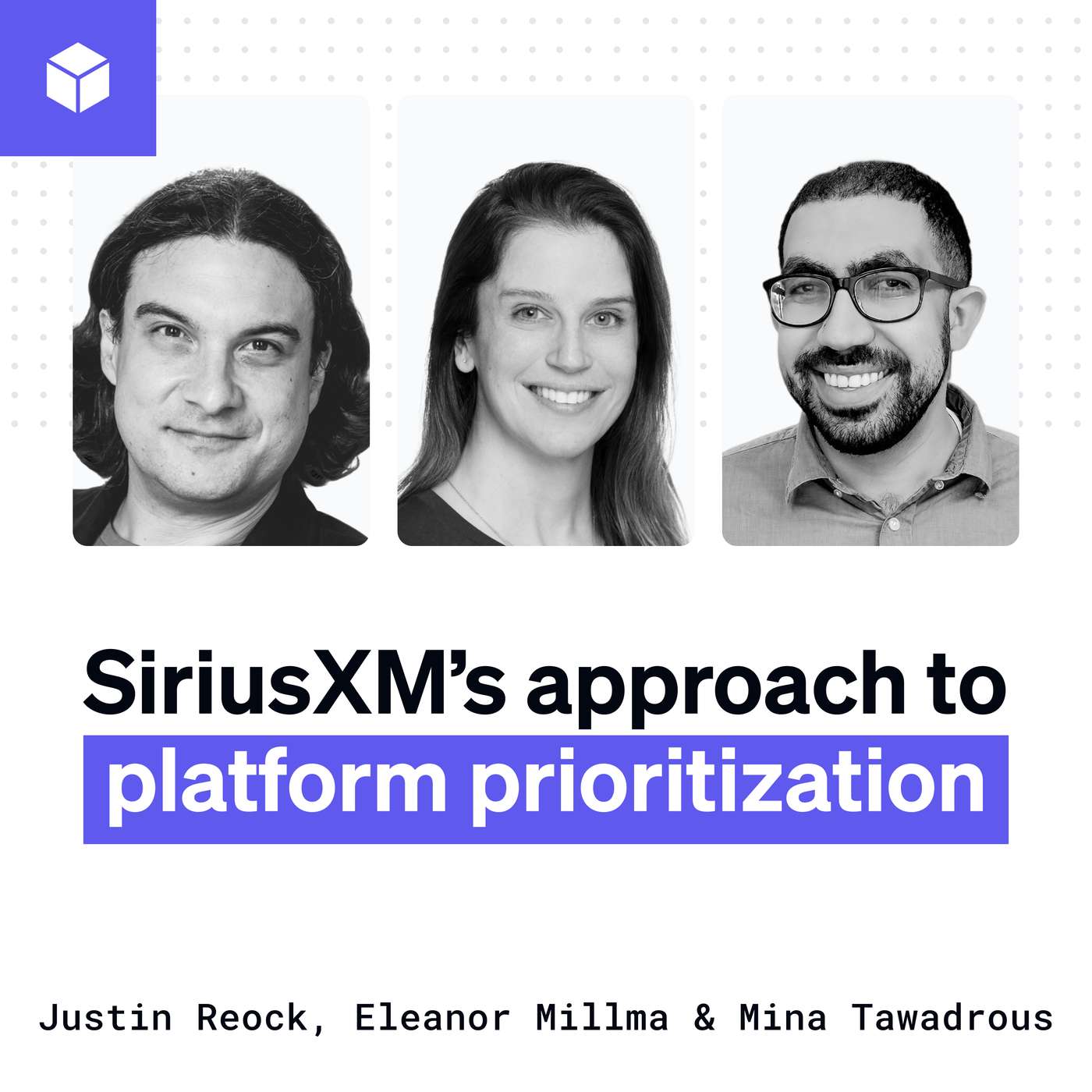
| 4/10/26 | Assumptions as code: SiriusXM’s approach to platform prioritization✨ | platform prioritizationassumptions as code+3 | Eleanor MillmanMina Tawadrous | SiriusXM | — | platform engineeringRICE framework+6 | — | 50m 23s | |
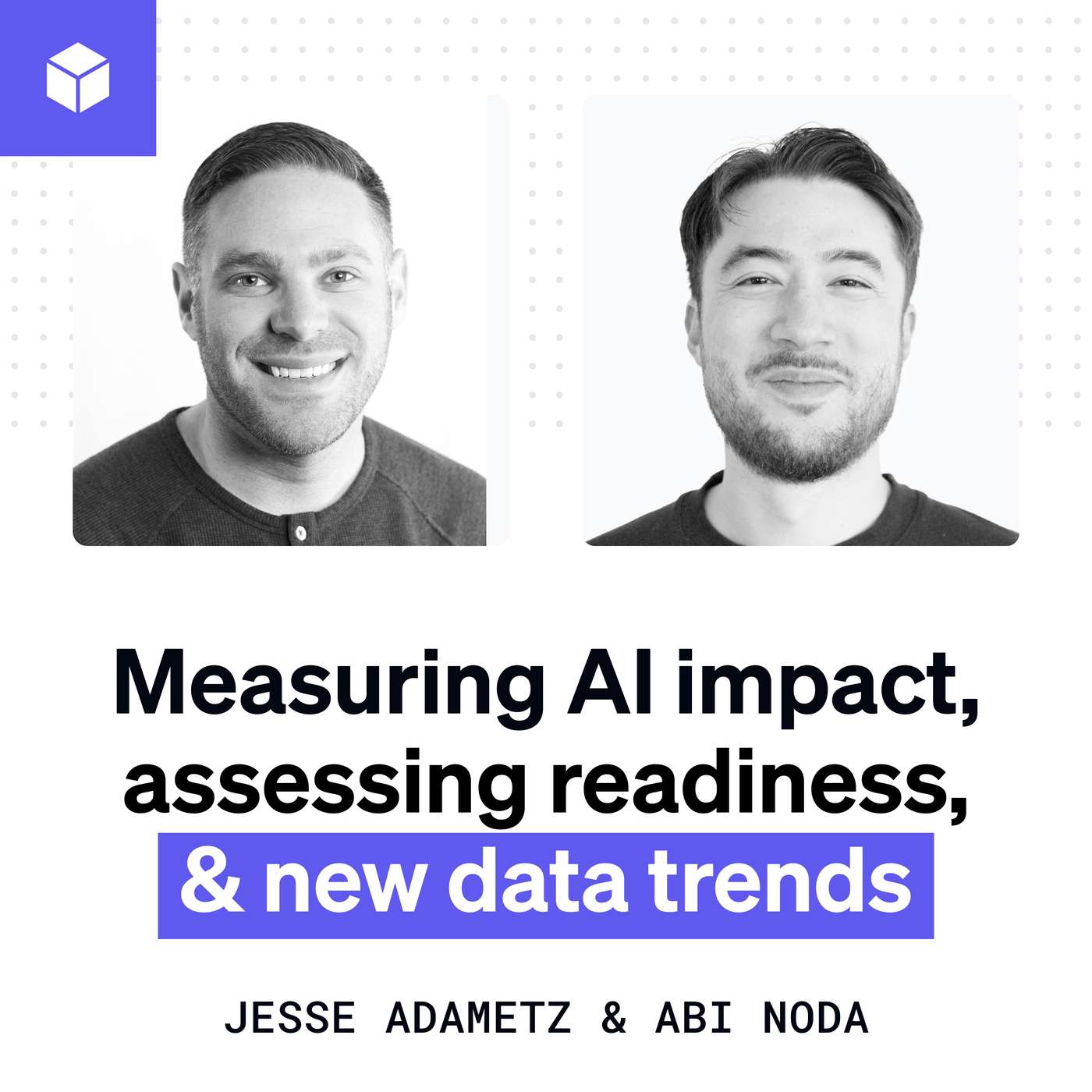
| 4/3/26 | Measuring AI impact, assessing readiness, and new data trends✨ | AI in SDLCAI readiness+4 | Jesse Adametz | LinkedInjesseadametz.com | — | AI impactSDLC+5 | — | 38m 13s | |
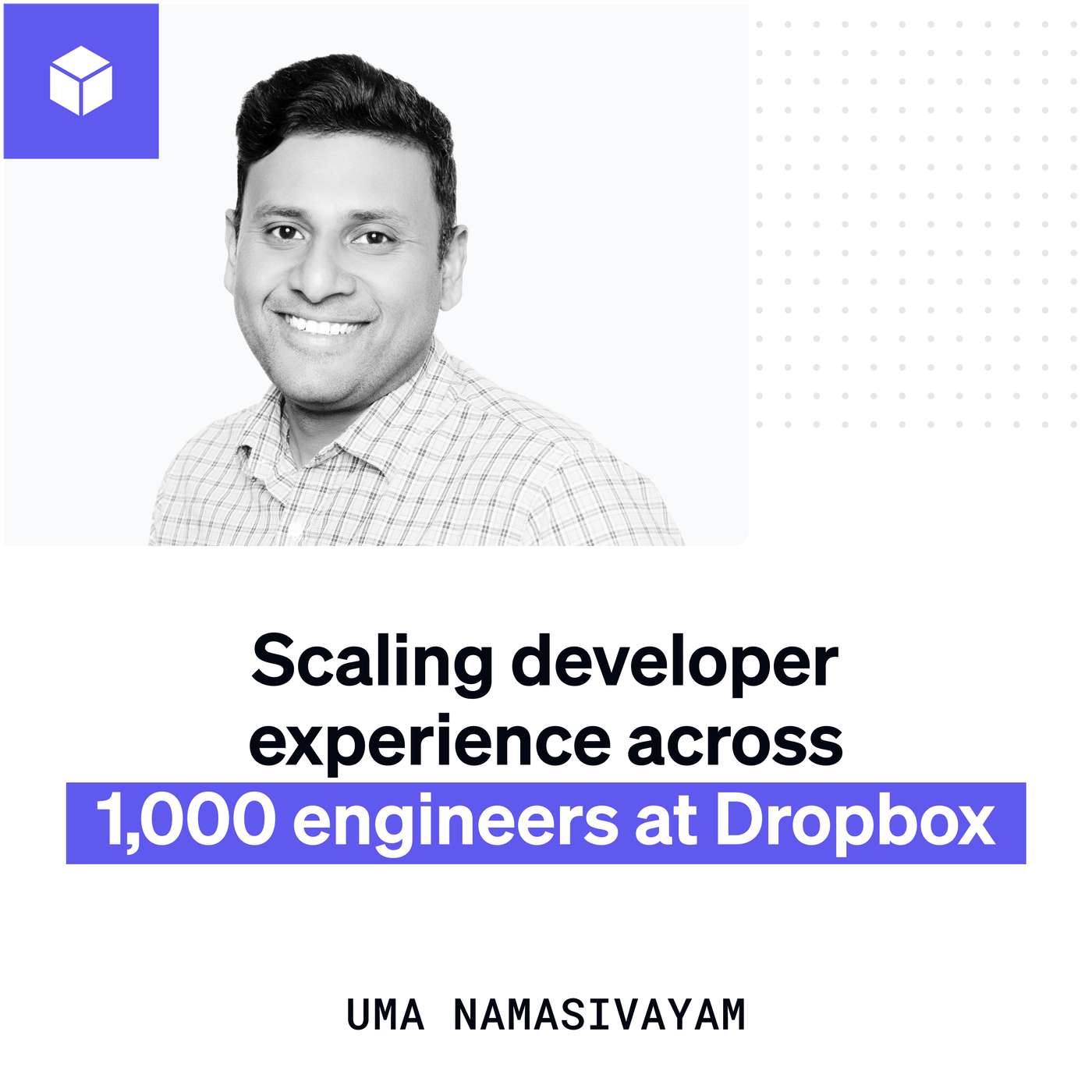
| 2/6/26 | Scaling developer experience across 1,000 engineers at Dropbox✨ | developer experienceengineering productivity+3 | Uma Namasivayam | DropboxAI | — | developer productivityengineering systems+3 | — | 39m 01s | |
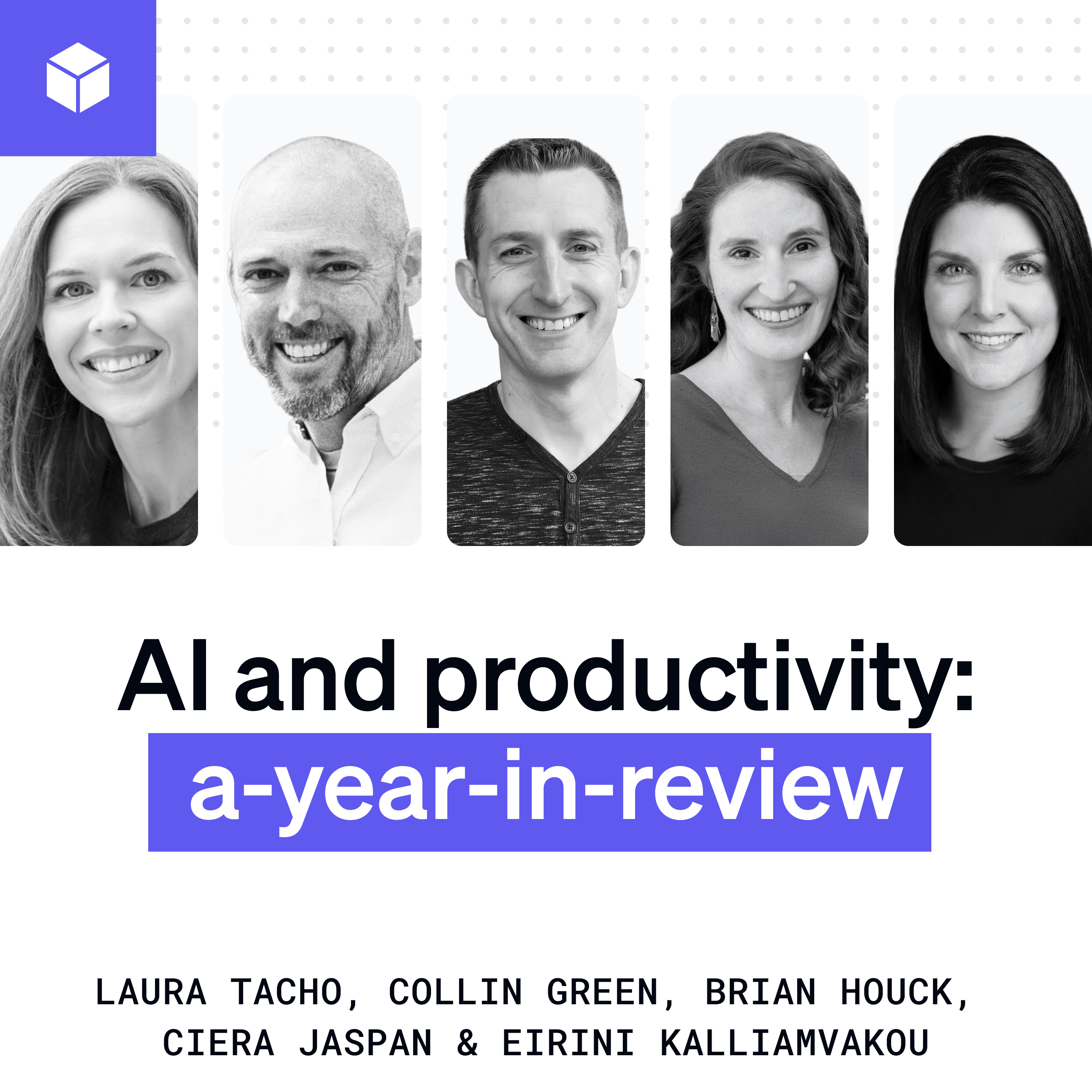
| 12/29/25 | AI and productivity: A year-in-review with Microsoft, Google, and GitHub researchers✨ | AI adoptiondeveloper experience+5 | Brian HouckCollin Green+2 | MicrosoftGoogle+1 | — | AIproductivity+8 | — | 41m 59s | |
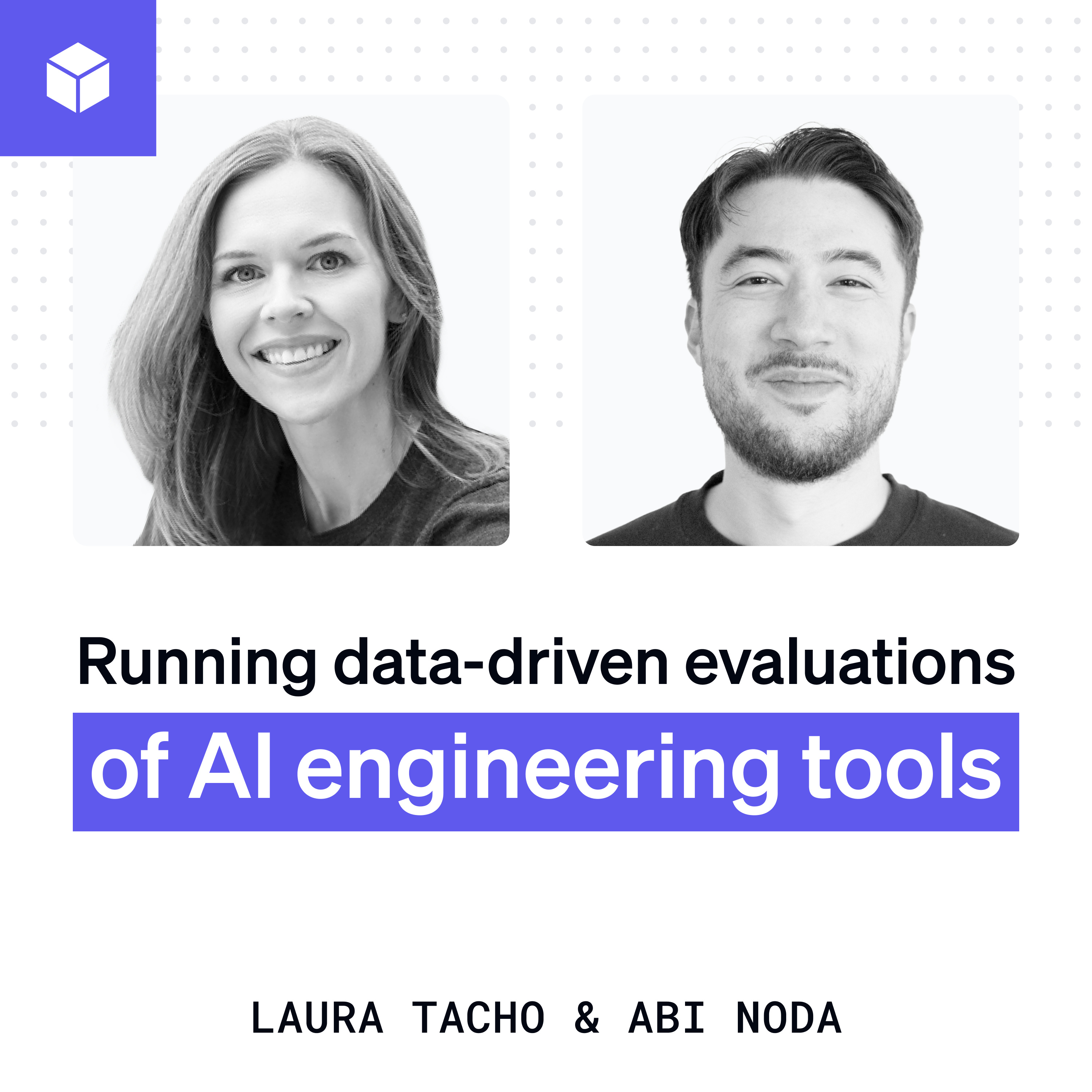
| 12/12/25 | Running data-driven evaluations of AI engineering tools✨ | AI engineering toolsdata-driven evaluation+3 | Abi Noda | DX | — | AI toolsevaluation model+3 | — | 37m 34s | |
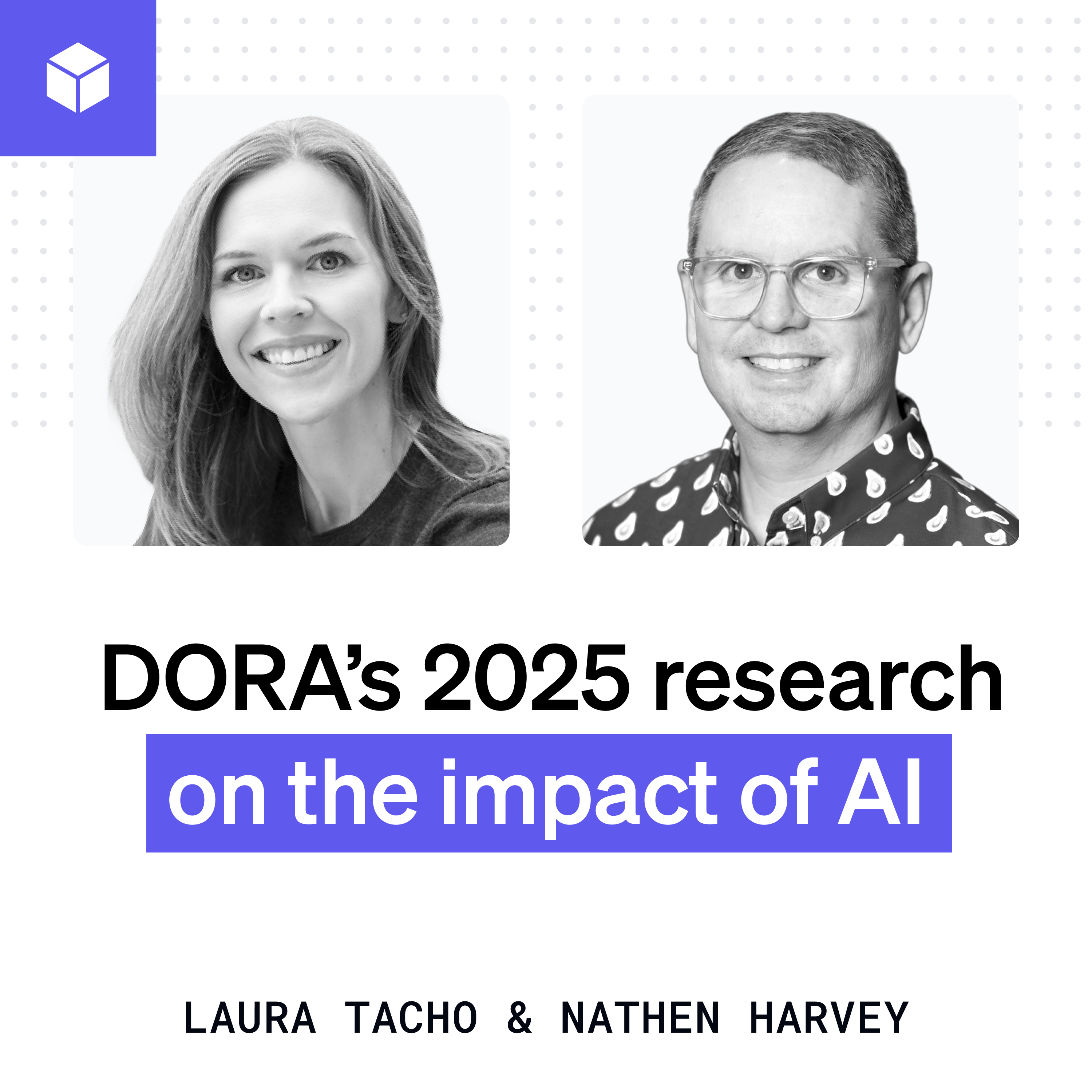
| 11/21/25 | DORA’s 2025 research on the impact of AI✨ | AI in software developmentDORA metrics+5 | Nathen Harvey | DORADX+2 | — | AI impactsoftware delivery+5 | — | 26m 10s | |
| 10/31/25 | How Monzo runs data-driven AI experimentation | In this episode of Engineering Enablement, host Laura Tacho talks with Fabien Deshayes, who leads multiple platform engineering teams at Monzo Bank. Fabien explains how Monzo is adopting AI responsibly within a highly regulated industry, balancing innovation with structure, control, and data-driven decision-making.They discuss how Monzo runs structured AI trials, measures adoption and satisfaction, and uses metrics to guide investment and training. Fabien shares why the company moved from broad rollouts to small, focused cohorts, how they are addressing existing PR review bottlenecks that AI has intensified, and what they have learned from empowering product managers and designers to use AI tools directly.He also offers insights into budgeting and experimentation, the results Monzo is seeing from AI-assisted engineering, and his outlook on what comes next, from agent orchestration to more seamless collaboration across roles.Where to find Fabien Deshayes: • LinkedIn: https://www.linkedin.com/in/fabiendeshayesWhere to find Laura Tacho: • LinkedIn: https://www.linkedin.com/in/lauratacho/• X: https://x.com/rhein_wein• Website: https://lauratacho.com/• Laura’s course (Measuring Engineering Performance and AI Impact): https://lauratacho.com/developer-productivity-metrics-courseIn this episode, we cover:(00:00) Intro (01:01) An overview of Monzo bank and Fabien’s role (02:05) Monzo’s careful, structured approach to AI experimentation (05:30) How Monzo’s AI journey began (06:26) Why Monzo chose a structured approach to experimentation and what criteria they used (09:21) How Monzo selected AI tools for experimentation (11:51) Why individual tool stipends don’t work for large, regulated organizations (15:32) How Monzo measures the impact of AI tools and uses the data (18:10) Why Monzo limits AI tool trials to small, focused cohorts (20:54) The phases of Monzo’s AI rollout and how learnings are shared across the organization (22:43) What Monzo’s data reveals about AI usage and spending (24:30) How Monzo balances AI budgeting with innovation (26:45) Results from DX’s spending poll and general advice on AI budgeting (28:03) What Monzo’s data shows about AI’s impact on engineering performance (29:50) The growing bottleneck in PR reviews and how Monzo is solving it with tenancies (33:54) How product managers and designers are using AI at Monzo (36:36) Fabien’s advice for moving the needle with AI adoption (38:42) The biggest changes coming next in AI engineering Referenced:Monzo The Go Programming LanguageSwift.orgKotlinGitHub Copilot in VS Code CursorWindsurfClaude CodePlanning your 2026 AI tooling budget: guidance for engineering leaders | — | ||||||
| 10/17/25 | Planning your 2026 AI tooling budget: guidance for engineering leaders | In this episode of Engineering Enablement, Laura Tacho and Abi Noda discuss how engineering leaders can plan their 2026 AI budgets effectively amid rapid change and rising costs. Drawing on data from DX’s recent poll and industry benchmarks, they explore how much organizations should expect to spend per developer, how to allocate budgets across AI tools, and how to balance innovation with cost control.Laura and Abi also share practical insights on building a multi-vendor strategy, evaluating ROI through the right metrics, and ensuring continuous measurement before and after adoption. They discuss how to communicate AI’s value to executives, avoid the trap of cost-cutting narratives, and invest in enablement and training to make adoption stick.Where to find Abi Noda:• LinkedIn: https://www.linkedin.com/in/abinoda • Substack: https://substack.com/@abinoda Where to find Laura Tacho: • LinkedIn: https://www.linkedin.com/in/lauratacho/• X: https://x.com/rhein_wein• Website: https://lauratacho.com/• Laura’s course (Measuring Engineering Performance and AI Impact): https://lauratacho.com/developer-productivity-metrics-courseIn this episode, we cover:(00:00) Intro: Setting the stage for AI budgeting in 2026(01:45) Results from DX’s AI spending poll and early trends(03:30) How companies are currently spending and what to watch in 2026(04:52) Why clear definitions for AI tools matter and how Laura and Abi think about them(07:12) The entry point for 2026 AI tooling budgets and emerging spending patterns(10:14) Why 2026 is the year to prove ROI on AI investments(11:10) How organizations should approach AI budgeting and allocation(15:08) Best practices for managing AI vendors and enterprise licensing(17:02) How to define and choose metrics before and after adopting AI tools(19:30) How to identify bottlenecks and AI use cases with the highest ROI(21:58) Key considerations for AI budgeting (25:10) Why AI investments are about competitiveness, not cost-cutting(27:19) How to use the right language to build trust and executive buy-in(28:18) Why training and enablement are essential parts of AI investment(31:40) How AI add-ons may increase your tool costs(32:47) Why custom and fine-tuned models aren’t relevant for most companies today(34:00) The tradeoffs between stipend models and enterprise AI licensesReferenced:DX Core 4 Productivity FrameworkMeasuring AI code assistants and agents2025 State of AI Report: The Builder's PlaybookGitHub Copilot · Your AI pair programmerCursorGleanClaude CodeChatGPTWindsurfTrack Claude Code adoption, impact, and ROI, directly in DXMeasuring AI code assistants and agents with the AI Measurement FrameworkDriving enterprise-wide AI tool adoptionSentryPoolside | — | ||||||
| 9/26/25 | The evolving role of DevProd teams in the AI era | CEO Abi Noda is joined by DX CTO Laura Tacho to discuss the evolving role of Platform and DevProd teams in the AI era. Together, they unpack how AI is reshaping platform responsibilities, from evaluation and rollout to measurement, tool standardization, and guardrails. They explore why fundamentals like documentation and feedback loops matter more than ever for both developers and AI agents. They also share insights on reducing tool sprawl, hardening systems for higher throughput, and leveraging AI to tackle tech debt, modernize legacy code, and improve workflows across the SDLC.Where to find Abi Noda:• LinkedIn: https://www.linkedin.com/in/abinoda • Substack: https://substack.com/@abinoda Where to find Laura Tacho: • LinkedIn: https://www.linkedin.com/in/lauratacho/• X: https://x.com/rhein_wein• Website: https://lauratacho.com/• Laura’s course (Measuring Engineering Performance and AI Impact): https://lauratacho.com/developer-productivity-metrics-courseIn this episode, we cover:(00:00) Intro: Why platform teams need to evolve(02:34) The challenge of defining platform teams and how AI is changing expectations(04:44) Why evaluating and rolling out AI tools is becoming a core platform responsibility(07:14) Why platform teams need solid measurement frameworks to evaluate AI tools(08:56) Why platform leaders should champion education and advocacy on measurement(11:20) How AI code stresses pipelines and why platform teams must harden systems(12:24) Why platform teams must go beyond training to standardize tools and create workflows(14:31) How platform teams control tool sprawl(16:22) Why platform teams need strong guardrails and safety checks(18:41) The importance of standardizing tools and knowledge(19:44) The opportunity for platform teams to apply AI at scale across the organization(23:40) Quick recap of the key points so far(24:33) How AI helps modernize legacy code and handle migrations(25:45) Why focusing on fundamentals benefits both developers and AI agents(27:42) Identifying SDLC bottlenecks beyond AI code generation(30:08) Techniques for optimizing legacy code bases (32:47) How AI helps tackle tech debt and large-scale code migrations(35:40) Tools across the SDLCReferenced:DX Core 4 Productivity FrameworkMeasuring AI code assistants and agentsAbi Noda's LinkedIn postMeasuring AI code assistants and agents with the AI Measurement FrameworkThe SPACE framework: A comprehensive guide to developer productivityCommon workflows - AnthropicEnterprise Tech Leadership Summit Las Vegas 2025Driving enterprise-wide AI tool adoption with Bruno PassosAccelerating Large-Scale Test Migration with LLMs | by Charles Covey-Brandt | The Airbnb Tech Blog | MediumJustin Reock - DX | LinkedInA New Tool Saved Morgan Stanley More Than 280,000 Hours This Year - Business Insider | — | ||||||
| 9/12/25 | Lessons from Twilio’s multi-year platform consolidation | In this episode, host Laura Tacho speaks with Jesse Adametz, Senior Engineering Leader on the Developer Platform at Twilio. Jesse is leading Twilio’s multi-year platform consolidation, unifying tech stacks across large acquisitions and driving migrations at enterprise scale. He discusses platform adoption, the limits of Kubernetes, and how Twilio balances modernization with pragmatism. The conversation also explores treating developer experience as a product, offering “change as a service,” and Twilio’s evolving approach to AI adoption and platform support.Where to find Jesse Adametz: • LinkedIn: https://www.linkedin.com/in/jesseadametz/• X: https://x.com/jesseadametz• Website: https://www.jesseadametz.com/Where to find Laura Tacho:• LinkedIn: https://www.linkedin.com/in/lauratacho/• X: https://x.com/rhein_wein• Website: https://lauratacho.com/• Laura’s course (Measuring Engineering Performance and AI Impact) https://lauratacho.com/developer-productivity-metrics-courseIn this episode, we cover:(00:00) Intro(01:30) Jesse’s background and how he ended up at Twilio(04:00) What SRE teaches leaders and ICs(06:06) Where Twilio started the post-acquisition integration(08:22) Why platform migrations can’t follow a straight-line plan(10:05) How Twilio balances multiple strategies for migrations(12:30) The human side of change: advocacy, training, and alignment(17:46) Treating developer experience as a first-class product(21:40) What “change as a service” looks like in practice(24:57) A mandateless approach: creating voluntary adoption through value(28:50) How Twilio demonstrates value with metrics and reviews(30:41) Why Kubernetes wasn’t the right fit for all Twilio workloads (36:12) How Twilio decides when to expose complexity(38:23) Lessons from Kubernetes hype and how AI demands more experimentation(44:48) Where AI fits into Twilio’s platform strategy(49:45) How guilds fill needs the platform team hasn’t yet met(51:17) The future of platform in centralizing knowledge and standards(54:32) How Twilio evaluates tools for fit, pricing, and reliability (57:53) Where Twilio applies AI in reliability, and where Jesse is skeptical(59:26) Laura’s vibe-coded side project built on Twilio(1:01:11) How external lessons shape Twilio’s approach to platform support and docsReferenced:The AI Measurement FrameworkExperianTransact-SQL - WikipediaTwilioKubernetesCopilotClaude CodeWindsurfCursorBedrock | — | ||||||
Showing 25 of 110
Pitch Fit is a Pro feature
See how bookable this show is for guests, which brands already advertise, the per-episode ad value, and the best-fit guest and sponsor profile. The numbers are blurred on the free plan.
How readily this show books outside guests like you.
How proven this show is for host-read sponsorships.
For Guests
ProFor Advertisers
ProUpgrade to Pro to unlock guest cadence, sponsor categories, fit scores, and per-episode ad value for this show.