
Insights from recent episode analysis
Audience Interest
Podcast Focus
Publishing Consistency
Platform Reach
Insights are generated by CastFox AI using publicly available data, episode content, and proprietary models.
Most discussed topics
Brands & references
Est. Listeners
Insufficient chart data. Estimates will improve as the show charts.
- Per-Episode Audience
Est. listeners per new episode within ~30 days
N/A🎙 Daily cadence·341 episodes·Last published 2w ago - Monthly Reach
Unique listeners across all episodes (30 days)
N/A - Active Followers
Loyal subscribers who consistently listen
N/A
Market Insights
Platform Distribution
Reach across major podcast platforms, updated hourly
Total Followers
—
Total Plays
—
Total Reviews
—
* Data sourced directly from platform APIs and aggregated hourly across all major podcast directories.
On the show
From 10 epsHost
Recent guests
Recent episodes
Everyday Injustice Podcast Episode 334: Trauma-Informed Criminal Defense with Attorney Ernie Stone
Jun 9, 2026
Unknown duration
Everyday Injustice Podcast Episode 333: Justine van der Leun on Criminalized Survivors and the Women Behind Unreasonable Women
Jun 2, 2026
Unknown duration
Everyday Injustice Podcast Episode 332: Dr. Elizabeth Ostler Turns Family Tragedy into Theater and Advocacy
May 26, 2026
Unknown duration
Everyday Injustice Podcast Episode 330: How Court Debt Entrenches Poverty and Punishment
May 12, 2026
Unknown duration
Everyday Injustice Podcast Episode 329: How Death Investigations Obscure Police Violence
May 4, 2026
Unknown duration
Social Links & Contact
Official channels & resources
Official Website
Login
RSS Feed
Login
| Date | Episode | Topics | Guests | Brands | Places | Keywords | Sponsor | Length | |
|---|---|---|---|---|---|---|---|---|---|
| 6/9/26 |  Everyday Injustice Podcast Episode 334: Trauma-Informed Criminal Defense with Attorney Ernie Stone | In Episode 334 of Everyday Injustice, host David Greenwald speaks with Massachusetts criminal defense attorney Ernie Stone about the growing importance of trauma-informed criminal defense and why understanding clients’ life experiences is essential to effective representation. Drawing on nearly two decades of legal practice, Stone argues that what is often called “trauma-informed” lawyering should simply be considered good lawyering, emphasizing that attorneys must understand how trauma shapes communication, memory, decision-making, and trust. The conversation explores the prevalence of trauma among people involved in the criminal legal system and the challenges attorneys face when clients struggle to tell their stories in a linear fashion or respond predictably under stress. Stone explains that criminal charges themselves can be traumatic events, particularly for individuals already facing housing instability, mental health challenges, substance use disorders, or other forms of adversity. He discusses how lawyers can better serve clients by recognizing trauma symptoms and adjusting their communication strategies accordingly. Greenwald and Stone also examine the rise of holistic defense models that combine legal representation with social services, housing assistance, mental health support, and other interventions designed to address the root causes that often bring people into repeated contact with the justice system. While acknowledging resource limitations facing public defender offices across the country, Stone argues that investing in supportive services is both more humane and more cost-effective than relying on incarceration as a substitute for social policy. The episode concludes with a broader discussion about empathy, legal education, and professional responsibility. Stone contends that understanding trauma should be viewed as an ethical obligation for attorneys, much like technological competence has become a professional requirement. For listeners interested in learning more, he recommends The Body Keeps the Score as an accessible introduction to trauma research. Together, Greenwald and Stone make the case that a more trauma-informed approach can improve outcomes not only for defendants, but for the justice system as a whole. | — | ||||||
| 6/2/26 |  Everyday Injustice Podcast Episode 333: Justine van der Leun on Criminalized Survivors and the Women Behind Unreasonable Women | In Episode 333 of Everyday Injustice, host David Greenwald speaks with journalist and author Justine van der Leun about her new book, Unreasonable Women: Three Stories of Violence, Imprisonment and Extraordinary Survival. The conversation explores a troubling reality within the criminal legal system: how survivors of domestic violence and sexual abuse are often criminalized rather than protected. Drawing on years of investigative reporting and extensive research, van der Leun examines the stories of women whose attempts to survive violence ultimately led to their incarceration. Van der Leun explains how her investigation began with the case of Nikki Addimando, a New York woman convicted after killing her abusive partner while claiming self-defense. The case prompted a larger question: How often are survivors punished for acts committed in the context of abuse? To find answers, van der Leun conducted a groundbreaking survey of approximately 10,000 incarcerated women, receiving more than 1,000 responses. Her findings suggest that a significant portion of women in prison are there because they acted to protect themselves or loved ones from violence, while many more carry extensive histories of abuse that went unaddressed by social institutions before they entered the criminal legal system. The episode highlights the stories of three women featured in the book: Tanisha Williams of Michigan, who became entangled in a murder case after being coerced by an abusive partner; Gemma Heffernan of Missouri, who fought back against a husband who subjected her to years of violence; and TC Brooks of California, who killed her abusive stepfather after enduring years of sexual abuse and witnessing ongoing violence against her mother. Through these stories, van der Leun argues that the legal system often struggles to recognize the realities of coercion, trauma, and survival, instead relying on rigid categories that separate victims from offenders. Throughout the discussion, Greenwald and van der Leun examine broader questions about accountability, systemic failure, and reform. Van der Leun contends that many of the women filling America’s prisons were failed long before they entered the criminal legal system and that their cases reveal deep structural shortcomings in how society responds to abuse. The conversation offers a powerful look at the intersection of gender, violence, trauma, and incarceration, challenging listeners to reconsider who the justice system punishes—and why. | — | ||||||
| 5/26/26 |  Everyday Injustice Podcast Episode 332: Dr. Elizabeth Ostler Turns Family Tragedy into Theater and Advocacy | On this week’s episode of Everyday Injustice, host David Greenwald speaks with Dr. Elizabeth Ostler, founder of the Communal Theater Company and creator of the upcoming play “SisterPlay,” a deeply personal work inspired by the death of her sister Lisa while detained in the Salt Lake County Jail. Ostler recounts how her sister, who struggled with addiction for years, died in custody in 2016 after repeated pleas for medical attention were ignored. Through court records and wrongful death litigation, Ostler learned the extent of the neglect her sister endured while suffering from a perforated ulcer and sepsis-like symptoms inside the jail. She explains how transforming that experience into theater became both a painful and healing process, allowing her to finally tell a story she could not previously discuss publicly. The conversation expands into a broader examination of incarceration, medical neglect, punishment versus accountability, and the importance of restoring dignity to incarcerated people. Ostler and Greenwald discuss how dehumanization fuels systemic abuse inside jails and prisons, while emphasizing the role storytelling and art can play in fostering empathy and reform. Ostler argues that incarcerated individuals should be viewed as vulnerable populations deserving care and humanity, not merely punishment. The episode also explores the potential of theater programs and restorative justice approaches within correctional settings. Ostler shares details about “SisterPlay,” which premieres in New York this September, and discusses her hope of eventually bringing the production into prisons and jails themselves. Greenwald highlights the shared mission between journalism and theater: humanizing people too often reduced to stereotypes within the criminal legal system. | — | ||||||
| 5/12/26 |  Everyday Injustice Podcast Episode 330: How Court Debt Entrenches Poverty and Punishment | On Episode 330 of the Everyday Injustice podcast, host David Greenwald examines one of the most overlooked yet devastating aspects of the criminal legal system: the widespread use of fines and fees as a mechanism of punishment and revenue generation. Joined by Joanna Weiss and Priya Sarthy-Jones of the Fines and Fees Justice Center along with Tiffany Shaw of JusticeLink, the discussion explores how court-imposed debt traps millions of Americans in cycles of poverty, instability and repeated contact with the justice system. The episode highlights the distinction between punitive fines and the growing array of fees imposed simply for interacting with the legal system. The guests explain how people can be charged for public defenders, probation appointments, incarceration and other mandatory services, effectively transforming the justice system into a system financed on the backs of poor people. Weiss argues that while some monetary penalties may be appropriate if proportionate, fees themselves have “no place in the justice system,” particularly because they disproportionately burden low-income communities and communities of color. Much of the conversation centers on the real-world consequences of court debt. Shaw shares her own experience navigating incarceration, probation and thousands of dollars in fines and fees while struggling to maintain housing, employment and basic stability. The guests describe how driver’s license suspensions for unpaid debt often create a downward spiral in which people lose employment opportunities, continue driving out of necessity and face additional criminal charges simply because they cannot afford to pay. According to the discussion, reforms advanced by the Fines and Fees Justice Center have already generated at least $37.5 billion in relief nationwide, though the speakers argue the true economic and human costs remain far greater. Throughout the episode, the panel argues that the current system undermines public safety rather than promoting accountability. Research discussed during the interview suggests that unaffordable fines and fees are associated with higher recidivism rates and deeper economic insecurity, while reforms eliminating debt-based driver’s license suspensions and justice system fees have broad bipartisan support across the country. Greenwald closes the episode by emphasizing that meaningful accountability should help people rebuild their lives rather than permanently trapping them in debt and instability. | — | ||||||
| 5/4/26 |  Everyday Injustice Podcast Episode 329: How Death Investigations Obscure Police Violence | In Episode 329 of Everyday Injustice, the podcast features a wide-ranging and deeply probing conversation with UCLA professor Terrence Keel, a leading scholar examining the intersection of race, science and public institutions. The discussion centers on his new book, The Coroner’s Silence, which investigates how death investigations—particularly in cases involving police custody—can obscure rather than illuminate the truth. Drawing from years of research and analysis of hundreds of autopsy reports, Keel argues that official records often contain narratives that deflect responsibility away from law enforcement and toward the bodies of those who have died. Keel explains that his work was partly inspired by national reactions to the killing of George Floyd, particularly the controversy surrounding the autopsy findings that created ambiguity about the cause of death. That moment raised broader questions about how medical examiners frame deaths in less visible cases—those without video evidence or public scrutiny. According to Keel, these patterns are not isolated but systemic, revealing how forensic language, institutional relationships and embedded biases can shape outcomes in ways that undermine accountability. Throughout the episode, the conversation expands beyond individual cases to examine structural issues within the death investigation system. Keel highlights how medical examiners and coroners, often portrayed as neutral scientific authorities, operate within political and bureaucratic frameworks that may influence their conclusions. He points to conflicts of interest, including situations where law enforcement agencies are directly involved in or present during autopsies, raising serious concerns about independence and transparency. These institutional dynamics, he argues, contribute to a broader failure to accurately document deaths in police custody. The episode ultimately situates these findings within a larger critique of the criminal legal system, emphasizing how gaps in mental health care, housing and social services have led to increased reliance on policing as a default response. Keel underscores that many of those who die in custody are among society’s most vulnerable, and he calls for systemic reform that includes independent oversight, improved transparency and a rethinking of public safety itself. The conversation offers both a sobering assessment of current realities and a framework for understanding how institutional practices shape public narratives about justice and accountability. | — | ||||||
| 4/27/26 |  Everyday Injustice Podcast Episode 328: Matilde Hernandez on Healing, Reentry and Rewriting Your Story | On Episode 328 of Everyday Injustice, host David Greenwald speaks with Matilde Hernandez, a wellness consultant, author and speaker whose life was transformed by incarceration and the long journey that followed. Hernandez shares how a first-time case in Georgia led to a prison sentence she says she did not fully understand, and how the experience forced her to confront trauma, shame and the challenge of rebuilding her life after release. In a deeply personal conversation, Hernandez explains that incarceration is not only a physical place but also a mindset that can continue long after someone returns home. She describes the emotional toll of separation from her children, the burden of self-doubt and the years it took to truly forgive herself. Her story highlights the hidden barriers many formerly incarcerated people face, including stigma, housing insecurity, employment discrimination and untreated mental health struggles. The discussion also centers on resilience and purpose. Hernandez talks about writing her book, Beyond These Walls, and the message behind its title: the internal walls people build out of shame, fear and pain can be dismantled. She reflects on how mentorship, therapy and faith helped her move forward, and why healing often begins when people believe they are still worthy of growth and opportunity. Now nearing completion of her doctoral program, Hernandez is focused on helping justice-impacted youth build stable futures through mentorship, life skills and guidance. Episode 328 is both an inspiring personal testimony and a broader conversation about what true reentry should look like when society chooses restoration over punishment. It is a powerful reminder that people are more than the worst thing that has happened to them—and that every story can be rewritten. | — | ||||||
| 4/20/26 |  Everyday Injustice Podcast Episode 327: Prof. Doleac on the Science of Second Chances✨ | criminal justice reformevidence-based policy+3 | Jennifer Doleac | The Science of Second ChancesArnold Ventures+1 | — | natural experimentsDNA databases+2 | — | 44m 20s | |
| 4/13/26 |  Everyday Injustice Podcast Episode 326: Water Contamination Allegations Emerge From Mule Creek, Impacting Ione, Calif.✨ | water contaminationMule Creek State Prison+3 | Emily NonkoDave Razorbab | Everyday Injustice | Mule CreekIone+2 | investigative reportpublic scrutiny+3 | — | 30m 12s | |
| 4/6/26 |  Everyday Injustice Podcast Episode 325: Civil Rights Activists Organized Against Police Power✨ | civil rightspolice violence+3 | Josh Clark Davis | Police Against the Movementthe University of Baltimore+6 | BirminghamSelma | Police Against the MovementCORE+3 | — | 37m 19s | |
| 3/31/26 |  Everyday Injustice Podcast Episode 324: Bipartisan Reform, Housing Barriers, and the Fight for a Fair Future✨ | criminal justice reformhousing barriers+3 | Kandia Milton | Dream.orgEveryday Injustice | — | Fair Housing Amendments ActFair Future Act+3 | — | 46m 50s | |
Want analysis for the episodes below?Free for Pro Submit a request, we'll have your selected episodes analyzed within an hour. Free, at no cost to you, for Pro users. | |||||||||
| 3/23/26 |  Everyday Injustice Podcast Episode 323: Eric Morrison-Smith on Systems Change, Youth Justice, and Building Alternatives to Punishment✨ | criminal justice reformsystemic inequality+3 | Eric Morrison-Smith | The New Jim Crowthe Alliance for Boys and Men of Color+2 | California | endless probationanti-racist reforms+1 | — | 27m 37s | |
| 3/16/26 |  Everyday Injustice Podcast Episode 322: Oklahoma Survivors Act Highlights Tension Between Trauma, Justice, and Prosecutorial Resistance✨ | Oklahoma Survivors Actdomestic violence+3 | Pamela Colloff | ProPublicaThe New York Times Magazine+1 | Oklahoma | traumaaccountability+2 | — | 30m 32s | |
| 3/9/26 |  Everyday Injustice Podcast Episode 321: Raising Questions About Plea Deals and Withheld Evidence✨ | plea dealswithheld evidence+2 | Maurice Clifton | Everyday Injustice | Mississippi | Curtis Davis Jr.Mississippi+3 | — | 18m 30s | |
| 3/3/26 |  Everyday Injustice Podcast Episode 320: How Police Unions Built Political Influence✨ | police unionspolitical influence+2 | Stuart Schrader | Blue Power: How Police Organized to Protect and Serve ThemselvesBadges Without Borders+6 | WashingtonDetroit+5 | Blue PowerBadges Without Borders+2 | — | 39m 28s | |
| 2/16/26 |  Everyday Injustice Podcast Episode 319: Finding Inner Freedom Behind Bars✨ | meditationprison reform+2 | Doina DurbinDoug | meditation programEveryday Injustice+1 | Texas | transformationinner peace+2 | — | 39m 19s | |
| 2/9/26 |  Everyday Injustice Podcast Special Episode -Women Beyond Walls✨ | incarcerationwomen's rights+2 | Pamela Winn | Everyday InjusticeEveryday Injustice’s+1 | Atlanta | carceral systemspregnancy+2 | — | 48m 57s | |
| 2/2/26 |  Everyday Injustice Podcast Episode 318: From Soldier to Storyteller | Jerry “JD” Mathis on Reentry, Shame, and Finding a Voice On this episode of the Everyday Injustice podcast, host David Greenwald speaks with Jerry “JD” Mathis, an award-winning author, PEN America Writing for Justice Fellow, and formerly incarcerated writer whose work centers on mass incarceration, reentry, and the redemptive power of storytelling. Mathis’ life arc—from decorated National Guard soldier to federal prison camp to acclaimed writer—offers a stark case study in how a single mistake can permanently alter a life, and how narrative becomes a way to survive what comes after. Mathis recounts how, at age 20, he was convicted in federal court for his role in covering up the theft of a machine gun from his National Guard unit, a crime that resulted in a two-year prison sentence while the primary offender was never charged. Once celebrated as a top gunner and model soldier, Mathis found himself publicly branded, prosecuted as a dangerous figure, and thrust into a criminal legal system that treated him not as a young person who made a grave error, but as a permanent threat. The punishment, he explains, did not end with his release. The conversation centers on reentry as what Mathis calls the “hidden punishment” of incarceration: the long afterlife of stigma, unemployment, restricted housing, and social exclusion that follows people long after they leave custody. Drawing on his own struggles—and comparative models like Norway’s—Mathis argues that the United States systematically undermines public safety by making successful reentry nearly impossible. Rather than addressing trauma, addiction, or the structural causes of harm, the system relies on exclusion and moral judgment, pushing people further to the margins. Ultimately, Mathis describes how writing became a way to reclaim a stolen narrative. Through the PEN America Writing for Justice Fellowship, he finally found the language to tell his story without shame—first to the public, and then to his daughters. That act of storytelling, he says, was not only personal catharsis but political intervention: a refusal to let prosecutors, headlines, or stigma define who he is. The episode is a powerful meditation on punishment, identity, and what it actually takes to rebuild a life after prison. | — | ||||||
| 2/1/26 |  Everyday Injustice Podcast Episode 317: Andre Brown, Wrongful Convictions, and the Limits of Finality | In this episode of the Everyday Injustice Podcast, host David Greenwald is joined by Jeffrey Deskovic, Oscar Michelen, and Andre Brown for an unvarnished conversation about a wrongful conviction case that nearly resulted in a second, devastating return to prison. Brown, who spent 23 years incarcerated for a crime he maintains he did not commit, had his conviction vacated in 2022, only to face the threat of being sent back to prison after the appellate court reversed that ruling nearly two years later . The discussion traces the extraordinary procedural twists of the case, including last-minute surrender orders, emergency motions, a denied appeal to New York’s highest court, and a clemency petition left undecided. Ultimately, a resentencing motion based on ineffective assistance of counsel resulted in Brown being resentenced to concurrent terms that recognized the time he had already served, allowing him to remain free. The episode lays bare how appellate courts’ deference to “finality” can override compelling evidence and how narrowly justice can turn on timing, discretion, and institutional posture . Brown speaks candidly about living in legal limbo—free but never secure—describing sleepless nights, the strain on his family, and the psychological toll of knowing he could be returned to prison at any moment. At the same time, he reflects on the community, legal advocates, and family members who sustained him, and on the work he undertook while free: mentoring youth, participating in education programs, and becoming an advocate within the wrongful conviction community . The conversation broadens into a systemic critique, with Deskovic and Michelen examining how courts handle claims of innocence, ineffective counsel, and newly discovered evidence, particularly in non-DNA cases. The episode underscores how rare corrections remain, how much persistence they require, and how much depends on actors willing to look beyond the record toward real-world justice. It is a sobering reminder that even when freedom is regained, the fight for exoneration—and for a more accountable legal system—often continues . | — | ||||||
| 1/20/26 |  Everyday Injustice Podcast Episode 316: Fr Prosecutor on Retaliation, Accountability, Truth Telling | On this episode of Everyday Injustice, host David Greenwald speaks with Tracy Miller, a veteran prosecutor whose career inside one of the nation’s largest district attorney’s offices ended not with honors, but with retaliation, isolation, and a landmark lawsuit. Miller spent 25 years at the Orange County District Attorney’s Office, rising to senior leadership and building one of the country’s largest gang prevention programs, before becoming one of several employees who reported sexual harassment by a politically powerful insider. What followed, Miller explains, was not institutional self-correction but institutional protection. Despite multiple reports, a county investigation, and widespread internal knowledge of the misconduct, the alleged harasser was promoted while those who spoke out faced marginalization. Miller recounts being stripped of her office, pushed into a conference room during the final days of her career, and denied the basic dignity routinely afforded to departing senior staff. The experience, she says, revealed how easily stated commitments to justice collapse when power is threatened. Miller ultimately filed suit against Orange County, a decision she describes as deeply painful and disorienting, akin to “suing herself” after a lifetime of public service. When the case finally went to trial in 2025, the sitting district attorney spent days on the witness stand, an extraordinary public reckoning for an office tasked with enforcing the law. For Miller, the trial was not just about damages, but about forcing the truth into the open in a system accustomed to silence and deference. In the conversation, Miller reflects on vulnerability, courage, and the double standard prosecutors impose on victims while often failing to protect their own. She frames her case as part of a larger struggle over accountability inside the criminal legal system, where misconduct persists not only because of bad actors, but because too many others look away. Now working as an executive coach and consultant, Miller sees truth-telling as both a professional obligation and a form of resistance—and hopes her story helps others understand they are not alone. | — | ||||||
| 1/12/26 |  Everyday Injustice Podcast Episode 315: Public Defense, Felony Murder, Limits of Incarceration | On this episode of Everyday Injustice, host David Greenwald speaks with Kate Chatfield, executive director of the California Public Defenders Association, about the mounting crisis in California’s public defense system and what it reveals about deeper structural failures in the criminal legal system. Chatfield explains that public defenders now represent roughly 90 percent of people charged with crimes, yet remain chronically underfunded and overwhelmed, a reality that directly undermines the constitutional promise of meaningful legal representation . Chatfield describes how excessive caseloads make it nearly impossible for defenders to provide the level of advocacy required even in so-called low-level cases. She notes that misdemeanors routinely carry severe collateral consequences, including loss of employment, housing instability, and immigration harm, and that many clients are navigating homelessness, mental illness, or substance use disorders. These underlying conditions, she argues, are routinely criminalized rather than addressed through social services, placing public defenders on the front lines of systemic neglect . The discussion also turns to SB 1437, the landmark 2018 reform that narrowed California’s felony murder rule. As the bill’s lead drafter, Chatfield recounts how survey and appellate research revealed that felony murder disproportionately impacted young people, particularly young Black and Latino men, and frequently sentenced accomplices who were not the actual killers to life terms. She emphasizes that resentencing data following SB 1437 show extremely low recidivism rates, undercutting claims that such reforms threaten public safety . Finally, Chatfield weighs in on Proposition 36 and broader claims that increased incarceration can be justified as “treatment.” She argues that such measures are disingenuous, expanding jail populations while diverting resources away from housing, health care, and voluntary treatment—the very investments proven to prevent harm. True public safety, she concludes, will not come from deeper entanglement with the criminal legal system, but from sustained commitment to meeting human needs before people ever enter it . | — | ||||||
| 1/5/26 |  Everyday Injustice Podcast Episode 314: Hakeem McFarland on Purpose, Accountability, Transformation | Choosing Yourself Before Life Forces the Choice On the latest episode of Everyday Injustice, host David Greenwald speaks with Hakeem McFarland, a motivational speaker, wellness coach, author, and the founder of the Choose Yourself Movement, a philosophy built around reclaiming identity, integrity, and purpose in a culture driven by external validation. McFarland’s message is direct and uncompromising: before chasing achievement, status, or approval, people must first confront who they are when no one is watching and take responsibility for the systems that shape their daily lives. McFarland traces the origins of his work to repeated personal breaking points marked by grief, loss, addiction, and incarceration, culminating in a period of enforced solitude that forced him to confront himself without distraction or numbing. Rather than framing transformation as a sudden epiphany, he describes it as a disciplined process built through small, repeatable actions—sleep routines, mindful consumption, accountability, and habits that prioritize delayed gratification over instant relief. Choosing oneself, he argues, is not an abstract affirmation but a measurable practice rooted in what a person consistently does for their own well-being. At the center of this philosophy is the Choose Yourself Movement, a community designed as what McFarland calls an “integrity loop,” where participants publicly commit to personal goals and support one another in following through. Through weekly meetings, challenges, retreats, and daily accountability, the movement seeks to disrupt cycles of self-neglect and avoidance by replacing them with structure, honesty, and shared responsibility. McFarland emphasizes that community is not about motivation alone, but about creating conditions where excuses become harder to sustain. In the conversation, McFarland also reflects on authenticity as the foundation of lasting change, arguing that people often struggle because they are living versions of themselves shaped by conditioning rather than conviction. The episode explores why guilt, fear of judgment, and consumption-driven habits keep people stuck, and how confronting discomfort—rather than avoiding it—is essential to reclaiming agency. For listeners navigating burnout, identity loss, or a sense of stagnation, the discussion offers a stark but grounded challenge: no one is coming to save you, but the tools to begin are already within reach. | — | ||||||
| 12/17/25 |  Everyday Injustice Podcast Episode 313: Humanizing Prison Through Visitation and Presence | On this episode of Everyday Injustice, host David Greenwald speaks with Shazad Carbaidwala, a longtime volunteer and board member with Prisoner Visitation and Support, a national organization that provides consistent, face-to-face visits to incarcerated people in federal facilities across the country. Carbaidwala has spent nearly a decade visiting people inside prisons, offering something both simple and rare in the modern correctional system: human connection. His work reflects a broader effort to counter isolation, neglect, and dehumanization within federal incarceration. Carbaidwala describes how he first became involved with Prisoner Visitation and Support while living in Philadelphia, answering a call to serve in a way that aligned with his belief in helping people wherever possible. What began as volunteer work grew into a long-term commitment that now includes board leadership and regular visits to federal institutions, most recently in Chicago. Over time, he says, the experience reshaped his own understanding of prisons, revealing not only the hardship of confinement but also the resilience, growth, and humanity of the people inside. The conversation explores what it is like to walk into a federal prison for the first time—the rigid procedures, the emotional weight, and the stark contrast between public perceptions of incarceration and lived reality. Carbaidwala emphasizes that while the environment can be intimidating, the interactions themselves are often deeply affirming. People inside are eager for conversation, connection, and recognition. Visits routinely involve ordinary human exchanges—discussing sports, family, politics, or faith—moments that restore a sense of dignity in a system that often strips it away. Greenwald and Carbaidwala also reflect on the broader implications of visitation for rehabilitation and reentry, particularly in a federal system where people are frequently housed thousands of miles from their families. They discuss shifting attitudes toward incarceration, the importance of recognizing trauma and deprivation in people’s backgrounds, and the role of volunteers in bridging the gap between prison and society. At its core, the episode underscores a central theme of Everyday Injustice: meaningful change begins by seeing incarcerated people not as abstractions, but as human beings deserving of empathy, attention, and connection. | — | ||||||
| 12/9/25 |  Everyday Injustice Podcast Episode 312: Confronting the Fastest-Growing Prison Population | Women are now the fastest-growing population in the criminal legal system, yet policy, practice and public understanding continue to lag behind that reality. On this episode of Everyday Injustice, host David Greenwald speaks with Stephanie Akhter, director of the Women’s Justice Commission at the Council on Criminal Justice, about why women’s involvement in the system is rising, how their experiences differ from men’s, and what meaningful reform actually requires. Akhter brings a perspective grounded in direct practice and national policy work. Trained as a social worker, she began her career working with people returning home from prison before moving into state-level reentry policy, philanthropic criminal justice reform, and ultimately the launch of the Women’s Justice Commission. Throughout the conversation, she emphasizes that women entering the system are often driven there by circumstances—trauma, poverty, housing instability, untreated mental health needs and coercive relationships—rather than by violent criminal behavior. The discussion explores why women are not simply a smaller version of men in the system. Akhter explains that women experience higher rates of trauma and victimization, are more likely to be primary caregivers, and generally present lower public safety risk, yet are processed through a system largely designed without them in mind. As a result, reforms that have reduced incarceration for men have often failed to benefit women, even as women now account for roughly one-quarter of all adult arrests nationwide. The episode also looks forward, examining where change is possible. Akhter outlines the Commission’s focus on reducing women’s system involvement where safely possible and improving outcomes when women do enter the system, from pretrial decisions to sentencing and reentry. The conversation highlights trauma-informed, gender-responsive approaches and growing recognition among justice professionals that real public safety depends on helping people leave the system healthier and more stable than when they entered it. | — | ||||||
| 12/1/25 |  Everyday Injustice Podcast Episode 311: Confronting the Criminalization of Trauma | The newest episode of Everyday Injustice features three powerful voices from Represent Justice’s ambassador program, each sharing deeply personal experiences with trauma, incarceration and healing. Emmanuel Noble Williams, John Medina Jr., and Angelique Todd describe how childhood violence, systemic neglect and survival-driven choices pushed them into the legal system—but also how storytelling and filmmaking have become pathways toward accountability, dignity and repair. Their conversation makes one thing clear: before the system labeled them “offenders,” they were children trying to survive experiences no one helped them process. Each ambassador discusses how trauma shaped their worldview long before a courtroom or prison cell entered the picture. Noble recalls witnessing a murder before age eleven and learning early that speaking to police could mean violence or death. That fear—and lack of emotional support—became a “mask” he wore into adulthood. John describes years of instability and coping through substances, and how the birth of his son forced him to confront the disconnect between wanting to protect life while participating in harm. Angelique explains how abuse, over-policing and mislabeling of Black girls funneled her toward criminalization, and how no one ever stopped to ask the simplest question: What happened to you? Despite their different stories, the message from all three is unified: the system did not rehabilitate them—community, healing and lived experience did. They argue that prisons prioritize control over treatment, punishment over safety, and compliance over growth. Their films and advocacy challenge institutions to recognize that accountability is not the same as suffering, and that most people behind bars were victims long before they were accused of harm. “Hurt people hurt people,” Noble says, emphasizing that until trauma is addressed, cycles of violence and incarceration will continue to repeat. Yet the tone of the conversation is not despair, but transformation. Represent Justice gave each ambassador a platform to reclaim narrative and power—something they say the system tried to strip away. Today, they mentor youth, teach restorative justice and help others break cycles they once lived inside. Their stories challenge the public to rethink assumptions about crime, punishment and who deserves redemption. And in their work, they make the case that change begins not with more prisons—but with listening, acknowledging harm and recognizing shared humanity. | — | ||||||
| 11/24/25 | 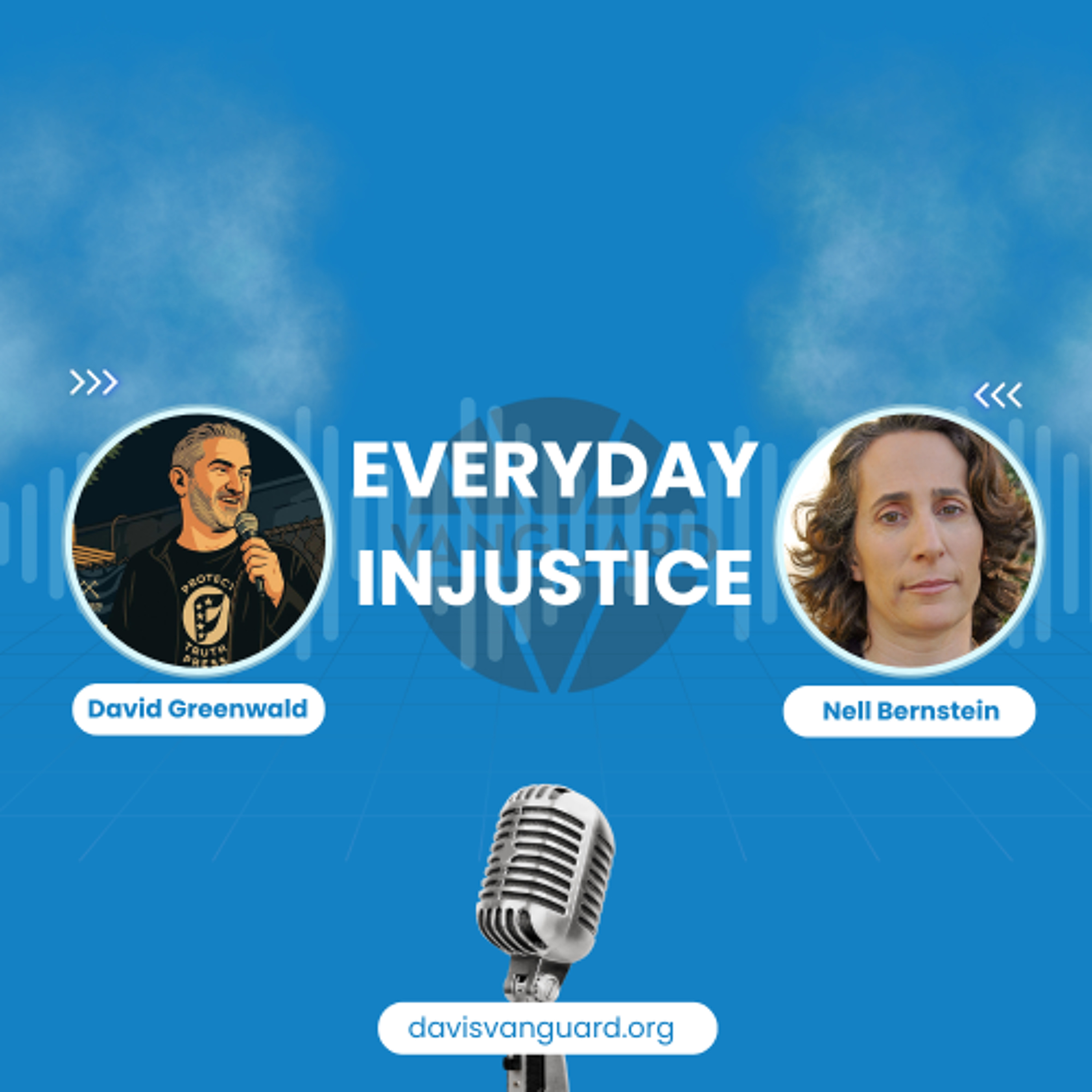 Everyday Injustice Podcast Episode 310: Youth Incarceration, Superpredators, Fight for Real Safety | On this episode of Everyday Injustice, we sit down with journalist and author Nell Bernstein, one of the nation’s leading voices on youth incarceration and the failures of the juvenile punishment model. Bernstein is the author of Burning Down the House and her newly released book, In Our Future We Are Free: The Dismantling of the Youth Prison. Her work challenges the mythology around “dangerous youth,” exposes the long-term harm of locking children in carceral environments, and reframes what true public safety looks like in America. Bernstein’s journey into youth justice began in the 1990s, during the height of the so-called superpredator era — a moment defined not by data, but by fear, racism, and political opportunism. She tells us how young people she worked with in San Francisco were funneled into arrests, courtrooms, and detention for low-level behaviors — not because they posed a threat, but because the system was built to criminalize them. What began as court accompaniment and juvenile hall visits evolved into decades of reporting, advocacy, and storytelling grounded in humanity rather than stereotype. In the conversation, Bernstein points to one of the most staggering realities: youth incarceration has dropped 75% nationwide since 2000, and more than two-thirds of youth prisons across the country have closed — including California’s entire state-run youth prison system. Yet at the same time, a backlash is underway. Politicians and media are reviving superpredator-style narratives, and several states — including California — are now pushing to try more children as adults. Bernstein warns that progress isn’t linear and the narratives driving fear often outpace the facts. This episode is both sobering and hopeful. Bernstein reminds us that youth incarceration is not inevitable — it is a policy choice driven by fear, inequity, and political gain. The alternatives already exist, and they work: community safety comes not from cages, but from education, support, housing, stability, and belonging. For anyone questioning whether change is possible, Bernstein’s message is clear — transformation has already begun. The question now is whether we will defend it. | — | ||||||
Showing 25 of 346
Pitch Fit is a Pro feature
See how bookable this show is for guests, which brands already advertise, the per-episode ad value, and the best-fit guest and sponsor profile. The numbers are blurred on the free plan.
How readily this show books outside guests like you.
How proven this show is for host-read sponsorships.
For Guests
ProFor Advertisers
ProUpgrade to Pro to unlock guest cadence, sponsor categories, fit scores, and per-episode ad value for this show.