Insights from recent episode analysis
Audience Interest
Podcast Focus
Publishing Consistency
Platform Reach
Insights are generated by CastFox AI using publicly available data, episode content, and proprietary models.
Most discussed topics
Brands & references
Est. Listeners
Insufficient chart data. Estimates will improve as the show charts.
- Per-Episode Audience
Est. listeners per new episode within ~30 days
N/A🎙 Daily cadence·259 episodes·Last published 4w ago - Monthly Reach
Unique listeners across all episodes (30 days)
N/A - Active Followers
Loyal subscribers who consistently listen
N/A
Market Insights
Platform Distribution
Reach across major podcast platforms, updated hourly
Total Followers
—
Total Plays
—
Total Reviews
—
* Data sourced directly from platform APIs and aggregated hourly across all major podcast directories.
On the show
From 11 epsHosts
Recent guests
Recent episodes
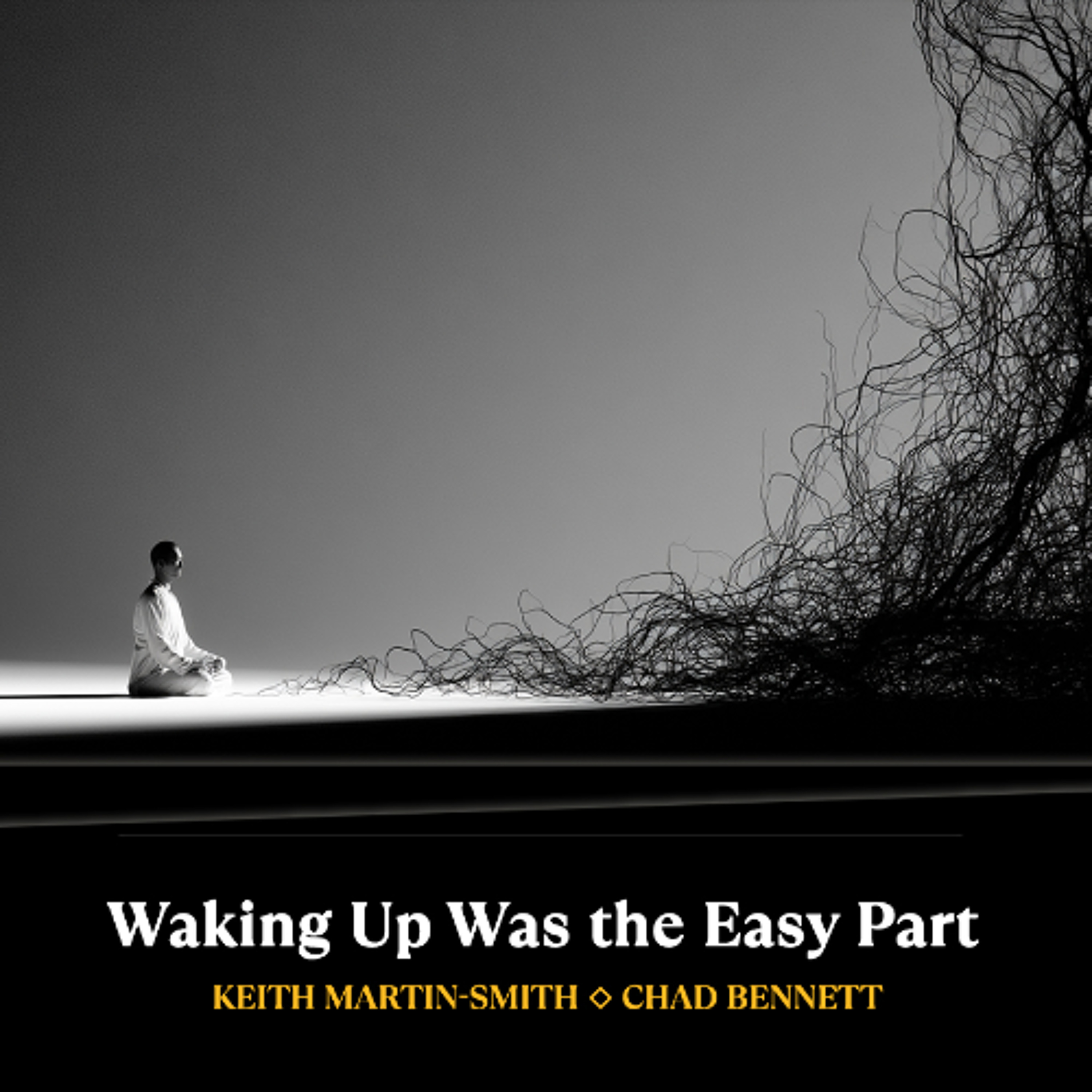
Waking Up Was the Easy Part (Chad Bennett & Keith Martin-Smith)
May 29, 2026
1h 15m 33s
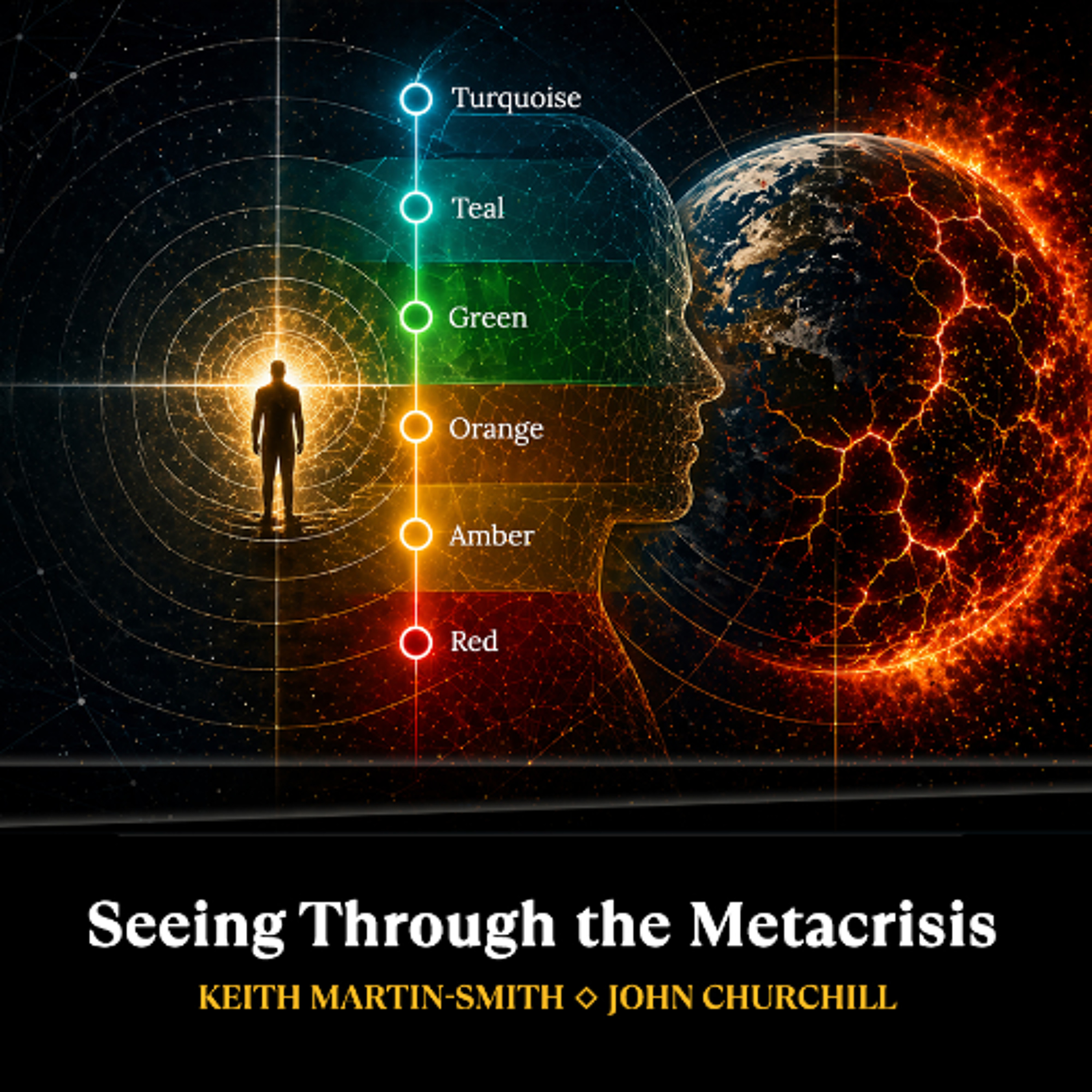
Seeing Through the Metacrisis
Apr 24, 2026
1h 18m 40s
Part 1: Origins: — The Day It All Came Together
Apr 7, 2026
33m 35s
Immigration and the Dangers of Political Tribalism
Apr 7, 2026
38m 30s
Part 1: Gross State Dysfunctions
Apr 7, 2026
11m 16s
Social Links & Contact
Official channels & resources
Official Website
Login
RSS Feed
Login
| Date | Episode | Topics | Guests | Brands | Places | Keywords | Sponsor | Length | |
|---|---|---|---|---|---|---|---|---|---|
| 5/29/26 | ![]() Waking Up Was the Easy Part (Chad Bennett & Keith Martin-Smith)✨ | spiritualitymeditation+4 | Chad Bennett | Mitra | — | DharmaZen+5 | — | 1h 15m 33s | |
| 4/24/26 | ![]() Seeing Through the Metacrisis✨ | metacrisissociety+3 | — | Integral Life | — | metacrisissociety+3 | — | 1h 18m 40s | |
| 4/7/26 | ![]() Part 1: Origins: — The Day It All Came Together✨ | originsself-discovery+3 | — | — | — | Integral Lifeorigins+3 | — | 33m 35s | |
| 4/7/26 | ![]() Immigration and the Dangers of Political Tribalism✨ | immigrationpolitical tribalism+3 | — | Integral Life | — | immigrationpolitical tribalism+3 | — | 38m 30s | |
| 4/7/26 | ![]() Part 1: Gross State Dysfunctions✨ | state dysfunctionssociety+3 | — | Integral Life | — | state dysfunctionssociety+3 | — | 11m 16s | |
| 4/7/26 | ![]() Part 1: How the Hierarchy Within Can Heal the Hierarchy Without✨ | hierarchyhealing+3 | — | — | — | hierarchyhealing+3 | — | 27m 49s | |
| 4/7/26 | ![]() Part 1: The Timeless Love of Ken and Treya✨ | loverelationships+3 | — | Integral Life | — | KenTreya+4 | — | 57m 47s | |
| 4/7/26 | ![]() Five Reasons You're Not Enlightened (Ken Wilber)✨ | enlightenmentself-awareness+3 | Ken Wilber | Integral Life | — | enlightenmentKen Wilber+3 | — | 56m 15s | |
| 4/7/26 | ![]() Part 1: The Race Between Consciousness and Catastrophe✨ | consciousnesscatastrophe+3 | — | Integral Life | — | consciousnesscatastrophe+3 | — | 20m 47s | |
| 4/7/26 | ![]() Part 1: Integrating Unity and Diversity✨ | unitydiversity+3 | — | Integral Life | — | unitydiversity+3 | — | 31m 14s | |

Want analysis for the episodes below?Free for Pro Submit a request, we'll have your selected episodes analyzed within an hour. Free, at no cost to you, for Pro users. | |||||||||
| 4/7/26 | ![]() Part 1: Awakening Shakti✨ | spiritualitypersonal growth+3 | — | Integral Life | — | Shaktiawakening+3 | — | 22m 42s | |
| 4/7/26 | ![]() Introducing Keith Witt | Introducing Keith Witt by Integral Life | — | ||||||
| 3/20/26 | ![]() Awakening Through the Body | Awakening Through the Body by Integral Life | — | ||||||
| 2/19/26 | ![]() The Sacred Gap: Shadow, Trauma, and the Post-Tragic Life | What makes human suffering so different from anything else in the animal kingdom? And what makes it so potentially transformative? In this deeply moving episode, Keith Martin-Smith sits down with developmental coach, acupuncturist, and shadow work facilitator Alexander Love to explore the foundational architecture of the human psyche — how shadow is formed, why it has to be, and what becomes possible when we learn to work with it rather than around it. Learn more about Alexander's Lumina Process here: https://newfield-learning-collective.teachable.com/p/lumina-level-one26?affcode=49153_yewd1dbc | — | ||||||
| 1/30/26 | ![]() Why Eating Got So Hard (It’s Not Your Fault) | This episode explores what it means to eat sanely and joyfully in an age of ultra-processed food, GLP-1 drugs, and endless conflicting nutrition advice — through the lens of Jeff Siegel’s “Eating 2.0” and Integral theory. Jeff begins with his own origin story: as a teenager he developed severe anorexia, dropping to a dangerously low weight while locked in a “civil war” between his mind and body. That crisis sent him on a long journey through neuroscience, behavioral biology, Eastern philosophy, and eventually Integral theory as he tried to understand what had gone so wrong in his relationship with food—and how to help others avoid the same fate. Out of this comes a view of eating that is biological and psychological, personal and cultural, individual and systemic all at once. Using the four-quadrant map (inner/outer, individual/collective), Jeff and Keith reframe eating as a fundamentally integral affair. There’s the chemistry of food and metabolism (UR), our inner stories and emotions around eating and body image (UL), the cultures and microcultures that tell us what’s “normal” or desirable (LL), and the wider food system of industrial agriculture, subsidies, marketing, and access (LR). Any real change, they argue, has to acknowledge all four, rather than reducing the problem to “just your macros,” “just diet culture,” or “just Big Food.” At the heart of the conversation is Jeff’s “inner eaters” model: a cast of five parts—Survival, Pleasure, Social, Strategic, and Ecological eaters—each corresponding to different developmental needs and values. The survival eater wants basic nourishment and regulation; the pleasure eater craves enjoyment and immediacy; the social eater longs for belonging and ritual; the strategic eater optimizes for performance and control; and the ecological eater cares about ethics, animals, and the planet. Most of us over-identify with one or two of these and pathologize the rest, which leads to predictable distortions—rigidity, bingeing, moralizing, or burnout. Integral eating means recognizing who’s “holding the fork” in any given moment and learning to coordinate these voices under a wiser inner leadership. The episode then locates these inner dynamics inside what Jeff calls “Food 2.0”: a radically novel, engineered food environment built to be irresistible, effortless, and endless. Ultra-processed products, omnipresent snacking, and algorithmic food media are not neutral—they are designed to capture our pleasure eater and overwhelm our survival eater’s signals. Against this backdrop, the usual moralizing about “willpower” looks naïve. Instead, Jeff emphasizes designing environments, habits, and inner agreements that make it easier to stay centered in a world of superabundance. GLP-1 drugs (Ozempic, Wegovy, etc.) enter as both a genuine breakthrough and a test of our maturity. For some, these medications finally quiet a lifetime of intrusive food noise; for others, they risk becoming another one-dimensional fix that ignores deeper psychological, cultural, and systemic factors. Jeff walks through how GLP-1s interact with each inner eater, and argues that the real opportunity is to use the pharmacological breathing room to re-educate taste, renegotiate social patterns, and embed tech within a broader upgrade in sleep, stress, movement, and meaning—rather than outsourcing the entire project of eating to pharma. | — | ||||||
| 12/18/25 | ![]() How to Build a Life Worth Living | How to Build a Life Worth Living by Integral Life | — | ||||||
| 11/7/25 | ![]() From Attainment to Attunement | Click here to learn more: https://integrallife.com/attunement Keith Martin-Smith and David Arrell diagnose the core pathology of contemporary life: we're living in an attainment culture that measures worth through accumulation—more status, more recognition, more stuff—while starving the qualities that actually make life worth living. The result? Epidemic levels of anxiety, polarization, narcissism, and a quiet desperation that no amount of productivity hacks or self-optimization can touch. The alternative isn't another framework to add to your collection. It's a fundamental reorientation toward attunement culture—a shift from quantity to quality, from getting to becoming, from conquest to meaning. David lays out the architecture of this shift across three temporal dimensions: HEALTH (The Past): Most of us are operating from developmental anchors—unconscious wounds and reactive patterns that keep us stuck at earlier stages of maturity. When you criticize, control, or comply automatically, you're not responding to what's in front of you; you're responding from an old script. The work is to turn toward these patterns with curiosity, reclaim the energy locked there, and stop letting the past hijack your present. DEPTH (The Present): Your attention is under siege. Billions of dollars have been spent engineering super-normal stimuli to keep you distracted, metabolically aroused, and scrolling. But presence—the capacity to remain grounded when life gets turbulent—is the foundation of wisdom. Character and virtue aren't abstractions; they're your ability to tolerate weather without capsizing. The fruits of the spirit (love, joy, peace, patience, kindness, goodness, faithfulness, gentleness, self-control) emerge spontaneously when you create the conditions, like apples from a healthy tree. GROWTH (The Future): Beyond your current capacities are your leading edges—the places where you're stretching into new territory. Growth means tolerating the unknown, throwing aspirational grappling hooks into territory you can't yet see clearly, and expanding your container of authenticity. It's not about becoming someone else; it's about becoming more fully who you already are. Throughout the conversation, Keith and David return to a revolutionary foundation: dignity culture. Unlike respect (which must be earned), dignity simply is—every human being has equal claim to worth by virtue of being human. This creates common ground from which we can build toward higher ground. It dissolves the false choice between dominator hierarchies and victim narratives, between attainment Olympics and oppression Olympics. --- Ideas don't transform lives — lived practice does. You can understand everything David and Keith discussed intellectually and still show up tomorrow exactly as you did today: distracted, reactive, caught in the same patterns, serving the same attainment culture that's been grinding you down. Click here to learn more: https://integrallife.com/attunement | — | ||||||
| 10/17/25 | ![]() The Highest Stages of Human Flourishing | The Highest Stages of Human Flourishing by Integral Life | — | ||||||
| 9/30/25 | ![]() The New War on the First Amendment | Keith Martin-Smith tackles America's free speech crisis in the wake of Charlie Kirk's assassination—examining how both left and right have abandoned principled commitments to the First Amendment in favor of tribal speech enforcement. The statistics are alarming: 34% of college students now believe violence can be justified to stop speech, while 70% think shouting down speakers is acceptable. Meanwhile, the right—once positioning itself as the defender of free speech—now threatens broadcast licenses (Jimmy Kimmel/ABC) and the Attorney General openly vows to prosecute "hate speech," which is constitutionally protected. Keith traces how we got here: the left's evolution from 20th-century free speech champions to 21st-century speech police, driven by sophisticated insights about power and identity that collapsed into "words are violence" when absorbed by pre-rational minds. The Biden administration's coordination with social media during COVID. Universities where 90% of faculty self-censor. A generation taught that disagreement equals danger. But the right offers no alternative. Trump's threats against critics, state laws punishing boycotts, banning books and classroom content — all wrapped in freedom rhetoric while furthering authoritarian control. The real issue isn't left versus right. It's developmental. Can we grow into people capable of holding the tension between freedom AND responsibility? Between protecting dissent AND attending to impact? Between defending speech we hate AND building cultures of care? The question isn't whose speech should we suppress. It's whether we can mature into people who can hear each other even when it hurts. | — | ||||||
| 9/4/25 | ![]() Cracking the Code of Human Development | What if the secret to understanding anyone—your teenage daughter, your impossible boss, that friend who keeps making the same relationship mistakes—wasn't about reading their mind, but about recognizing the developmental lens through which they see reality? What if most of our communication failures stem from a simple error: assuming everyone makes meaning the same way we do? In this conversation, Keith Martin-Smith and Alexander Love dive deep into Terry O'Fallon's revolutionary Stages model, a developmental framework that cuts through the noise of content to reveal the underlying structure of how consciousness evolves. Unlike the rigid hierarchies that plague most developmental theories, this approach treats growth as an unbroken fabric of becoming — twelve developmental waves flowing across three distinct tiers of reality perception. Alexander's three-question methodology can help pinpoint someone's developmental range in real-time. First: What world can they actually see? Someone operating from concrete thinking literally cannot perceive the systemic forces that are obvious to someone with subtle awareness. Second: Are they exploring individual identity or collective belonging? This reveals whether they're in the first two stages of any tier (developing the individual) or the second two stages (developing the collective). Third: What's their learning preference — receptive, active, reciprocal, or interpenetrative? This final question narrows twelve possibilities down to one. The conversation illuminates how this precision serves empathy rather than evaluation. When we recognize that a child adopting progressive values through rule-based thinking will enforce inclusivity with the same rigid authoritarianism they learned at home, we stop expecting postmodern sophistication from concrete cognition. When we understand that someone at 4.0 (green) can see systemic oppression but is still "had by" the system they're critiquing, we can appreciate both their insights and their limitations without condescension. Alexander's exploration of shadow and projection dynamics reveals another layer: how 4.0 can spot others' projections but remains blind to their own, while 4.5 begins the difficult work of recognizing their own shadow upon reflection. This isn't just developmental theory—it's practical wisdom for navigating the projection-heavy landscape of contemporary culture. Perhaps most importantly, they demonstrate how development unfolds not as a linear climb but as a fluid dance between multiple stages within any given conversation. A healthy person at any level naturally draws from earlier developmental waves when appropriate—using first-person perspective to open a door, concrete thinking to follow traffic rules, systemic awareness to understand cultural patterns. The goal isn't to transcend our humanity but to discover its full spectrum. Their discussion of real-world examples—from diversity and inclusion debates to parenting challenges—shows how the same content can emerge from radically different developmental structures, and why meeting people where they are developmentally creates the conditions for genuine growth rather than defensive reactivity. This isn't another framework for ranking consciousness. It's a tool for recognizing the magnificent complexity of human meaning-making, and for learning to love people into wholeness rather than arguing them into agreement. When we stop trying to convince others to see through our developmental lens and start learning to see through theirs, something remarkable becomes possible: genuine understanding across the beautiful diversity of human consciousness. | — | ||||||
| 7/18/25 | ![]() Redefining the Masculine (Without Losing the Man) | Keith Martin-Smith explores the contemporary crisis of masculinity through an Integral lens, challenging reductive narratives and inviting a richer, more multidimensional understanding of what it means to be a man in today’s world. Drawing on decades of men’s work, leadership coaching, and deep spiritual practice, Keith begins by naming a cultural paradox: while nearly everyone can define toxic masculinity, few can describe what healthy masculinity actually looks like. He traces this confusion to the collapse of traditional masculine scripts—stoicism, sacrifice, emotional coolness—that no longer resonate in a post-MeToo, pluralistic society. At the same time, newer ideals often leave men feeling neutered, ashamed, or adrift, with many retreating from relationships or quietly imploding under the weight of conflicting expectations. Rather than offering yet another rigid definition, Keith argues for a more integrative, developmental approach. He critiques David Deida’s popular three-stage model of masculinity—macho, nice guy, spiritual superhero—as overly idealized and psychologically naive, particularly in its neglect of trauma, shadow, and real-world complexity. Instead, Keith proposes that we recognize at least four major cultural expressions of masculinity, each with their healthy potentials and toxic distortions: Power-Based (Red) – Embodied presence, courage, and command; but prone to narcissism, domination, and emotional detachment. Traditional (Amber) – Duty, stoicism, service, and loyalty; but often repressive, rigid, and emotionally inaccessible. Modern (Orange) – Autonomy, achievement, innovation, and rational mastery; but risks burnout, detachment, and status addiction. Pluralistic (Green) – Emotional fluency, empathy, cultural humility, and relational depth; but susceptible to self-erasure, performative empathy, and ideological coercion. Rather than pitting these stages against each other, Keith calls for an integration of all four, turning masculinity from a fixed identity into a responsive, embodied capacity. A healthy man, he argues, learns to inhabit any of these modes depending on what the moment calls for—whether it’s the fierce protection of the Red warrior, the principled resolve of the Traditionalist, the clarity and execution of the Modernist, or the open-hearted presence of the Pluralist. He further warns that every level of masculinity can become domineering when it loses connection to service and heart. Whether through brute force, righteous tradition, technocratic elitism, or virtue-based moralism, each mode carries a potential for shadow—especially when weaponized in the name of power or purity. Keith closes with a spiritual invitation: that no identity—masculine, feminine, cultural, psychological—is ultimately who we are. Lasting transformation arises not from performing better roles, but from anchoring ourselves in something deeper than the constructed self. Through spiritual practice, disciplined shadow work, and developmental integration, men can begin to shed limiting scripts and show up as whole, multidimensional human beings. Not by abandoning the masculine—but by rediscovering it as an evolving, relational, and embodied art. | — | ||||||
| 6/24/25 | ![]() The End of America? | In the sweltering summer of 1787, 55 delegates locked themselves in a Philadelphia room for 116 days with windows nailed shut, no press allowed, and a singular mission: save a failing nation or watch it collapse into chaos. What emerged was perhaps the most revolutionary political document in human history—the U.S. Constitution. But here's what makes this story remarkable: these founders weren't idealistic dreamers banking on human virtue. They were pragmatic architects who assumed people would always act selfishly, and they designed a system to harness that selfishness for the common good. This episode reveals the hidden genius behind America's constitutional framework: a concept called "enlightened self-interest" that turned inevitable human greed and power struggles into a developmental elevator for society. Unlike the French Revolution, which violently destroyed existing structures and descended into chaos, the American experiment created institutional guardrails that channeled competing ambitions toward collective benefit. The founders essentially built a machine that could transform a power-hungry individual into a rule-following citizen, and a rule-following citizen into a thinking participant who could improve the system itself. But fast-forward to 2025, and that machine is breaking down. The very system designed to elevate human consciousness and channel self-interest toward progress has been captured by forces the founders never anticipated: corporate lobbying, algorithmic manipulation, and a post-truth media landscape that rewards division over cooperation. When Lyndon Johnson created Social Security and Medicare, the bills were just 29 pages long—there were no lobbyists to complicate them. Today's legislation runs into thousands of pages, dense with corporate interests that serve narrow profits rather than public good. Yet history offers hope through a surprising pattern: we humans excel at creating solutions, but usually only after catastrophe forces our hand. The Federal Aviation Administration emerged after planes started falling from the sky. The Securities and Exchange Commission was created after the 1929 stock market crash—and ironically, FDR put a former stock manipulator in charge because, as he said, it takes "a thief to catch a thief." These regulatory frameworks worked brilliantly for decades, proving that enlightened systems can allow businesses to pursue profit while serving the greater good. The path forward requires both sobering realism and evolutionary optimism. We're facing what scholars call a "meta-crisis"—artificial intelligence without guardrails, environmental collapse, and social media algorithms that weaponize our tribal instincts. The constitutional framework that served us for over two centuries needs an upgrade for problems that are global, ecological, and mind-bendingly complex. This means getting money out of politics (likely requiring a constitutional amendment), developing beyond purely rational thinking to handle interconnected systems, and probably enduring some painful lessons before we wake up. But if one lifetime could witness the transformation from racial segregation to a Black president, perhaps we shouldn't underestimate our species' capacity for rapid evolution when survival demands it. | — | ||||||
| 6/13/25 | ![]() How We Lost the Art of Connection | In this insightful episode of Integral Edge, Keith Martin-Smith sits down with Michael Porcelli, founder of MetaRelating, to explore the nuanced dynamics of human communication in relationships, organizations, and across cultures. They delve into why conversations so often go off the rails, the hidden cultural dimensions that shape our communication styles, and how to cultivate shared reality even amid intense conflict. Michael shares powerful insights on the importance of recognizing the "relationship itself" as a third entity—a living dynamic that must be understood, respected, and intentionally nurtured. They discuss the pitfalls of therapeutic "over-processing," critique popular communication methods like nonviolent communication and radical honesty, and highlight the value of productive tension and relational polarity. From intimate relationships to corporate cultures, this conversation offers practical strategies and profound perspectives on how we can better understand each other, navigate miscommunications skillfully, and deepen our capacity for true relational intelligence. | — | ||||||
| 5/29/25 | ![]() Becoming Whole in a Divided World | In today's deeply divided world—marked by polarized politics, global tensions, and fractured communities—is the aspiration for "wholeness" realistic or even desirable? In this thought-provoking episode of Integral Edge, Keith Martin-Smith sits down with executive coach and consciousness explorer David Arrell to explore what it truly means to become whole, both personally and collectively, amid ongoing division and conflict. The conversation begins by acknowledging an uncomfortable truth: human beings have always "othered" one another, creating deep divisions over seemingly trivial differences—illustrated vividly through the satirical example of Jonathan Swift’s kingdoms warring over how to crack an egg. Yet, as Keith and David unravel this tendency, they uncover a profound evolutionary logic behind our innate impulse to distrust and exclude "others" outside our tribe. From early hunter-gatherer societies protecting themselves from existential threats to vast empires maintaining cohesion through myths and collective identities, "othering" is a deeply ingrained survival strategy. But does this mean we're doomed to division forever? David introduces the concept of "fictive kinship," where humans form collective bonds through shared stories, myths, and identities, enabling large-scale cooperation across cultures and history. However, as our conversation shifts into a developmental perspective, the limitations and dangers of this instinctual "othering" become clear, especially when we regress into lower stages of consciousness during times of intense polarization. Drawing upon Integral Theory and the developmental frameworks of Robert Kegan and Terri O’Fallon, Keith and David discuss how the same moral teachings—like the Golden Rule—can be interpreted very differently depending on one's developmental stage. At a rule-based, "Amber" stage, the injunction to "do unto others as you would have them do unto you" often devolves into revenge-driven cycles. Yet at a more rational, individualistic "Orange" stage, it fosters genuine reciprocity and empathy. The crucial insight here is understanding how easily individuals at higher stages can regress, or "shadow crash," into these simpler and more combative perspectives when emotionally triggered—particularly visible in political polarization around figures like Donald Trump. Join Keith Martin-Smith and David Arrell in this timely and deeply reflective conversation as they offer practical wisdom, inspiring perspectives, and genuine hope for navigating—and ultimately transcending—the divisions that mark our contemporary moment. | — | ||||||
| 4/30/25 | ![]() The Cycles of Time: Mapping Evolution at the Edge of History | In this illuminating conversation, Keith Martin-Smith is joined by Terri O’Fallon—co-founder of STAGES International and one of the most insightful developmental theorists alive today—to explore the hidden cycles shaping both personal growth and global history. As the world faces a convergence of meta-crises—from late-stage capitalism to climate collapse and runaway technology—Terri reveals how these upheavals mirror a deeper, evolutionary recursion within human consciousness itself. Together, they trace the arc from timelessness (at birth) to the construction of linear and relative time, culminating in the boundless timelessness required at higher developmental stages. Alongside this journey, they chart the rapid acceleration of cultural evolution—from 50,000-year transitions to changes now unfolding within decades—and discuss the critical role of shadow, leadership, parenting, narcissism, and spiritual practice in navigating this evolutionary quickening. Is capitalism the end of the story, or just another stage? Can AI ever touch the depths of timeless awareness? And what kind of leaders are needed to shepherd us into a post-crisis future? This wide-ranging dialogue blends rigor and heart, offering both a sobering look at our civilizational crossroads and a grounded faith in our capacity to grow through it. PERSPECTIVE SHIFT: - Time isn’t just measured; it’s grown into. Time isn’t a fixed backdrop. It’s a developmental achievement. Infants begin in timelessness, then construct cyclical time (day/night), linear time (goals/futures), and eventually relative time (Einsteinian). Ultimately, advanced stages re-integrate timelessness — not by regressing, but by transcending and including earlier temporal modes. - Civilizational collapse isn’t random; it’s cyclical, and developmental. History isn’t a chaotic series of events. It’s patterned. Generational “blowups” (wars, revolutions, meta-crises) happen in ~100-year cycles and correspond to developmental limits in cultural structures (e.g., when capitalism outgrows its third-person frame). - We’re not just evolving — we’re accelerating. It once took 50,000 years to move from archaic to magic. Now, new developmental stages are emerging in decades. This compression disrupts traditional generational analysis and creates a world where vastly different levels coexist simultaneously. - You can be advanced and still dangerous. Late-stage development doesn’t automatically mean healthier behavior. A person can be construct-aware (5.0+) and still deeply narcissistic if early-stage wounds weren’t healed. Shadow travels up the spiral unless integrated. | — | ||||||
Showing 25 of 261
Pitch Fit is a Pro feature
See how bookable this show is for guests, which brands already advertise, the per-episode ad value, and the best-fit guest and sponsor profile. The numbers are blurred on the free plan.
How readily this show books outside guests like you.
How proven this show is for host-read sponsorships.
For Guests
ProFor Advertisers
ProUpgrade to Pro to unlock guest cadence, sponsor categories, fit scores, and per-episode ad value for this show.