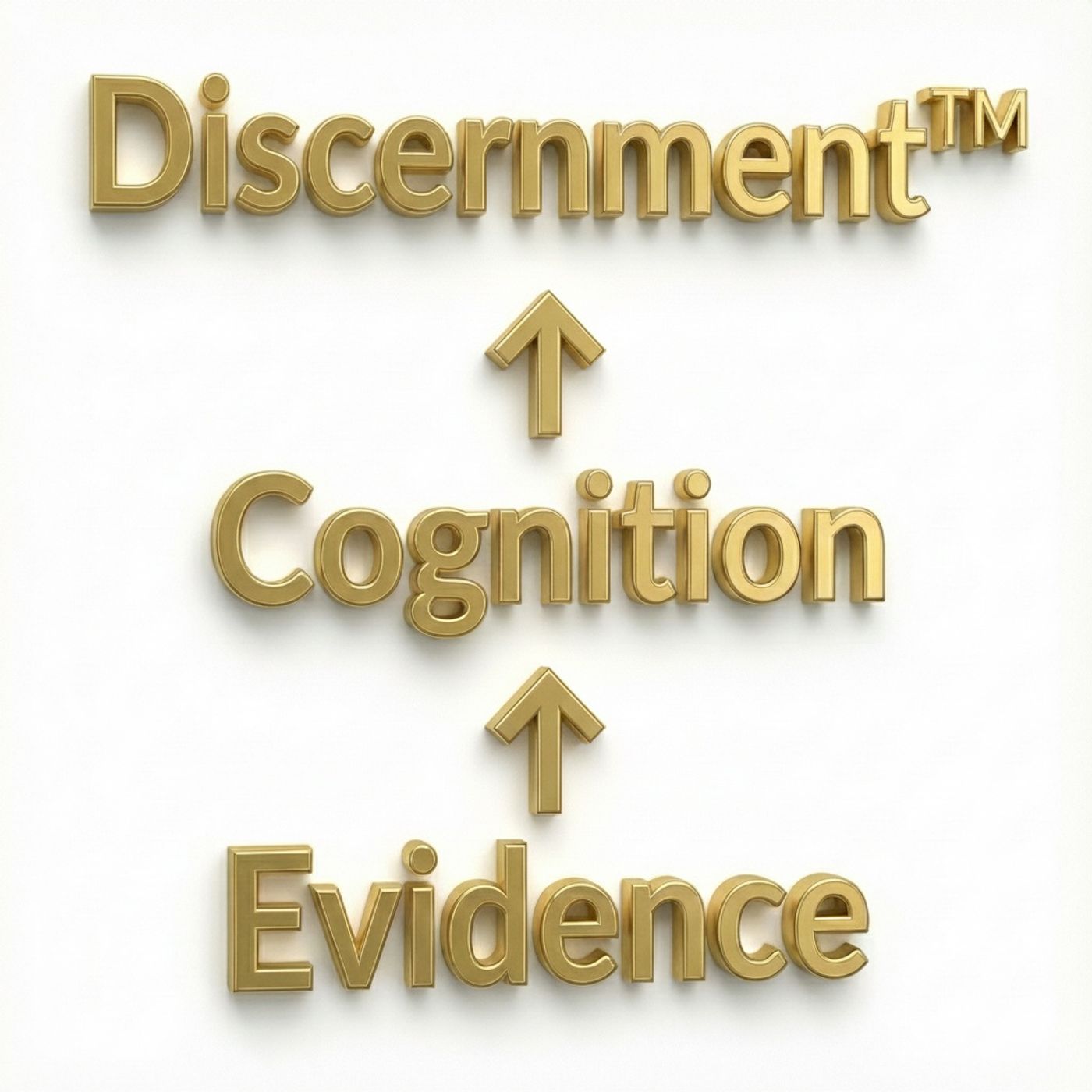
Evidence → Cognition → Discernment™️ - Your Pathway to AI Leadership
by Greg Twemlow
Is this your podcast?Insights from recent episode analysis
Audience Interest
Podcast Focus
Publishing Consistency
Platform Reach
Insights are generated by CastFox AI using publicly available data, episode content, and proprietary models.
Most discussed topics
Brands & references
Total monthly reach
Estimated from 1 chart position in 1 market.
By chart position
- 🇵🇭PH · Self-Improvement#193500 to 3K
- Per-Episode Audience
Est. listeners per new episode within ~30 days
150 to 900🎙 Daily cadence·372 episodes·Last published yesterday - Monthly Reach
Unique listeners across all episodes (30 days)
500 to 3K🇵🇭100% - Active Followers
Loyal subscribers who consistently listen
150 to 900
Market Insights
Platform Distribution
Reach across major podcast platforms, updated hourly
Total Followers
—
Total Plays
—
Total Reviews
—
* Data sourced directly from platform APIs and aggregated hourly across all major podcast directories.
On the show
From 31 epsHost
Recent guests
No guests detected in recent episodes.
Recent episodes
The AI-Machine and Mnemosyne, the Greek Goddess of Memory
Sep 1, 2026
21m 50s
Open Hand and the Directed Mind
Aug 30, 2026
22m 20s
The Connections Machine
Aug 28, 2026
18m 58s
PwC Just Measured What I Named “the Judgment Gap”
Aug 18, 2026
24m 04s
Reclaiming a Disposition Toward Thinking
Aug 14, 2026
19m 34s
Social Links & Contact
Official channels & resources
Official Website
Login
RSS Feed
Login
| Date | Episode | Topics | Guests | Brands | Places | Keywords | Sponsor | Length | |
|---|---|---|---|---|---|---|---|---|---|
| 9/1/26 | The AI-Machine and Mnemosyne, the Greek Goddess of Memory | This article by Greg Twemlow explores the intersection of artificial intelligence and human memory, using the Greek goddess Mnemosyne as a metaphor for deep recollection. The author describes a personal experiment where he used an AI "Connections Machine" to analyse a decade of his own writing to uncover hidden patterns and "revelatory" links between his past and future. He introduces the Context & Critique Rule, a framework ensuring that while technology can surface non-obvious relationships, human judgement remains the final authority on meaning. This process is central to his Formation Bridge concept, which provides a structured, asynchronous pause for individuals at life thresholds to reflect on their history before making significant decisions. Ultimately, the text argues that the true power of AI lies not in providing answers, but in acting as a catalyst for human reflection and self-authorship. Read the article.About the Author - Greg Twemlow writes and teaches at the intersection of technology, education, and human judgment. He works with educators and businesses to make AI explainable and assessable in classrooms and boardrooms — to ensure AI users show their process and own their decisions. His cognition protocol, the Context & Critique Rule™, is built on a three-step process: Evidence → Cognition → Discernment — a bridge from what’s scattered to what’s chosen. Context & Critique → Accountable AI™. © 2025 Greg Twemlow. “Context & Critique → Accountable AI” and “Context & Critique Rule” are unregistered trademarks (™). | 21m 50s | ||||||
| 8/30/26 | Open Hand and the Directed Mind | Greg Twemlow’s essay explores the concept of human sovereignty and how individuals can maintain a sense of purpose without becoming trapped by rigid expectations. He argues that modern life and artificial intelligence often force us toward quick, superficial answers that may stifle personal growth. To counter this, the author proposes a philosophy involving an open hand, representing receptivity, and a directed mind, which provides necessary discipline. By integrating context and critique, humans can use technology as a tool for validation rather than allowing it to dictate their life’s direction. Ultimately, the text encourages a reflective tempo where meaning is allowed to emerge gradually through experience. This approach ensures that a person’s foundational values remain flexible and truly their own in an increasingly automated world. Read the article.About the Author - Greg Twemlow writes and teaches at the intersection of technology, education, and human judgment. He works with educators and businesses to make AI explainable and assessable in classrooms and boardrooms — to ensure AI users show their process and own their decisions. His cognition protocol, the Context & Critique Rule™, is built on a three-step process: Evidence → Cognition → Discernment — a bridge from what’s scattered to what’s chosen. Context & Critique → Accountable AI™. © 2025 Greg Twemlow. “Context & Critique → Accountable AI” and “Context & Critique Rule” are unregistered trademarks (™). | 22m 20s | ||||||
| 8/28/26 | The Connections Machine | In this article, Greg Twemlow defines artificial intelligence as a connections machine that expands the boundaries of human discovery. He introduces the concept of pull potential, arguing that the technology’s greatest utility is its ability to draw out deeper insights from the user through collaborative inquiry. By moving beyond simple pattern matching, AI allows individuals to surface non-obvious relationships across vast bodies of knowledge, a process Twemlow calls Breakout Autonomy. However, he cautions that users must apply his Context & Critique Rule to ensure they remain the architects of their own work. Ultimately, the source emphasises that while AI can suggest novel links, the responsibility for human discernment and determining true value remains indispensable. Discovery is presented not as a machine output, but as a sophisticated partnership between computational scale and personal judgment. Read the article.About the Author - Greg Twemlow writes and teaches at the intersection of technology, education, and human judgment. He works with educators and businesses to make AI explainable and assessable in classrooms and boardrooms — to ensure AI users show their process and own their decisions. His cognition protocol, the Context & Critique Rule™, is built on a three-step process: Evidence → Cognition → Discernment — a bridge from what’s scattered to what’s chosen. Context & Critique → Accountable AI™. © 2025 Greg Twemlow. “Context & Critique → Accountable AI” and “Context & Critique Rule” are unregistered trademarks (™). | 18m 58s | ||||||
| 8/18/26 | PwC Just Measured What I Named “the Judgment Gap” | In this article, Greg Twemlow highlights a significant alignment between his own theories and new global labour-market data from PwC. Both sources conclude that as AI automates execution, professional value is shifting away from mere output and toward high-level human judgment and creativity. Twemlow argues that this "judgment gap" requires organisations to deliberately reinvest the time saved by technology into better decision-making rather than simple cost-cutting. While PwC provides the statistical evidence for this shift, Twemlow offers a practical framework called the Context & Critique Rule to help individuals refine their discernment. Ultimately, the text suggests that in an AI-driven economy, the ability to verify and own outcomes is more valuable than the ability to produce content. This convergence of data and theory serves as a call for professionals to master the human oversight that machines cannot replicate. Read the article.About the Author - Greg Twemlow writes and teaches at the intersection of technology, education, and human judgment. He works with educators and businesses to make AI explainable and assessable in classrooms and boardrooms — to ensure AI users show their process and own their decisions. His cognition protocol, the Context & Critique Rule™, is built on a three-step process: Evidence → Cognition → Discernment — a bridge from what’s scattered to what’s chosen. Context & Critique → Accountable AI™. © 2025 Greg Twemlow. “Context & Critique → Accountable AI” and “Context & Critique Rule” are unregistered trademarks (™). | 24m 04s | ||||||
| 8/14/26 | Reclaiming a Disposition Toward Thinking | Greg Twemlow argues that as artificial intelligence becomes increasingly fluent and competent, humans face a growing risk of cognitive disengagement by accepting machine output too readily. He introduces the metaphor of a red light to represent the moment an AI's response feels complete, signaling that the user must deliberately pause and enter a "Critique mode" to maintain their own curiosity. By treating AI as a cognitive muse rather than a mere answer-finding tool, individuals can engage in an iterative collaboration that elevates human reasoning to higher levels of abstraction. Twemlow suggests that true human value now resides in discernment and commitment, requiring us to take full responsibility for the consequences of decisions made alongside machines. Ultimately, the text encourages a shift in disposition where technology serves as a stimulus for deeper thought rather than a replacement for it. Read the article.About the Author - Greg Twemlow writes and teaches at the intersection of technology, education, and human judgment. He works with educators and businesses to make AI explainable and assessable in classrooms and boardrooms — to ensure AI users show their process and own their decisions. His cognition protocol, the Context & Critique Rule™, is built on a three-step process: Evidence → Cognition → Discernment — a bridge from what’s scattered to what’s chosen. Context & Critique → Accountable AI™. © 2025 Greg Twemlow. “Context & Critique → Accountable AI” and “Context & Critique Rule” are unregistered trademarks (™). | 19m 34s | ||||||
| 8/13/26 | We’re a Remix of Borrowed Atoms | In this philosophical essay, Greg Twemlow explores the concept of human mortality as a temporary "lease" of atoms provided by the earth. He argues that our physical bodies are merely a remix of ancient elements that must eventually be returned to the biosphere to sustain new life. By viewing death as a graceful act of reciprocity rather than a tragic loss, Twemlow suggests we can find liberation from material accumulation and existential dread. This perspective encourages a shift from extracting resources to practising micro-heroism, focusing on the quality of our service and relationships during our finite time. Ultimately, the text offers a secular solace grounded in biological reality, framing our end as an honourable homecoming to the living world. Read the article.About the Author - Greg Twemlow writes and teaches at the intersection of technology, education, and human judgment. He works with educators and businesses to make AI explainable and assessable in classrooms and boardrooms — to ensure AI users show their process and own their decisions. His cognition protocol, the Context & Critique Rule™, is built on a three-step process: Evidence → Cognition → Discernment — a bridge from what’s scattered to what’s chosen. Context & Critique → Accountable AI™. © 2025 Greg Twemlow. “Context & Critique → Accountable AI” and “Context & Critique Rule” are unregistered trademarks (™). | 17m 40s | ||||||
| 8/10/26 | The Lost Rite of Passage | Greg Twemlow’s text explores the Career Polycrisis, a phenomenon where artificial intelligence and corporate automation have dismantled the traditional entry-level pathways for university graduates. This rupture has destroyed the historical rite of passage into adulthood, leaving young people in a state of psychological and professional limbo. Twemlow argues that we must shift our focus from industrial "careers" to a Life Arc built on character and human formation. To combat this crisis, he proposes the Transition Team framework, which encourages universities to guide students through collaborative, real-world business challenges. By applying the Context & Critique Rule, graduates can reclaim their agency and transform AI from a threat into a tool for self-directed growth. Read the article.About the Author - Greg Twemlow writes and teaches at the intersection of technology, education, and human judgment. He works with educators and businesses to make AI explainable and assessable in classrooms and boardrooms — to ensure AI users show their process and own their decisions. His cognition protocol, the Context & Critique Rule™, is built on a three-step process: Evidence → Cognition → Discernment — a bridge from what’s scattered to what’s chosen. Context & Critique → Accountable AI™. © 2025 Greg Twemlow. “Context & Critique → Accountable AI” and “Context & Critique Rule” are unregistered trademarks (™). | 18m 58s | ||||||
| 8/6/26 | Formation - A Framework for AI Human Development | Greg Twemlow introduces Formation as a vital developmental framework designed to evaluate the human impact of artificial intelligence within modern organisations. Unlike standard skill training, this concept focuses on nurturing lifelong judgment, ownership, and navigation as automation threatens traditional entry-level learning pathways. By applying this lens to industry data, Twemlow argues that businesses are currently dismantling the apprenticeship layers where critical discernment was historically cultivated. He identifies a significant accountability gap, noting that while firms claim to have clear AI governance, very few actually hold humans responsible for machine-driven outputs. The text advocates for intentional organisational design to ensure that the capacity for human wisdom is preserved rather than accidentally erased by efficiency. Ultimately, the framework provides a disciplined set of questions for leaders to ensure that future workforces remain capable of ethical and strategic decision-making. Read the article.About the Author - Greg Twemlow writes and teaches at the intersection of technology, education, and human judgment. He works with educators and businesses to make AI explainable and assessable in classrooms and boardrooms — to ensure AI users show their process and own their decisions. His cognition protocol, the Context & Critique Rule™, is built on a three-step process: Evidence → Cognition → Discernment — a bridge from what’s scattered to what’s chosen. Context & Critique → Accountable AI™. © 2025 Greg Twemlow. “Context & Critique → Accountable AI” and “Context & Critique Rule” are unregistered trademarks (™). | 23m 07s | ||||||
| 8/4/26 | Formation of Your Life | Greg Twemlow explores the concept of Formation, defined as the lifelong journey of developing personal judgement and taking ownership of one’s life. He reflects on his own transition from being "creatively compliant" in a structured career to embracing the courage required to publish personal work and stand behind his own ideas. This transition is encapsulated in his trademarked mantra, "Never be afraid to hang your art on the wall," which encourages individuals to move beyond unexamined habits and inherited identities. Twemlow argues that while our backgrounds provide necessary discipline, true growth requires crossing a bridge to expose our authentic selves to the reality of public feedback. He concludes that in an age of artificial intelligence, which threatens to automate basic human development, consciously designing our own Formation has never been more critical. This essay serves as both a personal memoir and a call to action for others to grant themselves permission to contribute uniquely to the world. Read the article.About the Author - Greg Twemlow writes and teaches at the intersection of technology, education, and human judgment. He works with educators and businesses to make AI explainable and assessable in classrooms and boardrooms — to ensure AI users show their process and own their decisions. His cognition protocol, the Context & Critique Rule™, is built on a three-step process: Evidence → Cognition → Discernment — a bridge from what’s scattered to what’s chosen. Context & Critique → Accountable AI™. © 2025 Greg Twemlow. “Context & Critique → Accountable AI” and “Context & Critique Rule” are unregistered trademarks (™). | 19m 11s | ||||||
| 8/3/26 | Creativity — the power to inspire | Greg Twemlow argues that creativity is the essential human skill that distinguishes us from artificial intelligence, yet modern schooling and societal pressures often suppress this natural genius. To combat this decline, he introduces the Creativitee program, which empowers parents to act as a "Creative Muse" for their children. By fostering a supportive home environment, parents can help kids maintain their imagination and curiosity well into adulthood. The text draws on insights from experts like Sir Ken Robinson and Joseph Campbell to highlight how bravery and resilience are required to share one’s work with the world. Ultimately, the sources advocate for challenging the status quo through constant experimentation and the willingness to accept constructive feedback. This approach ensures that creative thinking is treated with the same academic importance as literacy. Read the article.About the Author - Greg Twemlow writes and teaches at the intersection of technology, education, and human judgment. He works with educators and businesses to make AI explainable and assessable in classrooms and boardrooms — to ensure AI users show their process and own their decisions. His cognition protocol, the Context & Critique Rule™, is built on a three-step process: Evidence → Cognition → Discernment — a bridge from what’s scattered to what’s chosen. Context & Critique → Accountable AI™. © 2025 Greg Twemlow. “Context & Critique → Accountable AI” and “Context & Critique Rule” are unregistered trademarks (™). | 20m 35s | ||||||
Want analysis for the episodes below?Free for Pro Submit a request, we'll have your selected episodes analyzed within an hour. Free, at no cost to you, for Pro users. | |||||||||
| 8/2/26 | Across History, Humans Eventually Vanish Inside Their Own Machinery | The provided text explores how modern civilisations use abstraction to distance themselves from the physical world and human dignity. By stripping nature of its sacred value and treating it as a mere economic resource, society has created a bloodless logic that eventually reduces people to statistical data. Author Greg Twemlow argues that while historical oppression relied on force, the rise of artificial intelligence threatens to erase human agency through the seductive power of hyper-convenience. To combat this, he proposes a framework of Context and Critique, which encourages individuals to slow down and reclaim their cognitive sovereignty. Ultimately, the source calls for a deliberate restoration of human judgment to prevent us from vanishing into the very machinery we have built. Read the article.About the Author - Greg Twemlow writes and teaches at the intersection of technology, education, and human judgment. He works with educators and businesses to make AI explainable and assessable in classrooms and boardrooms — to ensure AI users show their process and own their decisions. His cognition protocol, the Context & Critique Rule™, is built on a three-step process: Evidence → Cognition → Discernment — a bridge from what’s scattered to what’s chosen. Context & Critique → Accountable AI™. © 2025 Greg Twemlow. “Context & Critique → Accountable AI” and “Context & Critique Rule” are unregistered trademarks (™). | 17m 55s | ||||||
| 7/28/26 | Human Sovereignty and the Architecture of Discernment | In this article, Greg Twemlow argues that human discernment must remain the cornerstone of learning and professional life to prevent generative AI from eroding our cognitive sovereignty. He introduces the Context & Critique Rule™, a framework inspired by Bruce Lee’s philosophy, which encourages users to "intercept" automated fluency with mandatory friction and intentional reasoning. The text highlights a growing crisis where entry-level employment is vanishing because basic tasks are now automated, leaving young workers without traditional opportunities to develop professional judgment. To counter this, the author proposes using Direction and Traction Plans to help students build portfolios based on real-world problem-solving rather than just static output. Ultimately, the source advocates for a shift in education and industry towards accountable AI usage, ensuring that individuals retain ownership over their choices and intellectual labour. Read the article.About the Author - Greg Twemlow writes and teaches at the intersection of technology, education, and human judgment. He works with educators and businesses to make AI explainable and assessable in classrooms and boardrooms — to ensure AI users show their process and own their decisions. His cognition protocol, the Context & Critique Rule™, is built on a three-step process: Evidence → Cognition → Discernment — a bridge from what’s scattered to what’s chosen. Context & Critique → Accountable AI™. © 2025 Greg Twemlow. “Context & Critique → Accountable AI” and “Context & Critique Rule” are unregistered trademarks (™). | 21m 19s | ||||||
| 7/25/26 | The Friction of Meaning | In this article, Greg Twemlow explores the tension between automated efficiency and authentic human insight within the landscape of generative artificial intelligence. Drawing on Jerome Bruner’s metaphors, the author argues that the instantaneous nature of AI threatens to bypass the essential mental struggle required for deep understanding and creative breakthrough. To combat this, he proposes the Context & Critique Rule™, a cognitive discipline designed to reintroduce necessary friction into the creative process. By intentionally slowing down to interrogate machine-generated results, individuals can move beyond superficial completion toward genuine revelation. Ultimately, the text asserts that human dignity in a digital age is defined by our commitment to rigorous judgment rather than mere speed. This framework serves as both a defence of intellectual sovereignty and a method for proving human value in an increasingly automated economy. Read the article.About the Author - Greg Twemlow writes and teaches at the intersection of technology, education, and human judgment. He works with educators and businesses to make AI explainable and assessable in classrooms and boardrooms — to ensure AI users show their process and own their decisions. His cognition protocol, the Context & Critique Rule™, is built on a three-step process: Evidence → Cognition → Discernment — a bridge from what’s scattered to what’s chosen. Context & Critique → Accountable AI™. © 2025 Greg Twemlow. “Context & Critique → Accountable AI” and “Context & Critique Rule” are unregistered trademarks (™). | 21m 57s | ||||||
| 7/24/26 | Standing at the Doorway to Enterprise AI | In this article, Greg Twemlow explores the corporate paradox where widespread AI adoption fails to deliver significant organisational improvements due to hidden labour and unverified outputs. He introduces the concepts of botsitting, the time lost correcting machine errors, and botshitting, the act of submitting unvalidated AI work. To combat the erosion of cognitive capital, Twemlow proposes the Context & Critique Rule, a framework designed to ensure human judgment remains central to the technological interaction. He suggests that businesses must move beyond seeing AI as a mere efficiency tool and instead use it as a catalyst for deeper thinking and rigorous interpretation. By implementing auditable governance protocols like the Context & Critique Cover, leaders can transform AI from a liability into a measurable asset that strengthens human discernment. Ultimately, the text argues that true competitive advantage in the modern era stems from active intellectual engagement rather than automated speed. Read the article.About the Author - Greg Twemlow writes and teaches at the intersection of technology, education, and human judgment. He works with educators and businesses to make AI explainable and assessable in classrooms and boardrooms — to ensure AI users show their process and own their decisions. His cognition protocol, the Context & Critique Rule™, is built on a three-step process: Evidence → Cognition → Discernment — a bridge from what’s scattered to what’s chosen. Context & Critique → Accountable AI™. © 2025 Greg Twemlow. “Context & Critique → Accountable AI” and “Context & Critique Rule” are unregistered trademarks (™). | 22m 45s | ||||||
| 7/19/26 | judgmentcritique+4 | — | — | — | uni-context theorymeaningful critique+3 | — | 21m 02s | ||
| 7/15/26 | AIhuman judgment+4 | — | Fusion BridgeFormation Bridge+1 | — | AIhuman judgment+5 | — | 22m 01s | ||
| 7/13/26 | cognitive capitalAI governance+4 | — | Context & Critique Rule™Accountable AI™ | — | cognitive capitalAI+5 | — | 19m 27s | ||
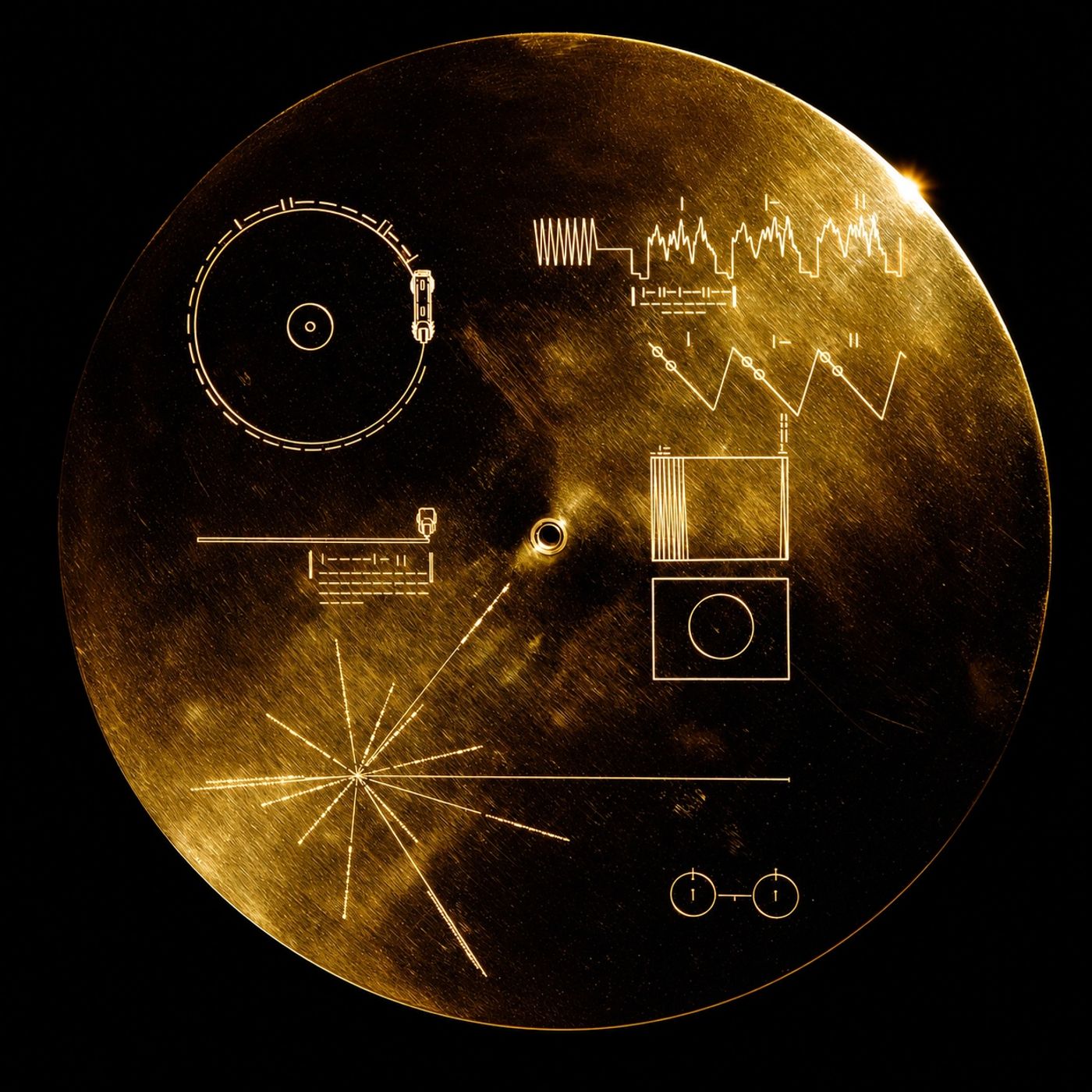
| 7/11/26 | AI ethicshuman judgment+3 | — | Voyager Golden RecordContext & Critique Cover™+2 | — | Voyager Golden RecordAI accountability+5 | — | 12m 02s | ||
| 7/9/26 | human developmentartificial intelligence+4 | — | — | — | AIContext & Critique Rule+4 | — | 16m 06s | ||
| 7/7/26 | artificial intelligenceprofessional judgement+4 | — | AIschools+1 | — | AIjudgement+5 | — | 19m 24s | ||
| 7/6/26 | educationhuman development+3 | — | — | — | Formationjudgement+5 | — | 21m 12s | ||
| 7/4/26 | AIFormation+5 | — | — | — | FormationAI Age+5 | — | 18m 42s | ||
| 6/21/26 | artificial intelligencecritical thinking+3 | — | — | — | Context & Critique RuleSovereign Ethics Blueprint+3 | — | 17m 55s | ||
| 6/19/26 | human cognitive sovereigntyartificial intelligence+4 | — | Context & Critique Rule™ | — | cognitive sovereigntyartificial intelligence+5 | — | 20m 03s | ||
| 6/6/26 | accountabilitytechnology+3 | — | — | — | accountabilityAI+4 | — | 21m 03s | ||
Showing 25 of 417
Pitch Fit is a Pro feature
See how bookable this show is for guests, which brands already advertise, the per-episode ad value, and the best-fit guest and sponsor profile. The numbers are blurred on the free plan.
How readily this show books outside guests like you.
How proven this show is for host-read sponsorships.
For Guests
ProFor Advertisers
ProUpgrade to Pro to unlock guest cadence, sponsor categories, fit scores, and per-episode ad value for this show.
Chart history for Evidence → Cognition → Discernment™️ - Your Pathway to AI Leadership
Peaked at #193 in PH, currently #193 in PH.
| Market | Genre | Peak | Current | Trend |
|---|---|---|---|---|
| PH | — | #193 | #193 | — |
Chart Positions
1 placement across 1 market.
Chart Positions
1 placement across 1 market.