
Insights from recent episode analysis
Audience Interest
Podcast Focus
Publishing Consistency
Platform Reach
Insights are generated by CastFox AI using publicly available data, episode content, and proprietary models.
Total monthly reach
Estimated from 2 chart positions in 2 markets.
By chart position
- 🇩🇪DE · Social Sciences#8030K to 100K
- 🇳🇿NZ · Social Sciences#1003K to 10K
- Per-Episode Audience
Est. listeners per new episode within ~30 days
17K to 55K🎙 ~2x weekly·29 episodes·Last published 2mo ago - Monthly Reach
Unique listeners across all episodes (30 days)
33K to 110K🇩🇪91%🇳🇿9% - Active Followers
Loyal subscribers who consistently listen
13K to 44K
Market Insights
Platform Distribution
Reach across major podcast platforms, updated hourly
Total Followers
—
Total Plays
—
Total Reviews
—
* Data sourced directly from platform APIs and aggregated hourly across all major podcast directories.
On the show
Recent episodes
Clinical Reflections on Occupational Apartheid: Ethics, Policy, and Systems Change in Occupational Therapy
Mar 17, 2026
1h 18m 06s
Global Conversations: Cross-Discipline Collaboration in Epidemiology, Occupational Science, Disability, and AI with Emmanuel Ampomah Boadi
Mar 9, 2026
1h 00m 18s
🌿 Beyond the Hierarchy: Rethinking Evidence in Occupational Therapy
Oct 27, 2025
12m 57s
🌿 “Reclaiming the Roots of Care: Witches, Midwives, and Nurses—Reviving the Feminine Lineage of Healing through Occupation.”
Oct 26, 2025
4m 31s
Building Our Own Tables: A Response to “The Seat at the Table Fallacy”
Oct 26, 2025
15m 59s
Social Links & Contact
Official channels & resources
Official Website
Login
RSS Feed
Login
| Date | Episode | Description | Length | ||||||
|---|---|---|---|---|---|---|---|---|---|
| 3/17/26 | 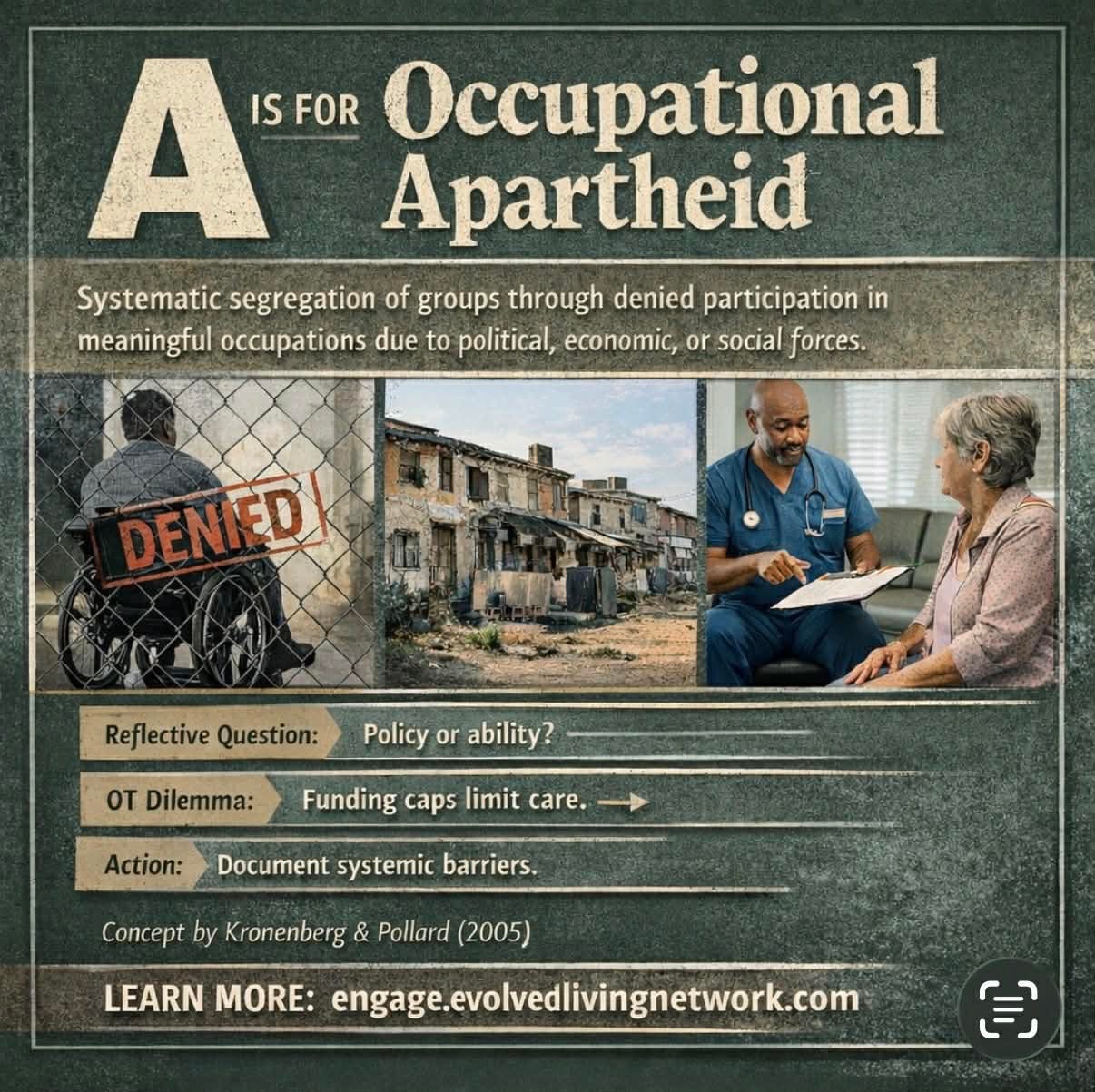 Clinical Reflections on Occupational Apartheid: Ethics, Policy, and Systems Change in Occupational Therapy | Why this Occupational Science series mattersIf you are an occupational therapy practitioner in the United States, chances are you are already using occupational science.You just might not have been given the words for it yet.That gap is part of why I created this Occupational Science Alphabet Series, a public learning series designed to make occupational science more accessible and more visible in everyday life and traditional practice settings.This first composite series begins with A for Occupational Apartheid.Recording Timestamps:00:00 “Occupational Apartheid Analysis”06:01 “Occupational Apartheid Challenges”16:11 “Systemic Barriers in OT”18:04 “Enhancing Accessibility through Advocacy”25:20 “Defining Occupational Apartheid”33:06 “Occupation and Systemic Inequality”39:23 “Advocating Equity in OT Practice”45:04 “Occupational Therapy for Healing”48:04 “Advancing Occupational Justice”54:55 “Occupational Ethics Evolution”58:50 “Occupational Apartheid Ethics”01:03:58 “Justice and Veracity”01:10:17 Healthcare Bias and Scientific Integrity01:15:59 “Addressing Maternal Health Disparities”The phrase can feel intense at first.It should.Because it names something real.It gives language to the ways people are systematically denied access to meaningful participation in everyday life, not simply because of individual impairment or diagnosis, but because of how social, economic, political, and cultural systems are organized.And that matters deeply for occupational therapy.Because when we only look at barriers inside individual bodies, we miss the wider context shaping participation.We miss the insurance policy.The school policy.The zoning code.The inaccessible architecture.The transportation gap.The labor condition.The funding cap.Occupational science helps us see those patterns clearly.And once we can see them, we can respond more ethically and more effectively.The Secret of OccupationOne of the most powerful insights of occupational science is that occupation always transcends the individual.Yes, participation includes personal capacity, motivation, and health status.But occupation is also shaped by:environmentculturepolicyhistoryeconomicssocial relationshipsWhen occupational therapists work with clients, we are rarely working with bodies alone.We are working with people in systems.Occupational science simply gives us a language to describe those systems more clearly.Why Occupational Apartheid MattersThe concept of occupational apartheid helps us name situations where social systems restrict access to meaningful participation in everyday life.Frank Kronenberg describes occupational apartheid as:“systematically enacted negations of humanity that divide and subjugate collectives of people to the benefit of some at the expense of others.”(Kronenberg, 2018) These restrictions can occur through intersecting social mechanisms such as:racismclassismsexismableismxenophobiaeconomic inequalityThese forces shape who has access to resources that sustain dignified living.They shape who can participate fully in everyday life.And they show up in everyday occupational therapy practice more often than we might initially realize.When Systems Become HabitOne of the most profound insights connected to occupational apartheid comes from the concept of occupational consciousness, developed by Elelwani Ramugondo.Occupational consciousness invites us to examine how systems of power become embedded in everyday activity.Because the truth is:Systems do not reproduce themselves automatically.They reproduce themselves through what people do every day.Policies become habits.Beliefs become routines.Social hierarchies become normalized through everyday actions.Over time, these patterns become so familiar that they operate below the level of conscious awareness.This is where occupation becomes incredibly important.Occupation is the point where ideas turn into action.And when those actions become automated habits, they can quietly reproduce systems of inequality, even after the laws that created them have been formally abolished.When Systems End but Patterns PersistHistory shows us that oppressive systems rarely disappear completely when policies change.Segregation in the United States was formally dismantled decades ago.Apartheid in South Africa was officially abolished in the 1990s.And yet racial disparities, inequities in access to housing, healthcare, education, and safety persist in both societies today.Why?Because systems do not only exist in policy.They exist in everyday occupations.They exist in patterns of:where people livewho receives serviceswho gets referred to carewhose needs are believedwho feels welcome in public spaceswho has access to transportation, education, and healthcareThese patterns often persist through habits and assumptions that operate subconsciously.Occupational consciousness asks us to notice those patterns.Occupational apartheid helps us name their structural origins.Rehumanizing the Collective After WarAnother important dimension of occupational apartheid is its relevance to collective recovery from war, violence, and social division.Many of the social systems that shape our institutions today were forged in contexts of conflict, colonial expansion, and geopolitical competition. Even when wars formally end, the habits, infrastructures, and relational patterns shaped by those conflicts often remain embedded in everyday life.Occupational apartheid helps illuminate how the aftermath of war can continue to shape participation in subtle ways, through segregation, displacement, institutional distrust, unequal resource distribution, and inherited patterns of fear or exclusion.If left unexamined, these patterns can reproduce division across generations.Occupation is where these patterns are maintained, but it is also where they can be transformed.Through shared activities, community participation, creative practice, caregiving, education, and everyday collaboration, people rebuild relational life.Occupational therapy historically emerged in part from this very context, helping individuals and communities reconstruct meaningful life after the disruptions of war and institutionalization.Engaging with occupational apartheid and occupational consciousness today invites us to continue that tradition.Not by reproducing new forms of division or tribal harm, but by helping cultivate conditions where people can participate in humanizing, compassionate, and sustainable forms of collective life.In this way, occupation becomes a pathway toward healing.Not only individual healing.But collective healing.Occupation as a Tool for LiberationIf occupation can reproduce systems of injustice, it can also help dismantle them.Because occupation is also the place where change becomes possible.When we change everyday patterns of doing, we change systems.This is why occupational therapy has always been connected to movements for human dignity and social participation.From the moral treatment movement to disability rights advocacy, occupational therapy has been concerned with helping people return to meaningful life within their communities.Occupational science expands that mission.It invites us to see how everyday activities can either reinforce systems of harm or help create environments where people can live with dignity, belonging, and agency.Why This Perspective Strengthens Occupational TherapyUnderstanding occupational apartheid and occupational consciousness does not weaken clinical practice.It strengthens it.When therapists understand the systemic barriers affecting participation, they can:design more realistic interventionsadvocate for appropriate equipmentcollaborate with community resourcesidentify policy barriersdocument environmental constraints clearlyIt also helps us articulate what makes occupational therapy distinctive.Our profession studies human beings as occupational beings.That means we look not only at physical function, but at how environments and systems shape the possibilities for everyday life.This perspective integrates insights from:health sciencessocial sciencescritical social sciencescommunity knowledgedecolonial scholarshipTogether, these perspectives create a robust and integrated understanding of participation.What This Series ExploresThis Occupational Science Alphabet Series explores concepts that help illuminate the broader context of occupation, including:occupational apartheidoccupational consciousnessoccupational justicecollective occupationsecological approaches to healthEach concept will be translated into examples from real-world practice contexts.The goal is simple:To help occupational therapists, students, and the public better understand the unique scientific foundation of our profession.Subscribe for OS 101If this conversation resonates with you, I invite you to subscribe to this Substack.Here I share:Occupational Science 101 explanationspodcast conversationsinterdisciplinary scholarshipreflections on ethics and policyexamples from everyday clinical practiceMy hope is to make occupational science more accessible so that occupational therapy can be better understood both within our profession and by the broader public.Stay tuned for the Forthcoming Learning CommunityI am also building a forthcoming Skool community where free OS 101 content will be hosted.This space will include:introductory occupational science coursesa journal and book clubcommunity discussion forumsreflection spaces for practitioners and learnersTogether we will explore how occupational science can support:collective liberationecological balanceoccupational wellbeinghumanizing care across the lifespanClosing ReflectionIf you have ever felt that occupational therapy is bigger than the narrow boxes it is often placed in, you are not imagining that.If you have sensed that participation barriers often arise from systems rather than symptoms, you are not imagining that either.Occupational science gives us the language to understand those realities.And occupational therapy gives us the tools to transform them.This series is an invitation to explore that together.Primary Sources📚 Ramugondo, E. L. (2015). Occupational consciousness. Journal of Occupational Science, 22(4), 488–501.https://doi.org/10.1080/14427591.2015.1042516https://www.tandfonline.com/doi/full/10.1080/14427591.2015.1042516📚 Kronenberg, F. (2018). Everyday enactments of humanity affirmations in post-1994 apartheid South Africa: A phronetic case study of being human as occupation and health (Doctoral dissertation, University of Cape Town).https://open.uct.ac.za/handle/11427/29441ReferencesHammell, K. W. (2019). Building globally relevant occupational therapy from the strength of our diversity. World Federation of Occupational Therapists Bulletin, 75(1), 13–26. https://doi.org/10.1080/14473828.2018.1529485Kronenberg, F. (2018). Everyday enactments of humanity affirmations in post-1994 apartheid South Africa: A phronetic case study of being human as occupation and health (Doctoral dissertation, University of Cape Town). https://open.uct.ac.za/handle/11427/29441Kronenberg, F., Pollard, N., & Sakellariou, D. (Eds.). (2011). Occupational therapies without borders: Towards an ecology of occupation-based practices (2nd ed.). Elsevier.Ramugondo, E. L. (2015). Occupational consciousness. Journal of Occupational Science, 22(4), 488–501. https://doi.org/10.1080/14427591.2015.1042516Wilcock, A. A., & Hocking, C. (2015). An occupational perspective of health (3rd ed.). SLACK Incorporated. This is a public episode. If you would like to discuss this with other subscribers or get access to bonus episodes, visit josiejarvisot.substack.com | 1h 18m 06s | ||||||
| 3/9/26 |  Global Conversations: Cross-Discipline Collaboration in Epidemiology, Occupational Science, Disability, and AI with Emmanuel Ampomah Boadi | Evolved Living Podcast with Dr. Josie Jarvis OT Global Conversations: Cross-Discipline Collaboration in Epidemiology, Occupational Science, Disability, and AIwith Emmanuel Ampomah Boadi---Episode OverviewIn this episode of the Evolved Living Podcast, Dr. Josie Jarvis welcomes Emmanuel Ampomah Boadi, a Ghana-based researcher working at the intersection of occupational science, epidemiology, biostatistics, rehabilitation, and disability studies. Their thoughtful, wide-ranging conversation explores how participation in daily life is shaped by social, structural, and systemic forces far beyond individual clinical encounters.Dr. Josie Jarvis opens the episode by reflecting on her diverse clinical background, spanning home health, schools, memory care, and acute and orthopedic rehabilitation. Her journey—deepened by doctoral work amid the COVID-19 pandemic—led her to occupational science as a discipline uniquely equipped to investigate barriers to participation at the population (not just individual) level.--- Key Topics Discussed- What is Epidemiology? Emmanuel Ampomah Boadi grounds the discussion by defining epidemiology: the study of how health, disease, and disability are distributed across populations, and the factors influencing those outcomes. He emphasizes that "it is the backbone of public health," using stories from Ghana and references to public health icons like John Snow and John Graunt to illustrate epidemiology’s roots in mapping, measurement, and understanding the interplay between environment and human behavior.- Bridging Disability Studies and Occupational Science Emmanuel Ampomah Boadi describes how his academic journey—spanning disability/rehabilitation studies and biostatistics—inspired him to explore the overlap between occupational science and population health. He highlights the importance of looking not only at medical conditions but also at social and environmental context, power imbalances, and race—reminding us that “everybody has some form of disability” and that “there is nothing like normal.”- The Role of Data and AI The conversation explores the need to “quantify” our observations to strengthen advocacy. Emmanuel Ampomah Boadi sees artificial intelligence as an assistive technology—valuable, but ultimately limited. He urges clinicians and researchers to retain the clarity and accountability of human interpretation, using AI as a support rather than a replacement for nuanced judgment.- Ethics, Equity, and Systemic Barriers The episode doesn’t shy away from difficult truths. They discuss well-known ethical breaches in research history (Tuskegee Syphilis Study, Nuremberg Code violations) and highlight how, without active attention to equity and ethics, scientific progress can deepen injustice. Dr. Josie Jarvis and Emmanuel Ampomah Boadi both reflect on their lived experiences of systemic inequity—from global vaccine access to the design of research and public health interventions.- Cultural Humility and Community Engagement Emmanuel Ampomah Boadi shares a poignant research anecdote from Ghana: an infrastructure project failed because outsiders did not consult the community, ultimately building a water borehole atop a sacred space. The lesson: knowledge translation is only possible with true cultural humility and partnership, not top-down assumptions.---Concepts ExplainedOccupational Science: A discipline that examines human participation (“occupation”) in everyday life, considering both individual and system-level factors—policy, environment, economics, and history—that enable or restrict engagement.Epidemiology & Biostatistics in Rehab: Not just tools for infectious disease, epidemiology provides frameworks for understanding disability, health disparities, and the structural determinants of participation. Biostatistics helps quantify these patterns and decipher root causes, moving advocacy from anecdote to evidence.Occupational Apartheid & Social Models of Disability: The episode contextualizes “occupational apartheid”—a situation where social, economic, or policy barriers systematically exclude groups from meaningful participation in everyday life. Emmanuel Ampomah Boadi distinguishes between the medical, social, and biopsychosocial (ICF) models of disability, urging listeners to see how “systemic barriers” create or intensify disability.---Practical Wisdom for Listeners- Integration is Key: Solutions come from teamwork—integrating medical science, social science, community wisdom, and policy. “You need to involve the community—what you believe to be the best solution may not fit their real needs.” - You Belong in Science: Dr. Josie Jarvis and Emmanuel Ampomah Boadi both stress that occupational science and health advocacy are not reserved for those with doctorates or prestigious affiliations. Efforts—however imperfect—matter. - Share and Connect: The conversation encourages clinicians, students, and community members to participate, share ideas, question systems, and “be on LinkedIn” or join organizations like CSOS (Canadian Society for Occupational Scientists), which prioritize international access and virtual participation. - Respect, Humility, and Effort: Growth and social change depend on respecting all perspectives, continuous effort, and humility when things don’t go as planned.--- Why This MattersOccupational therapy and science are poised to lead in bridging the gap between STEM and social science, between evidence and ethics, between theory and grassroots reality. Episodes like this demonstrate—in clear, accessible language—why the work of linking occupation, policy, data, and advocacy is both urgent and hopeful.--- How to Engage Further- Resources Mentioned: - Occupational Science 101 Guide - OS Alphabet Series (on TikTok, Instagram, Facebook, and LinkedIn) - CSOS membership and virtual events - LinkedIn and Substack for new episodes and reflections- Get Involved: Bring occupational science ideas into your practice, classroom, or community—even if you’re new to the concepts. Connect for further conversations, share your efforts, and don’t wait for perfect conditions.---Final Thought As Emmanuel Ampomah Boadi shares: "Don’t be afraid that you’ll get it wrong. If you don’t get it wrong, you never know what to do to make it right." Occupational science—and a just health system—needs all voices, including yours.Connect with Emmanuel on LinkedIn here: https://www.linkedin.com/in/emmanuel-ampomah-boadi-08b4241a4/---For more episodes, resources, and to keep the conversation going, follow the Evolved Living Podcast on Substack and connect on social media platforms. Let’s keep collaborating across borders, backgrounds, and disciplines—the future of well-being depends on it. This is a public episode. If you would like to discuss this with other subscribers or get access to bonus episodes, visit josiejarvisot.substack.com | 1h 00m 18s | ||||||
| 10/27/25 |  🌿 Beyond the Hierarchy: Rethinking Evidence in Occupational Therapy | When I first learned about evidence-based practice, I remember staring at that glossy triangle, the research hierarchy pyramid, with meta-analyses gleaming at the top like sacred scripture.It was comforting at first. Finally, a clear map of what counts as truth.But once I entered practice, that tidy hierarchy started to crumble under the weight of real people’s lives.Human beings aren’t controlled variables, and occupation doesn’t fit neatly into double-blind trials.The Trouble with the Old PyramidThe traditional Evidence-Based Practice (EBP) pyramid was built for biomedical and pharmaceutical research, where the goal is to test isolated variables across large populations (Duke University Medical Center Library, n.d.).That works beautifully when you’re measuring how a medication lowers blood pressure.But occupation is not a pill… it’s a process.It’s meaning, context, motivation, and environment woven together.In OT, our “data set” is often one person at a time, a life lived in context.Trying to flatten that into a universal protocol often means losing what makes our work effective and human.The Tomlin & Borgetto Research Pyramid: A Model That Fits Our FieldIn 2011, George S. Tomlin and Brandon Borgetto published Research Pyramid: A New Evidence-Based Practice Model for Occupational Therapy in The American Journal of Occupational Therapy (Tomlin & Borgetto, 2011).They didn’t just redraw the pyramid, they reimagined what evidence could look like.Their four-sided model includes:* Descriptive research: defining and observing occupational phenomena (the foundation).* Experimental research: asking causal questions under controlled conditions.* Outcome research: measuring effectiveness and impact in practice settings.* Qualitative research: exploring lived experience, culture, and meaning.Each side contributes uniquely to a full picture of occupational reality.Rather than stacking these methods into a hierarchy, Tomlin and Borgetto framed them as mutually reinforcing, like the faces of a pyramid that meet at the top…where evidence becomes practice.“Rather than ranking designs by hierarchy, the research pyramid encourages practitioners to evaluate rigor based on the type of question being asked.”- Tomlin & Borgetto (2011, p. 190)Why This Matters in PracticeIn home health, I’ve seen firsthand how rigid hierarchies undervalue the evidence that actually drives change.An RCT can tell me which exercise statistically improves shoulder flexion …but not whether my client can now garden with her grandchildren, or return to painting without pain.Occupational therapy lives where biology meets biography.To serve people well, we need research frameworks that make room for both.The Critiques That Strengthen UsScholars such as Whiteford and Wright-St Clair (2004) argue that the old hierarchy often silences the very forms of knowledge that make OT powerful- narrative, context, creativity.When we measure success only by quantitative control, we risk missing the human story.Occupational science reminds us that people are meaning-making beings.Our science must be capable of holding that complexity.How I Apply the Tomlin & Borgetto Pyramid* For mechanical reliability, I turn to experimental studies.* For real-world effectiveness, I consult outcome research.* For understanding experience, I value qualitative inquiry.* And at the root of it all, I rely on descriptive studies to ground my reasoning.Each approach has a place.Evidence becomes less about hierarchy and more about harmony, a dynamic ecosystem of knowing.Reclaiming Evidence as a Living PracticeEmbracing this model isn’t about lowering standards; it’s about broadening the lens.It validates community programs, arts-based methods, trauma-informed care, and culturally grounded interventions that might never fit into traditional RCTs.When we expand what counts as evidence, we expand what’s possible: for our clients, our profession, and the world we’re helping to rebuild.🌿 Learn More: Foundations of Occupational Science for U.S.-Based OTPsIf this conversation sparks something in you, the urge to better understand why occupational therapy feels different from other disciplines and how to ground that difference in research and policy… I invite you to join me inside Foundations of Occupational Science for U.S.-Based OTPs.This self-paced capstone learning experience bridges theory and practice, guiding practitioners and students to:* Decode the real meaning and application of the Tomlin & Borgetto Research Pyramid.* Integrate occupational science concepts into documentation, advocacy, and program design.* Reclaim OT’s creative and psychosocial roots while navigating contemporary U.S. systems.* Build confidence in articulating the full scope of practice, in language policymakers, payers, and interdisciplinary teams understand.You can explore the course and all current offerings here:👉 engage.evolvedlivingnetwork.comTogether, we’re building a movement of practitioners who see evidence as a living, liberatory practice…one that honors both the science and the soul of occupation.ReferencesDuke University Medical Center Library. (n.d.). The evidence-based practice pyramid. Retrieved from https://guides.mclibrary.duke.edu/ebmtutorial/ebp_pyramidTomlin, G. S., & Borgetto, B. (2011). Research pyramid: A new evidence-based practice model for occupational therapy. American Journal of Occupational Therapy, 65(2), 189–196. https://doi.org/10.5014/ajot.2011.000828Whiteford, G., & Wright-St Clair, V. (2004). Occupation and practice in context (1st ed.). Churchill Livingstone Australia. This is a public episode. If you would like to discuss this with other subscribers or get access to bonus episodes, visit josiejarvisot.substack.com | 12m 57s | ||||||
| 10/26/25 |  🌿 “Reclaiming the Roots of Care: Witches, Midwives, and Nurses—Reviving the Feminine Lineage of Healing through Occupation.” | This month, I’m inviting occupational therapists, assistants, students, and allies to join a special conversation and art-making circle:🌿 “Reclaiming the Roots of Care: Witches, Midwives, and Nurses—Reviving the Feminine Lineage of Healing through Occupation.”Together we’ll trace the story of how our field—and the U.S. medical system itself—was built on both the wisdom and the erasure of women, craftspeople, and community healers.🔥 A Forgotten Lineage of OccupationBefore “occupational therapy” was a profession, it was a practice of communal survival.Herbalists, weavers, potters, midwives, and caregivers used occupation—the everyday work of hands, heart, and imagination—to restore rhythm and balance in their communities. These were the first practitioners of holistic health. Their medicine was relational, cyclical, and often communal.But as Barbara Ehrenreich and Deirdre English so sharply remind us in Witches, Midwives, and Nurses, the rise of industrialized medicine and patriarchal institutions criminalized and professionalized care—pushing women, poor people, and folk practitioners out of authority.That legacy persists today in how our systems undervalue both the crafts of care and those who carry them.🩺 The Occupational Therapy ConnectionOccupational therapy was born from the same soil as these folk practices:the moral treatment movement, the arts and crafts movement, and the belief that doing—making, creating, and belonging—heals.Yet, in today’s medical hierarchies, OT remains one of the most undervalued disciplines—our relational, craft-based, and psychosocial roots often sidelined in favor of “productivity metrics” and “efficiency scores.”We see it in the divestment from community programs, the burnout of first responders, and the shrinking access to care.Just as women healers were once pushed out of medicine, today OTs, PTs, and nurses face systemic devaluation.It’s the same story—different century.🌾 Why This Matters NowWe’re living through an era of healthcare collapse and collective burnout.Medicare cuts, staffing shortages, and inaccessible insurance structures are leaving entire communities without care.When institutional medicine retracts, folk medicine revives.We’re already seeing this—through herbalism, creative arts, community mutual aid, and occupation-based micro-healing collectives.Occupational therapists have the power to become the bridge between regulated healthcare and ancestral care:to hold dignity, skill, and accessibility where the system no longer reaches.🌙 What We’ll Explore in This GatheringIn this 90-minute virtual reflection and collective art-making session, we’ll:🕯️ Read and reflect on excerpts from Witches, Midwives, and Nurses (Ehrenreich & English, 1973).🎨 Create simple symbolic art—our “Window Between Worlds”—to honor the silenced healers in our lineages.🪶 Explore how OT’s founders carried forward folk-craft medicine under the language of “occupation.”💬 Share reflections on how today’s clinicians can reclaim and protect those roots amid healthcare divestment.🌱 Discuss how reviving folk practices—community weaving, kitchen herbalism, neighborhood arts—can complement and extend our scope of meaningful care.💌 An Invitation to RememberIf you’ve ever felt the ache of doing too much in systems that care too little,or if you’re yearning to reconnect your professional role with your deeper lineage as a healer, maker, and witness—this space is for you.Join us as we remember that the future of care may not lie in the systems we built, but in the occupations that built us.On Sunday, November 2 (2:30–4:00 PM PT), I’m hosting a free virtual book circle exploring these roots through the lens of Witches, Midwives & Nurses — a short, powerful feminist classic that uncovers the haunting origins of U.S. healthcare and what they reveal about our present.You can join live via Skool:👉 Event link: https://www.skool.com/live/dJLMncrh6hX🕯️ When: Sunday, Nov 2 | 2:30–4:00 PM PT🇦🇺 Monday, Nov 3 | 9:30–11:00 AM AEDT💻 Virtual on Skool📖 Access the book (quick + free):• Free PDF* Text Without Pictures:• Independent Publisher → https://www.feministpress.org/books-n-z/witches-midwives-nurses-second-edition• Kindle/Audiobook → https://a.co/d/1oZu9zOCome as you are — even if you haven’t read it all. Presence matters more than perfection.Want to learn more about weaving intergenerational occupational histories! Make sure to check out this podcast episode!Weaving the Threads of Our Occupational Histories: An Intergenerational Conversation with the Jarvis Family by Dr. Josie Jarvis OTRead on Substack References & Further Reading* Ehrenreich, B., & English, D. (1973). Witches, Midwives, and Nurses: A History of Women Healers. Feminist Press.✨ Closing ReflectionWhen systems collapse, it’s not the sterile rooms that survive—it’s the kitchens, the gardens, the song circles, and the hands that remember how to make.Occupational therapy has always been a revival movement disguised as a profession.Now is our time to remember. This is a public episode. If you would like to discuss this with other subscribers or get access to bonus episodes, visit josiejarvisot.substack.com | 4m 31s | ||||||
| 10/26/25 |  Building Our Own Tables: A Response to “The Seat at the Table Fallacy” | Last week I reacted live to a powerful post shared by Bill Wong in our community. The article in question — “Occupational Therapy and the ‘Seat at the Table’ Fallacy” by ABC Therapeutics — suggests that the push for higher credentials in OT (e.g., mandatory OTD) has been mis-directed:“A degree doesn’t grant influence. Credentials open doors, but they don’t dictate what happens once you step through them … A ‘seat at the table’ means very little if the table itself was built by someone else.” ABC TherapeuticsIt’s a critique worth hearing. But it’s also an invitation—not to retreat—but to re-vision how we approach our profession.The core tensionThe article argues:* Many OTD programs replicate existing content under new credentials, without generating genuine contribution. ABC Therapeutics* Visibility campaigns (hashtags, social media posts) risk being “toothless” when they lack scalable frameworks or evidence. ABC Therapeutics* We have long sought a seat at others’ tables rather than designing our own tables.You’ll hear echoes of that critique in my video: I reflected on how OT education, biomechanics-dominated models, and reimbursement systems have siloed us—and how that matters for people with disabilities, for social justice, and for innovation.My take: Let’s build AND sit1. Building our own tablesYes—the article is right: credentials alone don’t guarantee influence. But I take that as a call to action. We need to:* Design models where OT is not just invited, but indispensable (policy, systems, community, creative arts)* Co-create the future with interdisciplinary, cross-cultural, and justice-oriented partners* Use our degrees (OTD or otherwise) to contribute—not just credential-inflate2. Recognizing the invisible tables people actually builtOT’s lineage includes folks who built their own tables: moral treatment movement, arts & crafts interventions, community-based rehabilitation, disability justice activism. In my video I referenced how we’re responding to human rights crises, climate, trans / disability access barriers—these aren’t “outside” OT—they’re core.3. Expanding practice beyond the “biomechanical king of the castle”The article critiques that OTD programs default to clever “hobbie” capstones (“OT in football”, hashtag activism) without rigor or depth. My sympathy to the students who poured their hearts and best work in to their first major OT project. Perhaps some encouragement and support for the potential of their future work is also in order. I can’t tell how much more difficult contributing to the advancement of one’s field without the support or encouragement or belief in possibilities from one’s elders also want to offer what depth and rigor can also look like:* Confronting systems of oppression (transphobia in toileting access, disability justice, policy literacy)* Measuring participation, identity, belonging—not just ROM, strength, task time* Using community arts, folk craft, cross-generation dialogue as legitimate knowledge translation pathwaysWhy this matters—especially now* People with disabilities face occupational deprivation, systemic barriers, and need OT thinking that goes beyond physical rehab.* The U.S. health-human services system is stressed; OT’s value-add includes bridging discipline silos, addressing context, and enabling participation.* New generations (Gen Z, Gen Alpha) bring fresh epistemologies. If we insist on “sit at the table”, we risk boxing their potential. My mantra: “Make room for the next table-builders.”An invitation to youIf you resonate with any of these questions:* How might OT design a new table rather than merely trying to sit at one?* What kind of praxis (not just theory) can we commit to that spans social justice, policy literacy, community arts, and cross-cultural collaboration?* Can we mentor and co-create with newer cohorts, rather than gate-keep?Then join me. Let’s build Evolved Living OT/OS Collaborative as a space for these conversations and creations.ReferenceABC Therapeutics. (2025, October 17). Occupational Therapy and the ‘Seat at the Table’ Fallacy. Retrieved from https://abctherapeutics.blogspot.com/2025/10/occupational-therapy-and-seat-and-table.html This is a public episode. If you would like to discuss this with other subscribers or get access to bonus episodes, visit josiejarvisot.substack.com | 15m 59s | ||||||
| 10/26/25 |  🌿 The Power of Cross-Cultural & Intergenerational Engagement with Occupational Science | Listen to the full episode → 🎧 Multigenerational Panel on Delayed Exposure to Occupational Science and Its Impact on OT Practice🌎 Reclaiming Our Collective VoiceWhen I think about the roots of occupational therapy and occupational science, I often imagine our profession as having lived under a kind of conservatorship — not unlike the cultural story of Britney Spears.For much of our history, OT in the United States was positioned under the American Medical Association, functioning almost like a dependent discipline. We began as “technicians” and “aides” before evolving into a profession with associate, bachelor’s, master’s, and now doctoral degrees.While this growth advanced professional credibility, it also created hierarchies and access barriers that have distanced many from the relational, creative, and community-driven roots of our work.That is why cross-cultural and intergenerational engagement with occupational science is so vital — it reconnects us to the shared experiment that science was always meant to be: interdisciplinary, context-sensitive, and liberatory.🪶 Why Occupational Science Needs Many VoicesOccupational science, in its truest expression, was designed to be:“An infinitely flexible and transparent experiment for discovering the meaning of doing, being, becoming, and belonging across contexts.”Globally, the field has diversified through multiple lenses:* Australia & New Zealand → Scholars such as Anne Wilcock, Gail Whiteford, and Claire Hocking have emphasized occupation as a determinant of health, linking individual activity to public-health systems and policy.* North America (University of Southern California) → The lineage of Elizabeth Yerxa, Mary Reilly, and later Gary Kielhofner rooted occupational science in clinical practice, volition, and systems of meaning.* Canada & Europe → Emerging work now centers occupational justice, sanctioned occupations, and community transformation.Each regional thread offers a unique epistemology — a way of producing and translating knowledge about what it means to live a meaningful life through occupation.🧵 The Panel: Four Generations, Shared PurposeThis Evolved Living Podcast episode brings together four occupational therapists from different generations — spanning Baby Boomer to Gen Z — to explore how exposure to occupational science transformed their thinking and practice.🎙 Panelists* Dr. Susan Burwash (Baby Boomer) – LinkedIn | Portfolio | @subu_ot* Dissertation: Doing Occupation: A Narrative Inquiry into Occupational Therapists’ Stories of Occupation-Based Practice* Dr. Karen Dwire (Generation X) – LinkedIn* Capstone: Pets Alleviating Loneliness in Seniors (PALS) – An adjunct OT program addressing isolation in older adults.* Dr. Josie Jarvis (Millennial) – Host of the Evolved Living Podcast and founder of the Evolved Living Collective.* Anna Braunizer, Reg. OT (BC) (Gen Z / late Millennial) – LinkedIn* Referenced article: Silences around Occupations Framed as Unhealthy, Illegal, and Deviant (Kiepek et al., 2018, Journal of Occupational Science).🌍 What We LearnedAcross generations and borders — U.S. and Canada — similar patterns emerged:* Home Health & Community Mental Health share more overlap than we think.Dr. Karen Dwire’s U.S. home-health practice mirrors Anna Braunizer’s work in Canada’s community-mental-health model.* Occupational Science Vocabulary gives us a shared lens for inter-professional collaboration.* Exposure to Global OS Frameworks empowers clinicians to separate professional identity from restrictive payer systems.“OT exists in an incredibly vulnerable position if we do not allow ourselves to build an identity separate from the systems we work in.” — Josie Jarvis💫 Why Intergenerational Literacy MattersWhen Baby Boomers, Gen Xers, Millennials, and Gen Z clinicians share dialogue, something shifts.We begin to see our own epistemological inheritance — and the blind spots that come with it.This is not about defining what OT is or isn’t in rigid terms.It’s about softening the limbic reflex that says “it’s either this or that.”Occupational science literacy helps us see possibility again — not through hierarchy, but through shared curiosity.🩺 From Systems to SovereigntyOne of the key takeaways from this panel is that understanding occupational science allows us to separate:* Policy systems (which define what’s reimbursed)* Professional identity (which defines what’s possible)Occupational therapy is always a negotiation between these two worlds. But when we ground ourselves in science — not just service codes — we begin to reclaim creative sovereignty and advocacy capacity within the system itself.As Dr. Jarvis noted:“Science is meant to be transparent and adaptable. When it becomes proprietary, it loses its soul.”🌏 Building Bridges Across BordersThis conversation also highlights the importance of global collaboration.The Canadian Society of Occupational Scientists (CSOS) is currently inviting submissions for their upcoming World Occupational Science Day Virtual Conference — an accessible, international gathering celebrating diverse applications of occupational science.🌐 Submit a proposal or attend to see how community, justice, and policy perspectives are expanding OS worldwide.💡 Supplementary LearningTopic Resource Foundations of Occupational Science A Capstone Course for U.S.-Based OTPs (Evolved Living Collective) History of U.S. Healthcare Systems Witches, Midwives & Nurses: A History of Women Healers — Barbara Ehrenreich & Deirdre English Sanctioned Occupations Kiepek et al., 2018 – Journal of Occupational Science Community OS Engagement Canadian Society of Occupational Scientists🎧 Listen, Reflect, Share“Having an occupational lens informed by cross-cultural possibility enhances our ability to serve, adapt, and imagine.”Join the conversation by listening to the full episode here:🎙️ Multigenerational Panel on Delayed Exposure to Occupational ScienceAnd follow our guests:* Dr. Susan Burwash* Dr. Karen Dwire* Anna Braunizer, OT (BC)📚 References* Ehrenreich, B., & English, D. (1973). Witches, Midwives & Nurses: A History of Women Healers. The Feminist Press.* Kiepek, N., Beagan, B., Laliberte Rudman, D., & Phelan, S. (2018). Silences around occupations framed as unhealthy, illegal, and deviant. Journal of Occupational Science, 26(1), 1–13. https://doi.org/10.1080/14427591.2018.1499123* Canadian Society of Occupational Scientists (CSOS) This is a public episode. If you would like to discuss this with other subscribers or get access to bonus episodes, visit josiejarvisot.substack.com | 9m 54s | ||||||
| 10/26/25 | 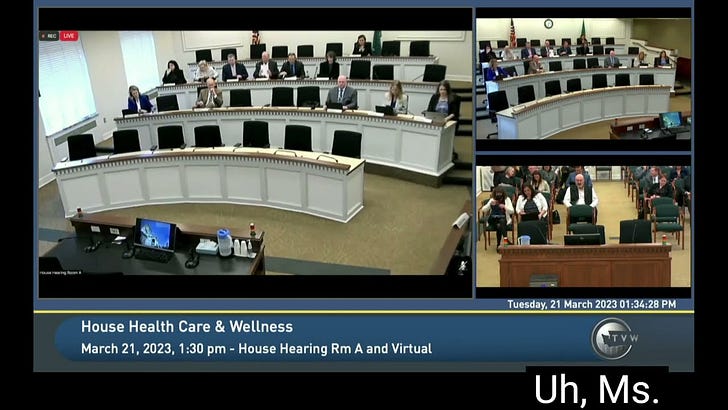 🌿 Occupational Therapy Isn’t Just Biomechanical: Reclaiming the Psychosocial Heart of OT | I hopped on live this week after a rich conversation in the Practical OT Facebook group (hi Chris! 🙌).Chris shared The Intentional Relationship Model — Renee Taylor’s seminal text on therapeutic use of self and the relational core of practice (and yes, the IRM lineage connects to Gary Kielhofner and MOHO).That post opened a door I care deeply about:Why do so many of us still feel hesitant—or “naughty”—bringing the psychosocial domain into “traditional” OT settings?Short answer: our systems trained us to separate what OT was never meant to split.🧠 Our Roots Were Never Split: OT = Psychobiological IntegrationEarly psychiatrist Adolf Meyer, who co-founded the American Occupational Therapy Association alongside Eleanor Clarke Slagle, coined the term psychobiology — a framework for understanding human beings as integrated systems of mind, body, and environment (Meyer, 1922).He argued that disturbances in this balance—not isolated mental or physical “defects”—were the source of illness. The therapeutic goal was to restore rhythm and meaning in daily life through occupation.“It is the proper rhythm and balance of activity and rest, of work and play, of day and night, that constitute the very basis of health.” — Adolf Meyer, 1922This psychobiological lens is the taproot of occupational therapy’s foundations in the moral treatment and arts and crafts movements — where engagement in creative, purposeful occupation supported emotional regulation, identity reconstruction, and social participation.Our profession was born as a psychosocial intervention, long before it became entrenched in the biomechanical model.That continuity remains explicit in the Occupational Therapy Practice Framework: Domain & Process, 4th Edition (AOTA, 2020): occupation is not just biomechanical task performance.It is meaning- and purpose-laden activity shaped by volition, identity, roles, and context.If we leave out the psychosocial domain, we’re not fully addressing or assessing occupation — our primary protected and skilled domain across all U.S. practice settings.📌 Fun fact: The 2020 revision of the OTPF-4 intentionally removed preparatory activities and exercise-centered approaches as stand-alone interventions to reaffirm that occupational therapy is grounded in occupation itself—not in isolated physical techniques. Even physical therapy is now shifting toward functional outcomes-based reimbursement per CMS guidance.🩺 The Policy Playbook (So You Can Feel Confident)You don’t need permission to practice holistically — you already have it.Here’s language you can cite and stand on:“Occupational therapy services are... medically prescribed treatment concerned with improving or restoring functions... or, where function has been permanently lost or reduced... to improve the individual’s ability to perform those tasks required for independent functioning.”— Centers for Medicare & Medicaid Services, §230.2ANotice: this doesn’t say only when function is lost due to a physiologic cause.CMS explicitly recognizes psychosocially oriented activity as skilled occupational therapy.“The planning, implementing, and supervising of individualized therapeutic activity programs as part of an overall active treatment program for a patient with a diagnosed psychiatric illness; e.g., the use of sewing activities which require following a pattern to reduce confusion and restore reality orientation in a schizophrenic patient.”— (CMS, 2014, §230.2A)That’s not fringe OT — it’s federal definition of practice.📎 Take-away: Skilled OT that restores or compensates for ADL/IADL performance — including interventions addressing motivation, affect, cognition, behavior, and role disruption — is squarely within coverage expectations.Psychosocial isn’t “extra”; it’s how independence is achieved — and how readmissions are prevented.🖇️ Direct link to CMS formal guidelines for covered OT services⚖️ Mental Health Parity and OT’s Expanding RoleSince the Mental Health Parity and Addiction Equity Act (MHPAEA) of 2008, federal law has required that insurance coverage for mental health and substance-use services be comparable to coverage for physical health conditions.This means psychosocial dysfunction cannot be treated as less legitimate than biomechanical dysfunction.However, implementation remains uneven. Many payers still reimburse only for “physical” goals — despite federal parity law and the CMS definition of OT practice.Parity isn’t optional—it’s our ethical mandate.It ensures that the mental, emotional, and social determinants of participation receive the same respect as physical rehabilitation.🎥 Seeing It in ActionWatch this short video:🎬 How Behavioral Health OT Can Be Integrated into Post-Acute Settings to Reduce Hospital ReadmissionsIt shows how embedding occupational therapy into post-acute care reduces readmissions, enhances safety, and improves long-term outcomes.When OT is practiced through a psychobiological and psychosocial lens, it bridges the gap between physical and mental health care — just as our founders intended. This Bill to cover community behavioral health OT passed unanimously by the way! 💠 Integrating Trauma-Informed Care PrinciplesTrauma-informed care (TIC) isn’t a specialty — it’s a lens for every setting.It re-centers safety, collaboration, and empowerment as therapeutic outcomes themselves.Core Principles (SAMHSA, 2014; AOTA, 2022):1️⃣ Safety: Prioritize emotional and physical safety.2️⃣ Trustworthiness & Transparency: Explain procedures and expectations in plain language.3️⃣ Peer Support & Collaboration: Center co-regulation and shared decision-making.4️⃣ Empowerment, Voice, & Choice: Build agency and autonomy into every session.5️⃣ Cultural, Historical, & Gender Awareness: Acknowledge systemic trauma and intersectionality.6️⃣ Resilience & Recovery Orientation: Focus on strengths, regulation, and rhythm—not deficits.📊 Tip: Download SAMHSA’s full framework and integrate it into your onboarding or staff education packets.Image placeholder suggestion:🖼️ “Trauma-Informed Care Principles in OT Practice” infographic🔧 How to Integrate Psychosocial—Anywhere You Practice* Begin with the Occupational Profile → Roles, routines, values, supports, identity, grief, neurodivergence, social determinants.* Use Quick Screens → GDS, anxiety scales, cognitive/attention checks.* Build Relational Skill → IRM, ACT-informed OT, trauma-informed micro-skills.* Document What Only OT Does → Connect psychosocial factors to function, safety, and GG outcomes.* Advocate Like a Clinician → Cite parity, CMS, and OTPF.📄 Chart Example:“Psychosocial factors (grief, role loss, low activity drive, attentional dysregulation) are limiting safe, consistent engagement in ADL/IADL tasks. Skilled OT will address motivation, pacing, environmental fit, and compensatory routines to restore participation and reduce risk of decline/readmission.”🪞 Why Many Clinicians Still Hesitate (and How We Move)A lot of OTPs graduated before our frameworks were widely taught—during times of mass systemic divestment from mental health supports in the U.S. Add decades of underfunded infrastructure, and it’s no wonder psychosocial practice gets sidelined.But we must also name the intersectional discrimination that continues to marginalize clients with mental-health diagnoses within physical-health systems.People with psychiatric disabilities often experience sanism — discrimination that pathologizes, dismisses, or silences those perceived as “mentally ill” — leading to diagnostic overshadowing, reduced access to care, and poorer health outcomes (Poole et al., 2012; Faissner et al., 2024).Sanism compounds when layered with racism, ableism, sexism, classism, and ageism — shaping who receives empathy, time, and quality care.For example, Black, Indigenous, and LGBTQ+ clients with co-occurring mental-health and physical-health needs are still less likely to be referred for rehabilitation or receive equitable discharge planning (Faissner et al., 2024).The fix isn’t shame—it’s shared literacy and everyday translation.✅ Talk OTPF-4 in plain language with your team.✅ Bring CMS §230.2A into in-services and appeals.✅ Connect psychosocial barriers → ADL/IADL limitations → utilization risk.✅ Track and report outcomes that matter: falls, LOS, GG codes, readmissions.🌱 Keep Learning (and Un-Gatekeep)📘 The Intentional Relationship Model (Taylor)📘 Model of Human Occupation (Kielhofner)📘 ACT-informed OT (Carlyn Neek)🎨 Trauma-informed Creative Practices (A Window Between Worlds)📜 CMS Pub. 100-02, Ch. 15, §230.2A – our shared evidence base🌿 Final WordIt doesn’t make us “better” clinicians to ignore neurodivergence, mood, trauma, identity, or role loss — it makes our work less effective.OT’s power is helping people rebuild lives that work, not just bodies that move.Let’s practice like the profession we are: psychobiological, trauma-informed, relational, creative, and policy-literate.📚 References* American Occupational Therapy Association. (2020). Occupational Therapy Practice Framework: Domain and Process (4th ed.)* Centers for Medicare & Medicaid Services. (2014). Medicare Benefit Policy Manual, Chapter 15 – Covered Medical and Other Health Services, §230.2A – Occupational Therapy Services* Faissner, M., Stahmeyer, J. T., & Hoffmann, F. (2024). Intersectional discrimination and its health consequences: A systematic review. Frontiers in Public Health, 12, 1350670.* Poole, J., Greaves, L., & Riach, L. (2012). Sanism, “mental health,” and social work education: A review of the literature. Intersectionalities, 1(1), 20–36.* Substance Abuse and Mental Health Services Administration (SAMHSA). (2014). Concept of Trauma and Guidance for a Trauma-Informed Approach.* U.S. Department of Labor. (2022). Mental Health Parity and Addiction Equity Act (MHPAEA). This is a public episode. If you would like to discuss this with other subscribers or get access to bonus episodes, visit josiejarvisot.substack.com | 15m 38s | ||||||
| 11/29/24 | 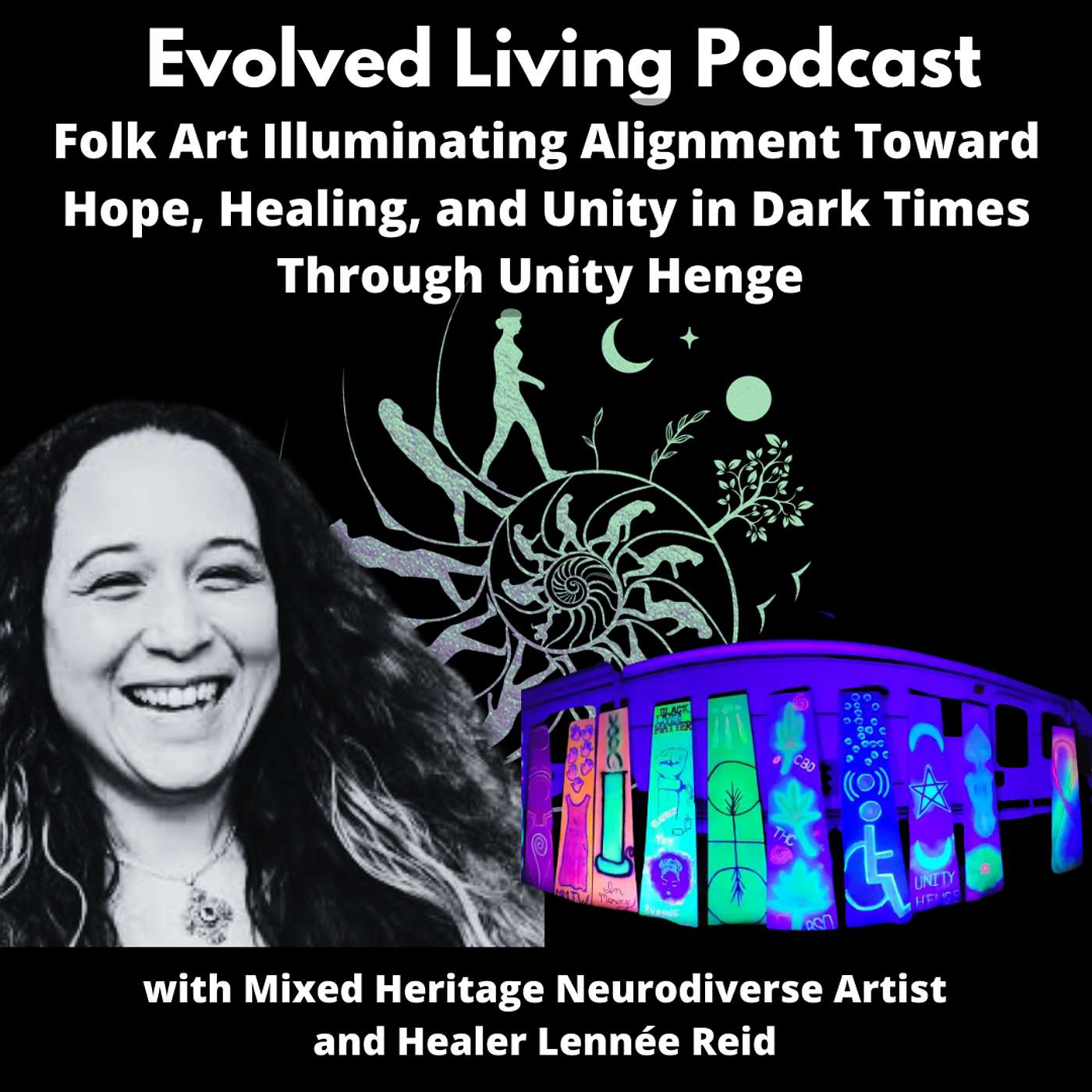 Folk Art Illuminating Alignment Toward Hope, Healing, and Unity in Dark Times Through Unity Henge with Mixed Heritage Neurodiverse Artist and Healer Lennée Reid | Send us a textIn this powerful episode of the Evolved Living Podcast, host Dr. Josephine Jarvis welcomes Lennée Reid a multi-talented Creole, queer, neurodiverse artist and healer, Lennée Reid. As the nation navigates the tumultuous aftermath of election week, they engage in a heartfelt conversation about art, activism, and the urgent need for unity in challenging times.Lennée opens up about Unity Henge, her visionary folk art project that aims to illuminate pressing social justice issues through striking art installations. Drawing parallels between ancient practices and contemporary struggles, Lennee explores how art can act as a catalyst for healing and dialogue amid societal discord. With roots in history, spirituality, and community, Unity Henge serves as a modern gathering place for diverse voices, echoing the principles of ancient monuments like Stonehenge.Dr. Jarvis and Lennée Reid discuss the importance of acknowledging and embracing our interconnectedness while shining a spotlight on the often-overlooked narratives of marginalized communities, particularly those affected by neurodiversity and disability. As they share their personal journeys and insights, they invite listeners to reflect on their roles in fostering creativity, empathy, and connection within their communities.Listeners will also learn how they can support the Unity Henge project, from participating in local events to contributing to its GoFundMe campaign. Through this conversation, Dr. Jarvis and Lennee illuminate the transformative potential of community art that prioritizes inclusivity, resilience, and mutual aid.Tune in for a thought-provoking episode filled with hope and inspiration, encouraging us all to gather around the symbols and stories that unite us. Together, we can ignite a movement that champions the voices of the diverse and intersectionally impacted.For more information on how to support Unity Henge, check the show notes for links to Lennee's art and fundraising initiatives. Join us as we forge connections, celebrate our heritage, and create a brighter future through the healing power of art!Don’t miss: Support Lennee's inspiring art project at: https://gofund.me/762fd338Paypal.me/witchesmarch Cashapp $TheQueenMystic Venmo @TheQueenMystichttps://awareni.wordpress.com/2022/06/23/what-is-unityhenge/ Discover Lennee's published works at: *Connect with Lennée:* - [Awareni Blog](https://awareni.wordpress.com) - Follow Lennee on social media under #UnityHengeTogether, let’s keep the spark of hope alive—illuminated in black light, fueled by community and creativity!Ten Free Ebooks for Getting FEvolved Living Network Instragram @EvolvedLivingNetworkFree Occupational Science 101 Guidebookhttps://swiy.co/OS101GuidePodcastOS Empowered OT Facebook Grouphttps://www.facebook.com/groups/1569824073462362/Link to Full Podcast Disclaimer https://docs.google.com/document/d/13DI0RVawzWrsY-Gmj7qOLk5A6tH-V9150xETzAdd6MQ/edit This is a public episode. If you would like to discuss this with other subscribers or get access to bonus episodes, visit josiejarvisot.substack.com | 41m 17s | ||||||
| 10/4/24 | 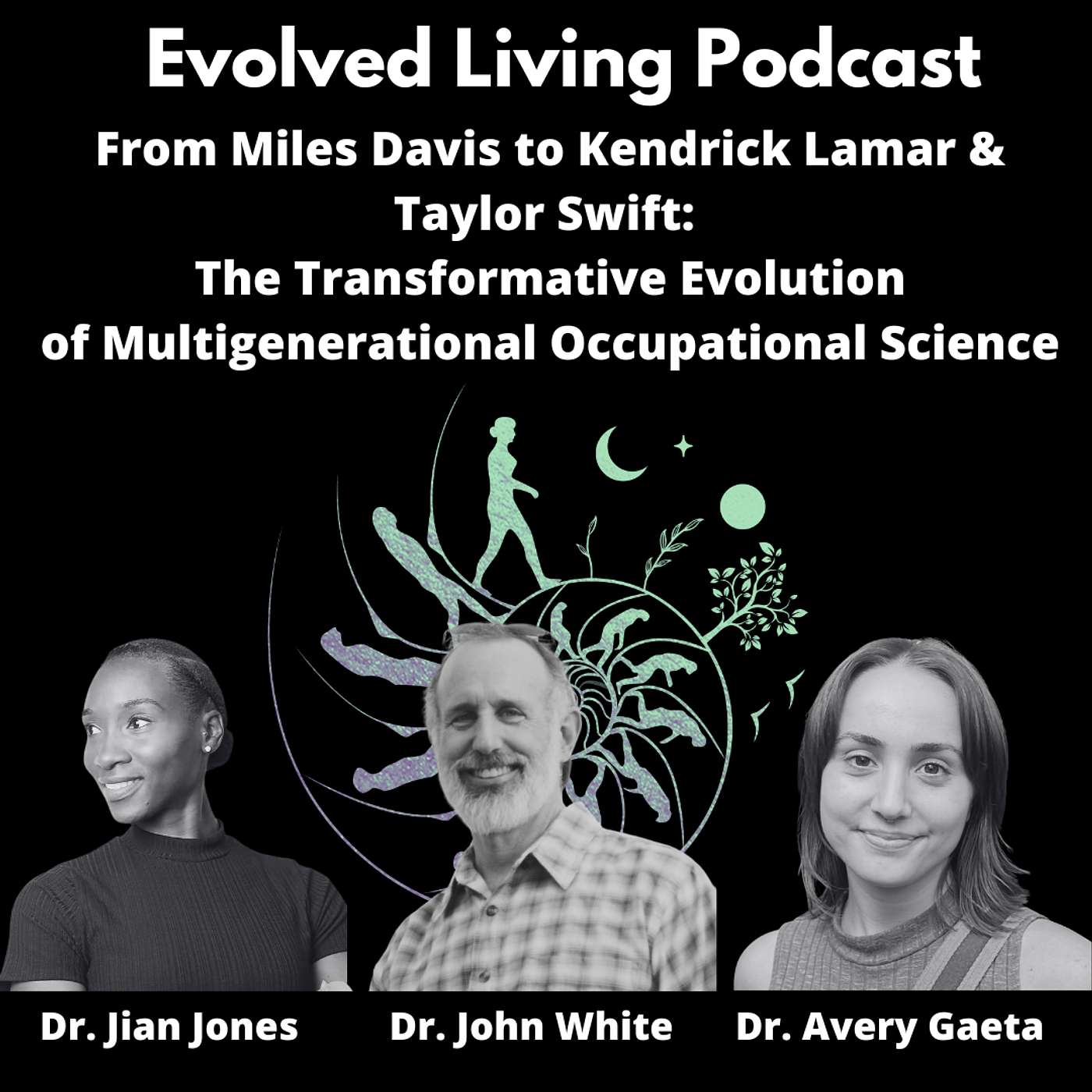 From Miles Davis to Kendrick Lamar & Taylor Swift: The Transformative Evolution of Multigenerational Occupational Science (with Drs. John White, Jian Jones, Josie Jarvis and Avery Gaeta) | Send us a textThis multi-generational podcast discussion is brought to you by the occupational power of music linking the intersectional life paths of Miles Davis, Taylor Swift, Kendrick Lamar, John White, Josie Jarvis, Jian Jones, and Avery Geata with an invitation to explore music as a powerful medium for developing and expanding our collective Occupational Lens both within and outside of the Occupational Therapy Classroom & Clinic! This episode will provide powerful inspiration for exploring the ongoing evolution of Occupational Science and the power of music to heal and restore the collective human spirit across generational differences amid the landscape of historic and contemporary intergenerational challenges. Music and occupation link us all in our path toward meaning and wholeness. Support Those Impacted by Hurricane Helene SSO:USA 2024 Conference Oct 17-19 in Durham North Carolina:Art and Occupation: Creativity, Critical Theory, and Social TransformationVideo/Text Summary of: Occupations in the Extreme, Life History, Theoretical Perspectives on the Life of Miles Davis by John White, PhD, MA, OTR/L Life History of Dr. John White, PhD, MA, OTR/L FAOTA2021 Folk Ballard of SSO:USADr. Jian Joans, PhD, MA-OTR/LTwo-Fifteens: The Podcast Where Hip-Hop, Occupation, and Identity Collide make connections related to Hip-Hop culture, the science of doing, and the shaping of the identity of people.Not Like Us by Kendrick LamarDr. Avery Gaeta, OTDAll Too Well Taylor's VersionCapstone Research: Exploring the Health Management of Neurodivergent College StudentsEvolved Living Network Instragram @EvolvedLivingNetworkFree Occupational Science 101 Guidebookhttps://swiy.co/OS101GuidePodcastOS Empowered OT Facebook Grouphttps://www.facebook.com/groups/1569824073462362/Link to Full Podcast Disclaimer https://docs.google.com/document/d/13DI0RVawzWrsY-Gmj7qOLk5A6tH-V9150xETzAdd6MQ/edit This is a public episode. If you would like to discuss this with other subscribers or get access to bonus episodes, visit josiejarvisot.substack.com | 1h 39m 38s | ||||||
| 5/20/24 | 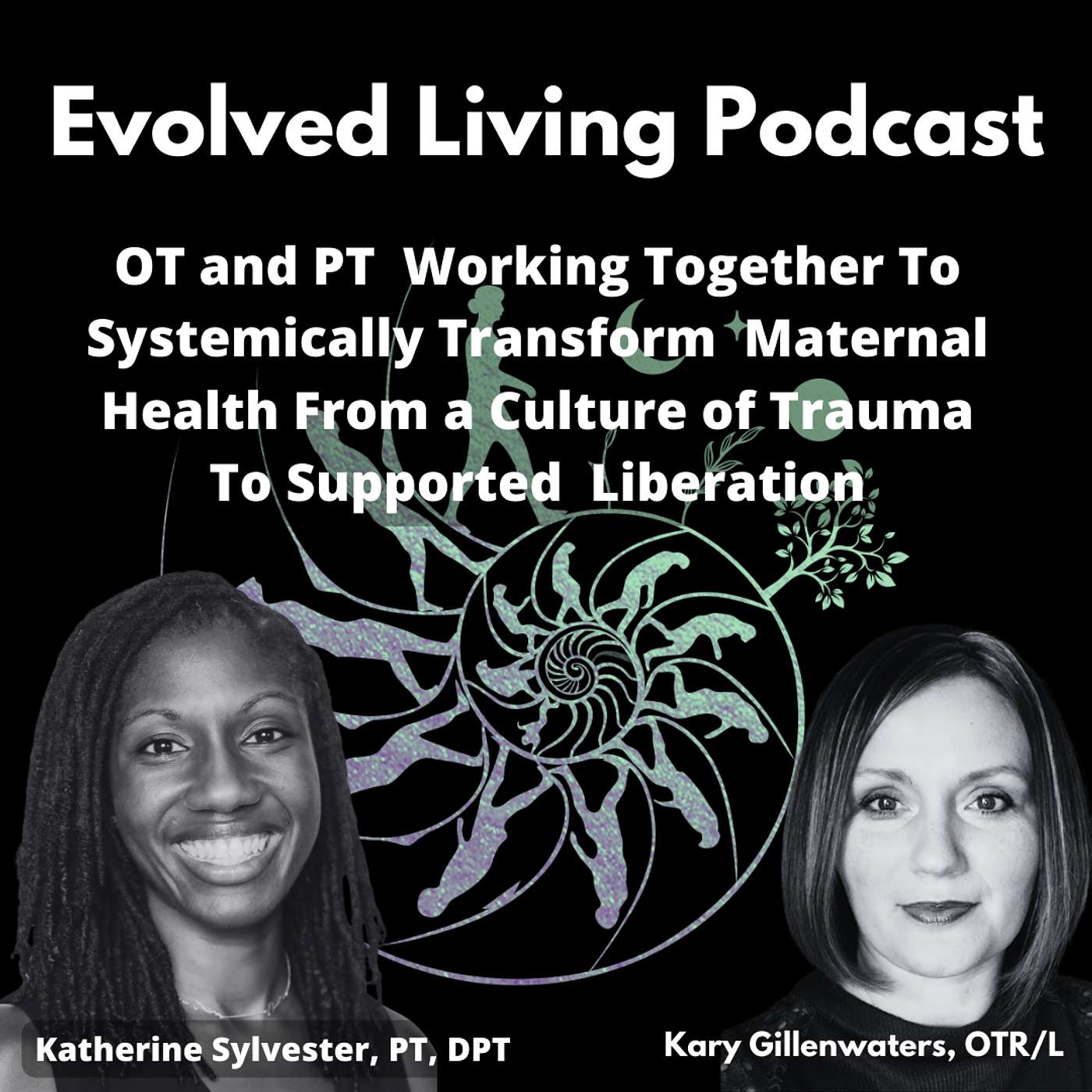 OT and PT Working Together To Systemically Transform Maternal Health From a Culture of Trauma to Supported Liberation: An Interdisciplinary Call to Action For All at the Individual, Micro, Meso, and Macro Level | Send us a textThe podcast interview discusses maternal health disparities, the importance of collaboration between occupational therapists and physical therapists, and the role of technology and personal experiences in empowering women and improving healthcare outcomes, with a focus on trauma-informed, individualized care and systemic change.Released in Tandem with AOTA SPECIALTY CONFERENCE:Women's Health https://www.aota.org/events/calendar/aota-specialty-conference-womens-healthTrauma-Informed Collaboration Resource Compilation: https://qr.link/jgmFXOKatherine Sylvester is a mother of two, physical therapist, preeclampsia survivor, clinical assistant professor for women’s health, and VBAC-certified doula. She is the founder of Operation M.I.S.T. where she and her team teach women to use smart watches and blood pressure cuffs for safer pregnancies, smoother cycles, and better health. She and her team also host More than a Period Parties and Heart Harmony Seminars where they teach ladies about their bodies so they can trust, prepare and protect them throughout all phases of womanhood.Operation M.I.S.T. https://operationmist.org/The poem (both written and read) is below:Written poem: From Racism to Remote Monitoring: https://docs.google.com/document/d/1H-3lGLBjORkkyhjOkAdTPxo2VLe2_npOV41-WQ8k3YE/editRead: From Racism to Remote Monitoring Spoken Word:https://www.youtube.com/watch?si=5nXYRxPEqbGBk5H8&v=W1qrTFcVrC8&feature=youtu.beKary Gillenwaters serves as a community-based OT and the SOLACE Foundation director of support and community engagement. Eeleven years ago, the birth of Kary's first child resulted in her becoming a member of a club no one signs up for or anticipates. At the time, little to no support was available online, health care teams had little experience with serious obstetrical tears, and the lack of understanding and meaningful support made an already difficult life transition even more challenging. But as many of the members of this club have learned, these experiences are more common than we think-it's just that it's all too painful (and sometimes embarrassing) to talk about, so we don't. The silence and isolation that so often follow a severe obstetric laceration exacerbate the physical, mental, emotional and spiritual challenges people face, overnight, not just to their body, but to their roles, their relationships, and their identity.SOLACE Foundation: https://www.solaceforwomen.org/Raising awareness of severe obstetric lacerations by promoting prevention through maternal education and research, driving change toward a standard of care, and providing women with comprehensive support through their healing journeys.Kary's 4th Degree Care Story: https://solidagovc.com/blog/the-impact-of-birth-injuries-interprofessional-teaming-and-informed-consent-on-the-occupations-of-motherhoodEvolved Living Network Instragram @EvolvedLivingNetworkFree Occupational Science 101 Guidebookhttps://swiy.co/OS101GuidePodcastOS Empowered OT Facebook Grouphttps://www.facebook.com/groups/1569824073462362/Link to Full Podcast Disclaimer https://docs.google.com/document/d/13DI0RVawzWrsY-Gmj7qOLk5A6tH-V9150xETzAdd6MQ/edit This is a public episode. If you would like to discuss this with other subscribers or get access to bonus episodes, visit josiejarvisot.substack.com | 2h 23m 09s | ||||||
Want analysis for the episodes below?Free for Pro Submit a request, we'll have your selected episodes analyzed within an hour. Free, at no cost to you, for Pro users. | |||||||||
| 4/17/24 |  Ink and Inclusion: Breaking Barriers in the Occupation of Tattoo Artistry and Beyond | Send us a textThis Podcast discusses a conversation with Angel, a Tacoma Area tattoo artist, about her journey into the tattoo industry, the skills required, the therapeutic aspect of her work, the need for more diversity and representation in the field, and her community work with the Hundredth Monkey art organization, with future steps including sharing resources on trauma-informed practices, promoting body art in professional spaces, and continuing the conversation about making art more accessible and inclusive. Check out and support Lil' Angel's Ink Artisty: https://m.facebook.com/lilangelink/?locale=hi_INSupport the 100th Monkey Tacoma Art Event: https://www.facebook.com/Tacoma100thMonkey/ https://www.facebook.com/events/6804563089672218/?ref=newsfeedGender Diversity & Gatekeeping in Art IndustriesJosephine explores gender diversity within artistic communities while discussing gatekeeping practices that have historically affected women in various industries. Angel shares insights into challenges faced by women in male-dominated spaces like heavy metal music culture and traditional views within certain segments of the tattoo industry. Both hosts emphasize creating more inclusive environments by supporting diverse artists while addressing issues related to cultural appropriation. Evolution of the Tattoo IndustryThe interview discusses the evolution and growth of the tattoo industry, highlighting the increasing diversity and inclusivity within the community. Angel shares her experience as a female tattoo artist and emphasizes the importance of an open-minded approach to different artistic styles and artists. The conversation touches on historical aspects, acknowledging that tattooing has been a significant art form across various cultures for centuries. Trauma-Informed Tattooing and Personal Storytelling through TattoosAngel’s experiences working with clients who have had traumatic medical experiences or seek to cover scars with meaningful tattoos. Josephine’s exploration of how tattoos can serve as a form of storytelling, reclaiming personal narratives, especially for marginalized communities. The role of trauma-informed care within occupational therapy paralleled with trauma-informed tattoo practices. Collaboration in Art WorkshopsThere was a focus on trauma-informed community art workshops as a means to make different art forms accessible to people with disabilities while fostering collaboration between occupational therapists and tattoo artists. Occupational Therapy and ArtThe conversation delved into the historical connection between occupational therapy and the arts, exploring how creating art can be naturally therapeutic for individuals and communities. Evolved Living Network Instragram @EvolvedLivingNetworkFree Occupational Science 101 Guidebookhttps://swiy.co/OS101GuidePodcastOS Empowered OT Facebook Grouphttps://www.facebook.com/groups/1569824073462362/Link to Full Podcast Disclaimer https://docs.google.com/document/d/13DI0RVawzWrsY-Gmj7qOLk5A6tH-V9150xETzAdd6MQ/edit This is a public episode. If you would like to discuss this with other subscribers or get access to bonus episodes, visit josiejarvisot.substack.com | 1h 31m 58s | ||||||
| 2/28/24 |  Weaving the Threads of Our Occupational Histories: An Intergenerational Conversation with the Jarvis Family | Send us a textLearn essentials to develop your own intergenerational Occupational Profile Informed by Occupational Science Here:https://eln.upcoach.com/organizations/i/x9V5a6WydwaVTsGBXqwfUon13Fewi4nHAj6QYPMyQl2fwmKkPLDr. Josie Jarvis sits down with her parents, Julie and Wade Jarvis, to learn about their occupational histories and how their experiences have shaped Josie's own occupational path. Through conversation, they work to understand the threads that connect their lives across generations and cultural contexts.The discussion delves into textile manufacturing traditions in the family, gender roles and expectations through the decades, and how cultural roots in Iceland continue to influence identity. They also reflect on career influences, economic opportunities, and navigating norms within the Mormon church.Woven throughout are reflections on the power of quilting and fiber arts as artifacts preserving informal histories. Listeners are invited to gain insight into constructing their own intergenerational occupational profiles through family stories. This intimate dialogue models how deepening cultural understanding can evolve across the generations.Quotes"We're all more connected than we realize... especially through forces of occupation.""To move is about the only way that you can write your own story.""I think it's been occupationally helpful to me that I've had role models... women that have broken with some traditions.""There were just some people [in Utah] that were [racist], but it didn't feel like all people were that.""Everything to me from as long as I can remember was I wanted to be able to fix things... those were very appreciated skills.""There really always will always have to be some kind of a sewing machine because unless we stop wearing clothes... they can never make something that's just all-in-one piece that is a garment.""We're like such an honestly privileged cohort... we're holding these things [crafts] but it’s interesting... our ancestors cultivated that they had to do out of scarcity.""Quilting is one of the most embedded artifacts of informal publishing in United States history.""Your parents made a foundation for me to come into this world.""Even if you do look at things you don't like... find something unique... that you can be proud."Evolved Living Network Instragram @EvolvedLivingNetworkFree Occupational Science 101 Guidebookhttps://swiy.co/OS101GuidePodcastOS Empowered OT Facebook Grouphttps://www.facebook.com/groups/1569824073462362/Link to Full Podcast Disclaimer https://docs.google.com/document/d/13DI0RVawzWrsY-Gmj7qOLk5A6tH-V9150xETzAdd6MQ/edit This is a public episode. If you would like to discuss this with other subscribers or get access to bonus episodes, visit josiejarvisot.substack.com | 1h 39m 26s | ||||||
| 2/18/24 | 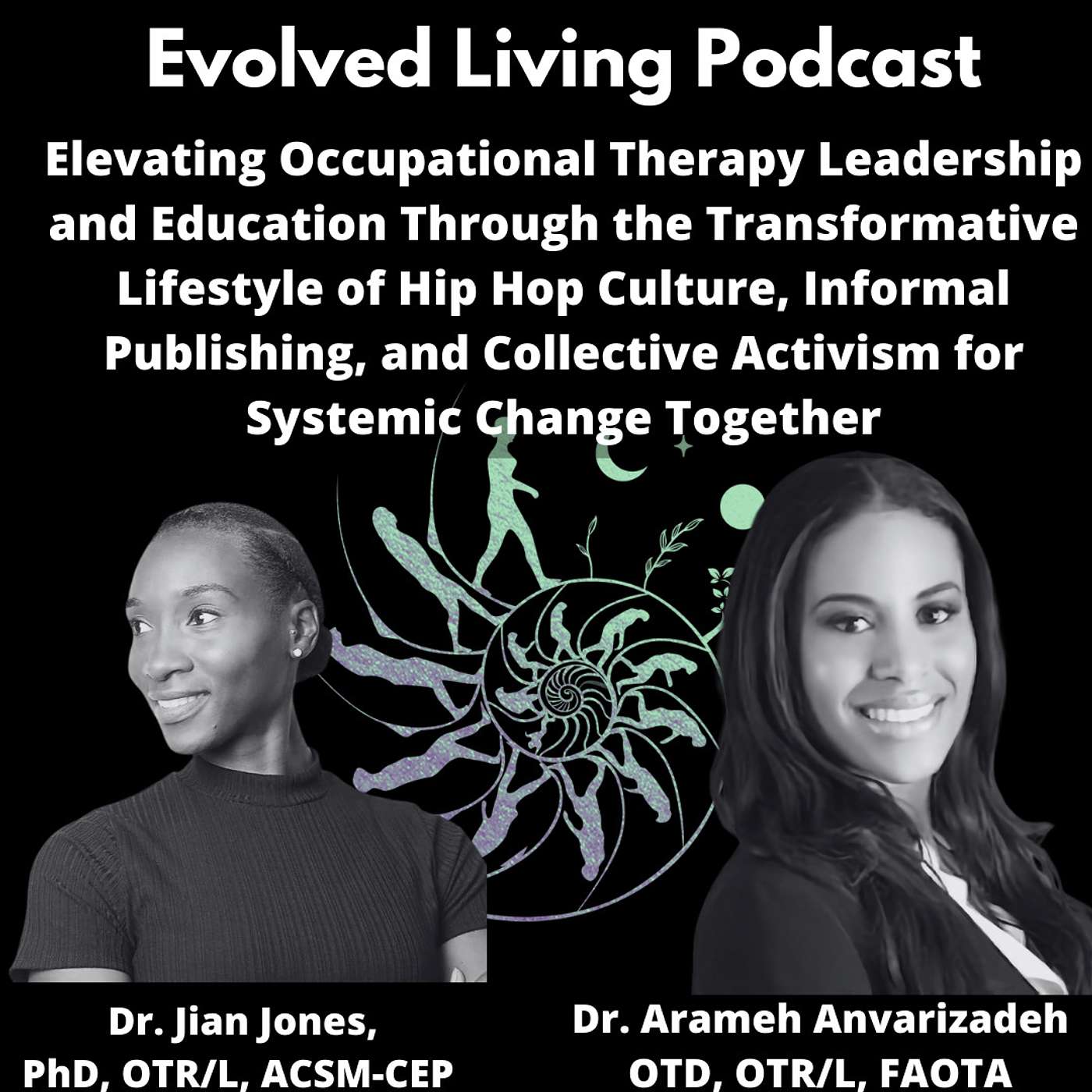 Elevating Occupational Therapy Leadership and Education Through the Transformative Lifestyle of Hip Hop Culture, Informal Publishing, and Collective Activism for Systemic Change Together | Send us a textThis thought-provoking podcast brought together Dr. Jian Jones, Dr. Josie Jarvis and special guest Dr. Arameh Anvarizadeh to discuss the power of hip hop culture in advancing occupational therapy. They explored how hip hop represents activism, creativity and driving positive change through storytelling and community.Dr. Arameh shared her vision of bringing more diverse voices into leadership conversations at AOTA to address gaps and decrease barriers. Her approach aligns with hip hop's focus on opportunity, access and mobilizing through activism. She aims to reconnect members to AOTA's core values through authentic, community-focused leadership.Check out our Hip Hop Pedagogy and AOTA Election Resource Compilation Here! Now also includes the Disorienting Dilemma Toolkit For Culturally Mindful Dysregulation Support with New Learning! Free! Dr. Jian Jones, PhD, OTR/L, ACSM-CEP, is the host of Two Fifteens: The Podcast Where Hip-Hop, Occupation, and Identity Collide where she and guests make connections related to Hip-Hop culture, the science of doing, and the shaping of the identity of people. She is an Occupational Therapist, life coach, 500-HR yoga teacher, professor, and scholar who offers culturally relevant mental, emotional, social, spiritual and physical well-being techniques that assist you in uncovering your potential to live your best life. Jian blended her passion for wellness, nature, purpose and Hip-Hop into a personal development company, Jian Jones, LLC with a mission to transform lives one mind, body, and soul at a time. Jian encourages you to Press+FLY™: 'press through your obstacles so that you can fly toward your destiny'. Jian uses her personal evolution to serve others and looks forward to their individual growth and success as they cross the bridges of life.Dr. Josie Jarvis, PP-OTD, MA-OTR/L, BA, BS is a part-time Occupational Therapist and full-time Open Science activist with a focus on translating Critical Occupational Science Literacy to the field through mechanisms of informal publishing and holistic and transparent implementation science that is inclusive to social, physical, and indigenous sciences in the field as well as in the academy. She is the host of the Evolved Living Podcast a podcast dedicated to coming together and sharing multidisciplinary and multicultural wisdom from diverse perspectives to support adapting to change holistically and ecologically together with honesty about the messy and imperfect process of ongoing growth, change, and adaptation to the contemporary world. Dr. Arameh Anvarizahdeh, OTD, OTR/L, FAOTA has already made history as the youngest and first African American/Iranian woman to become Vice President of the American Occupational Therapy Association (AOTA). She is also the youngest woman Evolved Living Network Instragram @EvolvedLivingNetworkFree Occupational Science 101 Guidebookhttps://swiy.co/OS101GuidePodcastOS Empowered OT Facebook Grouphttps://www.facebook.com/groups/1569824073462362/Link to Full Podcast Disclaimer https://docs.google.com/document/d/13DI0RVawzWrsY-Gmj7qOLk5A6tH-V9150xETzAdd6MQ/edit This is a public episode. If you would like to discuss this with other subscribers or get access to bonus episodes, visit josiejarvisot.substack.com | 1h 09m 24s | ||||||
| 11/23/23 | 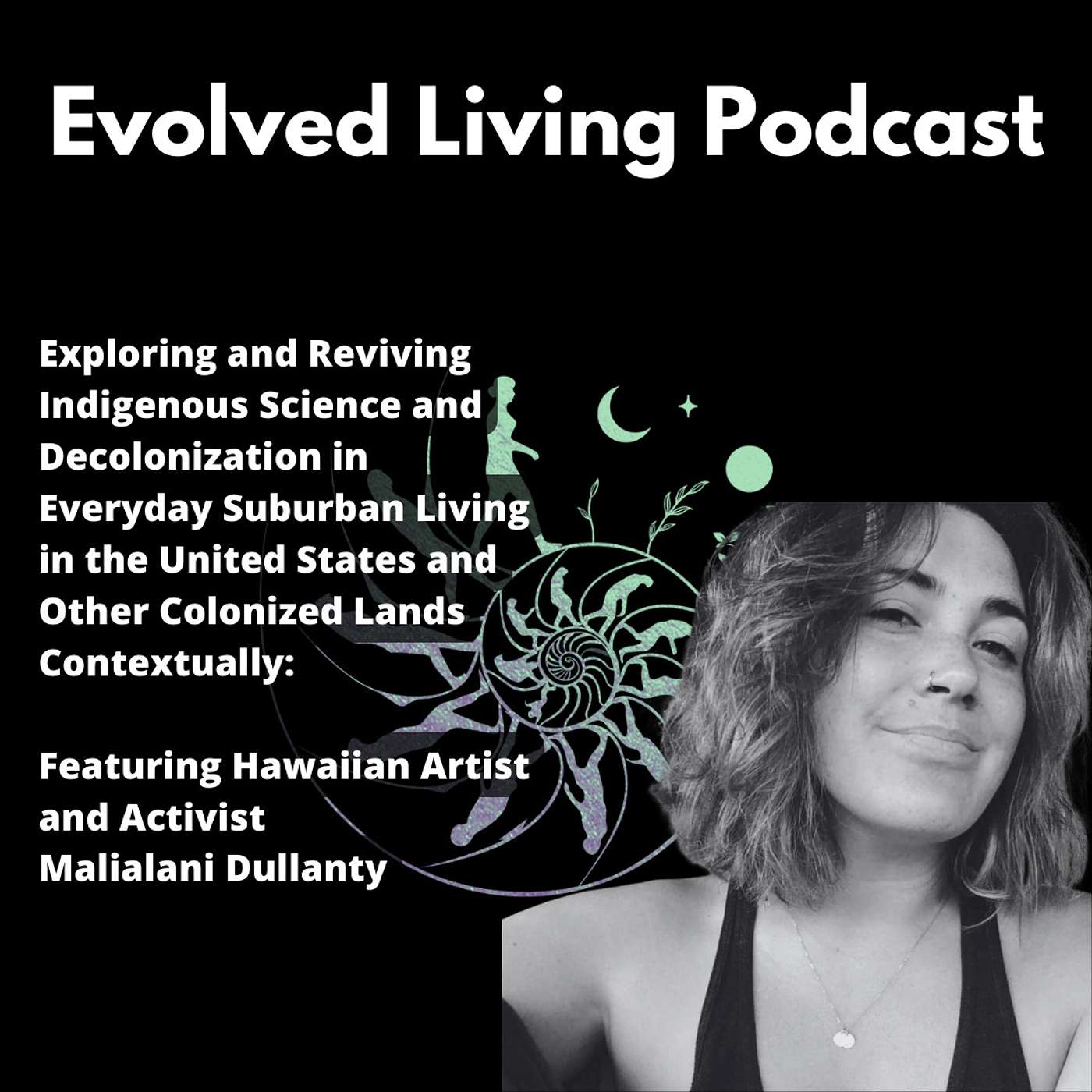 Exploring and Reviving Indigenous Science and Decolonization in Everyday Suburban Living in the United States and Other Colonized Lands Contextually: Featuring Hawaiian Artist and Activist Malialani Dullanty | Send us a textJust in time to decolonize Thanksgiving, even in "progressive" Pacific Northwest Seattle Suburbs where exclusive and protective...does not always mean...safe...for everyone...Check our Hawaiian Artist and Indigenous Human Rights Activist Malialani Dullanty! Please consider following her work on instragram: https://www.instagram.com/malialani/And supporting her Patreon!https://www.patreon.com/malialanimadeThe podcast primarily involves Josephine Jarvis and Malialani Dullanty discussing their experiences in relation to cultural assimilation, systemic racism and the importance of decolonizing their mindsets and practices.-Both discuss their school experiences, highlighting the lack of accurate and comprehensive historical education regarding marginalized populations.-They delve into the topic of indigenous science, emphasizing its validity and the need to view it through a non-colonial lens.-A significant portion of the conversation revolves around the systemic abuse and sexualization of women, particularly women of mixed-race and native heritage.-The two express their shared experiences of growing up in white supremacist structures and discuss the need for systemic change and healing, rather than solely focusing on healing the victims.-Josephine Jarvis acknowledges the trauma and harm caused by her ancestors and commits to not letting that be her legacy.-The conversation touches upon the importance of acknowledging and understanding the harm caused by their ancestors, and the importance of healing together.-The participants discuss the need for critical thinking and challenging the established norms and systems.-The conversation ends with Josephine expressing her admiration for Malialani's authenticity and bravery.Disorienting Deliemma Toolkit to Help Navigate Challenging Emotions Available in the Onboarding Module of Foundations of Occupational Science 101 Course (free)Supplementary Learning:Occupational Consciousness [Free open access article] (helpful decolonizing lens contributed to OT and OS literature by 2023 Ruth Zemke Lecturship Recipient Dr. Elelwani L. Ramugondo, PhD, MSc, BSc(OT), Associate Professor) https://www.ncbi.nlm.nih.gov/pmc/articles/PMC4606822/The Devastating Effects of Colonization on Hawai'ihttps://storymaps.arcgis.com/stories/83474c5d6077492d990b961bab0bcd74 What is indigenous science?https://wisn.org/about/what-is-indigenous-science/Resources to help with Decolonizing Whiteness for Settler Descendents:https://www.marybethbonfiglio.com/blood-and-belongingContext on DecoloEvolved Living Network Instragram @EvolvedLivingNetworkFree Occupational Science 101 Guidebookhttps://swiy.co/OS101GuidePodcastOS Empowered OT Facebook Grouphttps://www.facebook.com/groups/1569824073462362/Link to Full Podcast Disclaimer https://docs.google.com/document/d/13DI0RVawzWrsY-Gmj7qOLk5A6tH-V9150xETzAdd6MQ/edit This is a public episode. If you would like to discuss this with other subscribers or get access to bonus episodes, visit josiejarvisot.substack.com | 1h 59m 31s | ||||||
| 10/9/23 | 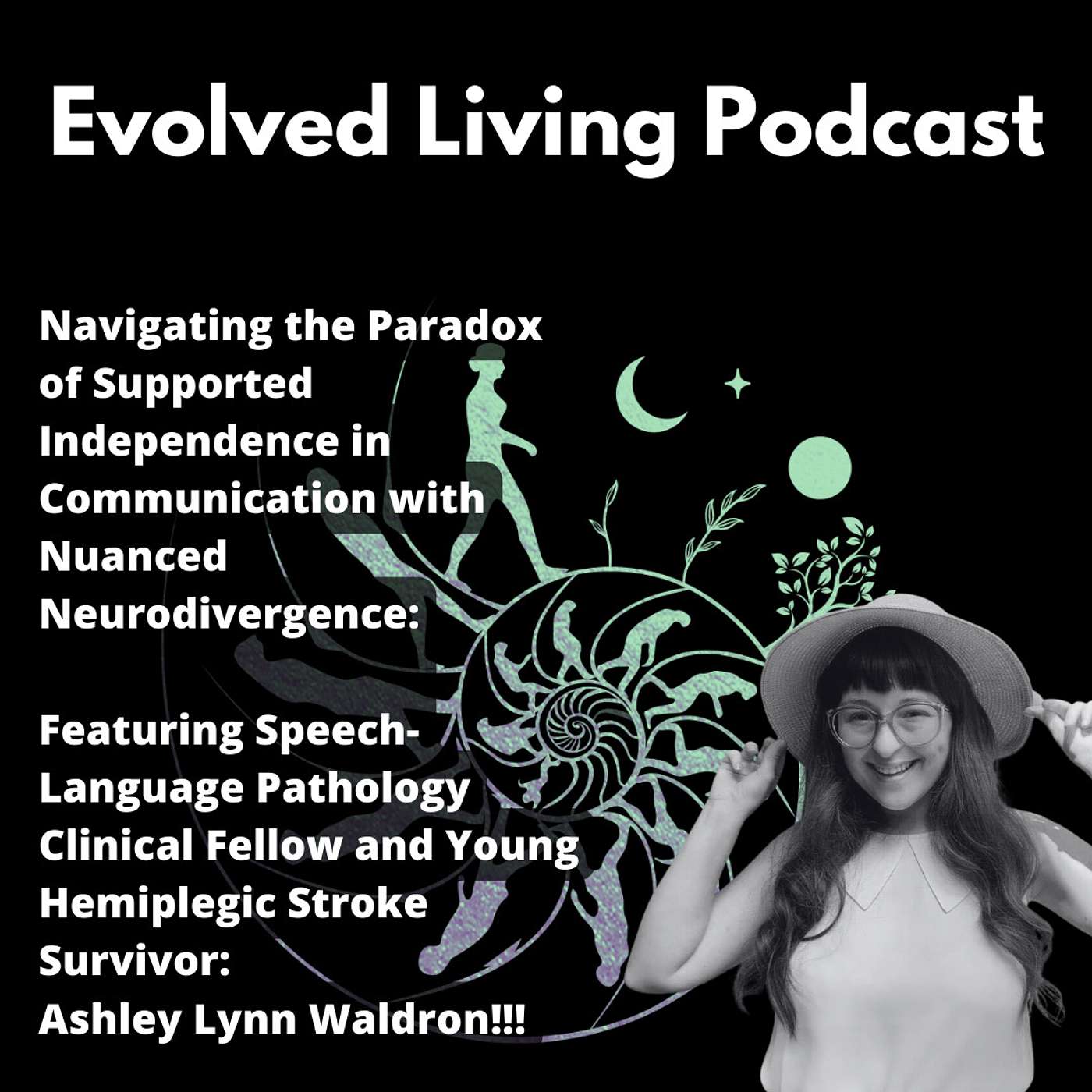 Navigating the Paradox of Supported Independence in Communication with Nuanced Neurodivergence Featuring Speech Language Pathology Clinical Fellow and Young Hemiplegic Stroke Survivor Ashley Lynn Waldron | Send us a textThis is a very meaningful podcast discussion for me as I not only get to catch up with a dear college friend I also get to deeply explore the occupational impact of how one's life path can evolve after acquiring a profound neuro divergence early in life. Ashley and I's paths in our early twenties crossed quite a bit however I never would have guessed I would ever become a therapy colleague with her over a decade after moving away from Olympia, WA. When I last was actively connected to Ashley's life she was the most prolific fiction and play writer I had ever met. She was destined to become a professional editor and facilitator of creative wonder. Her momentum as a writer was however stunted as it is for many of us with the sudden acquisition of a disabling experience. At age 25 Ashley acquired a cerebral vascular accident impacting her left side. This occupational disruption ended up fueling Ashley's passion to go back to school. She not only regained her motor function, but she also regained her voice, and new gifts, however, she could not develop these ambitions on her own, it took a village including occupational therapy, physical therapy, speech therapy, brain injury support groups, vocational rehab, and the fight to self advocate for her educational accommodations. Connecting with Ashley I couldn't avoid the correlations between her life path and the challenges my friend Paul Johnson a leader in the WA disability rights movement in how hard he had to fight to access the ability to write in general and to access formal publishing in particular. His life story took over a decade to write and I was his support volunteer intern where it took over 2.5 years of active letter by letter word by word typing a revising. Because of Paul, I have learned to never take my voice and mobility for granted. I am so glad I was able to share Paul's work with Ashley with a new foundation of shared meaning as we all interconnected in our experiences of rare young adult neurodivergence and how that impacts and changes access to writing and our relationship to our own voice when you depend on supported communication to express yourself. Paul's family offered consent to continue sharing his story and our time together publically with the goal of inspiring others to tell their stories. Ashley's Request for community support for survivors of acquired brain injury! Please help save this wonderful organization through donations and volunteering. Sarah Bellum's Bakery launched in 2017 and officially opened its doors in Multnomah Village in SW Portland in 2018. They provide job training support for adults with acquired brain injuries. They also have volunteer opportunities in speech, occupational therapy, and rehabilitation psychology for students here at Pacific University. Check out the links below. Together we can save Sarah Bellum's!acquired brain injury workshop/community and nonprofit at risk of closing.Paul's Publically Published Writing in Evolved Living Network Instragram @EvolvedLivingNetworkFree Occupational Science 101 Guidebookhttps://swiy.co/OS101GuidePodcastOS Empowered OT Facebook Grouphttps://www.facebook.com/groups/1569824073462362/Link to Full Podcast Disclaimer https://docs.google.com/document/d/13DI0RVawzWrsY-Gmj7qOLk5A6tH-V9150xETzAdd6MQ/edit This is a public episode. If you would like to discuss this with other subscribers or get access to bonus episodes, visit josiejarvisot.substack.com | 1h 41m 28s | ||||||
| 10/3/23 |  Intersectional Accessibility: Navigating Imperfect Systems and Creatively Developing New Inclusive Ones Together Part 2 | Send us a textAnnouncementsThe first 3 modules of my Online Doctoral Capstone Course Foundations of Occupational Science is available now for free for a limited time: https://engage.evolvedlivingnetwork.com/If you are in the Tacoma Area or are a fan of the Social Justice Sewing Academy and would like to be involved in supporting the adaptation of their workshops to focus on disability justice and to be accessible to people with disabilities in more heavily institutionalized spaces consider joining in our community event virtually or in person with AOTA President Alyson Stover on Monday, October 16 [6-8pm]Get details on how to register here: https://www.facebook.com/events/706895548119940/?ref=newsfeedIn-person capacity: 60, Live virtual: 150, Recording: UnlimitedEpisode Show NotesIn part two twe explore the costs of mental health neglect in and under investment in mental health infastructure in the United States and systemic patterns that contributed to adverse occupational outcomes and how all occupational beings access to proactive investment in mental health care for all. We also explore the benefits of building your own care village for lifespan occupational wellbeing. Jennifer Pearlstein, PhD, is a post-doctoral fellow in rehabilitation medicine at the University of Washington and completed her graduate work in clinical science at the University of California, Berkeley. Jen strives to improve the well-being of people with disabilities across her research, clinical work, and advocacy. She has received funding from the National Institute of Mental Health (NIMH) and National Science Foundation (NSF), published work related to disability and mental health and training, and has gained specialized clinical training in evidence-based practices for diverse psychological presentations, including how to support populations experiencing illness or disability.She also writes about her personal experiences navigating academia with a disability and strives to increase the representation, equity, and inclusion of people with disabilities in academia and in medicine.Connect with UW's Behavioral Health ECHO Project: (How Josie met Jennifer without expense of a fancy conference) https://bhinstitute.uw.edu/events/?trumbaEmbed=view%3Devent%26eventid%3D163336444Accessible Mental Health Support Resources:https://openpathcollective.org/As long as there is a financial need, our lifetime membership will allow you to see anyone in our network for the rates listed above. This is our guarantee. A lifetime membership to our nonprofit only costs $65.Employee Assitance Programs:https://www.insperity.com/blog/employee-assistance-programs/Holistic Wellness for BIPOC OTs/Communitieshttps://otbayarea.com/resourcesSupport Group for Disabled OTPEvolved Living Network Instragram @EvolvedLivingNetworkFree Occupational Science 101 Guidebookhttps://swiy.co/OS101GuidePodcastOS Empowered OT Facebook Grouphttps://www.facebook.com/groups/1569824073462362/Link to Full Podcast Disclaimer https://docs.google.com/document/d/13DI0RVawzWrsY-Gmj7qOLk5A6tH-V9150xETzAdd6MQ/edit This is a public episode. If you would like to discuss this with other subscribers or get access to bonus episodes, visit josiejarvisot.substack.com | 48m 14s | ||||||
| 9/21/23 |  Intersectional Accessibility: Navigating Imperfect Systems and Creatively Developing New Inclusive Ones Together Part 1 | Send us a textAnnouncementsThe first 3 modules of my Online Doctoral Capstone Course Foundations of Occupational Science is available now for free for a limited time: https://engage.evolvedlivingnetwork.com/If you are in the Tacoma Area or are a fan of the Social Justice Sewing Academy and would like to be involved in supporting the adaptation of their workshops to focus on disability justice and to be accessible to people with disabilities in more heavily institutionalized spaces consider joining in our community event virtually or in person with AOTA President Alyson Stover on Monday, October 16 [6-8pm] Get details on how to register here: https://www.facebook.com/events/706895548119940/?ref=newsfeed In-person capacity: 60, Live virtual: 150, Recording: Unlimited Episode Show NotesThis important conversation explores the complexity of making our work as health and human services providers accessible across various contexts including both collaborative clinical work and in academic scholarship. We also explore some of the complexities and nuances around accessing mental health providers and the costs of lack of mental health care literacy and systemic patterns of misdiagnosis and how that intersects with disability and structural sexism etc. Be sure to check out Part 2 as well! Jennifer Pearlstein, PhD, is a post-doctoral fellow in rehabilitation medicine at the University of Washington and completed her graduate work in clinical science at the University of California, Berkeley. Jen strives to improve the well-being of people with disabilities across her research, clinical work, and advocacy. She has received funding from the National Institute of Mental Health (NIMH) and National Science Foundation (NSF), published work related to disability and mental health and training, and has gained specialized clinical training in evidence-based practices for diverse psychological presentations, including how to support populations experiencing illness or disability.She also writes about her personal experiences navigating academia with a disability and strives to increase the representation, equity, and inclusion of people with disabilities in academia and in medicine.Connect with UW's Behavioral Health ECHO Project: (How Josie met Jennifer without expense of a fancy conference) https://bhinstitute.uw.edu/events/?trumbaEmbed=view%3Devent%26eventid%3D163336444 Accessible Mental Health Support Resources:https://openpathcollective.org/As long as there is a financial need, our lifetime membership will allow you to see anyone in our network for the rates listed above. This is our guarantee. A lifetime membership to our nonprofit only costs $65.Employee Assitance Programs:https://www.insperity.com/blog/employee-assistance-programs/Holistic Wellness foEvolved Living Network Instragram @EvolvedLivingNetworkFree Occupational Science 101 Guidebookhttps://swiy.co/OS101GuidePodcastOS Empowered OT Facebook Grouphttps://www.facebook.com/groups/1569824073462362/Link to Full Podcast Disclaimer https://docs.google.com/document/d/13DI0RVawzWrsY-Gmj7qOLk5A6tH-V9150xETzAdd6MQ/edit This is a public episode. If you would like to discuss this with other subscribers or get access to bonus episodes, visit josiejarvisot.substack.com | 1h 01m 59s | ||||||
| 8/11/23 |  Overcoming Gender-Based Occupational Deprivation Through Fiber Arts, Community, and Creative Expression with Special Guest: Mx. Domestic! | Send us a text***Trigger Warning: Discussion of Suicidal Ideation, Gender-Based Violence and Harassment, and explicit language***Continuing our exploration of the evolution of the Contemporary Arts and Crafts Movement we are joined today by Matthew Boudreaux the creator of Mx. Domestic where we explore navigating experiences of Gender-Based Occupational Deprivation and how creative expression and community building can be a way to engage in healing towards occupational wellbeing, participation, inclusion, empowerment, liberation, and ultimately systemic change. Mx. Domestic is a multitalented non-binary, queer, and neurodivergent sewist who is a leader in increasing diversity in representation and inclusion of communities that tend to be underserved by the conventional crafting communities that tend to prioritize and center the needs and experiences of a narrow demographic of well resourced, heterosexual, cis-gendered, and often Christian white females. While Matthew wanted to learn how to sew from his Mother as a young child, this ambition was not supported because of Matthew's perceived gender identity and restrictive Western gender role expectations. Luckily Matthew did not let his mother's discouragement hold him back. Matthew credits crafting and fiber arts and his soul pull toward using fiber arts as a symbolic occupation to engage in honoring the development of his daughter. Matthew overcoming his own experience of occupational deprivation ultimately helped to build an inclusive community that has fundamentally changed the culture of how crafting is now being marketed nationally and he has partnered with others to create safe spaces for a wider diversity of communities to gain the healing benefits of crafting and creative expression. Please consider supporting Mx. Domestic's ongoing work and I hope you enjoy this meaty conversation! https://mxdomestic.com/What is Occupational Deprivation: “A reduction in the amount and diversity of opportunities for occupational performance and occupational engagement for an extended period of time. It impacts negatively on health and well-being and may have serious consequences if prolonged. It is generally seen as caused by factors outside the control of the individual such as social structures or stigma, religious practices, political differences, poverty, or geography. There is debate as to whether factors such as illness and injury can cause occupational deprivation given that they are internal to the individual. Nonetheless, they are beyond the control of the individual and can have similar consequences, namely, reduced opportunities for diverse occupational performance and occupational engagement” (Molineux, 2017) Molineux, M. (2017). A dictionary of occupational science and occupational therapy (Oxford Quick Reference). OUP Oxford. WOTA is currently giving away 7 free Epic online CEUs and 10 special offers from small OT businesses through August 31st! (Including my training on orientation to OS and the OTPF4) Annual Membership for Students is only $35! Access Here: https://wota.org/virtual-summer-con-2023/?fbclid=IwAR24DNUeIEvolved Living Network Instragram @EvolvedLivingNetworkFree Occupational Science 101 Guidebookhttps://swiy.co/OS101GuidePodcastOS Empowered OT Facebook Grouphttps://www.facebook.com/groups/1569824073462362/Link to Full Podcast Disclaimer https://docs.google.com/document/d/13DI0RVawzWrsY-Gmj7qOLk5A6tH-V9150xETzAdd6MQ/edit This is a public episode. If you would like to discuss this with other subscribers or get access to bonus episodes, visit josiejarvisot.substack.com | 1h 25m 26s | ||||||
| 7/25/23 |  Trailblazing OTs: Neurodivergence, Mentorship, and Building Inclusive Communities Part Two of Discussion with Dr. Bill Wong, OTD, OTR/L | Send us a textTrailblazing OTs: Neurodivergence, Mentorship, and Building Inclusive CommunitiesDescription: In this thought-provoking and insightful podcast episode, Dr. Bill Wong, a trailblazing occupational therapist (OT), and the host Josie Jarvis engage in a candid conversation about the intersection of neurodivergence and OT. They dive into the importance of mentorship and the role it plays in supporting and empowering neurodivergent OTs and students. Dr. Wong shares his personal journey and experiences with Autism while engaged in OT leadership, shedding light on the need for representation and diverse perspectives within the OT field.Key Points:Neurodivergence and OT: Dr. Bill Wong discusses his experiences as an OT with Autism highlighting the importance of representation and diverse perspectives within the profession. Josie explores how these intersections connect with her experiences of neurodivergence with ADHD and NVLD as well. The Power of Mentorship: Both guests emphasize the significance of seeking mentorship as a sign of strength rather than weakness. They explore how mentors can empower neurodivergent OTs and help them navigate challenges in their careersBreaking Traditional Boundaries: The discussion explores the need for strategic disruption in the OT profession to foster growth and inclusivity. Both guests challenge the status quo and advocate for a more diverse and open-minded approach to OT practice and leadership.Embracing Passion Projects: Dr. Wong shares his experience with organizing TEDx events and how passion projects can provide a creative outlet for OTs to explore and utilize their talents and skills beyond traditional practice.Low-Cost Alternatives for Conferences: The conversation delves into the high costs of attending conferences and explores the potential for low-cost alternatives and inclusive approaches to knowledge sharing and professional development.Building Inclusive Communities: Both guests stress the importance of building communities that welcome and support individuals from diverse backgrounds, including ethnicity, disability, and socioeconomic status.Amplifying Voices: The podcast advocates for partnering with other disability communities to amplify their voices and advocate for accessibility and inclusion in various spaces, including OT practice and academia.Join this inspiring conversation as they challenge the norms, celebrate diversity, and encourage the next generation of OTs to embrace their unique strengths and talents. Whether you're an OT, a student, or simply interested in promoting inclusivity and mentorship in healthcare professions, this podcast episode is a must-listen!Evolved Living Network Instragram @EvolvedLivingNetworkFree Occupational Science 101 Guidebookhttps://swiy.co/OS101GuidePodcastOS Empowered OT Facebook Grouphttps://www.facebook.com/groups/1569824073462362/Link to Full Podcast Disclaimer https://docs.google.com/document/d/13DI0RVawzWrsY-Gmj7qOLk5A6tH-V9150xETzAdd6MQ/edit This is a public episode. If you would like to discuss this with other subscribers or get access to bonus episodes, visit josiejarvisot.substack.com | 1h 09m 56s | ||||||
| 7/14/23 |  Supporting Neurodiverse OT Leadership Pathways in New Spaces with Dr. Bill Wong, OTD, OTR/L: Part 1 | Send us a textShifting Perspectives and Supporting Neurodivergent OTsDescription: In this episode of the Engaging Occupational Science Podcast, the conversation delves into the importance of shifting perspectives within the occupational therapy (OT) community. The discussion focuses on partnering with the disability community, building relationships, and considering the well-being of individuals across the lifespan. The lack of infrastructure and support for young adults with disabilities after leaving the K-12 school system is highlighted, particularly in the United States.The guest, Dr. Bill Wong, a publicly known autistic OT, shares insights into his journey and the challenges faced by neurodivergent individuals in OT education. The conversation touches on the need for representation, diversity, and support within the OT community. The host and guest discuss the significance of learning from mistakes and embracing challenges as opportunities for growth.Overall, the episode emphasizes the importance of creating a more accessible and inclusive field of occupational therapy, where the voices and perspectives of individuals with disabilities are valued and integrated into the curriculum, practice, and leadership. Join the conversation to gain valuable insights into supporting neurodivergent OTs and evolving the profession for the better.Links to Samples of Dr. Bill Wong's Scholarship: https://cris.brighton.ac.uk/ws/portalfiles/portal/32107109/Twinley_Neurodivergent_occupational_therapists_original_text.pdfMedbridge Course Coming Soon: https://www.medbridge.com/instructors/bill-wong-occupational-therapy/?utm_source=Google+Ad&utm_campaign=ind_rmk_dynamic_all-pages&utm_medium=cpc&utm_term=&mbt_adcid=ga-20250817580&gad=1Bill Wong TedX Talk: https://www.youtube.com/watch?v=VaOADcEH_00Evolved Living Network Instragram @EvolvedLivingNetworkFree Occupational Science 101 Guidebookhttps://swiy.co/OS101GuidePodcastOS Empowered OT Facebook Grouphttps://www.facebook.com/groups/1569824073462362/Link to Full Podcast Disclaimer https://docs.google.com/document/d/13DI0RVawzWrsY-Gmj7qOLk5A6tH-V9150xETzAdd6MQ/edit This is a public episode. If you would like to discuss this with other subscribers or get access to bonus episodes, visit josiejarvisot.substack.com | 1h 19m 18s | ||||||
| 6/27/23 |  Mindfully Navigating Cultivation of a Non-Traditional Inclusive Learning Community w/ Taylor Wilmont, AMFT | Send us a textTaylor Wilmot, AMFT brings in to this dialog a lens developed as an active student in non-traditional learning environments cultivated since 2007. She offers a lens as emerging practice mental health counselor with an educational background that focused on developing skills to support multicultural approaches to counseling.It's normal to feel emotions like grief, anger, and confusion when our worldview is challenged by something new. In order to support ourselves and others through this process, we should allow space for feeling without judgment, try to recognize and validate our emotions, and seek towards expression and exploration.1. Josie and Taylor both went to an interdisciplinary college and are now working as therapists in different fields.2. They discuss the challenges and benefits of learning in an educational community that is intentionally non-hierarchical.3. They are exploring how different modes of learning can be used to benefit the inclusion, well-being, and empowerment of diverse humans.Josie and Taylor discuss the challenges of creating a safe space for emotional expression in an online learning environment. They note that it is important to be aware of the difference between emotions and information and that emotional reactions are not necessarily acts of violence. They also suggest that it is important to be prepared for the possibility that people may show up in a state of hyperarousal and that it is important to have grace for those who are in that state.The scapegoating dynamic can lead to a blind spot in terms of understanding the full problem and potential solutions. It can also create a sense of division within a group.It can be helpful to think about your own culture and how it might be different from the dominant culture when you are trying to learn about and be sensitive to other cultures. It is also important to be curious and humble when asking questions about other cultures.This conversation between Josie and Taylor is about the importance of approaching education with an openness to all different types of perspectives, and the role that educators can play in de-institutionalizing some of the harmful beliefs that are perpetuated in society. They discuss how everyone has a role to play in creating a more just and equitable world, and how we can all learn from each other by engaging in dialogue and critical inquiry.Supplementary Learning Referenced in Guest Interview (20EP)Supplementary Learning Referenced in Guest Interview (20EP)Information on Hyperarousal and Zone of Tolerance https://www.nicabm.com/trauma-how-to-help-your-clients-understand-their-window-of-tolerance/Information on Victim-Rescuer-Perpetrator Triangle https://www.heatherhayes.com/overcoming-the-drama-triangle/Information on Scapegoatinghttps://www.washingtonpost.com/wellness/2022/07/19/scapegoating-causes-reasons/Self-Reflection Excercise: https://docs.google.com/document/d/1ZIhR1t8qlkfEXn077fSJ8qSeeNGPgu3RxvfhSaqPIOo/copyEvolved Living Network Instragram @EvolvedLivingNetworkFree Occupational Science 101 Guidebookhttps://swiy.co/OS101GuidePodcastOS Empowered OT Facebook Grouphttps://www.facebook.com/groups/1569824073462362/Link to Full Podcast Disclaimer https://docs.google.com/document/d/13DI0RVawzWrsY-Gmj7qOLk5A6tH-V9150xETzAdd6MQ/edit This is a public episode. If you would like to discuss this with other subscribers or get access to bonus episodes, visit josiejarvisot.substack.com | 1h 16m 50s | ||||||
| 6/17/23 |  Engaging with an OS Lens to Support Intersectional Allyship with Gender Expansive and Queer Communities (Calls to Action for AOTA 2024 Florida Conference) | Send us a textThis episode of the Engaging Occupational Science Podcast explores the AOTA 2025 Vision and the complexities that emerge in attempting to realize this vision in the United States context during a time of escalating national tensions and the spread of trans-exclusionary laws that are seeking to target and oppress members of the gender expansive and queer communities throughout the United States.Please sign COTAD’s 2024 AOTA Conference petition here: https://www.change.org/p/urgent-concerns-and-call-for-action-aota-inspire-2024-conference?recruiter=1309629281&recruited_by_id=777815f0-0272-11ee-bfd4-bdda0c0943a5&utm_source=share_petition&utm_campaign=share_for_starters_page&utm_medium=copylinkPanel Guests:Andi Brown, MS-OTR/L and Writer Andi Brown is a trans writer, artist, and occupational therapist. He is passionate about disability rights and the transformative power of story. He is a writer and intersectional OT researcher who conducted autoethnographic research on identity disruption and occupational identity disruption following traumatic brain injury. He is a fantastic example of an OTP who engages with and helps develop our knowledge of occupational science through practice and lived experience expertise. Andi currently works in Boston with LGBT+ youth in the foster care system. Previously, he completed a fellowship at CSU working with college students with mental health challenges, founded a pain management clinic in Oregon State Hospital, and coordinated OT services in an acute psychiatric unit in Oklahoma. Susan L. Yebra, OTD, OTR/L, CLT Susan L. Yebra a pelvic floor occupational therapist who is focused on improving the inclusion of gender in occupation, specifically gender-affirming surgical techniques + impact on function, to include context, sequencing, and roles associated with gender affirmation. She is a current member of the AOTA and Holistic Occupational Therapy Association. She has presented at numerous state and national conferences, has been featured on podcasts is currently working on her first submission to the open journal of occupational therapy. Website: https://susanyebraotd.wixsite.com/susan-yebraCapstone Course for OTPs: Lower-Body Gender-Affirming Surgery:The Occupational Therapy RoadmapKnowledge Dissemination and Collaboration Facebook Group:Evolved Living Network Instragram @EvolvedLivingNetworkFree Occupational Science 101 Guidebookhttps://swiy.co/OS101GuidePodcastOS Empowered OT Facebook Grouphttps://www.facebook.com/groups/1569824073462362/Link to Full Podcast Disclaimer https://docs.google.com/document/d/13DI0RVawzWrsY-Gmj7qOLk5A6tH-V9150xETzAdd6MQ/edit This is a public episode. If you would like to discuss this with other subscribers or get access to bonus episodes, visit josiejarvisot.substack.com | 1h 36m 50s | ||||||
| 6/11/23 |  Broadening the Roots of the Arts and Craft Movement in the US with Lauren Black, Executive Director of the Social Justice Sewing Academy | Send us a textFree Occupational Science 101 Guidebookhttps://beacon.by/evolved-living/occupational-science-101-guide-podcastOS Empowered OT Facebook Grouphttps://www.facebook.com/groups/1569824073462362/One of the core themes of this module is contextualizing the inseparable connection we have as OTs to the history of the United States and the opportunity we have today to author our legacy and to expand and repattern the legacies of our past foundation to be an active part of constructive change and multilayered intergenerational healing. This discussion highlights how the Arts and Crafts movement can be connected to navigating contemporary social challenges and how OTs can practically build partnerships with community stakeholders such as the Social Justice Sewing Academy and use artistic expression and occupation as a medium to build connections across differences and repair divisions, and harm brought about through system injustice and marginalization. Today we as OTPs have the opportunity to connect to, build off of, and expand the legacy of resistance, resilience, and repair we have inherited in response to current challenges.Information on Arts and Crafts Moment in OT HistoryWilliam Dunton's connection to simplified quilt blocks for occupational intervention in mental health asylums in the turn of the century United States Context.Social Justice Sewing Academy:https://www.sjsacademy.org/Social Justice Sewing Academy Free Antiracist Guidebookhttps://www.sjsacademy.org/antiracist-guidebookSocial Justice Sewing Academy Learning Community Facebook Grouphttps://www.facebook.com/groups/sjsaclc Recent Book Published on the Social Justice Sewing Academy Remembrance Quilt ProjectStitching Stolen Lives: Amplifying Voices, Empowering Youth & Building Empathy Through Quiltshttps://www.amazon.com/gp/product/B09F2XWCKY/ref=dbs_a_def_rwt_hsch_vapi_tkin_p1_i0Trail, S., & Wong, T. D. (2021, September 25). Stitching stolen lives: Amplifying voices, empowering youth & building empathy through quilts. C&T Publishing.Evolved Living Network Instragram @EvolvedLivingNetworkFree Occupational Science 101 Guidebookhttps://swiy.co/OS101GuidePodcastOS Empowered OT Facebook Grouphttps://www.facebook.com/groups/1569824073462362/Link to Full Podcast Disclaimer https://docs.google.com/document/d/13DI0RVawzWrsY-Gmj7qOLk5A6tH-V9150xETzAdd6MQ/edit This is a public episode. If you would like to discuss this with other subscribers or get access to bonus episodes, visit josiejarvisot.substack.com | 1h 32m 08s | ||||||
| 5/29/23 |  Multigenerational Panel on Delayed Exposure to OS and its Impact on Their OT Practice | Send us a textFree Occupational Science 101 Guidebookhttps://beacon.by/evolved-living/occupational-science-101-guide-podcastOS Empowered OT Facebook Grouphttps://www.facebook.com/groups/1569824073462362/ This panel interview (a sample from the Foundations of Occupational Science for US-Based OTP's Capstone Course) explores the perspectives of 4 Occupational Therapists from different Generations (Baby Boomer, Generation X, Millennial, and Generation Z) on getting exposed to Occupational Science in the middle of their careers (or before entering the field) and how it has benefited their practice in the field and future aspirations as OTs. Dr. Susan Burwash (Baby Boomer Panelist)Linkedin: linkedin.com/in/susanburwashWebsite: sburwash.wordpress.com (Portfolio)Twitter: subu_otDr. Karen Dwire (Generation X Panelist) Linked in: https://www.linkedin.com/in/karendwireotr/Anna Braunizer, Reg. OT (BC), (late Millennial/Gen Z Panelist)Linked in: linkedin.com/in/anna-braunizerSupplementary Learning: Link to Dr. Susan Burwash's Dissertation: Doing occupation: A narrative inquiry into occupational therapists’ stories of occupation-based practiceLink to Dr. Karen Dwire's Capstone Presentation Pets Alleviating Loneliness in Seniors (PALS) An Adjunct Occupational Therapy Program to Impact Loneliness in Isolated Older AdultsArticle Referenced by Anna on Sanctioned Occupations: (Available through Researchgate)Kiepek, Niki & Beagan, Brenda & Laliberte Rudman, Deborah & Phelan, Shanon. (2018). Silences around occupations framed as unhealthy, illegal, and deviant. Journal of Occupational Science. 26. 1-13. 10.1080/14427591.2018.1499123. Link to full Podcast DisclaimerEvolved Living Network Instragram @EvolvedLivingNetworkFree Occupational Science 101 Guidebookhttps://swiy.co/OS101GuidePodcastOS Empowered OT Facebook Grouphttps://www.facebook.com/groups/1569824073462362/Link to Full Podcast Disclaimer https://docs.google.com/document/d/13DI0RVawzWrsY-Gmj7qOLk5A6tH-V9150xETzAdd6MQ/edit This is a public episode. If you would like to discuss this with other subscribers or get access to bonus episodes, visit josiejarvisot.substack.com | 1h 41m 36s | ||||||
| 5/18/23 |  Empowering Practical Knowledge Translation with Katie Caspero, MS, OTR/L of OT Graphically | Send us a textFree Occupational Science 101 Guidebookhttps://beacon.by/evolved-living/occupational-science-101-guide-podcastOS Empowered OT Facebook Grouphttps://www.facebook.com/groups/1569824073462362/Katie Caspero, MS, OTR/L is the founder of OT Graphically where she uses infographics to help researchers share their work, supports occupational therapists with staying up to date on evidence, and empowers clients to be more engaged in their care. Katie describes herself as an entrepreneur, pediatric occupational therapist (OT), research assistant, and knowledge translator. Katie has completed an Advanced Practice Certificate in Implementation of Evidence in Clinical Practice at The University of Pittsburgh. She has been a research assistant for over 10 years and a clinical OT for 8 years. Katie's work focuses on taking complex topics and synthesizing them down into easy-to-understand visuals, especially of research articles through her membership community called The OT Graphically Library This coming fall you can join me along with Katie who is partnering with Randi W. Aas, PhD, OT of Sense of Science to offer an interactive online two hours international digital workshop for Occupational Therapists, Occupational Scientists, Students, Teachers, OT academics, and Retired OTPs supports in how to turn their practice and academic wisdom into knowledge translation business to empower awareness of our power field and science base! Here is some info for their upcoming event! I hope to see you there! Learn more and sign up here: https://www.senseofscience.no/become-ot-infopreneur-2023"We need more OT voices out thereCurrently, there are more than 633,000 occupational therapists worldwide. Many of them are going beyond to share their powerful and evidence-based message with the world on how activity and participation are crucial for health and living a meaningful life.However, there is a need for more such voices, that can solve the threat of occupational disruption and deprivation, along with the competence to secure occupational justice for more people worldwide. Are you ready for a career boost?This event will be a motivational and an encouraging boost to think outside the box for your future career. In this workshop we will give you 15 examples of new ways to share your knowledge, and we are sure you will be suprised when learning to know these oportunities that you can apply yourself. You will be inspired to learn how many OTs already are spreading their crucial OT competence in new ways, worldwide. We look forward to share stories about OTs that will inspire your future career."Evolved Living Network Instragram @EvolvedLivingNetworkFree Occupational Science 101 Guidebookhttps://swiy.co/OS101GuidePodcastOS Empowered OT Facebook Grouphttps://www.facebook.com/groups/1569824073462362/Link to Full Podcast Disclaimer https://docs.google.com/document/d/13DI0RVawzWrsY-Gmj7qOLk5A6tH-V9150xETzAdd6MQ/edit This is a public episode. If you would like to discuss this with other subscribers or get access to bonus episodes, visit josiejarvisot.substack.com | 1h 08m 12s | ||||||
Showing 25 of 29
Sponsor Intelligence
Sign in to see which brands sponsor this podcast, their ad offers, and promo codes.
Chart Positions
2 placements across 2 markets.
Chart Positions
2 placements across 2 markets.