
EXIT Podcast
The official newsletter of EXIT blog.exitgroup.us
Insights from recent episode analysis
On the show
- Johann Kurtz2 eps
- Joshua Sheats1 ep
- Devon Eriksen1 ep
Also: Patri Friedman, John Carter, Ben Wilson, Alex Petkas, John Del, Joost Strydom
Audience Interest
Podcast Focus
Publishing Consistency
Insights are generated by CastFox AI using publicly available data, episode content, and proprietary models.
Most discussed topics
Brands & references
Total monthly reach
Based on the show's feed history.
Built from
- Per-Episode Audience
Est. listeners per new episode within ~30 days
21K to 252K🎙 Monthly cadence·79 episodes·Last published 2d ago - Monthly Reach
Unique listeners across all episodes (30 days)
23K to 280K🇺🇸100% - Active Followers
Loyal subscribers who consistently listen
9.1K to 112K
Market Insights
Platform Distribution
Reach across major podcast platforms, updated hourly
Total Followers
—
Total Plays
—
Total Reviews
—
* Data sourced directly from platform APIs and aggregated hourly across all major podcast directories.
Resolving iTunes ID\u2026 if this persists, the podcast may not be indexed on Apple Podcasts.
| Date | Episode | Topics | Guests | Brands | Places | Keywords | Sponsor | Length | |
|---|---|---|---|---|---|---|---|---|---|
| 10/23/26 |  The Habit of Command (feat. Will Tanner) | This is a free preview of a paid episode. To hear more, visit blog.exitgroup.usWill Tanner of The American Tribune joins EXIT to explain why three Cavalier civilizations — Rhodesia, the English landed gentry, and the Virginia planter class — produced leaders of extraordinary caliber with remarkably little social friction.He walks us through the Virginia cursus honorum that proved and developed elites, how these elites built social capital through hos… | 11m 15s | ||||||
| 10/16/26 |  Crowns in the Gutter (Q3 Review/Q4 Preview) | Every quarter at EXIT, we have a review and preview, looking back on what we did in the last quarter and what we’re going to do next. We’re coming up on 350 guys, and the group’s getting big enough that it’s starting to get hard to keep track of everything that’s going on.My right-hand guy, DB, who’s a former community organizer, has this habit:Whenever somebody in the group does something impressive in the real world, he says, “You bring honor to the group.” When he first started doing it, I thought it was a little cheesy. But the more we develop this thing and realize what we’re actually doing here, the more I realize that we have to talk openly about what we honor.If you want guys to play honor games, care about their reputation, and conduct themselves in conformity to some ideal—to LARP in the sense that the Founding Fathers LARPed as Romans—then you have to tell them what that ideal is. You have to tell them when they’re hitting it.Secondarily, it had the benefit this quarter of allowing me to search for the phrase “bring honor” in the group chat. It immediately pulled up dozens of great things the guys have done in the last quarter.Of the 340 or 350 guys in the group, 50 or so have become involved at some level in their community’s politics.We had a lot of guys get made delegates back in the spring. Several have been appointed to leadership or communications positions in their county GOP, and virtually all of these organizations are basically nursing homes.If you’re 35, 40, 45, even 50, you’re the young blood, the new hotness. They want you around. They want to hear what you think, and they want to plug you into positions of responsibility that they’re not interested in doing anymore.Especially in these comms roles, which can be heavily facilitated by AI, you can wind up exercising a quasi-executive authority: you get to decide what gets said by your county GOP, or at least have a lot of influence over how it gets said. That can be a significant source of power in its own right.One of the guys lives in a very conservative small town, almost an intentional community.He started noticing vagrants at the town’s only public park. Like a lot of our guys, he’d been checking in and taking accountability on our civic engagement call. We’ve been encouraging guys to do area studies—really, network mapping—as part of their civic engagement and preparedness: taking stock of where local power flows, who you know, and what your reputation is with various people.It’s a small enough town that he knows the mayor and the police chief. He also has a very large traditional Catholic family. He called up all his brothers and sisters, and they called their friends, and they got 20 or 30 people to come to a city council meeting. For this little town, that was absolutely unheard of: a shock-and-awe level of political signal.It wasn’t as though there were some pink-haired constituency actively trying to keep these vagrants in the park. Nobody knew whose job it was or what the protocol was, and nobody wanted to stick their neck out. That’s how a lot of these things go.There are a lot of bad things happening in our community, in your community, that there’s no sinister constituency for. If you’ll speak up and create the permission structure for action, you can get things done that pretty much everybody wants done. The sheriff went down to the park, got the vagrants on a bus, and this little town lived to fight another day.Things like this really are where power resides: who decides what is acceptable in the parks, schools, and libraries you pay taxes for.To the degree that it’s not you, that’s the degree to which you are under occupation. We have guys all over the country talking about how their parks are unusable, how they’ve pulled their kids out of the schools, how the libraries are having drag queen story hour and Banned Books Month, which is basically porn they wouldn’t include in the schools.Of course, this group’s called EXIT. We believe in strategic disengagement from institutions that create these vulnerabilities. But the purpose of that disengagement is to build capacity and leverage, to go back in, reenter those systems, and recapture them.By engaging with his distributed, like-minded community, this guy got some tools and ways of talking and thinking that he could bring back to his real-world community. He flexed this civic muscle in a way that every politically involved person in that town now knows about.Another guy, who’s been running our community engagement call, which is less explicitly political, put together a Fourth of July parade for his neighborhood.As I understand it, it was a few classic cars and motorcycles people had, and Radio Flyer wagon parade floats. He had dozens of people on his street contribute and get engaged, and they were excited to do it again. They wanted to make it a tradition.Now that street has a culture, a “thing we do around here” that it didn’t have before. He was the guy who got to decide the texture and color of that story the neighborhood now tells itself about itself.We’ve had about a dozen guys get involved in the Trump administration at various levels. Some have joined ICE and can now give us this rich, ground-level picture of what deportation operations actually look like, what the command structure’s doing, and what the narrative is among actual ICE agents.I can’t say too much about it, but there have been at least two items in the news that, if you’re an online Trump person, you would’ve heard about.EXIT guys in the administration have been working on them for several years and have finally been able to execute and announce them through official cabinet-level channels.One of our guys got the president of an Ivy League university to resign this quarter. Several quit their jobs and went full-time on their startups. One got significant purchase interest for his intelligence startup. Another successfully defended his dissertation on the appropriate application of AI in pedagogy: what helps kids learn and what makes it harder for them to learn.Now he’s going to be running our AI youth build-a-thon here in Utah on November 21.We observe that Utah public schools, like a lot of public schools in America, like having the freedom to assign kids essentially fake work. They’re very hostile to AI because it allows kids to outsource the form-filling and worksheets.We consider this an extremely important crown in the gutter. Millions of parents want their kids to have an appropriate relationship with AI. Obviously, they don’t want to let them outsource everything and vegetate. But it’s increasingly clear, if you have a career in almost any field, that some proficiency with these tools is going to be essential to earning a living.Over the last couple of years, I’ve watched the job market go from extremely hot in late 2021, with 0% interest rates and VC money flying everywhere, to this weird new situation where you can build data centers, be a quasi-entrepreneurial AI contractor, or maybe grab a piece of all this defense-base, reindustrialization, command-economy cheddar floating around. But everybody trying to work a regular job, the kind of jobs that existed 10 years ago, is having a really difficult time.We’re running this educational initiative through the Natalism nonprofit because this basic ability to earn a living is going to be one of the biggest bottlenecks to family formation.Our headline sponsor for the event is OpenAI.They’re providing the tokens free of charge. We’re looking to get 200 or so kids, middle school to high school age, in two cohorts on a Saturday. One stipulation of OpenAI’s sponsorship is that we can’t sell tickets. To cover the startup costs, which are looking like $13,800, we’re asking people to go to projectpaideia.com/sponsor, and help sponsor one of these kids to learn about AI.For future events, we may provision the tokens differently so it can be self-sustaining and we can sell tickets. For this one, we’ve got to raise the capital.We want to get all our kids using these tools effectively and, just as importantly, not using them in harmful ways. It looks like this technology is what my friend Greg Treat calls an aristocratic technology: it provides highly asymmetric benefits to people who have the aptitude to use it. It empowers individuals and disempowers giga-scaled institutions, which suggests that you’re going to be able to take responsibility for more of your own life, but you’re also going to have to take more responsibility for your own life.Yes, you’ll have to be more entrepreneurial and think more about fundamental questions of value in your work, because anyone who can feed you this clock-in, clock-out work product to execute on is going to be feeding that work product to an AI instead. But that extends way beyond the job market.It extends to your cybersecurity, your physical security, your psychosecurity.One consequence of AI for mass media is that all kinds of digital simulacra—the manufacture of consensus, the sense of virality, the sense that everyone is inhabiting a common narrative—are now effortless to manufacture with total verisimilitude, indistinguishable from the real thing.There’s going to be this stark division between people who can control these tools and people who are controlled by them.We’re getting these kids together in an environment where the adults teach, facilitate, and create the conditions and space for the kids to build, but the kids do all the building. They’ll have a handful of team sprints, and at the end they’ll present what they made in small groups.A lot of the EXIT guys have already come through as sponsors or helped with event planning, marketing, or securing the venue. This is the kind of thing people talk about. It sounds like a great idea, but as an individual, I personally would’ve had no idea how to pull it off. You get enough high-quality guys in a room together, and these things figure themselves out.Other news from Q3:A couple of the guys planted EXIT’s banner atop the highest mountain in Idaho. We’re in charge in Idaho now. Remain calm. Do not attempt to interfere.Constitutional Action had seven beautification events this quarter: two in Utah, one in New York, one in Nashville, one in Seattle, one in Dallas, and one in Montana. We do these cleanups partly to attract like-minded people, partly to build organizational capacity, but also to show people what’s going on in their community and how easy it would be to fix if the people in charge wanted it fixed.We went to this beautiful public park, Memory Grove. It’s a veterans memorial a thousand feet from the Utah State Capitol, and it’s very nicely kept at eye level. But on this hillside, just beyond the tree line, you’ve got drug dens, needles, knives, and open latrines. If you’re in the governor’s office or the statehouse, you can look right at it from the building.We pulled four truckloads of this garbage out into the open where people could see it. They were appreciative, but they were also shocked. They were stunned that all this was happening just out of sight from where their kids were playing.Once you recognize that this is the third most Republican state in the union, overwhelmingly dominated by the Republican Party, you’re almost forced to confront some interesting questions. Who are these people? Who’s really in charge? The voters obviously don’t want this, and they’ve said so at every turn. Why aren’t the voters getting what they want?We also did a 250th-anniversary barbecue at the Theater in the Pines, a beautiful outdoor amphitheater. About 100 people came out. Kai Schwemmer, the political director of National College Republicans, spoke to us. My Constitutional Action co-founder, Ben Wilson, and I presented a vision of what’s possible in America if our political leaders view the Constitution as an inspiration to act rather than an excuse for inaction, which is absolutely what it is here in Utah.Last month, Mike Shelby from Forward Observer came out and presented on counter-organizing against the radical left here in Utah, once again filling the American Fork Veterans Hall with patriots.He asked that I paywall it on Substack because a lot of it will serve as material for other things he’s working on. Subscribers can access that recording here.On our Tuesday night member Q&A, we had calls with Auron MacIntyre, Patrick Casey, Will Tanner, Kaiser von Loengramm, Scott Greer, the Woolshire fellas, and Jeremy Kauffman.We had our investment showcase, where several guys with startup opportunities gave their five-minute pitches to an audience of 85 or so EXIT guys. We had book clubs on Albion’s Seed, The Aeneid, A Handful of Hard Men (about the Rhodesian SAS), The Ancient City, and Scott Greer’s White Pill.I realized something important this quarter as we celebrated the five-year anniversary.(August 5, 2021, was when we started the group.) As much as I value getting things done in the real world, most of our big wins—and certainly the biggest outlier wins—have come from guys collaborating from all over the country. In hindsight, that makes a lot of sense.When you have this limited supply of high-quality guys scattered across the country, the odds that all the ingredients you need for this big outlier serendipity, for lightning to strike, will happen to be located in the same place are pretty low.I’ve really been pushing the guys to come to the calls. A lot of people have Zoom fatigue, but I’ve been doing a lot of Zoom over the last five years, way more than I did at my Square job. I think people aren’t bothered by Zoom. They’re bothered by having conversations they don’t care about with people they don’t like.So that’s what we got done in Q3.Our theme was “Making hay while the sun shines.”Summer was winding down, and it got us thinking about all these ephemeral opportunities, these burning platforms we’re on. Smart people sometimes face that with a lot of anxiety: “Oh no, everything’s changing. Everything’s unpredictable. What can I do?”One thing we talked about at the 250th-anniversary barbecue was the extent to which all these old systems—the ones propping up the dollar, house prices, and your fake email job, all the guarantors of normalcy—are also keeping us stuck. They’re preventing power relationships from being relitigated, preventing all sorts of things from being built, figuratively and literally.If you can accept that this state of things is ephemeral and think, “What can I do? What capacity can I build? What resources can I accumulate that will be relevant on the other side of all this volatility?” then you can start to think of this as liberating. You can make hay while the sun shines.In the fourth quarter, we’re talking about crowns in the gutter.What stewardship, what responsibility, what authority is being abdicated so that we can either contest it and win or take it unopposed?That’s the upside of living in a profoundly dysfunctional time. There’s all kinds of responsibility being abdicated everywhere you look.One of our friends, Fugitive Caesar, spent the last two weeks banging pots and pans, trying to get guys who have jobs connected with guys who need jobs. He was doing it in this loosey-goosey, attention-grabbing, unorthodox way, and a bunch of people had a problem with it.Connecting needs and resources is a lot of what we do, and we’ve learned a lot about it over the last five years. But the most important thing I’ve learned is that all the respectable people who know the rules and know how to handle this exactly the right way aren’t doing it. Somebody’s got to pick up the stick and figure it out.A bunch of people were literally like, “No, you can’t post unvetted opportunities. What if someone gets kidnapped and raped and eaten by Albanian drug traffickers?” Give me a freaking break.Anyway, the point is that all sorts of important jobs that could make a guy a load-bearing pillar in his family, friend group, or community are currently not being done by anybody.This quarter we’re thinking: how can we get guys picking up crowns in the gutter?We had our third annual EXIT retreat in Austin this weekend.I think we’re going to make it twice a year and have another one in March or April. As part of these retreats, we always have a strategy session. What abilities have we cultivated in the last six months to a year? What do we expect to see coming in the next six months to a year? What’s going to change? What do we think the weather and the zeitgeist will be like, and how can we take advantage?If these predictions seem obvious to you, that’s good. We don’t necessarily want to get cute. We want to respond to what’s obviously happening, what’s right in front of us.The biggest item is the AI revolution.For me, Opus 4.6 was the big inflection point where I thought, “I have to use this all the time now.” A lot of our code guys got there earlier. Grok Bot feels like another step change. I’ve automated all sorts of things in the last couple of weeks.What we’re observing is that the guys getting the best use out of AI also seem to be getting the best use out of EXIT. It’s the guys who have the greatest emotional and intellectual clarity about what they want. Or, if they don’t know what they want, they’re willing to have a lot of conversations and try a lot of blind alleys so they can figure it out experientially: “I tried that. That wasn’t it. So what is it?”That’s one reason accountability calls are so effective. If you keep showing up, you’re going to sign up to do things, then not do them, and then have to chew on and articulate why you didn’t do them. You’re always signing up for things that are, in principle, attainable. You have to look at yourself in the mirror and say, “I could have done that, and I didn’t do it. Why didn’t I want it the way I thought I wanted it?”That process only sharpens with AI.You have the genie in your phone and on your computer, and you can have a velocity of design, testing, and iteration that giant corporations with dedicated R&D departments couldn’t pull off 20 years ago. It’s this muscle of wanting, this precision and clarity of wanting, this appetite for experimentation that seems to make people successful.There’s almost certainly an extent to which that characteristic is spiritual or genetic, something that’s not teachable. But I’ve seen it happen, including in myself, that you can take someone who seems unfruitful and help them refine and sharpen a vision until they hold it with enough clarity that they can taste it. They can feel that anticipatory eros that drives them to do the necessary work.As a strategic objective, we’re working on tools for guys inside the group, and people who may be interested in the group, to clarify a vision they could pursue with the group’s help.That would make them more effective at using all kinds of meta-adaptive resources, omni-tools. A curated human network is an omni-tool. Money is an omni-tool. AI is an omni-tool, a sort of liquid intelligence. The bottleneck seems to be knowing what to ask for.We talk a lot at EXIT about human cultivation: cultivating ourselves, our posterity, our communities, which is culture in the original sense. That’s what we’ve lost. If you and the people around you aren’t being cultivated into any particular thing for any particular purpose, then there is no culture.We’ve organized the main lines of effort for the next quarter into self-cultivation, cultivation of the fraternity, and cultivation of our outside communities.Self-cultivationAI upskilling will be a primary line of effort. We also have our ongoing six-month fitness challenge, which will conclude in the new year, and we’re continuing our book clubs. It’s never been more important to stay grounded in history as the present moment drags you deeper into algorithmic feeds that are increasingly effortless to falsify. Part of the task of self-cultivation is to stay human and read books.The final line of effort in self-cultivation is our investment fund. We’ll continue encouraging guys to participate in the entrepreneurship accountability calls, the investment and real estate calls, and get advice, encouragement, and psychological support from the guys. But we also want them explicitly investing together.The reason is that you can’t buy fraternity.A lot of well-intentioned efforts toward fraternity in recent years have taken the view that if we get together people who check the right boxes—our kind of people, who look the right way or vote the right way—and tell them they’re a fraternity, they will be a fraternity. That’s obviously not the case.There’s a rhyme with what the rationalists were up to in the 2010s: “Religion is clearly this very useful social technology. What if we just had a religion? What if we told ourselves we were in a religion?” But all the things that make religion meaningful in your life, all the sociological problems it solves, it solves precisely by making people irrational, immovable, and self-sacrificing. Other people can count on them, which means big, complex, robust institutions can grow, made of these building blocks of reliable relationships and reliable people.By analogy, if you want fraternity, it’s in the name: you want fictive brotherhood. You want people whose fortunes, interests, futures, and souls are aligned with yours indissolubly, the way a brother’s are. There’s no buying that with money.What you can do is find baseline-competent, values-aligned guys who want to play games of honor. You can create a walled garden or green zone in which excellence, loyalty, and good faith are explicitly rewarded with trust and opportunities. A place where your reputation matters to you in both a concrete and a spiritual sense, where it’s worth cultivating because these are people whose respect is worth having.We’re talking about building a place where it’s possible to live in covenant.In our last long-form piece, “Mom Is Working for Moloch,” we put forward the thesis that fertility decline, particularly women’s increasing disinterest in raising a family, is largely the result of the destruction of these thick, illegible, reputational human domains of life where all the incentives for raising a family live.It does not make rational economic sense for a deracinated, disembodied productivity unit to breed. There’s no way to incentivize that as a transaction. People will only raise families in covenant, meaning in an illegible, personal, eternal milieu, playing an eternal game.If you create an infinite transactional marketplace, infinite buyers and sellers, where the commodities of sex and intimacy can be traded frictionlessly, where there are no penalties for defection and no reason to care about reputational capital, some people are willing to live that way. But empirically, they aren’t willing to breed that way.If you want civilization to continue, you have to restore the capacity for human beings to live in covenant. It has to make sense to play very long games, infinite games, eternal games, theoretically unbounded games. I don’t just want what’s good for me out of this transaction. I don’t just want what’s good for you. I want what’s good for your grandkids and my grandkids.That’s the task of fraternity.The only way to create brotherhood on purpose is to get people to place bets on each other and forge this shared history. You could think of it as a reputational commonwealth.I care about my honor in the group. I care about your honor in the group. I care about the honor of the group itself to the outside world. The more I’ve placed bets on you and you’ve placed bets on me, and those bets have paid off, the more we together have an interest in seeing this thing succeed. Our interests converge in the limit.That’s no longer theoretical. I’m watching it happen. That’s why we want guys building and investing together. Short of a combat situation, which you can’t manufacture, staking your fortune, some piece of your livelihood, is basically the most intense, dicey way to figure out who your friends are.I’ve observed this personally.The guys who went in with me on NatalCon and split a $120,000 s**t sandwich with me because it was our first event and we didn’t know what we were doing. The guys who stayed up late grinding spreadsheets and got on planes with me to assess this beeswax processing facility we were trying to buy.On a certain level, I know who those guys are. I know how they handle pressure. I know how they take feedback and give feedback. I know in a concrete sense what they’ll sacrifice to behave honorably and keep faith.I had known these guys well before we contemplated doing any of this. I wouldn’t recommend that anybody jump into something like that, even within a curated community. That’s the whole point: you can’t buy fraternity. You have to build it. But there are ways to make it easier to build.That’s the question I’m always trying to answer with these strategic initiatives. How are we building a shared history? What can we do to shorten the gaps people have to cross to place a reasonable bet on another person and start building?How do we build actual fraternity?The challenge we’ve had from the beginning is that we’ve got all these guys online, all over the country. They’re great guys, and they like talking to each other, but there are fundamental limitations to what you can do virtually.I’ve realized this is not a new problem. It’s been a problem for European aristocracies since there have been European aristocracies. Because they governed these big landmasses, they were of necessity separate from one another. They solved that problem with feasting, hunting trips, and debutante balls.These practices often get criticized in modern culture as wasteful, extravagant, and undemocratic. But if you belong to a far-flung people and want to maintain and keep building your shared history, making sure your children find their spouses, rivals, and mentors in this distributed social milieu, then you need to travel. You need to make some provision of resources and hospitality for people to come visit you.If that’s your ambition, what you aspire to do and be, then feasting, entertaining, and hospitality are totally legitimate line items in the budget.Our guy Jonathan puts a ton of effort into making a great EXIT retreat in Austin every year. The guys in Dallas are putting on their second annual Manifest Destiny Ball the first week of November. They explicitly patterned this after the rallyes mondains, which Pascal Gobry came to tell us about a couple of years ago. These French aristocratic families spare no expense putting together a circuit of great parties so their children can meet and socialize with the kind of people they’d like them to marry.It’s one step of abstraction up from arranged marriage. We’re not telling you who to marry or what set of people to marry. We want to make sure you have strong, lifelong relationships with this broad set of people, this type of person we’d like you to eventually marry.This will be my family’s first time attending. We’re sponsoring the event, so we’ll have our banner hung with the other families. Every family has a banner with its crest and words, and they’re beautifully done. You can say it’s a LARP, but everything good starts as LARP.They called it the Manifest Destiny Ball because they wanted a celebration of American identity looking forward, looking to new frontiers. We’re throwing a Halloween party with Passage Press on the 29th in New York. We’ve got at least two Christmas parties in the pipe. We’re collaborating with Delphika for a great American weekender here in Salt Lake.The point of all this is to create the space for that shared history. Work, entrepreneurship, and civic action are important. But if you want to get the families together and have them build a shared history, which we do, you’ve got to do some feasting.Cultivating communityWe’ve talked about self and the fraternity. Now, how do we build a shared history with our neighbors? How do we build a shared history with our city? How do we cultivate a reputation for good faith and competence with them? How do we expand the green zone, the walled garden, to include at least some of the people we live around?Our friend Clay Martin wrote a great book, Prairie Fire, in which he picks apart this prepper mentality: “I have money. I’m going to buy my country bugout, my dacha in the woods, and stockpile my food and ammo. When the dust settles and things calm down, I’m going to go into that country town with my Goldbacks and silver bars and buy up the place. People will give me everything I need because I’ll have the ability to pay for it.”Clay, among many other impressive things, is a former Green Beret. So, within the special forces, he’s a specialist in dealing with insurgency and counterinsurgency: coming into a country and knowing how to work with the locals. He says, “If you don’t build any relationships within your community, the moment you walk down Main Street with your Silver Eagles or your Bitcoin wallet or whatever you think you’re going to buy things with, they’re just going to shoot you and take it.”Even if you don’t think we’ll experience that degree of dysfunction, the principle still applies. As things get more uncertain and volatile — however uncertain or volatile you think they’ll get — the well-being of the people around you and their good opinion of you will matter more.We’re accustomed to these big, faceless managerial rails that deliver everything we need seamlessly to our doorstep.If you’re taking a short position on those systems, which we are — that’s the EXIT thesis — then you’ll need a new way to get all the things you used to get on those automated, managerial, trustless rails. To the extent we can, we want to make sure we’re individually and collectively well-known and well-liked in our communities for doing important things people need.Like a lot of things we do, we’re not banking on one particular timeline, one particular eschaton. This is all stuff you’ll be glad you did no matter what. You’ll be glad you built these skills, made these friends, and built these relationships in your community.In the interest of lowering that activation energy, making it easier for people to cross the chasm and get started, we’re rolling out a template for area studies, specifically with an eye toward community engagement.Mike Shelby, from Forward Observer, a former Army intelligence guy and an EXIT man, wrote The Area Intelligence Handbook, which I recommend to absolutely everybody. It lays out a framework for exploring and documenting your human geography, physical geography, and the world around you that immediately affects you, primarily, in his use case, as a preparedness tool.Our twist on this area-study format is locating those crowns in the gutter so our guys can win honor in their communities, acquire reputational capital.We want to help them refine and clarify their vision for what they want to do and what they’re interested in, then support them in conducting an area study of their community to figure out where the levers are that will allow them to instantiate that vision.Then we’ll connect them with the resources of our strategic leadership team, a group of 25 or so guys inside EXIT who help facilitate what we call quests. To make it easier for guys to take these leaps, the leadership group helps with anything that can be done remotely: emailing volunteers, working with a municipality, putting together resource lists and how-to guides so guys aren’t going in blind and know what to do.As we iterate on this process and our guys develop their capacity as leaders and organizers, maybe they get put in a position of responsibility in their local community. That opens up further quests, new opportunities for the guys to organize and build.We’ve got the midterms coming upGoing back to the inflection points we considered at our Austin retreat, in addition to the opportunities and volatility created by AI, we’ve got the midterms coming up. We talked at some length about contingency planning and what we’d do in either case.The conclusion was that you have the technological situation, the entrepreneurial situation, the opportunity to be productive and make money. Then you have the political situation and its various threats and opportunities.If the GOP wins the midterms, we get right back to making hay while the sun shines. We continue upskilling our guys in AI, getting them involved in some of this defense contracting, having our glove up for all this money still sloshing around, as well as the opportunity to train and become familiar with technology that’s clearly going to become more important as time goes on.If the Democrats win the midterms and some of those opportunities are reversed or dry up, and the psychological energy of our friends and allies is more anxious, more fearful, then we immediately go to work metabolizing that energy to get ready for 2028. A lot of our guys with AI chops have interesting ideas for disrupting campaign management. It’s still pretty low-tech. The tools and intelligence haven’t caught up, and there’s a real opportunity to catch some of our opponents with their pants down.The ongoing, unfolding psychological and spiritual crisisThat brings me to the last point we discussed at the retreat: people’s demoralization over the political situation, their anxiety over seemingly intractable economic and social problems, the growing ghettoization and unreality of all the channels we use to get information about the outside world. People have a lot going on, and they’re not handling it particularly well.A lot of people are coming unglued personally. A lot of families are strained. If you’re on Twitter, you can see every day how much effort goes into jamming a wedge into all these fault lines: men and women, the young and the old, religious fault lines. It’s a constant flood of provocation.I was telling the guys at the retreat that I’m not, by nature or temperament, particularly serene or low in neuroticism. I’m actually a pretty anxious person. But because I have this job, which I owe to my friends who helped build this with me, I never feel like a spectator. I never feel like I’m watching helplessly as things happen to me.I think that’s what’s messing people up. They feel, and they’re deliberately being made to feel, that the situation is hopeless and completely outside their control. They’re perversely consuming that content as entertainment, and they feel guilty about it. But they also have this idea that these unfolding events are important and they should know something about them. It’s almost self-hypnosis, almost literally like a deer in the headlights, fixated on this thing coming right for you.I remember exactly how that felt.But these guys who believed in the mission, believed in me, put me to work.They gave me a quest. I knew what I had to do, and suddenly I could metabolize bad news into action. It didn’t sit like a rock in my gut anymore.That’s what I want for everybody, but particularly those guys. I want to do for them what they did for me: put them in the driver’s seat, give them the space and resources to iterate so they can find the quest.That’s Q4: crowns in the gutter. All kinds of opportunities, all kinds of good things to do.If you want to get involved, check out exitgroup.us. You can apply there and set up a call with me. We’ll talk about your situation and what you want to get done. Assuming there’s a fit, we’ll get you engaged with the welcome wagon guys right there on the call, get you in touch with your regional EXIT guys, assign you a file leader, and figure out which calls you need to join and who you need to talk to.Then you’ve just got to show up. Come to a call, come to a meetup — let the guys know in the chat what you want to accomplish, and get to work.EXIT News* Weekly Full Group Call* This week (10/13) we heard from Joshua Sheats on his efforts to build a Great House, his homeschool curriculum, etc.* Next week (10/20), we will welcome The Good Ol’ Boyz (Bog Beef & Maarek) to discuss the future of the GOP and finding opportunities for our friends.* The following week (10/27) we will welcome Ronald Dodson, CEO and portfolio manager of Dallas North Capital Partners, and author of The Eyes of Apelles, to discuss reading global risk: what the current geopolitical landscape means for markets, and how men can position their families and businesses for what’s coming.* EXIT Events:* 10/17, Dallas: Constitutional Action Beautification Event. EXIT and Constitutional Action are getting together to clean up a neglected cemetery in Oak Cliff. Sign up here to join us.* 10/29, New York: EXIT + Passage Press Halloween Party. Join EXIT and Passage Press for a Halloween party at Pubkey in Manhattan. RSVP here.* 11/07, Dallas: Manifest Destiny Ball. EXIT families across Texas are getting together for a black-tie event to celebrate our heritage and look toward our common future. (Members only.)* 11/13, Salt Lake City: The Great American Weekender. In collaboration with Delphica, Frontier Magazine, and IM-1776, EXIT is hosting a weekend salon here in Salt Lake City. RSVP here.* 11/21, Orem: Paideia Buildathon. We are hosting a youth AI buildathon — getting teens to build their own games, websites, etc. Sponsored by OpenAI. Admission is free. Sign up here.* Monthly private dinner meetups for EXIT members (members can check chat.exitgroup.us or monthly internal newsletter for details):* 10/17, Houston, TX* 10/17, Columbus, OH* 10/19, Dallas, TX* 10/24, St. Louis, MO* 11/07, Orem, UT* 11/13, Nashville, TN* 11/14, Houston, TX* 11/14, Seattle, WA* 11/14, McCall, ID* 11/16, Dallas, TX* 11/20, Atlanta, GA* 11/20, Washington, DC* 11/21, Columbus, OH* Events with Friends of EXIT:* 10/19, Nashville: Peter Thiel Lecture Series with Pamphleteer. Dr. Bennett will be attending the fourth and final lecture of the series. RSVP here.* 10/21, New York: Michael Anton book signing event. Reign (formerly Sovereign House) is hosting Michael Anton to discuss and sign his new book, Studies in Machiavellian Political Philosophy. RSVP here.* 10/24, Atlanta: 1903 Club Exclusive Dinner Featuring Andrew Isker. Andrew will be speaking on his new book, “The Seed of Abraham.” Private four course dinner. Jacket required, ties encouraged. RSVP here.* 12/19, Atlanta: 1903 Club Exclusive Dinner Featuring Jeff Deist. RSVP here. This is a public episode. If you'd like to discuss this with other subscribers or get access to bonus episodes, visit blog.exitgroup.us/subscribe | 39m 53s | ||||||
| 10/10/26 |  Free State Party with Jeremy Kauffman | This is a free preview of a paid episode. To hear more, visit blog.exitgroup.usJeremy Kauffman is the founder of the Free State Party in New Hampshire. He organizes libertarians in New Hampshire through schools, community centers, homeschool pods, and other parallel structures, while encouraging them to engage in politics through the Republican Party. He presided over a recent (hilarious) campaign to disband the Libertarian Party.We had him on the EXIT Q&A to discuss practical power, coalition politics, narrative strategy, and multi-generational community-building.Topics:* “Playing the heel” and expanding the Overton Window so that others can quietly accumulate power* Managing relationships between establishment Republicans and libertarians* Free State Party’s policy priorities, and concessions his people have won in New Hampshire politics* Picking winnable fights in state/local politics* Mobilizing small numbers of dedicated, competent people to outsized effect* Building density of like-minded families to build healthy peer groupsEXIT News* Weekly Full Group Call* This week (10/6) we heard from Douglass Mackey on facing prosecution for memes, declining a pardon, and courage under fire.* Next week (10/13), we will welcome Joshua Sheats to discuss his efforts to build a Great House, his homeschool curriculum, etc.* The following week (10/20) we will welcome The Good Ol’ Boyz (Bog Beef & Maarek) to discuss the future of the GOP and finding opportunities for our friends.* EXIT Events:* 10/09, Austin: Annual EXIT Retreat. Jonathan has reserved an Airbnb in the Texas Hill Country for our third annual Austin weekend. Steak dinner, private tour of a MAHA intentional community southwest of town, hiking at Pedernales Falls State Park. (Members only.)* 10/17, Dallas: Constitutional Action Beautification Event. EXIT and Constitutional Action are getting together to clean up a neglected cemetery in Oak Cliff. Sign up here to join us.* 10/29, New York: EXIT + Passage Press Halloween Party. Join EXIT and Passage Press for a Halloween party at Pubkey in Manhattan.* 11/07, Dallas: Manifest Destiny Ball. EXIT families across Texas are getting together for a black-tie event to celebrate our heritage and look toward our common future. (Members only.)* 11/13, Salt Lake City: The Great American Weekender. In collaboration with Delphica, Frontier Magazine, and IM-1776, EXIT is hosting a weekend salon here in Salt Lake City. RSVP here.* 11/21, Orem: Paideia Buildathon. We are hosting a youth AI buildathon — getting teens to build their own games, websites, etc. Sponsored by OpenAI. Admission is free. Sign up here.* Monthly private dinner meetups for EXIT members (members can check chat.exitgroup.us or monthly internal newsletter for details):* 10/10, Houston, TX* 10/10, Phoenix, AZ* 10/16, Atlanta GA* 10/16, Washington, DC* 10/17, Columbus, OH* 10/19, Dallas, TX* 10/24, St. Louis, MO* Events with Friends of EXIT:* 10/10, Knoxville: FORUM event + Football watch party. Join Mass Deportation Coalition and FORUM for a discussion of immigration policy with Ryan Neuhaus and Greg Bovino, followed by a watch party for the Vols game. RSVP here.* 10/10, St. Louis: American Fiction Event. Join Oyarsa for an evening of readings feat. Theodore Judson of ARK Press, author of Fitzpatrick’s War and The Timerman, and John Jay Stancliff of Farthest Heaven, author of FEDBOOK. RSVP here.* 10/19, Nashville: Peter Thiel Lecture Series with Pamphleteer. Dr. Bennett will be attending the fourth and final lecture of the series. RSVP here.* 10/21, New York: Michael Anton book signing event. Reign (formerly Sovereign House) is hosting Michael Anton to discuss and sign his new book, Studies in Machiavellian Political Philosophy. RSVP here.* 10/24, Atlanta: 1903 Club Exclusive Dinner Featuring Andrew Isker. Andrew will be speaking on his new book, “The Seed of Abraham.” Private four course dinner. Jacket required, ties encouraged. RSVP here.[nothing below paywall — paywall is for access to full video conversation] | 29m 54s | ||||||
| 10/2/26 |  Counter-Organize & Win, feat. Mike Shelby | This is a free preview of a paid episode. To hear more, visit blog.exitgroup.usMike Shelby is a former military intelligence officer, contractor, author, EXIT man, and Founder and CEO of Forward Observer, a private intelligence service. The second edition of his book, The Area Intelligence Handbook, is scheduled for release later this month.Starting this quarter, EXIT is collecting area studies from all over the country — starting with Mike’s book as a template — to identify targets for prosocial action between now and 2028.Last month, Constitutional Action hosted Mike at the American Fork Veteran’s Hall, to discuss how ordinary Americans can bring their friends and neighbors together to push back against radical leftist organizing in their communities.Notes:0:00 Welcome & Constitutional Action intro5:35 Counter-organizing framework11:55 Low-intensity conflict explained16:00 Viet Minh organizing strategy21:31 Three sources of power25:39 Conditioned power & motivation29:25 The Campaign41:45 Next StepsWe had about 80 people turn out to hear Mike speak, and signed up 38 new members of Constitutional Action. (You can join us at constitutionalaction.org.)At Mike’s request, his presentation is paywalled in full.Become a paid subscriber now to receive this and other EXIT content, including full recordings of our Tuesday night Q&As. Upcoming Q&A guests include Curtis Yarvin, Jeremy Carl, Blake Masters, Ron Dodson, Kevin DeAnna, and more.If you want to join us in building fraternity and organizing for power in your community, you can apply for full membership at exitgroup.us.EXIT News* Weekly Full Group Call* This week (9/29), we had our Q3 Review/Q4 Preview and discussed the overall vision of EXIT.* Next week (10/6) we will hear from Douglass Mackey on facing prosecution for memes, declining a pardon, and courage under fire.* The following week (10/13), we will welcome Joshua Sheats to discuss his efforts to build a Great House, his homeschool curriculum, etc.* EXIT Events:* 10/09, Austin: Annual EXIT Retreat. Jonathan has reserved an Airbnb in the Texas Hill Country for our third annual Austin weekend. Steak dinner, private tour of a MAHA intentional community southwest of town, hiking at Pedernales Falls State Park. (Members only.)* 10/17, Dallas: Constitutional Action Beautification Event. EXIT and Constitutional Action are getting together to clean up a neglected cemetery in Oak Cliff. Sign up here to join us.* 10/29, New York: EXIT + Passage Press Halloween Party. Join EXIT and Passage Press for a Halloween party at Pubkey in Manhattan.* 11/07, Dallas: Manifest Destiny Ball. EXIT families across Texas are getting together for a black-tie event to celebrate our heritage and look toward our common future. (Members only.)* 11/13, Salt Lake City: The Great American Weekender. In collaboration with Delphica, Frontier Magazine, and IM-1776, EXIT is hosting a weekend salon here in Salt Lake City. RSVP here.* 11/21, Orem: Paideia Buildathon. We are hosting a youth AI buildathon — getting teens to build their own games, websites, etc. Sponsored by OpenAI. Admission is free. Sign up here.* Monthly private dinner meetups for EXIT members (members can check chat.exitgroup.us or monthly internal newsletter for details):* 10/3 Orem, UT* 10/9, Nashville, TN* 10/10, Houston, TX* 10/10, Phoenix, AZ* 10/16, Atlanta GA* 10/16, Washington, DC* 10/17, Columbus, OH* 10/19, Dallas, TX* 10/24, St. Louis, MO* Events with Friends of EXIT:* 10/08, Singapore: Network State Conference. Third annual Network State Conference in Singapore with Balaji Srinivasan. Streamable. RSVP here.* 10/10, Knoxville: FORUM event + Football watch party. Join Mass Deportation Coalition and FORUM for a discussion of immigration policy with Ryan Neuhaus and Greg Bovino, followed by a watch party for the Vols game. RSVP here.* 10/10, St. Louis: American Fiction Event. Join Oyarsa for an evening of readings feat. Theodore Judson of ARK Press, author of Fitzpatrick's War and The Timerman, and John Jay Stancliff of Farthest Heaven, author of FEDBOOK. RSVP here.* 10/19, Nashville: Peter Thiel Lecture Series with Pamphleteer. Dr. Bennett will be attending the fourth and final lecture of the series. RSVP here.* 10/21, New York: Michael Anton book signing event. Reign (formerly Sovereign House) is hosting Michael Anton to discuss and sign his new book, Studies in Machiavellian Political Philosophy. RSVP here.* 10/24, Atlanta: 1903 Club Exclusive Dinner Featuring Andrew Isker. Andrew will be speaking on his new book, “The Seed of Abraham.” Private four course dinner. Jacket required, ties encouraged. RSVP here.[nothing below paywall] | 5m 14s | ||||||
| 8/15/26 | adolescent rebellionnatalist project+3 | John Del | SteadermenJunior Ganymede | — | John Deladolescent rebellion+5 | — | 21m 08s | ||
| 7/24/26 | political situationentrepreneurship+3 | Joost Strydom | Orania | South Africa | OraniaJoost Strydom+5 | — | 26m 12s | ||
| 7/10/26 | LycurgusSparta+4 | Alex Petkas | The Cost of Glory PodcastThe Classical Society+1 | Sparta | LycurgusSparta+5 | — | 31m 32s | ||
| 5/29/26 | volatilityhistory+3 | Ben Wilson | How To Take Over The WorldConstitutional Action | — | volatilityhistory+3 | — | 37m 28s | ||
| 5/22/26 | entrepreneurshippolitics+3 | — | Free State Party | Manchester, New Hampshire | entrepreneurshipmanagerialism+3 | — | 43m 15s | ||
| 5/14/26 | Constitutional rightsState government+4 | — | EXITRepublican state government+1 | UtahAmerican Fork Veterans’ Hall | ConstitutionUtah politics+5 | — | 14m 59s | ||
Want analysis for the episodes below?Free for Pro Submit a request, we'll have your selected episodes analyzed within an hour. Free, at no cost to you, for Pro users. | |||||||||
| 5/1/26 | Alberta secessionbilingualism+4 | John Carter | EXIT Podcast | AlbertaQuebec+3 | AlbertaQuebec+5 | — | 32m 31s | ||
| 4/16/26 | wealthvision+4 | Johann Kurtz | Becoming Noble SubstackLeaving a Legacy | RomaniaLondon+2 | wealthvision+6 | — | 28m 37s | ||
| 4/10/26 | political rhetoricinternational relations+4 | — | PakistanEXIT | Iran | TrumpIran+5 | — | 25m 59s | ||
| 4/7/26 | wealthvision+4 | Johann Kurtz | Becoming Noble SubstackLeaving a Legacy | RomaniaEastern Europe+1 | wealthambition+5 | — | 28m 37s | ||
| 4/3/26 | Constitutionbirthright citizenship+3 | — | Chinese Communist Party | SaipanJapan+2 | Constitutionbirthright citizenship+3 | — | 37m 58s | ||
| 3/11/26 | incivilityUtah politics+3 | — | Utah RepublicanChurch+1 | — | Utahincivility+5 | — | 51m 21s | ||
| 1/30/26 | economic freedomAmerican Century+3 | Joshua Sheats | — | US | US governmenteconomic freedom+3 | — | 37m 27s | ||
| 1/23/26 | science fictioncultural projects+3 | Devon Eriksen | EXITTheft of Fire | — | storytellingcultural DNA+3 | — | 50m 34s | ||
| 12/24/25 | Christmasentrepreneurship+3 | — | EXITIt’s a Wonderful Life | — | George BaileyIt’s a Wonderful Life+3 | — | 22m 24s | ||
| 12/3/25 | charter citiesfuture governance+3 | Patri Friedman | PronomosEXIT | HondurasProspera | charter citiesautonomy+5 | — | 42m 06s | ||
| 11/14/25 | family empiresentrepreneurship+3 | — | EXITOld Glory Club+1 | Portland | EXITentrepreneurship+3 | — | 49m 21s | ||
| 10/27/25 | 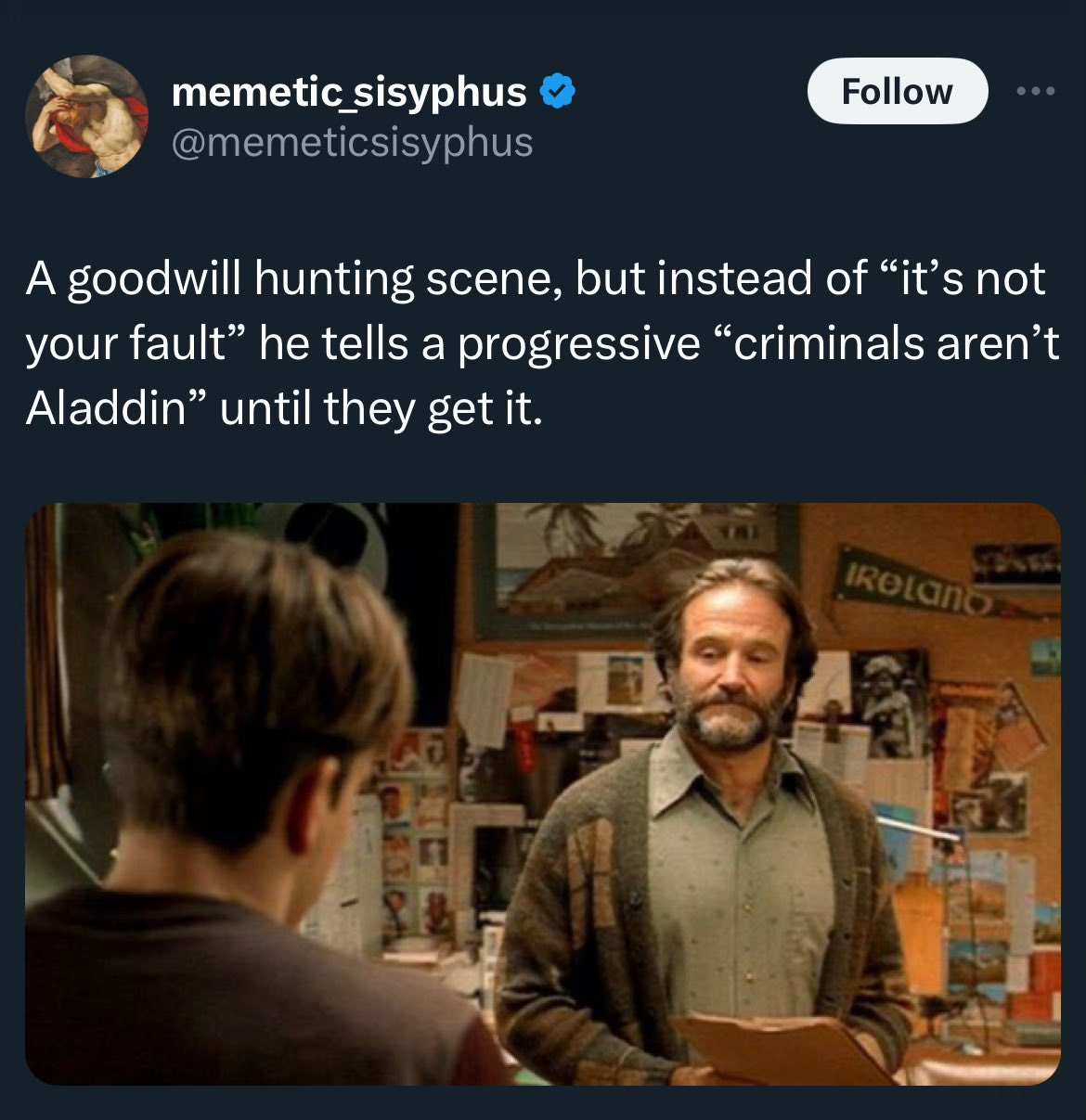 Is We Getting Bread Riots (feat. Mike Shelby) | This is a free preview of a paid episode. To hear more, visit blog.exitgroup.us[Above is the recording of our discussion with Mike Shelby from Forward Observer, on the broader topic of a “Yellow Revolution” somewhere 2026-2028. Below is a narrower discussion of the role of welfare programs, and the tug-of-war over government assistance, in the coming conflict(s).]If the government shutdown is not resolved next week, 42 million people will lose access to food stamps for the month of November.My timeline is now full of inner-city blacks warning of the consequences if payments fail. Many of these seem to be monetized TikTok rage-bait, but others just describe the same things that I expect to see if the spigot gets cut off all at once. It would be remarkable if 42 million people losing food benefits didn’t lead to a surge in violent crime and civil disorder.Obviously the welfare system has created generations of dependents with a deeply perverse attitude toward the people whose largesse they receive, and that system should be abolished or at least deeply reformed — but it’s also a significant structural component of the US economy.EXIT is a fraternity dedicated to building family empires. Learn more here:In general, Nothing Ever Happens because, while an apocalyptic confrontation is brewing, both sides do the math:One side realizes they can’t actually win, some less-confrontational solution is quietly arrived at, and you still have to go to work in the morning.Whatever you think of the food stamp program or its recipients, cutting 42 million people’s monthly income by one-third, with less than two weeks’ notice, would be one hell of a Happening — which would mean that at least one party severely miscalculated their odds of victory.It may not happen next week, but it’s going to happen eventually.The tug-of-war between the Trump Administration and the administrative state won’t stop until something like this settles the question with finality.If it isn’t another government shutdown, the EBT system has documented, open vulnerabilities to cyber-attack, which would be easy to exploit in the event of a serious foreign policy confrontation.And if that doesn’t happen, sooner or later the government’s fiscal problems will either lead to nonpayment of these benefits, or hyperinflation (which amounts to the same thing.)So the consequences of an EBT shutdown are worth examining, because they’re coming one way or another, even if you think this particular standoff will be resolved before the deadline.Articles are never paywalled. Subscribe for free full articles and weekly EXIT news in your inbox. Paid subscribers get access to recorded calls and in-person EXIT cocktail hours.The No Kings protests last week drew an impressive crowd numerically (7 million, by some estimates) — but strained the notion of democratic mobilization as a proxy for warfighting.The crowd was 90% white, 60% female, and the median age was 44. In our recording with Mike Shelby, we discuss how this mobilization is in preparation for a Color Revolution against President Trump, either in 2026 or 2028.But while getting seven million people in the street is a testament to Democrats’ organizational capacity, it’s hard to see how that converts into any sort of hard power.Normies seem to enjoy the “No Kings” framing — but they are, by definition, not serious people, and no actual fighting-age males in the Leftist coalition care about any of that stuff.The political Left is facing the inevitable conclusion of their feminized politics:Nagging and shaming are repellent to all young men capable of violence: so, when nagging and shaming stop working, there is no longer any credible physical backstop to the argument, because all the young men capable of violence have been pushed to one side (or, as with young black men, checked out of the conversation).All the Right has to do is stop caring about the political opinions of gays, grannies, and grandes, and the Left has no more cards to play — which has been the story of the last year or so of American politics.The power of moral blackmail in US partisan politics has absolutely collapsed. It no longer matters how many old people assemble to complain.But the optics of a “bread riot” could change all that.The Left is at its rhetorical best when it reminds people what things were like in the ancien regime (generally either the Great Depression, or Dickensian England): toddlers smeared with coal dust, gaunt farmwives selling their children, bread lines; the working man “owing his soul to the company store”.(Of course, having 13% of the US population on food stamps suggests an economic situation comparable to the Depression — just without the optical problem of poor people physically waiting in lines.)President Trump has, to this point, succeeded in framing the modern American Left as shrill, spoiled, and out of touch — but 42 million people at least rhetorically “going without food” would dramatically change that perception.For Democrats, an EBT failure would remind the poor and lower-middle class what life looks like without mommy government, in the messiest and most disruptive way possible — casting Trump in the role of an uncaring plutocrat, or even an American Yeltsin. (”Sure, things weren’t perfect under Gay Race Communism, but at least things were stable, predictable, etc.”)A Color Revolution is never going to happen because President Trump remodeled the East Wing, or because of some banal inside-baseball power struggle in the executive bureaucracy.A Color Revolution happens when normies run cover for an extended period of radical violent criminality, which metastasizes into armed resistance — which is exactly what an EBT failure would do.The BLM protests really were “mostly peaceful”.20 to 25 million people attended the BLM protests. That’s a huge fraction of the country’s population: about as many as watched Survivor or American Idol at their peak.Almost none of these people were radical communists — they were normies swept up in the Current Thing. They showed up, clapped and chanted, waved their signs, got their faces painted, and were home before sundown. The crowd really was “not, generally speaking, unruly”The purpose of Mostly Peaceful Protests is to provide narrative and physical cover for a surge of criminal violence (which is also largely not performed by radical communists, but by lumpenprole opportunists.)A Mostly Peaceful Protest forces the police to man the picket lines instead of fighting street crime. The crowds jam roads, preventing police from moving resources across the city. Trained protestors use “black bloc” tactics to provide anonymity, so that violent actors are harder to surveil and apprehend.Protest organizers deliberately blur the lines between civilian and criminal/combatant actors, both to make violent direct action appear more legitimate and popular than it is, and to provoke police into mistakenly attacking civilians.The purpose of a Color Revolution is to produce and prolong a Schmittian “state of exception”.A state of exception is a condition in which the ordinary/”lawful” powers and procedures of the state are inadequate to maintain the integrity of the state, so new powers must be asserted. The sovereign is (by definition) the person who decides when such a condition exists, and what to do about it.The state never has sufficient security resources to directly or coercively enforce the law on everyone at once: public order depends on widespread, habitual obedience.A genuine protest — one that is actually adversarial to the government — is always an attempt to break the population’s habitual obedience, in order to generate a security crisis that the government cannot survive. (Anything else is a parade.)This is the concrete meaning of “people power”:* We have the media and organizational capability to jam your city with millions of harmless morons.* The crowd will disrupt the ordinary business of the city, and conceal a wave of violent crime.* People will demand that you do something about it.* We will make it impossible for you, or the police, or the viewers at home, to distinguish civilians from criminal agitators.* You will be powerless to end the crisis within your legal and popular mandate.* If you step outside your mandate, the crowd will get bigger and more violent, the crisis will deepen, you will face defections from your security forces, and then execution or prison.Obviously not all adversarial protests end this way, because the parties usually come to terms long before this happens — but this is the implicit threat of protest.Color revolutions never “overthrow the government” — they just reveal who the real government was all along.A state of exception never destroys sovereign power — it can only expand it. It renders the political situation liquid, so that it can be altered without limit, but only by the sovereign.The Orange Revolution didn’t weaken Viktor Yanukovych as the sovereign in Ukraine — it simply demonstrated that Yanukovych was not, in fact, the sovereign. Who decides the state of exception in Ukraine? Who decides what happens in Ukraine when Ukrainian law has no answers? Empirically, the US State Department.In a failed color revolution, the liquid political situation is exploited by the target of the protests to strengthen his own power. After the 2012 protests in Russia, Vladimir Putin tightened restrictions on public assembly, required NGOs to register as foreign agents, expanded treason statutes, and expanded state censorship authority over the internet.This means that the bar for a “state of exception” is much higher in Russia than it was before, because Putin’s has expanded legal authority (and demonstrated security capacity) to put down a foreign-backed protest movement.You would never incite a color revolution in a state in which you did not believe you were the sovereign — you would never deliberately create a state of exception that you did not expect to control.An American riot is the opposite of a revolution.The Trump Administration has made massive gains by ignoring leftists’ hypocrisy and moralizing — but it can still be converted into real power.An EBT failure creates the following conditions:* Millions of people with a substantial direct financial incentive to fill the streets* Millions of normies with an excuse to believe that criminals are Aladdin, actually (they are desperate to believe this, because it collapses the cognitive dissonance generated by the end of the liberal consensus)* Young muscle pulled back into the Democratic machine, whom they lost after post-BLM demoralization and Gaza fissures* A straightforward rally point for collective civil disobedience (literally “stealing bread to feed your family”)This would put the American Left in the strongest position they’ve had in almost a century.Democrats aren’t actually radicalized about the object-level conflict that is keeping the government shut down (Medicaid for illegals). They want the government shut down, so that they can create a state of emergency and reclaim control of the state.This means that capitulation won’t help: it will simply set the stage for another confrontation in 8 weeks, when the next continuing resolution runs out. They want the chaos, because they believe (not without justification) that they are still the sovereign power.There are two ways Trump could defang this threat:* End the filibuster.Without the filibuster, Republicans could end the shutdown with a simple 51-49 vote. Senate Majority Leader John Thune, Mitch McConnell, and Susan Collins all oppose this (because they are swamp creatures who also want to reassert control).If Trump can pin an ongoing shutdown on the RINOs, they may fold — which would deepen Trump’s control of the GOP, but also raise the stakes of the midterms in 2026.If they take this route, the chaos will merely be postponed until the 2026 midterms.* Get the program funded without Congress.This would be the most audacious and Caesarean move: hold a benefit in Madison Square Garden.Make a generous donation yourself, and then publicly remind Wal-Mart and Coca-Cola that they’ve been suckling the SNAP tit for generations, and tell them to pony up. Tell Crazy Nancy to come out of pocket from her insider-trading money.Post statistics that show all the major corporate recipients of SNAP money, as well as the employers of SNAP-qualified Americans. Display a gauge meter that shows the proportion of donations coming from Democrats and Republicans.This week, a single donor came up with $130M to keep Army salaries paid. The money exists, and Trump can find it.If this keeps the program funded for even an extra week, it removes the justification for collective civil disobedience and keeps civilians off the streets, allowing much more aggressive police action against criminal agitators.Even a smaller victory, like fully funding WIC (a targeted food program for mothers and children, less than one-tenth the size of SNAP) would put the blame for the shutdown squarely where it belongs, and almost certainly force Democrats to back down.A move like this would strengthen Trump’s claim to sovereignty without the need for a messy crackdown.“When there was a crisis and the regular functions of government were suspended, Trump came through for all Americans.” Trump is the one who makes the gibs flow.And once that’s established, he can start to make some sane decisions about who gets them. This would be difficult to pull off — but far more feasible than trying to get Democrats to vote for entitlement reform.Of course, we have no pull with these people, or knowledge of their plans. So while we wait for them to get creative, we need to make arrangements for ourselves and our families.Don’t be in jurisdictions controlled by Democrats. Acquire assets that cannot be seized, destroyed, or inflated away. Become important to the people around you. Build your personal intelligence network. Make contingency plans with your friends and family. Connect with as many like-minded people as you can find.exitgroup.usEXIT News* Weekly Group Calls, Tuesdays at 9PM ET:* Tomorrow (10/28), we will hear from Jeremy Carl, author of Unprotected Class and nominee for Assistant Secretary of State for International Organization Affairs. Call will not be recorded.* Next week (11/4), we’ll have a discussion of Family Traditions and strengthening family identity and culture, in advance of the Thanksgiving and Christmas holidays.* Meetups:* Successful meetups in Nashville, Dallas, Houston, and Oklahoma City last week.* 11/1: Utah Valley meetup. Cocktail hour link below for subscribers.* 11/8: Austin meetup. Members only.* 11/8: Washington, DC meetup. Members only.* 11/8: Portland meetup. I’ll be speaking at Scyldings’ Oregon Weaving event.* 11/14: New York City meetup. Cocktail hour link below for subscribers.* 11/15: San Diego meetup. Cocktail hour link below for subscribers.* EXIT cocktail hours for Utah Valley (11/1), New York City (11/14), and San Diego (11/15) below the paywall for Substack subscribers. EXIT cocktail hours are a great way to get to know your local EXIT guys and find out if full group membership is right for you. | 31m 29s | ||||||
| 10/3/25 |  Great Houses as engines of human cultivation | And he shall turn the heart of the fathers to the children, and the heart of the children to their fathers, lest I come and smite the earth with a curse.Malachi 4:6For the last five months, Greg Treat has run our weekly Great Houses call, in which he has laid out a detailed legal, financial, and interpersonal framework for building a great house — a cohesive, influential family that persists beyond the life of the founding patriarch.In the episode, Greg discusses how this is to be done. The podcast series (available for members) goes into significantly deeper detail on specific financial instruments, business and charitable entities, and contractual relationships that can make a Great House legally enforceable.Below, I’ll explain why we are pursuing this.Everything we do at EXIT is aimed at the restoration of the family as the fundamental social and political unit.The family — particularly, the reciprocal love and obligation between father and son — is the primal emotional circuit of loyalty, sacrifice, and obedience that allows men (especially men of unequal status) to organize and cooperate on grounds that are neither transactional nor coercive.Every bond between social unequals makes use of this instinct at some level of abstraction: a relationship of duty to an inferior is patronage, a responsible class is patrician, a king is pater patriae, a general is a “father to his men”, a nation is bound by birth to a common fatherland, and owes that nation a debt of patriotism.Patriarchy is the instinct that allows men to organize & obey intelligently, rather than crudely following incentives — & leaders that capture this instinct effortlessly overpower armies of slaves & mercenaries.But as technology enables greater social scale, this “us-ness” has to be stretched thin over an ever-larger and more heterogeneous population, from clans to tribes to nations — culminating in a global “civic nation” whose members have nothing meaningful in common. So the filial instinct is diluted and abstracted to nothing, like homeopathic medicine. In a global “civic nation”, the fictive “family” of the state has no outside enemies, so it must turn inward to justify its existence.Instead of defending “us” versus “them”, the global state exists to insinuate itself between the weak and the strong — relentlessly searching for conflicts between unequals that it can stamp out.But inequality and conflict are inescapable characteristics of every human connection — so, of necessity, the state has made itself the enemy of human connection as such.On a recent podcast, Curtis Yarvin contrasted the social role of a chauffeur to that of an Uber driver: the relationship between a chauffeur and his wealthy employer is obviously hierarchical and unequal — a “power dynamic” exists which is not present with an Uber driver, with whom the rider may not even exchange words.A wealthy employer can abuse and exploit a household servant in a personal way that is not possible with a gig worker — but it’s precisely the intimacy of the relationship that creates the capacity for betrayal. So a potentially dangerous human relationship gives way to a safe (and sterile) transaction.As Yarvin notes, even the communists admit that something important has been lost here, even if they can’t articulate exactly how or why.And this is the mission of the global state in every human relationship:* Find examples of the stronger party behaving badly (these are always abundant)* Debase the values or standards that generate the hierarchy, to the benefit of the weaker party* Imply that the hierarchy — and thus the relationship itself — is inherently (or “structurally” or “systemically”) abusive* Abolish the relationship and replace it with a transaction, mediated by the stateThis is why “globalism” is a synonym for “gay race communism”.A global state can only exist to eradicate interpersonal hierarchies — and the only way to eradicate interpersonal hierarchies is to eradicate all human values, all human judgment, and all human relationships. It’s the egalitarianism of a Soviet orphanage — or a mass grave.This process is already complete for nations, traditionally defined: citizenship is a straightforward matter of paperwork and fees.Social, civic, and professional institutions face immense pressure under the postwar civil rights regime to make their requirements algorithmic, credentialist, and impersonal. Most of these institutions, having their lifeblood drained, simply wither away — the only social role left to most people at scale is a nakedly transactional job.Marriage is no longer a binding covenant, and the state pumps enormous energy into breaking the instinctively hierarchical character of marriage. But both men and women find egalitarian, transactional “marriage” so viscerally repulsive in practice that the vestigial legal institution is simply dying.What is left in the wreckage of all these human connections is homo economicus, resentfully doing exactly what he is paid to do: slaves and mercenaries and machines.The last genuinely human relationship is the one from which all politics is derived: the relationship between parent and child.The state already insinuates itself deeply in this relationship via CPS, schools, media — but most importantly indirectly, by making children a wedge in marital conflicts.The trans phenomenon is best understood through this lens: what looks like a series of custody battles between various mothers and fathers is, in fact, a custody battle between the state and the citizens.Now, there are almost no bonds left to break, nothing left to consume with enough energy to sustain the global machine.No one inside this system is breeding, or enlisting to fight its wars, or investing in its future, and competing power structures are springing up like tumors throughout these societies (most of them foreign and hostile to us.)What we need now are “strong families”, in a very specific sense.We have to rebuild the illegible-but-binding ties of love and loyalty that once existed within (and, critically, between) families: first and foremost because it’s a far happier and more natural way to live, but also because we will need such ties to survive the decay of the global state, and to build for what replaces it.This doesn’t just mean loving our kids a lot (though it at least means that): it means rebuilding the family as the source of your children’s livelihood and the wellspring of their social identity.The modern home is an institution of consumption.Your real life — the domain of your triumphs and failures, in which you create and contribute — unfolds at work or school, among separate groups of strangers, under the eye of the state.You spend time with your kids for an hour or two before bedtime, once “real life” is over. And of course, you are not at your most impressive while decompressing and consuming — so it’s unsurprising that young people do not find their parents’ lives compelling, and don’t want to grow up to be like them.And once your children “go off to college”, your lives no longer intersect in any practical sense, so you connect as you did when they were growing up — on holidays, as a reprieve from your real life.(This is almost certainly why young people tend to view marriage and family as a capstone achievement, a thing to do when their careers are established in their mid-thirties. In their minds, a family is fundamentally an expensive hobby.)But a Great House is an engine of human cultivation.A Great House repatriates the economic life of the family: the patriarch of a Great House reclaims the responsibility to educate his children, provide them with a living, and find them admirable partners with whom to build family of their own.To be successful, a Great House has to provide a parallel institution of status, which means that it must unite with other families to cultivate and deploy elite talent which competes credibly with the best the global state has to offer. (As traditional talent pipelines degrade, this is an increasing achievable goal.)To make this happen, a lot of high-capacity guys have got to pool capital, build businesses, develop social and civic influence, and deliberately prepare (and indoctrinate) their children to go to work for the Family.They have to become personally aspirational — to draw their wives and children and friends into what they are creating — because, at present, the attraction of truth and beauty is all we have.In other words, we have to restart human civilization from its psychospiritual bedrock. It’s a tall order — but our enemies are at war with God and nature, and we are in league with the stones of the field.exitgroup.usEXIT News* Tuesday night full group calls* This week (9/30), we discussed Orienting ourselves in times of volatility. How do we avoid being hypnotized by spectacle, seize the initiative, and continue to build during chaotic times? Call was not recorded.* On 10/7, we will have a member Q&A with Josh Lisec, co-author (with Jack Posobiec) of Unhumans: The Secret History of Communist Revolutions.* Meetups* 10/10: Nashville. * 10/17-10/18: Canyoneering trip in Zion National Park. Contact Devin or check #utah channel for details.* 10/25: Oklahoma City.* 11/8: Old Glory Club’s Weaving Event in Portland. I will be speaking.* Cocktail hour invites for Nashville (9/27) and Oklahoma City (10/25) available to subscribers here. EXIT cocktail hours are a great way to get to know the guys in your local area and figure out if the group is right for you. This is a public episode. If you'd like to discuss this with other subscribers or get access to bonus episodes, visit blog.exitgroup.us/subscribe | 58m 12s | ||||||
| 8/28/25 |  Network Preparedness during Hurricane Helene | This is a free preview of a paid episode. To hear more, visit blog.exitgroup.usOn last night’s EXIT group call, retired Navy veteran and OG EXIT Guy Francis discussed his evacuation from the Augusta area during Hurricane Helene last September, and relief efforts thereafter. Lessons learned:Preparedness isn’t about gear.Francis’ biggest takeaway from the experience is that physical fitness, mobility, and social capital mattered way more than gear. Especially in a city like Augusta, his expensive kit was a security liability as much as a benefit.Most prepper fantasies involve hunkering down to restart civilization, but that’s not even close to the most likely emergency outcome. Pack light, move quick, and get to safety as quickly as possible.Who, not how.Francis’ biggest assets in keeping his family safe and comfortable were a good network and good intelligence. By getting in touch with friends throughout the region, he was able to avoid threats and obstacles, find resources, and make himself useful to others who were in worse shape.The ideal networking situation is to be deeply connected in your local area, and have a broad network that provides optionality and intelligence from outside. We had an extended conversation on the value of an Area Study (more on this later.)Fitness and psychological preparedness.Keeping his family’s morale high was a challenge — Francis plans to do more short-notice camping trips to prepare his children for disruption and discomfort, and require more unplugged time so that they learn to entertain themselves without electronics. Francis also benefited from his MMA and firearms training in being able to interact confidently with unfriendly or untrustworthy strangers. Sustaining a serious injury later taught him not to take basic fitness for granted — the situation would have been much worse without the ability to walk, run, and carry heavy things. (Sometimes these situations are unavoidable — another good reason to cultivate a strong early-warning and local support network.)exitgroup.usEXIT News* On next week’s full-group call (9/2), we’re running a book club on The Forest Passage by Ernst Junger. It’s a quick read, and more important now than when it was written.* New Calls:* Family/Fatherhood and Homeschooling on alternating Thursdays at 7PM ET/4PM PT* Leadership on the second Wednesday of each month at 8PM ET/5PM PT. (This month, 9/10, we will discuss Alexander and Caesar from Plutarch’s Parallel Lives.)* Civic Engagement on third Thursdays at 10PM ET/7PM PT.* Several of the guys will be in DC next week for NatCon. Reach out in the #dc channel to coordinate a meetup.* Caught a couple of the guys in Utah Valley this week. Planning a sauna build before it gets cold — check #utah channel for details.* BBQ meetup in Boise September 1. Check #idaho channel to RSVP.* Canyoneering Trip in Zion National Park (10/17-10/18). We should be getting the results from our lottery any day now. Check #meetups and #utah channel for updates.>THERE IS NOTHING BELOW THE PAYWALL | 34m 06s | ||||||
| 7/23/25 |  EXIT Member Q&A: Andrew Isker (BonifaceOption) | This is a free preview of a paid episode. To hear more, visit blog.exitgroup.usAndrew Isker (@BonifaceOption) is a Reformed pastor who has planted a church at New Founding’s community in Gainesboro, Tennessee. He went on Tucker Carlson’s show to discuss his church and the new community a few months ago. We discuss:* Building critical mass for an in-person community* Historical precedents for pioneering new Christian communities* Politic… | 28m 44s | ||||||















Showing 25 of 79
Pitch Fit is a Pro feature
See how bookable this show is for guests, which brands already advertise, the per-episode ad value, and the best-fit guest and sponsor profile. The numbers are blurred on the free plan.
How readily this show books outside guests like you.
How proven this show is for host-read sponsorships.
For Guests
ProFor Advertisers
ProUpgrade to Pro to unlock guest cadence, sponsor categories, fit scores, and per-episode ad value for this show.