

Insights from recent episode analysis
Audience Interest
Podcast Focus
Publishing Consistency
Platform Reach
Insights are generated by CastFox AI using publicly available data, episode content, and proprietary models.
Total monthly reach
Estimated from 2 chart positions in 2 markets.
By chart position
- 🇩🇪DE · Chemistry#5530K to 100K
- 🇺🇸US · Chemistry#1465K to 30K
- Per-Episode Audience
Est. listeners per new episode within ~30 days
18K to 65K🎙 Weekly cadence·16 episodes·Last published 6mo ago - Monthly Reach
Unique listeners across all episodes (30 days)
35K to 130K🇩🇪77%🇺🇸23% - Active Followers
Loyal subscribers who consistently listen
11K to 39K
Market Insights
Platform Distribution
Reach across major podcast platforms, updated hourly
Total Followers
—
Total Plays
—
Total Reviews
—
* Data sourced directly from platform APIs and aggregated hourly across all major podcast directories.
On the show
Recent episodes
International Chemistry Olympiads
Nov 28, 2025
Unknown duration
Modeling molecules with quantum chemistry - Prof. Grimme
May 28, 2025
Unknown duration
All about IUPAC
Aug 29, 2024
Unknown duration
IUPAC Top 10 Emerging Technologies
Mar 21, 2024
Unknown duration
Switching to Industry - All You Need to Know
Aug 16, 2022
Unknown duration
Social Links & Contact
Official channels & resources
Official Website
Login
RSS Feed
Login
| Date | Episode | Description | Length | ||||||
|---|---|---|---|---|---|---|---|---|---|
| 11/28/25 |  International Chemistry Olympiads | In this episode, our host Marie-Désirée Schlemper-Scheidt interviews Prof. Martin Putala about his experience as both a coach and member of the Scientific Committee of the International Chemistry Olympiad (IChO).Prof. Martin Putala is the Head of the Chemistry Department at the University of Bratislava and has played a pivotal role in establishing the presence of Slovakia in the Chemistry Olympiads, including organizing the 50th edition of the Olympiad in 2018. He has also been a long-standing figure in coaching the Slovakian students participating in the Olympiads.Read more about the 50th anniversary of the Olympiad here: https://doi.org/10.1021/acs.jchemed.7b00640Host: Marie-Désirée Schlemper-Scheidt Intro and Outro: Carl SchneiderWriting: Marie-Désirée Schlemper-Scheidt and Carl SchneiderEditing: Jasper Hahn | — | ||||||
| 5/28/25 |  Modeling molecules with quantum chemistry - Prof. Grimme | Welcome to our new Podcast episode, with an all-new host! In this episode, Konstantina Armadorou interviews Chemistry Europe laureate and accomplished computational chemist Professor Stefan Grimme. A captivating conversation about current trends in the field of chemistry and unlikely collaborations awaits you. Enjoy!Host: Konstantina ArmadorouIntro and Outro: Carl SchneiderWriting: Carl Schneider and Konstantina ArmadorouEditing: Miguel Steiner | — | ||||||
| 8/29/24 |  All about IUPAC | In this episode our host Carl Schneider interviews IUPAC’s president-elect Mary Garson about all things IUPAC. Mary Garson is an emeritus Professor at the University of Queensland, current vice-president of IUPAC and president-elect for the upcoming legislative period. She has been a long-standing figure in IUPAC and has shaped the way we know IUPAC today. In this episode, Carl and Mary talk about how IUPAC as a global organization ensures its impact on the local level, how it fosters the next generation of researchers and so much more. Read more about IUPAC’s “Global Women’s Breakfast”, one of Mary’s closest to heart projects, here! | — | ||||||
| 3/21/24 |  IUPAC Top 10 Emerging Technologies | In this episode Carl Schneider interviews IUPAC’s past-president Prof. Dr. Javier García Martinez about the 2023 “IUPAC Top Ten”. Javier and Carl talk about the origin of this tradition, what concerns the chemists of the world, and how IUPAC as a global organization encourages local acting. For a further look at last year’s finalists you can read up on them here. Until the 31st of March you can also submit your candidates here to be considered for the 2024 edition of the Top Ten. You always wanted to know something else about IUPAC? Now, is your chance! We are planning a follow-up episode to talk with Javier about IUPAC in general and we invite you to submit your questions to us beforehand. | — | ||||||
| 8/16/22 |  Switching to Industry - All You Need to Know | In this episode, we looked into the private sector as a potential career path. For that, Katarina Josifovska interviewed our guest Dr. David Giltner, and discussed the switch into industry by providing a great overview into the company mindset and by giving many helpful tips that could ease your transition. | — | ||||||
| 4/29/22 | 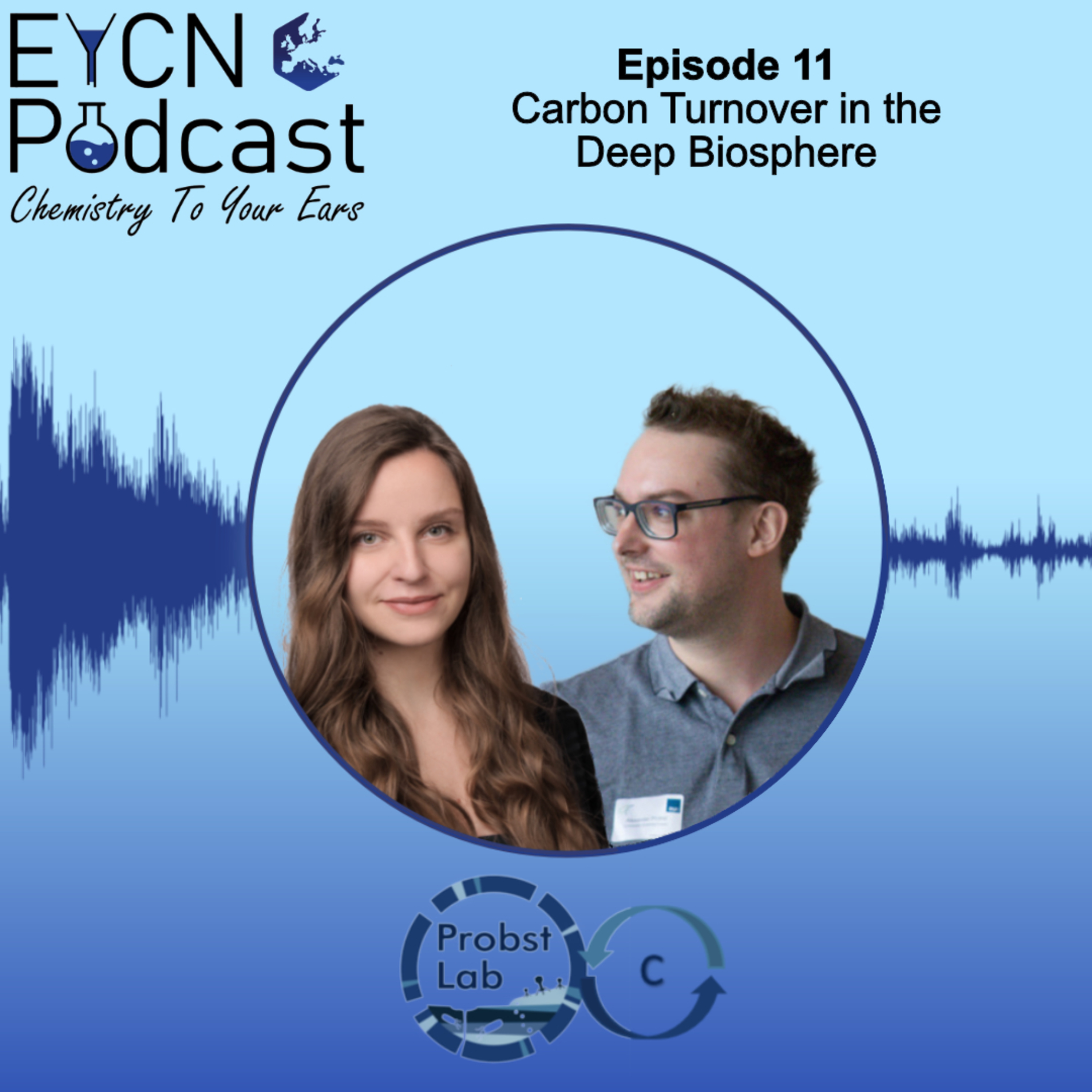 Carbon Turnover in the Deep Biosphere | In our latest podcast episode, we are discussing Carbon turnover in the deep biosphere, its relevance to modern society, how it takes place and how it influences life on the surface. For that, Katarina Josifovska interviewed Prof. Dr. Alexander Probst, associate professor for "Aquatic Microbial Ecology" at the University of Duisburg-Essen | — | ||||||
| 3/28/22 | 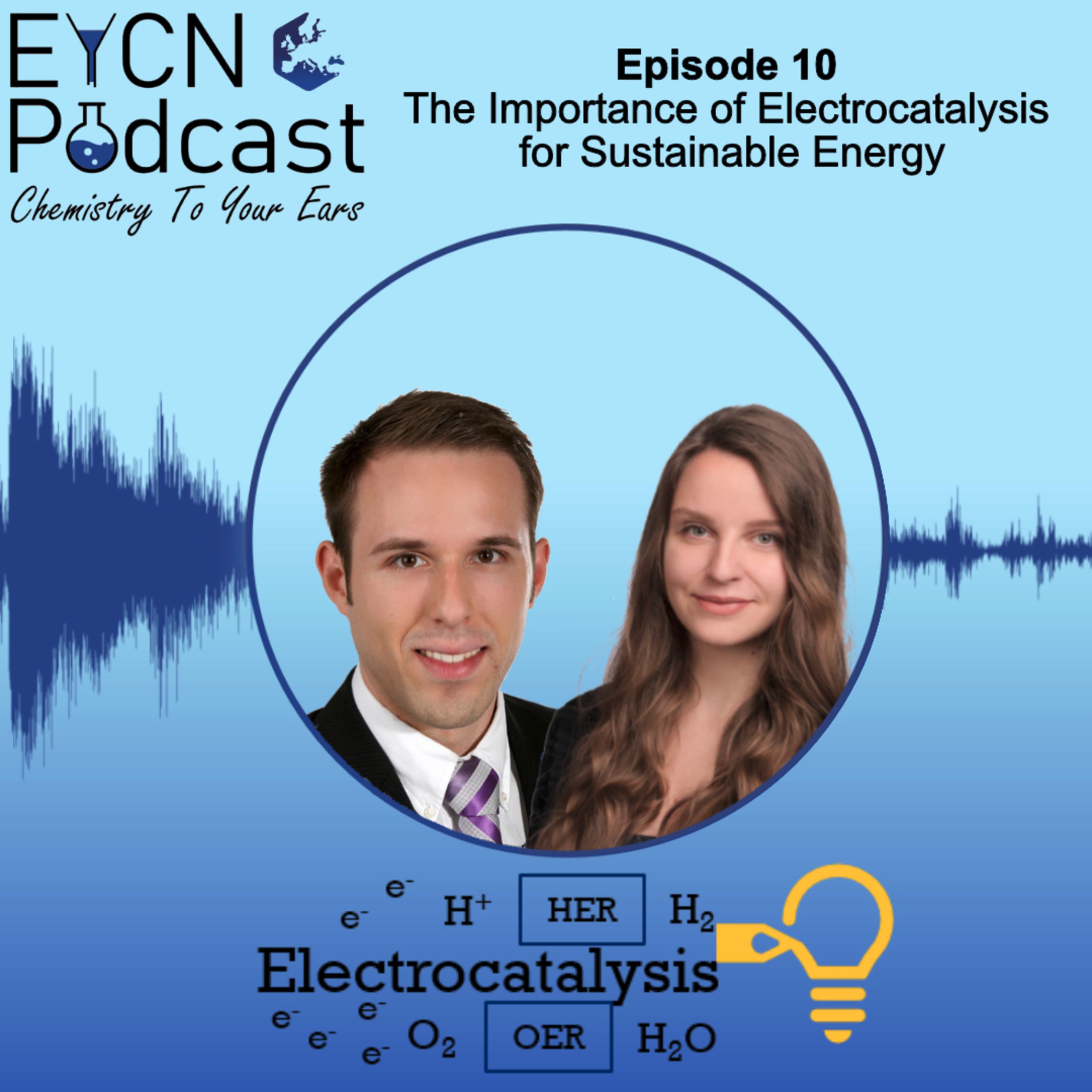 The importance of electrocatalysis for sustainable energy | In this episode, we focus on the importance of electrocatalysis in general and water splitting in particular. For that, Katarina Josifovska interviewed Prof. Dr. Kai Exner, an expert in this field. Dr. Exner explains the fundamentals of electrocatalysis and why it is popular nowadays. Further, we discuss the oxygen evolution reaction, OER, as the limiting process in electrolyzers. Dr. Exner gave an overview of challenges in the OER, ranging from the atomic to the industrial scale. | — | ||||||
| 2/6/22 |  How to organize your PhD | In this episode we are talking about the path towards completing a doctoral degree. Our guest, Dr. Daniel Friedrich, provides some key points along the road to obtain a PhD. He highlights the importance of taking the time to make a detailed plan containing the incremental steps, which lead you to your goal. Moreover, he suggests building a professional network and develop transferable skills, which will help you in the future stages of your career. Furthermore, certain problems that can occur during a PhD are discussed to give some advice on how students can approach these challenges. Dr. Daniel Friedrich is an expert in project and self-management within and beyond the science community. He gained experience as a founder, taught as a Teach First Fellow and is currently working as a data scientist at the largest German portal for teaching materials. Since 2019, he has been bringing his experience as a researcher, doctoral advisor, and university lecturer into ImpulsPlus. | — | ||||||
| 11/9/21 |  How to organize your Postdoc | Today, we are talking about doing your Postdoc and everything around it with Dr. Torsten John who is interviewed by our German delegate and Science Team Leader Sebastian Balser. Dr. Torsten John, has finished his PhD in 2020 with summa cum laude at Leipzig University in Germany and is currently doing a Postdoc at MIT as a Feodor Lynen Research Fellow sponsored by the Humboldt Foundation. Besides his research achievements, Dr. John has also been a board member of the German, European, and now International Younger Chemists Network. In this interview, he shares his insights into the planning, application, and financing of a Postdoc position in academia. | — | ||||||
| 6/4/21 |  The UN Sustainability Development Goals and the Role of Chemistry for a Sustainable Society | The United Nations General Assembly adopted a new sustainable development agenda, which includes 17 sustainable development goals to end poverty, protect the planet, and ensure prosperity for all. If achieved, these 17 goals will fundamentally change the world for the better. The chemical enterprise has a unique role to play in reaching these goals. Chemistry offers a broad spectrum of products and services essential to our daily lives that are safe, sustainable, and environmentally sound. Therefore, we wanted to know more how young chemists can contribute to this and talked with Prof. David Cole-Hamilton, former president of the European Chemical Society and Professor Emeritus at the University of St. Andrews. | — | ||||||
Want analysis for the episodes below?Free for Pro Submit a request, we'll have your selected episodes analyzed within an hour. Free, at no cost to you, for Pro users. | |||||||||
| 2/1/21 |  Synthesizing valuable chemicals from waste materials - EYCA interview Dr. Emilia Paone | In our new series, we interview the winners of the prestigious European Young Chemists' Award 2020 to discuss with them their research and also ask them for advice for other young chemists. Today, we are talking about how important chemicals for industrial processes can be synthesized in a more sustainable way without relying on petrochemical resources. For this, our Rumanian delegate Robert Țincu interviewed the Silver medal winner at the PhD Level, Dr. Emilia Paone. | — | ||||||
| 1/25/21 |  Enabling chemical reactions with sound - EYCA interview Dr. Gregory Chatel | In our new series, we interview the winners of the prestigious European Young Chemists' Award 2020 to discuss with them their research and also ask them for advice for other young chemists. Today, we are talking about how we can enable novel reactions with the application of ultrasound, which could allow for more eco-friendly processes in the chemical industry. For this, our Austrian delegate Miguel Steiner interviewed the Silver medal winner at the Early Career Research Level, Dr. Gregory Chatel. | — | ||||||
| 1/18/21 | 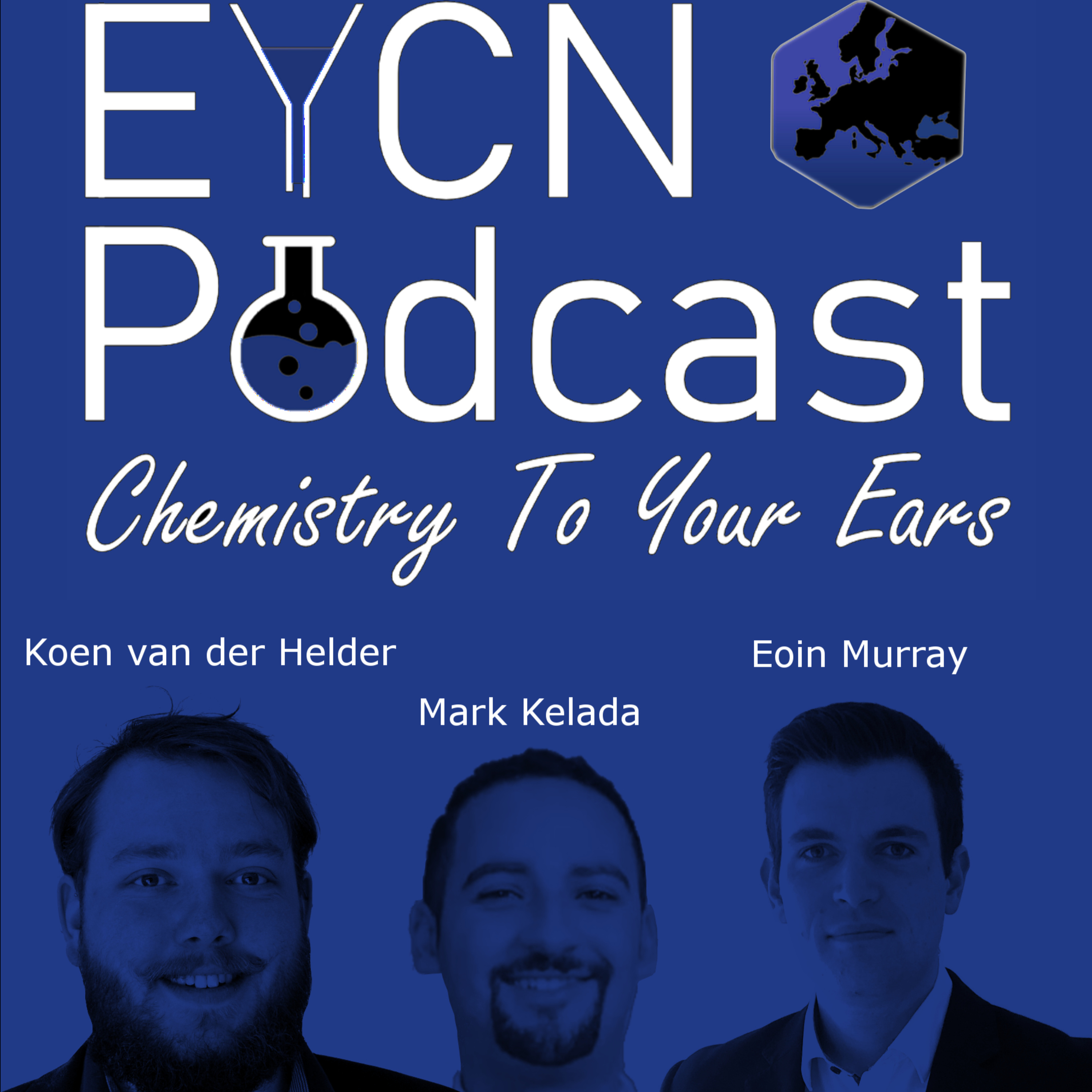 Detecting water pollutants automatically on-site - EYCA Interview Dr. Eoin Murray | In our new series, we interview the winners of the prestigious European Young Chemists' Award 2020 to discuss with them their research and also ask them for advice for other young chemists. Today, we are talking about a new device that allows to monitor nitrate and nitrite levels in environmental and industrial waters automatically and periodically directly at the water source without expensive laboratory equipment. For this, our Dutch delegate Koen van den Helder interviewed the Gold medal winner at the PhD Level, Dr. Eoin Murray. | — | ||||||
| 1/11/21 | 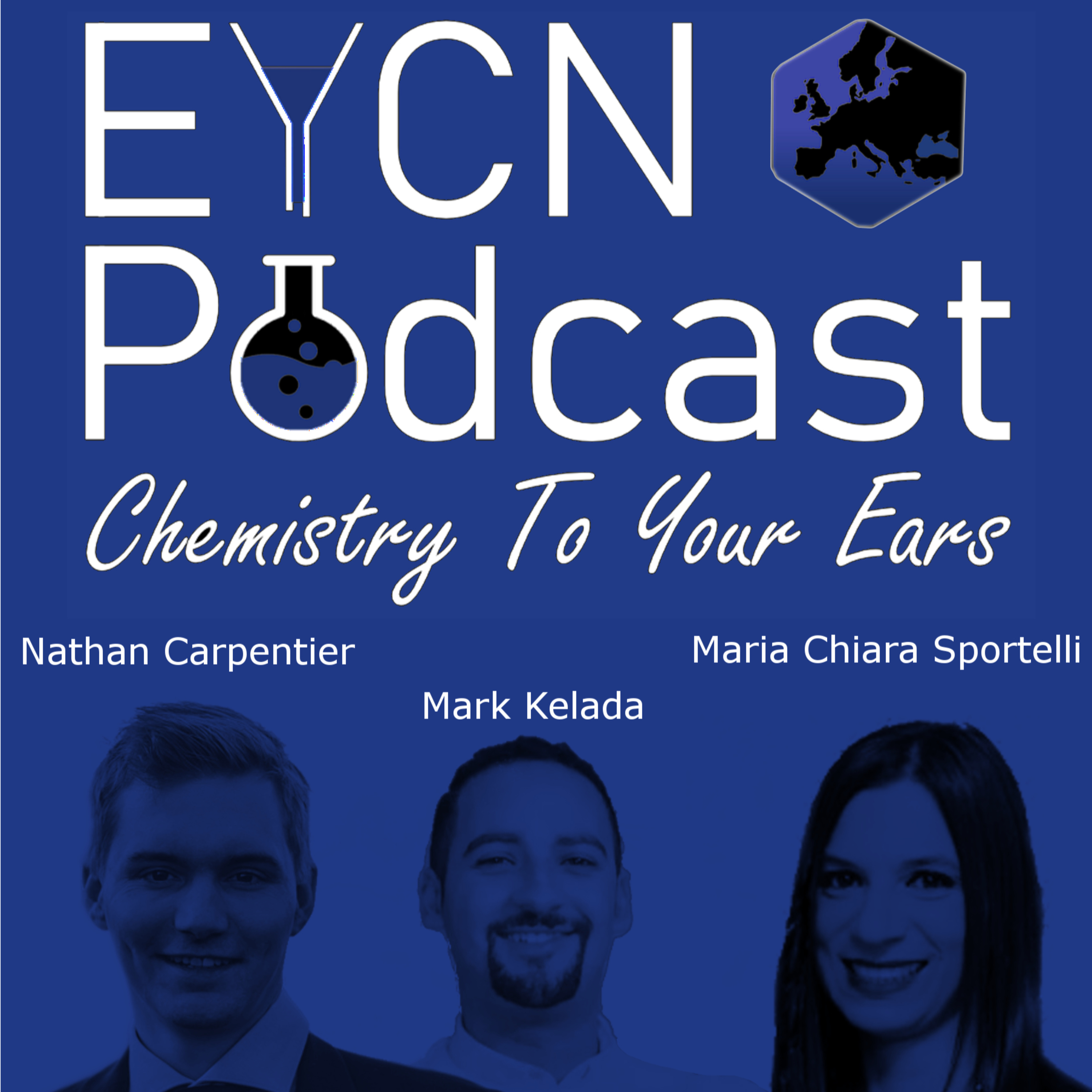 Antimicrobial thin-films and their application possibilities - EYCA Interview Dr. Maria Chiara Sportelli | In our new series, we interview the winners of the prestigious European Young Chemists' Award 2020 to discuss with them their research and also ask them for advice for other young chemists. Today, we are talking about thin films that have antimicrobial properties and how they are synthesized, analyzed, and applied on various substances. For this, our Belgium delegate Nathan Carpentier interviewed the Gold medal winner at the Early Career Research Level, Dr. Maria Chiara Sportelli. | — | ||||||
| 8/28/20 | Microplastics - Definition, Problems and Solutions | Today, we will discuss with Dr. Kelada what the correct definition of microplastics is, how they’re formed and advantages or disadvantages associated with them. Furthermore, we are talking about transparent wood as a novel building material, the ability to replace the transistors in our computer with single molecules and the effect of family income on children's brain development. | — | ||||||
| 6/30/20 | CO2 Reduction, a Possible Solution for the Climate Crisis? | Could we produce useful chemicals while lowering the amount of CO2 in the atmosphere? In this month's episode, we are interviewing Prof. Victor Mougel from ETH Zurich to answer this and many more questions. We talk about the basics of CO2 reduction, the different approaches and their advantages and challenges. Furthermore, we are talking about the encryption of information in DNA, a new synthesis strategy to develop more efficient pharmaceuticals, and a new high throughput methodology for drug discovery. | — | ||||||
Showing 16 of 16
Sponsor Intelligence
Sign in to see which brands sponsor this podcast, their ad offers, and promo codes.
Chart Positions
2 placements across 2 markets.
Chart Positions
2 placements across 2 markets.