

Fastlane Founders and Legacy with Jason Barnard: Personal Branding, AI Strategies, and SEO Insights for Visionary CEOs
by Jason Barnard Entrepreneur and CEO of Kalicube
Is this your podcast?Insights from recent episode analysis
Audience Interest
Podcast Focus
Publishing Consistency
Platform Reach
Insights are generated by CastFox AI using publicly available data, episode content, and proprietary models.
Most discussed topics
Brands & references
Est. Listeners
Insufficient chart data. Estimates will improve as the show charts.
- Per-Episode Audience
Est. listeners per new episode within ~30 days
N/A🎙 Weekly cadence·390 episodes·Last published 7mo ago - Monthly Reach
Unique listeners across all episodes (30 days)
N/A - Active Followers
Loyal subscribers who consistently listen
N/A
Market Insights
Platform Distribution
Reach across major podcast platforms, updated hourly
Total Followers
—
Total Plays
—
Total Reviews
—
* Data sourced directly from platform APIs and aggregated hourly across all major podcast directories.
On the show
From 10 epsHost
Recent guests
Recent episodes
Josh Davis with Jason Barnard on Fastlane Founders And Legacy. Scaling Past Grit
Nov 18, 2025
Tom Freiling with Jason Barnard on Fastlane Founders And Legacy. The Authority Engine
Nov 11, 2025
10m 15s
Peter Goldstein with Jason Barnard on Fastlane Founders And Legacy. Integration Over Balance
Nov 4, 2025
12m 50s
David Steele with Jason Barnard on Fastlane Founders And Legacy. Multifaceted Entrepreneurship
Oct 28, 2025
10m 42s
Jonathan Kazarian with Jason Barnard on Fastlane Founders And Legacy. Events ROI
Oct 21, 2025
11m 27s
Social Links & Contact
Official channels & resources
Official Website
Login
RSS Feed
Login
| Date | Episode | Topics | Guests | Brands | Places | Keywords | Sponsor | Length | |
|---|---|---|---|---|---|---|---|---|---|
| 11/18/25 | 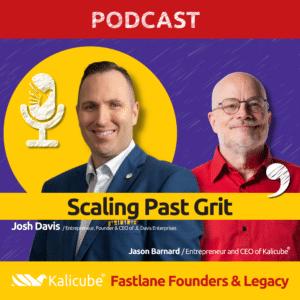 Josh Davis with Jason Barnard on Fastlane Founders And Legacy. Scaling Past Grit✨ | scalingentrepreneurship+4 | Josh Davis | JL Davis Enterprises | — | scaling past gritbusiness scaling+3 | — | — | |
| 11/11/25 |  Tom Freiling with Jason Barnard on Fastlane Founders And Legacy. The Authority Engine✨ | authority enginepublishing+5 | Tom Freiling | Freiling AgencyKalicube | — | authority enginepublishing+8 | — | 10m 15s | |
| 11/4/25 |  Peter Goldstein with Jason Barnard on Fastlane Founders And Legacy. Integration Over Balance✨ | work-life balanceintegration+4 | Peter Goldstein | The Entrepreneur's IPO | — | integrationbalance+5 | — | 12m 50s | |
| 10/28/25 |  David Steele with Jason Barnard on Fastlane Founders And Legacy. Multifaceted Entrepreneurship✨ | multifaceted entrepreneurshipwork-life balance+4 | David Steele | One Wealth AdvisorsFlour + Water Hospitality Group | — | entrepreneurshipbusiness strategy+5 | — | 10m 42s | |
| 10/21/25 |  Jonathan Kazarian with Jason Barnard on Fastlane Founders And Legacy. Events ROI✨ | event ROIbrand visibility+3 | Jonathan Kazarian | AcceleventsKalicube | — | event ROIbrand visibility+3 | — | 11m 27s | |
| 10/14/25 |  Jon Ostenson with Jason Barnard on Fastlane Founders And Legacy. Hidden Franchise Goldmine✨ | franchisingfinancial freedom+3 | Jon Ostenson | FranBridge ConsultingNon-Food Franchising | — | franchisenon-food franchising+3 | — | 10m 59s | |
| 10/7/25 |  Andrew Hulbert with Jason Barnard on Fastlane Founders And Legacy. Exit. Reset. Legacy.✨ | entrepreneurial journeyexit strategy+3 | Andrew Hulbert | Pareto FM | — | exit strategyentrepreneurial legacy+3 | — | 14m 25s | |
| 9/30/25 |  Eli Lopian with Jason Barnard on Fastlane Founders And Legacy. AICracy✨ | AI in businessentrepreneurship+4 | Eli Lopian | TypemockKalicube+1 | YouTube | AICracyAI strategy+5 | — | 25m 37s | |
| 9/23/25 |  Brett Farmiloe with Jason Barnard on Fastlane Founders And Legacy. Scaling Trust✨ | scaling trustmedia placement+4 | Brett Farmiloe | Featured.comHelp a Reporter Out (HARO)+4 | — | scaling trustmedia placement+5 | — | 20m 53s | |
| 9/16/25 |  Zac Gregg with Jason Barnard on Fastlane Founders And Legacy. Signal Over Noise✨ | digital marketingbusiness growth+4 | Zac Gregg | Vital DesignCardinal agency+1 | — | signal over noisemarket signals+5 | — | 25m 54s | |
Want analysis for the episodes below?Free for Pro Submit a request, we'll have your selected episodes analyzed within an hour. Free, at no cost to you, for Pro users. | |||||||||
| 9/9/25 |  Greg Heilers with Jason Barnard on Fastlane Founders And Legacy. Authority Building Secrets | Greg Heilers talks with Jason Barnard about authority building secrets. Authority Building Secrets! Greg Heilers—co-founder of Jolly SEO, and digital authority strategist who has secured media placements for countless C-suite executives since 2017—reveals the insider system for transforming unknown entrepreneurs into recognized industry authorities. Drawing from extensive experience in journalist outreach platforms and performance-based PR strategies, Greg breaks down his proven methodology for earning high-quality media mentions that build genuine credibility and thought leadership without relying on paid shortcuts or gimmicky tactics. Get ready for a deep dive on:- The journalist outreach platform strategy: How to leverage platforms like HARO, Featured.com, and others to secure expert citations in top-tier publications- The numbers game decoded: Realistic conversion rates, platform differences, and why premium vs. free platforms matter for your success rate- Quality over quantity approach: Why a mention in a niche-relevant publication can be more valuable than a major outlet placement- The co-citation power play: How being mentioned alongside established authorities amplifies your credibility in AI-powered search- Beyond traditional link building: Why brand mentions without links are now equally powerful for building digital authority- The listicle comeback strategy: How smart brands are leveraging collaborative content placements to boost AI visibility- Performance-based PR secrets: The "pay for wins only" model that ensures accountability and measurable results This episode delivers proven, accessible strategies for entrepreneurs, founders, and business leaders ready to build authentic authority through strategic media positioning and expert citations. #AuthorityBuilding #PR #MediaMentions #PersonalBranding #EntrepreneurAuthority #DigitalPR #ExpertPositioning #FastlaneFounders #GregHeilers #JournalistOutreach #BrandBuilding #ThoughtLeadership #BusinessGrowth #SEOStrategy #EntrepreneurTips What you’ll learn from Greg Heilers This episode was recorded live on video September 9th 2025 https://www.youtube.com/watch?v=gTqfuoeJJY8 Links to pieces of content relevant to this topic:https://www.theseoshow.co/episode/127https://majestic.com/seo-in-2025/additional-insights/greg-heilershttps://backlinko.com/haro-alternativesGreg Heilers Transcript from Greg Heilers with Jason Barnard on Fastlane Founders And Legacy. Authority Building Secrets [00:00:00] Greg Heilers: In the journalist outreach ecosystem, as it were, there are limitations. There's only so many publications. So if you only want new wins, for example, it's not super scalable because the same publications are coming again and again. But for the person who wants to stay relevant, stay top of mind, to both algorithms and human readers, yeah, we have clients who are with us for years. And we're just doing something like 5 or maybe 10 wins per month, month after month after month. Now we don't count the syndicated stuff. So there's way more in terms of syndicated content out there that definitely builds and it scales. But I'm just talking purely about the one-to-one wins that we've built. [00:00:51] Narrator: Fastlane Founders and Legacy with Jason Barnard. Each week, Jason sits down with successful entrepreneurs, CEOs and executives, and get them to share how they mastered the delicate balance between rapid growth and enduring success in the business world. How can we quickly build a profitable business that stands the test of time and becomes our legacy? A legacy we're proud of. Fastlane Founders and Legacy with Jason Barnard. [00:01:20] Jason Barnard: Hi, everybody and welcome to another Fastlane Founders and Legacy with me, Jason Barnard. And a quick hello, and we're good to go. Welcome to the show, Greg Heilers. [00:01:33] Greg Heilers: Awesome to be here, Jason. Thank you. [00:01:35] Jason Barnard: Brilliant, lovely. We're working to talking about Authority Building Secrets for entrepreneurs, and this is hugely close to my heart. You build authority, you get the PR. At Kalicube®, we leverage that and amplify it in Google and AI. So I think we're gonna have a really great conversation. Now, the first thing I always do is analyze people's Brand SERPs. And this is what comes up for you. You've got a small Knowledge Panel. That's a tiny Knowledge Panel with your name, a tiny photo, Facebook. Obviously, you are thinking about or working on building that out to something that looks more like this. Scott Duffy, Kalicube®'s favorite client of the moment. We've built this lovely Knowledge Panel for him. He's been with us for five years, managing his personal brand in Google and AI, and that makes him look like a superstar. And he is, he sold a company to Richard Branson, so he is a superstar. He deserves that positioning. And then I looked in ChatGPT for you. I got a really, really lovely description. Co-founder of Jolly SEO, founded in 2017, and so AI is doing this summary job directly in the chat, and it generally gets it pretty good. I was really impressed by what you've got there. Have you done any work on the AI aspect of your personal brand? [00:02:58] Greg Heilers: I haven't done a lot intentionally, I should say. So what we have learned in the last year or so is that brand mentions carry a lot of weight right now as of mid 2025. So unintentionally, yeah, I've done a lot, but it wasn't intentional, I'll be honest. [00:03:17] Jason Barnard: Right. And podcast guest appearances are great because you get brand mentions and you also get co-cited. In AI, co-citation is really important. So being co-cited with Jason Barnard helps Greg, and being co-cited with Greg Heilers helps Jason Barnard. So explain to me what Jolly SEO does, because my approach to all of this is saying, well, I'm gonna take what you've got already, so don't bother doing anything else. And I will package it for the machines and amplify it through Google and AI. And if you think about Google and AI, it's trillions of conversations with billions of people every day. The people trust them to recommend the best solution. And if we can amplify you there, we're amplifying you through the biggest influences in the world. But we can always have more press PR mentions, how do you do it? [00:04:04] Greg Heilers: So what we do is actually very accessible to founders listening to your podcast, Jason. We use these journalist outreach platforms they're called. The old school one, Help A Reporter Out. It's helpareporter.com. There's lots of others now, featured.com, you gotta pay for a subscription, but really easy to get a win on there and several others. All you're doing here is a reporter working on an upcoming article says, I need an expert on personal branding. For example, you chime in with three sentences, maybe 10 sentences, nothing more. You're not writing the whole article and then you sit and wait and hope you get picked up. It's a numbers game to that extent. But in a nutshell, that's what we do for clients. [00:04:52] Jason Barnard: And you mentioned numbers game. I mean, what are the numbers? What's the probability? I would say, what's the probability for somebody who's just giving it a go like I might? And the probability for somebody who knows what they're doing, like you? [00:05:04] Greg Heilers: Yeah. And that's really important because you're an expert at what you do. And that's the most important part. Obviously, having some writing skill is important, but it doesn't have to be perfect grammar, doesn't have to be perfect punctuation. To answer your question super directly though, every platform has its own conversion ratio, we call it. Some of these platforms, you can expect maybe for every 10 pitches you send, you get a win, a published link somewhere or your name mentioned. Some of the platforms are harder and some are easier. So you can rig this in your favor by paying a premium to platforms that filters out a lot of people who aren't really invested. But there's plenty of free options that you just need to write a little bit more. Again, just quick reminder, you're not writing a whole article, you're just writing a two paragraph pitch. [00:05:59] Jason Barnard: Right, now, i'm coming back to that is number one, great advice. You're not writing the whole article. I think we would all go in there thinking I'm gonna answer the entire question. It's one point that helps the journalist move their article forward. And I'm sure a lot of people listening to this contribute to Forbes. And Forbes have that expert panel where they limit you to 400 characters. Is 400 characters a good idea? [00:06:24] Greg Heilers: Yeah, it's somewhere around there. We have it pegged per platform, how many words you need. And so while I don't have it in characters, it seems like it'd be somewhere around there. It's around a hundred words. If we were to average it across them all. So, it's pretty succinct. [00:06:40] Jason Barnard: Okay. And on these platforms, so you're saying that some of them have a premium service where the people who are just playing around get filtered out? So the idea is it's free for anybody and a lot of people sign up for the free one and they just really don't take it seriously. The ones who pay a premium are the ones that are being pushed. [00:07:03] Greg Heilers: Well, perhaps I misspoke. I mean that there are both premium and free platforms. And some of the platforms do have premium versions, but if you wanna save time and spend a little money, for example, Qwoted, Q-W-O-T-E-D has very high quality publications and you'll convert pretty well because it costs quite a bit of money to use. And then, there are free like helpab2bwriter.com, just marketing and business opportunities. Pretty decent conversion. Maybe like one in 12 ish you could expect,... | — | ||||||
| 9/2/25 |  James Brown with Jason Barnard on Fastlane Founders And Legacy. Marketing Machine | James Brown talks with Jason Barnard about the marketing machine. Marketing Machine! James Brown—serial entrepreneur, business accelerator expert, CEO, and founder of Business Accelerator Institute and Perseverance Squared—reveals the systematic approach that transforms struggling businesses into thriving enterprises. Drawing from his remarkable journey of helping over 450 business owners nationwide, James breaks down his proven blueprint for creating predictable revenue engines that scale beyond the founder. Get ready for a deep dive on:- The emotional vs. logical buying journey: Why leading with credentials kills conversions and how to enter the conversation already happening in your prospect's mind- Direct response vs. branding strategies: When to use each approach and how small businesses can afford to compete with industry giants- The "stand out or get out" principle: How one Miami law firm's shocking headline ("Is he sleeping with her right now?") generated massive leads by breaking through the noise- The buyer's journey blueprint: Homepage → Problem content → About Us → Contact—and why this sequence is hardwired into human psychology- Client research goldmine: The simple questions that reveal exactly where your ideal customers consume information (and why copying competitors' marketing channels is gambling)- The marketing machine framework: How James went from 2 clients per week to 68 clients in the first week using systematic direct response- Channel optimization secrets: Why the same $10,000 ad spend failed on news/talk radio but generated 50+ calls on jazz stations This episode delivers battle-tested, psychology-driven strategies for entrepreneurs, professional service providers, and business owners ready to build predictable lead generation systems that work. #MarketingMachine #BusinessGrowth #DirectResponse #LeadGeneration #BusinessAccelerator #EntrepreneurJourney #FastlaneFounders #JamesBrown #MarketingStrategy #BusinessScaling #ProfessionalServices #RevenueGrowth #BusinessSystems #MarketingPsychology #EntrepreneurTips What you’ll learn from James Brown This episode was recorded live on video September 2nd 2025 https://www.youtube.com/watch?v=M_07X81nmbo Links to pieces of content relevant to this topic:https://podcasts.apple.com/us/podcast/the-business-blueprint-from-struggling-to-scaling/id1680772901?i=1000718705518https://podcasts.apple.com/us/podcast/the-7-profitable-parts-of-a-business-with-james-brown/id1508245322?i=1000715275905https://podcasts.apple.com/us/podcast/breaking-the-sacrifice-myth-building-a-business/id1640536151?i=1000684409291James Brown Transcript from James Brown with Jason Barnard on Fastlane Founders And Legacy. Marketing Machine [00:00:00] James Brown: We make decisions in the emotional side of our brain. That's how humans are wired. We like to say we make logical decisions. Even lawyers especially like to say we make logical decisions, but we don't. I started looking for another car and I found this Lexus ES 350 with low profile tires and chrome rims and blacked-out windows. Man, that's a sexy car, right? And so the emotional side of my brain was, I want that car. And so as soon as I made a decision to, this is the car for me, the logical side of the brain started kicking in and looking for justifications. Oh, it gets 30 miles to the gallon. Oh, I can park in a regular garage with that thing, right? Oh, this way my wife can drive this car. She couldn't drive the Hummer. So all of a sudden your brain kicks in to justify your decision. That's where buyer's remorse lives. So when we're marketing, the buyer's journey, what they do is they got all these things going on in their head and you tap into the emotion and they make a decision. Oh, I think this is the right business for me. And as soon as they make that decision, they start to look for justifications, [00:01:22] Narrator: Fastlane Founders and Legacy with Jason Barnard. Each week, Jason sits down with successful entrepreneurs, CEOs and executives, and get them to share how they mastered the delicate balance between rapid growth and enduring success in the business world. How can we quickly build a profitable business that stands the test of time and becomes our legacy? A legacy we're proud of. Fastlane Founders and Legacy with Jason Barnard. [00:01:51] Jason Barnard: Hi, everybody, and welcome to another Fastlane Founders and Legacy with me, Jason Barnard. And a quick hello and we're good to go. Welcome to the show, James Brown. [00:02:04] James Brown: Oh my goodness. What an introduction. Thank you so much, Jason. I'm happy to be here today. [00:02:09] Jason Barnard: Right, and I had to do a tiny pause before your name because of this. Obviously. [00:02:16] James Brown: That's right. [00:02:18] Jason Barnard: Anybody searches your name, they come across James Brown. Oh, get on down. [00:02:24] James Brown: I feel good. [00:02:24] Jason Barnard: That was a terrible imitation of James Brown. I have no idea how to imitate James Brown. I'm a singer, but he is a real singer. I mean, this guy knows how to sing. How do you live with that brand name confusion, James Brown? [00:02:42] James Brown: I get a lot of I feel good every time I give somebody my name. [00:02:48] Jason Barnard: I feel good. [00:02:49] James Brown: Yeah. So it's just been something I got used to. And we try, we really haven't had any issues with branding around the name. And it's somebody to try to live up to. I don't think I ever could, but I gotta create my own path as James Brown. [00:03:13] Jason Barnard: Sure. I suppose that's the point is once you're faced with somebody like James Brown, the singer, I feel good, it ceases to be a problem simply because there's no expectation of beating that James Brown to fame when somebody searches your name. So what I then did, obviously search your name with Business Accelerator Institute, and that's the search result for your name with that what we call qualifier term. [00:03:40] James Brown: Yeah. [00:03:42] Jason Barnard: Looks good. You're obviously on podcasts a lot. Doesn't look as good as James Brown, but I'd like to point out to anybody watching this, there is no reason why our James Brown here couldn't have a result like this James Brown when you add the qualifier, Business Accelerator Institute. So there is a question of famousness. But there's also a question of once Google does understand who you're looking for, our James Brown in this case, there's no reason it shouldn't show you in such a wonderful light with that Knowledge Panel and the cards and the information, the things that you've done and your achievements. [00:04:18] James Brown: Yeah. [00:04:18] Jason Barnard: So there's a bit of Brand SERP information that I share at the beginning of every episode. Would you like that, James? [00:04:25] James Brown: Oh yeah, for sure. [00:04:27] Jason Barnard: Yeah. We all like to look our very best, and we do like to have the result that we deserve. James Brown deserves this result. Our James Brown with the qualifier deserves a result just as good. [00:04:39] James Brown: Yes. [00:04:40] Jason Barnard: But today, we're talking about Marketing Machine. Oh, by the way, that's what we do at Kalicube®, for anybody who wasn't clear about it before. We optimize brands and people for Google and AI and there's a post behind me for that, for somebody who's listening on audio only. But I was interested in your marketing machine. You've been helping brands with marketing to scale their businesses. And that's exactly what we're trying to do at Kalicube®. We have a brand, we have a business, we have a marketing strategy. How do we scale it, please? [00:05:15] James Brown: Well, I've worked now with over 450 business owners, and it's mostly in the professional service businesses. [00:05:24] Jason Barnard: Oh, perfect. [00:05:25] James Brown: And what I've found, I'm a retired lawyer. So I kind of got into my own business not by choice, but by necessity. I got married when I was 19. I worked at General Motors on the assembly line, building 512 cars a day through undergraduate and law school. And then right when I was getting outta law school, they announced they were gonna close the plant, which was great timing. I just passed the bar exam, right? So I sent out 200 resumes and I got zero response. At that time, I had a 5-year-old, a 2-year-old, and a 1-year-old. And I'm like, I guess I'm gonna start my own place. And what I did was, not being trained in school on how to run a business, not being trained in school, on how to market my business. They just said, hey, hang your shingle out and people will come. It's not how it works. To some extent, it will if you have a large circle of influence. But that usually allows you to keep, it doesn't allow you to to scale, right? So I started, I didn't know what to do, so I started copying what everybody else does. And I just ran the same ads that everybody else did. I did consumer bankruptcy work. And so I just copied what the other people were doing. [00:07:03] Jason Barnard: I bet my bottom dollar that didn't work. [00:07:06] James Brown: Correct. And I didn't know it at the time. And I had a lot of marketing vendors that came to me and said, here, just do this, right? Not realizing it was like a cookie cutter approach for every law firm that they represented, and that exacerbated the problem. So I was getting maybe two clients a week. Okay. It sounds like, hey, that's a pretty good, but two clients a week. It wasn't what I wanted to do based on the volume of cases filed in our area. So I started studying human buying behavior, what makes people take action. And one of the things that I found out early on, it was like a light bulb moment for me was the prospect, when they have a problem, they're constantly thinking about it.... | — | ||||||
| 8/26/25 |  Dave Lavinsky with Jason Barnard on Fastlane Founders And Legacy. Start at the End | Dave Lavinsky talks with Jason Barnard about starting at the end. Start At The End! Dave Lavinsky—serial entrepreneur, bestselling author, distinguished business strategist, and the founder and president of PlanPros.ai—shares the game-changing methodology that's helped over 1 million entrepreneurs build bigger, faster-growing companies. Drawing from 30+ years of experience launching, scaling, and exiting multiple ventures across diverse industries, Dave reveals his proven "reverse engineering" approach to business planning that transforms wishful thinking into concrete roadmaps for success. Get ready for a deep dive on:- The "Start at the End" methodology: How to envision your ultimate business goal and work backwards to create an actionable plan- Why traditional business planning fails and how reverse engineering your success changes everything- The exact framework for breaking down 10-year visions into yearly, monthly, and daily actionable steps- Asset-building strategies that compound over time vs. daily tasks that waste your potential- The psychology behind goal-setting and why most entrepreneurs lose sight of their end game in the daily fires of business This episode delivers transformative, battle-tested wisdom for entrepreneurs, founders, and business owners ready to stop drifting and start building systematically toward their ultimate vision. #StartAtTheEnd #BusinessPlanning #EntrepreneurStrategy #BusinessGrowth #ReverseEngineering #AIBusinessPlanning #FastlaneFounders #DaveLavinsky #BusinessStrategy #EntrepreneurJourney #StartupPlanning #BusinessSuccess #VisionaryPlanning #GrowthStrategy #EntrepreneurTips What you’ll learn from Dave Lavinsky This episode was recorded live on video August 26th 2025 https://www.youtube.com/watch?v=7wNsDwtfcCI Links to pieces of content relevant to this topic:https://planpros.ai/https://www.growthink.com/Dave Lavinsky Transcript from Dave Lavinsky with Jason Barnard on Fastlane Founders And Legacy. Start at the End [00:00:00] Dave Lavinsky: So if we have a hundred employees in 10 years, we probably have 90 in nine years. You probably have 80 in eight years, right? Obviously, it's not linear, but it's gonna be somewhat of a trajectory going forward. So yes, let's look at five years, where do we need to be in five years? And get that down on paper. And then once again, and keep moving backwards to figure out what we need to achieve this year. Because I think a lot of businesses, if we look at this year, even if they're successful from a profitability perspective, are they building the assets that they need to build to get to where they really want to be? [00:00:38] Narrator: Fastlane Founders and Legacy with Jason Barnard. Each week, Jason sits down with successful entrepreneurs, CEOs and executives, and get them to share how they mastered the delicate balance between rapid growth and enduring success in the business world. How can we quickly build a profitable business that stands the test of time and becomes our legacy? A legacy we're proud of. Fastlane Founders and Legacy with Jason Barnard. [00:01:07] Jason Barnard: Hi, everybody and welcome to another Fastlane Founders and Legacy with me, Jason Barnard, and a quick hello and we're good to go. Welcome to the show, Dave Lavinsky. [00:01:20] Dave Lavinsky: I like that. Thanks for having me here, Jason. [00:01:22] Jason Barnard: Yeah, you get the baritone. [00:01:24] Dave Lavinsky: I'll take it. [00:01:26] Jason Barnard: Lovely to meet you. We're gonna be talking about Start at the End, which is a really cryptic title. [00:01:32] Dave Lavinsky: Okay. [00:01:32] Jason Barnard: Can you, in one sentence, tell me what we're gonna be talking about? [00:01:37] Dave Lavinsky: When we talk about Start at the End, we talk about envisioning where you want your business to be in X years, which is the end, and how you create a plan, reverse engineer that end vision so that you can achieve that vision over the next X years. [00:01:56] Jason Barnard: Right, which is why you got tagged as interesting guest by Gab. [00:02:00] Dave Lavinsky: We'll take it. [00:02:01] Jason Barnard: The podcast production manager, we were discussing that just before and now I a hundred percent understand exactly why she made that particular tag. [00:02:10] Dave Lavinsky: Okay. [00:02:10] Jason Barnard: Before we get into that, Kalicube® looks after personal brands and corporate brands for entrepreneurs, and you have a lovely Knowledge Panel. If I search your name on Google, you look great. It lists you as an author, which is unfortunate because you're actually an entrepreneur, but you look really good. Is your name unique? [00:02:34] Dave Lavinsky: Mostly. There is a couple. There's one David Lavinsky, but I'm the only one that goes by Dave. So there is. If you do search on just Lavinsky or David Lavinsky, you'll find one or two other people. But yes, it is pretty unique. I'm lucky to that extent. [00:02:52] Jason Barnard: Unlike my new friend, James Brown, who I interviewed earlier on. Then I looked to AI Mode, which is Google's new AI system to challenge ChatGPT and it, for some reason, kept repeating Growthink. It's obsessed by Growthink. It even thinks your education is Growthink. No idea where that comes from, and that's one of the problems with AI right now. It gets itself into a little hole and it can't get out. And it keeps repeating things that just don't make sense. So this is a good example of hallucinations that AI often has because it doesn't really understand what it's saying. [00:03:31] Dave Lavinsky: Mm-hmm. [00:03:32] Jason Barnard: Whereas the Knowledge Graph and the Knowledge Panel here is fact. So we've gone from fact, which is really cool in Google search to, I'm not really sure. I might get my head stuck in a hole and I will repeat something that doesn't make sense. Despite the fact that it's obviously not logical. Education - Growthink. It's not logical because Growthink is your company. [00:03:56] Dave Lavinsky: Correct. Correct. [00:03:59] Jason Barnard: So AI is still not quite there. So Dave having a unique name is a huge advantage. If you are called James Brown, you have a huge problem with the very famous James Brown. [00:04:12] Dave Lavinsky: Yep. [00:04:12] Jason Barnard: If you are called Dave Lavinsky, you don't need Kalicube®. [00:04:17] Dave Lavinsky: Agreed. Except if everyone starts naming their child, Dave Lavinsky, then we have a problem in our hands. But most likely that's not gonna happen. So everyone does need Kalicube®. [00:04:25] Jason Barnard: You're safe. Brilliant, wonderful. So let's get on to Start at the End. So you are saying at Kalicube®, I need to imagine where I want to be at the end. Now the end could be 20 years, it could be 10 years, it could be five years. [00:04:37] Dave Lavinsky: Correct, correct. [00:04:38] Jason Barnard: How do I decide? [00:04:41] Dave Lavinsky: So, for everyone, it's different. My background is business planning. So a lot of times I say, Hey, you're starting a company, or you have a company. And you have this company and today is today. And what do I want to do with this company? What is the end game? I wanna take this company public. I want to grow the company to X million dollars in sales and sell it. But I think personally, maybe, it could be a longer term. But if you're a company, I think you have an idea in mind that I want to take it to this point. And if you're a young entrepreneur, you may have a 30, it may be 30 years. Now if you're a little old, you may say, Hey, this is my five-year goal, or 10-year goal. But it's really just think about your company, what you want, what's the end game for that company. So let's say that Jason, you and I are starting a company and we're starting a hair salon. [00:05:35] Jason Barnard: Thank you. [00:05:37] Dave Lavinsky: And you and I started a hair salon. [00:05:39] Jason Barnard: And some have more need than others. [00:05:41] Dave Lavinsky: Well, we do everything. We don't just do top of the head, we do beards and everything else, and we're gonna start a chain of hair salons. We want to grow this business and we want to get to a hundred million dollars in sales. And we don't know. Let's say, we wanna get to a hundred million dollars in sales in seven years and we want to sell the company and retire and go off for the sunset. So that's our end. That's the most important thing for, I think, for most entrepreneurs, for all entrepreneurs, is to understand what that end game is. Because if you don't, it's Yogi Berra, the baseball player said, if you don't know where you're going, you're not gonna get there. [00:06:20] Jason Barnard: Right. [00:06:21] Dave Lavinsky: And so a lot of entrepreneurs, they know at the beginning when they launched their business, a lot of times, they know where they wanna go. But once they start it, they deal with the fires of every day running a business. It's hard for them to, they lose sight of where they want to go. I'm sorry, did you wanna say something, Jason? [00:06:36] Jason Barnard: Yeah. Well, there are two things going on there. Number one is most entrepreneurs know where they want to go and then forget because they're fighting fires. [00:06:45] Dave Lavinsky: Yes. [00:06:46] Jason Barnard: I would've imagined most entrepreneurs don't know where they want to go and they just start it because it's fun. But that's because that's what I've always done. [00:06:55] Dave Lavinsky: It's just start. [00:06:56] Jason Barnard: Yeah, I start. Because I think, wow. I can solve brand problems in Google and now brand problems in AI. [00:07:03] Dave Lavinsky: Mm-hmm. [00:07:03] Jason Barnard: I can disambiguate and make you look like a superstar when you're not. [00:07:06] Dave Lavinsky: Mm-hmm. ... | — | ||||||
| 8/19/25 |  Seth Goldstein with Jason Barnard on Fastlane Founders And Legacy. Podcast Brand Power | Seth Goldstein talks with Jason Barnard about the podcast brand power. Podcast Brand Power! Seth Goldstein—founder of Goldstein Media and host of Entrepreneur's Enigma—reveals how to transform your personal brand into unstoppable business success through strategic content distribution. Drawing from 15+ years of entrepreneurial experience and expertise in podcasting strategy, Seth breaks down his proven systems for leveraging multi-channel content to build authority and create meaningful connections that drive revenue. Get ready for a deep dive on:- The "content flow" strategy that maximizes your creative output without burning out- How to systematically repurpose one podcast episode into weeks of multi-platform content- Why owning your digital real estate is crucial (and how to avoid the "rented space" trap)- AI-powered content creation tools that actually work—and where they fall short- The exact process for turning podcast appearances into brand authority and business opportunities- How to balance personal and corporate branding when your name IS the business- Strategic YouTube optimization secrets that most podcasters completely miss- The newsletter-to-social media pipeline that keeps your audience engaged across platforms This episode delivers actionable, battle-tested strategies for entrepreneurs, founders, and executives ready to build a personal brand that drives real business results in today's content-saturated world. #PodcastBrandPower #PersonalBranding #ContentStrategy #PodcastingSuccess #DigitalMarketing #EntrepreneurJourney #FastlaneFounders #SethGoldstein #BusinessBranding #ContentRepurposing #PodcastMastery #OnlineAuthority #BusinessGrowth #ContentCreation #MarketingStrategy What you’ll learn from Seth Goldstein This episode was recorded live on video August 19th 2025 https://www.youtube.com/watch?v=7xPl04yVDZ4 Links to pieces of content relevant to this topic:https://linkedin.com/company/podcast-masterySeth Goldstein Transcript from Seth Goldstein with Jason Barnard on Fastlane Founders And Legacy. Podcast Brand Power [00:00:00] Seth Goldstein: It's about the flow. And people hate when I say that, but it's about the flow. It's about when you have an idea and if you have time to do, act on that idea right away. Go do it right then. Just go work on the blog post, the podcast, the idea you're working on. If you don't, write it down in as quickly, in as much detail as possible. [00:00:23] Otherwise, you're not gonna remember it. [00:00:25] Narrator: Fastlane Founders and Legacy with Jason Barnard. Each week, Jason sits down with successful entrepreneurs, CEOs, and executives, and get them to share how they mastered the delicate balance between rapid growth and enduring success in the business world. How can we quickly build a profitable business that stands the test of time and becomes our legacy? A legacy we're proud of. Fastlane Founders and Legacy with Jason Barnard. [00:00:54] Jason Barnard: Hi, everybody and welcome to another Fastlane Founders and Legacy with me, Jason Barnard. And a quick hello and we're good to go. Welcome to the show, Seth Goldstein. [00:01:05] Seth Goldstein: How's it going? How you doing? [00:01:06] Jason Barnard: I'm doing absolutely fine. [00:01:08] Seth Goldstein: This is a pleasure. [00:01:09] Jason Barnard: It's a delight to have you on the show. I was on your show a few months ago. That was absolutely delightful, and you're a podcasting expert. You use podcasts to boost your personal brand and your business brand, but it's all about content for you. You use the podcast as the launching pad, but just before we get into that, I always show the search results for my guest's name. [00:01:33] Your name is Seth Goldstein. [00:01:35] Seth Goldstein: The trick is Seth M. Goldstein. If you do a Seth M. Goldstein, I'm all over the place. Seth Goldstein is too complex. It's not too complex. It's too common for a name. And honestly, Seth Goldstein, the angel investor, I know him personally because we fought for the verified username on Facebook when they first came out with that. We were on chat at 12 midnight. [00:02:00] Jason Barnard: Right. [00:02:00] Seth Goldstein: And he got it before me because I had to do a refresh. [00:02:03] Jason Barnard: Brilliant. So when you have a common name, adding the middle initial disambiguate, and that's a great way. [00:02:09] Seth Goldstein: I was a journalist for six years and I made it purposeful. I knew that back in 2006, the early aughts. And I was like, all right, I'm gonna be Seth M. Goldstein. I'm not a big fan of my middle name. It's Plain Jane. It's Michael. But Seth M. Goldstein I come up for, and I have sethgoldstein.me. I have sethgoldstein.net. I have everything around that, but I don't have the.com because Mr. Angel Investor turned the table. Seth Goldstein out in San Francisco has that. [00:02:43] And we joke, the thing is we become friendly in that way because we're joking about where is everyone on top of the branded search essentially. Then there's also a Carnegie Mellon professor named Seth Goldstein. And when you go to edu, there's no beating that. [00:03:02] Jason Barnard: Right. So sometimes you become friends with your namesake because you're discussing who's dominating the brand service. But now what you do for your own personal brand and your business brand is create a lot of content. And I really want to kind of look into that and focus on how much time it takes to create content for a personal brand. You invest a lot of time. [00:03:26] Seth Goldstein: It can take a lot, but when you get into a flow, it's about the flow. And people hate when I say that, but it's about the flow. It's about when you have an idea and if you have time to do, act on that idea right away. Go do it right then. Just go work on the blog post, the podcast, the idea you're working on. [00:03:45] If you don't, write it down in as quickly, in as much detail as possible. Otherwise you're not gonna remember it. And that's the biggest thing I've learned. And it's not because I'm ADD, which I am. [00:03:56] But anyone than a mother will forget that brilliant idea. And it's kind of almost a cliche now, but leave a notepad or your phone with a notepad open next to your bed in nighttime. It goes against everything about getting good night's sleep. But if you wake up with a good idea, you're not gonna fall back to sleep because you're gonna try to remember it. Write it down, and then go back to sleep and then the next morning you look at it. And sometimes the idea is total garbage. [00:04:25] And sometimes the brilliant, sometimes some of the best ideas come to me when the actual writing down isn't accessible. So I always make sure I have a notepad somewhere handy. [00:04:35] Jason Barnard: Okay. Right. Well I use my phone. I've got the vocal recorder on the phone so I don't even have to turn the light on. I just record an audio. [00:04:43] Seth Goldstein: I'm not coherent at three o'clock in the morning. I've tried that. I spend more time deciphering it, putting it into AI. I'm saying, what the heck did I just say? AI shrugs and says, Seth, you're on your own, buddy. So when AI says, no way, or gives you some gobby cook, that makes no sense. It's better to just write it down. [00:05:05] Jason Barnard: Right. So for creating content, you focus on podcasts and then you repurpose. So is it more podcast guesting or podcast hosting? [00:05:13] Seth Goldstein: I host. I'm a very big on podcast hosting. I do guest, especially when someone like, you know, as esteemed as yourself asks me to be on your show. [00:05:20] I'm like, Jason wants be on his show. Yeah. But I've been getting more into guesting lately because I find that it helps my podcast grow as well. Entrepreneur's Enigma, which is a self plug right there for my show, which I had Jason on. But I found that I like to host because I'm a former journalist. Well, I like to say a recovering journalist and it never quite left me. [00:05:47] So I like to ask questions. I like to learn about people and all that stuff. I do a 20 or 25 minute podcast. Then slice it and dice it in OpusClip or Memento or whatever they're called now. AI gets their hands on it and kind of gives you some ideas for clips. I always go in there and edit them because it's never perfect. [00:06:08] 'Cause AI is AI, it's not a human. So production wise for me, I'd say for an episode, because I produced it myself. I mean I edit it and all that stuff together. Editing the show together because I know where I went with it. 15 or 20 minutes. About two minutes to every minute for me. [00:06:28] Because I've gotten that efficient with it. And we're also not trying to do NPR quality here. We're not trying to do National Public Radio quality show here. We're trying to do a podcast, so it's a little different where you don't have to get out every um and ah, you don't have to talk like Terry Gross and all that stuff. [00:06:44] Then what I'll do is I will then put in an OpusClip, clip it up. Schedule this out with the topics that I wanna talk about, get this out to social media. I'll then also put 'em into a newsletter that I do every week called Marketing Junto, and I'll advertise the podcast. It's almost like a late night TV show. [00:07:05] It's like, come out, you have your monologue, and then you have your special guest, which is the podcast. At least in the States, Jimmy Fallon does it, there's no cards. There's a little skit, so there's a lot of the found links. I have that interesting things. I find a quick ad break, and then I have other weird and wacky web finds, and that takes me longer. [00:07:32] That would probably take me three hours to put together a weekly newsletter fully. Give or take. Sometimes it's faster. It comes in with that monologue. That's the hardest thing. ... | — | ||||||
| 8/12/25 | 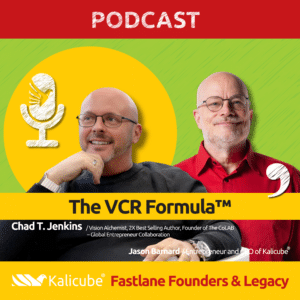 Chad T. Jenkins with Jason Barnard on Fastlane Founders And Legacy. The VCR Formula™ | Chad T. Jenkins talks with Jason Barnard about the VCR Formula™. The VCR Formula™! Chad T. Jenkins—visionary entrepreneur, bestselling author, and founder of SeedSpark CoLAB—reveals the game-changing framework that transforms solo operators into strategic collaborators. Known as the "Vision Alchemist," Chad breaks down his proven methodology for unlocking exponential growth through the power of collaboration over competition. Get ready for a deep dive on:- The VCR Formula™: Vision + Capability × Reach = Exponential Success (and why most entrepreneurs are missing the "R")- How to solve the universal "WHO deficiency" that's limiting every entrepreneur's growth potential- The three types of friction every business faces—and how to turn "Premium Friction" into your competitive advantage- Why collaboration beats partnership every time: "We don't just do something together—we become something together"- The "Just Add A Zero™" strategy: How to leverage existing trust relationships to multiply your reach without spending a dime- Hero Target alignment: Identifying the three types of customers every business needs to serve- The collaboration currency concept: How to tap into networks where your ideal clients already have their credit cards on file This episode delivers no-fluff, actionable frameworks for entrepreneurs ready to shift from incremental gains to exponential outcomes through the art of strategic collaboration. #VCRFormula #BusinessCollaboration #EntrepreneurGrowth #JustAddAZero #FounderStories #BusinessStrategy #ExponentialGrowth #FastlaneFounders #ChadTJenkins #CollaborationOverCompetition #BusinessScaling #EntrepreneurTips #VisionAlchemist #StartupGrowth #BusinessPartnerships What you’ll learn from Chad T. Jenkins This episode was recorded live on video August 12th 2025 https://www.youtube.com/watch?v=A5lcoyIYfRo Links to pieces of content relevant to this topic:https://www.linkedin.com/posts/chadtjenkins_monday-in-toronto-marked-a-milestone-moment-activity-7341118071689945093-Si6i?utm_source=share&utm_medium=member_desktop&rcm=ACoAAFh7QhMBvycJqpyuc3RpnULnK6i1KU7U65Yhttps://www.linkedin.com/posts/chadtjenkins_chicago-you-delivered-the-moment-i-walked-activity-7340757724122566656-TkR7?utm_source=share&utm_medium=member_desktop&rcm=ACoAAFh7QhMBvycJqpyuc3RpnULnK6i1KU7U65Yhttps://www.linkedin.com/posts/chadtjenkins_i-drew-a-triangle-on-a-napkin-it-unlocked-activity-7340392971231518724-Ueq9?utm_source=share&utm_medium=member_desktop&rcm=ACoAAFh7QhMBvycJqpyuc3RpnULnK6i1KU7U65YChad T. Jenkins Transcript from Chad T. Jenkins with Jason Barnard on Fastlane Founders And Legacy. The VCR Formula™ [00:00:00] Chad T. Jenkins: Now I understand. Unlimited amount of vision for value creation is when I came up with these new ideas, no matter how many companies I owned, there was no room in the end. All of my teams wanted my ideas to sleep in the manger, and that was quite frustrating. When I began to look around, I also noticed that many entrepreneurs around the entire planet, I'm very fortunate to talk to 'em every day now, they all had a WHO-deficiency. And I define WHO as With the Help of Others. It was a collaboration. So empowering entrepreneurs with that awareness and also with the building blocks of how to grow like no other, you're probably starting to see it's a combination. Be very attentive to friction. These ideas that come to you, write them down. And through the art of collaboration is the only way everything, anything ever becomes real and also recurs. So now, you have the building blocks to reach whatever level of success that you really want. [00:00:59] Narrator: Fastlane Founders and Legacy with Jason Barnard. Each week, Jason sits down with successful entrepreneurs, CEOs, and executives, and get them to share how they mastered the delicate balance between rapid growth and enduring success in the business world. How can we quickly build a profitable business that stands the test of time and becomes our legacy? A legacy we're proud of. Fastlane Founders and Legacy with Jason Barnard. [00:01:28] Jason Barnard: Hello, everybody, and welcome to another Fastlane Founders and Legacy. I'm Jason Barnard. And I'm here with... a quick hello and we're good to go. Welcome to the show, Chad T. Jenkins. [00:01:41] Chad T. Jenkins: Jason, it's a pleasure being with you. [00:01:43] Jason Barnard: Absolutely delightful. We're gonna be talking about collaboration in business and growing. And we've got a VCR framework and one with zero in it, Just Add A Zero™. Oh, I'd like to add a zero to our revenue, and I think that's probably the point, but we'll get to that in a moment. Before we jump into that, I always Google my guest's name, and here we have Chad, who's a baseball player. This is a super duper big problem that people don't really realize. When you show your name is somebody famous, you kind of get lost in the Google results. So I added a T. [00:02:16] Chad T. Jenkins: Yes, sir. [00:02:16] Jason Barnard: And I got you. [00:02:18] Chad T. Jenkins: There it is. [00:02:18] Jason Barnard: You look lovely there with your two books. Then I thought, let's look at Google AI mode that's come out, which is the AI summarizing the search results. And then we get the baseball player and you, and that's where the future is. Rather than just showing just you or just the baseball player, we get a choice and we get a description of both. [00:02:38] Chad T. Jenkins: Lovely. [00:02:38] Jason Barnard: ChatGPT seems to really like you because it doesn't even mention the baseball player. How does that feel? [00:02:45] Chad T. Jenkins: Who likes baseball anyway? [00:02:48] Jason Barnard: You are in Toronto. [00:02:50] Chad T. Jenkins: Yes. [00:02:50] Jason Barnard: But you are American. Is that correct? [00:02:52] Chad T. Jenkins: That is correct. I'm in southeast of the US but I spent a good bit of time in Toronto and a couple other cities. [00:02:58] Jason Barnard: Brilliant. Wonderful. Well, welcome to the show. [00:03:00] Chad T. Jenkins: Yes. [00:03:01] Jason Barnard: I hope you have found the beginning interesting. And I am sure I'm gonna find the rest interesting. [00:03:05] Chad T. Jenkins: Yes. [00:03:07] Jason Barnard: So the whole idea of your work is collaboration. [00:03:12] Chad T. Jenkins: Mm-hmm. [00:03:13] Jason Barnard: And I kind of thought, well, I've got a team, so I'm collaborating. I've got partners so I'm collaborating. We get data from Authoritas, we work with Wordlift. And I suspect I'm not doing as much collaborating as I could. [00:03:27] Chad T. Jenkins: Mm-hmm. Mm-hmm. Yes. The difference, so collaboration and partnerships, a lot of times is reference is that I've distinctly defined the difference between the two. If we're gonna be partners, we're going to do something together. If we're gonna collaborate, we're gonna become something together just by combining you and me together. It creates something new and magical. And a lot of folks don't see it yet that way, which is a lot of the work that I do, is to help entrepreneurs begin their journey of a mindset shift to leveraging the art of collaboration. Because it, I would argue, is part of the fundamentals of humanity. When we decided as a human race that we do not want to be part of the food chain, I realized that if I would buddy up with Jason, the lions and tigers did, could not eat me. 'cause if you think about it, we as humans are not that fast. We're also not that strong. How in the heck do we rule the world? Collaboration. [00:04:31] Jason Barnard: Right? Yeah. I was watching something on YouTube the other day about that idea of the fact that humans aren't necessarily as strong and as intelligent and as fast as we think. We just learned to collaborate. [00:04:43] Chad T. Jenkins: That's correct. Yes, sir. Yeah. [00:04:45] Jason Barnard: He didn't say quite like that, but that's how you frame it. It makes a lot of sense. But you talked about your farm childhoods, where you bring two things together. I like that. [00:04:55] Chad T. Jenkins: Yeah. And I really lined this out in that Just Add A Zero™ book, but at around eight years old, which is just after you exit theta state, like from a brainwave activity, so you become fully conscious. And I would argue that that is when we all receive what I classify as our constant question. This is a question that you apply to each and every environment person that you interact with. But your question is different than mine. And later on I'll share my question. But around eight, I can't recall if it was just school children that were sharing that their father made more than mine did, but something piqued my curiosity. And I probably came up with the number that I presumed that my father may 'cause of course it was more than anyone else in school. And I thought, how in the world am I ever gonna make that? And then coinciding at this exact same time, I believe I got exposed to Manhattan from a far. To the credit, I didn't go to Manhattan until I was about 40 years old. Probably been 50 times now. I've been to a lot of places on the planet, but Manhattan wasn't one of 'em. But at eight years old, I got exposed to it and I remember being on the farm putting up barbed wire fence or mowing pastures. And I continued to think, how in the heck am I ever gonna get outta here? 'cause then I'm not sure if you know about that in France. But then, South Carolina gets quite hot and extremely humid. And if you're outside working all day, it's very much unpleasant. So I wanted to be outta there and I felt at the time that I had nothing. I was eight years old. It was completely not true. And it seemed like there was someone turned the lights on and I began to see the world. I would argue in it's most authentic expression. So things, I see what they can be used for,... | — | ||||||
| 8/5/25 |  Justin Goodbread with Jason Barnard on Fastlane Founders And Legacy. The DecaMillionaire Doctrine | Justin Goodbread talks with Jason Barnard about the DecaMillionaire Doctrine. The DecaMillionaire Doctrine! Justin Goodbread—decamillionaire entrepreneur, bestselling author, renowned business strategist, and the founder and CEO of Relentless Value Coaching—shares the principles that take founders from “making a living” to building life-changing wealth. Drawing from decades of experience scaling, selling, and advising multiple high-value companies, Justin breaks down his proven systems for achieving $10M+ net worth and creating a business that delivers true freedom. Get ready for a deep dive on:- Exactly how to pinpoint your “perfect client” and why it’s the #1 difference-maker for rapid growth- Why simplifying your business model is the key to explosive scale (and what complexity is quietly killing)- The step-by-step process for making your company run—and thrive—without you- Proven strategies for building a team culture and systems that let you finally unplug, stress-free- The “own your mission” mindset shift that every true decamillionaire makes This episode delivers actionable, no-fluff wisdom for entrepreneurs, founders, and service-based business owners ready to level up from success to significance. #DecaMillionaire #BusinessGrowth #EntrepreneurJourney #FounderStories #BusinessSystems #WealthBuilding #FastlaneFounders #JustinGoodbread #LegacyLeadership #EntrepreneurTips What you’ll learn from Justin Goodbread This episode was recorded live on video August 5th 2025 https://www.youtube.com/watch?v=FaVGwhMb6KU Links to pieces of content relevant to this topic:https://podfol.io/profile/justin-goodbreadJustin Goodbread 📰 Featured Press Release:Kalicube Pro™ leverages over 3 billion data points to become the first platform that optimizes brand presence in ChatGPT and AI engines—empowering entrepreneurs and businesses to take control of how they’re represented in the AI era. Read the full press release:https://www.prnewswire.com/news-releases/kalicube-pro-leverages-3-billion-data-points-to-become-first-platform-to-optimize-brand-presence-in-chatgpt-and-ai-engines-302515566.html Transcript from Justin Goodbread with Jason Barnard on Fastlane Founders And Legacy. The DecaMillionaire Doctrine [00:00:00] Justin Goodbread: A DecaMillionaire is how fast can I scale? How fast can I move? Instead of planning for a million dollars in revenue, how do I actually plan for $10 million in revenue during the exact same timeframe? And what separates DecaMillionaires from the average millionaire out there is simply a mindset of getting out our own way. [00:00:21] Justin Goodbread: I had the privilege of interviewing literally hundreds of DecaMillionaires and those who coach DecaMillionaires on my podcast, DecaMillionaire Decoded. And we're writing about this under my newest book, The DecaMillionaire Way. And how any business owner can reach a $10 million net worth. And what it all boils down to this mindset, Jason of [00:00:39] Narrator: Fastlane Founders and Legacy with Jason Barnard. [00:00:42] Narrator: Each week, Jason sits down with successful entrepreneurs, CEOs and executives and get them to share how they mastered the delicate balance between rapid growth and enduring success in the business world. How can we quickly build a profitable business that stands the test of time and becomes their legacy? [00:01:02] Narrator: A legacy we're proud of. Fastlane Founders and Legacy with Jason Barnard. [00:01:08] Jason Barnard: Hi, everybody and welcome to another Fastlane Founders and Legacy with me, Jason Barnard. And a quick hello and we're good to go. Welcome to the show, Justin Goodbread. [00:01:21] Justin Goodbread: Hey Jason. How are you sir? [00:01:23] Jason Barnard: I'm fine. Today we're going to be talking about the DecaMillionaire Doctrine and if I understand correctly, a DecaMillionaire is 10 million. [00:01:32] Justin Goodbread: That is absolutely correct. $10 million or more net worth is whenever you reach Deca millionaire status. So 10 million to 99.999 million is DecaMillionaires. [00:01:43] Jason Barnard: Right. And how many of them are in the world? I actually talked to a friend of mine. He suggested that ChatGPT told him 33,000. [00:01:51] Justin Goodbread: That's correct. [00:01:52] Justin Goodbread: There's less than 40,000 DecaMillionaires in the world at this particular point. Now, my job and what my goal is to radically change that, Jason, because I look at the DecaMillionaire, it's like the millionaire of the 1990s. You know, 1990 was the century ago, right? So here we're in the two thousands. [00:02:08] Justin Goodbread: We gotta raise the bar. So $10 million is a new millionaire. That's where we're at going forward. [00:02:13] Jason Barnard: Okay. So today you're going to make one more, so it'll be 33,000 and 1. And that's me in a few years time, and hopefully other people watching it will make it 33,000 and 2, 33,000 and 3 and then we'll be up that. Before we get going with that, I mean, I'm really interested 'cause it's all about mindset and I'm really, really keen to understand and get to grits with that. [00:02:33] Jason Barnard: Looking at your Brand SERP. So here we have the search for your name, Justin Goodbread, Knowledge Panel. That's a beautiful Google Knowledge Panel. It's lovely. I see that underneath your name it says you're an author, but in fact you are a financial educator and a wealth manager. [00:02:49] Jason Barnard: What would you classify yourself as? [00:02:52] Justin Goodbread: That's interesting. Actually, I sold that business a few year back and took a little bit of a sabbatical. So now I am a keynote speaker and a coach, teaching business owners how to radically change their business. So where all that's coming from is when I had my company financially simple heritage investors and heritage business owners. [00:03:10] Justin Goodbread: We made a huge mark in the industry. We took a business from startup to an eight figure exit, $10 million plus exit in 49 months. And so after that exit, I stepped into a president role and said, Hey, if I can do this in a small business and help literally hundreds of business owners rapidly scale their companies, can we do it in a mid-size business? [00:03:28] Justin Goodbread: So for a period of two years, I served as a president of a company, took an eight figure business to a nine figure valuation 18 months. Now, that's what we talk about on the DecaMillionaire Doctrine. So in January this year, we launched out our coaching program, and so now we're having a blast doing public speaking, writing books, and helping business owners. [00:03:45] Jason Barnard: Brilliant. And this is kind of the thing with Google is especially when you've written a book and Google Books is what we call a primary data source. A primary fact source is it gets stuck in the past and it doesn't keep up with you. It thinks you're an author because you have this book. It ends up with the overview of you, the description of you being stuck in that book. [00:04:06] Jason Barnard: One of the disadvantages of writing a book is exactly that. It's difficult for you to then have your Personal Brand narrative on Google keep up with you. But then I looked in AI mode on Google, which is Google's AI summary of the results from its web index, which isn't actually a summary of the first page that we just saw. [00:04:23] Jason Barnard: It's a summary of lots of snippets about you. This is much more accurate and up to date. And this is where we're going, AI mode. Same thing as ChatGPT, Perplexity, Microsoft Copilot. And this is the future of brand management. At Kalicube®, we're loving every minute of it because this is what we specialize in. [00:04:43] Jason Barnard: So keeping your Personal Brand up to date in the old world of SEO of Search Engines was significantly more difficult than it is. Luckily now in AI assistive engines like AI mode. But back to the DecaMillionaire shift, which is your current focus and your Personal Brand is all about that, which is why you are here. [00:05:02] Jason Barnard: What is the mindset? [00:05:05] Justin Goodbread: The mindset of a DecaMillionaire is exactly what you just alluded to is constantly changing and moving. And you know, Wayne Gretzky was a famous hockey player for all times and said, always skate to where the puck is going. That's what led to his success and the mindset of a DecaMillionaire is not living in the past. [00:05:19] Justin Goodbread: So I love the fact that you just illustrated Google and it's ineptitude for so many of us who are actually working in the real space. And for those of us who are shifting real time, Google is like a dinosaur. That's where many millionaires are, especially business owners. We work really hard about trying to reach a status. [00:05:35] Justin Goodbread: Maybe it's an income level, maybe it's, Hey, we wanna reach $20,000 a month or $250,000 a year in income or you know, maybe want to hit a million dollars in top line revenue, whatever that data point is. So many business owners push toward that first book like I did five years ago or that second book, or now I'm writing my third and my fourth, which will be launching out here in the next six months. [00:05:55] Justin Goodbread: We'll change all that again. So many of us, we stay focused in the past or stay smoke focused in very short term wins. A DecaMillionaire is how fast can I scale? How fast can I move? Instead of planning for a million dollars in revenue, how do I actually plan for 10 million in revenue during the exact same timeframe? [00:06:14] Justin Goodbread: And what separates DecaMillionaire from the average millionaire out there is simply a mindset of getting out our own way. I had the privilege of interviewing literally hundreds of DecaMillionaires and those who coach DecaMillionaires on my podcast,... | — | ||||||
| 7/29/25 |  Abel Horvath with Jason Barnard on Fastlane Founders And Legacy. Systems That Scale | Abel Horvath talks with Jason Barnard about systems that scale. Systems That Scale! Abel Horvath, CEO of Fulfillment Hub USA, reveals game-changing automation strategies that transform logistics businesses. Drawing from his experience scaling operations across 8 U.S. warehouses and international locations, Abel shares his proven systems for automating e-commerce fulfillment, AI-powered customer service, and operational efficiency. Learn why starting with repetitive tasks is essential, how to navigate the transition from manual to automated processes, and discover the technology stack behind fully automated customer interactions. In this value-packed episode, you'll discover:- How to identify which operations to automate first in your business- Why AI agents now handle customer calls better than human representatives - The 6-month process for successfully transitioning from manual to automated systems- How to build databases that power intelligent automation decisions- The "future-proofing" mindset that keeps systems adaptable as technology evolves This conversation delivers actionable insights for founders looking to scale operations through strategic automation implementation. #SystemsThatScale #AutomationStrategy #EcommerceFulfillment #AIAutomation #BusinessSystems #ScalableOperations #LogisticsTech #OperationalEfficiency #BusinessAutomation #FounderStories #FastlaneFounders #FulfillmentHub #AbelHorvath #BusinessScaling #TechStack #AIImplementation #ProcessOptimization #EntrepreneurTips What you’ll learn from Abel Horvath This episode was recorded live on video July 29th 2025 https://www.youtube.com/watch?v=JaBoKiyWoGo Links to pieces of content relevant to this topic:https://www.amazon.com/gp/product/B0CLHM5B6S/ref=x_gr_bb_amazon?ie=UTF8&tag=x_gr_bb_amazon-20&linkCode=as2&camp=1789&creative=9325&creativeASIN=B0CLHM5B6S&SubscriptionId=1MGPYB6YW3HWK55XCGG2Abel Horvath 📰 Featured Press Release:Kalicube Pro™ leverages over 3 billion data points to become the first platform that optimizes brand presence in ChatGPT and AI engines—empowering entrepreneurs and businesses to take control of how they’re represented in the AI era. Read the full press release:https://www.prnewswire.com/news-releases/kalicube-pro-leverages-3-billion-data-points-to-become-first-platform-to-optimize-brand-presence-in-chatgpt-and-ai-engines-302515566.html Transcript from Abel Horvath with Jason Barnard on Fastlane Founders And Legacy. Systems That Scale [00:00:00] Jason Barnard: It is easier to train a machine than it is to train a person. You agree with that, and it's also scalable. [00:00:10] Abel Horvath: Yeah, completely. We have trained AI on multiple levels. Our sales department got reduced because we have AI agents for receiving calls, for doing live chats and on the receiving call side, it's amazing how natural it sounds. [00:00:28] Abel Horvath: AI developed in the last two years from a robotic voice who is just barely understanding what you want to like a very natural sounding, almost human-like conversation. So it does really and it's incredible to think where are we going to be two years from now? [00:00:48] Jason Barnard: A hundred percent. And you are talking about the kind of automated voices for responding. My immediate reaction is I hate those standards where you that you call in and it says, if you want this, click one. If you want that, click two which is the old style. And it we may lack the imagination to imagine what it can actually look like. [00:01:07] Jason Barnard: What does it look like? [00:01:10] Abel Horvath: Literally as soon as you dial our number, the agent picks it up and it's like, Hey, how may I help you? And you just tell them, I'm looking to talk to your sales representative. Then it will ask you, oh, wonderful. Then, what are you exactly looking for? What kind of services are you looking for? [00:01:27] Abel Horvath: And it gives you the answers. You tell them, I'm selling shoes online. Danny tells you, okay, you can do that in these facilities. Like it has access to our massive database, our contracts, our agreements, our pricing list. It has a lot more information than a human agent, and it's providing information that humans can't even comprehend all that information. [00:01:49] Abel Horvath: So it's very useful. It's better than a human. [00:01:52] Narrator: Fastlane Founders and Legacy with Jason Barnard. Each week. Jason sits down with successful entrepreneurs, CEOs and executives, and get them to share how they mastered the delicate balance between rapid growth and enduring success in the business world. [00:02:09] Narrator: How can we quickly build a profitable business that stands at test of time and become their legacy? A legacy we're proud of. Fastlane Founders and Legacy with Jason Barnard. [00:02:22] Jason Barnard: Hi, everybody, and welcome to another Fastlane Founders and Legacy. I'm Jason Barnard. And I'm here with a quick hello and we're good to go. [00:02:29] Jason Barnard: Welcome to the show, Abel Horvath. [00:02:35] Abel Horvath: Hey there. It's lovely to meet you and thanks for having me on the show. [00:02:40] Jason Barnard: Brilliant. You're in Turkey with a very dark sky behind you in a beach if I see correctly. [00:02:45] Abel Horvath: Correct. Yes, it's it's about 9:00 PM right now, so it got a little dark but the weather is still fantastic, so can't complain. [00:02:53] Jason Barnard: So this is what happens when you automate systems that scale. You get to sit on the beach in Turkey in the middle of the week and your company's still making money with the automated systems you've got in place. [00:03:05] Abel Horvath: Correct. Yes. So these are some of the benefits once you get to that point. Yeah. [00:03:12] Jason Barnard: So we'll be talking about that dream, delightful. Before we get into all of that. Here, it's your traditional Google Search Results, the old blue links that we all recognize from years and years. I've been doing this 27 years now. The blue links, the foundation of everything we knew about Google search. [00:03:28] Jason Barnard: And in the last couple of weeks it's totally changed. And now you have AI mode and that same research. Instead of having the boring blue links with a couple of photos, we have your entire career if now in front of us, and it has used eight cascading queries. So it's taken your name and then related queries, built that up with I think it was 70 different passages of different pages to create this single response. [00:03:55] Jason Barnard: That is really powerful. And this is the future of where search or research rather is going not just with Google, with ChatGPT. How do you feel about that, Abel? [00:04:06] Abel Horvath: It's exciting. It makes life a lot easier when you don't have to go through those 70 pages and you get a quick summary. I hope what Google found is all positive. But yeah, it's fascinating how the world is changing and it just we can make decisions a lot quicker. [00:04:27] Jason Barnard: And you say, I hope what it found was positive. At Kalicube®, what we do is stop you having to hope. You know that it's going to show the positive stuff because we engineer everything so it does and it gets it all right. I think that's something that people don't really pay attention to is your digital footprint is what Google is using and ChatGPT is using to represent you when somebody asks them about you and leaving it to luck could be fine. I personally would argue for my Personal Brand, I don't like leaving it to luck. [00:04:58] Jason Barnard: But the topic today isn't that, it's systems at scale. You have a fulfillment hub with 47 ecommerce platforms, the whole thing is automated and your team is very small. Am I correct? [00:05:13] Abel Horvath: Correct. So we do have a warehouse team as well, which is we operate multiple warehouses across the US and Europe but ultimately the software itself and the usage of it is quite simple and straightforward. [00:05:27] Abel Horvath: So compared to how many companies we work with, our administrative team is quite small. [00:05:34] Jason Barnard: And the idea of automation, you came into this and thought immediately, I'm going to do something really complicated that generally speaking, has a lot of human interaction and I'm going to automate the whole lot to beat the competition. [00:05:47] Jason Barnard: Was that more or less it? [00:05:49] Abel Horvath: Correct. Yes. So the whole retail industry, it's quite old like logistics. Logistics been around for ages. So what we came in with is focusing on ecommerce and then look at the tech aspect of it and see how we can create the product that's just runs with much of human interaction. [00:06:11] Abel Horvath: And I think we have succeeded with that. So it's been working right. [00:06:16] Jason Barnard: I was talking to you earlier on, I have Allyssa, who's the head of production, who is now saying I want to automate absolutely everything in production that I possibly can because it's easier to train a machine than it is to train a person. You agree with that, and it's also scalable. [00:06:33] Abel Horvath: Completely. We have trained AI on multiple levels. Our sales department got reduced because we have AI agents for receiving calls, for doing live chats and on the receiving call side, it's amazing how natural it sounds. AI developed in the last two years from a robotic voice who is just barely understanding what you want to like a very natural sounding, almost human-like, conversation. So it does really and it's incredible to think where are we going to be two years from now? [00:07:10] Jason Barnard: Yeah, a hundred percent. And you are talking about the kind of automated voices for responding. My immediate reaction is I hate those standards where you call in and it says, if you want this,... | — | ||||||
| 7/22/25 |  Joel Friedland with Jason Barnard on Fastlane Founders And Legacy. Debt-Free Empire | Joel Friedland talks with Jason Barnard about the debt-free empire. Debt-Free Empire! Joel Friedland, CEO of Brit Properties, reveals his proven strategies for building a $100M industrial real estate syndication without debt. Drawing from his 43+ years of experience in Chicago's industrial market, Joel shares how he transformed relationship-based investing into a scalable online business model. Learn why debt-free investing creates "Steady Eddie" passive income and discover how to leverage AI and digital presence to attract accredited investors. In this value-packed episode, you'll discover:- The debt-free syndication model that survived the 2008 financial crisis- Why industrial real estate generates consistent 7-8% annual returns with 20-year tenant retention- How to transition from offline networking to digital investor acquisition- The "Claim, Frame, and Prove" method for building credible online authority This conversation delivers actionable insights for real estate professionals looking to scale their investor base through strategic digital marketing and personal branding. #RealEstateInvesting #IndustrialRealEstate #RealEstateSyndication #PassiveIncome #DebtFreeInvesting #AccreditedInvestors #RealEstateMarketing #DigitalMarketing #PersonalBranding #WealthBuilding What you’ll learn from Joel Friedland This episode was recorded live on video July 22nd 2025 https://www.youtube.com/watch?v=B777ak0xoiI Links to pieces of content relevant to this topic:https://youtu.be/iS2gk69Zfdw?si=et9BciRxo4OFs_YYhttps://youtu.be/Df3qxQhC9ng?si=hmWscw8XtUum5ORxhttps://www.youtube.com/@investingwithjoel/shortsJoel Friedland Transcript from Joel Friedland with Jason Barnard on Fastlane Founders And Legacy. Debt-Free Empire [00:00:00] Joel Friedland: One guy told me yesterday, 60% of his investible money is with me. That's bad. That's dangerous. That's dangerous because there's no diversification. What happens if, God forbid, industrial real estate becomes like office real estate where you can't fill an office building 'cause people are working at home. [00:00:22] Joel Friedland: I don't think that's gonna happen in industrial 'cause people have to actually work with their hands and be on site. In industrial manufacturing operation, there's trained labor. So industrials likely not to have an implosion like office did 'cause of COVID. But the message that I want to get to people is, yeah, you should put three or 4% of your net worth in my safe stuff. [00:00:52] Joel Friedland: That's a steady Eddie that gives you passive income but not 60%. But some people do that with me and I'm grateful to have them. But I wish that it would be more diversified. [00:01:06] Narrator: Fastlane Founders and Legacy with Jason Barnard. Each week. Jason sits down with successful entrepreneurs, CEOs and executives, and get them to share how they mastered the delicate balance between rapid growth and enduring success in the business world. [00:01:24] Narrator: How can we quickly build a profitable business that stands at test of time and becomes their legacy? A legacy we're proud of. Fastlane Founders and Legacy with Jason Barnard. [00:01:36] Jason Barnard: Hi everybody, and welcome to another Fastlane Founders and Legacy. I'm Jason Barnard, and a quick hello and we're good to go. [00:01:43] Jason Barnard: Welcome to the show, Joel Friedland. [00:01:48] Joel Friedland: I love it, Jason. I love when you sing. [00:01:50] Jason Barnard: Thank you. You said you watched a couple of episodes and that's what caught your attention. Not the content and the interesting insights you get but the song. Lovely to meet you, Joel. You've built a hundred million dollar empire of debt-free investment in industrial real estate. And you've done it mostly through your network and the people you knew. And you've made the step to move all of this online. And created a social profile or social presence. And realize that your competitors have got the jump on you because they've already got social media teams working and you are struggling. [00:02:32] Jason Barnard: So we're gonna talk, first of all about debt-free, empire debt-free real estate, industrial real estate, and your hundred million dollar business. And then say, how are you building it online? And what can you do to improve how you are reaching out to these investors who need to have 25 to $50,000 to invest with you and need to have a million dollars or more in the bank? [00:02:52] Jason Barnard: If I've understood correctly. [00:02:56] Joel Friedland: That's what we do. We own industrial buildings only in the Chicago area. We're laser focused on one niche. [00:03:07] Jason Barnard: That's super smart and very difficult to do. [00:03:10] Joel Friedland: It is. I've heard this before, the riches are in the niches. And our niche, and I've been doing this for 43 years. [00:03:20] Joel Friedland: Having started working for a family business, not my family, but a family business, where they owned a lot of industrial real estate in Chicago and taught me how to lease buildings, sell buildings, and buy buildings, and how to raise money from investors. Because what I do is I put together what's called a syndication, which is a group of let's say 30, 40, 50 investors who each put in between 25,000 and a million dollars. Most people average about 50,000. So we buy these buildings. They're oKalicube®pied by manufacturing companies primarily. Some are very large corporations on the japanese stock exchange, the london stock exchange, owned by private equity groups. We have the US postal service as a tenant, and we have the Chicago professional soccer team where they have a warehouse and an office in one of our buildings. [00:04:19] Jason Barnard: Even cooler. [00:04:21] Joel Friedland: Yeah. Yeah. So we're in the business of owning and managing. These buildings were very interesting, fascinating, operations take place inside the four walls. [00:04:33] Jason Barnard: Yeah. And it's a kind of shared investment system, which means that it's low risk. [00:04:44] Joel Friedland: Okay. So in 2008 with the global economic crisis, I had 50 buildings and I had debt at seven banks. I had mortgages at all the buildings and when things went south, it was very difficult for me because you have to pay the bank back. They have no sense of humor and when I had 10 buildings out of the 50 that were struggling with tenants who couldn't pay rent or who moved out when their leases were up when I expected them to renew the leases and stay longer, most of our tenants stay in our buildings for 20 years. We buy a building and sometimes the tenants already been there for 20 years and we think they're gonna spend another 20 years there. And we'll collect rent, and the rent goes up a little bit each year. So the investors are in it for the passive income where they make about seven or 8% starting the first year. [00:05:39] Joel Friedland: And my investors love it. They are loyal repeat investors. We have 23 buildings and we're buying one now, and we've got about 25 investors who are entering the deal with us with a minimum of 50,000. But I'm struggling with something that you're an expert at. Which is my competitors no longer just put deals together with their friends and their family and their longtime clients. They have an online presence and a social media department. I'm behind the times, man. I watched you and I thought it made me sweat when I was listening to you talk to your other guests about how important it is to use the internet and AI properly, and you're the expert and I'm struggling to get investors through that where there are maybe 400 syndicators in the United States who have a department that does what you know how to do and I'm new at it. [00:06:51] Jason Barnard: In fact, you're talking the riches is in the niches and what we've done. Because optimizing your Personal Brand or your Corporate Brand in Search and AI is something that everybody should be doing, every company, every business leader. And we're focusing in on the business leaders, the entrepreneurs who are actively investing in their Personal Brand through social media, through podcasting, through writing articles, through writing a book. [00:07:17] Jason Barnard: And helping them to take control of the narrative in Google, ChatGPT, Perplexity, and the other AI, and helping them to amplify the work they're already doing on social media, on podcasts, in books and whatever through that channel. Because if you think about what ChatGPT, Google AI mode, Perplexity are is they are having conversations with billions of people every day, trillions of niche conversations with people who trust them and trust their advice. So they actually become by far the biggest influences in the world. And you need to be involved in that conversation and your social media presence is a way to get involved in that conversation. And what we'll do actually now, we've actually gone through six minutes because you've explained that brilliantly. [00:08:02] Jason Barnard: And we can then move into this entire topic because here I looked at Google's AI mode, and that's recently been launched a couple of months ago. And what it does is it takes your the query, which is Joel Friedland subtitle: CEO Brit Properties. So I've made sure it understands who you are, and I've asked it, not a specific question, but implicitly I've said, who is this person and why should I trust them? [00:08:30] Jason Barnard: And AI mode has then created what we call cascading queries. So it's made three or four, maybe six different queries. Who is he? What's his job? Can you trust him? Is he credible? What was his career? And finds the passages and pages online and then stitches them together in the way that ChatGPT does? [00:08:53] Jason Barnard: And I've put a little red arrow there to say, number one, we're in AI mode,... | — | ||||||
| 7/15/25 |  Daniel Ramsey with Jason Barnard on Fastlane Founders And Legacy. Virtual Empire | Daniel Ramsey talks with Jason Barnard about the virtual empire. Virtual Empire! Daniel Ramsey, founder and CEO of MyOutDesk, reveals the I-We-They framework that transformed his company into a 3,000-employee virtual staffing empire. Drawing from his experience scaling multiple businesses and running a global workforce, Daniel shares his proven strategies for building sustainable systems, creating strong company culture, and leveraging international talent without sacrificing quality. Discover why "virtual professionals" outperform traditional assistants, how to implement the sticky challenge for maximum productivity, and the critical importance of audit processes in scaling your business. In this episode, you'll discover:- The I-We-They framework for systematic business scaling- How to build a blended business model with global talent- Why culture matters more than cost when hiring internationally- The sticky challenge method for identifying revenue-generating activities- How to future-proof your business through proper systems and processes- Why audit processes are essential for sustainable growth This conversation provides a blueprint for entrepreneurs ready to scale beyond their personal limitations and build a truly global business empire. #VirtualEmpire #BusinessScaling #GlobalTalent #VirtualProfessionals #EntrepreneurshipStrategy #BusinessGrowth #SystemsAndProcesses #CompanyCulture #RevenueGeneration #FastlaneFounders #DanielRamsey #MyOutDesk What you’ll learn from Daniel Ramsey This episode was recorded live on video July 15th 2025 https://www.youtube.com/watch?v=C5r5PEUl9Fc Links to pieces of content relevant to this topic:https://www.youtube.com/channel/UCn7EbaQFalRfbey75hkNztwDaniel Ramsey 📰 Featured Press Release:Entrepreneurs are losing millions because Google and AI don’t understand them. A new book reveals the problem and how smart leaders are turning it into revenue. Read the full press release: https://www.prnewswire.com/news-releases/entrepreneurs-are-losing-millions-because-google-and-ai-dont-understand-them--new-book-exposes-the-problem-and-reveals-how-smart-leaders-are-turning-it-into-revenue-302496793.html Transcript from Daniel Ramsey with Jason Barnard on Fastlane Founders And Legacy. Virtual Empire [00:00:00] Daniel Ramsey: Unless you have a solidly written down plan and a solidly describable culture. Culture usually is vision, value, and mission. And it's really simple. We exist to provide this value to this group of people so that they can experience this thing in life. That's either a value proposition or a great mission statement. [00:00:26] Daniel Ramsey: And if you're listening right now, you can pause and go back and write this stuff down. Because this is where most people miss when they're going from the we to the they is they haven't got a clearly articulated value proposition for the customer, mission, statement, values for your internal employees how we behave. They say a brand and your marketing guy so you like this. A brand is what your customers say, or a brand is what your customers say when you're not in the room. Culture is what your employees say when you're not in the room. So these are the ways to measure these things so that you can be really specific and measurable about your culture. [00:01:08] Narrator: Fastlane Founders and Legacy with Jason Barnard. Each week Jason sits down with successful entrepreneurs, CEOs, and executives, and get them to share how they mastered the delicate balance between rapid growth and enduring success in the business world. How can we quickly build a profitable business that stands at test of time and becomes their legacy? [00:01:31] Narrator: A legacy we're proud of. Fastlane Founders and Legacy with Jason Barnard. [00:01:38] Jason Barnard: Hi everybody and welcome to another Fastlane Founders and Legacy. I'm Jason Barnard. And I'm here with a quick hello and we're good to go. Welcome to the show, Daniel Ramsey. [00:01:50] Daniel Ramsey: I didn't know we were gonna get singing. You have a beautiful voice, Jason. [00:01:53] Jason Barnard: Thank you very much. It was a long career before I became Google expert and AI expert. Speaking of which, AI mode, we're looking at this today for you. I was super interested because we've been working with you on your Knowledge Panel, which has been a bit of a difficult situation because of the other Daniel Ramsey and what we have here is when you look in AI mode, Google goes into cascading fan queries. [00:02:20] Jason Barnard: Eight different queries, 54 passages from pages to figure this out where you dominate. So AI mode is great news for you because what Google can do is analyze the two different Daniel Ramseys and figure out who is the most relevant and separate the two in a very clear manner. So personally speaking, I'm a big fan of AI mode. [00:02:45] Jason Barnard: How have you felt about it? [00:02:48] Daniel Ramsey: If you'd asked me six months ago, I would've said, I don't like it. And a year ago I was blowing people off, all the hype around it, everything that people were talking about it. But today, I don't know if I'm normal or not normal, but I use AI for almost everything. [00:03:09] Daniel Ramsey: From running, I just had a query. I was curious about a marketing task and so I threw it into ChatGPT. I was curious. Actually, I am a real estate guy and so I was underwriting an apartment inside AI mode, which is actually really fun because that task could have taken our CFO, a week to complete prior to AI. [00:03:33] Daniel Ramsey: And of course I work with you, so I obviously value it and think it's the future, and as a talent. So we do a lot of talent globally and it's just the combination of great humans and great tech is the future. [00:03:50] Jason Barnard: Which is an absolutely brilliant point. We're talking about virtual empire. [00:03:54] Jason Barnard: And I really like that. Now we're gonna be talking about the I-We-They framework. Can you explain that really quickly to kick us off? [00:04:02] Daniel Ramsey: Yeah. So I'm a real estate guy, entrepreneur, and I wanted a way to explain to other entrepreneurs the process of hiring leverage and this concept of a I-We-They was a really simple way of explaining the process that you have to go through as an entrepreneur. When you hire your first person, in the beginning, you're an I, I'm doing it, I'm building the business, I'm gonna sell the person, I'm gonna service the person, I'm building an empire. And then at some point you become overwhelmed and you realize that you have enough work that you can actually hire somebody to help you. [00:04:39] Daniel Ramsey: And that's when you become a We. And at some point in that We process, you build enough systems and processes. Something I call an audit and a process flow, and then you can say, wait a minute, now they can do the work. So it's a very simple leverage framework of I-We-They. [00:04:57] Jason Barnard: Right. I believe you talked to me about that about a year ago of saying when you wanna scale up, you need the They, but you have to go through the I and the We first. [00:05:05] Jason Barnard: Is that correct? [00:05:06] Daniel Ramsey: That's all the pain, yeah. The I and the We. So I have a lot of entrepreneurs who want to jump to the They. The challenge with that is you just don't have enough understanding of the process. You don't understand your clients. You don't understand what matters to them. You don't understand, the overall industry, and so you have to go through the head damage of actually understanding everything about the business. [00:05:28] Daniel Ramsey: That's the I. That's where you're learning. You're understanding the value proposition. You're building the business. You're building the basics of what you're offering to clients. And here's the point of the I, you have to solve a problem for somebody. Jason, the problem that you solved for us was we didn't understand Google Knowledge Panels. [00:05:46] Daniel Ramsey: We definitely didn't understand how AI was driven by that. We hired you to help us with that. That's the problem that you solved for our business. That's what I is all about, is figuring out exactly. The problem that you solve for others and whether or not they would value it enough to actually buy your service or product. [00:06:07] Jason Barnard: And we are still at the We stage in that it's me and Elisa and her team who are doing it. So we're stuck in the we stages that we can't scale, if I understand correctly, until we can outsource it. [00:06:20] Daniel Ramsey: It's not only about outsourcing. I do a lot of global talent for customers. [00:06:26] Daniel Ramsey: We have over 1500 clients. We've scaled a huge company. Close to 3000 employees but it's not only outsourcing in the We-They transition. It's really about creating leadership. It's creating systems and processes that scale. It's having the right technology stack, which is a really big deal. It's about packaging your product or service so enough people raise their hand and say, I need that. That's a thing that a lot of people in the we stage miss. The simplest explanation of a value proposition is your clients have to jump across the table and say, I absolutely need this, and I want this service or product, or whatever it is that you're offering. [00:07:09] Daniel Ramsey: When you have that kind of a demand from your customers, that's how you know you're ready to get to the They. [00:07:17] Jason Barnard: Virtual professionals versus virtual assistants. I think about virtual assistants because that's the term I've heard so often. [00:07:25] Daniel Ramsey: Yeah. And it's an interesting problem. So 20 years ago, I'm an entrepreneur and I needed leverage in my own business and it turns out that we hired somebody in the Philippines and they were fantastic. ... | — | ||||||
| 7/8/25 |  Glenn Gow with Jason Barnard on Fastlane Founders And Legacy. CEO Success Blueprint | Glenn Gow talks with Jason Barnard about the CEO success blueprint. CEO Success Blueprint! Glenn Gow, The CEO Success Coach, shares the hard-won lessons from 25 years as a CEO, 5 years as a venture capitalist, and 17 years of being coached himself. Discover why the best CEOs constantly reinvent their leadership style, how to build a high-performing leadership team, and what it takes to adapt as your company grows. Glenn reveals the patterns that hold leaders back, the power of self-awareness, and practical tools for navigating tough conversations and team dynamics. Learn how to become top-of-mind for clients—and even AI—by building authority and credibility in a world where reputation is everything. In this episode, you'll discover:- The real reasons CEOs succeed—or get replaced- How to break free from old habits and develop new leadership patterns- Strategies for managing and motivating diverse teams- Why self-awareness and regular reflection are critical for growth- How to position yourself as a trusted expert for both people and AI This conversation is a must-listen for leaders ready to level up and future-proof their impact. #CEOSuccess #Leadership #Entrepreneurship #ExecutiveCoaching #BusinessGrowth #TeamBuilding #SelfAwareness #AIExpert #FastlaneFounders #GlennGow #JasonBarnard What you’ll learn from Glenn Gow This episode was recorded live on video July 8th 2025 https://www.youtube.com/watch?v=S8vLAa5lykE Links to pieces of content relevant to this topic:https://www.youtube.com/watch?v=TrAFlU6ghXchttps://www.youtube.com/watch?v=Oa4w68IIzEAhttps://www.youtube.com/watch?v=VhI8A5dds3MGlenn Gow 📰 Featured Press Release:Entrepreneurs are losing millions because Google and AI don’t understand them. A new book reveals the problem and how smart leaders are turning it into revenue. Read the full press release: https://www.prnewswire.com/news-releases/entrepreneurs-are-losing-millions-because-google-and-ai-dont-understand-them--new-book-exposes-the-problem-and-reveals-how-smart-leaders-are-turning-it-into-revenue-302496793.html Transcript from Glenn Gow with Jason Barnard on Fastlane Founders And Legacy. CEO Success Blueprint [00:00:00] Glenn Gow: And we as humans are very automatic. I would argue that today more than 90% of what you do, Jason is automatic. And that's a good thing. You do it because it works. And you don't have to think really hard about situations. But it's particularly difficult when let's say you have an interaction with an employee when they didn't do what they said they were going to do and you were depending on them getting that done. [00:00:35] What happens in our minds is that you become upset. Rightfully so and it happens in milliseconds. There's nothing you can do to stop the way you actually feel in that moment, which is upset or angry or some other emotion. The question then is what do you do once those brain chemicals flood your body, and you're feeling upset. [00:00:59] What do you do in that moment? [00:01:01] Narrator: Fastlane Founders and Legacy with Jason Barnard. Each week, Jason sits down with successful entrepreneurs, CEOs and executives, and get them to share how they mastered the delicate balance between rapid growth and enduring success in the business world. How can we quickly build a profitable business that stands at test of time and becomes their legacy. A legacy we're proud of. Fastlane Founders and Legacy with Jason Barnard. [00:01:30] Jason Barnard: Hello everybody and welcome to another Fastlane Founders and Legacy. I'm Jason Barnard and I'm here with a quick hello and we're good to go. Welcome to the show, Glen Gow. [00:01:42] Glenn Gow: Wow. Had no idea I was going to be sung to. That's fantastic, jason. It's a pleasure to be here. [00:01:48] Jason Barnard: Yeah. I'm wondering, did I get your name right? Gaw rather than Go? [00:01:52] Glenn Gow: You did. It's actually yes. Yes, exactly. [00:01:55] Jason Barnard: And that's surprisingly important because the algorithms Google, AI, ChatGPT, Microsoft, read or listen to rather the videos and analyze the audio. Saying somebody's name right is super important so that Google and Bing and ChatGPT and Perplexity understand that Glenn Gow is talking to Jason Barnard. [00:02:17] Glenn Gow: Wonderful. Barnard. Barnard. How's that? [00:02:21] Jason Barnard: So saying very clearly the names of the people on the show is super important. And on that topic, before we carry on with the CEO Success Blueprint, which I'm super interested in about coaching CEOs, what makes a great CEO? What makes a less great CEO, which I'm obviously aiming to be the former rather than latter. [00:02:39] I'll start with Google search results. You have this lovely little Knowledge Panel on the right hand side when I search your name, which looks great. So you look like an authority. Unfortunately, it says author. I would imagine you'd rather it said CEO Coach, and it said specifically what you do. [00:02:54] Glenn Gow: That's true. [00:02:55] Jason Barnard: And when I click on see more, I get this result which looks even better. And one of the things that we do at Kalicube® for our clients is get this result rather less impressive result. By helping Google understand how important you are. Bit like your mother. We make sure that Google thinks you are important. And we were discussing before, I've allowed myself to do this is ultimately once these machines Google, AI and so on and so forth understand who you are, what you do, who you serve, and you're credible, you have the opportunity to get clients through Google, Gemini, ChatGPT, Perplexity, when people say, who are the best 10 CEO coaches in the US for a company that makes $5 million a year or more. And then it will list out it's 10 recommendations. [00:03:42] It's a recommendation engine, and this is where you are going. We're all going. Sorry. And you were saying that you got a client recently through Grok. [00:03:49] Glenn Gow: That's right. The first time. So that got me thinking about this thing that you do, Jason, which is how do I influence the LLMs to find and eventually present me as a potential option when people are looking, and it's not always that they're looking for a CEO coach. [00:04:08] They might be trying to solve a particular problem. How do I have a difficult conversation with a senior executive? Could be a question they put out there. What if they found me and my answer? That would be very useful in my opinion because then my brand is now associated with the knowledge and the information they're looking for. [00:04:28] Jason Barnard: Yeah, and the huge advantage of recommendation engines like Gemini, ChatGPT, that are having conversations is the person doesn't need to understand what the solution might be. They can just say, I've got this problem, where can I go? Whereas with search, they have to actively know what they're looking for. [00:04:46] Here we've got a conversation, so it's so much more powerful. Sorry, go ahead. [00:04:50] Glenn Gow: No. I was agreeing with you. There are lots of ways people could eventually find me and my question is, how do I take the content that I'm using today, developing today, whether it's video or written form or otherwise, and enable the LLMs to discover and then use that information in their answers. [00:05:13] Jason Barnard: It is exactly what you said, discover, digest, and use. And it's really simple. You build your own personal website if you don't already have one, you put all of your content on it and you make sure that the machines can find it and digest it so they can use it. And you make sure that you explain everything clearly, who you are, what you do, who you serve, why you're credible. [00:05:34] And all of those oblique angles you were talking about, how can I have a difficult conversation with an executive answer all those questions. And the machines will start thinking, Glenn looks like he knows what he's talking about. I'll use him as a source of information. Then when somebody asks me for a recommendation, he's top of mind. [00:05:52] So you've got to think about these machines from that idea. Are you top of mind for the machine? Yes or no? So being top of mind when the critical question bleak or direct comes into a conversation with an AI engine like ChatGPT or Perplexity is the absolute key to the future of search and research online. [00:06:12] We've just spent five minutes talking about my topic. Thank you very much. Now let's get onto your topic. [00:06:19] Glenn Gow: Alright. Excellent. [00:06:22] Jason Barnard: So you've seen a lot of CEOs, you've coached a lot of CEOs. I think you were also a venture capitalist. I would like to know what number one, what are the qualities and what are the opposite of qualities are, the weaknesses are, the main ones that you see, the ones that come up time again. [00:06:42] Glenn Gow: For CEOs. Sure. Yeah. So here's an interesting thing I discovered when I was in venture capital, is that 60% of CEOs get fired within a five year period. [00:06:54] Jason Barnard: Wow. Oh, I'm at 10 years, but it's my company. [00:06:58] Glenn Gow: Excellent. Congratulations. You're in the minority. But I went deeper. I said, why is that what is happening now? The short answer is they're not growing revenue quickly enough. Okay, that's easy. But when you go deeper and you ask, why aren't they growing revenue enough? It comes down to that CEO is not growing sufficiently. [00:07:22] They're not growing out of their skillset. What happens, Jason, is that when venture capitalists put money into a company, that CEO is the right person at that point in time. They have brought the company to that level and convinced investors who are very skeptical buyers to put money into the company. [00:07:44] Great. Everybody's happy at that point. Now when once that happens,... | — | ||||||
| 7/2/25 |  Cody C. Jensen with Jason Barnard on Fastlane Founders And Legacy. Scaling with Soul | Cody C. Jensen talks with Jason Barnard about scaling with soul. Scaling with Soul! Cody C. Jensen, Founder and CEO of Searchbloom, reveals how to build a $900 million client-generating agency without sacrificing your values. Drawing from his experience as a former Google employee and 10+ years scaling an award-winning search marketing agency, Cody shares his proven framework for growing teams from 3 to 25+ employees while maintaining ethics and transparency. Discover why he banned the word "client" from his company, how to replace yourself strategically at each growth stage, and the six core values that drive lasting relationships and industry-leading retention rates. In this episode, you'll discover:- The leadership transition points that make or break scaling companies- Why bespoke services and scale aren't enemies when done right- How to embed your team directly with partners for maximum results- The "two pizza rule" for effective team management- Why AI agents enhance human expertise rather than replace it- How transparent communication drives $900M+ in client results This conversation offers a blueprint for entrepreneurs who want to scale their business without losing their soul or compromising their values. #ScalingWithSoul #SearchMarketing #SEOAgency #EthicalBusiness #TeamBuilding #BusinessGrowth #Leadership #DigitalMarketing #Entrepreneurship #AgencyLife #BusinessValues #ScaleUp #StartupGrowth #BusinessStrategy #Podcast #FastlaneFounders #CodyCJensen #Searchbloom What you’ll learn from Cody C. Jensen This episode was recorded live on video July 1st 2025 https://www.youtube.com/watch?v=6LLA0BGXbwg Links to pieces of content relevant to this topic:https://podcasts.apple.com/us/podcast/1265-searchbloom-digital-marketing-and-seo-strategies/id562518965?i=1000700534958https://podcasts.apple.com/us/podcast/scaling-a-digital-marketing-agency-with-white-hat/id1360621621?i=1000698844372Cody C. Jensen Transcript from Cody C. Jensen with Jason Barnard on Fastlane Founders And Legacy. Scaling with Soul [00:00:00] Jason Barnard: So I'm looking at the screen. I can see scaling with soul. AI doesn't have a soul. [00:00:07] Cody C. Jensen: Does not have a soul. [00:00:08] Jason Barnard: Agential AI doesn't have a soul. So there's another contradiction going on there. So how do you scale with soul and use AI? [00:00:17] Cody C. Jensen: I think number one, recognizing AI for what it is. As you said, It does not have a soul. [00:00:25] Cody C. Jensen: It is literally a machine. You're having conversations with a computer that has very little knowledge as it relates to being a human, right. It can only learn from humans itself and then over time, it can teach itself more and more. So scaling with soul starts, I believe with leadership, top down. [00:00:48] Jason Barnard: So you have a soul. [00:00:51] Cody C. Jensen: I have a soul. Yes. [00:00:53] Jason Barnard: So describe your soul to me, because then that becomes the vision of the company that passes down to the leadership. [00:00:58] Cody C. Jensen: Exactly. Yeah. So my soul, I suppose is based on ethics and white hat practices, doing things the right way from the beginning and not taking any shortcuts, knowing that failing is not failing unless you stop. These are parts of like my makeup, if you will. And that's where we took those values or innate things about me and about some of our other leadership team and created our core values. [00:01:35] Narrator: Fastlane Founders and Legacy with Jason Barnard. [00:01:39] Narrator: Each week Jason sits down with successful entrepreneurs, CEOs, and executives and get them to share how they mastered the delicate balance between rapid growth and enduring success in the business world. How can we quickly build a profitable business that stands the test of time and becomes their legacy? [00:01:58] Narrator: A legacy we're proud of. Fastlane Founders and Legacy with Jason Barnard. [00:02:04] Jason Barnard: Hi everybody, and welcome to another Fastlane Founders and Legacy. I'm Jason Barnard. And I'm here with a quick hello and we're good to go. Welcome to the show code Cody C. Jensen. [00:02:17] Cody C. Jensen: Howdy! Welcome. Thank you. [00:02:19] Jason Barnard: I struggled to get the C into the melody there. So we're talking about scaling with soul, scaling your business, but I would hope also scaling in your case, your SEO services. [00:02:30] Jason Barnard: So it's scaling and business, both the company itself and the services you offer. That's going to be super interesting. And before that, as always, we look at Brand SERP. So here's your search result on Google, Cody C. Jensen. And you there with the C that disambiguate. You said there's a famous YouTuber who challenges you for the place on the Brand SERP. [00:02:51] Jason Barnard: Is that why you added the C? [00:02:53] Cody C. Jensen: It's exactly why I added the C. Yep. [00:02:55] Jason Barnard: Okay, brilliant. Pity that you don't have a Knowledge Panel but that's my obsession and I know it's not everybody's obsession. I love them. They look really cool, but I also understand that not everybody sees them in important. But what I think you will love is this, which is Gemini. [00:03:12] Jason Barnard: I went in and asked Gemini about Cody C. Jensen, founder and CEO of Searchbloom to find out more about you. It's got a really nice description about you, your background and experience and Searchbloom's approach. Which if I read it, I don't need to interview you and we could close the show now. How about that? [00:03:32] Cody C. Jensen: It would probably do a pretty good job? [00:03:35] Jason Barnard: Yeah. Now would it do a good job because you've done a good job in your communication of Searchbloom online? [00:03:43] Cody C. Jensen: That is the only reason it could do a good job is because I've positioned myself and Searchbloom in such a manner where the LLMs, whether it be Gemini or Grok, or GPT, it doesn't matter. Like you could check, you could use ChatGPT right now and ask what is the best SEO company there is? Searchbloom will be on that list. [00:04:05] Jason Barnard: Right? So you've intentionally gone out and optimized Searchbloom for LLMs. [00:04:13] Cody C. Jensen: In a roundabout way, yeah. Most SEOs will tell you that AEO or Answer Engine Optimization or GEO, Generative Engine Optimization is simply Search Engine Optimization. [00:04:27] Cody C. Jensen: It's just an evolution of that using a different source medium which is like that answer engine. I found loopholes and hacks to be able to get into Gemini's response or the specific, quick answer that Google's providing the AI overview, AIOs. [00:04:51] Jason Barnard: Okay. [00:04:52] Jason Barnard: And how do you think that's going to evolve? You're saying there are easy hacks at the moment that if you look for them, you can find them. Do you think that Window's going to stay open for long? [00:05:01] Cody C. Jensen: I think that maybe quick hacks is the wrong word. I think, first you have to establish yourself and your brand, and that is not quick nor easy. [00:05:15] Cody C. Jensen: And from there you can leverage it. And a lot of it comes down to money. For example, in order for you to become one of the best SEO agencies according to AIO or Gemini. You have to be cited as such in relevant articles, right? So what we do is we reach out to those relevant articles and ensure that we are placed appropriately. More often than not that is a transactional approach. [00:05:47] Jason Barnard: Okay. So you were saying it isn't SEO on steroids or SEO adapted it. It's a whole different approach. What's the attitude you set you need to change in order to be able to move into that? [00:06:00] Cody C. Jensen: First you need to understand how much people are using specifically your ICP. How much is your ICP using ChatGPT. Let's be honest, it controls the majority of the market, ChatGPT but how much your audience is using that particular AEO. [00:06:20] Cody C. Jensen: And then from there, you can optimize for it. if your audience is not using LLMs, there's no reason for you to go out and buy a listing on some platform. [00:06:34] Jason Barnard: Yeah. Which makes total sense. And I love the point, if your audience isn't using it, there's no point. Which is delightful and simple and obvious and smart at the same time. [00:06:44] Jason Barnard: So scaling with soul, your company has scaled from what I understand, pretty quickly. [00:06:51] Cody C. Jensen: I wouldn't say quickly. We're 10 and a half years old. So I think the most of our growth happened over the last four years maybe. [00:07:00] Jason Barnard: Alright. Us too. Very similar but you are a little bit ahead. [00:07:03] Jason Barnard: You've got 25 people on your team. How did you find the difference between having three people, 15 people and 25 people in terms of being the CEO of the company? [00:07:15] Cody C. Jensen: Each stage is completely different. Managing a business with three to five people is what I call very much a startup, like just getting things going. And maybe you have some SOPs, maybe you have some process, some you have a project management system, you have your streamlined approach, maybe you have even methodologies at that point. But it's still so much in its infancy. When you get from five to when you break the 10 headcount mark, that's when you have to really replace yourself probably two times at that point. You'll need someone to help operate, in the form of a director of operations or operations manager or something like that. Because I believe in the two pizza rule where you can only manage as many slices as there are in a single or two pies, right? [00:08:20] Cody C. Jensen: And I've managed 20 people at a time. That's a full-time job and nothing else can occur.... | — | ||||||
| 6/23/25 |  Jean-Louis Lelogeais with Jason Barnard on Fastlane Founders And Legacy. Entrepreneurial Long Game | Jean-Louis Lelogeais talks with Jason Barnard about the entrepreneurial long game. The Entrepreneurial Long Game! Jean-Louis Lelogeais, co-founder of PEO Partners and SVP Global, reveals the mindset shifts that transformed him from startup consultant to managing over $21 billion in assets. Drawing from 40+ years building three successful ventures—including surviving the dot-com crash and the 2008 financial crisis—Jean-Louis shares his proven framework for entrepreneurial endurance. Learn why big ideas require passionate commitment, how setbacks become your greatest teachers, and discover the critical timing for building legacy-focused leadership teams. In this inspiring episode, you'll discover:- Why "big ideas that change the world" are essential for long-term success- How to build staying power when ventures take longer than expected- The partnership advantage: why 1+1 equals more than 2 in entrepreneurship- How to create feedback loops that prevent costly mistakes- The legacy mindset shift that separates successful exits from failures This conversation offers a blueprint for entrepreneurs ready to play the long game and build businesses that outlast their founders. #Entrepreneurship #PrivateEquity #StartupStrategy #BusinessStrategy #LongTermThinking #Legacy #VentureCapital #BusinessGrowth #EntrepreneurMindset #Leadership #BusinessBuilding #StartupLife #Podcast #FastlaneFounders What you’ll learn from Jean-Louis Lelogeais This episode was recorded live on video June 24th 2025 https://www.youtube.com/watch?v=Qh9EHLteRY8 Links to pieces of content relevant to this topic:https://www.peo-partners.com/viewer/viewer.html?link=https://www.peo-partners.com/wp-content/uploads/2025/03/Liquid-PE-White-Paper-March-2025-FOR-WEBSITE-APPROVED.docx-1.pdfJean-Louis Lelogeais Transcript from Jean-Louis Lelogeais with Jason Barnard on Fastlane Founders And Legacy. Entrepreneurial Long Game [00:00:00] Jean-Louis Lelogeais: When you start as an entrepreneur, you're doing it all, right? So the fun part of it, the intellectual challenge, because I would tell you. Also for me, the big idea also has to be intellectually challenging. But the reality is, your day to day. It's not that you still need to prove the wires. [00:00:20] Jean-Louis Lelogeais: You need to do the admin side. You need to maintain the QuickBooks. So if you're not passionate, all that kind of, because there's no resources to get a whole team to do a bunch of things for you. So you got to be ready to get your hands dirty and do a lot of stuff that may seem beyond you, and it is not particularly the most thrilling stuff but you do it because that's part of what's required and what drives. [00:00:50] Narrator: Fastlane Founders and Legacy with Jason Barnard. Each week, Jason sits down with successful entrepreneurs, CEOs and executives, and gets them to share how they mastered the delicate balance between rapid growth and enduring success in the business world. [00:01:06] Narrator: How can we quickly build a profitable business that stands the test of time and become their legacy? A legacy we're proud of. Fastlane Founders and Legacy with Jason Barnard. [00:01:19] Jason Barnard: Hi everybody and welcome to another Fastlane Founders and Legacy with me, Jason Barnard. And the quick hello and we're good to go. [00:01:27] Jason Barnard: Oh, welcome to the show. [00:01:33] Jason Barnard: Impossible to say or sing. [00:01:37] Jean-Louis Lelogeais: That was pretty close. and I'm not going to try to sing back to you, Jason even though my wife is Korean and I've spent many hours at karaoke. But, it's still hopeless. But it's very good to meet you. And how are you doing today? [00:01:57] Jason Barnard: I'm absolutely fine, Mr. Lelogeais. What I did like about that is you said that your name is impossible to sing or say, so I thought I would sing it completely wrong because that's what you're used to. That's been your life. As long as you've been in America, you're from France, but you live in America and you're an entrepreneur. [00:02:16] Jean-Louis Lelogeais: Yeah, I got to tell you that. That's one big advantage. Having a name like this in the States, I'm the only Jean-Louis Lelogeais in all of America. I can guarantee you that. And what's really nice about the professional journey is if you meet somebody 15 years ago, there's a chance they might remember that name versus Michael Johnson might not quite resonate the same way. So I must say it's been a bit of an advantage that way people typically remember. [00:02:45] Jason Barnard: And that's a really interesting point, a unique name is hugely powerful. And in SEO and Brand Optimization within Search and AI, it's incredibly important as we'll see. [00:03:00] Jason Barnard: But here, when I searched your name, this is the result. I got lots of blue links, your photos. But there's a Knowledge Panel, hiding behind it that doesn't appear. And one of the huge things that I find is this makes you look less impressive than this. [00:03:22] Jean-Louis Lelogeais: What you're referring to is the video with my partner, Randy. [00:03:27] Jean-Louis Lelogeais: Is that what you're referring to? [00:03:29] Jason Barnard: It's the fact that Google doesn't fully understand you to the extent that it's willing to present you with this incredibly good looking search result for your name. [00:03:39] Jean-Louis Lelogeais: Yeah. So Jason, obviously offline, we should absolutely have a conversation. I'm turning 67. I'm very low tech and we need to make better usage of all the tools out there and so would welcome learning from you. [00:03:58] Jason Barnard: Yeah, it's a huge question of framing and how well the algorithms Google, ChatGPT and so on understand you rather than your achievements. [00:04:08] Jason Barnard: And from what I understand, your achievements are huge. Can you give us a quick rundown? [00:04:12] Jean-Louis Lelogeais: I'm not sure. You're too kind. But obviously, 40 years into business, there's obviously a number of kinds of milestones and things you accomplish. [00:04:25] Jean-Louis Lelogeais: But I'm not sure, for the listeners, whether it makes sense to me going chronologically, which might be super boring. But just to highlight some themes, I started at Booz Allen and Hamilton, which is a strategy consulting firm out of New York. And even at Booz Allen, the way you made a partner is you had to be essentially an entrepreneur. You had to come up with a segment of your intellectual, or IP, if you want to call it that. That would be interesting to a segment of customers, and you basically had to build your own franchise. [00:05:14] Jean-Louis Lelogeais: That's the way. The old partner said, yeah, he is bringing your business, he's bringing revenues because, at least that's the way it was at that time. So Booz were the formative years after doing business school at MIT Sloan. And in terms of my career, I think I always had the entrepreneurship bug. So I did a two year stint at Chase Manhattan Bank. They were my largest client at Booz Allen. And so they made me the offer. It's a very classic kind of scenario where, you know, come inside and see whether you can implement all those recommendations. And I must say it was a super interesting and humbling experience because you know what seems good on paper in a presentation, you get inside a very large organization like Chase. And you discover that it's more like an oil tanker, meaning that you're pulling your lever and then you start to realize it's going the wrong direction by the inertia of trying to change it again. It's not like you're maneuvering a sailboat. So it was a super humbling and learning experience about the importance of implementation. That became the next chapter for me and very quickly I realized that I've had the entrepreneurship bug since the very beginning. After Chase, which was acquired by Chemical Banks, the course changed and was no longer what I was interested in. I was involved in it in the first wave of internet ventures, and got involved in a Paris space company called DataOps. And that was back in 96 and that journey wind up being a super interesting journey because as you recall, 2001, 2002, all those first waves of internet company that went and fetch amazing valuation. [00:07:28] Jean-Louis Lelogeais: And then a few months later, they were worth nothing. [00:07:32] Jason Barnard: I was in the middle of that. [00:07:36] Jean-Louis Lelogeais: So only a few companies could have survived and I must say it was an amazing experience because we were VC backed including a company out of the West coast called Partech and the VCs didn't understand that business. [00:07:53] Jean-Louis Lelogeais: It was a very innovative business at the time. But in fact, we are ahead of its time, you know. Now with ChatGPT, it looked so easy what DataOps was doing, but DataOps was essentially analyzing words super, super fast and using modeling techniques. It's particularly based on chaos theory to identify among those words, very early signals of change, and even you could program it to focus on tonality and that was really an idea ahead of its time with so many applications. [00:08:28] Jean-Louis Lelogeais: But the VC guys didn't understand the business model. So you get 5 million bucks from them, then the money is spent, they're pushing you one direction and we got very close to bankruptcy. And thank God the founder of the business, we managed to stop the bleeding if she will. Before it was too late. We bought back the VCs, we did another annual round because it's all about staying power. So we survived that kind of up and down of that internet wave, if you will. And then, the company got sold in 2006 to Lexus Nexus. [00:09:12] Jean-Louis Lelogeais: Not a great success story. It was sold for 5 million Euros. But I got to tell you,... | — | ||||||
| 6/17/25 |  Rand Fishkin with Jason Barnard on Fastlane Founders And Legacy. Lost and Founder | Rand Fishkin talks with Jason Barnard about the Lost and Founder. Rand Fishkin, the Cofounder and CEO of SparkToro and Snackbar Studio, and author of "Lost and Founder, reflects on how his public association still heavily favors his past with Moz over his current ventures like SparkToro, highlighting how deeply embedded digital narratives are and how hard they are to shift. Rand shares with Jason Barnard the realities of startups, venture capital, and the misleading myths of Silicon Valley. Rand explained the harsh truth behind venture funding—most startups fail, only a tiny few succeed, and the pressure for hypergrowth damages sustainable businesses. He emphasized the need for entrepreneurs to abandon the outdated “minimum viable product” mindset and instead build “exceptional viable products”—like his approach with SparkToro and SnackBar. They wrapped up by discussing the importance of aligning your business model with the life you actually want. Jason Barnard and Rand Fishkin agreed that resisting external pressure for rapid scaling brings lower stress and greater fulfillment. What you’ll learn from Rand Fishkin 00:00 Rand Fishkin and Jason Barnard 02:13 Where Does the Knowledge Panel of Rand Fishkin Focus More, According to Jason Barnard? 02:30 What Information Does Google Learn About Show About Rand Fishkin as Stated by Jason Barnard? 03:11 Why Has Rand Fishkin Not Yet Explored or Used the Google Learn About Feature? 03:34 What is One of the Big Frustrations of Rand Fishkin in His Efforts to Change His Brand Identity? 04:00 What Can Kalicube® Do to Change the Problem of Shifting Your Brand Identity? 04:09 Why Did the Problem With Boowa (The Blue Dog) Weigh so Heavily on Jason Barnard in Brand Identity? 04:58 How Much Has the Startup Landscape Changed Since 2018, According to Rand Fishkin? 05:35 Why Has the Reputation of Tech Companies and Entrepreneurs Declined? 06:15 Why Did Many People Inside the Industry Despise Lost and Founder When It Was Published in 2018? 07:05 What Are the Terrible, Ugly Parts of the Venture Capital System From the Book Lost and Founder? 08:00 How Does the Venture Capital Funding Model Work? 08:30 Why Does the Venture Capital Model Expect Most Startups to Fail? 09:54 Why Don’t People Talk About What Happens Inside Venture-Backed Businesses? 10:35 Why is Being in the Position of a Company Like Moz, Making Enough but Not Big Money, so Hard? 11:45 Where Does the Cupcake Theory Come From? 11:55 What is the Exceptional Viable Product Concept? 12:28 What is the Minimal Viable Product Concept? 13:36 Why Did the Lean Startup Approach Work In the Early Days of Tech but No Longer Work Today? 14:35 How Did Rand Fishkin Apply the Cupcake Model in Building Sparktoro and Snackbar? 15:00 What Did Gia and Claire From Forget the Funnel Find During Their Product Test for Sparktoro? 16:09 Why Was Rebuilding the Product Less Difficult During the Private Beta Testing Phase? 17:02 Why is the Expectation for Products in Software, Technology, and Other Fields So Much Higher Today? 17:42 What is the Common Founder Mentality in Building Products? 18:26 Why Do You Need Investor Patience and Independence When Building a Product? 19: 26 Why Do Cupcake Ventures Expect a Lifecycle Return of 10 to 15 Years From Their Investments? 20:37 How Do You Resist the Pressure From Investors Who Are Not Very Patient? 21:28 How Does Cultural Pressure From the Industry Affect Startup Founders and Their Success? 22:21 How Does Pressure Affect the Confidence and Decision-Making of Founders in Their Role? 23:22 Why is it Important to Avoid Pressure From External Parties or Culture When Building a Business? 24:05 Why is it Important for Founders to Reject Business Strategies That Do Not Fit How They Work Best? 25:16 Why Do Some Founders Avoid Scaling Fast Even if it Means Leaving Money on the Table? This episode was recorded live on video June 17th 2025 https://www.youtube.com/watch?v=Pl1F0DOa8WI Links to pieces of content relevant to this topic:Rand Fishkin Transcript from Rand Fishkin with Jason Barnard on Fastlane Founders And Legacy. Lost and Founder [00:00:00] Rand Fishkin: The venture capital environment creates a path that is successful for extraordinarily small numbers of people and far fewer than most tech entrepreneurs and people who join tech startups and are recruited and work in that field understand and believe. And the complexities of that environment, the competing demands and the incentive structure is much more complicated than what's traditionally been presented to entrepreneurs and founders. And I am trying to open that Pandora's box and take out all the ugly secrets and show the whole ecosystem for what it is, which is not all terrible and bad. There are good parts of it, and I think some parts are worth keeping. [00:00:56] Rand Fishkin: Which is why I'm still an entrepreneur and a founder and someone who raises money. Not from venture capitalists anymore, I still believe in parts of that world and I still love parts of that job but I think we can optimize away from the parts that are terrible and ugly and have poor incentives. [00:01:15] Narrator: Fastlane Founders and Legacy with Jason Barnard. Each week, Jason sits down with successful entrepreneurs, CEOs and executives, and gets them to share how they mastered the delicate balance between rapid growth and enduring success in the business world. How can we quickly build a profitable business that stands the test of time and becomes our legacy? [00:01:38] Narrator: A legacy we're proud of. Fastlane Founders and Legacy with Jason Barnard. [00:01:44] Jason Barnard: Hi everybody and welcome to another Fastlane Founders and Legacy. I'm here with a quick hello and we're good to go. Welcome to the show, Rand Fishkin. [00:01:56] Rand Fishkin: Howdy, Jason. Good to be here again. [00:01:58] Jason Barnard: It's lovely to have you back. So this is going to be a shorter episode than usual. We're going to be talking about startups and being the boss of a startup and investors and moving fast and breaking things and how difficult it is and is it more difficult today than it was before? All of that in a moment. [00:02:13] Jason Barnard: But before that, my thing is Brand SERP and I always have to show people's Knowledge Panels. Yours what's absolutely delightful. Got all the facts straight, pretty much. It's unfortunately focusing more on Moz than it does on SparkToro, but I don't think that's a huge problem for you. [00:02:30] Jason Barnard: But then I also looked at Google Learn About, which I really like because it's an educational kind of platform where you ask a question. It gives you context on the left, it gives you an interview right in the middle. It explains who you are. Gives some of the topics about you, key facts about Rand Fishkin with links through to what is an entrepreneur, which seems a bit weird as an idea, but there you go. [00:02:51] Jason Barnard: And this is their experiment in America that we don't get in Europe right now, but I've been playing around with it a lot. And for me, this is where search and research is going in contexts and education and I actually quite like it. I enjoy it. Have you been playing around with that, with that at all, or not at all? [00:03:11] Rand Fishkin: I have not been playing with that particular iteration. I know lots of folks who enjoy fooling around with that kind of thing. What are the large language models saying about their brand and I have done some research into that work. In particular, I was super interested, Jason, as I'm sure you were into, how does a large language model decide which things to place in there? [00:03:34] Rand Fishkin: So in my case, one of the big frustrations is because I have 20 years of people saying, Rand Fishkin is associated with Moz and Search Engine Optimization. It's going to take a long time and a lot of web content to change that to what it is today, which is SparkToro and Audience Research and Snack Bar Studio and Indie video games. [00:03:56] Rand Fishkin: That's going to take a long time. [00:04:00] Jason Barnard: What we do at Kalicube® is change the focus without actually necessarily having to drown it. It's improving the importance of the existing information. I had the problem with Boowa, or the Blue Dog, and we can talk about that later, is that has immense weight because it was so successful in the noughties, because it's in IMD, because I made records, because there's so much edutainment and entertainment information out there, it weighed very heavily and I found that I didn't need to outweigh it. I needed to outsmart it. To change Google's perception and start saying, Jason Barnard, an entrepreneur and digital marketer, rather than just burnouts a cartoon blue dog. [00:04:39] Jason Barnard: But today we're talking about Fastlane. Sorry, we're talking about Lost and Founder because I can see the word founder twice on the screen. You wrote that back in 2018 talking about the challenges of Silicon Valley mythology about startups. How much has changed since then? [00:04:58] Rand Fishkin: Here's the strange thing about Lost and Founder is that I think today it feels more relevant and more prescient than it did at the time it was published. So I think, when I published Lost and Founder, there was still a golden era of venture capital startup funding and that ecosystem existing. And today especially, you know, post New American administration, funding has dried up and gone to hell. [00:05:35] Rand Fishkin: I think that the perception of tech companies, and especially of tech entrepreneurs as heroes of American capitalism and these remarkable people in the world, that reputation has gone to hell. And mostly that is the fault of a few very notable people rather than the entire ecosystem of | — | ||||||
| 6/10/25 |  Henry Gordon-Smith with Jason Barnard on Fastlane Founders And Legacy. Green Ventures | Henry Gordon-Smith talks with Jason Barnard about green ventures. Henry Gordon-Smith, founder and CEO of Agritecture, shares with Jason Barnard how he turned a personal blog into a global consulting firm focused on climate-smart agriculture. He explains that his early blogging efforts built his personal brand and authority in the sector, helping attract clients who were drawn to his innovative, sometimes controversial insights. Henry reflects on the evolution of his business, from accepting any client to focusing on premium partnerships and launching a SaaS tool for broader impact. He emphasizes the importance of aligning with the right clients, pricing based on value, and learning from mistakes during the scaling process. A key part of their strategy includes offering pro bono work and free educational content, enabling global access to urban agriculture knowledge while maintaining a triple bottom line: environmental, social, and economic impact. Henry also shared with Jason Barnard the leadership and cultural balance required in his team—blending visionary thinking with conservative execution. He encourages calculated experimentation while managing skepticism from his left-brain-heavy team of scientists, engineers, and economists. What you’ll learn from Henry Gordon-Smith 00:00 Henry Gordon-Smith and Jason Barnard 02:21 What Shows up on the Brand SERP for Henry Gordon-Smith When Jason Barnard Searched His Name? 03:18 Why is the Personal Brand of Henry Gordon-Smith Important to His Business? 03:32 What Reputation Did Henry Gordon-Smith Gain That Has Influenced His Business Since 2011? 04:22 How Did the Blog Play a Role in Building a Positive Reputation and Growing the Business? 04:30 What Advice Did the Mom of Henry Gordon-Smith Give Him About Branding Himself? 05:20 What Mindset or Approach Can You Adopt to Effectively Build Your Reputation? 05:45 How Did Taking the Blog Offline Through Workshops Help Improve Understanding of the Customer? 06:19 What Realization Led Henry Gordon-Smith to Decide to Start a Company Instead of Joining One? 06:30 Who Did Henry Gordon-Smith Hire to Help Build His Agritecture Consultancy? 07:01 What Changes Led to the Shift of Agriculture Away From Local Communities in the Developed World? 07:52 What Challenges Does Climate Change Pose to Traditional Food Production and Supply Chains? 08:05 What Social and Global Factors Have Contributed to the Weakening of the Food System? 08:33 How is Technology Helping to Strengthen the Food System in the Face of Modern Challenges? 08:51 How Can a Company Measure Its Impact to Ensure It Makes a Meaningful Difference Globally? 09:21 How Can a Business in a Niche Sector Manage Growth Carefully Amidst Industry UPS and Downs? 10:07 What Solution Was Developed to Help Maintain Impact and Make Farm Planning More Accessible? 11:07 What Does the Triple Bottom Line Mean in the Context of Sustainability and Business? 12:19 What Role Does Sharing Knowledge and Serving Premium Clients Play in the Triple Bottom Line? 12:40 How Can a Digital Company Evaluate and Reduce Its Environmental Footprint? 13:35 Why is it Important for Companies to Measure More Than Just Profit When Assessing Their Impact? 14:55 How Did the Company Evolve From Accepting Any Client to Offering a Premium Self-Service SAAS Model? 15:25 How Did Learning, Observing, and Experimenting Help Uncover What Clients Truly Needed and Valued? 16:13 What Role Did Early Clients Play in Refining Pricing, Methodologies, and the Company Structure? 17:08 How Did Attracting the Right Clients Help Leverage the Company Portfolio and Deliver Quality? 18:13 How Can a Leader Manage a Team’s Nervousness and Help Them Overcome It? 19:15 How Can a Leader Manage Conflicts and Different Perspectives Within a Company Culture? 20:23 What Message Can a Company Communicate to Remain Accessible and Guide Potential Clients? This episode was recorded live on video June 10th 2025 https://www.youtube.com/watch?v=rcHGXLTSfAc Links to pieces of content relevant to this topic:https://agfundernews.com/plenty-has-an-opportunity-to-succeed-say-some-vertical-farming-experts-what-happens-nexthttps://foodinstitute.com/ag-com/experts-huge-opportunities-exist-in-tech-enabled-ag/https://livingarchitecturemonitor.com/articles/smart-agriculture-smarter-cities-w21Henry Gordon-Smith Transcript from Henry Gordon-Smith with Jason Barnard on Fastlane Founders And Legacy. Green Ventures [00:00:00] Jason Barnard: From the triple bottom line, sharing it with society for me is very important. Making some money for the company so that we can all have a decent life is very important. The environment thing, I can't see how we affect that. [00:00:15] Henry Gordon-Smith: Maybe your company is similar to ours. I'm not so sure, but we're a very digital company. I actually no longer have a physical office ourselves, so you know, because my team members are not commuting to work. Our environmental footprint is primarily through our air travel and what we do is we offset the carbon footprint for our air travel a little bit more every year. So that's basically the minimum that we can do. [00:00:40] Henry Gordon-Smith: So I think it's great what you're doing, but I encourage you to maybe think, do we have a carbon footprint? What is it? So that's really where it begins is just by asking the question and looking for the data and starting to set a first goal. And there's no pressure to do something that isn't comfortable for your business or doesn't make sense, but it really is about that starting point and that intention. As in business, it's all about that intention and the data behind it. [00:01:05] Narrator: Fastlane Founders and Legacy with Jason Barnard. Each week, Jason sits down with successful entrepreneurs, CEOs and executives, and gets them to share how they mastered the delicate balance between rapid growth and enduring success in the business world. [00:01:22] Narrator: How can we quickly build a profitable business that stands the test of time and becomes their legacy? A legacy we're proud of. Fastlane Founders and Legacy with Jason Barnard. [00:01:34] Jason Barnard: Hi everybody and welcome to another Fastlane Founders and Legacy. I'm Jason Barnard. And I'm here today with a quick hello and we're good to go. [00:01:42] Jason Barnard: Welcome to the show, Henry Gordon-Smith. [00:01:46] Henry Gordon-Smith: Thanks Jason for having me. [00:01:49] Jason Barnard: Brilliant. We're going to talk about Green Ventures and in particular, your journey from a blog to the company you are now running. And how you are running the company worldwide, big businesses, small businesses, all around agrithecture as we can see written there on your shirt. [00:02:08] Jason Barnard: Anybody listening, on just the audio version, we have Henry Gordon-Smith sitting in front of us with a huge word Agritecture on his t-shirt. So we start off with the Brand SERP. I Googled your name and your name is a little bit original, let's say. So you come up top, second, third, fourth, fifth, sixth, three videos. [00:02:33] Jason Barnard: You're obviously out there promoting your Personal Brand, getting out there, talking about your company, and this is what I would call a basic traditional blue link result with some multimedia in those videos. And at Kalicube®, what we try to do is or what we do in fact, is help people move from this position where they're obviously out there building their Personal Brand to make it look something more like that with the pictures, the images, the associated other people, making it look richer, more attractive, and make the person look much more like an authority in their field. [00:03:11] Jason Barnard: So that's where we're coming from at Kalicube®. Do you feel your Personal Brand is important to your business? [00:03:18] Henry Gordon-Smith: I think a lot of people hire us because of me, frankly. I've got an amazing team behind me but because I started as a blogger in college and I presented some ideas that were quite innovative, some that were controversial, I predicted sort of the rise and fall of different types of agriculture technologies, which is what we work on. [00:03:37] Henry Gordon-Smith: That reputation has really lent itself since 2011 to drive the majority of our business. So I think brand image is critical, and I think digital marketing is critical to our DNA. We continue to blog, and I would say the majority of our clients come from our website. [00:03:54] Jason Barnard: Yeah. And so there are a couple of things there. [00:03:56] Jason Barnard: Number one is you said the word, reputation and I think there's a negative connotation about that because we talk about Online Reputation Management. You are talking about positive reputation and managing your reputation proactively. And the second is the story of your blog. You started your blog, you were saying things that people weren't necessarily saying, it was original, it was a little bit, against the grain, and then you built a business. Tell me that part. [00:04:22] Henry Gordon-Smith: Yeah, so the blog was really an opportunity for me to research a topic that I was interested in and put it out there and build a Personal Brand. My mom is also a very talented consultant and brand expert as well. [00:04:34] Henry Gordon-Smith: She's done a good job, and she always said to me, if you're not branding yourself, someone else is. So there's really no reason not to brand yourself. And not to take control over that. [00:04:44] Jason Barnard: I like your mother because if you are not branding yourself, Google and AI are branding you that. [00:04:51] Henry Gordon-Smith: Exactly. [00:04:52] Jason Barnard: Sorry. Carry on about your company. I love that. That's why you have to say hello to your mother. ... | — | ||||||
| 6/3/25 |  Jennifer Tsay with Jason Barnard on Fastlane Founders And Legacy. Scaling Smarter | Jennifer Tsay talks with Jason Barnard about scaling smarter. Jennifer Tsay, CEO and Co-Founder of Shoott, speaks with Jason Barnard about the shift from a growth-focused to a profitability-driven mindset. She explains how tracking customer acquisition costs and KPIs daily has been crucial for adapting to market shifts and staying in control of her business. This data-driven approach helped her company achieve a remarkable 20-fold profit increase in one year. Jennifer shares with Jason Barnard how her team focused on maximizing revenue by refining pricing strategies, improving customer value, and optimizing revenue from existing clients. She advises businesses to prioritize growth until they reach a point where focusing on profitability becomes essential, ensuring sustainable success in the long term. Finally, Jennifer reflects on her leadership style evolution, highlighting a shift from hands-off to more detailed, data-backed management. She now challenges her team to think critically about processes, fostering a collaborative environment where everyone owns their roles. What you’ll learn from Jennifer Tsay 00:00 Jennifer Tsay and Jason Barnard 02:14 What Did ChatGPT Find Out About Jennifer Tsay When Jason Barnard Mentioned Her Name? 02:45 What Did Bing Show About Jennifer Tsay When Jason Barnard Searched & How Much Was From Her Website? 03:28 How Can You Promote Your Personal Brand, Build Credibility & Establish Authority in Your Industry? 04:09 What Does Shoott Do? 04:20 What is the Reason Shoott Is Able to Offer Free Photoshoots? 04:43 What is the Reason Shoott’s Business Model Flips the Traditional Paradigm for Artists? 05:55 What Caused the Confusion When Trying to Find Jennifer Tsay Online? 06:44 How Did Jennifer Tsay Start Shoott? 07:46 What Was the Main Focus When Shoott Was First Launched? 08:02 How Can You Test a New Service With Your Network Before Scaling it? 09:33 Why Does the First Two Years of Entrepreneurship Feeling Easy Turn Out to Be a Fallacy? 09:53 What Factors Led to the Sudden Increase in Customer Acquisition Costs From $20 to Over $200? 10:40 Where Should You Focus First When Facing Business Challenges, Reducing Costs or Increasing Income? 11:00 What Steps Should You Take to Learn Marketing and Drive Growth While Managing Customer Acquisition? 12:06 What Does it Take to Stay Flexible & Adaptable When Facing Challenges That Could Shift at Any Time? 12:32 How Have AI Engines Like ChatGPT, Perplexity, and Copilot Changed Your Approach to Marketing? 13:48 What Was the Mindset Shift When You Switched to a Profitability-Focused Approach? 14:05 What Benefits Do You Get From Monitoring Customer Acquisition Costs Daily and Identifying Shifts? 15:06 How Do You Determine When to Adapt Your Strategy Based on Marketing KPIs? 15:41 What Can Be the Secret Behind the 20-Fold Multiplication of Profits in a Year? 16:30 How Does Shifting Focus to Profitability Impact Revenue Maximization After Customer Acquisition? 17:11 Why Do You Recommend Growing Fast First and Then Scaling Profit? 18:40 What Were the Difficult Decisions in Shifting Focus From Growth to Profitability? 19:36 What Are the Challenges of Having a Small Team Take On Hybrid Roles? 20:19 What Are the Differences in Leadership Style Between the Growth Phase and Now? This episode was recorded live on video June 3rd 2025 https://www.youtube.com/watch?v=fFbSXQdSWiw Links to pieces of content relevant to this topic:Jennifer Tsay Transcript from Jennifer Tsay with Jason Barnard on Fastlane Founders And Legacy. Scaling Smarter [00:00:00] Jennifer Tsay: The first two years of entrepreneurship felt easy. It was just a fallacy. We didn't realize this in retrospect. We were like, oh my God, doing a startup is so easy. And nobody on our team at the time had any background in marketing, so we had to learn it from scratch. And so we had to learn to get really good at testing and really good at dropping things when they weren't working and moving on to the next thing that was working and continuing to invest in that. [00:00:26] Jason Barnard: And being honest with yourself when something that did work no longer works. [00:00:31] Jennifer Tsay: Yes. [00:00:31] Jason Barnard: And not insisting on something, which is, I think something we're all guilty of is being comfortable and thinking that has worked. Therefore, it will still, it will work again in the future. It's just a blip. [00:00:41] Jennifer Tsay: Yes. If it doesn't work within two weeks, it's dead. We're forgetting it. We will revisit things. It's the discipline of not being really fixated on things that can only be solved one way or that a reality can't shift. I think knowing that it can at any time kind of keeps you on your toes. [00:00:59] Narrator: Fastlane Founders and Legacy with Jason Barnard. Each week, Jason sits down with successful entrepreneurs, CEOs and executives, and get them to share how they mastered the delicate balance between rapid growth and enduring success and the business world. How can we quickly build a profitable business that stands the test of time and becomes our legacy? [00:01:22] Narrator: A legacy we're proud of. Fastlane Founders and Legacy with Jason Barnard. [00:01:28] Jason Barnard: Hello everybody and welcome to another Fastlane Founders and Legacy. I'm here with a quick hello and we're good to go. Welcome to the show, Jennifer Tsay. [00:01:40] Jennifer Tsay: Yes. [00:01:42] Jason Barnard: That wasn't a very convincing yes. [00:01:44] Jennifer Tsay: Yes. Thank you for having me. I'm very happy to be here. [00:01:50] Jason Barnard: It's an absolute pleasure. We're going to be talking about scaling smarter, and the piece of information that jumps out is that you 20 folded profit in a year. [00:01:59] Jennifer Tsay: Yes, we did. [00:02:00] Jason Barnard: And that doesn't mean you have 20 folded revenue. So we're going to be profit focused and it's the pivot from normal business to focusing on profitability. [00:02:11] Jason Barnard: The lessons you learned and why it works now. But before that, really quickly, I asked ChatGPT about you. And when I used just your name, I came up with a model and I had to actually specify that you're the CEO and founder of Shoottt, which is great publicity for you, and it had to search the web. [00:02:30] Jason Barnard: It didn't have anything in its pre-trained memory. So it's like a child who has to go and look in an encyclopedia to give an answer rather than the child at school who can tell you the answer right off the top of their head. And it went and looked on the web and it pulled up these different results. [00:02:45] Jason Barnard: And then I went and looked on Bing and you can see that it got the results from here and it's got some of them from your own website. So you're allowed to tell some of your own story. But if we look back, some of it doesn't come from your website. That's the kind of thing from our perspective at Kalicube. We know that for AI, you need to control your entire digital footprint. But your website, which is actually very good for that purpose, SERPs as a central hub that they use as a source of information about you from you that they then corroborate with the information around the web. [00:03:18] Jason Barnard: That's interesting. So you're doing a good job, and I don't believe from your expression that you were trying to do a good job, but you are. [00:03:25] Jennifer Tsay: Thank you. I was not trying, but I'm glad that it's all working out. [00:03:28] Jason Barnard: Yeah. Well, a lot of it as well is being out there, which as we see from the video results, you are definitely out there promoting your Personal Brand, making yourself visible, explaining what you have to offer to people and why you are credible, and building that credibility and that authority within your industry. [00:03:43] Jason Barnard: You have to walk the walk for the AI machines to talk the talk for you. That's quite a nice quote. I just thought that. Brilliant, wonderful. Anyway, we're not talking about that. We're talking about profitability. Tell me what Shoott does. [00:03:56] Jason Barnard: And then we're going to go into why it wasn't as profitable as it could have been, and to what extent shifting to a profitability focus ruined the front of the business or not. [00:04:08] Jennifer Tsay: Sure. Shoott, Shoott with two T's, is a professional photography marketplace and we provide free personal photoshoots for people where they only pay for the photos that they want. Typically, when you book a professional photographer, you have to research different photographers. You may often have to pay upfront for either the sitting fee or pay for sitting fee and then extra for photos afterwards. So it's this cumbersome, expensive kind of process that we wanted to simplify for the client. And the reason we're able to make this offer is because of how we work with our photographers. So on the photographer side, from my background as an artist and an actor, I had so many friends that we're just living paycheck to paycheck. No matter how talented they were, it was very hard for them to cobble a living out of that. And some people had to stop being artists. So we were like, can we create a business model that basically flips the paradigm? And instead of artists finding a gig here, a gig there trying to cobble together work, can we effectively do that for them by aggregating demand? [00:05:12] Jennifer Tsay: Can we put a photographer in a station about one set location, so if you're in New York City at Central Park in a particular place, and then say their availability is open from like 12 to 5 and have half an hour sessions. And then basically, instead of the photographer going all over the place, different clients funnel to them instead. ... | — | ||||||
Showing 25 of 390
Pitch Fit is a Pro feature
See how bookable this show is for guests, which brands already advertise, the per-episode ad value, and the best-fit guest and sponsor profile. The numbers are blurred on the free plan.
How readily this show books outside guests like you.
How proven this show is for host-read sponsorships.
For Guests
ProFor Advertisers
ProUpgrade to Pro to unlock guest cadence, sponsor categories, fit scores, and per-episode ad value for this show.